Investing in Rural Communities: Why the Delta Demands Bold Philanthropy

Rural America is often spoken of as if it were a single place: a stretch of heartland, a scattering of towns, a flat landscape dotted with fields and farmhouses. In reality, the picture is far more complex — and far richer. Nearly 20 percent of the U.S. population lives in rural areas, and almost a quarter are people of color. These communities are home to deep cultural traditions, close-knit civic life, and an abundance of untapped talent and creativity that fuel the nation’s food systems, industries, and arts. Yet among the youngest rural residents, one in five grows up in poverty — the highest rate across all age groups nationwide.

This gap between perception and reality often obscures the nuanced beauty of rural life, leaving entire regions undercounted, misunderstood, and underfunded. Despite the fact that nearly one in five Americans lives rurally, these regions receive just 7% of philanthropic capital — leaving schools, housing, and infrastructure chronically underfunded.

Nowhere is this tension clearer than in the Mississippi Arkansas Delta, a region that embodies both the challenges and the possibilities of rural America. Long celebrated as the birthplace of the blues and a wellspring of cultural creativity, the Delta is equally defined by the resilience and ingenuity of its people — communities that have sustained one another through generations of economic and social change. Yet the Delta is also home to some of the nation’s most persistently poor counties, where pathways to steady work and economic security remain too few and far between.

“What’s struck me most is how much creativity, expertise, and leadership already exist in rural communities,” says Robert Burns, director of the Walton Family Foundation’s Home Region program. “When you start by listening, you quickly see that the ideas and solutions we need are already there. Our role is often simply to help remove barriers and expand access to the opportunities residents are already working hard to create.”

Burns notes that the Delta’s greatest strength is its people — and that funders must match that strength with humility and long-term commitment. “The Delta is a place of deep history, culture, and possibility,” he says. “But it’s also a region facing persistent inequities, including a significant wealth gap. That’s exactly where bold, community-led investment can make a real difference.”

While Burns emphasizes the talent already present in rural communities, Kim Davis, president of the King Foundation, underscores what it requires of funders: humility, proximity, and a willingness to shift power.

“I’m proud that I’ve been able to keep community at the center of this work,” he says. “At Walton, we lifted up the Delta and brought visibility to a region too often overlooked. And at King, we’ve doubled down on proximity — on wearing the jersey of community instead of playing the superhero, and on fueling local leadership with the resources and trust they deserve.”

For philanthropy, the Delta represents both a stark challenge and an extraordinary opportunity: to invest not just in infrastructure or programs, but in its already-existing wells of creativity, leadership, and cultural capital — and to help scale them into lasting engines of resilience and shared prosperity.

The Realities of Rural Investment

Despite the enormous promise rural America holds for investment, attracting and sustaining that capital is rarely straightforward. Communities often face infrastructure gaps, fragmented leadership, and logistical barriers that make it hard to scale solutions across regions. Agriculture is also no longer the primary driver of rural employment, meaning that investments must now also reach sectors like manufacturing, health care, and small business.

The stakes of these challenges are deeply human: “When you look somebody in the eyes who’s thrown in the towel and thinks nobody cares about them, it breaks your heart,” says Colby Hall, Director of Regional Economic Development at Craft Philanthropy. “But when you remind them that they’re here for a reason — that they have unique gifts and a path forward — that’s transformational work.”

The Delta region mirrors many of these more broad-based rural challenges, including persistent poverty, housing shortages, and childcare gaps that keep parents, especially women, out of the workforce. Yet despite these barriers, the region also holds great promise; proximity to midsize metros like Memphis and Jackson creates natural economic ladders, while the rise of remote work expands job opportunities for residents.

Ultimately, solutions in the Delta must be built with — not for — local people, which means investing in the workforce, supporting affordable childcare, and helping residents access training that connects them to emerging industries or remote work opportunities. It also means strengthening civic infrastructure: ensuring that there are strong backbone organizations, convening spaces for collaboration, and opportunities for communities to share lessons with one another across county lines.

“Rural communities are deeply familiar with performative or extractive forms of support, so it’s critical that funding be rooted in authenticity and trust,” says Anna Beth Gorman, CEO of the Women’s Foundation of Arkansas. “When funders listen first and partner closely with community members, the solutions are not only more relevant, but also more sustainable.”

Rethinking Scale

For funders accustomed to measuring success by the size of their impact, scale in rural regions can look deceptively small. As Dreama Gentry, president and CEO of Partners for Rural Impact, notes, clarity about what level of place you aim to reach is key. 

“In rural areas, much of the work happens regionally — but ‘region’ can mean different things depending on whether you’re focused on health, education, or economic development,” she says. “What matters most is aligning your definition of community with the outcomes you hope to achieve.

Being realistic about the number of people you can reach, she adds, is equally important: “A regional strategy might engage thousands, while a neighborhood effort could reach hundreds — but that might still mean 80% of local youth are benefiting. In rural contexts, depth of reach often matters more than raw numbers.”

Sherra Bennett — Senior Program Officer at the Winthrop Rockefeller Foundation — builds on this point, encouraging prospective funders to remember that a grant that can seem modest in a metropolitan context can be transformative in a rural context.

“Sometimes funders focus on how many people are reached, but in rural places, it might be 50 or 75 instead of 5,000, and that smaller number can still create a ripple effect that transforms the region,” she says. “If you’re looking for scale in terms of volume of people, you can easily overlook the real amount of work and collaboration that’s happening in rural communities.”

Bennett notes that those scaling challenges extend to organizations themselves, which are often operating with very small staff and limited infrastructure. “They’re doing a lot with a little — stretching dollars, building networks, and leveraging informal systems to get things done,” she says. “What they need most is flexible, multi-year funding that builds capacity — not just programs,” she says.

What’s Already Working in the Delta

Despite the challenges it faces, there are also bright spots in rural regions that demonstrate what effective investment can look like. In the Delta region specifically, funders like the Walton Family Foundation are investing in education pipelines and place-based development; the Winthrop Rockefeller Foundation has prioritized investment in grantees like Communities Unlimited, which emphasizes economic mobility and equity; and the Women’s Foundation of Arkansas is advancing opportunities for women and families. Other regional and national partners are supporting workforce development programs, broadband expansion, and the strengthening of civic infrastructure

The lessons are clear: the most successful programs are community-led, equity-driven, and built to last. Together, these efforts show that progress is possible when investment is rooted in local priorities and designed for long-term impact.

“People assume rural means limited, but I’ve seen rural leaders accomplish things with fewer resources that some larger institutions struggle to achieve,” Davis says. “They collaborate across silos, stretch every dollar, and create solutions grounded in lived reality. That ingenuity — born out of necessity — isn’t just admirable, it’s instructive for all of us in philanthropy.”

“If we can figure out how to unlock economic opportunity for rural people — give them purpose, dignity, and a fair shot — I think that’s the greatest domestic challenge we face as a country,” Hall says. “The development that’s coming will happen in rural America, and it’s critical that those benefits reach the people who’ve been left out for decades.”

NationSwell’s Place-Based Collaborative has unearthed several field-tested strategies for championing rural investment:

  • Let communities define “place.” Avoid one-size-fits-all boundaries; listen to residents about where meaningful change can take root.
  • Go beyond bricks-and-mortar. Proximity to schools or clinics doesn’t always mean access. In Greenville, Mississippi, for example, residents live near critical services but still face life expectancy as low as 63 years and labor participation rates around 60. Effective investments must address underlying barriers — from healthcare access to workforce participation — not just physical infrastructure.
  • Use data-driven, asset-based mapping. Tools like the Urban Institute’s rural typology help funders tailor strategies to local strengths, whether rooted in natural resources, emerging industries, or cultural institutions.
  • Account for variation across rural places. No two communities are alike: some are near metros, others are energy hubs or farming towns. Treat this diversity as an opportunity to customize strategies, not as a hurdle.
  • Map leadership and empower local champions. Pastors, superintendents, and grassroots organizers are often the connective tissue that builds trust and convenes coalitions.
  • Align on shared outcomes. Clear, measurable goals — such as third-grade reading proficiency or high school graduation rates — can unite divided communities and build internal alignment for funders.
  • Support backbone organizations. Strengthening civic infrastructure ensures progress outlasts any one grant cycle.
  • Invest in local talent. Hiring and skilling up residents, supporting affordable childcare, investing in transportation, and expanding pathways to remote work all build durable local economies.
  • Bridge federal funding gaps. More than 400 federal programs target rural America, but recent cuts to funding stand to blunt the impact these programs have. Funders can play a catalytic role by underwriting grant-writing capacity, supporting local planning efforts, or co-investing alongside federal dollars.

Building Capacity, Building Momentum

Momentum grows when funders act as conveners — not only bringing resources to the table, but also helping rural communities connect, share solutions, and collaborate across regions. Over time, this creates a stronger ecosystem of leaders and institutions that can sustain progress well beyond any one grant cycle.

“Rural communities are beautifully complex,” Gorman says. “Even when resources are limited, people find innovative and adaptive ways to meet challenges, build opportunities, and support one another. That blend of determination and ingenuity is both inspiring and humbling to witness.”

The Delta’s challenges are generational, but they are not insurmountable. With patient capital, authentic partnership, and a commitment to long-term outcomes, funders can help transform the trajectory of entire communities. Even for those who cannot commit decades of investment, there are catalytic opportunities — like building job training pipelines or strengthening early childhood systems — that can shift local economies and empower residents for years to come.

For too long, rural communities like those in the Delta have been treated as an afterthought in philanthropy. By investing in the Delta, funders are not just addressing inequality — they are fueling the resilience, creativity, and prosperity of a region that has always been at the heart of America’s story.

In offering her advice to prospective funders, Bennett encourages a wholesale attitude shift — moving away from eyeing the region’s challenges and toward an embrace of all the potential and complexity it holds.

“Avoid a deficit mindset,” she says. “The challenges are real, but so are the tremendous assets — the cultural wealth, the deep social bonds, the vision of what already exists. Rural communities don’t need saving; they need investment, sustainability, and patience.”

Now is the moment to show up, listen deeply, and commit boldly. The Delta is ready for partners who believe in its future.
Growth with Purpose: Building the Skills and Systems of the Future

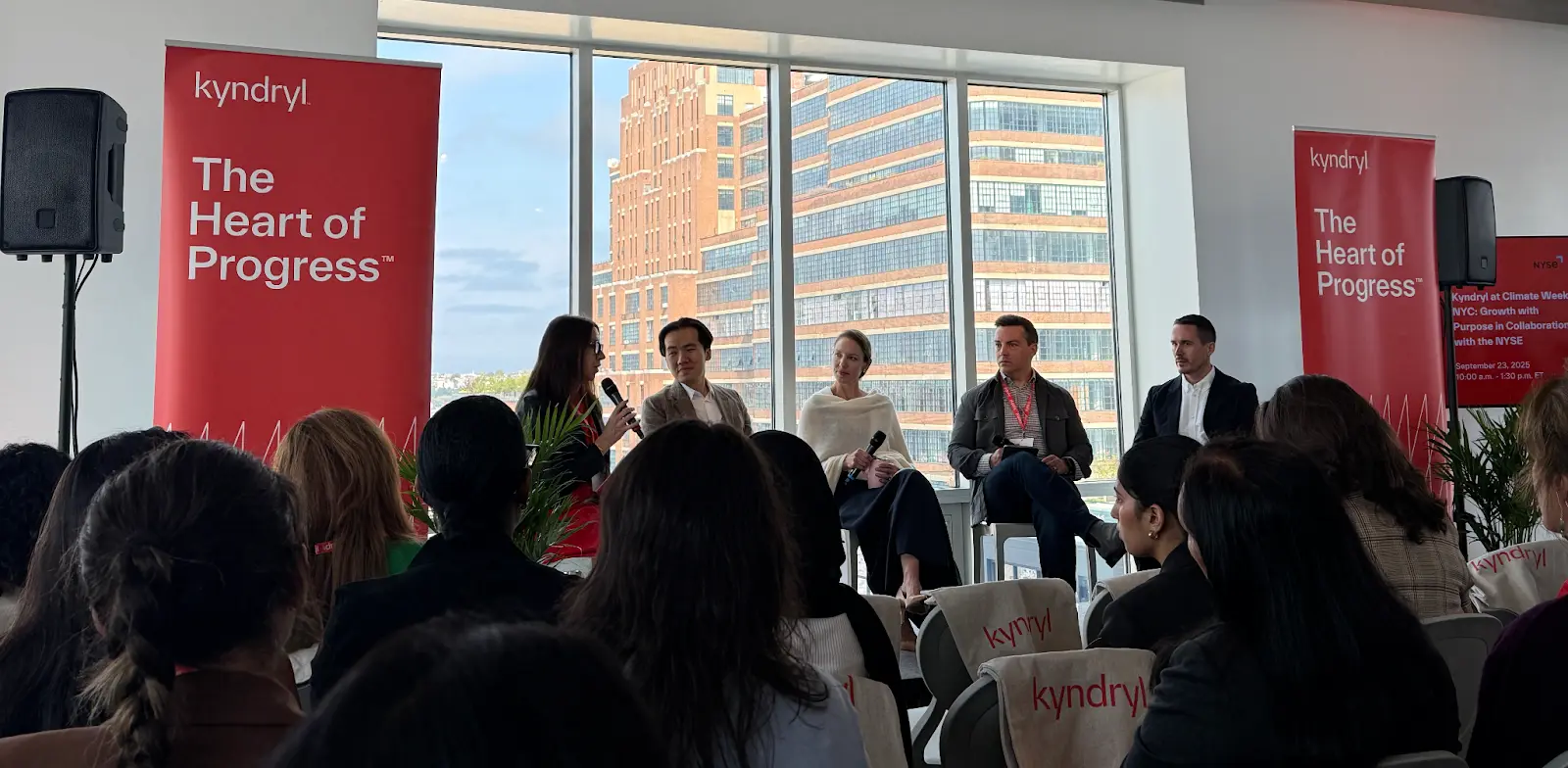
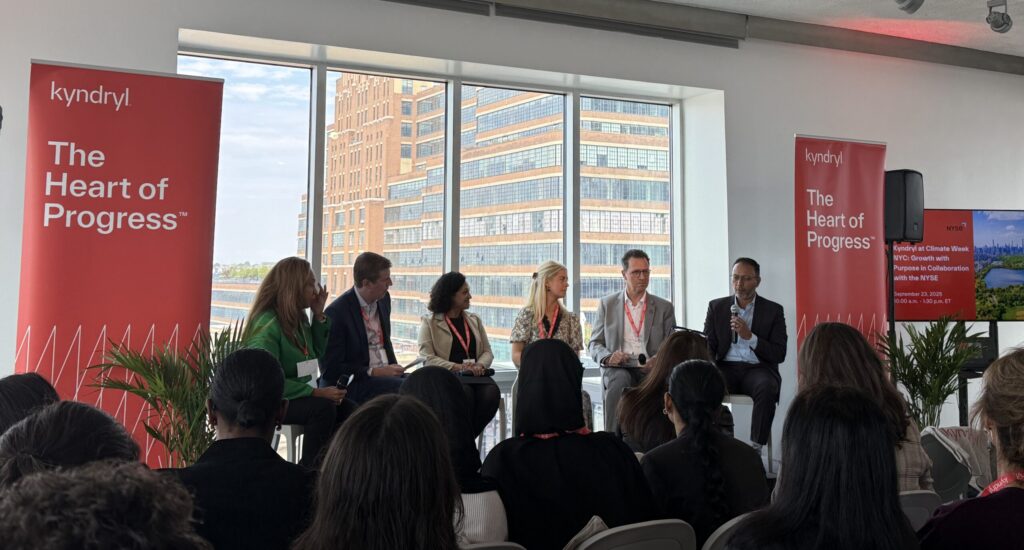
At a time when technology is reshaping the workforce and climate pressures are redefining business, leaders are grappling with a central question: how do we equip organizations — and the people within them — not just to keep pace, but to thrive? During Climate Week, Kyndryl convened an event called “Growth with Purpose” that featured two dynamic panels focused on tackling that challenge from different but deeply connected angles.

The first panel, Skilling for a Secure Digital Future, examined how AI is transforming the very notion of being “future ready.” Panelists stressed that technical expertise alone will not suffice; adaptability, resilience, and human-centered skills remain just as critical. They spoke candidly about the paradox of AI adoption: the technology’s potential to unlock massive productivity gains is real, but its impact depends as much on mindset, culture, and trust as on tools themselves.

The second panel, Risk, Readiness, and Reporting in Sustainability Work, turned the focus to how businesses prepare for an uncertain climate future. Executives from finance, technology, and infrastructure underscored the growing importance of supply-chain resilience, the integration of sustainability into financial decision-making, and the role of trust and transparency in meeting investor and community expectations. As externalities like carbon and natural capital become priced into markets, sustainability is moving from a regulatory obligation to a driver of business value.

Together, the discussions revealed a common imperative: whether navigating the rise of AI or the realities of climate risk, organizations must balance innovation with intentionality. The future may be uncertain, but readiness, resilience, and principled action will be the measures of who thrives.


Panel 1: Skilling for a Digital Future

  • Being “future ready” means building systems of continuous learning. Panelists agreed that the future of work is not a fixed destination. Instead, it requires organizations and individuals to build habits of constant iteration and adaptation. One speaker even suggested professionals should aim to “make 20% of their jobs obsolete each year,” eliminating low-value tasks to create space for higher-value innovation and growth.
  • The biggest barriers to AI adoption are cultural, not technical. While AI’s potential is vast, many organizations struggle with implementation because of fear, discomfort, or uncertainty. Leaders stressed the need to normalize experimentation and failure as part of learning. Generational divides also surfaced: senior employees often use AI more effectively because of their experience and judgment, while younger hires may be more fluent with tools but lack context. Bridging these divides will be essential.
  • Workers need more transparency about which credentials actually pay off. Although 40% of U.S. adults have some college but no degree, only 12.5% of credential programs deliver meaningful wage gains. More transparency is needed so workers know which credentials are actually valuable. Panelists argued for clearer data and guidance so workers understand which pathways provide real mobility, and which don’t deliver on their promise. The same logic applies to skills: For example, Kyndryl is prioritizing mapping current vs. future skills and making that data transparent to employees — helping them visualize where the business is headed and how they can grow.
  • Human-centered skills will only grow in value. As technical skills shift rapidly with technological change, human skills — such as empathy, trust-building, problem-solving, and communication — are emerging as the most durable advantage. Panelists suggested reframing these as “higher-order thinking” skills, a label that better conveys their central importance in AI-enabled workplaces. 
  • Intentional AI use is the key to maintaining critical thinking. Overreliance on AI risks weakening workers’ ability to write, think critically, and craft narratives. Panelists encouraged organizations to set intentional guidelines: use AI as an accelerator, but not as a replacement for human judgment and expression. The financial incentives also matter: Skepticism about providers pushing AI use for profit is warranted, and workers and companies alike need to set their own intentional frameworks for adoption.
Panel members at Kyndryl's "Growth with Purpose" event.

Panel 2: Risk, Readiness, and Reporting in Sustainability Work

  • Uncertainty is inevitable, but principles must guide the response. Speakers emphasized that uncertainty has always been part of business, but climate change and resource scarcity magnify it. To remain resilient, companies are establishing clear principles — such as cutting emissions or increasing recycled content in supply chains — that remain non-negotiable, even as circumstances shift.
  • Embedding sustainability into the core business is no longer optional. Panelists described how sustainability leaders now work directly alongside CFOs and finance teams, reflecting the growing importance of environmental and social considerations to business value. Carbon pricing, regulatory frameworks, and investor demands are pushing companies to treat sustainability as central to strategy, not a side function.
  • Climate risk also creates business opportunities. Disruptions like floods, fires, or supply-chain breakdowns pose real threats, but they also spur demand for new services — from resilient infrastructure to risk management products. Companies that innovate around these needs can turn risk into opportunity.
  • Collaboration across the value chain is essential. No company can meet sustainability goals alone. Panelists highlighted the importance of embedding expectations across suppliers, engaging directly with high-emissions vendors, and even spurring innovation through competitions. They also stressed that collaboration must extend beyond the value chain — to startups, academia, industry groups, and policymakers.
  • Transparency builds trust with investors and communities. Trust emerged as a critical currency. Transparent reporting on emissions, risks, and progress not only satisfies regulators but also strengthens investor confidence and community credibility. As investors increasingly scrutinize how companies manage both transition risks (like shifting to renewables) and physical risks (like fires or floods), disclosure and accountability become differentiators.
  • AI is already helping sustainability efforts, but it must be paired with governance. From using drones to inspect infrastructure to crunching massive emissions datasets, AI is already proving valuable in sustainability work. Yet panelists stressed that AI must be deployed “secure by default,” with robust cybersecurity and governance in place. While the technology can handle scale and speed, empathy, trust, and human judgment remain irreplaceable for advancing sustainability goals.

Strengthening Public Health with Community Health Workers

Strengthening Public Health with Community Health Workers

In virtually every community in our country, it is often the work of a Community Health Worker (CHW) that unlocks the potential for a child, a family, a senior, a farmworker, and millions of others, to access a healthy life. This study isn’t meant to be another generalized, awareness-raising gesture for CHWs. It’s meant to spotlight where CHWs are effectively integrated into their communities while being paid in sustainable ways so these models can continue to be funded and expanded.

Our teams at SanofiNationSwellAtlas Clarity, and NACHW saw a gap, a story to tell. We embarked on a collaborative journey to seek these models of CHW partnership and integration, with our differing perspectives and burning questions.

We asked: What works in communities? What works for CHWs? How might funders, partners, and governments—each of us—better support CHWs while also honoring the self-determination of this unique workforce? And we curated our findings, with replicable examples and insights to build on.

In this report, we’ve laid out what we heard and what we believe are some of the best actions you can take for improved community health powered by CHWs who are sustainably paid for their work, and we’re looking forward to using this tool as a springboard for discussion across sectors. Appreciation to all CHW and non-CHW contributors for sharing their knowledge and stories.


Share this report

What We Can Learn From The Annie E. Casey Foundation and Tomi Hiers, VP of the Foundation’s Center for Civic Sites and Community Change

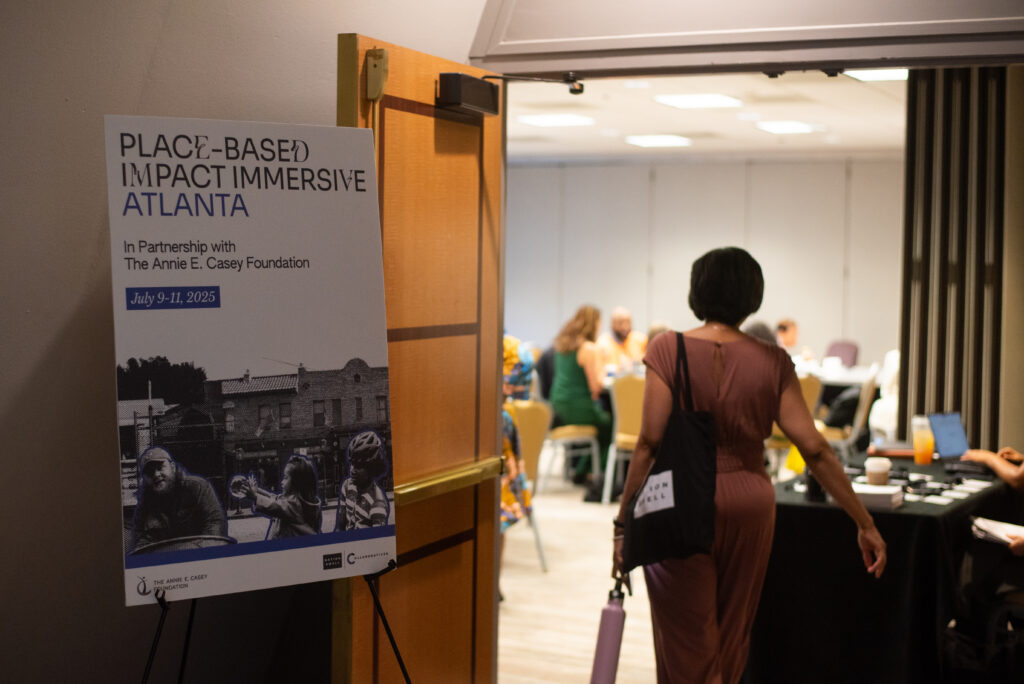
This summer, as part of NationSwell’s Place-based Impact Collaborative, we explored the power of community-led change through an immersive experience in Atlanta, GA. This experience would not have been possible without our host, The Annie E. Casey Foundation

As place-based work popularizes, new actors should pay attention: nearly 25 years into their place-based commitment to the city, what the Foundation is building in Atlanta is a testament to place-based investment done right. Long-term, community-rooted, structurally sound, and boldly committed to building a brighter future for youth, families and communities the Annie E. Casey Foundation is unwavering in striving toward greater opportunity for all Atlantans. 

A group of NationSwell members walk past the icon ferris wheel in Atlanta

Why Atlanta?

Many view Atlanta as a booming metro hub, but it is also the city with the lowest rate of economic mobility in the United States. A child born into poverty in Atlanta has less than a 4% chance of escaping it. The Annie E. Casey Foundation established its Atlanta Civic Site in 2001, recognizing the city’s unique potential, alongside its stark disparities.

“Atlanta has a vibrant economy (one of the fastest growing in the country) and rich culture,” says Tomi Hiers, “It continues to be an attractive city, as its rapidly growing population shows.”

But as she points out, “Atlanta has one of the country’s fastest-growing economies, but that growth is uneven across its communities….Communities along and below I-20 continue to face some of the most persistent poverty rates in the country.”

A three-pronged approach: The Foundation’s theory of change in Atlanta

The Foundation’s commitment in Atlanta is long-term and multifaceted, focusing on three investment pillars: economic opportunity, neighborhood transformation, and educational achievement.

“Atlanta is the Annie E. Casey Foundation’s second hometown (Baltimore is the other),” says Hiers, “We encourage action and transformation in Atlanta through a combination of strategic partnerships and investments, spanning beyond individual neighborhoods. Our work continues to be undergirded by the belief that strong communities are possible when young people have the family connections, relationships, communities and educational and employment opportunities they need to thrive.”

Neighborhood transformation: Pittsburgh Yards

Home to the Foundation’s Atlanta Civic Site is Pittsburgh Yards, a 31-acre development in Atlanta’s historic Pittsburgh neighborhood — a community founded by formerly enslaved people in 1883. The south side of Atlanta carries deep scars from redlining, disinvestment, and broken promises, but it also holds the legacy of resistance, culture, and community pride. It’s here that Pittsburgh Yards rises, not just as a development, but as a reclamation of possibility.

Pittsburgh Yards is both a business hub and a model of community-driven development. After purchasing the site in 2006, the Foundation undertook a years-long design process that engaged local residents and businesses. This investment resulted in the Nia Building (Swahili for “purpose”), which now houses over 100 office spaces and supports nearly 160 local businesses through both leased spaces and accessible co-working memberships.

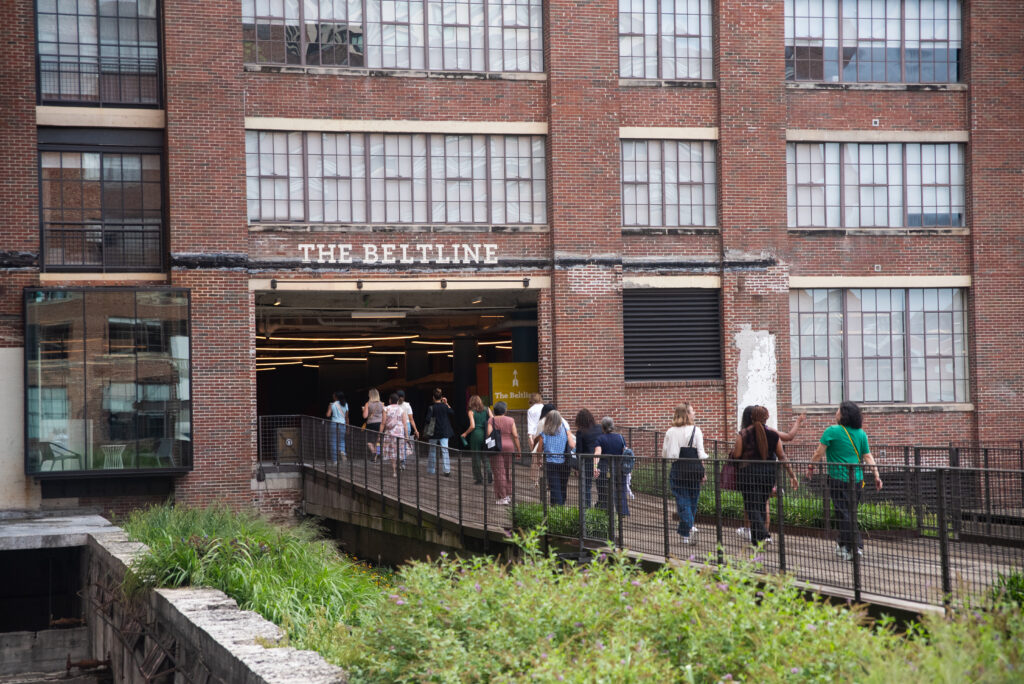
With property values near the Beltline increasing by over 500% in just five years, the Foundation’s investments are carefully designed to prevent displacement. From affordable leases to technical assistance and business development programming, Pittsburgh Yards is a market disruptor in commercial real estate. 

Economic opportunity: Supporting local entrepreneurs

Many entrepreneurs in Atlanta, limited by social and economic barriers, are unsure if the city has room for their dreams; targeted investments from the Annie E. Casey Foundation support small business owners through space and ownership, reshaping how they imagine their futures.

The Foundation partners with organizations like Our Village United and the Russell Innovation Center for Entrepreneurs (RICE), which provide coaching, funding access, and business strategy training. Entrepreneurial support at Pittsburgh Yards is not limited to real estate. Innovative models like the container courtyard, a marketplace of rotating micro-retailers and food vendors built from shipping containers, have provided flexible, low-barrier entry points for businesses to scale and test new concepts.

Hiers highlights the urgency of this work: “Even when it comes to entrepreneurship, one of the primary drivers of wealth, company owners from certain demographics lag behind, creating a gap in revenue generation.” 

Educational achievement: Starting from birth

Approximately 8 out of every 20 children in Atlanta aged 0-5 are considered economically disadvantaged, with 5 of them living in poverty. The Foundation’s commitment to educational achievement begins in early childhood. Through supporting initiatives like “Promise All Atlanta Children Thrive” (PACT), the Foundation has galvanized a citywide action to make Atlanta the best place to raise a child.

Partners like GEEARS (Georgia Early Education Alliance for Ready Students) have helped build a collaborative that includes public and private leaders, all aligned around improving outcomes for children from birth to five. This coalition has led to coordinated grantmaking, Head Start provider collaboration, childcare stabilization grants during the pandemic, and aligned advocacy to shape systems and policy change.

A culture of collaboration and honoring legacy

What sets the Annie E. Casey Foundation’s approach apart is its commitment to authentic collaboration. Both cross-sector and community efforts are designed with shared purpose, long-term structure, and community voice. The Foundation’s partners reflect that spirit — from housing advocates and public health leaders to artists, educators, and entrepreneurs.

“I learned very early in my career that people with lived experience and those who are closest to challenges have unique perspectives that can lead to innovative and lasting solutions. I have made it a priority to ensure that people who live in the communities where work takes place or those who participate in targeted programs have a voice in helping to set priorities, developing strategy and getting the work done.”


This immersive experience was offered to NationSwell through the NationSwell Collaboratives. To learn more or get involved, visit nationswell.com/nationswell-collaboratives/

Corporate Social Impact Team Design

Corporate Social Impact Team Design

This resource is meant to help leaders look at their own organizations to consider: what’s working, may be changing, and could be next for your impact team design. It provides a practical, anonymized compilation of organizational charts serving as a foundation for shared learning and strategic reflection on:

  • the current landscape of impact team design,
  • the size and complexity of structures by industry, 
  • the functional areas of teams in relation to the broader company, 
  • reporting lines to the chief suite

This resource will continue to evolve as more models are shared. Email us at [email protected] if you would like your corporate social impact team to be represented in the next iteration of this resource.


Share this report

Two Days in Atlanta with NationSwell and The Annie E. Casey Foundation

On a warm July afternoon in Atlanta, a group of corporate, philanthropic, and community leaders gathered to experience what place-based impact looks like when it’s rooted in history, shaped by community voice, and powered by a shared vision. As part of NationSwell’s Place-Based Impact Collaborative, and in partnership with The Annie E. Casey Foundation, this immersive, two-day experience offered a firsthand look at Atlanta as a “tale of two cities.” Throughout the experience, participants learned how bold, collaborative investment is helping communities reclaim land, preserve and celebrate identity, and build a more just economic future.

Day One: Grounded in history, connected by movement

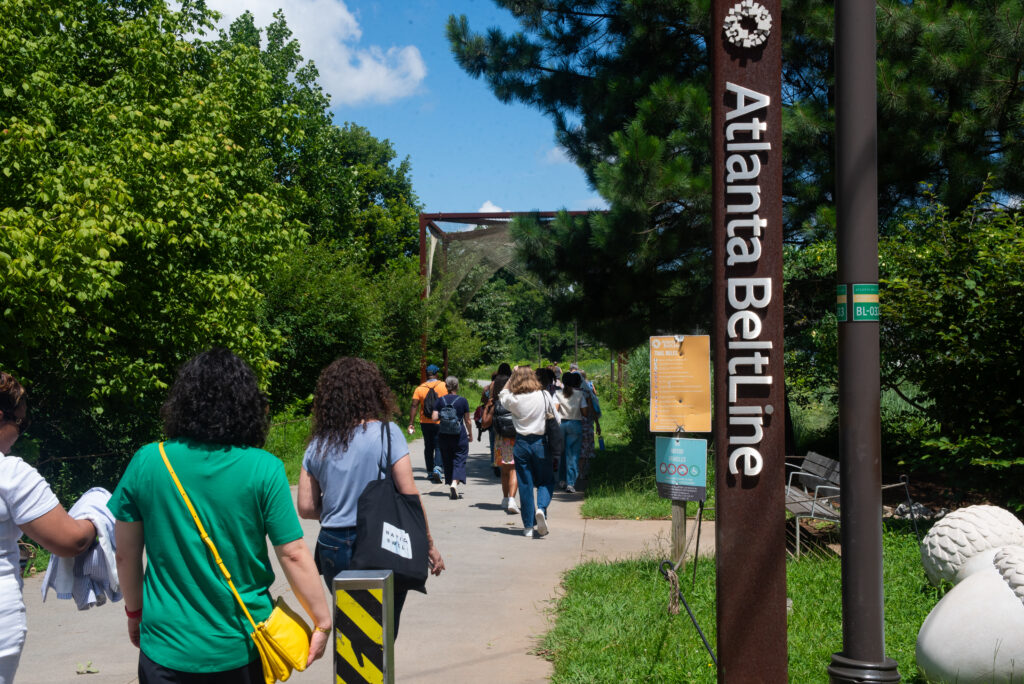
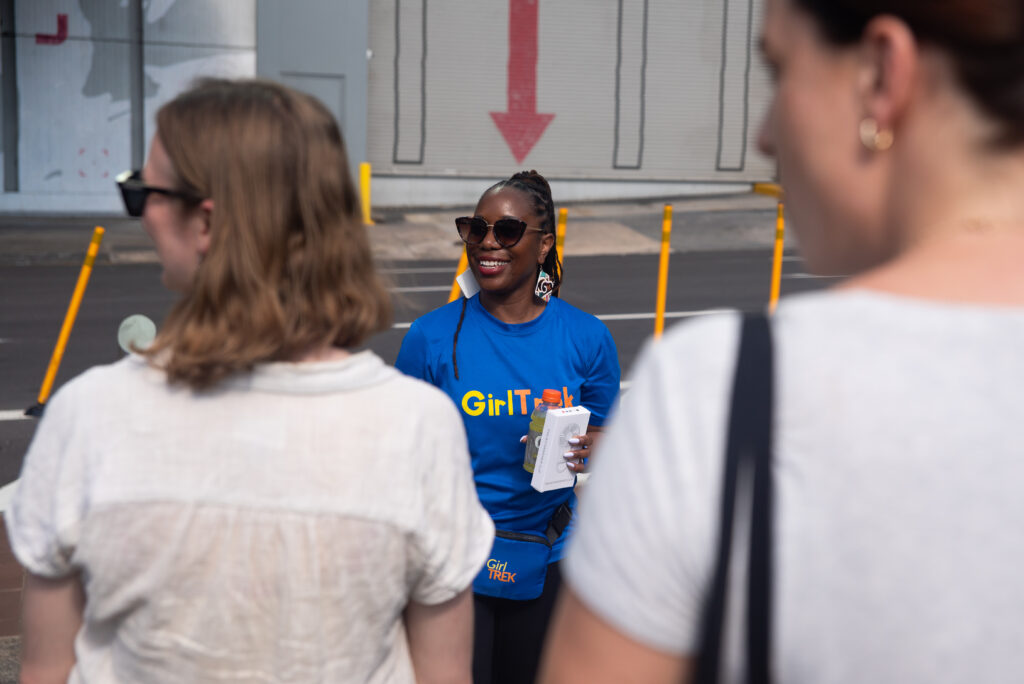
Our time together began with something deceptively simple: a walk. Led by a close partner of NationSwell, GirlTrek, the walk to Centennial Park focused on presence and intentionality. “We walk, talk, and solve problems,” our leader shared, describing GirlTrek’s model of wellness and connection. It was a chance to move through the city, feel its energy, and open space for reflection.

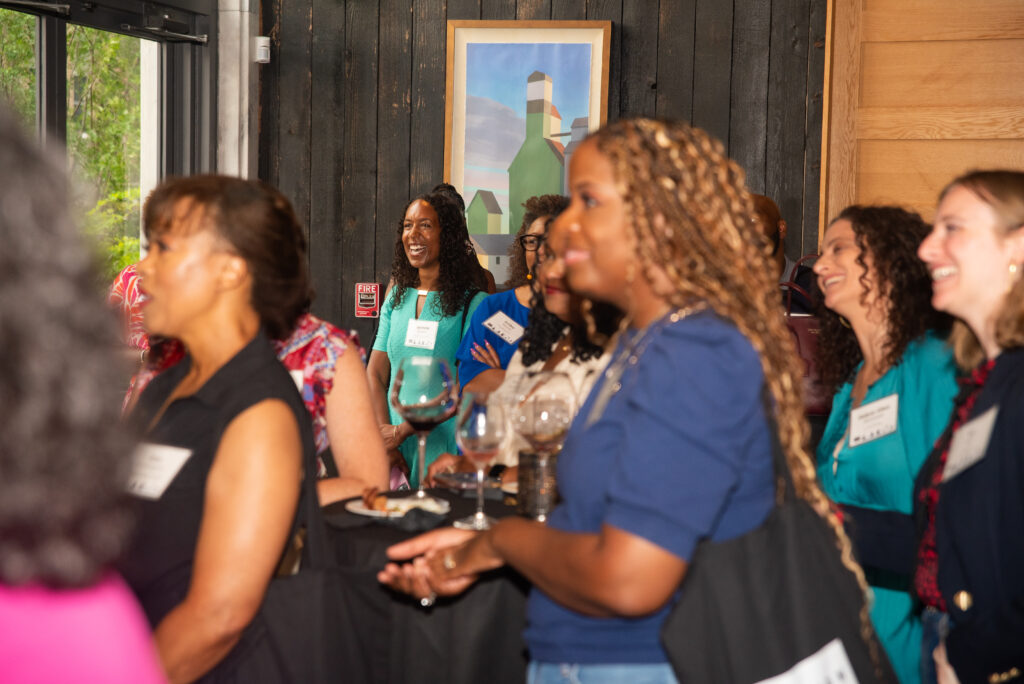
Later that evening, we headed to a welcome reception, setting the tone for what would be a day of honesty, inspiration, and exchange. In a circle, we heard from visitors and locals alike about their personal and professional motivation for joining the immersive. Participants were welcomed to Atlanta as a city of neighborhoods, of legacy, of resilience.

Day Two: A tale of two cities

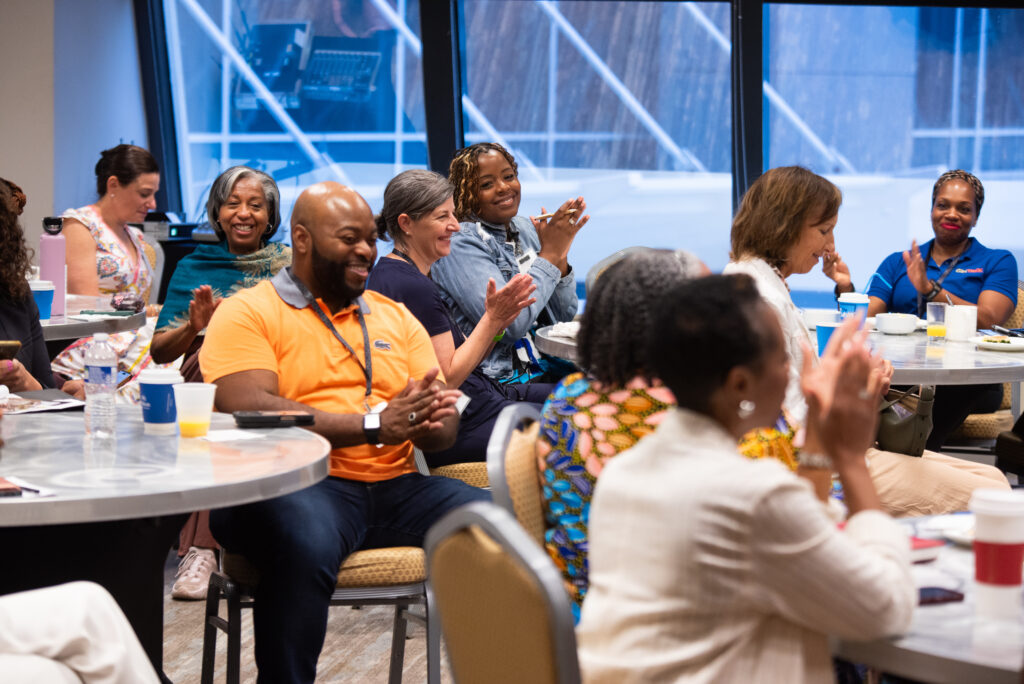
Breakfast opened with a powerful panel, “Atlanta’s Path in Perspective,” laying bare the complexity of the city’s narrative. As Courtney English, Interim Chief of Staff to Mayor Andre Dickens noted, “Atlanta is a tale of two cities and two stories.” On one hand, it is the cradle of civil rights, home to Black leadership and cultural innovation. On the other, it is among the lowest in economic mobility for Black families, shaped by redlining, disinvestment, and policy decisions that still echo today.

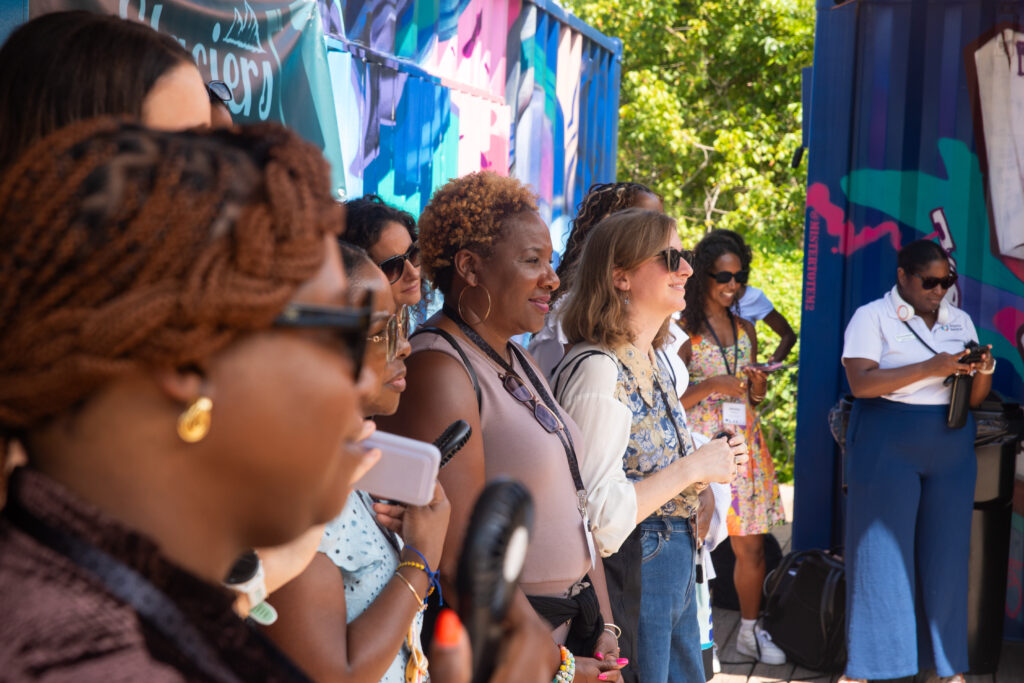
Site visits followed, including a deep dive into the Atlanta Beltline’s evolution – a project that has generated both opportunity for entrepreneurs and concern for displaced residents. Led by the Atlanta Beltline team, we saw examples of responsive solutions: affordable housing built to combat gentrification pressures; shipping containers repurposed into microbusiness spaces; and ongoing work to address basic infrastructure, like stormwater and sewage management. We also heard from a small business owner, Sarah Pierre, owner of 3 Parks Wine Shop, about her partnership with the Beltline. 


We then made our way to Pittsburgh Yards, standing out as a living example of what it looks like when development is done collaboratively with a community. Built on land acquired by the Annie E. Casey Foundation, the space has grown into a hub for locally-owned businesses, creatives, and entrepreneurs – including some that have transitioned to brick-and-mortar storefronts in retrofitted shipping containers (check out Carrot Dog and PinkPothos). Individual co-workers, businesses, and events hosted at Pittsburgh Yards bring in revenue, helping sustain the space without compromising its mission. “We would like to think that the Annie E. Casey Foundation is a collaborative partner and listener,” Tomi Hiers, vice president of the Center for Civic Sites and Community Change at the Annie E. Casey Foundation said, reflecting on the ongoing effort to ensure that the people closest to the challenges are closest to the decisions. As we stood outside Pittsburgh Yards, a child played on his bike, calling out “Hey, neighbors!.” As one participant noted, “The fact that a little boy came up and called us ‘neighbor’ — that’s what success looks like.”

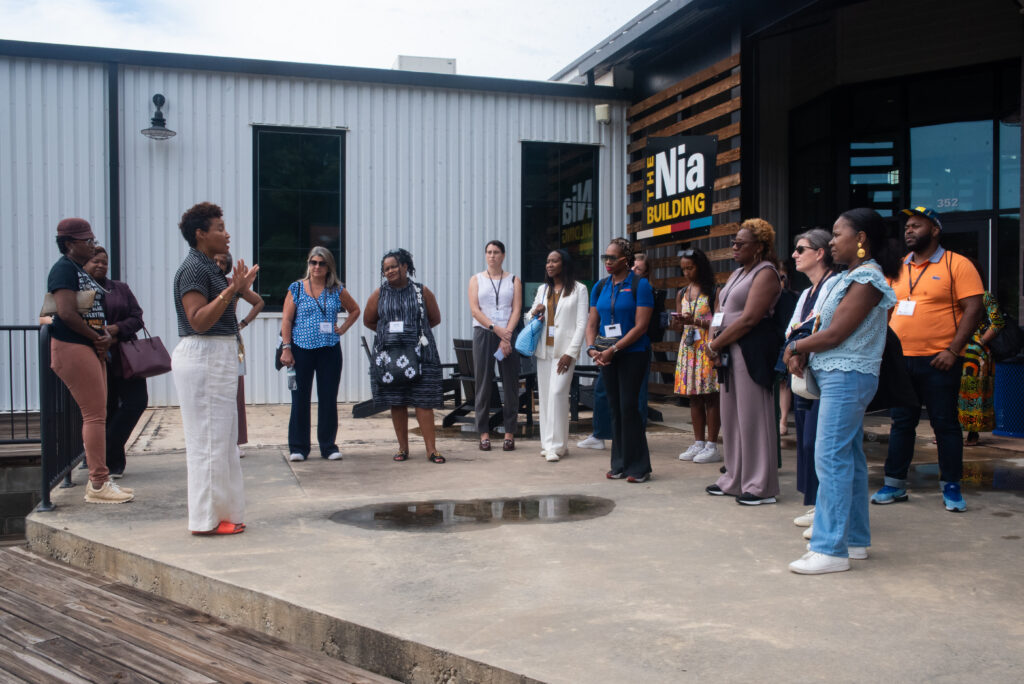
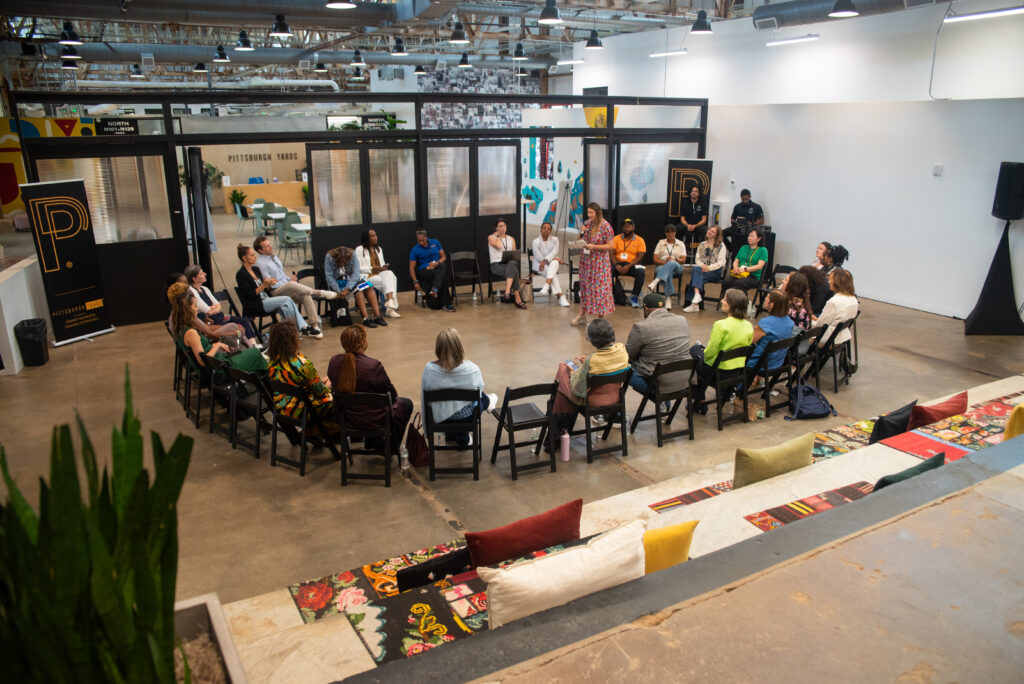
Our visit included a Partnerships for Collective Action roundtable, held in the heart of Pittsburgh Yards’ Nia Building. Amanda Jaquez, Senior Associate, Annie E. Casey Foundation opened by naming the legacy of the neighborhood — founded by formerly enslaved people and long a center for Black self-determination — and reminded the room that development must build on, not erase, that foundation. 

The panel explored what makes cross-sector collaboration work, with Mindy Binderman, Executive Director of GEEARS, emphasizing that shared purpose and trust must come before action. Natallie Keiser, Executive Director of HouseATL, added that structure, sustained engagement, and clarity of roles are important, especially when tackling entrenched challenges like affordable housing and displacement. The cost of inaction was made clear: unchecked infrastructure investments can rapidly raise property values and inadvertently displace the very communities they intend to serve.

Jay Bailey, President and CEO of the Russell Innovation Center for Entrepreneurs (RICE), offered a powerful charge: “Collaboration beats competition every day of the week.” But he cautioned against “collaborative theater” — partnerships formed for optics rather than outcomes. He urged leaders to confront uncomfortable truths, including the stark contrast between Atlanta’s image as a Black mecca and the reality of its low Black economic mobility. “Let us have the courage to say no…because we are worth investing in.” 

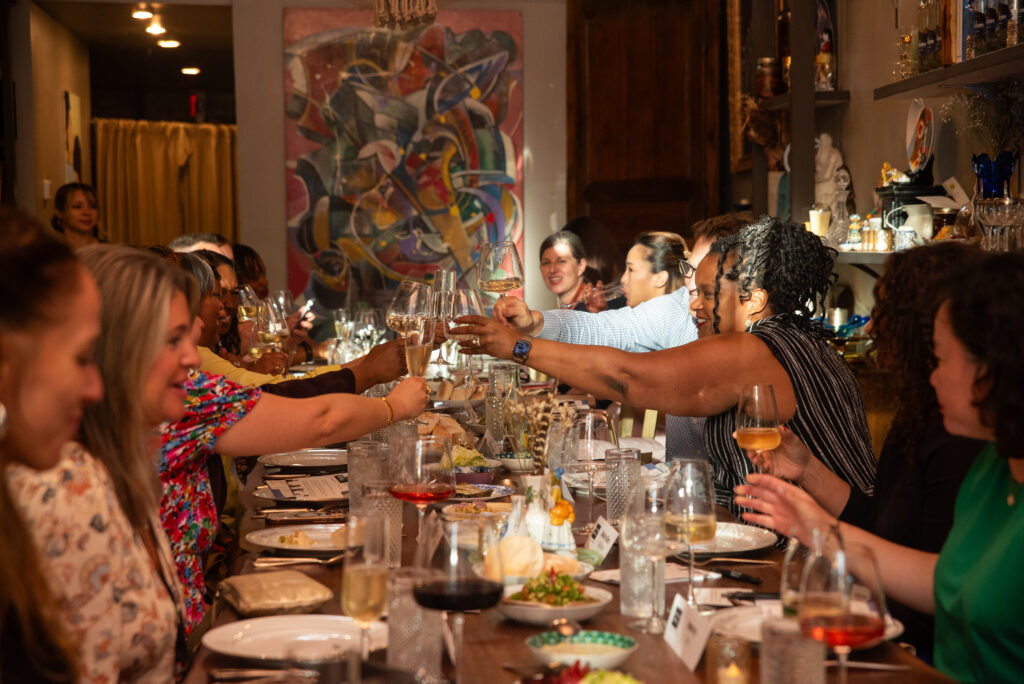
The day ended at The Third Space, where a happy hour and signature dinner prompted deeper conversation and laughter. Over shared plates, attendees unpacked the day’s learnings: how land becomes leverage, how rest becomes resistance, and how institutions can be built to last.

Day Three: Collaboration and continuity

Our time together concluded with a tour of RICE. The impressive center, which supports Black entrepreneurs with space, mentorship, and capital access, sparked conversations about ecosystem thinking. During the tour, participants saw how the organization is cultivating Black entrepreneurial success at scale. The 54,000 square foot space was built with intentionality: every wall, quote, and photo was curated to inspire ownership, legacy, and possibility. As Bailey summed it up: “We don’t need another symbol of hope. We need institutions that manufacture hope.”

As attendees began to head home, there was a palpable sense of momentum. Participants reflected on what they had seen and learned, and how they can apply it to their own communities and work.

What Atlanta taught us

Atlanta is not a monolith. It is a microcosm of the broader American story — a city where systemic harm and radical possibility coexist. Place is not neutral here, it is contested, storied, and powerful. From listening sessions designed with dignity to equitable housing strategies and entrepreneurship ecosystems, the visit to Atlanta reminded us that place-based work requires honesty, trust, and collaboration. 

As one participant shared, “The system isn’t broken. It’s working how it was designed to work.” But in Atlanta, people are redesigning it — together.


This immersive experience was offered to NationSwell through the NationSwell Collaboratives. To learn more or get involved, visit nationswell.com/nationswell-collaboratives/

Cash-based Levers for Economic Mobility

Cash-based Levers for Economic Mobility

CURATED COLLECTION

Additional income is not a cure-all for poverty; health, housing, food security, and many other factors also play critical roles in an individual’s stability and well-being. However, the role of cash and savings is receiving growing attention and showing positive impact, as organizations test approaches like guaranteed income programs, changes to tax credits, and more. This resource provides an overview of various cash-based levers that drive economic mobility. 

Levers include: 

  • Universal Basic Income (UBI)
  • Guaranteed Income
  • Increasing the minimum wage
  • Baby bonds
  • Individual Development Account (IDA)
  • Financial reparations

Share this report

Five Minutes with… Bonterra

Amidst stagnating rates of charitable giving and volunteering in the U.S., Bonterra — a software company focused on helping nonprofits, foundations, corporations, and beyond scale their impact — has a mission to boost giving and volunteerism to 3% of U.S. GDP by 2033. So, they took a fresh approach to Bonterra’s annual impact report. Developed in partnership with NationSwell, the 2025 Impact Report gives Bonterra’s customers actionable insights on how to empower the “Generosity Generation”: a cross-generational community empowered by technology to unlock time and dollars, in order to increase giving and drive the impact they want to see in the world.

For this installment of Five Minutes With, NationSwell spoke with three key Bonterra leaders to unpack the report’s insights: Ben Miller, SVP of data science and analytics; Kimberly O’Donnell, chief fundraising officer; and Sara Kleinsmith, principal strategist for thought leadership and corporate messaging.

“Collaborating with Bonterra to create their new Impact Report was an inspiring challenge,” said Amy Lee, Chief Strategy Officer at NationSwell. “We worked very closely with Ben, Sara and their team to push beyond standard insights. Bonterra has a wealth of smart insights from its products and relationships, and we wanted to make sure that whatever we included was data-driven, forward-looking and on target for the goal to catalyse a new Generosity Generation.”

We asked the Bonterra team how they blended proprietary data with powerful storytelling to create a tool that goes beyond standard, backward-looking reporting — serving instead as a strategic blueprint for how organizations can rethink, revamp, and re-energize their entire approach to impact with intentionality and inspiration at its core. 

Here’s what they had to say:


NationSwell: Tell us a little bit about what you set out to accomplish with this report. What were your initial goals, and how did they evolve?

Ben Miller, Bonterra: One thing we know about movements is that they aren’t a start and stop experience — they’re ongoing. So when we sat down to think about creating this report, we did it through the lens of building the “Generosity Generation” — a multi-age community of donors, volunteers, funders, and nonprofit leaders that gets activated with the help of technology to respond to crises faster; build lasting relationships; and overcome all of the barriers that have caused charitable giving and volunteering in the US to remain stuck at 2.5% of GDP for over 50 years.

In a way that mirrors what our technology is designed to do, we wanted to create a report that could deliver insights in a faster, more personalized way, and that was an important framework adjustment that served us well. We didn’t spend as much time as we had in the past focusing on the tallies and the totals (although they are still there in the report to substantiate our findings) — we wanted to dive right in. We also added an interactive tool that allows organizations to benchmark themselves against other organizations. 

NationSwell: How did Bonterra’s proprietary data play a role in shaping the report?

Ben Miller, Bonterra: One of our huge strengths is that we have a true data science team, not just data marketing folks. Logan, our chief marketing data analyst, constantly pushed back, saying “there’s nothing here” or “this isn’t strong enough,” and as a result we discarded a lot of findings. You might not see it at first glance, but the analysis was thorough. We only included insights that were statistically sound and actionable. A lot of reports don’t go that deep, but our team basically operates like scientists.

Existing data tells us that only 19.4% of donors give a second gift, but our finding was that once they do, they’re far more likely to stick around. That first 90 days is absolutely critical, but there are also folks who give way later — giving up entirely will likely not serve you in the long run. We also saw that about 10% of donors give after more than a year. So even if someone doesn’t respond in that first 90 days, it doesn’t mean they’re gone; you just have to treat them differently.

Sara Kleinsmith, Bonterra: That ties into another data point: 63% of nonprofits stop after one rejected grant application, but on average it takes 1.24 tries to get funded. So many organizations are missing the chance to go back, learn, refine, and try again. Fundraising is evolving, and there’s a real opportunity in persistence and learning from the first “no.”

Ben Miller, Bonterra: Data shows that only 53% of people trust nonprofits — the lowest that trust has ever been, which is a huge issue. But our research shows that you can use digital to help restore some of the trust and humanity that’s been lost over the years. We saw it in disaster response in particular: people were ready to engage, and digital tools helped nonprofits meet that urgency. So it’s not just about maximizing each channel, it’s about using those channels to build relationships. That’s the core insight: digital doesn’t have to mean disconnected — it can actually bring people closer, if we’re intentional.

NationSwell: What were the internal conversations like on how to strike the right balance between qualitative and quantitative storytelling?

Sara Kleinsmith, Bonterra: We’ve done a lot of customer stories and case studies, so we had strong qualitative storytelling to draw from — our customers at Bonterra have incredible missions and impact. The challenge was linking those stories to the data.

One way we did that was during a recent webinar, when we matched our customers to specific data points and asked them to speak to the proof we wanted to showcase. It became a kind of matching exercise — pairing the mission, the people, and their challenges, like burnout or federal funding cuts, with the insights from Ben’s team. From there, we asked: which customers can speak to this? How is Bonterra helping solve these problems?

Ben Miller, Bonterra: Instead of starting with who we knew and pulling from what was available, we started with the data: who’s doing X really well? Then we went out to those organizations and asked if they’d share their stories. That led to fantastic case studies.

Kimberly O’Donnell, Bonterra: Most impact reports rely on examples people already know are good. What we did was different — we had enough breadth to ask: who’s doing this best, why, and what’s the “secret sauce”? What makes a fundraising campaign or grant program truly transformational?

NationSwell: What were some of the lessons you learned in putting this report together — were there any unexpected obstacles or challenges? How did NationSwell help you to meet those challenges?

Ben Miller, Bonterra: One of the toughest parts was wanting the data to tell the story while also realizing that waiting on the data meant risking not having enough time. We had to pivot together as insights emerged. We’d spot something interesting, ask, “Is there more here?” and then look for supporting organizations.

It was also challenging because we were rigorous. We reviewed the data four or five times, and sometimes had to revise earlier numbers. That could’ve created confusion or mistrust, but instead it fostered transparency and a shared commitment to getting it right.

Internally, we all understood we were working toward something meaningful, and NationSwell played a huge role — the team didn’t push us down a rigid path, they were flexible and helped us shape the right story as the right data came in.

Sara Kleinsmith, Bonterra: We kept revisiting: what comes first, the data or the narrative? At one point, we were curious about generational giving — Gen Z, millennials, boomers, Gen X — who’s giving the most, who should we be reaching? But it was hard to chart that internally. Then Ben had this great idea: instead of age, what if we looked at impact maturity — where someone is on their giving journey? Are they a first-time donor or a lifelong giver?

That shift reframed everything. Rather than focusing on age, we began thinking in terms of giving readiness. It made the concept of the “Generosity Generation” more inclusive — a multi-generational group of givers and doers, each with different motivations and maturity levels.

It felt like a win — something that came out of a shared insight between us, NationSwell, and Ben’s framing. Generational labels can be reductive, but generosity spans all ages. This unlock helped us to better meet people where they are in their giving life.

NationSwell: Based on the report’s insights, what are your call-ins for our membership community when it comes to charitable giving? What feels most important for them to take away from this report?

Kimberly O’Donnell, Bonterra: Our call to action is to digest the data — there are six key takeaways, some relevant to nonprofits, others to funders and corporate partners. Think critically about how your practices compare, and how you might adopt or adapt based on what the findings show.

Sara Kleinsmith, Bonterra: And for anyone creating thought leadership or content — especially those reaching donors, partners, or investors — we’re at a critical point in how we work with AI. Writers, marketers, and creators need to be transparent: How are you using AI? How are you using human creativity alongside it? Customers, donors, and volunteers want to understand that balance. It’s evolving fast, and being clear and thoughtful about it positions you as a leader, no matter your sector.

Kimberly O’Donnell, Bonterra: That ties into how we delivered this impact report — it’s unique. If you’re advising others on their own reports, show how each takeaway connects directly to your audiences in digestible ways. It’s not just about showcasing big impact or good stories. What are the three to six insights you want readers to remember?

Ben Miller, Bonterra: Our big goal is 3% by 2033. We can’t get there alone — we’ll need everyone to contribute. If you’re part of the NationSwell community, join us. Even a 2% improvement across your network, your organization, your campaigns — it all adds up. That’s how we hit the goal: through collective action and shared best practices. That’s what the Generosity Generation is about.

Goldman Sachs 10,000 Small Businesses

Goldman Sachs 10,000 Small Businesses

Entrepreneurship is a powerful driver of economic opportunity, yet many small business owners face systemic barriers to growth, including limited access to capital, business education, and professional networks. To address these challenges, the Goldman Sachs Foundation launched 10,000 Small Businesses – a nationwide initiative designed to provide practical business education, peer support, and access to funding to help small enterprises scale and succeed. The program has supported over 16,600 graduates across all 50 states, Washington, D.C., and Puerto Rico. This case study outlines the core components that make this initiative effective and replicable.


Key components of the model:

  • Selective yet accessible participation
  • Durable and practical curriculum
  • Strategic partnerships for scale
  • Adaptive delivery model
  • Lifelong learning and alumni support
  • Goldman Sachs employee engagement

Notable results and impact:

  • 66% of participants see increased revenue within six months
  • Nearly 50% create new jobs shortly after completing the program
  • 85% of alumni continue doing business with each other, demonstrating the program’s networking value
  • Participants report greater confidence in financial decision-making, fueling long-term sustainability

Share this report