Pathways to Economic Opportunity: MassMutual Foundation and Opportunity Finance Network

In the Pathways to Economic Opportunity interview series, NationSwell is taking a closer look at how companies are pursuing remedies to disparities that exist in vulnerable communities that lack access to financial opportunity and prosperity. In spotlighting these partnerships, this series hopes to uncover the “secret sauce” that makes these solutions successful.

NationSwell recently sat down with Dennis Duquette, president and CEO of the MassMutual Foundation to discuss their newly-announced partnership with Opportunity Finance Network to launch the CDFI Innovation Initiative — a new effort designed to drive innovation, scale impact, and build new infrastructure for the Community Development Financial Institution (CDFI) industry.

Here’s what he had to say:


NationSwell: To start, what is the theory of change behind CDFIs — how do they work to expand economic access and provide financial stability in low-income communities?

Dennis Duquette, president and CEO of the MassMutual Foundation: CDFIs are financial institutions dedicated to delivering responsible, affordable lending to disinvested communities that are often underserved by other lenders and banks. By their very nature – certified by the Treasury Department to be prioritizing community development, serving underserved markets and providing wraparound support services – CDFIs seek to fund the needs and dreams of businesses, housing providers, schools, and community facilities that other financing providers deem to be too risky.

NationSwell: What challenges in the CDFI space is the MassMutual Foundation looking to help solve, and what positions the Foundation to do so?

Duquette, MMF: As it turns out, the biggest challenges facing the CDFI space have a lot to do with their own success – there’s been incredible growth in the visibility and recognition of CDFIs’ unique positioning in addressing community needs in the last few years.

The industry stepped into extraordinary visibility and expanded scale as it supported small businesses and economic recovery during the COVID-19 pandemic, including deploying more than $30B through the Paycheck Protection Program. The Barber of Little Rock, an Oscar-nominated short documentary that the MassMutual Foundation helped fund, highlights the work of a CDFI called People Trust and further contributes to public awareness of CDFIs as effective, community-centered providers of the financial capital and personalized support communities need to achieve financial health and resilience. And most recently, the EPA’s $27B Greenhouse Gas Reduction Fund (GGRF) includes one of the most significant new flows of capital to the CDFI space anticipated over the next six years.

This success and opportunity to scale brings many new challenges, as CDFIs often have limited internal resources and too often face major challenges in deploying capital to meet their communities’ needs due to infrastructure challenges. Solving these challenges will help both better utilize the existing capital available to CDFIs and help attract further investment in the industry by institutional investors.

NationSwell:  What made Opportunity Finance Network (OFN) stand out as an ideal partner for the MassMutual Foundation?

Duquette, MMF: We always strive to make investments that can unlock opportunities that may otherwise not be fully leveraged – as we were just discussing, CDFIs stand at a major juncture of opportunity, and we want to ensure that it’s not missed. OFN is an ideal partner for us due to a number of reasons. They are themselves a CDFI and have been the leading CDFI support network for forty years, offering the critical capacity building, relationships, and loan capital that members across the country (over 430 member CDFIs and counting) need to fulfill their missions. Their role as convener and capacity builder for such a wide swath of CDFIs means that they have an incredible view into the challenges and opportunities facing the ecosystem. They also have a proven track record of executing visionary partnerships and, perhaps most importantly, share our view that collaboration and cooperation between funders and community partners is an important attribute for maximizing impact. Together, we aim to attract additional partners to the table to help fund the many innovations that this initiative will spur over the next five years.

NationSwell: What are the goals behind the MassMutual Foundation’s partnership and $25 million investment in OFN? How does the CDFI Innovation Initiative fit into your larger impact strategy as an organization?

Duquette, MMF: OFN and the MassMutual Foundation are in alignment that building and scaling resources and capacity of financial intermediaries like CDFIs is critical to achieving key shared outcomes, including income and wealth creation, financial resilience of individuals, and new jobs and small businesses nationwide. This partnership represents a natural evolution of our giving and is an outgrowth of all the things we’ve seen and learned through our local grantmaking focused on financial resilience across our recent focus communities (Springfield, Boston, Memphis). We’ve learned that the neighborhoods with the greatest need for affordable and accessible financial products and services are the very ones that most often lack them. More specifically, pathways to homeownership for first time homebuyers, small businesses loans & support, and access to quality jobs are consistently top needs expressed by residents and nonprofit leaders. This opportunity allows us to extend those lessons nationally to other communities and potentially engage like-minded funders to join us in this work.

NationSwell: What’s the special sauce behind the initiative – the novel or innovative elements that you’re most excited by?

Duquette, MMF: This initiative is structured to ensure that a strategic mix of voices, expertise, and resources are continually at the table to identify how to best innovate and invest in the infrastructure needed to help CDFIs grow, evolve, and scale into the future; with three core pillars designed to drive new strategies and innovations:

o   Creating an Innovation Advisory Council with investments in thought leadership and data-driven insights into scalable innovations.

o   Establishing an Innovation Center, an action tank that will take insights and promising solutions and seed them with capital and support.

o   Launching an Innovation Fund, a blended capital pool that will help take innovative and promising solutions to scale each year.

NationSwell: What impact are you intending to achieve through this initiative, and what are your metrics for success? How will the initiative measure the long-term impact of innovations on underserved communities?

Duquette, MMF: The CDFI Innovation Initiative aligns with the MassMutual Foundation’s goals of building and promoting the use of critical networks, fostering financial health and resilience, fulfilling basic economic needs, and expanding employment opportunities for low-income households and communities. The initiative will help advance new systems, and develop solutions needed to support scale and impact in the following areas:  capitalization innovations, new financing products, technology platform innovations, operational efficiencies, and data analytics and research. The complexity of this overall project means that we’ll be evaluating success on multiple levels, including increased growth rates in overall assets under management, financing closed from OFN members, number of housing units developed, small business loans closed, and jobs created or retained. We’ll also track specific outcomes for each individual innovation that is piloted.

NationSwell: How do you see this initiative evolving in the future? What’s your longer-term vision for the work with CDFIs?

Duquette, MMF: We have a long-standing history of supporting CDFIs in the cities where we live and work and we’re excited to grow that investment commitment with this initiative. We, along with OFN, are confident that the structure, approach, and impact of this initiative will really lay the groundwork and make clear the case for sustaining this initiative beyond the next five years.

NationSwell:  Finally, do you have a call to action for leaders at peer organizations who have opportunities to help advance this work forward? 

Duquette, MMF: We would absolutely love to connect with anyone at any peer organization who may have a shared interest in any element of this work and initiative. We think there is a very compelling case for collaborative funding here, and as I just mentioned, we see shared investment as part of the longer-term goal of sustaining and growing the impact of the CDFI Innovation Initiative long into the future!

Pathways to Economic Opportunity: Extern

As wealth and income inequality continue to climb in the United States, some employers are developing innovative models and catalytic partnerships designed to bring new skills, job access, and ultimately economic opportunity to financially vulnerable and historically marginalized individuals.

With our Pathways to Economic Opportunity interview series, NationSwell is taking a closer look at some of the solutions companies are pursuing in service of leveling the playing field and expanding their talent pipelines. In spotlighting these partnerships, this series hopes to uncover the “secret sauce” that makes these solutions successful for the benefit of other employers and their leaders.

NationSwell recently sat down with the team at Extern — a mission-driven organization empowering students with hands-on professional experience while creating meaningful pathways to economic mobility for historically underserved talent. Extern developed the Externship – a new form of professional experience that its students say is a more flexible and accessible alternative to internship or co-op programs. Companies like PwC, The Home Depot, AT&T, HSBC, National Geographic, and The Nature Conservancy have leveraged Extern’s tech-enabled platform to deliver Externships to tens of thousands of young people.

Here’s what they had to say:


NationSwell: In your own words, can you describe the high-level problem that Extern is solving for? 

Matt Wilkerson, Founder and CEO, Extern: The challenge is clear: employers increasingly value work experience over credentials, yet most students don’t have access to the professional opportunities they need to succeed. Internships are shrinking, and career centers aren’t equipped to meet the demand for real-world preparation.

At Extern, we create new opportunities for students to gain professional experience while helping companies broaden their talent pipelines. Our team has a mix of tech, education, and corporate DNA which allowed us to develop a platform so companies can deliver Externships at scale. Externships go beyond traditional internships by offering accessible, structured work experiences that meet the needs of both students and employers.

As of this publication, we’ve officially served 50,000 students with six to eight week externship experiences since 2020; about 25,000 of those have been year to date, and we’ve worked with about 45 companies at this point. 

Extern works by standing up programs that connect students seeking real-world experience with companies seeking to recruit from diverse, underrepresented talent pools. The companies pay us to organize and run these experiences, and in exchange we absorb much of the recruiting, training, and management work that they would have had to do in a traditional internship.

For hiring managers, the professional experience section of a resume is often the most critical factor in recruitment decisions. Yet, systemic barriers leave millions of students—especially those from underrepresented communities—without access to these resume-building opportunities. Extern’s solution is to create and deliver new experiences that wouldn’t exist otherwise, ensuring more students are equipped to step into the workforce with confidence.

NationSwell: What are the primary differences between externships and internships, and what are the unique benefits of each for companies?

Wilkerson, Extern: Externships make professional experience more scalable and accessible. Unlike internships, which are often limited in number and require significant HR resources, Externships are designed to create flexibility and minimize the logistical burden on companies. 

The number of available internships is currently about 4 million each year, compared to about 20 million college students. So there’s a supply and demand issue to begin with, and part of the reason is that internships are hard to get set up on the employer side — it’s laborious to train students, to give them feedback, to manage these programs. The really big programs require enormous amounts of employee resources — many, many hours supporting individual students. At Extern, we take most of that load off of the employers.

NationSwell: Could you tell us a bit about how the program actually works, in practice?

Wilkerson, Extern: Over six to eight weeks, students work on real-world projects remotely with company support, removing geographic and logistical barriers to gaining work experience. For companies, externships reduce training and management overhead while delivering meaningful engagement with a diverse talent pool.

Take a head of consumer insights launching a customer research project: they may not have time to recruit, train, or manage interns on frameworks like survey design or ‘Jobs to Be Done.’ With Extern, they can launch projects quickly, spending just an hour every other week mentoring students while Extern handles the rest—recruiting, training, managing, and ensuring deliverables meet professional standards.

Extern streamlines the entire process: recruiting students through a single application, preparing them with targeted training on project-specific tools and methodologies, and managing daily operations like answering questions and reviewing work. By the time deliverables are presented, students have been guided to produce high-quality, professional outputs, freeing managers to focus on high-value mentorship instead of oversight.

For companies—whether or not they aim to hire college grads at scale—this creates a rewarding way to share expertise, connect with emerging talent, and build brand recognition.

NationSwell: How does your current funding model work?

Mike Eng, Senior Director of Partnerships, Extern: We’ve been fortunate enough to find some corporates who have been paying us to run these programs; that is predominantly where our funding comes from right now. Some of our biggest partners believe from a CSR perspective that they have a commitment to society — and to different stakeholders — to invest in initiatives like education and upskilling, and have funded programs where they want to create better career outcomes for specific demographic groups. They’re not necessarily looking to hire the students, and they are happy if the students go and work at different places. 

Other corporates work with us from the perspective of a pre-internship funnel, where some strategic leaders have recognized that they need to improve and find ways to differentiate themselves in the marketplace. By launching Externships with large cohorts they expand their brand recognition in competition with peers or different companies. They’re able to engage students a little earlier on and give them exposure to different career opportunities within the organization.

For example, we created a National Geographic and the Nature Conservancy externship that’s managed by us. These organizations want to bring young people into the field of conservation as part of their mission to inspire others to protect the natural environment, and so we’re running this program where students come in and get support and guidance toward careers at all these different places doing conservation work. 

NationSwell: How would you describe your theory of change?

Wilkerson, Extern: At a societal level, we’re addressing the disconnect between education and employment. For decades, the focus has been on earning costly degrees without ensuring job readiness, disproportionately affecting underrepresented students who face greater economic barriers.

At an individual level, Externships act as a catalyst for economic mobility, embedding future-ready skills through structured, real-world experiences that enhance education and give students a competitive edge. For example, we’re investing heavily in Generative AI training—covering prompt engineering, identifying hallucinations, and building chatbots—because we see it as a key skill for helping young people leapfrog the job market over the next few years.

This has a direct impact on learners from underrepresented populations, who ultimately have gotten left behind by this big push over the last few decades to go through higher education, take on more and more student debt to do so, and come out the other end with some kind of credential that’s supposed to mean something in the marketplace. 

NationSwell: What is the call to action for other leaders at other organizations who would hope to establish their own programs to improve either educational attainment or economic mobility?

Wilkerson, Extern: If you’re a company that has been thinking of standing up some sort of impact program, but you’re struggling with how to connect it to business value, the Externship model offers a powerful solution. If you have a corporate foundation or CSR team that wants to tie into business goals around recruiting, building employer branding, and engaging your employees, that’s where this program really shines. That’s our big call to action. 

NationSwell: Tell us a little bit about your learning curve — what have been the stumbles you’ve faced, or anything you’ve learned as you’ve grown this program? 

Wilkerson, Extern: One of our biggest hurdles has been convincing companies that externships are as effective as we claim. Employers are often skeptical that students can deliver high-quality work with minimal oversight. It sort of flies in the face of your intuition about how the world works. However, once the employees and managers experience the program firsthand, they see the value—and that’s why we’ve maintained such strong retention among our partners.

Degrees alone aren’t enough anymore. Employers need to prioritize real-world skills, and students need more opportunities to build them. Extern is uniquely positioned to address both sides of this equation.

NationSwell: Is there anything else that feels really important to mention here?

Wilkerson, Extern:  An Externship becomes this ability to train young people on future-ready skills. My current thesis is that companies aren’t going to embrace Generative AI fast enough — they’re dabbling in it, but employees actually need to be able to experiment and play with those tools. We’ve started to build out modules that can be delivered within the Externship that train students on this — we’ll teach them how to do something the regular way, and we’ll teach them how to use Generative AI to do it more efficiently, at higher quality — or do something that wasn’t possible before. 

Over the next few years, you’re not going to have enough candidates in the market who have developed these skill sets in a real professional experience. We can help students from underserved and underrepresented backgrounds essentially leapfrog the talent pool with these skill sets. So I’d say companies that believe in that, that want to invest in that, that want to run experiments, this is also a way to do that with a talent pool that’s hungry, and in many cases, actually knows more about how to use technologies like Generative AI better than the average employee. 

Atlanta Showcases Homeownership Solutions that Help Close the Racial Wealth Gap 

Innovative homeownership partnerships led by local governments can empower communities to overcome systemic barriers to generational wealth.

Home is not just where the heart is: homeownership is proven to build wealth for you and your family. Typically, individuals and families who own their homes accumulate more assets over time, and according to the Federal Reserve (2022), the median net worth of homeowners is nearly 40 times greater than that of renters. 

Unfortunately, rates of homeownership in the US are in lockstep with deep-rooted racial and economic disparities, creating a generation-over-generation racial wealth gap that negatively impacts BIPOC families. Rates of homeownership for white Americans are over 30% higher than for Black Americans, and rates among those in the highest income bracket are nearly double those in the lowest income bracket. 

Affordable housing and homeownership can support every community member’s quest for financial security, but producing more housing units is only part of the solution. Local leaders must tackle interconnected issues simultaneously, offer holistic support, and involve cross-sector partnerships and collaboration to ensure homeownership is equitable. 

Mayor Dickens of Atlanta understands this complexity and has set an ambitious goal to build or preserve 20,000 units of affordable housing in eight years. “We know that increasing the amount of safe, stable, and affordable housing will provide significant benefits throughout our community: increased economic mobility, a reduction in crime, better health outcomes, higher educational achievement. Our city cannot meet its fullest potential if our people do not have stable places to live and to lay their heads at night,” said the Mayor recently. In response to the challenge, the Mayor has established a new office dedicated to realizing the necessary affordable housing and addressing the root causes of the socioeconomic gap.

To shed more light on this solution, we spoke with Wesley Myrick, a former Fuse Executive Fellow, who serves on the Mayor’s Office Policy Team, Special Projects Division. We asked Myrick about the work involved in building safe and secure affordable housing, as well as the strategies his team is using to prioritize homeownership solutions that uplift diversity and legacy communities, rather than allowing gentrification and disenfranchisement.

NationSwell: Wesley, it is great to speak with you today and learn more about innovative approaches to homeownership. Let’s start with your role on the Mayor’s Office Policy Team, Special Projects Division.  What does it involve?

Wesley Myrick: I serve on the housing team which has three divisions: Special Projects, Innovation Lab, and General Housing Policy. I joined the Director of Special Projects, who manages large-scale displacement initiatives like Forest Cove. That property was condemned due to the state of disrepair it was in, so the city stepped up to relocate families, acting as a champion for them and the larger community. 

We also work on the Rapid Housing Initiative, which is focused on the quick delivery of highly dignified, comfortable homes for those experiencing chronic homelessness. One example of this is an apartment project called, The Melody, which opened in January of this year and consists of 40 units of permanent, supportive housing.

NS: Obviously safety and shelter are essential for everybody. But tell us more about why affordable housing is a key component when thinking about supporting thriving communities? 

WM: First and foremost, what are thriving communities composed of? It’s people. It’s families. It’s diversity. Affordable housing enables the creation of diverse communities, where residents include not just high-income or low-income earners, but a genuinely mixed and inclusive population. That’s significant because corporations, supportive services, and other general services need the full gambit of individuals in a community. 

Affordability at every income stream allows people to live wherever they want to live within the city. This matters because it means every community has people who are invested in being there and not just relegated to that neighborhood because it’s all they can afford. This leads to higher instances of pride and of people building community because they want to be there, which attracts businesses and developments of other things people want in a community. In Georgia, the roughly 40,000 stable, high-quality affordable housing units produced through the Low Income Housing Tax Credit (LIHTC) program between 2001 and 2019 boosted the state’s economy by $12 billion and created 4,284 new jobs annually, and led to increased property tax revenue for local governments. 

This all starts with housing. When communities have affordable housing that is accessible to a mix of people who want to live and invest there , industry is attracted, amenities arrive,  and people stay. Then, fifteen years go by and families have raised kids in a home, in a place they feel connected to that just 20 years ago may not have been a great place to be.

NS: Feeling pride and invested in a place is so important! Plus, affordable housing can be a path towards home ownership which encourages equitable economic mobility.  Does this factor into the strategies that you all are putting in place when it comes to housing?

WM: This is a perfect example of why our department is structured the way it is. The Office of the Chief Policy Officer has five different divisions working in tandem. We have a housing team, strategic partnerships and strategic initiatives, a youth and education team, a neighborhood economic development team, and an ombuds team. Each team is tasked with ensuring Atlanta is the best place in the nation to raise a family. 

The housing team works on housing unit production and preservation. We have a safe and secure housing program that examines why legacy residents are housing insecure and aligns city processes so that more people remain housed in their family homes without it being overly burdensome to do so. This ensures that regardless of your zip code, you can stay in the city and helps households of more modest means retain control of generational assets.

For the neighborhoods team, this means making significant financial and infrastructure investments into historically diverse communities to attract industry and jobs. For the strategic partnership and initiatives teams, this means convening our corporate and philanthropic communities to make investments into programs and communities that help stabilize and propel communities across the city. For our youth team, this means ensuring that youth have the best possible programs to help support their educational goals and workforce readiness through the summer jobs program and Year of the Youth. Lastly, our Umbuds team helps to catalog recurring shortfalls of government policy or practice as delivered directly from the electorate so that we can better produce what communities need to thrive.

NS: I’m glad you mentioned the different sectors. What do you see as the role of the private or philanthropic sectors when it comes to this work? Can you give an example of  a successful partnership?

WM: There are limits on what public funds can be used for and how we can disperse them, whereas private money is much more flexible. We launched a $200 million fund last year in partnership with the Community Foundation of Greater Atlanta, supporting the production of affordable housing units. While that amount of money is a significant investment it’s, unfortunately, still not enough. We need the philanthropic community to make those investments in housing where the government can’t. 

NS: Atlanta is growing as an economic and cultural hub. What are some of your key policy recommendations for establishing a secure future for Atlanta residents, especially legacy communities who are at risk of displacement?  

WM: A cornerstone of our work has been building trust with communities, which is why we not only work across departments but also have dedicated personnel who work on these things. We currently have an anti-displacement grant that partially helps support Owner-Occupied Rehab Programs, which we are able to connect residents with and has been valuable for our senior community members who need our support to ensure ordinances are not violated. Oftentimes, properties fall into disrepair, not because there are bad actors, but because there’s simply a lack of resources. Mitigating these barriers when we can is something we’re very proud of and want to keep doing more of.

NS: You wrote an excellent piece on the City of Atlanta’s  Faith-Based Development Initiative, which encourages faith-based communities to grant use of their underutilized land to affordable housing developments. What were some of your biggest takeaways from this initiative?

WM: I’ve learned that there are opportunities to create various housing types across the city at every level. For example, one house of worship has been rehabbing and renting single-family units using community development block grants and home funds, with the objective of providing them at affordable rents for those who need them. Simultaneously, they are working on a vision for a small multi-family community. 

We’ve been fortunate that in addition to houses of worship, other city, state, and private-sector organizations have answered our call. We launched the Faith-Based Development Initiative in partnership with Enterprise Community Partners, a national leader in faith-based development, and a CDFI, so they fund affordable housing across the country. The other lesson is that community building doesn’t mean building buildings – it’s really about building hearts and minds around what’s possible and helping execute that. 

NS: Land acquisition is one of the most costly elements of development, so efficient use of vacant publicly-owned land for housing development is key in increasing the availability of affordable housing. How have you tackled that in Atlanta?

WM: We chartered an organization called The Atlanta Urban Development Corporation (AUD), specifically tasked with managing the redevelopment of public land through the issuance of Request for Proposals (RFPs) to solicit, review, and select a development partner. They issue the RFPs, review them, figure out how to finance and fund them, and co-develop them with the organizations that respond to the RFPs. Thomasville Heights is their most recent RFP, focusing on mixed-income housing developments. Since they’re new and small, they’re also more nimble to move on projects. An important policy consideration is how you can expedite some of this public plan work. Create a mechanism by which you can successfully develop your project, and the developers will respond because the process is laborious – we found a way to make it less laborious with the AUD. 

We have some good examples of how the government is doing all it can in collaboration  with private partners to fill gaps while ensuring the work is community-owned and community-driven. For instance, the Midtown Fire Station, a vacant two-story firehouse that sits in Midtown Atlanta, is considered one of the most valuable plots of land in the country. The plan is to rehab the station and develop 20 to 30 housing units above it, which will be majority affordable in a part of town that’s not easy to afford. Adding one more unit makes a difference because that’s one more family that’s housed. For policymakers we have to remember that the units are important not because they are units but because they house people. 

Pathways to affordable housing are key to unlocking equitable homeownership, and social mobility, and a step toward combating the historic causes of the ever-present and widening socioeconomic divide across the country. Bringing affordable housing projects and initiatives to fruition, as evidenced by leaders in Atlanta, Georgia, will require a blend of innovative, strategic cross-sector partnerships and a revamping of local government offices and functions. FUSE offers a unique model for cross-sector collaboration to address a wide range of issues affecting growing towns and cities across the US. Learn more about their past and current initiatives by visiting https://fuse.org/.

Pathways to Economic Opportunity: Barclays and COOP Careers

As wealth and income inequality continue to climb in the United States, some employers are developing innovative models and catalytic partnerships designed to bring new skills, job access, and ultimately economic opportunity to financially vulnerable and historically marginalized individuals.

In a new interview series, Pathways to Economic Opportunity, NationSwell is taking a closer look at some of the solutions companies are pursuing in service of leveling the playing field and expanding their talent pipelines. In spotlighting these partnerships, this series hopes to uncover the “secret sauce” that makes these solutions successful for the benefit of other employers and their leaders.

The first installment featured the Dow Last Mile Fund for Manufacturing & Skilled Trades. Here, in the second installment, NationSwell sat down with members of the teams at Barclays and COOP Careers (COOP) — a nonprofit that aims to provide training, job skills, and peer connections in order to help vulnerable populations overcome underemployment — about their partnership and newly-launched Financial Services track.

Here’s what they had to say:

Bird’s Eye View: Through its partnership with COOP, Barclays aims to equip the next generation of finance professionals with the abilities and networks they need to overcome underemployment while developing a robust network of diverse talent in the financial sector.

In 2023, the partners announced a new Financial Services track designed specifically to help participants find careers in data analytics and finance. The partnership’s pilot semester, which kicked off in August 2023, welcomed 35 students through two separate cohorts, and a spring semester began in mid-February.

Fast Stats: 

  • Every spring and fall, COOP convenes peer cohorts of 16-18 diverse, low-income college grads in New York, California, Illinois, and Florida, focused on three distinct areas: data analytics, digital marketing, and financial services. 
  • In addition to virtual training and skill-building, the program matches motivated first-generation college graduates with alumni coaches to support them in building the professional tools and networks they need for the careers they deserve. 
  • Within 12 months of program completion, four-in-five COOP alumni are fully employed, earning a median of $52,000 per year (median pre-program earnings are $12k (inclusive of both folks that enter the program under or unemployed).
  • COOP’s “head-heart-hustle” approach to curriculum design is 200-hours long and focuses on providing a mix of hard and soft skills, as well as near-peer guidance, social capital, and industry connections.

The Secret Sauce: 

“That’s what it’s all about for us: building social capital. We believe it’s the connections that make a difference in finding that first — or next — great job.” – Patricia Malizia, Senior Director of Marketing and Communications, COOP Careers

1. NationSwell: What’s the origin story of the relationship between Barclays and COOP?

Sarah Wessel, Managing Director of Partnerships at COOP Careers:

The relationship started as a partnership brokered through Robin Hood. The first couple of years were mostly focused on philanthropic support from Barclays, with some volunteer engagements mixed in.

As we got to know each other better, the Barclays Citizenship team approached us to discuss a more formalized partnership between our two organizations, which began maybe three or four years ago. 

Over time, given Barclays’ role in the sector, we realized it was a great opportunity for Barclays to become the lead partner for a new financial services track just as they were thinking deeply about how to diversify their talent pipeline and help more individuals launch careers in financial services.

The partnership has just grown immensely over the last 18 months.

John Kenny, VP, Citizenship team at Barclays:

At Barclays, our Citizenship strategy is focused on employability. Through our LifeSkills program  we’re really focused on how we can help upskill individuals who have historically faced barriers to work and help create pathways into meaningful employment. 

So we look to work with the most impactful partners in this space, and we’ve been so impressed by COOP’s completion  rates, placement rates, and with what COOP participants have gone on to do post-program. 

2. NationSwell: It sounds like the Financial Services track was born out of a trusting partnership and an unmet need. Who were the key stakeholders involved in the early formation of the new curriculum, and what was the critical piece of information that signaled that this was the right time in both programs’ relationship together to launch something new? 

Sarah Wessel, COOP Careers:

It was less about one moment and more about how all of these things converged: strong early partners in the finance sector like Barclays, and a lot of knowledge from our alumni due diligence across the industry. We told ourselves that if we want to scale 10x in New York, we must find a way to access the financial services industry because it is the largest upwardly mobile employer market here. 

And the COOP theory of change is all around social capital and alumni peer mobilization. So everything we do is focused on what our alumni can come back and teach students, and how they can help provide them an entry point into upwardly mobile careers. We view trends in our alumni community as a barometer for how we should be approaching program evolution.

The impetus for this belief that we could help others with entry into the field was when our existing alumni were finding some success in finance jobs. There is a real need, and the talent we were already training was obviously a good fit for the roles that financial institutions are looking to fill. 

If we give our participants more context on the cultural environment in finance and the types of roles they would be applying for, that would really help them feel more confident about  applying for these roles at a larger volume.

3. NationSwell: Sarah, you described a particular need you discovered through all the learning you just walked us through. How is that now reflected in the experience that a participant has in the program? What are the key elements of that journey for them? 

Sarah Wessel, COOP Careers:

Our 200-hour curriculum is oriented around three pillars: head, heart, and hustle.

Head covers the technical skills, and we were able to add quite a number of modules specific to the analytics skill set that they will need going into roles very specific to banking and finance — hard skills such as Excel, SQL, and Tableau 

Heart helps to strengthen soft skills, such as communication, conflict resolution, and time management.

Hustle is about growing job-hunting skills like resume and cover letter writing, email etiquette, and collective networking to start their job search with a plan, a portfolio, and support from peers — and connections.

4. NationSwell: What sort of fingerprint does Barclays have on the curriculum or on the experience program participants are having in the financial services track? 

John Kenny, Barclays:

We’ve brought together leaders from different businesses and functions across Barclays to share their view on what types of skills are important to learn and refine, and then we’ve collaborated with the COOP team to inform the curriculum. That level of collaboration speaks volumes to how COOP is hyper-focused on equipping grads in the program.

We’ve also created guest lecture opportunities, where we have members of our team give seminar-style talks to COOPers, others have taken part in career chats, and dozens have help the COOPers prepare through in-person mock interview sessions held at our office. 

5. NationSwell: How do you select participants? What are the criteria that you’re using? 

Sarah Wessel, COOP Careers:

Any participant interested in applying for COOP fills out a form on our website. From there, they sign up for an info session, which is held in a group format and typically virtual. During that info session, all interested applicants learn about COOP and different career tracks, and they hear alumni that speak about their experience in the program and what they’re doing now so folks can start to understand what they might be interested in pursuing.

The eligibility requirements are that candidates have to make less than $50,000 a year; they have to be able to commit to our program, which is four months long, Monday through Thursday, at night; and then they have to meet two out of the three other requirements to be considered: identify as a first-generation college graduate; have been Pell Grant eligible while they were going through college; or identify as a person of color. 

Over 95% of our participants identify as people of color, and around 85-90% identify as first-generation college graduates. 

If everything looks good and it seems like they’re still motivated to apply, they go forward to a group interview. In this interview, they are given an assignment they have to complete ahead of time and then talk through their process live.

We have a long waitlist, but if you get through the process, we have a pretty high acceptance rate.

There isn’t a second layer of screening that we’re looking for, but there are some personality traits that we’re interested in, because our model is built upon paying it forward. So when looking at who’s really interested in being a part of our program for the long haul, we strongly consider whether they are ready to make the time commitment. 

What I think is really special about COOP is the relationship between the alumni near-peer coach and a cohort member and how they pull them into their industry and help them build their career for the first few years. 

6. NationSwell: What happens after someone completes the program — what sort of support are they receiving on a go-forward basis to take that big step into a career path? 

Sarah Wessel, COOP Careers:

Our program is designed to follow people forever. Folks end up feeling like they can lean on each other throughout their career, which I think is really special.

But in terms of official support from the organization, every single one of our alumni is assigned an alumni manager who is responsible for supporting them with getting their first good job. They meet one-on-one with their alumni manager as many times as they want to do mock interviews, resume reviews, job searching, and talk through any challenges they might be facing. The alumni manager also helps them with negotiating their first offer if they need help with that.

Our alumni managers recently hosted a workshop on overcoming rejection and keeping your motivation high in the job search, which is something that, especially this past year, has been really pertinent to a lot of our participants.

Patricia Malizia, Senior Director of Marketing and Communications at COOP Careers:

We also send an alumni email newsletter every month, which we recently restructured to better serve our alumni. We created a job resources page to ensure all alumni know about the jobs that are open and available. 

We also have a whole section on our website dedicated to supporting our alumni, which we just relaunched to serve our alumni even better. And we have blogs on our website about some of the things that Sarah mentioned, like developing your  resume and cover letters.

Matthew Snitkey, Director, Barclays

We have had the opportunity to hire 11 COOP alumni into Barclays across several teams, including Global Markets Operations. The support and preparation COOP provides is evident and tangible. We’ve been so impressed with how COOP alumni have hit the ground running and have brought diversity of thought and positive results in our process, workflows and controls.

7. NationSwell: What do you think is most helpful for other leaders to know about the DNA of this partnership?

John Kenny, Barclays:

We so often hear people on the Barclays side — including senior leaders and hiring managers — saying how impressed they are with the drive of COOPers. These are folks who have gotten their degrees, many of whom are working full-time, and then dedicate several hours each night to additional intensive learning for extended periods of time. And I think that, in and of itself, exemplifies a level of commitment and a level of interest in the sector that they’re building on at COOP. 

Sarah Wessel, COOP Careers:

The relationship-driven way we’ve built this partnership is a missing link for first-generation college students. Yeah, there’s a need for some skills and aptitude, but as John said, many participants have the drive and the ability to do any number of things — what they need is access. And what Barclays has really done is find a way to provide that access.

Barclays has been open to believing talent can come from anywhere, and that it’s part of their responsibility as corporate citizens to find ways to get all of their staff involved in different communities and provide that access. These students have the ability already — they just need somebody to vouch for them and give them that first good opportunity to succeed. Finding meaningful work is hard. Why should it be lonely?

Investing in employee well-being: innovative policies and benefits

Investing in employee well-being: innovative policies and benefits

CURATED COLLECTION

The COVID-19 pandemic served as catalyst for employers to invest more deeply and creatively in employee wellbeing, driven by fundamental changes to workplaces (e.g. remote work), implications for healthcare, family and childcare support, financial outlook, and more. Simultaneously, increased focus on racial justice and equity has heightened private sector commitments to inclusive workplace policies for marginalized communities. More recently, policy changes in the U.S. –  including the overturn of Roe v. Wade and the childcare cliff – have escalated the need for employers to increase benefits that supplement lack of government supports. 

Employees and companies alike are placing workplace wellbeing higher on their priority lists. 91% of employees find that their job plays a role in determining their wellbeing, and 57% report seriously considering quitting for a more supportive workplace. 76% of U.S. executives feel that expectations about workforce wellbeing are higher than in previous years, and 87% say that workforce wellbeing gives their company a competitive advantage. In addition to productivity and retention advantages, companies with higher employee wellbeing scores fare better financially, showing a superior return on assets, higher profits, and higher valuations.

When balanced with other core aspects of employee experience (including leadership behaviors and job design), inclusive employee policies and benefits can play a significant role in supporting holistic wellbeing. This Curated Collection provides the business rationale for and innovative examples of private sector wellbeing policies and benefits across five key areas: reproductive health, family care, paid leave, financial wellbeing, and mental health.


Share this report

Pathways to Economic Opportunity: Dow Last Mile Fund for Manufacturing & Skilled Trades

As wealth and income inequality continue to climb in the United States, some employers are developing innovative models and catalytic partnerships designed to bring new skills, job access, and ultimately economic opportunity to financially vulnerable and historically marginalized individuals.

In a new interview series, Pathways to Economic Opportunity, NationSwell is taking a closer look at some of the solutions companies are pursuing in service of leveling the playing field and expanding their talent pipelines. In spotlighting some of these partnerships, this series hopes to uncover the “secret sauce” that makes these solutions successful for the benefit of other employers and their leaders.

For the first installment of the series, NationSwell spoke to Ruthe Farmer — founder & CEO of the Last Mile Education Fund — and Fabio Mendes, Global Citizenship Manager at Dow — about their talent pipeline partnership, the Dow Last Mile Fund for Manufacturing & Skilled Trades. 

Here’s what they had to say:

Bird’s Eye View:

The Last Mile Education Fund works to identify students in the “last mile” of their education journeys and provide them with no-strings-attached, grants to help them overcome any financial hurdles standing in the way of the finish line. Through its partnership with Dow, Last Mile recently expanded its scope to include grants of up to $5,000 for low-income students specifically nearing completion in manufacturing and skilled trades programs at institutions in Dow communities.

Fast Stats: 

  • Launched in 2023, the Dow Last Mile Fund for Manufacturing & Skilled Trades currently services talent populations in ten key markets: California, Illinois, Indiana, Kentucky, Louisiana, Michigan, Pennsylvania, Tennessee, Texas, and West Virginia.
  • On average, the grants Last Mile awards are less than $4,200. Unlike traditional education grants, Last Mile’s investment model specifically incentivizes the use of the money in any area a student needs it, including groceries, gas, childcare, or anything else serving as a roadblock to completing their education.
  • Founded in 2019, Last Mile has awarded more than 5,132 grants to date. Grantees are 42% Black, 19% Hispanic or Latinx, 12% Asian, 16% White, and 1% Indigenous.
  • Last Mile awards three types of core grants, all of which manufacturing and skilled trades students are eligible for: rapid-response emergency financial assistance (mini-grants); bridge grants; and larger Last Mile grants.

1) NationSwell: What helps to differentiate Last Mile’s approach from some of the existing investment models designed to support educational attainment? 

Ruthe Farmer, Last Mile: 

I sometimes refer to our model as universal basic income for students. Scholarships are typically for tuition, housing, maybe some books, but there are other parts of life that require financial resources, too. I just approved a Dow grantee who has been on a long journey of trying to cross the finish line in her education, but the cost of living — medical bills, insurance, all the things that are not part of the scholarship landscape — had just become too much.

She also shared that she had an old laptop from 2017 that was barely functioning and needed a better device. Those are the kinds of gaps that Last Mile fills — the same gaps that are sometimes filled by a student’s parents. 

The other thing we do differently is that there are no deadlines; the application is rolling, and students can apply any day, all year. We’re not comparing the students against each other, we’re looking at them as individuals. 

We’re also very fast. If a student is facing a housing or a food crisis, they cannot wait months to hear back from a scholarship. Many scholarships can be really wonderful, but it takes months of process to get selected — they’re not designed to address immediate, pressing, basic human needs, which is what we’re doing. 

2) NationSwell: Adaptability, open communication — are there any other key lessons that you’d like to impart on other nonprofits or companies hoping to form a similar type of synergy? 

Ruthe Farmer, Last Mile: 

There’s been tremendous participation and engagement by the local Dow team members. We’re not physically on the ground in all of those communities, but they are, and they have relationships with, you know, the local colleges and institutions. They have relationships with the local chamber of commerce and the local media, and they also have relationships with the folks that are already in their apprentice pathways.

Fabio Mendes, Dow:

Like Ruthe said, we took an existing model that was initially for computer science graduates and we said, “Hey, maybe this could be a fit for skilled trade students, which are completely different.” 

When working with four-year graduates, Last Mile usually works with them on the last two years of their educational journey. So initially we were working with that same mindset for skilled trades, but along the way we realized those audiences had very different needs, so we switched to supporting students from the very beginning. That openness to adapting the program to a different set of needs in real-time — that has been one of the great successes of this partnership so far. 

3) NationSwell: What are some of the biggest roadblocks you’ve encountered?

Fabio Mendes, Dow:

I think one of the things we realized early on is that a lot of times the students don’t necessarily think this program is for real.

Ruthe Farmer, Last Mile: 

We’re so different from what students understand scholarships to be that they can sometimes be very skeptical. I remember one grantee told me that she had let that application sit on her desktop for three weeks because she was ashamed to ask for help, she didn’t think we would say yes. And then when she finally did, we were like, oh, absolutely, yes, here’s the money. Four months later, she’s graduated and she’s in a full-time job.

We don’t have any kind of GPA gatekeeping, your grades are not a factor in whether or not we say yes to you. The only thing we’re interested in is, are you enrolled and are you on track to get this program finished? 

We’ve had to re-train the educators, too, because they’ve been taught to only send their select best students for these opportunities. We want every student who is striving to have the resources they need to finish; we see value in every striving student. Getting over that hump has been a really big challenge. 

4) NationSwell: What have been some of your most significant learnings or unlocks in the course of doing this work?

Fabio Mendes, Dow:

I think one of our biggest learnings from Last Mile has been the perspective that a life-changing investment in a student doesn’t need to be gigantic — it can be a $200 grant that you promote to someone because they don’t have food for the day, and that alone could lead to them completing the course that they are on, completing the major that they’re in, and potentially securing a life-sustaining job in the future. 

Ruthe Farmer, Last Mile:

I would say the thesis that we’re trying to prove is that there is better ROI when we invest in what we call “striving students” versus the historically dominant model of rewarding outliers for prior success. If you only pick the students who have the best grades, the best GPA, have never missed a class, then you’re picking the ones who can afford that, and you’re not recognizing the immense value and problem-solving skills of a person who has struggled and persisted. 

I think a company that figures out how to bring that talent into their workforce is going to be building an incredibly strong, resilient workforce, which is what all innovation-based companies need.  

5) NationSwell: What are some of the ways this partnership is mutually beneficial — how do each of your organizations work together to advance a shared goal? 

Ruthe Farmer, Last Mile:

Our partnership with Dow is unique in that we’re specifically targeting students that physically go to school and live in Dow communities, where Dow is one of the biggest employers in the field in which they are studying. This is very specific: Dow is helping you graduate in a Dow community, hopefully into a Dow job. 

It’s not a direct ask for the students, but we do have that expectation that they become at least an available pipeline for the company. That’s one of the reasons we’re geographically focused with this funding. 

It’s a great example of the spirit of our work: It’s local investment to solve local workforce issues, and you’re really investing in your own local economy. It’s really kind of working hand-in-hand to solve this gap in tech and skills, but then simultaneously investing in communities. 

6) NationSwell: What’s one call to action that you’d like other leaders or organizations like yours to heed as they consider their own opportunities to improve educational attainment and economic mobility? 

Fabio Mendes, Dow:

I’d say to be more creative around some of these things. One of the crucial things Last Mile did was immediately ask how they could make the student support process more accessible. They could have just thought, let’s do a scholarship program for low-income students that have struggled throughout their journey. At Dow, we were creative in thinking that if this was designed for one specific audience, maybe we could apply the same mindset to a different audience. 

I also want to say you don’t have to start big, you can just start with a pilot. We started with a small fund in select communities with very different perspectives and contexts, and we said, let’s see if this works out, then we expanded it. 

Ruthe Farmer, Last Mile:

I think my call to action is simply for everyone to please take an abundance viewpoint as to who has the potential to be successful in your organization, and in the field broadly, whatever your field is.

Place-Based Impact in Practice: 36 hours in Tulsa with NationSwell and George Kaiser Family Foundation

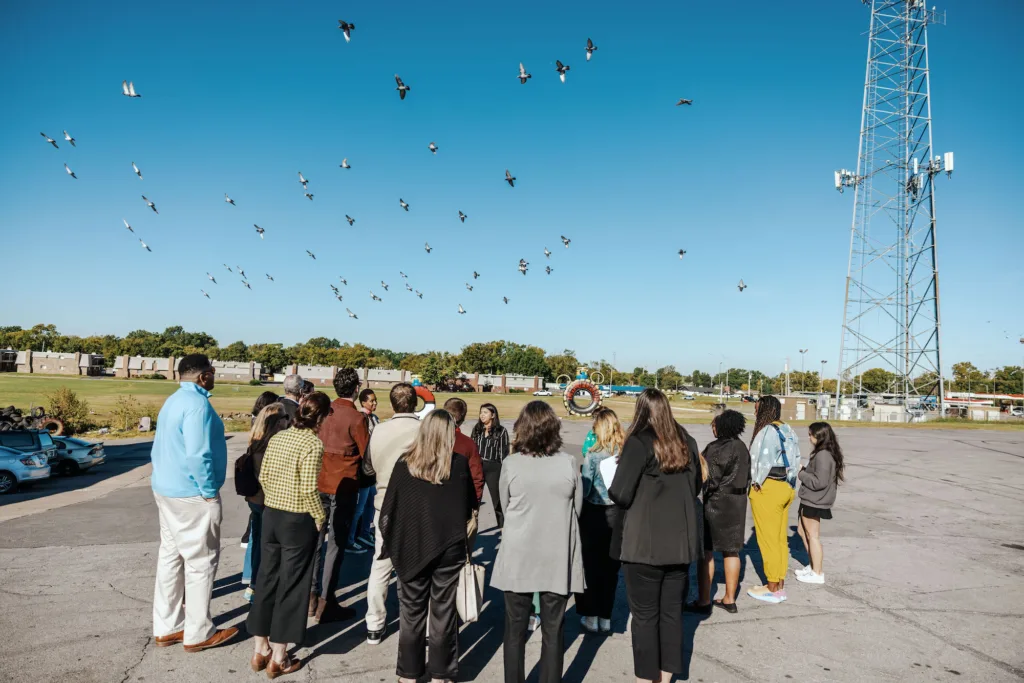
On the evening of October 18th, black clouds of starlings wheeled overhead as the NationSwell team made its way to meet a group of partners and leaders in downtown Tulsa. The group had gathered as part of our Place-Based Impact Collaborative for an immersive, 1.5-day experience designed to explore how community-centered investment and strategic partnerships are working in concert to give new strength to Tulsa. 

The insights and best practices we gathered from GKFF’s approach — and from the experts in attendance — were many, and can better enable communities nationwide to thrive. Although it’s impossible to accurately capture and convey the profound experience of being on the ground in Tulsa, our hope is that this piece can shed some light on what it was like to come together and learn with an incredible group of leaders and inspire you as you strengthen your own community-centered, place-based work.

Day One

The day began with a tour at Greenwood Rising to hear the vital stories at the core of Tulsa’s history and identity: the impact the Trail of Tears, the systems of anti-Blackness that fomented the Race Massacre of 1921, and the cultural reverberations of both eras that are still being felt throughout the city. Despite the violence dotting its past, Tulsa and its residents have persisted — deepening their sense of community and establishing a rich sense of place and culture that makes the city vibrant and unique.

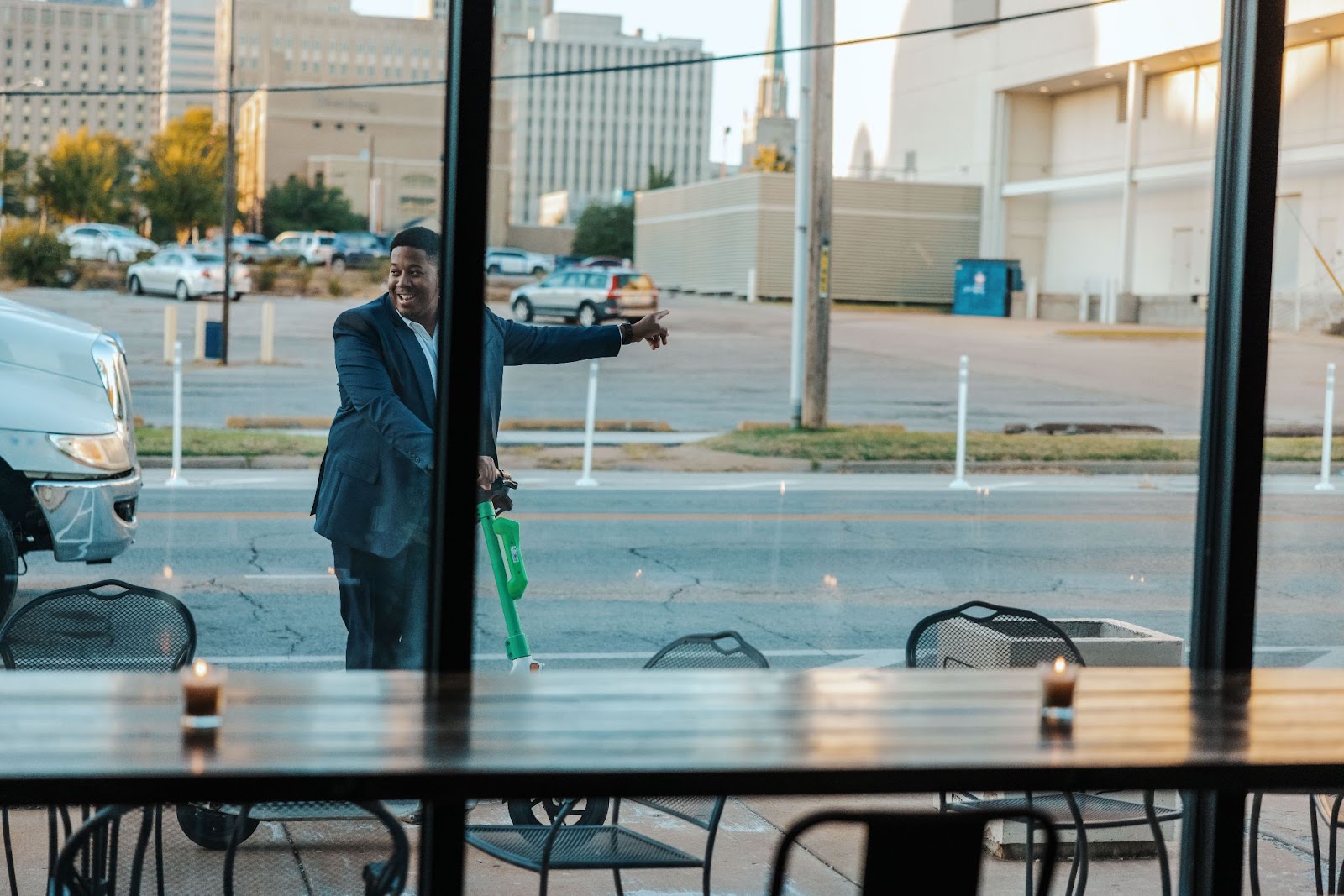
That night, we joined our hosts from George Kaiser Family Foundation for a welcome reception at a speakeasy in the city’s Deco District. After an evening of warm conversation, introductions, and getting to know one another better as we prepared for the next day, Aaron Miller — head of partnerships at inTulsa — announced that he would lead a group by bus to celebrate the city’s popular Oktoberfest, currently in its 44th year. Jonathan Pride, executive director at NPower, announced that he planned to lead a competing group to the same location via the city’s widely-available Lime scooters.

Day Two

East Tulsa


After a quick pit stop for breakfast on Thursday morning, our group set out by bus for East Tulsa, where white flight and the attendant infrastructural divestment have created unlikely opportunities for the city’s growing immigrant population. 

Cynthia Jasso — a program officer on the Vibrant and Inclusive Tulsa team — explained that East Tulsa has become a community hub, learning center, and worker community for newly-arrived immigrants, more than 1,100 of whom arrive at the Plaza Santa Cecilia from Mexico by bus each week. While organizations like Growing Together have done grassroots outreach to meet residents where they are — helping to expand access to vaccines and make PPP loan applications easier for local businesses owners — they ultimately found that there was an overwhelming need for a centralized community hub where people could get the help that they needed. Plaza Santa Cecilia has become that epicenter — a place for the community to gather, relax, take classes, shop, or even acquire permits.


The plaza features beautiful murals, restaurants, and a nightclub, and has become a major source of community pride and belonging — a critical metric of success for place-based investment. 

North Tulsa


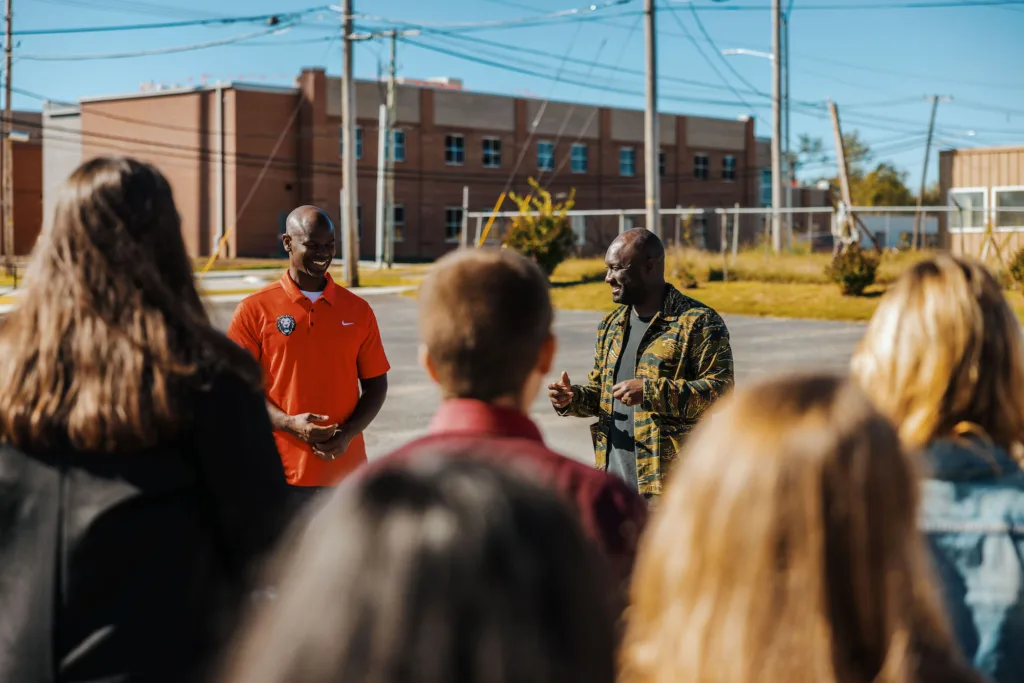
Our next stop was in North Tulsa, where attendees heard from Pastor Philip Abode of Crossover Community Impact and Crossover Bible Church. A former University of Tulsa football player and current high school football coach, Abode’s passion for coaching youth eventually catalyzed an even deeper relationship to mentorship in the city: he now serves as executive director of Crossover Preparatory Academy, which oversees several private middle schools throughout the city.

A majority-Black neighborhood, Tulsa’s north corridor is currently the site of major community development efforts, including a planned 500-unit, mixed-income housing project and new contracts with high-quality, high-paying manufacturing jobs at companies that agree to recruit from within the neighborhood (and nearby Tulsa Technology Center). 

Kendall Whittier


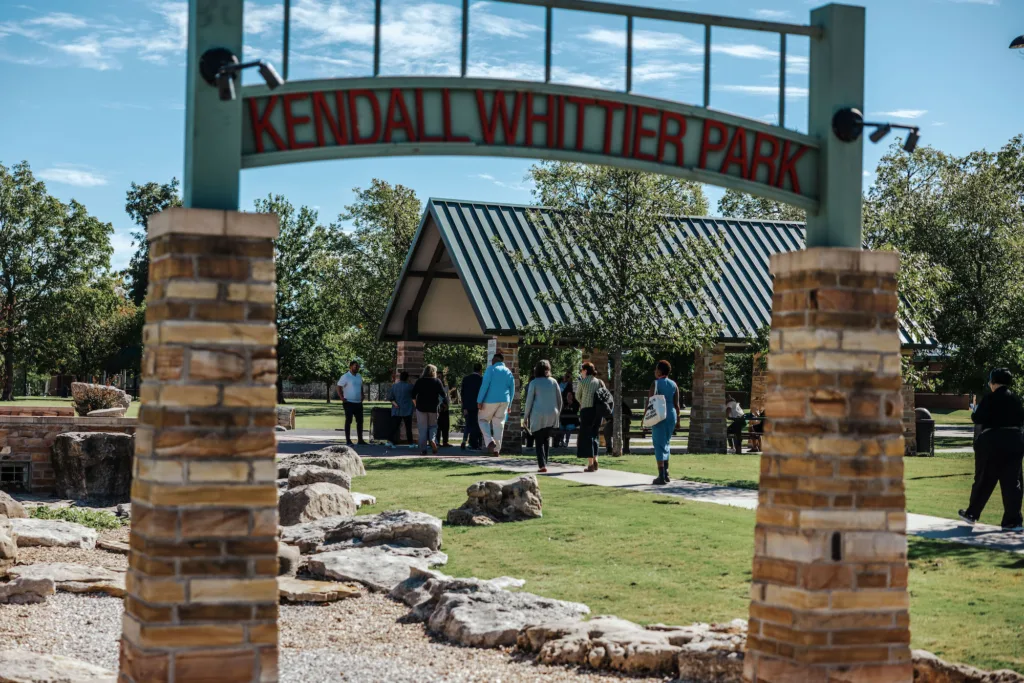
As the bright sun continued to warm up the day, we visited Kendall Whittier Park — located in Tulsa’s historic Kendall Whittier neighborhood — where we learned more about how a mixed-income neighborhood trust has helped  provide stable, affordable housing, and how partners like Growing Together and Tulsa Educare have created educational opportunities and green spaces where children and families can grow and thrive. 

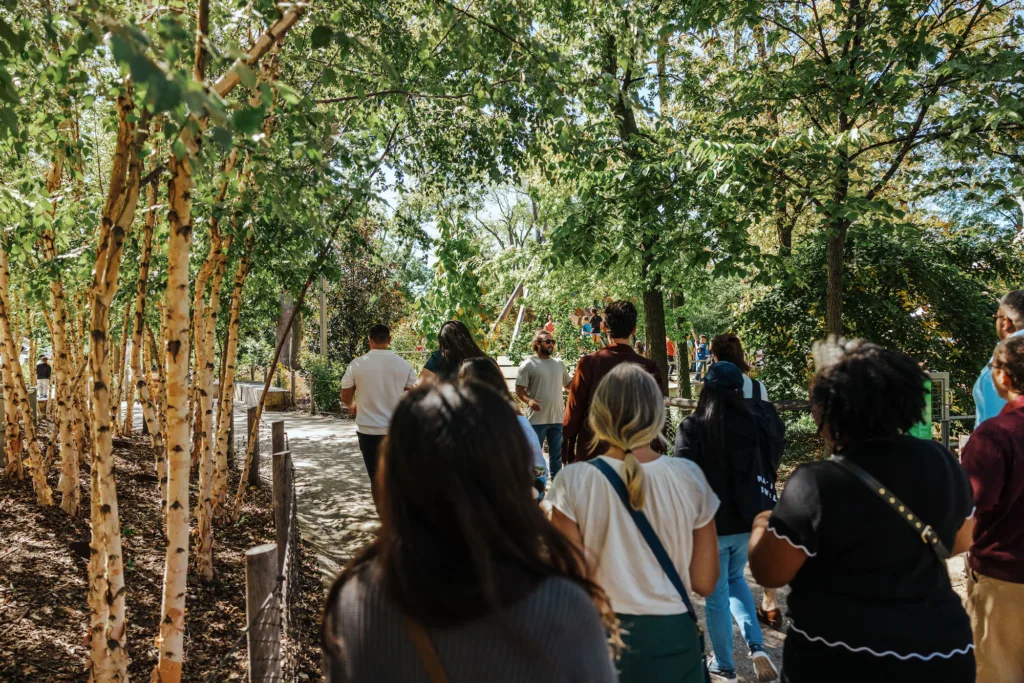
We also had the opportunity to tour The Gathering Place, which words alone don’t really do justice. A sprawling 66.5-acre green space nestled against the Arkansas River, The Gathering Place’s pathways were dotted with pumpkins and its playgrounds had names like “Land of the River Giants,” “Fairyland Forest,” and “Volcanoville.” All park activities are free, and guests can help themselves to kayaks and paddle boats, attend concerts on the lawn, and engage with the park’s many educational programs. 


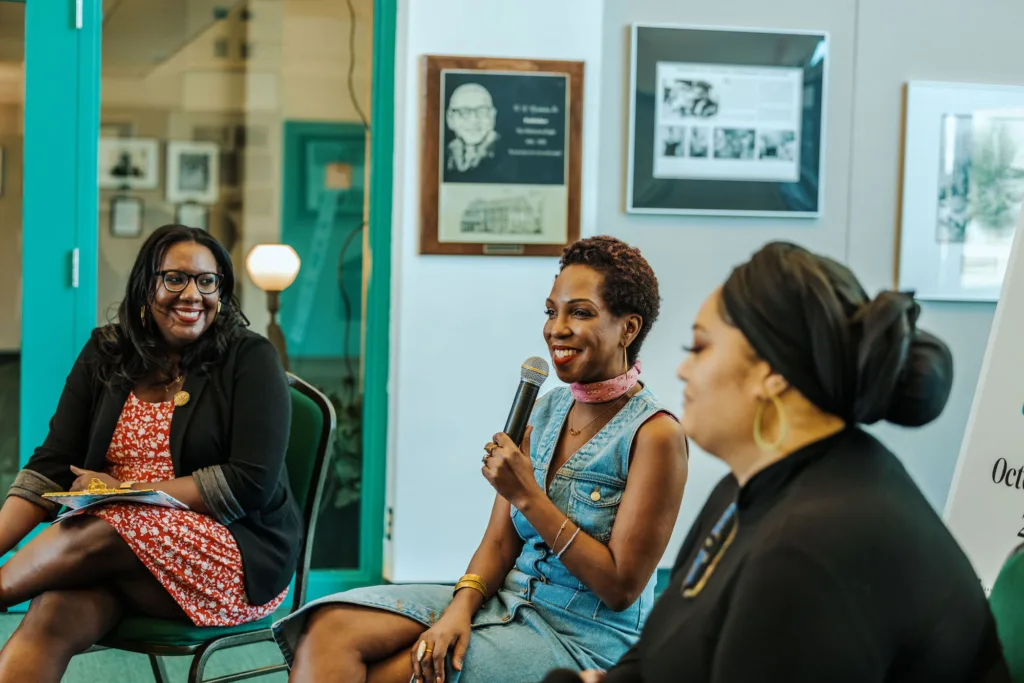
After lunch, we reconvened at Greenwood Cultural Center for a series of panel discussions — first on how to leverage the power of storytelling, and then on how new models of collaboration across the public, private, and philanthropic sectors can help to foster opportunity from the ground up.

During the first panel, Jasmine Dellafosse — Director of Organizing and Community Engagement at EPIC — spoke about the value of telling the stories that run counter to our assumptions. 

“What are the stories we don’t know, and in whose interest is it that we don’t know them?” she asked. 

Panelist Vanessa Garrison — Co-founder and COO of GirlTrek — further emphasized the power storytelling holds in developing a community: deconstructing myths, challenging assumptions and enabling community members to lead change. 

In the second panel, a key insight that surfaced was the recognition that change doesn’t just take a longer grant cycle but can take generations to actualize. The question that emerges, then, is how do we integrate intergenerational change as a metric when measuring impact? 

At the intersection of both of these panels is the emerging understanding that how we measure impact in place-based philanthropy needs to evolve to incorporate more qualitative data, compelling us to reimagine what a thriving community really means.


After a visit to Archer Studios to learn about the Tulsa Artist Fellowship — and a ceramics activity with fellow Raphael Corzo — participants had a few minutes to rest and recharge before coming together for a NationSwell Signature Dinner to reflect on the events and learnings of the day. 

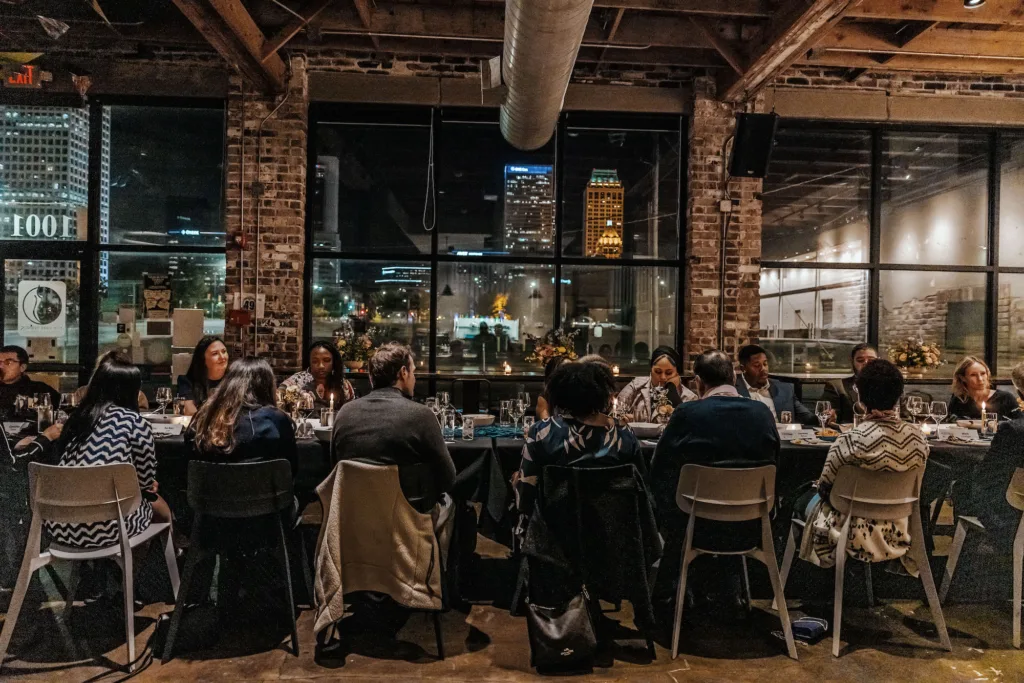
Hosting us for the evening was the team at et al., a collective of chefs working collaboratively to “build a more delicious and equitable future for the food and beverage industry in Tulsa.” Aptly named to reflect the important but often overlooked or unknown people who help to make an ambitious vision into a reality, the symbolism behind et al.’s name and mission had a beautiful symmetry with the focus of our visit to Tulsa — and the patchwork of organizations and solutions we’d witnessed firsthand on the ground there. 


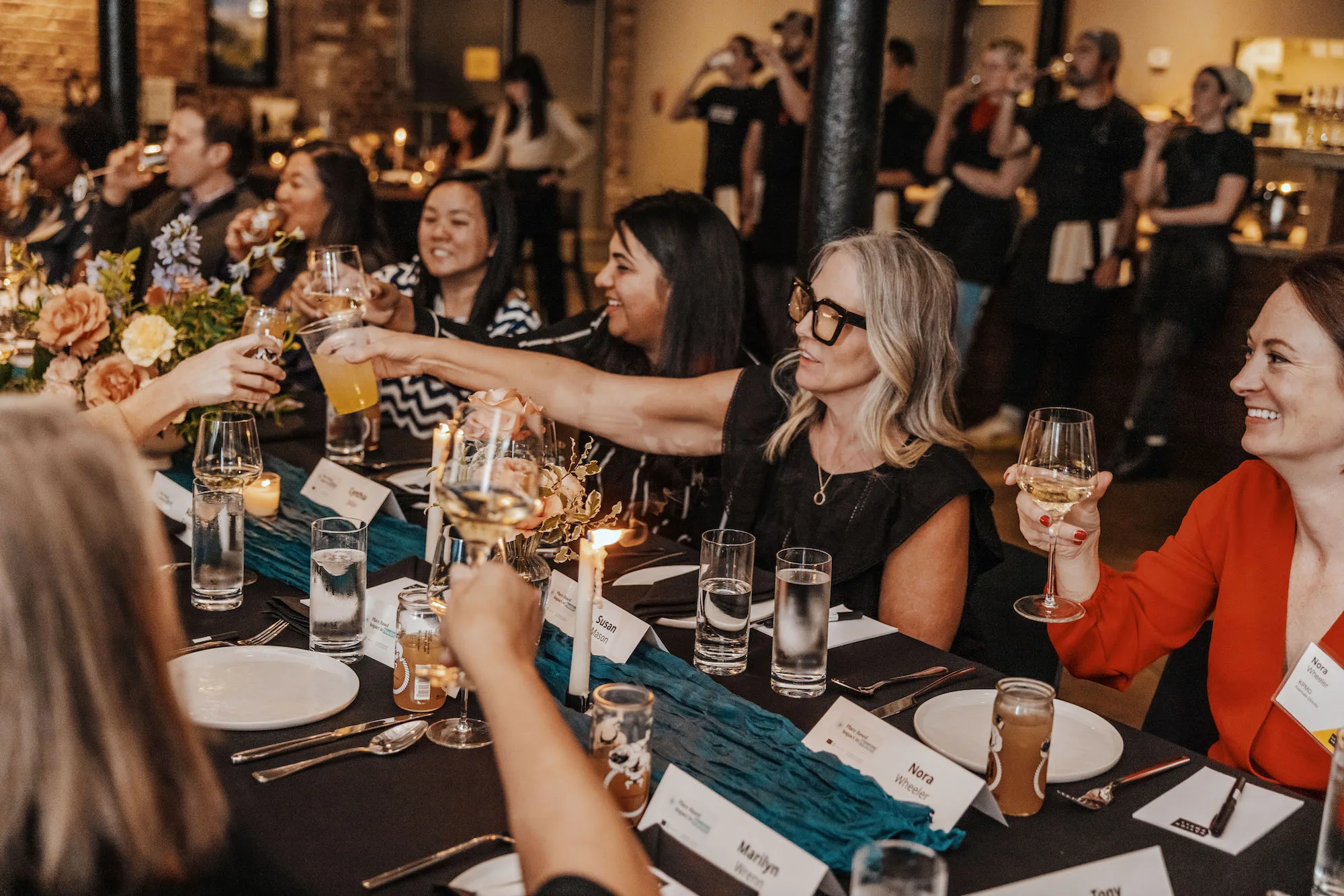
Attendees dove deep into what had inspired and moved them during the course of the meal, which was themed around the idea of breaking bread (as chef Colin Sato explained, “You have now broken bread with Tulsa, and now it’s a part of you”). There was a discussion of some of the central challenges to their own place-based work, with members laying out the approaches, tools, and new opportunities for partnership they were excited to bring back to their own communities. 

Like the chefs in et al.’s culinary collective, our time in Tulsa was distinguished by the patchwork of seemingly disparate, often undersung voices we heard from joining together to create a beautiful and undeniable chorus of solutions. While partners on the ground maintain different focuses in the work that they do and the neighborhoods they serve, everything in Tulsa has a certain harmony to it; the work comes together to hum like a well-oiled machine. As we packed up to leave on Friday, we couldn’t help but think about how this model of community impact — where every voice, program, and initiative happening on the ground is truly greater than the sum of its parts — has the potential to transform not only communities, but the world.

We’re so excited to have plans for more in-person, immersive experiences in the works for the near future. This incredible experience was part of our Place-Based Impact Collaborative. Our Collaborative model is based on the idea that the challenges we face call for collaboration and shared action to achieve the impact we seek on a variety of issue areas. Together, with cross-sector leaders, we illuminate challenges and opportunities in the space and align on action to advance each other’s work, and the field as a whole.

We encourage you to read more about our different Collaboratives and to contact us to get involved if you see one that resonates with you and your work. 


NationSwell Collaboratives are a new initiative convening cross-sector leaders to work in new ways on major issues affecting our lives, our nation, and our world. Learn more about our current offerings here.

How Johnson & Johnson is Accelerating a Health Equity Mindset: the Business Match Fund

How Johnson & Johnson is Accelerating a Health Equity Mindset: the Business Match Fund

In the U.S., health disparities for people of color relative to White individuals include higher rates of illness and death and less access to quality care. In response to longstanding and systemic healthcare inequities, Johnson & Johnson (“J&J”) launched its “Our Race to Health Equity” initiative (“ORTHE”) in November 2020. The bold under-taking “aspires to help eradicate racial and social injustice as a public health threat by eliminating health inequities for people of color” with a $100 million commitment over five years.

The company will invest half of ORTHE’s $100 million through external grants, programs, and initiatives by 2025. To embed a health equity mindset into J&J’s everyday business practice and strategy, J&J has also committed to driving change from within their large enterprise, allocating $50 million over five years to a Business Match Fund (“BMF”). The BMF is an incubator and catalyst for alignment at all levels of J&J by providing dollar-for-dollar co-investment alongside business units seeking to advance a health equity-oriented initiative in the United States. 

This case study details how Johnson & Johnson designed and executed the Business Match Fund to accelerate the adoption of a health equity focus across its divisions and, consequently, to seed large-scale organizational change. Their approach includes five core elements, explored further in the report:

  1. Design a funding approach that promotes innovation, long-term thinking, and engagement
  2. Use a varied toolkit to invite applications from across the enterprise
  3. Administer a layered and inclusive review process to select fund recipients
  4. Track impact centrally and regularly, leaving room for flexibility
  5. Tell the story of catalyzed impact internally and externally

Share this report

Corporate engagement with HBCUs

Corporate engagement with HBCUs

The Supreme Court’s 2023 decision to strike down affirmative action in higher education may result in decreased racial diversity at public and private colleges, making the role of historically Black colleges and universities (HBCUs) even more vital in advancing opportunities for students of color. Their impact today is essential, and applications for enrollment are increasing, yet HBCU funding is lacking in comparison with other higher education institutions. 

In response to member interest, NationSwell reviewed the available data on HBCU funding levels (historical and current), their benefits to individuals and communities, and the most common forms of partnership between companies and schools. We’re pleased to share a summary of what we learned in the hopes that it helps our member organizations better understand their opportunity to support HBCUs.


Share this report

What we can learn from George Kaiser Family Foundation’s place-based work in Tulsa, Oklahoma

This fall, NationSwell launches its first immersive experience on October 18 and 19 in Tulsa, Oklahoma for Place-Based Impact in Practice: An Immersive Experience to Explore Community-Centered Funding and Action. Hosted by George Kaiser Family Foundation (GKFF) as part of our recently launched Place-Based Impact Collaborative, this hands-on event will take place over the course of one and a half days and will allow attendees to explore on-the-ground examples and innovative strategies to foster thriving and inclusive communities, particularly in fast-growing cities and rural areas. We’d love for you to join us.

But, you may be thinking, why Tulsa?

Since its establishment in 1999, George Kaiser Family Foundation has held, as its primary philanthropic goal, cementing Tulsa, Oklahoma, as a vibrant, inclusive, and prosperous environment where children and families can flourish. 

As the primary supporting organization of the Tulsa Community Foundation, GKFF funds organizations and efforts that directly service the greater Tulsa area, all while adhering to its guiding principle, “no child is responsible for the circumstances of [their] own birth.” Foundation investments include robust early childhood education initiatives that serve approximately 2,000 children in year-round education and care; over $100 million earmarked for the arts; economic development initiatives to attract and retain local businesses and talent as well as transform 100 acres of Tulsa’s iconic riverfront into a dynamic and world-class centralized park; neighborhood programs to foster a strong sense of community; and a work stipend program that has welcomed more than 2,500 diverse professionals to the city. 

GKFF harnesses a nimble, entrepreneurial spirit, which has helped to adeptly address community needs. Their approach is holistic and community-centered and driven–designed to lead with the community’s needs so that children and families in Tulsa can thrive. What sets their investment strategy apart from other philanthropic models is that it’s not only nuanced, but multi-pronged–touching almost every part of the Tulsa ecosystem. Parent engagement and early childhood education, health and family well-being, civic enhancement, and breaking the cycle of intergenerational poverty are all vital pillars of community prosperity.

George Kaiser Family Foundation’s holistic approach

In order to create and maintain the conditions for a thriving local community, GKFF has taken a holistic, all-encompassing approach to funding that sees early childhood education; health and wellbeing; neighborhood development; thriving public spaces; criminal justice; housing; and arts & culture as vital pillars of economic prosperity. During an onsite visit in March 2023, NationSwell got a firsthand look at how these key initiatives operate on the ground in Tulsa; below are some of the highlights we observed.

  • Parent Engagement and Early Childhood Education

GKFF provides support and resources to young Tulsa families to encourage parent‐child engagement and interaction. Through initiatives like Tulsa Educare and Early Learning Works, families and children are encouraged to pursue skill-building opportunities and early learning workshops, and are given the chance to connect with community and faith-based organizations that help to promote literacy and learning.

  • Civic Enhancement

Robust public spaces provide abundant natural spaces for residents to relax, convene and unplug. Tulsa’s 100-acre riverfront park, Gathering Place, now boasts a skate park, a picnic grove, cultural events and festivals for all ages, and free educational programming to support early childhood development. A $465 million transformation of more than 66 acres in central Tulsa, the park is one of the largest and most ambitious public parks ever created with private funds. The Foundation undertook a similarly ambitious project with Guthrie Green — a former truck loading facility that has now been converted into a 2.6-acre urban park, located in the heart of the Tulsa Arts District and a true living room for cultural programming in downtown Tulsa. 

Investments in a thriving arts scene and strong cultural values are integral to GKFF’s community approach. Both the Bob Dylan Center and the Woody Guthrie Center operate under auspices of the American Song Archives, a project of George Kaiser Family Foundation, and dedicated artist residencies, fellowships, and programming helps to further stimulate Tulsa’s growing arts community. 

In the same Tulsa Arts District as Guthrie Green sits the GKFF-funded Holberton School–a credentialing school for software developers. In addition to training career-ready developers, Holberton provides living stipends to students and tuition incentives to stay in Tulsa both pre- and post-graduation. 

Partnership is at GKFF’s core. GKFF takes a program-forward approach — meaning the Foundation serves as co- or sole owner of many of the LLCs that operate the aforementioned initiatives in Tulsa. When visiting the city, you can explore parks, cafes, bakeries, restaurants, food trucks, and programming initiatives that provide Tulsa residents with meaningful ways to stay engaged in their communities. 

  • Workforce Development

GKFF’s dedication to developing Tulsa’s tech-led inclusive economy is something to aspire to. Tulsa Innovation Labs (TIL) was founded with support from GKFF to establish a city-wide strategy for inclusive, tech-led growth. TIL designs and launches economic and workforce development initiatives in Tulsa’s four emerging tech clusters: virtual health, energy tech, advanced air mobility and cyber, and aims to support the growth of startups, train diverse talent, expand job opportunities, and spur academic innovation. And through the network of local workforce programs in Tulsa, businesses can more easily connect with key hires and launch operations in Tulsa via inTulsa’s talent, relocation, and growth solutions.

36 Degrees North — Tulsa’s basecamp for entrepreneurs, innovators, and startups — works to provide the high-quality workspace, resources, and spirited community that entrepreneurs need to build growing companies and drive economic impact in Tulsa. Workforce development programs like Tulsa Remote — which offers participants a $10,000 grant in addition to a membership at a local co-working space, support in identifying housing, and regular community-building opportunities — have helped draw new workers into Tulsa and boost retention rates for local populations.

  • Health and Family Well-Being

To address the longstanding problem of high recidivism rates in Tulsa County, GKFF has partnered with the Justice and Mobility Fund to launch JusticeLink — a compendium of resources designed to help those navigating the criminal legal system in Tulsa to access a full spectrum of community-based services. JusticeLink primarily focuses on providing court and resource navigation, while also helping individuals to access wraparound supports like phones, IDs, or benefits enrollment services.

And through neighborhood development initiatives like ElevateEast — which works collaboratively with residents, community-based organizations, and public and private entities to invest and support immigrant families living in East Tulsa — residents can further access the wraparound support they need to thrive.

Affordable housing also has a huge role to play in ensuring family wellbeing, and neighborhood development initiatives like Growing Together and Kendall Whittier West Park have been intentionally designed to create vibrant, mixed-income communities and an intense focus on the birth-to-college-to-career pipeline.

  • The Tulsa Artist Fellowship
    Dedicated artist residencies, fellowships, and programming helps to further stimulate Tulsa’s growing arts community. Established in 2015, Tulsa Artist Fellowship was created to address and mitigate the challenges facing artists and arts workers living in and joining the city. Through intentionally crafted programming, the Fellowship celebrates and supports artists across all mediums by providing them with $150,000 over three years in addition to a $12,000 yearly housing stipend. 

Stronger together

GKFF’s approach has necessitated a rethinking of scale and impact as being simultaneously micro and macro. Seemingly hyperlocal initiatives — like the neighborhood development in Kendall Whittier, or the transformation of public spaces into vibrant parks — can scale to an overall transformation that impacts community members’ wellbeing and livelihood. For GKFF, scale is ultimately not about reaching hundreds of millions of people to solve for one issue; it’s about making meaningful and impactful investments that tackle root causes, identify and address social determinants, and take into account the specific moments that come together to make up a well-lived life.

All of us invested in place-based work can learn from GKFF’s approach, bring insights back to our communities, and integrate them into our own strategies — all uniquely tailored to each place. Place-based strategies are inherently collaborative and rely on strong partnerships: together, we can learn from each other, lean on each other’s strengths, and propel strategies that have a community’s best interest at its core.  

This is why we can’t wait to share in the Tulsa experience and the work of GKFF with the broader NationSwell Community this Fall! If you are interested in joining us you can register here or learn more about GKFF’s work or the Immersive Experience on October 18-19 by emailing Joy Gregory at [email protected].