On a sunny, humid day in May, the NationSwell team visited Eagle Haven: a conservation oasis that stretches its scenic shores four miles along the Kissimmee River in Florida. Our guides were a small crew from the Live Wildly Foundation, who are dedicated to the long-term preservation of Florida’s nature and waters. We piled onto an open-air bus, immersing ourselves in the stunning vista and full effects of lovebug season: the gentle buzz of wings honeymooning on or around your face.
The Live Wildly crew were generous with their knowledge of the native wildlife and habitats, and their passion for protecting these lands. Each of them comes from a long line of Floridians. They shared memories from childhood of the lush, untouched landscape where they camped, hunted, and grew up.
Eagle Haven represents a brighter and more realistic future for conservation in Florida, and can serve as a model for environmentally focused initiatives across the United States — and how supporting the land can also nurture the local economy. The conservation efforts on the Eagle Haven ranch are hyper-specific to the environmental issues that the central Florida region faces; and offer lessons for how such place-based solutions can be applied far beyond the region.
During our short visit to Eagle Haven, we learned how conservation is not just an ecological matter but also an economic and a human one.
As we looked out at the marsh waters, Meredith Budd, Live Wildly Foundation’s Deputy Director, explained that most Floridians who live in the cities and their surrounding suburbs don’t fully understand how connected they are to rural areas like Eagle Haven. Protection of these lands and waters is not just essential for the rich plant and animal life that make up the diverse Everglades ecosystem; they also play a key role in access to clean drinking water for the majority of the state and neighboring states, Alabama, Georgia, and South Carolina, which all access drinking water from the Floridan Aquifer System.
Conserving the lands that make up the Florida Wildlife Corridor is an obvious priority. Keeping it in the hands of the families who have stewarded them for generations is the harder part. Conservation takes time, money, and expertise, and for many landowners the math simply doesn’t work. That is why Live Wildly advocates for a balance between ecology and economy, helping landowners navigate the conservation programs available to them so they can protect the land and wildlife in their care without sacrificing their livelihoods. Payment for Ecosystem Services is one such tool: landowners are compensated for keeping habitat in tact, recharge aquifers, and improving water quality, earning a return on public benefits their land is already providing.
People are as important to the land as the land is important to us. We have the power to decide the effect we want to have on the environment.
Plants as Medicine
About a quarter of modern pharmaceuticals trace back to plants, and a study on global medicinal plants throughout history showed that the strongest predictor of the abundance of these plants in a given locality was how long humans had been living in the area. The findings of this study show that regions where not only biodiversity, but also traditional understandings of the medical uses of native plants are lost, exhibit a decrease in the number of medicinal plants. Our curiosity and innovation in conservation is vital if we want to utilize and preserve medicinal plants.
NationSwell is thrilled to be partnering with Live Wildly and Arnie Bellini to host an immersive 2-day experience at Eagle Haven this November, where attendees will learn about Payment for Ecosystem Services and other innovative conservation and environmental protection activities, and meet more than a few cows and the unique wildlife that call the ranch home.
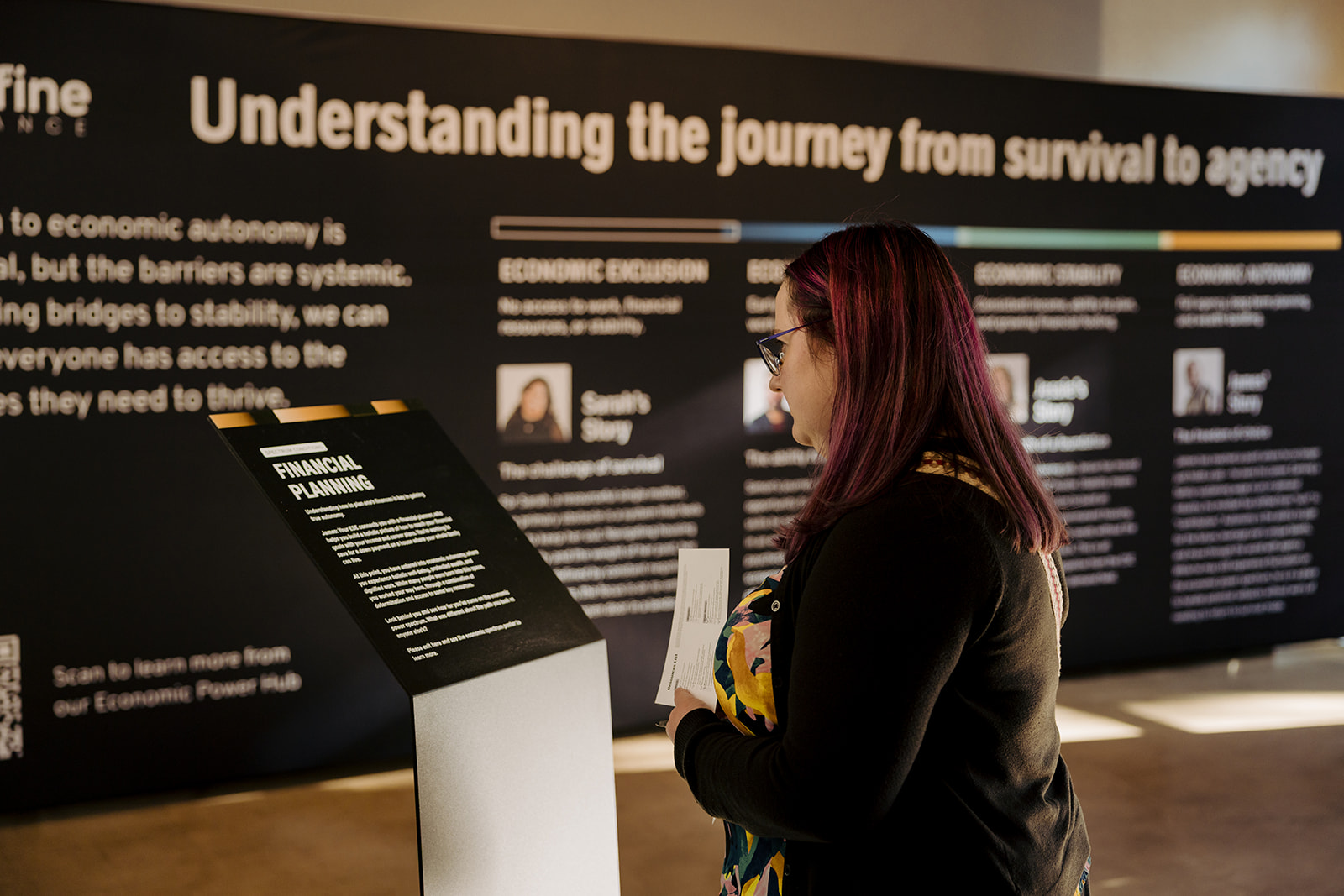
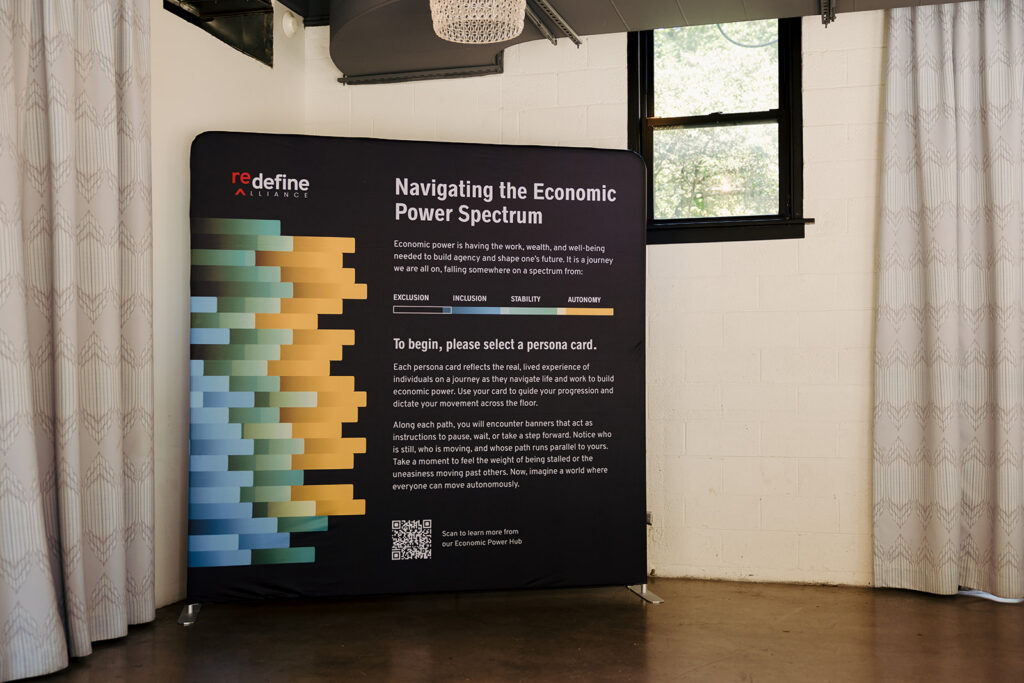
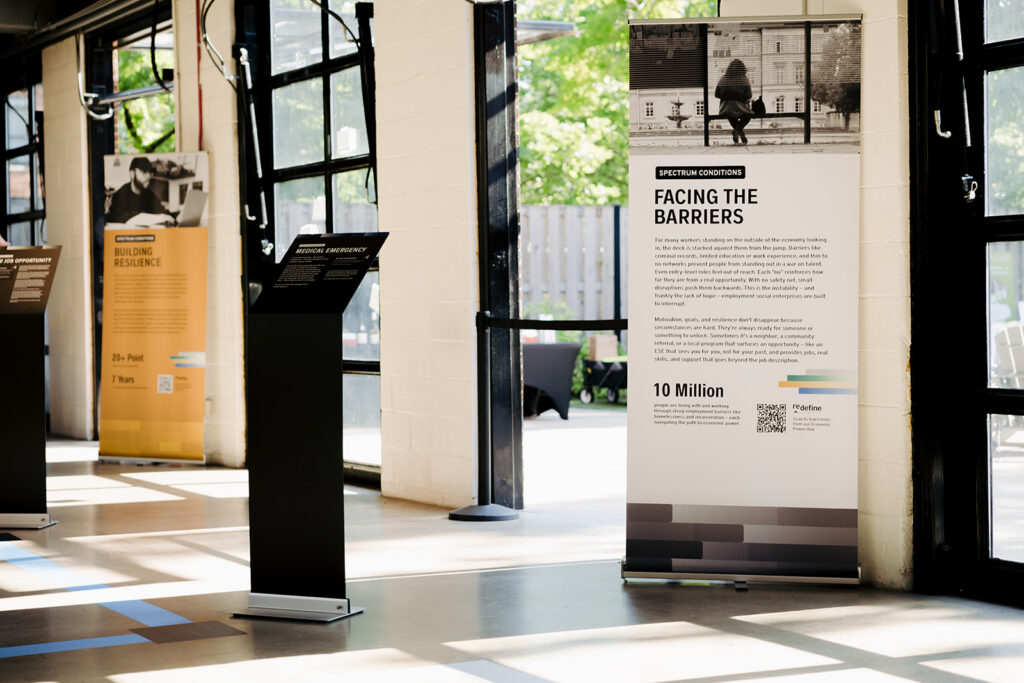
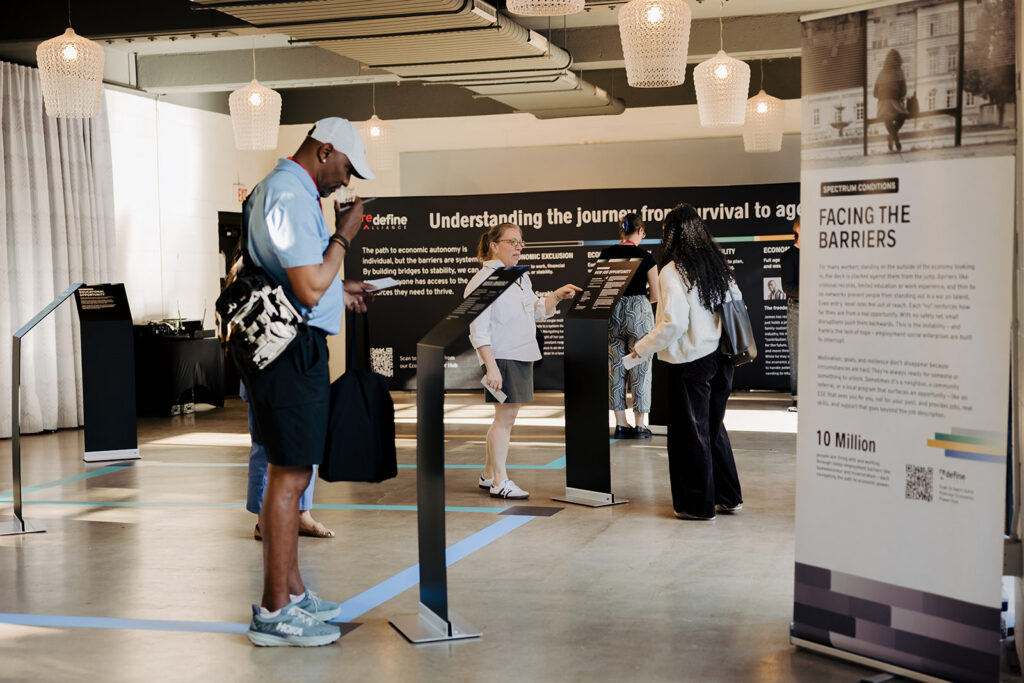
Economic power is about more than employment. It’s the combination of work, wealth, and well-being that gives people the agency to shape their futures. Together with Redefine Alliance, NationSwell brought this framework to life through the Economic Power Hub, translating research into tools, stories, and experiences that help practitioners advance economic opportunity.This work was further translated into an experiential activation.
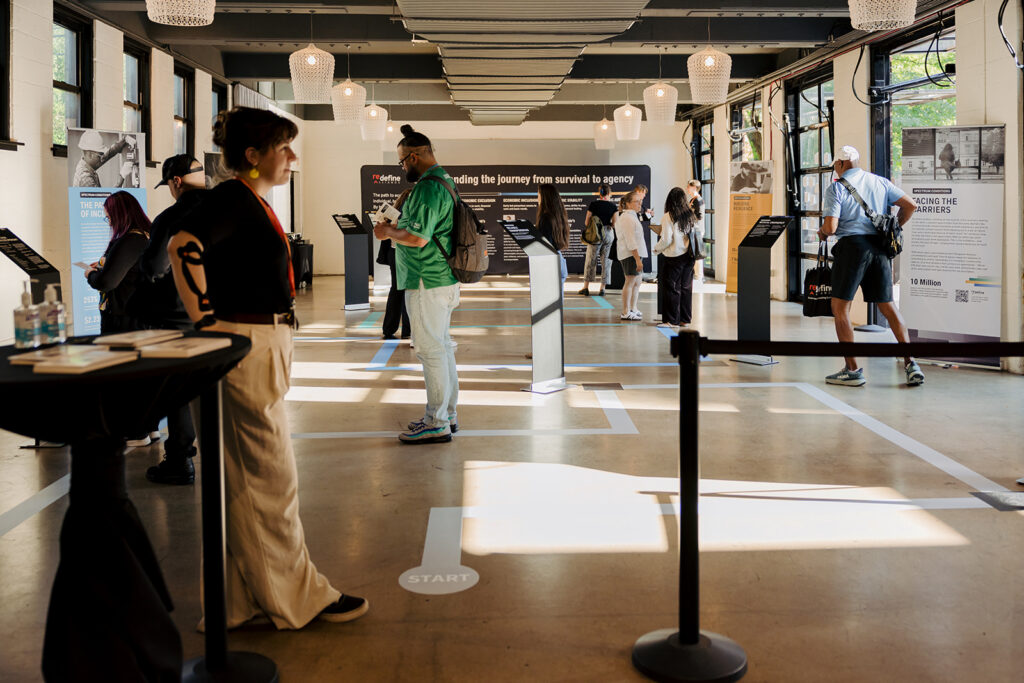
Sometimes, the best way to understand a concept is to experience it physically. That’s what we worked to do with our research on economic power at our 2026 Redefine Alliance community retreat. Through an interactive experience, guests stepped into the shoes of someone navigating barriers to employment and followed their journey toward building economic power. Many guests at this event were social impact practitioners, who saw their employees (or themselves) represented in the stories of the profiles they followed. Others were funders and workforce partners, and were invited to experience what barriers to employment truly feel like, day to day — and to identify how few resources might be standing in the way of someone’s advancement towards economic stability.
Our ultimate, audacious goal is to build a more inclusive economy, where the 10 million people with systemic barriers to employment — like people with histories of incarceration or housing instability, or survivors of domestic violence — are seen for their innate potential. That’s why these moments of direct engagement matter to us: storytelling helps people viscerally understand what an opportunity means in someone’s life.
NationSwell publishes perspectives from leaders across our community to encourage discussion and advance new ideas. The views expressed are those of the partner.
As emerging technologies continue to shape the future of work, the skills people need are evolving just as quickly. AI, cybersecurity, cloud computing, and data analytics are changing how work gets done across sectors, while employers place increasing value on practical experience, durable skills, and the ability to keep pace as technology changes.
IBM SkillsBuild was designed to meet those needs, engineered around the simple premise that more people should have access to clear, practical ways for building the skills that evolving and emerging roles require.
A free education program aimed at increasing access to technology education, IBM SkillsBuild can be accessed directly through SkillsBuild.org or through the partner organizations already working with learners. Those partners — including schools, universities, nonprofits, government agencies, and employers — can help tailor IBM SkillsBuild content to the learner groups they serve, making learning pathways more relevant to local needs and workforce opportunities.
At its core, IBM SkillsBuild reflects IBM’s belief that access to skills can expand access to opportunity. By combining digital learning with credentials, mentorship, applied projects, and partner-led support, the program aims to help learners both understand emerging technologies and see a realistic path forward in a changing economy.
“The technology skills may get you in the door, but those durable skills are what will keep you there.”
— Lydia Logan, Vice President, Global Education and Workforce Development, IBM
The Problem:
The pace of technological change has created a widening gap between the skills workers need and the pathways many learners have access to. Employers increasingly need workers with fluency in fields like data analytics, cybersecurity, cloud computing, AI, and other emerging technologies, but traditional education and hiring systems do not always move quickly enough to help learners build, validate, and apply those skills in real time.
That disconnect is especially consequential for those who have faced historical barriers to accessing technology careers. For many learners, the challenge lies in knowing where to start. Many learners reported to IBM that they did not see a career in technology as a viable option for themselves, in part because they believed training would be too expensive — signaling both a workforce challenge and an opportunity gap.
The lightning-fast evolution of AI has only made skilling challenges more acute. And as IBM has recognized, the problem won’t be solved through technical training alone; learners also require durable workplace skills, career-relevant digital credentials, hands-on experiences, and support from real people who understand what prospective employers are actually looking for.
In our current environment, the problem is not simply helping learners to acquire a fixed set of skills, but also to help them build the confidence, adaptability, and good judgment they will need to keep learning as the world of work continues to be transformed.
The Solution:
IBM designed IBM SkillsBuild as a free technology education program that gives learners access to technical and workplace skills training, digital credentials, mentorship, and hands-on projects.
The program offers multiple levels of engagement, from webinars and workshops to cohort learning experiences, capstone projects, and industry-recognized certificate pathways. As AI reshapes entry-level work, these hands-on projects give learners opportunities to apply what they have learned and build a portfolio of work they can share with potential employers. Unlike many learning programs, IBM SkillsBuild also makes its IBM-branded digital credentials available at no cost, giving learners a way to validate their skills without taking on the added financial burden of paying to earn credentials.
That kind of flexibility is integral to the model. IBM collaborates with organizations to identify the learning pathways and experiences most relevant to their learners, while IBM’s global network of Academic Ambassadors serves as mentors and guest lecturers, bringing industry expertise directly into the learning experience and helping students build their professional networks. In that way, IBM SkillsBuild ultimately functions as a partner-enabled learning ecosystem designed to help people build, validate, and apply skills in ways that connect to workforce opportunities.
“It’s very hard, if not impossible, to know what will be needed even two years from now. Maintaining that mindset of continuous learning is critical.”
— Lydia Logan, Vice President, Global Education and Workforce Development, IBM
Why It’s Different:
IBM SkillsBuild is designed around the understanding that learning does not happen in a vacuum. Through its collaborations with schools, employers, and other institutions, IBM works with the organizations that already have a working understanding of the learning needs of their communities, allowing for more bespoke pathways and formats.
IBM SkillsBuild is not positioned as an alternative to a university education; it can also complement and strengthen existing degree pathways. University partners such as University College London integrate IBM SkillsBuild digital credentials into courses, allowing students to earn industry-recognized credentials as part of their degree programs and giving employers a fuller picture of what graduates know and are able to do. Other universities might incorporate IBM SkillsBuild into semester-long capstone projects rather than simply directing students to standalone online courses. Through a collaboration between IBM and Salesforce, learners can also complete a joint IBM SkillsBuild/Trailhead pathway, earn a joint credential, receive a coupon for a Salesforce certification, and potentially enter a hiring pool of Salesforce clients.
In turn, IBM contributes its technology expertise, learning content, employee mentors, and industry knowledge. That combination of access, validation, and partner-led support comes together to allow IBM SkillsBuild to function as a way for learners to build skills, demonstrate them, and connect that learning to real-world workforce expectations.
Impact Highlights:
IBM has committed to skilling more than 30 million people globally by 2030
More than 22 million learners reached through IBM SkillsBuild and other programs to date
IBM mentors help learners build professional networks and understand industry expectations.
IBM SkillsBuild is consistently updated to map cleanly onto the skills employers are actually hiring for.
“We were in an era where you had the computer and data science majors, and they were the builders and everyone else was a user. Now we’re in a world where everyone can be a builder.”
— Lydia Logan, Vice President, Global Education and Workforce Development, IBM
Key Enablers:
IBM’s internal technical expertise. IBMSkillsBuild draws from IBM’s own internal knowledge base, which helps ensure that learners are building skills that accurately reflect where technology and employer needs are headed.
Free credentials. Offering IBM-issued digital credentials at truly no cost gives learners a more viable way to validate their skills and demonstrate them to employers.
Human support from IBMers. By giving learners access to people already working in the industry, IBM SkillsBuild helps participants build professional networks and connect to real career pathways.
Ecosystem partnerships. Through partnerships with universities, nonprofits, governments and employers, IBM is able to explore ways to connect completed learning pathways to more certifications, hiring pools, and employer demand — helping learners build evidence of their skills and helping employers recognize talent more seamlessly.
Responsible AI and workforce frameworks. IBM SkillsBuild incorporates outside frameworks and best practices from organizations like the EdSafe Alliance, the World Economic Forum, and Cisco-led consortium work on ICT jobs. Those inputs help the program stay grounded in responsible technology use while keeping pace with how AI is reshaping education and work.
Scaled Impact: In addition to offering direct support for learners, IBM SkillsBuild is designed to function as a global skilling infrastructure that can be adapted across geographies and learner groups. That scale is what allows IBM to align IBM SkillsBuild with emerging workforce priorities across different markets. In the U.S., for example, IBM has committed to skilling 2 million people on AI by the end of 2028; in India, the company has committed to skilling 5 million people in AI literacy and fluency.
IBM is also working to make IBM SkillsBuild a stronger bridge between education and opportunity over time. By mapping to the capabilities its own talent team looks for in new hires, IBM SkillsBuild points toward a workforce approach in which degrees, credentials, and demonstrated competencies can work together to give employers a fuller understanding of what learners know and can do.
Lessons for Other Leaders:
Build from what your organization already does well. IBMSkillsBuild draws on IBM’s existing core strengths: technology expertise, skilled employees, and a deep understanding of workforce needs. Start with the assets you already have.
Make credentials attainable without additional barriers. Free courses might help learners begin, but credentials help them validate their skills.
Lean on collaborations instead of building everything from scratch. Access improves when programs are designed around learners’ organic starting points.
Teach responsible use alongside fluency. As more and more people gain access to powerful tools like AI, leaders need to be intentional about pairing skill-building with safety, security, and responsible use frameworks.
Treat continuous learning as part of the model. In a workforce shaped by AI and other fast-moving technologies, no program can be built around a fixed endpoint. The goal should be helping people stay curious, adaptable, and ready to keep building new skills over time.
In January 2023, leaders at Salesforce looked around and saw a world that was changing. Defying the initial predictions of its detractors, crescendoing ChatGPT usage had already pushed the platform past 100 million active monthly users only two months after its launch, and LLMs in general were showing every sign of being poised to take the world by storm. But at the same time, nonprofits were contending with what has by now become a familiar reality: rising demand, shrinking resources, and limited capacity to experiment with emerging technology.
Seeking to address those widening funding gaps and deficits of technical support, Salesforce launched the Salesforce Accelerator — Agents for Impact: a cohort-based program designed to help nonprofits responsibly adopt AI through a combination of unrestricted funding, technical coaching, pro-bono support, and access to Agentforce, Salesforce’s enterprise agentic AI solution. By leveraging its organizational superpowers, Salesforce set out to help nonprofits experiment with, implement, and scale the AI solutions that hold the potential to help them better deliver on their missions and meet their current demand.
“Historically in the social sector, the organizations that are on the front lines are left behind in technological revolutions.”
— Amy Guterman, Senior Director, AI for Impact at Salesforce
The Problem:Nonprofits are under increased pressure to adopt transformative new technologies at a moment when they are also contending with persistent resource constraints. While AI tools hold the potential to rapidly reshape how organizations operate, many frontline organizations lack the technical expertise, implementation support, flexible funding, and organizational capacity to safely experiment with them — despite the irony that they often serve the very communities most likely to be affected by the emergence of new tech.
Those challenges are compounded by a philanthropic landscape that has historically tended to underfund operational infrastructure and devalue early-stage experimentation, leaving many nonprofits without the resources needed to responsibly test and implement new tools.
The Solution: Salesforce designed the Accelerator program as a comprehensive support system that uses three primary levers to support nonprofits: unrestricted grant funding (typically between $200,000 to $400,000); access to Salesforce’s proprietary technology, including Agentforce; and hands-on technical guidance from Salesforce’s own employees. Through an 18 month, cohort-based model, participating nonprofits receive strategic coaching, implementation support, and training in the form of a dedicated six-month curriculum on issues like governance, data strategy, and agentic AI best practices that they can convert into mission-aligned deployment.
That pro bono support has become one of the program’s defining features. Rooted in Salesforce’s “1-1-1” philanthropic model — which commits 1% of the company’s equity, product, and employee time to supporting nonprofits and schools — participating organizations are paired with volunteer technical architects, project managers, and solutions engineers from Salesforce who work alongside them as ad hoc consultants throughout the implementation process. According to Salesforce, these volunteers function not only as technical advisors but as strategic thought partners, helping nonprofits build the confidence, governance structures, and strategy needed to use AI tools effectively and responsibly.
Why It’s Different:
“A check is great. The technology is great. But unless you have the pro bono volunteers — the technical experts helping you best use the funding or best use the technology — you either don’t use it, or you burn through all your funding hiring consultants before you’ve even built the solution.”
— Amy Guterman, Senior Director, AI for Impact at Salesforce
Rather than simply providing funding or software licenses, the Accelerator was intentionally designed around the understanding that many nonprofits lack not only the internal capacity to independently navigate rapidly evolving AI systems, but the space to experiment, navigate challenges, and determine ROI prior to fundraising. This “risk-tolerant” support, in particular, is what sets the Accelerator apart: Rather than requiring organizations to arrive with fully articulated use cases, the program was designed as a space for learning and experimentation — a proving ground that is critically needed given the rapid pace of technological change.
And in the spirit of that learning, the Accelerator also has broader ambitions to become an ecosystem that acts as a central repository for those collected insights around responsible AI implementation, allowing organizations to share in each others’ learnings, avoid duplicating each others’ mistakes, and build on one another’s successes over time.
Impact:
$16 million deployed through the Accelerator to date
100% of participating nonprofits reported increased AI capacity
94% of organizations predicted that the Accelerator would have a meaningful impact on mission delivery
The Accelerator has expanded internationally, including new India- and UK-based cohorts
94% of Salesforce volunteers reported improved AI and agentic-AI skills through participation, a powerful secondary outcome
Some of the clearest evidence of the Accelerator’s impact has been reported anecdotally by the program’s early participant organizations:
College Possible: College Possible — an organization focused on expanding college access by helping first-generation students finish post-secondary education — reported that the Accelerator had helped to usher in a 400% increase in its coach-to-student efficiency and significantly reduce costs per student, even amid budget constraints that initially threatened to derail operations.
Good360: Another participant organization, Good360 — which distributes in-kind donations from major retailers and corporations to disaster-affected communities — reported using AI tools developed through the Accelerator to save their disaster recovery team over 1000 hours annually, connecting donated goods with communities 3x faster.
“Our premise is that even if the solutions the cohorts are developing aren’t successful, at least they’re building the capacity and the skills and that thought process to their other work, so that the skills around AI capacity are durable to other projects in the future.”
— Amy Guterman, Senior Director of AI for Impact at Salesforce
Key Enablers:
Salesforce’s 1-1-1 model: Baked into Salesforce’s core value system, the 1-1-1 model grants employees 56 hours of heavily-encouraged, paid volunteer time off annually, which is what allows the company to mobilize teams of technical experts to work directly with participating nonprofits. That pro bono support has proved especially valuable in helping organizations navigate the “fuzzy front end” of AI adoption: defining viable use cases, building governance frameworks, pressure-testing strategy, and developing confidence around responsible implementation before investing significant resources into full deployment.
Risk-tolerant capital: While traditional philanthropy is often hesitant to fund technological experimentation before the outcomes are fully proven, the Accelerator was specifically designed to absorb some of that early uncertainty and give nonprofits the room to experiment responsibly before needing to demonstrate clear ROI.
Embedded technical expertise: According to Salesforce, the real secret sauce of the Accelerator is the integrated recognition that it’s not just the funding and technology itself that nonprofits lack, but sustained support around enablement. By pairing participating organizations with Salesforce volunteers who can offer personalized guidance, nonprofits are better equipped to clarify strategy, pressure-test ideas, develop governance frameworks, and build confidence around responsible AI deployment before investing significant resources into full-scale deployment.
Future Plans: Beyond acting as a nonprofit support program, Salesforce’s systems-level ambition is for the Accelerator to help shift how the philanthropic sector approaches the adoption of emergent technologies. Over time, the company hopes that the model will encourage more risk-tolerant investment in AI experimentation while simultaneously creating stronger mechanisms for nonprofits to share lessons they’ve learned, their implementation strategies, and any evidence they’ve seen of impact. According to Salesforce, the ultimate goal is to reduce duplicative efforts across sectors and help organizations build on existing successes rather than repeatedly funding similar early-stage experiments in isolation.
Lessons for Other Leaders:
Pair funding with implementation support. Providing capital or technology alone is often insufficient for organizations navigating complex technological change. Embedding technical guidance, coaching, and governance support is the lever that drives long-term sustainability and helps organizations dealing with persistent capacity constraints take their impact to the next level.
Treat operational technology as mission-critical. As AI tools and data systems become increasingly embedded in organizational workflows, investments in data systems and implementation support should be treated as core mission support.
Leverage your area of corporate expertise. Rather than creating a generic grant program, Salesforce designed the Accelerator around its expertise in AI and technical product infrastructure, and also leveraged its deeply rooted culture of employee volunteerism — all assets where it can provide unique value. Relying on institutional superpowers and values embedded deeply in the DNA of the company has allowed for more hands-on guidance and proficiency than capital alone could ever provide.
Create mechanisms for organizations to share lessons learned and observed successes. Cohort models, peer exchange, and open sharing of implementation lessons can help organizations avoid duplicative experimentation and accelerate adoption of proven practices.
Build systems that can adapt to a rapidly changing world. AI evolution shows no sign of slowing down, and Salesforce’s program has had to adapt in kind. What began as “AI for Impact” quickly evolved into “Agents for Impact” as the technology landscape shifted towards prioritizing agentic AI, and continued evolution will almost surely be necessary down the line. The ability to remain nimble and continually adapt support structures is key to longevity and sustained impact, particularly when it comes to something as volatile and fast-evolving as AI.
This report offers a look into the Open for Business Fund Asset Ownership Program’s localized models, aggregate impact, and key program takeaways.
The total impact of the $100 million Open for Business Fund Asset Ownership Program demonstrates that the program did more than keep storefront lights on—it moved small businesses from chasing stability to a clear pathway for job creation, scale, and building wealth, while driving a ripple effect of impact across community partners, local small business ecosystems, and communities at large.
It did this through a targeted yet flexible overarching strategy that was laser-focused on helping business owners acquire tangible business assets like property, and equipment. In each of the five markets, local community partners designed tailored capital interventions to fit the needs of small businesses in their community, ranging from grants to acquire equipment, forgivable down payment assistance, 0% interest loans, grants for commercial property improvements, and more.
Insights across five markets describe business owners who have added production lines, hired staff, and negotiated larger contracts after securing critical assets: property, equipment, and technology. At the same time, community partners report stronger balance sheets of their own and a web of newly forged relationships that continue to pay dividends beyond any single grant.
In short, the combination of market-specific, targeted strategies, and flexible capital, plus hands-on support and ecosystem development has proven to be a scalable engine of broadly shared growth.
In many cities, the homeownership gap reflects not a shortage of aspiring buyers, but the long erosion of affordable homes for sale. In communities shaped by redlining, population loss, and decades of systemic neglect, the problem is often twofold: homeownership remains financially out of reach for many families, and the supply of high-quality, affordable homes has been hollowed out. In some neighborhoods, that dysfunction is compounded by hypervacancy, where abandoned or uninhabitable properties sit empty for years, dragging down surrounding values even as would-be buyers struggle to find homes they can realistically purchase.
NationSwell’s Solution Spotlight series is designed to surface the most innovative and promising (or proven!) initiatives and approaches that are creating results. Each installment offers a closer look at a unique, impact-driven model — how it works in practice, how it was brought to bear, and what it reveals about building durable change. Sourced from within the NationSwell community, the series aims to surface what’s working, why it matters, and how it can be adapted or scaled.
This feature spotlights two models that both show how reinvestment in overlooked areas can unlock exciting new opportunities for homeownership (and avoid the displacement of communities who have lived in those neighborhoods for decades.)
Parity Homes — created and run by Bree Jones in West Baltimore — has stepped in to fill that gap by rebuilding not just individual homes, but also by rethinking the conditions that make ownership possible in the first place.
And in Springfield, Massachusetts, the City of Homes Initiative — led by Way Finders and supported by MassMutual Foundation — is advancing a policy-driven pathway that transforms long-blighted properties into affordable homeownership opportunities for working families.
More on both below…
Parity Homes: Rebuilding homes and markets in West Baltimore
“What we do in simple terms is we create both the supply and the demand to jumpstart housing activity in collapsed markets through social capital.— Bree Jones, Founder & CEO, Parity Homes
The Problem: Dysfunctional housing markets In historically Black neighborhoods like those in West Baltimore, homeownership barriers aren’t driven by overheated demand, but by long-term market disinvestment. Thousands of homes sit vacant or uninhabitable due to decades of redlining, urban renewal, and predatory lending that displaced residents and restricted the flow of capital into Black neighborhoods. Legacy residents are often left with devalued homes and overdue maintenance, while new buyers have few affordable and livable options. Traditional housing markets — and financing systems — struggle to operate effectively in this context.
For individual buyers, the perceived risk of being “first” — moving onto a block without confidence that neighbors, services, or investment will follow — further suppresses demand, even where interest in homeownership exists.
The Solution: Community building for market revival Founded in 2020, Parity is a development company and community-building model designed to address both sides of this problem at once. The organization acquires clusters of vacant properties, renovates them to a high standard, and pre-sells homes to cohorts of buyers — often friends, family members, or existing social networks — who move onto a block together.
By anchoring demand in trusted relationships rather than isolated individual buyers, Parity reduces the social and financial risk of moving into disinvested neighborhoods, helping buyers feel confident that they are not entering a block — or market — alone. Rather than treating homeownership as an individual leap of faith, Parity treats it as a coordinated act of collective entry which contributes to stronger community relations and richer social capital.
On the buyer side, Parity guides participants through a readiness program that prepares them financially, emotionally, and mentally for homeownership. On the community side, it supports legacy residents through key partnerships with organizations like the SOS Fund which connects residents with anti-displacement resources that help them address deferred maintenance and lock in property taxes as values rise.
Why it’s Different: Parity treats social capital as the primary catalyst for market revival. Rather than marketing homes to individual buyers in isolation, the organization intentionally assembles cohorts of prospective homeowners from existing social networks, guiding them through the buying process together.
Parity recruits buyers through referrals, community outreach, and trusted relationships, then moves cohorts through a shared readiness process that builds financial preparedness alongside mutual commitment. And by pre-selling homes before construction and anchoring demand in groups that already trust one another, Parity reduces uncertainty for buyers, lenders, and the surrounding market. Parity’s core process of repurposing vacant houses also contributes to more sustainable construction, because it creates a much smaller ecological footprint than a new construction site would.
“We pre-sell all of our homes. The buyer goes through the entire construction process — they choose finishes, they’re invested. It’s not ‘build it and list it on Zillow.”
— Bree Jones, Founder & CEO, Parity Homes
Impact Highlights: In just a few years, Parity has moved from proof of concept to measurable, neighborhood-level impact, accelerating renovation timelines while demonstrating that coordinated reinvestment can revive disinvested blocks.
What began as a vision to cluster buyers and rebuild vacant homes has translated into measurable production and faster delivery, signaling that the model can scale:
60+ properties acquired
13 units completed on the first block; 20 more under development
Renovation timelines reduced from ~12 months to ~6 months
Key Enabler: Catalytic capital that de-risks early stage innovation
“Without JPMorgan Chase’s catalytic funding, I wouldn’t have been able to do any of this.”
— Bree Jones, Founder & CEO, Parity Homes
Parity launched with a $2M catalytic grant from JPMorgan Chase, enabling early proof of concept at a moment when traditional lenders were unlikely to back a market-revitalization model. That early capital helped to demonstrate viability, which in turn helped to attract additional partners.
The organization has since expanded through blended capital, including a $1M, 1% program-related investment (PRI) from the Nathan Cummings Foundation, and a $2M revolving construction loan from Baltimore Community Lending – increasingly leveraging debt to scale production.
Future Plans: Parity’s model is uniquely designed for housing markets experiencing hypervacancy like Detroit, Cleveland, St. Louis, East Cleveland, and Kansas City. Parity has proven the ability to convert the most entrenched dilapidation and vacancy into ownership, rebuilding intergenerational wealth, and strengthening civic power at the block, neighborhood, and city level.
Lessons & applications for other leaders:
Design for community building, not just individual sales. Pre-selling homes to buyer cohorts before construction reduces risk for purchasers and lenders alike. By leveraging existing relationships to assemble and support buyers, Parity demonstrates that social capital can function as a form of investable capital when intentionally organized.
Build ownership pathways for a range of buyer profiles. Designing financing and readiness processes around actual lived circumstances expands access while strengthening long-term stability.
Fix underlying structural misalignment, not just the symptoms. Markets don’t fail accidentally — they fail when systems are misaligned. Pairing social driven demand with institutional lending, national philanthropy, policy, and construction innovation restores market function (rather than temporarily masking dysfunction).
“Our long-term theory of change is about building power—neighbors who know how to advocate for themselves and shape the systems that serve them.”
— Bree Jones, Founder & CEO, Parity Homes
City of Homes: Turning blight into pathways to ownership in Springfield
“We’re creating a new pathway for properties to go from being blighted to being assets for the community — and for families that didn’t have that opportunity before.”
— Keith Fairey, President & CEO, Way Finders
The Problem: Blight, disinvestment, and lost ownership opportunities Springfield, Massachusetts is historically known as the “City of Homes,” but decades of disinvestment have left many single- and two-family properties abandoned or in severe disrepair. In turn, those properties depress surrounding home values, destabilize neighborhoods, and often cycle through the court-appointed receivership process where they are rehabilitated and often converted into rental units rather than preserved as ownership opportunities.
At the same time, hundreds of local residents complete first-time homebuyer education programs each year. Upon graduation, and with access to down payment assistance programs, they still struggle to uncover adequate, affordable inventory to purchase. This imbalance results in a glut of blighted homes creating liabilities for neighborhoods while scores of aspiring homeowners remain locked out.
The Solution: Connecting policy reform, redevelopment, and first-time buyers Observing this disconnect, Way Finders created its “City of Homes” initiative (named for the city it serves), which relies on three coinciding solutions in order to create a new, equity-focused pathway for prospective homeowners:
First, Way Finders works effectively within recent reforms to Massachusetts’ Affordable Homes Act — shaped by Way Finders’ own on-the-ground innovation in both process and partnerships — to appoint what are known as “special attorney receivers” to interrupt the automatic conversion of distressed properties into permanent rental stock. Traditionally, when properties entered into receivership proceedings, the assigned court-appointed receivers were private contractors or developers. But thanks to recent reforms, the law now allows for the appointment of “special attorney receivers,” who transfer the properties specifically to nonprofit developers like Way Finders for rehabilitation and resale as an affordable homeownership opportunity.
In addition to strengthening ownership pipelines, Way Finders simultaneously leverages its developmental capacity by working to acquire, rehabilitate, or rebuild the blighted homes themselves — often using local, BIPOC-owned contractors to do so.
Finally, Way Finders taps into an extant first-time homebuyer education pipeline that it already uses to train 700–800 prospective buyers annually in order to connect that demand directly to newly restored inventory. Homes are then sold affordably to buyers earning roughly 80–100% of area median income, with mechanisms such as lotteries used when city-owned funding is involved.
Why it’s Different: By recognizing and slightly modifying how receivership works under Massachusetts state law, the model creates a durable pathway for blighted properties to return to community ownership rather than speculative rental properties.
“This is such a slight tweak to an existing process that has such strong ripple effects… reminding us that innovation doesn’t always have to mean looking for a big flashy unicorn. It can be as simple as a shift in the way that we think about something that already exists.” – Dennis Duquette, President & CEO, MassMutual Foundation
Impact Highlights: While still early in its implementation (the Massachusetts Affordable Homes Act was signed into law in August of 2024), properties are currently being rehabilitated in concentrated clusters, creating a multiplier stabilization effect within targeted neighborhoods. The special attorney receiver pathway is now codified statewide through Massachusetts’ Affordable Homes Act, expanding the model beyond Springfield, and early implementation demonstrates that long-blighted ownership properties can return to productive, affordable homeownership rather than converting to rental stock.
Keith Fairey, President & CEO, Way Finders, shared one recent anecdote from a blighted home’s former owner upon learning that it would be rehabilitated into a family home:
“We had a public event at a two-family home that had seen much better days… it was boarded up. The special attorney who helped convey that property brought the owner — someone who grew up in the home but couldn’t keep up with it.
I didn’t know how that would go… but he felt really bad that it was pulling down the neighborhood. He was glad to see that it was going to be somebody’s home again rather than sitting there in a very blighted and abandoned state.”
— Keith Fairey, President & CEO, Way Finders
Key Enabler: Patient, flexible capital and systems-oriented philanthropy
“We don’t hold the solutions… we are a connector. We use our resources to bring folks together, to experiment, and advance ideas into action.”
– Dennis Duquette, President & CEO, MassMutual Foundation MassMutual Foundation has played a catalytic role in bringing the City of Homes model to life. Over several years, the Foundation funded research by a retired housing court judge to prove viability, pressure-tested the concept with stakeholders across the city, and provided early, flexible capital to de-risk the pilot before other funders joined.
Beyond funding, MassMutual also convened stakeholder groups, supported statewide policy adoption, and aligned complimentary investments — including down payment assistance resources for Western Massachusetts — to strengthen existing ownership pipelines.
Future Plans: Scalable pathways for gateway cities The legislative framework that underpins the City of Homes Initiative is now active statewide, with interest emerging from other “gateway cities” across Massachusetts — former industrial centers facing similar cycles of abandonment and disinvestment.
If scaled, the model offers:
A durable mechanism for transforming blight into ownership
Expanded pathways to household wealth-building
Stabilized neighborhoods where property value growth benefits working families rather than external investors
For MassMutual Foundation, the long-term goal aligns with its broader mission of strengthening financial resilience:
“Homeownership is such a key lever in building financial resilience and capability. It’s also foundational to establishing generational wealth over time.”
– Dennis Duquette, President & CEO, MassMutual Foundation
Lessons & applications for other leaders:
Slight policy shifts can unlock outsized impact. A targeted change to receivership rules created a new pathway without having to dismantle the entire system.
Pair systems change with tactical investment. Supporting first-time homebuyer programs and down payment assistance in tandem with reforms to structural barriers accelerates impact.
Patient capital matters. The City of Homes Initiative required years of dialogue, research, and early stage risk tolerance before it could be implemented.
Innovation doesn’t have to be “disruptive” to be transformative. Sometimes the most durable change comes from adjusting existing infrastructure rather than inventing something new.
How Cisco Networking Academy is transforming the lives of learners
The idea for Cisco Networking Academy was born in 1997. Cisco employees returned to an under-resourced school where they had donated state-of-the-art networking equipment. They were excited to see how students and educators were being empowered by the technology. Instead, they found the equipment sitting unused. The lesson learned that day was that technology alone is not enough; without the knowledge and skills to use it, even the best equipment’s potential will go untapped.
Cisco recognized that for networking technology to truly expand and thrive, there needed to be a workforce capable of installing, configuring, and maintaining those networks. There was a critical skills gap: educators and students lacked the training to leverage the new technology, and there was no established pathway to build that expertise at scale.
Beyond just technical skills, Cisco also saw an opportunity to transform lives by providing inclusive access to technology education. Cisco sought to use its own technology and vast networking expertise to create clear pathways for both new learners and those reskilling or upskilling, ensuring they become prepared for the jobs of today and tomorrow. Thus, Networking Academy was launched.
How Chobani’s Super Milk is redefining disaster relief and food security
Chobani’s idea for Super Milk came out of two urgent challenges: the growing number of climate-related disasters and a steep rise in food insecurity across the U.S. Today, billion-dollar disasters are hitting every couple of weeks, displacing families and driving up demand for shelf-stable, nutrient-dense food. At the same time, in 2023 food insecurity affected approximately 20% of households, putting even more strain on food banks. While milk is one of the most requested items, it’s also one of the hardest to get out quickly—it needs refrigeration and doesn’t last long, often arriving just before it expires.
To overcome these challenges, Chobani marshaled its in-house expertise in dairy innovation, supply chain management, and community impact to create a shelf-stable, nutrient-dense milk specifically designed for disaster relief and hunger alleviation. Produced at Chobani’s Idaho plant, Chobani Super Milk is made with a blend of real milk and ultrafiltered milk to achieve an excellent source of high-quality protein, with less sugar than traditional milk. An enzyme naturally converts sugars into galacto-oligosaccharides (GOS), a high-quality prebiotic fiber, that contributes to gut health and digestion. Chobani Super Milk is aseptically processed, which allows for a 9-month shelf life without refrigeration and without any added preservatives, resulting in a product that is accessible, nutritious, and highly transportable to the communities who need it most.
Globally, small and micro-businesses make up over 90% of all enterprises, yet they remain among the most vulnerable segments of the economy — especially those owned by women. Women-owned businesses account for about one-third of all small enterprises, and more than 70% lack adequate access to financial services. This persistent gender gap is compounded by structural inequities in access to capital, networks, and resources, leaving many of these enterprises unable to fully participate in or benefit from the global economy.
These inequities are further magnified by the economic fragility of small and micro-businesses, two-thirds of which face ongoing struggles for survival, with limited financial buffers and restricted opportunities for growth. Together, these conditions form a pressing need for targeted strategies — like Visa Foundation’s financial inclusion efforts — that aim to expand access, build capacity, and foster long-term resilience for the most underserved business owners.
The introduction of the 1% floor on corporate charitable deductions, imposed by the One Big Beautiful Bill Act (H.R.1) for tax years beginning December 31, 2025, has created a range of new considerations for companies to weigh in determining their corporate philanthropy strategy.
To support NationSwell members in navigating this shift, we interviewed a Head of Corporate Impact at a Fortune 500 company who has made several critical moves to set up their resources and programs for long-term sustainability.
The following resource outlines the steps taken over the course of approximately three months, each of which required close cross-enterprise collaboration. The processes and decisions described are intended to help leaders frame their own approaches, but should be considered within each organization’s own financial, legal, and tax context.
The steps outlined are:
Step 1: Align internally on the policy landscape
Step 2: Calculate the incremental tax impact to the business
Step 3: Fund philanthropy budget with tax-efficient capital
Step 4: Reclassify some philanthropy as ordinary business expense
Step 5: Take a multi-year view on philanthropic tax strategy