Strengthening Public Health with Community Health Workers

Strengthening Public Health with Community Health Workers

In virtually every community in our country, it is often the work of a Community Health Worker (CHW) that unlocks the potential for a child, a family, a senior, a farmworker, and millions of others, to access a healthy life. This study isn’t meant to be another generalized, awareness-raising gesture for CHWs. It’s meant to spotlight where CHWs are effectively integrated into their communities while being paid in sustainable ways so these models can continue to be funded and expanded.

Our teams at SanofiNationSwellAtlas Clarity, and NACHW saw a gap, a story to tell. We embarked on a collaborative journey to seek these models of CHW partnership and integration, with our differing perspectives and burning questions.

We asked: What works in communities? What works for CHWs? How might funders, partners, and governments—each of us—better support CHWs while also honoring the self-determination of this unique workforce? And we curated our findings, with replicable examples and insights to build on.

In this report, we’ve laid out what we heard and what we believe are some of the best actions you can take for improved community health powered by CHWs who are sustainably paid for their work, and we’re looking forward to using this tool as a springboard for discussion across sectors. Appreciation to all CHW and non-CHW contributors for sharing their knowledge and stories.


Share this report

What We Can Learn From The Annie E. Casey Foundation and Tomi Hiers, VP of the Foundation’s Center for Civic Sites and Community Change

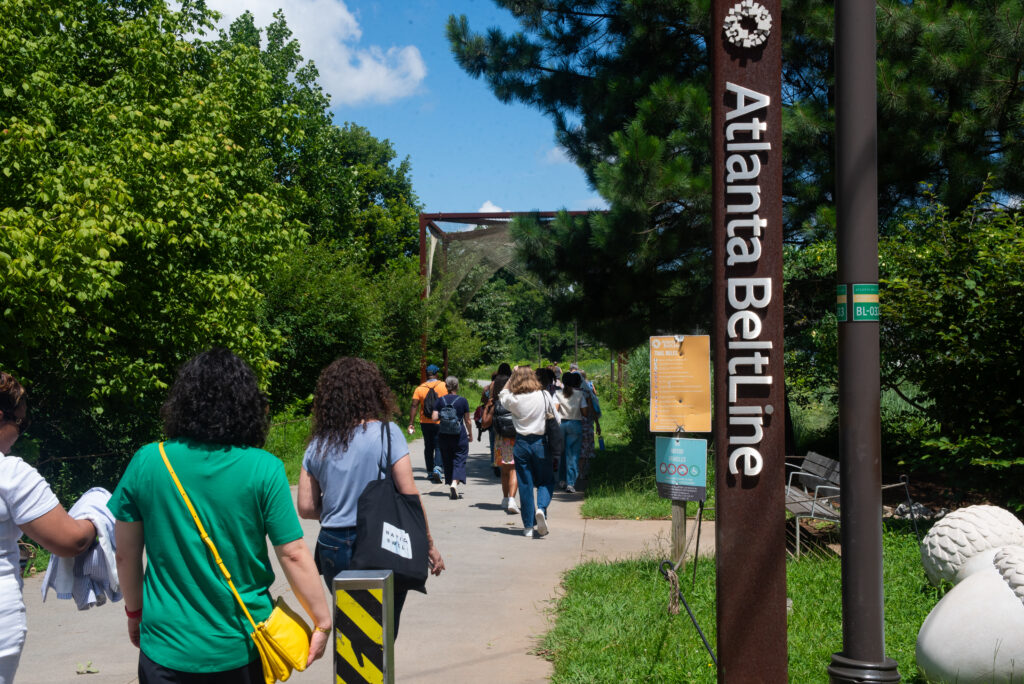
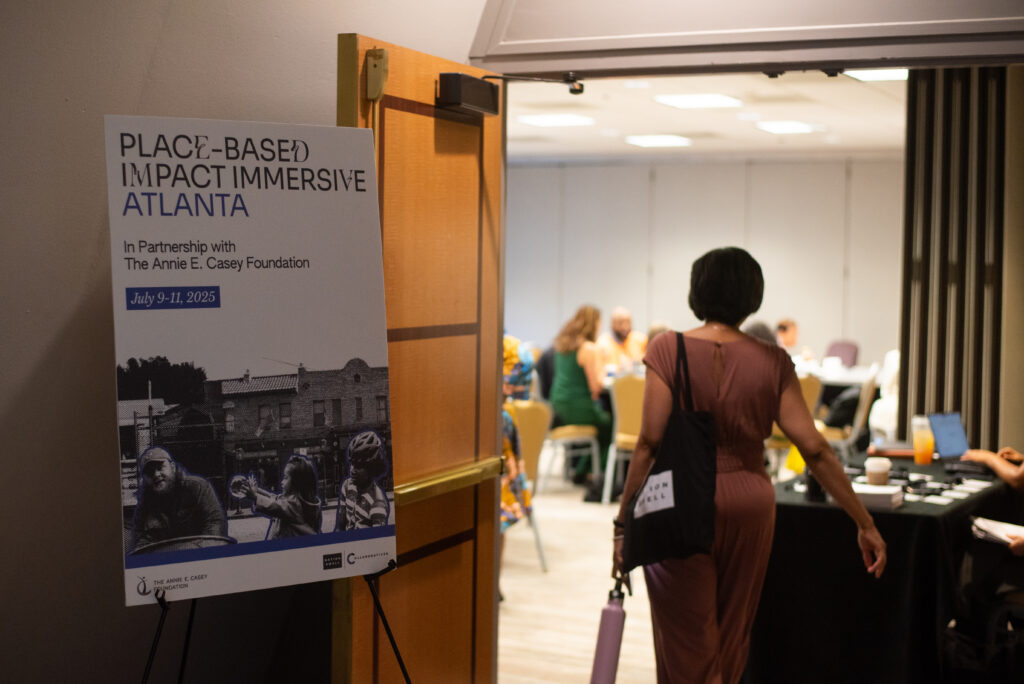
This summer, as part of NationSwell’s Place-based Impact Collaborative, we explored the power of community-led change through an immersive experience in Atlanta, GA. This experience would not have been possible without our host, The Annie E. Casey Foundation

As place-based work popularizes, new actors should pay attention: nearly 25 years into their place-based commitment to the city, what the Foundation is building in Atlanta is a testament to place-based investment done right. Long-term, community-rooted, structurally sound, and boldly committed to building a brighter future for youth, families and communities the Annie E. Casey Foundation is unwavering in striving toward greater opportunity for all Atlantans. 

A group of NationSwell members walk past the icon ferris wheel in Atlanta

Why Atlanta?

Many view Atlanta as a booming metro hub, but it is also the city with the lowest rate of economic mobility in the United States. A child born into poverty in Atlanta has less than a 4% chance of escaping it. The Annie E. Casey Foundation established its Atlanta Civic Site in 2001, recognizing the city’s unique potential, alongside its stark disparities.

“Atlanta has a vibrant economy (one of the fastest growing in the country) and rich culture,” says Tomi Hiers, “It continues to be an attractive city, as its rapidly growing population shows.”

But as she points out, “Atlanta has one of the country’s fastest-growing economies, but that growth is uneven across its communities….Communities along and below I-20 continue to face some of the most persistent poverty rates in the country.”

A three-pronged approach: The Foundation’s theory of change in Atlanta

The Foundation’s commitment in Atlanta is long-term and multifaceted, focusing on three investment pillars: economic opportunity, neighborhood transformation, and educational achievement.

“Atlanta is the Annie E. Casey Foundation’s second hometown (Baltimore is the other),” says Hiers, “We encourage action and transformation in Atlanta through a combination of strategic partnerships and investments, spanning beyond individual neighborhoods. Our work continues to be undergirded by the belief that strong communities are possible when young people have the family connections, relationships, communities and educational and employment opportunities they need to thrive.”

Neighborhood transformation: Pittsburgh Yards

Home to the Foundation’s Atlanta Civic Site is Pittsburgh Yards, a 31-acre development in Atlanta’s historic Pittsburgh neighborhood — a community founded by formerly enslaved people in 1883. The south side of Atlanta carries deep scars from redlining, disinvestment, and broken promises, but it also holds the legacy of resistance, culture, and community pride. It’s here that Pittsburgh Yards rises, not just as a development, but as a reclamation of possibility.

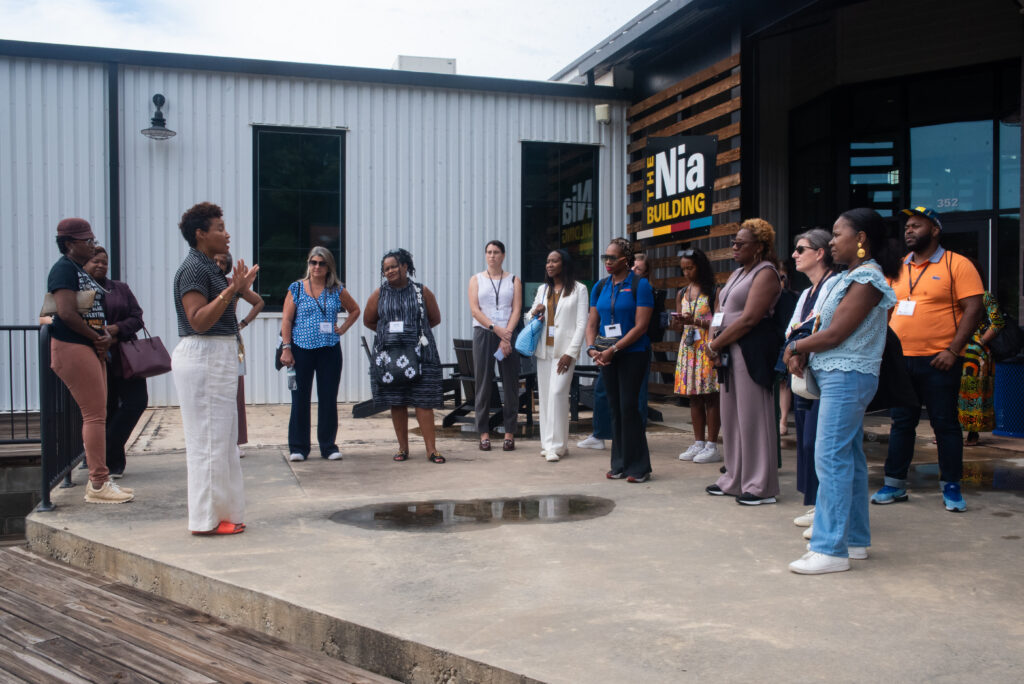
Pittsburgh Yards is both a business hub and a model of community-driven development. After purchasing the site in 2006, the Foundation undertook a years-long design process that engaged local residents and businesses. This investment resulted in the Nia Building (Swahili for “purpose”), which now houses over 100 office spaces and supports nearly 160 local businesses through both leased spaces and accessible co-working memberships.

With property values near the Beltline increasing by over 500% in just five years, the Foundation’s investments are carefully designed to prevent displacement. From affordable leases to technical assistance and business development programming, Pittsburgh Yards is a market disruptor in commercial real estate. 

Economic opportunity: Supporting local entrepreneurs

Many entrepreneurs in Atlanta, limited by social and economic barriers, are unsure if the city has room for their dreams; targeted investments from the Annie E. Casey Foundation support small business owners through space and ownership, reshaping how they imagine their futures.

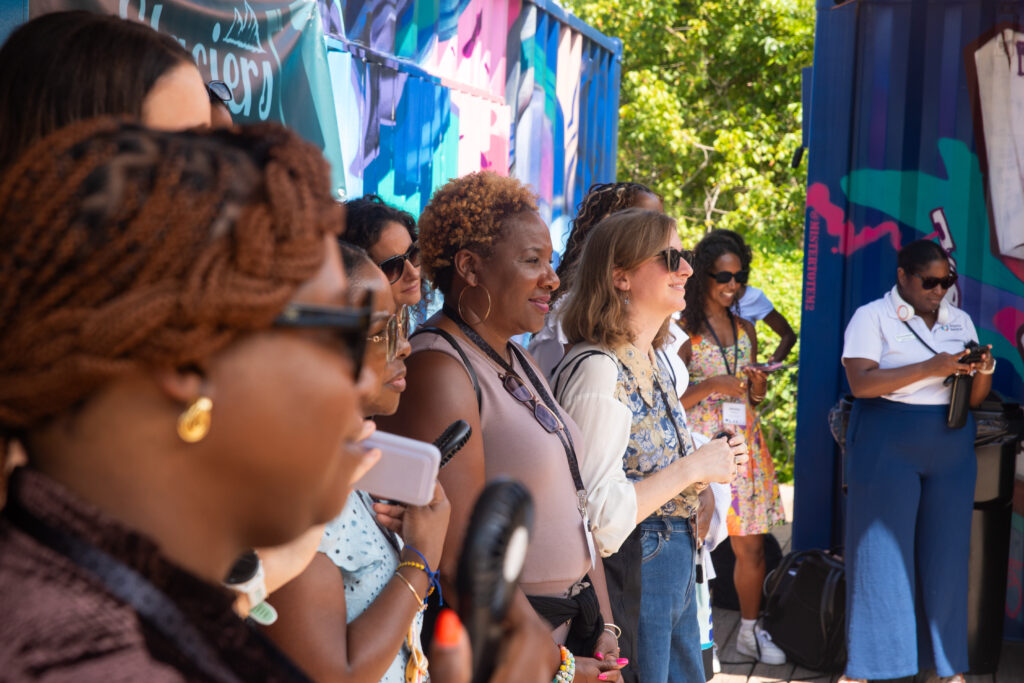
The Foundation partners with organizations like Our Village United and the Russell Innovation Center for Entrepreneurs (RICE), which provide coaching, funding access, and business strategy training. Entrepreneurial support at Pittsburgh Yards is not limited to real estate. Innovative models like the container courtyard, a marketplace of rotating micro-retailers and food vendors built from shipping containers, have provided flexible, low-barrier entry points for businesses to scale and test new concepts.

Hiers highlights the urgency of this work: “Even when it comes to entrepreneurship, one of the primary drivers of wealth, company owners from certain demographics lag behind, creating a gap in revenue generation.” 

Educational achievement: Starting from birth

Approximately 8 out of every 20 children in Atlanta aged 0-5 are considered economically disadvantaged, with 5 of them living in poverty. The Foundation’s commitment to educational achievement begins in early childhood. Through supporting initiatives like “Promise All Atlanta Children Thrive” (PACT), the Foundation has galvanized a citywide action to make Atlanta the best place to raise a child.

Partners like GEEARS (Georgia Early Education Alliance for Ready Students) have helped build a collaborative that includes public and private leaders, all aligned around improving outcomes for children from birth to five. This coalition has led to coordinated grantmaking, Head Start provider collaboration, childcare stabilization grants during the pandemic, and aligned advocacy to shape systems and policy change.

A culture of collaboration and honoring legacy

What sets the Annie E. Casey Foundation’s approach apart is its commitment to authentic collaboration. Both cross-sector and community efforts are designed with shared purpose, long-term structure, and community voice. The Foundation’s partners reflect that spirit — from housing advocates and public health leaders to artists, educators, and entrepreneurs.

“I learned very early in my career that people with lived experience and those who are closest to challenges have unique perspectives that can lead to innovative and lasting solutions. I have made it a priority to ensure that people who live in the communities where work takes place or those who participate in targeted programs have a voice in helping to set priorities, developing strategy and getting the work done.”


This immersive experience was offered to NationSwell through the NationSwell Collaboratives. To learn more or get involved, visit nationswell.com/nationswell-collaboratives/

The Art of Connection: Strategies for Effective Networking

Networking doesn’t stop when you reach senior leadership—it evolves. Maintaining strong professional connections is essential for staying ahead of industry trends, fostering innovation, and building strategic partnerships that drive success.

On June 11, NationSwell hosted a virtual Leader Roundtable designed to explore why networking remains critical at the highest levels of leadership and provide actionable strategies to strengthen and utilize networks for personal and organizational success.

Some of the key takeaways from the discussion appear below:


Key Takeaways

Be grounded in who you are, and build your network with that identity in mind. Your geography, industry, and function shape your networking identity. Reframing how you position yourself  depending on which of these three you emphasize can unlock new opportunities, especially when transitioning between industries or roles.

Focus on authenticity, clarity, and brevity to strengthen your outreach. When initiating new contact, be concise and clear about who you are, what you need, and why it matters. Thoughtful communication builds trust and leaves a lasting impression.

Remember that the scope of networking is broad and personalized. Networking can serve many purposes from seeking board roles and public speaking engagements to navigating a career transition. Use your network as both a sounding board and a launchpad. Additionally, networking is most effective when it’s simplified and personal. Whether you’re exploring new career options or looking for a restaurant recommendation, treat networking as a tool for mutual exchange. Even transactional requests are welcomed; most people are flattered to be asked for help or to be known as a go-to resource.

Make networking for a career transition a volume and timing game. A thorough job search may take 5–6 months and involve 120–150 conversations, each interaction building momentum. While outcomes will vary, meaningful opportunities often come from a few individuals who go the extra mile. Relationships are often the key to opening a new door.

Invest in a multigenerational, cross-sector network. Engaging with people across industries and age groups broadens your perspective, expands opportunity, and keeps you relevant. Building internal, cross-functional relationships within your organization is also essential for increasing visibility and bridging teams.

Tend to your network like a garden. It requires consistent care, outreach, and attention. Use travel, spontaneous calls, or quick notes to nurture connections even when you don’t need anything. Intentional relationship-building starts long before a need arises, and continues over time.

Two Days in Atlanta with NationSwell and The Annie E. Casey Foundation

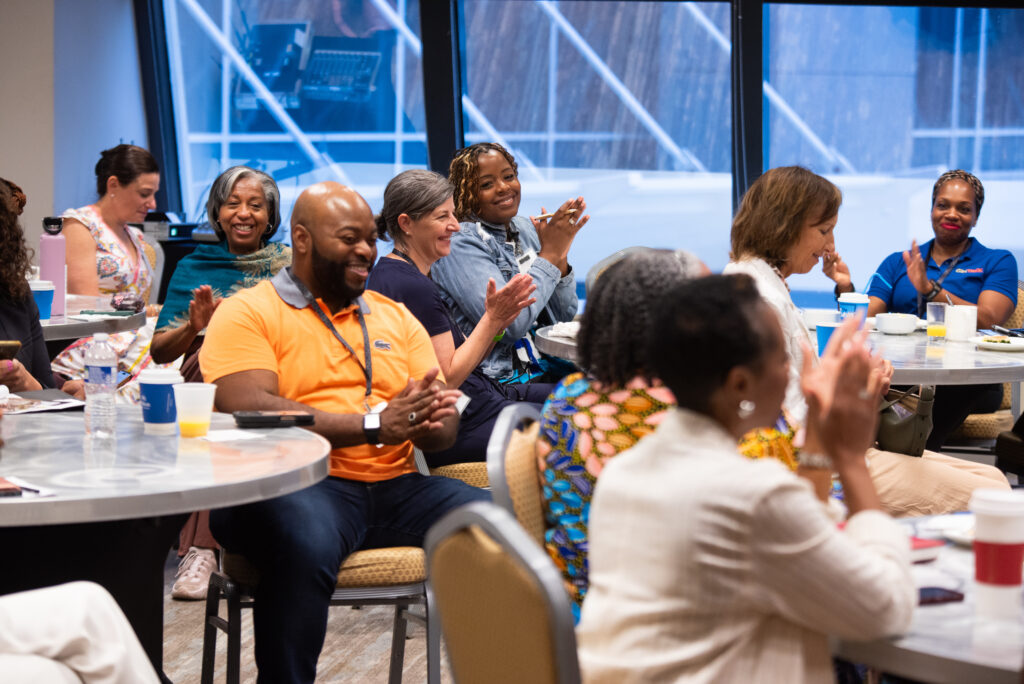
On a warm July afternoon in Atlanta, a group of corporate, philanthropic, and community leaders gathered to experience what place-based impact looks like when it’s rooted in history, shaped by community voice, and powered by a shared vision. As part of NationSwell’s Place-Based Impact Collaborative, and in partnership with The Annie E. Casey Foundation, this immersive, two-day experience offered a firsthand look at Atlanta as a “tale of two cities.” Throughout the experience, participants learned how bold, collaborative investment is helping communities reclaim land, preserve and celebrate identity, and build a more just economic future.

Day One: Grounded in history, connected by movement

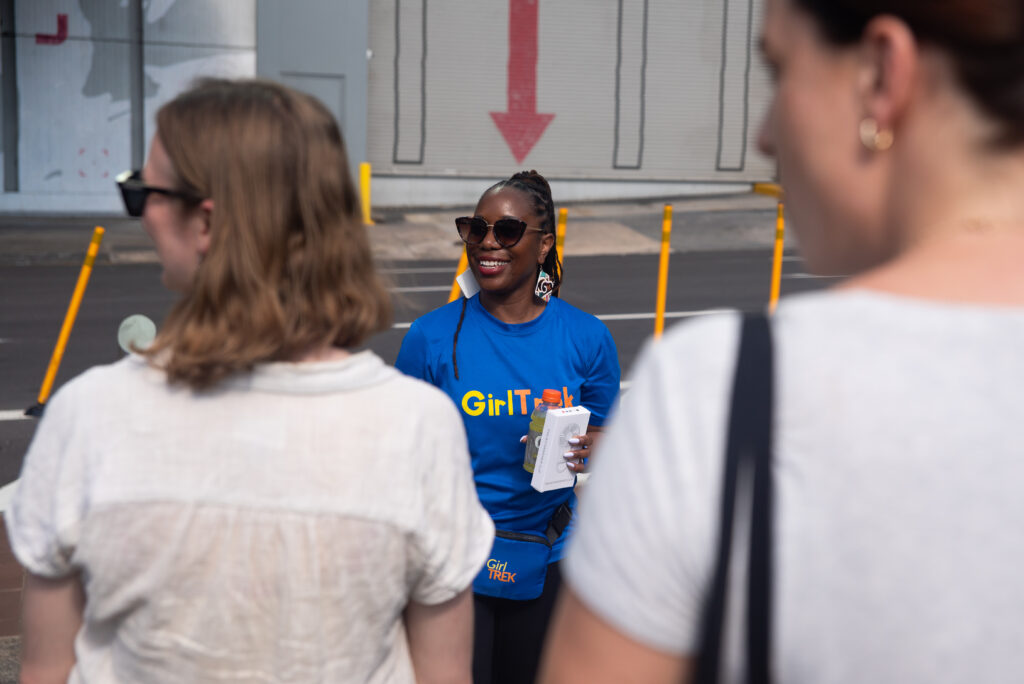
Our time together began with something deceptively simple: a walk. Led by a close partner of NationSwell, GirlTrek, the walk to Centennial Park focused on presence and intentionality. “We walk, talk, and solve problems,” our leader shared, describing GirlTrek’s model of wellness and connection. It was a chance to move through the city, feel its energy, and open space for reflection.

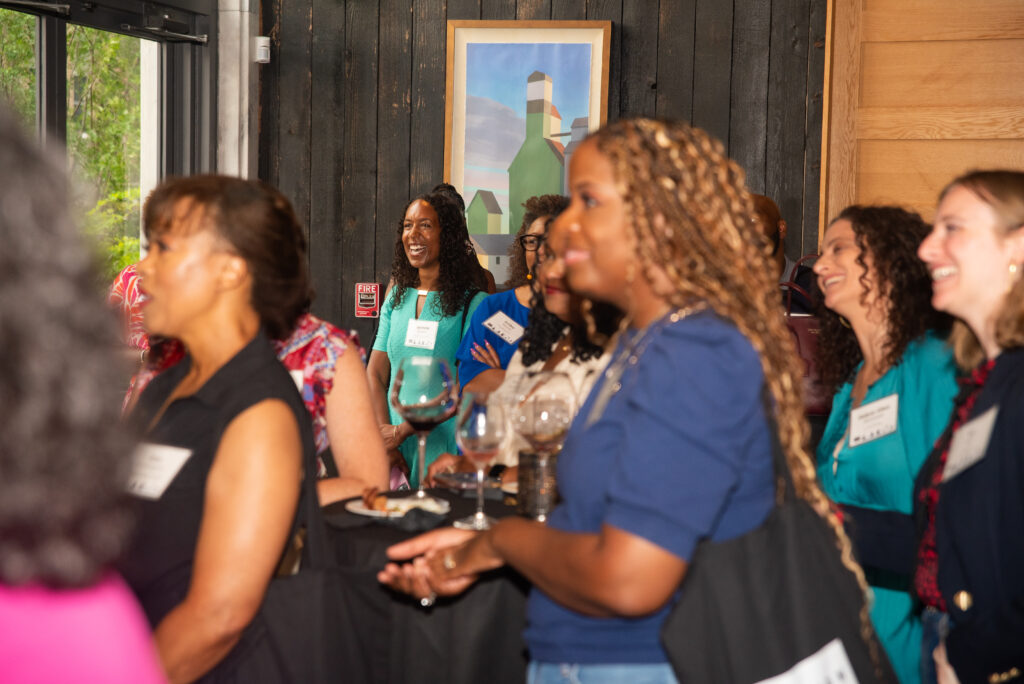
Later that evening, we headed to a welcome reception, setting the tone for what would be a day of honesty, inspiration, and exchange. In a circle, we heard from visitors and locals alike about their personal and professional motivation for joining the immersive. Participants were welcomed to Atlanta as a city of neighborhoods, of legacy, of resilience.

Day Two: A tale of two cities

Breakfast opened with a powerful panel, “Atlanta’s Path in Perspective,” laying bare the complexity of the city’s narrative. As Courtney English, Interim Chief of Staff to Mayor Andre Dickens noted, “Atlanta is a tale of two cities and two stories.” On one hand, it is the cradle of civil rights, home to Black leadership and cultural innovation. On the other, it is among the lowest in economic mobility for Black families, shaped by redlining, disinvestment, and policy decisions that still echo today.

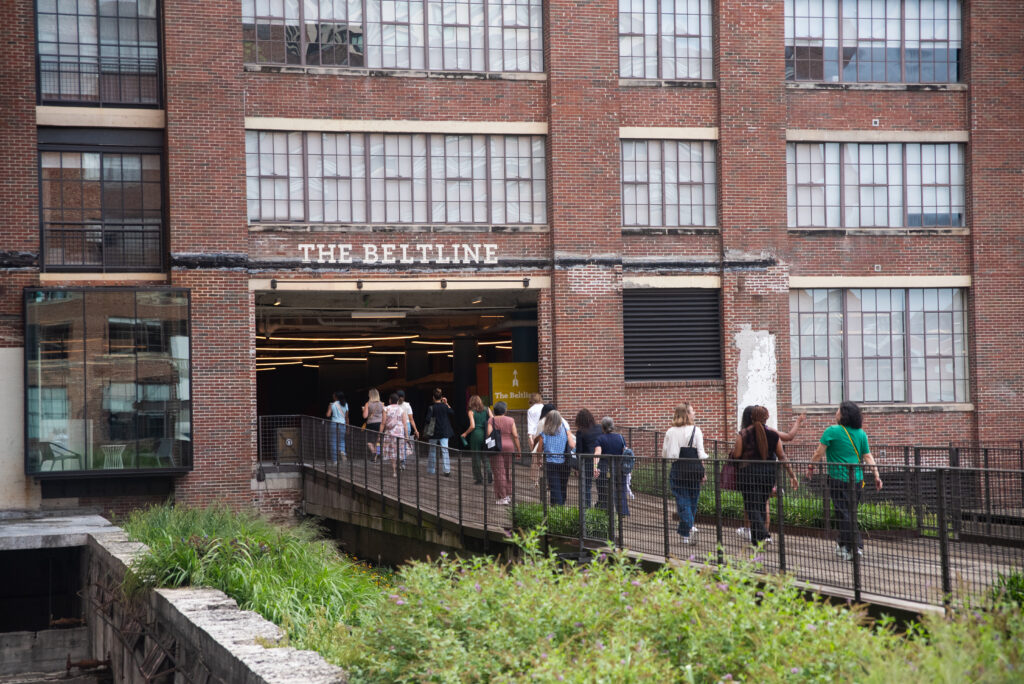
Site visits followed, including a deep dive into the Atlanta Beltline’s evolution – a project that has generated both opportunity for entrepreneurs and concern for displaced residents. Led by the Atlanta Beltline team, we saw examples of responsive solutions: affordable housing built to combat gentrification pressures; shipping containers repurposed into microbusiness spaces; and ongoing work to address basic infrastructure, like stormwater and sewage management. We also heard from a small business owner, Sarah Pierre, owner of 3 Parks Wine Shop, about her partnership with the Beltline. 


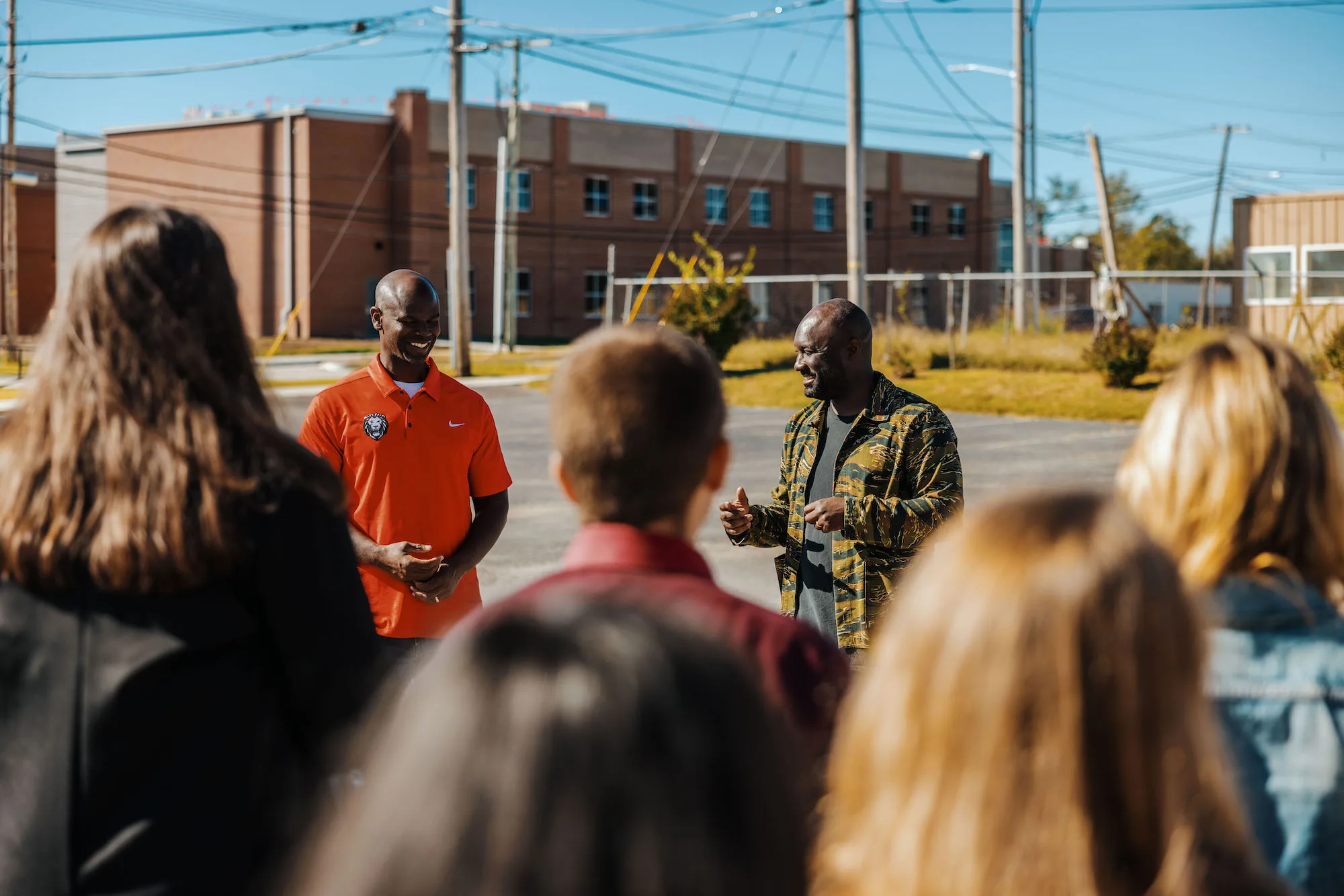
We then made our way to Pittsburgh Yards, standing out as a living example of what it looks like when development is done collaboratively with a community. Built on land acquired by the Annie E. Casey Foundation, the space has grown into a hub for locally-owned businesses, creatives, and entrepreneurs – including some that have transitioned to brick-and-mortar storefronts in retrofitted shipping containers (check out Carrot Dog and PinkPothos). Individual co-workers, businesses, and events hosted at Pittsburgh Yards bring in revenue, helping sustain the space without compromising its mission. “We would like to think that the Annie E. Casey Foundation is a collaborative partner and listener,” Tomi Hiers, vice president of the Center for Civic Sites and Community Change at the Annie E. Casey Foundation said, reflecting on the ongoing effort to ensure that the people closest to the challenges are closest to the decisions. As we stood outside Pittsburgh Yards, a child played on his bike, calling out “Hey, neighbors!.” As one participant noted, “The fact that a little boy came up and called us ‘neighbor’ — that’s what success looks like.”

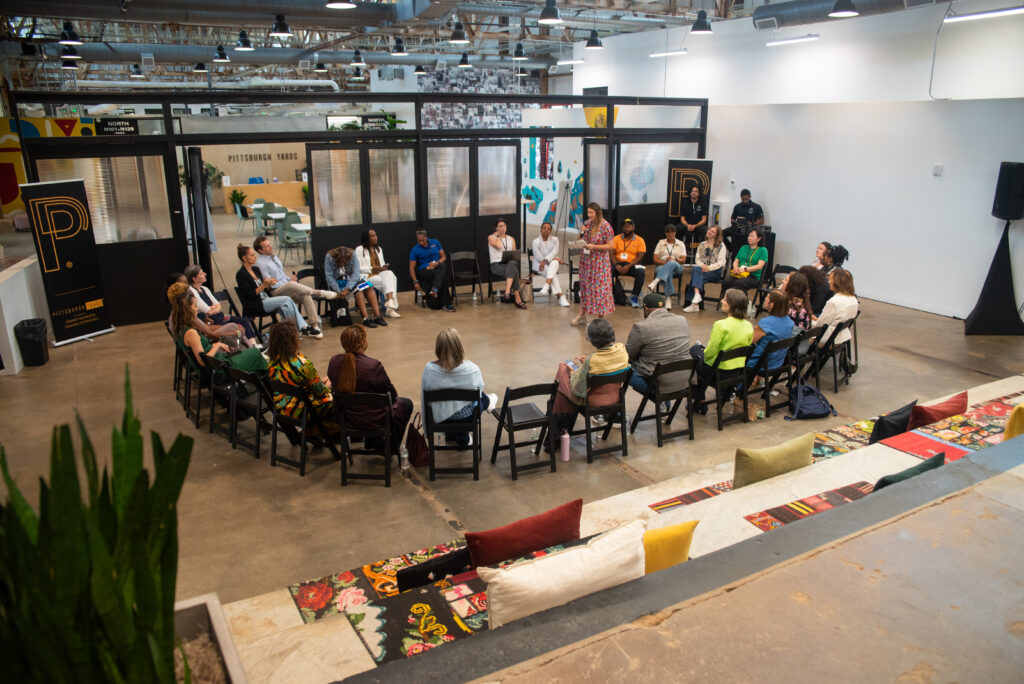
Our visit included a Partnerships for Collective Action roundtable, held in the heart of Pittsburgh Yards’ Nia Building. Amanda Jaquez, Senior Associate, Annie E. Casey Foundation opened by naming the legacy of the neighborhood — founded by formerly enslaved people and long a center for Black self-determination — and reminded the room that development must build on, not erase, that foundation. 

The panel explored what makes cross-sector collaboration work, with Mindy Binderman, Executive Director of GEEARS, emphasizing that shared purpose and trust must come before action. Natallie Keiser, Executive Director of HouseATL, added that structure, sustained engagement, and clarity of roles are important, especially when tackling entrenched challenges like affordable housing and displacement. The cost of inaction was made clear: unchecked infrastructure investments can rapidly raise property values and inadvertently displace the very communities they intend to serve.

Jay Bailey, President and CEO of the Russell Innovation Center for Entrepreneurs (RICE), offered a powerful charge: “Collaboration beats competition every day of the week.” But he cautioned against “collaborative theater” — partnerships formed for optics rather than outcomes. He urged leaders to confront uncomfortable truths, including the stark contrast between Atlanta’s image as a Black mecca and the reality of its low Black economic mobility. “Let us have the courage to say no…because we are worth investing in.” 

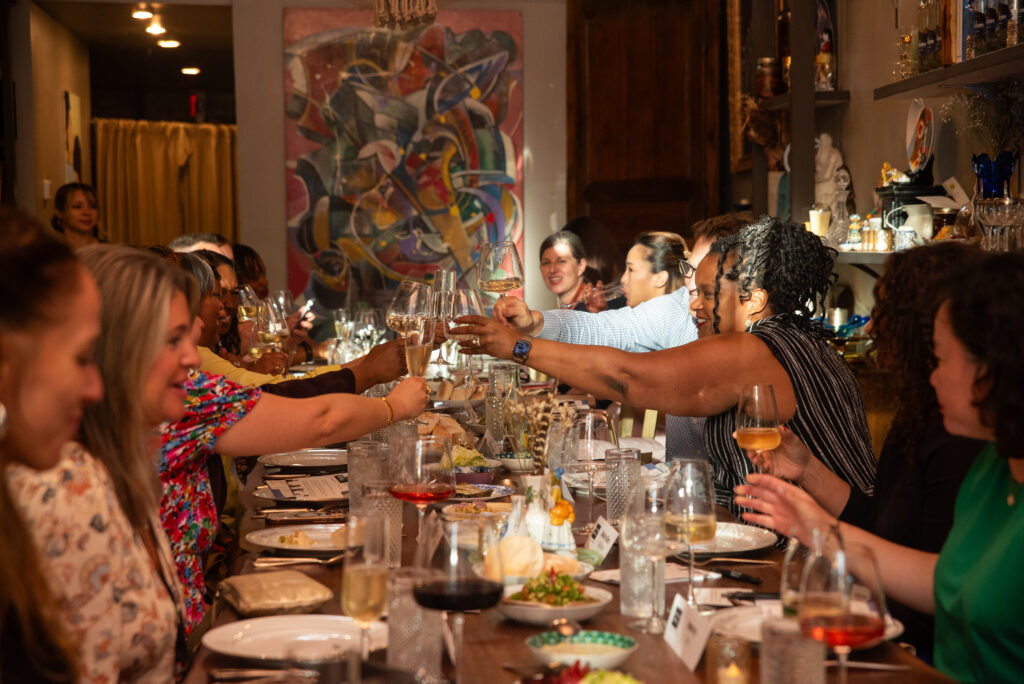
The day ended at The Third Space, where a happy hour and signature dinner prompted deeper conversation and laughter. Over shared plates, attendees unpacked the day’s learnings: how land becomes leverage, how rest becomes resistance, and how institutions can be built to last.

Day Three: Collaboration and continuity

Our time together concluded with a tour of RICE. The impressive center, which supports Black entrepreneurs with space, mentorship, and capital access, sparked conversations about ecosystem thinking. During the tour, participants saw how the organization is cultivating Black entrepreneurial success at scale. The 54,000 square foot space was built with intentionality: every wall, quote, and photo was curated to inspire ownership, legacy, and possibility. As Bailey summed it up: “We don’t need another symbol of hope. We need institutions that manufacture hope.”

As attendees began to head home, there was a palpable sense of momentum. Participants reflected on what they had seen and learned, and how they can apply it to their own communities and work.

What Atlanta taught us

Atlanta is not a monolith. It is a microcosm of the broader American story — a city where systemic harm and radical possibility coexist. Place is not neutral here, it is contested, storied, and powerful. From listening sessions designed with dignity to equitable housing strategies and entrepreneurship ecosystems, the visit to Atlanta reminded us that place-based work requires honesty, trust, and collaboration. 

As one participant shared, “The system isn’t broken. It’s working how it was designed to work.” But in Atlanta, people are redesigning it — together.


This immersive experience was offered to NationSwell through the NationSwell Collaboratives. To learn more or get involved, visit nationswell.com/nationswell-collaboratives/

The NationSwell Council on “The Movement to Reconnect”

Experts have been sounding the alarm on a quiet crisis unfolding across the country: Americans are more disconnected than ever. A growing body of research points to rising rates of loneliness, fraying community ties, and a deepening sense of isolation that cuts across age, geography, and background. The costs are profound — not only to individual mental and physical health, but to our collective resilience and social fabric.

Against this backdrop, the NationSwell Council set out in the second quarter of 2025 for a Salon series dedicated to “The Movement to Reconnect”: the tapestry of solutions — such as increasing funding, inclusive programs, and spaces for meaningful interaction — that help foster stronger, more resilient communities.. In a time when polarization and disconnection often dominate the headlines, these conversations offered something different: a reminder that healing is possible when we come together in warm, curious, and collaborative ways.

We’re proud to present a selection of the insights that were shared during the course of the series — along with some powerful reflections from the leaders in attendance — below:


Key Insights

1. Service creates shared purpose and builds belonging. Participating in service-oriented activities can strengthen community ties, provide individual meaning, and counteract divisive ideologies by grounding people in shared action.

2. Polarization is flattening our relationships — and our humanity. When people are reduced to their political or cultural identities, empathy and curiosity suffer. Creating space for constructive dialogue can restore dimensionality and connection.

3. We need both bonding and bridging. Affinity spaces allow individuals to recharge within shared identity groups, while bridging spaces foster trust and understanding across difference. Both are essential for social cohesion.

4. Ritual and moral frameworks matter for belonging. Practices like gratitude, storytelling, and trauma acknowledgment — often rooted in religious tradition — can be adapted to modern settings to foster collective meaning and connection.

5. Crises are catalysts for community renewal. Moments of collective hardship can serve as inflection points to rebuild stronger, more inclusive social bonds — if we seize them with creativity and shared values.

6. Narratives shape connection. Stories that emphasize resilience, interdependence, and shared futures foster unity; divisive or fear-based narratives drive alienation and distrust.

7. Inclusive, systemic solutions are needed. Programs alone won’t solve disconnection. True impact requires structural changes, inclusive design, and active participation from those most affected.

8. Connection must be resourced and rewarded. Sustained funding, capacity-building (like train-the-trainer models), and recognition for community leaders are critical to scaling what works.

9. Higher education and local communities are key incubators. Colleges and municipalities are well-positioned to model and scale tools for connection — but must build facilitation expertise and ground efforts in local realities.

10. We need a new metric of success: community care. As we reimagine what it means to thrive, collective well-being must be valued alongside personal achievement—centering care, interdependence, and shared responsibility.

11. Loneliness is a public health crisis — and Gen Z is at its center. Young people report record levels of loneliness and a lack of meaning or purpose, exacerbating the youth mental health crisis and signaling urgent need for systems-level support.

12. Human connection is both a basic need and a powerful social tool. Strong interpersonal bonds are essential for emotional well-being — and also serve as the foundation for broader societal resilience, civic trust, and collaborative problem-solving.

13. We lack spaces for spontaneous, organic interaction. Despite widespread desire for face-to-face connection, many communities lack accessible “bumping spaces” — like parks, plazas, and community centers — where casual encounters naturally occur.

14. Technology is distorting social norms and deepening disconnection. Social media has normalized passive communication and amplifies polarization, making it harder — especially for youth — to initiate in-person connection or bridge divides.

15. Connection across differences requires intention and infrastructure. People are eager to connect across race, class, and ideology, but few are given the tools, invitations, or safe settings to do so meaningfully.

Recommended Resources

Reflections from Council members

We asked members in attendance to respond to the following prompt: “How can organizations redesign their workplace cultures to promote stronger interpersonal relationships and a sense of belonging among employees?”

“Workplaces are becoming more diverse, including more intergenerational with Gen Z, Millennials, Gen X, and Baby Boomers. It is necessary for them to adapt and create more inclusive environments. What is important is to humanize the workers. This can include opportunities to get to know each other. This goes beyond happy hours. It can be through ERGs. It can be through offsites. Options that speak to each generation and also identities that span generations is a strategy I have seen work.”

  • King Adjei-Frimpong, Director of Stakeholder Engagement

“If an organization is fully remote or hybrid, it’s important to invest time and space for meaningful connection to take place online. For example, as part of your weekly team coordination call, have your team share what they did over the weekend. Or bring another prompt for people to respond to. When you do meet in person, make sure to allocate time for connecting and fun. Then, measure your employees’ sense of connection and loneliness at work with this following survey tool to see how well your employees are doing.”

  • Calista Small, Research Manager, More in Common US

“Creating formal opportunities for employees to connect with each other outside of their day to day responsibilities can have a positive impact. At Girls Who Code, we recently had an org-wide step challenge (optional) with meaningful prizes for team and individual winners. Participants were broken up into random teams and it was a way for folks to have fun with and motivate each other to achieve wellness goals while instilling a little healthy competition. 

Consistently using brief ice-breakers at the start of a meeting, whether cross-functional or within a team, provides a light-lift opportunity for folks to keep learning about one another and finding connections.”

  • Tarika Barrett, CEO, Girls Who Code

“The “constant of change” is an invitation to reimagine workplace cultures, to harmonize feeling our best with doing our best. Innovation operates at the speed of trust, and we build velocity by forging affirmation, belonging, and co-creation across people and teams. 

One of my favorite levers – aka antidotes versus the old normal – is storytelling. That is how we can flip disengagement into empowerment, for any generation. I also work with organizations to shape a unity of purpose around goals and processes, which breaks down silos. At a policy level, I am striving to radically reimagine decision making. If we can transform the rooms where it happens – through student advisory boards, Dad Councils, and more – we will catapult our north star goals.”

  • Mohan Sivaloganathan, executive leader and keynote speaker

“I’ve learned from nearly two decades leading social impact organizations that belonging isn’t automatic. It emerges only when the conditions are right. Workplace cultures that foster belonging share a common characteristic — high trust between employees. I know from experience that trust begins with clarity. My mantra is to make the implicit explicit. Leaders do this by setting shared expectations, naming unspoken norms, creating space for authentic emotion (celebration and grief alike), and both setting policies and enforcing norms that make it safe for employees to bring their full selves to work. I’ve seen firsthand that, when that groundwork is in place and reinforced consistently, employees will connect and collaborate on a genuinely human level.”

  • Bethany Rubin Henderson, CEO, Compass Pro Bono

“At the Movement to Reconnect Salon, I found myself most drawn to the question of how we intentionally create space for connection—especially across lines of difference. In a time when division can feel easier than dialogue, I believe deeply in the power of community-rooted relationships to shift what’s possible. Whether within organizations or broader communities, we need to design for belonging—not just hope it happens. That means slowing down, listening with curiosity, and prioritizing trust-building as real work.”

  • Michael Pope, Executive Director, Youth Represent


Impact Next: An interview with Nike’s Vanessa Garcia-Brito

At a moment of inequality and division, who is advancing the vanguard of economic and social progress to bolster under-served communities? Whose work is fostering the inclusive growth that ensures every individual thrives? Who will set the ambitious standards that mobilize whole industries, challenging their peers to reach new altitudes of social impact? 

In 2025, Impact Next — an editorial flagship series from NationSwell — will spotlight the standard-bearing corporate social responsibility and impact leaders, entrepreneurs, experts, and philanthropists whose catalytic work has the potential to shape the landscape of progress amid urgent need for social and economic action.

For this installment, NationSwell interviewed Vanessa Garcia-Brito, Chief Impact Officer, Nike.


Greg Behrman, founder and CEO, NationSwell: What brought you to this moment? What was your leadership journey like?

Vanessa Garcia-Brito, Chief Impact Officer, Nike: I come from pretty humble beginnings — my mom always had three jobs at a minimum, and my grandmother did a good chunk of raising me in the early years of my life with such unconditional love. Growing up, there was a big theme around agency and choice and optimism. No matter how difficult life was, I was raised to believe we could do something about it. I initially thought that I would put that into practice as a human rights lawyer, and although I did go to law school, eventually through saying yes to a series of opportunities I ended up at Nike. Instead of holding tightly to any one job, I’ve always held tightly to the idea of combining impact with forward movement in a more literal sense. Nike represents the convergence of those values — it’s a place that values sport and movement, a place where my energy and passion for driving impact can really flourish. 

Behrman, NationSwell: What is your North Star of your leadership? What are some of the practices and approaches or styles that you’ve found to be really helpful for you, for your team, for others?

Garcia-Brito, Nike: I’m in love with humanity, and because of that, I really believe in leading from a place of love and being upfront and with that as a leadership style. 

I believe everyone deserves the chance to realize their greatness, and earlier in my career as a younger woman in leadership, that’s a unique choice to make. Ultimately, you have to decide if you’re all in. For me, it wasn’t even a question — I just led from a place of vulnerability, curiosity, and genuine interest in people and their impact. I’m not territorial, sometimes to a fault; even at Nike, everyone is invited into impact. I view my role as bringing people in and cultivating spaces for connection, helping people move forward together. This aligns perfectly with Nike’s focus on human potential and possibility, and it reflects how we see the power of sport to move the world forward.

Behrman, NationSwell: How has your leadership evolved in the course of your role or your time at Nike — is there a powerful moment that informs how you lead today?

Garcia-Brito, Nike: Working at Nike has really taught me to lead with who I am, and I’d like to think that, in turn, has created space for more people to lead authentically as well. I am very intentional about being a safe space for others, which encourages richer conversations and greater opportunities for people to lower their barriers. Leading this way means you can’t help but see the potential in others. I tend to see obstacles as opportunities — if there’s a tree in the way, I just look for a way around or over it. My experience running ultramarathons shapes this mindset: once committed, you keep moving forward, no matter what challenges arise. This approach has been rewarded in the sense that it’s created venues for different types of conversations — it lets people know exactly who I am.

Behrman, NationSwell: We find ourselves in an interesting moment in the impact space, with new opportunities, some pressures, some currents moving in different directions. How are you making sense of this moment?

Garcia-Brito, Nike: What really helps us navigate is knowing at our core that human potential and movement are at the heart of Nike. Through that lens, it’s exciting to see the definition of sport evolving, becoming more expansive and inclusive. Now, anyone can see themselves as an athlete, whether they’re commuting to work or competing professionally. Life is sport, and this broader perspective invites more people in, helping them rethink what’s possible and feel part of a larger community.

Moments like the Paralympics really stay with me — the power, beauty, and community support are incredible. The athleticism is inspiring, and those experiences remind me how important it is to find connection and empathy through sport. Even if I could never do what Paralympians do, I can share in their experience. I think seeking out those moments of shared humanity is how we move forward together.

Behrman, NationSwell: Is there a sport that kind of embodies the way in which you see the social impact world right now?

Garcia-Brito, Nike: For me, running and yoga are deeply connected- they both embody the mind, body, and spirit, and how we exist together in a world full of polarities. We’re more global than ever, yet people often feel isolated; we have private moments, but we’re always surrounded by others. Both running and yoga remind me that there’s no finish line, just the next step, always at your own pace. No one can do the running or yoga for you, but you can still share the experience.

The New York Marathon is a perfect example: everyone runs their own race, yet it’s a massive, collective event. I love those moments — cheering for strangers, being cheered on, feeling connected even when you’re not sure you’re still moving. That sense of accomplishment is powerful, and the same is true in yoga, where it’s just you, your breath, and your flow. The practice allows you to connect with yourself and that in turn strengthens our connection with others. 

Behrman, NationSwell: We’d love to invite you to share a little bit more about the amazing impact work that you and your colleagues are leading. Are there any programs, partnerships, or strategies  you’d particularly like to lift up?

Garcia-Brito, Nike: Our focus is creating the future of youth sport, truly uplifting work. Youth are not just our future leaders and next generation of athletes, they are already demonstrating their leadership and shaping how we play, move and pursue sport. Built on 35 years of research and pilots, we’ve learned that leading with girls is the key to lifting everyone up. While both boys and girls are dropping out of sport at high rates, girls tend to start later, drop out sooner, and are harder to bring back — about 85% of girls worldwide aren’t getting enough movement. We also focus on coaches and coaching because we know how important the relationship between a coach and an athlete can be. Coaches play a crucial role as caring adults who provide safe spaces and guidance, especially during pivotal moments in girls’ lives. For example, body confidence is a leading reason girls leave sport, and coaches are vital in addressing this.

Over the past year, we’ve ignited a coaching revolution through global summits — from our World Headquarters in Beaverton, Oregon, to Paris, Los Angeles, and Tokyo — bringing together experts, partners, researchers, and youth to accelerate better, more inclusive approaches. Despite cultural nuances, the barriers youth face in sport are strikingly consistent worldwide, with body confidence a common challenge for girls. Body Confident Sport, our research with partners like Dove, and world-renowned experts the Centre for Appearance Research and the Tucker Center for Research on Girls & Women in Sport, helps coaches understand these issues and create welcoming environments to retain girls in sport.

We also leverage Nike’s broader community, including Nike Community Ambassadors — Nike store employees who serve as coaches in their communities. They embody the spirit of lifting up their neighborhoods. We partner closely with elite athletes in their own community work, such as Play Academy with Naomi Osaka and also via innovative partnerships with other leading brands like our work with Lego emphasizing creativity, movement, and mental health, aiming to build lifelong love for activity. Ultimately, active kids are healthier, happier, and more successful in life. Giving kids an opportunity to play and enjoy sport can be so meaningful; it’s about hope, dreams, and creating a foundation to thrive.

Behrman, NationSwell: What is your call to action for other social impact leaders — what do you think other people need to hear right now?

Garcia-Brito, Nike: At Nike, we believe there’s a coach in everyone — even if you’re just coaching yourself, which is actually a great place to start. Whether you’re at work, at home, or in your community, you don’t have to wait to make a difference. Simply seeing yourself as a coach can transform your connections. There are plenty of free resources to help you start this journey, and often, it’s an easy way to change lives without even realizing it.

My call to action is to tap into that inner coach, starting with yourself and extending it to others, especially young people. In our impact space, it’s vital to create a vision and journey of hope — just as essential as food and shelter. Hope and dreams truly sustain people; when paired with opportunity and community – it is powerful. We need to connect the dots for others, showing how today’s choices lead to real progress and a better future. 

NationSwell: What are three resources that have inspired who inspired you as a leader? It could be a book, it could be a movie, it could be a quote, a song, anything. 

Garcia-Brito, Nike: There’s a cartoonist called Quino who created a character named Mafalda in the 1960s, and there is a wonderful edition of these comic strips “Todo Mafalda” with a preface by Gabriel Garcia Marquez that I keep near me. Mafalda is a wise and very funny six-year old who is not shy about reflecting some of the absurdities of adulthood. She is a champion for inclusion, joy and world peace – and she is very funny.  I’m inspired by the beauty of being able to see the world through the eyes of a six-year-old girl in this space, and how it reminds us that we know everything that we need to know when we’re young.

The other book I’d recommend is called 4,000 Weeks: Time Management for Mortals, by Oliver Burkeman. I live my life with urgency, so I’m kind of impatient when I think about creating change, but this book puts time in perspective — we have only so many weeks. It’s helped me make my minutes feel longer and my life more present, sharpening my priorities.

Peter Block’s book The Answer to How Is Yes influenced me early on. I’ve learned to say yes and drop the ‘how’ that stalls progress. When faced with challenges, I ask not ‘how,’ but ‘do we want to do it?’ If yes, then the ‘how’ will follow.

As for inspiration, it comes from the people we work with daily around the world. Despite the narratives of global division we hear, I see the opposite — countless selfless individuals dedicating their time to help their communities. This work so often happens outside typical hours, fueled by care and skill. I’m grateful for them and believe there are far more people uniting us than dividing us.

Unlocking the Power of AI for Nonprofits

Artificial intelligence is rapidly redefining what’s possible across industries. That brings challenges, but also huge potential to drive positive change if its power can be harnessed by social impact organizations. With AI, nonprofits can unlock new ways to streamline operations, expand their reach and capacity, and devote more energy to their core purpose. As part of the AI Opportunity Fund, Google.org is supporting these organizations by delivering innovative AI solutions and guidance, empowering them to maximize their impact and achieve stronger outcomes for the people and causes at the heart of their mission.

As part of its year-long capacity-building initiative, the AI Opportunity Accelerator, Project Evident has been hosting Discovery Days across the U.S. to bring the tremendous possibilities AI offers to the nonprofit sector. To further open up the dialogue around this opportunity and the goal of upskilling nonprofits with AI, NationSwell — in partnership with Project Evident and with support from Google.org — hosted a series of dinners across the U.S. this spring in parallel with the Discovery Days. The dinners brought together a range of cross-sector leaders in each city to exchange ideas, challenge conventional thinking, and explore how to accelerate the adoption of AI in the nonprofit sector — and lay the groundwork for future collaboration for transformation and impact.

This event series would not have been possible without the tremendous support and dedication of our host partners working on the ground in the cities we visited: the San Francisco Foundation, the Austin Community Foundation, the Central Carolina Community Foundation, the Community Foundation for Greater Atlanta, and Tech:NYC. Be sure to check out the incredible work that they’re doing.

It is not often we have the opportunity to bring leaders from every sector together to discuss AI. In the spirit of supporting inclusive innovation, we have shared below some of the most productive insights that emerged from the dinners. 


Big picture 

  • AI possesses enormous impact potential. As AI continues to transform our daily lives — at home, work, or school — we must make space to explore questions and ethical concerns while also maintaining a sense of optimism and excitement for the technology’s many benefits. By balancing caution with curiosity, we can ensure the advancement of AI to support humanity.
  • AI can be a great equalizer. It offers individuals, practitioners, and organizations access to insights and capabilities that were previously only available to a narrow few. AI-enhanced workflows can help overcome barriers to education access, language divides, and learning abilities to level the playing field and unlock opportunities in new ways.
  • AI isn’t just a tech solution — it’s a tool for real-world outcomes. Examples included using AI to increase access to free health screenings, engage voters with limited English proficiency, and address food deserts by empowering local small business owners with data on opportunities to sell more fresh groceries. When AI is paired with community insight, the impact is tangible.
  • The quality of AI’s output depends on the quality of its input. Local data integrity—including census information, community feedback, and lived experience—is essential. Everyone must be included, especially now. That includes disabled communities, LGBTQ+ people, and other often-excluded groups.
  • Current imbalances in AI must be addressed. It’s important not to lose sight of the disparities in AI usage: Women and marginalized groups are using AI less frequently and adopting it more slowly, and many nonprofits have their hands full dealing with the changes happening at a federal level and are at risk of being left behind.

Practical guidance

  • Delegate the responsibility of championing widespread adoption. Successful AI adoption requires support: Empowering 2-3 people to act as ambassadors in championing the use and testing of new tools can help other employees understand how new technology can be applied to their roles and facilitate broader AI use across an organization.
  • Explore ways to integrate AI into existing institutions and systems for maximum reach. Running AI programs in high schools, for example, creates space for youth to learn and have conversations around AI, promoting accessibility, skills building, and widespread adoption.
  • Co-design and capture learnings to ensure AI tools are human-centered. It’s essential to consider the needs of all stakeholders from the beginning stages of technology design and throughout implementation. Help nonprofits develop and implement learning cycles to understand what works, for whom, and how it can continuously be improved.
  • You don’t have to create new technology — existing tools can be used for innovation.  For instance, one nonprofit supporting immigrants launched a WhatsApp chat bot that distributed “know your rights” information.
  • Educate decision makers at all levels — including Boards — on AI. Bring trusted voices to tell stories about what’s happening and challenge senior leaders not to fall behind (but do not expect folks to absorb it all in one day).
  • Invest in “unsexy tech” (i.e., data infrastructure for nonprofits). This is a critical  gap, but many organizations don’t have the bandwidth or comfort to ask for a data infrastructure grant right now given tremendous fluctuations in the broader nonprofit funding landscape.

Recommended Resources:


To explore partnership opportunities with NationSwell’s award-winning Studio, visit nationswell.com/studio

The Power of Place-based Strategies

Place-based approaches have become a cornerstone for fostering long-lasting, meaningful change, by connecting organizations, cities, and communities across the United States. Through focusing on local needs and opportunities, place-based strategies have proven essential for building community resilience and driving positive, tailored outcomes.

During the final event in the Building Thriving Futures series hosted in partnership with FUSE, leaders dove into actionable strategies to strengthen partnerships across sectors and address critical challenges in supporting small businesses, advancing housing equity, and expanding workforce opportunities. 

Some of the key takeaways from the event appear below:


Insights:

Impact leaders need to support and work closely with local decision makers. City and state leaders are the largest social services providers for communities. As the federal government pulls away funding and infrastructure, it won’t change the community needs and people will look to their local and city governments to do more. The current destruction is huge — some populations like in Kansas have/had a large proportion of federal workforce — and philanthropists and private sector leaders need to help local public sector leaders expand their capacity to navigate the change. 

Learn from existing models that bring disparate people together for local change. For example, JobsFirst and FresnoDRIVE are initiatives funded by public, philanthropic, and private dollars aimed at boosting workforce, education, and inclusivity, and are high-aspiration, long-term plans.  

Diversification of funds is key — understanding who in your community is reliant on federal funding and helping them diversify to de-risk and change keeps occurring. Consider how you can help track the dollars being cut in your region, predict the ripple effects that will impact your grantees and community, and stem the loss. 

Balance listening and surviving, with planning for the future. Many organizations are navigating changing infrastructure, adopting a defensive posture, and doing the important work of helping grantees and community partners survive this turbulence e.g. by providing more unrestricted funding to plug gaps. However, also make time to think about those things that will help you “swing for the fences” and plan for a new future e.g. investing in the capacity and social capital of local talent who can rise into transformational leaders. 

Consider how we can fall in love with the problem and use it as a spark for innovation? Turbulence allows us to consider what we should double down on, what can we pivot away from because it is not an immediate priority, and what can we think differently about? In this time where national actions are impacting hyper local communities, it could be a useful exercise to borrow from entrepreneurs and figure out how you find the hardest, stickiest pain point and build energy around addressing it.

Drive investments to data and make sure you have secure data infrastructure locally, as it may not always be there federally. There may be opportunities for new investments and new partnerships that hinge on this data. 

Philanthropies have the power to bring place-based peers together to support each other. Information and strategy help us adapt more rapidly. By bringing together members, partners, or organizations you work with, across states and cities, who are working to combat the same barriers and issues, you scale insights and learning and help prevent a constant reinventing the wheel and repeating the same growing pains.

Invest in telling the story of place-based impact. With so many programs and initiatives at risk due to their reliance on federal funding, telling the story of their impact is more essential than ever. The role of communications and communications teams is often an afterthought, but the importance of language and framing has never been more crucial. Storytelling matters — even if it means we need to pivot or look at it a different way, we keep the story going.

Place-based Impact Funders Guide

Place-based Impact Funders Guide

Place-Based Impact in Practice is an interactive guide designed to help funders and changemakers better understand, assess, and implement place-based strategies that create long-term community impact. Through practical frameworks, real-world case studies, interactive assessments, and a national action map, the platform explores how community-centered investment can help address challenges ranging from economic mobility to housing, workforce development, and climate resilience.

Built for philanthropy leaders, nonprofits, and cross-sector partners, the resource helps organizations move from theory to action by highlighting what effective place-based work looks like in practice and what it takes to build lasting, locally driven change


Share this report

Strengthening Our Social Fabric: How Connection and Care Shape Public Health, a Fireside Chat with U.S. Surgeon General Dr. Vivek Murthy

NationSwell’s 2024 Summit concluded with a fireside chat with U.S. Surgeon General Dr. Vivek Murthy, and a sing-along. Bestselling author and television and podcast host Kelly Corrigan hosted an incredible conversation with Dr. Murthy that covered the urgent loneliness epidemic facing our country and solutions big and small that help us build community with each other. And don’t worry, we’ll explain the singing. 

Dr. Murthy started out by providing important context for the root causes and impact of the loneliness epidemic, which impacts half of all young people and a third of adults in the United States. The consequences of social isolation can be serious – people who are socially isolated face an increased risk of heart disease, dementia, and stroke. And while there is no single root cause, Dr. Murthy pointed to several societal, cultural, and technological shifts that have contributed.

Here are some of the critical insights Dr. Murthy provided into varying intervention strategies: 

Federal policy has not met the urgency of the moment. 

For Dr. Murthy, Congress has let the proliferation of these harms go on far too long. While Congress is sitting on some legislation, we have yet to see any major bills pass beyond the state level. 

Studies have shown that while social media can help young people make connections with each other across shared interests and identities, it can also encourage feelings of exclusion, as well as several other significant mental health challenges. By capturing our attention, and by creating and reinforcing virtual connections, social media can often take the place of in-person community, leading to further social isolation. 

“We can applaud the progress that’s been made but the truth is at the end of the day that if you’re a parent trying to manage social media for your child, if you’re a young person being mercilessly bullied over social media or being exposed to really harmful content or having your privacy completely eviscerated and then being blackmailed online, all that progress isn’t meaningful.” 

Dr. Murthy went on to add, “If there’s ever a time to take a stand, to do things differently, it would be on issues like this when our kids’ health and wellbeing is at stake.”

Communities are coming together to address the loneliness epidemic. 

When it comes to addressing loneliness at the community level, Dr. Murthy was much more hopeful. 

When asked if he saw a role for business in stemming the loneliness epidemic, he said that there’s a lot that corporations and nonprofit organizations can do. “Having spaces where people can gather is important. Not just spaces, but a structure that can help people to get to know each other and their stories.” Dr. Murthy shared a few examples from his own office, including an activity called Inside Scoop, where at each all-hands meeting, one person gets to share pictures from their life outside work. 

“If this sounds familiar, it was called Show & Tell,” Dr. Murthy said, to warm laughter. “There’s a lot of kindergarten wisdom that still applies now – nap time, show & tell, sharing.” 

It’s no surprise then, that while the loneliness epidemic is affecting young people the most, they are also coming up with some of the most innovative solutions. Dr. Murthy described “hope squads,” where kids are chosen by their peers to watch and respectfully and responsibly reach out to other kids who are struggling. This was only one of many programs Dr. Murthy identified where kids and adults are creating community and supporting one another.  

“People aren’t waiting for an act of Congress to solve the issue of loneliness in America. They are figuring out what they can do in their communities,” he said. 

Intentionality is the watchword of technology’s role in building community. 

Kelly Corrigan asked the question that is top of mind for everyone as we consider how technology can improve our lives: is there a role for AI? 

“With AI we have an opportunity to think about how we can bring accurate helpful information to people in a tailored way to help them with things like their health, to be a bridge to offline, in-person connection,” Dr. Murthy said. But he was also quick to point out that we need to approach AI with intentionality, rather than view it as an unqualified good. Much like social media it can quickly become damaging if we are not vigilant about identifying harms and benefits, and then designing to those benefits. 

He went on to emphasize that this can’t be left in the hands of individuals. Social media provides another prime example here. The best product developers in the world are using some of the most advanced neuroscience to try to keep us on our phones. To put individuals up against these platforms is an unfair fight. “We can work for [tech],” Dr. Murthy said. “Or it can work for us.” Pushing back against tech special interests, ensuring that our tech works for us, must be a community effort. 

And now, to explain the singing:  

To conclude, Dr. Murthy reminded us that we are called in this moment to figure out how to rebuild a culture that values relationships, purpose, and service – in our own lives, and in what we model for our children – by building workplaces and schools centered on these values, and applying them at the policy level. 

But community is not just about policy and social science. 

“The arts have a really powerful role to play in stitching back together the social fabric of our country,” Dr. Murthy added. “Music and the arts are the language of the soul, the glue that keeps people together.” 

So it stands to reason, then, that the only way to conclude the chat, and thus the Summit, was all of us joining together in song and a reminder that we are stronger together, and that the world we want to see is ours for the building. 


For more moments from NationSwell Summit 2024, click here.