NationSwell’s Look Ahead at 2026

From shifting economic conditions to evolving expectations of leadership, 2026 will test how organizations adapt and lead. To ground these dynamics in real-world experience, we invited NationSwell members and Senior Advisors to offer their thoughts, predictions, and recommendations on the year ahead. Together, their insights surface some of the early signals and inflection points that will help impact leaders anticipate what’s coming and prepare accordingly.

Take a look at some of their predictions for 2026 below:

On the national and global shifts that will shape social impact work:

“With the collapse of international development budgets, we’ve shifted from a world with ‘more money than innovation’ to a world with “more innovation than money.” While multilateral agencies continue to grapple with existential funding crises, entrepreneurs on the ground have been solving problems faster, cheaper, more sustainably — and yes, at scale. The future of global development is already happening in the hands of entrepreneurs who didn’t wait for permission to build solutions. In 2026, we will double down investing in them.”

— Hala Hanna, Executive Director, MIT Solve

“The adjustments to the social safety net will reveal the start of new support and assistance mechanisms.”

— John Brothers, President and CEO, Charles and Margery Barancik Foundation; NationSwell Strategic Advisor

“Competitive health organizations will build new, real-world datasets—moving past secondary data to focus on primary data—to execute AI strategies. A major pillar is atomic care data between the caregiver and care recipient—the “last three feet of care.” Breakthroughs like this will begin to unlock a $6 trillion North American care economy, transforming health care, jobs, and the global economy.”

— Richard Lui, Director, Oscar-qualifying Caregiving Films; Principal, CAREGenome; Anchor, CNN & NBCU News


On the ethics and strategies needed to implement AI at scale:

“As one colleague put it, ‘other large economies are building infrastructure in AI for education, we’re building gardens.’ It’s time to get serious and focus on creating the policy to practice infrastructure when it comes to designing for a new era.

—Jean-Claude Brizard, President and CEO, Digital Promise Global

“AI is valuable to a point; but it lacks nuance. Scratch the surface and it starts to feel like the emperor’s new clothes. We’ve worshiped at that altar long enough, and now we’ll start to see a switch back (at least in media) where the premium value lies with the journalist herself. Facts are facts (if only we could agree on them) but analysis and commentary are hard. (As an example, I don’t need a journalist to tell me where the markets closed; but I do need a journalist to tell me why they closed where they did.) In the media, watch for an emphasis on the real—real dialog between real people, stories written by real journalists, art created by real artists, original photographs by actual photographers. The human touch (that seemingly still can’t be replicated by a bot), might just be the premium that makes us pay.

— Francesca Donner, founder & editor-in-chief, The Persistent


On the deep value in supporting and lifting up young people:

“In 2026, youth inclusion in the development of emerging technologies like AI, especially girls, nonbinary individuals, and historically underrepresented youth, will be critical to innovation in tech. Organizations that recognize this trend and move beyond superficial engagement to genuinely give young people a voice and opportunities in tech development, strategy, and design will be leaders. Collaborating with organizations such as Girls Who Code to involve the next generation as essential collaborators will help companies achieve real, equitable impact.”

— Tarika Barrett, Chief Executive Officer, Girls Who Code

“2026 will be a year for youth—for their voices and their leadership. As we look for new and different approaches to address the many issues we see across the country and around the world, the fresh perspectives of youth (long seen as naïve and idealistic) will emerge as both viable and essential, as young people assume more roles of leadership in business, government, and society. And we need to show up to support them.”

— George Tsiatis, CEO and Co-Founder, Resolution Project


On the continued importance of social connection and fidelity to community:

“In 2026, let’s stop dabbling and start scaling what actually works—then drop what doesn’t. Team up in bigger, braver ways with the people closest to the problems, not just the usual suspects. Pick a lane, put real money and energy behind it, and move now like this decade can’t wait.”

— Celeste Warren, Founder, Celeste Warren Consulting, LLC; NationSwell Strategic Advisor

“Opportunities that allow for community, collaboration and connection will be increasingly important. People want to co-create change and not just support it from the sidelines. This will lead to more collaborative funding models that use a mix of time, talent and money.”

— Beth Bengston, CEO and Founder, Working for Women

“As the world races toward the mass adoption of AI, people are increasingly turning to bots and machines for advice, counsel, and even companionship. But we have to ask ourselves, at what cost? This shift, while ‘efficient,’ risks eroding the very essence of human connection and the agency we have over the choices we make, the work we do, and the world we live in.”

— Kim Dabbs, Founder, To Belonging; NationSwell Strategic Advisor

“In 2026, the social impact field will be defined by how well we serve communities that continually transition and adapt, like military families. The organizations that succeed will invest in flexible, tech-enabled, community-led support that meets people where they are and scales belonging through trusted local networks.”

— Kathy Roth-Douquet, CEO and Board President, Blue Star Families


On the need to create balance and alignment amid tensions:

“As we look ahead, 2026 may be remembered as a year when situational stewardship quietly took shape across the social impact field. With many systems operating under assumptions that no longer fully hold, people are adjusting how they respond — prioritizing judgment, timing, and care. In that context, situational stewardship itself may be among the most generative conditions for meaningful impact, and offering grace in how we understand each other’s choices allows that work to be seen and sustained.”

— Dawn Karber, Executive Director, SkillsFWD at Rockefeller Philanthropy Advisors

“Social impact organizations must clearly tie mission outcomes to core business value to remain relevant, continue funding, and have influence. In other words, ‘good intentions’ will no longer be enough. The field is moving decisively toward value-creation first.”

— Maggie Carter, NationSwell Strategic Advisor

“2025 marked a year of great tension. We saw companies act more cautiously, despite impact leaders wanting to see companies be more courageous. In 2026, we expect to see a different tension arise. One where companies invest further in employee volunteering while nonprofits’ financial needs grow. This will demand that the two sides of the ecosystem come together to find paths to mutuality, especially as the UN marks 2026 as the International Year of the Volunteer.”

— Sona Khosla, Chief Impact Officer, Benevity

“During this year of corporate sustainability resets and uncertainty, focus on renewing your commercial relationships and business case. Use this ‘pause’ to make your plan to retake the offensive once this firefighting period is over.”

— Michael Kobori, NationSwell Strategic Advisor


And finally, the simple advice that will sustain us in difficult moments:

“Always hope. And move like you are not afraid.”

— Alesha Washington, President and CEO, Seattle Foundation

Investing in Rural Communities: Why the Delta Demands Bold Philanthropy

Rural America is often spoken of as if it were a single place: a stretch of heartland, a scattering of towns, a flat landscape dotted with fields and farmhouses. In reality, the picture is far more complex — and far richer. Nearly 20 percent of the U.S. population lives in rural areas, and almost a quarter are people of color. These communities are home to deep cultural traditions, close-knit civic life, and an abundance of untapped talent and creativity that fuel the nation’s food systems, industries, and arts. Yet among the youngest rural residents, one in five grows up in poverty — the highest rate across all age groups nationwide.

This gap between perception and reality often obscures the nuanced beauty of rural life, leaving entire regions undercounted, misunderstood, and underfunded. Despite the fact that nearly one in five Americans lives rurally, these regions receive just 7% of philanthropic capital — leaving schools, housing, and infrastructure chronically underfunded.

Nowhere is this tension clearer than in the Mississippi Arkansas Delta, a region that embodies both the challenges and the possibilities of rural America. Long celebrated as the birthplace of the blues and a wellspring of cultural creativity, the Delta is equally defined by the resilience and ingenuity of its people — communities that have sustained one another through generations of economic and social change. Yet the Delta is also home to some of the nation’s most persistently poor counties, where pathways to steady work and economic security remain too few and far between.

“What’s struck me most is how much creativity, expertise, and leadership already exist in rural communities,” says Robert Burns, director of the Walton Family Foundation’s Home Region program. “When you start by listening, you quickly see that the ideas and solutions we need are already there. Our role is often simply to help remove barriers and expand access to the opportunities residents are already working hard to create.”

Burns notes that the Delta’s greatest strength is its people — and that funders must match that strength with humility and long-term commitment. “The Delta is a place of deep history, culture, and possibility,” he says. “But it’s also a region facing persistent inequities, including a significant wealth gap. That’s exactly where bold, community-led investment can make a real difference.”

While Burns emphasizes the talent already present in rural communities, Kim Davis, president of the King Foundation, underscores what it requires of funders: humility, proximity, and a willingness to shift power.

“I’m proud that I’ve been able to keep community at the center of this work,” he says. “At Walton, we lifted up the Delta and brought visibility to a region too often overlooked. And at King, we’ve doubled down on proximity — on wearing the jersey of community instead of playing the superhero, and on fueling local leadership with the resources and trust they deserve.”

For philanthropy, the Delta represents both a stark challenge and an extraordinary opportunity: to invest not just in infrastructure or programs, but in its already-existing wells of creativity, leadership, and cultural capital — and to help scale them into lasting engines of resilience and shared prosperity.

The Realities of Rural Investment

Despite the enormous promise rural America holds for investment, attracting and sustaining that capital is rarely straightforward. Communities often face infrastructure gaps, fragmented leadership, and logistical barriers that make it hard to scale solutions across regions. Agriculture is also no longer the primary driver of rural employment, meaning that investments must now also reach sectors like manufacturing, health care, and small business.

The stakes of these challenges are deeply human: “When you look somebody in the eyes who’s thrown in the towel and thinks nobody cares about them, it breaks your heart,” says Colby Hall, Director of Regional Economic Development at Craft Philanthropy. “But when you remind them that they’re here for a reason — that they have unique gifts and a path forward — that’s transformational work.”

The Delta region mirrors many of these more broad-based rural challenges, including persistent poverty, housing shortages, and childcare gaps that keep parents, especially women, out of the workforce. Yet despite these barriers, the region also holds great promise; proximity to midsize metros like Memphis and Jackson creates natural economic ladders, while the rise of remote work expands job opportunities for residents.

Ultimately, solutions in the Delta must be built with — not for — local people, which means investing in the workforce, supporting affordable childcare, and helping residents access training that connects them to emerging industries or remote work opportunities. It also means strengthening civic infrastructure: ensuring that there are strong backbone organizations, convening spaces for collaboration, and opportunities for communities to share lessons with one another across county lines.

“Rural communities are deeply familiar with performative or extractive forms of support, so it’s critical that funding be rooted in authenticity and trust,” says Anna Beth Gorman, CEO of the Women’s Foundation of Arkansas. “When funders listen first and partner closely with community members, the solutions are not only more relevant, but also more sustainable.”

Rethinking Scale

For funders accustomed to measuring success by the size of their impact, scale in rural regions can look deceptively small. As Dreama Gentry, president and CEO of Partners for Rural Impact, notes, clarity about what level of place you aim to reach is key. 

“In rural areas, much of the work happens regionally — but ‘region’ can mean different things depending on whether you’re focused on health, education, or economic development,” she says. “What matters most is aligning your definition of community with the outcomes you hope to achieve.

Being realistic about the number of people you can reach, she adds, is equally important: “A regional strategy might engage thousands, while a neighborhood effort could reach hundreds — but that might still mean 80% of local youth are benefiting. In rural contexts, depth of reach often matters more than raw numbers.”

Sherra Bennett — Senior Program Officer at the Winthrop Rockefeller Foundation — builds on this point, encouraging prospective funders to remember that a grant that can seem modest in a metropolitan context can be transformative in a rural context.

“Sometimes funders focus on how many people are reached, but in rural places, it might be 50 or 75 instead of 5,000, and that smaller number can still create a ripple effect that transforms the region,” she says. “If you’re looking for scale in terms of volume of people, you can easily overlook the real amount of work and collaboration that’s happening in rural communities.”

Bennett notes that those scaling challenges extend to organizations themselves, which are often operating with very small staff and limited infrastructure. “They’re doing a lot with a little — stretching dollars, building networks, and leveraging informal systems to get things done,” she says. “What they need most is flexible, multi-year funding that builds capacity — not just programs,” she says.

What’s Already Working in the Delta

Despite the challenges it faces, there are also bright spots in rural regions that demonstrate what effective investment can look like. In the Delta region specifically, funders like the Walton Family Foundation are investing in education pipelines and place-based development; the Winthrop Rockefeller Foundation has prioritized investment in grantees like Communities Unlimited, which emphasizes economic mobility and equity; and the Women’s Foundation of Arkansas is advancing opportunities for women and families. Other regional and national partners are supporting workforce development programs, broadband expansion, and the strengthening of civic infrastructure

The lessons are clear: the most successful programs are community-led, equity-driven, and built to last. Together, these efforts show that progress is possible when investment is rooted in local priorities and designed for long-term impact.

“People assume rural means limited, but I’ve seen rural leaders accomplish things with fewer resources that some larger institutions struggle to achieve,” Davis says. “They collaborate across silos, stretch every dollar, and create solutions grounded in lived reality. That ingenuity — born out of necessity — isn’t just admirable, it’s instructive for all of us in philanthropy.”

“If we can figure out how to unlock economic opportunity for rural people — give them purpose, dignity, and a fair shot — I think that’s the greatest domestic challenge we face as a country,” Hall says. “The development that’s coming will happen in rural America, and it’s critical that those benefits reach the people who’ve been left out for decades.”

NationSwell’s Place-Based Collaborative has unearthed several field-tested strategies for championing rural investment:

  • Let communities define “place.” Avoid one-size-fits-all boundaries; listen to residents about where meaningful change can take root.
  • Go beyond bricks-and-mortar. Proximity to schools or clinics doesn’t always mean access. In Greenville, Mississippi, for example, residents live near critical services but still face life expectancy as low as 63 years and labor participation rates around 60. Effective investments must address underlying barriers — from healthcare access to workforce participation — not just physical infrastructure.
  • Use data-driven, asset-based mapping. Tools like the Urban Institute’s rural typology help funders tailor strategies to local strengths, whether rooted in natural resources, emerging industries, or cultural institutions.
  • Account for variation across rural places. No two communities are alike: some are near metros, others are energy hubs or farming towns. Treat this diversity as an opportunity to customize strategies, not as a hurdle.
  • Map leadership and empower local champions. Pastors, superintendents, and grassroots organizers are often the connective tissue that builds trust and convenes coalitions.
  • Align on shared outcomes. Clear, measurable goals — such as third-grade reading proficiency or high school graduation rates — can unite divided communities and build internal alignment for funders.
  • Support backbone organizations. Strengthening civic infrastructure ensures progress outlasts any one grant cycle.
  • Invest in local talent. Hiring and skilling up residents, supporting affordable childcare, investing in transportation, and expanding pathways to remote work all build durable local economies.
  • Bridge federal funding gaps. More than 400 federal programs target rural America, but recent cuts to funding stand to blunt the impact these programs have. Funders can play a catalytic role by underwriting grant-writing capacity, supporting local planning efforts, or co-investing alongside federal dollars.

Building Capacity, Building Momentum

Momentum grows when funders act as conveners — not only bringing resources to the table, but also helping rural communities connect, share solutions, and collaborate across regions. Over time, this creates a stronger ecosystem of leaders and institutions that can sustain progress well beyond any one grant cycle.

“Rural communities are beautifully complex,” Gorman says. “Even when resources are limited, people find innovative and adaptive ways to meet challenges, build opportunities, and support one another. That blend of determination and ingenuity is both inspiring and humbling to witness.”

The Delta’s challenges are generational, but they are not insurmountable. With patient capital, authentic partnership, and a commitment to long-term outcomes, funders can help transform the trajectory of entire communities. Even for those who cannot commit decades of investment, there are catalytic opportunities — like building job training pipelines or strengthening early childhood systems — that can shift local economies and empower residents for years to come.

For too long, rural communities like those in the Delta have been treated as an afterthought in philanthropy. By investing in the Delta, funders are not just addressing inequality — they are fueling the resilience, creativity, and prosperity of a region that has always been at the heart of America’s story.

In offering her advice to prospective funders, Bennett encourages a wholesale attitude shift — moving away from eyeing the region’s challenges and toward an embrace of all the potential and complexity it holds.

“Avoid a deficit mindset,” she says. “The challenges are real, but so are the tremendous assets — the cultural wealth, the deep social bonds, the vision of what already exists. Rural communities don’t need saving; they need investment, sustainability, and patience.”

Now is the moment to show up, listen deeply, and commit boldly. The Delta is ready for partners who believe in its future.

Impact Next: An interview with PepsiCo Foundation’s C.D. Glin

At a moment of turmoil, who is advancing the vanguard of economic and social progress to bolster under-served communities? Whose work is fostering growth that ensures every individual thrives? Who will set the ambitious standards that mobilize whole industries, challenging their peers to reach new altitudes of social impact? 

In 2025, Impact Next — an editorial flagship series from NationSwell — will spotlight the standard-bearing corporate social responsibility and impact leaders, entrepreneurs, experts, and philanthropists whose catalytic work has the potential to shape the landscape of progress amid urgent need for social and economic action.

For this installment, NationSwell interviewed C.D. Glin, President of the PepsiCo Foundation and Global Head of Social Impact for PepsiCo.


NationSwell: What brought you to the role that you’re in right now? Was there a moment, a relationship, or an experience that galvanized your commitment to driving bold action?

C. D. Glin, President, PepsiCo Foundation: My journey really began in service. My dad spent nearly 30 years in the Air Force, my mom had a degree in social work, and I grew up with five siblings on military bases around the world — England, Italy, the Azores, Portugal. Service to family, community, and country was in our DNA.

The true inflection point for me came as a member of the first group of Peace Corps volunteers in South Africa. This was during the historic Presidency of Nelson Mandela. That experience shaped my worldview, teaching me humility, the power of proximity, and the importance of community-led solutions. Since then, whether in philanthropy, government, or now leading social impact and philanthropy at PepsiCo, I’ve been guided by the belief that everyone deserves the opportunity to thrive and that giving your time, talent, and resources is essential.

Achievement of goals big or small, most often occurs through participation — being a part of the change — through partnership, collaborating with others, and through purpose-driven leadership. These are principles I first learned not in a classroom or from a book, but while living in a South African village as a Peace Corps volunteer nearly 30 years ago.

NationSwell: What makes you a successful impact leader? What approaches, beliefs, and practices would you say are the hallmark of your leadership style?

Glin, PepsiCo Foundation: Looking back on my career, my leadership has evolved from direct service — being on the ground, listening, observing, learning and responding — to focusing on systems change and root-cause solutions. Today, I lead with a mindset of collective action for collective impact, wherein philanthropy, business, policy and community participation are aligned to help drive scalable, sustainable change. My style has become more collaborative, data-informed, and always rooted in empathy, equity and inclusion of those with lived experiences.

For me, empathy plus action is caring, and true caring means putting yourself in someone else’s situation and then doing something about it. That philosophy of “don’t just talk about it, be about it” has been central to how I lead and how I serve. Combined with collaboration and data, it has shaped my ability to contribute to durable, positive, lasting change.

This emphasis on collective impact is also front of mind for our Social Impact team at Pepsico. At this year’s Summit, themed Together and Advance, we released an insights report highlighting models, case studies, and best practices for building stronger partnerships. The field is full of enthusiasm for collaboration, but there’s still a gap between intention and effective execution. Our goal is to equip and inspire others with actionable tools to close that gap and to reinforce the idea that we are stronger together.

NationSwell: Are there any facets of your work or leadership that you feel are particularly differentiated that you’d like to lift up? 

Glin, PepsiCo Foundation: At PepsiCo, we’ve honed in on our approach to social impact. As the largest U.S. food and beverage company, we believe we have a responsibility and an opportunity to help our communities thrive and be a force for good. Our strategy, PepsiCo Positive, positions social impact — the totality of the positive contributions we make with and for people and communities — not as a side initiative but as an enterprise-wide commitment embedded across our brands, supply chains, and global workforce.

Our framework focuses on access and advancement: helping ensure greater access to essentials like food and safe water, and then seeking to leverage that access to catalyze social and economic advancement, creating opportunities for education, jobs and increased income.  As a food and beverage company rooted in agriculture, we’re especially focused on food access solutions and farming. Programs like our Food for Good social enterprise, which sources, packs, and delivers meals to children and families in need after school, on weekends, and during the summer, address hunger locally. Separately, the She Feeds the World program, in partnership with CARE, invests in smallholder farmers who make up the backbone of global food systems. These initiatives allow us to meet people where they are, rather than suggest solutions from afar.

What makes this work powerful is its integration with PepsiCo’s core capabilities: how we grow, source, manufacture, transport, distribute, market and sell food and beverages; how our brands show up in the world; how we engage over 300,000 associates globally; and how we drive supply chain decisions, from regenerative agriculture to diverse sourcing. For me, leading social impact at PepsiCo is both pressure and privilege. The needs of communities where we live, operate and serve are immense, but the opportunity to align business growth with meaningful, scalable change — and to prove that business can be a positive force in creating thriving communities — is what drives me every day.

NationSwell: How are you making sense of this moment — what are the challenges and opportunities you’re seeing?

Glin, PepsiCo Foundation: Right now, I find myself doing a lot more listening. I’m trying to lean into curiosity and appreciative inquiry — being a guide on the side rather than a sage on the stage. The past five years have demanded constant response, whether to the pandemic, economic shocks, or injustice. 

Part of that reflection is recognizing that the challenges we face are deeply interconnected, and fatigue from being “always on” is real. I don’t believe today’s problems can be solved with yesterday’s approaches. We’ve long talked about the importance of local leadership, but now it’s a necessity. Too often, solutions are designed far from the communities they aim to serve. At PepsiCo and the PepsiCo Foundation, we’ve emphasized community-rooted partnerships, and I’m centering my own listening on local voices — whether that’s farmers in Egypt, food-insecure families in the U.S., or communities needing access to safe water in Mexico.

The noise at the top can be distracting. Real impact happens closest to the challenges, so I’m choosing to listen, learn, and to be led by those at the local level. That’s where meaningful change must begin.

NationSwell: Of the socially motivated leaders you consider your peers, who are 2-3 whose work has inspired you and whom you hold in high esteem?

Glin, PepsiCo Foundation: Three leaders come to mind, and the first is Darren Walker. I’ve looked to his example at nearly every stage of my career, from his time at Abyssinian Development Corporation and the Rockefeller Foundation, where I first met him, to his bold, transformational leadership at the Ford Foundation. What I admire most is his unapologetic stance on equity, systems change, and social justice, paired with the humility of leading in service to others. Over the past few years, I’ve also had the opportunity to engage with him in new ways as he served on PepsiCo’s board, bringing a philanthropic mindset that resonates deeply in corporate spaces.

The second is Helene Gayle. Helene’s career spans medicine, global health, development, philanthropy, corporate boards, and most recently higher education leadership. What she embodies for me is multi-disciplinary leadership — the ability to connect gender, health, business, philanthropy, and education in ways that are both rigorous and inclusive. Where Darren’s example has been about passion and boldness, Helene’s has been about perspective and breadth, showing how multiple disciplines can come together in service of lasting change.

And finally, Graham Macmillan, now at the Visa Foundation. Our career paths have overlapped in private philanthropy and corporate social impact, and I admire the thoughtfulness and generosity he brings to this moment. Graham consistently pushes corporate foundations and those who support the sector toward collaboration rather than competition, encouraging leaders and organizations to focus on collective impact. He brings expertise, intellect and humility to every conversation, and his journey has been a personal reminder of what it means to carry your values across institutions while helping the field grow stronger together.

NationSwell: Are there any resources you’d recommend — books, podcasts, Ted talks — that have influenced your thinking that might influence others as well?

Glin, PepsiCo Foundation: Three books come to mind right away. The first is The Alchemist. I don’t think you can reread it enough, especially in moments of transition. For me, it’s a reminder that life is purpose-driven — that even when things feel tough, the universe is conspiring to put me in situations where I can grow and do more. It grounds me whenever I need perspective.

The second is Keith Ferrazzi’s Never Eat Alone. This book reframed my entire approach to relationships. Ferrazzi’s philosophy — that generosity, consistency, and meaningful connection are the true engines of success — has stayed with me.  It taught me that none of us advances alone, that leadership is as much about investing in others as it is about delivering results.  Whenever I get buried in work or am slow to respond, I remind myself of that core truth: relationships require attention, presence, and the humility to let others support you as much as you support them.


And the last one is The Autobiography of Malcolm X. To me, it’s one of the greatest stories of transformation ever told. Malcolm’s journey — from Malcolm Little to Malcolm X to El-Hajj Malik El Shabazz — reveals that reinvention isn’t just possible; it’s essential. His life story shows what it’s like to expand your thinking, deepen your convictions, and evolve your purpose. In my career, I’ve crossed industries, sectors and roles many times, and his story reminds me that what got me here won’t necessarily get me there. Growth demands courage, curiosity, and a willingness to become something new. That’s a lesson I carry with me every day. 

Place-Based Impact: Building Beyond the Pilot

Place-based initiatives often begin with promising pilots, but the real challenge lies in building models that endure, evolve, and create lasting change for communities. From knowing when to sunset a project, to adapting an initiative as conditions shift, or to nurture long-term, community-driven impact, place-based work raises important questions about what success truly looks like. Should scale always be the goal—or are shifts in power and resources, and other changes representative of deeper measures of progress?

On November 13, NationSwell hosted a virtual Leader Roundtable event designed to explore what it takes to move beyond the pilot phase and built place-based impact that lasts. Some of the most salient takeaways from the discussion appear below:


Center on-the-ground leadership and lived experience. Effective place-based work starts with local leaders, residents, and young people as co-designers and decision-makers, not just “voices in the room.” When communities define the problems, interpret the data, and choose strategies, funders are able to support work that is more trusted, relevant, and durable.

Shift from standalone projects to long-term strategies. Moving from a collection of disconnected pilots to a portfolio and strategy approach allows leaders to track progress over time, reallocate resources, and adapt without “killing” programs overnight. This zoomed-out view makes it easier to align partners around shared outcomes.

Treat scale as systems change, not just numbers served. In place-based work, scale often looks like stronger civic infrastructure, policy shifts, better-aligned funding streams, and new local capacities, rather than big “vanity” reach numbers. What equally matters is what lasts after a grant cycle ends: local organizations that can attract new resources, shared data systems, and cross-sector tables that keep working.

Lead with values over metrics and logic models. Shared guiding principles – such as non-negotiable youth leadership, community involvement in all decisions, and non-extractive partnership – create the trust and alignment needed for complex collaborations. When values are explicit, they shape governance, grantmaking practices, and how power is shared between parties.

Use national power to open doors, not dictate direction. Large institutions can add enormous value by validating local models, attracting co-funders, and lending policy or communications support. But they don’t need to dictate the agenda. Showing up with humility, naming reputational or political risks transparently, and “walking alongside” community partners helps make sure big brands amplify local leadership instead of overshadowing it.

Standardize the framework but localize the solution. What transfers across communities is the evidence base, theory of change, and shared indicators for success; what must be locally tailored are the specific strategies and programs. The work is a continuous loop: look at the data, ground-truth it with residents, choose evidence-informed approaches that fit local realities, test, learn, and adapt.

Measure both the journey and the destination. Robust, shared data systems are important, but so are simple, practical signals: who’s showing up, which relationships are forming, and whether local leaders feel more connected and capable. Tracking process indicators alongside long-term outcomes helps manage leadership expectations, tells a more honest story of progress, and keeps everyone committed to the multi-year horizon real systems change requires.

Community-Led Health in Action

Eighty percent of health outcomes are shaped by social drivers, not just clinical care. But too often, investments overlook community-based solutions that prioritize gaps in trust, access, and care. In this NationSwell virtual roundtable, we’ll explore how cross-sector leaders can elevate, resource, and integrate the approaches communities already trust – building a stronger, more human-centered health system in the process.

On October 14, NationSwell hosted a candid virtual conversation on the journey toward health equity: how to identify and support proven, underinvested solutions – such as Community Health Workers; how to invest effectively in the social determinants of health; and ways to strengthen your impact through practical strategies, peer-tested insights, and emerging norms.

Some of the most salient insights from the discussion appear below:


Key takeaways

Invest in the workforce that builds trust where systems cannot. Community Health Workers (CHWs) are essential to closing care gaps in rural and underserved areas. Their deep community ties, cultural fluency, and lived experience make them uniquely equipped to connect people to care. 

Offer sustained funding for CHWs. Grants are part of the solution, as is Medicaid reimbursement; but for communities to truly thrive with help from CHWs, we need to start integrating CHWs into public health solutions that are sustainably funded. First port of call: Connect with your local CHW networks and support their work on this mission.

Keep care rooted in the community, not clinic-bound. As healthcare systems integrate CHWs, maintaining their proximity to communities—not just clinical settings—protects the authenticity that makes their work effective. Additionally, the human connection CHWs provide ensures that technology and convenience don’t replace trust and understanding. Over-medicalizing their role risks diluting the very trust and creativity that make their work transformative.

Pair digital literacy with inclusion. From patients and caregivers to CHWs themselves, digital literacy determines whether emerging health tools close gaps or widen them. Building confidence, access, and comfort with digital health platforms is essential to realizing the promise of tech-enabled care.

Care for the workers. CHWs often absorb community trauma and carry the emotional weight of their work, all while navigating precarious pay and limited protections as a predominantly female workforce. Sustaining this workforce requires mental health support, fair compensation, and respect for their labor.

Let lived experience lead policy and partnership. CHWs bring generational wisdom and firsthand knowledge that should inform every level of system design—from funding to regulation. Creating spaces where CHWs co-lead with clinical and policy leaders ensures decisions reflect reality, not assumption.

Lean into urgent needs that CHWs are uniquely positioned to address. The aging population brings strain on “sandwich generation” caregivers, the need to create “hospital at home”, and a social connection crisis for older Americans. CHWs are uniquely able to support

Build a common table for collective progress. Advancing health equity demands cross-sector collaboration grounded in shared definitions and mutual respect. When CHWs shape the future of their profession alongside healthcare, corporate, and policy partners, we build not just better programs—but the health system the world needs next.

Five Minutes with… Niagara Cares’ Ann Canela

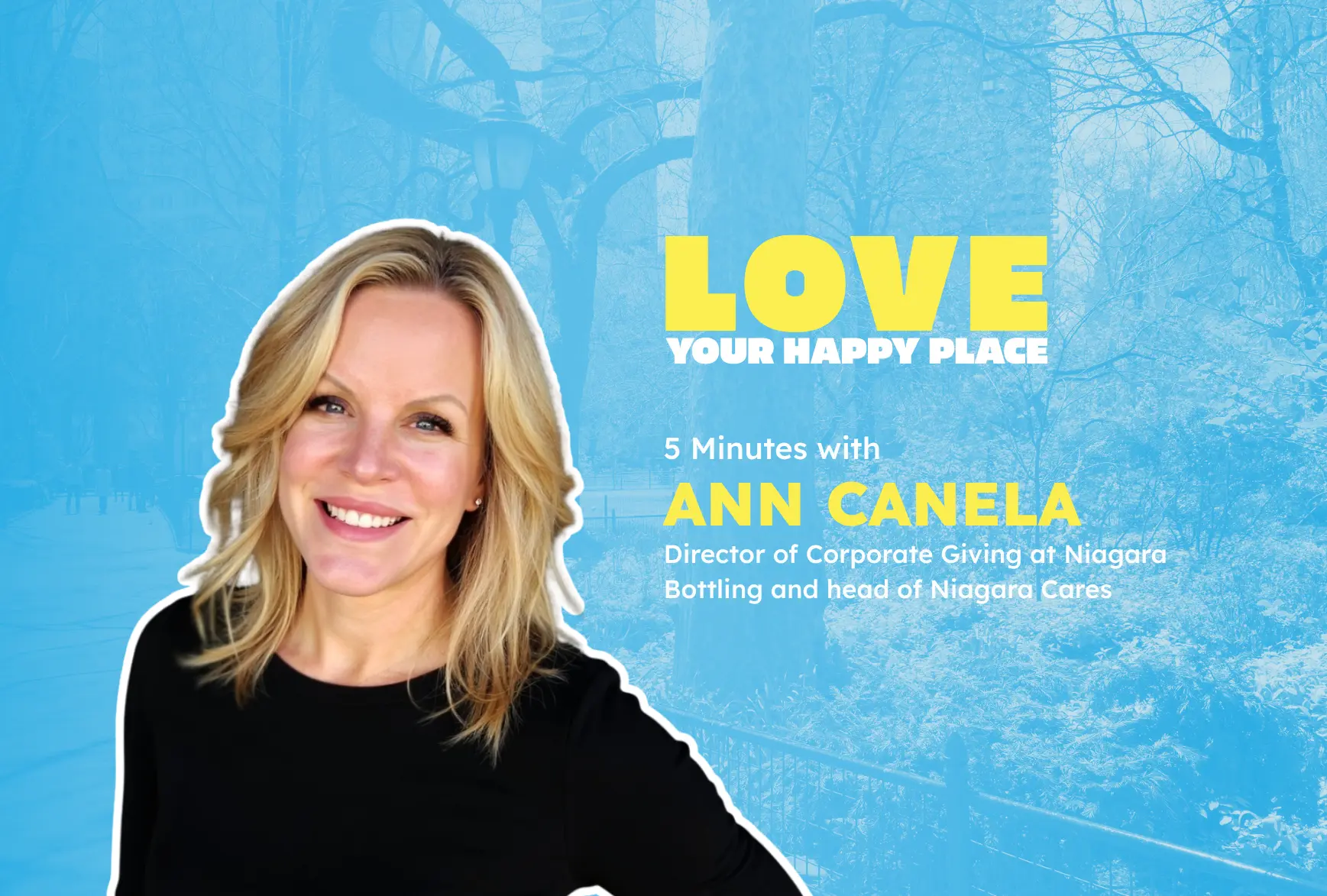
For this installment of Five Minutes With, NationSwell sat down with Ann Canela, director of Corporate Giving at Niagara Bottling and head of Niagara Cares, to talk about the new “Love Your Happy Place” campaign — a colorful, citywide initiative encouraging people to show love for the places they call home.

Rooted in behavioral science and built on empathy rather than guilt, the campaign aims to make environmental action feel joyful, personal, and contagious — proving that small, “too-small-to-fail” acts can add up to big community impact.

Here’s what Ann had to say:


NationSwell: What was the inspiration for this kind of community-focused coalition building? What are the main goals of the initiative? 

Ann Canela, head of Niagara Cares: The “Love Your Happy Place” campaign began as a national initiative but drew its real inspiration from local communities. The idea was to spark local “too-small-to-fail” actions — picking up litter, recycling, joining a cleanup — that collectively show love for where we live. Grounded in behavioral science, we studied why recycling rates stagnate, following people in their daily routines to understand their confidence, confusion, and barriers. What we found was that emotion — especially empathy and optimism — moves people more effectively than guilt or logic. This insight shaped a campaign that leaned into joy, play, and gamification in order to motivate environmental action.

Our first pilot in Austin wrapped the city in messages of love — from murals and bus wraps to community events—and boosted recycling confidence and civic pride by double digits. That success has since expanded to San Diego, where coalitions of partners are leading beach cleanups, park recycling competitions, and tree plantings, with activations culminating around Valentine’s Day and Earth Month. The model is spreading rapidly — next stops include Denver, Los Angeles, Dallas, and Oakland — and has already earned Keep America Beautiful’s award for Best Sustainable Communications. It’s a campaign powered by optimism, local pride, and the belief that love, expressed through small daily actions, can create measurable change.

NationSwell: What do you think it is about small coalitions that activates this optimism or civic pride lever in folks’ brains? 

Ann Canela: People see these huge signs that say love and it’s disruptive, it makes you stop and look, but it’s also universal. Love is something everyone understands; to me, it’s the purpose of everything. The challenge with many climate-related campaigns is that we often ask too much of individuals. But when you break it down into small, tangible actions — like picking up a piece of litter on a walk — and remind people that thousands of others are doing the same, the collective impact becomes visible and real.

Those simple acts connect people to a larger purpose. It’s not just about one person recycling or cleaning up; it’s about feeling part of a shared movement that turns small gestures into massive change. There’s a kind of magic in that: When people can see themselves reflected in the solution and recognize that love, expressed through everyday action, truly adds up.

NationSwell: What compelled you to get involved in sustainability in the first place? What galvanized your interest in piloting bold solutions? 

Canela, Niagara Cares: When I joined Niagara, there wasn’t a formal CSR platform, just a family fund rooted in decades of charitable giving. My career throughline has always been strategic philanthropy: using funding in ways that align with a company’s purpose, engage employees, and resonate with consumers. For Niagara, that meant mapping philanthropy to what we make — water — and investing in recycling, water restoration, and disaster relief. Rather than forcing climate work into our business, we’ve focused on making every dollar work smarter, advancing multiple goals at once: driving impact, supporting employee volunteerism, and shifting culture.

As a private, B2B company, we’re not a household name, but our products touch people’s lives daily. That’s why we hold ourselves accountable for every philanthropic investment — we want each dollar to serve both business and community. Beyond funding, we take an active role with grantees: fundraising alongside them, hosting events, and investing deeply in their success. My goal is to help move philanthropy forward — not just by what we fund, but by how we give, ensuring it’s collaborative, strategic, and built for lasting change.

NationSwell: What do you feel is the North Star of your leadership — the principle or ideal you look to in order to be the most effective leader possible? 

Canela, Niagara Cares: I’ve always believed that effective leadership, like strong branding, requires a balance between head and heart. To truly connect with people, you need both strategic clarity and emotional authenticity. I’m not afraid to show emotion; the issues we work on are real and deeply human. My approach is to pair a thoughtful, data-driven strategy with genuine empathy — to be both the mind and the soul of the business. That balance allows me to lead in a way that’s motivational, grounded, and real.

At the same time, none of this work happens alone. Behind every success is a team that inspires me daily, partners who share our vision, and nonprofits doing the hard work on the ground. It’s a collective effort — each part strengthening the other — and I couldn’t be prouder of the people I get to collaborate with. Together, we make each other better and turn strategy into meaningful, lasting impact.

NationSwell: What is exciting you right now? What is the next thing on the horizon that has you really excited? 

Canela, Niagara Cares: What’s exciting is that this is a new strategy for Niagara — we launched it at the start of 2024, so we’re only in our second year. The first year was about benchmarking: understanding what was possible and how to execute it. By year two, we established ambitious KPIs — feeding 150,000 people a month, planting a million trees, and restoring a billion gallons of water over five years. But we’ve already surpassed expectations: 400,000 trees planted this year alone, 70,000 people fed, and water goals we’ll likely reach within 18 months.

Now we’re asking ourselves what’s next — how we can stretch even further and scale our impact. Reevaluating and expanding these goals isn’t just a metric exercise; it’s a reflection of the legacy we want to leave in the world. Seeing how much we can accomplish in such a short time makes me incredibly proud and motivated for what’s ahead.

NationSwell: What, to your mind, is sort of defining the world of philanthropy right now? What are you seeing that is giving you the most hope? 

Canela, Niagara Cares: In corporate philanthropy, the shifting flow of money is redefining everything. Funding models are changing so quickly that many nonprofit leaders are struggling to adapt — but what I find hopeful is how many corporate peers are stepping up to help. Companies are working more closely with partners, offering flexible funding, and showing real empathy for the challenges nonprofits face. I recently joined a roundtable on the state of corporate giving where people were moved to tears — and to me, that emotion reflects deep commitment to sustaining impact in uncertain times.

Even as traditional funding sources dry up, I’m inspired by the innovation happening across the sector. Nonprofits are reorganizing, forming new partnerships, and finding creative ways to stay resilient. We may see more collaboration and consolidation, but not collapse — and that gives me tremendous hope. There’s a shared determination, both in business and philanthropy, to evolve together and continue supporting the work that matters most.

Impact Next: An interview with Partners for Rural Impact’s Dreama Gentry

At a moment of inequality and division, who is advancing the vanguard of economic and social progress to bolster under-served communities? Whose work is fostering the inclusive growth that ensures every individual thrives? Who will set the ambitious standards that mobilize whole industries, challenging their peers to reach new altitudes of social impact? 

In 2025, Impact Next — an editorial flagship series from NationSwell — will spotlight the standard-bearing corporate social responsibility and impact leaders, entrepreneurs, experts, and philanthropists whose catalytic work has the potential to shape the landscape of progress amid urgent need for social and economic action.

For this installment, NationSwell interviewed Dreama Gentry, president and CEO of Partners for Rural Impact.


NationSwell: What brought you to the field that you’re in right now? Was there a moment, a relationship, or an experience that galvanized your commitment to driving bold action?

Dreama Gentry, President and CEO, Partners for Rural Impact: I grew up in Appalachian Kentucky and have never wanted to live anywhere else. My home region is too often portrayed through a lens of deficit and stereotypes. What I see are people with deep connections to the land and to family. I see the people and the community and that shaped me and provided me with opportunity. No one in my family had gone to college, and while I grew up in a community that I now realize was poor, I never felt lacking. My Mom and Dad surrounded  me with love and opportunity. 

There are few pivotal folks that come to mind.  The first is Ma, my grandmother. She encouraged me to dream and was always there for me. From the time I was little she would take me to the public library when she was in town visiting her mother who was in a nursing home. The library opened the world to me. I was a voracious reader and I knew from an early age that I wanted to go to college. I planned to be either a teacher or an archaeologist.

Pat Hurt was my guidance counselor. With a caseload of 450 students, she made time to see the quiet girl from the part of the county that many discounted. My junior year, Ms. Hurt encouraged me to apply to the Governor’s Scholars Program and to Upward Bound, both were six-week summer programs on a college campus. Accepted into both, I attended Governor’s Scholars and that experience set me on a path to Berea College — where most students were low-income and first-generation — and then to law school at the University of Kentucky. Practicing law, though, I realized I was not my passion.

Education and connections to caring adults had changed my own trajectory, I returned to Berea College with a vision to raise aspirations and provide pathways to college in my home community. The work I do today started in an office in Rockcastle County High School thirty years ago. I worked alongside the guidance counselors, teachers and parents to build partnerships that encouraged kids and families to see college as an option. With the support of Larry Shinn a forward-thinking college president, I was able to grow that work from a direct service program in a single school to a regional initiative that served 50,000 children and youth across Appalachian Kentucky. In 2022 I created Partners for Rural Impact to create a movement of rural leaders across the nation committed to moving outcomes for rural youth. My team activates resources to support schools and communities, strengthens local capacity to implement what works and amplifies the bright spots in rural America.  My goal is a Nation where demographics do not determine destiny. And my contribution is to ensure that in rural communities there is the capacity to ensure that all rural young folks thrive.

NationSwell: When you look back on the scope of your career thus far, how have your thinking, your leadership style, or your philosophies changed over time?

Gentry, Partners for Rural Impact: My own life has been shaped by summer and out-of-school programs that gave me the chance to step onto a college campus. Coming from a small K–8 school where only six of eighteen classmates graduated high school, the few of us who made it to college all had that program experience in common. So, at first my work focused on creating and scaling strong programs that work across Appalachia — programs like Upward Bound, GEAR UP, Promise Neighborhood and Community Schools.

Over time, I saw that programs are essential and that they alone are not enough. Rural communities need a place-based approach where there is a backbone organization and someone that wakes up every morning thinking about aligning cross-sector partners, using data, and moving outcomes to ensure that every child in the community is getting the supports they need to thrive. It is only through this place based partnership approach that we can break the cycle of generational poverty and ensure all rural students are on a path to success.  

NationSwell: Is there a particular facet of your work, or the field more generally, that you think is not getting enough attention right now?

Gentry, Partners for Rural Impact: Since January, the focus has shifted dramatically. With so many safety nets and federal supports for children and families being dismantled, much of our energy is consumed by trying to slow or halt that erosion. That’s the elephant in the room right now. Before this moment, I might have answered differently, pointing instead to how often rural kids and families are left out of the equation — not by intent, but because decision-makers’ perspectives are shaped by urban and suburban experiences that overlook rural realities.

The challenge of the moment is supporting families and children during this moment. We must strengthen local capacity and support local organizations that are on the ground ensuring that families in rural places still have real paths to upward mobility. We must get serious about addressing poverty in America. I can focus my work on rural communities because I have colleagues leading organizations like StriveTogether, the William Julius Wilson Institute and Purpose Built communities that are primarily focusing on non-rural communities. 

NationSwell: There’s a stubborn narrative that rural communities are all the same, but rural America, like anywhere else, is complex and varied. What do you think people most misunderstand about rural places or the people who identify as rural? How does that misunderstanding impact policy, philanthropy, and the national conversation generally?

Gentry, Partners for Rural Impact: People often assume rural America is monolithic, when it’s as diverse as any city. Just as New Yorkers understand the differences between boroughs and neighborhoods, rural places vary widely in culture, history, and connection to land. That’s why Partners for Rural Impact refuses to define “rural” rigidly—if a community identifies as rural, they are part of the movement. 

Corporate and philanthropic leaders are often guided by policies or practices that limit giving to places where they have employees or where they have a presence. This results in limited giving to rural places. Only seven cents of every philanthropic dollar goes to rural areas—and even less to rural areas with the deepest need. These policies and practices are short sited and not designed for the world where we are now living. We all need this Nation to thrive. Each and every community is part of our ecosystem. What happens in Owsley County Kentucky impacts Washington, DC, New York City and Silicon Valley just as much as what happens there impacts Appalachia, the Delta, and our Native Lands.

NationSwell: Of the socially motivated leaders you consider your peers, are there any whose work has inspired you and whom you hold in high esteem?

Gentry, Partners for Rural Impact: I will focus on four who have supported me as I created Partners for Rural Impact. First, Geoffrey Canada has been a mentor since 2010. The way he created the Harlem Children’s Zone to focus on Harlem and the William Julius Wilson Institute to inform the nation informed Partners for Rural Impact’s structure.  At Partners for Rural Impact we focus intensively on three places — Appalachian Kentucky, East Texas, and Mexico, Missouri — and they are our places of learning that ensure we convene, coach and support rural places across the nation with a proximate lens.

Jim Shelton’s strategic thinking, tenacity, and trust impresses me. We met when Jim was leading a portfolio at the Department of Education that included Promise Neighborhoods. Now at Blue Meridian Partners, he is committed to a nation where all have a path to economic mobility. He invests deeply in the place based partnerships and trusts local leaders to chart their own solutions. Here in Appalachia, Jim King of FAHE showed me the power of a network to unite rural places across Appalachia and his thinking led to Partners for Rural Transformation which unites rural regions of persistent poverty. 

Another pivotal influence has been Jennifer Blatz of StriveTogether. After the 2016 election, most inquiries I received about rural America were focused on “what’s wrong” and “how to fix it.” Jennifer was the only person who asked how we could work together and StriveTogether could better serve rural communities. Her spirit of authentic partnership informed my decision to take Partners for Rural Impact national. Jennifer also shared her connections with philanthropy and took the time to introduce me and the work to others. Jennifer models what it looks like to enter the room with humility and true collaboration, and I try to bring that same approach into every partnership.

NationSwell: What is the North Star of your leadership?

Gentry, Partners for Rural Impact: The North Star of my work in general is creating a nation where all young people have a real path to upward mobility, with my organization focused specifically on ensuring that rural kids and communities aren’t left behind. In thinking about my leadership, I am often asked what my “superpower” is — because we all have superpowers, and I think real progress comes when superpowers are activated.

My superpower is seeing patterns and connections. I can listen across multiple conversations and places, then weave them together into a web of relationships and strategies that solve more than one problem at a time. I thrive when I have put the right people, at the right moment, in the right place, together with the right problem. My ability to connect and align has become my biggest contribution to the work.

Impact Next: An interview with The Jed Foundation’s John MacPhee

At a moment of inequality and division, who is advancing the vanguard of economic and social progress to bolster under-served communities? Whose work is fostering the inclusive growth that ensures every individual thrives? Who will set the ambitious standards that mobilize whole industries, challenging their peers to reach new altitudes of social impact? 

In 2025, Impact Next — an editorial flagship series from NationSwell — will spotlight the standard-bearing corporate social responsibility and impact leaders, entrepreneurs, experts, and philanthropists whose catalytic work has the potential to shape the landscape of progress amid urgent need for social and economic action.

For this installment, NationSwell interviewed John MacPhee, CEO of The Jed Foundation (JED).


NationSwell: What brought you into the field? Was there a moment, a relationship, or an experience that galvanized your commitment to driving social and economic progress?

John MacPhee, CEO, The Jed Foundation: I spent 20 years in the corporate world, working in transportation and pharmaceuticals. It wasn’t a deliberate choice at first — I needed to pay the bills — so I worked hard, learned as much as I could, and advanced. Over time, though, I began asking bigger questions: What’s my purpose? How can I make the world a better place? That led me to shift from the corporate sector into the “for-purpose” world, using my knowledge of healthcare to make a difference. I went back to school for health policy and eventually joined The Jed Foundation, a systems-change organization focused on mental health and suicide prevention for teens and young adults nationwide.

The mission resonated with me on many levels. I’ve seen loved ones struggle with alcohol and drug use, and we’ve lost family members to overdose. I faced my own battles with mental health and problem drinking as a young adult, even failing out of college, before getting help and returning to school and graduating. Those personal experiences made JEDs focus on supporting young people through systems-change feel deeply aligned with my own story.

A final turning point came through my mother. While dying of cancer, she told me she felt I had “lost my way”  — that the boy she raised, who once dreamed of being a math teacher and basketball coach, and she was worried that I had drifted from my purpose or “why”. Her words pushed me to reconsider my path. Fifteen years ago, I made the switch into the nonprofit and public health world, and I’ve been committed to this purpose-driven work ever since.

NationSwell: Looking back at the scope of your career, how have your thinking, your leadership style, or your philosophies evolved over time?

MacPhee, The Jed Foundation: I came up in a hard-driving corporate environment, spending ten years in a fast-growing pharmaceutical company where I learned how to run and build businesses. I brought those skills with me into the nonprofit space, but it’s different: In the corporate world, it’s often easier to motivate teams because incentives are more consistent; in the nonprofit world, people are driven by a more varied set of motivations, and connecting with them requires a more tailored approach to each team member. 

That was an adjustment for me, but I’ve carried over the business practices I learned in corporate to help guide how we run JED today.

NationSwell: What would you say defines the present societal and economic moment? Which trends are filling you with optimism, and which are giving you more pause or concern?

MacPhee, The Jed Foundation: We’re in a moment of dramatic change. Technology is moving at incredible speeds — AI today, social media, and the iPhone just 15–20 years ago — and that pace is reshaping the environment for mental health. Despite the challenges, I remain optimistic because the world is full of beauty, good people, and numerous examples of people helping each other. Unfortunately, those stories rarely get told; instead, we’re flooded with negative headlines that distort the balance of what’s truly happening. It’s important for all of us, and especially for young people, to intentionally seek out joy, progress, and good news to stay grounded.

At the same time, I worry about the polarization in our public discourse. On complex policy questions like immigration, LGBTQIA+ rights, gender-affirming care, and parental involvement in schools, earnest people can and do disagree. But, the way these debates are unfolding too often vilifies individuals and entire groups, which not only deepens division, but also creates legitimate fear for people and the communities they love. Policy debates could be approached with more humanity and kindness; instead, they’ve become another source of harm. All of this makes the current environment especially tough for young people, who are navigating rapid change, overwhelming narratives, and a climate of fear and division.

NationSwell: What are you seeing in the field right now that’s not getting enough attention?

MacPhee, The Jed Foundation: We need to ensure young people see a fuller picture of the world — one that includes the good alongside the challenges. Hope is warranted, but it’s something we have to fight for and intentionally lean toward.

When it comes to technology, I think the conversation is often misplaced. The real issue isn’t simply whether social media or technology is “good” or “bad,” but how it’s been wrapped up in profiteering. As a society, we normally protect children from aggressive marketing, whether it’s for medicine, tobacco, or other harmful products. Yet we’ve allowed an industry to capture seven or eight hours of young people’s lives every day through addictive algorithms, monetizing their time and relationships without meaningful guardrails. The question for youth mental health isn’t just about technology itself, but about how we’re going to protect children from being exploited in this way.

NationSwell: Is there a signature social or economic project or initiative you’re working on right now that you’d like to lift up?

MacPhee, The Jed Foundation: We partner with youth-serving organizations, including schools, districts, and community-based groups, around a simple yet critical idea: If you serve youth, you must prioritize their mental health and take purposeful, planned action to reduce suicide risk. That means following best practices, and we support this through programs like our District Mental Health Initiative with AASA, The School Superintendents Association, JED High School, JED Campus, and our community-based organization model.

For leaders, whether in schools, nonprofits, or even workplaces, mental health is both a responsibility and an opportunity. It requires building environments where people feel connected and a sense of belonging; where coping and problem-solving skills are nurtured; where it’s acceptable to say “It’s OK not to be OK.” Just as important are the systems to notice when someone is struggling, respond appropriately, connect them to care, and ensure policies and supports are in place.

NationSwell: What is the North Star of your leadership?

MacPhee, The Jed Foundation: My North Star is improving the environments around young people. That’s what our team is focused on every day — working as hard as we can, in as many ways as we can, to create conditions where youth can thrive.

In this space, there are many peer organizations I admire. The Trevor Project stands out, especially as we fight proposed funding cuts to LGBTQIA+ services within the 988 crisis line. In just the past two years, more than a million people in crisis have used those services, much of it delivered by Trevor. Active Minds is another organization I deeply admire, mobilizing students on high school and college campuses to advocate for mental health. The American Foundation for Suicide Prevention (AFSP) advances research, advocacy, and support for suicide loss survivors. I also look to organizations like the National Alliance for Mental Illness (NAMI), the Child Mind Institute, and Sesame Workshop, which has done important work around children’s mental health.

It’s inspiring to be part of a field where so many organizations, each with their own approach, are contributing to the same larger mission.

NationSwell: What advice would you give to someone who is interested in getting involved or helping out in the mental health space?

MacPhee, The Jed Foundation: For anyone looking to get involved, organizations like The Jed Foundation, NAMI, and AFSP are great places to start. But more broadly, it really does take a village. Each of us can be a mental health champion in our own communities. That begins with vulnerability — showing through your own example that it’s OK not to be OK, and creating space for open conversations.

At JED, we tell young people that if they’re struggling — or worried about a friend — they should reach out to a trusted, caring adult. The question is: are you that adult in the lives of young people around you? And more importantly, do they know it? Whether you’re a parent, an aunt, uncle, neighbor, coach, or friend, make it explicit: Let the young people in your life know you’re a safe harbor, someone they can turn to without judgment.

At a grassroots level, those simple assurances can be incredibly powerful. Paired with resources and guidance from organizations in the field, they create the culture of support young people need.

NationSwell: Could you recommend any insightful resources of book reports, podcasts, articles that have influenced your thinking, either past or present?

MacPhee, The Jed Foundation: I’m constantly reading and reviewing for my job, but when I have free time, I mostly listen to music. I keep a personal YouTube playlist of about 100 songs that I’m always tweaking — swapping a few out, but keeping a core set the same. It’s been played over 18,000 times, which makes me wonder: Is this a great way to unwind, or a huge missed opportunity where I could’ve read countless books or listened to podcasts instead?

The playlist leans heavily toward blues and blues rock — lots of Tedeschi Trucks, Ruthie Foster, PJ Harvey, Buddy Guy — with some Massive Attack and a little Pearl Jam thrown in. It definitely shows my age in some of the choices, but it’s what helps me relax and recharge.

Impact Next: An interview with StriveTogether’s Jennifer Blatz

At a moment of inequality and division, who is advancing the vanguard of economic and social progress to bolster under-served communities? Whose work is fostering the inclusive growth that ensures every individual thrives? Who will set the ambitious standards that mobilize whole industries, challenging their peers to reach new altitudes of social impact? 

In 2025, Impact Next — an editorial flagship series from NationSwell — will spotlight the standard-bearing corporate social responsibility and impact leaders, entrepreneurs, experts, and philanthropists whose catalytic work has the potential to shape the landscape of progress amid urgent need for social and economic action.

For this installment, NationSwell interviewed Jennifer Blatz, president and CEO of StriveTogether.


NationSwell: What brought you into this field of work? Was there a moment, a relationship, or an experience that galvanized your commitment to driving bold action?

Jennifer Blatz, president and CEO of StriveTogether: For me, this work is deeply personal — it truly feels like my life’s work. I’m the first in my family to go to college, and education was my ticket to economic mobility. Like many first-generation students, I felt a responsibility to do something important, so initially planned to go to law school. But along the way, I discovered a passion for supporting other first-gen students at the University of Kentucky, a large land-grant institution with many students like me. An advisor encouraged me to consider a career in higher education and student affairs, which opened the door to pursuing this work as a practitioner.

That path eventually led me to StriveTogether’s predecessor organization, where I focused on college access and attainment. Through that work, I came to understand how systems are structured to produce the outcomes they deliver — and how often those outcomes are deeply inequitable. Recognizing this is what ultimately drew me to broader systems-change work, and to ensuring that all young people have a real path to economic mobility.

NationSwell: Looking back at the scope of your career, how have your thinking, strategies, or leadership philosophies evolved over the course of your leadership journey?

Blatz, StriveTogether: One of the biggest evolutions in my thinking has been realizing that good programs alone aren’t enough. Early in my career as a practitioner, I worked on evidence-based initiatives like GEAR UP and TRIO that delivered incredible results for students — but only for a limited number. To truly address the country’s most intractable challenges, we have to pair strong programs with a systems-level strategy. That recognition shifted my focus toward influencing policy and transforming structures so outcomes can improve at scale.

Equally important is understanding the role of community and place. Early work across Ohio showed me how context matters: What students in cities like Cincinnati, Cleveland, or Toledo needed was very different from what was required in Appalachian or rural communities. Strong supports must be responsive to local realities, and systems change has to be rooted in the specific needs of each community. Together, systems and place-based approaches have become central to how I think about driving social and economic mobility at scale.

NationSwell: As someone who sees services being delivered across both rural and urban contexts, what are the similarities and differences in their needs?

Blatz, StriveTogether: At the core, families in both urban and rural communities want the same thing: for their children to thrive and reach their full potential. But rural communities face unique challenges: One recurring concern we hear is the “brain drain” that happens when young people leave for college and don’t return, which makes creating opportunities for education, work, and quality of life in rural areas especially critical. Another key difference is resources: Philanthropy often overlooks rural communities, which means they rely much more heavily on county, state, and federal funding. Cuts to public programs can be especially devastating when there’s no philanthropic safety net to help fill the gap.

That said, partnerships across urban and rural contexts can be powerful: For example, in Kentucky, the Appalachian Cradle to Career Partnership, supported by Partners for Rural Impact, joined forces with the Urban League of Louisville to advocate for state policy. By presenting a united front across rural and urban lines, they successfully passed legislation that benefited students statewide. Collaborations like this show that while the contexts may differ, bridging urban and rural perspectives is essential to advancing equitable policy and ensuring opportunity for all young people.

NationSwell: What’s defining the current social and economic environment that we’re in — what are the trends that you’re currently seeing, and what’s giving you hope?

Blatz, StriveTogether: I’m optimistic because I see incredible work happening in local communities. Time and again, people come together around shared priorities to support young people and families, often bridging divides that dominate national headlines. While polarization and divisiveness get much of the media’s focus, on the ground we consistently witness collaboration to improve outcomes.

What gives me pause are broader trends like the privatization of education, which often leads to greater inequities and lacks accountability when compared to public schools. At the federal level, program rollbacks and a push toward privatization create real risks. Yet at the same time, I see governors, mayors, and state leaders across the political spectrum investing in more equitable, systems-driven solutions. Many are working to expand economic opportunity through job growth, career pathways, and policies that help young people thrive.

So even amid competing forces — federal retrenchment on one side and state and local innovation on the other — I remain hopeful. The real progress is being driven at the community level, where collaboration and shared commitment to young people continue to point the way forward.

NationSwell: Is there a particular program, signature initiative, or some facet of the work that you would like to spotlight for us that is driving outcomes for the work?

Blatz, StriveTogether: One initiative I’m especially excited about is StriveTogether’s new Pathways Impact Fund, supported by the Gates and Walton foundations. It’s more than just a fund — it’s an effort to strengthen regional organizations that connect education and workforce systems. The goal is to scale high-quality career pathways for students in grades 9–13, with experiences like dual enrollment, industry credentials, work-based learning, and sustained advising. By aligning education and corporate partners, we can create smoother, more equitable transitions from school to career.

This work reflects an evolution in my own thinking. I came to the field through college access and long believed that postsecondary attainment, whether a two- or four-year degree, was the primary path to opportunity. But innovative pathways models have shown me that apprenticeships, career-connected learning, and credential programs can be just as powerful in setting young people up for success. These pathways not only support academic achievement but also build social capital and belonging — critical factors for economic mobility that our systems have too often overlooked.

With StriveTogether’s data-driven approach, we see how these models can help reverse generations of stagnant mobility in the U.S. Partnering with Gates and Walton, who have long invested in this space, gives us the chance to learn, innovate, and contribute significantly to the field. I’m optimistic this fund will help more young people thrive while reshaping the systems that support them.

NationSwell: What is the North Star of your leadership?

Blatz, StriveTogether: The north star of my leadership is balancing humility and confidence. Having spent most of my career within StriveTogether and its predecessor, I’ve been part of shaping this work from the ground up. That has required the confidence to try new things — even to fail — and the humility to recognize when we don’t have all the answers. Much of this journey has felt like building the plane while flying it, and that’s demanded both boldness and openness to learning.

Recently, as a leadership team, we named “humble confidence” as one of the qualities that makes StriveTogether unique. It means believing we can put millions more young people on a path to economic mobility, while also acknowledging that we’ll need to experiment, fail forward, and continuously adapt along the way.

For me, the central mindset is to believe deeply in what’s possible, but to approach the work with humility, curiosity, and a commitment to ongoing learning. That balance guides how I lead and how I want our organization to grow.

NationSwell: Of the folks in the social or economic sector doing similar work, who are a few of the leaders who inspire you or whom you hold in high esteem?

Blatz, StriveTogether: Two leaders I deeply admire are Roseanne Haggerty of Community Solutions and Dreama Gentry of Partners for Rural Impact. Roseanne embodies what I’d call “humble confidence.” Her organization has boldly declared that homelessness is solvable, and they’ve put a stake in the ground to reach zero—whether that’s ending veteran homelessness in a community or driving systems change nationwide. I admire her clarity, conviction, and the way she leads with both humility and determination.

Dreama, by contrast, has influenced me through her deep commitment to place. Based in rural Appalachia, she has built Partners for Rural Impact around a clear sense of purpose and rootedness. I often find myself channeling her voice in conversations by asking, “What about rural?” — a reminder of her constant advocacy for communities that are too often overlooked. When we first met in 2017, she was initially skeptical, wary of organizations trying to exploit rural issues in the wake of Trump’s election. But that honesty laid the foundation for a strong partnership built on trust and shared purpose.

Both Roseanne and Dreama model clarity, conviction, and values-driven leadership. Their approaches — one focused on bold systems change, the other grounded in place-based commitment — continue to inspire how I think about my own leadership and the partnerships StriveTogether builds.

NationSwell: Are there any resources — books, reports, podcasts, articles — that have influenced your thinking professionally or personally? 

Blatz, StriveTogether: Lately I’ve been immersed in the Entrepreneurial Operating System (EOS) by Gino Wickman. A year ago, I never would have imagined naming an operating model as something shaping my thinking, but implementing EOS has been transformative for StriveTogether. After our executive team read Traction, we began exploring how to adopt an entrepreneurial mindset while scaling — holding onto flexibility and innovation even as the organization grows.

For any organization in a growth phase, adaptive leadership is essential. Context matters, especially in place-based partnerships, and the past several years — from COVID to the racial reckoning to ongoing political shifts — have demanded constant adaptation. EOS has given us a structured system for doing that: clarifying priorities, identifying “rocks,” and making decisions with greater focus and alignment.

It may sound wonky, but it’s changing the way we work. By blending entrepreneurial thinking with disciplined systems, we’re better positioned to meet the moment and continue advancing our mission at scale.

Impact Next: An interview with Elizabeth Dole Foundation’s Steve Schwab

At a moment of inequality and division, who is advancing the vanguard of economic and social progress to bolster under-served communities? Whose work is fostering the inclusive growth that ensures every individual thrives? Who will set the ambitious standards that mobilize whole industries, challenging their peers to reach new altitudes of social impact? 

In 2025, Impact Next — an editorial flagship series from NationSwell — will spotlight the standard-bearing corporate social responsibility and impact leaders, entrepreneurs, experts, and philanthropists whose catalytic work has the potential to shape the landscape of progress amid urgent need for social and economic action.

For this installment, NationSwell interviewed Steve Schwab, Chief Executive Officer at Elizabeth Dole Foundation.


Nick Cericola, VP of Insights, NationSwell: What brought you to the field that you’re in right now? Was there a moment, a relationship, or an experience that galvanized your commitment to driving bold action?

Steve Schwab, Chief Executive Officer, Elizabeth Dole Foundation: I’m the youngest of seven Schwab boys — no sisters, but now six sisters-in-law. We were a tight-knit family growing up, and service was something that was always emphasized. One day my dad, who had spent 40 years working at Kodak, called a family meeting to announce through tears that he was retiring. He told us: “Do work that’s meaningful to you. I stayed too long and ended up doing something that I really didn’t enjoy, and in my next phase I’m going to do work that’s going to impact lives and make people and our country better.

I knew that I really wanted to translate that lesson from my father, so I studied political science in college with a focus on public service and advocacy for disadvantaged communities. This led to a career in civic, government, and especially nonprofit work — connecting the unconnected, leveling the playing field, and supporting our nation’s most vulnerable.

A pivotal moment came when I was invited to meet Bob and Elizabeth Dole. They were two of America’s most prolific public servants who were witnessing firsthand how unprepared our country was to support military and veteran families facing life-changing injuries. During our first meeting, I asked if they wanted to be the solution, to be the catalyst that could equalize the playing field for these families, and when they said yes, I was all in. Since then, I’ve been dedicated to connecting the most unconnected military families with the resources they need. It’s been an incredible journey.

Cericola, NationSwell: Of the socially motivated leaders you consider your peers, could you name 2-3 whose work inspired you and whom you hold in high esteem?

Schwab, Elizabeth Dole Foundation: First, Dr. Myechia Minter Jordan, the new CEO of AARP, is an Ivy League-trained physician who chose to focus her career on community health and leveling the playing field for disadvantaged groups. She now leads the world’s largest nonprofit membership organization, connecting millions of older Americans to vital resources, healthcare, and caregiver support. Her commitment to economic mobility and health equity is inspiring, and I’m excited to work with her.

Next is General Walter Piatt, CEO of the Wounded Warrior Project — the largest post-9/11 veteran-serving organization. After nearly 40 years in the military, he could have retired comfortably, but instead, he chose to lead an organization with a nearly $900 million annual budget. Remarkably, Wounded Warrior Project partners with groups like ours, funding specialized work for military kids and caregivers — an unusually collaborative approach in the nonprofit world that has greatly expanded our impact.

Finally, Sonya Medina Williams, CEO of the Reach Resilience Foundation, has a remarkable background, including service at the White House and leadership of the AT&T Corporate Foundation. Now, she’s leading a nearly half-billion dollar foundation investing in economic opportunity and resilience for vulnerable communities, including veterans and disaster survivors. She’s a truly dynamic leader.

Cericola, NationSwell: What is unique or differentiated about the approach that you’re taking at the Foundation? Can you walk us through what excites you most about the work that you’re leading?

Schwab, Elizabeth Dole Foundation: What excites me most about this work is realizing how caregiving touches nearly every American family. At conferences, I often ask how many people are caregivers — about a third raise their hands. When I ask who expects to be a caregiver someday, most of the rest do. Yet caregiving remains one of the most unrecognized, underprepared, and under-resourced issues in our country.

A recent study from The RAND Corporation found that 100 million Americans — one-third of the nation — are caregivers. The study highlights major gaps in mental and emotional health, economic mobility, and strained relationships, while our healthcare system is not equipped to support these families. Within this group, 14.5 million care for military or veteran service members and face even greater challenges. Many live at or below the poverty line, struggle with food insecurity and high stress, lack adequate medical coverage, and spend thousands out of pocket each year just to care for loved ones.

Research from RAND, the U.S. Department of Veterans Affairs, and the American Medical Association shows that strong, supported caregivers are essential to the health and recovery of those they care for. Investing in caregiver support saves the healthcare system billions and improves lives. With new legislation like the Elizabeth Dole Act and growing support, we’re making progress, but there’s still much more to do.

Cericola, NationSwell: Is there a particular program, signature initiative, or some facet of the work that you would like to spotlight for us that is driving outcomes for the work?

Schwab, Elizabeth Dole Foundation: The first initiative I want to mention is our Hidden Helpers Coalition. Right now, 5.5 million children across the country — some as young as four — are serving as primary or secondary caregivers for parents or siblings. Their childhoods are shaped by caregiving responsibilities that take priority over typical activities like sleepovers, sports, or just being a kid. One eight-year-old told me she gauges her day by asking her dad how the “weather” is — if it’s “stormy,” she knows he’s struggling and needs extra support. When I was eight, my biggest concern was which playground to visit.

This is the new American reality, especially in military and veteran families. These kids are often from families with a strong tradition of service — the number one recruitment source for the military, which is facing declining numbers. The strain on these families is not just economic; it’s a national security issue. That’s why we’ve built a coalition of over 100 organizations to provide peer support, mental health resources, and educational interventions for these children. Connecting with others in similar situations is life-changing for them.

The second initiative I’ll mention is our economic mobility program, the Bob and Dolores Hope Fund for Critical Assistance. This program supports military and veteran families at or below the poverty line. We provide direct financial grants, then help families access training, education, credit counseling, and bank accounts — stabilizing them and setting them on a path toward financial independence. Thanks to this support, families are gaining the skills and resources they need to thrive, not just survive.

Cericola, NationSwell: What’s defining the current social and economic environment that we’re in — what are the trends that you’re currently seeing, and what’s giving you hope?

Schwab, Elizabeth Dole Foundation: What defines this moment is fusion — of complexity, misinformation, divisiveness, happiness, and uncertainty. It’s a lot. People are feeling anxious about the health and economic stability of the American family. Earlier, the focus was on jobs and opportunity; now, that concern has deepened.

What gives me hope is the resilience I see, especially among the military and veteran community. These are families often near the bottom of the economic ladder — many rely on social welfare while serving our country. That’s deeply troubling — it doesn’t feel American. And yet, these families remain focused on their duty to serve and support one another. Their commitment inspires my team and me to do everything we can to fill the gaps public programs miss.

We’re especially focused on mental health. Suicide among veterans is shockingly high — 19 to 21 lives lost daily. Through our Face to Fight initiative, we’re working with 250 partners to tackle this crisis.

Only 7% of philanthropy in the U.S. goes to military and veteran causes. That number should be much higher, given how much we owe them. These families are strong and resilient — but they are suffering. That duality gives me both pause and purpose.

Cericola, NationSwell: Are there any resources you’d recommend — books, podcasts, Ted talks — that have influenced your thinking that might influence others as well?

Schwab, Elizabeth Dole Foundation: One resource I’d love to lift up is a favorite book of mine, The Go-Giver by Bob Burg, which was actually introduced to me by David Rockefeller early in my career in New York. The book’s core lessons — the laws of value and authenticity — have always resonated with me. The law of value reminds us that our worth is measured by the value we provide to others, not what we receive, and the law of authenticity stresses that our genuine self is the most valuable gift we can offer. I think about these principles constantly, especially as authenticity feels increasingly rare in public life today. I see these qualities in the community I serve, and they drive my own leadership.

Another resource I love is the Chief Influencer podcast, which features leaders in the cause world. I was lucky to be a guest, but I’ve learned the most from the lesser-known guests who embody value and authenticity. I often recommend it to my nieces and nephews as a guide for applying meaningful values in their own lives.

Finally, a daily practice that’s changed my life is yoga. I do it 3-4 times a week in the mornings, and it’s part of a physical strength-building practice that also strengthens my heart and mental health.