Creating Opportunity: Building Equitable Communities for the Future, a Fireside Chat with Julián Castro

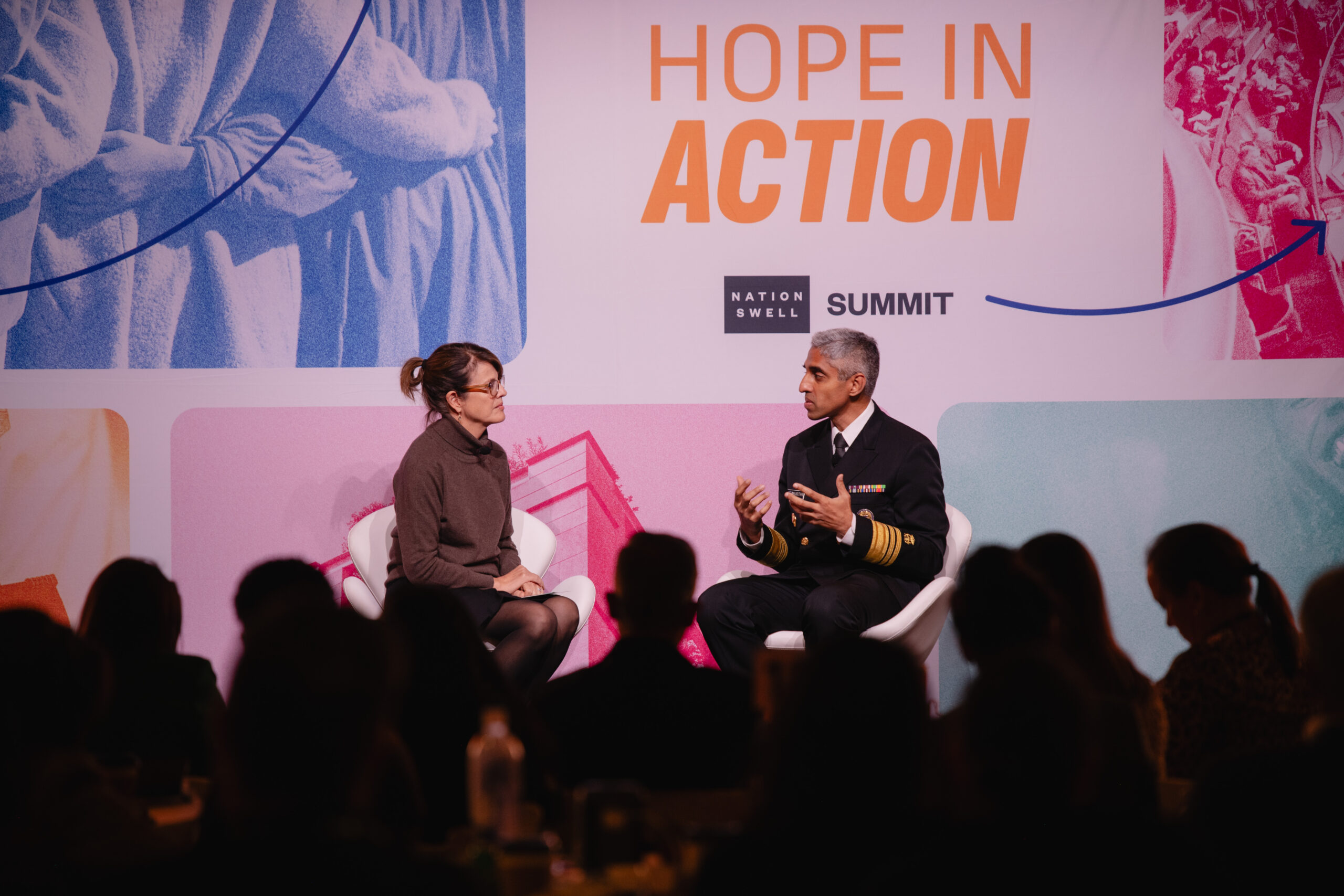
On November 21, 2024, the NationSwell Summit opened with a riveting and in-depth fireside chat between the current CEO of the Latino Community Foundation and former Secretary of Housing and Urban Development, Julián Castro, and NationSwell CEO, Greg Behrman. Although the uncertainty of our current political moment was at the forefront of both the conversation and our minds, so too was this year’s theme, Hope in Action. 

Castro started by providing his perspective on this year’s election results and how we understand them within the context of our work. He noted that across the country, Americans continue to feel the impact of high prices and anxiety about the future, making economic opportunity a critical focus in the coming years. And while there have been questions and even unwarranted derision about the rightward swing of the Latino vote Castro was quick to deconstruct the stereotypes and false narratives around a monolithic Latino experience. No one issue, experience, or campaign addresses that complexity. 

Pushing back on these oversimplified and harmful narratives is even more important in the face of the incoming administration’s proposed mass deportations. Castro pointed to the role of all of us in pushing back against this policy by supporting organizations doing vital legal work in immigration services and civil rights, and by using our voices and influence to demand resistance at the city, state, and federal level. 

“We’ve seen part of this before a few years ago,” Castro said. “And so just as the new administration has experience accomplishing whatever it wants to accomplish, there’s also a lot of experience in trying to make sure that we continue to be a nation that lives up to its best values. So, that makes me optimistic for what’s possible.”

Castro is no stranger to that endeavor, and he comes by it honestly. In response to a question about a leadership-defining person or experience in his life, he went straight to his mother, Rosie. 

“My mom was a hellraiser, a Chicana activist, a civil rights activist,” he said, adding later that “She never pushed us to go into politics, but she gave us this sense that you should get educated and do well for yourself and then figure out how you’re going to do good for other people.” 

In fact, service in the Castro family is a multigenerational project. When asked about what 2024 Summit’s theme, Hope in Action, means to him, Castro spoke movingly about his kids. “Every time I think about their lives, and what they are going through, I think that it’s time for us to live up to our values,” he said, “the values of treating each other with dignity and respect and compassion and trying to find the places where people can work together and compromise.”

Julián Castro lives the values of hope in action, as evident in his lifetime of service, and that continues in his work with the Latino Community Foundation. LCF was first formed in 1989 as an affinity group of United Way of the Bay Area, and became an independent foundation in 2016 with the mission of building a movement of civically engaged philanthropic leaders, investing in Latino-led organizations, and increasing political participation of Latinos in California. And while philanthropy is quite a bit different from his work as a public servant (Castro noted with a laugh that he’d never heard the word ‘proximate’ as much as he had this last year), both feature the core themes that have guided his life so far – lifting up community, and doing good work that makes a difference in people’s lives. 

LCF’s projects and investments are wide ranging, but Castro highlighted with particular pride the work they do ensuring that workers at all levels can share in the success that they help create, and building capacity at nonprofits and other organizations whose leaders often have the ideas and the determination needed to enact them, but not the resources. 

“Less than 2% of big philanthropy dollars go to Latino led organizations,” he noted. By providing operations support and financial investment, LCF bolsters community-led initiatives improving the health and wellbeing of thousands of Latino families across California. 

In spite of the differences over the word proximate, however, Castro sees an opportunity space in the overlap between public service and private organizations like LCF. Recognizing that politics is often a fraught endeavor, Castro emphasized the untapped potential presented by public private partnerships. 

“I can count on one hand the number of times that anybody in philanthropy set up a meeting [when I was a councilman, and then mayor],” he noted, but his advice for the room was to be willing to have those conversations because there are a lot of good public servants out there with good ideas that could benefit from that connection with philanthropy. “We have this opportunity to make a lot of progress when you have stronger public private partnerships because from the philanthropy standpoint, there’s no way, even with all the philanthropic dollars, to make changes on housing or other issues. You need government.” 

Willingness to have the conversation was the running theme of Castro’s fireside chat. Whether in communities of practice that share information and resources, or amongst public servants and philanthropic leaders, parents and children, and Republicans and Democrats, it is conversation that leads to community, connection, and compromise. These are the values that we will need to build a future where we can all thrive. 

But that’s not all we’ll need. “This is going to be a time to be bold, to be in partnership, to be strategic, thoughtful, but to stand up,” Castro said, his last advice to the NationSwell audience. “It’s a time to stand up in [whatever] way you can.” 


For more moments from NationSwell Summit 2024, click here.

Impact Next: An interview with Chobani’s Nishant Roy

At a moment of growing inequality and division, who is advancing the vanguard of economic and social progress to bolster our most vulnerable communities? Whose work is fostering the inclusive growth that ensures every individual thrives? Who will set the ambitious standards that mobilize whole industries, challenging their peers to reach new altitudes of social impact? 

In 2024, Impact Next — a new editorial flagship series from NationSwell — will spotlight the standard-bearing corporate social responsibility and impact leaders, entrepreneurs, experts, and philanthropists whose catalytic work has the potential to shape the landscape of progress amid urgent need for social and economic action.

For this installment, NationSwell interviewed Nishant Roy — Chief Impact Officer at Chobani.


Greg Behrman, CEO and Founder, NationSwell: Tell us a little bit about your leadership journey — was there a formative experience that helped you to arrive at this space and this position of leadership?

Roy, Chobani: I started my professional life in the United States Air Force, and had the privilege to deploy to both Afghanistan and Iraq. That experience got me thinking far more about overall civil society, economic empowerment, and the things that could have potentially prevented those conflicts from happening. I started to really think about the role the government and the private sector can play in addressing some of the systemic issues that are happening in countries and places all over the world. 

After leaving the military, I took a job working for former President Clinton at his foundation in New York, and he actually recommended that I go to law school or get an engineering degree. He said that I had more lived experience than most of my peers because of my time in the military, and he saw that what I needed was a framework with which to identify the root causes of problems and come up with creative and thoughtful solutions to solve them. 

In 2006, he ended up connecting me to a friend of his, Bob Harrison, who happened to be a former partner at Goldman Sachs, and he said that it was an easy decision — that I should go work at Goldman Sachs. He suggested that I go somewhere to deepen my understanding of what the private sector is all about, to understand how business operates and apply that into the public sector, and so that’s what eventually sparked the interest of marrying business and social impact together back in 2006.

Behrman, NationSwell: What makes your approach to your work at Chobani differentiated — are there any programs, initiatives, or partnerships that feel particularly exciting?

Roy, Chobani: To start macro, Chobani is trying to prove that businesses can be both purposeful and profitable at the same time. As Hamdi says, a cup of yogurt won’t change the world, but how we make it can — especially in terms of how we’re using the dollars we get in profits and investing them back into the community. If you look at the yogurt category in this country, it’s gone from 43 grams of sugar in a single serving on average to around 15 grams of sugar in a single serving. That’s truly disruptive in a category that’s been run by some of the biggest food companies in the entire country, and we’re doing that next with creamers, and with coffee. 

So impact and the work that we’re doing starts with the product, and then our people are the next pillar of how we’re making this food. At one point in time, 30% of our workforce was immigrants and refugees, and we’re focused on paying folks in the 75th percentile and getting folks equity in the business. We’re getting childcare, we’re getting elder care, we’re focused on upskilling — there are a lot of unique things that we’re doing to support our people. 

The third pillar of how we’re making our food is the sustainability side of things, and we’re always looking upstream to see how we can impact and empower our suppliers and find new ways in which we can use our purchasing power to influence better standards on farms.

The final pillar is how we’re spending our profits, and here we have this big ambition to get to zero hunger in the communities in which we operate, which is in central New York and in Twin Falls, Idaho. We’ve seen food insecurity rise in this country by more than 30 plus percent, and unfortunately 13 million children are food insecure. Our thesis is that we as Chobani can partner with a number of different retailers to help improve overall food accessibility, which also allows other NGOs to come and join us in our journey to start to look at the other social determinants of health, such as access to housing, access to transportation, access to healthcare. These are all things that are critical in order to truly address hunger, but it’s got to start with one of the social determinants that’s being solved for least, which is food accessibility.

Behrman, NationSwell: As you look at this moment for CSR and corporate philanthropy, how do you make sense of where we are, and where do you think we’re headed?

Roy, Chobani: The acronyms have changed so much, but the bottom line that I’m seeing behaviorally is that from a purchasing perspective, people want to see that the brands that they’re buying are actually doing something to really move the needle on issues.

There’s been this big focus from the citizens of this country to want to see that their government is delivering for them at the federal and state level, and in the absence of that, they’re deferring to businesses. 

I think the fascinating thing we’re learning is that you can be profitable and purposeful at the same time: If you are operating your plants with a high level of efficiency, you’re going to be using less electricity, less water, and you’re going to be spending less money on overtime because you have a pretty efficient operation, which leads to better profitability in the long run. That profitability, in turn, enables us to then invest in our employees and our community.

And at the end of the day, we also make a great product that people love — it’s not just operational efficiency alone that makes us profitable.

Behrman, NationSwell: What are some of the resources that you might showcase or lift up that have helped to inform your leadership? 

Roy, Chobani: Hamdi, of course, has been my biggest shepherd in all of this. As the founder and CEO of the business, he took a chance on me, and a hallmark of his leadership is the way he believes in everyone that works at Chobani; he sees something in everyone that we may not see in ourselves. He asked me to step in on projects and responsibilities not because I had experience in them, but because I did not have that experience and my perspectives would challenge conventional wisdom and the “regular/traditional” way of doing business. 

As of late I would also say Rajiv Shah — his book, Big Bets was pretty inspirational because as we’re in this work thinking about food insecurity, we want to make a big ambitious bet by getting to zero hunger, and it can seem a pretty lofty goal at times. To address the naysayers and the skeptics and bring people along with you is probably one of the biggest challenges, and I think the book does a great job of addressing how coalition-building is a superpower. 

The third person I would mention has been our COO, Kevin Burns. Kevin is a world class operator — he takes businesses when they’re at this level of efficiency and brings them up to another level that they probably never thought that they could ever achieve. As I talk to him about the work that we’re doing to address hunger, he’s constantly pushing me harder and harder about thinking even bigger. 

Behrman, NationSwell: Who are some of the peer leaders you really admire — folks more or less in your role at other companies or organizations who you think are really great leaders doing great work?

Roy, Chobani: Jake Wood comes to mind right away — not only did he found Team Rubicon, but he’s also involved with a new venture called Groundswell. He’s always thinking about disruptive ways to be innovative and deliver on what’s needed at the moment in time, and it’s always done in such a way where it democratizes people’s ability to go and contribute towards solving a problem. 

The other person that comes to mind is C.D. Glin over at PepsiCo. When I think about what he’s done with the PepsiCo Foundation, in terms of bringing in a level of focus, energy, and innovative programming, I just admire his work so much and his commitment to doing it in a way that feels long-term and sustainable. 

What Makes a Joyful Community?

This question stays top of mind for me. A joyful community is at the core of Seattle Foundation’s vision as we strive for shared prosperity, belonging and justice in the region.

I’ve also been reflecting on a joyful community due to an experience hosted by NationSwell. In March, I joined a gathering of corporate and philanthropy leaders in Montgomery, Alabama to reflect on the civil rights movement and the journey towards justice in the United States.

I have history with the south, as a part of my family has roots in Mississippi. Walking around Montgomery somehow felt like being home again with people and a culture so familiar to me. It also brought me proximate to the places – like the Bricklayers Hall which served as the headquarters for the Montgomery bus boycott – that were important meeting grounds for the civil rights and social justice gains that we are fighting to protect today.

While in Montgomery, we toured the Legacy Museum, created by Bryan Stevenson and the Equal Justice Initiative. As I walked through the exhibits, I reflected on the lasting impact of the institution of slavery in this country – Jim Crow laws, school segregation, redlining, the criminal justice system, and so on. As I exited, there was a quote that summed up the museum’s purpose and commitment to justice – that the children’s children of those who endured these times, could one day live unburdened by the legacy of slavery.

That struck me – to live unburdened by the legacy of slavery. My time in Montgomery invited reflection on that legacy in my own life.

My paternal grandfather came to Cleveland from St. Louis when he was a young man. He and my grandmother settled in the City of East Cleveland, a predominantly Black community, and invested in real estate to ensure no one in the family would ever go without a home. Not too long ago, out of curiosity, I asked my aunt what prompted my grandfather’s move to Cleveland. Her response – a group of white men threatened to kill him. He was fleeing for his life.

My maternal grandfather was a farmer in a small town in Mississippi. It’s where my mom was born, raised, and learned to work on a farm. I remember spending a few summers on that land. I was also aware that my grandparents likely did not own the land on which they lived and raised their children and some grandchildren. And discussing why was not a conversation that the elders in my family openly had.

In 1989 when I was six years old, my mom married an incredible guy who became my bonus dad. His name was Eddie. He was funny and quirky. He was also white. In three states in this country from the 1980s, 1990s, and as late as 2000, my parents could have been jailed because of the illegal nature of their interracial relationship.

At 41 years old, I hold this history and memory in my body that is defined by the impacts of slavery, white supremacy, and institutional racism. What would it feel like to be unburdened by this?

I believe it would feel like joy.

Joy has been at the center of my work for some time now because it is a way to bring people together. Regardless of lived experience or status, joy evokes a certain feeling, even a sound. Through joy, we find warmth, laughter and belonging. For some, joy is rooted deeply in faith; and in it, we find strength. Joy is something that no one can take away from us. For others, joy is an act of resistance (as first coined by poet Toi Derricote), and liberation. We have the right to exist and to be free.

We all deserve access to a safe home, connection and belonging, and resources to live our best lives. We also deserve to live in communities unburdened by racism, othering, discrimination, and violence. These are all building blocks to a joyful community.

So, how do we get there?

A part of the solution is for all of us to do better in valuing and honoring the humanity of our neighbors who are different from us. The other part – and this is critical – is meaningful, equitable, and sustained policy and systems change. The burden and legacy of slavery is clearly found in systems and policies that were designed for only some to succeed. To realize a joyful community of shared prosperity and belonging, we must change that.

Seattle Foundation recently completed a strategic plan outlining the work we will do over the next three years to move towards making the vision of a joyful community a reality. We will make bold moves in innovative financing for affordable housing production, climate justice, and increased access to make childcare more equitable. Throughout our grantmaking and advocacy, we will remain committed to racial equity and justice, community organizing, and policy reform. We’ll remain steadfast on this journey until every individual has true agency and power over the direction of their lives and systems are not barriers to their success.

The path ahead will be difficult but I will not be deterred because I know what I’m after – joy. Not just for me, but for generations to come. Generations of babies that will one day grow and thrive as adults whose experiences are not altered by the impacts of systems that have failed to serve them. Future adults who will be able to move through this world without fear, with true freedom, and full of joy.

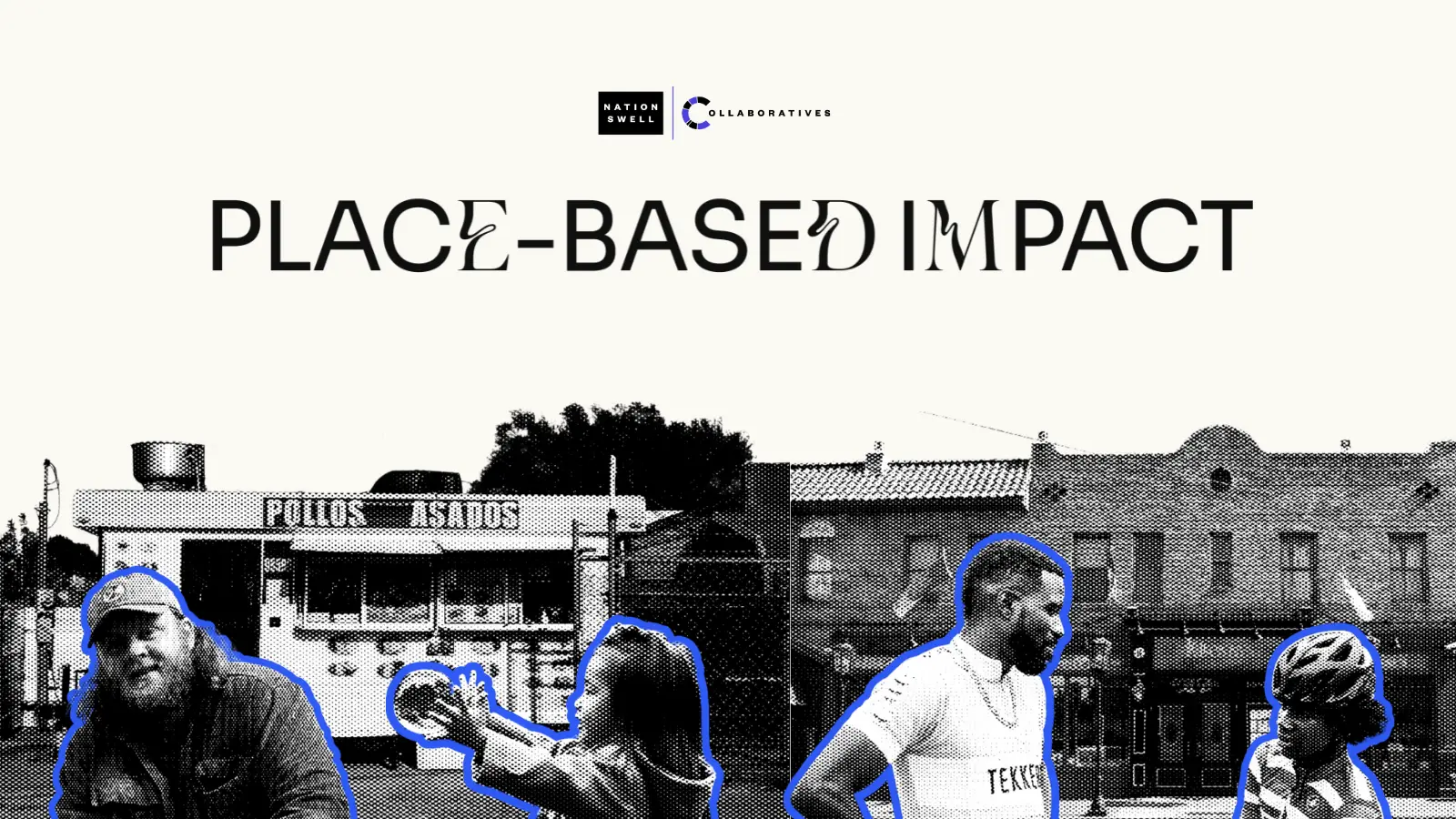
Place-Based Impact in Practice: 36 hours in Tulsa with NationSwell and George Kaiser Family Foundation

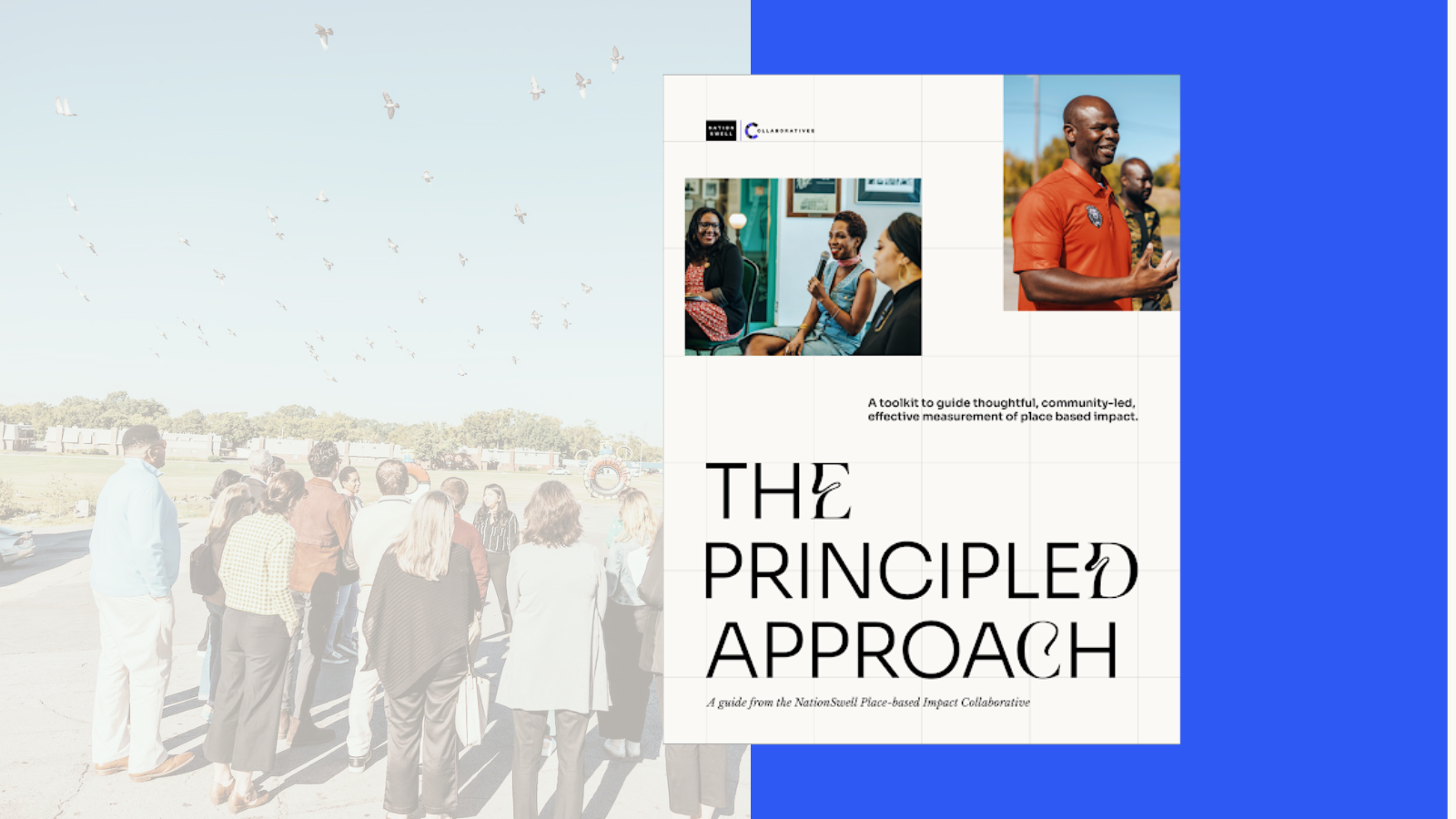
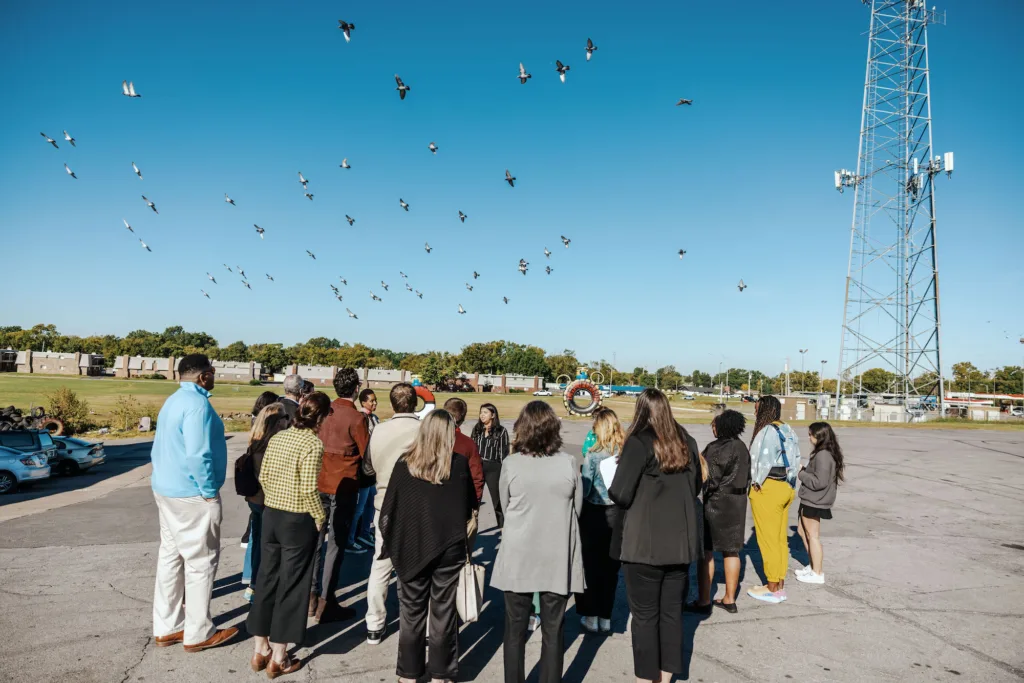
On the evening of October 18th, black clouds of starlings wheeled overhead as the NationSwell team made its way to meet a group of partners and leaders in downtown Tulsa. The group had gathered as part of our Place-Based Impact Collaborative for an immersive, 1.5-day experience designed to explore how community-centered investment and strategic partnerships are working in concert to give new strength to Tulsa. 

The insights and best practices we gathered from GKFF’s approach — and from the experts in attendance — were many, and can better enable communities nationwide to thrive. Although it’s impossible to accurately capture and convey the profound experience of being on the ground in Tulsa, our hope is that this piece can shed some light on what it was like to come together and learn with an incredible group of leaders and inspire you as you strengthen your own community-centered, place-based work.

Day One

The day began with a tour at Greenwood Rising to hear the vital stories at the core of Tulsa’s history and identity: the impact the Trail of Tears, the systems of anti-Blackness that fomented the Race Massacre of 1921, and the cultural reverberations of both eras that are still being felt throughout the city. Despite the violence dotting its past, Tulsa and its residents have persisted — deepening their sense of community and establishing a rich sense of place and culture that makes the city vibrant and unique.

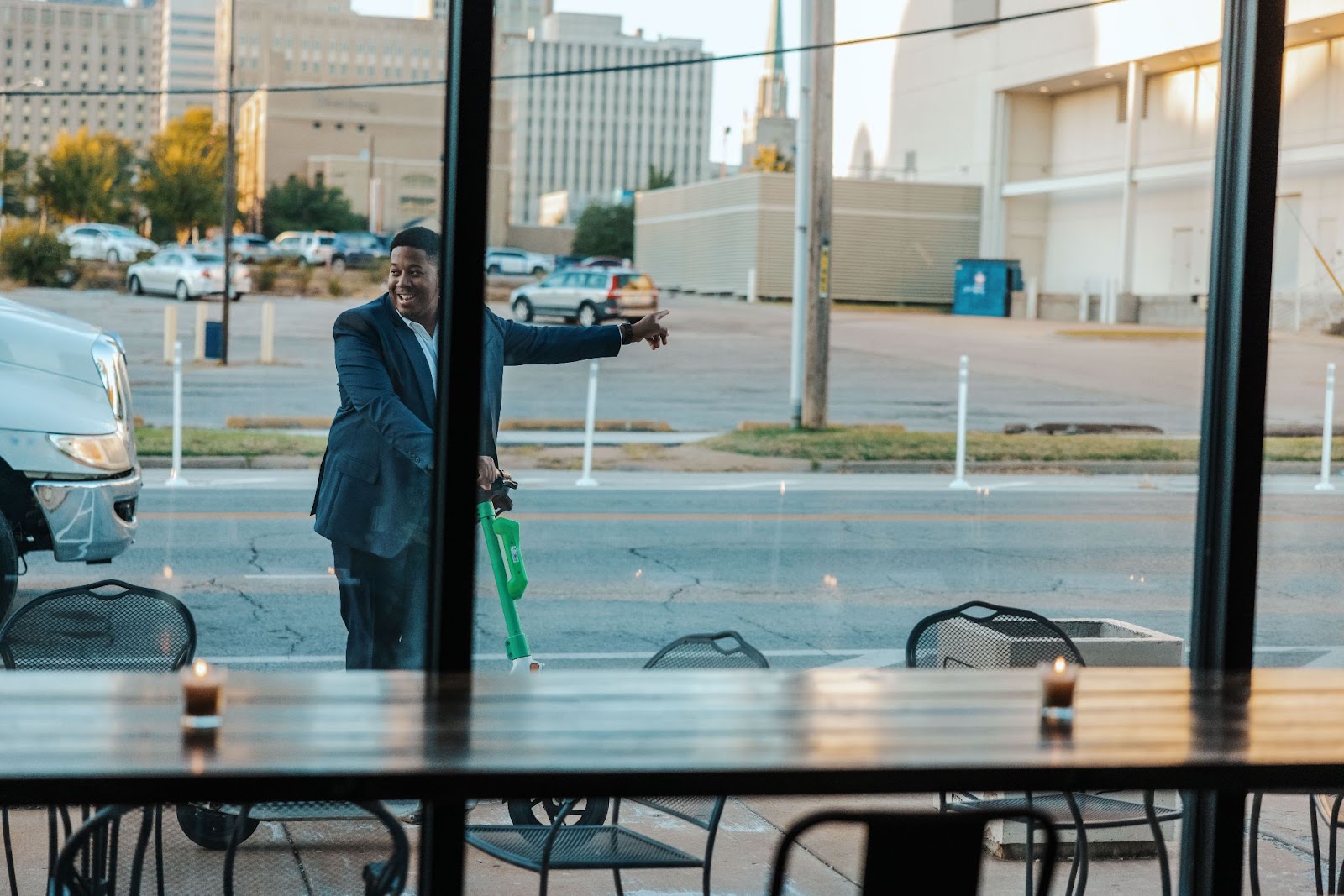
That night, we joined our hosts from George Kaiser Family Foundation for a welcome reception at a speakeasy in the city’s Deco District. After an evening of warm conversation, introductions, and getting to know one another better as we prepared for the next day, Aaron Miller — head of partnerships at inTulsa — announced that he would lead a group by bus to celebrate the city’s popular Oktoberfest, currently in its 44th year. Jonathan Pride, executive director at NPower, announced that he planned to lead a competing group to the same location via the city’s widely-available Lime scooters.

Day Two

East Tulsa


After a quick pit stop for breakfast on Thursday morning, our group set out by bus for East Tulsa, where white flight and the attendant infrastructural divestment have created unlikely opportunities for the city’s growing immigrant population. 

Cynthia Jasso — a program officer on the Vibrant and Inclusive Tulsa team — explained that East Tulsa has become a community hub, learning center, and worker community for newly-arrived immigrants, more than 1,100 of whom arrive at the Plaza Santa Cecilia from Mexico by bus each week. While organizations like Growing Together have done grassroots outreach to meet residents where they are — helping to expand access to vaccines and make PPP loan applications easier for local businesses owners — they ultimately found that there was an overwhelming need for a centralized community hub where people could get the help that they needed. Plaza Santa Cecilia has become that epicenter — a place for the community to gather, relax, take classes, shop, or even acquire permits.


The plaza features beautiful murals, restaurants, and a nightclub, and has become a major source of community pride and belonging — a critical metric of success for place-based investment. 

North Tulsa


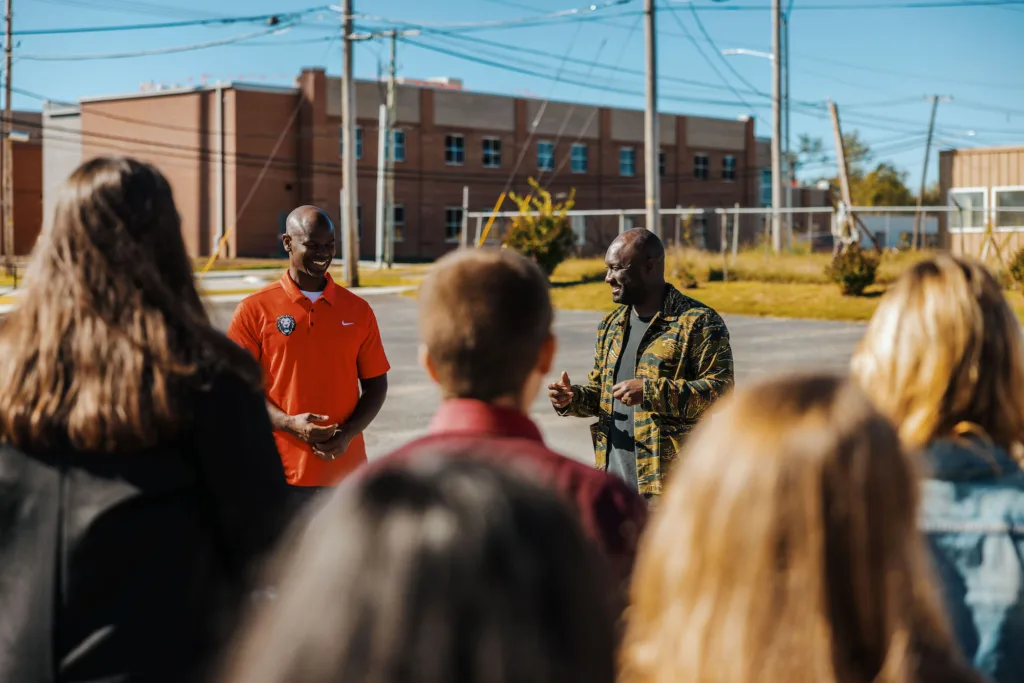
Our next stop was in North Tulsa, where attendees heard from Pastor Philip Abode of Crossover Community Impact and Crossover Bible Church. A former University of Tulsa football player and current high school football coach, Abode’s passion for coaching youth eventually catalyzed an even deeper relationship to mentorship in the city: he now serves as executive director of Crossover Preparatory Academy, which oversees several private middle schools throughout the city.

A majority-Black neighborhood, Tulsa’s north corridor is currently the site of major community development efforts, including a planned 500-unit, mixed-income housing project and new contracts with high-quality, high-paying manufacturing jobs at companies that agree to recruit from within the neighborhood (and nearby Tulsa Technology Center). 

Kendall Whittier


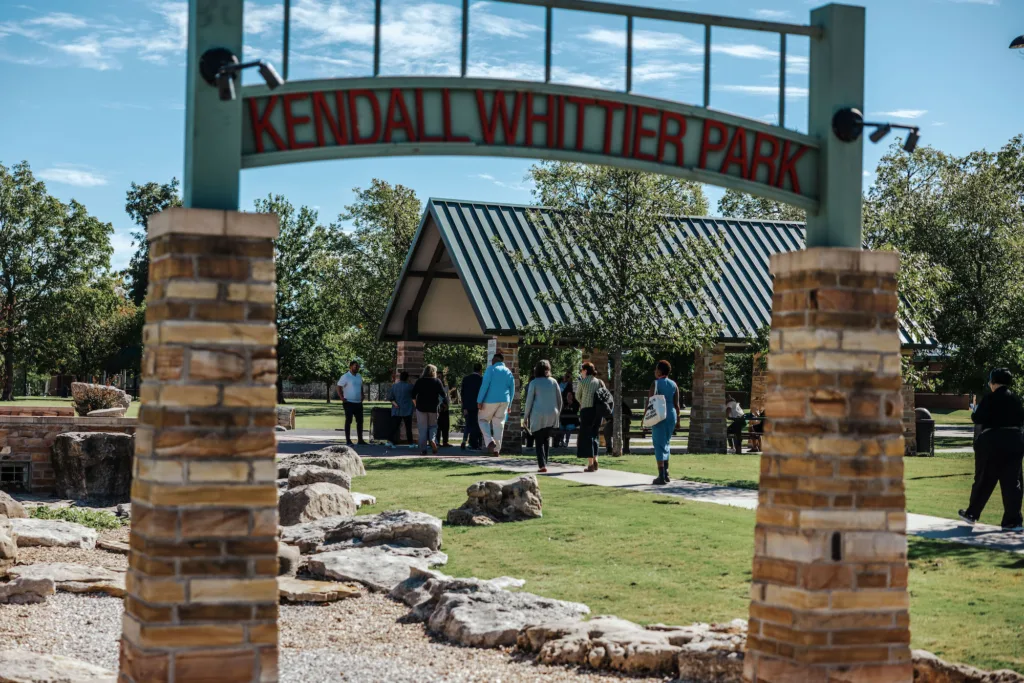
As the bright sun continued to warm up the day, we visited Kendall Whittier Park — located in Tulsa’s historic Kendall Whittier neighborhood — where we learned more about how a mixed-income neighborhood trust has helped  provide stable, affordable housing, and how partners like Growing Together and Tulsa Educare have created educational opportunities and green spaces where children and families can grow and thrive. 

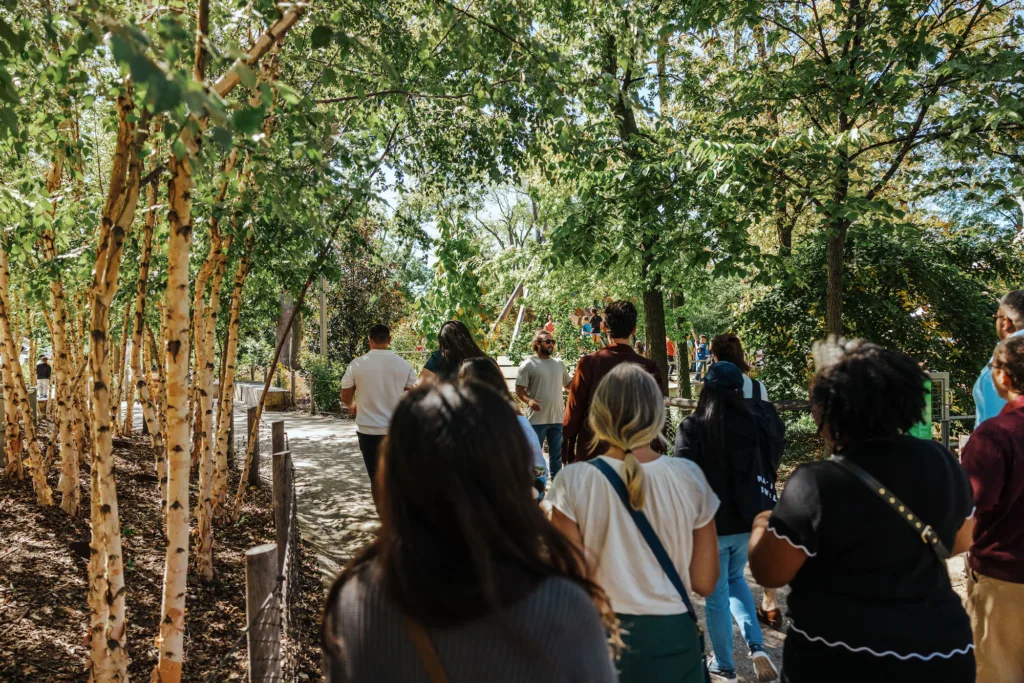
We also had the opportunity to tour The Gathering Place, which words alone don’t really do justice. A sprawling 66.5-acre green space nestled against the Arkansas River, The Gathering Place’s pathways were dotted with pumpkins and its playgrounds had names like “Land of the River Giants,” “Fairyland Forest,” and “Volcanoville.” All park activities are free, and guests can help themselves to kayaks and paddle boats, attend concerts on the lawn, and engage with the park’s many educational programs. 


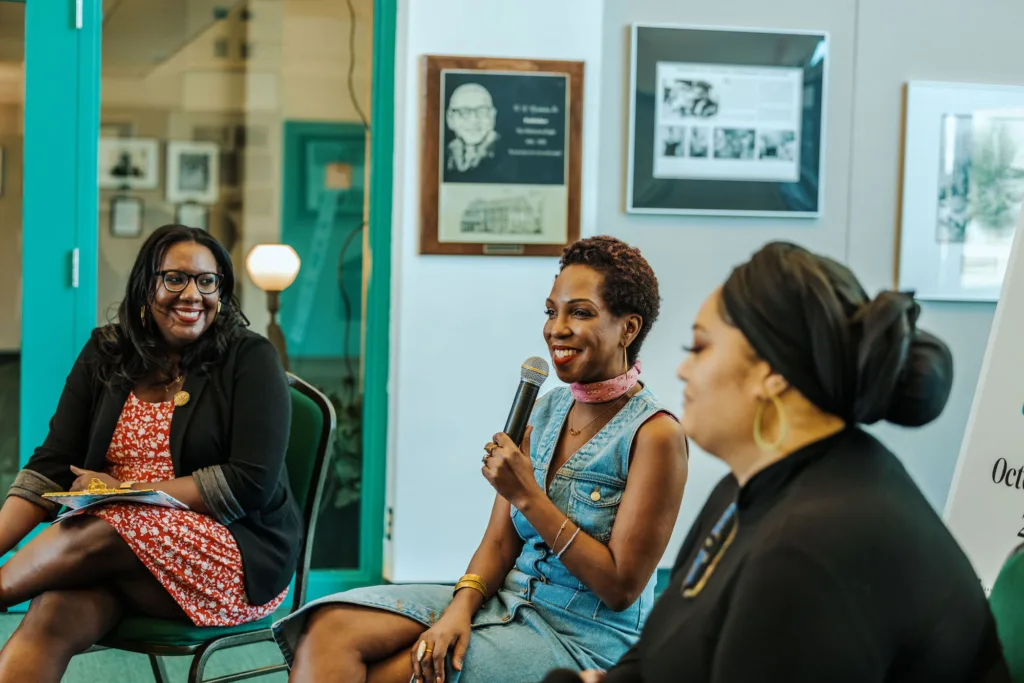
After lunch, we reconvened at Greenwood Cultural Center for a series of panel discussions — first on how to leverage the power of storytelling, and then on how new models of collaboration across the public, private, and philanthropic sectors can help to foster opportunity from the ground up.

During the first panel, Jasmine Dellafosse — Director of Organizing and Community Engagement at EPIC — spoke about the value of telling the stories that run counter to our assumptions. 

“What are the stories we don’t know, and in whose interest is it that we don’t know them?” she asked. 

Panelist Vanessa Garrison — Co-founder and COO of GirlTrek — further emphasized the power storytelling holds in developing a community: deconstructing myths, challenging assumptions and enabling community members to lead change. 

In the second panel, a key insight that surfaced was the recognition that change doesn’t just take a longer grant cycle but can take generations to actualize. The question that emerges, then, is how do we integrate intergenerational change as a metric when measuring impact? 

At the intersection of both of these panels is the emerging understanding that how we measure impact in place-based philanthropy needs to evolve to incorporate more qualitative data, compelling us to reimagine what a thriving community really means.


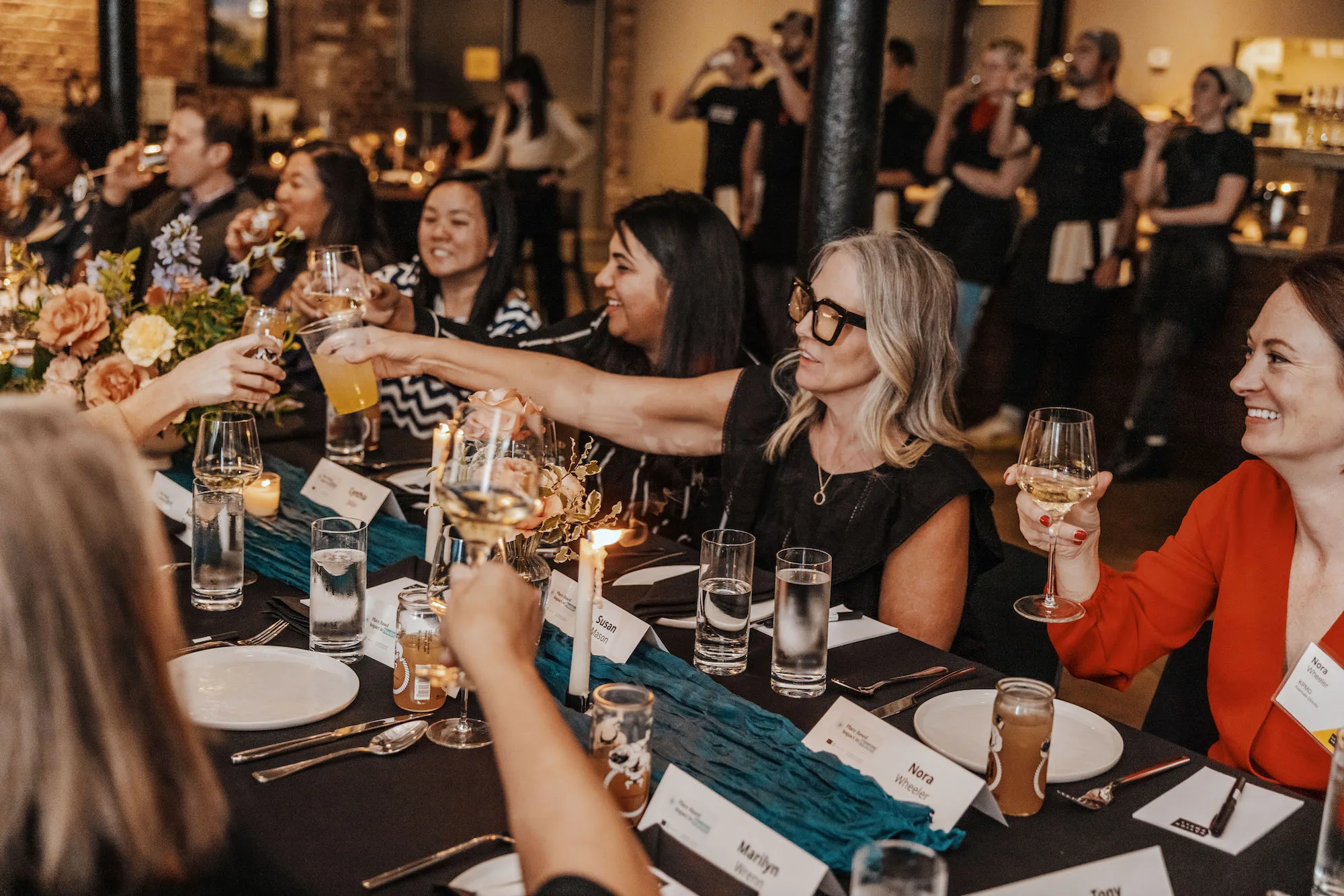
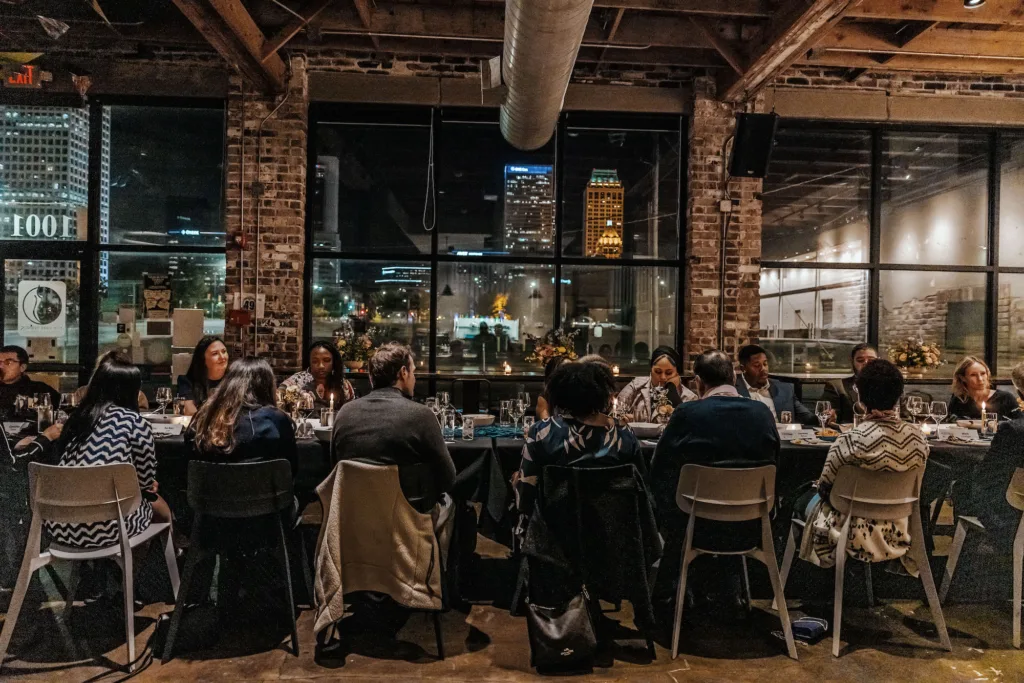
After a visit to Archer Studios to learn about the Tulsa Artist Fellowship — and a ceramics activity with fellow Raphael Corzo — participants had a few minutes to rest and recharge before coming together for a NationSwell Signature Dinner to reflect on the events and learnings of the day. 

Hosting us for the evening was the team at et al., a collective of chefs working collaboratively to “build a more delicious and equitable future for the food and beverage industry in Tulsa.” Aptly named to reflect the important but often overlooked or unknown people who help to make an ambitious vision into a reality, the symbolism behind et al.’s name and mission had a beautiful symmetry with the focus of our visit to Tulsa — and the patchwork of organizations and solutions we’d witnessed firsthand on the ground there. 


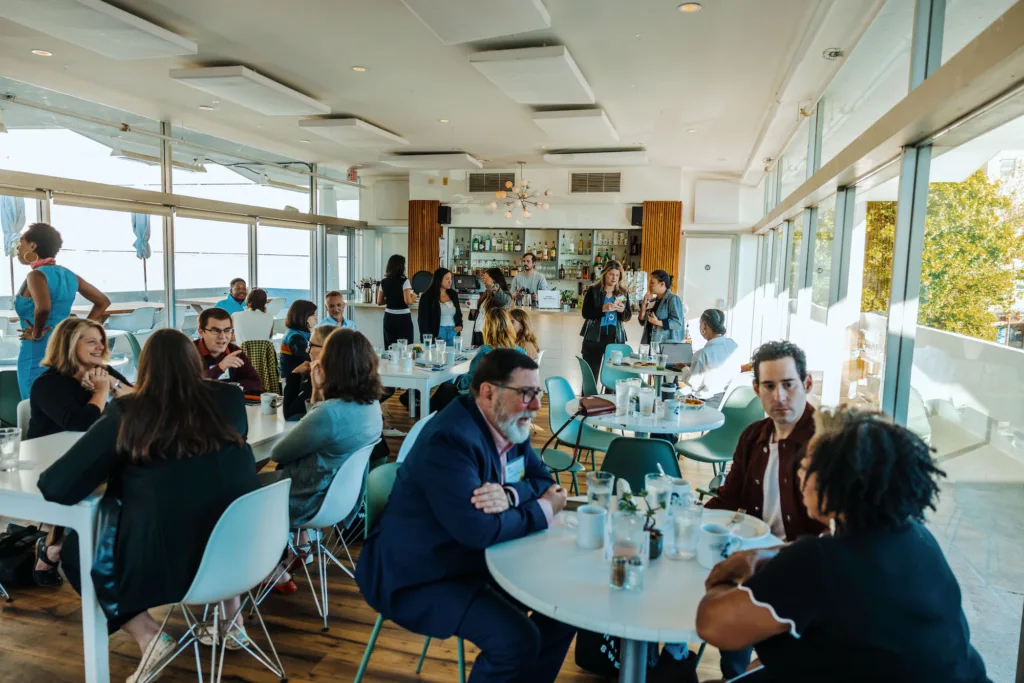
Attendees dove deep into what had inspired and moved them during the course of the meal, which was themed around the idea of breaking bread (as chef Colin Sato explained, “You have now broken bread with Tulsa, and now it’s a part of you”). There was a discussion of some of the central challenges to their own place-based work, with members laying out the approaches, tools, and new opportunities for partnership they were excited to bring back to their own communities. 

Like the chefs in et al.’s culinary collective, our time in Tulsa was distinguished by the patchwork of seemingly disparate, often undersung voices we heard from joining together to create a beautiful and undeniable chorus of solutions. While partners on the ground maintain different focuses in the work that they do and the neighborhoods they serve, everything in Tulsa has a certain harmony to it; the work comes together to hum like a well-oiled machine. As we packed up to leave on Friday, we couldn’t help but think about how this model of community impact — where every voice, program, and initiative happening on the ground is truly greater than the sum of its parts — has the potential to transform not only communities, but the world.

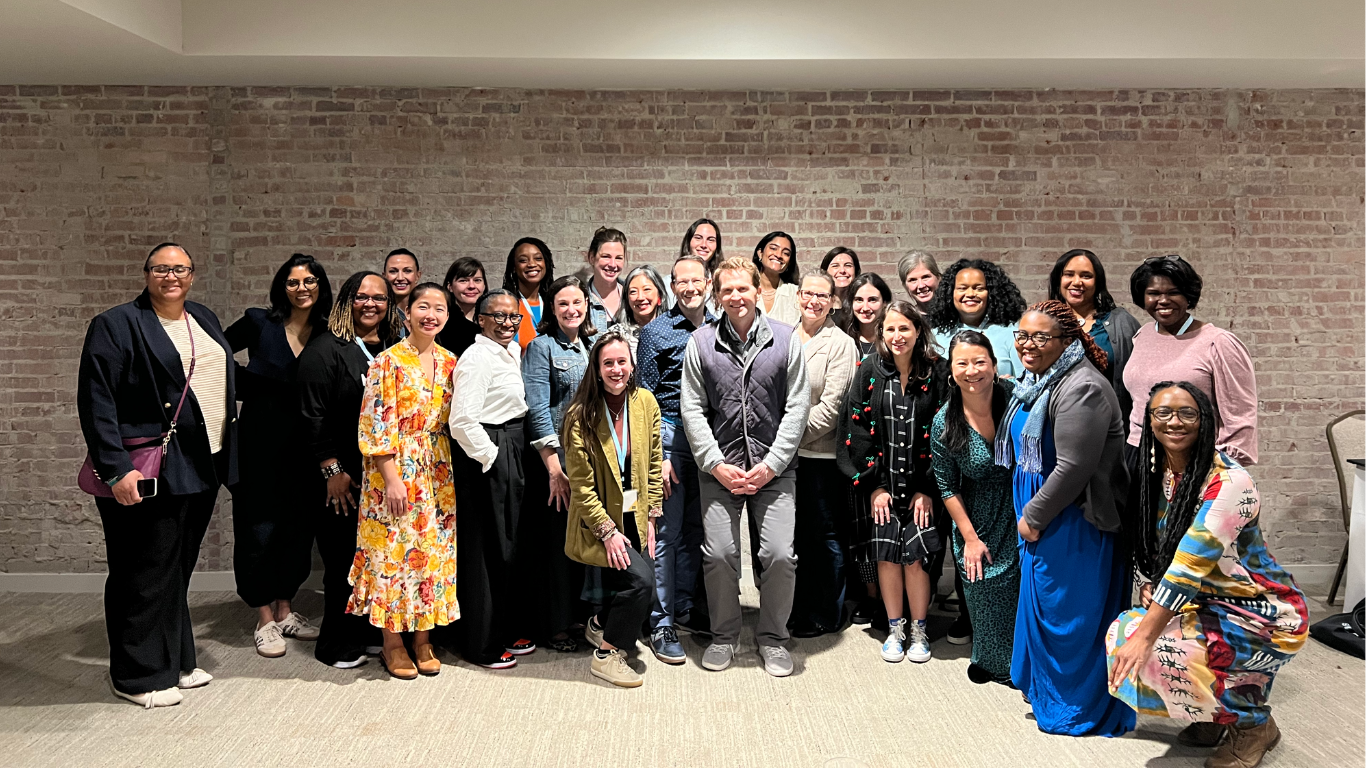
We’re so excited to have plans for more in-person, immersive experiences in the works for the near future. This incredible experience was part of our Place-Based Impact Collaborative. Our Collaborative model is based on the idea that the challenges we face call for collaboration and shared action to achieve the impact we seek on a variety of issue areas. Together, with cross-sector leaders, we illuminate challenges and opportunities in the space and align on action to advance each other’s work, and the field as a whole.

We encourage you to read more about our different Collaboratives and to contact us to get involved if you see one that resonates with you and your work. 


NationSwell Collaboratives are a new initiative convening cross-sector leaders to work in new ways on major issues affecting our lives, our nation, and our world. Learn more about our current offerings here.

ESG Next: An Interview With Citi’s Brandee McHale

At a moment of unprecedented attention, investment, and opportunity for the emerging field of Environmental, Social, and Governance (ESG), leaders are asking: Who is best preparing their organization for the society of the future? Who is innovating today to meet decades-long environmental and social goals? Who is setting standards that catalyze their industry’s change for the better? Who is defining what bold and aspirational look like — and how best to advance that work in practice?

Enter NationSwell’s ESG Next, an exemplary group of investors, executives, authors, philanthropists, social sector leaders, academics, and field builders who are helping to shape business as a force for social and environmental progress, advancing — and even pioneering — the most forward-thinking and effective programs, initiatives, technologies, methodologies, practices, and approaches.

For this installment, NationSwell interviewed Brandee McHale, Head of Community Investing and Development at Citi and President of Citi Foundation, about the unexpected challenges of headwinds becoming tailwinds, the necessity for leaders to break out of their echo chamber for inspiration, and why economic mobility is the foundation of her unlikely journey to the field of ESG.

Greg Behrman, CEO + Founder, NationSwell: Tell us how your professional and personal journey led to this work.

Brandee McHale, Head of Community Investing and Development at Citi and President of Citi Foundation: My work is at the intersection of traditional ESG, business, society, and philanthropy; I can’t believe I’m going to actually say these words, but I’ve been here for 30 years. 

I never thought that this was where I would land. When people hear that I’ve worked 30 years in the global financial services company, they naturally assume I came from Wharton or Harvard Business School — and while those are fantastic places, I actually don’t have a business background. In fact, I don’t even have a high school diploma.

I wasn’t on the path to economic success, and what really got me back on track was volunteering in my local community. Through volunteerism, I built a professional network — and I didn’t even know I was building one at the time. I just got very engaged with volunteering alongside the former mayor of the city where I’d grown up. And it was through giving back and being involved in volunteer service that actually built up my own confidence, and I began to see myself the way others saw me. I went back to school, I got my GED, and I answered some bulletin board ad for a summer internship at Citi in their corporate charitable giving department. 

Beyond that sense of service, what’s motivated me through the years is the knowledge that it should not have been as hard as it was for me to get from where I was to where I am today. We all have an interest in helping others, but my interest is in leveling the playing field to make it easier. There are far too many exit ramps on the path to economic opportunity — and there are far too few on-ramps. And that’s really how I’ve thought about my career. How do we build more on-ramps and shut down those off-ramps?

Behrman, NationSwell: How do you define this moment in ESG? Where are we, and where are we going? What’s the potential, and where are the pitfalls?

McHale, Citi: I tell my team all the time, this is our moment; let’s not blow it. We’ve lost the luxury of saying nobody’s focused on our issues, that we’re the lone voice here in the company. This is now front and center, and there’s a spotlight on us: we have a whole range of stakeholders, investors, employees, clients, and the public looking at ESG now. I think it’s okay for ESG practitioners to feel unnerved by the eyes that are suddenly on us. It can make you skeptical of everything you’re doing; it can even drive paralysis.

And especially in this moment of so much divisiveness, that paralysis is very real. If you try to please everybody, you’re going to please nobody. So you have to identify your North Star and fly consistently towards it. And I think if you stick with your values, while you’re not going to make everybody happy, you’ll have the ability to withstand any potential criticism. 

In the face of divisiveness, you have to be bold. And I’m excited to be bold. But I’m also clear-eyed about the fact that we are in the very early years of thinking differently about the purpose of the private sector — and its role in driving societal impact. For 20 years, the wind has been against me and my fellow practitioners. We all got really strong from flying against the headwind. But it’s a funny thing when all of a sudden the winds change, and suddenly it’s a tailwind and you should be flying farther and faster, but you actually feel more likely to fall because you don’t have the right kind of skills for this velocity.

Behrman, NationSwell: What’s different about how you lead? To which leadership practices do you attribute your effectiveness?

McHale, Citi: Our most important tool is our people — and that’s especially true when you’re an ESG practitioner. When you’re working in large companies, if you have a role that has something related to ESG in it, you probably had a job description that led you to believe that you would be spending your time externally focused.

But if we really want to have an impact, we are internal change agents. So while it may seem as though we are funding external change agents, what’s different and what I hope is the model that I’ve helped to develop, is that we see ourselves as change agents working across the company to influence, again, business practices, to influence strategies, to influence a focus on communities that have oftentimes been left behind, while also understanding how to partner with others externally so we can maximize impact. And to do that, you really need to build a team that feels empowered to use their voice. And in turn then we empower our company, many times not just to engage in actions, but to also use our voice and to ask, what is our commitment to an issue? 

And a great example of this, I think, is our work on racial equity. Like many companies, after the murder of George Floyd, we were searching for what we could do to make a difference. We did do some immediate philanthropic funding to civil rights organizations, but we knew that that was completely necessary, and insufficient. We realized that the real opportunity we have is to step back and ask, what is the specific role that financial institutions can play in racial equity? And for us, it was to look back and say part of what fuels racial injustice in the United States is the long-term perpetual racial wealth gap.

And while we’re very proud of the role that Citi Foundation has played on this issue philanthropically, philanthropy is insufficient to really address this issue. We’re working across the company in a comprehensive way to clarify what our role is in helping people get into the financial mainstream and accumulate financial wealth and assets.

In terms of leadership practice, I’m a big believer in purposefully making space that exists outside of your echo chamber. It’s something you have to practice actively; we tend to not realize we’re on autopilot, going to the same meetings, the same events, and the same conferences. This action can be something simple, like auditing who it is you tend to take your meetings with. But it can also mean getting out of the big cities. I’ve probably spent way too much time in my career thinking that the United States is New York, D.C., and California. It turns out, there’s a country in between these cities. And seeing how these communities approach economic mobility in ways that perhaps weren’t on your radar can give you that spark of inspiration that leaders are so often chasing. 

Behrman, NationSwell: What are some unique programs or initiatives you’re leading that other leaders may benefit from knowing?

McHale, Citi: I’m really proud of our work to help students get to and through college. We identified two primary barriers for students: the first is financial, and the second is navigating an increasingly complex system, especially if these students are the first in their family to attend college. 

To counter these barriers, we started a platform that supports initiatives opening up college savings accounts for young people. It’s an effort we’ve already begun scaling in San Francisco, San Jose, Los Angeles, and Atlanta, with more locations to be announced soon. We initiated this approach a decade ago, and the first group of students from the San Francisco public school system is graduating this year. 

It’s an initiative that did more than just give kids accounts — it also changed the narrative around college for these communities from “if” to “when.” We’ve witnessed parents, kids, and family members depositing even small amounts into these accounts, and schools building a culture that focuses on college admissions — not just high school graduation.

The program in San Francisco, which is called Kindergarten to College, has become the framework for these initiatives. Some places even have similar Baby Bonds programs. They all aim to level the playing field by providing the same opportunities that a child born in a high-income family might have, such as a 529 account opened for them at birth.

It’s clear that schools aren’t bankers, and that’s why we’ve helped them by developing an online platform that allows school systems, or large youth-serving nonprofits, to manage the program. They can sign up kids, track deposits, and support families through the program. At the back end, we ensure the system works with various banking partners — whether it’s Citibank or a local community development credit union. This approach eliminates the need for everyone to reinvent the wheel, essentially creating a scalable “franchise” opportunity.
This solution was informed by our philanthropic work. We discovered that, while there is funding available for matched funds, unless programs can run efficiently, they will not be able to operate at scale. 

Another area is our Citi Impact Fund, which invests in double-bottom line companies. It’s important to remember that it’s not just about injecting capital — it’s about support. Providing post-investment support and assisting our portfolio companies to thrive, extend their networks, and boost their revenue-generating opportunities are of the utmost importance.

Though the Citi Foundation’s Community Progress Makers initiative, we offer core operating support grants of $500,000 each and say to grantees, “Go forth. We are not the experts here, you are. We trust you.” We’re not in the business of what I like to call “torturing” our grantees. 

Funding shouldn’t be onerous. Removing that red tape is part of our commitment to ensuring philanthropic capital is the most catalytic resource it can be. It should be the most flexible research and development money that’s out there. 

I’m also excited about the Foundation’s Global Innovation Challenge – Food Security, which is our first global open source effort, designed to improve food security and strengthening the financial health of low-income families and communities. 

The world is moving so quickly; and when it comes to food security, so many issues are interconnected — economic empowerment, financial health, supply chain. It excites me that we are now embracing the ways these issues are interconnected instead of focusing on just one component of them.  

Behrman, NationSwell: Who are some fellow leaders that are inspiring your leadership right now?

McHale, Citi: I’m inspired by the leadership of Kathleen Enright, CEO of the Council on Foundations. She’s tackling some of the hardest conversations in philanthropy today. Janice Bowdler went from the nonprofit sector at Unidos US  to the private sector with JPMC, and now she’s in public service as the Counselor to the Secretary at the U.S. Treasury on matters of racial equity. I absolutely love this multi-sector transition.In the impact investing space, the biggest rockstar is Melissa Bradley. When we were building our Impact Fund, she challenged us to be different – to stop talking and just do it differently. 

All of these women are fearless about giving the counterpoint to what someone may be saying.

Behrman, NationSwell: What are some books you’re reading, shows you’re watching, or podcasts you’re listening to that inspire and inform you?
McHale, Citi: For me, it’s really important to listen and learn from nonprofit leaders and change agents. I follow Financial Health Network’s Financial Pulse survey to keep up-to-date on the financial lives of everyday people around the country. I also really enjoy listening to Jennifer Tescher’s EMERGE Everywhere podcast, which focuses on financial health and breaking siloes between sectors.


To learn more about how our ESG Next honorees are shaping business as a force for social and environmental good, visit the series hub.
ESG Next: An Interview With Nike’s Caitlin Morris

At a moment of unprecedented attention, investment, and opportunity for the emerging field of ESG, leaders are asking: Who is best preparing their organization for the society of the future? Who is innovating today to meet decades-long environmental and social goals? Who is setting standards that catalyze their industry’s change for the better? Who is defining what bold and aspirational look like — and how best to advance that work in practice? 

Enter NationSwell’s ESG Next, an exemplary group of investors, executives, authors, philanthropists, social sector leaders, academics, and field builders who are helping to shape business as a force for social and environmental progress, advancing — and even pioneering — the most forward-thinking and effective programs, initiatives, technologies, methodologies, practices, and approaches. 

For this installment, NationSwell interviewed Caitlin Morris, Vice President of Social + Community Impact at Nike, about this moment in ESG, the intertwining of people and planet, and the unique power of measurement not to gauge impact,  but actually facilitate it. 

Greg Behrman, CEO + Founder, NationSwell: How did your personal and professional journey to the field of ESG begin? 

Caitlin Morris, Vice President, Social + Community Impact, Nike: My journey to this field began almost by accident. I graduated from the University of Virginia during a recession, and I didn’t really know what I wanted to do next. I went to Hungary to teach English my first year out of school. 

My second year there, I worked for a consulting firm as the only native English speaker in the office, where I had some high-profile accounts. I specifically recall my secretary saving all her money to buy a pair of Levi’s, highlighting the power of American business as a force for good. But like any situation where you think you’re giving something, you get more than you give. I learned a lot from Hungarians about a diversity of worldviews, and about not taking things for granted.

After returning to the U.S. from Hungary, I worked at a consulting firm focused on capital markets development. I was drawn to the idea that we could make a difference by changing government structures to be more open and democratic through capitalism. My path was set early on, and it would eventually lead me to Nike. 

I joined Nike because of their first Community Impact report — it wasn’t because of Michael Jordan or any great sports moments, but because of the innovation they were driving around corporate responsibility. 

Behrman, NationSwell: How do you define this moment in ESG? 

Morris, Nike: I don’t really think ESG is a framework. It’s more of a collection of letters that roll nicely off the tongue. But the environmental piece of ESG is critically important, and at the same time, it often gets elevated over social without people recognizing the strong intersectionality between the two. 

I don’t disagree that we need sharp measurement on environmental factors, but people and the planet are two intertwined issues. If you don’t solve poverty and other challenges that communities are facing in their daily lives, we’re going to continue to make decisions that aren’t good for the planet. My team sits in social and community impact, so we lead with the people piece. That doesn’t mean we don’t see the intersectionality with the environment. It’s part of why we launched the Community Climate Resilience Fund, where we’re directly investing in intersectionality with the Trust for Public Land

My team has never been in more demand from the brand. Community used to be a “nice to have”; now it’s “table stakes” for companies. As you look at the Edelman Trust Barometer, consumers expect companies to solve problems more than they expect governments to. So, we have to have a clear point of view on which issues we take a stand on and how we’re addressing them. I feel proud that we have a team that can stick with long-term change around physical activity and supporting leaders who are working to address social justice issues. 

This moment in ESG brings so much excitement, but that excitement also brings challenges. Everyone grew up in a community, so the passion for thinking about the community component of social factors can feel quite outsized. That passion comes from an authentic and honest place, but it can be noisy, and the noise makes it difficult to maintain focus on the strategy, all while giving it enough space to

constantly evolve and emerge. The challenge is to balance the desire to keep people focused and to be flexible and responsive to current issues. 

Behrman, NationSwell: What are some initiatives you and your team are driving at Nike that you think are noteworthy, or that show promising signs of advancing the field? 

Morris, Nike: Nike has a mission, vision, and purpose — and the purpose part is relatively new for the company. This guiding principle has made our work central to the company’s operations, which is exciting. 

One of our most important initiatives began with a big framework: believing the world needed to understand the global cost of inactivity. We created Designed to Move, an advocacy play that we hoped would catalyze a movement around physical activity. For Designed to Move, the theory of change is supported by science. We collaborated with scientists to understand the various benefits that come from sports, and we learned that it’s a uniquely efficient investment — it pretty singularly combines physical literacy, emotional intelligence, and cognitive function. As the nexus of all of those things, it has been undervalued. 

So, for Designed to Move, our theory of change had two key focuses: one is integrating physical activity back into everyday life, the second is providing kids with early positive experiences in sports and play. 

At an individual level, it’s crucial to give children the ability, confidence, and desire to be active, as this sets them up for a lifetime of activity. The cycle is intergenerational — inactive adults are two times more likely to have inactive children. When we provide kids with positive early experiences in sports and play, they continue engaging in these activities. We began with a high-level macro approach, and then shifted to more programmatic work, testing innovations on the ground to gather proof points and inspirational stories. 

Another initiative I’d like to spotlight is the Nike Community Ambassador Program. This initiative excites me because it demonstrates the power of measurement and using the company’s full resources. The program involves training retail athletes to be coaches in local community organizations. What I love about this is that it was driven by insight. For instance, in Seattle, a group of Nike retailers were volunteering

at a school when the PE teacher left them in charge of 50 kids, assuming they could handle a PE class since they were associated with Nike. 

This experience highlighted the need for our teams to be better equipped as coaches in the field. The program began as a way to rally teams around the cause of getting kids active and walking our talk. We believe that quality trained coaches are critical to a child’s experience, so we can’t have untrained employees volunteering. What we didn’t expect was the incredible impact this program had on the employees and their connection to the brand. Some Nike employees may have grown up in the local Boys and Girls Club and now are returning to volunteer at a place that was meaningful to them. Others might have a master’s degree in sports science and are working retail because it was the available job. 

These employees didn’t necessarily see a future for themselves in retail, but now they’re able to use their knowledge and apply it in the community. This has unlocked a different reaction regarding their longevity with the brand. The program allows us to test our coaching materials, authentically engage with communities on a larger scale, and drive an employee engagement strategy that delivers returns to the brand. 

Behrman, NationSwell: How are you measuring and evaluating the success of your initiatives? 

Morris, Nike: Nike’s power lies in innovation and inspiration, and when we are at our best, we utilize the full power of the brand along with my team’s work on the ground. About seven years ago, we transitioned from a separate mission-based team to the company’s philanthropy center. As the company’s budget grew, so did ours, allowing us to do some exciting things. 

We’ve invested in digital tools for scaling our reach, providing resources such as coaching guides and inclusive coaching tools. We adopted a collective impact approach, focusing on local partnerships and place-based investment. This enables us to align our efforts on a city or neighborhood level and measure the impact of our work. I do think that this power of partnership at a local level is absolutely profound: You can’t get scale without first making a hyperlocal impact and measuring it properly.

Speaking of measurement, our increased budget gives us more tools to better measure our efficacy, ensuring our work is genuinely effective. With a smaller budget, you want to spend all your money doing good work. As your budget grows, you can be more honest about assessing your performance and asking, “Well, we’re doing it, but is it really working?” 

Effectively measuring our progress is new territory for us. We’ve been good at selling inspirational concepts and catalyzing movements, and now we’re prioritizing holding ourselves accountable by leveraging both internal and external tools to measure our reach. 

We’re also getting granular with measurement, even measuring the effectiveness of our tools. We’ve historically built things in partnership with experts and gained insights from users, and now we have experts examining how well our tools are being used. 

Behrman, NationSwell: To which leadership practices do you most attribute your success? 

Morris, Nike: Stakeholder engagement has been the connecting thread of my career. I make a dedicated effort to actively listen. Great leaders are excellent communicators, and communication starts with listening. That, for me, is probably my connecting thread and belief. People often ask why I stay at Nike. I stay because of our commitment to innovation and the people. I am fortunate to lead and partner with a team of 70 incredibly intelligent individuals, and my job as a leader is to be a multiplier for them, helping them do their best work. 

Behrman, NationSwell: Who are some leaders who inspire your work? 

Morris, Nike: My first choice is Shelly Omilade Bell, founder of Black Girl Ventures. Shelly is entrepreneurial, creative, and authentic in everything she does. She radiates energy and possesses the wisdom to lead her organization forward while recognizing that her role may need to change over time. It is not easy for founders to do this, and she is doing it brilliantly. 

Charlie Brown, CEO of Context Partners, also comes to mind. I’ve known Charlie for a long time and admire his work, starting at Ashoka, where the power lies in believing in individual game-changers. Charlie’s philosophy centers on the idea that no one achieves success on their own — we always do it in a community. I have learned a lot from Charlie, who has not been afraid to reinvent himself. As someone who has been consistent in my career, I am always impressed by people who take risks and change things up. 

Last but not least, there’s Maria Bobenrieth, CEO of Women Win. What I love about Maria is her constant joy. She has a saying, “Don’t get angry, get curious.” She leads with joy and innovation, changing how we support women and girls through sport. We have collaborated on our first participatory grant-making initiative outside of our employees: the ONSIDE Fund, funded by us and Puma. While there has been good collaboration on the labor rights side, there has been less collaboration on community impact. The Onside Fund and the participatory grant-making initiative, as well as the ability to co-fund with others in the industry, are fascinating. 

Alongside those leaders, I’ve also become a big podcast fan. I keep going back to “No Off Season,” a Nike podcast that features Megan Bartlett from the Center for Healing and Justice through Sport. I highly recommend it. 


To learn more about how our ESG Next honorees are shaping business as a force for social and environmental good, visit the series hub. Nike is a NationSwell Institutional Member. To learn more about membership in NationSwell’s community of leading social impact and sustainability practitioners, visit our site.
ESG Next: An Interview With Prudential’s Lata Reddy

At a moment of unprecedented attention, investment and opportunity for the emerging field of ESG, leaders are asking: Who is best preparing their organization for the society of the future? Who is innovating today to meet decades-long environmental and social goals? Who is setting standards that catalyze their industry’s change for the better? Who is defining what bold and aspirational look like — and how best to advance that work in practice?

Enter NationSwell’s ESG Next, an exemplary group of investors, executives, authors, philanthropists, social sector leaders, academics, and field builders who are helping to shape business as a force for social and environmental progress, advancing — and even pioneering — the most forward-thinking and effective programs, initiatives, technologies, methodologies, practices, and approaches.

For this installment, NationSwell interviewed Lata Reddy, Senior Vice President, Prudential Financial Chair, The Prudential Foundation, about the importance of place-based impact, the power of anchor institutions, the next frontier for ESG measurement, and the importance of tried-and-true approaches alongside newer, more disruptive technologies.

Greg Behrman, NationSwell CEO + Founder: Tell us about how your personal and professional journey led you to ESG work.

Lata Reddy, Senior Vice President, Prudential Financial Chair, The Prudential Foundation: While I was finishing my first year of law school, I had the life-changing opportunity to work and intern with Bryan Stevenson, who is now Executive Director of the Equal Justice Initiative. I was in Atlanta at the time, and Bryan was a young lawyer right out of law school. I spent the next couple of years working with the organization he was working with, which represented people on death row and people who had been incarcerated. 

During the experience, I had the opportunity to speak with those on death row and learned how their experiences were so indicative of structural racism. It raised my consciousness and helped me understand, even as a law student, how the legal realm played a role in perpetuating these inequities, and that one day I could use my experience to address these historic and systemic injustices.

Behrman, NationSwell: How is the work you’ve been leading unique in the social impact and the sustainability field? What distinguishes you from others working in ESG?

Reddy, Prudential: Prudential started this work early, we take more risks with our capital than others do, and we stay in the work longer.

Our organization has been ahead of the curve in that we’ve thought about the work we do from an impact lens for over 50 years. Our ethos was formed in Newark, New Jersey. It’s where we were founded almost 150 years ago, and it’s where we’ve stayed, where our headquarters are to this day. 

We’ve learned so much while operating in a community that has ridden so many waves of this country’s history — and that includes the good, the bad, and the ugly. We’ve had the opportunity to engage in the community of Newark, which is our front yard, backyard, all around. 

Early on, the company bundled our resources together. It started with philanthropy, other cash giving and corporate contributions, employee volunteerism, and impact investing — long before anyone was calling it impact investing. We were spending the capital anyway, so we wanted to make sure we did it in a way that maximized impact. It morphed over the years, and we grew exponentially: about two years back, we had reached a billion dollars in impact assets under management on the impact investing side. And that, by the way, was all Prudential balance sheet money, so our own capital that we had invested in that way. We had doubled the size of our philanthropy, which for us is $35 million annually, and our total cash giving is more than that.

We do it in a place-based way in Newark, and we continue to be deeply engaged in a broader set of issues because we know that these systems are interacting with each other; through Prudential’s deep history and commitment to Newark residents, we’ve helped redefine the place of an anchor institution in its community. That effort has been transformative. We now have a larger set of institutions working together in a very concerted way, and so I think there’s a lot of stickiness to that and people are really taking to that, which is exciting to see.

It is a function of being the kind of corporation we are. We’re in the business of managing risk and pooling risk, and thinking about it over the long term. I think we all need to be taking more risks, and I would argue that it’s imperative for us as businesses to engage a broader set of stakeholders, and the only way we’re going to do that is through nontraditional stakeholders, and that inherently will involve a little bit of risk. It’s informed risk, or it can be, and you can mitigate the risk. So there’s the business imperative which is clearly a moral imperative for us to do more with our capital.

Behrman, NationSwell: What initiatives are you leading that exemplify your approach?

Reddy, Prudential: Somebody once said to me, and I love this phrase, people live their lives horizontally, not vertically. Systems interact, and you have to think holistically about a place.

Years ago, Prudential wanted to redefine what it means to be an anchor institution in Newark. So we did that by casting a wider net: We brought in cultural organizations, other corporations, universities; really, all facets of the community writ large. It was a core group of about six, and it’s grown since then. We commissioned some research to look at opportunities for us as anchors, to do some fact-finding around small businesses, like what would a procurement initiative look like, and the realization that if we just allocate an additional percentage of our spend to Newark businesses, we can exponentially impact the local economy.  

And then it grew to a hiring initiative around hiring local Newark residents, and then living initiatives — meaning, how do we get more of our employees to live in the city and have that take hold? That approach is what we’re still managing today. It started about five years ago or so, and we’ve had some great success working with Mayor Ras Baraka; we’ve actually helped him achieve some of his goals around making sure that 2,020 Newark residents had jobs at anchor institutions by 2020, which we did — and we well surpassed that number. 

That success also impacted Gov. Phil Murphy and his work with the CEO collective that our CEO is part of, especially as we looked at post-Covid recovery strategies for the state of New Jersey. So some of what we did in Newark is now a part of the state’s strategy, so we were able to grow it there.

Berhman, NationSwell: What’s your take on ESG as a framework, what’s your read on this moment? How do you make sense of the field, where are we, and where we’re going?

Reddy, Prudential: This all began with negative screening. Many of us remember the time when the prevailing sentiment was, “First, do no harm.” We avoided investing in programs, initiatives, or really anything that had the potential to cause harm. 

Now, it’s moved more into a conversation where we’re mitigating risk against Environmental, Social, and Governance factors. That’s an important shift, but I’ve still yet to hear very many conversations about impact — especially around proactively and affirmatively trying to create impact in whatever we do. 

I’m hoping the shifts that brought us to this current moment will accelerate us towards that. We’ve certainly talked about it in the impact investing space, where there’s an intention to create impact alongside financial returns, so I’m hoping that other players in the social impact and sustainability field will think about it as well.

Behrman, NationSwell: What are your aspirations for the field? Where do you think it’s going, and what will drive its progress, its evolution?

Reddy, Prudential: For me, the next frontier is tying it to business value, like how do we measure the impact we’re creating in a way that’s also demonstrating business value? I believe deeply you can create business value by going after societal impact, but it’s on us to prove that out. And the more we can prove it, the more baked in to our business strategy it will be. Our field will evolve when businesses make it core to what they do, rather than something they keep on the sidelines.

Behrman: How has your leadership evolved?

Reddy, Prudential: One lesson I’ve learned, which I think every leader learns, is that you can never overcommunicate. Try to communicate the same message in different ways because it will resonate with different people at different times in different ways. It’s an obvious but important one. The other thing is, leaders look around corners — that’s our job, and we get paid for it. But doubling back to bring people along is usually necessary in helping people to move forward. Helping people to see it on their own so that they have the buy-in and taking the necessary time to do that is really important as well.

I’ve found that having a “true north” for what you’re trying to get to is what has helped cut through the noise, this audience today, the messaging, so that at the core, it’s the same, and it’s based on what you believe and what you’re trying to execute against. And then on the margins you can modulate to the particular audience.

My true north is about leveling the playing field. That’s what I think about when I think about my personal purpose.

Behrman, NationSwell: What is one thing you think folks are really missing? Anything you would move people a couple degrees over on?

Reddy, Prudential: I think in some ways people are often looking for the next shiny object, the next innovation, the next disruption. That’s very intellectually exciting, but when you talk about a specific place, it’s quite often the tried and true. It’s building authentic relationships. It’s engaging the very people who know best about what’s needed, it’s about an asset framing — so not talking about the problems, but framing it all through what a community has, and the opportunities to make that even better.

Behrman, NationSwell: Who are some leaders you really admire in the space?

Reddy, Prudential: Paul Polman, author of “Net Positive” and former CEO of Unilever. I think he’s done so much for this notion of purpose, and really having purpose as a core part of your business as your brand. Under Ajay Banga’s leadership, Mastercard did some really great work, and they were very clear about the purpose, clear about the fact that change needs to be brought about through business. When you have the vision and the clarity, everything else just falls into place.


To learn more about how our ESG Next honorees are shaping business as a force for social and environmental good, visit the series hub.
Bringing community engagement into physical retail

Bringing community engagement into physical retail

NATIONSWELL PRIMER

A growing number of retail-based companies are piloting and scaling in-store models for connecting more deeply and authentically with their local communities. Those efforts are motivated by the desire to drive economic growth in underserved neighborhoods, create space for community engagement and artistic expression, and modernize stores for evolving consumer expectations. While individual approaches to community-based store models vary, there are several themes and patterns that stand out. 

This one-page primer names five common approaches to creating community in retail stores, with examples of each model. 


Share this report

How the Bush Foundation’s $100 million community trust funds are decolonizing philanthropy

How the Bush Foundation’s $100 million community trust funds are decolonizing philanthropy

Spurred by the global resurgence of the movement to demand bolder action against structural racism, the Bush Foundation designed an innovative approach to redistribute wealth to Black and Native American communities. Called community trust funds, the model disburses $100 million dollars through two steward organizations from these communities. Those steward organizations will use the trust funds to support educational attainment, home ownership, and entrepreneurial opportunities for individuals. The full report describes the Bush Foundation’s Community Trust Fund approach in five steps:

  • Issue a social impact bond to dramatically increase funding capacity.

By relying on debt financing to fund new grants, the foundation was able to urgently increase its support to the Native American and Black communities while still investing in other projects using their endowed assets.

  • Engage directly with community members to design a funding strategy.

The Bush Foundation structured a deep engagement process with 28 community members including leaders, elders, and experts on reparations and philanthropy. Their guidance helped the organization arrive at a community trust fund model for investing the $100M bond proceeds in Native American and Black individuals.

  • Invite expressions of interest from potential steward organizations.

The Bush Foundation cast a wide and inclusive net to invite interest from potential steward organizations. Their request for proposals focused on organizations’ capacity to credibly steward the funds and their demonstrated ability to engage deeply with community members in informing their work.

  • Select two steward organizations with guidance from community members.

The Bush Foundation recruited a representative community panel with understanding of the lived experiences and needs of the Black and Native American community to advise their selection process by interviewing finalist organizations. They helped identify NDN Collective and Nexus Community Partners as the two steward organizations for $50M community trust funds.

  • Provide initial funding and guidelines to steward organizations for their program design phase.

The Bush Foundation provided an up front $500,000 to each steward organization to support their work designing a grantmaking program for each community trust fund, as well as support around grant management, evaluation, and legal issues. The design phase funding is in addition to the $50M each steward organization will receive to seed their community trust fund.


Share this report

Four imperatives for centering communities in philanthropy

Four imperatives for centering communities in philanthropy

EXECUTIVE BRIEFING

Traditional approaches to philanthropy are rooted in power imbalances that reinforce closed networks of social and financial capital. These networks make equity elusive and instead perpetuate behaviors that systemically constrain access to resources for historically underrepresented communities. 

Spurred by stakeholders’ newly impassioned demand for equity, justice, and change, we now find ourselves at the precipice of a new era of philanthropy. But to fully harness the potential and possibility of this moment in our evolution, the philanthropic sector must acknowledge that the inequities of its past are inextricable from the inefficiencies of its systems — systems that, by and large, eschewed voices from the communities that philanthropy purports to serve. 

Philanthropies achieve their biggest impact when they act as the intermediary that can help empower local communities toward their own self-determination. In order to make good on the promise of this new era, leaders behind philanthropic efforts and at the top of philanthropic organizations must place the communities they serve at the very center of every aspect of their work. This briefing provides strategic guidance to funders — anchored around four imperatives — for shifting philanthropic power toward communities. 

The Four Imperatives: 

  • Show up intellectually, physically, and emotionally in the community 
  • Radically alter the way funding decisions are made
  • Invest holistically in grantees’ financial and social well-being
  • Empower communities to own their data, metrics, and reporting

Share this report