Inside & Out: Education, Community and Opportunity for the Incarcerated

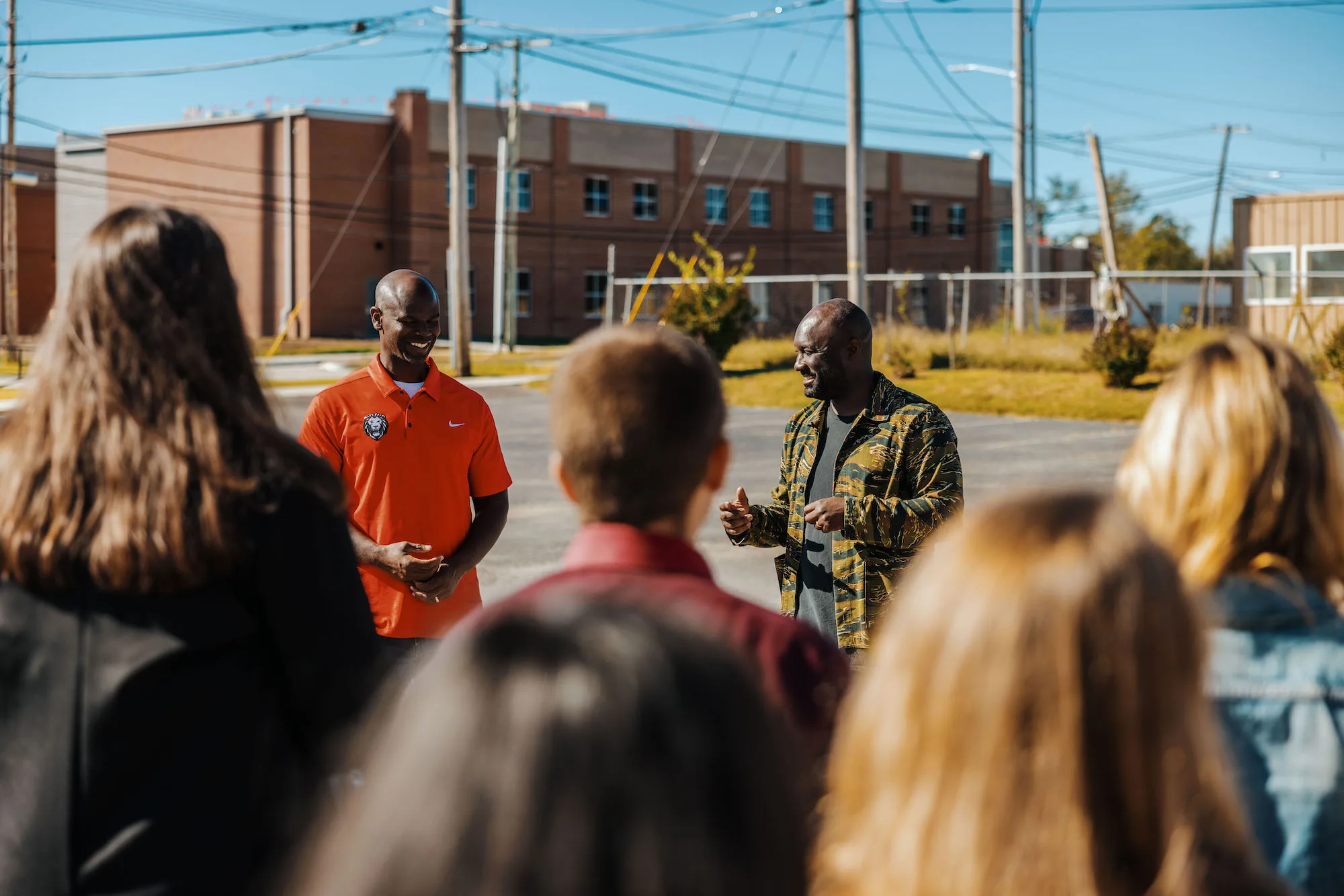
On Wednesday, May 7, NationSwell community members gathered at Mount Tamalpais College in San Quentin Prison for a guided site visit to explore how education and growth programs can foster growth, resilience, and possibility for incarcerated and formerly incarcerated individuals.

Led by Dr. Jody Lewen — founder and president of Mount Tamalpais College, the independent, tuition-free, accredited college that operates inside the prison — the experience offered a powerful look at how expanded access to quality higher education is about more than learning — it’s a bridge to community, purpose, and hope.

We’ve recapped some of the key insights from the day below.

Key Takeaways:

  • Education can be a counterculture
    In carceral systems designed to disconnect, education becomes radical. It’s not just about learning, it’s about reclaiming voice, building community, and engaging with the world in new, life-affirming ways.
  • The light of learning disrupts the system
    Mount Tamalpais College offers more than classes, it challenge the very logic of incarceration. Education is a “disturbance in the force.”
  • Healing requires space to reflect
    Access to education in prison opens the door to deeper psychological insight. It creates space to confront trauma, build resilience, and help others do the same.
  • The system is not rational
    The carceral state is not the product of coherent logic, but a patchwork of arbitrary decisions and policies. We must resist the illusion of inevitability and instead ask who benefits, who’s harmed, and what a more humane system could look like.
  • Human worth is inherent
    Regardless of our worst decisions, our pasts, or our circumstances, every person holds equal value and is worthy of dignity, respect, opportunity, and growth. Full stop. Systems can be designed to forget this. We can’t afford to.
  • Reentry is a collective responsibility
    The transition out of prison is complex. Career support and alumni services are critical and a space where deeper community partnerships can make a lasting difference. This is an area where Mount Tamalpais College could use our help!
  • Proximity is powerful—but depth is essential
    Connection starts with showing up, but it doesn’t end there. The question is: how do we move beyond observation into curiosity, action, and shared storytelling?
  • Let people tell their own stories
    Authentic storytelling fosters understanding, not just attention. How do we create space for people to speak in their own words?
  • Resist both romanticizing and othering
    Incarcerated people are often cast as either heroes or villains. The truth is more human, more complicated, and more deserving of our full attention. How do we shift society from sensationalizing the experience of incarceration to humanizing it?
  • Fair chance hiring is everyone’s work
    Every organization can audit, improve, and advocate. Whether it’s changing internal practices or supporting national reform, inclusive hiring must become standard.
  • Bridge-building means welcoming discomfort
    Can we broaden the aperture of experiences like this one? Can we invite in people with different ideologies and use shared reflection to build understanding across differences? What’s the first step? How do we take it?

Goldman Sachs 10,000 Small Businesses

Goldman Sachs 10,000 Small Businesses

Entrepreneurship is a powerful driver of economic opportunity, yet many small business owners face systemic barriers to growth, including limited access to capital, business education, and professional networks. To address these challenges, the Goldman Sachs Foundation launched 10,000 Small Businesses – a nationwide initiative designed to provide practical business education, peer support, and access to funding to help small enterprises scale and succeed. The program has supported over 16,600 graduates across all 50 states, Washington, D.C., and Puerto Rico. This case study outlines the core components that make this initiative effective and replicable.


Key components of the model:

  • Selective yet accessible participation
  • Durable and practical curriculum
  • Strategic partnerships for scale
  • Adaptive delivery model
  • Lifelong learning and alumni support
  • Goldman Sachs employee engagement

Notable results and impact:

  • 66% of participants see increased revenue within six months
  • Nearly 50% create new jobs shortly after completing the program
  • 85% of alumni continue doing business with each other, demonstrating the program’s networking value
  • Participants report greater confidence in financial decision-making, fueling long-term sustainability

Share this report

The Power of Place-based Strategies

Place-based approaches have become a cornerstone for fostering long-lasting, meaningful change, by connecting organizations, cities, and communities across the United States. Through focusing on local needs and opportunities, place-based strategies have proven essential for building community resilience and driving positive, tailored outcomes.

During the final event in the Building Thriving Futures series hosted in partnership with FUSE, leaders dove into actionable strategies to strengthen partnerships across sectors and address critical challenges in supporting small businesses, advancing housing equity, and expanding workforce opportunities. 

Some of the key takeaways from the event appear below:


Insights:

Impact leaders need to support and work closely with local decision makers. City and state leaders are the largest social services providers for communities. As the federal government pulls away funding and infrastructure, it won’t change the community needs and people will look to their local and city governments to do more. The current destruction is huge — some populations like in Kansas have/had a large proportion of federal workforce — and philanthropists and private sector leaders need to help local public sector leaders expand their capacity to navigate the change. 

Learn from existing models that bring disparate people together for local change. For example, JobsFirst and FresnoDRIVE are initiatives funded by public, philanthropic, and private dollars aimed at boosting workforce, education, and inclusivity, and are high-aspiration, long-term plans.  

Diversification of funds is key — understanding who in your community is reliant on federal funding and helping them diversify to de-risk and change keeps occurring. Consider how you can help track the dollars being cut in your region, predict the ripple effects that will impact your grantees and community, and stem the loss. 

Balance listening and surviving, with planning for the future. Many organizations are navigating changing infrastructure, adopting a defensive posture, and doing the important work of helping grantees and community partners survive this turbulence e.g. by providing more unrestricted funding to plug gaps. However, also make time to think about those things that will help you “swing for the fences” and plan for a new future e.g. investing in the capacity and social capital of local talent who can rise into transformational leaders. 

Consider how we can fall in love with the problem and use it as a spark for innovation? Turbulence allows us to consider what we should double down on, what can we pivot away from because it is not an immediate priority, and what can we think differently about? In this time where national actions are impacting hyper local communities, it could be a useful exercise to borrow from entrepreneurs and figure out how you find the hardest, stickiest pain point and build energy around addressing it.

Drive investments to data and make sure you have secure data infrastructure locally, as it may not always be there federally. There may be opportunities for new investments and new partnerships that hinge on this data. 

Philanthropies have the power to bring place-based peers together to support each other. Information and strategy help us adapt more rapidly. By bringing together members, partners, or organizations you work with, across states and cities, who are working to combat the same barriers and issues, you scale insights and learning and help prevent a constant reinventing the wheel and repeating the same growing pains.

Invest in telling the story of place-based impact. With so many programs and initiatives at risk due to their reliance on federal funding, telling the story of their impact is more essential than ever. The role of communications and communications teams is often an afterthought, but the importance of language and framing has never been more crucial. Storytelling matters — even if it means we need to pivot or look at it a different way, we keep the story going.

Strategies for Collective Wealth Building

As social inequality and economic disparities continue to rise across the United States, there is a pressing need to reverse the trends, transform the economic landscape, and build a foundation for sustainable intergenerational prosperity. Data shows areas of greater inequity experience weaker economic growth — so it benefits all of us to overcome those inequities.

On February 26, NationSwell convened leaders from across sectors for a virtual roundtable on the strategies and opportunities they’re seeing to address systemic inequities, including affordable housing, access to quality education, healthcare disparities, and the racial wealth gap.

Some takeaways from the conversation appear below:

Insights

We need to invest in widening “wealth literacy” not just financial literacy.. There are still knowledge gaps in how individuals tend to conceptualize income as wealth vs. understanding asset-based accumulation.

Lowering the barriers to entry can give millions more people access to powerful tools. . Tools that have been widely vetted and applied — including grants, “patient” loans, and market rate loans — are still some of the best in our collective arsenal, but access is still an issue for communities who have been historically regarded as unbankable. In order to mitigate those roadblocks, organizations like the Groundbreak Coalition focus on stacking resources to make it easier for people to find them and benefit from their collective impact — using tried-and-true puzzle pieces, but reconfigured in a more accessible way.

Employee ownership is a powerful way to empower people to build wealth. Organizations such as Ownership Works offer businesses of all sizes the opportunity to offer their staff stock – a vital pathway to wealth building, and addressing the imbalance that currently the top 1% wealth owners own 99% of the stock and mutual funds. 

Safety net reforms show promise when they mirror the values of trust-based giving. The principles of trust-based giving — like not having to prove your worthiness over and over again — a should be reflected in our social safety net and direct cash transfer programs. 

Targeted policy reforms like “baby bonds” help to reimagine the role the government has to play in closing the wealth gap. Baby bonds are government-funded trusts created at a child’s birth. California has started the largest baby bond program in the country aimed at children who have lost a primary caregiver through COVID or have long term stays in the state’s foster care system.

For underserved individuals, entrepreneurship can be a significant pathway for wealth generation. Undocumented and formerly incarcerated individuals are not always able to legally work as employees; and incarceration is shown to be a huge factor in the wealth gap. Entrepreneurship creates avenues to work as your own boss and can help to make inroads for wealth-building. Focusing on business development and supporting co-ops and CDFIs — as well as working with partners focused on seeding community-based organizations (CBOs) —  can help to strengthen such opportunities.

Narrative change is a necessary component of the wealth-building conversation. As a society, our tendency to attribute poverty to a moral failure or theorize that poverty is solvable through hard work and the “bootstraps mythology” help dictate the ways that policies are prioritized and shaped, creating tremendous barriers to entry that exacerbate the wealth gap. Using sociopolitical context and narrative storytelling can help to catalyze our communities into feeling like they’re part of a larger picture in wealth-building — helping to create buy-in, engender pride, and form a sense that this work is larger than ourselves.

Closing the technology gap: Why it’s a critical time to train more women

Projections of the future dominate the global technology conversation, with business leaders, politicians, and pundits fueling headlines about how a new era of innovation will transform our world. What’s missing from this discourse, however, is a focus on how we will ensure we have a sufficient pool of professionals with required skills in the industry behind this transformation.

The workforce responsible for forging our digital future should not exclude broad swaths of the population. Yet women continue to be significantly underrepresented in fast-growing technology fields that urgently need more talent.

Consider artificial intelligence (AI). New AI technologies are playing a growing role in enterprises around the world and in our daily lives. Yet there’s concern that half of all needed AI positions may not be filled as this technology rapidly evolves. Training more women, who only comprise one quarter of the current AI workforce, could close this gap.

This imbalance — and acute need for more experts — also extends to cybersecurity, where women represent about 20% of the field. The cybersecurity workforce is growing, but not fast enough: it still needs to increase by nearly 75% to address skill shortages. This estimate comes as cyber threats are becoming more frequent and complex, meaning more cybersecurity professionals with critical skills will be needed to navigate the tremendous challenges ahead.

A sudden reversal in these trends is unlikely. Technology-related roles are the fastest- growing jobs, according to the World Economic Forum’s Future of Jobs report, and the most in-demand skills include those in AI, cybersecurity, and technological literacy. At the same time, skill gaps are perceived as a primary obstacle to business transformation, a key finding also highlighted in the Kyndryl Readiness Report, a global survey of 3,200 business and technology leaders exploring how ready businesses are for the future.

We’ve reached a critical moment to close these gaps. But just as technological advancement depends on the efforts of many, no single organization can do so alone.

Clearing the first hurdle

Czechitas, a non-profit organization committed to enabling women to thrive in technology careers, has a 10-year track record of training women with advanced digital skills in numerous IT domains. Founded by three young women in IT, Czechitas has since trained 76,000 women in areas like data analytics and UX design. The organization continues to advance its mission of removing the financial and other barriers that make it difficult for more women to embark on IT careers by providing full scholarships that make learning accessible to all.

With a grant from the Kyndryl Foundation and support from other partners, Czechitas is expanding its education offerings to meet the rising market demand for skills in cybersecurity, AI, and digital transformation. Our organizations have experienced firsthand how cross-sector partnerships can help more women join, advance, and succeed in fields like cybersecurity and AI, where they’ve been traditionally underrepresented.

We also believe that teams with a breadth of experience and perspectives can be a business strength. The ability to problem-solve from multiple angles can drive innovation and help solve emerging challenges — addressing bias in AI models, for instance, or identifying a broader range of cyber vulnerabilities as attacks become more sophisticated.

The greatest impediment to more women pursuing careers in technology, however, is often getting them to walk through the classroom door. Women are less likely to enroll in AI training courses, for example, and they’re even less likely to use AI tools like ChatGPT.

In the Czech Republic, women represent about 9% of IT specialists — one of the lowest rates in the European Union. We find that women struggle to imagine themselves pursuing technology careers due to persistent stereotypes and perceived barriers to professional advancement, like the “motherhood penalty.” Falling behind in skills development in any field can be difficult; that’s doubly true in technology, where change is so constant that a few years away can mean starting over.

These stereotypes fade as women connect with other intelligent, ambitious peers and mentors, and as they recognize the economic benefits of honing competitive skills or the work-life balance that a career in IT can offer. But encouraging that first step toward technology depends on representation. When you’re a minority in any field, it’s only human to ask, is this space really for me? We want the response to be a resounding “yes.”

Building inclusive programs

To build inclusive training programs, lead with empathy. Organizations can encourage more women to begin and succeed in training by creating peer-to-peer learning communities where women are mentors and leaders. Flexible course options that welcome women from all walks of life and provide scholarship support can also help students overcome pervasive financial and social barriers.

Because everyone brings their own experience and learning style to the classroom, Czechitas designs courses that include both in-person training and self-study opportunities, enabling each student to find the right balance. The curriculum is constantly updated to reflect the rapid pace of technological development with a focus on practical knowledge. Partnerships with technology companies can enhance this hands-on experience: students can learn from senior experts in the field and companies can benefit from new hiring pipelines.

For markers of success beyond important metrics like program completion and career progression, look for signs of infectious passion. At Czechitas, many teachers and mentors work on a volunteer basis. You know you’re on the right track when alums return to volunteer because training changed their lives. Or when cohorts of students stay connected years after training ends, supporting each other as their careers advance.

We’re excited to see the contributions students like these will continue to make in technology and the role they’ll play in encouraging more women to join their ranks. But we also recognize that bridging these divides — whether related to gender, skills, or opportunity — requires a global effort. We encourage organizations to join us in our efforts to shape a better future.


The views and opinions expressed in this article are those of the authors and do not necessarily reflect the views and opinions of NationSwell.

Impact Next: An interview with Visa Foundation’s Graham MacMillan

At a moment of inequality and division, who is advancing the vanguard of economic and social progress to bolster under-served communities? Whose work is fostering the inclusive growth that ensures every individual thrives? Who will set the ambitious standards that mobilize whole industries, challenging their peers to reach new altitudes of social impact? 

This year, Impact Next — an editorial flagship series from NationSwell — will spotlight the standard-bearing corporate social responsibility and impact leaders, entrepreneurs, experts, and philanthropists whose catalytic work has the potential to shape the landscape of progress amid urgent need for social and economic action.

For this installment, NationSwell interviewed Graham Macmillan , president of Visa Foundation.

Greg Behrman, CEO and founder, NationSwell: What brought you to this moment? Was there a formative relationship or experience that led to you becoming a leader in this field?

Graham  Macmillan, Visa Foundation: I knew in college that I wanted to be passionate about something and intellectually challenged, and thankfully, because of some great professors, I got inspired to think more about international development, which was a term way back in the 1990s to describe social impact. 

I was really interested in these organizations that were out there trying to solve big problems and challenges, and asking what they could do to support communities, and I started to realize this was the direction for a career that was both interesting to me and would allow me to go to sleep at night knowing that I was trying to make things a little bit better than they were before. 

You get tested over the course of your career, of course, but those moments also have the potential to be very affirming. If you’re lucky enough to have a passion, to be interested in the work that you do, to be surrounded by really fun, terrific people that share a common sense of purpose, you can make a career out of that without a problem. 

Behrman, NationSwell: What makes you an effective leader in your organization? Is there a particular philosophy of leadership or an approach that comes to mind?

Macmillan, Visa Foundation: I don’t know that it’s my place to call myself a leader — that’s for others to determine, in my view. What I try to do that may have characteristics that speak to leadership is having a sense of purpose, having a vision for what could be that is better than what it is now, taking some risk, and always ensuring that your role is in service of supporting the people that actually do the work.

I do nothing except cause trouble for my team. I get in the way. I slow things down. I ask too many questions sometimes. They’re the ones that actually do the good work. My job is to make sure that they are prepared, they have the resources, the support, the belief that they can get it done and solve any problems that might come up. So that’s what my job is and my belief in where I can add the most value. 

Behrman, NationSwell: What are two or three facets of the work that you’re leading that you think are special — what feels important to lift up?

Macmillan, Visa Foundation: The signature work that Visa and Visa Foundation have been focused on is the role that small and micro businesses can play in advancing economic growth. What we’ve managed to accomplish over this five-year period is to establish a strategy that would advance small and micro businesses in a meaningful way that aligns with both the values of our 30,000 employees and our stakeholders around the world — putting women and underrepresented founders at the center of that strategy. 

We know that there’s a tremendous gap between the resources that are allocated to women-led or underserved entrepreneurs, and we wanted to pry that open and demonstrate that they actually are not only viable, but there are actually tremendous, high-growth opportunities in doing so for a whole range of reasons. 

The distinguishing characteristic of our approach over the past five years has been not only grant making but actually investing to support these small and micro businesses. We have about a $500 million endowment, which makes us somewhat unusual for a U.S. Corporate foundation — we manage the assets, and we’ve worked with the board to establish that we manage the assets as if we were more like a perpetual foundation without an annual distribution of funds. 

Behrman, NationSwell: Anything else about your work that feels particularly differentiated in the field?

Macmillan, Visa Foundation: There are a ton of foundations that don’t invest at all. What we have constructed is essentially a toolbox of all the things that we could use, and it’s not a monolithic application — we look at every circumstance and we open ourselves up to what the partners actually need. We tell them what’s available to them and we’re not prescriptive, we don’t assume we know what they need better than they do.

I believe that corporate philanthropy is elevated when you’re harnessing the power and capability of the business — that is fundamentally differentiated from private philanthropy. It just is. When done well, change can occur at a pace that is just fundamentally different. We are on the precipice of seeing that happen, and we’re currently trying to set up conditions by which we can then be effective at that next phase. 

Behrman, NationSwell: Who are a few of the peer leaders whose work or leadership styles you most admire?

Macmillan, Visa Foundation: I would be remiss if I didn’t acknowledge my boss at Citi, Brandy McHale, who taught me more about corporate philanthropy and philanthropy in general than almost anyone I know. In many ways, everything that I do is modeled off what I learned from her, both in terms of culture and humility and good sense of humor. 

A colleague that I’ve long admired but have recently gotten to know more and more is Delilah Wilson-Scott. Delilah is incredible in my opinion: she’s navigated two very complex, large companies at the highest level, and she does it with grace, with humor, and she’s super smart. 

And then last but not least, of course, is my former colleague, Darren Walker, who I spent a few years working with at Ford. Darren is a fundamental believer in the power of the market as a force for good, he knows finance, he knows governance, and what he’s been able to build out of that knowledge is tremendous. 

Behrman, NationSwell: What are some of the resources that have really inspired you as a leader? 

Macmillan, Visa Foundation: I would honestly point to the NationSwell community: there’s substance, there’s thought, there’s content, there’s community, there’s gathering. The breaking of bread — that’s a resource unto itself. 

In terms of podcasts, I love “The Rest is History” — it’s fantastic. I’m a huge follower and fan of history, and the podcast is led by two British hosts, and there’s something about talking about history with a British accent that just feels right. It’s also really good if you want to fall asleep. There’s also another terrific one called “Empire” — I’m grateful to any resource that I can use to take my head out of this space but still be thoughtful and think of the patterns in history that become our future.

A Thriving Economy for All: Equitable Career Pathways

In an era of rapid economic change and growing inequality, creating equitable career pathways has become a critical challenge for policymakers, educators, and business leaders alike. As we strive to build a thriving economy that benefits all members of society, innovative approaches to workforce development and career advancement are essential.

On February 18, NationSwell hosted a Leader Roundtable dedicated to unpacking the cutting-edge strategies and most effective initiatives, programs, and models for fostering equitable career pathways.

Some of the takeaways from that conversation appear below:

Insights:

Encourage skills-based hiring and employer investment in long-term workforce development. Skills-based hiring is on the rise, but still needs socialization and support. Continue to emphasize that traditional degree requirements often exclude qualified candidates, and that employers should reassess job descriptions to focus on competencies rather than credentials. Beyond immediate hiring needs, businesses should invest in reskilling and career advancement opportunities. Offering continuous education, apprenticeships, and mentorship programs helps employees grow within the company, reducing turnover and increasing economic mobility. 

Prioritize social supports to remove workforce barriers. Workforce development programs must go beyond skills training and job placement by addressing systemic barriers that prevent individuals from succeeding in the workplace. Providing wraparound services such as childcare, transportation assistance, and financial aid ensures individuals can fully participate in training programs and employment. These supports are often the difference between career success and workforce disengagement.

Leverage storytelling to drive awareness and action. Storytelling has the power to change hearts and minds at scale. Strategic storytelling outlets, such as films, that reach beyond typical workforce bubbles can help socialize and promote specific narratives about hiring practices. Employers and workforce advocates should use storytelling to highlight real-world challenges and opportunities.

Align workforce initiatives with business strategy. Successful corporate social impact programs are integrated into business strategy and continually aim to demonstrate return on investment. Leaders should aim to align their workforce development initiatives with core competencies, such as training talent in fields relevant to their industry, to create shared value and sustainable employment pipelines. Additionally, corporate foundations and philanthropic investments can be positioned as catalysts – providing seed funding to test and scale innovative models that demonstrate measurable outcomes. By leveraging data, organizations can make a compelling business case for continued corporate investment, turning short-term funding into long-term strategic commitments. 

Act as brokers of connection to create strong networks of support. Employers, nonprofits, and funders should focus on facilitating partnerships to ensure job seekers have access to the resources they need. Rather than duplicating existing efforts, organizations can focus on coordinating services, sharing best practices, and building collaborative models. A well-connected ecosystem enhances career mobility, supports talent development, and ensures long-term success for both workers and employers.

Adapt messaging to shifting political and social landscapes. As Diversity, Equity, and Inclusion (DEI) language faces political pushback, organizations should remain committed to their mission while adapting their messaging. Framing workforce initiatives around economic mobility, opportunity, and business success can help sustain momentum while addressing stakeholder concerns.

Thriving Economy for All: The Case for Childcare

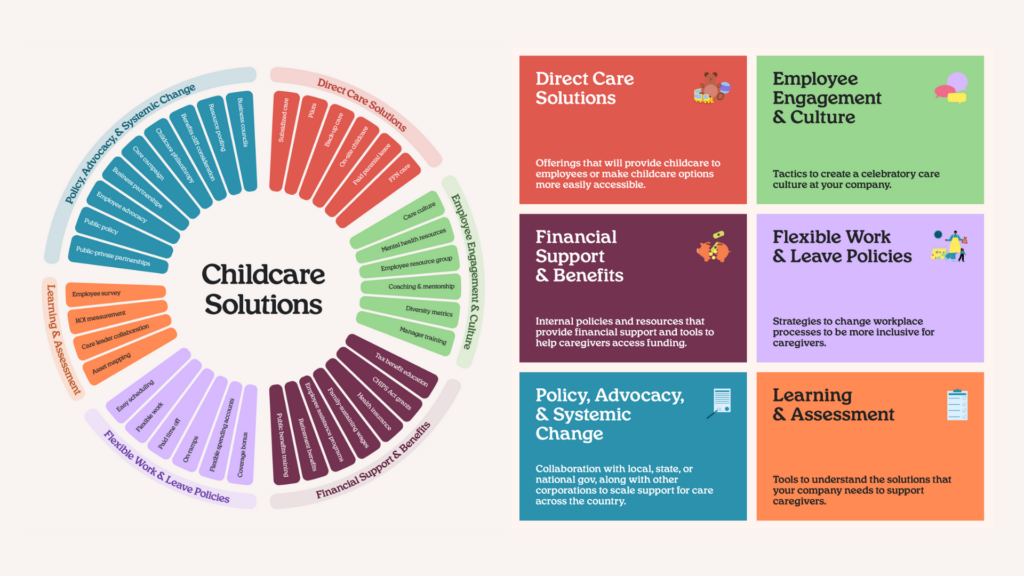
The childcare crisis is no longer just a personal challenge, but an economic one. Without action, the U.S. risks losing $290 billion annually in GDP by 2030 due to missed workdays, reduced productivity, and workforce attrition linked to the lack of investment in childcare. Yet, as daunting as these statistics are, there is hope.

At NationSwell’s recent roundtable discussion, Thriving Economy for All: The Case for Childcare, business leaders and innovators joined panelists Morgan Bast of Steamboat Resort, Mel Faxon of Mirza, and Molly Moon Neitzel of Molly Moon’s Homemade Ice Cream, to explore proven strategies for tackling childcare challenges through employer-driven initiatives.

Here are some of the key takeaways from the event:


Breaking down the crisis

The financial burden of childcare on American families is worsening. With childcare now more expensive than housing in all 50 states, parents are spending an average of 24% of their income on care, and 40% are going into debt to cover costs. Beyond lost dollars, care breakdowns have wider implications for women and caregivers in the workforce as they can result in declined promotions, stalled careers, and inequitable earnings.

Employer-Led Innovation

Some businesses are turning this crisis into an opportunity to lead. “I started Molly Moon’s Ice Cream to see if I could create a profitable business while also baking in the progressive values that I thought either business or government should provide to every worker in the nation,” says Molly Moon Neitzel. Guided by this belief, Molly Moon’s Homemade Ice Cream implemented a life-changing childcare benefit to its employees: $1,000 monthly per child under 5 and $4,200 annually for school-age children.

Morgan Bast, Director of Marketing at Steamboat Resort, shared how her team addressed a childcare desert in their rural Colorado community by launching an employer-based childcare center. The center, which serves both employees and local families, has improved employee retention, engagement, and work-life balance. “We’ve had a baby boom because people are now able to have babies and actually have a place for them to go,” Bast said. 

Meanwhile, Mel Faxon, co-founder of Mirza, highlighted the importance of systemic approaches to solving the childcare crisis. Her team connects families with underutilized federal funding, noting that only 10-20% of eligible families access the roughly $21 billion of subsidies available to offset the cost of care. 

Building Inclusive Solutions

Systemic change requires collaboration across sectors and broad support systems. As one participant advocating for parents of neurodivergent children emphasized, “Raising a child with special needs requires more support, more resources, and more financing.” Her call to expand the scope of childcare solutions underscores the need for inclusive, scalable approaches that leave no family behind.

The Economic Impact

Beyond individual stories, the broader economic case for childcare is clear. Studies show that family-friendly policies like childcare subsidies and universal pre-K could boost U.S. GDP by nearly $1 trillion over the next decade through increased workforce participation. But realizing this economic potential requires coordinated action at both the federal and employer levels.

State-level innovations, such as Vermont’s employment tax (Act 76) for childcare assistance and Michigan’s tri-share program (now across other U.S. states), demonstrate successful public-private partnerships. As Mel Faxon notes, “We need continued pressure on federal policy. And a lot of that will come from employers.” Businesses have a unique opportunity to advocate for legislative measures to close critical childcare gaps.

From Hope to Action

NationSwell is proud to partner with organizations and leaders through the Case for Childcare Collaborative to address this critical issue together. As Molly Moon Neitzel emphasized during the discussion, “The Case for Childcare work gave me a ton of hope. It made me feel like we’re not operating in this tiny vacuum.” 

The childcare crisis is solvable, but demands urgent, collective action from employers, policymakers, and communities. The path forward is possible—and the time to act is now.


To learn more about the Case for Childcare, visit childcareforall.nationswell.com and caseforchildcare.nationswell.com

Place-based Impact Funders Guide

Place-based Impact Funders Guide

Place-Based Impact in Practice is an interactive guide designed to help funders and changemakers better understand, assess, and implement place-based strategies that create long-term community impact. Through practical frameworks, real-world case studies, interactive assessments, and a national action map, the platform explores how community-centered investment can help address challenges ranging from economic mobility to housing, workforce development, and climate resilience.

Built for philanthropy leaders, nonprofits, and cross-sector partners, the resource helps organizations move from theory to action by highlighting what effective place-based work looks like in practice and what it takes to build lasting, locally driven change


Share this report