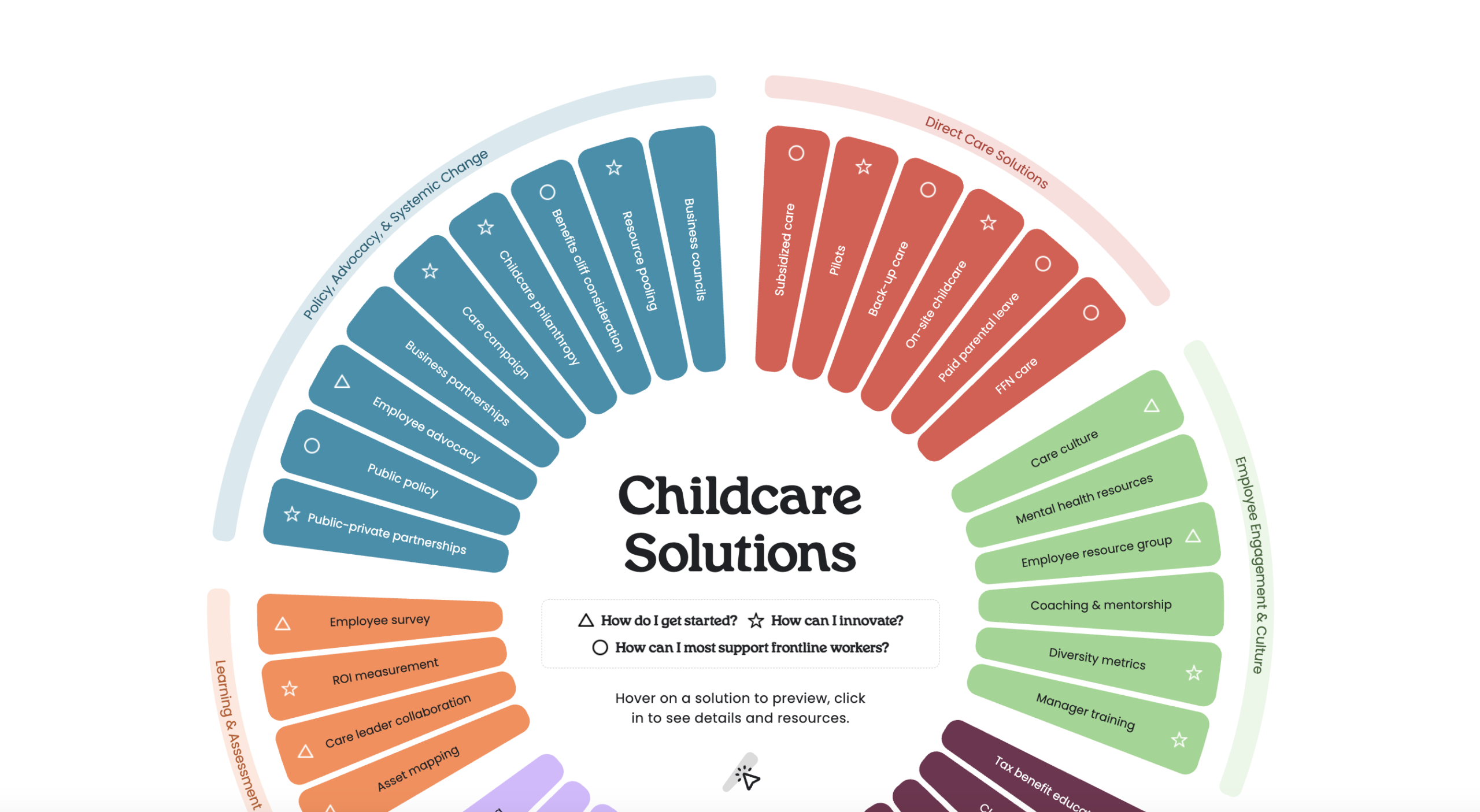
Childcare for All Solutions Wheel

Childcare for All Solutions Wheel

The Case for Childcare Collaborative designed this interactive resource hub to help employers explore childcare solutions that support working families and strengthen their workforce. Through research, real-world examples, and practical tools, the site helps organizations understand the business impact of childcare and identify benefits and policies that work for employees across industries and income levels.

Whether employers are just getting started or expanding existing supports, the platform offers actionable guidance to help build more inclusive, resilient workplaces where workers — and businesses — can thrive.


Share this report

Collective Wealth Building: Innovation in Homeownership

Homeownership remains one of the most powerful—and most unevenly distributed—wealth-building tools in America. Rising housing costs, limited supply, structural inequities in lending and appraisals, and stagnant wages have pushed the dream of owning a home out of reach for millions. Yet across the country, impact-driven actors are testing new solutions that merit deeper investigation and exploration.

On January 15, NationSwell hosted a virtual Leader Roundtable designed to what’s working, what’s emerging, and what still needs to be invented. Alongside a group of leaders from the corporate, philanthropic, and nonprofit sectors, we examined the opportunities and constraints organizations face in expanding access to homeownership, surfaced promising models that can scale, and identified where multi-sector collaboration could move dollars and outcomes.

Some of the most salient takeaways appear below:


Key takeaways:

Treat vacancy as latent supply and rebuild demand alongside units. In hyper-vacancy contexts, the challenge is not only deteriorated housing stock but the absence of market confidence. Pairing acquisition with intentional demand creation (and, in Parity’s case, support for building financial knowledge among buyers) helps ensure neighborhoods are repopulated by residents rather than speculative capital.

Acquisition and clear title are the longest, least predictable phases of the work — and require patient capital. Much of the real labor happens before construction ever begins, particularly when properties involve estates, liens, or unclear ownership. These timelines rarely conform to funding cycles or political urgency; progress depends on legal persistence and institutional patience. Without flexible capital at this stage, downstream innovation rarely materializes. 

Center legal and policy innovation to accelerate rehabilitation and prevent investor capture. Intervening earlier in foreclosure or receivership processes can shift outcomes dramatically. Legal tools that transfer control to mission-aligned actors shorten vacancy timelines, reduce blight, and increase the likelihood of owner-occupied housing.

Recognize that interest rates, not sale prices, often determine affordability. Every 1% the interest rate it wipes out $30k buying power which is make or break for first-time buyers. In this context, interest-rate buy-downs can restore feasibility more efficiently than price subsidy alone because they directly address monthly payment constraints.

Balance wealth building with long-term affordability through shared-equity and soft-second structures. Down payment assistance can expand access while still protecting public and philanthropic investment. Carefully designed equity-sharing mechanisms allow households to build wealth without turning affordability into a one-time event.

Rather than treating displacement as a downstream problem, pair revitalization with retention. Neighborhood improvement often triggers rising tax burdens that destabilize long-time residents, particularly elders on fixed incomes. Without parallel retention strategies, revitalization can unintentionally replicate the same extractive dynamics it seeks to undo. Retention must be designed in from the beginning, not layered on after values rise.

Treat homeowner retention as a core wealth-preservation strategy. Preventing tax sale, foreclosure, or forced exit protects accumulated equity and intergenerational assets. In many cases, stabilizing existing homeowners delivers greater impact — and does so faster — than new production alone.

Cross-sector misalignment is the primary barrier to scale. Many effective tools already exist, but they live in silos across philanthropy, government, finance, and nonprofits. The hardest work is often sequencing participation: who de-risks first, who follows, and who sustains the effort over time. Scale depends less on invention than on coordination.

Recognize that credibility, narrative, and design quality actively shape markets. Homes that signal dignity and pride influence how neighborhoods are perceived by residents, lenders, and buyers alike. Aesthetic quality and storytelling are not cosmetic; they help rebuild imagination, confidence, and demand in places long defined by disinvestment. In this way, narrative becomes a form of infrastructure.

Impact Next: An interview with Wellthy’s Lindsay Jurist-Rosner

At a moment of inequality and division, who is advancing the vanguard of economic and social progress to bolster under-served communities? Whose work is fostering the inclusive growth that ensures every individual thrives? Who will set the ambitious standards that mobilize whole industries, challenging their peers to reach new altitudes of social impact? 

In 2025, Impact Next — an editorial flagship series from NationSwell — is spotlighting the standard-bearing corporate social responsibility and impact leaders, entrepreneurs, experts, and philanthropists whose catalytic work has the potential to shape the landscape of progress amid urgent need for social and economic action.

For this installment, NationSwell interviewed Lindsay Jurist-Rosner, CEO of Wellthy. Here’s what she had to say:


Virginia Tenpenny, Chief Social Impact Officer, NationSwell: Tell us a little bit about what brought you into Wellthy — what galvanized the bold action you’re driving through the company?

Lindsay Jurist-Rosner, CEO, Wellthy: Wellthy was founded in 2014, and the idea came directly from my own caregiving journey with my mom. She was diagnosed with multiple sclerosis when I was a kid — not the more common relapsing-remitting type, but the rarer, progressive form that causes a steady decline in mobility. Over the years, she gradually lost the ability to walk, then to use her arms, though she remained emotionally strong. She was my world, and caring for her shaped who I am.

After college, I moved home to take care of her while working full-time, which eventually led to burnout. When I finally moved out, I continued managing her care from afar, setting up systems, catching last-minute flights, handling the middle-of-the-night emergencies. In her final years, she was in hospice, and she passed away eight years ago.

That experience left me determined to make caregiving easier for other families. I kept thinking, if this was so hard for me — with every possible advantage — how do others do it? I started talking to families and realized how universal the struggle is. The healthcare system does a great job treating medical conditions but offers almost no support for the day-to-day realities of care. Families shoulder 90% of long-term care in this country, often at the expense of their own well-being.

Wellthy was born out of that realization — a desire to build the infrastructure and support I wish my family had. And honestly, that caregiving hasn’t stopped. After my mom passed, I helped care for my grandfather and mother-in-law — both of whom have since passed. I got married, had a child, and now navigate childcare in a blended family. Care is just part of my life from every direction, which keeps me close to our work at Wellthy. I’m not just leading the company — I’m also one of our customers. And living through these different chapters has shown me what so many families experience every day: care rarely fits into neat categories. It spans generations, moments of joy and loss, and every kind of need. That’s why Wellthy has evolved into a true birth-through-bereavement service, because families don’t live in siloes, and their care support shouldn’t either.

Tenpenny, NationSwell: In the 11 years you’ve been at Wellthy, what are some of the bright spots? What’s the moment that you find yourself in right now in terms of the progress that you’ve made and your ambition going forward? 

Jurist-Rosner, Wellthy: I’m incredibly proud of what we’ve built — it’s been the most gratifying 11 years. We get to change people’s lives every day. Families tell us we “saved the day,” that their care coordinator was their angel; there’s nothing better than that.

Our original hypothesis was simple: if we could unburden families from the administrative and logistical chaos of caregiving, we could free them up to focus on what really matters: being present with their loved ones. That idea led us to pair every family with a dedicated care coordinator, much like a financial advisor, who helps them navigate complex care decisions. Most of our coordinators are social workers by training — an incredible, underutilized talent pool we’ve been able to elevate and empower.

We use technology to help those care teams work at the top of their degree and deliver a consistent, high-quality experience for families, now on a global scale. Wellthy partners with companies of all sizes that offer our services as an employee benefit, helping their teams balance work and care. We’ve also expanded into backup care and, most recently, acquired Patch — founded by two incredible women — whose team provides on-site and near-site childcare for frontline workforces.

At the end of the day, everything we do comes back to the same question: where are the gaps in care, and how can we step in to solve them?

Tenpenny, NationSwell: This is clearly an ongoing issue and gap in our society — how do you evolve Wellthy in order to make sure you’re meeting the needs on the ground?

Jurist-Rosner, Wellthy: We’re constantly evolving. One of our biggest pushes in the last two years has been building a better backup care program. Traditional providers like Bright Horizons and Care.com have been around for decades, but clients kept telling us they wanted something different. So we built our own from the ground up, including a full fintech system to process payments and an entirely new network of backup care providers offering drop-in care.

Global expansion has been another major focus. Many of our U.S. clients wanted to extend Wealthy’s services to their colleagues abroad, so we went market by market, country by country, studying healthcare, childcare, and eldercare systems to understand where we could add value. In late 2026, we launched with Cisco across 95 countries, building truly global caregiving support.

We’ve also been exploring the intersection of care and climate. When natural disasters strike — including wildfires, floods, hurricanes — we step in to support employees who can’t get to work or safely care for loved ones. After major storms in Houston, for example, we worked with Memorial Hermann Hospital to source generators and provide financial and logistical support for affected staff.

Our latest expansion is through our acquisition of Patch, an incredibly innovative company founded by two women who created on-site and near-site childcare for frontline and in-person workforces. They operate centers in places like UPS sorting facilities, hospital campuses, and manufacturing lines — high-intensity environments where flexible, affordable childcare can literally change lives. I met a worker at one of their sites who, because of a Patch room, was able to keep her job and care for her two-year-old after her husband was incarcerated.

Patch represents the future of childcare: nimble, accessible, and life-changing. Our next big focus is scaling that model: getting more Patch rooms in more places to support more families.

Tenpenny, NationSwell: As you think about the demands that you face as a CEO of this fast-growing company and all the demands outside of the job, how do you take care of yourself and also lead effectively? 

Jurist-Rosner, Wellthy: I don’t know that there’s a silver bullet; every day looks different. I’m actually training for the New York City Marathon right now, which might qualify as either self-care or self-torture, depending on the day. But over time, I’ve found a rhythm that works.

The real key, though, is partnership. My husband and I both have demanding jobs — he’s the CEO of a public company — and we make it work through constant communication and trade-offs. We’re really respectful of each other’s ambitions and commitments. If I have to travel or go to an event, he’ll adjust, and vice versa. We make sure we both get time for self-care, time with our kids, and time to focus on our work.

As for the personal side, I’ve just gotten better about the basics — prioritizing workouts, eating well, drinking less — all the things we all try to do. There’s no magic formula, but I’m always working on doing a little better each day.

Tenpenny, NationSwell: What is the North Star for your leadership style that makes you most effective?

Jurist-Rosner, Wellthy: Honestly, I think I have it easier than a lot of leaders because we’re a mission-driven company. We naturally attract people who are deeply connected to what we do, so the culture and my leadership style evolve pretty organically. I imagine it’s harder in more traditional organizations, where you have to work harder to manufacture that sense of purpose.

Our focus is always on reminding the team of the impact they’re having. The work can be intense, but the outcomes are so real. We make that visible every day — sharing real-time member feedback in Slack, highlighting family testimonials during our monthly “All Hearts” meetings, and playing videos that bring our members’ voices directly to the team. It keeps everyone connected to why we do this work.

At the end of the day, that mission is the fuel. It makes the tough days easier and the culture stronger.

Tenpenny, NationSwell: What are the trends you’re seeing right now that are giving you hope? 

Jurist-Rosner, Wellthy: I feel a lot of hope right now. In the early days of Wellthy, no one was really talking about caregiving — it just wasn’t on the radar. Now, it’s incredible to see how much that’s changed. Companies are thinking holistically about how to support their employees, not just through us but through broader policies, programs, and benefits. We work with dozens of large employers, and it’s inspiring to have a front-row seat to the way they’re building truly people-centered workplaces.

I’ve also been doing work in D.C. with the Bipartisan Policy Center, helping to make recommendations around the federal role in childcare. That’s been energizing, especially seeing recent progress in Congress, like the expansion of tax credits that will make a real difference for families.

It’s also the case that backup care needs a new era, and at Wellthy we see ourselves as part of that shift. So many organizations have had the same backup care benefit in place for years, sometimes decades, and now they’re taking a fresh look. We’re getting the chance to show them a program built for the modern and diverse realities of family life, one that tackles the pain points HR teams have wrestled with for so long. There’s real momentum right now — whether in companies putting their programs back out to bid or simply in the number of HR leaders who want to talk about what it looks like for backup care to truly work for both employees and employers.

And finally, I’m so inspired by what I see on business school campuses. Wellthy is now taught as a case study at Harvard Business School and Stanford GSB, and every time I visit, I’m struck by how aware and motivated these students are. A few years ago, no one even used the term “care economy.” Now, it’s part of the conversation — and students want to invest, build, and innovate in this space. The class at HBS that used to be a small seminar on social entrepreneurship and systems change now fills the largest lecture halls. That level of energy and purpose in the next generation gives me so much hope for what’s ahead.

Tenpenny, NationSwell: As you think about the socially motivated leaders that you consider your peers, are there two or three whose work has really inspired you and who you hold in high esteem? 

Jurist-Rosner, Wellthy: I’m very inspired by my husband. His leadership style is completely different from mine — he’s patient, measured, deliberate, and thoughtful, while I tend to be more reactive. I love learning from him and observing how he leads; he’s an incredible leader and does an amazing job at his company.

Before starting Wellthy, my mentor was Dave Morgan, who led the marketing tech company where I worked. Watching his leadership was hugely motivational. But honestly, I find inspiration everywhere — there are so many people whose approach to leading, thinking, and showing up continues to push me to grow.

Tenpenny, NationSwell: Are there any books, podcasts, or other resources that you’d recommend? What’s been your source of inspiration or influence lately? 

Jurist-Rosner, Wellthy: Right now, I’m listening to David Goggins’ book while training for the marathon — his story is incredible and definitely keeps me motivated during the long runs. I’m also a big fan of the Acquired and Science Vs podcasts; they’re great for learning how companies and leaders got their start and for diving into complex topics in a really engaging way.

Since I’m running so much, I’ve been consuming a lot of content lately. I’m reading Genesis by Henry Kissinger on AI, which has been fascinating, and recently revisited Ezra Klein’s book, Abundance. There’s no shortage of inspiration out there — I’m just trying to take it all in mile by mile.
The Workforce of the Future: Skills and Strategies for What’s Next

The pace of change in the workforce is high.  Artificial intelligence, demographic shifts, economic uncertainty, and other disruptive forces  are reshaping the jobs of tomorrow, redefining the skills employees need, and challenging employers to build stronger, more adaptable talent pipelines. 

On December 2, in partnership with our Workforce Innovation Collaborative, NationSwell hosted a virtual Leader Roundtable designed to bring together impact leaders across sectors to surface the most promising models, partnerships, and strategies shaping the future of work. Some of the most salient takeaways from the discussion appear below:


Key Takeaways:

Normalize many paths over one pipeline. The four-year degree can’t be the only story we tell about success; apprenticeships and tech training need equal visibility. When young people can stack paid work, credentials, and education in parallel, they build higher earning power and employers gain a real, renewable talent strategy instead of a nice-to-have program.

Treat talent as a system, not a series of programs. The bright spots aren’t isolated pilots, but sector-level models where industry, K–12, higher ed, philanthropy, and government rewire how they work together. When employers define skills, commit to hires, and co-fund shared infrastructure, training stops being philanthropy and starts being core business.

Make AI a muscle everyone builds instead of a specialty held by few. AI “readiness” requires weaving tools, experimentation, and ethics into every role, curriculum, and career stage. When learners and employees practice using role-specific AI in real workflows, they show up as operators and co-designers in a rapidly changing economy.

Design for a figure-eight career. The new reality is looping: people move into a role, come back for training, pivot to a new role, and repeat. Workforce systems should celebrate these shifts, provide ongoing upskilling, and build clear internal pathways.

Meet emerging workers where they are. Gen Z expects mobile-first, gamified, peer-driven experiences that help them explore, belong, and level up. Career hubs, points, leaderboards, reels, and mentors – especially when built by young people – translate opaque industries like technicians, data centers, and advanced manufacturing into tangible and desirable futures.

Center narrative, transparency, and trust in the AI era. There’s a growing gap between expert optimism about AI and everyday workers’ questions about surveillance, environmental impact, and job security. Leaders who listen continuously, speak plainly about how tools are used, and invite employees into shaping guardrails can turn anxiety into agency.

Build for scale by proving ROI and impact. Philanthropy can ignite innovation, but durable solutions hinge on employer investment tied to clear returns. When companies can see and measure how apprenticeships, scholarships, and AI-enabled matching drive productivity and retention, “workforce of the future” shifts from a social good project to a competitive advantage.

Q3 2025 Social Impact Trends

Q3 2025 Social Impact Trends

NationSwell’s quarterly trend spotter provides impact professionals with visibility into the most noteworthy, timely, and material shifts in the field. For Q3 of 2025, our report explores the following six trends:

  1. Corporations are quieter on ESG/DEI – and delaying some reports
  2. “One Big Beautiful Bill” has material implications for corporate giving strategies
  3. Values-driven public pressure is influencing reputations and sales
  4. Workforce development is surging as a strategic priority, driven by widening skills gaps
  5. Impact teams are increasing AI adoption while attention grows on need for ethical governance
  6. The U.S. is experiencing climate & ESG policy setbacks while global rules march on

Share this report

Place-Based Impact: Building Beyond the Pilot

Place-based initiatives often begin with promising pilots, but the real challenge lies in building models that endure, evolve, and create lasting change for communities. From knowing when to sunset a project, to adapting an initiative as conditions shift, or to nurture long-term, community-driven impact, place-based work raises important questions about what success truly looks like. Should scale always be the goal—or are shifts in power and resources, and other changes representative of deeper measures of progress?

On November 13, NationSwell hosted a virtual Leader Roundtable event designed to explore what it takes to move beyond the pilot phase and built place-based impact that lasts. Some of the most salient takeaways from the discussion appear below:


Center on-the-ground leadership and lived experience. Effective place-based work starts with local leaders, residents, and young people as co-designers and decision-makers, not just “voices in the room.” When communities define the problems, interpret the data, and choose strategies, funders are able to support work that is more trusted, relevant, and durable.

Shift from standalone projects to long-term strategies. Moving from a collection of disconnected pilots to a portfolio and strategy approach allows leaders to track progress over time, reallocate resources, and adapt without “killing” programs overnight. This zoomed-out view makes it easier to align partners around shared outcomes.

Treat scale as systems change, not just numbers served. In place-based work, scale often looks like stronger civic infrastructure, policy shifts, better-aligned funding streams, and new local capacities, rather than big “vanity” reach numbers. What equally matters is what lasts after a grant cycle ends: local organizations that can attract new resources, shared data systems, and cross-sector tables that keep working.

Lead with values over metrics and logic models. Shared guiding principles – such as non-negotiable youth leadership, community involvement in all decisions, and non-extractive partnership – create the trust and alignment needed for complex collaborations. When values are explicit, they shape governance, grantmaking practices, and how power is shared between parties.

Use national power to open doors, not dictate direction. Large institutions can add enormous value by validating local models, attracting co-funders, and lending policy or communications support. But they don’t need to dictate the agenda. Showing up with humility, naming reputational or political risks transparently, and “walking alongside” community partners helps make sure big brands amplify local leadership instead of overshadowing it.

Standardize the framework but localize the solution. What transfers across communities is the evidence base, theory of change, and shared indicators for success; what must be locally tailored are the specific strategies and programs. The work is a continuous loop: look at the data, ground-truth it with residents, choose evidence-informed approaches that fit local realities, test, learn, and adapt.

Measure both the journey and the destination. Robust, shared data systems are important, but so are simple, practical signals: who’s showing up, which relationships are forming, and whether local leaders feel more connected and capable. Tracking process indicators alongside long-term outcomes helps manage leadership expectations, tells a more honest story of progress, and keeps everyone committed to the multi-year horizon real systems change requires.

Nasdaq’s Economic Opportunity Summit

On October 6, Nasdaq convened its Economic Opportunity Summit — a half-day of panel discussions built on the legacy of its Purpose Forum designed to bring together innovators, policy experts, and business leaders under one roof to talk about what economic prosperity really looks like in 2025 and beyond. 

Centering questions of how we can expand access, revitalize communities, and drive inclusive, purpose-led growth, the day’s agenda ranged from rethinking how we measure prosperity to reimagining regional ecosystems, integrating capital with opportunity, and amplifying authentic storytelling as a force for change.

Below are some of the key insights from the event.


The New Company Town

1. Regional revitalization depends on intentional investment in education and ecosystems. Innovation isn’t confined to Silicon Valley — it’s taking root in cities and regions across the U.S. The Nasdaq Entrepreneurial Center’s Advancing Regional Innovation Economies Report maps where inclusive innovation is thriving, using data to highlight communities effectively linking education, research, and entrepreneurship. The findings show that regions with strong R1 and R2 universities, early-stage capital networks, and coordinated civic leadership see the highest GDP and talent growth.

2. Purpose-driven business is good business. Data shows that companies with purpose-driven values outperform peers across metrics like employee retention, innovation, and return on capital. With 94% of Gen Z workers unwilling to join companies that lack a clear social purpose, aligning corporate impact with community investment has become both an ethical and financial imperative.

3. The power of “co-op-etition.” For the Dallas Economic Development Corporation, success is built on a blend of fierce competition and deep collaboration between the private sector, government, and education. From streamlined permitting processes to customized workforce training and a tax-friendly environment, Dallas has become a national model for business attraction and ease of doing business.

4. Culture is a critical driver of economic growth. Panelists emphasized that vibrant arts, culture, and community life are not extras — they’re economic infrastructure. Investments in cultural institutions, public green spaces, and livable neighborhoods attract top talent and strengthen social cohesion. 

The Power of Possibility (featuring Jenny Just, co-founder and managing partner at Peak6 Investments and Sloane Stephens, professional athlete and founder of the Sloane Stephens Foundation):

1. The power of possibility begins with saying yes. Jenny Just’s career started on the trading floor — a male-dominated world where she learned early that opportunity often hides behind uncertainty. “I never said no,” she said. That willingness to try, to pivot, and to persist built a fintech empire from an initial $1.6 million family-and-friends investment into multiple multi-billion-dollar businesses. Her message: Don’t wait for the perfect plan — just begin, stay curious, and adapt.

2. Purpose fuels perseverance. For Sloane Stephens, the power of possibility comes from passion and persistence. What began as a neighborhood tennis hobby became a global platform for impact. Through the Sloane Stephens Foundation, she now helps youth see that the world is their oyster, providing access to sports, education, and mentorship so they can imagine bigger futures for themselves.

3. Failure is not fatal — it’s formative. Both speakers reframed failure as essential training. They urged audiences to embrace iteration — failure as a rep in the gym that builds the muscle of resilience.

4. Confidence at the table changes everything. Just’s current mission — to teach one million women and girls to play poker — isn’t about cards, but about confidence. Poker, she said, teaches risk-taking, capital allocation, and negotiation — the same skills needed in the boardroom. “If we teach our daughters to play poker,” she said, “we can change the world.”

Tracking Prosperity: How do we Measure Economic Impact?

1. GDP is essential — but incomplete. Panelists agreed that GDP remains a vital benchmark for assessing economic activity, but it is a blunt instrument that fails to capture inclusion, equity, or quality of growth. Global growth projections have declined from 3.7% pre-pandemic to just above 3% today, threatening income convergence and poverty reduction. We need complementary indicators that measure sustainability, inclusion, and balance — not just output.

2. Data granularity reveals who’s thriving and who’s being left behind. Panelists emphasized the importance of individual-level, real-time data to understand how families and small businesses are faring across income, race, and gender lines, and cautioned against aggregate indicators, which mask critical disparities.

3. Inclusive growth requires better data on how opportunity actually moves through the economy. Built through a collaboration between the Schultz Family Foundation, Harvard Business School, and the Burning Glass Institute, the American Opportunity Index uses millions of real career records to measure how well large employers enable upward mobility — tracking promotions, pay growth, and internal advancement. Now in its fourth year, the Index’s findings challenge assumptions about where opportunity lives: in many cases, frontline roles at mid-sized firms outperform brand-name employers on career progress. By turning workforce data into public benchmarks, the Index gives companies a roadmap to improve mobility outcomes and helps policymakers and investors identify where inclusive growth is genuinely taking root.

4. The future of prosperity depends on inclusion and adaptability. The panel closed with concern over asymmetries in the labor market — a mismatch between where jobs are disappearing (including software roles affected by AI) and where demand is rising. Without stronger education-to-employment pipelines and retraining systems, AI and automation risk deepening inequality rather than reducing it. New research from the Schultz Family Foundation and HarrisX recently put a name to this disconnect: the broken marketplace. The call to action: design data-informed policies that help workers move, not just survive, through economic transition.

Uniting Capital with Opportunity

1. Homeownership remains central to wealth creation—but new models are needed. In 1985, a teacher’s salary was one-third the price of a home; today, it is one-tenth. Shared appreciation lending models like those being pioneered by Homium help to connect capital markets directly to first-time homebuyers and can serve as unlocks that help teachers, nurses, and first responders afford homes in the communities in which they work.

2. Expanding stock ownership can narrow the wealth gap. Disparities in stock ownership are the single largest driver of the racial wealth gap, which is why companies like Ownership Works have taken up the mantle of ensuring that all employees — from the CEO to the front line workers — are partial owners through free equity grants. In addition to generating billions in payouts, ownership also results in greater engagement, lower attrition, and tangible financial gains for workers.

3. The next five years will test whether innovation can reach the people who need it most. Panelists envisioned a future where innovation serves teachers as much as tech executives. From portable lifelong savings accounts launched at birth to scalable models of employee ownership and affordable homeownership, they argued that aligning incentives between capital and community is the key to inclusive prosperity. 

4. Transforming the language of investing is just as critical as transforming its systems. The Transforming Investor Identity Research Report — a national pilot by Commonwealth with support from the Nasdaq Foundation — is a model for shifting cultural perceptions of what it means to be an investor. By studying how individuals see themselves in relation to investing, the research surfaces both structural and psychological barriers that keep millions from building wealth. Its findings challenge institutions to expand access not just through new products, but through new narratives — ones that connect financial inclusion to agency, identity, and long-term confidence.

Seizing Your Power (featuring Tiffany Dufu, President of the Tory Burch Foundation)

1. Storytelling is a leadership superpower. Dufu emphasized that “purpose isn’t mystical — it’s a decision inspired by your lived experiences.” By rooting leadership in personal narrative, individuals can clarify their purpose and communicate it authentically to others. The stories we choose to tell — like Dufu’s story of her mother breaking cycles of poverty — shape how we lead, what we stand for, and how effectively we inspire others.

2. Authenticity must live through behavior, not branding. Authenticity isn’t found on a company’s website or in its values statement, it’s revealed through daily actions. Dufu praised leaders who “send the elevator back down,” mentoring and supporting others in tangible ways. True purpose, she said, “has to manifest and live through the behavior of people, always.”

3. Rewriting the narrative of entrepreneurship. Dufu challenged prevailing myths that entrepreneurship is “too risky” or reserved for others. She urged women to redefine entrepreneurship as an extension of their grit and problem-solving, not an unreachable identity. 

4. The Tory Burch Foundation is scaling women’s economic power. Under Dufu’s leadership, the foundation has unlocked $342 million in economic impact to date and aims to surpass $1 billion by 2030. Its decade-long Fellows Program boasts a 91% business survival rate and focuses on helping women build multi-million-dollar enterprises by providing access to mentorship, markets, and capital — not just funding but a “sisterhood of founders” who help each other scale and succeed.

The State of Create: Exploring the Economic Impact of the Influencer

1. The term “influencer” is evolving into something more entrepreneurial. Panelists agreed that while “influencer” has picked up negative connotations, it still best captures the breadth of what creators do. One panelist observed that creators are “entrepreneurs building businesses around community,” while another mused that even C-suite executives now count as creators if they’re sharing expertise and building engaged audiences.

2. Agency and authenticity are driving Gen Z’s creator ambitions. Younger generations aren’t just seeking fame — they’re seeking freedom. The ability to build a media company from your phone makes content creation deeply appealing. Gen Z and Gen Alpha see it as a path to autonomy, creative control, and purpose-driven expression.

3. Monetization is becoming more democratized and diverse. Panelists highlighted how creators now monetize earlier and through multiple streams: direct fan support, brand deals, donations, speaking engagements, and ad revenue. Twitch’s affiliate model enables creators to earn income from day one, while others use partnerships and media opportunities to sustain free, educational content.

4. AI and trust will define the next era of influence. While creators see AI as a powerful tool for efficiency and safety moderation, panelists warned of its risks, including the rise of deepfake ads that can mimic a creator’s likeness, threatening the trust that underpins their relationship with audiences. Panelists agreed that more guardrails are needed in order to protect human authenticity and connection moving forward.

Breaking Barriers, Building Opportunity: Investing in Impact

1. The women’s sports “movement” isn’t a moment, it’s a systems reset. During the 2019 Women’s World Cup, Team USA’s victory and equal pay lawsuit revealed a glaring disconnect between audience enthusiasm and industry investment. Women’s sports weren’t lacking talent or audience — they were trapped in outdated business models measured by men’s sports metrics like reach and efficiency. 

2. Athletes must have a seat at the business table. Sue Bird — WNBA Champion, Olympic Gold Medalist, and Hall of Famer  — joined Deep Blue to bridge the gap between athletes and advertisers, bringing firsthand perspective to boardrooms often devoid of lived experience. Their collaboration ensures that partnerships are authentic, relevant, and reflective of real athletic culture — not filtered through outdated creative briefs.

3. Authenticity and engagement matter more than reach. Bird emphasized that the women’s sports community thrives on depth of connection rather than scale. This authenticity gives brands higher long-term value, transforming athletes into trusted cultural partners rather than traditional endorsers.

4. Purposeful partnerships drive cultural and economic returns. Deep Blue’s “Stay Ready” campaign with MassMutual spotlighted three athletes at different career stages, connecting financial readiness with empowerment and longevity. Rather than restricting it to “women’s sports” media, the campaign ran across March Madness, NBA Finals, and business networks — proving that women’s sports stories can outperform when told universally.

Growth with Purpose: Building the Skills and Systems of the Future

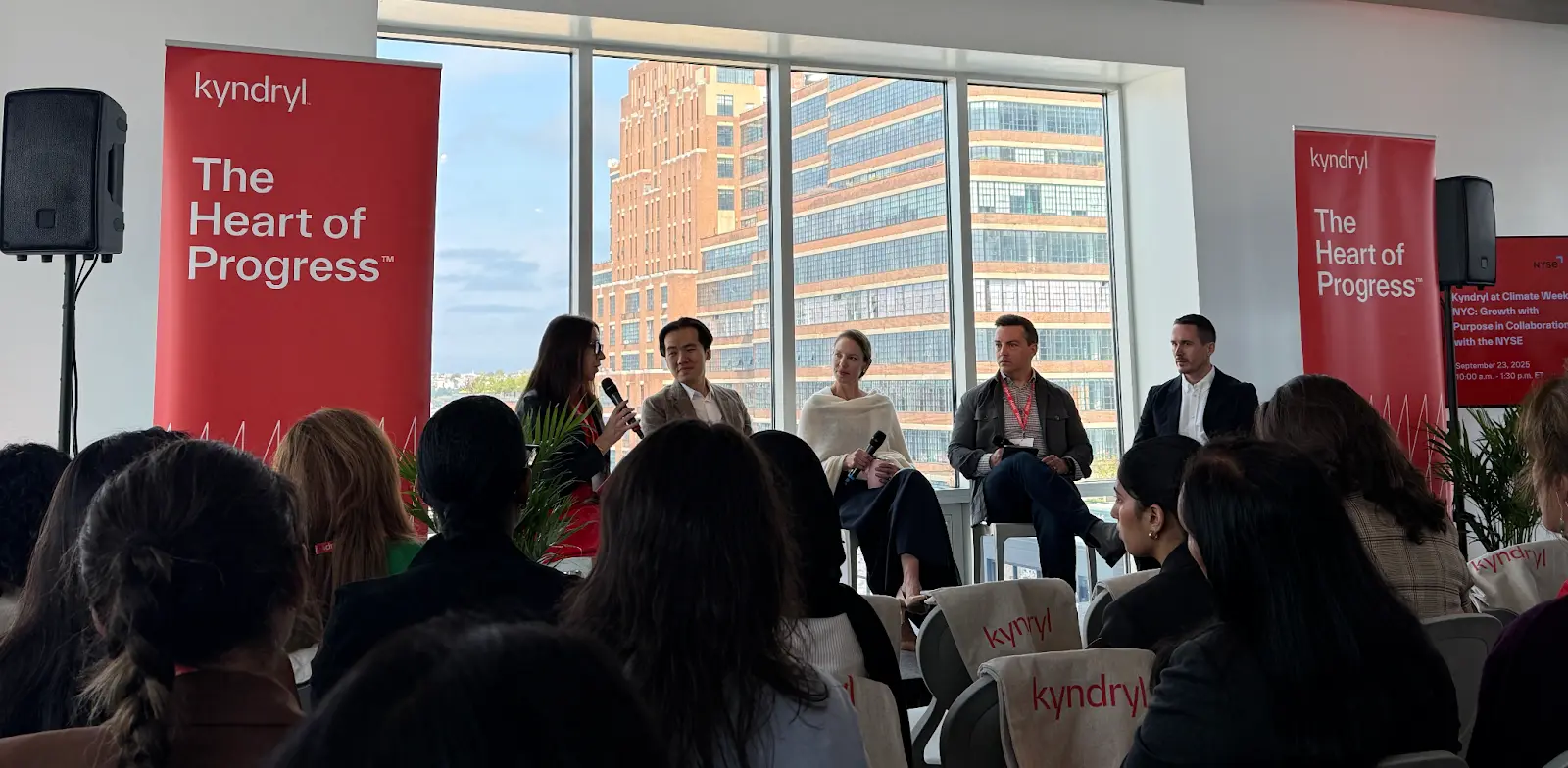
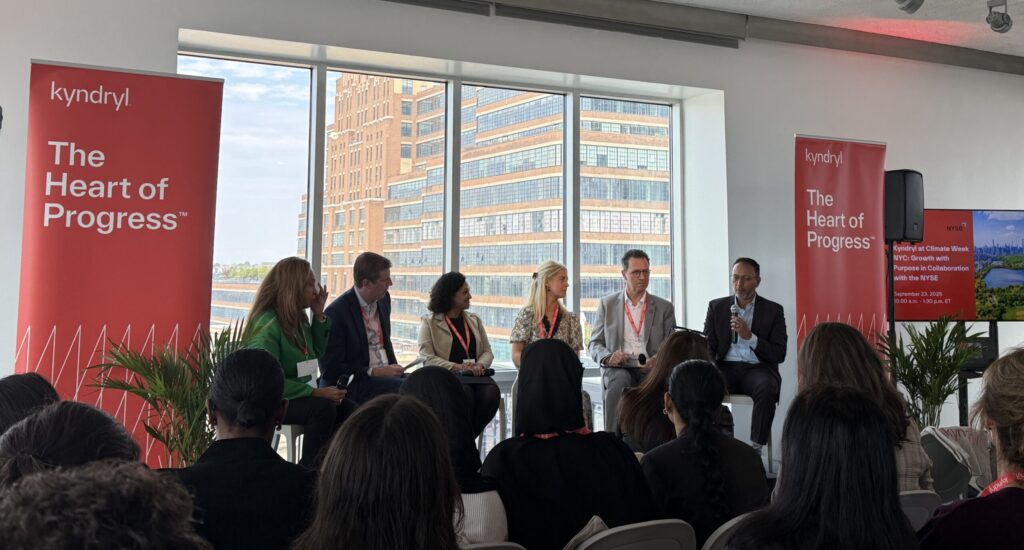
At a time when technology is reshaping the workforce and climate pressures are redefining business, leaders are grappling with a central question: how do we equip organizations — and the people within them — not just to keep pace, but to thrive? During Climate Week, Kyndryl convened an event called “Growth with Purpose” that featured two dynamic panels focused on tackling that challenge from different but deeply connected angles.

The first panel, Skilling for a Secure Digital Future, examined how AI is transforming the very notion of being “future ready.” Panelists stressed that technical expertise alone will not suffice; adaptability, resilience, and human-centered skills remain just as critical. They spoke candidly about the paradox of AI adoption: the technology’s potential to unlock massive productivity gains is real, but its impact depends as much on mindset, culture, and trust as on tools themselves.

The second panel, Risk, Readiness, and Reporting in Sustainability Work, turned the focus to how businesses prepare for an uncertain climate future. Executives from finance, technology, and infrastructure underscored the growing importance of supply-chain resilience, the integration of sustainability into financial decision-making, and the role of trust and transparency in meeting investor and community expectations. As externalities like carbon and natural capital become priced into markets, sustainability is moving from a regulatory obligation to a driver of business value.

Together, the discussions revealed a common imperative: whether navigating the rise of AI or the realities of climate risk, organizations must balance innovation with intentionality. The future may be uncertain, but readiness, resilience, and principled action will be the measures of who thrives.


Panel 1: Skilling for a Digital Future

  • Being “future ready” means building systems of continuous learning. Panelists agreed that the future of work is not a fixed destination. Instead, it requires organizations and individuals to build habits of constant iteration and adaptation. One speaker even suggested professionals should aim to “make 20% of their jobs obsolete each year,” eliminating low-value tasks to create space for higher-value innovation and growth.
  • The biggest barriers to AI adoption are cultural, not technical. While AI’s potential is vast, many organizations struggle with implementation because of fear, discomfort, or uncertainty. Leaders stressed the need to normalize experimentation and failure as part of learning. Generational divides also surfaced: senior employees often use AI more effectively because of their experience and judgment, while younger hires may be more fluent with tools but lack context. Bridging these divides will be essential.
  • Workers need more transparency about which credentials actually pay off. Although 40% of U.S. adults have some college but no degree, only 12.5% of credential programs deliver meaningful wage gains. More transparency is needed so workers know which credentials are actually valuable. Panelists argued for clearer data and guidance so workers understand which pathways provide real mobility, and which don’t deliver on their promise. The same logic applies to skills: For example, Kyndryl is prioritizing mapping current vs. future skills and making that data transparent to employees — helping them visualize where the business is headed and how they can grow.
  • Human-centered skills will only grow in value. As technical skills shift rapidly with technological change, human skills — such as empathy, trust-building, problem-solving, and communication — are emerging as the most durable advantage. Panelists suggested reframing these as “higher-order thinking” skills, a label that better conveys their central importance in AI-enabled workplaces. 
  • Intentional AI use is the key to maintaining critical thinking. Overreliance on AI risks weakening workers’ ability to write, think critically, and craft narratives. Panelists encouraged organizations to set intentional guidelines: use AI as an accelerator, but not as a replacement for human judgment and expression. The financial incentives also matter: Skepticism about providers pushing AI use for profit is warranted, and workers and companies alike need to set their own intentional frameworks for adoption.
Panel members at Kyndryl's "Growth with Purpose" event.

Panel 2: Risk, Readiness, and Reporting in Sustainability Work

  • Uncertainty is inevitable, but principles must guide the response. Speakers emphasized that uncertainty has always been part of business, but climate change and resource scarcity magnify it. To remain resilient, companies are establishing clear principles — such as cutting emissions or increasing recycled content in supply chains — that remain non-negotiable, even as circumstances shift.
  • Embedding sustainability into the core business is no longer optional. Panelists described how sustainability leaders now work directly alongside CFOs and finance teams, reflecting the growing importance of environmental and social considerations to business value. Carbon pricing, regulatory frameworks, and investor demands are pushing companies to treat sustainability as central to strategy, not a side function.
  • Climate risk also creates business opportunities. Disruptions like floods, fires, or supply-chain breakdowns pose real threats, but they also spur demand for new services — from resilient infrastructure to risk management products. Companies that innovate around these needs can turn risk into opportunity.
  • Collaboration across the value chain is essential. No company can meet sustainability goals alone. Panelists highlighted the importance of embedding expectations across suppliers, engaging directly with high-emissions vendors, and even spurring innovation through competitions. They also stressed that collaboration must extend beyond the value chain — to startups, academia, industry groups, and policymakers.
  • Transparency builds trust with investors and communities. Trust emerged as a critical currency. Transparent reporting on emissions, risks, and progress not only satisfies regulators but also strengthens investor confidence and community credibility. As investors increasingly scrutinize how companies manage both transition risks (like shifting to renewables) and physical risks (like fires or floods), disclosure and accountability become differentiators.
  • AI is already helping sustainability efforts, but it must be paired with governance. From using drones to inspect infrastructure to crunching massive emissions datasets, AI is already proving valuable in sustainability work. Yet panelists stressed that AI must be deployed “secure by default,” with robust cybersecurity and governance in place. While the technology can handle scale and speed, empathy, trust, and human judgment remain irreplaceable for advancing sustainability goals.

Inclusive Approaches to Workforce Innovation

As the global economy undergoes rapid transformation driven by digital innovation and artificial intelligence, the future of work demands a new approach—one that centers inclusion, equity, and adaptability.

During a virtual Leader Roundtable hosted on September 10, NationSwell members unpacked how integrating digital fluency into skilled trades training, advancing skills-based hiring, and designing accessible learning pathways that center future-ready skills can help build a more inclusive and representative workforce.

Key takeaways:

  • Design training programs in close partnership with employers. Employer-informed curricula and training ensure learners are trained for actual demand, not theoretical needs. Models like customized training tracks for data center technicians show how alignment with industry can lead to placement rates above 80% and help close gaps in fast-evolving fields.
  • Build agility into workforce initiatives. Instead of long planning cycles, programs can adopt short pilots, rapid iteration, and feedback loops to adapt quickly. This allows leaders to experiment, take risks, and scale what works — an approach critical in a labor market reshaped by AI and automation.
  • Pair technical training with wraparound supports. Barriers like childcare, transportation, housing, or career navigation often determine whether someone can complete training. Embedding these supports — sometimes through cross-sector partnerships — translates access into real outcomes, especially for women, parents, and workers from historically excluded groups.
  • Strengthen social capital alongside skills. Networks matter as much as technical ability in securing jobs. Programs that cultivate alumni pipelines, peer mentorship, and hiring networks replicate the advantages of traditional social capital and help level the playing field in an era where AI screening increases applicant volume.
  • Break down silos in education and training. Cross-disciplinary programs that cut across engineering, data science, environmental science, and business better prepare students for the complex, blended challenges industries face. Universities that shift from teaching “departments” to solving cross-disciplinary “problems” are modeling the future of workforce education.
  • Engage communities where new industries take root. Data centers, renewable energy hubs, and advanced manufacturing facilities are creating jobs in rural areas, but also raising concerns around land use, environmental impact, and neighborliness. Leaders who pair workforce investment with intentional community dialogue and benefit-sharing will unlock more durable opportunities.
  • Invest in real-time labor market intelligence. Traditional labor data lags six to nine months, often missing critical inflection points. By collecting live input from job seekers, students, and employers — and analyzing it with AI — leaders can spot emerging trends earlier, respond faster, and avoid over- or under-investing in certain skills.
  • Reframe high-demand industries to attract the next generation. Manufacturing and skilled trades are increasingly automated, tech-driven, and well-paid, but remain plagued by outdated perceptions. Recasting these jobs as high-tech, sustainable, and future-focused is essential to inspire young people and address looming talent shortages.
  • Expose young people to career pathways early and often. Many students simply don’t know what opportunities exist or how their skills connect to them. Career awareness programs, mentorship at the high school level, and early exposure to applied training help bridge the gap between education and the jobs of tomorrow.
  • Expand inclusive on-ramps for nontraditional learners. Talent often sits outside four-year institutions. Short-term credentials, apprenticeships, and alternative pipelines — combined with recognition of prior learning — allow individuals from varied backgrounds to enter high-demand fields and build economic mobility.

Explore how NationSwell’s Workforce Innovation Collaborative is charting a more inclusive path forward to ensure the future of work works for everyone.

What We Can Learn From The Annie E. Casey Foundation and Tomi Hiers, VP of the Foundation’s Center for Civic Sites and Community Change

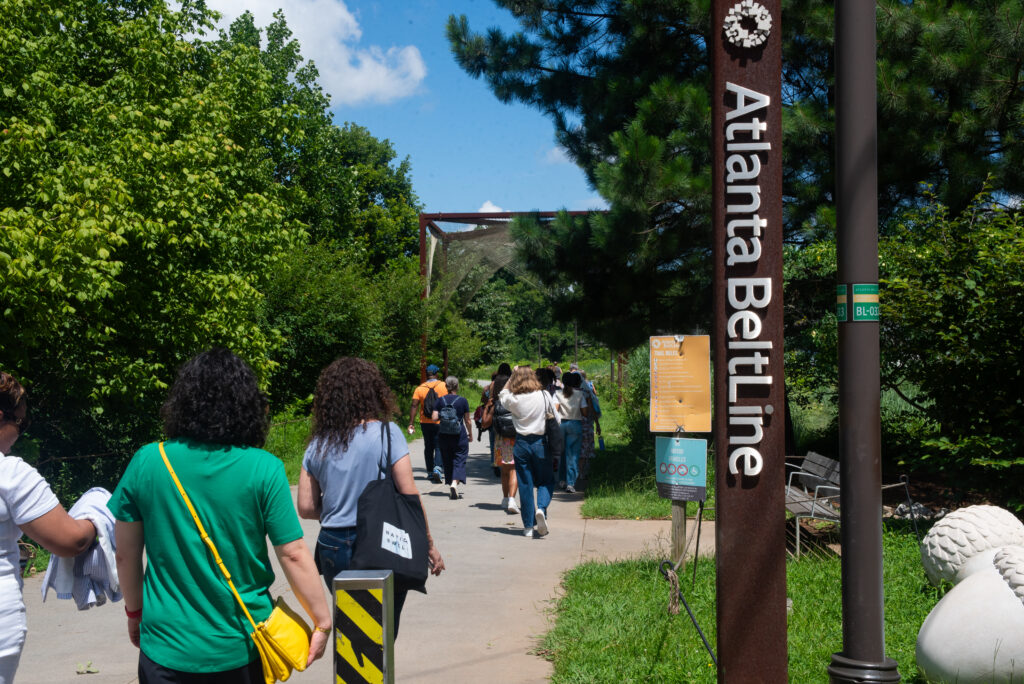
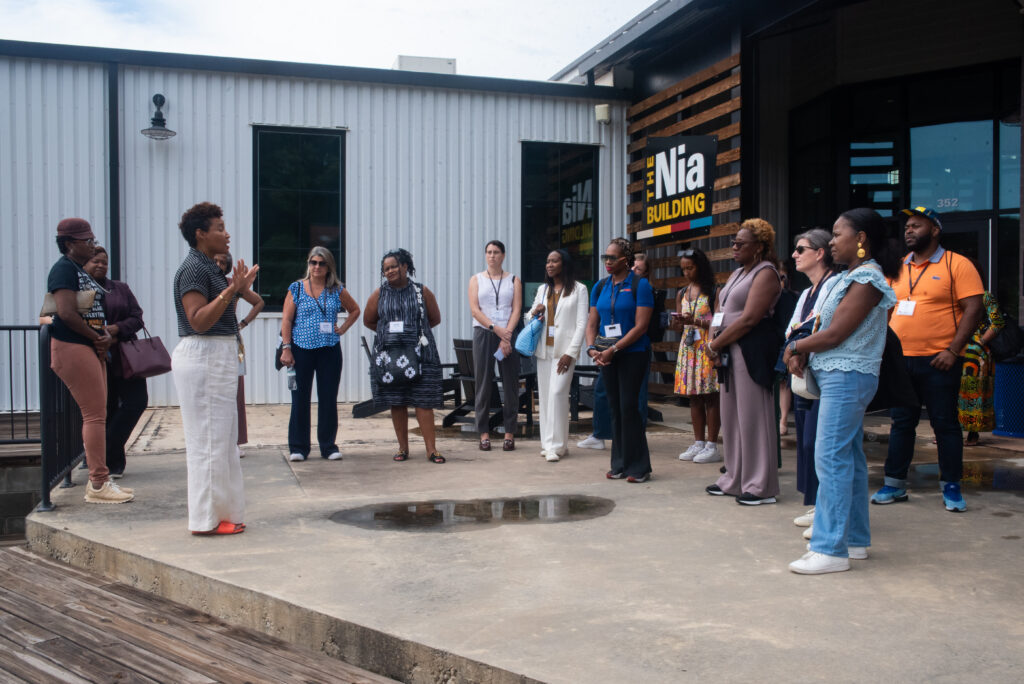
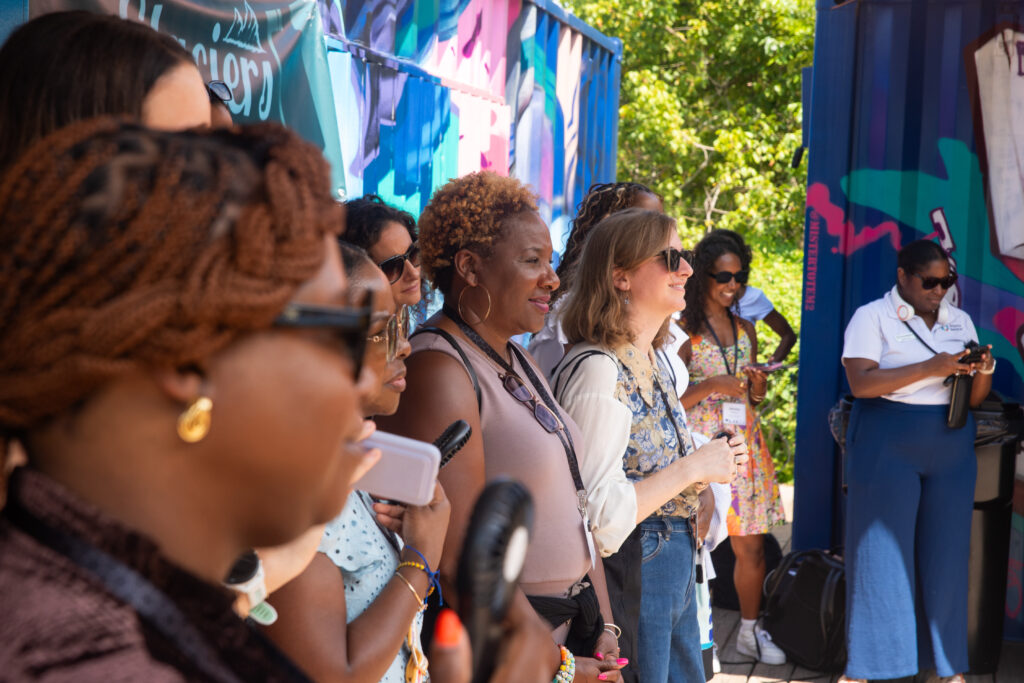
This summer, as part of NationSwell’s Place-based Impact Collaborative, we explored the power of community-led change through an immersive experience in Atlanta, GA. This experience would not have been possible without our host, The Annie E. Casey Foundation. 

As place-based work popularizes, new actors should pay attention: nearly 25 years into their place-based commitment to the city, what the Foundation is building in Atlanta is a testament to place-based investment done right. Long-term, community-rooted, structurally sound, and boldly committed to building a brighter future for youth, families and communities the Annie E. Casey Foundation is unwavering in striving toward greater opportunity for all Atlantans. 

A group of NationSwell members walk past the icon ferris wheel in Atlanta

Why Atlanta?

Many view Atlanta as a booming metro hub, but it is also the city with the lowest rate of economic mobility in the United States. A child born into poverty in Atlanta has less than a 4% chance of escaping it. The Annie E. Casey Foundation established its Atlanta Civic Site in 2001, recognizing the city’s unique potential, alongside its stark disparities.

“Atlanta has a vibrant economy (one of the fastest growing in the country) and rich culture,” says Tomi Hiers, “It continues to be an attractive city, as its rapidly growing population shows.”

But as she points out, “Atlanta has one of the country’s fastest-growing economies, but that growth is uneven across its communities….Communities along and below I-20 continue to face some of the most persistent poverty rates in the country.”

A three-pronged approach: The Foundation’s theory of change in Atlanta

The Foundation’s commitment in Atlanta is long-term and multifaceted, focusing on three investment pillars: economic opportunity, neighborhood transformation, and educational achievement.

“Atlanta is the Annie E. Casey Foundation’s second hometown (Baltimore is the other),” says Hiers, “We encourage action and transformation in Atlanta through a combination of strategic partnerships and investments, spanning beyond individual neighborhoods. Our work continues to be undergirded by the belief that strong communities are possible when young people have the family connections, relationships, communities and educational and employment opportunities they need to thrive.”

Neighborhood transformation: Pittsburgh Yards

Home to the Foundation’s Atlanta Civic Site is Pittsburgh Yards, a 31-acre development in Atlanta’s historic Pittsburgh neighborhood — a community founded by formerly enslaved people in 1883. The south side of Atlanta carries deep scars from redlining, disinvestment, and broken promises, but it also holds the legacy of resistance, culture, and community pride. It’s here that Pittsburgh Yards rises, not just as a development, but as a reclamation of possibility.

Pittsburgh Yards is both a business hub and a model of community-driven development. After purchasing the site in 2006, the Foundation undertook a years-long design process that engaged local residents and businesses. This investment resulted in the Nia Building (Swahili for “purpose”), which now houses over 100 office spaces and supports nearly 160 local businesses through both leased spaces and accessible co-working memberships.

With property values near the Beltline increasing by over 500% in just five years, the Foundation’s investments are carefully designed to prevent displacement. From affordable leases to technical assistance and business development programming, Pittsburgh Yards is a market disruptor in commercial real estate. 

Economic opportunity: Supporting local entrepreneurs

Many entrepreneurs in Atlanta, limited by social and economic barriers, are unsure if the city has room for their dreams; targeted investments from the Annie E. Casey Foundation support small business owners through space and ownership, reshaping how they imagine their futures.

The Foundation partners with organizations like Our Village United and the Russell Innovation Center for Entrepreneurs (RICE), which provide coaching, funding access, and business strategy training. Entrepreneurial support at Pittsburgh Yards is not limited to real estate. Innovative models like the container courtyard, a marketplace of rotating micro-retailers and food vendors built from shipping containers, have provided flexible, low-barrier entry points for businesses to scale and test new concepts.

Hiers highlights the urgency of this work: “Even when it comes to entrepreneurship, one of the primary drivers of wealth, company owners from certain demographics lag behind, creating a gap in revenue generation.” 

Educational achievement: Starting from birth

Approximately 8 out of every 20 children in Atlanta aged 0-5 are considered economically disadvantaged, with 5 of them living in poverty. The Foundation’s commitment to educational achievement begins in early childhood. Through supporting initiatives like “Promise All Atlanta Children Thrive” (PACT), the Foundation has galvanized a citywide action to make Atlanta the best place to raise a child.

Partners like GEEARS (Georgia Early Education Alliance for Ready Students) have helped build a collaborative that includes public and private leaders, all aligned around improving outcomes for children from birth to five. This coalition has led to coordinated grantmaking, Head Start provider collaboration, childcare stabilization grants during the pandemic, and aligned advocacy to shape systems and policy change.

A culture of collaboration and honoring legacy

What sets the Annie E. Casey Foundation’s approach apart is its commitment to authentic collaboration. Both cross-sector and community efforts are designed with shared purpose, long-term structure, and community voice. The Foundation’s partners reflect that spirit — from housing advocates and public health leaders to artists, educators, and entrepreneurs.

“I learned very early in my career that people with lived experience and those who are closest to challenges have unique perspectives that can lead to innovative and lasting solutions. I have made it a priority to ensure that people who live in the communities where work takes place or those who participate in targeted programs have a voice in helping to set priorities, developing strategy and getting the work done.”


This immersive experience was offered to NationSwell through the NationSwell Collaboratives. To learn more or get involved, visit nationswell.com/nationswell-collaboratives/