LinkedIn | Bridging skills & network gaps

LinkedIn | Bridging skills & network gaps

How LinkedIn is using its data and platform to help professionals overcome barriers to employment

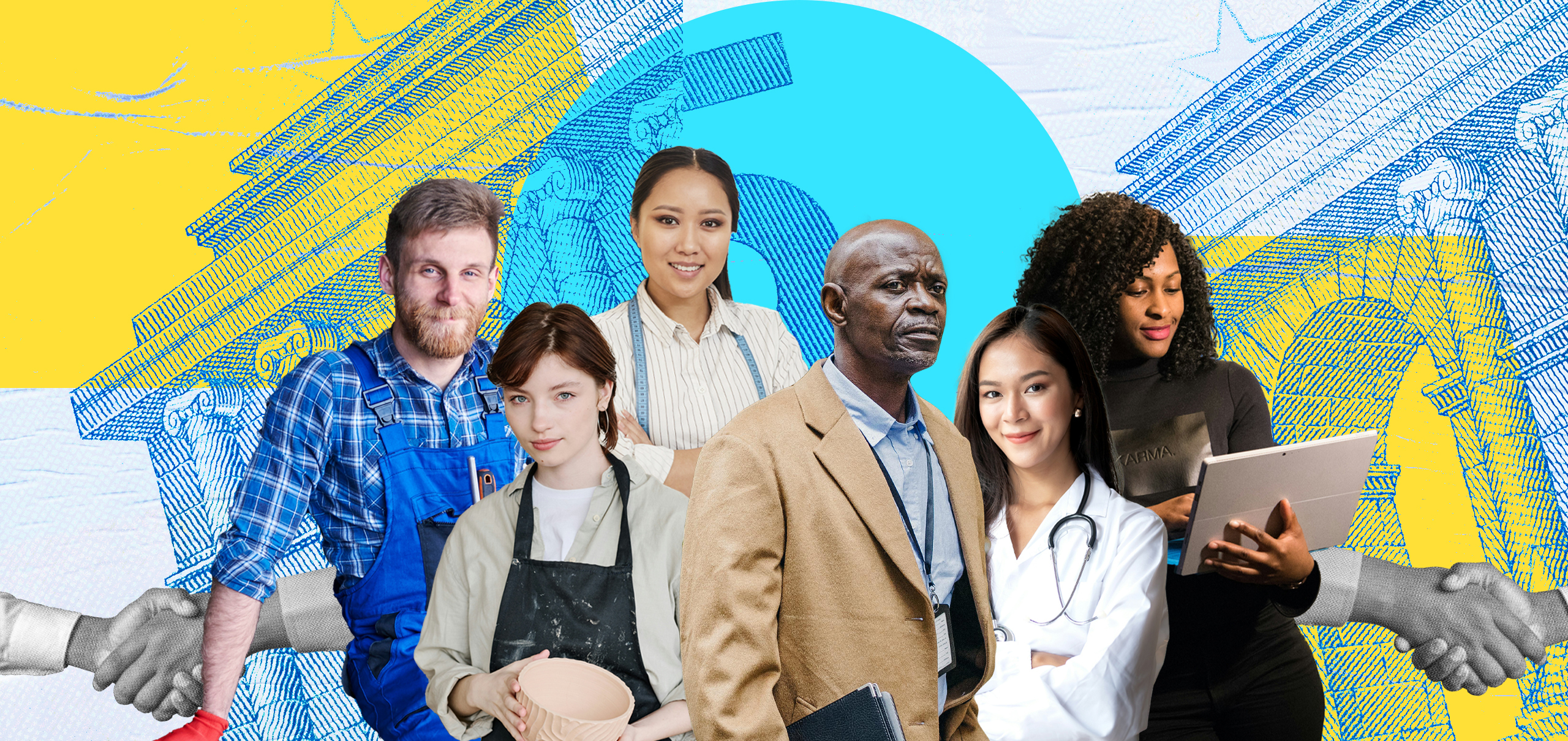
The world of work is rapidly evolving. According to LinkedIn’s data, 70% of the skills needed for most jobs will have changed by the year 2030, creating an urgent and widening skills gap in today’s workforce. As swift technological advancements continue to reshape entire industries, this transformed landscape will be felt most acutely by those from underserved communities or backgrounds who already face barriers to professional development or upskilling opportunities.

In furtherance of the company’s mission to create economic opportunity for every member of the global workforce, LinkedIn’s social impact team works with professionals overcoming barriers to provide them with yearlong gratis memberships to  LinkedIn Premium, which includes access to LinkedIn Learning’s catalog of nearly 25,000 courses. By focusing on getting LinkedIn Learning into the hands of the communities who most lack access to upskilling opportunities, LinkedIn hopes to close the skills gap and provide professionals with the tools and training they need to level the playing field.


Back to main page


Share this report

New York Life | From classrooms to cubicles

New York Life | From classrooms to cubicles

How New York Life is scaling grief support through its agents and expertise

New York Life Foundation’s impact in the childhood bereavement space began more than a decade ago, sparked by a partnership with Comfort Zone Camp. What began as a pilot grant quickly evolved into a larger commitment, driven by the realization that this was a space where New York Life could lead. With a corporate mission to offer peace of mind and financial support, bereavement support is deeply aligned with New York Life’s purpose.

Motivated by the lack of reliable data and practical support tools, the Foundation launched a research partnership with Judi’s House to create the Children’s Bereavement Estimation Model (CBEM) to understand where childhood grief was most concentrated. The Foundation also conducted surveys with the American Federation of Teachers (AFT) to learn about grief in the classroom. Among its learnings from the initial 2012 survey: over 90% of U.S. educators say childhood grief is a serious problem that deserves more attention from schools, but only 3% had received training on supporting students through their school district. Asked how many students typically need their support due to the loss of a loved one each school year, 87% of educators said at least one, and 25% said six or more.

In 2018, the Foundation launched the Grief-Sensitive Schools Initiative (GSSI), enlisting New York Life’s  national agent network to deliver grief education and resources directly to schools. As momentum grew, agents began asking: Can we take this to nonprofits and other youth-serving organizations in addition to schools? The model was expanded to youth-serving nonprofits through GSSI+. 

In 2024, the Foundation expanded its bereavement support into workplaces. The Grief-Supportive Workplace Initiative was built around New York Life data that revealed a deep unmet need: although up to 20% of a given workforce might be grieving at one time, about 64% of employees report that their workplaces do not offer any bereavement support or training.


Back to main page


Share this report

What We Can Learn From The Annie E. Casey Foundation and Tomi Hiers, VP of the Foundation’s Center for Civic Sites and Community Change

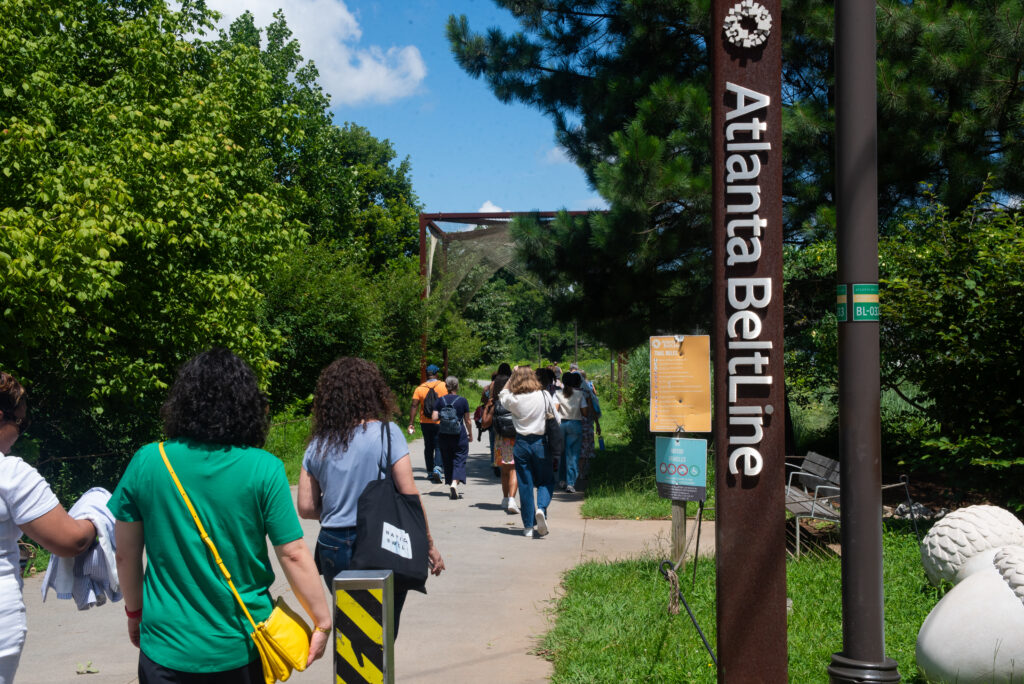
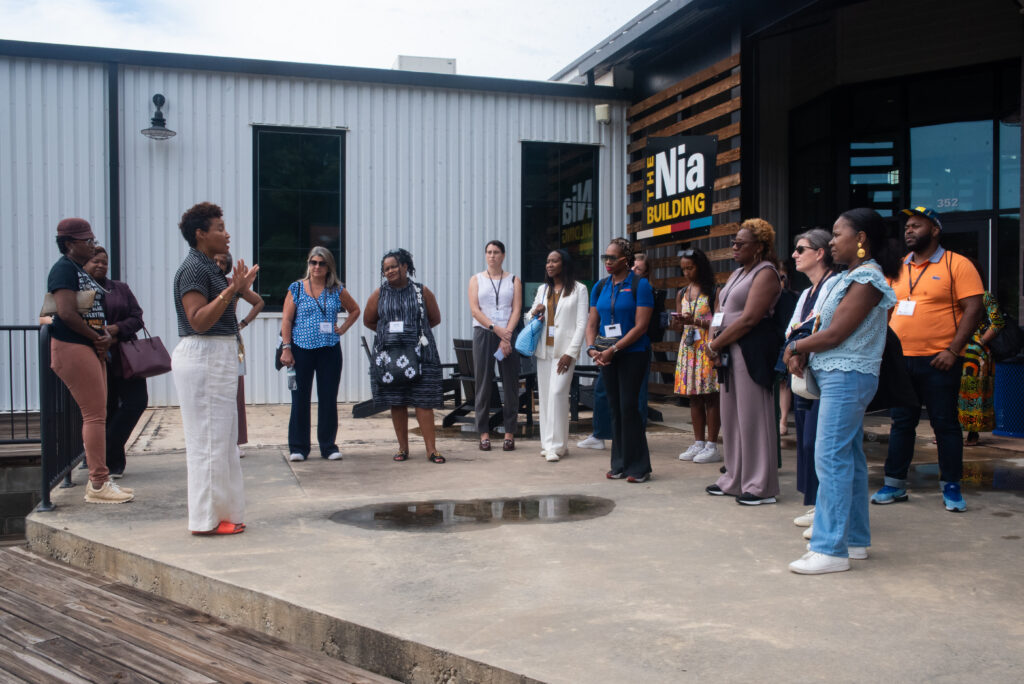
This summer, as part of NationSwell’s Place-based Impact Collaborative, we explored the power of community-led change through an immersive experience in Atlanta, GA. This experience would not have been possible without our host, The Annie E. Casey Foundation

As place-based work popularizes, new actors should pay attention: nearly 25 years into their place-based commitment to the city, what the Foundation is building in Atlanta is a testament to place-based investment done right. Long-term, community-rooted, structurally sound, and boldly committed to building a brighter future for youth, families and communities the Annie E. Casey Foundation is unwavering in striving toward greater opportunity for all Atlantans. 

A group of NationSwell members walk past the icon ferris wheel in Atlanta

Why Atlanta?

Many view Atlanta as a booming metro hub, but it is also the city with the lowest rate of economic mobility in the United States. A child born into poverty in Atlanta has less than a 4% chance of escaping it. The Annie E. Casey Foundation established its Atlanta Civic Site in 2001, recognizing the city’s unique potential, alongside its stark disparities.

“Atlanta has a vibrant economy (one of the fastest growing in the country) and rich culture,” says Tomi Hiers, “It continues to be an attractive city, as its rapidly growing population shows.”

But as she points out, “Atlanta has one of the country’s fastest-growing economies, but that growth is uneven across its communities….Communities along and below I-20 continue to face some of the most persistent poverty rates in the country.”

A three-pronged approach: The Foundation’s theory of change in Atlanta

The Foundation’s commitment in Atlanta is long-term and multifaceted, focusing on three investment pillars: economic opportunity, neighborhood transformation, and educational achievement.

“Atlanta is the Annie E. Casey Foundation’s second hometown (Baltimore is the other),” says Hiers, “We encourage action and transformation in Atlanta through a combination of strategic partnerships and investments, spanning beyond individual neighborhoods. Our work continues to be undergirded by the belief that strong communities are possible when young people have the family connections, relationships, communities and educational and employment opportunities they need to thrive.”

Neighborhood transformation: Pittsburgh Yards

Home to the Foundation’s Atlanta Civic Site is Pittsburgh Yards, a 31-acre development in Atlanta’s historic Pittsburgh neighborhood — a community founded by formerly enslaved people in 1883. The south side of Atlanta carries deep scars from redlining, disinvestment, and broken promises, but it also holds the legacy of resistance, culture, and community pride. It’s here that Pittsburgh Yards rises, not just as a development, but as a reclamation of possibility.

Pittsburgh Yards is both a business hub and a model of community-driven development. After purchasing the site in 2006, the Foundation undertook a years-long design process that engaged local residents and businesses. This investment resulted in the Nia Building (Swahili for “purpose”), which now houses over 100 office spaces and supports nearly 160 local businesses through both leased spaces and accessible co-working memberships.

With property values near the Beltline increasing by over 500% in just five years, the Foundation’s investments are carefully designed to prevent displacement. From affordable leases to technical assistance and business development programming, Pittsburgh Yards is a market disruptor in commercial real estate. 

Economic opportunity: Supporting local entrepreneurs

Many entrepreneurs in Atlanta, limited by social and economic barriers, are unsure if the city has room for their dreams; targeted investments from the Annie E. Casey Foundation support small business owners through space and ownership, reshaping how they imagine their futures.

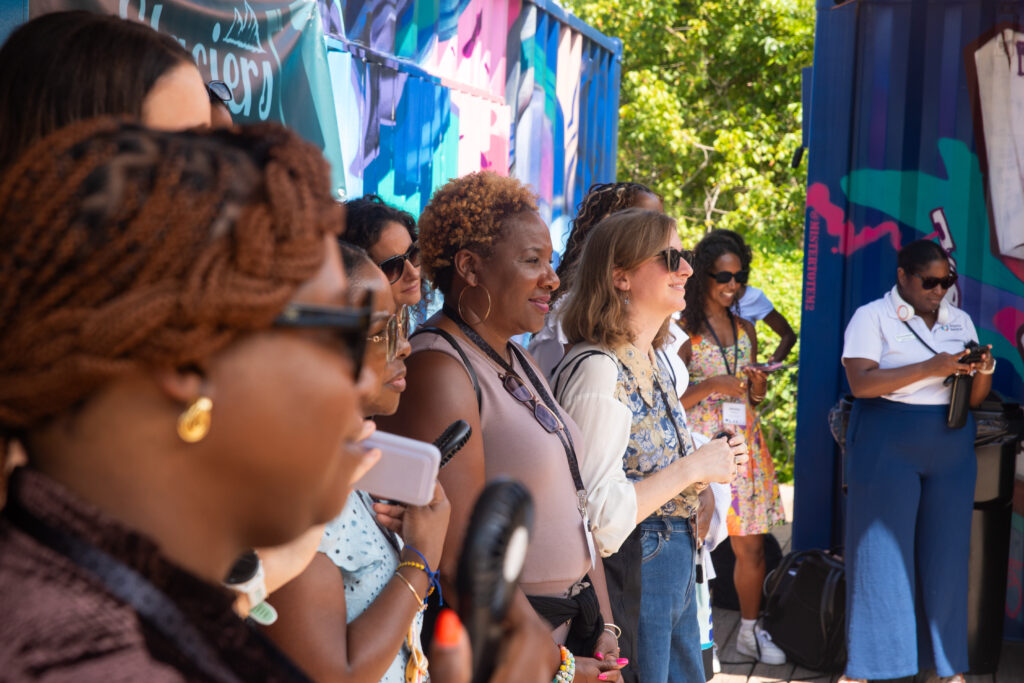
The Foundation partners with organizations like Our Village United and the Russell Innovation Center for Entrepreneurs (RICE), which provide coaching, funding access, and business strategy training. Entrepreneurial support at Pittsburgh Yards is not limited to real estate. Innovative models like the container courtyard, a marketplace of rotating micro-retailers and food vendors built from shipping containers, have provided flexible, low-barrier entry points for businesses to scale and test new concepts.

Hiers highlights the urgency of this work: “Even when it comes to entrepreneurship, one of the primary drivers of wealth, company owners from certain demographics lag behind, creating a gap in revenue generation.” 

Educational achievement: Starting from birth

Approximately 8 out of every 20 children in Atlanta aged 0-5 are considered economically disadvantaged, with 5 of them living in poverty. The Foundation’s commitment to educational achievement begins in early childhood. Through supporting initiatives like “Promise All Atlanta Children Thrive” (PACT), the Foundation has galvanized a citywide action to make Atlanta the best place to raise a child.

Partners like GEEARS (Georgia Early Education Alliance for Ready Students) have helped build a collaborative that includes public and private leaders, all aligned around improving outcomes for children from birth to five. This coalition has led to coordinated grantmaking, Head Start provider collaboration, childcare stabilization grants during the pandemic, and aligned advocacy to shape systems and policy change.

A culture of collaboration and honoring legacy

What sets the Annie E. Casey Foundation’s approach apart is its commitment to authentic collaboration. Both cross-sector and community efforts are designed with shared purpose, long-term structure, and community voice. The Foundation’s partners reflect that spirit — from housing advocates and public health leaders to artists, educators, and entrepreneurs.

“I learned very early in my career that people with lived experience and those who are closest to challenges have unique perspectives that can lead to innovative and lasting solutions. I have made it a priority to ensure that people who live in the communities where work takes place or those who participate in targeted programs have a voice in helping to set priorities, developing strategy and getting the work done.”


This immersive experience was offered to NationSwell through the NationSwell Collaboratives. To learn more or get involved, visit nationswell.com/nationswell-collaboratives/

Five Minutes with… Bonterra

Amidst stagnating rates of charitable giving and volunteering in the U.S., Bonterra — a software company focused on helping nonprofits, foundations, corporations, and beyond scale their impact — has a mission to boost giving and volunteerism to 3% of U.S. GDP by 2033. So, they took a fresh approach to Bonterra’s annual impact report. Developed in partnership with NationSwell, the 2025 Impact Report gives Bonterra’s customers actionable insights on how to empower the “Generosity Generation”: a cross-generational community empowered by technology to unlock time and dollars, in order to increase giving and drive the impact they want to see in the world.

For this installment of Five Minutes With, NationSwell spoke with three key Bonterra leaders to unpack the report’s insights: Ben Miller, SVP of data science and analytics; Kimberly O’Donnell, chief fundraising officer; and Sara Kleinsmith, principal strategist for thought leadership and corporate messaging.

“Collaborating with Bonterra to create their new Impact Report was an inspiring challenge,” said Amy Lee, Chief Strategy Officer at NationSwell. “We worked very closely with Ben, Sara and their team to push beyond standard insights. Bonterra has a wealth of smart insights from its products and relationships, and we wanted to make sure that whatever we included was data-driven, forward-looking and on target for the goal to catalyse a new Generosity Generation.”

We asked the Bonterra team how they blended proprietary data with powerful storytelling to create a tool that goes beyond standard, backward-looking reporting — serving instead as a strategic blueprint for how organizations can rethink, revamp, and re-energize their entire approach to impact with intentionality and inspiration at its core. 

Here’s what they had to say:


NationSwell: Tell us a little bit about what you set out to accomplish with this report. What were your initial goals, and how did they evolve?

Ben Miller, Bonterra: One thing we know about movements is that they aren’t a start and stop experience — they’re ongoing. So when we sat down to think about creating this report, we did it through the lens of building the “Generosity Generation” — a multi-age community of donors, volunteers, funders, and nonprofit leaders that gets activated with the help of technology to respond to crises faster; build lasting relationships; and overcome all of the barriers that have caused charitable giving and volunteering in the US to remain stuck at 2.5% of GDP for over 50 years.

In a way that mirrors what our technology is designed to do, we wanted to create a report that could deliver insights in a faster, more personalized way, and that was an important framework adjustment that served us well. We didn’t spend as much time as we had in the past focusing on the tallies and the totals (although they are still there in the report to substantiate our findings) — we wanted to dive right in. We also added an interactive tool that allows organizations to benchmark themselves against other organizations. 

NationSwell: How did Bonterra’s proprietary data play a role in shaping the report?

Ben Miller, Bonterra: One of our huge strengths is that we have a true data science team, not just data marketing folks. Logan, our chief marketing data analyst, constantly pushed back, saying “there’s nothing here” or “this isn’t strong enough,” and as a result we discarded a lot of findings. You might not see it at first glance, but the analysis was thorough. We only included insights that were statistically sound and actionable. A lot of reports don’t go that deep, but our team basically operates like scientists.

Existing data tells us that only 19.4% of donors give a second gift, but our finding was that once they do, they’re far more likely to stick around. That first 90 days is absolutely critical, but there are also folks who give way later — giving up entirely will likely not serve you in the long run. We also saw that about 10% of donors give after more than a year. So even if someone doesn’t respond in that first 90 days, it doesn’t mean they’re gone; you just have to treat them differently.

Sara Kleinsmith, Bonterra: That ties into another data point: 63% of nonprofits stop after one rejected grant application, but on average it takes 1.24 tries to get funded. So many organizations are missing the chance to go back, learn, refine, and try again. Fundraising is evolving, and there’s a real opportunity in persistence and learning from the first “no.”

Ben Miller, Bonterra: Data shows that only 53% of people trust nonprofits — the lowest that trust has ever been, which is a huge issue. But our research shows that you can use digital to help restore some of the trust and humanity that’s been lost over the years. We saw it in disaster response in particular: people were ready to engage, and digital tools helped nonprofits meet that urgency. So it’s not just about maximizing each channel, it’s about using those channels to build relationships. That’s the core insight: digital doesn’t have to mean disconnected — it can actually bring people closer, if we’re intentional.

NationSwell: What were the internal conversations like on how to strike the right balance between qualitative and quantitative storytelling?

Sara Kleinsmith, Bonterra: We’ve done a lot of customer stories and case studies, so we had strong qualitative storytelling to draw from — our customers at Bonterra have incredible missions and impact. The challenge was linking those stories to the data.

One way we did that was during a recent webinar, when we matched our customers to specific data points and asked them to speak to the proof we wanted to showcase. It became a kind of matching exercise — pairing the mission, the people, and their challenges, like burnout or federal funding cuts, with the insights from Ben’s team. From there, we asked: which customers can speak to this? How is Bonterra helping solve these problems?

Ben Miller, Bonterra: Instead of starting with who we knew and pulling from what was available, we started with the data: who’s doing X really well? Then we went out to those organizations and asked if they’d share their stories. That led to fantastic case studies.

Kimberly O’Donnell, Bonterra: Most impact reports rely on examples people already know are good. What we did was different — we had enough breadth to ask: who’s doing this best, why, and what’s the “secret sauce”? What makes a fundraising campaign or grant program truly transformational?

NationSwell: What were some of the lessons you learned in putting this report together — were there any unexpected obstacles or challenges? How did NationSwell help you to meet those challenges?

Ben Miller, Bonterra: One of the toughest parts was wanting the data to tell the story while also realizing that waiting on the data meant risking not having enough time. We had to pivot together as insights emerged. We’d spot something interesting, ask, “Is there more here?” and then look for supporting organizations.

It was also challenging because we were rigorous. We reviewed the data four or five times, and sometimes had to revise earlier numbers. That could’ve created confusion or mistrust, but instead it fostered transparency and a shared commitment to getting it right.

Internally, we all understood we were working toward something meaningful, and NationSwell played a huge role — the team didn’t push us down a rigid path, they were flexible and helped us shape the right story as the right data came in.

Sara Kleinsmith, Bonterra: We kept revisiting: what comes first, the data or the narrative? At one point, we were curious about generational giving — Gen Z, millennials, boomers, Gen X — who’s giving the most, who should we be reaching? But it was hard to chart that internally. Then Ben had this great idea: instead of age, what if we looked at impact maturity — where someone is on their giving journey? Are they a first-time donor or a lifelong giver?

That shift reframed everything. Rather than focusing on age, we began thinking in terms of giving readiness. It made the concept of the “Generosity Generation” more inclusive — a multi-generational group of givers and doers, each with different motivations and maturity levels.

It felt like a win — something that came out of a shared insight between us, NationSwell, and Ben’s framing. Generational labels can be reductive, but generosity spans all ages. This unlock helped us to better meet people where they are in their giving life.

NationSwell: Based on the report’s insights, what are your call-ins for our membership community when it comes to charitable giving? What feels most important for them to take away from this report?

Kimberly O’Donnell, Bonterra: Our call to action is to digest the data — there are six key takeaways, some relevant to nonprofits, others to funders and corporate partners. Think critically about how your practices compare, and how you might adopt or adapt based on what the findings show.

Sara Kleinsmith, Bonterra: And for anyone creating thought leadership or content — especially those reaching donors, partners, or investors — we’re at a critical point in how we work with AI. Writers, marketers, and creators need to be transparent: How are you using AI? How are you using human creativity alongside it? Customers, donors, and volunteers want to understand that balance. It’s evolving fast, and being clear and thoughtful about it positions you as a leader, no matter your sector.

Kimberly O’Donnell, Bonterra: That ties into how we delivered this impact report — it’s unique. If you’re advising others on their own reports, show how each takeaway connects directly to your audiences in digestible ways. It’s not just about showcasing big impact or good stories. What are the three to six insights you want readers to remember?

Ben Miller, Bonterra: Our big goal is 3% by 2033. We can’t get there alone — we’ll need everyone to contribute. If you’re part of the NationSwell community, join us. Even a 2% improvement across your network, your organization, your campaigns — it all adds up. That’s how we hit the goal: through collective action and shared best practices. That’s what the Generosity Generation is about.

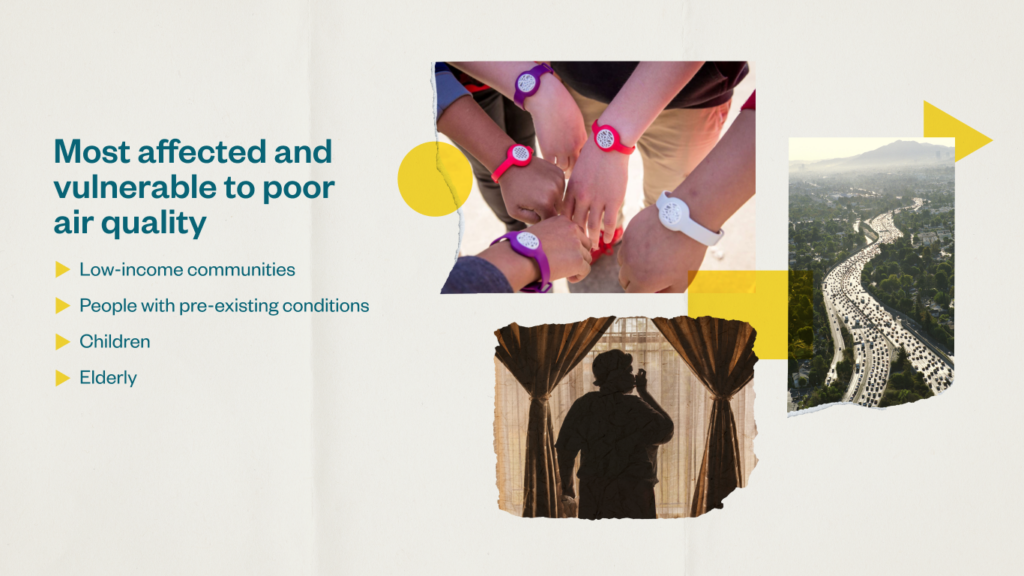
The Bottom Line: Collective Action for Clean Air

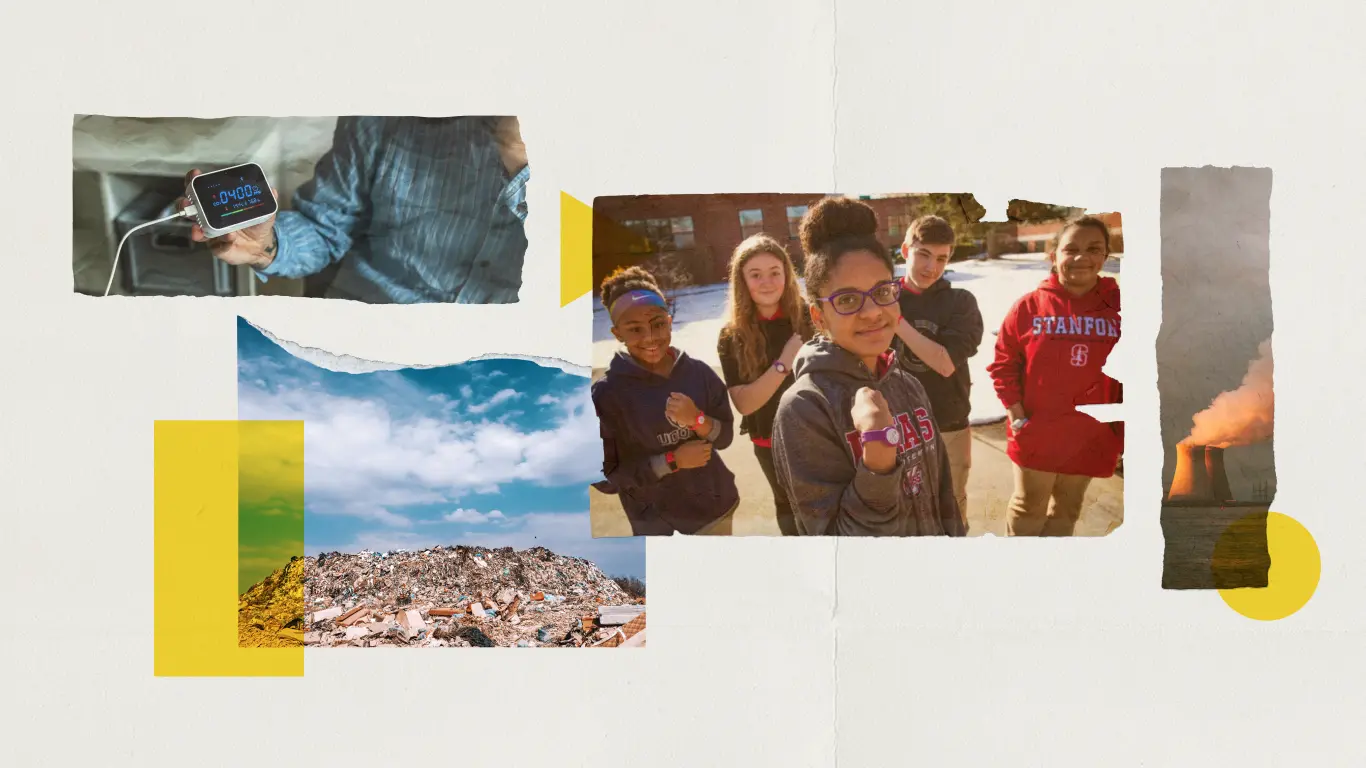
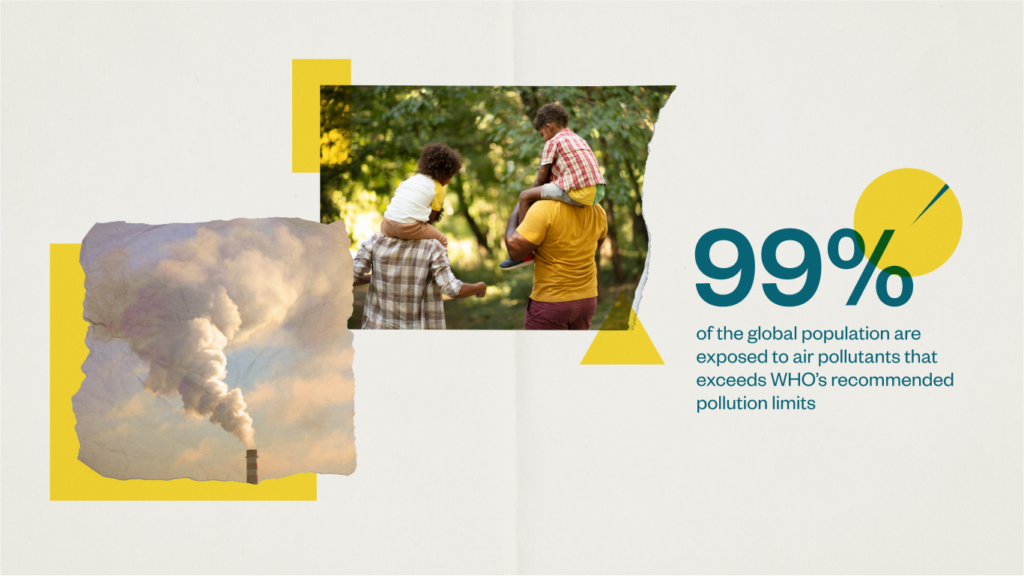
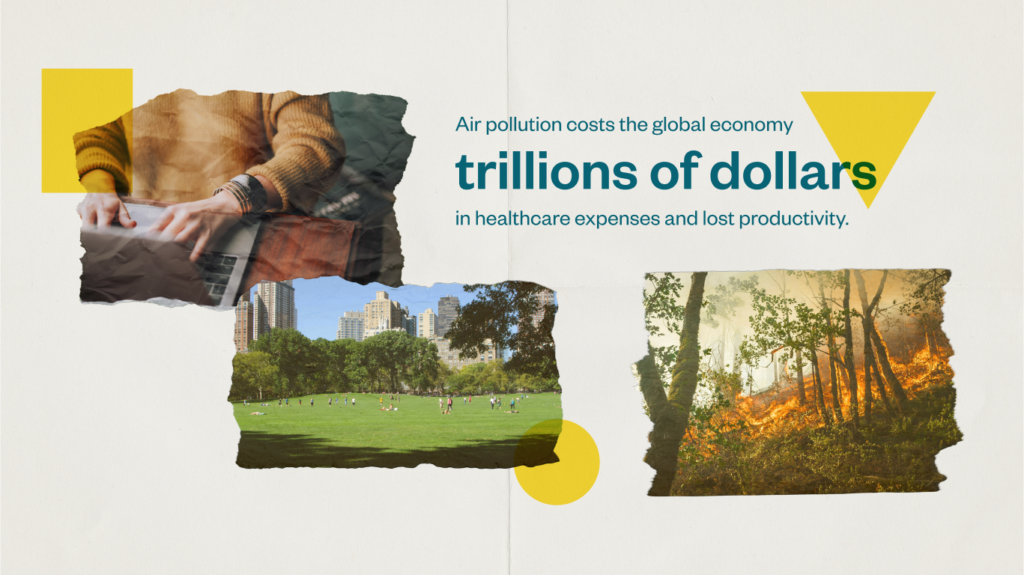
On April 23RD, NationSwell hosted a virtual leader roundtable to kickoff the Equal Air Collaborative and discuss the innovative models and approaches that businesses are spearheading and investing in to combat air pollution.

Here are some of the key takeaways from the event:


Treat this moment as a call to courageous leadership. 

This is a watershed moment for climate and environmental justice. Corporate partners have a unique opportunity – and responsibility – to step up when it would be easier to stay silent. Showing communities you care, especially now, builds authentic trust and long-term impact.

Harness the strength of collective action. 

Joining a collaborative or alliance offers companies a safer path to make bold commitments without standing alone. By working together, organizations can align on shared goals, support each other’s initiatives, and create a louder, more influential voice for change.

Leverage industry influence to build more responsible AI infrastructure. 

As AI and data centers proliferate, companies must consider their environmental footprint. This includes ensuring backup generators rely on clean energy sources and that facilities are built with accountability to the communities they impact – especially underserved ones.

Focus on state and local partnerships to drive tangible outcomes. 

With limited federal engagement (especially in the United States), there is an urgent need to support clean air and climate initiatives at the state and community level. Localized action offers both measurable progress and deeper community trust. 

Keep employees at the heart of environmental action. 

Employee engagement is a powerful driver for sustainability and environmental justice efforts. Whether through volunteering, citizen science, or internal advocacy, employees often lead the charge in embedding purpose into company culture and operations.

Start small, iterate, and scale over time. 

Perfection is not the goal – progress is. Many organizations began with a single air quality pilot, local engagement effort, or vertical focus, and expanded from there. Early wins build momentum, provide learning opportunities, and lay the groundwork for long-term impact.

Commit to measurable clean air action alongside climate goals. 

Air quality is still an overlooked element in many ESG strategies, despite its direct ties to health and equity. Organizations are now recognizing that tracking and improving air quality can be a high-impact, data-driven way to meet both sustainability and social justice targets.

Reduce point source pollution with targeted strategies. 

While carbon emissions often come from large, regional sources, air pollution tends to have more localized sources — requiring hyper-local monitoring and targeted interventions. Reducing pollution at its source – whether it’s idling drive-thru traffic or emissions from industrial zones – can support clean air efforts. Businesses can make a tangible impact by identifying and mitigating these hyper-local sources of pollution that disproportionately affect nearby communities.


To learn more about, or to join, NationSwell’s Equal Air Collaborative, click here.

Goldman Sachs 10,000 Small Businesses

Goldman Sachs 10,000 Small Businesses

Entrepreneurship is a powerful driver of economic opportunity, yet many small business owners face systemic barriers to growth, including limited access to capital, business education, and professional networks. To address these challenges, the Goldman Sachs Foundation launched 10,000 Small Businesses – a nationwide initiative designed to provide practical business education, peer support, and access to funding to help small enterprises scale and succeed. The program has supported over 16,600 graduates across all 50 states, Washington, D.C., and Puerto Rico. This case study outlines the core components that make this initiative effective and replicable.


Key components of the model:

  • Selective yet accessible participation
  • Durable and practical curriculum
  • Strategic partnerships for scale
  • Adaptive delivery model
  • Lifelong learning and alumni support
  • Goldman Sachs employee engagement

Notable results and impact:

  • 66% of participants see increased revenue within six months
  • Nearly 50% create new jobs shortly after completing the program
  • 85% of alumni continue doing business with each other, demonstrating the program’s networking value
  • Participants report greater confidence in financial decision-making, fueling long-term sustainability

Share this report