Chobani | Impact through product innovation

Chobani | Impact through product innovation

How Chobani’s Super Milk is redefining disaster relief and food security

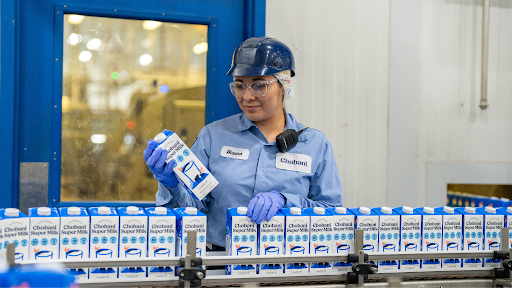
Chobani’s idea for Super Milk came out of two urgent challenges: the growing number of climate-related disasters and a steep rise in food insecurity across the U.S. Today, billion-dollar disasters are hitting every couple of weeks, displacing families and driving up demand for shelf-stable, nutrient-dense food. At the same time, in 2023 food insecurity affected approximately 20% of households, putting even more strain on food banks. While milk is one of the most requested items, it’s also one of the hardest to get out quickly—it needs refrigeration and doesn’t last long, often arriving just before it expires.

To overcome these challenges, Chobani marshaled its in-house expertise in dairy innovation, supply chain management, and community impact to create a shelf-stable, nutrient-dense milk specifically designed for disaster relief and hunger alleviation. Produced at Chobani’s Idaho plant, Chobani Super Milk is made with a blend of real milk and ultrafiltered milk to achieve an excellent source of high-quality protein, with less sugar than traditional milk. An enzyme naturally converts sugars into galacto-oligosaccharides (GOS), a high-quality prebiotic fiber, that contributes to gut health and digestion. Chobani Super Milk is aseptically processed, which allows for a 9-month shelf life without refrigeration and without any added preservatives, resulting in a product that is accessible, nutritious, and highly transportable to the communities who need it most.


Share this report

Visa Foundation | Growing the economic pie

Visa Foundation | Growing the economic pie

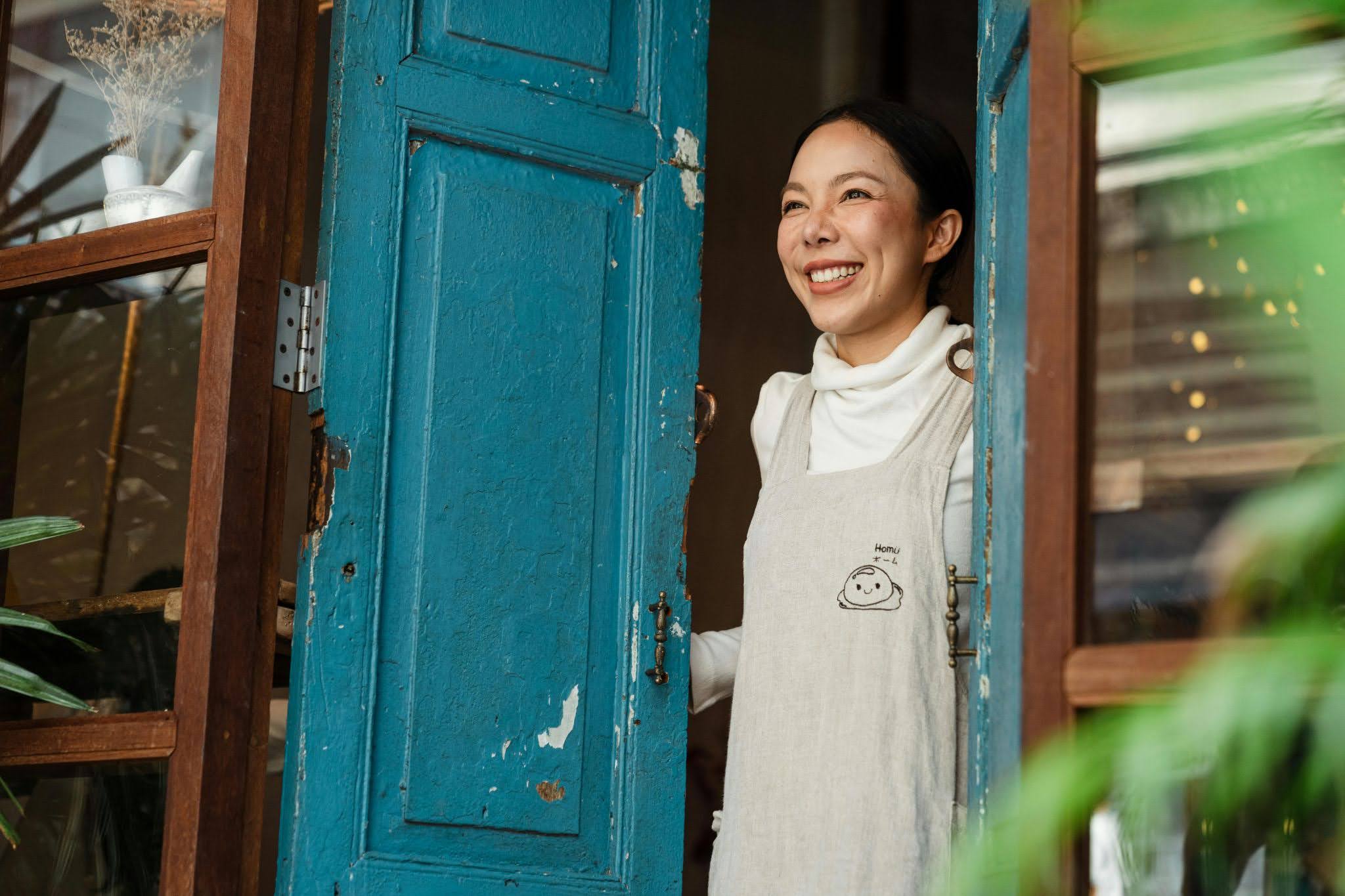
Visa Foundation’s approach to financial inclusion

Globally, small and micro-businesses make up over 90% of all enterprises, yet they remain among the most vulnerable segments of the economy — especially those owned by women. Women-owned businesses account for about one-third of all small enterprises, and more than 70% lack adequate access to financial services. This persistent gender gap is compounded by structural inequities in access to capital, networks, and resources, leaving many of these enterprises unable to fully participate in or benefit from the global economy.

These inequities are further magnified by the economic fragility of small and micro-businesses, two-thirds of which face ongoing struggles for survival, with limited financial buffers and restricted opportunities for growth. Together, these conditions form a pressing need for targeted strategies — like Visa Foundation’s financial inclusion efforts — that aim to expand access, build capacity, and foster long-term resilience for the most underserved business owners.


Back to main page


Share this report

Beyond the Map: Rethinking How We Invest in Rural Communities

Rural communities across the U.S. are too often framed by what they lack rather than in terms of the deep assets, leadership, and innovation they already hold. They also face persistent gaps in philanthropic investment, infrastructure, and long-term capital, even as they are critical to the nation’s economic, cultural, and civic future

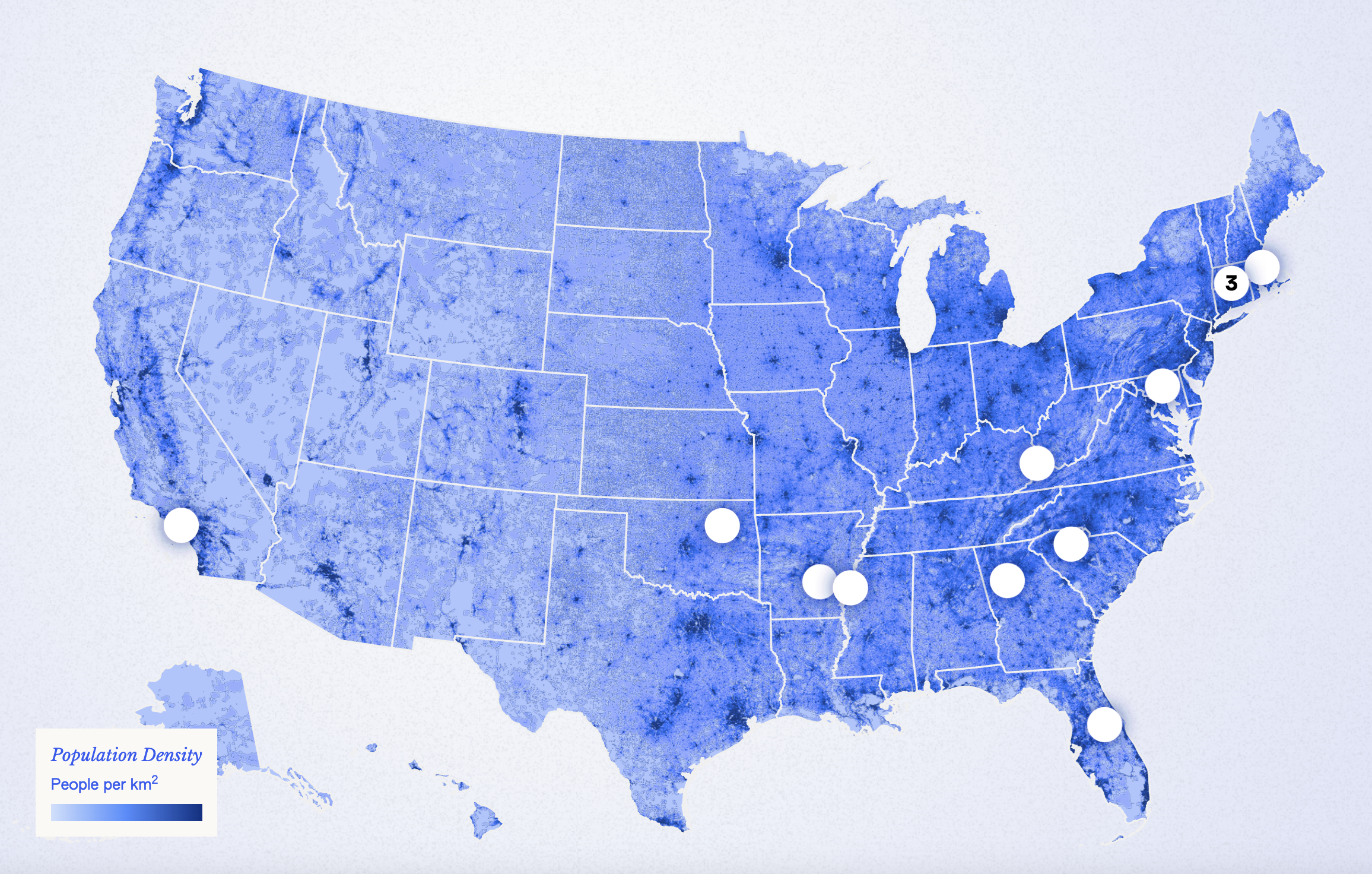
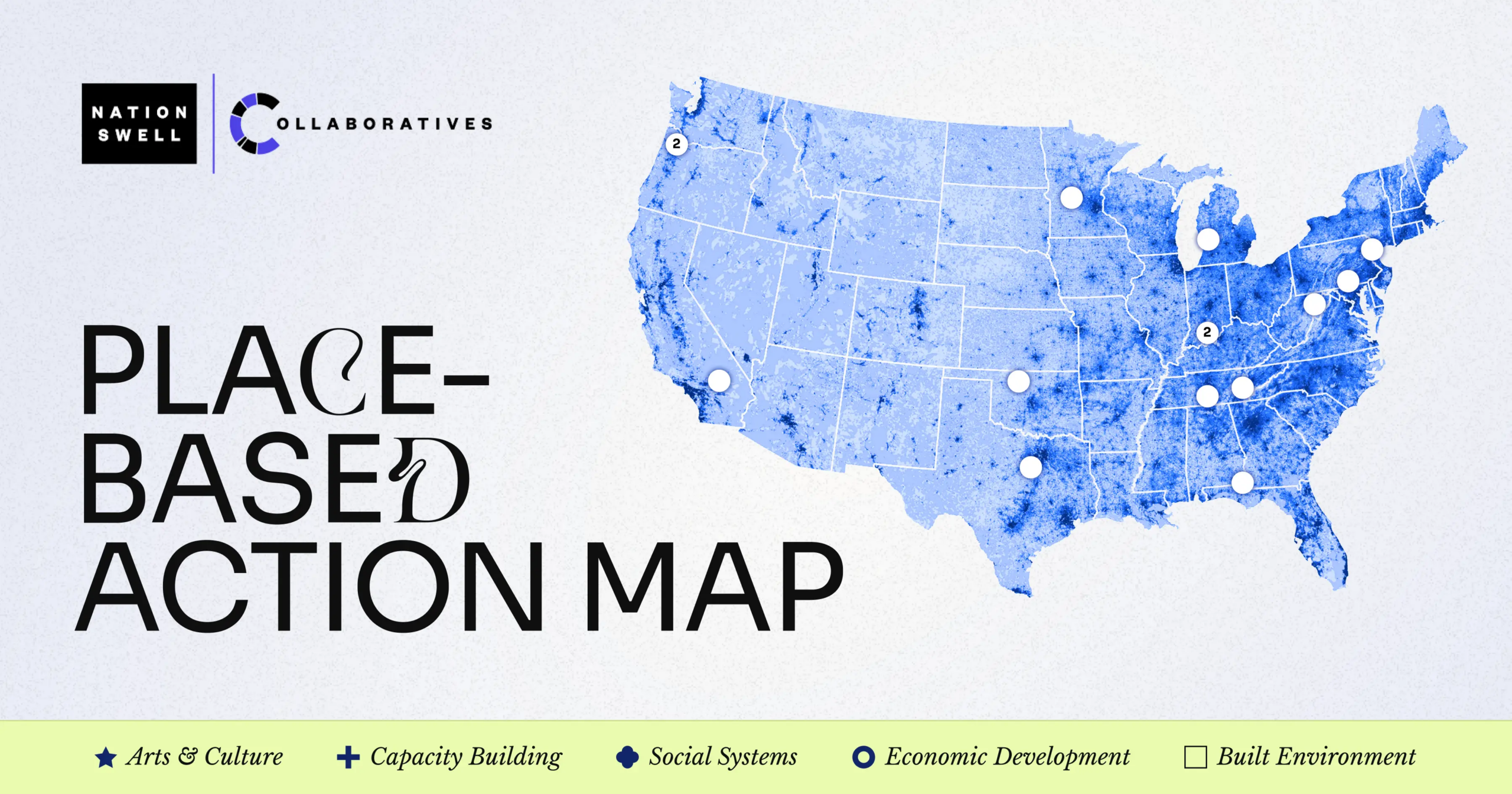
During a March 19 virtual Leader Roundtable, NationSwell, the Walton Family Foundation, the Delta Philanthropy Forum, and a great group of cross-sector leaders gathered to explore what effective, community-centered rural investment actually looks like in practice. Drawing on insights from the Mississippi-Arkansas Delta — a region that reflects both the challenges and the promise of rural America — the conversation highlighted how place-based strategies rooted in trust, listening, and long-term commitment can unlock opportunity.

Some of the most salient takeaways from the discussion appear below:


Key takeaways:

Rural isn’t just a geography, it’s a cultural context. Rural communities are often discussed as sparse populations or hard-to-reach places, but in practice they function as distinct cultural ecosystems with their own histories, norms, and relationship structures. That shift in framing matters: Once rural is understood as a culture and context rather than a category, the equity implications become harder to ignore.

Let the people closest to the challenge shape the solution. Across the conversation, one principle kept resurfacing: the most durable ideas tend to come from the people already living and working in the place. Funders can play an important and catalytic role, but the work is strongest when capital flows from local wisdom rather than overriding it. Experimentation matters — but it matters most when communities help define what success looks like.

Redefine scale in percentage points, not raw volume. Traditional philanthropic metrics tend to privilege large urban markets because outputs are easier to maximize there, but in rural communities, impact often shows up more meaningfully as share of need met, not total number served. A smaller absolute number can represent a far deeper level of transformation.

Partner with rural communities as “test kitchens”, but also fund them beyond the pilot. Rural places can serve as ideal proving grounds for innovation because interventions can be tested at smaller scale, with lower upfront capital and clearer community feedback loops. But too often, philanthropy treats rural communities as places to experiment on rather than places to invest with. If a model works in a rural context, it may be more transferable than assumed — but only if funders stay long enough to support sustainability.

Invest in ecosystems rather than isolated projects. In rural regions, no single town or institution exists in a vacuum. What happens in one community often creates ripple effects across neighboring towns and regional networks, meaning that effective place-based investment requires thinking beyond individual grants or municipalities and designing for coordination across a broader ecosystem.

Pair data with lived experience to understand what a region actually needs. Quantitative indicators can identify where opportunity gaps exist, but can’t fully explain how those gaps are experienced on the ground. Stronger investment decisions emerge when funders use data as a starting point, then pressure-test it through direct conversation with local residents, practitioners, and community leaders. In rural communities especially, context is often the difference between a good strategy and a misfire.

Remove match requirements and other structural barriers that quietly exclude rural communities. Many rural and rural BIPOC communities are shut out not because they lack ideas or leadership, but because they lack the upfront capital required to meet standard philanthropic or public-sector thresholds. One-to-one matches often reproduce inequity under the guise of rigor; if funders want different outcomes, they need to revisit the rules that determine who can even get in the door.

Make communities of choice, not just communities of need. The goal is not simply to mitigate decline or address deprivation, but to build places where people want to stay, return, and invest their lives. That means activating local assets — including culture, recreation, history, civic pride, etc. — alongside economic fundamentals. Place-based investment becomes more durable when it supports belonging and aspiration, not just service delivery.

Rural communities of color sit at the sharpest edge of underinvestment. The most severe inequities often emerge where rural geography and race intersect. Rural Black communities, tribal communities, and colonias are places where the funding gap is especially stark, despite persistent poverty and strong local leadership. Any serious conversation about equitable place-based investment must confront that layered exclusion directly.

Resiliency and Innovation in Philanthropy

A year after sweeping federal funding cuts and mounting political pressure on equity- and justice-focused work, many funders are reexamining how to stay effective and principled in an increasingly constrained and polarized environment—while also stepping up to fill the void left by government withdrawal.

On March 17, NationSwell hosted a virtual Leader Roundtable dedicated to unearthing the future of resilient, adaptive philanthropy. Together, participants explored how funders are retooling their strategies, embracing new approaches to partnership and capital deployment, and designing innovative responses to ensure critical work continues—and flourishes—despite the headwinds.

Some of the most salient takeaways from the conversation appear below:


Key Takeaways:

Build resilience by expanding your role beyond grants.
Funders can use tools like loan guarantees, intermediary contracts, convenings, and data partnerships to unlock public dollars, de-risk capital projects, and move money more quickly to smaller and BIPOC-led organizations. This “beyond-the-grant” posture helps communities weather policy and funding shocks while preserving critical services.

Invest in leaders as people, not just as program drivers.
Sabbaticals, accelerators, and holistic leadership support shift leaders from surviving to stewarding long-term power. Funding wellness, reflection, and capacity functions as essential infrastructure for any durable ecosystem, not a luxury line item.

Move resources at the speed of community need.
Models like the Bridge Project’s direct cash to moms, rapid-response funds for immigrant communities, and crisis cash distributed through platforms such as GoFundMe show how trust-based, flexible capital can stabilize families and organizations in moments of acute disruption. Designing for speed, flexibility, and local decision-making allows philanthropy to meet the moment, not just the grant cycle.

Use data and narrative to protect civic infrastructure.
Tools like the Congressional District Health Dashboard and City Health Dashboard, paired with investigative and movement journalism, help communities see where systems are failing and where solutions are emerging. Revisiting philanthropic origin stories and aligning capital with equity, democracy, and community-defined priorities are critical to strengthening civic infrastructure.

Strengthen the ecosystem through relationships and matchmaking.
“Philanthropic matchmaking,” co-funding, and warm handoffs ensure that promising leaders and organizations can connect with the right capital, even when a single funder cannot meet a need. Transparent feedback, honest conversations about fit, and intentional network-building help great ideas secure flexible, multi-year support and reinforce that no one has to navigate this landscape alone.

Place Based Impact: Preparing Communities for Shifts in Funding

Many communities are bracing for a new era of volatility in public funding. Federal and state commitments that once underpinned local economic development, workforce programs, public health, and social infrastructure are shifting—sometimes slowly, sometimes abruptly. For place-based partnerships, the question is no longer how to “navigate uncertainty,” but how to get ahead of it: building durable coalitions, diversified capital stacks, and locally anchored strategies that can withstand political and budget swings.

On February 24, NationSwell hosted leaders from philanthropy, business, and nonprofit organizations for a virtual Leader Roundtable on what it means to be proactive rather than reactive in this moment. Together, we identified some of the emerging funding realities that matter most, examined models that successfully blend public, private, and philanthropic investment, and explored how communities can lock in long-term capacity.

Some of the most salient takeaways from the discussion appear below:


Key takeaways

Choose the sandbox before building the partnership. Cross-sector collaboration becomes more durable when partners identify a single, shared leverage point to experiment within first. Rather than attempting to solve everything at once, clarity about “where we play together” creates trust, momentum, and space for additional tentacles to grow over time.

Design for volatility, not stability. Federal funding cliffs, frozen allocations, and delayed rulemaking are cascading unevenly through state and local systems. The challenge is not only reduced dollars but radical unpredictability. Communities that build flexible structures — scenario planning, adaptable staffing, blended capital, diversified revenue — are better positioned than those waiting for clarity.

Build infrastructure that can outlast any single funding cycle. Place-based partnerships anchored around shared outcomes and generational time horizons prove more durable than programmatic responses tied to specific grants. When communities control data, define their own metrics, and align around long-term goals, funding shifts become disruptions — not existential threats.

Centering long term resilience while meeting emergency needs is critical. Crisis funding often pulls oxygen away from structural work. While emergency pivots are necessary, abandoning long-term capital strategies undermines resilience. Patient investment may move more slowly, but it builds the conditions that reduce the need for perpetual crisis response.

Sequence cross-sector roles intentionally — don’t assume alignment will happen organically. Many effective tools already exist across philanthropy, government, finance, and community organizations, but they operate in silos. Progress depends less on inventing new models and more on clarifying who de-risks first, who follows, and who sustains momentum over time.

Shift from dependency to agency in funding relationships. Traditional funding flows often create quiet dependency rather than shared ownership. This moment presents an opportunity to reimagine civic infrastructure so communities are less reliant on shifting political winds and more grounded in mutual aid, local partnership, and distributed leadership.

Define your highest leverage point with ruthless clarity. In periods of contraction, organizations that articulate a singular, sharp value proposition are better positioned to build durable partnerships. Simplicity creates alignment; alignment creates momentum.

Educate internally before reacting externally. Policy shifts, whether related to Medicaid, SNAP, or federal allocations, cascade through state and county systems unevenly. Investing in internal understanding of implementation realities builds smarter, steadier responses than reacting to headlines alone.

Plan for long-term disruption, not a return to “normal.” Assuming a political pendulum swing will restore prior funding norms creates strategic blind spots. Durable strategy accounts for sustained volatility rather than temporary turbulence.

Recognize that local governments are capacity-constrained, not idea-constrained. Municipal leaders are absorbing compounding responsibilities as federal roles recede. The barrier is rarely imagination; it is operational bandwidth and systems capacity. Partners who reduce friction and bring execution support add more value than those offering additional strategy alone.

Use this moment to reimagine civic infrastructure, not just fortify it. Resilience should not mean reinforcing fragile systems that created dependency in the first place. Volatility can serve as an opening to rethink power, partnership, and local agency. Cultural imagination and narrative often precede structural change.

A Comprehensive Approach to the 1% Tax Floor

A Comprehensive Approach to the 1% Tax Floor

The introduction of the 1% floor on corporate charitable deductions, imposed by the One Big Beautiful Bill Act (H.R.1) for tax years beginning December 31, 2025, has created a range of new considerations for companies to weigh in determining their corporate philanthropy strategy. 

To support NationSwell members in navigating this shift, we interviewed a Head of Corporate Impact at a Fortune 500 company who has made several critical moves to set up their resources and programs for long-term sustainability. 

The following resource outlines the steps taken over the course of approximately three months, each of which required close cross-enterprise collaboration. The processes and decisions described are intended to help leaders frame their own approaches, but should be considered within each organization’s own financial, legal, and tax context.

The steps outlined are:

  • Step 1: Align internally on the policy landscape
  • Step 2: Calculate the incremental tax impact to the business
  • Step 3: Fund philanthropy budget with tax-efficient capital
  • Step 4: Reclassify some philanthropy as ordinary business expense
  • Step 5: Take a multi-year view on philanthropic tax strategy

Share this report

PepsiCo | Feeding potential

PepsiCo | Feeding potential

How PepsiCo’s Food for Good is creating a blueprint for global food security

Food for Good — the PepsiCo Foundation initiative for advancing food security — launched in Dallas, Texas, as an exercise in deep listening. Through sustained conversations with trusted community volunteers and leaders, PepsiCo learned that the 19 million school-aged children in the U.S. who depend on free or reduced-price meals at school were facing critical gaps in access to nutritious food during the summer months, when school was not in session.

Beginning in the summer of 2009, PepsiCo leveraged its food production, logistics, and distribution expertise — as well as a partnership with Frito-Lay, the convenient foods business unit of PepsiCo, that allowed for borrowed access to trucks and warehouse space — to prototype a summer meal delivery model. The privately-funded program quickly expanded into new cities, eventually outgrowing its original facility but maintaining its original commitment to staying rooted in community feedback and mission to fight hunger through access and equity.

Food for Good combines large-scale meal distribution, job creation, targeted child nutrition, disaster relief, and impactful storytelling to distribute nutritious meals and address crisis-driven hunger at scale.


Back to main page


Share this report

Collective Wealth Building: Innovation in Homeownership

Homeownership remains one of the most powerful—and most unevenly distributed—wealth-building tools in America. Rising housing costs, limited supply, structural inequities in lending and appraisals, and stagnant wages have pushed the dream of owning a home out of reach for millions. Yet across the country, impact-driven actors are testing new solutions that merit deeper investigation and exploration.

On January 15, NationSwell hosted a virtual Leader Roundtable designed to what’s working, what’s emerging, and what still needs to be invented. Alongside a group of leaders from the corporate, philanthropic, and nonprofit sectors, we examined the opportunities and constraints organizations face in expanding access to homeownership, surfaced promising models that can scale, and identified where multi-sector collaboration could move dollars and outcomes.

Some of the most salient takeaways appear below:


Key takeaways:

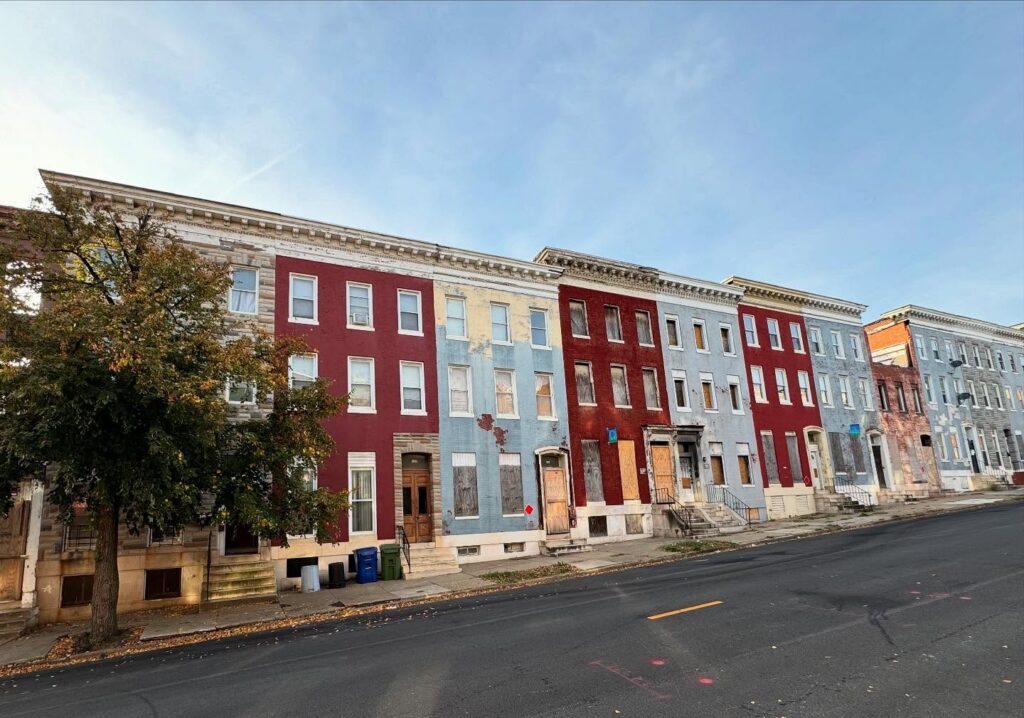
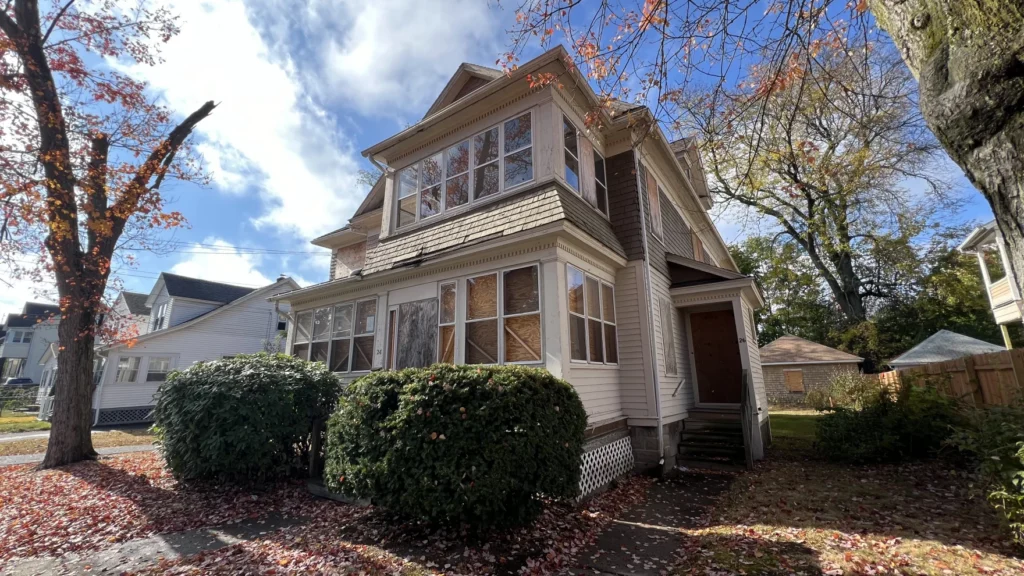
Treat vacancy as latent supply and rebuild demand alongside units. In hyper-vacancy contexts, the challenge is not only deteriorated housing stock but the absence of market confidence. Pairing acquisition with intentional demand creation (and, in Parity’s case, support for building financial knowledge among buyers) helps ensure neighborhoods are repopulated by residents rather than speculative capital.

Acquisition and clear title are the longest, least predictable phases of the work — and require patient capital. Much of the real labor happens before construction ever begins, particularly when properties involve estates, liens, or unclear ownership. These timelines rarely conform to funding cycles or political urgency; progress depends on legal persistence and institutional patience. Without flexible capital at this stage, downstream innovation rarely materializes. 

Center legal and policy innovation to accelerate rehabilitation and prevent investor capture. Intervening earlier in foreclosure or receivership processes can shift outcomes dramatically. Legal tools that transfer control to mission-aligned actors shorten vacancy timelines, reduce blight, and increase the likelihood of owner-occupied housing.

Recognize that interest rates, not sale prices, often determine affordability. Every 1% the interest rate it wipes out $30k buying power which is make or break for first-time buyers. In this context, interest-rate buy-downs can restore feasibility more efficiently than price subsidy alone because they directly address monthly payment constraints.

Balance wealth building with long-term affordability through shared-equity and soft-second structures. Down payment assistance can expand access while still protecting public and philanthropic investment. Carefully designed equity-sharing mechanisms allow households to build wealth without turning affordability into a one-time event.

Rather than treating displacement as a downstream problem, pair revitalization with retention. Neighborhood improvement often triggers rising tax burdens that destabilize long-time residents, particularly elders on fixed incomes. Without parallel retention strategies, revitalization can unintentionally replicate the same extractive dynamics it seeks to undo. Retention must be designed in from the beginning, not layered on after values rise.

Treat homeowner retention as a core wealth-preservation strategy. Preventing tax sale, foreclosure, or forced exit protects accumulated equity and intergenerational assets. In many cases, stabilizing existing homeowners delivers greater impact — and does so faster — than new production alone.

Cross-sector misalignment is the primary barrier to scale. Many effective tools already exist, but they live in silos across philanthropy, government, finance, and nonprofits. The hardest work is often sequencing participation: who de-risks first, who follows, and who sustains the effort over time. Scale depends less on invention than on coordination.

Recognize that credibility, narrative, and design quality actively shape markets. Homes that signal dignity and pride influence how neighborhoods are perceived by residents, lenders, and buyers alike. Aesthetic quality and storytelling are not cosmetic; they help rebuild imagination, confidence, and demand in places long defined by disinvestment. In this way, narrative becomes a form of infrastructure.

Investing in Rural Communities: Why the Delta Demands Bold Philanthropy

Rural America is often spoken of as if it were a single place: a stretch of heartland, a scattering of towns, a flat landscape dotted with fields and farmhouses. In reality, the picture is far more complex — and far richer. Nearly 20 percent of the U.S. population lives in rural areas, and almost a quarter are people of color. These communities are home to deep cultural traditions, close-knit civic life, and an abundance of untapped talent and creativity that fuel the nation’s food systems, industries, and arts. Yet among the youngest rural residents, one in five grows up in poverty — the highest rate across all age groups nationwide.

This gap between perception and reality often obscures the nuanced beauty of rural life, leaving entire regions undercounted, misunderstood, and underfunded. Despite the fact that nearly one in five Americans lives rurally, these regions receive just 7% of philanthropic capital — leaving schools, housing, and infrastructure chronically underfunded.

Nowhere is this tension clearer than in the Mississippi Arkansas Delta, a region that embodies both the challenges and the possibilities of rural America. Long celebrated as the birthplace of the blues and a wellspring of cultural creativity, the Delta is equally defined by the resilience and ingenuity of its people — communities that have sustained one another through generations of economic and social change. Yet the Delta is also home to some of the nation’s most persistently poor counties, where pathways to steady work and economic security remain too few and far between.

“What’s struck me most is how much creativity, expertise, and leadership already exist in rural communities,” says Robert Burns, director of the Walton Family Foundation’s Home Region program. “When you start by listening, you quickly see that the ideas and solutions we need are already there. Our role is often simply to help remove barriers and expand access to the opportunities residents are already working hard to create.”

Burns notes that the Delta’s greatest strength is its people — and that funders must match that strength with humility and long-term commitment. “The Delta is a place of deep history, culture, and possibility,” he says. “But it’s also a region facing persistent inequities, including a significant wealth gap. That’s exactly where bold, community-led investment can make a real difference.”

While Burns emphasizes the talent already present in rural communities, Kim Davis, president of the King Foundation, underscores what it requires of funders: humility, proximity, and a willingness to shift power.

“I’m proud that I’ve been able to keep community at the center of this work,” he says. “At Walton, we lifted up the Delta and brought visibility to a region too often overlooked. And at King, we’ve doubled down on proximity — on wearing the jersey of community instead of playing the superhero, and on fueling local leadership with the resources and trust they deserve.”

For philanthropy, the Delta represents both a stark challenge and an extraordinary opportunity: to invest not just in infrastructure or programs, but in its already-existing wells of creativity, leadership, and cultural capital — and to help scale them into lasting engines of resilience and shared prosperity.

The Realities of Rural Investment

Despite the enormous promise rural America holds for investment, attracting and sustaining that capital is rarely straightforward. Communities often face infrastructure gaps, fragmented leadership, and logistical barriers that make it hard to scale solutions across regions. Agriculture is also no longer the primary driver of rural employment, meaning that investments must now also reach sectors like manufacturing, health care, and small business.

The stakes of these challenges are deeply human: “When you look somebody in the eyes who’s thrown in the towel and thinks nobody cares about them, it breaks your heart,” says Colby Hall, Director of Regional Economic Development at Craft Philanthropy. “But when you remind them that they’re here for a reason — that they have unique gifts and a path forward — that’s transformational work.”

The Delta region mirrors many of these more broad-based rural challenges, including persistent poverty, housing shortages, and childcare gaps that keep parents, especially women, out of the workforce. Yet despite these barriers, the region also holds great promise; proximity to midsize metros like Memphis and Jackson creates natural economic ladders, while the rise of remote work expands job opportunities for residents.

Ultimately, solutions in the Delta must be built with — not for — local people, which means investing in the workforce, supporting affordable childcare, and helping residents access training that connects them to emerging industries or remote work opportunities. It also means strengthening civic infrastructure: ensuring that there are strong backbone organizations, convening spaces for collaboration, and opportunities for communities to share lessons with one another across county lines.

“Rural communities are deeply familiar with performative or extractive forms of support, so it’s critical that funding be rooted in authenticity and trust,” says Anna Beth Gorman, CEO of the Women’s Foundation of Arkansas. “When funders listen first and partner closely with community members, the solutions are not only more relevant, but also more sustainable.”

Rethinking Scale

For funders accustomed to measuring success by the size of their impact, scale in rural regions can look deceptively small. As Dreama Gentry, president and CEO of Partners for Rural Impact, notes, clarity about what level of place you aim to reach is key. 

“In rural areas, much of the work happens regionally — but ‘region’ can mean different things depending on whether you’re focused on health, education, or economic development,” she says. “What matters most is aligning your definition of community with the outcomes you hope to achieve.

Being realistic about the number of people you can reach, she adds, is equally important: “A regional strategy might engage thousands, while a neighborhood effort could reach hundreds — but that might still mean 80% of local youth are benefiting. In rural contexts, depth of reach often matters more than raw numbers.”

Sherra Bennett — Senior Program Officer at the Winthrop Rockefeller Foundation — builds on this point, encouraging prospective funders to remember that a grant that can seem modest in a metropolitan context can be transformative in a rural context.

“Sometimes funders focus on how many people are reached, but in rural places, it might be 50 or 75 instead of 5,000, and that smaller number can still create a ripple effect that transforms the region,” she says. “If you’re looking for scale in terms of volume of people, you can easily overlook the real amount of work and collaboration that’s happening in rural communities.”

Bennett notes that those scaling challenges extend to organizations themselves, which are often operating with very small staff and limited infrastructure. “They’re doing a lot with a little — stretching dollars, building networks, and leveraging informal systems to get things done,” she says. “What they need most is flexible, multi-year funding that builds capacity — not just programs,” she says.

What’s Already Working in the Delta

Despite the challenges it faces, there are also bright spots in rural regions that demonstrate what effective investment can look like. In the Delta region specifically, funders like the Walton Family Foundation are investing in education pipelines and place-based development; the Winthrop Rockefeller Foundation has prioritized investment in grantees like Communities Unlimited, which emphasizes economic mobility and equity; and the Women’s Foundation of Arkansas is advancing opportunities for women and families. Other regional and national partners are supporting workforce development programs, broadband expansion, and the strengthening of civic infrastructure

The lessons are clear: the most successful programs are community-led, equity-driven, and built to last. Together, these efforts show that progress is possible when investment is rooted in local priorities and designed for long-term impact.

“People assume rural means limited, but I’ve seen rural leaders accomplish things with fewer resources that some larger institutions struggle to achieve,” Davis says. “They collaborate across silos, stretch every dollar, and create solutions grounded in lived reality. That ingenuity — born out of necessity — isn’t just admirable, it’s instructive for all of us in philanthropy.”

“If we can figure out how to unlock economic opportunity for rural people — give them purpose, dignity, and a fair shot — I think that’s the greatest domestic challenge we face as a country,” Hall says. “The development that’s coming will happen in rural America, and it’s critical that those benefits reach the people who’ve been left out for decades.”

NationSwell’s Place-Based Collaborative has unearthed several field-tested strategies for championing rural investment:

  • Let communities define “place.” Avoid one-size-fits-all boundaries; listen to residents about where meaningful change can take root.
  • Go beyond bricks-and-mortar. Proximity to schools or clinics doesn’t always mean access. In Greenville, Mississippi, for example, residents live near critical services but still face life expectancy as low as 63 years and labor participation rates around 60. Effective investments must address underlying barriers — from healthcare access to workforce participation — not just physical infrastructure.
  • Use data-driven, asset-based mapping. Tools like the Urban Institute’s rural typology help funders tailor strategies to local strengths, whether rooted in natural resources, emerging industries, or cultural institutions.
  • Account for variation across rural places. No two communities are alike: some are near metros, others are energy hubs or farming towns. Treat this diversity as an opportunity to customize strategies, not as a hurdle.
  • Map leadership and empower local champions. Pastors, superintendents, and grassroots organizers are often the connective tissue that builds trust and convenes coalitions.
  • Align on shared outcomes. Clear, measurable goals — such as third-grade reading proficiency or high school graduation rates — can unite divided communities and build internal alignment for funders.
  • Support backbone organizations. Strengthening civic infrastructure ensures progress outlasts any one grant cycle.
  • Invest in local talent. Hiring and skilling up residents, supporting affordable childcare, investing in transportation, and expanding pathways to remote work all build durable local economies.
  • Bridge federal funding gaps. More than 400 federal programs target rural America, but recent cuts to funding stand to blunt the impact these programs have. Funders can play a catalytic role by underwriting grant-writing capacity, supporting local planning efforts, or co-investing alongside federal dollars.

Building Capacity, Building Momentum

Momentum grows when funders act as conveners — not only bringing resources to the table, but also helping rural communities connect, share solutions, and collaborate across regions. Over time, this creates a stronger ecosystem of leaders and institutions that can sustain progress well beyond any one grant cycle.

“Rural communities are beautifully complex,” Gorman says. “Even when resources are limited, people find innovative and adaptive ways to meet challenges, build opportunities, and support one another. That blend of determination and ingenuity is both inspiring and humbling to witness.”

The Delta’s challenges are generational, but they are not insurmountable. With patient capital, authentic partnership, and a commitment to long-term outcomes, funders can help transform the trajectory of entire communities. Even for those who cannot commit decades of investment, there are catalytic opportunities — like building job training pipelines or strengthening early childhood systems — that can shift local economies and empower residents for years to come.

For too long, rural communities like those in the Delta have been treated as an afterthought in philanthropy. By investing in the Delta, funders are not just addressing inequality — they are fueling the resilience, creativity, and prosperity of a region that has always been at the heart of America’s story.

In offering her advice to prospective funders, Bennett encourages a wholesale attitude shift — moving away from eyeing the region’s challenges and toward an embrace of all the potential and complexity it holds.

“Avoid a deficit mindset,” she says. “The challenges are real, but so are the tremendous assets — the cultural wealth, the deep social bonds, the vision of what already exists. Rural communities don’t need saving; they need investment, sustainability, and patience.”

Now is the moment to show up, listen deeply, and commit boldly. The Delta is ready for partners who believe in its future.

Impact Next: An interview with PepsiCo Foundation’s C.D. Glin

At a moment of turmoil, who is advancing the vanguard of economic and social progress to bolster under-served communities? Whose work is fostering growth that ensures every individual thrives? Who will set the ambitious standards that mobilize whole industries, challenging their peers to reach new altitudes of social impact? 

In 2025, Impact Next — an editorial flagship series from NationSwell — will spotlight the standard-bearing corporate social responsibility and impact leaders, entrepreneurs, experts, and philanthropists whose catalytic work has the potential to shape the landscape of progress amid urgent need for social and economic action.

For this installment, NationSwell interviewed C.D. Glin, President of the PepsiCo Foundation and Global Head of Social Impact for PepsiCo.


NationSwell: What brought you to the role that you’re in right now? Was there a moment, a relationship, or an experience that galvanized your commitment to driving bold action?

C. D. Glin, President, PepsiCo Foundation: My journey really began in service. My dad spent nearly 30 years in the Air Force, my mom had a degree in social work, and I grew up with five siblings on military bases around the world — England, Italy, the Azores, Portugal. Service to family, community, and country was in our DNA.

The true inflection point for me came as a member of the first group of Peace Corps volunteers in South Africa. This was during the historic Presidency of Nelson Mandela. That experience shaped my worldview, teaching me humility, the power of proximity, and the importance of community-led solutions. Since then, whether in philanthropy, government, or now leading social impact and philanthropy at PepsiCo, I’ve been guided by the belief that everyone deserves the opportunity to thrive and that giving your time, talent, and resources is essential.

Achievement of goals big or small, most often occurs through participation — being a part of the change — through partnership, collaborating with others, and through purpose-driven leadership. These are principles I first learned not in a classroom or from a book, but while living in a South African village as a Peace Corps volunteer nearly 30 years ago.

NationSwell: What makes you a successful impact leader? What approaches, beliefs, and practices would you say are the hallmark of your leadership style?

Glin, PepsiCo Foundation: Looking back on my career, my leadership has evolved from direct service — being on the ground, listening, observing, learning and responding — to focusing on systems change and root-cause solutions. Today, I lead with a mindset of collective action for collective impact, wherein philanthropy, business, policy and community participation are aligned to help drive scalable, sustainable change. My style has become more collaborative, data-informed, and always rooted in empathy, equity and inclusion of those with lived experiences.

For me, empathy plus action is caring, and true caring means putting yourself in someone else’s situation and then doing something about it. That philosophy of “don’t just talk about it, be about it” has been central to how I lead and how I serve. Combined with collaboration and data, it has shaped my ability to contribute to durable, positive, lasting change.

This emphasis on collective impact is also front of mind for our Social Impact team at Pepsico. At this year’s Summit, themed Together and Advance, we released an insights report highlighting models, case studies, and best practices for building stronger partnerships. The field is full of enthusiasm for collaboration, but there’s still a gap between intention and effective execution. Our goal is to equip and inspire others with actionable tools to close that gap and to reinforce the idea that we are stronger together.

NationSwell: Are there any facets of your work or leadership that you feel are particularly differentiated that you’d like to lift up? 

Glin, PepsiCo Foundation: At PepsiCo, we’ve honed in on our approach to social impact. As the largest U.S. food and beverage company, we believe we have a responsibility and an opportunity to help our communities thrive and be a force for good. Our strategy, PepsiCo Positive, positions social impact — the totality of the positive contributions we make with and for people and communities — not as a side initiative but as an enterprise-wide commitment embedded across our brands, supply chains, and global workforce.

Our framework focuses on access and advancement: helping ensure greater access to essentials like food and safe water, and then seeking to leverage that access to catalyze social and economic advancement, creating opportunities for education, jobs and increased income.  As a food and beverage company rooted in agriculture, we’re especially focused on food access solutions and farming. Programs like our Food for Good social enterprise, which sources, packs, and delivers meals to children and families in need after school, on weekends, and during the summer, address hunger locally. Separately, the She Feeds the World program, in partnership with CARE, invests in smallholder farmers who make up the backbone of global food systems. These initiatives allow us to meet people where they are, rather than suggest solutions from afar.

What makes this work powerful is its integration with PepsiCo’s core capabilities: how we grow, source, manufacture, transport, distribute, market and sell food and beverages; how our brands show up in the world; how we engage over 300,000 associates globally; and how we drive supply chain decisions, from regenerative agriculture to diverse sourcing. For me, leading social impact at PepsiCo is both pressure and privilege. The needs of communities where we live, operate and serve are immense, but the opportunity to align business growth with meaningful, scalable change — and to prove that business can be a positive force in creating thriving communities — is what drives me every day.

NationSwell: How are you making sense of this moment — what are the challenges and opportunities you’re seeing?

Glin, PepsiCo Foundation: Right now, I find myself doing a lot more listening. I’m trying to lean into curiosity and appreciative inquiry — being a guide on the side rather than a sage on the stage. The past five years have demanded constant response, whether to the pandemic, economic shocks, or injustice. 

Part of that reflection is recognizing that the challenges we face are deeply interconnected, and fatigue from being “always on” is real. I don’t believe today’s problems can be solved with yesterday’s approaches. We’ve long talked about the importance of local leadership, but now it’s a necessity. Too often, solutions are designed far from the communities they aim to serve. At PepsiCo and the PepsiCo Foundation, we’ve emphasized community-rooted partnerships, and I’m centering my own listening on local voices — whether that’s farmers in Egypt, food-insecure families in the U.S., or communities needing access to safe water in Mexico.

The noise at the top can be distracting. Real impact happens closest to the challenges, so I’m choosing to listen, learn, and to be led by those at the local level. That’s where meaningful change must begin.

NationSwell: Of the socially motivated leaders you consider your peers, who are 2-3 whose work has inspired you and whom you hold in high esteem?

Glin, PepsiCo Foundation: Three leaders come to mind, and the first is Darren Walker. I’ve looked to his example at nearly every stage of my career, from his time at Abyssinian Development Corporation and the Rockefeller Foundation, where I first met him, to his bold, transformational leadership at the Ford Foundation. What I admire most is his unapologetic stance on equity, systems change, and social justice, paired with the humility of leading in service to others. Over the past few years, I’ve also had the opportunity to engage with him in new ways as he served on PepsiCo’s board, bringing a philanthropic mindset that resonates deeply in corporate spaces.

The second is Helene Gayle. Helene’s career spans medicine, global health, development, philanthropy, corporate boards, and most recently higher education leadership. What she embodies for me is multi-disciplinary leadership — the ability to connect gender, health, business, philanthropy, and education in ways that are both rigorous and inclusive. Where Darren’s example has been about passion and boldness, Helene’s has been about perspective and breadth, showing how multiple disciplines can come together in service of lasting change.

And finally, Graham Macmillan, now at the Visa Foundation. Our career paths have overlapped in private philanthropy and corporate social impact, and I admire the thoughtfulness and generosity he brings to this moment. Graham consistently pushes corporate foundations and those who support the sector toward collaboration rather than competition, encouraging leaders and organizations to focus on collective impact. He brings expertise, intellect and humility to every conversation, and his journey has been a personal reminder of what it means to carry your values across institutions while helping the field grow stronger together.

NationSwell: Are there any resources you’d recommend — books, podcasts, Ted talks — that have influenced your thinking that might influence others as well?

Glin, PepsiCo Foundation: Three books come to mind right away. The first is The Alchemist. I don’t think you can reread it enough, especially in moments of transition. For me, it’s a reminder that life is purpose-driven — that even when things feel tough, the universe is conspiring to put me in situations where I can grow and do more. It grounds me whenever I need perspective.

The second is Keith Ferrazzi’s Never Eat Alone. This book reframed my entire approach to relationships. Ferrazzi’s philosophy — that generosity, consistency, and meaningful connection are the true engines of success — has stayed with me.  It taught me that none of us advances alone, that leadership is as much about investing in others as it is about delivering results.  Whenever I get buried in work or am slow to respond, I remind myself of that core truth: relationships require attention, presence, and the humility to let others support you as much as you support them.


And the last one is The Autobiography of Malcolm X. To me, it’s one of the greatest stories of transformation ever told. Malcolm’s journey — from Malcolm Little to Malcolm X to El-Hajj Malik El Shabazz — reveals that reinvention isn’t just possible; it’s essential. His life story shows what it’s like to expand your thinking, deepen your convictions, and evolve your purpose. In my career, I’ve crossed industries, sectors and roles many times, and his story reminds me that what got me here won’t necessarily get me there. Growth demands courage, curiosity, and a willingness to become something new. That’s a lesson I carry with me every day.