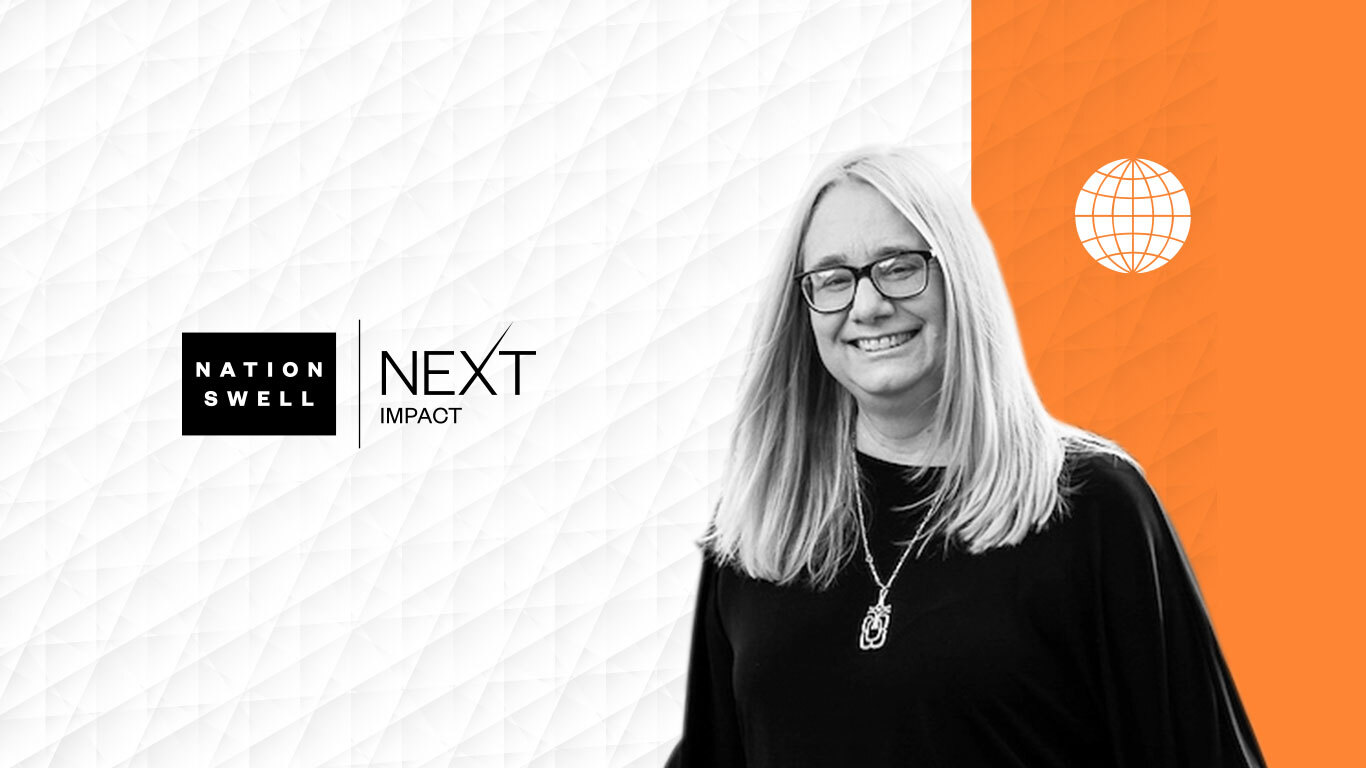
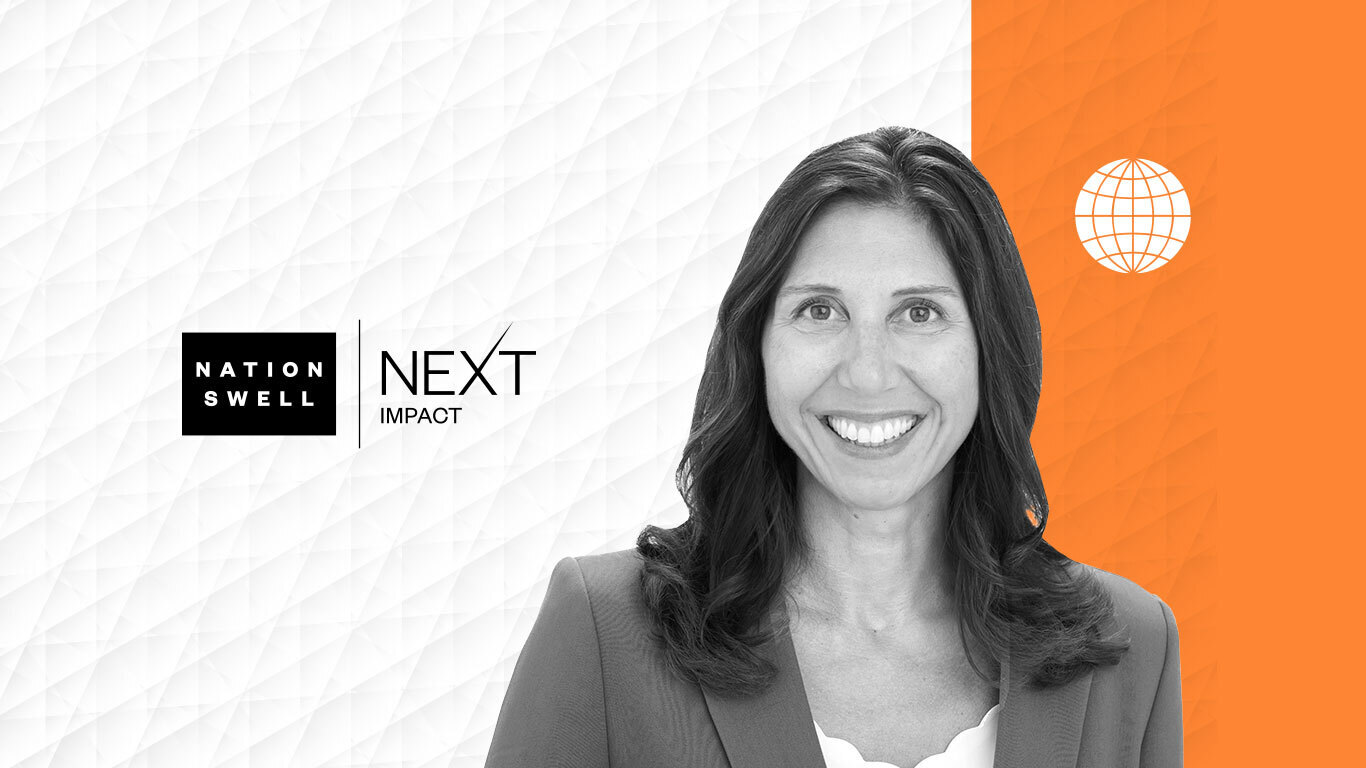
Impact Next: An interview with Partners for Rural Impact’s Dreama Gentry

At a moment of inequality and division, who is advancing the vanguard of economic and social progress to bolster under-served communities? Whose work is fostering the inclusive growth that ensures every individual thrives? Who will set the ambitious standards that mobilize whole industries, challenging their peers to reach new altitudes of social impact? 

In 2025, Impact Next — an editorial flagship series from NationSwell — will spotlight the standard-bearing corporate social responsibility and impact leaders, entrepreneurs, experts, and philanthropists whose catalytic work has the potential to shape the landscape of progress amid urgent need for social and economic action.

For this installment, NationSwell interviewed Dreama Gentry, president and CEO of Partners for Rural Impact.


NationSwell: What brought you to the field that you’re in right now? Was there a moment, a relationship, or an experience that galvanized your commitment to driving bold action?

Dreama Gentry, President and CEO, Partners for Rural Impact: I grew up in Appalachian Kentucky and have never wanted to live anywhere else. My home region is too often portrayed through a lens of deficit and stereotypes. What I see are people with deep connections to the land and to family. I see the people and the community and that shaped me and provided me with opportunity. No one in my family had gone to college, and while I grew up in a community that I now realize was poor, I never felt lacking. My Mom and Dad surrounded  me with love and opportunity. 

There are few pivotal folks that come to mind.  The first is Ma, my grandmother. She encouraged me to dream and was always there for me. From the time I was little she would take me to the public library when she was in town visiting her mother who was in a nursing home. The library opened the world to me. I was a voracious reader and I knew from an early age that I wanted to go to college. I planned to be either a teacher or an archaeologist.

Pat Hurt was my guidance counselor. With a caseload of 450 students, she made time to see the quiet girl from the part of the county that many discounted. My junior year, Ms. Hurt encouraged me to apply to the Governor’s Scholars Program and to Upward Bound, both were six-week summer programs on a college campus. Accepted into both, I attended Governor’s Scholars and that experience set me on a path to Berea College — where most students were low-income and first-generation — and then to law school at the University of Kentucky. Practicing law, though, I realized I was not my passion.

Education and connections to caring adults had changed my own trajectory, I returned to Berea College with a vision to raise aspirations and provide pathways to college in my home community. The work I do today started in an office in Rockcastle County High School thirty years ago. I worked alongside the guidance counselors, teachers and parents to build partnerships that encouraged kids and families to see college as an option. With the support of Larry Shinn a forward-thinking college president, I was able to grow that work from a direct service program in a single school to a regional initiative that served 50,000 children and youth across Appalachian Kentucky. In 2022 I created Partners for Rural Impact to create a movement of rural leaders across the nation committed to moving outcomes for rural youth. My team activates resources to support schools and communities, strengthens local capacity to implement what works and amplifies the bright spots in rural America.  My goal is a Nation where demographics do not determine destiny. And my contribution is to ensure that in rural communities there is the capacity to ensure that all rural young folks thrive.

NationSwell: When you look back on the scope of your career thus far, how have your thinking, your leadership style, or your philosophies changed over time?

Gentry, Partners for Rural Impact: My own life has been shaped by summer and out-of-school programs that gave me the chance to step onto a college campus. Coming from a small K–8 school where only six of eighteen classmates graduated high school, the few of us who made it to college all had that program experience in common. So, at first my work focused on creating and scaling strong programs that work across Appalachia — programs like Upward Bound, GEAR UP, Promise Neighborhood and Community Schools.

Over time, I saw that programs are essential and that they alone are not enough. Rural communities need a place-based approach where there is a backbone organization and someone that wakes up every morning thinking about aligning cross-sector partners, using data, and moving outcomes to ensure that every child in the community is getting the supports they need to thrive. It is only through this place based partnership approach that we can break the cycle of generational poverty and ensure all rural students are on a path to success.  

NationSwell: Is there a particular facet of your work, or the field more generally, that you think is not getting enough attention right now?

Gentry, Partners for Rural Impact: Since January, the focus has shifted dramatically. With so many safety nets and federal supports for children and families being dismantled, much of our energy is consumed by trying to slow or halt that erosion. That’s the elephant in the room right now. Before this moment, I might have answered differently, pointing instead to how often rural kids and families are left out of the equation — not by intent, but because decision-makers’ perspectives are shaped by urban and suburban experiences that overlook rural realities.

The challenge of the moment is supporting families and children during this moment. We must strengthen local capacity and support local organizations that are on the ground ensuring that families in rural places still have real paths to upward mobility. We must get serious about addressing poverty in America. I can focus my work on rural communities because I have colleagues leading organizations like StriveTogether, the William Julius Wilson Institute and Purpose Built communities that are primarily focusing on non-rural communities. 

NationSwell: There’s a stubborn narrative that rural communities are all the same, but rural America, like anywhere else, is complex and varied. What do you think people most misunderstand about rural places or the people who identify as rural? How does that misunderstanding impact policy, philanthropy, and the national conversation generally?

Gentry, Partners for Rural Impact: People often assume rural America is monolithic, when it’s as diverse as any city. Just as New Yorkers understand the differences between boroughs and neighborhoods, rural places vary widely in culture, history, and connection to land. That’s why Partners for Rural Impact refuses to define “rural” rigidly—if a community identifies as rural, they are part of the movement. 

Corporate and philanthropic leaders are often guided by policies or practices that limit giving to places where they have employees or where they have a presence. This results in limited giving to rural places. Only seven cents of every philanthropic dollar goes to rural areas—and even less to rural areas with the deepest need. These policies and practices are short sited and not designed for the world where we are now living. We all need this Nation to thrive. Each and every community is part of our ecosystem. What happens in Owsley County Kentucky impacts Washington, DC, New York City and Silicon Valley just as much as what happens there impacts Appalachia, the Delta, and our Native Lands.

NationSwell: Of the socially motivated leaders you consider your peers, are there any whose work has inspired you and whom you hold in high esteem?

Gentry, Partners for Rural Impact: I will focus on four who have supported me as I created Partners for Rural Impact. First, Geoffrey Canada has been a mentor since 2010. The way he created the Harlem Children’s Zone to focus on Harlem and the William Julius Wilson Institute to inform the nation informed Partners for Rural Impact’s structure.  At Partners for Rural Impact we focus intensively on three places — Appalachian Kentucky, East Texas, and Mexico, Missouri — and they are our places of learning that ensure we convene, coach and support rural places across the nation with a proximate lens.

Jim Shelton’s strategic thinking, tenacity, and trust impresses me. We met when Jim was leading a portfolio at the Department of Education that included Promise Neighborhoods. Now at Blue Meridian Partners, he is committed to a nation where all have a path to economic mobility. He invests deeply in the place based partnerships and trusts local leaders to chart their own solutions. Here in Appalachia, Jim King of FAHE showed me the power of a network to unite rural places across Appalachia and his thinking led to Partners for Rural Transformation which unites rural regions of persistent poverty. 

Another pivotal influence has been Jennifer Blatz of StriveTogether. After the 2016 election, most inquiries I received about rural America were focused on “what’s wrong” and “how to fix it.” Jennifer was the only person who asked how we could work together and StriveTogether could better serve rural communities. Her spirit of authentic partnership informed my decision to take Partners for Rural Impact national. Jennifer also shared her connections with philanthropy and took the time to introduce me and the work to others. Jennifer models what it looks like to enter the room with humility and true collaboration, and I try to bring that same approach into every partnership.

NationSwell: What is the North Star of your leadership?

Gentry, Partners for Rural Impact: The North Star of my work in general is creating a nation where all young people have a real path to upward mobility, with my organization focused specifically on ensuring that rural kids and communities aren’t left behind. In thinking about my leadership, I am often asked what my “superpower” is — because we all have superpowers, and I think real progress comes when superpowers are activated.

My superpower is seeing patterns and connections. I can listen across multiple conversations and places, then weave them together into a web of relationships and strategies that solve more than one problem at a time. I thrive when I have put the right people, at the right moment, in the right place, together with the right problem. My ability to connect and align has become my biggest contribution to the work.

Impact Next: An interview with StriveTogether’s Jennifer Blatz

At a moment of inequality and division, who is advancing the vanguard of economic and social progress to bolster under-served communities? Whose work is fostering the inclusive growth that ensures every individual thrives? Who will set the ambitious standards that mobilize whole industries, challenging their peers to reach new altitudes of social impact? 

In 2025, Impact Next — an editorial flagship series from NationSwell — will spotlight the standard-bearing corporate social responsibility and impact leaders, entrepreneurs, experts, and philanthropists whose catalytic work has the potential to shape the landscape of progress amid urgent need for social and economic action.

For this installment, NationSwell interviewed Jennifer Blatz, president and CEO of StriveTogether.


NationSwell: What brought you into this field of work? Was there a moment, a relationship, or an experience that galvanized your commitment to driving bold action?

Jennifer Blatz, president and CEO of StriveTogether: For me, this work is deeply personal — it truly feels like my life’s work. I’m the first in my family to go to college, and education was my ticket to economic mobility. Like many first-generation students, I felt a responsibility to do something important, so initially planned to go to law school. But along the way, I discovered a passion for supporting other first-gen students at the University of Kentucky, a large land-grant institution with many students like me. An advisor encouraged me to consider a career in higher education and student affairs, which opened the door to pursuing this work as a practitioner.

That path eventually led me to StriveTogether’s predecessor organization, where I focused on college access and attainment. Through that work, I came to understand how systems are structured to produce the outcomes they deliver — and how often those outcomes are deeply inequitable. Recognizing this is what ultimately drew me to broader systems-change work, and to ensuring that all young people have a real path to economic mobility.

NationSwell: Looking back at the scope of your career, how have your thinking, strategies, or leadership philosophies evolved over the course of your leadership journey?

Blatz, StriveTogether: One of the biggest evolutions in my thinking has been realizing that good programs alone aren’t enough. Early in my career as a practitioner, I worked on evidence-based initiatives like GEAR UP and TRIO that delivered incredible results for students — but only for a limited number. To truly address the country’s most intractable challenges, we have to pair strong programs with a systems-level strategy. That recognition shifted my focus toward influencing policy and transforming structures so outcomes can improve at scale.

Equally important is understanding the role of community and place. Early work across Ohio showed me how context matters: What students in cities like Cincinnati, Cleveland, or Toledo needed was very different from what was required in Appalachian or rural communities. Strong supports must be responsive to local realities, and systems change has to be rooted in the specific needs of each community. Together, systems and place-based approaches have become central to how I think about driving social and economic mobility at scale.

NationSwell: As someone who sees services being delivered across both rural and urban contexts, what are the similarities and differences in their needs?

Blatz, StriveTogether: At the core, families in both urban and rural communities want the same thing: for their children to thrive and reach their full potential. But rural communities face unique challenges: One recurring concern we hear is the “brain drain” that happens when young people leave for college and don’t return, which makes creating opportunities for education, work, and quality of life in rural areas especially critical. Another key difference is resources: Philanthropy often overlooks rural communities, which means they rely much more heavily on county, state, and federal funding. Cuts to public programs can be especially devastating when there’s no philanthropic safety net to help fill the gap.

That said, partnerships across urban and rural contexts can be powerful: For example, in Kentucky, the Appalachian Cradle to Career Partnership, supported by Partners for Rural Impact, joined forces with the Urban League of Louisville to advocate for state policy. By presenting a united front across rural and urban lines, they successfully passed legislation that benefited students statewide. Collaborations like this show that while the contexts may differ, bridging urban and rural perspectives is essential to advancing equitable policy and ensuring opportunity for all young people.

NationSwell: What’s defining the current social and economic environment that we’re in — what are the trends that you’re currently seeing, and what’s giving you hope?

Blatz, StriveTogether: I’m optimistic because I see incredible work happening in local communities. Time and again, people come together around shared priorities to support young people and families, often bridging divides that dominate national headlines. While polarization and divisiveness get much of the media’s focus, on the ground we consistently witness collaboration to improve outcomes.

What gives me pause are broader trends like the privatization of education, which often leads to greater inequities and lacks accountability when compared to public schools. At the federal level, program rollbacks and a push toward privatization create real risks. Yet at the same time, I see governors, mayors, and state leaders across the political spectrum investing in more equitable, systems-driven solutions. Many are working to expand economic opportunity through job growth, career pathways, and policies that help young people thrive.

So even amid competing forces — federal retrenchment on one side and state and local innovation on the other — I remain hopeful. The real progress is being driven at the community level, where collaboration and shared commitment to young people continue to point the way forward.

NationSwell: Is there a particular program, signature initiative, or some facet of the work that you would like to spotlight for us that is driving outcomes for the work?

Blatz, StriveTogether: One initiative I’m especially excited about is StriveTogether’s new Pathways Impact Fund, supported by the Gates and Walton foundations. It’s more than just a fund — it’s an effort to strengthen regional organizations that connect education and workforce systems. The goal is to scale high-quality career pathways for students in grades 9–13, with experiences like dual enrollment, industry credentials, work-based learning, and sustained advising. By aligning education and corporate partners, we can create smoother, more equitable transitions from school to career.

This work reflects an evolution in my own thinking. I came to the field through college access and long believed that postsecondary attainment, whether a two- or four-year degree, was the primary path to opportunity. But innovative pathways models have shown me that apprenticeships, career-connected learning, and credential programs can be just as powerful in setting young people up for success. These pathways not only support academic achievement but also build social capital and belonging — critical factors for economic mobility that our systems have too often overlooked.

With StriveTogether’s data-driven approach, we see how these models can help reverse generations of stagnant mobility in the U.S. Partnering with Gates and Walton, who have long invested in this space, gives us the chance to learn, innovate, and contribute significantly to the field. I’m optimistic this fund will help more young people thrive while reshaping the systems that support them.

NationSwell: What is the North Star of your leadership?

Blatz, StriveTogether: The north star of my leadership is balancing humility and confidence. Having spent most of my career within StriveTogether and its predecessor, I’ve been part of shaping this work from the ground up. That has required the confidence to try new things — even to fail — and the humility to recognize when we don’t have all the answers. Much of this journey has felt like building the plane while flying it, and that’s demanded both boldness and openness to learning.

Recently, as a leadership team, we named “humble confidence” as one of the qualities that makes StriveTogether unique. It means believing we can put millions more young people on a path to economic mobility, while also acknowledging that we’ll need to experiment, fail forward, and continuously adapt along the way.

For me, the central mindset is to believe deeply in what’s possible, but to approach the work with humility, curiosity, and a commitment to ongoing learning. That balance guides how I lead and how I want our organization to grow.

NationSwell: Of the folks in the social or economic sector doing similar work, who are a few of the leaders who inspire you or whom you hold in high esteem?

Blatz, StriveTogether: Two leaders I deeply admire are Roseanne Haggerty of Community Solutions and Dreama Gentry of Partners for Rural Impact. Roseanne embodies what I’d call “humble confidence.” Her organization has boldly declared that homelessness is solvable, and they’ve put a stake in the ground to reach zero—whether that’s ending veteran homelessness in a community or driving systems change nationwide. I admire her clarity, conviction, and the way she leads with both humility and determination.

Dreama, by contrast, has influenced me through her deep commitment to place. Based in rural Appalachia, she has built Partners for Rural Impact around a clear sense of purpose and rootedness. I often find myself channeling her voice in conversations by asking, “What about rural?” — a reminder of her constant advocacy for communities that are too often overlooked. When we first met in 2017, she was initially skeptical, wary of organizations trying to exploit rural issues in the wake of Trump’s election. But that honesty laid the foundation for a strong partnership built on trust and shared purpose.

Both Roseanne and Dreama model clarity, conviction, and values-driven leadership. Their approaches — one focused on bold systems change, the other grounded in place-based commitment — continue to inspire how I think about my own leadership and the partnerships StriveTogether builds.

NationSwell: Are there any resources — books, reports, podcasts, articles — that have influenced your thinking professionally or personally? 

Blatz, StriveTogether: Lately I’ve been immersed in the Entrepreneurial Operating System (EOS) by Gino Wickman. A year ago, I never would have imagined naming an operating model as something shaping my thinking, but implementing EOS has been transformative for StriveTogether. After our executive team read Traction, we began exploring how to adopt an entrepreneurial mindset while scaling — holding onto flexibility and innovation even as the organization grows.

For any organization in a growth phase, adaptive leadership is essential. Context matters, especially in place-based partnerships, and the past several years — from COVID to the racial reckoning to ongoing political shifts — have demanded constant adaptation. EOS has given us a structured system for doing that: clarifying priorities, identifying “rocks,” and making decisions with greater focus and alignment.

It may sound wonky, but it’s changing the way we work. By blending entrepreneurial thinking with disciplined systems, we’re better positioned to meet the moment and continue advancing our mission at scale.

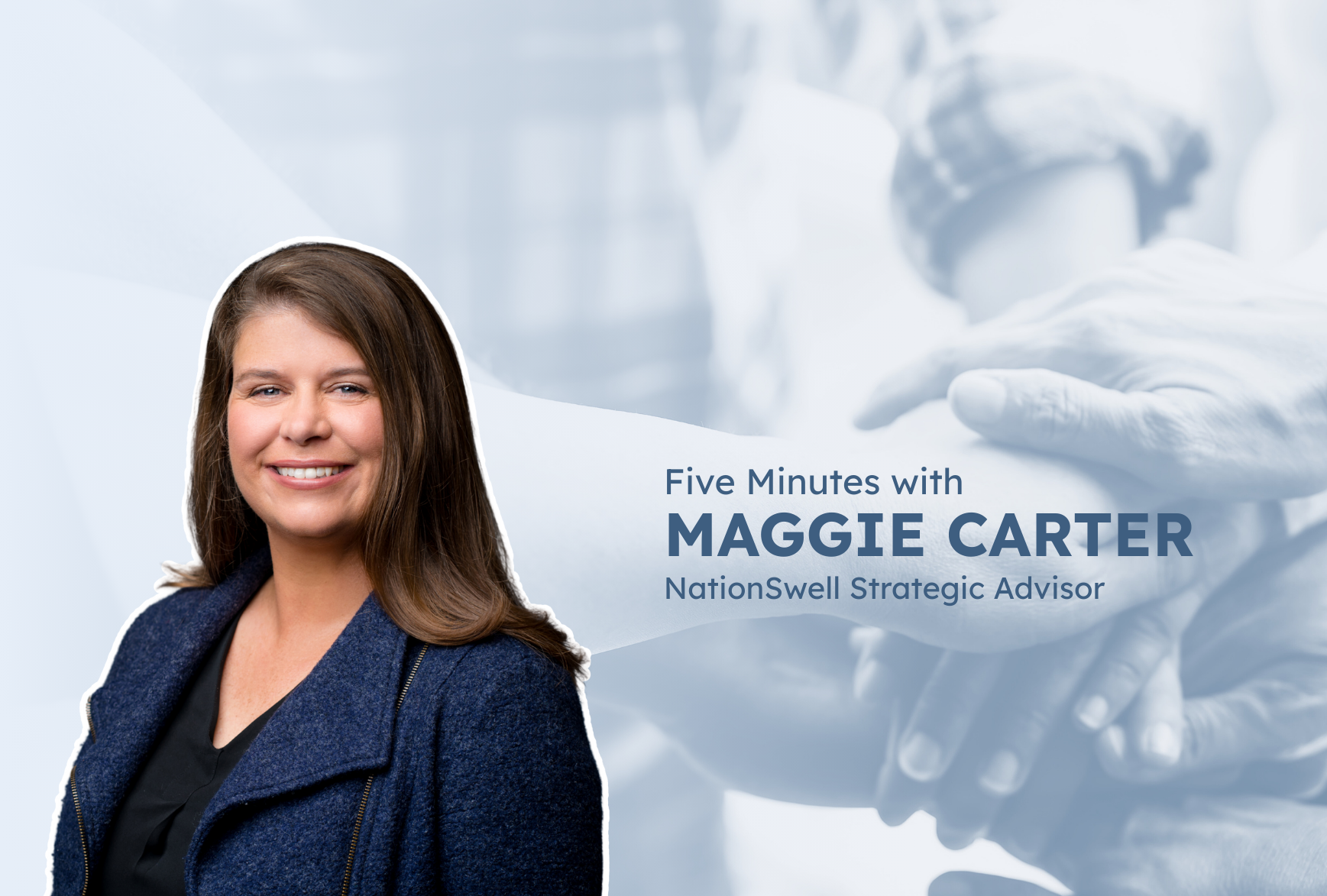
Five Minutes with… NationSwell Strategic Advisor Maggie Carter

NationSwell’s Strategic Advisor Network is a group of accomplished leaders who have steered global nonprofits, scaled purpose-driven companies, shaped policy, and catalyzed systems change. Together, they bring unparalleled experience and visionary leadership to strengthen our mission-driven community.

In our latest installment of Five Minutes With…, we sat down with one member of this network, Maggie Carter — a senior advisor and consultant specializing in strategic planning, impact measurement, program development, and partnerships who previously served as Director of Social Impact at Amazon Web Services (AWS) — to give our community a closer look at her leadership journey, what drives her work, and the impact she’s championing today.

Here’s what she had to say:


NationSwell: What is the “why” behind your impact work? What’s your personal north star?

Maggie Carter: My “why” stems from my childhood, growing up in a multi-generational household where my parents and grandmother taught me the importance of giving back. I saw them model this firsthand, spending Thanksgiving and Christmas packaging meals and clothes for the homeless in Washington, D.C. That instilled in me the value of using whatever resources you have to help others.

That foundation was cemented during my time at the NBA, when Hurricane Katrina struck. I saw firsthand how vulnerable populations are disproportionately impacted by catastrophic events. That experience stuck with me and fueled a passion for mobilizing resources for social good.

That’s where my time at AWS became so meaningful. We weren’t just about providing technology; we were about applying our scale and resources to solve problems in real-time. This was never clearer than when I co-led Project Sunflower, AWS’s global response to Ukraine. We mobilized over 350 employees and technologies to support more than 30 organizations, earning us the Ukraine Peace Prize. That experience showed me how powerful it is when a company’s core business value is intentionally used to create meaningful, lasting good.

At its core, my “why” is to help build and support organizations that genuinely live their values by using their unique strengths and resources to create lasting good in the world. My north star is to contribute to a future where values consistently drive decisions and actions, creating a virtuous cycle of innovation and impact.

NationSwell: What’s one insight or trend you think every impact leader should be paying more attention to right now?

Maggie Carter: Impact leaders must simultaneously embrace two critical aspects: technological curiosity and profound self-awareness. They need to regularly assess whether their leadership style and the organization’s current structure effectively meet present and future needs, especially in a rapidly evolving digital landscape.

NationSwell: What role do you see NationSwell playing in this moment; why did you choose to get involved?

Maggie Carter: The social sector is at a crossroads, with an urgent need to transition from performative to transformative action. I see NationSwell as a trusted convener, amplifier, and catalyst for this essential change. In a time when many leaders grapple with defining meaningful progress, NationSwell offers a vital space for courageous dialogue and nurtures a community committed to tangible action.

I joined NationSwell because I wanted to be part of a community that addresses challenges authentically and transparently. It’s an opportunity to sharpen my practice, deepen relationships, and actively contribute to a future where values truly drive decisions.

NationSwell: In your experience, what’s one underrated lever for advancing social or environmental progress from inside an organization?

Maggie Carter: In my experience, finance is one of the most underrated levers for advancing social and environmental progress within an organization. Finance teams uniquely understand the priorities of executive leadership and boards, and how investments are measured. They can push thinking beyond short-term ROI to include social ROI, long-term outcomes, and opportunity costs. When CFOs, controllers, and budget managers become true stewards of social impact, rather than just financial health, they can unlock significant scale, accountability, and systemic change.

NationSwell: What’s one book, podcast, ritual, or person that’s fueling you lately?

Maggie Carter: I’m currently reading “Non-Governmental Organizations, Management and Development” by David Lewis. This book is shaping my understanding of how the social sector develops strategies, architects organizational structures, and delivers impact. It’s also prompting me to consider how organizations should navigate crises and who is best equipped to lead through such changes: whether it’s the CEO, a donor, or the Board.

My recent daily ritual involves a morning walk through town. This simple act allows me to connect with nature, reflect on ideas, and find inspiration. I also have weekly walking meetings with peers, which I find incredibly invigorating and conducive to creative problem-solving outside traditional meeting settings.

Q2 2025 Social Impact Trends

Q2 2025 Social Impact Trends

Q2 2025 trends indicate that employee engagement and wellbeing are at alarming lows; nonprofits face heightened threats amid federal scrutiny and funding cuts; DEI efforts are under political attack but still supported by consumers and investors; cross-sector coalitions are forming to defend civil society; funders are stepping up with bolder strategies to counter government pullbacks; and companies, though quieter publicly, remain committed to impact through value-aligned, resilient strategies.


Share this report

From Intention to Reality: Unlocking the Promise of Collective Impact

Within the social impact ecosystem, there is widespread commitment to collaboration and partnership. Yet true collective impact remains challenging for many organizations and leaders. Structural silos, misaligned incentives, and resource constraints often stand in the way of catalytic, cross-sector action.

On July 24, NationSwell hosted a virtual leader roundtable designed to explore what it really takes to move from good intentions to meaningful progress. Some of the most salient insights that surfaced during that discussion appear below:

Insights:

Build with, not for — shifting from transactional partnerships to transformational relationships. Designing together and listening deeply to partners leads to more meaningful, inclusive outcomes. Be intentional about trust-building by consistently showing up and acknowledging power dynamics.

Engage your community continuously, not episodically. Building trust requires regular, structured engagement throughout the year. This goes beyond one-time listening sessions and reflects a long-haul investment in shared learning.

Avoid duplication by aligning efforts, clarifying purpose, and reducing unnecessary convenings. Streamlining meetings and mapping resources promotes more effective use of time, helps eliminate redundancy, and fosters better collaboration.

Embrace healthy tension as a part of the process. Tension between governance-building and action, between urgency and trust-building, and between funders and partners is inevitable. Recognizing and naming that tension upfront allows groups to move through it productively, rather than stalling out.

Participate in cross-pollination to unlock innovation and increase impact. Move beyond traditional silos to intentionally engage diverse actors across sectors. By designing multi-stakeholder strategies that reflect the full ecosystem, collaborations can create more resilient solutions.

Use intermediaries to accelerate timelines in ways direct funding may not. Strategic use of intermediaries allows for flexible deployment of resources while reducing burden and capacity constraints on grassroots partners. Additionally, funders should think strategically about how policy changes (like the 1% tax floor on charitable donations) affect capital flow, and how to advocate for approaches that ensure funds reach those most in need.

Ask the right questions and focus on meaningful indicators to avoid data paralysis. For example, “Ripples of Impact” is a reframe for ROI that considers how collaborations shift practices, build trust, and catalyze long-term ecosystem change. It’s not about volume of data, but whether it drives action and adaptation. 

Two Days in Atlanta with NationSwell and The Annie E. Casey Foundation

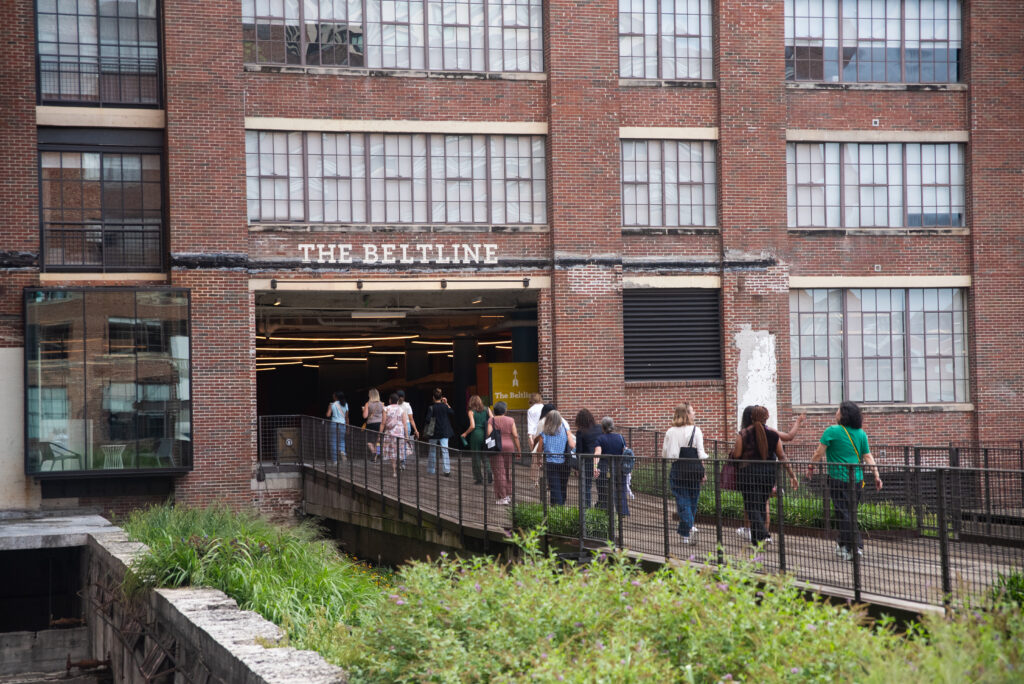
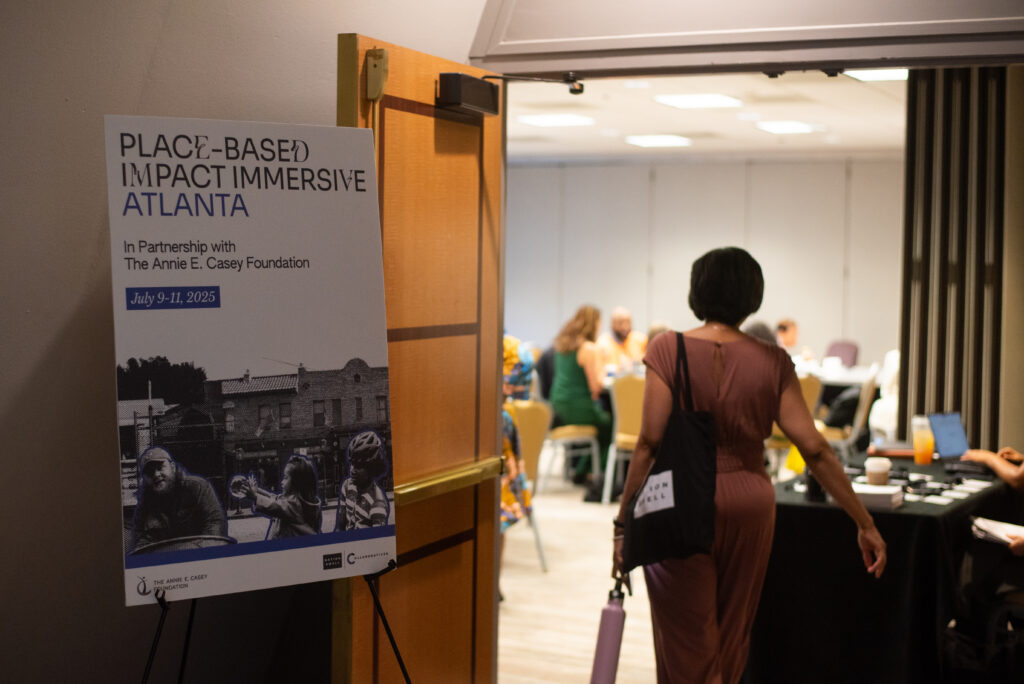
On a warm July afternoon in Atlanta, a group of corporate, philanthropic, and community leaders gathered to experience what place-based impact looks like when it’s rooted in history, shaped by community voice, and powered by a shared vision. As part of NationSwell’s Place-Based Impact Collaborative, and in partnership with The Annie E. Casey Foundation, this immersive, two-day experience offered a firsthand look at Atlanta as a “tale of two cities.” Throughout the experience, participants learned how bold, collaborative investment is helping communities reclaim land, preserve and celebrate identity, and build a more just economic future.

Day One: Grounded in history, connected by movement

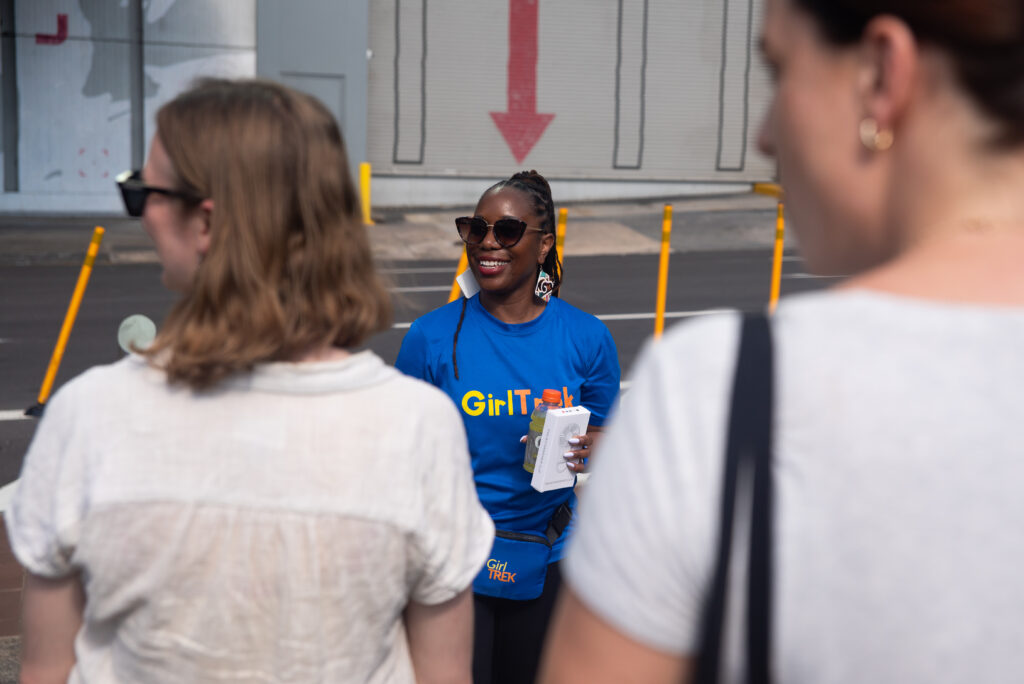
Our time together began with something deceptively simple: a walk. Led by a close partner of NationSwell, GirlTrek, the walk to Centennial Park focused on presence and intentionality. “We walk, talk, and solve problems,” our leader shared, describing GirlTrek’s model of wellness and connection. It was a chance to move through the city, feel its energy, and open space for reflection.

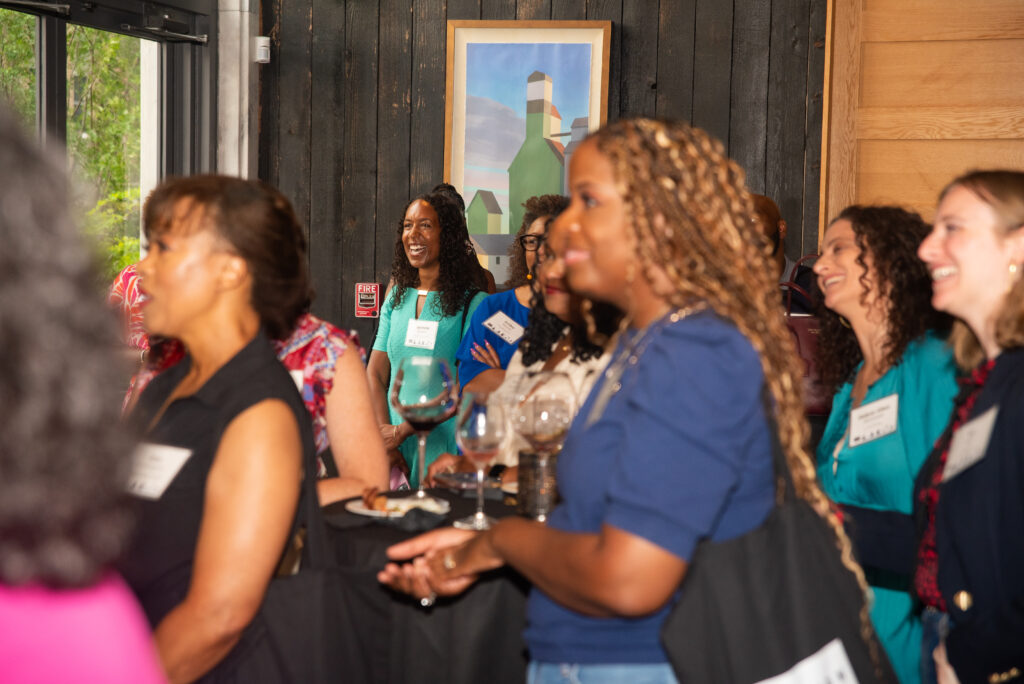
Later that evening, we headed to a welcome reception, setting the tone for what would be a day of honesty, inspiration, and exchange. In a circle, we heard from visitors and locals alike about their personal and professional motivation for joining the immersive. Participants were welcomed to Atlanta as a city of neighborhoods, of legacy, of resilience.

Day Two: A tale of two cities

Breakfast opened with a powerful panel, “Atlanta’s Path in Perspective,” laying bare the complexity of the city’s narrative. As Courtney English, Interim Chief of Staff to Mayor Andre Dickens noted, “Atlanta is a tale of two cities and two stories.” On one hand, it is the cradle of civil rights, home to Black leadership and cultural innovation. On the other, it is among the lowest in economic mobility for Black families, shaped by redlining, disinvestment, and policy decisions that still echo today.

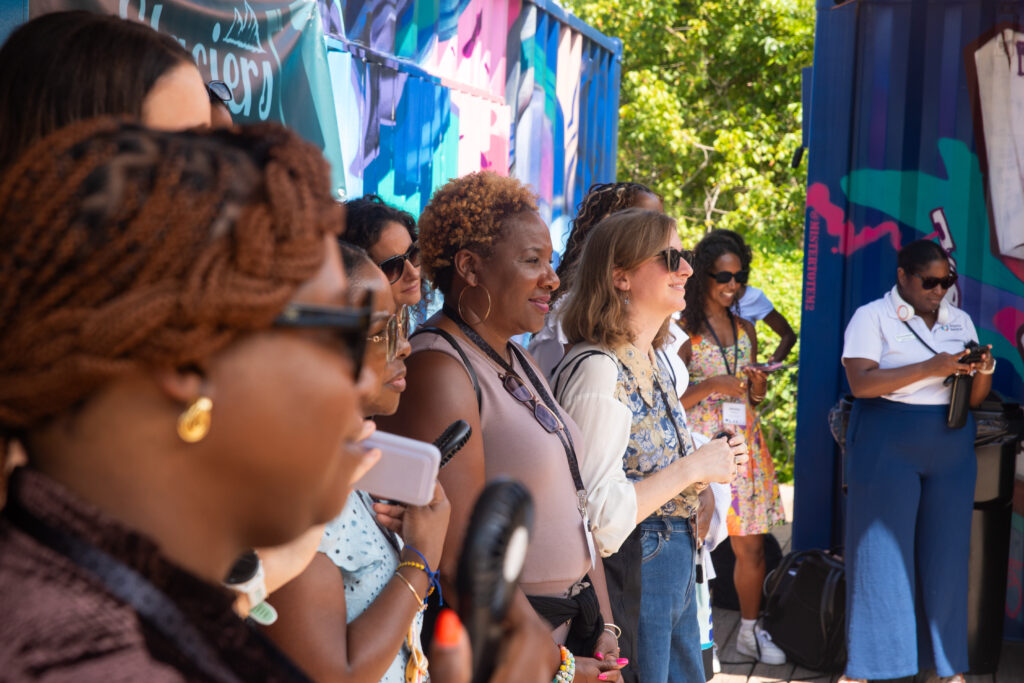
Site visits followed, including a deep dive into the Atlanta Beltline’s evolution – a project that has generated both opportunity for entrepreneurs and concern for displaced residents. Led by the Atlanta Beltline team, we saw examples of responsive solutions: affordable housing built to combat gentrification pressures; shipping containers repurposed into microbusiness spaces; and ongoing work to address basic infrastructure, like stormwater and sewage management. We also heard from a small business owner, Sarah Pierre, owner of 3 Parks Wine Shop, about her partnership with the Beltline. 


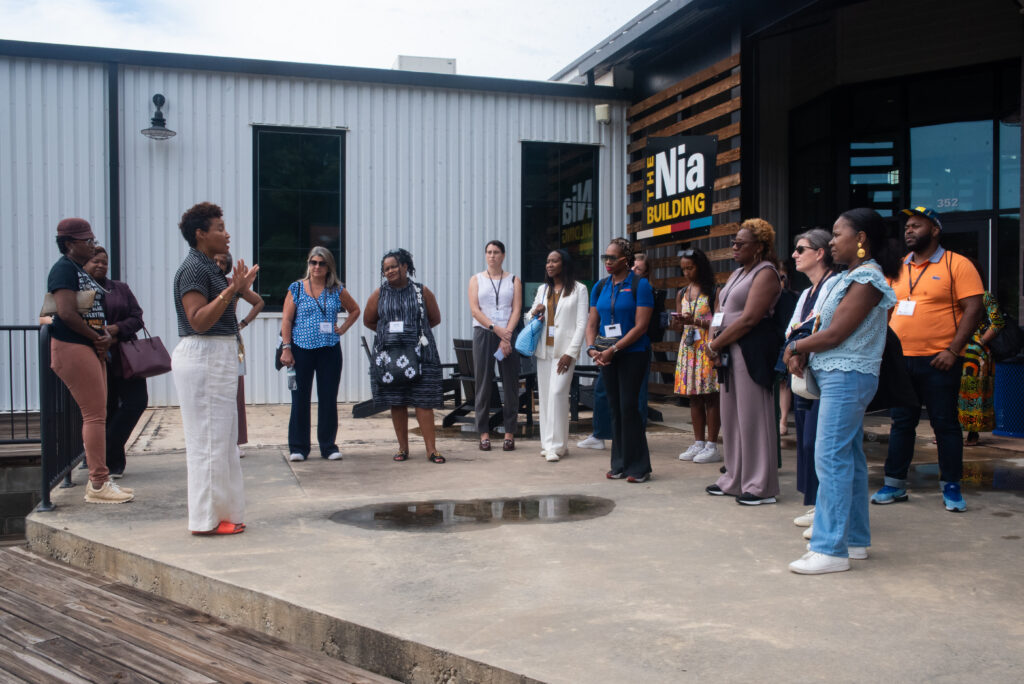
We then made our way to Pittsburgh Yards, standing out as a living example of what it looks like when development is done collaboratively with a community. Built on land acquired by the Annie E. Casey Foundation, the space has grown into a hub for locally-owned businesses, creatives, and entrepreneurs – including some that have transitioned to brick-and-mortar storefronts in retrofitted shipping containers (check out Carrot Dog and PinkPothos). Individual co-workers, businesses, and events hosted at Pittsburgh Yards bring in revenue, helping sustain the space without compromising its mission. “We would like to think that the Annie E. Casey Foundation is a collaborative partner and listener,” Tomi Hiers, vice president of the Center for Civic Sites and Community Change at the Annie E. Casey Foundation said, reflecting on the ongoing effort to ensure that the people closest to the challenges are closest to the decisions. As we stood outside Pittsburgh Yards, a child played on his bike, calling out “Hey, neighbors!.” As one participant noted, “The fact that a little boy came up and called us ‘neighbor’ — that’s what success looks like.”

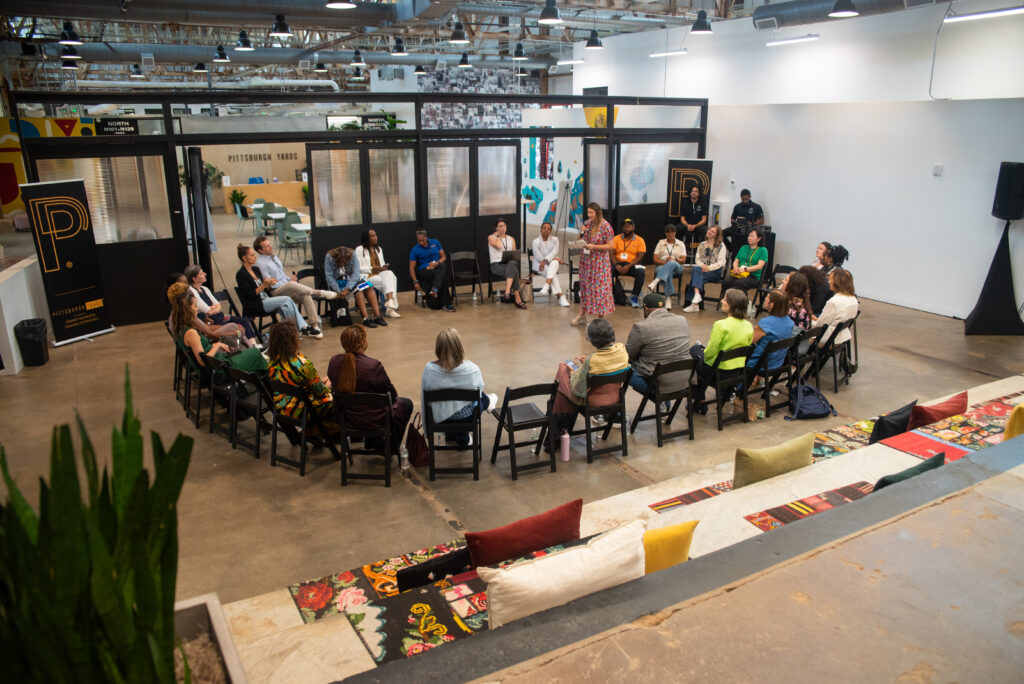
Our visit included a Partnerships for Collective Action roundtable, held in the heart of Pittsburgh Yards’ Nia Building. Amanda Jaquez, Senior Associate, Annie E. Casey Foundation opened by naming the legacy of the neighborhood — founded by formerly enslaved people and long a center for Black self-determination — and reminded the room that development must build on, not erase, that foundation. 

The panel explored what makes cross-sector collaboration work, with Mindy Binderman, Executive Director of GEEARS, emphasizing that shared purpose and trust must come before action. Natallie Keiser, Executive Director of HouseATL, added that structure, sustained engagement, and clarity of roles are important, especially when tackling entrenched challenges like affordable housing and displacement. The cost of inaction was made clear: unchecked infrastructure investments can rapidly raise property values and inadvertently displace the very communities they intend to serve.

Jay Bailey, President and CEO of the Russell Innovation Center for Entrepreneurs (RICE), offered a powerful charge: “Collaboration beats competition every day of the week.” But he cautioned against “collaborative theater” — partnerships formed for optics rather than outcomes. He urged leaders to confront uncomfortable truths, including the stark contrast between Atlanta’s image as a Black mecca and the reality of its low Black economic mobility. “Let us have the courage to say no…because we are worth investing in.” 

The day ended at The Third Space, where a happy hour and signature dinner prompted deeper conversation and laughter. Over shared plates, attendees unpacked the day’s learnings: how land becomes leverage, how rest becomes resistance, and how institutions can be built to last.

Day Three: Collaboration and continuity

Our time together concluded with a tour of RICE. The impressive center, which supports Black entrepreneurs with space, mentorship, and capital access, sparked conversations about ecosystem thinking. During the tour, participants saw how the organization is cultivating Black entrepreneurial success at scale. The 54,000 square foot space was built with intentionality: every wall, quote, and photo was curated to inspire ownership, legacy, and possibility. As Bailey summed it up: “We don’t need another symbol of hope. We need institutions that manufacture hope.”

As attendees began to head home, there was a palpable sense of momentum. Participants reflected on what they had seen and learned, and how they can apply it to their own communities and work.

What Atlanta taught us

Atlanta is not a monolith. It is a microcosm of the broader American story — a city where systemic harm and radical possibility coexist. Place is not neutral here, it is contested, storied, and powerful. From listening sessions designed with dignity to equitable housing strategies and entrepreneurship ecosystems, the visit to Atlanta reminded us that place-based work requires honesty, trust, and collaboration. 

As one participant shared, “The system isn’t broken. It’s working how it was designed to work.” But in Atlanta, people are redesigning it — together.


This immersive experience was offered to NationSwell through the NationSwell Collaboratives. To learn more or get involved, visit nationswell.com/nationswell-collaboratives/

The NationSwell Council on “The Movement to Reconnect”

Experts have been sounding the alarm on a quiet crisis unfolding across the country: Americans are more disconnected than ever. A growing body of research points to rising rates of loneliness, fraying community ties, and a deepening sense of isolation that cuts across age, geography, and background. The costs are profound — not only to individual mental and physical health, but to our collective resilience and social fabric.

Against this backdrop, the NationSwell Council set out in the second quarter of 2025 for a Salon series dedicated to “The Movement to Reconnect”: the tapestry of solutions — such as increasing funding, inclusive programs, and spaces for meaningful interaction — that help foster stronger, more resilient communities.. In a time when polarization and disconnection often dominate the headlines, these conversations offered something different: a reminder that healing is possible when we come together in warm, curious, and collaborative ways.

We’re proud to present a selection of the insights that were shared during the course of the series — along with some powerful reflections from the leaders in attendance — below:


Key Insights

1. Service creates shared purpose and builds belonging. Participating in service-oriented activities can strengthen community ties, provide individual meaning, and counteract divisive ideologies by grounding people in shared action.

2. Polarization is flattening our relationships — and our humanity. When people are reduced to their political or cultural identities, empathy and curiosity suffer. Creating space for constructive dialogue can restore dimensionality and connection.

3. We need both bonding and bridging. Affinity spaces allow individuals to recharge within shared identity groups, while bridging spaces foster trust and understanding across difference. Both are essential for social cohesion.

4. Ritual and moral frameworks matter for belonging. Practices like gratitude, storytelling, and trauma acknowledgment — often rooted in religious tradition — can be adapted to modern settings to foster collective meaning and connection.

5. Crises are catalysts for community renewal. Moments of collective hardship can serve as inflection points to rebuild stronger, more inclusive social bonds — if we seize them with creativity and shared values.

6. Narratives shape connection. Stories that emphasize resilience, interdependence, and shared futures foster unity; divisive or fear-based narratives drive alienation and distrust.

7. Inclusive, systemic solutions are needed. Programs alone won’t solve disconnection. True impact requires structural changes, inclusive design, and active participation from those most affected.

8. Connection must be resourced and rewarded. Sustained funding, capacity-building (like train-the-trainer models), and recognition for community leaders are critical to scaling what works.

9. Higher education and local communities are key incubators. Colleges and municipalities are well-positioned to model and scale tools for connection — but must build facilitation expertise and ground efforts in local realities.

10. We need a new metric of success: community care. As we reimagine what it means to thrive, collective well-being must be valued alongside personal achievement—centering care, interdependence, and shared responsibility.

11. Loneliness is a public health crisis — and Gen Z is at its center. Young people report record levels of loneliness and a lack of meaning or purpose, exacerbating the youth mental health crisis and signaling urgent need for systems-level support.

12. Human connection is both a basic need and a powerful social tool. Strong interpersonal bonds are essential for emotional well-being — and also serve as the foundation for broader societal resilience, civic trust, and collaborative problem-solving.

13. We lack spaces for spontaneous, organic interaction. Despite widespread desire for face-to-face connection, many communities lack accessible “bumping spaces” — like parks, plazas, and community centers — where casual encounters naturally occur.

14. Technology is distorting social norms and deepening disconnection. Social media has normalized passive communication and amplifies polarization, making it harder — especially for youth — to initiate in-person connection or bridge divides.

15. Connection across differences requires intention and infrastructure. People are eager to connect across race, class, and ideology, but few are given the tools, invitations, or safe settings to do so meaningfully.

Recommended Resources

Reflections from Council members

We asked members in attendance to respond to the following prompt: “How can organizations redesign their workplace cultures to promote stronger interpersonal relationships and a sense of belonging among employees?”

“Workplaces are becoming more diverse, including more intergenerational with Gen Z, Millennials, Gen X, and Baby Boomers. It is necessary for them to adapt and create more inclusive environments. What is important is to humanize the workers. This can include opportunities to get to know each other. This goes beyond happy hours. It can be through ERGs. It can be through offsites. Options that speak to each generation and also identities that span generations is a strategy I have seen work.”

  • King Adjei-Frimpong, Director of Stakeholder Engagement

“If an organization is fully remote or hybrid, it’s important to invest time and space for meaningful connection to take place online. For example, as part of your weekly team coordination call, have your team share what they did over the weekend. Or bring another prompt for people to respond to. When you do meet in person, make sure to allocate time for connecting and fun. Then, measure your employees’ sense of connection and loneliness at work with this following survey tool to see how well your employees are doing.”

  • Calista Small, Research Manager, More in Common US

“Creating formal opportunities for employees to connect with each other outside of their day to day responsibilities can have a positive impact. At Girls Who Code, we recently had an org-wide step challenge (optional) with meaningful prizes for team and individual winners. Participants were broken up into random teams and it was a way for folks to have fun with and motivate each other to achieve wellness goals while instilling a little healthy competition. 

Consistently using brief ice-breakers at the start of a meeting, whether cross-functional or within a team, provides a light-lift opportunity for folks to keep learning about one another and finding connections.”

  • Tarika Barrett, CEO, Girls Who Code

“The “constant of change” is an invitation to reimagine workplace cultures, to harmonize feeling our best with doing our best. Innovation operates at the speed of trust, and we build velocity by forging affirmation, belonging, and co-creation across people and teams. 

One of my favorite levers – aka antidotes versus the old normal – is storytelling. That is how we can flip disengagement into empowerment, for any generation. I also work with organizations to shape a unity of purpose around goals and processes, which breaks down silos. At a policy level, I am striving to radically reimagine decision making. If we can transform the rooms where it happens – through student advisory boards, Dad Councils, and more – we will catapult our north star goals.”

  • Mohan Sivaloganathan, executive leader and keynote speaker

“I’ve learned from nearly two decades leading social impact organizations that belonging isn’t automatic. It emerges only when the conditions are right. Workplace cultures that foster belonging share a common characteristic — high trust between employees. I know from experience that trust begins with clarity. My mantra is to make the implicit explicit. Leaders do this by setting shared expectations, naming unspoken norms, creating space for authentic emotion (celebration and grief alike), and both setting policies and enforcing norms that make it safe for employees to bring their full selves to work. I’ve seen firsthand that, when that groundwork is in place and reinforced consistently, employees will connect and collaborate on a genuinely human level.”

  • Bethany Rubin Henderson, CEO, Compass Pro Bono

“At the Movement to Reconnect Salon, I found myself most drawn to the question of how we intentionally create space for connection—especially across lines of difference. In a time when division can feel easier than dialogue, I believe deeply in the power of community-rooted relationships to shift what’s possible. Whether within organizations or broader communities, we need to design for belonging—not just hope it happens. That means slowing down, listening with curiosity, and prioritizing trust-building as real work.”

  • Michael Pope, Executive Director, Youth Represent


Five Minutes with Alix Guerrier, CEO of DonorsChoose

For this installment of 5 Minutes With, NationSwell sat down with Alix Guerrier, CEO of DonorsChoose — a nonprofit donation platform that helps connect teachers with the resources and materials they need to create the inspiring classrooms and projects that ensure a great education.

Ahead of Teacher Appreciation Week (May 5 – 9, 2025), we asked Guerrier about how DonorsChoose is helping to address racial and socioeconomic inequities in school funding; the impact milestones he’s most excited about; and how the platform is helping to support teachers who come from HBCUs. 

Here’s what he had to say:


NationSwell: Tell us about your personal connection to education — is there anything about your background that gives you a unique perspective or emotional connection to this space?

Alix Guerrier, CEO of DonorsChoose: I became a math teacher after I did investment banking, and I found teaching to be by far the more challenging profession! It remains the toughest job I’ve had. But the thing that I loved most about teaching was witnessing students as they understood new concepts. I would feel so fortunate to be able to observe kids as they were starting to do things that, before, they were not able to do. It’s an incredible privilege to be part of a kid’s journey as they learn and develop new skills.

NationSwell: Where are the existing gaps in school funding models, and how is DonorsChoose helping to close those gaps?

Guerrier, DonorsChoose: Public schools aren’t created equal. Schools that serve mostly students of color receive $23 billion less in state and local funding each school year – a funding gap of $2,266 per student. This inequity is reflected in teacher out-of-pocket spending. Teachers working at schools in lower income communities and with more students of color reach into their own wallet more to buy classroom materials. Our DonorsChoose platform gives members of the public a transparent, accountable way to bridge that inequity.

Every time a teacher submits a project to DonorsChoose, we receive a collection of data points on that classroom: number of students, subject area, items requested, teacher demographics, and more. We integrate this national data into our platform to help donors and institutional partners target their support where it will make the biggest impact. By highlighting schools that have been historically underfunded due to racial and economic inequity, we’ve made it easy for anyone to help us move the needle towards equity — whether they have $5 or $5 million to give.

NationSwell: Are there any anecdotes or moments that stand out to you in terms of the tangible impact you’ve seen DonorsChoose create for teachers?

Guerrier, DonorsChoose: What immediately comes to mind is the preschool classroom of Dominique Foster at Friendship Blow Pierce in Washington, DC, where the majority of students are Black or Latino and qualify for free or reduced-price lunch. You won’t find a better equipped or more engaging preschool classroom, and that’s because of Dominique. In December 2024, she used DonorsChoose to fund costumes for her students to dress up as veterinarians, doctors and dentists, skeleton models, weighted stuffed animals to serve as the patients, toothbrushes, and Band-aids – among so many other resources. 

Since posting her first DonorsChoose project in 2019, Dominique has raised $120,000 for her classroom through our platform. Along the way, her colleagues, too, have discovered DonorsChoose. More than 300 projects, posted by 78 teachers, have been funded at Friendship-Blow Pierce – totaling more than $300,000 in resources. Through DonorsChoose, educators like those at Friendship-Blow Pierce are accessing materials that their students uniquely need for an enriching education.

NationSwell: What has your experience at DonorsChoose taught you about the role technology has to play in the education system — what is the potential that you’re seeing?

Guerrier, DonorsChoose: DonorsChoose has always embraced technology as a fuel for social good. In fact, crowdfunding wasn’t even a word when we launched 25 years ago. Teachers have similarly embraced tech advancements, and their resource requests over the years on DonorsChoose show that progress within education.

Right now, there are a lot of conversations about the potential benefits and harms of artificial intelligence (AI) for both education and technology overall. Wherever you stand, it’s clear that AI is a remarkably powerful tool that isn’t going away — teachers and students are already engaging with it on a daily basis. We need to listen to the educators on the frontlines of this progress and make sure they’re a part of our national conversation about AI so that we can create a just and equitable future for our children.

NationSwell: Are there any new initiatives in the works that you’re particularly excited about and would like to lift up?

Guerrier, DonorsChoose: DonorsChoose is gearing up for Teacher Appreciation Week (May 5-9, 2025), and we’re planning even more support for public school teachers across the U.S. Teachers should stay tuned that week for more opportunities to get funding for their classrooms.

A new initiative this school year that I’m very proud of is Quad to Classroom. Studies show that the graduation rate among Black students increases by 33% if they have at least one Black teacher between third and fifth grade. In 2021, DonorsChoose conducted the largest survey of male teachers of color, and the survey shows that Black male graduates of Historically Black Colleges and Universities (HBCUs) spend the most time engaging with students. The DonorsChoose Quad to Classroom program is inspired by these findings. The program helps to boost the pipeline of teachers who come from HBCUs and to provide them with funding on DonorsChoose.

NationSwell: Finally, what are some of the challenges you’re currently facing, and how can NationSwell’s community of changemakers help you with those challenges?

Guerrier, DonorsChoose: According to our annual DonorsChoose survey of our teacher community, teachers spend between $600 and $700 out of pocket on classroom supplies in a school year. We know that it’s often much higher than that. In fact, teachers on DonorsChoose told us that if it weren’t for our website, they’d be spending more than double out of pocket on classroom supplies. 

At the same time, teachers’ salaries have decreased as much as 15% between 2000 and 2017 and are decreasing much faster than those of comparable workers, yet they’re still reaching into their own pockets to get what their students need to learn. 

Anyone, from an individual to a corporation, can go to DonorsChoose to help a teacher avoid reaching into their own pockets again. DonorsChoose will not stop until every single student and teacher has the resources they need to thrive, and we’re doing everything we can to ensure that and to rally others to join us in empowering educators.

Goldman Sachs 10,000 Small Businesses

Goldman Sachs 10,000 Small Businesses

Entrepreneurship is a powerful driver of economic opportunity, yet many small business owners face systemic barriers to growth, including limited access to capital, business education, and professional networks. To address these challenges, the Goldman Sachs Foundation launched 10,000 Small Businesses – a nationwide initiative designed to provide practical business education, peer support, and access to funding to help small enterprises scale and succeed. The program has supported over 16,600 graduates across all 50 states, Washington, D.C., and Puerto Rico. This case study outlines the core components that make this initiative effective and replicable.


Key components of the model:

  • Selective yet accessible participation
  • Durable and practical curriculum
  • Strategic partnerships for scale
  • Adaptive delivery model
  • Lifelong learning and alumni support
  • Goldman Sachs employee engagement

Notable results and impact:

  • 66% of participants see increased revenue within six months
  • Nearly 50% create new jobs shortly after completing the program
  • 85% of alumni continue doing business with each other, demonstrating the program’s networking value
  • Participants report greater confidence in financial decision-making, fueling long-term sustainability

Share this report

The Power of Place-based Strategies

Place-based approaches have become a cornerstone for fostering long-lasting, meaningful change, by connecting organizations, cities, and communities across the United States. Through focusing on local needs and opportunities, place-based strategies have proven essential for building community resilience and driving positive, tailored outcomes.

During the final event in the Building Thriving Futures series hosted in partnership with FUSE, leaders dove into actionable strategies to strengthen partnerships across sectors and address critical challenges in supporting small businesses, advancing housing equity, and expanding workforce opportunities. 

Some of the key takeaways from the event appear below:


Insights:

Impact leaders need to support and work closely with local decision makers. City and state leaders are the largest social services providers for communities. As the federal government pulls away funding and infrastructure, it won’t change the community needs and people will look to their local and city governments to do more. The current destruction is huge — some populations like in Kansas have/had a large proportion of federal workforce — and philanthropists and private sector leaders need to help local public sector leaders expand their capacity to navigate the change. 

Learn from existing models that bring disparate people together for local change. For example, JobsFirst and FresnoDRIVE are initiatives funded by public, philanthropic, and private dollars aimed at boosting workforce, education, and inclusivity, and are high-aspiration, long-term plans.  

Diversification of funds is key — understanding who in your community is reliant on federal funding and helping them diversify to de-risk and change keeps occurring. Consider how you can help track the dollars being cut in your region, predict the ripple effects that will impact your grantees and community, and stem the loss. 

Balance listening and surviving, with planning for the future. Many organizations are navigating changing infrastructure, adopting a defensive posture, and doing the important work of helping grantees and community partners survive this turbulence e.g. by providing more unrestricted funding to plug gaps. However, also make time to think about those things that will help you “swing for the fences” and plan for a new future e.g. investing in the capacity and social capital of local talent who can rise into transformational leaders. 

Consider how we can fall in love with the problem and use it as a spark for innovation? Turbulence allows us to consider what we should double down on, what can we pivot away from because it is not an immediate priority, and what can we think differently about? In this time where national actions are impacting hyper local communities, it could be a useful exercise to borrow from entrepreneurs and figure out how you find the hardest, stickiest pain point and build energy around addressing it.

Drive investments to data and make sure you have secure data infrastructure locally, as it may not always be there federally. There may be opportunities for new investments and new partnerships that hinge on this data. 

Philanthropies have the power to bring place-based peers together to support each other. Information and strategy help us adapt more rapidly. By bringing together members, partners, or organizations you work with, across states and cities, who are working to combat the same barriers and issues, you scale insights and learning and help prevent a constant reinventing the wheel and repeating the same growing pains.

Invest in telling the story of place-based impact. With so many programs and initiatives at risk due to their reliance on federal funding, telling the story of their impact is more essential than ever. The role of communications and communications teams is often an afterthought, but the importance of language and framing has never been more crucial. Storytelling matters — even if it means we need to pivot or look at it a different way, we keep the story going.