Corporate Social Impact Models and Approaches

Corporate Social Impact Models and Approaches

EXECUTIVE BRIEFING

This practical guide is designed to help leaders and organizations orient their existing social impact strategies within a larger context, and identify opportunities to progress.

The guide includes four models of corporate social impact in practice today, ranging from CSR to business-integrated strategies. Each model includes definitions, actionable recommendations, and real-world case examples. The goal is to help leaders determine the best way to deepen impact within your organization, which may mean advancing from one model to the next or further developing your current model.

The models covered in this guide include:

  • Traditional CSR
  • Asset-driven impact
  • Shared value initiatives
  • Systems change leadership

Share this report

Elevating Impact Programs and Models

On March 20th, NationSwell hosted a virtual Leader Roundtable designed to explore how leaders and organizations are redefining the cutting edge of impact program design, focusing on emerging examples of “best in class.”

Some takeaways from the event appear below:


Insights

Embed innovation across your entire organization, not just your programs. Truly innovative organizations don’t treat innovation as a separate function. They integrate it into the DNA of their operations – whether that’s aligning their endowment with their mission, reimagining office spaces to model sustainability, or increasing payout rates to meet the moment. Every asset and decision point becomes a tool for change.

Redesign capital systems to center community aspirations. Instead of asking communities to navigate traditional financial structures, forward-thinking initiatives are flipping the script, inviting capital holders to revise their own rules and reduce barriers. This includes creating accessible capital pools, layering equity and credit tools, and prioritizing long-term ownership for individuals historically shut out of wealth-building opportunities.

Stay focused and back it up with data. Programs that maintain focus on a specific goal (like economic mobility) can drive powerful results when paired with robust measurement. Embedding evaluation from day one allows organizations to surface insights over time and use them to adapt offerings, close disparities, and prove long-term outcomes.

Treat storytelling as core infrastructure for social change. Narrative change is more than a communications strategy, it’s a structural lever. For instance, investing in platforms that amplify the lived experiences of working-class communities, especially those underrepresented in traditional media, can reshape public dialogue and policy priorities. Grounding storytelling in on-the-ground organizing ensures alignment with real-time needs and movements.

Use the full balance sheet – and imagination – of philanthropy. Flexible, mission-aligned capital is essential in moments of disruption. Whether through program-related investments, purchasing real estate on behalf of community partners, or deploying guarantees and patient capital, philanthropic organizations are finding creative ways to stretch beyond traditional grantmaking and meet partners with the tools they truly need.

Invite your grantees to define what capacity-building looks like. Capacity-building is most effective when it indexes to what funders say they need most, and trusting their guidance. Some funders are developing operating LLCs to manage certain functions on behalf of partners, while others are providing flexible resources to partners to build their capacity in-house. Sometimes, the best technical assistance is simply a larger, unrestricted grant.

Center relationships as the foundation of innovation. Innovation travels faster when rooted in trust. Funders that build authentic relationships with their partners (viewing them as co-strategists, not just grantees) are better equipped to adapt to changing contexts. Whether that means co-designing participatory grantmaking models, convening peers across regions, or responding to global challenges with shared learning, deep relationships unlock collective intelligence.

Five Minutes with Kiana Jackson, Director of Data and Research, New Disabled South

For this installment of 5 Minutes With, NationSwell sat down with Kiana Jackson, Director of Data and Research at New Disabled South, to discuss the launch of the new think tank, Black Disability Institute. Housed under New Disabled South’s Research and Data team, the Black Disability Institute aims to initiate original research and bolster existing advocacy efforts examining issues uniquely affecting Black people with disabilities.

Here’s what she had to say:

NationSwell: Tell us a little bit about your journey in advocacy work and research — what is your personal connection to the Black disabled community? What inspires or motivates you — personally and professionally — to do this work?

Kiana Jackson, Director of Data and Research at New Disabled South: My journey in advocacy started with community organizing in rural Georgia, where I saw firsthand the health disparities and systemic inequities Black communities face. Over time, I became more involved in research, trying to uncover why these inequities persist and how we can tackle them at the roots. My personal connection to this work comes from my own experience as a Black disabled woman from the rural South, where I ran into everything from limited accessibility in schools to scarce resources for complex disabilities. Seeing how these barriers affect not just me but so many in my community drives me to keep going. What truly keeps me motivated is the incredible resilience I see among Black disabled people. Even when the deck is stacked against us, our community finds ways to create joy, support, and innovation. I want to help shift the conversation around disability away from merely “fixing” people or adding accommodations onto flawed systems, and instead push for broader, structural changes that allow us to thrive.

NationSwell: What is unique about the experiences of Black disabled folks living in the American South? Why is research so critically needed at this time?

Jackson: Black disabled people in the South occupy a very particular space, facing racial discrimination, ableism, and the unique challenges that come with living in a region that is often under-resourced. Legacy issues—like entrenched racism in institutions, lack of healthcare infrastructure, and inaccessible public spaces—combine to create more hurdles than what you might see elsewhere in the country. At the same time, the South has a legacy of resilience and activism that runs deep, with strong community networks supporting one another. Despite that legacy, Black disabled Southerners are often overlooked in national policy and research, which makes it harder to bring about meaningful policy reforms. If we don’t have accurate data and storytelling that center these experiences, we can’t demand the changes needed in healthcare, housing, or education. Focused research is crucial right now because it pushes back against harmful narratives and ensures our communities’ realities become part of the broader conversation on disability justice and equity.

NationSwell: What are New Disabled South’s existing advocacy efforts like for the Black community, and where are you most excited about expanding that advocacy work?

Jackson: We’re committed to intersectional disability justice, and that means ensuring Black disabled voices directly shape our policy and research agenda. Through our Black Disability Institute (BDI), we will conduct original research and connect with Black communities, making sure people’s lived experiences inform our work. For example, in our broader research initiatives, we’re investigating racial disparities in Home and Community-Based Services (HCBS) waitlists—vital supports that Black disabled Georgians often wait years to receive, even though the state has the means to address the backlog. We’re also examining how policing intersects with disability and race in the South. Our data shows Black disabled voters frequently report discrimination in encounters with law enforcement. By pinpointing where these problems occur, we can push for better training, alternative crisis response teams, and more accountability. Looking to the future, I’m eager to see the Black Disability Institute grow and take on more community-centered research in healthcare, criminal justice, and the economy. Our broader vision is a South where Black disabled folks have the resources and autonomy we deserve—and where our lived experiences are front and center in every advocacy effort. We view research as both a tool and a call to action. The data we collect does more than reveal problems; it drives our advocacy strategies and helps us collaborate effectively with state officials, healthcare providers, and fellow advocates. Through all of this, our guiding principle remains clear: The fight for disability justice in the South must uplift Black experiences, voices, and leadership every step of the way.

NationSwell: What are the Institute’s primary goals, and what is its theory of change?

Jackson: Black Disability Institute (BDI) operates as a think tank under New Disabled South’s Research Department, aiming to reshape how we talk about Black disability and ensure that research benefits the community. We focus on bridging gaps between researchers and Black disabled communities, building trust where it’s often been broken, and spotlighting lived experiences through studies and community outreach. Ultimately, we want more funding and attention directed to the challenges that keep Black disabled people—especially in the South—from having economic independence and quality care. Our theory of change is that real progress comes when rigorous research, grassroots engagement, and institutional partnerships come together. By keeping Black disabled voices at the heart of what we do, we can confront the systems that leave us out and create lasting policy change. In our first three years, we’re zeroing in on Poverty & Care, working with healthcare leaders, policymakers, and local organizers to give Black disabled Southerners a comprehensive network of support—from accessible housing to decent-paying jobs. Our hope is that by driving both research and advocacy, BDI can help build a future where Black disabled people are fully recognized, respected, and resourced.

NationSwell: Finally, what are some of the challenges you’re currently facing, and how can NationSwell’s community of changemakers help you with those challenges?

Jackson: One of our biggest hurdles is the lack of detailed data and targeted funding for Black disabled communities in the South. Too often, policy and research discussions don’t address—or even acknowledge—the multiple layers of racism and ableism we encounter. Changing this requires significant effort and resources. Another challenge lies in shifting the broader narrative: disability is still widely seen through the lens of “accommodation” rather than justice, and Black disabled people can get lost in both racial justice and disability advocacy spaces. NationSwell’s community can help by sharing resources, forging strategic partnerships, and amplifying our research so the experiences of Black disabled Southerners reach decision-makers. We also welcome support in reshaping the narrative—through storytelling, media, and campaigns that show the realities and resilience of Black disabled people. By joining forces, we can push for systemic changes that move us past “inclusion” and toward genuine equity and justice.

Place-based Impact Funders Guide

Place-based Impact Funders Guide

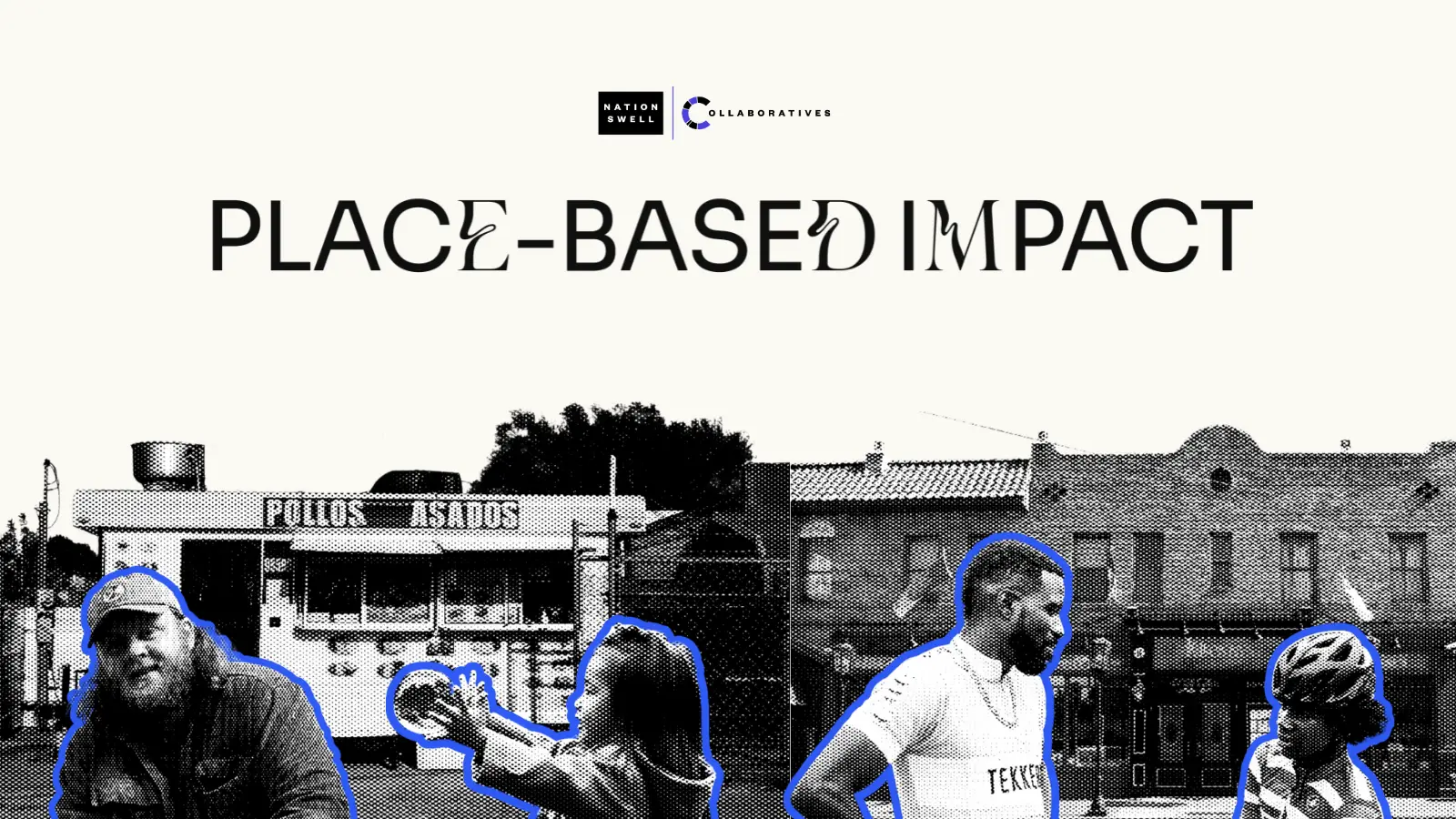
Place-Based Impact in Practice is an interactive guide designed to help funders and changemakers better understand, assess, and implement place-based strategies that create long-term community impact. Through practical frameworks, real-world case studies, interactive assessments, and a national action map, the platform explores how community-centered investment can help address challenges ranging from economic mobility to housing, workforce development, and climate resilience.

Built for philanthropy leaders, nonprofits, and cross-sector partners, the resource helps organizations move from theory to action by highlighting what effective place-based work looks like in practice and what it takes to build lasting, locally driven change


Share this report

NationSwell Launches the ‘Childcare for All’ Site from the Case for Childcare Collaborative

The Business Case for Childcare Benefits for Every Employee

Today NationSwell is proud to announce the launch of our expanded Case for Childcare Collaborative site advocating  for childcare for all workers. Employees—especially gig, hourly, part-time and frontline workers— across the country continue to face an uphill battle, punctuated by the ongoing childcare crisis in the United States. Frontline workers represent about 70% of the workforce with 90% of companies relying on these workers (BCG, Fortune). And yet, while only 14% of full-time workers have access to employer-sponsored childcare support, that number falls to 8% for part-time workers (U.S. Bureau of Labor Statistics). This demonstrates a childcare benefits gap, revealing those with the most to gain from these benefits are traditionally excluded from qualifying. The detrimental effects of a broken childcare system are glaringly apparent, with parents forced to leave careers in order to take care of children, and businesses suffering huge workforce losses. 

This was the instigation for NationSwell to launch the Case for Childcare site in February 2024, showcasing two years of research making the case for employer-supported childcare benefits, revealing the business opportunity of supporting employee childcare needs. 

Why focus on frontline workers?

But–a gap in our research remained—frontline workers have the most to gain from childcare support yet are traditionally excluded from benefits packages that are reserved for full-time, salaried employees. So we set our sights on an expansion of this site to build the case for employers to provide childcare benefits for all workers. Over the last year, we’ve focused our research on frontline workers, speaking with workers, advocates, and employers alike. This research highlighted the importance of these workers for businesses and the overall economy—leaving this demographic out of conversations around employer-based childcare support is a missed opportunity for companies to improve their retention, attraction, loyalty, and engagement of workers, ultimately boosting their bottom line. Today, we’re exposing the data that employers should support their worker’s childcare needs because it is both the right thing to do for people and the company.

Educate

With this launch, our Collaborative aims to put the spotlight on the research-backed value of supporting employer-sponsored childcare benefits for frontline workers so that more leaders can educate their colleagues and advocate for change.  If you need to make the case for childcare at your company, you can find easily downloadable materials that can serve as a pitch to leadership on why childcare benefits should be implemented or expanded for your workforce. Visit our site and request the synthesized research and solutions that you can use to pitch leaders and HR managers on the expansion of your childcare support for all workers.

Commit

You might be asking, “After I get buy-in, how can we get started? What can we offer as an employer to support caregivers?” The newly launched site includes a visualization of childcare solutions that range to fit any business, no matter where you’re starting from, whether it’s just starting to think about childcare support for the first time or adding cutting-edge policies to your already comprehensive benefits package. Explore each solution with resources and organizations to help you get started and examples of other companies who are implementing these kinds of support. Then commit to change, perhaps making a plan to reevaluate your care policies each quarter with executive leadership or starting to pilot one solution over the next six months. No matter where you start, start somewhere. Join others by committing publicly on our site—submit your story or commitment to be uploaded on our wall of examples. Together we can build a community of care. 

Share

Finally, we encourage you to share this site with your networks. Caregiving is undervalued in the United States and we’re on a mission to showcase the value of care for businesses and our economy. This site not only portrays the data on the clear business value in providing employer-supported care benefits for every employee, but it also features firsthand stories from business owners and workers who are parents. Listen to employers share how to accommodate childcare needs in the workplace for all workers—it’s not only possible, but practical. Hear from advocates on the unique barriers these workers face in regards to care. And listen to parents share their stories on the impact of employers who support the care movement. Post the site on your LinkedIn, text the link to a friend or family member, or reshare NationSwell’s social posts. Help us reframe the narrative to value care.

Conclusion

This site is a go-to hub for businesses and leaders to find information they need to not only build awareness of the business case for employer-supported childcare, but also, to provide tactical solutions that more employers can implement to grow the support for all workers to  have access to affordable, quality childcare that fits the needs of their family.

Visit the Case for Childcare Collaborative’s childcare for all expanded site to learn about the case for care for all workers, commit to implementing solutions, and share the information with your team and network. Help us forge a world where childcare is no longer a barrier for workers to remain and thrive in the workforce. Thank you to our partners at the Annie E. Casey Foundation, American Family Insurance Dreams Foundation and Pivotal Ventures for supporting this important work.


Read more about the Case for Childcare Collaborative

ESG Next: An Interview With Y Analytics’ Maryanne Hancock

At a moment of unprecedented attention, investment, and opportunity for the emerging field of Environmental, Social, and Governance (ESG), leaders are asking: Who is best preparing their organization for the society of the future? Who is innovating today to meet decades-long environmental and social goals? Who is setting standards that catalyze their industry’s change for the better? Who is defining what bold and aspirational look like — and how best to advance that work in practice?

Enter NationSwell’s ESG Next, an exemplary group of investors, executives, authors, philanthropists, social sector leaders, academics, and field builders who are helping to shape business as a force for social and environmental progress, advancing — and even pioneering — the most forward-thinking and effective programs, initiatives, technologies, methodologies, practices, and approaches.

For this installment, NationSwell interviewed Maryanne Hancock, CEO of Y Analytics, about the importance of centering rigor in impact investing, ESG’s “Fearless Girl” moment, and the surprising lessons that impact leaders can learn from an economist and a can of beans.

Greg Behrman, CEO + Founder, NationSwell: Can you tell us how your professional and personal journey led you to this work?

Maryanne Hancock, CEO of Y Analytics: If I ever get asked to share a fun fact about myself, it’s that my parents were clergy before they met, married, and had me.  My father was a priest, and my mother was a nun, and they were both quite active in the social justice movement at large. My father founded programs for kids addicted to drugs during the late sixties and early seventies, a time when such programs were nonexistent. He met people at often vulnerable points in their lives, helping them build new lives. To this day, there are people alive due to the work he did.

My mother, as a nun, took to teaching in historically marginalized communities. This overall milieu of social work wasn’t just a job for them, but a way of life. Because of them, I’ve always believed you really need to stand in awe of the burdens that people carry, as opposed to in judgment. It’s a philosophy that encourages one to honor, assist, and appreciate people facing adversities, and the complexities of the adversities they face.

Originally, I aspired to become a human rights lawyer, pursuing an education in law, especially humanitarian and human rights law. But a detour through McKinsey shifted my journey. While I was there, I maintained a client roster from the private sector, and I engaged with industries I found fascinating, even if they weren’t glamorous — like waste management, logistics, and energy sectors. At the same time, I delved into social sector projects. Interestingly, the attendees at my logistics or waste management meetings hardly ever overlapped with those at my education or poverty alleviation discussions, which gave me the sense that these were inherently distinct swim lanes. But now at Y Analytics, whether it’s a company engaged in the circular economy and waste, or a fin-tech firm operating in Africa, I get to have all these different interests under a singular umbrella as part of my daily routine.

Behrman, NationSwell: How do you make sense of this moment in ESG? What’s the potential and the promise, and where are the pitfalls?

Hancock, Y Analytics: The image that comes to my mind for the moment we are in societally is the Fearless Girl statue — where you’ve got the bull and the little girl standing there, staring him down. The conventional interpretation of the scene is that the charging bull represents unfettered capitalism, or the “old boys club” of Wall Street, and the Fearless Girl symbolizes the pursuit of gender equality – a counterweight to the imposing minotaur with smoke coming out of its nostrils. 

But I think it symbolizes something bigger. To me, the bull represents this vast set of societal issues we grapple with every day – geopolitical unrest, war, climate change, a pandemic…some so big and so powerful that they feel unstoppable or immovable. 

And then, there’s this Fearless Girl, which symbolizes how we feel amidst all these challenges. But here’s the thing I’m left thinking about: while we can’t ignore the enormity of the challenges symbolized by the bull, what I’d love for everyone to do is to look around and realize that there are thousands of Fearless Girls facing them. The pitfall is to believe you are isolated , as if you’re the only Fearless Girl out there, yet what I see every day are thousands and thousands of people embodying that spirit. This includes teachers, nurses, doctors, firefighters, community members, and also Fearless Girl’s physical home in New York’s financial district underscores the role that entrepreneurs, and the millions of people who go to work every day in businesses, play in meeting the moment.

What’s been inspiring to me is witnessing real actions and conversations happening within businesses — conversations that were unimaginable just five years ago. While the collective efforts may not seem enough to combat the metaphorical bull, recognizing and affirming the existence of these millions of Fearless Girls is crucial. We’ll be a better force for good when we acknowledge how strong this collective truly is.

It’s undeniable that social impact and sustainability practitioners are facing headwinds right now, but there are tailwinds, too. And together, these winds are steering us to a zone of quieter, yet more authentic action. The tailwinds are strong, and interestingly, they align well with good business practices. For instance, utilizing lower-cost energy sources that are renewable is smart business. So is offering products that benefit rather than harm people, and implementing employee policies that create a desirable workplace amidst a talent-driven landscape. These factors reinforce the strength of the tailwinds.

On the flip side, the reality of legal repercussions, varying state approaches, the politicization of these issues, and the potential backlash for greenwashing, might lead to a toned-down announcement of new initiatives and commitments. And this quieter approach isn’t necessarily negative. In my view, it’s probably beneficial. The quieter stance doesn’t undermine the solid tailwinds and the consequential actions they encourage.

Behrman, NationSwell: What’s unique about the work you’re leading?

Hancock, Y Analytics: When the Rise Fund began in 2016, it aimed to accomplish a few objectives. One was to usher scaled capital into the impact space, as there were endeavors to fund social entrepreneurs onto a path of growth, yet they were lacking a significant pool of capital to propel them from early growth to a further stage. That was part of the concept. At that point, the largest impact fund stood at about $500 million while the average was about $200 million, but the Rise Fund came in at $2.1 billion, aiming to attract institutional capital. To ensure this, they committed from the get-go to treat the impact aspect as rigorously as the financial aspect. So they envisioned what later became Y Analytics, an organization meant to bolster capital into impact companies by increasing the confidence in their impact. That was the fundamental premise behind our creation. 

And as they came together, it was actually a call from Jerome Vascellaro, a longtime leader at McKinsey who was then the COO at TPG, and someone well known to my mentors, that led to my involvement. That first call was followed by an engrossing weekend brainstorming at the whiteboard about what this endeavor could evolve into. The prospect of being serious and rigorous about impact, coupled with people who could take action immediately, was just so intriguing to me personally. That’s what made me make the leap.

Here’s what I love the most about what we get to do: we get to turn to the vast amount of research that’s out there about what works to help some of these social and environmental ills, and channel that into our investment decisions and actually make a difference. It’s been so fascinating to observe the evolution of evidence-based approaches in different fields, from evidence-based medicine in the 1980s to evidence-based policymaking in the 1990s and early 2000s. Our big innovation, which I just loved so much, is that we started to do evidence-based impact investing at scale. This methodology allows us to tap into the profound knowledge of individuals who are dedicated experts in specific areas of their fields, from soil’s carbon capture potential to the impacts of digital banking on small to medium enterprises in emerging markets. It’d be almost problematic to leave that expertise on the table.

But it’s also about the unique capabilities of our team. Our roster has included nuclear physicists, economists, and others with diverse expertise; we can bridge the chasm between academic insights and investment professionals, translating intricate research into investment strategies. This human capability, which is unique to have nested within a private equity firm context, can help translate academic discourse and parse through the jargon for insights to inform actionable investment decisions. This multidisciplinary approach isn’t just cool, it’s immensely invaluable in driving forward our mission.

Behrman, NationSwell: To which leadership practices do you contribute your efficacy?

Hancock, Y Analytics: It all boils down to striving for authentic action. I think that’s the key. And by the way, we might not hit that mark every day, but that’s certainly our goal. 

There’s only one joke that I’ve ever been able to remember: You’ve got three folks on a deserted island, and there’s a chemist, an engineer, and an economist, and they have one can of beans and they’re trying to figure out how they’re going to open this can of beans. So the chemist says, well, if we heat it to a certain boiling point, it’s going to explode and we can get it open. And the engineer says, if we hit it against this rock just the right way, it’s going to pop open. And the economist says, assume we have a can opener. 

When I used to think about that, I would laugh and say, oh, that’s so silly. We all know someone who made a comment like that, but then as I delved into this work, I actually started to reflect on that. What if we all thought about what would happen if we had the can opener, that we had the tool we actually needed? We’d see the value of getting the can open quickly and safely, of conserving more beans because they didn’t explode, and seeing that value would actually inspire us to build the can opener, to create the tools we need. Even if it’s not perfect, or it’s just a prototype. It’s really helpful to have a working hypothesis.

Behrman, NationSwell: Who or what informs and inspires your leadership?

Hancock, Y Analytics: Ayana Elizabeth Johnson’s work with All We Can Save is astoundingly well-conceived, an incredible set of resources for folks, and I admire the heck out of the entire approach from there. And I know he’s a fellow ESG Next honoree, but George Serafeim’s work with impact-weighted accounts is ground-breaking. It’s one of the closest analogs to what we do at Y Analytics.

Sara Menker of Grow Intelligence is a phenomenal CEO, coming from the commodities trading world, originally from Ethiopia. She has created a data company that really has a finger on the pulse of agriculture, physical climate risks and trends around the world. For example, her data immediately identified the drivers behind the current food crisis. She could see that fertilizer prices were spiking. She could see that crops in parts of Asia were failing because it was too wet. 

And lastly, I admire my colleagues at TPG Rise who are investing for impact with so much integrity and success. 

My favorite book would be “Tattoos on the Heart” by Father Greg Boyle.  From a podcast perspective, Hank Paulson’s “Straight Talk”  is excellent. He hosts some fantastic guests and covers really diverse topics. And then, for the psychology of doing the hard work of good work, I love listening to the storytelling of Dr. Bertice Berry. She’s an author, she’s a speaker, she’s done academic work as well in psychology, and she also does daily digital storytelling.


To learn more about how our ESG Next honorees are shaping business as a force for social and environmental good, visit the series hub. To learn more about NationSwell’s community of our country’s leading social impact and sustainability practitioners, visit our site.
Mapping the LER Ecosystem to Drive Equity

Mapping the LER Ecosystem to Drive Equity

CASE STUDIES

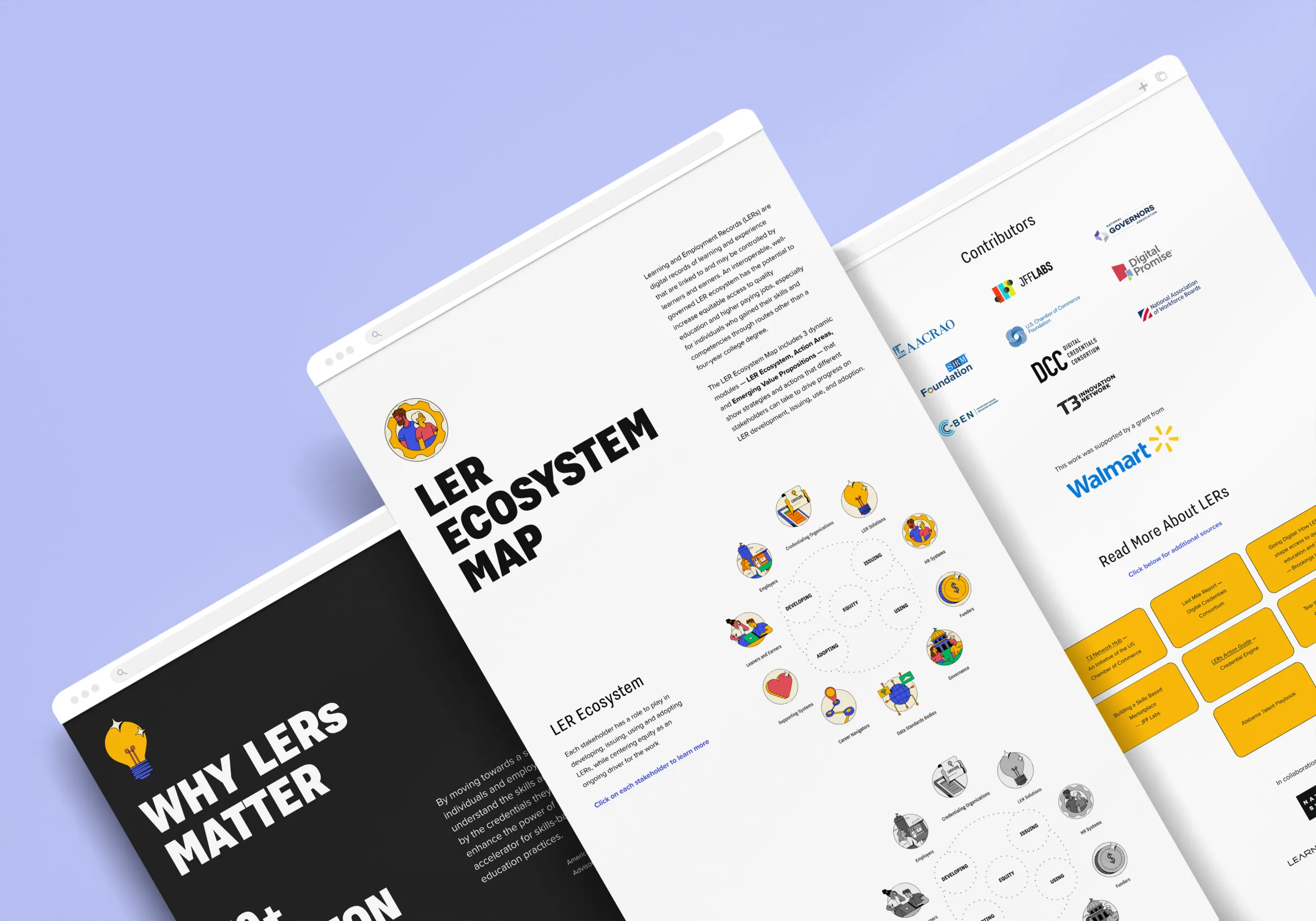
Learning and employment records (LERs) are a vital solution to accelerating the uptake of skills-based hiring while empowering learners and earners to be recognized for their full set of skills from work, education, credentialing, service and life experiences. However, widespread use of LERs is often hindered by a lack of clarity and collaboration amongst the many necessary stakeholders, including employers, credential providers, learners and earners, and policy makers.

Therefore, Walmart brought NationSwell on to work with a Steering Committee of experts in the education, credentialing, equity and hiring space, to create an LER Ecosystem Map that would help people connect the dots across the ecosystem and more easily see how they can take action to drive equity through LERs.

Organizations in the LER Ecosystem Map Steering Committee:

  • AACRAO
  • Competency-Based Education Network
  • Digital Credentials Consortium
  • Digital Promise
  • JFFLabs
  • National Association of Workforce Boards
  • National Governors Association
  • SHRM Foundation
  • T3 Innovation Network
  • U.S. Chamber of Commerce Foundation

NationSwell worked closely with the Steering Committee to undertake thorough research to establish the goals and needs for the LER Ecosystem Map.

Through desk research, in-depth interviews, a diverse focus group, workshops, and months of cross-team collaboration, content drafting, design work and data visualization, our teams engaged 50+ individuals to help develop an interactive digital experience, accessible to stakeholders across the ecosystem, that clearly demonstrates opportunities for engagement, collaboration and action.

Through our three workstreams — establishing a hypothesis, research and development — the team discovered learnings, opportunities to drive adoption, and insights gaps that informed how the LER Ecosystem Map should come to life. The map launched at a pivotal point in LER development, providing many large and small players in the space with vital clarity on how to take action.


Share this report

What we can learn from George Kaiser Family Foundation’s place-based work in Tulsa, Oklahoma

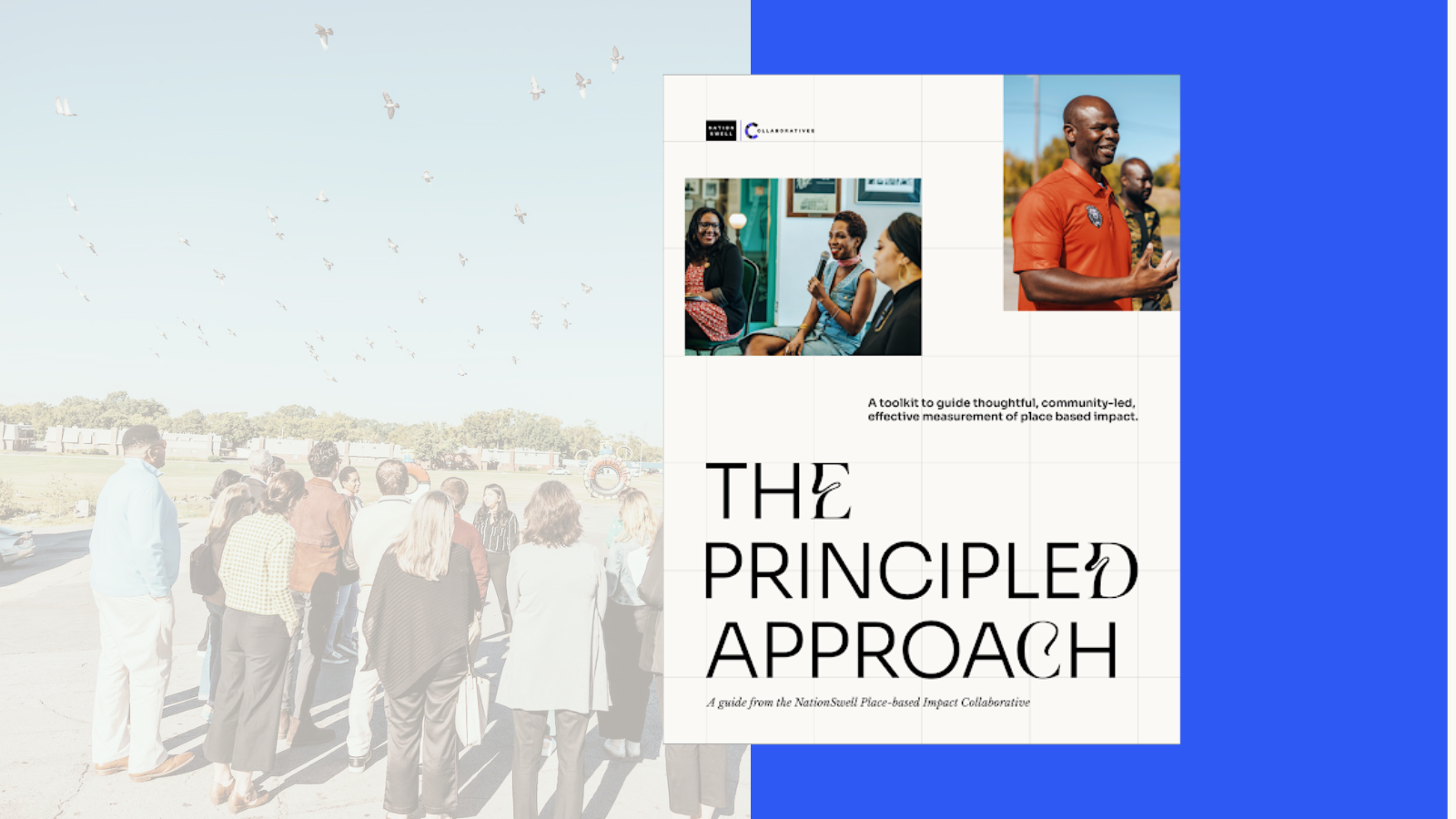
This fall, NationSwell launches its first immersive experience on October 18 and 19 in Tulsa, Oklahoma for Place-Based Impact in Practice: An Immersive Experience to Explore Community-Centered Funding and Action. Hosted by George Kaiser Family Foundation (GKFF) as part of our recently launched Place-Based Impact Collaborative, this hands-on event will take place over the course of one and a half days and will allow attendees to explore on-the-ground examples and innovative strategies to foster thriving and inclusive communities, particularly in fast-growing cities and rural areas. We’d love for you to join us.

But, you may be thinking, why Tulsa?

Since its establishment in 1999, George Kaiser Family Foundation has held, as its primary philanthropic goal, cementing Tulsa, Oklahoma, as a vibrant, inclusive, and prosperous environment where children and families can flourish. 

As the primary supporting organization of the Tulsa Community Foundation, GKFF funds organizations and efforts that directly service the greater Tulsa area, all while adhering to its guiding principle, “no child is responsible for the circumstances of [their] own birth.” Foundation investments include robust early childhood education initiatives that serve approximately 2,000 children in year-round education and care; over $100 million earmarked for the arts; economic development initiatives to attract and retain local businesses and talent as well as transform 100 acres of Tulsa’s iconic riverfront into a dynamic and world-class centralized park; neighborhood programs to foster a strong sense of community; and a work stipend program that has welcomed more than 2,500 diverse professionals to the city. 

GKFF harnesses a nimble, entrepreneurial spirit, which has helped to adeptly address community needs. Their approach is holistic and community-centered and driven–designed to lead with the community’s needs so that children and families in Tulsa can thrive. What sets their investment strategy apart from other philanthropic models is that it’s not only nuanced, but multi-pronged–touching almost every part of the Tulsa ecosystem. Parent engagement and early childhood education, health and family well-being, civic enhancement, and breaking the cycle of intergenerational poverty are all vital pillars of community prosperity.

George Kaiser Family Foundation’s holistic approach

In order to create and maintain the conditions for a thriving local community, GKFF has taken a holistic, all-encompassing approach to funding that sees early childhood education; health and wellbeing; neighborhood development; thriving public spaces; criminal justice; housing; and arts & culture as vital pillars of economic prosperity. During an onsite visit in March 2023, NationSwell got a firsthand look at how these key initiatives operate on the ground in Tulsa; below are some of the highlights we observed.

  • Parent Engagement and Early Childhood Education

GKFF provides support and resources to young Tulsa families to encourage parent‐child engagement and interaction. Through initiatives like Tulsa Educare and Early Learning Works, families and children are encouraged to pursue skill-building opportunities and early learning workshops, and are given the chance to connect with community and faith-based organizations that help to promote literacy and learning.

  • Civic Enhancement

Robust public spaces provide abundant natural spaces for residents to relax, convene and unplug. Tulsa’s 100-acre riverfront park, Gathering Place, now boasts a skate park, a picnic grove, cultural events and festivals for all ages, and free educational programming to support early childhood development. A $465 million transformation of more than 66 acres in central Tulsa, the park is one of the largest and most ambitious public parks ever created with private funds. The Foundation undertook a similarly ambitious project with Guthrie Green — a former truck loading facility that has now been converted into a 2.6-acre urban park, located in the heart of the Tulsa Arts District and a true living room for cultural programming in downtown Tulsa. 

Investments in a thriving arts scene and strong cultural values are integral to GKFF’s community approach. Both the Bob Dylan Center and the Woody Guthrie Center operate under auspices of the American Song Archives, a project of George Kaiser Family Foundation, and dedicated artist residencies, fellowships, and programming helps to further stimulate Tulsa’s growing arts community. 

In the same Tulsa Arts District as Guthrie Green sits the GKFF-funded Holberton School–a credentialing school for software developers. In addition to training career-ready developers, Holberton provides living stipends to students and tuition incentives to stay in Tulsa both pre- and post-graduation. 

Partnership is at GKFF’s core. GKFF takes a program-forward approach — meaning the Foundation serves as co- or sole owner of many of the LLCs that operate the aforementioned initiatives in Tulsa. When visiting the city, you can explore parks, cafes, bakeries, restaurants, food trucks, and programming initiatives that provide Tulsa residents with meaningful ways to stay engaged in their communities. 

  • Workforce Development

GKFF’s dedication to developing Tulsa’s tech-led inclusive economy is something to aspire to. Tulsa Innovation Labs (TIL) was founded with support from GKFF to establish a city-wide strategy for inclusive, tech-led growth. TIL designs and launches economic and workforce development initiatives in Tulsa’s four emerging tech clusters: virtual health, energy tech, advanced air mobility and cyber, and aims to support the growth of startups, train diverse talent, expand job opportunities, and spur academic innovation. And through the network of local workforce programs in Tulsa, businesses can more easily connect with key hires and launch operations in Tulsa via inTulsa’s talent, relocation, and growth solutions.

36 Degrees North — Tulsa’s basecamp for entrepreneurs, innovators, and startups — works to provide the high-quality workspace, resources, and spirited community that entrepreneurs need to build growing companies and drive economic impact in Tulsa. Workforce development programs like Tulsa Remote — which offers participants a $10,000 grant in addition to a membership at a local co-working space, support in identifying housing, and regular community-building opportunities — have helped draw new workers into Tulsa and boost retention rates for local populations.

  • Health and Family Well-Being

To address the longstanding problem of high recidivism rates in Tulsa County, GKFF has partnered with the Justice and Mobility Fund to launch JusticeLink — a compendium of resources designed to help those navigating the criminal legal system in Tulsa to access a full spectrum of community-based services. JusticeLink primarily focuses on providing court and resource navigation, while also helping individuals to access wraparound supports like phones, IDs, or benefits enrollment services.

And through neighborhood development initiatives like ElevateEast — which works collaboratively with residents, community-based organizations, and public and private entities to invest and support immigrant families living in East Tulsa — residents can further access the wraparound support they need to thrive.

Affordable housing also has a huge role to play in ensuring family wellbeing, and neighborhood development initiatives like Growing Together and Kendall Whittier West Park have been intentionally designed to create vibrant, mixed-income communities and an intense focus on the birth-to-college-to-career pipeline.

  • The Tulsa Artist Fellowship
    Dedicated artist residencies, fellowships, and programming helps to further stimulate Tulsa’s growing arts community. Established in 2015, Tulsa Artist Fellowship was created to address and mitigate the challenges facing artists and arts workers living in and joining the city. Through intentionally crafted programming, the Fellowship celebrates and supports artists across all mediums by providing them with $150,000 over three years in addition to a $12,000 yearly housing stipend. 

Stronger together

GKFF’s approach has necessitated a rethinking of scale and impact as being simultaneously micro and macro. Seemingly hyperlocal initiatives — like the neighborhood development in Kendall Whittier, or the transformation of public spaces into vibrant parks — can scale to an overall transformation that impacts community members’ wellbeing and livelihood. For GKFF, scale is ultimately not about reaching hundreds of millions of people to solve for one issue; it’s about making meaningful and impactful investments that tackle root causes, identify and address social determinants, and take into account the specific moments that come together to make up a well-lived life.

All of us invested in place-based work can learn from GKFF’s approach, bring insights back to our communities, and integrate them into our own strategies — all uniquely tailored to each place. Place-based strategies are inherently collaborative and rely on strong partnerships: together, we can learn from each other, lean on each other’s strengths, and propel strategies that have a community’s best interest at its core.  

This is why we can’t wait to share in the Tulsa experience and the work of GKFF with the broader NationSwell Community this Fall! If you are interested in joining us you can register here or learn more about GKFF’s work or the Immersive Experience on October 18-19 by emailing Joy Gregory at [email protected].

ESG Next: An Interview With Seventh Generation’s Alison Whritenour

At a moment of unprecedented attention, investment, and opportunity for the emerging field of ESG, leaders are asking: Who is best preparing their organization for the society of the future? Who is innovating today to meet decades-long environmental and social goals? Who is setting standards that catalyze their industry’s change for the better? Who is defining what bold and aspirational look like — and how best to advance that work in practice?

Enter NationSwell’s ESG Next, an exemplary group of investors, executives, authors, philanthropists, social sector leaders, academics, and field builders who are helping to shape business as a force for social and environmental progress, advancing — and even pioneering — the most forward-thinking and effective programs, initiatives, technologies, methodologies, practices, and approaches.

For this installment, NationSwell interviewed Alison Whritenour, Chief Executive Officer at Seventh Generation, about her journey from traditional marketing to corporate social responsibility, her concerns about this moment in ESG, and how her hope that Seventh Generation’s new approach to CSR reporting will provide the blueprint for its future.

Greg Behrman, CEO + Founder, NationSwell: How did your personal and professional journey to the field of ESG begin?

Alison Whritenour, CEO, Seventh Generation: My career kicked off in traditional consumer packaged goods fashion at Colgate-Palmolive. It’s a wonderful company, and I learned tremendously, but during that time, I realized that many of the things I was interested in weren’t being addressed from a brand and product perspective. At the time, sustainability wasn’t really a hot topic yet, but it was undeniably where all my passions lay. I was thinking about things like non-toxicity, having fewer chemicals, how a product’s ingredients interact with human health. 

Following those interests gave me my way in: I started exploring how I could apply my passion for brand management to companies I personally believed in and used in my own life. On a whim, I applied through a LinkedIn post to Seventh Generation, which I hadn’t heard much about. They were in Vermont — far from home.

Seventh Generation invited me to come up for an interview, so I went. I spent a day at the office I now work in, and I met incredible people who are, at their core, genuinely interested in changing the world and in thinking about doing business differently.

I was applying for a junior level in the organization, so it was a significant decision to take the job considering I’d be moving my whole family to Vermont. But I was inspired by the idea that business could be done differently from what I’d learned in school — from even what I’d seen at a large company. So I thought, “Why not take this chance? I can always go back.”

People often talk about gut instinct, and I tend to rely on it. That’s how I entered this field. It’s funny because people now ask how I got into ESG or CSR. I tell them, “I didn’t!” And that’s the truth. I just loved the company and what it stood for. Along the way, I’ve learned a lot about what those concepts actually mean and the impact they can have, but a lot of it wasn’t formalized when I started in this space more than 10 years ago. It was genuine interest that led me to this work, and it’s really been what’s driving me ever since.

Behrman, NationSwell: How do you define this moment in ESG?

Whritenour, Seventh Generation: This stage concerns me. We’ve seen many companies adopt ambitious goals, and communicate them to the world. But then what happens to those amazing goals? They shift, they get scaled back, or they just don’t materialize. I’m not seeing the accountability that we need to make sure that business is going to be a driving force in solving the environmental challenges of our time. This is the most urgent moment for our environment, and the combination of big goals not materializing and very real challenges facing business leaders and consumers is a collision that’s really getting in the way of impact and action.

I hope that a company like Seventh Generation can continue to be a great proof point that sustainable practices are possible despite various circumstances. We aren’t a huge company, but what we can do is really influence and punch above our weight class. And that’s really where we see the magic is helping move the big guys along who are going to have the most impact.

Behrman, NationSwell: What are some initiatives you and your team are driving at Seventh Generation that you think are noteworthy or that show promising signs of advancing the field?

Whritenour, Seventh Generation: There’s often a misconception that sustainability or corporate social responsibility (CSR) occurs in isolated environments. I have the privilege of running a company that was essentially founded on the idea of CSR. We have a genuine mission to transform the world into a healthier, more sustainable, and equitable place, and this guides all of our decisions. We have a rigorous set of product standards and practice radical transparency both internally and externally. 

We are a B Corp, and all of those things were here before I got here, before many of us got here. It’s in the DNA of the company to really serve as an example of what happens when CSR isn’t a standalone concept or an afterthought, but when the business itself is actually born from the idea of doing more than just delivering profit to shareholders, but truly standing for people, planet, and profitability. That’s how we run the company, that’s how my predecessors ran the company, and that’s how I’ve inherited the role. 

It’s a really important part of how this works because when I think about sustainability teams or CSR teams in bigger organizations, I think they’re often just considered around big decisions — you get their inputs, maybe you consider them, maybe you don’t, and then you just do what you were going to do already. 

But at Seventh Generation, our chief impact officer, the leader of our corporate consciousness — which represents advocacy and sustainability — sits on our leadership team. It’s a powerful reminder that you can’t make the easy decision. 

One key approach that sets us apart is the way we think about storytelling: We need everyone to understand the sustainability of our products the same way that they would understand the science of our products or what products claim to do. So for our marketers, your job is to innovate sustainability forward, all while finding a way to continue to hold our product standards as you do that. And that’s true across every function, but it really becomes the ethos for how these really hard decisions are made because there’s no shortcuts here. It’s all of our jobs.

In 2022, we came out with what we’re calling our Fingerprints report, which is truly the next generation of CSR reporting. We did our first CSR reporting in 2004, and we were one of the only companies to really do that at the time, so we’ve been in this for a while, and we’ve inspired a lot of Fortune 500 companies to do the same. But this year, we were really grappling with the question of what does the future of CSR reporting, of work like the work we’re leading, actually look like? 

It led our team down a path of not just looking at your carbon footprint, because this really is about everything we touch. The thesis around Fingerprints is that you really follow the impact of everything you touch, not just what you create. The most tangible examples being the investments you make, the services that you invest in, where you do your banking and where banks are investing your money.

Success for us looks like one other industry partner doing this, because if they do this, it can cement this approach as the reporting of the future.

Behrman, NationSwell: To which leadership practices do you most attribute your success?

Whritenour, Seventh Generation: A few things come to mind. First, I genuinely believe in what I do. I really give a shit, and am committed to leading this company to the next milestone. If we get there, we can be a successful business model that shows the whole world that this is possible. I am purposeful in making sure I show up every day with this ethos in mind.

Second, I take the role of being an empathetic leader very seriously, and there’s power in that. If you understand where you are, then you can understand where your team and where your consumers are, and you can address their needs and concerns as though they’re your own. This human connection is critical to the work we do.

Behrman, NationSwell: Who are some leaders in the field you admire, and who inspires you on a regular basis?

Whritenour, Seventh Generation: It’s funny you should ask me that question because I’ve been asking that question to others since I came into this job. To be honest with you, I don’t know how many people are out there doing roles exactly like mine. I’m someone who deeply values female leadership, and for me, other women doing this work and leading this work are where I find most of my inspiration. That’s been a sweet spot for me: Finding other women in the climate movement who are also willing to stand up and lead a company in that direction. 

Jenna Johnson, President of Patagonia, is one of these women. As a fellow leader in the space, she’s someone out there living the operational complexity of running incredible legacy businesses that stand for so much. She’s a true champion of not only the vision for driving sustainability forward, or in Patagonia’s case, raising the bar, but also what it takes from an operating model, financial delivery, and ensuring employee well-being. I take a lot of notes from her, especially regarding the challenges she’s wrangling these days.

Winona LaDuke joined one of our community conversations, and if you don’t know Winona, she is an Indigenous frontline community member and the executive director of Honor the Earth. She’s a total badass who doesn’t hesitate to tell people what they need to do to protect the sacred land she deeply believes in. I think the radical energy she brings to conversations is amazing, and she and her tribal partners represent a remarkable commitment to being true stewards of the environment and land around them. I’ve continued to watch her.

I always follow what The Sunrise Project is up to. I think the voices of the youth right now are crucial. I’m focused on what the next generation is calling for, and their willingness to take action gives me a lot of inspiration. I tend to follow their work and actions because they’re articulating what’s needed so well right now.

I’ve also been finding inspiration from podcasts — and one I’ve been following is Michael Gervais’s Finding Mastery. As a sports psychologist, he interviews people about how they become experts in their fields from a leadership perspective, physical perspective, and mental standpoint. Although I know nothing about sports, listening to this podcast has been enlightening and has provided me with some out-of-the-box applications for myself.


To learn more about how our ESG Next honorees are shaping business as a force for social and environmental good, visit the series hub

ESG Next: An Interview With Nike’s Caitlin Morris

At a moment of unprecedented attention, investment, and opportunity for the emerging field of ESG, leaders are asking: Who is best preparing their organization for the society of the future? Who is innovating today to meet decades-long environmental and social goals? Who is setting standards that catalyze their industry’s change for the better? Who is defining what bold and aspirational look like — and how best to advance that work in practice? 

Enter NationSwell’s ESG Next, an exemplary group of investors, executives, authors, philanthropists, social sector leaders, academics, and field builders who are helping to shape business as a force for social and environmental progress, advancing — and even pioneering — the most forward-thinking and effective programs, initiatives, technologies, methodologies, practices, and approaches. 

For this installment, NationSwell interviewed Caitlin Morris, Vice President of Social + Community Impact at Nike, about this moment in ESG, the intertwining of people and planet, and the unique power of measurement not to gauge impact,  but actually facilitate it. 

Greg Behrman, CEO + Founder, NationSwell: How did your personal and professional journey to the field of ESG begin? 

Caitlin Morris, Vice President, Social + Community Impact, Nike: My journey to this field began almost by accident. I graduated from the University of Virginia during a recession, and I didn’t really know what I wanted to do next. I went to Hungary to teach English my first year out of school. 

My second year there, I worked for a consulting firm as the only native English speaker in the office, where I had some high-profile accounts. I specifically recall my secretary saving all her money to buy a pair of Levi’s, highlighting the power of American business as a force for good. But like any situation where you think you’re giving something, you get more than you give. I learned a lot from Hungarians about a diversity of worldviews, and about not taking things for granted.

After returning to the U.S. from Hungary, I worked at a consulting firm focused on capital markets development. I was drawn to the idea that we could make a difference by changing government structures to be more open and democratic through capitalism. My path was set early on, and it would eventually lead me to Nike. 

I joined Nike because of their first Community Impact report — it wasn’t because of Michael Jordan or any great sports moments, but because of the innovation they were driving around corporate responsibility. 

Behrman, NationSwell: How do you define this moment in ESG? 

Morris, Nike: I don’t really think ESG is a framework. It’s more of a collection of letters that roll nicely off the tongue. But the environmental piece of ESG is critically important, and at the same time, it often gets elevated over social without people recognizing the strong intersectionality between the two. 

I don’t disagree that we need sharp measurement on environmental factors, but people and the planet are two intertwined issues. If you don’t solve poverty and other challenges that communities are facing in their daily lives, we’re going to continue to make decisions that aren’t good for the planet. My team sits in social and community impact, so we lead with the people piece. That doesn’t mean we don’t see the intersectionality with the environment. It’s part of why we launched the Community Climate Resilience Fund, where we’re directly investing in intersectionality with the Trust for Public Land

My team has never been in more demand from the brand. Community used to be a “nice to have”; now it’s “table stakes” for companies. As you look at the Edelman Trust Barometer, consumers expect companies to solve problems more than they expect governments to. So, we have to have a clear point of view on which issues we take a stand on and how we’re addressing them. I feel proud that we have a team that can stick with long-term change around physical activity and supporting leaders who are working to address social justice issues. 

This moment in ESG brings so much excitement, but that excitement also brings challenges. Everyone grew up in a community, so the passion for thinking about the community component of social factors can feel quite outsized. That passion comes from an authentic and honest place, but it can be noisy, and the noise makes it difficult to maintain focus on the strategy, all while giving it enough space to

constantly evolve and emerge. The challenge is to balance the desire to keep people focused and to be flexible and responsive to current issues. 

Behrman, NationSwell: What are some initiatives you and your team are driving at Nike that you think are noteworthy, or that show promising signs of advancing the field? 

Morris, Nike: Nike has a mission, vision, and purpose — and the purpose part is relatively new for the company. This guiding principle has made our work central to the company’s operations, which is exciting. 

One of our most important initiatives began with a big framework: believing the world needed to understand the global cost of inactivity. We created Designed to Move, an advocacy play that we hoped would catalyze a movement around physical activity. For Designed to Move, the theory of change is supported by science. We collaborated with scientists to understand the various benefits that come from sports, and we learned that it’s a uniquely efficient investment — it pretty singularly combines physical literacy, emotional intelligence, and cognitive function. As the nexus of all of those things, it has been undervalued. 

So, for Designed to Move, our theory of change had two key focuses: one is integrating physical activity back into everyday life, the second is providing kids with early positive experiences in sports and play. 

At an individual level, it’s crucial to give children the ability, confidence, and desire to be active, as this sets them up for a lifetime of activity. The cycle is intergenerational — inactive adults are two times more likely to have inactive children. When we provide kids with positive early experiences in sports and play, they continue engaging in these activities. We began with a high-level macro approach, and then shifted to more programmatic work, testing innovations on the ground to gather proof points and inspirational stories. 

Another initiative I’d like to spotlight is the Nike Community Ambassador Program. This initiative excites me because it demonstrates the power of measurement and using the company’s full resources. The program involves training retail athletes to be coaches in local community organizations. What I love about this is that it was driven by insight. For instance, in Seattle, a group of Nike retailers were volunteering

at a school when the PE teacher left them in charge of 50 kids, assuming they could handle a PE class since they were associated with Nike. 

This experience highlighted the need for our teams to be better equipped as coaches in the field. The program began as a way to rally teams around the cause of getting kids active and walking our talk. We believe that quality trained coaches are critical to a child’s experience, so we can’t have untrained employees volunteering. What we didn’t expect was the incredible impact this program had on the employees and their connection to the brand. Some Nike employees may have grown up in the local Boys and Girls Club and now are returning to volunteer at a place that was meaningful to them. Others might have a master’s degree in sports science and are working retail because it was the available job. 

These employees didn’t necessarily see a future for themselves in retail, but now they’re able to use their knowledge and apply it in the community. This has unlocked a different reaction regarding their longevity with the brand. The program allows us to test our coaching materials, authentically engage with communities on a larger scale, and drive an employee engagement strategy that delivers returns to the brand. 

Behrman, NationSwell: How are you measuring and evaluating the success of your initiatives? 

Morris, Nike: Nike’s power lies in innovation and inspiration, and when we are at our best, we utilize the full power of the brand along with my team’s work on the ground. About seven years ago, we transitioned from a separate mission-based team to the company’s philanthropy center. As the company’s budget grew, so did ours, allowing us to do some exciting things. 

We’ve invested in digital tools for scaling our reach, providing resources such as coaching guides and inclusive coaching tools. We adopted a collective impact approach, focusing on local partnerships and place-based investment. This enables us to align our efforts on a city or neighborhood level and measure the impact of our work. I do think that this power of partnership at a local level is absolutely profound: You can’t get scale without first making a hyperlocal impact and measuring it properly.

Speaking of measurement, our increased budget gives us more tools to better measure our efficacy, ensuring our work is genuinely effective. With a smaller budget, you want to spend all your money doing good work. As your budget grows, you can be more honest about assessing your performance and asking, “Well, we’re doing it, but is it really working?” 

Effectively measuring our progress is new territory for us. We’ve been good at selling inspirational concepts and catalyzing movements, and now we’re prioritizing holding ourselves accountable by leveraging both internal and external tools to measure our reach. 

We’re also getting granular with measurement, even measuring the effectiveness of our tools. We’ve historically built things in partnership with experts and gained insights from users, and now we have experts examining how well our tools are being used. 

Behrman, NationSwell: To which leadership practices do you most attribute your success? 

Morris, Nike: Stakeholder engagement has been the connecting thread of my career. I make a dedicated effort to actively listen. Great leaders are excellent communicators, and communication starts with listening. That, for me, is probably my connecting thread and belief. People often ask why I stay at Nike. I stay because of our commitment to innovation and the people. I am fortunate to lead and partner with a team of 70 incredibly intelligent individuals, and my job as a leader is to be a multiplier for them, helping them do their best work. 

Behrman, NationSwell: Who are some leaders who inspire your work? 

Morris, Nike: My first choice is Shelly Omilade Bell, founder of Black Girl Ventures. Shelly is entrepreneurial, creative, and authentic in everything she does. She radiates energy and possesses the wisdom to lead her organization forward while recognizing that her role may need to change over time. It is not easy for founders to do this, and she is doing it brilliantly. 

Charlie Brown, CEO of Context Partners, also comes to mind. I’ve known Charlie for a long time and admire his work, starting at Ashoka, where the power lies in believing in individual game-changers. Charlie’s philosophy centers on the idea that no one achieves success on their own — we always do it in a community. I have learned a lot from Charlie, who has not been afraid to reinvent himself. As someone who has been consistent in my career, I am always impressed by people who take risks and change things up. 

Last but not least, there’s Maria Bobenrieth, CEO of Women Win. What I love about Maria is her constant joy. She has a saying, “Don’t get angry, get curious.” She leads with joy and innovation, changing how we support women and girls through sport. We have collaborated on our first participatory grant-making initiative outside of our employees: the ONSIDE Fund, funded by us and Puma. While there has been good collaboration on the labor rights side, there has been less collaboration on community impact. The Onside Fund and the participatory grant-making initiative, as well as the ability to co-fund with others in the industry, are fascinating. 

Alongside those leaders, I’ve also become a big podcast fan. I keep going back to “No Off Season,” a Nike podcast that features Megan Bartlett from the Center for Healing and Justice through Sport. I highly recommend it. 


To learn more about how our ESG Next honorees are shaping business as a force for social and environmental good, visit the series hub. Nike is a NationSwell Institutional Member. To learn more about membership in NationSwell’s community of leading social impact and sustainability practitioners, visit our site.