Predicting the Future of Work: Using Data to Build More Inclusive Workforce Systems

As AI and automation accelerate change across the labor market, predictive analytics offer powerful tools to anticipate which jobs, skills, and communities face the greatest risk – and where new opportunities are emerging.

On April 14, NationSwell convened a group of cross-sector leaders for a conversation on how data-driven insights can inform equitable training pathways, smarter investments, and workforce systems that are more responsive, inclusive, and resilient – ensuring workers are prepared for what’s next. Some of the most salient takeaways from the discussion appear below:


Key takeaways

Build workforce systems around capabilities, not credentials. A skills-first labor market only works if the underlying data infrastructure can recognize how people actually build skills through work, not just through degrees. When systems continue to privilege credential proxies over demonstrated capability, they miss large pools of qualified talent and reinforce inequities that workforce initiatives are meant to solve.

Pair predictive tools with better upstream data. Forecasting tools are only as strong as the signals they rely on. If workforce data continues to over-index on traditional credentials or lagging indicators, even sophisticated models will reproduce old blind spots; the real opportunity is to feed these systems richer, skills-based, real-world signals that surface emerging pathways earlier.

Invest in verified outcomes data, not just self-reported program metrics. Too much workforce decision-making still depends on incomplete or anecdotal outcome data. Expanding access to administrative wage data and other verified sources can help providers understand which programs are actually driving employment and earnings gains, and make more strategic decisions about what to scale, refine, or retire.

Use labor market data to map mobility, not just demand. It is not enough to know which jobs are growing. More useful systems help workers and practitioners understand how people can move from one role to the next based on shared skills, adjacent occupations, and realistic transition pathways, especially in a labor market where workers will increasingly need to pivot across sectors over time.

Treat durable human skills as core infrastructure. As AI and automation continue to reshape tasks, foundational capabilities like problem-solving, judgment, adaptability, collaboration, and communication are becoming more valuable. Technical requirements will keep evolving, but these underlying skills are what allow workers to remain resilient and mobile across changing tools, roles, and industries.

Redesign learning environments for experiential learning, not just memorization. Traditional teaching methodologies are increasingly challenged in a labor market where workers are expected to interpret information, make decisions, and adapt in real time. Experiential learning where people must apply knowledge, navigate ambiguity, and solve real problems better prepares learners for a world in which execution is increasingly automated and judgment is the differentiator.

Center the learner’s lived experience when designing workforce pathways. Workforce systems often default to employer demand signals and institutional priorities, but durable pathways require equal attention to how individuals actually make decisions. People choose careers based on identity, values, belonging, perceived risk, and developmental stage so the strongest systems help learners navigate options rather than simply presenting them.

Avoid replacing one rigid pathway with another. As enthusiasm grows around alternatives to four-year degrees, there is a risk of steering lower-income learners into workforce tracks while more privileged peers retain access to broader optionality. The goal is not to substitute “college for some, training for others,” but to build multiple high-quality pathways that preserve dignity, mobility, and long-term choice across backgrounds.Reframe middle-skill and nontraditional career paths as real engines of mobility. Many high-demand roles outside the traditional college track now offer strong wages, lower debt burden, and meaningful advancement potential, yet outdated perceptions still diminish their value. Shifting both rhetoric and practice to put career and college readiness on more equal footing is essential if workforce systems are going to reflect today’s economic realities.

The New Playbook for Impact Comms and Public Reporting

The standard playbook for corporate impact reports and public communications has been unsettled by shifting political pressures, cultural attitudes, attention scarcity, and the introduction of AI. Yet companies still need to explain what they stand for, show progress, and build credibility with employees, investors, and the public. The organizations currently excelling in this space share a set of key attributes: a deep understanding of their audiences; auditable data; insight-driven storytelling; and the ability to adapt.

During an April 7 virtual Leader Roundtable on The New Playbook for Impact Comms and Public Reporting, leaders from the NationSwell community challenged us to rethink how data and narrative interact to showcase how the data shapes the story. We’ve collected some of the most salient insights from the conversation below, should you wish to revisit them:

Key Takeaways:

Design your communications strategy around clearly defined audience segments. Effective storytelling starts with identifying who you need to reach and what matters most to each group, then tailoring messages to reflect their priorities. This often requires translating technical language into relevant business or social outcomes and creating multiple entry points into your core narrative. Always ask, “Why should this audience care?” and adapt messaging accordingly.

Anchor communications in credible data and use narrative to bring it to life. Build reporting on auditable data, then use storytelling to explain the outcomes and human impact behind those numbers. Treat data as the backbone of your communications, and narrative as the mechanism that connects evidence to impact. This allows you to humanize outcomes rather than leading with corporate frameworks alone, ensuring your message sticks.

Maintain a consistent core message while adapting delivery to changing external conditions. Establish stable principles and core truths, but adjust tone, framing, and distribution channels as political and regulatory contexts shift. Flexibility in messaging preserves credibility, manages risk, and ensures communications remain relevant in dynamic environments.

Focus storytelling on narratives that deliver the greatest strategic value. Prioritize concise, data-backed, and purpose-driven communications over exhaustive reports. Highlight stories that connect social impact to business goals, emphasize outcomes, and avoid overcommunicating. Limited attention and reporting space require identifying the stories that move the needle most effectively.

Align impact initiatives directly to business performance and risk mitigation. Link programs to measurable business outcomes such as revenue, talent retention, or risk reduction to demonstrate their material importance. Position impact activities as contributors to core enterprise value, showcasing how “doing good” drives both social and business outcomes. This tactic proves especially critical when engaging executive leadership, including the CFO and other financial decision-makers.

Create a cross-enterprise ecosystem of reporting. Engage key stakeholders across functions, such as materiality, risk, and assurance, to build a connected village of reporting that supports consistent, credible communications. Identify the connective tissues between social impact, business performance, and brand positioning to uncover better opportunities in the marketplace.

Frame workforce and inclusion communications around enterprise-wide value. Emphasize outcomes that benefit the full employee population, such as talent development or retention, rather than narrowly focusing on specific population groups. Expand DEI storytelling to include pathways for veterans, first-generation employees, and multiple demographic segments to maintain credibility and mitigate potential backlash.

Leverage technology and AI to accelerate data analysis and broaden reporting capabilities. Deploy digital tools to streamline data collection and analysis, model potential outcomes, and generate actionable insights efficiently. Consider AI tools to explore multimedia formats for your reports to increase audience accessibility and engagement.

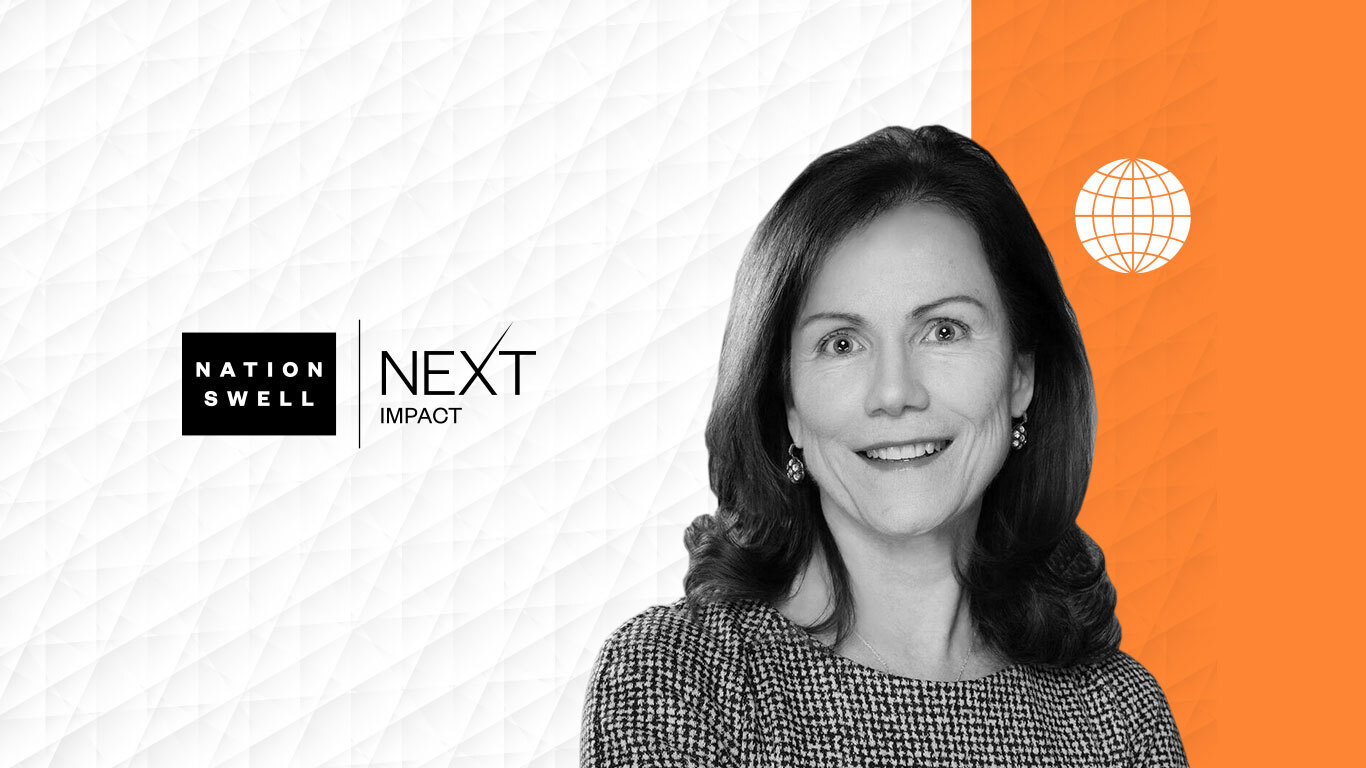
Impact Next: An interview with One Mind’s Kathy Pike

At a moment of inequality and division, who is advancing the vanguard of economic and social progress to bolster under-served communities? Whose work is fostering the inclusive growth that ensures every individual thrives? Who will set the ambitious standards that mobilize whole industries, challenging their peers to reach new altitudes of social impact?

In 2026, Impact Next — an editorial flagship series from NationSwell — will spotlight the standard-bearing corporate social responsibility and impact leaders, entrepreneurs, experts, and philanthropists whose catalytic work has the potential to shape the landscape of progress amid urgent need for social and economic action.

For this installment, NationSwell interviewed Kathy Pike, President and CEO of One Mind. Here’s what she had to say:


Ray Hutchison, Vice President of Community Engagement, NationSwell: What brought you to the field that you’re in now? Was there an early moment or a formative experience that helped shape how you arrived at this role, or your leadership?

Dr. Kathy Pike, President and CEO of One Mind: Before I became CEO of One Mind, I spent 35 years as an academic, as a professor at Columbia University in the Department of Psychiatry and the School of Public Health. Academia is a kind of priesthood, and moving from a full-time faculty role into leading a nonprofit is not a transition most academics make. So something had to shift for me, and it really came down to a couple of moments.

About ten years ago, I was invited by a large multinational company in New York to give a talk on mental health and well-being. I went in for an in-person prep meeting, and they told me there was one condition: I couldn’t say “mental health” or “mental illness.” Those terms were considered too alienating, too stigmatizing. They wanted the talk framed entirely around stress, coping, and resilience.

That stayed with me. The discomfort around even naming mental health felt incredibly restrictive, and I remember giving those kinds of talks and feeling like progress was painfully slow.

Then, a few years ago, after COVID, I was invited back to that same company to give a similar talk. When I walked in, there was a large sign on the door that read something like: “Feeling anxious? Depressed? Want to talk? I’m a mental health ambassador.”

That was a crystallizing moment for me. It was clear we had entered a genuinely new era, one where people were paying real attention to mental health and well-being. And with that shift came a huge opportunity to bridge what we know from rigorous science with what is actually happening in workplaces and communities.

I have always been deeply committed to translational science, to the question of how we take what we know and get it into the hands of people who can use it. That moment made it clear to me that the bridge between science and practice needed to be stronger, and that I wanted to lean fully into building it. When the opportunity came to join One Mind, it felt like exactly the right place to focus that work, to help ensure that what reaches people is grounded in strong science and actually makes a difference in their lives.

Hutchison, NationSwell: What is the “North Star” of your leadership style, and how has it changed over time? What is it about the way that you lead in the space that makes you an effective leader?

Pike, OneMind: Early in my leadership career, I was very focused on building a team that could deliver the work with excellence. I approached leadership in a very task-oriented way. When I thought about hiring or bringing people onto a team, it was largely about finding the right people to get the job done.

And that’s still essential. The work does need to get done, and it needs to be done well. But over time, my thinking about leadership has evolved, and I now see leadership as much more about leading with people. It’s about understanding who individuals are so that they can do the work they’re best suited for. The work they approach with energy and passion, and that allows them to operate at their highest level.

So the question becomes: How do you create the right match between the work that needs to be done and the person who’s doing it? Because when someone is working in an area where they feel alive, engaged, and capable of excellence, they’re simply going to do better work. It’s a subtle shift; the goal of delivering the work doesn’t change, but it changes how I think about leadership, especially when something isn’t working. It changes the questions I ask and the adjustments I consider.

More recently, when we think about building teams, I’ve come to see it less like assembling pieces of a pre-made puzzle and more like building with Legos. You may have an idea of what you’re trying to build, but people bring different strengths and perspectives, and the organization becomes stronger when you build around those differences. When people feel fulfilled and are working in areas they care about and feel strong in, the quality of the work improves as well.

Hutchison, NationSwell: What are some of the programs, signature initiatives, or some facets of the work that you’re doing at One Mind that feel particularly cut-through?

Pike, OneMind: I knew I wanted to lead an organization focused on translating science into practice, and One Mind felt like the right fit for a couple of reasons. For one thing, there’s a deep commitment to grounding the organization in science, which aligns closely with how I believe the mental health field needs to move forward. But there’s also a more personal reason: My paternal uncle was diagnosed with schizophrenia when he was around 20 years old, before I was born. As a child, I used to visit him with my father on Sundays at Rockland State Psychiatric Hospital, where he lived as a ward of the state for most of his adult life. But more than living there, he languished there. It wasn’t because people didn’t care. There were many deeply committed professionals working at the hospital, but the treatments and the understanding of serious mental illness at the time were very limited. I remember riding home after those visits thinking, we have to be able to do better than this. I’m sure that experience shaped my path toward becoming a clinical psychologist, and ultimately joining One Mind.

One Mind was founded by Shari and Garen Staglin after their son, Brandon, was diagnosed with schizophrenia. In contrast to my uncle’s experience, Brandon is thriving today. He serves as our Chief Advocacy and Engagement Officer, and the opportunity to work alongside him was an important part of my decision to join the organization. In a certain poetic way, it feels like being able to say, we’re doing better now, Uncle Henry. 

Of course, a diagnosis like schizophrenia is not unlike other serious health conditions where you can do everything right and still face difficult outcomes, but we can do far more now than we once could to help people thrive. One Mind’s commitment to integrating people with lived experience in all our programming under Brandon’s leadership, is enormously valuable and meaningful and ensures that the priorities and perspectives of those we aim to serve shape what we do.

What excites me every day is the way our work pushes the field forward across three core pillars: The One Mind Rising Star Academy supports researchers pursuing bold, breakthrough ideas in neuroscience to better understand the brain and develop new interventions; the One Mind Accelerator brings investment, technology, and innovation into mental health to build scalable, sustainable solutions; and One Mind at Work takes those insights into workplaces, helping organizations rethink how work itself supports mental health and well-being.

Across all three, the goal is the same: to demonstrate that better is possible, and to help make that future real.

Hutchison, NationSwell: What are the trends that you’re currently seeing that are giving you hope?

Pike, One Mind: Mental health is definitely having a moment. For a long time, nobody wanted to talk about it. Now everyone does. The advances in science and technology, the innovation, and the level of investment coming into this space fill me with genuine hope and make me deeply optimistic about what lies ahead.

But I’ll be honest about what keeps me up at night. All of this attention may not translate into real impact. There’s a real risk that good intentions don’t actually achieve their aims, and if that happens, the naysayers will say: we invested in mental health, we funded research, we built workplace programs, and nothing changed. They’ll throw up their hands and walk away. That concerns me deeply, because I believe we have a genuine opportunity right now, and I don’t want to see us squander it.

Here’s the challenge: too much of the work in mental health is underdosed. Think about strep throat. A doctor prescribes a very specific antibiotic at a very specific dose for a very specific number of days, because that is what produces results. In mental health, we have evidence-based strategies that similarly require a certain level of frequency and intensity to work. But too often we are asked to make do with less. It’s like telling a doctor to cut the prescription in half and then wondering why the patient isn’t getting better.

At One Mind, we think about this constantly. Good intentions are not enough. We are committed to translating science into programs that are designed and scaled for real impact.

And here is what I keep coming back to: we are living in a moment of extraordinary possibility. The science is stronger than it has ever been. The cultural openness is wider than it has ever been. The investment is growing. If we do this right, if we stay grounded in evidence and committed to reaching the people who need it most, I believe mental health will lead the way to a broader and more expansive understanding of what it means to be healthy. Not just mentally healthy, but fully, wholly healthy. That future is within reach, and that is what drives me every single day.

Hutchison, NationSwell: How are you thinking about AI in this moment? Is there a future where it’s a force for good? And if so, what does that look like? How do we get there?

Pike, One Mind: It’s not a future where AI becomes a force for good; it’s already here. AI is power, and it is potential. In many ways, it’s like water or money: what matters is how you use it.

In mental health and well-being, AI offers tremendous opportunity. Population-level data show that the burden of untreated mental health conditions is enormous, one of the leading causes of disability worldwide. And the vast majority of people with these conditions, whether in high-income countries like the United States or in lower-income countries and communities in the US, are not receiving treatment.

There are many reasons for that. Stigma remains a barrier, access to care is limited, and AI can help address both. It can expand access to information and support in ways that feel more private for people who are hesitant to seek care openly; it can help standardize aspects of care and reduce administrative burdens, like documentation and record-keeping, that take time away from clinicians. In those ways, AI has the potential to dramatically increase access and improve how mental health care is delivered.

But there is also real risk. We’ve already seen cases where people turn to tools like ChatGPT or other AI systems for mental health support, even though those systems aren’t trained to manage clinical risk. There have been tragic outcomes, which underscores how important it is to approach this thoughtfully.

We are addressing the issue of AI and mental health across all our programs. What is ethical use of AI for our One Mind Rising Star Award researchers? How can we responsibly support companies that are creating AI-enabled interventions in our One Mind Accelerator? How do we bring best practices to this new world of work for the companies we work with through One Mind at Work. Workplaces are all grappling with what AI means for their industries and their workforces. Jobs will change. Some roles may disappear, and new ones will emerge. All of us will be working differently in the years ahead.

So from my perspective, AI brings enormous opportunity and enormous risk. Our future will be shaped by the choices we make now. We need to be intentional about building AI in ways that advance our shared aspirations: improving the human condition and strengthening people’s health and well-being. And if we see risks emerging, we have a responsibility to act in ways that reduce harm and optimize good outcomes.

When there is choice, there is risk. But there is also the possibility of getting it right.

Hutchison, NationSwell: What are some peer leaders out there that you admire, particularly leaders in roles at other organizations, or companies, or nonprofits whose work you hold in high esteem? Is there anybody else out there that we should be pointing a finger in the direction of as another great example of a human being or an organization?

Pike, OneMind:  One organization that serves as a North Star for me is the Kennedy Forum, founded by Patrick J. Kennedy. I believe Patrick is the most important and effective national spokesperson on mental health today when it comes to advocacy, parity, and advancing solutions that matter for society as a whole. The organization’s CEO, Rebecca Bagley, is also an incredibly thoughtful, strategic, and compassionate leader who is helping carry that mission forward.

Patrick’s leadership was especially top of mind for me recently. This past Monday, he convened a major gathering at the National Press Club that brought together mental health leaders and policymakers. The event opened with an interview featuring his cousin, Secretary Robert F. Kennedy Jr.

Patrick and Secretary Kennedy have very little in common politically, and Patrick acknowledged that directly. As he closed his opening remarks, he said many people were probably wondering how he could stand on that stage and introduce someone whose political views he often disagrees with. But he explained that he was there because the Secretary will help shape the national agenda on mental health and addiction. And those issues matter to everyone. Patrick spoke about how both of them understand, through their own family experiences, what mental illness and addiction can do to individuals and families. He said, essentially, that they may sit in different political camps, but on this issue they share a mission.

For me, that moment captured something powerful. Patrick doesn’t just say that mental health is bipartisan, he treats it as a universal issue and leads accordingly. He’s willing to partner with people he may disagree with in other arenas because the mission matters more. One of my mentors used to say, “Keep your eye on the prize.” That’s exactly what Patrick is doing.

Because of that leadership, he and Rebecca and their team have helped drive real progress, including the Action for Progress on Mental Health and Substance Use — a framework that, if fully implemented, could have tremendous benefits for people across the country. I have enormous respect and admiration for Patrick’s ability to lead with that kind of focus and commitment.

Hutchison, NationSwell: What is the North Star of your leadership?

Pike, OneMind: I think about the North Star of my leadership as a three-legged stool of values: dignity, purpose, and joy.

As I make decisions about where to spend my energy, whether in my leadership, my social life, or my philanthropic work, those three values are the ones that guide me. I want to feel a sense of dignity, purpose, and joy in the way I engage in the world. If something lacks those things, if it doesn’t feel purposeful, if it doesn’t bring joy, or if there’s an indignity in it for myself or for others, then I know it’s not where I belong.

We live in a world with a frenetic energy that can pull people away from what they care about most. It’s easy to become disconnected, to drift from your center without even noticing it’s happened. But when we are intentional about keeping our values close, we actually have tremendous power to shape the world around us. It shows up in the decisions we make every single day, the small ones as much as the large ones.

So for me, dignity, purpose, and joy are not abstract ideals. They are the stars I use to navigate my leadership and to choose the work that is worthy of my time and energy.

A Better Marketplace: Aligning Workforce Supply and Demand 

Despite historic investments in workforce development, America’s talent marketplace remains deeply fragmented – employers can’t find the skilled workers they need, while millions of workers remain underemployed or left out of opportunity altogether.

During a NationSwell roundtable on February 10, leaders from business, philanthropy, education, and policy came together to explore how we can better align the disparate pieces of the workforce ecosystem. Below are a few of the models that surfaced that are bridging the gap between training supply and employer demand, and driving real results for workers, businesses, and communities alike.


Key Takeaways:

Design workforce strategies for non-linear career journeys. Real-world careers rarely follow a straight path from education to employment. Adults cycle through transitions – career changes, skill updates, pauses, and reinvention. Yet, many workforce systems remain built on linear assumptions (train → place → exit) and risk excluding the learners they aim to serve.

The opportunity:

  • Design pathways that anticipate re-entry and reinvention
  • Normalize career cycling
  • Build systems that assume movement, not permanence

Extend support beyond initial job placement to enable sustained economic mobility. Entry into a role is only one milestone. Workers often stall after landing their first opportunity. The true test of alignment isn’t placement – it’s progression. Continued upskilling, advancement pathways, and alumni engagement are important to achieving long-term economic mobility. We need to be asking if workers are building durable mobility over time.

Sustained mobility requires:

  • Continued upskilling
  • Advancement pathways
  • Alumni engagement
  • Financial capability support
  • Clear progression toward a thriving wage (not just a living wage)

Close the communication gap between skills and courses. There is a fundamental disconnect between how employers articulate needs (skills, competencies, capabilities) and how education systems structure offerings (courses, credits, seat time). Translating between these frameworks, and moving toward skills-based validation, remains a critical alignment challenge. Research from WGU highlighted that employers struggle to evaluate skill sets beyond resumes. Employers prioritize critical thinking, adaptability, problem-solving, and emotional intelligence – but struggle to see those signals clearly. Translating between these frameworks – and moving toward credible, skills-based validation remains a central alignment challenge. 

Anchor curriculum development in employer-identified skill gaps. Effective training models are co-designed with employers, focusing on what companies are hiring for now and where talent shortages persist. Demand-driven alignment strengthens both learner outcomes and employer confidence in training pipelines. Hands-on training models reinforce the importance of foundational technical competency alongside durable human skills.

Build post-graduation ‘captive ecosystems’ that promote talent portability. In K-12 education, we have a captive ecosystem: learners are enrolled, connected to infrastructure, supported by shared tools, and guided through a structured progression. That system – while imperfect – creates continuity, accountability, and exposure to skill-building environments. After graduation, that ecosystem dissolves. For many workers – especially those who are low-income, career-changing, or not attached to a large employer – there is no comparable structure guiding ongoing development, skill validation, or mobility. Navigation becomes fragmented and self-directed in a system that is complex and rapidly evolving. 

The opportunity is to intentionally design post-secondary and workforce ecosystems that replicate the strengths of captive ecosystems: continuity of support, access to shared infrastructure and tools, structured exposure to experiential learning, ongoing skill validation, real-time labor market insight, and clear progression pathways.

Embed experiential learning as a core signal of readiness. Experience is increasingly the differentiator. Learners must be able to demonstrate capabilities in addition to acquiring knowledge. Simulations, project-based learning, real-world datasets, internships, and apprenticeships were framed as essential mechanisms for building confidence, validating skills, and meeting employer expectations for experience. Experiential learning lowers risk for employers, provides tangible evidence of capability, builds durable skills in real contexts, and supports transferable skill translation (especially for veterans or career changers).

Adapt to how AI is reshaping hiring patterns and skill expectations. AI is not eliminating talent demand – but it is reshaping it. Employer data indicates a shift toward mid-level talent, reduced entry-level hiring in certain sectors, and increased emphasis on AI fluency alongside durable human skills. This evolution heightens the importance of adaptable credentialing and experience-building pathways. Lagging data – often 12 months behind labor market realities, also limits responsiveness. Real-time data systems and better cross-platform integration are critical to staying aligned with demand.

Practical Applications for AI in Impact Work

Most impact leaders know AI is changing and reshaping many contours of our economy and lived experience. Fewer feel confident putting it to use in their day-to-day work.

On February 3, NationSwell hosted a group of peer leaders for a virtual roundtable focused on immediate, practical applications for AI on impact teams. Together, we explored how leaders are using generative AI – and increasingly agentic AI – to increase speed, clarity, and capacity in core workflows like reporting, communications, grantee engagement, operations, and more.

From day to day low-lift use cases to opportunities for mission delivery, the session surfaced plenty of actionable insights for implementing AI within teams and organizations; a selection of those insights appears below.


Key Takeaways:

Anchor AI adoption in user-centered design from day one. AI tools are far more likely to succeed when they are built with a deep understanding of end users, informed by diverse perspectives, and tested for usability. Grounding AI in user needs reduces failure rates and drives adoption, especially as many digital transformation efforts fall short.

Start with low-risk, high-return AI use cases to build momentum. Impact teams are already gaining value by using AI for summarization, synthesis, reporting, and more. These applications save time, require minimal technical lift, and help teams build confidence before moving into more complex AI-enabled workflows.

Use AI to augment human judgment, not replace it. The strongest applications position AI as a thought partner that accelerates analysis and surfaces insights, while leaving critical thinking and strategy to people. Reviewing outputs, checking sources, and applying human judgment remains essential to responsible use.

Embed AI into products and systems to reduce friction at scale. When AI is built directly into platforms, such as grantmaking and employee engagement, it can automate administrative work, surface patterns, and recommend next steps. This allows impact leaders to focus more time on mission-critical work.

Treat AI as a capacity multiplier in resource-constrained environments. With impact teams being asked to do more with less, AI is increasingly a necessity rather than a nice-to-have. Thoughtful adoption can expand organizational capacity, accelerate access to funding and services, and ultimately drive greater impact.

Apply advanced use cases of AI to unlock insights for decision-making. AI-powered analysis of geospatial and time-based data can help organizations anticipate risks, target interventions, and allocate resources more effectively. Whether modeling climate impacts, forecasting service demand, or tailoring workforce strategies, AI can be used to better understand needs and deliver more responsive, targeted support to your communities.

Unlock new capabilities from off the shelf tools.  Big unlocks don’t require developing a full stack AI solution. Fully leveraging the existing capabilities in off the shelf low/no cost LLMS, while protecting sensitive data and respecting organizational policies, present opportunities for major advancements in productivity and impact. Be sure to check out voice to text capabilities for braindumping, deep research modes for research and insights, and experiment with Claude for writing.

Impact Next: An interview with Results for America’s Michele Jolin

At a moment of inequality and division, who is advancing the vanguard of economic and social progress to bolster under-served communities? Whose work is fostering the inclusive growth that ensures every individual thrives? Who will set the ambitious standards that mobilize whole industries, challenging their peers to reach new altitudes of social impact? 

In 2025, Impact Next — an editorial flagship series from NationSwell — will spotlight the standard-bearing corporate social responsibility and impact leaders, entrepreneurs, experts, and philanthropists whose catalytic work has the potential to shape the landscape of progress amid urgent need for social and economic action.

For this installment, NationSwell interviewed Michele Jolin, CEO and Co-Founder of Results for America


NationSwell: What brought you to the field that you’re in right now? Was there an early moment, a relationship, or an experience that galvanized your commitment to driving bold action?

Michele Jolin, CEO and Co-Founder of Results for America: I grew up in a small town in Wisconsin that was really battered in the 1980s by the decline of manufacturing. A lot of people were losing their jobs, families were out of work — it was a hard time. At the same time, I came from a family of Irish immigrants who deeply loved America, and that shaped me just as much.

There was this incredible optimism in my upbringing about the promise of the American dream. My grandmother met my grandfather on the Fourth of July, married him a year later on the Fourth of July, and even had a ring with a red, white, and blue stone, which I still wear. It sounds a little hokey, but that sense of pride and belief in this country was real and deeply ingrained.

That optimism was paired with a clear-eyed understanding that we could — and should — do better. My mother was always an activist, involved in civil rights and anti-war movements, so there was this constant tension between believing in America’s potential and needing to push America to constantly improve itself to reach its potential, including supporting workers like those in my hometown transition to new jobs. I was growing up in a place where the government wasn’t stepping in the way it needed to — retraining workers, improving education, or creating pathways to new jobs. Seeing that gap early on really shaped how I think about economic mobility and the role systems can play in helping people move forward.

NationSwell: What would you say is the North Star of your current leadership?

Jolin, Results for America: One of our core organizational values is empathy, and that’s very much my North Star. By empathy, I mean truly understanding people’s lived experiences and what motivates them. When you’re trying to drive social change, especially within government, that understanding matters more than anything else. People act for complex reasons, and meaningful change only happens when you design solutions with those realities in mind.

At Results for America, our work is focused on helping government deliver better results and improve economic mobility. We know more than ever about what works — clear pathways that help children born into poverty reach the middle class — yet government hasn’t consistently funded or implemented those solutions. The issue isn’t a lack of intention; most public leaders are deeply mission-driven. It’s the complexity of systems, information overload, and structural barriers that make action difficult.

Our role is to simplify that landscape and remove those barriers. We help governments access proven solutions, learn from peers, and implement change more effectively, then recognize and celebrate progress when it happens. That combination of clarity, peer learning, and recognition is powerful. It reflects our values and how I think about leadership: understand what motivates people, meet them where they are, and create the conditions for sustained impact.

NationSwell: Is there a particular program, signature initiative, or some facet of the work that you would like to spotlight for us that is driving outcomes for the work?

Jolin, Results for America: When we first started Results for America, our focus was at the federal level, shaped by my experience in the Obama administration helping launch the Social Innovation Fund and the White House Office of Social Innovation. The idea was simple: Governments should invest in solutions that work, using evidence and data to guide funding. But when I took that idea to Congress, the response was often resistance. Even though the Social Innovation Fund was small relative to the trillions spent on economic mobility, it was meant to model a better way, and the pushback was deeply frustrating.

That frustration ultimately led me to start Results for America. The goal wasn’t just to fund a program, but to create the conditions where investing in what works became the norm. It’s common sense — and bipartisan — to say government dollars should go toward proven solutions that help kids and families move up. So we set out to remove the barriers that prevented governments from acting that way.

We began at the federal level, then expanded to cities with support from Bloomberg Philanthropies through What Works Cities, and later to states. Across all levels, we focus on the funding lever — budgets, grants, and procurement — because that’s where real change happens. By embedding evidence and outcome requirements into those processes, we help dollars flow to what works. Over time, we also realized governments needed help finding and implementing proven solutions, so we built tools like our Economic Mobility Catalog and Solution Sprints to pair funding with action. That combination — funding, solutions, and peer learning — is what now drives our impact.

NationSwell: What’s defining the current social and economic environment that we’re in — what are the trends that you’re currently seeing, and what’s giving you hope?

Jolin, Results for America: One of the most notable dynamics right now is the renewed focus on government efficiency, effectiveness, and state capacity. This isn’t new or partisan — spending public dollars more effectively has always resonated across red, blue, and purple states — but recent attention, including the DOGE moment, has put a sharper spotlight on the question of how government actually improves performance. Even as that moment fades, the underlying question remains: what truly works to fix government?

We’re part of a broader field tackling that challenge, alongside organizations like Code for America, the Government Performance Lab, and Work for America. What’s exciting is the growing momentum across this ecosystem. Where we play a distinct role is by starting with results and outcomes first, and then working backward to the “plumbing” of government — budgets, grants, procurement, and systems. That results-first approach is critical. Some leaders are motivated by efficiency alone, but many, especially elected officials, are driven by outcomes like cutting child poverty or improving economic mobility. We meet them there and then help translate those goals into smarter funding and proven solutions.

That focus feels especially important at this moment, as local governments face tightening budgets and growing pressure from affordability crises, workforce disruption, and rapid technological change. Resources will be more constrained, not less. Our role is to help governments do better with what they have — to become stronger problem-solvers, more adaptive, and more capable of delivering results despite volatility. The next decade will demand that kind of capacity, and that’s where we’re focused.

NationSwell: What is unique or differentiated about the approach that you’re taking? Can you walk us through what excites you most about the work that you’re leading?

Jolin, Results for America: I think it’s worth reiterating that funding is a powerful lever — something governments can actually shape — but it works best when it’s paired with information about solutions that’s easier to access and stronger support for implementation. That’s something we’ve learned over time through testing and piloting, and our reach is big: we work with 350 local governments, in 48 states, at the federal level, and with both Republicans and Democrats.

Another learning is that partnering with community organizations — especially place-based partnerships — can speed government delivery and results. Over the last five years, we’ve worked much more closely with networks like StriveTogether, the William Julius Wilson Institute, Purpose Built Communities, Partners for Rural Impact, and others. When a community is already aligned around outcomes, it can help drive faster uptake of solutions and faster results for residents. That’s something I see us leaning into even more over the next decade.

One example is in Dallas, where we worked with the city alongside the Commit Partnership (part of the Strive network) and CPAL (Children’s Poverty Action Lab). We identified an agency that funds many of the social service programs tied to key outcomes, but it wasn’t transparent what was being funded or how much of it was evidence-based. So we helped create an inventory of what they’re funding, what has evidence behind it, and where the gaps are — so leaders can make better decisions. We also worked to incorporate language into city processes that encourages funding programs with an evidence base. It’s a two-part approach: transparency about what’s happening, and incentives to fund what works.

NationSwell: Of the socially motivated leaders you consider your peers, who are 2-3 whose work inspired you and whom you hold in high esteem?

Jolin, Results for America: The first is Janet Yellen. I was her chief of staff at the Council of Economic Advisers during the Clinton administration, and I’ve worked closely with her over the years, including helping her stand up the Treasury Department when she became Secretary. She leads with a deep commitment to excellence, rigor, and evidence. The CEA is essentially the White House’s internal think tank, and that experience — grounding policy decisions in what actually works, whether on climate, welfare reform, or economic policy — was incredibly formative for me. She’s also been a pathbreaking woman in a deeply male-dominated field, and her courage, discipline, and integrity have inspired generations of leaders.

Another major influence is Bill Drayton, the founder of Ashoka. After leaving the Clinton administration, I worked there and saw firsthand how he built a global network of social entrepreneurs — people applying entrepreneurial thinking to social problems with extraordinary impact. What struck me was how universal that spirit is: you see it in India, Kenya, Germany, Colombia. Working with Bill helped crystallize the idea that innovation and entrepreneurship are just as powerful in the social sector as they are in the private sector, and that locally rooted solutions can drive change at scale.

The third is Rosanne Haggerty, who leads Community Solutions. Her work on homelessness — especially the concept of “functional zero,” where communities know exactly who is unhoused and can move people quickly into housing — has deeply influenced my thinking. It gets to the root of what results-driven government looks like: building the systems, habits, and problem-solving capacity to respond effectively to whatever challenge comes next. That mindset — helping governments build durable capacity to solve problems again and again — is exactly what excites me about the work we do today.

NationSwell: Are there any resources you’d recommend — books, podcasts, Ted talks — that have influenced your thinking that might influence others as well?

Jolin, Results for America: My go-to podcasts are Masters of Scale and Possible. I love how optimistic they are, and how practical they are about building organizations, shaping culture, and making big things happen at scale. There’s always something in there that sparks a new way of thinking.

Books are a huge part of my life — I read constantly. The Color of Law by Richard Rothstein and The Warmth of Other Suns by Isabel Wilkerson were especially formative for me. Both trace how government policies — sometimes intentionally, sometimes not — have created and reinforced racial disparities. They make clear that reducing inequality requires changing the “plumbing” of government: how laws are written, applied, and administered.

Another book that really stayed with me is Evicted by Matthew Desmond. Set in Wisconsin, it powerfully shows how housing policy and government systems leave families — especially children — extraordinarily vulnerable to displacement. That book deeply influenced how I think about fairness in government processes, and it makes me especially proud that Results for America is actively working with governments to adopt solutions that prevent displacement and improve housing stability.

Five Minutes with… NationSwell Strategic Advisor Maggie Carter

NationSwell’s Strategic Advisor Network is a group of accomplished leaders who have steered global nonprofits, scaled purpose-driven companies, shaped policy, and catalyzed systems change. Together, they bring unparalleled experience and visionary leadership to strengthen our mission-driven community.

In our latest installment of Five Minutes With…, we sat down with one member of this network, Maggie Carter — a senior advisor and consultant specializing in strategic planning, impact measurement, program development, and partnerships who previously served as Director of Social Impact at Amazon Web Services (AWS) — to give our community a closer look at her leadership journey, what drives her work, and the impact she’s championing today.

Here’s what she had to say:


NationSwell: What is the “why” behind your impact work? What’s your personal north star?

Maggie Carter: My “why” stems from my childhood, growing up in a multi-generational household where my parents and grandmother taught me the importance of giving back. I saw them model this firsthand, spending Thanksgiving and Christmas packaging meals and clothes for the homeless in Washington, D.C. That instilled in me the value of using whatever resources you have to help others.

That foundation was cemented during my time at the NBA, when Hurricane Katrina struck. I saw firsthand how vulnerable populations are disproportionately impacted by catastrophic events. That experience stuck with me and fueled a passion for mobilizing resources for social good.

That’s where my time at AWS became so meaningful. We weren’t just about providing technology; we were about applying our scale and resources to solve problems in real-time. This was never clearer than when I co-led Project Sunflower, AWS’s global response to Ukraine. We mobilized over 350 employees and technologies to support more than 30 organizations, earning us the Ukraine Peace Prize. That experience showed me how powerful it is when a company’s core business value is intentionally used to create meaningful, lasting good.

At its core, my “why” is to help build and support organizations that genuinely live their values by using their unique strengths and resources to create lasting good in the world. My north star is to contribute to a future where values consistently drive decisions and actions, creating a virtuous cycle of innovation and impact.

NationSwell: What’s one insight or trend you think every impact leader should be paying more attention to right now?

Maggie Carter: Impact leaders must simultaneously embrace two critical aspects: technological curiosity and profound self-awareness. They need to regularly assess whether their leadership style and the organization’s current structure effectively meet present and future needs, especially in a rapidly evolving digital landscape.

NationSwell: What role do you see NationSwell playing in this moment; why did you choose to get involved?

Maggie Carter: The social sector is at a crossroads, with an urgent need to transition from performative to transformative action. I see NationSwell as a trusted convener, amplifier, and catalyst for this essential change. In a time when many leaders grapple with defining meaningful progress, NationSwell offers a vital space for courageous dialogue and nurtures a community committed to tangible action.

I joined NationSwell because I wanted to be part of a community that addresses challenges authentically and transparently. It’s an opportunity to sharpen my practice, deepen relationships, and actively contribute to a future where values truly drive decisions.

NationSwell: In your experience, what’s one underrated lever for advancing social or environmental progress from inside an organization?

Maggie Carter: In my experience, finance is one of the most underrated levers for advancing social and environmental progress within an organization. Finance teams uniquely understand the priorities of executive leadership and boards, and how investments are measured. They can push thinking beyond short-term ROI to include social ROI, long-term outcomes, and opportunity costs. When CFOs, controllers, and budget managers become true stewards of social impact, rather than just financial health, they can unlock significant scale, accountability, and systemic change.

NationSwell: What’s one book, podcast, ritual, or person that’s fueling you lately?

Maggie Carter: I’m currently reading “Non-Governmental Organizations, Management and Development” by David Lewis. This book is shaping my understanding of how the social sector develops strategies, architects organizational structures, and delivers impact. It’s also prompting me to consider how organizations should navigate crises and who is best equipped to lead through such changes: whether it’s the CEO, a donor, or the Board.

My recent daily ritual involves a morning walk through town. This simple act allows me to connect with nature, reflect on ideas, and find inspiration. I also have weekly walking meetings with peers, which I find incredibly invigorating and conducive to creative problem-solving outside traditional meeting settings.

Five Minutes with… Bonterra

Amidst stagnating rates of charitable giving and volunteering in the U.S., Bonterra — a software company focused on helping nonprofits, foundations, corporations, and beyond scale their impact — has a mission to boost giving and volunteerism to 3% of U.S. GDP by 2033. So, they took a fresh approach to Bonterra’s annual impact report. Developed in partnership with NationSwell, the 2025 Impact Report gives Bonterra’s customers actionable insights on how to empower the “Generosity Generation”: a cross-generational community empowered by technology to unlock time and dollars, in order to increase giving and drive the impact they want to see in the world.

For this installment of Five Minutes With, NationSwell spoke with three key Bonterra leaders to unpack the report’s insights: Ben Miller, SVP of data science and analytics; Kimberly O’Donnell, chief fundraising officer; and Sara Kleinsmith, principal strategist for thought leadership and corporate messaging.

“Collaborating with Bonterra to create their new Impact Report was an inspiring challenge,” said Amy Lee, Chief Strategy Officer at NationSwell. “We worked very closely with Ben, Sara and their team to push beyond standard insights. Bonterra has a wealth of smart insights from its products and relationships, and we wanted to make sure that whatever we included was data-driven, forward-looking and on target for the goal to catalyse a new Generosity Generation.”

We asked the Bonterra team how they blended proprietary data with powerful storytelling to create a tool that goes beyond standard, backward-looking reporting — serving instead as a strategic blueprint for how organizations can rethink, revamp, and re-energize their entire approach to impact with intentionality and inspiration at its core. 

Here’s what they had to say:


NationSwell: Tell us a little bit about what you set out to accomplish with this report. What were your initial goals, and how did they evolve?

Ben Miller, Bonterra: One thing we know about movements is that they aren’t a start and stop experience — they’re ongoing. So when we sat down to think about creating this report, we did it through the lens of building the “Generosity Generation” — a multi-age community of donors, volunteers, funders, and nonprofit leaders that gets activated with the help of technology to respond to crises faster; build lasting relationships; and overcome all of the barriers that have caused charitable giving and volunteering in the US to remain stuck at 2.5% of GDP for over 50 years.

In a way that mirrors what our technology is designed to do, we wanted to create a report that could deliver insights in a faster, more personalized way, and that was an important framework adjustment that served us well. We didn’t spend as much time as we had in the past focusing on the tallies and the totals (although they are still there in the report to substantiate our findings) — we wanted to dive right in. We also added an interactive tool that allows organizations to benchmark themselves against other organizations. 

NationSwell: How did Bonterra’s proprietary data play a role in shaping the report?

Ben Miller, Bonterra: One of our huge strengths is that we have a true data science team, not just data marketing folks. Logan, our chief marketing data analyst, constantly pushed back, saying “there’s nothing here” or “this isn’t strong enough,” and as a result we discarded a lot of findings. You might not see it at first glance, but the analysis was thorough. We only included insights that were statistically sound and actionable. A lot of reports don’t go that deep, but our team basically operates like scientists.

Existing data tells us that only 19.4% of donors give a second gift, but our finding was that once they do, they’re far more likely to stick around. That first 90 days is absolutely critical, but there are also folks who give way later — giving up entirely will likely not serve you in the long run. We also saw that about 10% of donors give after more than a year. So even if someone doesn’t respond in that first 90 days, it doesn’t mean they’re gone; you just have to treat them differently.

Sara Kleinsmith, Bonterra: That ties into another data point: 63% of nonprofits stop after one rejected grant application, but on average it takes 1.24 tries to get funded. So many organizations are missing the chance to go back, learn, refine, and try again. Fundraising is evolving, and there’s a real opportunity in persistence and learning from the first “no.”

Ben Miller, Bonterra: Data shows that only 53% of people trust nonprofits — the lowest that trust has ever been, which is a huge issue. But our research shows that you can use digital to help restore some of the trust and humanity that’s been lost over the years. We saw it in disaster response in particular: people were ready to engage, and digital tools helped nonprofits meet that urgency. So it’s not just about maximizing each channel, it’s about using those channels to build relationships. That’s the core insight: digital doesn’t have to mean disconnected — it can actually bring people closer, if we’re intentional.

NationSwell: What were the internal conversations like on how to strike the right balance between qualitative and quantitative storytelling?

Sara Kleinsmith, Bonterra: We’ve done a lot of customer stories and case studies, so we had strong qualitative storytelling to draw from — our customers at Bonterra have incredible missions and impact. The challenge was linking those stories to the data.

One way we did that was during a recent webinar, when we matched our customers to specific data points and asked them to speak to the proof we wanted to showcase. It became a kind of matching exercise — pairing the mission, the people, and their challenges, like burnout or federal funding cuts, with the insights from Ben’s team. From there, we asked: which customers can speak to this? How is Bonterra helping solve these problems?

Ben Miller, Bonterra: Instead of starting with who we knew and pulling from what was available, we started with the data: who’s doing X really well? Then we went out to those organizations and asked if they’d share their stories. That led to fantastic case studies.

Kimberly O’Donnell, Bonterra: Most impact reports rely on examples people already know are good. What we did was different — we had enough breadth to ask: who’s doing this best, why, and what’s the “secret sauce”? What makes a fundraising campaign or grant program truly transformational?

NationSwell: What were some of the lessons you learned in putting this report together — were there any unexpected obstacles or challenges? How did NationSwell help you to meet those challenges?

Ben Miller, Bonterra: One of the toughest parts was wanting the data to tell the story while also realizing that waiting on the data meant risking not having enough time. We had to pivot together as insights emerged. We’d spot something interesting, ask, “Is there more here?” and then look for supporting organizations.

It was also challenging because we were rigorous. We reviewed the data four or five times, and sometimes had to revise earlier numbers. That could’ve created confusion or mistrust, but instead it fostered transparency and a shared commitment to getting it right.

Internally, we all understood we were working toward something meaningful, and NationSwell played a huge role — the team didn’t push us down a rigid path, they were flexible and helped us shape the right story as the right data came in.

Sara Kleinsmith, Bonterra: We kept revisiting: what comes first, the data or the narrative? At one point, we were curious about generational giving — Gen Z, millennials, boomers, Gen X — who’s giving the most, who should we be reaching? But it was hard to chart that internally. Then Ben had this great idea: instead of age, what if we looked at impact maturity — where someone is on their giving journey? Are they a first-time donor or a lifelong giver?

That shift reframed everything. Rather than focusing on age, we began thinking in terms of giving readiness. It made the concept of the “Generosity Generation” more inclusive — a multi-generational group of givers and doers, each with different motivations and maturity levels.

It felt like a win — something that came out of a shared insight between us, NationSwell, and Ben’s framing. Generational labels can be reductive, but generosity spans all ages. This unlock helped us to better meet people where they are in their giving life.

NationSwell: Based on the report’s insights, what are your call-ins for our membership community when it comes to charitable giving? What feels most important for them to take away from this report?

Kimberly O’Donnell, Bonterra: Our call to action is to digest the data — there are six key takeaways, some relevant to nonprofits, others to funders and corporate partners. Think critically about how your practices compare, and how you might adopt or adapt based on what the findings show.

Sara Kleinsmith, Bonterra: And for anyone creating thought leadership or content — especially those reaching donors, partners, or investors — we’re at a critical point in how we work with AI. Writers, marketers, and creators need to be transparent: How are you using AI? How are you using human creativity alongside it? Customers, donors, and volunteers want to understand that balance. It’s evolving fast, and being clear and thoughtful about it positions you as a leader, no matter your sector.

Kimberly O’Donnell, Bonterra: That ties into how we delivered this impact report — it’s unique. If you’re advising others on their own reports, show how each takeaway connects directly to your audiences in digestible ways. It’s not just about showcasing big impact or good stories. What are the three to six insights you want readers to remember?

Ben Miller, Bonterra: Our big goal is 3% by 2033. We can’t get there alone — we’ll need everyone to contribute. If you’re part of the NationSwell community, join us. Even a 2% improvement across your network, your organization, your campaigns — it all adds up. That’s how we hit the goal: through collective action and shared best practices. That’s what the Generosity Generation is about.

Five Minutes with Kiana Jackson, Director of Data and Research, New Disabled South

For this installment of 5 Minutes With, NationSwell sat down with Kiana Jackson, Director of Data and Research at New Disabled South, to discuss the launch of the new think tank, Black Disability Institute. Housed under New Disabled South’s Research and Data team, the Black Disability Institute aims to initiate original research and bolster existing advocacy efforts examining issues uniquely affecting Black people with disabilities.

Here’s what she had to say:

NationSwell: Tell us a little bit about your journey in advocacy work and research — what is your personal connection to the Black disabled community? What inspires or motivates you — personally and professionally — to do this work?

Kiana Jackson, Director of Data and Research at New Disabled South: My journey in advocacy started with community organizing in rural Georgia, where I saw firsthand the health disparities and systemic inequities Black communities face. Over time, I became more involved in research, trying to uncover why these inequities persist and how we can tackle them at the roots. My personal connection to this work comes from my own experience as a Black disabled woman from the rural South, where I ran into everything from limited accessibility in schools to scarce resources for complex disabilities. Seeing how these barriers affect not just me but so many in my community drives me to keep going. What truly keeps me motivated is the incredible resilience I see among Black disabled people. Even when the deck is stacked against us, our community finds ways to create joy, support, and innovation. I want to help shift the conversation around disability away from merely “fixing” people or adding accommodations onto flawed systems, and instead push for broader, structural changes that allow us to thrive.

NationSwell: What is unique about the experiences of Black disabled folks living in the American South? Why is research so critically needed at this time?

Jackson: Black disabled people in the South occupy a very particular space, facing racial discrimination, ableism, and the unique challenges that come with living in a region that is often under-resourced. Legacy issues—like entrenched racism in institutions, lack of healthcare infrastructure, and inaccessible public spaces—combine to create more hurdles than what you might see elsewhere in the country. At the same time, the South has a legacy of resilience and activism that runs deep, with strong community networks supporting one another. Despite that legacy, Black disabled Southerners are often overlooked in national policy and research, which makes it harder to bring about meaningful policy reforms. If we don’t have accurate data and storytelling that center these experiences, we can’t demand the changes needed in healthcare, housing, or education. Focused research is crucial right now because it pushes back against harmful narratives and ensures our communities’ realities become part of the broader conversation on disability justice and equity.

NationSwell: What are New Disabled South’s existing advocacy efforts like for the Black community, and where are you most excited about expanding that advocacy work?

Jackson: We’re committed to intersectional disability justice, and that means ensuring Black disabled voices directly shape our policy and research agenda. Through our Black Disability Institute (BDI), we will conduct original research and connect with Black communities, making sure people’s lived experiences inform our work. For example, in our broader research initiatives, we’re investigating racial disparities in Home and Community-Based Services (HCBS) waitlists—vital supports that Black disabled Georgians often wait years to receive, even though the state has the means to address the backlog. We’re also examining how policing intersects with disability and race in the South. Our data shows Black disabled voters frequently report discrimination in encounters with law enforcement. By pinpointing where these problems occur, we can push for better training, alternative crisis response teams, and more accountability. Looking to the future, I’m eager to see the Black Disability Institute grow and take on more community-centered research in healthcare, criminal justice, and the economy. Our broader vision is a South where Black disabled folks have the resources and autonomy we deserve—and where our lived experiences are front and center in every advocacy effort. We view research as both a tool and a call to action. The data we collect does more than reveal problems; it drives our advocacy strategies and helps us collaborate effectively with state officials, healthcare providers, and fellow advocates. Through all of this, our guiding principle remains clear: The fight for disability justice in the South must uplift Black experiences, voices, and leadership every step of the way.

NationSwell: What are the Institute’s primary goals, and what is its theory of change?

Jackson: Black Disability Institute (BDI) operates as a think tank under New Disabled South’s Research Department, aiming to reshape how we talk about Black disability and ensure that research benefits the community. We focus on bridging gaps between researchers and Black disabled communities, building trust where it’s often been broken, and spotlighting lived experiences through studies and community outreach. Ultimately, we want more funding and attention directed to the challenges that keep Black disabled people—especially in the South—from having economic independence and quality care. Our theory of change is that real progress comes when rigorous research, grassroots engagement, and institutional partnerships come together. By keeping Black disabled voices at the heart of what we do, we can confront the systems that leave us out and create lasting policy change. In our first three years, we’re zeroing in on Poverty & Care, working with healthcare leaders, policymakers, and local organizers to give Black disabled Southerners a comprehensive network of support—from accessible housing to decent-paying jobs. Our hope is that by driving both research and advocacy, BDI can help build a future where Black disabled people are fully recognized, respected, and resourced.

NationSwell: Finally, what are some of the challenges you’re currently facing, and how can NationSwell’s community of changemakers help you with those challenges?

Jackson: One of our biggest hurdles is the lack of detailed data and targeted funding for Black disabled communities in the South. Too often, policy and research discussions don’t address—or even acknowledge—the multiple layers of racism and ableism we encounter. Changing this requires significant effort and resources. Another challenge lies in shifting the broader narrative: disability is still widely seen through the lens of “accommodation” rather than justice, and Black disabled people can get lost in both racial justice and disability advocacy spaces. NationSwell’s community can help by sharing resources, forging strategic partnerships, and amplifying our research so the experiences of Black disabled Southerners reach decision-makers. We also welcome support in reshaping the narrative—through storytelling, media, and campaigns that show the realities and resilience of Black disabled people. By joining forces, we can push for systemic changes that move us past “inclusion” and toward genuine equity and justice.