Welcoming New Advisors to NationSwell’s Strategic Advisory Team

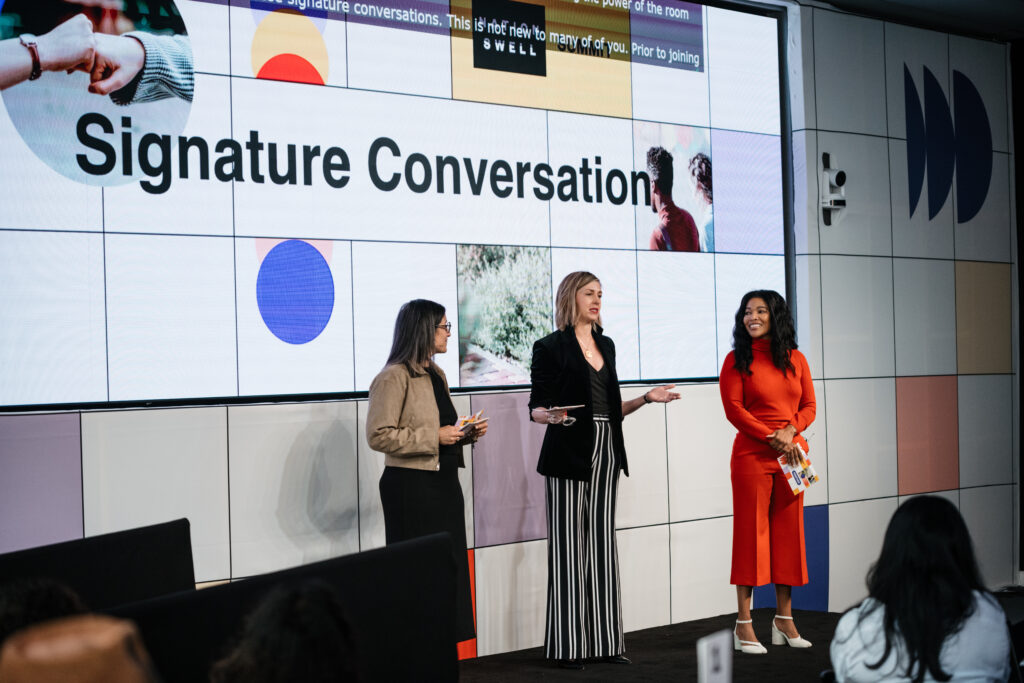
Driven by our steadfast commitment to advancing bold, effective leadership across the impact sector, NationSwell continues to deepen the ways we serve our community, expanding the insights, expertise, and strategic guidance available to help members lead with clarity and drive meaningful change. That’s why we’re thrilled to welcome three exceptional leaders to our Strategic Advisory team: Kim Dabbs, Shannon Schuyler, and Celeste Warren (pictured left to right).

They join a distinguished group of NationSwell Strategic Advisors who bring real-world experience to the challenges and opportunities facing today’s impact leaders. Together, this group supports our members across some of the most strategic and exemplary work and needs in the sector, including building resilient organizational cultures, embedding impact into business strategy, the practice of impact leadership in organizations, architecting strategies that are differentiated and built to last, and leading on issues ranging from workforce innovation to diversity and inclusion to corporate responsibility.

Kim, Shannon, and Celeste bring deep expertise and a proven track record of leading transformational change across sectors. They will support our members in a variety of ways, including one-on-one consultations, roundtable conversations, and tailored guidance. Through these engagements, they will offer new opportunities to advance impact, strengthen strategy, navigate complexity, and accelerate our members’ most important work. Their involvement will help deepen the value of membership and expand what is possible for the leaders in our community.

We’re proud to welcome them into this remarkable community of changemakers and excited for the impact they’ll have in shaping the future of social good. Read on to learn more about their journeys and the expertise they bring to the NationSwell network.


Kim Dabbs

STRATEGIC ADVISOR
Areas of Expertise: Belonging and Purpose, Social Innovation, Organizational Culture, DEI, Identity and Purpose, Workplace Culture, Organizational Development

Kim Dabbs is the Global Vice President of Impact at Steelcase, where she drives social innovation and fosters inclusive environments. With a background as the Executive Director of the West Michigan Center for Arts and Technology and a residency at Stanford’s d.school, Kim brings deep expertise in creating equitable spaces.

 She is the best-selling author of You Belong Here: The Power of Being Seen, Heard, and Valued on Your Own Terms, which provides a framework for cultivating belonging. Kim is also the founder of To Belonging, a global community of changemakers exploring the intersection of identity and purpose. As a sought-after speaker, Kim has delivered keynotes at organizations like Google, Microsoft, MIT, and The Guggenheim, helping leaders create inclusive and impactful workplaces.


Shannon Schuyler

STRATEGIC ADVISOR
Areas of Expertise: Culture Activation; Aligning Purpose with Performance; Value Creation through Operational and Revenue Resilience; C-suite and Board engagement

Shannon Schuyler brings over three decades of experience transforming how organizations drive sustainable success through cultural innovation and purpose alignment. At PwC, she held multiple global leadership roles, including Chief Purpose Officer, Chief Sustainability Officer, Chief Diversity Officer, Climate Risk Leader, Corporate Responsibility Leader, co-Leader of CEO Action for Diversity & Inclusion, and President of the PwC Foundation. She has guided C-suite executives and boards across industries in embedding purpose, values, and sustainability into organizational strategy, culture, and stakeholder engagement. Shannon has also served on nonprofit boards, leading strategic planning, pro-bono funding initiatives, and executive succession.

Her insights on the link between culture and strategy have earned recognition from Fortune, Forbes, The Wall Street Journal, Insider, and Fast Company. Named one of the 100 People Transforming Business and a World Changing Woman in Conscious Business, Shannon is a sought-after speaker and advisor who helps organizations align purpose, culture, and strategy to achieve lasting business and societal impact.


Celeste Warren

STRATEGIC ADVISOR
Areas of Expertise: Diversity, Equity and Inclusion, Organizational Culture, Talent Development, STEM Education, Leadership Strategy, Change Management

Celeste Warren is the Founder of Celeste Warren Consulting, LLC, where she guides organizations in implementing impactful diversity, equity, and inclusion strategies. With over 28 years of experience, she previously served as the Vice President and Chief Diversity & Inclusion Officer at Merck, where she led global diversity, equity and inclusion initiatives and developed diverse talent pipelines.

Celeste is also the co-founder of Destination STEM, Inc., a nonprofit focused on supporting students of color and students in need pursuing degrees in STEM. Her work has earned her recognition as one of Black Enterprise’s “Top Executives in Global Diversity and Inclusion” and Diversity Global Magazine’s “Influential Women in Global Diversity.” She was also named Chief Diversity Officer of the Year by the National Minority Supplier Development Council in 2024.

A published author and frequent speaker, Celeste’s diversity, equity and inclusion insights have been shared globally across major platforms, publications and conferences.


To learn more about our membership community, visit nationswell.com/membership

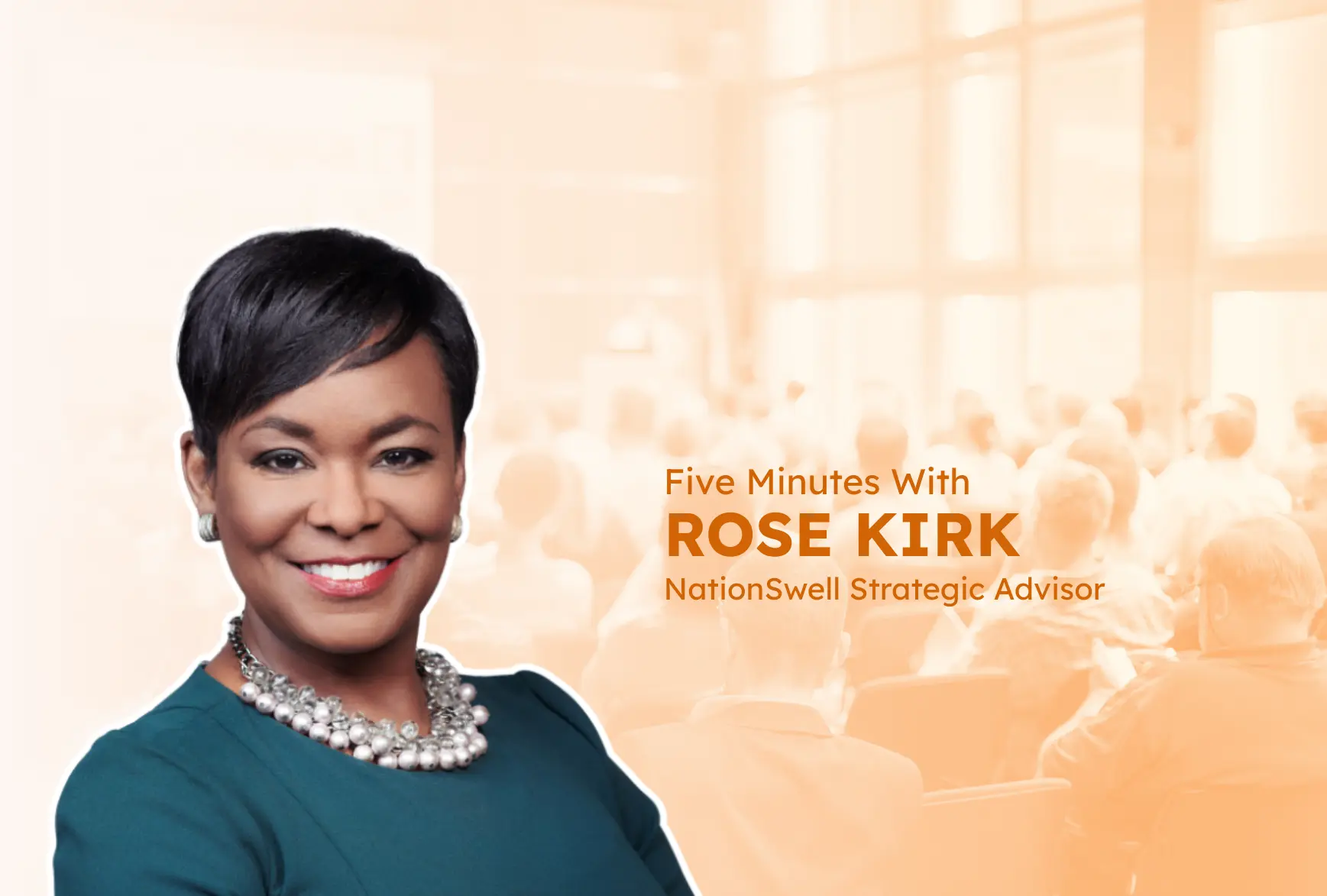
Five Minutes with… NationSwell Strategic Advisor Rose Kirk

NationSwell’s Strategic Advisor Network is a group of accomplished leaders who have steered global nonprofits, scaled purpose-driven companies, shaped policy, and catalyzed systems change. Together, they bring unparalleled experience and visionary leadership to strengthen our mission-driven community.

In our latest installment of Five Minutes With…, we sat down with one member of this network, Rose Kirk — a C-level executive in the telecommunications industry with more than 35 years experience leading sales, marketing, customer service, go-to-market strategies, and responsible innovation functions — to give our community a closer look at her leadership journey, what drives her work, and the impact she’s championing today.

Here’s what she had to say:


NationSwell: What is the “why” behind your impact work? What’s your personal north star?

Rose Kirk: The thing I come back to again and again is how best to develop and empower a team. People need leadership that is strategic and purposeful, that holds them accountable, and that expects them to deliver. My mission isn’t just to delegate, but to work alongside my team and give them the tools to meet their goals. The most successful leaders step up with excitement, embrace the challenge of finding new opportunities, move work forward in fresh ways, and measure real outcomes.

My path into ESG and corporate social responsibility was almost accidental. What began as a temporary assignment at Verizon became permanent when I realized the opportunity to use corporate assets to make a broader impact on society.

And really, who doesn’t want to go to work every day thinking about what a company owes its citizens, how it can leverage its assets, and how it can both drive revenue and deepen purpose? Looking back now, post-Verizon, at the legacy I left and the work still continuing, I feel affirmed that the vision was right, the execution strong, and the opportunities enduring.

NationSwell: What’s one insight or trend you think every impact leader should be paying more attention to right now?

Rose Kirk: I can speak to the trends we’re seeing both as someone who’s practiced this work day-to-day and now from the vantage point of a corporate board. Corporations, especially in the U.S. but also globally, are trying to navigate today’s systems and government engagement on a wide range of issues. One of the biggest opportunities I see is grounding this work directly in business strategy. That requires practitioners to truly understand how the company makes money, align with the broader strategy, and build relationships across P&L functions in ways they may not have before. They also need to help the CEO navigate the current environment. Those who succeed earn a seat at the table, where their perspectives are valued. That’s what will sustain this work and carry it through challenging times.

NationSwell: What role do you see NationSwell playing at this moment? Why did you choose to get involved?

Rose Kirk: What I love about NationSwell is that it’s not just about the network — it’s about the insights, perspectives, and willingness to tackle complex issues in ways that lead to real solutions. The thoughtfulness in how rooms are curated, and how members themselves are empowered to curate, creates a true give-and-take that sets NationSwell apart. Unlike other organizations where events feel one-directional, NationSwell is a genuine two-way street.

What also stands out is the culture of sincerity. When leadership asks, “How can I help?” it isn’t just talk — they take action. Too often organizations want more from their members than they’re willing to give back, but NationSwell operates differently. As a Strategic Advisor, I take that seriously and strive to represent the brand with the same spirit of generosity and authenticity that defines its leadership and community.

NationSwell: In your experience, what’s one underrated lever for advancing social or environmental progress from inside an organization?

Rose Kirk: One of the biggest levers many practitioners overlook is building relationships with the board of directors and the board’s committee chair for ESG.  Presenting to the board is valuable, but the real opportunity lies in connecting with those leaders directly. Board members are often senior executives at other corporations, serve on multiple boards, and bring a wealth of insight into where the company is headed and what it needs. Developing those relationships helps hard-code this work into the company in a more integrated way. Many ESG leaders don’t utilize this connection. 

At Verizon, I was fortunate to have the CEO’s support, the reputation, and the relationships that allowed me to engage meaningfully with the board and several of its members.

NationSwell: What’s one book, podcast, ritual, or person that’s fueling you lately?

Rose Kirk: I’m definitely a consumer of The Daily — I appreciate how they break down the news and give you a broader sense of the “why.” I also love Michelle Obama’s podcast, and how she shows up with such generosity — constantly sharing wisdom, being vulnerable, and giving back when she doesn’t have to. Her podcast with her brother is such a powerful example of sibling relationships and how to navigate grief. After losing their mom, the way they lean on each other — the only two people who shared that lifelong bond with her — is both moving and joyful. They manage to be insightful, vulnerable, and fun at the same time, which always makes me want to text my own siblings little love notes.

What I especially value is that it isn’t political — it’s just real conversations about life. And I think that matters: stepping away from politics to simply connect with the humanity and joy in someone else’s journey.

Effective Board Service for Impact Leaders

Board service can be one of the most meaningful and influential ways to contribute your leadership, but only if you’re on the right board, and clear on how to drive value once you’re there.

On August 14, NationSwell hosted a virtual roundtable designed to explore the full board journey: how to identify and pursue the right opportunities, what various types of organizations truly need from their board members, and how to show up with strategic clarity and purpose.

Some of the key takeaways from the discussion appear below:

Key takeaways

Understand the differences between serving on a corporate and a nonprofit board. For corporate boards, you have a fiduciary responsibility to the shareholders of the company. The expectations for how you will engage are high, as you are being compensated and are expected to hold your service as your first priority. Nonprofit boards require a fiduciary responsibility to the organization, and more specifically, a commitment to raise funds and open doors.

Assess how the board landscape is adapting to pressing issues of the day. Boards are highly responsive to changes in policy and regulation for topics like cybersecurity, sustainability, diversity, etc. Knowing if and how you can leverage your expertise will indicate your fit and add value to your service.

Serve knowing that you are entering a mutual commitment, not just a resume-builder. Serving on a board requires you to contribute time, energy, resources, and a willingness to share your expertise. Understand that you bring distinct value to the role, while also respecting the unique mission and leadership of the organization.

Recognize that board service is both opportunity and risk. While board service offers visibility, influence, and professional growth, it also carries accountability. Public company directors may be targeted in activist campaigns or voted off by shareholders, while nonprofit directors carry fundraising expectations and reputational risks. Enter with eyes wide open.

Balance oversight with trust to enable strategic governance. The most successful boards know how to ask strategic questions and provide accountability without overstepping into day-to-day management. While access to the entire management team is an indicator of a highly functioning board, always remember, “noses in, fingers out.”

Evaluate the best time for you to serve. Factors that contribute to ideal timing include your capacity, your employer’s willingness to support your service, and your ability to weather the storms of a company or organization. Mutual readiness can also be evaluated by undergoing a financial and cultural assessment of the company/organization to determine fit.

Corporate Social Impact Team Design

Corporate Social Impact Team Design

This resource is meant to help leaders look at their own organizations to consider: what’s working, may be changing, and could be next for your impact team design. It provides a practical, anonymized compilation of organizational charts serving as a foundation for shared learning and strategic reflection on:

  • the current landscape of impact team design,
  • the size and complexity of structures by industry, 
  • the functional areas of teams in relation to the broader company, 
  • reporting lines to the chief suite

This resource will continue to evolve as more models are shared. Email us at [email protected] if you would like your corporate social impact team to be represented in the next iteration of this resource.


Share this report

The Art of Connection: Strategies for Effective Networking

Networking doesn’t stop when you reach senior leadership—it evolves. Maintaining strong professional connections is essential for staying ahead of industry trends, fostering innovation, and building strategic partnerships that drive success.

On June 11, NationSwell hosted a virtual Leader Roundtable designed to explore why networking remains critical at the highest levels of leadership and provide actionable strategies to strengthen and utilize networks for personal and organizational success.

Some of the key takeaways from the discussion appear below:


Key Takeaways

Be grounded in who you are, and build your network with that identity in mind. Your geography, industry, and function shape your networking identity. Reframing how you position yourself  depending on which of these three you emphasize can unlock new opportunities, especially when transitioning between industries or roles.

Focus on authenticity, clarity, and brevity to strengthen your outreach. When initiating new contact, be concise and clear about who you are, what you need, and why it matters. Thoughtful communication builds trust and leaves a lasting impression.

Remember that the scope of networking is broad and personalized. Networking can serve many purposes from seeking board roles and public speaking engagements to navigating a career transition. Use your network as both a sounding board and a launchpad. Additionally, networking is most effective when it’s simplified and personal. Whether you’re exploring new career options or looking for a restaurant recommendation, treat networking as a tool for mutual exchange. Even transactional requests are welcomed; most people are flattered to be asked for help or to be known as a go-to resource.

Make networking for a career transition a volume and timing game. A thorough job search may take 5–6 months and involve 120–150 conversations, each interaction building momentum. While outcomes will vary, meaningful opportunities often come from a few individuals who go the extra mile. Relationships are often the key to opening a new door.

Invest in a multigenerational, cross-sector network. Engaging with people across industries and age groups broadens your perspective, expands opportunity, and keeps you relevant. Building internal, cross-functional relationships within your organization is also essential for increasing visibility and bridging teams.

Tend to your network like a garden. It requires consistent care, outreach, and attention. Use travel, spontaneous calls, or quick notes to nurture connections even when you don’t need anything. Intentional relationship-building starts long before a need arises, and continues over time.

Innovative Philanthropy in Times of Uncertainty and Urgency

Today’s challenges demand a new level of agility and creativity from philanthropy. Traditional models of giving are evolving as funders seek innovative ways to deploy resources, drive systemic change, and respond to urgent needs without sacrificing long-term impact.

On May 6, NationSwell convened senior leaders for a candid discussion on Innovative Philanthropy in Times of Uncertainty and Urgency. Some of the key insights that surfaced during the course of the discussion appear below:


Key takeaways:

Be in community; talk through the anxiety and surface needs among your partners and peers. Amid pervasive feelings of “stuckness” among funders and grantees alike, continuing to have tough conversations and be in relationship with those who can appreciate the unique difficulties of this moment will be an invaluable tool. Connecting with others who want to solve problems — even when the problems seem insurmountable — and conducting regular pulse checks with grantees can sometimes be the best antidote to malaise, anxiety, and fear. 

If your organization doesn’t have the right support to offer, help connect to those who do. Even when funders don’t have the right tools or expertise to directly support their grantees or partners, they can still play a valuable role by acting as connectors. By brokering relationships, making introductions, or spotlighting other resources to tap, funders can help ensure their partners get the support they need without overextending their own capabilities. Influence and networks can be just as valuable as dollars.

Adjust your strategy with the long view in mind — and stay true to it. Especially in times of uncertainty, crafting intentional and precise strategies around your funding philosophy and partnership strategies will help you to stay true to your mission, goals, and organizational identity. Once established, hold to the strategies you’ve crafted so thoughtfully and intentionally. Push through the inclination to “freeze”; move forward with confidence, clarity, and adaptability.

Explore “pooled funds” and strategic coordination with fellow funders. By sharing financial commitments, funders can support innovative or high-risk projects with less individual exposure, making it easier to pilot new ideas or respond to urgent needs. Pooled funds can also help to streamline support for nonprofit partners, reducing the administrative burden of managing multiple relationships and reporting requirements and allowing them to focus on driving impact.

Consider the value of forging fewer, deeper partnerships. Some funders are focusing on larger, more impactful strategic collaborations with a few key partners to maximize impact and efficiency.

When possible, support partners with multi-year, unrestricted grants. Knowing that funding is secure for several years makes organizations more likely to experiment, innovate, and take calculated risks that could lead to greater impact without the added pressure of fundraising. For funders, multi-year grants support a more strategic, long-term approach to philanthropy, allowing for deeper alignment with organizational values and mission.Engage your internal stakeholders. Actively bringing in employees, agents, and other internal stakeholders in partnership activities can help to deepen your organization’s relationships and extend the reach of your partnerships. Particularly in times of deep division, taking the time to forge and fortify deep personal connections will be a critical component of long-term resilience.

Meet NationSwell’s Strategic Advisors

In today’s environment, impact leaders need trusted, experienced partners in their corner. To provide cut-through personalized support and deep value to the impact leaders we serve, NationSwell is thrilled to welcome six extraordinary leaders into our community as Strategic Advisors.

One of our aims at NationSwell is to fast-track our members to the most valuable and actionable insights, knowledge, best practices, relationships and thought-partnership that they need to accelerate their impact and lead at their best. These days, there is no time to waste. 

Our Strategic Advisors have been admired and effective practitioners. They have led the functions that our members lead, have sat in their seats and bring practical insights, perspective and approaches that will help our community members to navigate the current waters effectively, with principle and in service of impact work that is built to last. They will join NationSwell tables, provide 1:1 advisory sessions and contribute to the spirit of mutual support, connection and inspiration at the center of our community.

Most have been long-term members and dear friends. We are thrilled to welcome them now as Strategic Advisors. Get to know them below.


Dr. John Brothers

STRATEGIC ADVISOR
Areas of Expertise: Philanthropy, Nonprofit Leadership, Social Policy, Community Development

John Brothers most recently served as President of the T. Rowe Price Foundation and T. Rowe Price Charitable, overseeing $750M in assets. He founded and led Quidoo, an international consulting firm, for over a decade before merging it in 2015. At T. Rowe Price, he spearheaded initiatives like the Elevation Awards, DesignFest, and Baltimore Children and Youth Fund, establishing the firm as a leader in trust-based philanthropy and community partnerships.

Dr. Brothers has over 20 years of nonprofit leadership experience, with expertise in youth development, social services, and the arts. He has taught social policy and nonprofit management at NYU, Rutgers, and served as a Visiting Scholar at Harvard. He also holds honorary and visiting roles at Queens University Belfast and the China Global Philanthropy Institute.

A prolific writer and speaker, John has contributed to Stanford Social Innovation Review, Nonprofit Quarterly, and Huffington Post, and been featured in major media including The New York Times and Wall Street Journal. Inspired by his upbringing in poverty, he began his career as a community organizer and case manager, advancing to leadership roles that support vulnerable families across the U.S. and internationally.


Maggie Carter

STRATEGIC ADVISOR
Areas of Expertise: CSR, Health Equity, Impact Measurement, Tech for Good, Cause Marketing, Community Resilience

Maggie Carter is a senior advisor and consultant specializing in strategic planning, impact measurement, program development, and partnerships. She previously served as Director of Social Impact at Amazon Web Services (AWS), where she led initiatives in health equity, disaster response, environmental equity, and tech education. 

During her tenure, she co-directed Project Sunflower, earning the Ukraine Peace Prize. Before AWS, Maggie was Vice President of Corporate Partnerships at UNICEF USA, overseeing corporate engagement, philanthropic grants, and cause-related marketing. She also served on the Steering Committee for UNICEF Innovation. Previously, as Deputy Director of the Shot@Life campaign at the United Nations Foundation (2011–2014), she co-created the award-winning “Get a Shot. Give a Shot.” campaign with Walgreens. Maggie began her career in social responsibility and community relations with the National Basketball Association and the Atlanta Braves. She is pursuing a Master’s in Public Policy at George Mason University and holds a Bachelor’s in Health Sciences from James Madison University.


Tom Key

EXPERT IN RESIDENCE
Areas of Expertise: Career Advisory, Talent Networking

Tom has built his career in executive search and career advisory, pioneering talent networking programs for top management consulting firms, now industry standards. Starting at Egon Zehnder, he founded Bain & Co.’s executive talent network and later replicated it at BCG. In 2022, he joined World 50 Group to expand career advisory services for executives.

Having coached around 1,000 executives, Tom expertly navigates executive and board-level searches across public and private sectors. An avid networker, he connects leaders to accelerate career transitions.

Tom is an adjunct professor at Emory University’s Goizueta Business School, teaching courses on executive search and networking since 2004. In 2025, he began co-teaching entrepreneurship at Brandeis University and advises Emory’s Laney Graduate School on PhD career transitions. He has also spoken at HBS, Kellogg, and Wharton.

He holds a BA in Economics and Asian Studies from Denison University and an MBA from Emory. Tom lives in Atlanta with his wife, dogs, a retired horse, and their twin college-aged daughters.


Michael Kobori

STRATEGIC ADVISOR
Areas of Expertise: Sustainability Leadership, Human Rights, Sustainable Finance, ESG Regulations, Industry Collaboration.  

Michael Kobori is an independent Board Director at Bunge Global and recently retired as Chief Sustainability Officer at Starbucks, where he led environmental sustainability, social impact, and human rights. Previously, he was Vice President of Sustainability at Levi Strauss & Co., helping establish the company as a leader in sustainable apparel. He has nearly a decade of experience at The Asia Foundation supporting human rights and economic development in Asia. Michael serves on the President’s Leadership Council of The Asia Foundation, the U.S.-Japan Council, and is Executive Producer of Utopia Theatre Project, a social justice theater company. 

Michael has taught corporate sustainability at UC Berkeley’s Haas School of Business and served on numerous sustainability boards and advisory committees, including the Better Cotton Initiative and Sustainable Apparel Coalition. He holds a Master’s in Public Policy and undergraduate degrees in Asian Studies and Psychology from UC Berkeley and studied sustainable finance at Oxford University.


Rose Kirk

STRATEGIC ADVISOR
Areas of Expertise: Areas of Expertise: Go-to-market, Responsible Innovation, Impact Imperative, Career Development, Building Influence and Reputation

Rose Kirk is a C-level executive with more than 35 years of experience leading sales, marketing, customer service, go-to-market strategies, and responsible innovation. Beginning as an award-winning journalist, she rose to senior leadership at Verizon across Corporate Social Responsibility and Marketing, earning a reputation as an innovator and trailblazer.

She serves on the board of Casella Waste Systems, contributing to its Compensation and Nominating and ESG committees, and has held leadership roles in global nonprofits. Passionate about history’s role in shaping the future, Rose is on the National Archives Foundation board and supports the arts through Texas Women for the Arts.

Rose holds a BS from Arkansas State University and is completing a master’s thesis at Washington University. Featured in outlets like Good Morning America, Forbes, and BBC, she is also executive producer of the documentary Without A Net: The Digital Divide in America.


AiLun Ku

STRATEGIC ADVISOR
Areas of Expertise: Leadership Development, Educational and Workforce Access, Systems Change Strategy, Community Building, Organizational Growth and Management

AiLun Ku is the Vice President of Community and Capacity at the EGF Accelerator, where she redesigns and leads leadership development programs, community-building efforts, and strategic grantmaking to strengthen the nonprofit sector.

Previously, AiLun was the President and CEO of The Opportunity Network, where she scaled programs reaching over 50,000 students annually and secured the largest unrestricted gift in the organization’s history. There, she led all aspects of the organization, including programming, evaluation, finance, operations, and national growth. 

She is a certified LEGO® SERIOUS PLAY® Facilitator, a Pahara Fellow, a Heckscher Leadership Fellow, and a dedicated educator and advisor. AiLun is passionate about access, leadership, and cultivating inclusive, high-impact communities.

Before OppNet, AiLun worked at NYU Wagner, the Equal Justice Initiative, and other social impact organizations. She holds an MPA and BA from NYU and is a 2019 MIT Media Lab Director’s Fellow.


To learn more about our membership community, visit nationswell.com/membership

Corporate Social Impact Models and Approaches

Corporate Social Impact Models and Approaches

EXECUTIVE BRIEFING

This practical guide is designed to help leaders and organizations orient their existing social impact strategies within a larger context, and identify opportunities to progress.

The guide includes four models of corporate social impact in practice today, ranging from CSR to business-integrated strategies. Each model includes definitions, actionable recommendations, and real-world case examples. The goal is to help leaders determine the best way to deepen impact within your organization, which may mean advancing from one model to the next or further developing your current model.

The models covered in this guide include:

  • Traditional CSR
  • Asset-driven impact
  • Shared value initiatives
  • Systems change leadership

Share this report

Investing in the Next Generation

Throughout history, young leaders have been critical in driving meaningful impact in key issue areas facing our planet and society. As we look to 2025 and beyond, building power behind this next generation of leaders can be an asset as we continue to address challenges that range from the expansion of expanding mental health services to reshaping educational pathways to fostering youth-led innovations in climate action. But to truly unlock their potential, we must shift our approach from viewing young people as just participants, to recognizing them as vital contributors whose insights and expertise are essential for shaping the future.

On March 11, NationSwell hosted a virtual Leader Roundtable designed to explore the most effective programs and initiatives leaders are deploying in order to maximize the potential for young leaders to strengthen their voice and resources, and drive meaningful change.

Some takeaways from the event appear below.


Insights:

Empower young leaders by prioritizing their wellbeing. Providing a mentee with work-related assistance is just one aspect of support needed for long-term success. Prioritize the mental health of those you mentor and check in to see what their struggles are, both personally and professionally. Genuine connection with young employees helps improve employee engagement and workplace outcomes.

Overconcern with risk has the potential to hinder possibilities. A lack of trust is a significant barrier in youth entrepreneurship programs. Provide children and young adults with the opportunity to have some agency with business projects or assignments in order to drive engagement. While financial liabilities can’t be ignored, being creative about mitigating these risks can provide space for youth innovation and ingenuity.

Co-create with young adults to drive impact. Working with young leaders is critical to finding solutions to problems they disproportionately face. Center youth voices within your work to introduce new, creative perspectives on global challenges. This professional exposure gives young adults the ability to explore career pathways and opportunities.

Young adult experiences are key in expanding inclusivity online. Teens and young adults are the most vulnerable to harassment on social media platforms. Their feedback is critical in conversations around expanding safety protocols and algorithmic protections on popular platforms.

Economic mobility is often dependent on current obligations. Many young adults eager to start their careers often juggle these ambitions with family obligations and financial responsibilities. Finding ways to support students and employees in terms of compensation and timing flexibility can increase the likelihood of consistent program participation and success.

Being an Effective Social Impact Leader in the Year Ahead

The discipline of social impact is evolving quickly, driven by sociopolitical shifts, technological advancements, and stakeholder priorities. Meeting the moment will require us to home in on trends facing the practice of social impact, forecast the demand for new strategies and approaches, and collectively brainstorm around what’s needed most to lead our field into the future.

During a NationSwell virtual Leader Roundtable on February 4th, a group of cross-sector leaders gathered to discuss how we can energize, advance, and even reimagine the work of social impact into 2025 and beyond.

Here are some of the key takeaways from the event:


Simplify messaging, align on definitions, and stay grounded in principles. As organizations face shifting social and political dynamics, clear and principle-driven communication is important. Some leaders are adapting by focusing on internal business integration rather than public-facing messaging, prioritizing that their initiatives remain intact. While terms like DEI and ESG are politicized, organizations should maintain focus in their mission, ensuring that internal leadership and external stakeholders understand their long-term business value.

Prioritize business-aligned impact strategies that create shared value. Companies should root their social impact work in business strategy. A strong alignment between social impact initiatives and business operations, such as embedding sustainability into supply chains or leveraging core competencies to support workforce development, can create long-term economic opportunities while driving positive social change. A shared value approach, where business success and social progress reinforce each other, strengthens stakeholder buy-in and helps organizations navigate external challenges while continuing to advance impact goals.

Leverage collaboration and coalition-building. Systemic challenges cannot be solved in isolation. Some organizations are shifting away from launching entirely new initiatives and instead seeking alignment with peer institutions to pool resources, avoid redundancies, and drive greater collective impact. Leaders have also emphasized the growing need for match-making between nonprofits facing funding constraints and private sector stakeholders eager to engage in meaningful solutions.

Consider global implications for your work while maintaining localized focus. As political dynamics complicate the U.S. social impact landscape, companies have an opportunity to think strategically about globalizing their efforts. Social impact looks different depending on context, and considering how you can broaden your scope and scale to support global communities may support the continuance of your work. However, it is important to tailor strategies to local needs. Leaders emphasized the importance of deep community engagement, listening to local stakeholders, and adapting social impact efforts to regional contexts rather than applying a one-size-fits-all approach.

Use data-driven insights and storytelling to reinforce credibility and trust. Combining quantitative impact data with human-centered narratives strengthens stakeholder engagement. While metrics are crucial for impact assessment, personal stories, such as how a single classroom, community, or entrepreneur benefited from a social impact initiative, bring data to life and make corporate efforts more relatable and compelling. This approach also helps maintain confidence among employees and external stakeholders in moments of uncertainty.

Empower employees at all levels to engage in social impact and civic participation. Amidst social and political upheaval, employees are eager to find out how they can engage in social impact and civic engagement. As a first step, keep an open door policy for employees to meet with you about their concerns and ideas. Furthermore, consider investing in education and enablement programs that help employees better understand and contribute to social impact goals.

Demonstrate courageous leadership by staying committed to core values. Social impact leaders are navigating increasing scrutiny and rapidly changing political and economic conditions. Many are choosing to stay the course on DEI, ESG, and other mission-driven initiatives by focusing on principled business-aligned approaches. Courageous leadership involves making strategic decisions that uphold long-term commitments while adjusting to new realities, ensuring that both employees and external stakeholders see consistency and authenticity in your actions.