The Green Seat Guide, Chapter 3

Recommended Features

As corporate sustainability challenges grow more complex, chief sustainability officers (CSOs) are being hired at record rates. They come from diverse professional backgrounds, underscoring the multidisciplinary nature of the role, and often find themselves navigating uncharted waters, tasked with steering an entire enterprise toward ambitious goals. This mandate demands more than just technical knowledge, it demands leadership, vision, and the ability to inspire change at all levels.
While technical guidance on sustainability is widely available through consultants, vendors, and the scientific community, there remains a significant gap in the transfer of practical wisdom. The Green Seat Guide bridges that gap with insights, strategies, and lessons learned from experienced sustainability executives. The aim of the guide is to accelerate the impact of sustainability leaders, new and experienced, by offering practical guidance and learned wisdom from those who have pioneered the role.
Each chapter focuses on an essential component of the sustainability journey and includes a selection of ready-to-use tools to support the adoption of key ideas and tactics.
Chapter 2 – Organizing your team
With a strategy in hand, creating and deploying a well-rounded sustainability team is the sustainability executive’s next most important task. Whether you’ve inherited a staff or need to build a team from scratch, you should be mindful of balancing your technical needs with your strategic needs. Your team will need to be rigorous, detail-oriented, and versatile, and you will need to build key cross-functional relationships beyond your direct reports.
Chapter 2 of The Green Seat Guide provides guidance on building a successful sustainability team, drawing on the rich insights of those who have done so before.
It is comprised of four sections:
For insights on developing a sustainability strategy, don’t miss Chapter 1.
Sustainability leaders stand at the precipice of a pivotal moment for the future of our climate. While no single individual claims to have all of the answers, changemakers are increasingly turning to each other to chart the course forward for sustainable innovation and climate action — exchanging insights on how to implement unique initiatives, harness emerging technologies, institute best practices, and challenge conventional wisdom in order to effect transformative changes for our ecosystems, our societies, and our most vulnerable.
In 2024, Sustainability Next — a new editorial flagship series from NationSwell — will spotlight the standard-bearing corporate sustainability leaders, entrepreneurs, experts, philanthropists, and more whose catalytic work has the potential to shape the landscape of progress amid the urgent need for environmental action.
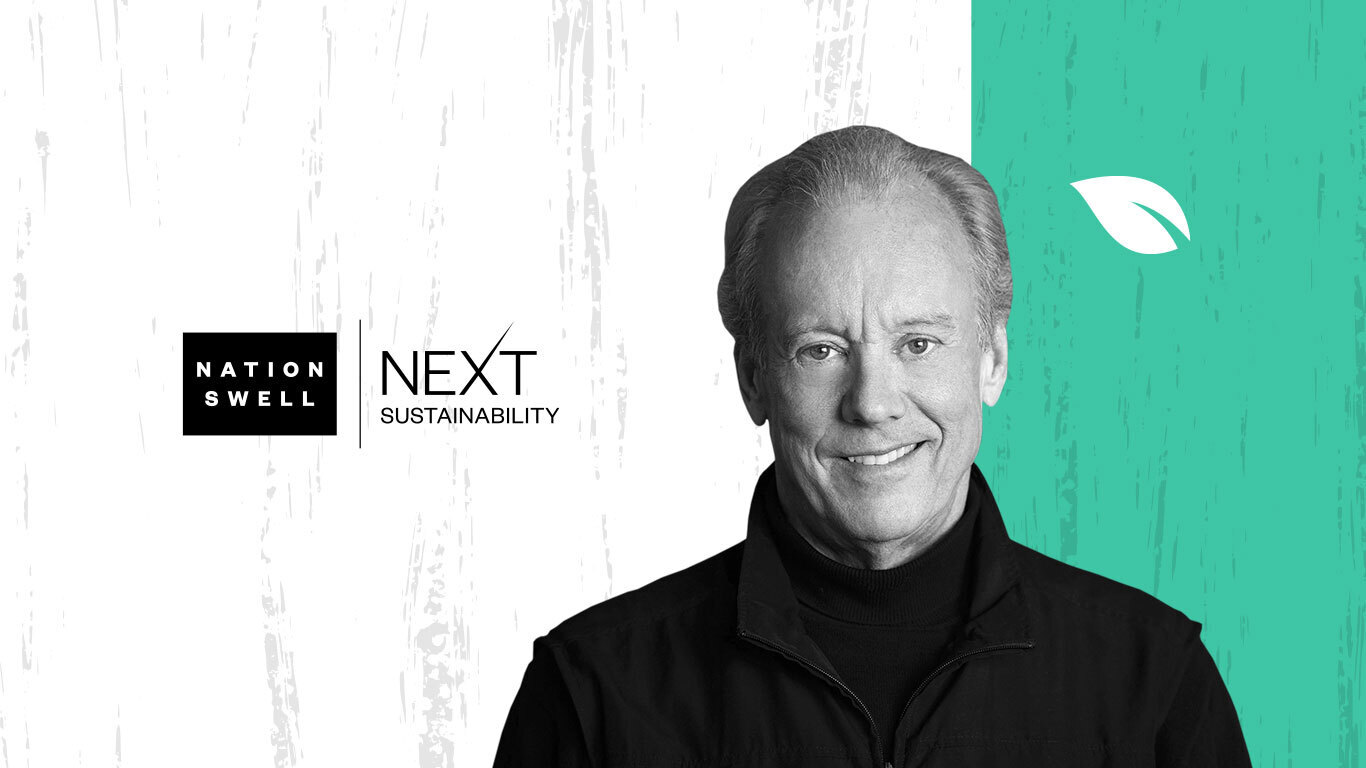
For this installment, NationSwell interviewed William McDonough, Chief Executive of McDonough Innovation and an architect focused on sustainable design.
Jason Rissman, Chief Experience Officer, NationSwell: Bill, you’ve been a visionary leader in environmental and climate action for decades — how would you describe our current moment in sustainability?
Bill McDonough: I think the key element for me is what I would describe as the discovery of the obvious: we can design like nature where waste equals food, rely on natural energy flows, and celebrate biodiversity. There is a regenerative biosphere and a circular technosphere that we want to be renewably powered. We want clean water for every child every day. All these things are obvious, and then you realize it wasn’t obvious 20 years ago, or 40 years ago when we started.
At this point everyone should be aware that climate is an existential problem because we are all experiencing it firsthand, and because of that we have so many more people engaging with positive behaviors than we did a long time ago. We felt lonely in this work at the beginning 40 years ago, but we don’t feel lonely anymore.
Rissman, NationSwell: In the face of macro factors like the economy, rising interest rates, and anti-ESG backlash, some leaders have felt compelled to be less vocal about their commitments, but increasingly it also seems to mean they’re able to commit to less. I’m curious if you’re seeing that as well, and what advice you might have for these leaders?
Bill McDonough: There’s a fundamental problem with the way ESG has been framed and presented to the commercial sector. In general, the word ‘sustainable’ sounds like maintenance; if somebody asked what your relationship to your spouse was like and you said, sustainable, it doesn’t sound like much fun.
I think the missing opportunity was not that sustainability was the wrong term, but now we’re realizing that we need to be more than just sustainable, or neutral, or less bad, we also have to be positive. I see all this net zero ambition being thrown around everywhere, but in a way, net zero just means you’re trying to be “net zero bad”. To stop relentless emissions of greenhouse gasses or polluting water is important, and it needs to be done, but it’s also not adequate — we also need to do positive things.
So to me, the fundamental problem with ESG is that it’s been handed off to the people in the economic sector to operate when it’s really for all of us to do our work — and about how elegantly we can combine all of our efforts in economy, environment, and society with a coherent governance on all our parts, both commercial and regulatory.
Rissman, NationSwell: What advice would you give to Chief Sustainability Officers to help them to refuel the momentum and grow the impact they can have?
Bill McDonough: I do think it’s critical that the CEO has to be, in effect, the Chief Sustainability Officer too — it’s a hard road for a CSO who doesn’t have the approbation of the entire C-suite.
The key to it all is that we move away from linear and degenerative enterprise to regenerative activities for the natural world, circular activities for the technical world, and the two associated economies move together in that direction. The key to me is explaining to CEOs how they can make their company grow, how they can grow revenue — and the way to do that is not just harming the environment less (valuable eco-efficiency), but actually focusing on how to support the environment and make it better while you do business — eco-effectiveness. That is the positive future of commerce.
Rissman, NationSwell: What do you think is not getting enough attention right now?
Bill McDonough: I think when everyone is focusing on net zero, you can end up with all your charts looking like down charts, and most people in the business world do not love charts that go down to the right — that’s not what they’re looking for. So what we want is to get them charts that go up to the right, which means positive performance and growth.
So that’s a critical reframe: You don’t just say, How am I doing on my emissions? You also ask, How much renewable power am I able to substitute for carbon-based energy? Have I really thought about how to inset this good behavior into my company profitably, rather than simply continue to behave as I am and ask for offsets from someone else?
If we look at what Microsoft is doing, looking at taking care of their carbon debt over time, or now Google, Meta, or Amazon, all of them are moving toward being renewed companies and they’re looking at their debt of carbon needed. These kinds of things are really excellent because they encourage people to bring it into their business and into their lives and close to the production.
Rissman, NationSwell: I know you work as an advisor around the world with governments and companies and all sorts of organizations. What are you seeing and hearing outside the U.S. that you think we should be considering?
Bill McDonough: I have a particular interest in what my partners and I call Hybrid Renewables that are about to show up in the Midwest based on the work of Dan Juhl. They are essentially regenerative power approaches that use local power from wind and solar as well as battery storage to optimize delivery to the local mid-grid in real-time. I think that kind of thing is hugely valuable for the country because it means we don’t have to upgrade the big grid and we can get the power to the people who really need it in a resilient way. And the surprising thing is, if we distribute it properly and then optimize it with digital intelligence, we can get a smart grid at all scales, which is quite wonderful, really. So I think it’s the kind of thing that we need to look at — not just the big systems, but the many small systems.
I’m also finding with my work in the Middle East that we’re looking at solar moving below two cents per kilowatt hour. These incredibly low prices are a phenomenon, and once you can start imagining even one cent per kilowatt hour, you can start imagining all kinds of other things, including hydrogen approaching parity with diesel in terms of cost, at exporting ammonia as a way of shipping hydrogen, and so on. Those things all stack up.
Rissman, NationSwell: Who are some of the leaders that have impressed you — who do you think is reflecting a type of leadership that is needed for today, and what can other leaders learn from them?
Bill McDonough: One company I’m advising makes various materials used in the fashion industry from plant-based sources, and in our language, that’s the regenerative biosphere — it’s very elegant and very exciting to see. Those are the kinds of companies that other people can copy now that it exists.
If we can make the world we want exist, then it is possible for most people; if we make it look impossible, then they just don’t even want to try. So my job as a professional visionary is to make things exist so that that world becomes possible.
The things that really excite me are projects that are principled: they take care of nature and they follow the laws of nature. As an architect, I have to follow the law of gravity — it’s not just a good idea, it’s a law. The idea that things could circulate and be reused is key — we like to say we design for end of use, not for the end of life for products. We actually go further to design for next use for the regenerative and circular economies. This is what I call design for perpetual assets.
Rissman, NationSwell: You’ve brought bold thinking to the table for many years, from pioneering green architecture to developing the Cradle to Cradle paradigm that’s really shifted thinking and been the precedent for an inspiration for circular economy. What are some of the bold ambitions that you’re holding now?
Bill McDonough: Tip O’Neill said all politics is local, and to me all sustainability is local. Whether it’s where you’re sourcing a material or mining or forestry or palm oil extraction, I think the key thing is coming home and getting close to it.
I’m working on a project in the Middle East where we’ve recently found a way to use dune sand for concrete. Apparently, the Burj Khalifa in Dubai was constructed using concrete made with sand imported from Australia. We have not been able to use dune sand in concrete because it is wind-eroded and consists of round beads that cannot be sharp and adhere to each other. So working at KAUST, we researched this issue and have now launched a company to convert dune sand into competent sand for high-strength concrete. This means we find our sources close to home instead of from halfway around the world. It reduces the carbon footprint for transportation as well as other attendant costs. Why would I want to import something from 11,000 miles away when I can make it nearby?
I like to tell my clients that nature doesn’t have resources, it has sources, and it’s the job of humans to turn them into resources, to use them again. It’s not a question of damaging the environment, it’s a question of optimizing materials that we have now figured out how to reuse.
Rissman, NationSwell: Is there anything else related to sustainability that’s at the top of your mind right now?
Bill McDonough: I think we need to question our human values, not just value. This is not just looking for truth and science in numbers and quantities; less and more. It is about looking for meaning, ethics, and beauty; for right and wrong.
To me, it all comes back to love. We all love our children, there’s nobody I know that does not love a child. So how do we love all the children of all species for all time? If you put that question in front of your activity and say, let’s see if we can’t help with that, you will end up with the giant green roof, with products that go back to soil safely and don’t degrade habitats, with natural energy systems. By asking, “How do we love the Earth and love each other and love the creative work we get to do as humans?” we’re asking the perfect meta question.
Sustainability leaders stand at the precipice of a pivotal moment for the future of our climate. While no single individual claims to have all of the answers, changemakers are increasingly turning to each other to chart the course forward for sustainable innovation and climate action — exchanging insights on how to implement unique initiatives, harness emerging technologies, institute best practices, and challenge conventional wisdom in order to effect transformative changes for our ecosystems, our societies, and our most vulnerable.
In 2024, Sustainability Next — a new editorial flagship series from NationSwell — will spotlight the standard-bearing corporate sustainability leaders, entrepreneurs, experts, philanthropists, and more whose catalytic work has the potential to shape the landscape of progress amid urgent need for environmental action.
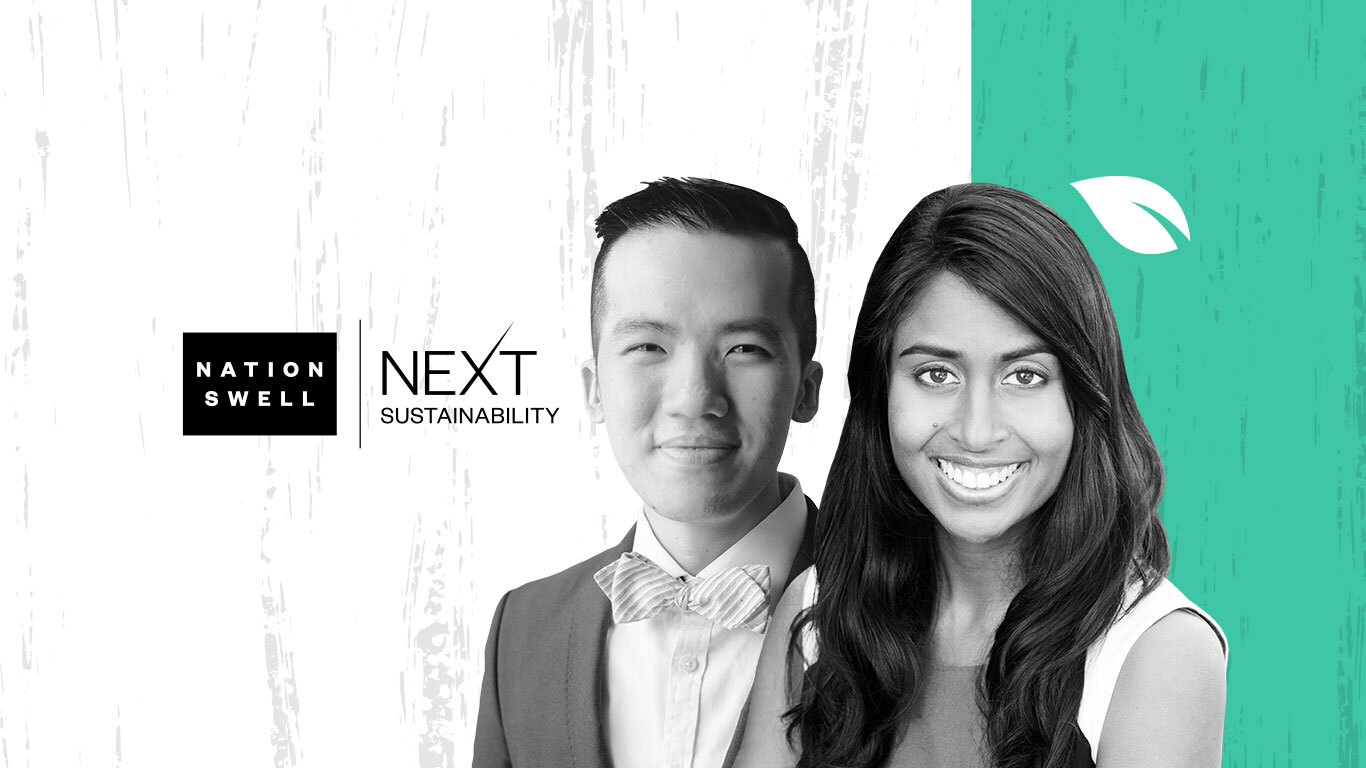
For this installment, NationSwell interviewed Fred Tan, Head of Social Impact at Hewlett Packard Enterprise, and Deepa Lounsbury, the CEO of LabStart — a nonprofit venture studio that helps build accessible pathways for underrepresented entrepreneurs to bring climate technologies from lab-to-market and one of HPE’s grantees.
Jason Rissman, Chief Experience Officer, NationSwell: What brought you into climate and sustainability — was there a moment in your life that galvanized your commitment to this work?
Fred Tan, Head of Social Impact, Hewlett Packard Enterprise: I grew up in Singapore, and we are very climate sensitive by nature of our location and the economy that the country relies on. That was always at the front of my mind growing up, intersected with the fact that my family, before my generation, has historically never graduated from high school. When I look at my life and the opportunity I’ve had to journey through different socioeconomic circumstances, it’s a privilege to be able to work on systemic issues, cultural issues, and to combine the two to focus on how climate affects communities and how communities can be empowered to help tackle the climate crisis.
Deepa Lounsbury, Managing Director, LabStart: 18 years ago, I sat next to a venture capitalist on a plane who told me that he invested in energy. I slipped one of my resumes into his pile as he was looking through them, and fast forward three months, I started my first job in climate at a small venture capital firm in Los Angeles where I was looking at a whole variety of technologies, including algae biofuels, recycling technologies, novel wind technologies, and solar. I’m still optimistic and going strong, and have taken a lot of notes along the way to figure out how to accelerate more solutions and bring talented human beings into climate work.
Rissman, NationSwell: How do you see this moment in sustainability — which trends are filling you with optimism and which ones are giving you pause or concern?
Lounsbury, LabStart: The biggest source of my optimism is that there is so much energy and interest. I’m heartened by the number of people who are excited to dedicate their life to this big and complex problem, the existential crisis of our time. The thing that worries me is that it feels like starting a climate startup is a luxury that only very few people can ever even dream of. We can’t depend on every big climate solution being launched by the very few people that have a big enough bank account or the right friends; we have to make our umbrella much bigger.
Tan, HPE: Similar to Deepa, I think one of our phrases that we commonly use is that every job is a climate job. I think the enthusiasm and momentum is incredible. We are seeing the structures put in place that will enable us to get to where we need to get to from a sustainability perspective, and we’ve got the best and brightest minds working on these issues — that give me lots of cause for optimism.
Living a sustainable life is, in many ways, still seen as a privilege for folks; it’s part of a structural and cultural problem that we haven’t yet solved, and that’s one thing that keeps me up at night. We need to do a better job of enabling change to happen, both structurally and culturally, so that everyone is able to participate in the fight against the climate crisis — and also the benefits of a more sustainable life.
Rissman, NationSwell: Tell us a bit about your sustainability strategies — what are the unique commitments and challenges that you’re embracing?
Tan, HPE: I think fundamentally we see that the world is becoming increasingly data-driven, and naturally we feel strongly that technology holds the key to unlocking solutions to some of the most pressing challenges that we’re going to face as a society — including the climate crisis.
I think we also see it as our business imperative to reduce our emissions across our value chain, to build climate resilience throughout our business — so much so that in 2022, we accelerated our net zero target by 10 years. Today, we are one of only three global IT companies with a net zero target of 2040, and interim targets that have been approved by the net zero standard of the Science-Based Targets Initiative.
Sustainability is built into the fabric of our business strategy, and as a tech company, the greatest opportunity for reduction for us comes from helping our customers minimize the environmental footprints of their IT estates.
Importantly, the climate crisis is not just an environmental issue. It is also a social issue in which 5 million excess deaths are anticipated between 2030 and 2050, disproportionately affecting racial and ethnic minority communities. Thus our strategy and commitment is to lead a collective effort to safeguard both the planet and its people.
Lounsbury, LabStart: LabStart is really all about unlocking potential for climate — there’s the human potential, and then there’s the technological potential. Our goal is to unlock both. BIPOC college graduates are only half as likely to have their name on a patent as white college graduates, so something that’s not talked about enough is having an idea that is “good enough” to launch a climate startup, or one that’s protected enough where you have a moat you can actually create a scalable solution around.
We estimate there are about 25,000 climate-related patents inside our Department of Energy-funded national labs, but the vast majority of them don’t get commercialized because it’s hard for outsiders who aren’t familiar with the national labs to access the IP. We’re putting both of those opportunities together to seed climate startups with both diverse founders and climate IP that’s inside of our research institutions.
I’m proud to say that our current ten fellows are a really diverse bunch in terms of their ethnic makeup: 50% are Black or Latinx and 50% are women or non-binary.
Rissman, NationSwell: It’s a fantastic model — can you tell us a bit about how you find the renewable energy-related patents that you’re going to try to match with talents?
Lounsbury, LabStart: There are, for example, 6,000 energy efficiency related patents and 6,000 energy storage related patents in our DOE National Labs and even more at our universities. We simply start with those who know their IP portfolios best (the technology transfer officers) as well as keyword searches to look for technologies that offer solutions to decarbonization problems that we have not yet solved. The next step in our evolution is to build upon today’s method and accelerate the IP filtering process utilizing AI and advanced technology solutions.
We start our technology funnel that way, and then we utilize a mix of both internal and external reviewers at different stages of narrowing it down. We have scientists, industry/corporates and investors, all weighing in on which ones have potential, and then we compile a shortlist of patents that entrepreneurs can select from when they fill out our application. We do also give them an option to look outside the shortlist. We select LabStart Fellows based on relevant experience, hustle, and their thoughtfulness and rationale for starting a business based on their selected IP.
Rissman, NationSwell: Fred, I’m curious about how you see LabStart, the role that they’re playing today, and how you’re supporting them.
Tan, HPE: We believe in innovation at HPE; we believe that innovation starts small, and we believe in supporting American innovation, so the national labs are great partners of HPE. I think when we look to tackle the climate crisis, our belief is that we need to support both the individual solutions and also ensure that the ecosystem more broadly is able to thrive.
When we look at the ecosystem of incubators and accelerators, we see that only 2% of them are focused on helping climatic entrepreneurs. So our strategy at HPE is to support the intermediary organizations that enable climate entrepreneurs to start their ventures, to thrive, and to succeed. LabStart hits on all these parts.
Rissman, NationSwell: Tell us about the progress that you’ve seen to date, and what you’re hoping to accomplish in the next couple of years.
Lounsbury, LabStart: We just finished the first three months of our program, and it is kind of breathtaking to see how far a single person can take a great idea in 12 weeks. They have talked to dozens of customers, the licensing offices, developed stunning pitch decks, calculated the environmental impact at scale, and generally have launched.
When we’re talking about deep climate tech, it’s a long journey and different organizations support it in different ways. I think what’s really important for us as the first leg of the relay race is to make sure we pass the baton and collaborate with all the other downstream accelerators that are primed to help entrepreneurs at a later stage, at step two, step three, step four. I’m so excited to see where everybody lands next.
Rissman, NationSwell: Fred, curious to hear a bit just about how HPE is supporting — tell us a bit more about what you’re able to do.
Tan, HPE: It’s a mix of everything. Our funding for LabStart goes toward supporting them organizationally in a way that is unrestricted and gives them the flexibility to grow in a way that best meets their needs.
I think what we’re trying to work toward is how we can help become a convener by bringing others to the table, in terms of leveraging our network of customers and technical experts within the company, and to be able to support LabStart and the fellows that go through the programs. But then also to give a signal to others that we interact with, other organizations, companies, and foundations, to catalyze more funding and resources for LabStart as an organization.
Rissman, NationSwell: If we look further out — let’s say seven, ten years into the future — what do you hope you’ll have built together?
Lounsbury, LabStart: What we’re doing is paving new paths to wealth in a somewhat nascent industry, new paths for intellectual property to actually get in the hands of the people who need it and will benefit from it. Instead of bushwhacking like we’re doing right now, I hope to pave a smooth, well-lit road with proper signage and street lights for all the maybe-entrepreneurs who are on the fence. I would love to be part of that inspiration and for them to know that there is a path for them that many people have gone down before.
Tan, HPE: From one side of the picture, what we hope for is that there’s more innovation that hits market scale. Throughout history there have been promises, and sometimes unkept promises, to communities that the evolution or revolution will bring jobs and economic opportunity and security.
I think what LabStart is doing is crucial in ensuring that we keep our promise with the tech revolution that we see happening, and crucial in opening up doors and opportunities for people and communities to participate in what will be the economy of the future.
Rissman, NationSwell: As you’ve been experimenting and learning together through this partnership, what have you learned about intersectional approaches like this that might be of help to our other members or other funders who are curious and motivated about trying to advance equity while pursuing the energy and climate transition?
Lounsbury, LabStart: The first thing I learned is that if you put an opportunity out there, the people will come — the talent and the hustlers and the people who just need a little bit of help to take that first step. We were just astounded by the quality of applications we got in our very first full application cycle.
The second thing I learned is that there isn’t a one-size-fits-all approach. I think every accelerator might have learned this, but this journey is hard and there are lots of times when you feel really alone and down. To start with why you’re doing this as a way to center and to figure out where your light is coming from is a really important piece of it.
The last thing I’ll say is that we have a really big vision, and it’s inspiring to be surrounded by super optimistic people. I don’t think you’ll find anyone more optimistic than entrepreneurs.
Tan, HPE: What I’m learning is humility, honesty, and trust. If we’re not intentional, power can become imbalanced whenever funding is involved, and working with Deepa and LabStart has required honesty about what HPE can bring to the table and what we cannot bring to the table — and also the humility to step back and recognize that what we bring to the table might not be the end-all, be-all of what the sector needs.
To make space for others to come along and to provide their expertise — even if it means putting ourselves in the backseat — also requires that honesty and humility, but then also trust in these other partners. I think we’ll continue to learn as we support LabStart, and as we continue to bring others to this table in support of Deepa’s vision.

As corporate sustainability challenges grow more complex, chief sustainability officers (CSOs) are being hired at record rates. They come from diverse professional backgrounds, underscoring the multidisciplinary nature of the role, and often find themselves navigating uncharted waters, tasked with steering an entire enterprise toward ambitious goals. This mandate demands more than just technical knowledge, it demands leadership, vision, and the ability to inspire change at all levels.
While technical guidance on sustainability is widely available through consultants, vendors, and the scientific community, there remains a significant gap in the transfer of practical wisdom. The Green Seat Guide bridges that gap with insights, strategies, and lessons learned from experienced sustainability executives. The aim of the guide is to accelerate the impact of sustainability leaders, new and experienced, by offering practical guidance and learned wisdom from those who have pioneered the role.
Each chapter focuses on an essential component of the sustainability journey and includes a selection of ready-to-use tools to support the adoption of key ideas and tactics.
Chapter 1 – Developing a sustainability strategy
Crafting a sustainability strategy is a foundational, if daunting, part of a sustainability leader’s mandate. Success requires rapid, comprehensive learning about a complex enterprise and a nuanced grasp of the forces that motivate your key stakeholders.
Chapter 1 of The Green Seat Guide explores the art of crafting a sustainability strategy, drawing on the rich insights of those who have navigated this process before.
It is comprised of seven sections:
The chapter also offers tools to support the adoption of key ideas and tactics, including:
With market forces and the regulatory environment converging to drive up demand for sustainability expertise in the private sector, the next few years will be pivotal for leaders hoping to develop and fine-tune their sustainability strategies.
On May 31st, NationSwell hosted a virtual Mainstage event called In the Green Seat: Lessons from Sustainability Executives on Designing for Impact that sought to unpack some of the wisdom, challenges, and unlocks shaping this dynamic moment.
Our featured panelists included Michael Kobori, Chief Sustainability Officer of Starbucks; Suzanne DiBianca, Executive Vice President & Chief Impact Officer of Salesforce; Erin Meezan, Chief Sustainability Officer of JLL; Letitia Ferrier Webster, Managing Director and Chief Sustainability Officer of Goldman Sachs Asset Management; and the event was moderated by Jason Rissman, Chief Experience Officer of NationSwell.
Here are some of the key learnings from the event:
– Embrace the unprecedented attention on sustainability to embed the work throughout the business. Sustainability practices are actively shifting from voluntary to mandatory, bringing it top of mind for business leaders. To succeed in mitigating risk, meeting disclosure requirements, and adding value to the business and its stakeholders, sustainability should be integrated into core business strategy. Ultimately, there is no sustainability without a sustainable business model.
– Interrogate goals and ambitions to include cross-functional priorities, especially if inheriting an existing sustainability strategy. It is difficult to add sustainability to business goals after the fact, much like it’s difficult to add an impact lens to sustainability work once programs are already in motion. Don’t shy away from thought-provoking questions; asking a question as fundamental as “what would our ideal impact be?” can help you identify if your organization is focusing on the best questions and goals for its unique strengths.
– Prioritize credible and actionable data. Collecting credible, auditable data helps with meeting reporting requirements and enables better strategic decisions, ESG performance projections, and roadmap development. At JLL, Chief Sustainability Officer Erin Meezan started an ESG Center of Excellence to bring together the business functions that generate and own ESG data, including finance, legal, and her own sustainability team. The Center’s activities have included internal and external audits to assess data quality and data mapping. The Center aims to understand how many people are involved in data generation and identify opportunities for better efficiencies and digitization.
– Weave sustainability and finance together to unlock new allies and innovation. By aligning financial resources with sustainability principles, companies can unlock new avenues for investment and innovation. All panelists agreed on the importance of bringing financial experts into the fold, as their skillsets are highly transferable to sustainability needs. Beyond personnel, adding a sustainability lens to traditional finance mechanisms can help unlock innovation and generate continued demand for sustainability from investors, as noted by Goldman Sachs CSO Letitia Webster. Large companies are already innovating based on these ideas; for example, Salesforce used a green bond to finance its acquisition of Slack, which allowed it to subsequently invest in additional products like Net Zero cloud.
– Understand your company’s unique role to play across various spheres of influence. It is impossible for any company to be involved in every aspect of sustainability work, so staying focused and playing to your company’s strengths is crucial. There are areas to make significant progress against your climate goals, such as focusing on building infrastructure or circularity in product materials. For example, at Starbucks, new employees all receive a reusable coffee cup that they can also use for their on-shift drinks. It’s an internal-foused change but one with significant impact: Starbucks CSO Michael Kobori estimates that 300 million cups will be saved through this initiative. Meanwhile, at Salesforce, EVP and Chief Impact Officer Suzanne DiBianca categorizes Salesforce’s opportunities under four main spheres of influence: employees, peer networks, policy, and customers. Salesforce’s activities in each of these areas are defined by the company’s inherent strengths – for example, the size of the employee base, or the use of technology to enhance customers’ understanding of their own sustainability impact.
– Maintain aspiration and passion as drivers of innovation and impact. Historically, sustainability work has been driven by passionate employees and ambitious targets. New regulations and stakeholder interest bring new scrutiny to the work, and ambitious goals will need to be backed up by data and evaluated in the context of the potential scrutiny they will attract. Scrutiny might make ambitious goals more daunting, but at the end of the day, stakeholders expect the work to proceed and increase in impact. Sustainability leaders have an opportunity to shift certain aspects of the work to more natural homes within the organization with the right stakeholder engagement, incentive alignment, and collaboration across functions, leaving the sustainability team with additional capacity for creativity and innovation.
– Ally with peers to strengthen impact. By fostering strategic alliances with industry peers, non-governmental organizations, and local communities, companies can strengthen accountability, share best practices, and amplify impact. At Goldman Sachs, CSO Letitia Webster is convening fellow leaders to share challenges and opportunities to mobilize partnerships. When partnerships come to fruition, they can shift entire industries – for example, CSO Suzanne DiBianca shared the significance of Salesforce’s participation in advanced market commitments alongside peers like Meta and Google.
View the full conversation:
Sustainability leaders stand at the precipice of a pivotal moment for the future of our climate. While no single individual claims to have all of the answers, changemakers are increasingly turning to each other to chart the course forward for sustainable innovation and climate action — exchanging insights on how to implement unique initiatives, harness emerging technologies, institute best practices, and challenge conventional wisdom in order to effect transformative changes for our ecosystems, our societies, and our most vulnerable.
In 2024, Sustainability Next — a new editorial flagship series from NationSwell — will spotlight the standard-bearing corporate sustainability leaders, entrepreneurs, experts, philanthropists, and more whose catalytic work has the potential to shape the landscape of progress amid urgent need for environmental action.
For this installment, NationSwell interviewed Ellen Jackowski, Chief Sustainability Officer and Executive Vice President at Mastercard.
Jason Rissman, Chief Experience Officer, NationSwell: Ellen, when we first met, you were leading sustainability at HP. What brought you to this field, and was there a moment in your life that galvanized your commitment to bold climate action?
Ellen Jackowski, Chief Sustainability Officer and Executive Vice President at Mastercard: My first job was working at a Ben & Jerry’s ice cream shop, and their story is pretty amazing — they were one of the earliest companies to really embed social and environmental values directly into their business model. So I was just scooping ice cream, but I really saw the value of how a business could align with social and environmental imperatives and create a difference from a business point of view.
Those early experiences really shaped my perception that I could make a difference at a company like Mastercard, where environmental and social values are part of the business strategy.
Rissman: How would you define this present moment in sustainability?
Jackowski, Mastercard: I’ll start with the concerning areas first: There is a ton of waste in our food system; in the last 15 years, clothing production has doubled while the number of times a garment is worn before being discarded has decreased by 36%; domestic and international aviation is responsible for about 10% of global emissions in the transport sector, and an estimated 1% of the global population is responsible for more than half of these emissions.
So we have a big problem on our hands, there’s no doubt about that.
But in terms of optimism, it’s clear that the next generation of consumers is demanding that companies, governments, and all of the important stakeholders take meaningful action. And as this next generation of voices gets louder, they have the ability to influence market shifts and we’re seeing that.
All signs are pointing to the fact that we’re heading into a new market context driven by value shifts, with a lot of opportunity to optimize business models.
Rissman: Talk to us a bit about Mastercard’s reach and how it informs your sustainability strategy.
Jackowski, Mastercard: We have 90 million merchants in-network and 3 billion cards in circulation, so we really have an opportunity to drive sustainable consumption. And for us, there are three main pillars to that strategy: inspire, inform, and enable.
Rissman: Let’s hear more about inspire, inform and enable. Tell us what’s working, where do you see the areas of most promise, and what’s challenging.
Jackowski, Mastercard: Inspire is really about stirring up hope and optimism and people’s ability to affect change, and one of the benefits of working for Mastercard is we have some really powerful sponsorships with some of the top artists and athletes in the world: the Grammys, Major League Baseball, a lot of different golf and tennis activities.
The second pillar there is inform: If people are now inspired and want to live a more sustainable, fulfilling lifestyle, how do we provide the right information at the right time for them to be informed to make a more sustainable decision? We have a lot more work to do in this field, but we have our first product out, the Mastercard Carbon Calculator, which provides a certain level of information to card holders around sustainable choices and the carbon impacts of what they’re purchasing.
And then the third pillar is enable. If you’re inspired and you’re informed, how do we then enable that change? How do we offer opportunities for consumers to take real action, meaningful action?
Rissman: What’s been the biggest challenge in reaching your own net zero goals for a company like Mastercard?
Jackowski, Mastercard: Since we’re not a manufacturer, our carbon footprint, for the size of the company that we are and with the global reach, is quite small. But we still have a hard journey to reach net zero.
When you break down our carbon footprint, the biggest section is our data centers, and we know that as AI and blockchain and other powerful computing technologies continue to expand, that could also potentially be the source of emissions growth as well.
We’re really engaging at the individual employee level with tools and education and awareness about how the choices that they make will determine if Mastercard hits our net zero goal or not.
And in fact, if you look at our 2022 ESG report, you’ll see that Mastercard experienced 18% growth in net revenue, but only a 3% increase in our emissions. Now, more work for us to do, no doubt, but it’s a good demonstration of how we’re beginning to see the signs of decoupling our corporate growth from our emissions.
Rissman: I think a lot of sustainability leaders are spending time thinking about how to structure their teams, how to integrate sustainability across business units. Any lessons that you’ve gathered that you can share about the best ways to organize?
Jackowski, Mastercard: Well, there are carrots and sticks. And one of the things Mastercard did almost two years ago was change our compensation system so that all 30,000 employees are now compensated on an annual basis on our progress against our ESG goals.
And so for two years running, all 30,000 employees got that bonus because of our goals. So now that we’ve got that incentive built into the financial structure of how the company works, we followed that up with mandatory ESG and action training.
Rissman: What have you learned about tackling Scope 3 that might be helpful to others?
Jackowski, Mastercard: We actually baked with Scope 3 into our incentive structure and that ESG compensation modifier. For the past couple of years, the target has been around getting our suppliers to report to CDP, and that’s what drove the compensation around our Scope 3 target. For this year, we’ve upped our game, and now it’s about suppliers setting a science-based target.
Our suppliers have been very receptive to this so far. I think they’re getting pressure not just from us, but from the other companies that they’re serving as well. So plenty to do, but we have a clear strategy, and we’re continuing to amp it up.
Rissman: I recently read about your commitment to bring 30 million people onto your Community Pass platform over the next five years. Tell us about that initiative.
Jackowski, Mastercard: By leveraging our digital technology, Mastercard has created products like Community Pass — a shared, interoperable digital platform that reaches people in low and medium income countries to provide access to the digital economy, to help them build economic and often climate resilience. So, it’s a really great connection between the environmental side of the focus that we have as a company and the social impact side as well.
When you’re creating social impact, oftentimes what that’s also building is climate resilience and toolkits for climate adaptation. Community Pass, with its focus on increasing access to critical services like healthcare, agriculture, and micro-commerce, has made a big difference in the world. And that’s why we were very invested in this goal to bring 30 million people onto the platform over the next five years.
Rissman: In order to take bolder action and move faster on climate, what needs to change?
Jackowski, Mastercard: I mean, a lot, right? A lot needs to change.
I often think about the power of legislation like the Inflation Reduction Act and the power it has to create that competitive spirit, not just here in the U.S. but in Europe and in other regions of the world.
But you know, it’s going to take many different ideas working together. Where I sit at Mastercard — having the support from our board, our CEO, the leadership team, to really innovate and challenge ourselves on how we do more faster, particularly in the sustainable consumption area — is exciting. We’ve got a lot of ambition, and we’re putting it into action.

When NationSwell surveyed corporate social impact and sustainability executives in July 2023, nearly 7 out of 10 said they’re anticipating a challenging year in 2024. Since then, we’ve witnessed an intensifying wave of anti-DEIB activism, read the dire warnings conveyed in the UNFCCC’s first Global Stocktake, and felt the surge of collective anxiety around the coming elections in the U.S. and around the world. At the same time, powerful examples of collective action, new and transformational technologies, and the continued resolve of purpose-driven leaders demand our attention and urge optimism into the picture.
At NationSwell, we too are resolved. We are resolved to support our membership community, partners, and concerned public in advancing progress on the issues that we believe matter most in the year ahead.
To ground our collective efforts, we have prepared this 2024 look ahead with four goals in mind:
Our look ahead focuses on 6 major topics that NationSwell anticipates being central to the work of purpose-driven leaders and organizations in 2024:
On Tuesday, November 28th, NationSwell convened a panel of thought leaders, experts, and innovators at the intersection of AI and Climate to explore the transformative potential of AI in addressing climate-related issues.
Here are the takeaways from the event:
Where there lies opportunity for deploying technology to efficiently manage the impacts of the climate crisis, there also lies remarkable environmental risks. AI-driven technology solutions can generate positive climate progress. For instance, Amini AI brings data to smallholder farmers in Africa to drive their economic inclusion and supply chain resilience. And Pano AI uses AI-powered detection technology to mitigate and manage wildfires. While these types of solutions are needed, deploying AI may also increase environmental challenges. Consider this: if the global population switches from web-based Google searches to AI, increased electricity use would equate to the entire energy usage of the country of Ireland.
The tradeoff between AI-powered efficiency and climate impacts can be partially addressed with better alignment to our natural biorhythm. While AI is often celebrated as a tool for moving faster, speed is not necessarily equivalent to productivity in the context of climate action. Solutions like carbon-aware computing allow software companies to calibrate their operations in ways that work harmoniously with natural sources of energy (for example, increasing solar energy usage when it’s sunny, and decreasing usage when it’s not sunny). This type of technological fix can be applied to AI, and help companies advance toward their 2050 climate goals effectively and quickly.
Companies at the forefront of developing and advancing AI climate tech should exercise their collective power to standardize an ethical code of conduct. A select few private sector companies are driving AI modeling for climate, positioning them as authorities in the space. Unlike other fields – such as engineering, law, and medicine – AI is not bound to a code of ethics. Companies leading the advancement of AI, particularly those making algorithmic decisions, have a responsibility to standardize safe and best practices. Specific AI climate concerns include implications for carbon emissions and effects on low-income communities.
There is a demand for talent that bridges AI and climate expertise, and job seekers can leverage new platforms for upskilling. Since ChatGPT went public, the market for AI startups has expanded; in the past year, over 100 AI and climate startups have been founded. There is high demand for talent at this intersection, but emerging positions require a unique set of green knowledge and skills. Platforms like Climatebase, Terra.do and Learn.greensoftware.foundation can help job seekers upskill and attain available jobs, meeting demand in the labor market.
There is a literacy gap between the general public and AI creators that puts consumers at risk of making poor and uninformed consumption decisions. One of the greatest challenges arising out of increasing public availability to AI and climate technology is a literacy gap. Consumers are unaware of what is needed to make informed and responsible decisions, and the risks posed by poor decision-making are unknown.
A consortium of collaborators is needed to accelerate companies’ climate progress. Companies are aware of the macroeconomic and moral case for investing in climate. Their incentives are molded largely by the Inflation Reduction Act, but their progress is halted by slow deployment of capital. To move forward with their ambitions, organizations can harness public-private partnerships to access shared values, support, strategies, and funding.
View the full panel discussion:
Thank you to our co-moderators Aimee Rawlins (Senior Editor, Fast Company) and Sid Espinosa (Head of Social Impact, GitHub) and our panelists Asim Hussain (Chairperson & Executive Director, Green Software Foundation), Claudine Emeott (Partner, Salesforce Ventures Impact Fund), Scott Gigante (Founding Engineer, Sightline Climate (CTVC)), and Jen Majernik Huffstetler (Chief Product Sustainability Officer and Vice President/General Manager, Intel Corporation Future Platform Strategy) for the thoughtful and insightful discussion.
This event was presented by NationSwell. To learn more, visit us at nationswell.com
2023 brought social impact and sustainability work further into the social, political, and organizational spotlight, and presented leaders with distinct, long-term considerations for their work. Leaders encountered large-scale, composite challenges: the escalation of the anti-ESG movement; the Supreme Court’s ruling against affirmative action and its subsequent implications for diversity, equity, inclusion, and belonging (DEIB); the effects of an increasingly restrictive macroeconomic environment on teams and priorities; and the intensification of regulatory requirements. At the same time, social impact work has matured and deepened, with leaders investing heavily in employee engagement, leaning in on sustainability strategies, cautiously adopting AI, and empowering communities through trust-based and place-based work.
Against this backdrop, NationSwell set out to investigate what forces were most significant in changing the way leaders approached their priorities and decision-making over the past year, and what leaders anticipate about the environment, their organizations, and their jobs in the year to come. Between July and August 2023 we surveyed 74 corporate social impact and sustainability leaders across NationSwell’s membership community and beyond. The resulting report explores the direct opinions and experiences of those leaders, in service to advancing collective knowledge about their essential roles.
Below is a summary of the key findings discussed in greater detail in the report:
Theme 1: Leaders’ confidence takes a hit among a difficult year for impact work
Theme 2: Economic and regulatory activity assert their dominance above other forces
Theme 3: Influence is leaders’ most sought-after and valued currency