
Skilling the future workforce: 8 recs for corporate leaders

Skilling the future workforce: 8 recs for corporate leaders

EXECUTIVE BRIEFING

Private sector engagement with skills-based hiring is increasing in response to employment gaps and escalating economic precarity. Between 2017 and 2019, 46% of middle-skill and 31% of high-skill occupations experienced material degree resets. And in 2022, 79% of HR professionals reported that scores on skills assessments are just as or more important than traditional criteria in hiring decisions.

These are positive trends from an economic and a social perspective. Skills-based hiring is critical to increasing equity and diversity in the workplace, as traditional credential-based hiring tends to screen out, disqualify, or exclude applicants without a four year degree.

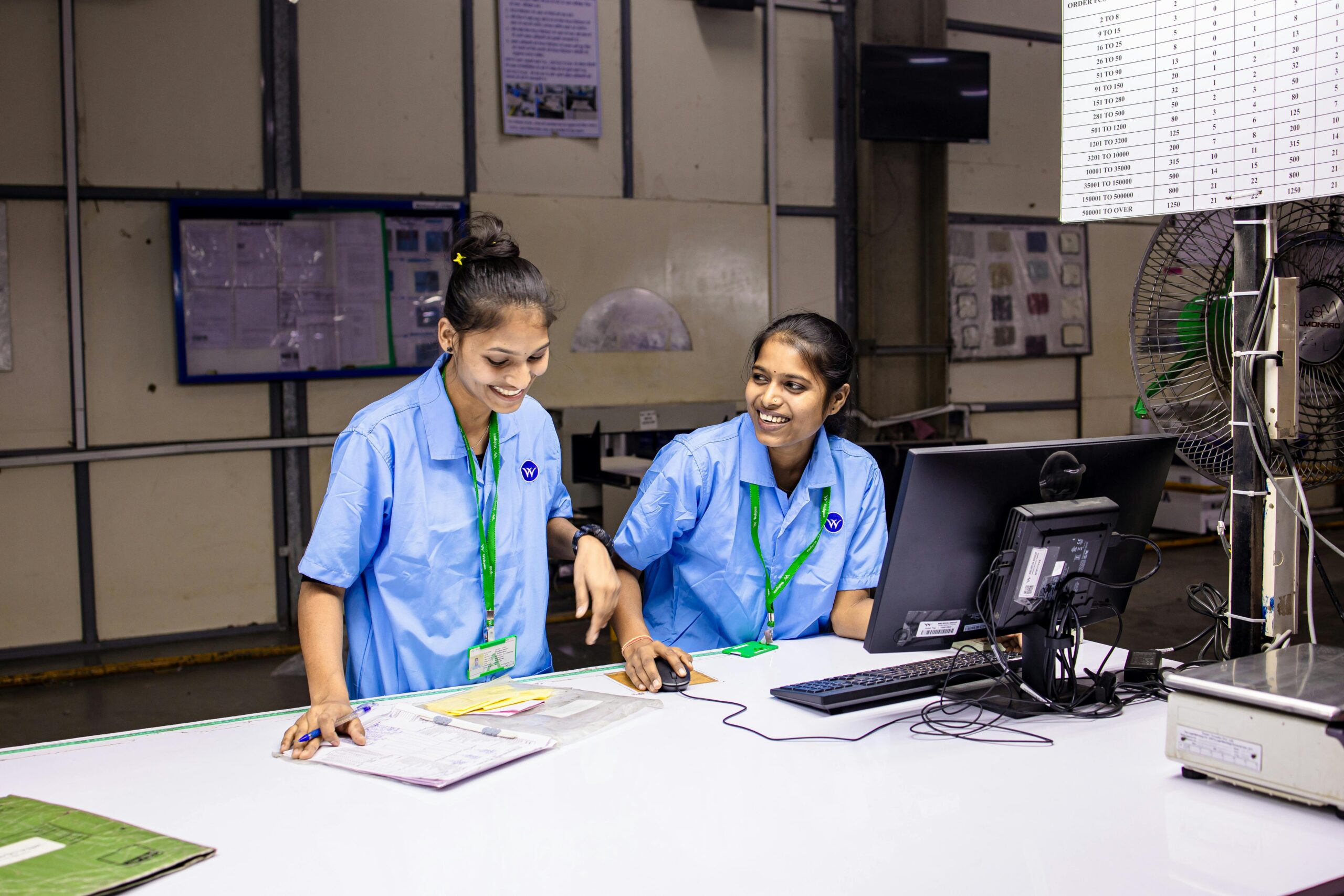
While increased commitment to skills-based hiring is an important step toward a more prepared and more inclusive workforce, many companies are learning that in-demand skills do not exist in adequate supply. Some of those businesses are taking it upon themselves to develop the skill-based talent pipeline that will be necessary to power their organizations, industries, and broader market into the future.

To better understand how companies are investing in the skills-based training ecosystem, before hiring even comes into frame, we dug deep with nine organizations on the cutting edge of workforce development.

Through our conversations with leaders and practitioners, we uncovered a depth of contributions to changing and scaling the learning systems that are preparing workers for quality jobs. Our report compiles eight recommendations to provide guidance for private sector employers who are committed to skilling the future workforce and ultimately contributing meaningfully to a more just and equitable workplace. 

The eight recommendations:


  • Decide if you aim to be influential at a systems, sector, or company level
  • Position your strategy correctly within your company’s infrastructure
  • Lean into (and use) your company’s strengths
  • Build a well-balanced partner portfolio
  • Design for replicability and scalability
  • Mind the non-skills gap between learner and earner
  • Engage in pre-competitive transparency and collaboration
  • Bring rigor and patience to impact measurement

Share this report

The state of play: Corporate sustainability

The state of play: Corporate sustainability

TREND REPORT

As climate change creates a growing risk to companies’ financial stability, sustainability programs offer a competitive advantage for businesses across size and sector. Those who are ahead of the curve are making bold commitments, deepening expertise, collaborating effectively, and greening their workforces. The most resolute business leaders will continue to push forward their strategies against political backlash. For them, it is a moment of opportunity not hesitancy. 

In this report, we help leaders get up to speed and check their progress against the latest macro trends, policy and regulatory developments (U.S. and E.U.), and pace-setting organizations.

The trends: 

  • Corporate climate commitments and leadership accountability are on the rise. But the rate of progress remains well behind what’s needed to achieve 2050 goals. 
  • Political and legislative activity are creating cross-pressures on sustainability work. But stakeholder activism remains a strong tailwind. 
  • New innovations and collaborations reflect a growing supply chain playbook. Companies know that Scope 3 impact cannot be ignored. 
  • Jobs–both existing and new–are becoming greener. Employers and workers are both driving the transition. 
  • Water and biodiversity are making big moves toward the center of corporate interest. Pending emissions disclosure rules remain top of mind.

Share this report

ESG Next: An Interview With Tiger Global’s Ali Hartman

At a moment of unprecedented attention, investment, and opportunity for the emerging field of ESG, leaders are asking: Who is best preparing their organization for the society of the future? Who is innovating today to meet decades-long environmental and social goals? Who is setting standards that catalyze their industry’s change for the better? Who is defining what bold and aspirational look like — and how best to advance that work in practice?

Enter NationSwell’s ESG Next, an exemplary group of investors, executives, authors, philanthropists, social sector leaders, academics, and field builders who are helping to shape business as a force for social and environmental progress, advancing — and even pioneering — the most forward-thinking and effective programs, initiatives, technologies, methodologies, practices, and approaches.

For this installment, NationSwell interviewed Ali Hartman, Head of Responsible Investment at Tiger Global, about the power of building unlikely bridges, the importance of the “G” in ESG, and the opportunity for clarity and leadership in responsible investment — especially amid the current backlash. 

Greg Behrman, CEO + Founder, NationSwell: How did your personal and professional journey to the field of ESG begin?

Ali Hartman, Head of Responsible Investment, Tiger Global: My journey to this field began long before anyone was using the acronym ESG. In many ways, it began before I even knew my ABCs. You see, I grew up in a social justice activist household, where both of my parents risked their safety and comfort in pursuit of nuclear disarmament. They were civil disruptors in the Plowshares movement and were arrested and imprisoned multiple times for their activism. So I spent my childhood in soup kitchens and at meeting houses, in courtrooms and on protest lines. With that reality came a sense of responsibility to serve the greater good and an obligation to speak truth to power. Changemaking was — and is — a part of my DNA. Literally, my mom was in prison while pregnant with me. 

As a teenager and young adult, I pursued internships and jobs in the public sector and with activist organizations. These were known entities to me based on my upbringing and places I understood that I could make an impact. It was in graduate school, when I took a class called Business Ethics, that I was first exposed to the power of the private sector. 

About a month into the class, a light bulb went off for me. I realized that companies had so much capital, flexibility, access, and influence. I realized that if I wanted to have an impact that could be sustained and scaled, I had to understand how this part of the equation worked. 

Since that class, my career has spanned roles in corporate sustainability, ESG strategy, and responsible investment across big business, private equity, and, most recently, venture capital. These jobs connect money and meaning and prove that public interest and private resources can have a greater impact when they’re working together. 

Behrman, NationSwell: How do you make sense of this moment in ESG?

Hartman, Tiger Global: I’ve been doing this work for about 15 years and have seen real evolution in this space. There’s been tremendous momentum and meaningful scale during a relatively short period of time. But with that growth, we’re also seeing some confusion and chaos. We need to get clear and be intentional when it comes to defining and pursuing ESG management. 

I’m an ESG purist. What I mean by that is when I talk about ESG integration, I’m referring to the measurement and management of material environmental, social, and governance factors in the operations of a business. 

Importantly, what I’m not talking about is impact investing, philanthropy, CEO activism, or corporate values. These are each, of course, critically important. But they’re just not part of ESG strategy. For me, ESG management is about viability, not morality. 

That’s not to say what is good for the sustainability of a company isn’t good for people or the planet — it usually is. When companies are measuring and managing their inputs (including natural resources and human resources) more intentionally, strategically, and efficiently, everyone wins. From where I sit, thoughtful, strategic ESG management has become the baseline of doing business in a world that is more complex and constrained than it has ever been. There’s so much opportunity to build better businesses that are ready to manage the volatility that is here and is only going to grow with time. 

Behrman, NationSwell: Tell us about the work you and your team are leading at Tiger Global, and why it’s noteworthy or potentially even showing early signs of advancing the field.

Hartman, Tiger Global: We are still in the early innings of our work at Tiger. We have a lot more to understand when it comes to purpose building responsible investment into our asset classes and investment strategies. That said, I’m proud of the progress we’ve been making and am excited about what’s to come for us — and hopefully for the venture industry more broadly. 

In the last year and a half, we’ve established a strong foundation for what will be an evolving responsible investment strategy. Our work to date includes firm-level policies, new ESG-related diligence practices, and a suite of monitoring tools to better understand our portfolio companies and fund-level trends. 

We still have a lot to learn about how to best integrate this work into a scaled venture model — one where companies are earlier in their maturity and limited in their resources, and where investors are often passive and minority shareholders. This is a totally different proposition than the work I did in private equity. 

Nonetheless, while the challenges are real, so are the opportunities. I believe that supporting companies early in their evolution and embedding efficiency and ethics into operations from the start can have a profound impact for companies’ growth and for the world in which they operate. 

Something else I am excited about is the chance to advance this work across the venture industry. While some impact-oriented firms or emerging managers have already started to integrate responsible investment strategies into their work, there is a massive opportunity to engage the larger, more traditional firms. Without a doubt, there is both value and necessity in us working collaboratively across the industry. 

As an example, we recently signed on as a founding member of the Venture Climate Alliance alongside more than 20 of our VC peers. Over the last few years, Tiger Global has been taking steps to measure and manage our firm-level footprint, achieving net-zero status as of 2021. As we look ahead, we are excited by the challenge of building tools and resources, setting expectations, and sharing opportunity with our portfolio companies with the goal of helping them better manage the risks and opportunities posed by climate constraints. We’re also excited to help advance the net-zero conversation across the industry.

Behrman, NationSwell: What is something that you’re spending time thinking about when it comes to ESG? 

Hartman, Tiger Global: When it comes to venture, I increasingly think that there’s an opportunity to reprioritize the acronym to be GES, instead of ESG. Putting governance last in the acronym can put it last on people’s minds. While, historically, some may have seen governance as a check-the-box part of this work, it is foundational. I think governance can and should go far beyond anti-bribery or anti-corruption. 

Governance is management and management is talent. And talent is prioritized and prized by the venture capital industry. I think that if we can modernize governance and give the “G” more attention and recognition, we’ll see better outcomes in all dimensions, including companies’ abilities to engage on environmental and social issues, weather volatility, and outperform over time.

Behrman, NationSwell: Who are some peer leaders who inspire you?

Hartman, Tiger Global: I’m inspired every day by folks across the changemaking continuum. Truly. When people say they are depressed about the state of the world, I tell them they should meet some of the people I get to meet. I’ve been having some really exciting conversations with Lyel Resner, co-lead of the Startups & Society Initiative. I think his experience as a tech entrepreneur brings important perspective to the table and I have loved talking to him about the interplay between responsible investment and responsible innovation. 

Shu Dar Yao at Lucid Capitalism also comes to mind. She is a force, highly creative, and has her finger on the pulse of what’s possible for the industry. We had such a great conversation when we were together recently at the Women’s Venture Capital Summit. 

I would be remiss to not mention the inimitable Cheryl Dorsey, CEO of Echoing Green. Cheryl has been many things to me over my years of knowing her — a co-conspirator, super connector, visionary leader, and dear friend. Her work and wisdom have never been more important to the urgent problems we’re collectively facing. I would put Cheryl and the amazing EG fellows in charge of everything if I had a magic wand!

Behrman, NationSwell: What are you reading, watching, or listening to right now that is inspiring your leadership?

Hartman, Tiger Global: A piece of writing that I often find myself returning to and sharing with colleagues in similar spaces is “At the Edge of the Inside” a consideration of the works of theologian Richard Rohr. It emphasizes the importance of effecting change within an organization or system. If you’re on the outside of a system, you can’t fully understand or appreciate it. Conversely, if you’re too close to the center, you may not be able to see its shortcomings. 

That really resonates with me. During the first decade of my career, I often felt out of place. Traditional business people sometimes considered me too alternative, while the activist or nonprofit community sometimes viewed me as disingenuous. Rohr’s piece helped me understand the importance of navigating those edges and building bridges. I highly recommend it to those working within conventional systems but pursuing unconventional goals. 

On a lighter note, it’s essential to find joy, rest, and respite in our busy lives, which I often find when listening — and laughing — to the podcast SmartLess, hosted by Will Arnett, Sean Hayes, and Jason Bateman. It offers a delightful blend of entertainment and relaxation, reminding us to make time for lighthearted fun.

On a related note, I highly recommend the newsletter What Could Go Right, which offers a refreshing perspective amid today’s often negative news cycles. It’s easy to feel anxious or overwhelmed by the state of the world, but it’s essential to recognize the progress we’ve made and the potential for positive change. To address challenges as great as the climate crisis, we can’t rely solely on fear, scarcity, or reactive responses. We have to inspire and excite people by showing them what’s possible and giving them hope. 


To learn more about how our ESG Next honorees are shaping business as a force for social and environmental good, visit the series hub. Tiger Global is a NationSwell Institutional Member. To learn more about membership in NationSwell’s community of leading social impact and sustainability practitioners, visit our site.

Key learnings on the theme of business for good

Key learnings on the theme of business for good


NationSwell’s 2023 Summit brought together the most cutting-edge and committed leaders in ESG, social impact, philanthropy, and other select fields. Across a full day of programming, participants elevated exciting and promising ideas and initiatives, reflected and revitalized, and gleaned actionable insights, practices, and collaboration opportunities to propel their leadership forward.

One of the main themes of the day was business for good, through which presenters and guests explored how to better center their values, prioritize human connection, and bring forward a “Better + Bolder” version of themselves.

Below are key learnings from the NationSwell Summit on the theme of business for good.

Note: Key learnings are also available on the Summit themes of purpose-driven leadership and economic mobility. A panel discussion on the fourth theme of sustainability was off the record.

Key Learnings

Individuals most affected by social issues are often those closest to solutions.

Identity is core to the impact that individuals and organizations drive, and often has an outsized impact on sociopolitical progress. Often, those most affected by societal inequalities are instrumental in deeply understanding and responding to pivotal issues. For example, as Thea Gay (NationSwell Fellow) noted, current efforts toward mitigating climate change are often driven by those who are most vulnerable to environmental injustice, such as youth and LGBTQ+ communities. Relatedly, as a Black woman, T. Morgan Dixon (Founder and CEO, GirlTrek) is closely aligned to her organizational mission of healing and transforming the lives of Black women through walking and self-care. Leaders must embrace the aspects of their own identity that prepare them to identify and adopt solutions to societal challenges, while also acknowledging when it is most appropriate to seek out and invest in others.

The intersection of business, leadership, and advocacy requires continual self-reflection.

Whether a business leader or social activist, it is vital to think deeply about who you are and how your identity shows up in the work you do. As your work evolves, your own self discovery will take new forms, and you may realize that working toward social impact for other communities is tied to advocacy for yourself. Bringing humility and self-reflection to your day-to-day work can create trust within your organization and create a narrative of meaning behind the work you do. During past inflection points, Hamdi Ulukaya (Founder and CEO, Chobani) has embodied self-reflection by asking for direct feedback from his entire staff on his leadership. He notes that success is a powerful influence and that course correction from your community is vital to staying true to your vision.

The social impact field is ripe for harnessing the collective power of technology and talent.

The potent social power of technological advancement, particularly around AI, is illustrated by the White House’s recent request that technology CEOs limit the risks of AI. But AI carries significant opportunities alongside its risks. As more talent enters the technology field, there are opportunities to mobilize platforms and employees for social good. For example, Sid Espinosa (Head of Social Impact, GitHub) notes that GitHub has created a huge network of passionate new developers that are eager to play a role in using technology for impact. Given the immense and growing power of technology and AI, organizations should anticipate headwinds and tailwinds relating to their own operations and consider how they can connect dots between their work, the evolution of the technology field, and social good. At GitHub, this perspective resulted in a partnership with the Norwegian Refugee Council, through which the company used its AI capabilities to deliver cash transfers to Ukrainians during conflict.


  1. Doing business for good often means seamlessly integrating – and responding to – information about the social and economic environment in which a company carries out its operations.

  2. Contributing financial resources toward advancing social impact is important, but can only go so far. To achieve organic and sustained impact, business leaders must assess the context in which they operate – often including characteristics outside of their control – and use that awareness to advance their goals. For example, in 2016, Hamdi Ulukaya (Founder and CEO, Chobani), identified refugee rights as a pivotal issue in the U.S. As such, there was a significant number of refugees in close proximity to Chobani’s manufacturing facility in upstate New York. Hamdi was able to increase their hiring of refugees to 30% of their total workforce, achieving a win-win for the company’s social impact agenda and the community within which it operates.
  1. Making a business case for investing in social impact is effective at generating buy-in, but doing it “meaningfully” creates sustainable change.

  2. According to Hamdi Ulukaya (Founder and CEO, Chobani), business is the most powerful platform for creating meaningful, sustainable change. Through the Tent Partnership for Refugees, he has found that CEOs often respond positively to understanding a clear business case for investing in an area of social good. For example, he cited that hiring refugees leads to high retention rates and demonstrable return on investment within two years. However, sustainable investment and long-term impact is escalated by business leaders who are dedicated to the meaning behind an issue. For some, this may be found through personal motivation, while others can look to their consumers and employees to lead the way.
More from Summit
Explore

Commercial products deployed for social good

Commercial products deployed for social good

CURATED COLLECTION

This Curated Collection explores a range of ways that companies are creating or repurposing products in service to their social impact strategies. It includes a non-exhaustive selection of representative and innovative examples of impact-oriented products, organized in categories based on how they are used.

The collection includes the following categories: 

  • Products used for fundraising 
  • Product grant programs 
  • Sustainable product; 
  • Special initiative products

Share this report

ESG Next: An Interview With Starbucks’ Michael Kobori

At a moment of unprecedented attention, investment, and opportunity for the emerging field of ESG, leaders are asking: Who is best preparing their organization for the society of the future? Who is innovating today to meet decades-long environmental and social goals? Who is setting standards that catalyze their industry’s change for the better? Who is defining what bold and aspirational look like — and how best to advance that work in practice?

Enter NationSwell’s ESG Next, an exemplary group of investors, executives, authors, philanthropists, social sector leaders, academics, and field builders who are helping to shape business as a force for social and environmental progress, advancing — and even pioneering — the most forward-thinking and effective programs, initiatives, technologies, methodologies, practices, and approaches.

For this installment, NationSwell interviewed Michael Kobori, Chief Sustainability Officer at Starbucks, about why this is the most crucial moment for ESG that the field has ever faced, the power of leadership companies to change whole industries, and why tapping into your employees is essential.

Greg Behrman, CEO + Founder, NationSwell: How did your personal and professional journey to the field of ESG begin?

Michael Kobori, Chief Sustainability Officer, Starbucks: When I was 17 years old, my father insisted that I apply for a scholarship offered by his company to spend the summer on a foreign exchange program. When you’re 17 years old, you want to spend the summer with your friends, not go to another country. But he made me apply, I got the scholarship, and spent the summer with a host family in Tokyo, Japan. 

Spending that time in my ancestral homeland, and even meeting some of my distant relatives, awakened in me a passion for thinking globally, and set me on a career that would lead to learning more about the world and working to understand and address the challenges facing humankind.  

As someone who has spent most of my life thinking globally, I think a lot about the Black Lives Matter protests of 2020 — it was incredible to see how these protests sparked movements all around the globe. They definitely helped me to reframe my views on social justice.

Another factor that has helped to frame my perspectives on social justice is my ethnicity. I’m a third-generation Japanese-American, and I never used to think about the fact that both of my parents, who were second-generation Americans, spent their youth in the internment camps during World War II. Growing up in the Japanese-American community, we just didn’t talk about it. But the powerful truth is that they were imprisoned by the United States government as enemy aliens.

Today, years later, my two daughters, who are much more conscious about ethnicity and diversity than I was, have awakened my personal history and sense of social justice. They and their generation are alive with discussions about justice and movements for reparations. I’m gratified to see that the Asian-American experience is part of the conversation. And it’s helped me to realize how my family’s history is such a big part of my desire for justice.

Behrman, NationSwell: How do you define this moment in ESG?

Kobori, Starbucks: I’ve been working in this field for nearly 30 years; well before we called it ESG. The work has evolved so much from those days of corporate social responsibility. And as the work evolves, the more we as a society recognize that the challenges of the capitalist system — like inequality and our environmental challenges — are reaching a head.

The current moment has been such an evolution from the early days. It has become so expansive — and as it expands, it keeps bringing more and more stakeholders to the table, including investors and regulators who are helping to change the system.  

Today, there is a clear recognition that the corporate sector is the most powerful and trusted institution in society — even more than nonprofits and governments. With this comes the urgent responsibility to address our global challenges and do our part to help build an equitable, sustainable future.

This is the most crucial moment ever for ESG. While we all try to address our companies’ footprints and the inequalities that may exist in our respective spaces, the real inflection point comes when more and more of us start realizing that we are part of a bigger system: We must ask ourselves what our responsibility is in enlisting others to help change the status quo. 

As practitioners, I think there are tremendous opportunities for us to contribute to society’s well-being and the planet. We need to think beyond our own companies and remind ourselves that the scale at which our business operates is societal and planetary. 

Currently, we are all individually addressing broader societal challenges. People ask if we are collaborating with other organizations and companies focused on the same ecosystem. It’s important to move from individual efforts to collective impact and find ways to capture this progress. When a company thinks on a wider scale, it unlocks opportunities to collaborate for the benefit of society. And collaboration is the only way we can enlist others to help restore ecosystems because, ultimately, success lies in contributing to the restoration of landscapes, which is what matters most to the planet.

Behrman, NationSwell: To which leadership practices do you most attribute your success? How do you approach getting buy-in on the work you’re driving?

Kobori, Starbucks: I’ve been fortunate to work for companies like Starbucks and Levi Strauss & Co., which have been recognized by others as leaders in sustainability. We know that the initiatives we pioneer can influence others in the industry. If Starbucks is successful in eliminating single-use cups and shifting to a reusable cup system, the industry will take notice. At Levi’s, the designers wanted to use less water in the manufacturing process. They came up with techniques to create the worn look on jeans using less water, which led to changes in the industry. Companies that manufactured washing machines began designing machines that used less water. Now, those machines are standard in every apparel factory worldwide.  

Leadership companies have the power to change entire industries. This is why I work for companies like these: We can have a broader influence on the system. 

If you find yourself at an organization that has the potential to lead and you’re facing headwinds because the organization does not have sustainability or responsibility as its ethos, you should focus on the business case for sustainability. It’s there, and it’s been demonstrated over the years — particularly for building resilience in your supply chain. 

It’s also essential to appeal to a company’s talent, especially the younger generation of employees and customers who expect sustainability and social justice from the brands they buy. When you appeal to a large swath of the workforce, that often means success is not dependent upon just one leader or executive. Tapping into your employees builds a movement for internal change that can actually have a societal impact as it starts to impact customers and communities outside of your business.

Behrman, NationSwell: What are some initiatives you and your team are driving at Starbucks that you think are noteworthy, or that show promising signs of advancing the field?

Kobori, Starbucks: Corporations are often nervous about environmental and climate justice and unsure of what to do. In addition to researching and engaging with stakeholders to assuage those anxieties, I prefer to take action. For example, we’ve invested $97 million in a community solar project in upstate New York, benefiting low- to middle-income communities. 

Because of that investment, Generate, our partners in the community solar project, received a deal with New York State and identified a subsidy so that those 24,000 households actually ended up paying less for renewable energy than they were for fossil fuel-based energy — and we also provided renewable energy to all of our stores in those neighborhoods. And now that criteria is being applied as we look at all of the other renewable energy investments that our company is making. 

This investment started with Starbucks’ balance sheet cash, and it allowed us to use our profits to address social and environmental issues, which also allows us to continue to generate income from that investment.

Another notable effort is our work on reusable cups, with more than 20 pilots last year in the U.S. and internationally. We aim to phase out single-use cups and move towards more sustainable options, which will not only help us lead with our employees and customers, but across the industry.

Behrman, NationSwell: To which leadership practices do you most attribute your success?

Kobori, Starbucks: I believe in being a servant leader, supporting my team, and helping them obtain the resources they need. I set a clear vision and empower my team to develop strategies for achieving our goals, and then I support them by influencing key stakeholders, connecting the dots, and connecting people who are doing like-minded work. Being a leader means embedding the work of sustainability and social equity in the business and supporting those teams to own it. It means being a great cheerleader and a supporter of their work. 

Behrman, NationSwell: What are some peer leaders and some books that inspire your work?

Kobori, Starbucks: I greatly admire Erin Meezan, CSO at JLL, who was formerly CSO at Interface. I still think Interface does this better than anyone else, because their approach to social impact is totally embedded in what they do as a company. Janine Benyus, founder of Biomimicry Institute, also comes to mind. Janine is one of the most brilliant people I know when it comes to thinking about ecosystems, biology, and sustainability. Every time I speak with her and I think I have the answer to something, she kicks my intellectual butt and makes me realize that I’m only part of the way there.

Finally, there’s Heather McTeer Toney, who leads climate justice work at the Environmental Defense Fund. She is one of the writers profiled in one of the books I’d recommend: All We Can Save, an anthology of poems and essays by female, largely BIPOC, climate justice leaders edited by Dr. Ayana Elizabeth Johnson and Dr. Katharine K. Wilkinson.

Reimagining Capitalism in a World on Fire by Harvard professor Dr. Rebecca Henderson is also an immensely powerful book, as is The Ministry for the Future by Kim Stanley Robinson, who has been called our greatest living science fiction writer. The Ministry for the Future describes a not-too-distant future where a U.N. Ministry has been created to implement the Paris Climate Agreement. And lastly, The Culture Code by Daniel Coyle is so helpful — it will always be my go-to for understanding organizational dynamics and building successful teams. 


To learn more about how our ESG Next honorees are shaping business as a force for social and environmental good, visit the series hub. Starbucks is a NationSwell Institutional Member. To learn more about membership in NationSwell’s community of leading social impact and sustainability practitioners, visit our site.

ESG Next: An Interview With Microsoft’s Kate Behncken

At a moment of unprecedented attention, investment and opportunity for the emerging field of ESG, leaders are asking: Who is best preparing their organization for the society of the future? Who is innovating today to meet decades-long environmental and social goals? Who is setting standards that catalyze their industry’s change for the better? Who is defining what bold and aspirational look like — and how best to advance that work in practice?

Enter NationSwell’s ESG Next, an exemplary group of investors, executives, authors, philanthropists, social sector leaders, academics, and field builders who are helping to shape business as a force for social and environmental progress, advancing — and even pioneering — the most forward-thinking and effective programs, initiatives, technologies, methodologies, practices and approaches.

For this installment, NationSwell interviewed Kate Behncken, Corporate Vice President of Microsoft Philanthropies, about the importance of tying together purpose and profit, the power of capacity-building leadership, and this moment of tremendous opportunity for social impact and sustainability leaders.

Greg Behrman, NationSwell CEO + Founder: Tell us about how your personal and professional journey led you to ESG work.

Kate Behncken, Microsoft Philanthropies Corporate Vice President: While I was a lawyer for many years working in Australia and Europe, I was presented with the opportunity to come on board as Chief of Staff for Brad Smith, Microsoft President, Vice Chairman, and General Counsel. That post gave me an opportunity to be exposed to the broader work of the company, and it was in that role that I learned about all of Microsoft’s social impact work. 

I had the opportunity to work on a number of initiatives like Kids in Need of Defense, and I think that exposure is what really lit the fire for me to get passionate about the work we were leading, the opportunity to make a difference, and most importantly, about the responsibility the private sector has to all communities.

Behrman, NationSwell: How do you think about what defines this moment in ESG?

Behncken, Microsoft: As a tech company, we see the tremendous opportunity that technology brings — the huge benefits and great potential for technology to address some of society’s biggest challenges — but we also see the pace of change, the rapid transformation that was only accelerated in the Covid era, and how this pace raises new challenges and also intensifies existing inequities in our communities.

Because of that, at this moment, there’s greater expectation on private sector leaders from everybody — employees, stakeholders, and ourselves. I would say from what I’ve seen at Microsoft, the level of energy across the company for the work we do is at an all-time high. That’s a fantastic opportunity for someone like me in my role, so the question is, how do you tap into it in the best possible way?

We view our goals through four key lenses: supporting economic growth, sustainability, trust and protecting fundamental rights, but ESG is also so broad. I think a lot of us are thinking about what this framework means, and what it’s going to do. There’s going to be more that companies will have to report on in more ways; and there are going to be more things that we want to continue to report on.

Behrman, NationSwell: What is it about your approach to ESG, social impact, and sustainability work that yields the most success?

Behncken, Microsoft: In the private sector, there’s been a historical sense that profit happens at the core of an organization, but the purpose-driven functions take place in this small department that’s separate from it. But I don’t think that’s the case. The more that companies can bring together profit and purpose, the more they’re going to be successful.  

That’s certainly not the case at Microsoft. From a people perspective, we have a multidisciplinary team thinking about how we bring together our purpose and our profit. That’s no easy task. To do that, you really need a diverse skill set. We have people from so many different backgrounds, and as with any team, that diversity makes you stronger, and makes the work better.  

One of the really unique things about Microsoft Philanthropies is a group called Tech for Social Impact, where we focus on how we help nonprofits get access to affordable technology to be able to leverage that tech to grow, scale, and reach more of the beneficiaries that they’re trying to reach. But it’s not just the affordable technology we provide — it’s often that we’re working really closely with them to help them drive their own digital transformation. We’re meeting them where they are. Some nonprofits have great mastery of their technology tools, others not as much. So we, and our partners, listen to the organizations’ specific needs, that’s what makes our model so different from a one-size-fits-all approach to helping nonprofits.

In this arrangement, we reinvest incremental profits generated from the TSI model into philanthropy, into innovation for the nonprofit sector, and into a wide range of social good initiatives. That gives us a tremendous opportunity to do more; the better TSI does, the more that we can reinvest back into the sector.

A lot of people originally thought that a non-profit sales channel in philanthropies is oil and water; they thought, “How can that possibly work?” Well, I see it work. And it’s fantastic. Last year alone, we provided $3.2 billion in donated and discounted technology – up 29% from the previous year – to 302,000 nonprofits that deliver critical services to over 1.2 billion people around the world. Over the next five years, we will double the number of nonprofits we reach with technology discounts and grants to help amplify their impact.

We’re also focused heavily on multi-sector partnerships, like our partnership with U.S. Vice President Kamala Harris’s office to deepen investments in local economies in Central America, bolstering quality of life, increasing access to work, and helping to stem the tide of migration to the United States. For this initiative, the partners worked together to map out the different “swim lanes,” and then we each focused on the one where we could have the most unique impact. 

We lead the swim lane around digital inclusion: Microsoft is focused on expanding Broadband internet access to 3 million Central American  people and providing access to digital skills learning paths to upskill workers and make them more competitive in the job market. We’re training over 100,000 Central American workers in the next three years, helping them to learn the soft, technical, and digital skills that will enable them to gain access to  higher-paying local jobs.

The partners were very thoughtful, not only about which of us could lean in to each of the swim lanes, but about how each lane supported all the others,  and then how all involved collaborated more closely with government. I think it’s a model that we might start seeing in other countries around the world. You can learn more about our work, and the other partners involved on the White House website.

Behrman, NationSwell To which of your leadership practices or approaches do you attribute your success leading the sustainability function of an organization like Microsoft?

Behncken, Microsoft: One of my core beliefs about being a leader is that leadership is about building capacity and not dependency. Of course, I’m very focused on making sure Microsoft Philanthropies is a great place to work, but I’m also really invested in how we’re helping to grow people’s careers in the space. 

I’m also a firm believer in the power of partnerships. We partner a lot with governments around the world. It’s the only way to really achieve scale with some of the work we do, like our global initiative to upskill workers in an effort to support local economies and talent pipelines around the world.

Lastly, I am a firm believer in focus, and I steer my team towards only being at the tables where we can add really unique value. If you do less, you’ll drive greater impact. That’s a journey we’re all still on.

Behrman, NationSwell: Who are some leaders in this space whose leadership inspires your own?

Behncken, Microsoft: I’m inspired by Wendy Young of Kids in Need of Defense, a great organization working to help unaccompanied minors migrating to the US. Wendy is an amazingly generous leader, and Microsoft has worked closely with KIND over many years. I’ve had the opportunity to see how she thinks about addressing systemic issues, and she’s just very on top of it. An absolutely wonderful person.

My team and I look at the work that Shamina Singh is leading at Mastercard, not just on inclusive growth but also more broadly across the whole organization, thinking about how they bring together their purpose and their profit. (Editor’s Note: Shamina Singh is a future ESG Next honoree, and will be profiled in this series at a later date.)

Behrman, NationSwell: What are some resources you recommend that have helped to fuel your leadership, professionally and personally?

Behncken, Microsoft: Caste, an exploration of how America has been — and still is — shaped by a not-so-hidden caste system, is essential reading. The author, Isabel Wilkerson, links our social system to India’s and Nazi Germany’s, and her analysis has shaped my view of the world today.

Brad Smith, who’s the president of Microsoft, recently wrote a book called Tools and Weapons, and also recently released a podcast where he speaks to leaders in business and government to look at the world’s most critical challenges, the intersection of technology and society, rural broadband, and digital inclusion. I think they’re both essential.


To learn more about how our ESG Next honorees are shaping business as a force for social and environmental good, visit the series hub. Microsoft Philanthropies is a NationSwell Institutional Member. To learn more about membership in NationSwell’s community of leading social impact and sustainability practitioners, visit our site.

ESG Next: An Interview With Bain Capital’s Tricia Winton

At a moment of unprecedented attention, investment and opportunity for the emerging field of ESG, leaders are asking: Who is best preparing their organization for the society of the future? Who is innovating today to meet decades-long environmental and social goals?

Who is setting standards that catalyze their industry’s change for the better? Who is defining what bold and aspirational look like — and how best to advance that work in practice?

Enter NationSwell’s ESG Next, an exemplary group of investors, executives, authors, philanthropists, social sector leaders, academics, and field builders who are helping to shape business as a force for social and environmental progress, advancing — and even pioneering — the most forward-thinking and effective programs, initiatives, technologies, methodologies, practices, and approaches.

For this installment, NationSwell interviewed Tricia Winton, Partner and Global Head of ESG at Bain Capital, about why she thinks ESG isn’t going away anytime soon, the power of a private partnership model in advancing ESG work, and the importance of focusing on the upside while you navigate the risks and pitfalls.

Greg Behrman, Founder + CEO, NationSwell: Was there a defining experience or moment that drew you to this field?

Tricia Winton, Partner and Global Head of ESG, Bain Capital: It wasn’t just one moment. I’ve had the opportunity to be surrounded by leaders in our field and a firm like Bain Capital that believed that thriving businesses across a number of dimensions including governance, sustainability, organizational performance and culture generate higher returns as well as positive societal and environmental outcomes. I’m proud to say that Bain Capital has held this belief since its inception and before the term ESG came to fruition.  

I joined Bain Capital in the midst of the pandemic and saw firsthand the power of an organization that is sincere and engages and collaborates with a wide range of important stakeholders. I also saw our ambition to lead in this space. The goal was not to make flashy proclamations, but to drive genuine impact. You can feel that in the culture and in the work, which is very different from what I’ve seen anywhere else.

Behrman, NationSwell: What do you make of this moment in ESG? Where are we in its evolution, and how do you assess this moment?

Winton, Bain Capital: I have a long-term perspective on the evolution of the space, and I think broader socio-economic factors have only heightened the awareness of what’s expected of companies and individuals in facing some of society’s largest problems. The reality is we’re going to need more collective effort, not less.

Here’s the good news: We’re seeing progress every day. We’re seeing more and more employees who want to work at firms and companies that think long-term and holistically about their impact.  We know employees want it and we know investors want it. Ultimately, it’s a focus that is going to reward our industry and the broader business community. 

The more I see this progress, the more my conviction grows around the importance of this work. Of course, we need to address the risks our companies are facing — but it’s equally important to concertedly lean into the upside of ESG work and the lasting, positive impact that businesses can deliver. We can and must do so much more.

Behrman, NationSwell: Can you share how you and your team at Bain Capital approach ESG work in ways that are unique or exemplary?

Winton, Bain Capital:  Our full team really wanted to develop an ESG approach that has our fingerprint on it — distinctive, generative and ultimately our own. 

We’ve had four decades built on a consulting business transformation model that’s really unique in this space — and that really gives us a head start on producing authentic, exemplary work. Our goal is to invest and grow great companies, but also to do that in the right way with a very high integrity, respect for people and enthusiasm to create these businesses that thrive. Because of our consulting roots, we have the desire to work through tough problems. We’re trying to apply that same rigor and intensity to our ESG efforts, endeavoring to build out what we think is a distinctive approach to where our culture is in alignment with our values. 

That manifests throughout the five core ESG commitments we established, where we believe we can have meaningful, measurable impact over the long-term. It also manifests in the practical application of those commitments in our investments and portfolio companies, through examples like building our ESG leadership team with leaders from across our business units, organizing global teams to spot ESG trends and share learnings, and focusing on building good governance in our investments and portfolio companies because we believe that good governance is the umbrella through which ESG efforts get the right traction. We have an intentional approach there with a consistent set of practices that centers around ensuring that we are thinking about ESG outcomes with the same intensity that we have every other part of our investment thesis. 

Other examples include the convening of portfolio company leaders like our Chief Human Resources and Talent Officer monthly forums and annual summit to advance our approaches to human capital management.  In these forums, leaders review the latest strategies and tools to enhance diversity, equity and inclusion and share approaches to boost employee engagement and organizational health.

Finally, we prioritize broader stakeholder engagement with thought partners like NationSwell, Focusing Capital on Long Term (FCLT Global), Business for Social Responsibility and the Sustainable Markets Initiative to advance our sustainable investment practices, and Management Leaders for Tomorrow and the Directors Academy to really expand the pipeline of diverse talent coming to our firm and to our portfolio companies.

Those are the kinds of things we’re building out across our businesses. Soup to nuts, we think this is distinctive and differentiating.

Behrman, NationSwell: What are some key opportunities you see for Bain Capital? 

Winton, Bain Capital:  There’s so much that’s been said about how we need alignment, uniform actions, and clarity as an industry. All of that would be great. But for us, here and now, we’re really focused on how we can measure and drive year-on-year improvements. We continue to build out our measurement and reporting capabilities, centering the tangible outputs that help drive our progress. And when you hear people talk about the confusion and the challenges around data measurement, the momentum of what’s possible and those tangible outcomes get lost from the discussion.

We believe that a focus on tangible outcomes helps us act on priority topics, such as our efforts to reduce our environmental footprint and engage our portfolio companies to reduce carbon. We leverage our deeply collaborative approach, and support from expert advisors to ensure decarbonization efforts are practical and relevant for our companies.  

Behrman, NationSwell: To which of your leadership practices do you attribute your success?

Winton, Bain Capital: I embrace a deeply collaborative process and I’m fortunate that our firm and our ESG team really pride itself on that.  We work to understand different points of view. We believe firmly that more perspectives on a problem will yield a better outcome. I think we are trying to be bold and we have an ambitious vision, but we have this highly collaborative approach that I feel will help us build more effective programs and drive impact over time.

Behrman, NationSwell: Who are the leaders that inspire you in personal and professional ways?

Winton, Bain Capital:  I think one of the most inspiring people to me is Paul Farmer. I had the opportunity to meet Paul on many occasions and learn more about his fundamental belief about global health equity and how important it is to advocate for human health and justice globally. With his passing, the world really lost an incredible visionary.Bryan Stevenson’s work on racial justice in America has been a constant source of inspiration for me, and he is an incredible example of how you build lasting partnerships.


To learn more about how our ESG Next honorees are shaping business as a force for social and environmental good, visit the series hub. Bain Capital is a NationSwell Institutional Member. To learn more about membership in NationSwell’s community of leading social impact and sustainability practitioners, visit our site.

Diversity, equity, inclusion, and belonging: U.S. certifications and recognitions 

Diversity, equity, inclusion, and belonging: U.S. certifications and recognitions 

CURATED COLLECTION

From the Great Resignation to the Great Reshuffle, one thing is clear: workers want good workplaces alongside good jobs. For employers, however, it can be a challenge to signal their value to prospective employees or retain current talent in a tight labor market. Although external validation can never capture the true experience of what it is like to work at any one place, certifications, awards, or other public recognitions can offer employers the opportunity to pursue and promote excellence across a variety of DEIB dimensions.

This Curated Collection provides social impact leaders in the private sector with a roundup of United States-based certifications and “best of” recognitions related to different aspects of diversity, equity, inclusion, and belonging (DEIB). 

The collection includes the following: 

  • Certifications achieved based on company-submitted applications 
  • Recognitions achieved without needing to apply

Share this report

ESG Next: An Interview with Goldman Sachs’ Letitia Webster

At a moment of unprecedented attention, investment and opportunity for the emerging field of ESG, leaders are asking: Who is best preparing their organization for the society of the future? Who is innovating today to meet decades-long environmental and social goals? Who is setting standards that catalyze their industry’s change for the better? Who is defining what bold and aspirational look like — and how best to advance that work in practice?

Enter NationSwell’s ESG Next, an exemplary group of investors, executives, authors, philanthropists, social sector leaders, academics, and field builders who are helping to shape business as a force for social and environmental progress, advancing — and even pioneering — the most forward-thinking and effective programs, initiatives, technologies, methodologies, practices, and approaches.

For this installment, NationSwell interviewed Letitia Webster, Managing Director + Chief Sustainability Officer, Merchant Banking Division, Goldman Sachs, about what the precipice of this moment in ESG means for sustainability leaders, the importance of integrating corporate social responsibility across your entire business, and the leaders that inspire her. 

Greg Behrman, CEO + Founder, NationSwell: How did your professional and personal journey lead you to the field of ESG, social impact, and sustainability?

Letitia Webster, Managing Director + Chief Sustainability Officer, Merchant Banking Division, Goldman Sachs: When I lived in Telluride, there was a film festival they held called the Telluride Mountainfilm that celebrates important stories that need to be told within mountain communities — by and large, stories that celebrate a vibrant mountain culture with a focus on the environment and and on how it affects our most vulnerable populations. 

It helped to open my eyes to global injustice. I was very young — just out of college, and it informed my perspective. I was running a small non-profit in the region focused on the environment, and it became clear to me that I needed to make this more of my career path. I moved to the Bay Area, worked at The North Face, and while that was fun, I realized that what we were marketing — these big, pristine, wild places — was actually not what was happening in our supply chain, not just at The North Face, but in general across all products and sectors outsourcing to Asia. So I started the sustainability program at The North Face and it’s been my journey ever since.

Honestly, I’ve been passionate about this work since I was a child. It’s in my blood, and it’s so intuitive to me. It always pained me when I saw trees being chopped down for developments — I’d always wonder who was speaking up on behalf of the environment? Where are the birds going to go, the deer, everything that depends on them being there? 

But as I became more sophisticated and understanding of all of the unintended consequences and the ramifications of this work, it became crystal clear to me that there actually was no one speaking up, there was no voice in so many places for communities and the environment that were being impacted by decisions like that.

Behrman, NationSwell: How do you make sense of what this moment means for ESG and its field builders?

Webster, Goldman Sachs: We’ve made a remarkable amount of progress in 25 years,  but there’s highs and lows through all of this. Obviously, the publishing of Silent Spring was a significant milestone in turning the tide and raising awareness on these issues, and designating Earth Day was a big high. But there are big lows that come out of it as people lose focus and competing interests take over.

Sustainability has always been based in the science of what is actually happening to human and environmental health. Unfortunately, the science argument was not always understood from an economic perspective — but the science does impact the economy. And so it’s only been a recent development that we’ve started to see the sustainability argument become rooted in the business argument. You start to understand the cost of these externalities, how they impact your business, and how you approach embedding those material risks in your financial considerations.

When Covid hit, people were worried sustainability would take a backseat, and in fact it only heightened awareness of it. As our country has grown more divided in recent years, sustainability leaders have had to navigate an even more complex environment. Despite this, the reality of the increasing intensity of the impacts taking place are actually motivating investors and businesses to go even faster.

Behrman, NationSwell: What are some other factors driving movement in the field?

Webster, Goldman Sachs: Organizations like SASB have helped to evolve this work, making it more sophisticated, accountable, and transparent; while social media and NGOs helped amplify a broader sense of what’s happening in the world, from who makes our clothes to the carbon intensity of our beef, and now there’s a groundswell of consumer support for sustainability — and pressure on organizations to be more sustainable as their awareness grows more heightened.

ESG is maturing as a practice.  Companies have come along with it as have consumers.  Investors are at this precipice where they now understand the issue and their role in it. This heightened focus from investors is creating a tsunami of effort and impact as firms organize around this to integrate it into their investment approach and practices.

Behrman, NationSwell: What are some of the challenges?

Webster, Goldman Sachs: Sustainability work and the knowledge around it were very isolated at first. Now, it’s opened wide up and there is a deep desire to understand it, integrate it, and do something about it.  However there is a proliferation of frameworks, reporting requirements, and regulations. These are not always aligned; they can cause a great deal of inefficiency and be unproductive, which is causing a bit of chaos in the system.  

We need a more focused and targeted approach globally. We need clarity on expectations and reporting, just as there is guidance on general accounting principles and SEC reporting. Otherwise we fill out spreadsheets and questionnaires all day long, and don’t have time to do the real work to improve on our impact.

We have to get to that point because we’ll be able to consolidate the most material issues, and we just have to be able to focus. Really clear, crisp policy is the most important thing, and I think that includes a carbon tax.

In this moment, we are seeing these macro forces underscore the importance of integrating even deeper. We just need to stay focused on the task at hand. 

Behrman, NationSwell: What is it about your approach that differentiates you from your peers in sustainability?

Webster, Goldman Sachs: My approach, which has been refined over years of coaching and mentorship, tries to bring people to make this work inclusive and welcoming. I think that’s a really important piece of success in this field.  At the end of the day, sustainability has to be embedded into every single business function. It cannot be a standalone, isolated leadership activity where we are taking ownership or control of all of the work. It has to be dispersed, and it has to come from servant leadership — a leadership that is humbled by everything that must be done, a leadership that is visionary about where we need to go and how we get there, and a leadership that understands the goals of all key stakeholders and how this work benefits the business.

And so, it has to play this careful balance of bringing people in to that shared vision that we have and inviting people in to join us and then supporting those people in that journey and making sure everyone is part of it and understands their role in doing so.

My passion and commitment have been my fuel — this is really hard work, there’s no doubt about it. Especially 15 years ago, when doors were slammed in your face and no one wanted to hear from you. We had to literally kick the door down, but now people are more prepared. The challenge is making sure they’re listening to it in a way that they can absorb, in a way that they can engage with. You can’t lecture them, you can’t shame them, you can’t fear them.

For me, it’s all about letting your personal purpose guide your approach to your work. And personal purpose is all about three concentric circles. One is, what are you best at in the world? The second is, what are you passionate about — for me, that’s sustainability and giving people a voice. And then the third is, what does the world need from you?

Behrman, NationSwell: Who are some leaders whose work inspires you?

Webster, Goldman Sachs: I had the opportunity to see David Brower, the founder of the Sierra Club, speak right before he passed away. Listening to his stories — and the perseverance and grit that he had — it was just phenomenal.  For those earliest of environmental leaders to have that level of vision and commitment, is something I am in awe of and so grateful for.

Bill McDonough is a profound thinker whose work, specifically Cradle to cradle when it came out in 2004, transformed the way I thought about Sustainability and  how we can approach the opportunity for systemic change.  It was pretty revolutionary of him to go back to these ancient concepts of turning waste streams into nutrients for new products- he modernized the concept of a circular economy.  And, what he did to completely green the Ford River Rouge Truck Plant was fairly revolutionary  – it set the new standard.  He’s fantastic.

And a bit closer to home, I’d also have to say Hannah Jones. When she became the chief sustainability officer at Nike, it showed me that  I could do this work as my full time career, it didn’t have to something I pursued on the side.


To learn more about how our ESG Next honorees are shaping business as a force for social and environmental good, visit the series hub. Goldman Sachs is a NationSwell Institutional Member. To learn more about membership in NationSwell’s community of leading social impact and sustainability practitioners, visit our site.