ESG Next: An Interview With Steelcase’s Kim Dabbs

At a moment of unprecedented attention, investment, and opportunity for the emerging field of Environmental, Social, and Governance (ESG), leaders are asking: Who is best preparing their organization for the society of the future? Who is innovating today to meet decades-long environmental and social goals? Who is setting standards that catalyze their industry’s change for the better? Who is defining what bold and aspirational look like — and how best to advance that work in practice?

Enter NationSwell’s ESG Next, an exemplary group of investors, executives, authors, philanthropists, social sector leaders, academics, and field builders who are helping to shape business as a force for social and environmental progress, advancing — and even pioneering — the most forward-thinking and effective programs, initiatives, technologies, methodologies, practices, and approaches.

For this installment, NationSwell interviewed Kim Dabbs, Global Vice President of ESG and Social Innovation at Steelcase and author of the upcoming book, You Belong Here on the importance of building a global learning community, the power of inclusive design, and the importance of centering the wellbeing of your teams and of other leaders.

Greg Behrman, CEO + Founder, NationSwell: Can you tell us about your professional and personal journey to this field?

Kim Dabbs, Global Vice President of ESG and Social Innovation, Steelcase: Belonging has been my North Star in the work that I do, both in the nonprofit sector and the corporate sector. I believe that everyone has a role to play in this, and part of my journey has been trying to figure out what each individual’s role is, and how to build safe spaces where everyone can be seen, heard and valued in the world.

That’s a journey that began in high school. I remember that early on, during the late ’80s and early ’90s, the AIDS crisis was devastating entire communities. I started volunteering with the AIDS Resource Center when I was a teenager, and through that, I discovered the power of collective action in effecting change.

When I was really young, I took a trip with the AIDS Resource Center to see the NAMES Project in Washington, DC. It was the last time the AIDS quilt was displayed in its entirety; it spanned the entire mall, showcasing art being used for activism and the power of collective impact. When people are confronted with issues in ways that they cannot look away from, that’s when real change happens. That experience truly kickstarted my journey.

Following that, I worked extensively in the nonprofit sector, focusing on arts, culture, and creativity, and the significant roles they play in the world. This path led me through endeavors into equity in education, and now into the work I do at Steelcase.

Behrman, NationSwell: How do you make sense of this moment in ESG? What is the potential and the promise, and where are the pitfalls?

Dabbs, Steelcase: We’re seeing before us the promise of collective action. Right now, I genuinely feel that a movement has been built. Everyone wants to make a difference, and how that difference is manifested varies from person to person, depending on the distinct capabilities or resources they bring to the table. But the task at hand is to align everyone towards the same direction. If we can build a global learning community centered around progress, that’s when real action can ensue. We have to approach this through a lens of abundance, not scarcity; through endless possibility, not fear. 

Yet, we all face resistance at some point in this journey. I see criticism as a good thing. I believe it always propels progress forward, and if you have criticism, it usually means you have a diverse range of people and perspectives at the table. But criticism can get unproductive when it comes at the expense of supporting one another. If we can center that support in our collective success when we make our criticism, I believe we can make a substantial difference in our lifetime. 

That’s easier said than done, and it’s important to remember that this is ongoing work. No matter the difference you and I make in our lifetime, there will always be another generation with their own set of challenges, and a generational workload ahead. Keeping this perspective in mind is crucial too.

Behrman, NationSwell: What’s unique about the work you’re leading at Steelcase?

Dabbs, Steelcase: We know that leaders at large organizations grapple with the questions of how to get better at actually sharing insights so what happens in Hong Kong can inform what’s happening in New York, which can in turn inform what’s happening in Mexico. The work that we’re doing here at Steelcase is about building a global learning community, about building the infrastructure for these conversations to happen. We focus on finding ways we can invite more people to the table, and finding more ways we can share insights, thought leadership, and best practices. The lab is really that community where we come together and say, “we’re going to learn from each other and with each other.”

That’s why we launched our Better Futures Community. Both our internal and external partners, as well as our clients and community partners, are involved because no single organization, industry, or sector has all the answers. The more we can come together and understand, the better. 

We do this through our Better Futures Lab, which is really about radically open innovation. We do this through the Better Futures Fund, which supports promising, new ideas in the areas of equity, education, and the environment, hoping to bring them to a point where we can design proof of concept together and then share it and embed it back into people’s value streams. And finally, we have the Better Futures Fellowship, which is an accelerator and incubator for bold new ideas around equity, education, and the environment. The last fellowship we had was around well-being and education, and the one before that focused on equity and education. We cover different topics every year.

A little bit of everyone’s involved in Better Futures at Steelcase: from our clients to nonprofit partners to architecture and design firms. A good example of this is our Better Futures work with G3ict. Together, we worked on understanding what inclusive design means for the world of work. We conducted a study with them last year to really build the blueprint for the inclusive workplaces of the future.

Because of that research, Better Futures helped support our own inclusive design practice here at Steelcase. As a result, we’re joining coalitions like the Valuable 500 to make inclusive design core to our strategy at Steelcase, and core to how we help create workplaces in the world. It’s really about understanding where that shared value lies, and where we have a chance to actually make a difference, impacting not just the lives of our employees, but the lives of all our clients as well when we bring these concepts into action.

We’re in it for the long haul. People talk about long-term value. For us, it’s always about understanding that change won’t be instant. This is long-term iteration, partnering side-by-side to say, “hey, let’s try to move the needle. Some things are going to work, some things aren’t, but we’re really committed to it.” And if we learn things along the way, we have to share it with others to shorten their innovation time concerning what works and what doesn’t. So, we’re constantly publishing, sharing, and using public forums to help people see and understand. 

With the launch of the lab, part of it is understanding that nonprofit organizations are often focused on the local level, which they should be, but they’re not often plugged into that global community. So, we’re trying to figure out how we use our global scale to help them see different perspectives, get to know each other, and understand new approaches.

Behrman, NationSwell: What would be valuable for other leaders in the field to know about what you and your team have learned?

Dabbs, Steelcase: Last year, our community was dealing with the trauma of the police-involved shooting death of Patrick Lyoya. In that moment, the first thing that we did was reach out to our community partners and give wellbeing dollars to the leaders of the organizations that were on the ground doing community response work, because we knew that there was nothing more essential than supporting people on the frontlines. I remember telling them, “You decide how you spend that wellbeing money, just do something to take care of you. Whatever it takes; you get to decide. But just know that we’re here to support you in your journey as a leader and that your wellbeing matters just as much as the people that you’re serving.”

The people on your teams are the people who are in this work, professionally and personally. We’ve learned that wellbeing is critical. How leaders take care of their teams, how leaders take care of other leaders — all of that matters. 

At our team, we start every team meeting with our team norms. And just the repetition of those norms on a weekly basis keeps everyone focused on the same things, helps everyone understand why we’re doing this work. Little rituals like that that are not to be underestimated in this really deep, heavy, forever work.

Behrman, NationSwell: To which of your leadership practices do you attribute your efficacy?

Dabbs, Steelcase: If you’re going to be a leader in this space and be successful in your leadership, you have to be radical and revolutionary. You have to act with bravery. You are delivering hard news to systems that don’t want to change. So in order to do this work, you need to have the resilience to be able to do that. 

We have to challenge the way things are. And if you’re willing to interrogate systems, if you’re willing to act with bravery, if you’re willing to speak truth to power, those are the things that are going to change the world. And those are things that I try to do every single day.

If a table isn’t set for equity and justice, I’m not going to pull up a chair to that table. I’ll build my own. 

Behrman, NationSwell: Who are the fellow leaders who inspire your leadership?

Dabbs, Steelcase: I think everyone’s doing tough work, right? The majority of people that I find incredibly inspiring are the people on the ground doing the work. I used to be a single parent, going to college, working two jobs, living on the streets. I’ve experienced homelessness. And to me, the people that I look at, it’s really, truly the people that I serve. 

When I look at the adversity that people have to overcome with systems that are difficult, those are the people we should really hold up as leaders. So there are people and organizations that obviously are making a difference, whether that be Acumen, Ashoka or others, that are building these powerful, beautiful networks to make impact happen. But at the end of the day, the people that continuously inspire me are the people that have the most to lose.

Making the case for investment in corporate social impact and sustainability

Making the case for investment in corporate social impact and sustainability

This resource is intended to support corporate social impact and sustainability leaders in securing and growing their organization’s investment in their work.

The guidance contained herein is based on an online survey of 74 private sector social impact leaders conducted during July 2023, phone interviews with 8 private sector social impact leaders conducted during July and August 2023, and a literature review.

Skip to PDF content

ESG Next: An Interview With American Express’ Jennifer Skyler

At a moment of unprecedented attention, investment, and opportunity for the emerging field of Environmental, Social, and Governance (ESG), leaders are asking: Who is best preparing their organization for the society of the future? Who is innovating today to meet decades-long environmental and social goals? Who is setting standards that catalyze their industry’s change for the better? Who is defining what bold and aspirational look like — and how best to advance that work in practice?

Enter NationSwell’s ESG Next, an exemplary group of investors, executives, authors, philanthropists, social sector leaders, academics, and field builders who are helping to shape business as a force for social and environmental progress, advancing — and even pioneering — the most forward-thinking and effective programs, initiatives, technologies, methodologies, practices, and approaches.

For this installment, NationSwell interviewed Jennifer Skyler, Chief Corporate Affairs Officer at American Express, about the importance of leveraging your core values in times of disruption, drawing new strength from embracing discomfort, and the timeless, underappreciated value of resilience.

Greg Behrman, CEO + Founder, NationSwell: Can you walk us through what’s unique about how you and your team have approached ESG?

Jennifer Skyler, Chief Corporate Affairs Officer, American Express: When I first joined in 2020, my team undertook a comprehensive process to refresh the ESG strategy and framework based on a materiality analysis of key stakeholder issues. That was an important first step — those first efforts culminated in the launch of our ESG Strategy and Framework which encompasses three core pillars: financial confidence; climate solutions; diversity, equity, and inclusion.

That framework guides us to drive action in alignment with our values and address the top issues that matter the most for our company and stakeholders. It provides the guiding principles, operational structure, and resources to be able to make meaningful, positive impact in people’s lives and the world we live in. 

By having a foundational framework in place to address those issues, we can set tangible goals, build action plans to achieve those goals and hold ourselves accountable for progress, and provide transparency into our efforts for our internal and external stakeholders. 

Behrman, NationSwell: How is the work you’re leading at American Express unique?

Skyler, American Express: We have a very special, values-driven culture. As Chief Corporate Affairs Officer, I carry the responsibility of championing the Blue Box values that our company and brand stand for, making sure all our actions and communications are tightly aligned to those values.

I joined the company in 2020 — and as you can imagine, that meant that my arrival was met with the unprecedented challenges associated with the COVID-19 pandemic. Before we even began to address those challenges, we committed to one core principle as our north star: that we would back our colleagues, customers, and communities above all else.

That commitment has since proven critical to how we managed to emerge as an even stronger company. From the early days of the pandemic, we doubled down on our backing of our stakeholders. We invested in the health, safety, and holistic well-being of our colleagues through expanded benefits and support programs. For our customers, we offered financial relief to those experiencing economic challenges and evolved our product benefits and services to meet their changing needs in the face of the pandemic. We also provided philanthropic support to economically vulnerable communities to help them address their challenges and support their recovery.

Those investments have paid off a great deal and put us in a strong position today, where we’re seeing great momentum across our business. Our customers and colleagues are sticking with us, and we are attracting many more to our workforce and card member base – all enabling us to deliver record growth rates that we’ve been seeing for several quarters now.      

Having gone through such a pivotal moment at American Express, I have an even greater appreciation now for working at a company with sound and consistent values that you can lean on during good times and bad times.

Behrman, NationSwell: Is there a significant program or initiative you’re leading into which other field builders should have visibility? 

Skyler, American Express: As Chair of the American Express Foundation, which facilitates the company’s philanthropic and community impact efforts and am deeply inspired by the work our nonprofit partners do to improve their communities. In December, we relaunched the American Express Leadership Academy, transforming the curriculum to help enhance the business and leadership skills of high-potential nonprofit leaders to meet the unique challenges of today. Since its launch in 2007, the Academy helped more than 165,000 social purpose leaders reach their potential.

This year, the theme of our Leadership Academy was resilient changemakers, and I think my overall thinking as a communications and corporate sustainability leader over the past few years has really embodied this idea. If the pandemic has taught us one thing, it’s that we can’t foresee the future and the challenges we will face tomorrow. What’s most important is developing the right skills and having the tools to be able to effectively tackle life’s challenges– whatever they might be – and remain resilient.

More personally, I love to support small businesses, whether shopping in my own neighborhood or at local shops wherever I travel. I have now had the opportunity to turn this personal passion of mine into even greater real impact given American Express’ continued commitment to backing small businesses, like through our Backing Historic Small Restaurants grant program in partnership with the National Trust for Historic Preservation, which has awarded $2 million to 50 historically significant restaurants in the U.S. over the past two years and will provide another $1 million to 25 new recipients this year.

Behrman, NationSwell: To which leadership practices do you most attribute your success and efficacy?

Skyler, American Express: One of the behaviors that we’re expected to demonstrate as leaders is courageous and transparent leadership, which has been something I always believed in. Being courageous and embracing discomfort is necessary to be able to achieve growth and realize your full potential.

You cannot grow in your career without discomfort. You must be receptive to feedback and not be afraid to fail to make progress. That’s why I am always focused on challenging myself and my team to think differently, aim higher, and learn from both successes and failures to grow with each experience.

Behrman, NationSwell: What’s inspiring your leadership right now? 

Skyler, American Express: I’m a voracious consumer of so many different podcasts and media – often multiple screens at a time – so if I made a list, it would be ridiculously long. I like to hear all sides of an issue and stay on top of the fast-paced, ever-evolving environment that we operate in.

Of course, every now and then we need a break from the news cycle. Right now, I’m loving Daisy Jones and the Six on Amazon Prime as my respite.


To learn more about how our ESG Next honorees are shaping business as a force for social and environmental good, visit the series hub. American Express is a NationSwell Institutional Member. To learn more about membership in NationSwell’s community of leading social impact and sustainability practitioners, visit our site.

The Takeaway | Building Culture and the Role of Leadership

For the past two years, organizations have been forced to navigate a series of social, financial, and political pressures that no one could have seen coming. As the dust begins to settle, it’s become increasingly obvious where organizations have made great strides towards achieving more equitable cultures and organizational outlooks — and where they still have room to grow.

As we continue to steer towards that more equitable and egalitarian future, join us for a conversation on what your fellow leaders are doing to build a culture of equity and belonging — one that prioritizes DEIB initiatives, mindful hiring practices, and workforce satisfaction and retention rates.

In a NationSwell virtual roundtable, leaders connected to discuss some of the challenges they’re still facing, while surfacing opportunities we’re eyeing to help us advance corporate cultures that pave the way towards progress, equality, and greater social impact overall. 

Here are some of the key takeaways:

Wrap arms around the ways that work has fundamentally changed in the pandemic era. Workers and leaders alike share a heightened awareness of organizational shortcomings; and while all leaders have blind spots, there is new urgency around stakeholders’ expectations that you will work to address them. But even as we work to address them, they way we all work is changing: hybrid work means new technology, and new technology means new opportunities alongside new challenges. As internal stakeholders may feel even further from the rooms where big decisions are made, building a culture rooted in transparency becomes paramount to organizational success.

To build an equitable and inclusive organizational culture, align around what you mean when you use the word “transparency.” Workers want leadership that is clear and consistent, but just as there is a danger in sharing too little information, there is a danger in sharing too much. This often necessitates being explicit about what you will share, and what you won’t — especially in difficult moments. As an example, share the criteria around why you might terminate an employment instead of sharing the specifics around why one person’s employment was terminated.

A thriving culture often aligns around norms and expectations for when to have a meeting. In a hybrid work environment, meeting bloat can feel like the enemy of productivity. At the same time, those meetings were often designed to enable productivity, efficiency, and innovation. It’s helpful to align around what meetings ought to be used for, and what the norms are for being in one another’s presence: think about friendly ways to reinforce that attendees shouldn’t be working on anything else, and that they should focus to the best of their ability on the information that is being shared.

Culture is communication. Build performance management systems that can evaluate based on outcomes but also behavior and collaboration.  Reward people who hit goals, but also support positive behaviors that improve culture (and hold those accountable who damage culture). Consider using a work style assessment tool, such as DISC, to help employees understand one another better. 

Key learnings on the theme of purpose-driven leadership

Key learnings on the theme of purpose-driven leadership


NationSwell’s 2023 Summit brought together the most cutting-edge and committed leaders in ESG, social impact, philanthropy, and other select fields. Across a full day of programming, participants elevated exciting and promising ideas and initiatives, reflected and revitalized, and gleaned actionable insights, practices, and collaboration opportunities to propel their leadership forward.

One of the main themes of the day was purpose-driven leadership, through which presenters and guests explored how to better center their values, prioritize human connection, and bring forward a “Better + Bolder” version of themselves.

Below are key learnings from the NationSwell Summit on the theme of purpose-driven leadership.

Note: Key learnings are also available on the Summit themes of economic mobility and business for good. A panel discussion on the fourth theme of sustainability was off the record.

Key Learnings

We must go beyond “allyship” and recognize our complicity and agency in addressing the societal challenges around us.

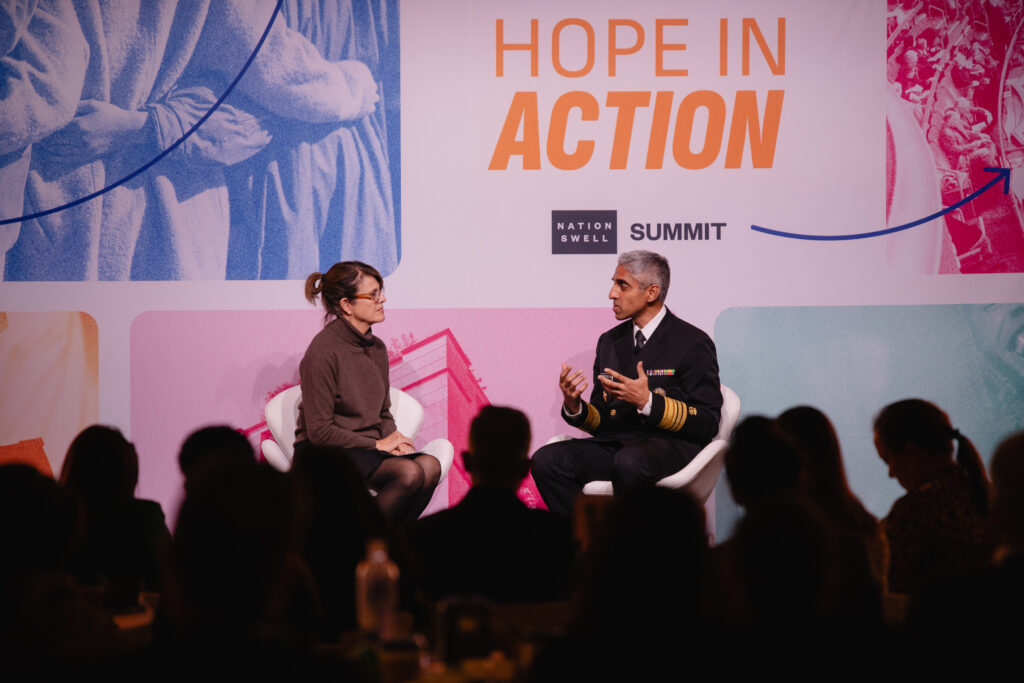
In a fireside chat with Graham Macmillan (President, Visa Foundation), Professor Ruha Benjamin (author, Viral Justice), reminded us that we are all affected by climate change, health inequity, and the myriad of other issues that we work to mitigate as social impact practitioners. And when we see ourselves in the issues, not simply adjacent to them, we understand that all our fates are linked. Recognizing the potential for any societal changes to benefit everyone in the long-term, not just one group, we are more compelled to center humanity in our leadership and decision-making.

“Be better and bolder by investing in the microscopic; people might not see it but they will feel it.”

Professor Ruha Benjamin ended her fireside chat with a succinct call to action: to change our everyday practices rather than solely focus on high profile actions that manage to break into the news cycle. Although actions like racial equity statements and large philanthropic investments are useful and valuable, it is also necessary to audit and participate in the small aspects that add up to a system so that we can change that system. Professor Benjamin recommended Beyond the Statement as one source that will allow organizations and their leaders to audit and transform their actions on racial equity, but the lessons can also be applied to other issues and objectives.

To center humanity in our work, we need to be softer and kinder. Doing so can build bridges of trust between those who do not see their inherent similarities.

In discussing human connection with Sheila Peluso (Chief HR Officer, Senior Legal Officer and Senior Managing Director, Cerberus Capital Management) and Scott Keoni Shigeoka (Fellow, Greater Good Science Center), Jenn Hoos Rothberg (Executive Director, Einhorn Collaborative) evoked the need for human connection and emotion in our work with a call to be “softer and kinder.” We can reach larger groups of people by focusing on the exhausted majority who are open to stronger ways to connect. In imbuing our actions with softness and kindness, we prime everyone, including ourselves, to be better and bolder.

  1. Solve the problem that makes your work necessary in the first place.

  2. T. Morgan Dixon (Founder, GirlTrek) highlighted GirlTrek’s mission to bring health and happiness to the lives of 700 million Black women. By inspiring behavioral change for its members and narrative change with its advocacy and campaign work, GirlTrek is a movement that is improving Black women’s health and creating new patterns that will last generations. 
  1. We must honor life’s and society’s transitions, allowing them to inform our practices and reinvigorate our purpose.

  2. As leaders, we must remember we do not need to accept things as inevitable, and that we are called upon not only to imagine better alternatives, but to build them. Purpose-driven leaders know what they want to build toward, but, as NationSwell Fellow Thea Gay reminded us in her Impact Spotlight: everything is constantly in flux, and we cannot plan without being open to change. When we know our abilities on a personal level, we can more readily go from “me to you to us” and build better systems together.

Entering each interaction – no matter the size – with humanity and clarity leads to a bigger, elevated culture of purpose.


In a fireside chat, Hamdi Ulukaya (Founder and CEO, Chobani) reflected on the inherent interconnectedness of leadership. In business, for example, there are endless touch points throughout daily operations, whether they are in the manufacturing plant, the office, or with consumers. For leaders, each of those touchpoints offer the chance to connect with grace and humility so that each person can feel recognition from leadership and see the power in replicating these mindful actions.

More fromSummit
Explore

NationSwell Summit 2023: The Moments on Our Minds

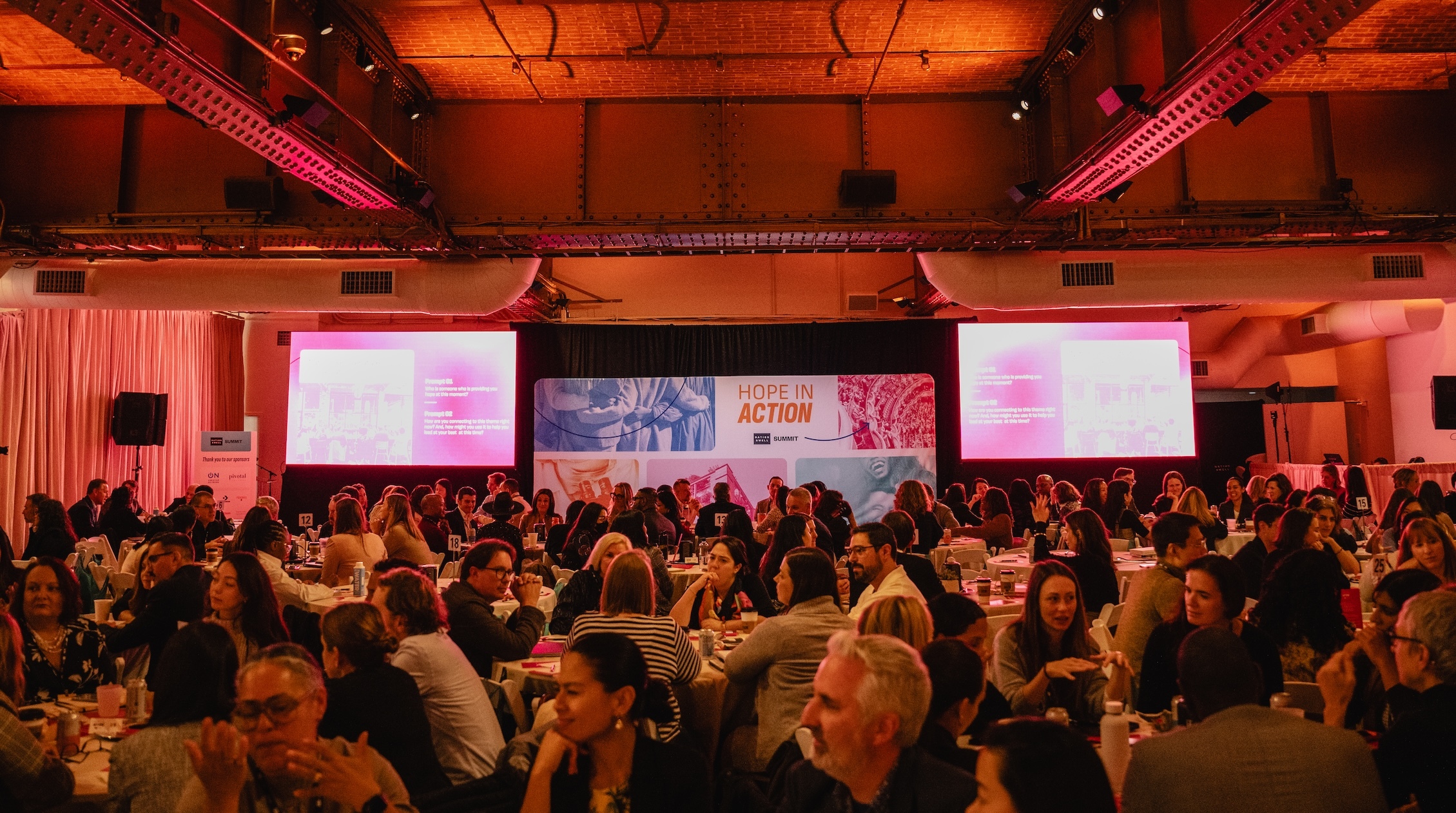
Once a year, the most cutting-edge and committed leaders in ESG, social impact, philanthropy and other select fields gather at the NationSwell Summit to foster invaluable cross-sector connections, to hear about the most exciting and promising ideas and initiatives, to reflect and revitalize, and to glean actionable insights, practices and collaboration opportunities to propel their leadership forward.

NationSwell held its Summit on Thursday in New York; the theme for 2023 was “Better + Bolder.”

Here are the better and bolder quotes and moments throughout the day that will be on our minds, in our hearts, and close to the core of our personal and professional practices of impact.

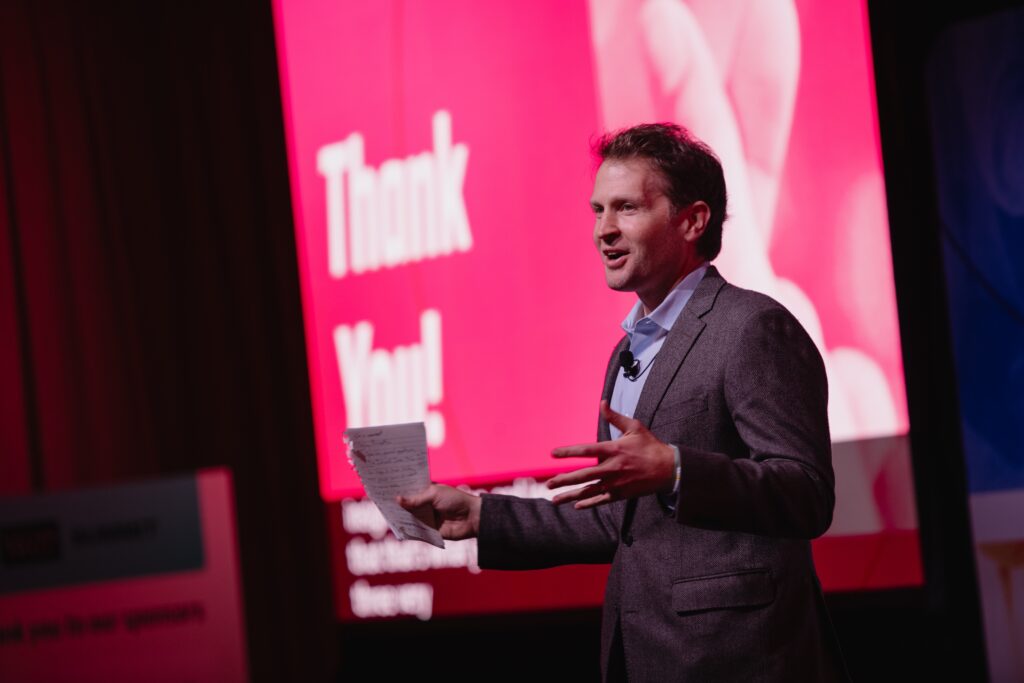
“The challenges we are working on are difficult, multi-layered and urgent. There is no time to waste, and none of us will be at our best if we’re doing it alone. At a moment that needs our best, how might we stretch further in the direction of the impact we seek?” — Greg Behrman, NationSwell CEO + Founder

“My call to action is a call to arms: Commit to justice as a matter of faith simply because it is the right thing to do.” — Darrick Hamilton, economist, Henry Cohen Professor of Economics and Urban Policy, and the founding director of the Institute on Race, Power and Political Economy at The New School.

“On every single barometer we know what works — yet, it’s not being done. It’s not that people don’t know how to manage their money, it’s that people don’t have money to manage. One’s income is not correlated to one’s intelligence. Your kids & their kids deserve just as much as my kids.” — former Stockton Mayor Michael Tubbs, special advisor on economic mobility to California Governor Gavin Newsom.

“Broad-based employee ownership and engagement, while difficult to execute, is wildly promising — it can lead to a radical increase in economic mobility, financial fluency, workforce stability and productivity.” — Pete Stavros, co-head of Global Private Equity, KKR; Founder and Chairman, Ownership Works  

“Regarding social media, it’s important to remember that 80% of tweets come from 10% of users. And that 10% tends to be much more extreme than the average American.  We naturally interpret these frequent, loud voices as being mainstream but if you look at surveys of what matters most to Americans across political lines, you actually find broad agreement.  So let’s take the time to talk to each other, particularly folks you wouldn’t normally talk to, because that’s the only way we’re going to understand each other and make progress.” — Pete Stavros,

“We’re in a burning building. We all have to get out. I might hit the ground before you, but you are right behind me. It’s not about being an ally because it affects you too… that’s why the term ‘allyship’ doesn’t quite capture it. You’re not doing this to help me. Your own life is at stake. Injustice makes everyone sick. If your proverbial boot is on my neck, your humanity is at stake too.” — Ruha Benjamin, author of “Viral Justice,” Princeton Professor of African-American Studies, NationSwell Book of the Year Award recipient.

“Be better and bolder by investing in the microscopic. People may not see it, but they will feel it.” — Ruha Benjamin

“Better and Bolder means not limiting ourselves in any way possible. It means constantly innovating, exploring, and creating new radical solutions by incorporating diverse perspectives. In this moment, we have to take that first step into the unknown. We have to ask ourselves “What would a world without a climate crisis look like?” And then we also have to consider these three questions: what does that mean to me? what does that mean for those most impacted by the crisis? And how can we make that future a reality?” — Thea Gay, NationSwell Fellow, youth climate activist

“Social impact at scale rarely happens overnight. Years of everyday decisions made by organizational leaders operating incrementally and independently reach a certain threshold — and can get stuck, often due to lack of capacity and broader insight. Our Collaboratives take the baton at that point of impasse, help identify shared opportunities and create the space for collective action to break through.” — Amy Lee, Chief Strategy Officer, NationSwell

“Refugees aren’t looking for a handout. These are the people fighting to stay alive, fighting for the futures of their families… these are the people you want working at your organizations.” — Hamdi Ulukaya, CEO + Founder, Chobani; Founder, the Tent Partnership for Refugees

“We all remember where we were when we heard something, watched something, or experienced something that changed our lives. The arts — and the extraordinary artists behind them — are the beating heart of our culture. They make us better, and they make us bolder. The catalytic inspiration and perspective they provide are essential for any leader.” — Anjali Ramasunder, NationSwell Vice President of Programming and Events


In the days to come, we will share more insights, reflections, photographs, and video from the NationSwell Summit. For more information, visit our digital hub.

The Takeaway | Inclusive Leadership: How We Lead Online and Offline

The pandemic ushered in a wave of fresh challenges for companies and leaders, but it also served as a much-needed pause for leaders to reflect, retool, and reset. Now, nearly three years on, we’ve inherited a radically transformed workplace environment — and we’re tasked with implementing some of the carefully considered changes that will better serve our teams and help us to create the workplace of the future.

In a conversation hosted by the NationSwell Council community on Wednesday, we came together to parse exactly what leaders are doing to address DEIB goals, team attrition rates, competing needs amid a newly hybrid working world, and more.

Here are some of the key learnings from the event.


  1. We often think of how we create value for customers — now it’s time to start thinking about how we create value for our teams. New, remote work challenges have prompted a slew of new questions about how to keep teams engaged and how much “in-person” time is actually needed. Some leaders who are used to thinking about how to create value that makes customers want to show up are now flipping that question on its head, asking what they can do to incentivize team members to work from the office. Creating a hybrid schedule where employees are only expected to come into the office on certain days of the week — and then offering special perks, like free lunches and special affinity group meetings on those days — can be a helpful system for making team members feel like their time in the office is valuable and worth it.
  2. Building out effective listening engines will be critical to accurately assessing employees’ needs. With so much shared wisdom on how to respond to team members’ post-pandemic needs flying around, it can be tempting to impulsively deploy some of those solutions and policies, especially given that the underlying assumption is that they will make employees’ lives easier. But as one member pointed out, not every team member’s needs look the same — and it’s important to build out an infrastructure for feedback that ensures that you’re capturing your specific team’s needs as accurately as possible.
  3. Pay as much attention to why people are staying as you do to why they’re leaving. When it comes to high turnover rates, the intuitive response is to get to the bottom of why people are leaving and what can be done to mitigate the departures. But it’s equally important to figure out why people are staying — and which policies are actually working — so that you can be sure-footed in creating an environment that people genuinely want to be in, and not just one that they’re not ready to leave.
  4. If you value DEIB, put a premium on mental health. Team members’ mental health and well-being naturally dovetails with DEIB concerns: conversations about compensation, job security, hybrid work schedules, pipelines for advancement, and more are inherently stressful, and play a huge role in employees’ livelihoods and psychological safety both inside and outside the workplace. Investing in wraparound support structures can help to ensure team members’ happiness and well-being in the long run, and can set your organization up to more sustainably foster a workplace that is diverse, equitable, and inclusive.
  5. Work with team members to build hybrid schedules that suit their lives and needs. Rather than mandating that employees be in the office at certain times on certain days, create flexible mechanisms by which team members can choose to work from home when needed, as long as they let team members know well in advance. 

The NationSwell Council community brings together a diverse, curated community of bold individuals and organizations leading the way in social, economic, and environmental problem-solving. Learn more about the Council here.

Introducing ESG Next, the Innovators Shaping the Future of Sustainability and Social Impact

At a moment of unprecedented attention, investment, and opportunity for the emerging field of ESG, leaders are asking: Who is best preparing their organization for the society of the future? Who is innovating today to meet decades-long environmental and social goals? Who is setting standards that catalyze their industry’s change for the better? Who is defining what bold and aspirational look like — and how best to advance that work in practice? 

Over the course of the year, our executive team is profiling the investors, executives, authors, philanthropists, social sector leaders, academics, and innovators who are helping to shape business as a force for social and environmental progress. No one leader has all the answers about what the future will bring — and none of these practitioners claim to. They will be the first to speak to the difficult, complex, and ever-shifting nature of this work; of the steep challenges and hard questions they grapple with day-in and day-out. 

Yet all of these leaders are operating at the highest level of our field — and, as such, helping to shape it. They are advancing — and even pioneering — the most forward-thinking and effective programs, initiatives, technologies, methodologies, practices, and approaches. All are pushing the intellectual envelope to create the positive outcomes that our communities, our economic system, our planet, and our future need. 

That is why you should know them — and why we think you will enjoy learning and engaging with them as much as we did. 

Introducing the ESG Next, NationSwell’s new series designed to give you a glimpse of what’s ahead within this emerging and fast-evolving field. 

ESG Next will explore key issues that social impact and sustainability practitioners have surfaced to us through the years: issues like how leaders can do the most with what they have, whether it’s better to go deep on one key focus area or wide across many, how best to align strategy and programs within the business, the models that best achieve impact, the frameworks to deploy when reporting out progress and challenges, the keys to success, the best practices for partnerships, effective ways to use data to inform decision making and outcomes, the best ways to tell your ESG story to a myriad of important stakeholders, and how to navigate boards and C-suite for alignment, buy-in, and impact.

At the beginning of each month, we’ll give NationSwell members an exclusive sneak peek of our upcoming issue of the ESG Next in our newsletter products. Then, we’ll publish new installments on our public platform. If you are a practitioner, we hope the series — and the diverse insights and practices contained herein – will help you to take your ESG efforts to the next level of efficacy and impact

To learn more about how our ESG Next honorees are shaping business as a force for social and environmental good, visit the series hub.

2022 Private sector social impact leadership survey

2022 Private sector social impact leadership survey

SURVEY FINDINGS

Leaders who bring confidence, creativity, and conviction to their work are arguably the most important ingredient to generating social impact. Often behind the scenes, these individuals play key roles in elevating and executing the social and environmental priorities of their organizations, priorities that are increasingly imperative for the private sector. Juggling stakeholder interests, cross-company engagement, and increasing expectations for monitoring and reporting, delivery of a social impact strategy is not an easy task.

From 2021 to 2022, we saw the emergence of the Russia-Ukraine war, the highest daily case counts of the COVID-19 pandemic, multiple mass shootings, deadly instances of extreme weather, and the repeal of Roe v. Wade – all followed closely by ever-louder calls for the private sector to speak out and step up. Leaders in corporate social responsibility and ESG (environmental, social, and governance) were on the receiving end of those calls, setting the priorities and making the decisions that shaped their organization’s actions. 

So what exactly were the most significant forces that changed the way leaders in these functions approached their priorities and decision-making over the past year? What did leaders do differently, and why? And what are leaders anticipating the environment, their organizations, and their jobs to hold in store for the year to come? 

To answer those questions and more, NationSwell launched a survey in August 2022 specifically for private sector social impact leaders. The resulting report explores nine major findings across three categories: 

General sentiments

  • Despite a challenging environment, leaders are satisfied with their organization’s social impact and their personal contributions; they also remain confident in their ability to perform in the year ahead
  • Compared with their assessment of overall social impact, leaders are less impressed by their organization’s response to pivotal moments in the past year; the same is true of their individual contributions during those moments
  • Leaders view creating economic growth – for communities and for individuals – as secondary to their company’s other societal contributions

Headwinds and tailwinds

  • Global conflict, the pandemic, and extreme weather significantly outrank domestic social and policy events – including the repeal of Roe v. Wade – for influence on leaders’ priorities
  • Leaders share a growing concern about economic conditions, but differ widely on other top headwinds to impact
  • Organizational stakeholders provide steady tailwinds for social impact leaders, but the influence of other companies is on the rise

Change and adaptation

  • Acknowledging key vulnerabilities and the power of collective action, leaders are creating new frameworks for responding to pivotal moments and seeking strength in numbers
  • To become more confident about their paths ahead, leaders need more financial resources; they also need clarifying information about their organizations
  • In considering overall career goals, leaders crave thought leadership – their own and that of others

Share this report

Social impact professionals’ views on the changing talent pipeline

Social impact professionals’ views on the changing talent pipeline

SURVEY FINDINGS

The COVID-19 pandemic disrupted the way we work in unprecedented ways, both positively and negatively. While many employees attained new flexibility to work from home, and others exercised new leverage to pursue beneficial career shifts, many others experienced significant difficulties, like record high rates of burnout, layoffs, and rising cost of living. Educational attainment patterns have also shifted, with lower levels of post-secondary enrollment and higher levels of dropout changing the outlook for future workforce qualifications. For employers, these trends are increasing pressure to evaluate strategies and investments that affect the education, training, and retention of their current and future employees.

To better understand the sentiments and priorities of purpose-driven professionals, individuals who are often at the vanguard of social impact and innovation, NationSwell partnered with Lydia Loizides, President of Talentedly. Together we surveyed the NationSwell Council, a diverse community of individual changemakers, to learn more about their unique perspective on the evolving demands of the talent pipeline in the United States. This report provides findings from that survey.

Specifically, it explores three themes that emerged from eight major findings: 

Educating the future workforce

  • Social impact professionals say the educational and job training ecosystems are in need of reform to better prepare young people for success in the workforce
  • Social impact professionals aren’t ready to do away with post-secondary education as a credentialing system
  • Social impact professionals want companies to be more directly involved in the education and training of the workforce, including during their post-secondary years
  • In their desire for a more prepared workforce, social impact professionals say soft skills are the most important

Hiring and recruiting talent

  • DEIB remains a top priority for social impact professionals, particularly as it pertains to recruiting and retention, but actions are lagging behind intentions
  • A majority of social impact professionals are aware of organizational plans to change hiring and recruitment strategies in the next 12 months, identifying a range of modest to bold efforts to increase candidate diversity

Retaining and engaging employees

  • To keep employees satisfied and engaged, organizations have been focused on improving communications from senior leadership and promoting remote/hybrid workplace flexibility.
  • ​​Social impact professionals are keen on increased compensation and stronger communications around professional advancement as key to strengthening employees’ job commitment in the next 12 months.

Share this report