Q2 2025 Social Impact Trends

Q2 2025 Social Impact Trends

Q2 2025 trends indicate that employee engagement and wellbeing are at alarming lows; nonprofits face heightened threats amid federal scrutiny and funding cuts; DEI efforts are under political attack but still supported by consumers and investors; cross-sector coalitions are forming to defend civil society; funders are stepping up with bolder strategies to counter government pullbacks; and companies, though quieter publicly, remain committed to impact through value-aligned, resilient strategies.


Share this report

Beyond the Backlash: What’s Next for Diversity, Equity and Inclusion

Threats facing diversity, equity, and inclusion (DEI) accelerated dramatically in early 2025 as new Executive Orders exerted significant pressure on companies, funders, and nonprofits to retreat from their DEI practices. The EOs and surrounding political scrutiny have led some organizations to walk back their commitments and decrease their investments. Others – propelled forward by their investors, employees, and organizational goals – are finding new ways to sustain momentum while remaining in compliance with relevant laws.

On August 5, NationSwell hosted a virtual Leader Roundtable dedicated to taking stock of the latest developments shaping the future of DEI and surfacing the practices, models, and pivots that are helping organizations navigate challenges, protect gains, and create more inclusive, equitable workplaces and communities.

Some of the key takeaways from the discussion appear below:

Insights:

1. Flexibility is a strength — but values must remain non-negotiable. Organizations are adapting language, public messaging, and branding in response to political pressures, but those with the most clarity and confidence are grounding decisions in their mission, legal frameworks, and long-held values. This internal consistency and moral clarity helps to ensure that external adjustments don’t dilute internal commitments.

2. Internal alignment and transparent communication are essential. Clear messaging to staff — especially during times of change — helps maintain trust and cohesion. Leaders are prioritizing employee engagement, addressing concerns proactively, and reinforcing shared purpose in order to sustain morale and minimize confusion. Internal stakeholders and employees need to understand that the mission hasn’t shifted — just the framing.

3. Crisis response teams and task forces are becoming essential infrastructure. Organizations are formalizing cross-functional groups to navigate fast-moving political, legal, and reputational risks. These teams — which often include legal, HR, communications, and policy stakeholders — enable coordinated responses and reduce the burden on DEI leaders to go it alone.

4. Fear and confusion among leadership requires intentional re-grounding. Allies who once championed DEI work are now hesitant, unsure of legal limits or public repercussions. Supporting leaders to revisit their “why,” and equipping them with clear, values-driven language, helps prevent unnecessary retreats and builds back courage.

5. Staff engagement and inclusion remain top priorities. Changes to DEI language or visibility can be felt deeply by internal teams. Organizations are leaning into listening sessions, transparent rationales, and co-created strategies to ensure staff feel included and aligned — even when choices are tough.

6. DEI work is becoming more decentralized — but must remain coherent. In large or distributed organizations, responses to the current climate can vary across regions, teams, or departments. While local nuance matters, leaders are working to ensure that the organization’s equity efforts remain coherent, consistent, and strategically aligned.

7. A shared learning and support ecosystem is crucial for leadership stamina. This work is emotionally and politically taxing. Leaders are finding strength in peer networks, cross-sector convenings, and informal “circles of care” that offer solidarity, shared tools, and a place to strategize in real time.

8. Courage is contagious—and still required. Amid a climate of uncertainty, principled leadership remains essential. Whether through bold public statements or quiet consistency, organizations can lead by example — affirming that even strategic compromise can be paired with moral clarity.

Two Days in Atlanta with NationSwell and The Annie E. Casey Foundation

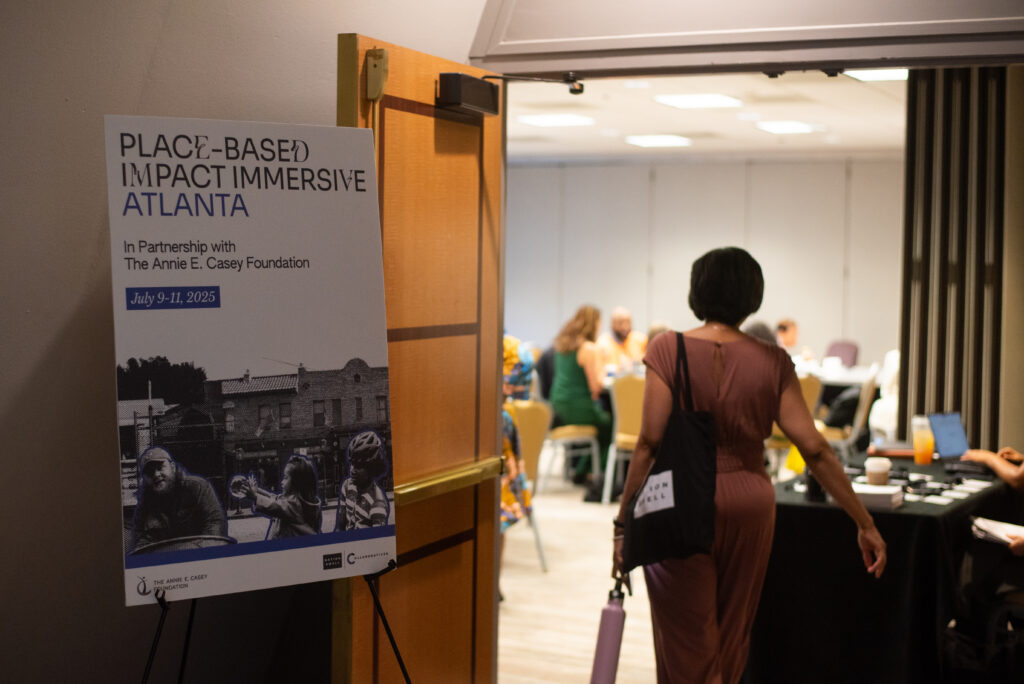
On a warm July afternoon in Atlanta, a group of corporate, philanthropic, and community leaders gathered to experience what place-based impact looks like when it’s rooted in history, shaped by community voice, and powered by a shared vision. As part of NationSwell’s Place-Based Impact Collaborative, and in partnership with The Annie E. Casey Foundation, this immersive, two-day experience offered a firsthand look at Atlanta as a “tale of two cities.” Throughout the experience, participants learned how bold, collaborative investment is helping communities reclaim land, preserve and celebrate identity, and build a more just economic future.

Day One: Grounded in history, connected by movement

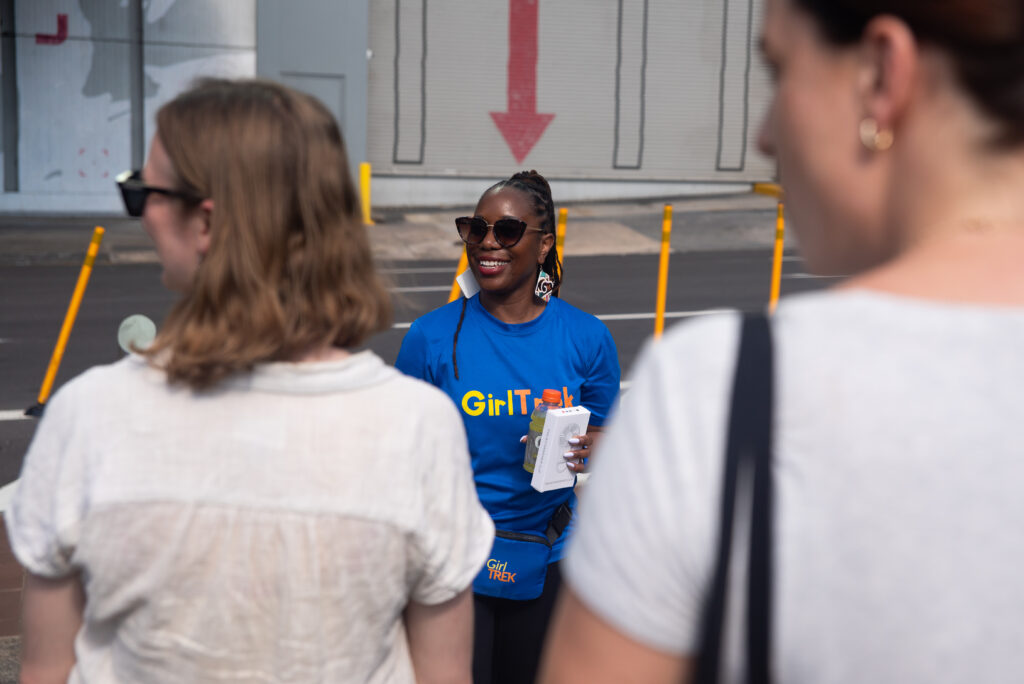
Our time together began with something deceptively simple: a walk. Led by a close partner of NationSwell, GirlTrek, the walk to Centennial Park focused on presence and intentionality. “We walk, talk, and solve problems,” our leader shared, describing GirlTrek’s model of wellness and connection. It was a chance to move through the city, feel its energy, and open space for reflection.

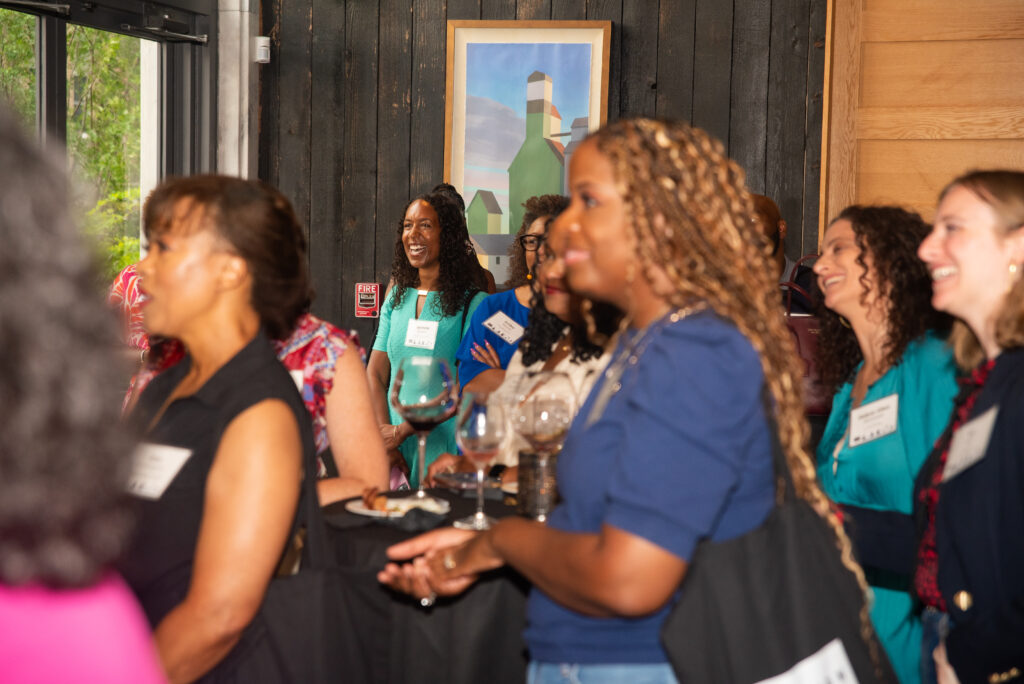
Later that evening, we headed to a welcome reception, setting the tone for what would be a day of honesty, inspiration, and exchange. In a circle, we heard from visitors and locals alike about their personal and professional motivation for joining the immersive. Participants were welcomed to Atlanta as a city of neighborhoods, of legacy, of resilience.

Day Two: A tale of two cities

Breakfast opened with a powerful panel, “Atlanta’s Path in Perspective,” laying bare the complexity of the city’s narrative. As Courtney English, Interim Chief of Staff to Mayor Andre Dickens noted, “Atlanta is a tale of two cities and two stories.” On one hand, it is the cradle of civil rights, home to Black leadership and cultural innovation. On the other, it is among the lowest in economic mobility for Black families, shaped by redlining, disinvestment, and policy decisions that still echo today.

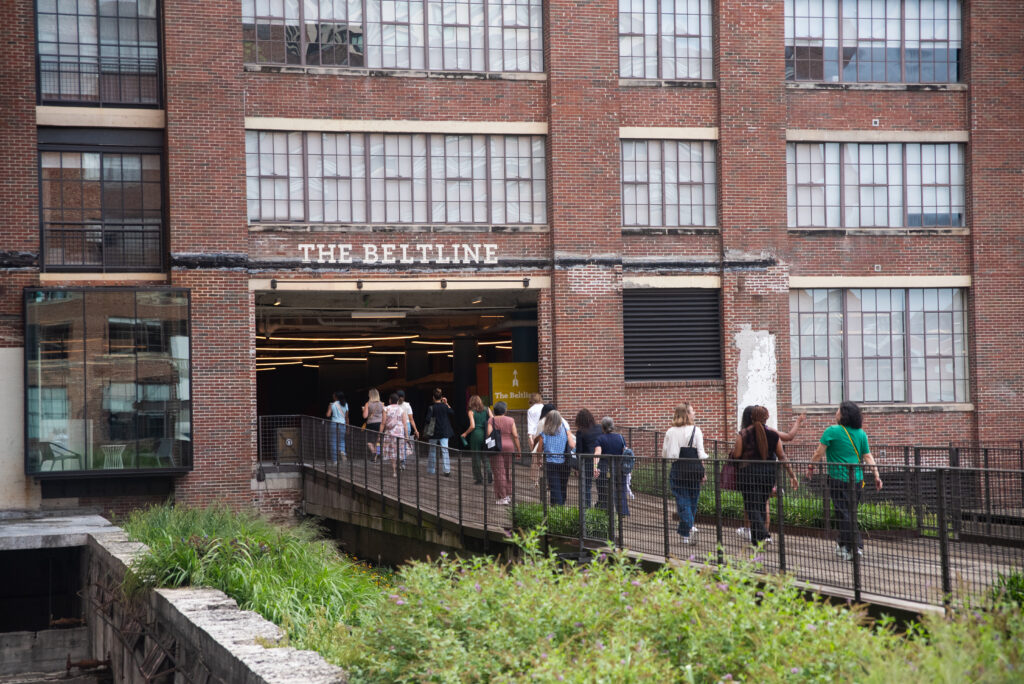
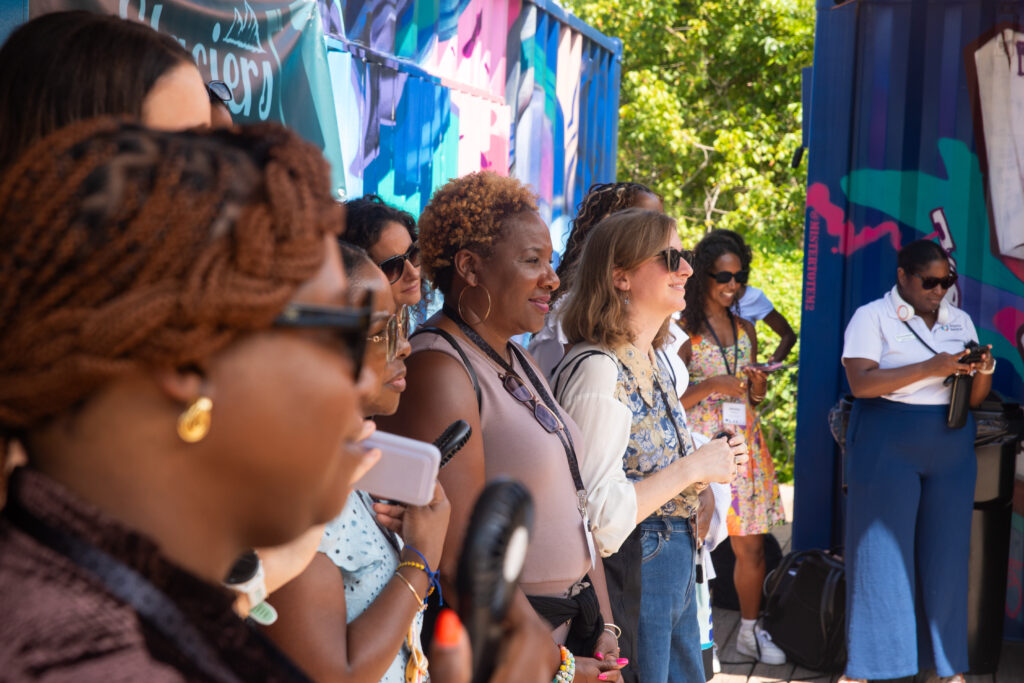
Site visits followed, including a deep dive into the Atlanta Beltline’s evolution – a project that has generated both opportunity for entrepreneurs and concern for displaced residents. Led by the Atlanta Beltline team, we saw examples of responsive solutions: affordable housing built to combat gentrification pressures; shipping containers repurposed into microbusiness spaces; and ongoing work to address basic infrastructure, like stormwater and sewage management. We also heard from a small business owner, Sarah Pierre, owner of 3 Parks Wine Shop, about her partnership with the Beltline. 


We then made our way to Pittsburgh Yards, standing out as a living example of what it looks like when development is done collaboratively with a community. Built on land acquired by the Annie E. Casey Foundation, the space has grown into a hub for locally-owned businesses, creatives, and entrepreneurs – including some that have transitioned to brick-and-mortar storefronts in retrofitted shipping containers (check out Carrot Dog and PinkPothos). Individual co-workers, businesses, and events hosted at Pittsburgh Yards bring in revenue, helping sustain the space without compromising its mission. “We would like to think that the Annie E. Casey Foundation is a collaborative partner and listener,” Tomi Hiers, vice president of the Center for Civic Sites and Community Change at the Annie E. Casey Foundation said, reflecting on the ongoing effort to ensure that the people closest to the challenges are closest to the decisions. As we stood outside Pittsburgh Yards, a child played on his bike, calling out “Hey, neighbors!.” As one participant noted, “The fact that a little boy came up and called us ‘neighbor’ — that’s what success looks like.”

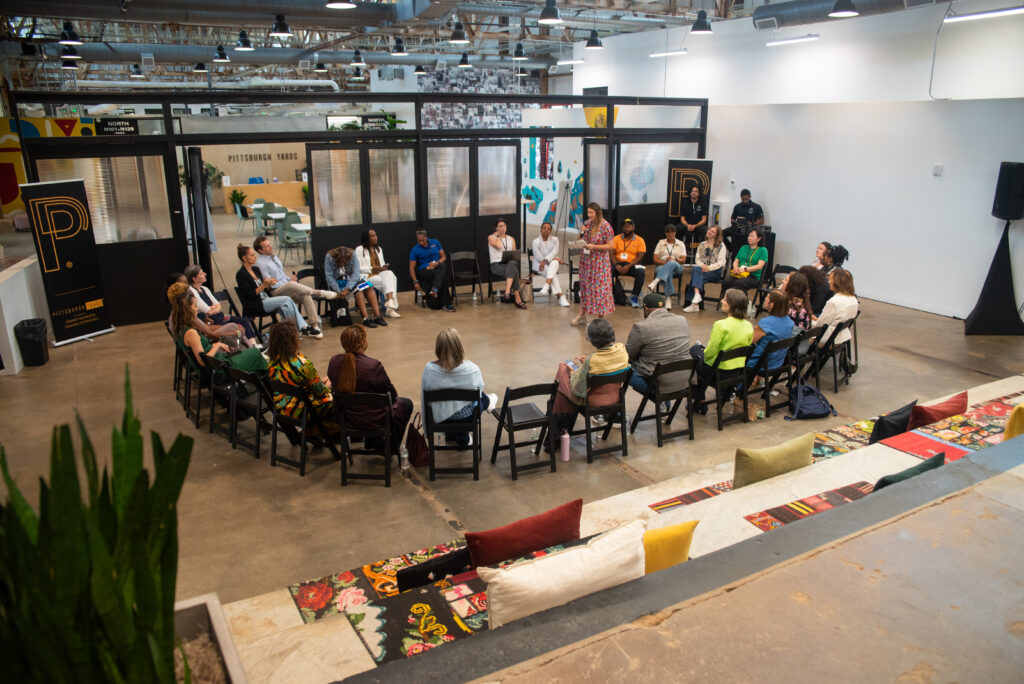
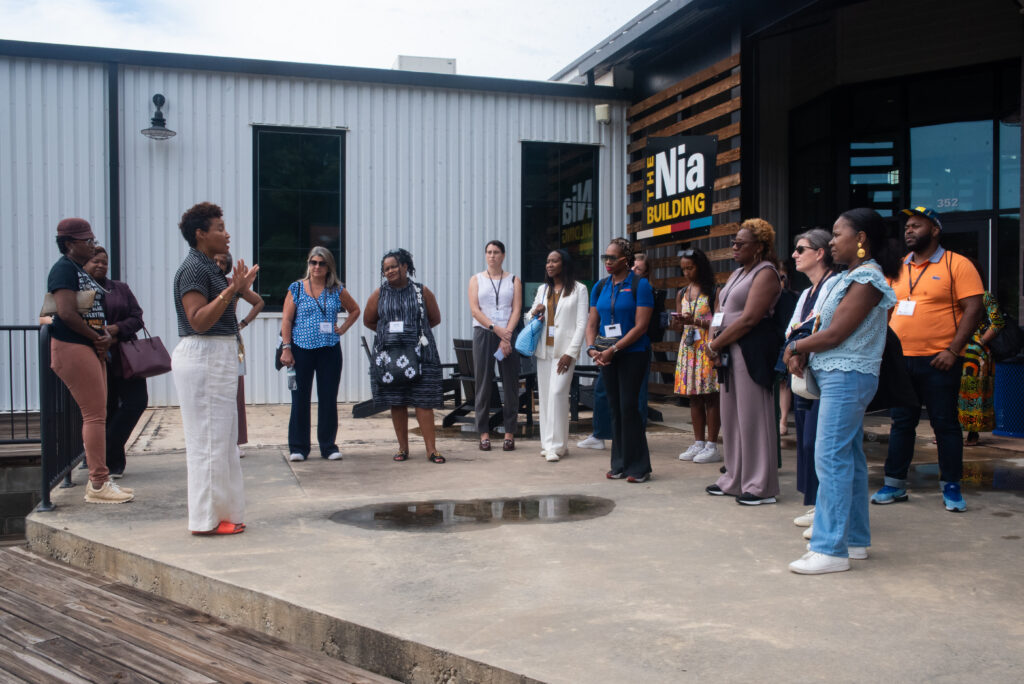
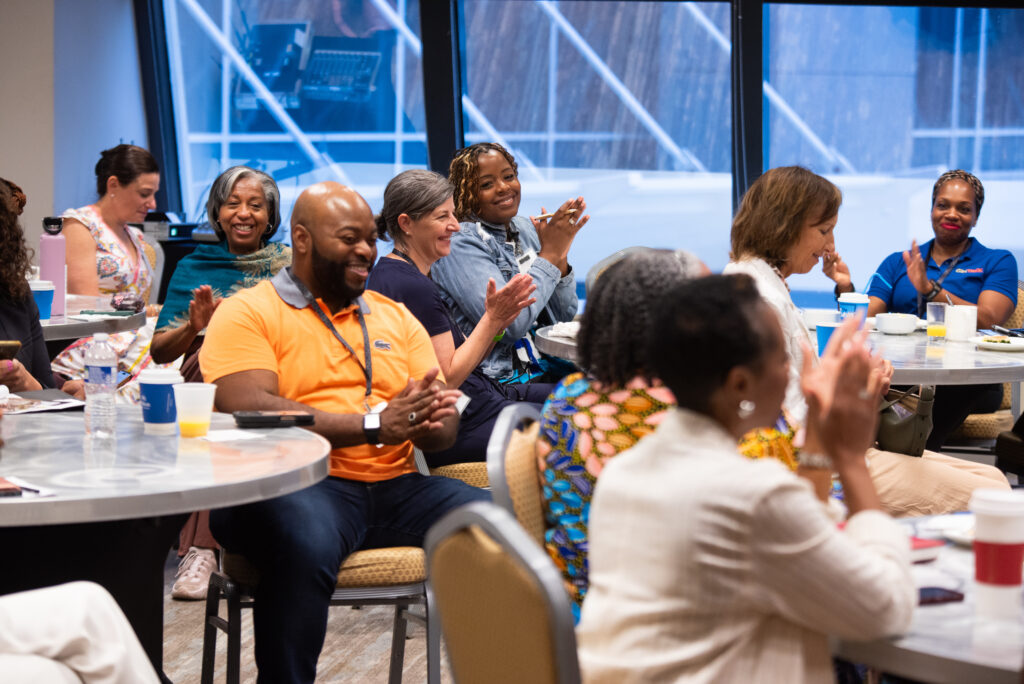
Our visit included a Partnerships for Collective Action roundtable, held in the heart of Pittsburgh Yards’ Nia Building. Amanda Jaquez, Senior Associate, Annie E. Casey Foundation opened by naming the legacy of the neighborhood — founded by formerly enslaved people and long a center for Black self-determination — and reminded the room that development must build on, not erase, that foundation. 

The panel explored what makes cross-sector collaboration work, with Mindy Binderman, Executive Director of GEEARS, emphasizing that shared purpose and trust must come before action. Natallie Keiser, Executive Director of HouseATL, added that structure, sustained engagement, and clarity of roles are important, especially when tackling entrenched challenges like affordable housing and displacement. The cost of inaction was made clear: unchecked infrastructure investments can rapidly raise property values and inadvertently displace the very communities they intend to serve.

Jay Bailey, President and CEO of the Russell Innovation Center for Entrepreneurs (RICE), offered a powerful charge: “Collaboration beats competition every day of the week.” But he cautioned against “collaborative theater” — partnerships formed for optics rather than outcomes. He urged leaders to confront uncomfortable truths, including the stark contrast between Atlanta’s image as a Black mecca and the reality of its low Black economic mobility. “Let us have the courage to say no…because we are worth investing in.” 

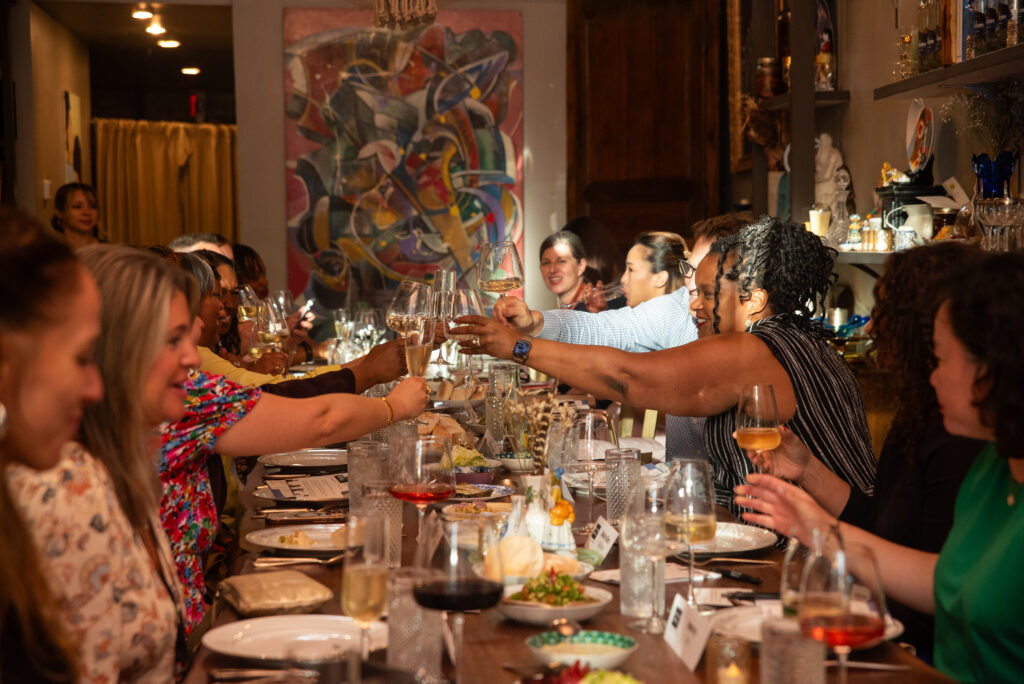
The day ended at The Third Space, where a happy hour and signature dinner prompted deeper conversation and laughter. Over shared plates, attendees unpacked the day’s learnings: how land becomes leverage, how rest becomes resistance, and how institutions can be built to last.

Day Three: Collaboration and continuity

Our time together concluded with a tour of RICE. The impressive center, which supports Black entrepreneurs with space, mentorship, and capital access, sparked conversations about ecosystem thinking. During the tour, participants saw how the organization is cultivating Black entrepreneurial success at scale. The 54,000 square foot space was built with intentionality: every wall, quote, and photo was curated to inspire ownership, legacy, and possibility. As Bailey summed it up: “We don’t need another symbol of hope. We need institutions that manufacture hope.”

As attendees began to head home, there was a palpable sense of momentum. Participants reflected on what they had seen and learned, and how they can apply it to their own communities and work.

What Atlanta taught us

Atlanta is not a monolith. It is a microcosm of the broader American story — a city where systemic harm and radical possibility coexist. Place is not neutral here, it is contested, storied, and powerful. From listening sessions designed with dignity to equitable housing strategies and entrepreneurship ecosystems, the visit to Atlanta reminded us that place-based work requires honesty, trust, and collaboration. 

As one participant shared, “The system isn’t broken. It’s working how it was designed to work.” But in Atlanta, people are redesigning it — together.


This immersive experience was offered to NationSwell through the NationSwell Collaboratives. To learn more or get involved, visit nationswell.com/nationswell-collaboratives/

Impact Next: An interview with Nike’s Vanessa Garcia-Brito

At a moment of inequality and division, who is advancing the vanguard of economic and social progress to bolster under-served communities? Whose work is fostering the inclusive growth that ensures every individual thrives? Who will set the ambitious standards that mobilize whole industries, challenging their peers to reach new altitudes of social impact? 

In 2025, Impact Next — an editorial flagship series from NationSwell — will spotlight the standard-bearing corporate social responsibility and impact leaders, entrepreneurs, experts, and philanthropists whose catalytic work has the potential to shape the landscape of progress amid urgent need for social and economic action.

For this installment, NationSwell interviewed Vanessa Garcia-Brito, Chief Impact Officer, Nike.


Greg Behrman, founder and CEO, NationSwell: What brought you to this moment? What was your leadership journey like?

Vanessa Garcia-Brito, Chief Impact Officer, Nike: I come from pretty humble beginnings — my mom always had three jobs at a minimum, and my grandmother did a good chunk of raising me in the early years of my life with such unconditional love. Growing up, there was a big theme around agency and choice and optimism. No matter how difficult life was, I was raised to believe we could do something about it. I initially thought that I would put that into practice as a human rights lawyer, and although I did go to law school, eventually through saying yes to a series of opportunities I ended up at Nike. Instead of holding tightly to any one job, I’ve always held tightly to the idea of combining impact with forward movement in a more literal sense. Nike represents the convergence of those values — it’s a place that values sport and movement, a place where my energy and passion for driving impact can really flourish. 

Behrman, NationSwell: What is your North Star of your leadership? What are some of the practices and approaches or styles that you’ve found to be really helpful for you, for your team, for others?

Garcia-Brito, Nike: I’m in love with humanity, and because of that, I really believe in leading from a place of love and being upfront and with that as a leadership style. 

I believe everyone deserves the chance to realize their greatness, and earlier in my career as a younger woman in leadership, that’s a unique choice to make. Ultimately, you have to decide if you’re all in. For me, it wasn’t even a question — I just led from a place of vulnerability, curiosity, and genuine interest in people and their impact. I’m not territorial, sometimes to a fault; even at Nike, everyone is invited into impact. I view my role as bringing people in and cultivating spaces for connection, helping people move forward together. This aligns perfectly with Nike’s focus on human potential and possibility, and it reflects how we see the power of sport to move the world forward.

Behrman, NationSwell: How has your leadership evolved in the course of your role or your time at Nike — is there a powerful moment that informs how you lead today?

Garcia-Brito, Nike: Working at Nike has really taught me to lead with who I am, and I’d like to think that, in turn, has created space for more people to lead authentically as well. I am very intentional about being a safe space for others, which encourages richer conversations and greater opportunities for people to lower their barriers. Leading this way means you can’t help but see the potential in others. I tend to see obstacles as opportunities — if there’s a tree in the way, I just look for a way around or over it. My experience running ultramarathons shapes this mindset: once committed, you keep moving forward, no matter what challenges arise. This approach has been rewarded in the sense that it’s created venues for different types of conversations — it lets people know exactly who I am.

Behrman, NationSwell: We find ourselves in an interesting moment in the impact space, with new opportunities, some pressures, some currents moving in different directions. How are you making sense of this moment?

Garcia-Brito, Nike: What really helps us navigate is knowing at our core that human potential and movement are at the heart of Nike. Through that lens, it’s exciting to see the definition of sport evolving, becoming more expansive and inclusive. Now, anyone can see themselves as an athlete, whether they’re commuting to work or competing professionally. Life is sport, and this broader perspective invites more people in, helping them rethink what’s possible and feel part of a larger community.

Moments like the Paralympics really stay with me — the power, beauty, and community support are incredible. The athleticism is inspiring, and those experiences remind me how important it is to find connection and empathy through sport. Even if I could never do what Paralympians do, I can share in their experience. I think seeking out those moments of shared humanity is how we move forward together.

Behrman, NationSwell: Is there a sport that kind of embodies the way in which you see the social impact world right now?

Garcia-Brito, Nike: For me, running and yoga are deeply connected- they both embody the mind, body, and spirit, and how we exist together in a world full of polarities. We’re more global than ever, yet people often feel isolated; we have private moments, but we’re always surrounded by others. Both running and yoga remind me that there’s no finish line, just the next step, always at your own pace. No one can do the running or yoga for you, but you can still share the experience.

The New York Marathon is a perfect example: everyone runs their own race, yet it’s a massive, collective event. I love those moments — cheering for strangers, being cheered on, feeling connected even when you’re not sure you’re still moving. That sense of accomplishment is powerful, and the same is true in yoga, where it’s just you, your breath, and your flow. The practice allows you to connect with yourself and that in turn strengthens our connection with others. 

Behrman, NationSwell: We’d love to invite you to share a little bit more about the amazing impact work that you and your colleagues are leading. Are there any programs, partnerships, or strategies  you’d particularly like to lift up?

Garcia-Brito, Nike: Our focus is creating the future of youth sport, truly uplifting work. Youth are not just our future leaders and next generation of athletes, they are already demonstrating their leadership and shaping how we play, move and pursue sport. Built on 35 years of research and pilots, we’ve learned that leading with girls is the key to lifting everyone up. While both boys and girls are dropping out of sport at high rates, girls tend to start later, drop out sooner, and are harder to bring back — about 85% of girls worldwide aren’t getting enough movement. We also focus on coaches and coaching because we know how important the relationship between a coach and an athlete can be. Coaches play a crucial role as caring adults who provide safe spaces and guidance, especially during pivotal moments in girls’ lives. For example, body confidence is a leading reason girls leave sport, and coaches are vital in addressing this.

Over the past year, we’ve ignited a coaching revolution through global summits — from our World Headquarters in Beaverton, Oregon, to Paris, Los Angeles, and Tokyo — bringing together experts, partners, researchers, and youth to accelerate better, more inclusive approaches. Despite cultural nuances, the barriers youth face in sport are strikingly consistent worldwide, with body confidence a common challenge for girls. Body Confident Sport, our research with partners like Dove, and world-renowned experts the Centre for Appearance Research and the Tucker Center for Research on Girls & Women in Sport, helps coaches understand these issues and create welcoming environments to retain girls in sport.

We also leverage Nike’s broader community, including Nike Community Ambassadors — Nike store employees who serve as coaches in their communities. They embody the spirit of lifting up their neighborhoods. We partner closely with elite athletes in their own community work, such as Play Academy with Naomi Osaka and also via innovative partnerships with other leading brands like our work with Lego emphasizing creativity, movement, and mental health, aiming to build lifelong love for activity. Ultimately, active kids are healthier, happier, and more successful in life. Giving kids an opportunity to play and enjoy sport can be so meaningful; it’s about hope, dreams, and creating a foundation to thrive.

Behrman, NationSwell: What is your call to action for other social impact leaders — what do you think other people need to hear right now?

Garcia-Brito, Nike: At Nike, we believe there’s a coach in everyone — even if you’re just coaching yourself, which is actually a great place to start. Whether you’re at work, at home, or in your community, you don’t have to wait to make a difference. Simply seeing yourself as a coach can transform your connections. There are plenty of free resources to help you start this journey, and often, it’s an easy way to change lives without even realizing it.

My call to action is to tap into that inner coach, starting with yourself and extending it to others, especially young people. In our impact space, it’s vital to create a vision and journey of hope — just as essential as food and shelter. Hope and dreams truly sustain people; when paired with opportunity and community – it is powerful. We need to connect the dots for others, showing how today’s choices lead to real progress and a better future. 

NationSwell: What are three resources that have inspired who inspired you as a leader? It could be a book, it could be a movie, it could be a quote, a song, anything. 

Garcia-Brito, Nike: There’s a cartoonist called Quino who created a character named Mafalda in the 1960s, and there is a wonderful edition of these comic strips “Todo Mafalda” with a preface by Gabriel Garcia Marquez that I keep near me. Mafalda is a wise and very funny six-year old who is not shy about reflecting some of the absurdities of adulthood. She is a champion for inclusion, joy and world peace – and she is very funny.  I’m inspired by the beauty of being able to see the world through the eyes of a six-year-old girl in this space, and how it reminds us that we know everything that we need to know when we’re young.

The other book I’d recommend is called 4,000 Weeks: Time Management for Mortals, by Oliver Burkeman. I live my life with urgency, so I’m kind of impatient when I think about creating change, but this book puts time in perspective — we have only so many weeks. It’s helped me make my minutes feel longer and my life more present, sharpening my priorities.

Peter Block’s book The Answer to How Is Yes influenced me early on. I’ve learned to say yes and drop the ‘how’ that stalls progress. When faced with challenges, I ask not ‘how,’ but ‘do we want to do it?’ If yes, then the ‘how’ will follow.

As for inspiration, it comes from the people we work with daily around the world. Despite the narratives of global division we hear, I see the opposite — countless selfless individuals dedicating their time to help their communities. This work so often happens outside typical hours, fueled by care and skill. I’m grateful for them and believe there are far more people uniting us than dividing us.

Guaranteed Income + Innovations in Financial Security

Guaranteed income is quickly evolving from bold idea to proven strategy—offering direct support to individuals and families with powerful results. In parallel, new models for delivering benefits, improving financial health, and reducing administrative burdens are helping to build a more resilient, inclusive economy.

On June 24, NationSwell convened a virtual Leader Roundtable dedicated to elevating the most promising innovations — what’s working, why it’s working, and what leaders across sectors need to know as they design or support efforts to scale economic dignity.

Below are some of the most salient takeaways from that event:


Insights:

Scale comes from not just new programs but also shifting existing systems. Explore how to “cashify” more parts of the social systems in place, and make them more equitable e.g. pushing to make large scale programs like TANF (Temporary Assistance for Needy Families) in California to be aligned to guaranteed income principles of ease, no strings, and trust in communities.

Deploy strategic pilots to generate momentum. From Boston to Appalachia, targeted pilots are building political will, seeding narrative change, and giving form to a more just economy. They galvanize support, build coalition muscle, and serve as “proof of concept” for broader policy momentum. With preemptive bills threatening local pilots and federal budget cuts looming, initial wins must be protected while pushing for more humane, equitable public systems. 

Every voice needs to sing the same song, but not the same note. Not every actor needs the same approach, but alignment on principles like dignity, agency, and equity is critical. From child tax credits to baby bonds to safety net reforms, harmony across efforts amplifies impact and drives scalable change.

Evolve with the movement. There is a tried and tested rubric for movement building: Provoke the big idea (e.g. instigate pilots, argue the case in public), Legitimize the idea (e.g. Legal changes, policy shifts, narrative change), and then Win. You may need new team members and new ways of talking about the big idea as you move through these phases. It’s ok if we need to move away from certain phrases over time — e.g. If “guaranteed income” feels politicized in corporate circles; the movement still moves forward.

Use language as leverage. “Every baby deserves a shot at the American dream” may resonate in rooms where “guaranteed income” doesn’t. In polarized environments, accessible, emotionally grounded framing builds bipartisan buy-in and unlocks doors policy can walk through. Policy that respects people’s agency leads to better outcomes and challenges long-standing assumptions about who is deserving.

Lead by scaffolding the movement. Corporate and private funders can play a critical role by supporting data harmonization across pilots, investing in messaging, and acting as connective tissue without wading into policy advocacy directly. They can amplify what’s working and help knit together a fragmented landscape.

Center proximity to those experiencing the challenge to build sustainable and scalable solutions. Conduct listening tours and establish a shared frame of reference among diverse stakeholders. When solutions come from those closest to the challenge, they resonate more deeply and work more effectively. The most resonant stories preserve the relational, community-rooted spirit that birthed them and avoid diluting the dignity at the heart of this work.

Empower fresh voices to drive narrative change. Guaranteed income is making progress but lacks broader understanding and support among the public. To fill this void, The Economic Security Project has recently launched the Economic Futures Cohort to empower a new generation of content creators to put it into their own words. 

Impact Next: An interview with New Profit’s Tulaine Montgomery

At a moment of inequality and division, who is advancing the vanguard of economic and social progress to bolster under-served communities? Whose work is fostering the inclusive growth that ensures every individual thrives? Who will set the ambitious standards that mobilize whole industries, challenging their peers to reach new altitudes of social impact? 

In 2025, Impact Next — an editorial flagship series from NationSwell — will spotlight the standard-bearing corporate social responsibility and impact leaders, entrepreneurs, experts, and philanthropists whose catalytic work has the potential to shape the landscape of progress amid urgent need for social and economic action.

For this installment, NationSwell interviewed Tulaine Montgomery, CEO of New Profit and and host of the Say More podcast.


Greg Behrman, Founder and CEO, NationSwell: What brought you to this moment? What has your leadership journey been like?

Tulaine Montgomery, CEO, New Profit: I can’t say there was ever a premeditated plan guiding me; I’m a creative at heart, so a linear plan has never really been my approach. What truly got me here is my family background. My parents and extended family were students of history and futurists, even if they didn’t use those terms. My dad was an ethnomusicologist and longtime Dartmouth professor, and throughout his life has basically willed himself into experiences and expertise — he doesn’t ever entertain that he’s not enough to do what he desires to do. He immersed himself in the study of the African diaspora, mastering percussion and exploring cultural connections in places like Mali, Haiti, Ghana, Cuba, Brazil, Kenya, and Japan. He was even named a master drummer in Ghana in his early twenties. Growing up, I absorbed these rhythms and lessons.

My mother is equally expansive in her worldview. For decades, she has convened Black leaders and educators from around the world, fostering a community focused on understanding our present, envisioning our future, and thriving together. This annual tradition has lasted over thirty years.

My parents have always dreamed of a better world and taught me what we can look back on in history to see what we can borrow from and what to avoid.

Behrman, NationSwell: What are the attributes, philosophies, or practices that help you to be an effective leader in this space?

Montgomery, New Profit: It took me a while as a human, as a professional, and ultimately as a social entrepreneur and leader to really own my multitudes. For years, I believed my interests in business strategy, playwriting, and music history couldn’t coexist, and I would compartmentalize myself depending on the environment. I would go into certain spaces and think, okay, only these parts of me actually make sense here. I didn’t come to that idea by myself — we’re entrenched in tons of systems that encourage such a perspective — but I certainly held it within me, and that’s where it actually matters most.

Today, my leadership is informed by a radical acceptance of all the pieces of myself, and I strive to create environments where others can do the same. I want everyone I work with and support to experience the power of embracing their whole selves, because effective systems change requires us to bring all our strengths to the table.

Another core aspect of my leadership is empathy and curiosity. I try to approach situations and people with openness rather than judgment. For example, when I feel resistance or misunderstanding, I ask people to “say more,” which helps me move from judgment to curiosity. This practice has allowed me to connect more deeply, resolve misunderstandings, and even turn skeptics into supporters. Curiosity isn’t just altruistic, it’s pragmatic — it helps me understand others and navigate complex challenges.

Behrman, NationSwell: Is there anything about the impact strategies, initiatives, or partnership models you’re championing right now that feels particularly unique or differentiated in the field? 

Montgomery, New Profit: There’s growing discussion around systems change, and at New Profit, we see what we refer to as “the MIC” — multiracial intergenerational, cross-sector coalitions for change — as a key engine of that work. Here in the U.S., it sometimes feels like we’re less poised for the MIC than ever because there’s so much division and fragmentation, but at New Profit we’ve been really excited to support and partner with entrepreneurs who understand the power and timeliness of this coalition and who are, in a local way, doing powerful work to advance it. That’s why New Profit supports entrepreneurs through a focus on three pillars: capital, capacity, and community. We provide unrestricted funding, capacity-building support (often in collaboration with organizations like Deloitte), and foster a sense of community among social impact leaders. We believe working as peers, rather than maintaining traditional power dynamics, is crucial for real change.

We also partner with groups like Shared America to highlight and grow examples of unity, collaboration, and local leadership across the country. Despite the noise and division in media and politics, there is abundant innovation and collective power already at work in communities. By shifting our focus to these solutions and investing in proximate leaders, we can drive meaningful progress. True systems change requires courage, collaboration, and a willingness to imagine — and build — a better future together.

Behrman, NationSwell: Of your peers in the social impact space, who are a few whose leadership inspires you, and whom you hold in high esteem?

Montgomery, New Profit: Cheryl Dorsey, president of Echoing Green, is someone who really owns her multitudes — she’s a medical doctor by training, a social entrepreneur, organizer, artist, a lover of Beyoncé. Her ability to bring her whole self to her work is a powerful antidote to the fragmentation many leaders face.

Angela Glover Blackwell, founder of PolicyLink, similarly integrates joy, intellectual rigor, and compassion in her leadership. She frames joy as part of resistance, a quality she’s embodied throughout her career, and understands that lasting change requires addressing policy, capital, and narrative — the power of stories to shape solutions.

Marc Freedman, founder of CoGenerate, has illuminated the importance of intergenerational collaboration in today’s diverse society. His work highlights how connecting across generations fosters both personal and societal growth.

And finally, Dr. Richard Davidson, a renowned neuroscientist, has advanced the science of empathy and well-being. He translates research into practical tools for cultivating well-being, making neuroscience accessible for social change. Like the others, he combines rigor with deep kindness — a quality I deeply admire.

Behrman, NationSwell: Could you recommend any insightful resources – maybe a book, report, podcast, or article — that has significantly influenced your thinking or inspired your leadership?

Montgomery, New Profit: I’m a student of bell hooks, who teaches that love is about action, accountability, listening, and change — not about accepting mistreatment. I appreciate how she, as a scholar and public intellectual, frames love’s role in social impact, emphasizing its importance in leadership. I often write love letters to the broader community to celebrate this.

Another resource I’d recommend is “Defectors” by Paola Ramos, a journalist whose book explores how Latino engagement with the far right challenges ideas of unity versus uniformity in America. She courageously immerses herself in these communities to understand and share their perspectives beyond stereotypes.

I’d also mention my podcast, Say More with Tulaine Montgomery, which highlights the abundant community of people committed to love and collective power in social change. It reminds us there are far more of us than the dominant narratives would suggest who are fostering dialogue and hope.

Five Minutes with Alix Guerrier, CEO of DonorsChoose

For this installment of 5 Minutes With, NationSwell sat down with Alix Guerrier, CEO of DonorsChoose — a nonprofit donation platform that helps connect teachers with the resources and materials they need to create the inspiring classrooms and projects that ensure a great education.

Ahead of Teacher Appreciation Week (May 5 – 9, 2025), we asked Guerrier about how DonorsChoose is helping to address racial and socioeconomic inequities in school funding; the impact milestones he’s most excited about; and how the platform is helping to support teachers who come from HBCUs. 

Here’s what he had to say:


NationSwell: Tell us about your personal connection to education — is there anything about your background that gives you a unique perspective or emotional connection to this space?

Alix Guerrier, CEO of DonorsChoose: I became a math teacher after I did investment banking, and I found teaching to be by far the more challenging profession! It remains the toughest job I’ve had. But the thing that I loved most about teaching was witnessing students as they understood new concepts. I would feel so fortunate to be able to observe kids as they were starting to do things that, before, they were not able to do. It’s an incredible privilege to be part of a kid’s journey as they learn and develop new skills.

NationSwell: Where are the existing gaps in school funding models, and how is DonorsChoose helping to close those gaps?

Guerrier, DonorsChoose: Public schools aren’t created equal. Schools that serve mostly students of color receive $23 billion less in state and local funding each school year – a funding gap of $2,266 per student. This inequity is reflected in teacher out-of-pocket spending. Teachers working at schools in lower income communities and with more students of color reach into their own wallet more to buy classroom materials. Our DonorsChoose platform gives members of the public a transparent, accountable way to bridge that inequity.

Every time a teacher submits a project to DonorsChoose, we receive a collection of data points on that classroom: number of students, subject area, items requested, teacher demographics, and more. We integrate this national data into our platform to help donors and institutional partners target their support where it will make the biggest impact. By highlighting schools that have been historically underfunded due to racial and economic inequity, we’ve made it easy for anyone to help us move the needle towards equity — whether they have $5 or $5 million to give.

NationSwell: Are there any anecdotes or moments that stand out to you in terms of the tangible impact you’ve seen DonorsChoose create for teachers?

Guerrier, DonorsChoose: What immediately comes to mind is the preschool classroom of Dominique Foster at Friendship Blow Pierce in Washington, DC, where the majority of students are Black or Latino and qualify for free or reduced-price lunch. You won’t find a better equipped or more engaging preschool classroom, and that’s because of Dominique. In December 2024, she used DonorsChoose to fund costumes for her students to dress up as veterinarians, doctors and dentists, skeleton models, weighted stuffed animals to serve as the patients, toothbrushes, and Band-aids – among so many other resources. 

Since posting her first DonorsChoose project in 2019, Dominique has raised $120,000 for her classroom through our platform. Along the way, her colleagues, too, have discovered DonorsChoose. More than 300 projects, posted by 78 teachers, have been funded at Friendship-Blow Pierce – totaling more than $300,000 in resources. Through DonorsChoose, educators like those at Friendship-Blow Pierce are accessing materials that their students uniquely need for an enriching education.

NationSwell: What has your experience at DonorsChoose taught you about the role technology has to play in the education system — what is the potential that you’re seeing?

Guerrier, DonorsChoose: DonorsChoose has always embraced technology as a fuel for social good. In fact, crowdfunding wasn’t even a word when we launched 25 years ago. Teachers have similarly embraced tech advancements, and their resource requests over the years on DonorsChoose show that progress within education.

Right now, there are a lot of conversations about the potential benefits and harms of artificial intelligence (AI) for both education and technology overall. Wherever you stand, it’s clear that AI is a remarkably powerful tool that isn’t going away — teachers and students are already engaging with it on a daily basis. We need to listen to the educators on the frontlines of this progress and make sure they’re a part of our national conversation about AI so that we can create a just and equitable future for our children.

NationSwell: Are there any new initiatives in the works that you’re particularly excited about and would like to lift up?

Guerrier, DonorsChoose: DonorsChoose is gearing up for Teacher Appreciation Week (May 5-9, 2025), and we’re planning even more support for public school teachers across the U.S. Teachers should stay tuned that week for more opportunities to get funding for their classrooms.

A new initiative this school year that I’m very proud of is Quad to Classroom. Studies show that the graduation rate among Black students increases by 33% if they have at least one Black teacher between third and fifth grade. In 2021, DonorsChoose conducted the largest survey of male teachers of color, and the survey shows that Black male graduates of Historically Black Colleges and Universities (HBCUs) spend the most time engaging with students. The DonorsChoose Quad to Classroom program is inspired by these findings. The program helps to boost the pipeline of teachers who come from HBCUs and to provide them with funding on DonorsChoose.

NationSwell: Finally, what are some of the challenges you’re currently facing, and how can NationSwell’s community of changemakers help you with those challenges?

Guerrier, DonorsChoose: According to our annual DonorsChoose survey of our teacher community, teachers spend between $600 and $700 out of pocket on classroom supplies in a school year. We know that it’s often much higher than that. In fact, teachers on DonorsChoose told us that if it weren’t for our website, they’d be spending more than double out of pocket on classroom supplies. 

At the same time, teachers’ salaries have decreased as much as 15% between 2000 and 2017 and are decreasing much faster than those of comparable workers, yet they’re still reaching into their own pockets to get what their students need to learn. 

Anyone, from an individual to a corporation, can go to DonorsChoose to help a teacher avoid reaching into their own pockets again. DonorsChoose will not stop until every single student and teacher has the resources they need to thrive, and we’re doing everything we can to ensure that and to rally others to join us in empowering educators.

What’s Happening in DEI

What’s Happening in DEI

Are you a leader navigating DEI backlash and looking for clarity you can act on? This resource distills the political, cultural, and economic forces shaping corporate DEI, and unpacks how companies are responding to mounting threats. In this report, you’ll find actionable archetypes and strategic considerations to inform your organization’s path forward.


Share this report

Q1 2025 Social Impact Trends

Q1 2025 Social Impact Trends

Q1 2025 marked one of the most turbulent periods for the social impact sector since the COVID-19 pandemic. What emerged was a mix of reactive, proactive, and strategic responses: creating shared value, evolving DEI approaches, strengthening supports and deepening engagement, and advancing collective action.


Share this report

Closing the technology gap: Why it’s a critical time to train more women

Projections of the future dominate the global technology conversation, with business leaders, politicians, and pundits fueling headlines about how a new era of innovation will transform our world. What’s missing from this discourse, however, is a focus on how we will ensure we have a sufficient pool of professionals with required skills in the industry behind this transformation.

The workforce responsible for forging our digital future should not exclude broad swaths of the population. Yet women continue to be significantly underrepresented in fast-growing technology fields that urgently need more talent.

Consider artificial intelligence (AI). New AI technologies are playing a growing role in enterprises around the world and in our daily lives. Yet there’s concern that half of all needed AI positions may not be filled as this technology rapidly evolves. Training more women, who only comprise one quarter of the current AI workforce, could close this gap.

This imbalance — and acute need for more experts — also extends to cybersecurity, where women represent about 20% of the field. The cybersecurity workforce is growing, but not fast enough: it still needs to increase by nearly 75% to address skill shortages. This estimate comes as cyber threats are becoming more frequent and complex, meaning more cybersecurity professionals with critical skills will be needed to navigate the tremendous challenges ahead.

A sudden reversal in these trends is unlikely. Technology-related roles are the fastest- growing jobs, according to the World Economic Forum’s Future of Jobs report, and the most in-demand skills include those in AI, cybersecurity, and technological literacy. At the same time, skill gaps are perceived as a primary obstacle to business transformation, a key finding also highlighted in the Kyndryl Readiness Report, a global survey of 3,200 business and technology leaders exploring how ready businesses are for the future.

We’ve reached a critical moment to close these gaps. But just as technological advancement depends on the efforts of many, no single organization can do so alone.

Clearing the first hurdle

Czechitas, a non-profit organization committed to enabling women to thrive in technology careers, has a 10-year track record of training women with advanced digital skills in numerous IT domains. Founded by three young women in IT, Czechitas has since trained 76,000 women in areas like data analytics and UX design. The organization continues to advance its mission of removing the financial and other barriers that make it difficult for more women to embark on IT careers by providing full scholarships that make learning accessible to all.

With a grant from the Kyndryl Foundation and support from other partners, Czechitas is expanding its education offerings to meet the rising market demand for skills in cybersecurity, AI, and digital transformation. Our organizations have experienced firsthand how cross-sector partnerships can help more women join, advance, and succeed in fields like cybersecurity and AI, where they’ve been traditionally underrepresented.

We also believe that teams with a breadth of experience and perspectives can be a business strength. The ability to problem-solve from multiple angles can drive innovation and help solve emerging challenges — addressing bias in AI models, for instance, or identifying a broader range of cyber vulnerabilities as attacks become more sophisticated.

The greatest impediment to more women pursuing careers in technology, however, is often getting them to walk through the classroom door. Women are less likely to enroll in AI training courses, for example, and they’re even less likely to use AI tools like ChatGPT.

In the Czech Republic, women represent about 9% of IT specialists — one of the lowest rates in the European Union. We find that women struggle to imagine themselves pursuing technology careers due to persistent stereotypes and perceived barriers to professional advancement, like the “motherhood penalty.” Falling behind in skills development in any field can be difficult; that’s doubly true in technology, where change is so constant that a few years away can mean starting over.

These stereotypes fade as women connect with other intelligent, ambitious peers and mentors, and as they recognize the economic benefits of honing competitive skills or the work-life balance that a career in IT can offer. But encouraging that first step toward technology depends on representation. When you’re a minority in any field, it’s only human to ask, is this space really for me? We want the response to be a resounding “yes.”

Building inclusive programs

To build inclusive training programs, lead with empathy. Organizations can encourage more women to begin and succeed in training by creating peer-to-peer learning communities where women are mentors and leaders. Flexible course options that welcome women from all walks of life and provide scholarship support can also help students overcome pervasive financial and social barriers.

Because everyone brings their own experience and learning style to the classroom, Czechitas designs courses that include both in-person training and self-study opportunities, enabling each student to find the right balance. The curriculum is constantly updated to reflect the rapid pace of technological development with a focus on practical knowledge. Partnerships with technology companies can enhance this hands-on experience: students can learn from senior experts in the field and companies can benefit from new hiring pipelines.

For markers of success beyond important metrics like program completion and career progression, look for signs of infectious passion. At Czechitas, many teachers and mentors work on a volunteer basis. You know you’re on the right track when alums return to volunteer because training changed their lives. Or when cohorts of students stay connected years after training ends, supporting each other as their careers advance.

We’re excited to see the contributions students like these will continue to make in technology and the role they’ll play in encouraging more women to join their ranks. But we also recognize that bridging these divides — whether related to gender, skills, or opportunity — requires a global effort. We encourage organizations to join us in our efforts to shape a better future.


The views and opinions expressed in this article are those of the authors and do not necessarily reflect the views and opinions of NationSwell.