At a moment of unprecedented attention, investment, and opportunity for the emerging field of ESG, leaders are asking: Who is best preparing their organization for the society of the future? Who is innovating today to meet decades-long environmental and social goals? Who is setting standards that catalyze their industry’s change for the better? Who is defining what bold and aspirational look like — and how best to advance that work in practice?
Enter NationSwell’s ESG Next, an exemplary group of investors, executives, authors, philanthropists, social sector leaders, academics, and field builders who are helping to shape business as a force for social and environmental progress, advancing — and even pioneering — the most forward-thinking and effective programs, initiatives, technologies, methodologies, practices, and approaches.
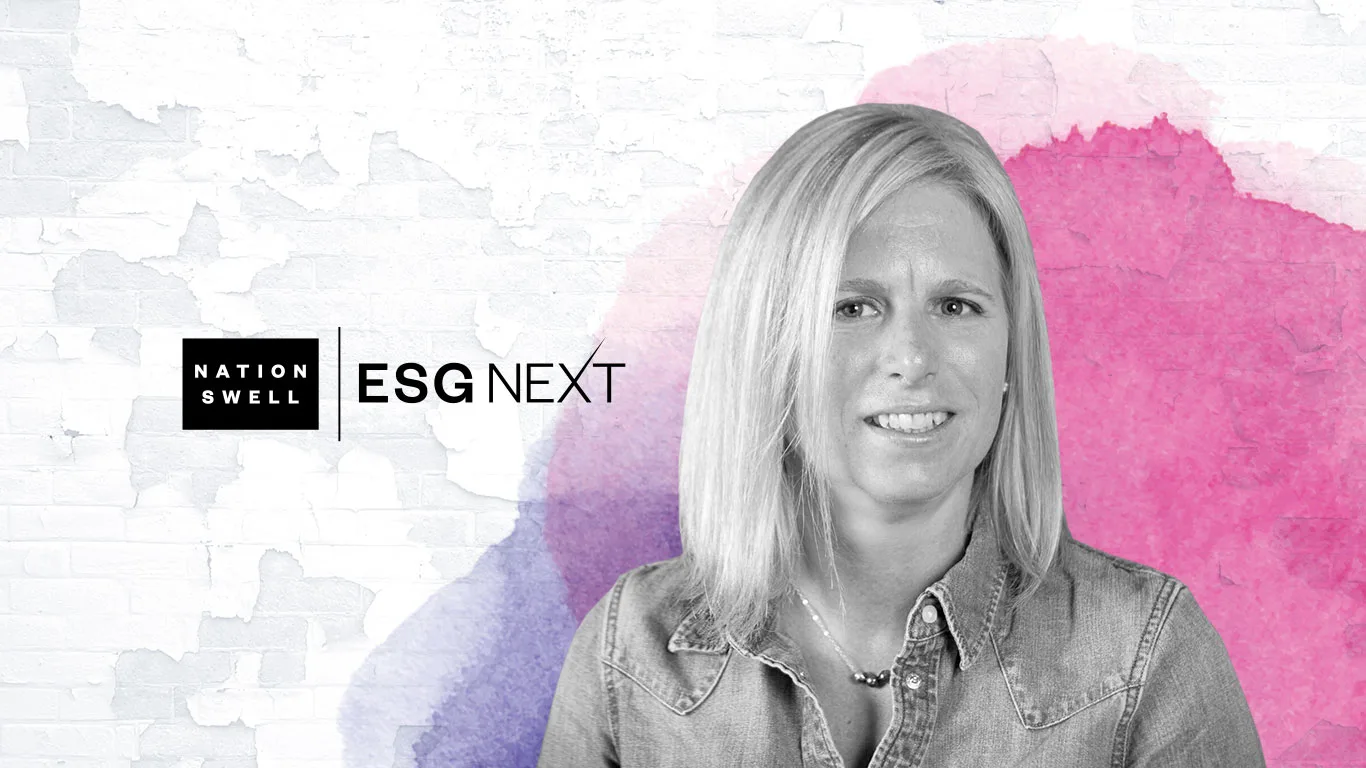
For this installment, NationSwell interviewed Shannon Schuyler, Chief Purpose and Inclusion Officer at PwC, about the importance of an organizational North Star, why there’s no more safe zone for having difficult discussions about society at work, building coalitions with unlikely allies, and why going deep is sometimes better than going wide.
Greg Behrman, CEO + Founder, NationSwell: Can you tell us how your professional and personal journey led you to the work you’re leading?
Shannon Schuyler, Chief Purpose and Inclusion Officer, PwC: As our organization’s Chief Purpose and Inclusion Officer, my team and I are responsible for PwC’s purpose initiatives, which include corporate social responsibility, philanthropy, and ESG-related considerations. We’ve always been purpose-driven as an organization, but what someone means when they use the word “purpose” has been in a state of flux, which can make it a challenge to maintain understanding and alignment around it.
When my team began 26 years ago, we had a traditional definition of what we meant by purpose: Our purpose was to protect the capital markets. And while that’s an accurate summary of what we do, to me, it begs an even more profound question: Why do we do it? What is our North Star — our guiding principle — that encourages us to make the investments we make and take the actions we take?
PwC’s North Star is building trust in society and solving important problems by advancing real progress on some of our communities’ most urgent challenges. And it’s my task to align that traditional sense of purpose with our North Star through the ways we approach ESG to solve these problems. And although ESG issues aren’t traditionally seen on the same level as protecting capital markets, they’ve now gained equal importance — and the urgency around them continues to evolve.
That may not sound to you like your typical professional services firm, but that’s the difference that distinguishes and defines us: our need to be more innovative and creative. Because if we’re not actually solving the important problems, really, why do we do what we do at all?
Behrman, NationSwell: How would you make sense of this moment in ESG? How has the field evolved, and where is it going?
Schuyler, PwC: 20 years ago, leaders who cared about environmental and social problems were frustrated with the little action we saw. We all wondered when more people — more leaders of more organizations — were going to recognize the importance of these issues, and the profound longevity of these challenges. We all asked ourselves why more people weren’t taking action to solve problems that our children, and their children, will face one day. We all hoped more would join us in taking action, because that was the only way we’d ever stand a chance in actually driving progress.
This is a textbook example of being careful what you wish for, because today, with ESG, we now find ourselves in the exact place we all envisioned. And now that we’ve arrived, we realize that things aren’t as clear as they look in the rearview mirror. Back then, we thought it was as simple as contributing to a philanthropy and that’s it — job done. However, we now understand that these issues are pivotal to the sustainability of our planet and society; they concern our collective ability to ensure the continuity of life, our economy, and our progress. The stakes are high and the path uncertain. People are eager for definitive answers, but the reality is we’re creating solutions as we go, with our work on full display for all to see.
It’s a daunting challenge, made even more daunting by the rapid pace of change. Consider this: It took more than a century to develop our current systems of financial statements and planning, but we’ve only had 15 years to learn how to account for carbon. The speed of these developments is remarkable, and the margin for error is slim. It’s a monumental task, but it’s exactly where we wanted — and needed — to be if there was any hope of making an actual difference for future generations.
Behrman, NationSwell: What are the pitfalls and concerns of where ESG is going — and what’s the promise of what can come next?
Schuyler, PwC: It’s really fascinating how our professional environment — not just at PwC, but really the modern workplace — has changed over time. I’ve been with the firm long enough that I remember when subjects like politics and race relations were just not discussed within the workplace. These were topics reserved for personal time — like maybe a heated Thanksgiving debate — but certainly not something addressed daily at work.
That’s all changed. Today, these issues confront us every day, and we absolutely must address them. These issues are literally at our doorsteps and within our buildings. The sidelines have disappeared; there’s no safe zone to relegate these discussions. We’ve never done this before, but we can’t avoid it now.
But the challenge lies in figuring out how to, in the workplace, discuss societal issues like horrific racial incidents in a way that’s respectful, appropriate, and capable of driving change; and alongside those issues, we can’t avoid talking about the reality of climate change when storms are devastating Midwest towns overnight, leaving people homeless due to insufficient resilience in these smaller cities – because the equity piece of the equation is present in both.
It’s difficult to know how to react because these situations stir up a lot of anxiety and emotion. Trying to make decisions amid this emotional upheaval has made the task more challenging. But if there’s an upside, it’s that the urgency of these issues has become more apparent. People can’t ignore what they see on the news or what’s happening in their cities. They may not like it, but they can’t pretend it’s not happening. The issues are too glaringly apparent.
Some practitioners say, “ESG is really a nascent field, we’re just beginning, we’ll get it right down the line.” But we don’t have the luxury of saying that we’re at the starting line anymore. We’re in the game, and now we’re forced to run plays. And the people watching us are chanting, “When are you going to score?” And they’re waiting for that score because if we don’t deliver, then they’re going to say that this isn’t valuable, and you actually can’t make a change.
People don’t want to hear, “Give me 10 years to get this run and then I can get it!” We have to get it right now. We have to be able to show that we can actually make change happen sooner than what has occurred in other industries because this has to be validated, so we can prove it shouldn’t go back to being something that only a handful of companies focus on. And if we don’t realize that, we could lose — we could go back to where we were 20 years ago.
Behrman, NationSwell: What’s unique about the work you’re leading? What are some approaches, strategies, or practices you’re deploying that other field builders should have visibility into?
Schuyler, PwC: A decade ago, the focus was on who could pledge the largest sum or reach the most people. Now, the focus has shifted towards making a deeper impact on a smaller number, rather than just reaching a mass scale with something less substantive.
Our progression with Access Your Potential reflects this change. The focus is now on employment, on preparing people to start their careers. We’re not just providing tools for personal upskilling, which is important, but we’re also creating pathways for people to join companies like ours and others.
With Access Your Potential, we’re saying it’s not just about providing the right connections, curriculum, and visibility. We want to ensure there’s a tangible outcome — a place where you can be successful on your own terms, and find a career path for the future support through newly developed skills and network.
We’ve moved from reaching 12 million K-12 grade students and helping them to sharpen their financial literacy skills to providing deeper support to 25,000 Black and Hispanix/Latinx college students. The depth of that support includes providing them with the tools, mentorship, and financial understanding they need to find jobs that allow them to sustain their lives. We’re committed to bringing them into our firm or, if their interests lie elsewhere, helping them find other opportunities.
Another significant development is the way we approach coalition building with our competitors to drive industry-wide change.
Our leadership with CEO Action for Diversity & Inclusion is an example of this. We’re bringing industries together, like retail or private equity, to discuss and solve common issues – with over 2,400 signatories to date. We’re collectively addressing DEI issues impacting the workplace, sharing successes and failures, and holding ourselves accountable. Now in its sixth year, this effort began with companies that had already made significant internal strides and were ready to extend their efforts beyond their own walls. By changing society, participants believe we can further advance our internal efforts.
We also have around a hundred companies ready to be part of policy change who are working together as part of CEO Action for Racial Equity. Their policy teams are engaging in state-by-state dialogues about potential changes specifically affecting the Black community in education, healthcare, economic empowerment, and public safety. They’re spending time in the most challenging cities, working with governors and mayors, and discussing what businesses want.
Eight different topic areas are being explored by these companies. We’re not shying away from discussing politicized or controversial issues like cash bail — we’re looking at them collectively, asserting that business wants to be part of these discussions and should have a say in large bills being passed.
Behrman, NationSwell: What leadership practices have helped you operate effectively?
Schuyler, PwC: First off, I’m immensely curious by nature. A lot of what I know wasn’t taught to me in a conventional sense. I’ve gained most of my knowledge because people are now writing books and sharing information on these topics, which fascinates me. There’s always something new to learn in this ever-changing field, and I’m genuinely interested in uncovering what I don’t know and learning more about it.
Secondly, I’ve developed an incredibly thick skin over time — and that’s something I didn’t have at the start of my career. Whenever we share something with the public, I know the reaction will be split. Half the people will appreciate it, and half will criticize it. Sometimes, people even send me scathing feedback. But you know what, that’s okay. I always appreciate the input, and I can only say, “I did my best.”
The key is to not shy away from criticism. We, as a firm, have decided what we stand for and what we’re going to do. Not everyone is going to like it, but we’re open to having conversations because we want people to understand our stance. But it’s crucial that leaders remain firm in their position. It requires courage and unwavering commitment, especially since these matters are often emotionally charged. It might be tempting to hide away from the backlash, but that’s not an option if we want to make continued progress.
Behrman, NationSwell: What inspires your leadership?
Schuyler, PwC: Coalition building inspires me. I’ve always been a proponent of unity and collaboration, and it’s heartening to see people with shared interests come together, even if they don’t agree on everything. The power of these coalitions of seemingly unlikely allies is what I admire the most.
On a personal level, Adam Grant has been such a source of inspiration. The way he communicates ideas has been instrumental in shaping my understanding of the world, and helping me slow down for a bit.
With business leaders putting a stake in the ground, they become catalysts that reassure us we’re not alone in what we were doing, in caring about what we care about.