Skip to content
  • About Us
  • Let's talk
Nationswell Logo
  • Membership
    • Institutional Membership
    • NationSwell Council
  • Studio
    • Our Work
  • Collaboratives
    • Case for Childcare
    • Place-based Impact
    • Workforce Innovation
    • Collective Wealth
    • Health in Action
  • Stories
  • Insights
  • Events
  • Membership
    • Institutional Membership
    • Individual Council
  • Studio
    • Our Work
  • Collaboratives
  • Stories
  • Insights
  • Events

Topic: Democracy and civic engagement

Guide to engaging employees in corporate volunteerism

Guide to engaging employees in corporate volunteerism

Guide to engaging employees in corporate volunteerism

EXECUTIVE BRIEFING
Posted on November 20, 2023May 26, 2026
Download

A majority of employees (69%) report that “having societal impact is a high expectation or deal breaker when considering a job” (Edelman Trust Barometer, 2023). By facilitating volunteerism, companies can help to meet growing employee interest in purpose-driven work environments while harnessing the power of individual and collective contributions to drive impact.

Generally, employees are eager to have access to volunteer opportunities through work. Seventy-one percent of employees say it’s imperative or very important to work at a company that is supportive of giving and volunteering (America’s Charities, 2022), and they attribute volunteerism to well-being (77%), boosted morale (70%), and strengthened camaraderie (64%) (Bright Funds, 2021). Additionally, 92% of corporate human resources executives feel that leadership and professional skills are strengthened by contributing expertise to nonprofits (Deloitte, 2017). 

However, volunteer participation is decreasing. In 2022, 86% of companies offered domestic virtual volunteerism programs but only 19.8% of employees volunteered one hour or more of their time – lower than the pre-pandemic average of 29% (CECP, 2023). Nonprofit organizations are noticing this downward trend. In a recent survey, 47% of nonprofit CEOs said that recruiting sufficient volunteers is a notable problem for their organization (Do Good Institute, 2023). 

Given the increased value that employees place on working within purpose-driven environments, what explains the decline in volunteerism? Workers cite the following major detractors from volunteering: pressure from employers and colleagues, no availability during work hours, undefined projects, limited information about NGOs, and lack of a platform to register, participate, and track hours (America’s Charities, 2022). Moreover, few feel that volunteering can enhance their career opportunities (18%) or help to develop new skills (36%) (Deloitte).

Gathered from NationSwell members and independent research, this resource provides strategic guidance, case examples, and implementation checklists for companies to strengthen and advance their volunteerism efforts, with a specific focus on mitigating barriers and increasing incentives for employees. 

In this report you will find: 

  • Four critical areas of strategic guidance surfaced by NationSwell members
  • Case examples of strategies in action, featuring Mastercard, PwC, LinkedIn, Nike, Dow, Salesforce, Coupa, Starbucks, MetLife Foundation, KPMG, Liberty Mutual, Medtronic, Bank of America, and Verizon.
  • Implementation checklists to support action

Share this report
Recommended Features
cee

The state of play: Corporate civic engagement

This trend report describes five key trends for corporate civic engagement in 2022
Verizon

How Verizon engaged 89,000 employee volunteers in the middle of a global pandemic

This case study describes six elements of Citizen Verizon Volunteers that are critical to its success:
absolutvision WYd PkCa1BY unsplash

Pivotal moments: Responding to social, cultural, and political events

In conversation with leaders and practitioners, NationSwell surfaced recommendations for companies to help them navigate ESG headwinds while considering the interests of their employees, customers, communities, and other stakeholders.
Volunteers Packing at a Local Food Bank

How Older Adults Lead the Way in American Volunteerism

Key Takeaways Annually, the economic value of volunteer work in America exceeds $100 billion. Despite increasingly significant attachment to the […]

Pivotal moments: Responding to social, cultural, and political events

Pivotal moments: Responding to social, cultural, and political events

Pivotal moments: Responding to social, cultural, and political events

EXECUTIVE BRIEFING
Posted on October 26, 2023May 26, 2026
Download

Frequent media headlines, debate on our national stage, and marked instances of backlash toward companies have mainstreamed the politicization of ESG. Although the underlying work of corporate social impact and sustainability remains in-tact and durable, newly mounting political pressures have created real headwinds for business leaders — headwinds that can fundamentally change how social impact and sustainability are practiced. To get more clarity on what impacts political backlash is having on corporate practices, NationSwell surveyed 74 corporate ESG leaders (VPs and above), and conducted in-depth interviews with 12 more (whose ranks include senior leaders from Fortune 100 and 500 companies). 

Our research surfaced one significant way that political pressure is impacting company behavior: it has sown a growing reluctance to speak out publicly on culturally sensitive and politically divisive topics. 

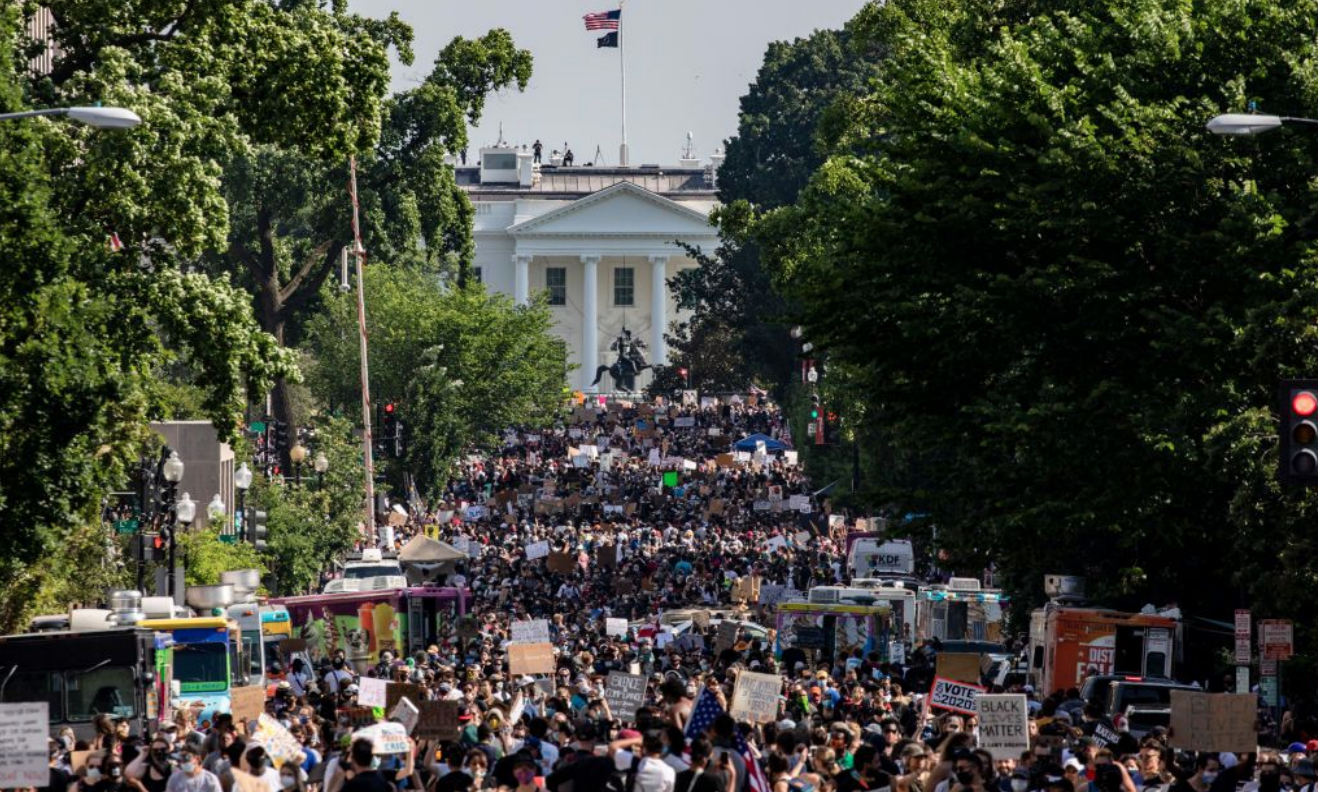
Whereas the social justice movements of 2020 normalized the activist CEO, the current moment is introducing new doubt in the boardroom and among management teams about the relative risks and rewards of taking public and participatory action when an issue is polarizing. If harnessed intentionally, this trepidation can provide a useful moment for companies to reflect, reevaluate, and reset the purpose and impact behind public responses. Companies need to consider their own credibility and opportunity for meaningful impact before making bold public statements or commitments. But too much restraint can be overcompensatory and damaging, both to society and to corporate interests. 

As we look ahead to continued global instability and social turbulence, the acuity of questions around if, when, and how to respond to social and political issues will only grow. In conversation with leaders and practitioners, we’ve surfaced four recommendations for companies to help them navigate ESG headwinds while considering the interests of their employees, customers, communities, and other stakeholders. These recommendations will be most effective if implemented together. We have also created four tools to support their direct implementation.

Recommendations:

  • Create mechanisms for understanding what employees and customers expect of your organization
  • Assess the impacts of sociopolitical issues on your company, and your company’s opportunity to influence those issues
  • Use a decision framework to weigh and resolve the best available information before acting
  • Consult an external advisory council to expand your perspective

Implementation tools:

  • Employee sentiment survey questions
  • How to create a social response scorecard
  • Template corporate social response scorecard 
  • Template Community Advisory Council charter

Share this report
Recommended Features
cee

The state of play: Corporate civic engagement

This trend report describes five key trends for corporate civic engagement in 2022
Untitled design (4)

Introducing ESG Next, the Innovators Shaping the Future of Sustainability and Social Impact

Over the course of the next year, our executive team is profiling the investors, executives, authors, philanthropists, social sector leaders, academics, and more who are helping to shape business as a force for social and environmental progress.

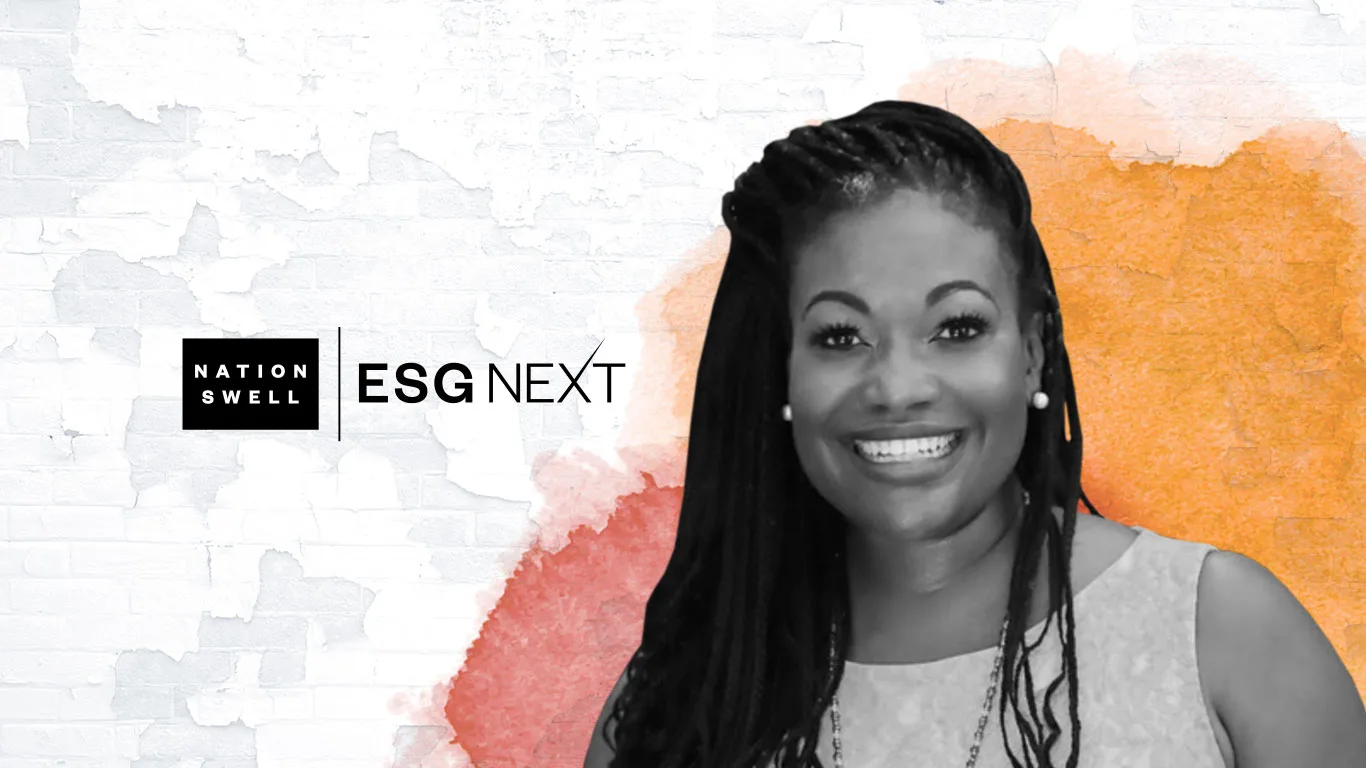
ESG Next: An Interview With Omidyar Network’s Michele Jawando

Posted on August 29, 2023May 21, 2026 by Greg Behrman
ESG Next: An Interview With Omidyar Network’s Michele Jawando

At a moment of unprecedented attention, investment, and opportunity for the emerging field of Environmental, Social, and Governance (ESG), leaders are asking: Who is best preparing their organization for the society of the future? Who is innovating today to meet decades-long environmental and social goals? Who is setting standards that catalyze their industry’s change for the better? Who is defining what bold and aspirational look like — and how best to advance that work in practice?

Enter NationSwell’s ESG Next, an exemplary group of investors, executives, authors, philanthropists, social sector leaders, academics, and field builders who are helping to shape business as a force for social and environmental progress, advancing — and even pioneering — the most forward-thinking and effective programs, initiatives, technologies, methodologies, practices, and approaches.

For this installment, NationSwell interviewed Michele Jawando, Senior Vice President at Omidyar Network, about the untold story of ESG’s unlikely allies, the importance of strong and engaged workers for any organization, and why we don’t have permission to surrender to the sorrow — even when working to advance justice becomes incredibly challenging. 

Greg Behrman, CEO + Founder, NationSwell: Can you tell us about how your professional and personal journey led you to where you are today?

Michele Jawando, Senior Vice President , Omidyar Network: I endeavor for my work to be grounded in the simple idea that my contributions should advance and make meaningful contributions to the communities that I serve; that is the single thread that I am proud to be able to trace through my life’s work and purpose. 

It’s a thread that begins with my great aunt, who was both the first woman and the first Black woman attorney on the island of Bermuda; it continues with my grandmother, who was the first Black nurse at a segregated hospital; with my father, who went to law school and engaged his practice in global human and civil rights work; really, through my entire family, who have steadfastly been involved with the social and civil rights movements in Bermuda, Jamaica and here in the US. 

And now, it is with deep humility that I’ve been able to continue it from there on through to every place I’ve worked. All of my work, every single day, is in service of trying to pull that thread forward. Continuing it is a deeply personal, deeply spiritual call for me, and I’ve been fortunate to work at places that can match my passion. 

So it is with reverence for this past and deep appreciation for the present that I’ve arrived at my position in the field.

Behrman, NationSwell: What’s unique about the work you’re leading? What are some of your programs, strategies, and approaches into which other field builders should have visibility?

Jawando, Omidyar Network: We’re trying to figure out how we diversify who’s at the table, who’s talking to investors, and who’s engaged in this conversation.  And we’ve been partnering with a few incredible organizations to help make that happen. One I’m really excited about is the Interfaith Center on Corporate Responsibility. You probably don’t often think about faith and corporate responsibility as going hand-in-hand, but ICCR has been working at this intersection for five decades, and successfully engaged Fortune 500 companies from a faith perspective on issues like public health, pollution, and forced labor in ways that have changed corporate behavior for the better.. This is an opportunity to bring a very different voice into this conversation. We’ve also been working with an organization called the Investor Advocates for Social Justice, grounding us in the belief that investing can be a key part of a social justice framework — core to any movement. 

Too often, workers are missing from the conversations on the most important decisions an organization makes. People sometimes forget this, but some of the biggest investors in the world are the pension funds of working people. That’s why I’m really excited to spotlight our partnership with the Committee for Workers Capital; they’re working to center the perspective of workers within the investment community. To have strong corporations, you need strong workers. Including them makes your company stronger, which in turn makes your investments more profitable. It’s a very different way of thinking about smart investments, but I think it’s critical as we move forward. Workers, employees, customers and community members are uniquely positioned to identify when a company is doing something risky — even before the company’s leadership apparatus does. 

It can’t just be about investors, corporate board members, or academics; the present moment is giving us an opportunity to broaden the conversation and giving people more opportunity to see what a co-created future could look like.  If we don’t engage more of these groups at every level of decision making, then they’re missing out on opportunities for agency and growth, and management is missing out on their crucial perspective.  And so I think it’s such a critical moment for ESG investors to really listen to stakeholders to show up differently. But though it’s a great opportunity, it’s also a challenging moment, but only because it’s still so hard for us to have multi-party conversations in this country. 

Behrman, NationSwell: How are you making sense of this moment for ESG? 

Jawando, Omidyar Network: In order to create real change in the system, the conversation around ESG has to be deeply grounded in broader social conversations. 

We all want to see businesses do great work, and we want them to operate sustainably. But I think why we’re having such a passionate conversation about this right now is because we differ on what “great work” and “operate sustainably” mean. We’re seeing ESG as a topic bubble up almost daily because I think each person on the planet is impacted by corporations, and wants to be actively involved in what the solutions are. Changing the framework to make corporations and companies more profitable, more inclusive, more thoughtful — all while adding a greater amount of dignity in the work — is exactly what we need to be doing. 

Behrman, NationSwell: What’s exciting to you about this moment, and where do you see it going?

Jawando, Omidyar Network:  I see policy as an opportunity to scale impact, so I am currently really  interested in what we’ve seen in Missouri, where citizens stood up before the state legislature and said they wanted to see their pensions invested in a responsible and sustainable way  And while we know there’s been an uptick of anti-ESG legislation, the untold story that’s unfolding under the headlines is that you’re getting really interesting bedfellows. Players like the Missouri Chamber of Commerce, SEIU, the Sierra Club — they  were all working together to defeat these anti-ESG bills. There aren’t many places where you’re seeing unlikely allies coming together. You really love to see it.

To me, that’s proof there’s something unique about this work that is positive and is worth fighting for and is worth engaging. But there’s been such a collapse of nuance, which means it’s been hard for people to hold that you can both be profitable and have ESG as a core part of your investment strategy. 

Behrman, NationSwell: What is it about your leadership style that helps you to be effective? 

Jawando, Omidyar Network: As a leader, I strive to acknowledge that the people who come and work with me — or for me — have some challenge in their life that they’re dealing with every day, alongside their work. That acknowledgment helps me as much as it helps them. If I can walk into a workplace, or a board room, or Capitol Hill and recognize that these are people who are dealing with challenges in their lives, the dialogue will be a lot more productive than if I see them all as adversaries or challenges, lead with people’s humanity and it changes the dynamic every time. 

I’m not saying that view doesn’t come with its own set of challenges, but I deeply believe that this is the best approach to leadership. 

Behrman, NationSwell: Who are the leaders who inspire your leadership?

Jawando, Omidyar Network: Edelman CEO Lisa Ross is amazing. Not only is she a people first leader, but she’s also a true believer in the power of representation. There’s something unique about her voice that helps me really grapple with the importance of the work we’re doing.

KR Liu, who heads accessibility marketing at Google, is a constant source of inspiration to me. She’s one of the most profound people that I’ve worked with, one who’s helped me advance my own thinking about accessibility, representation, and policy. She lives with such intention and passion. 

Another leader who inspires me is Nicole Taylor of the Silicon Valley Community Foundation. I think it’s hard running any foundation, but when you show up in the valley and you’re trying to hold a lot of different equities all at the same time, it’s even more challenging. And yet, Nicole  does it with such grace, effervescence, and a deep commitment to this work.

The last leader I’d like to mention is Amandeep Singh Gill, who’s the United Nations Secretary General’s Envoy on Technology. Whether you’re a techno optimist or a techno realist, it’s undeniable that technology has a profound effect on society. Amandeep is working to make sure it is not just a catalytic force, but a unifying one. 

Behrman, NationSwell: What are you reading, watching, or listening to that’s inspiring your leadership?

Jawando, Omidyar Network: “Blind Spot” by Jon Clifton has such great insight into why leaders were missing the unrest that led to everything from the Arab Spring to the state of our politics in America — and really asks us to reckon with what we value as a society, and whether we’re using the right metrics for what makes a nation thrive?

I’m loving “How to Citizen” with Baratunde Thurston, who just did an episode on democracy fractals and sci-fi. I’m a big, big sci-fi nerd. I love the way it calls the imagination to a different place. 

Lastly, Ross Gay is one of my favorite authors, and my favorite poem of his called “Sorrow is Not My Name.” I think about it every time the work gets challenging, or it feels like we’re taking a step back. I’d like to read it for you:

“No matter the pull towards the brink, no matter the florid, deep sleep awaits. There is a time for everything. Look, just this morning a vulture nodded his red grizzled head at me and I looked at him admiring the sickle of his beak. Then the wind kicked up and after arranging that good suit of feathers he up and took off, just like that. And to boot there are on this planet alone, something like two million naturally occurring sweet things, some with names so generous as to kick the steel from my knees. Agave, persimmon, stick ball, the purple okra I brought for two bucks at the market.

“Think of that, the long night, the skeleton in the mirror, the man behind me on the bus taking notes, yeah, yea. But look, my niece is running through a field calling my name. My neighbor sings like an angel and at the end of my block is a basketball court. I remember my color’s green, I’m spring.”

That piece calls me back to all of the things that are beautiful and simple and worth fighting for. We can’t get lost in the sorrow. We actually don’t have permission to do that. Then we start to feel like nothing can change — and I believe deeply that things can.


To learn more about how our ESG Next honorees are shaping business as a force for social and environmental good, visit the series hub. Omidyar Network is a NationSwell Institutional Member. To learn more about membership in NationSwell’s community of leading social impact and sustainability practitioners, visit our site.
Posted in The Next Series, Uncategorized

How consumers value social impact

How consumers value social impact

How consumers value social impact

NATIONSWELL PRIMER
Posted on January 15, 2023May 26, 2026
Download

Business performance and brand value are increasingly understood as connected to an organization’s social purpose and impact. In fact, 89% of business leaders believe companies that lead with purpose have a competitive advantage in today’s marketplace, and 85% agree being a purpose-driven company drives profit (Porter Novelli, 2020). One of the groups at the root of this advantage are employees, who exert significant influence over a company’s success. In an environment where leaders overestimate customer trust by 38% and employee trust by 45% (Deloitte, 2021), it’s important to understand how these stakeholders factor social impact into their decisions about which corporations to buy from and work for. 

This one-page primer compiles illustrative data about the ways consumers are driving up the value of corporate social impact.


Share this report
Recommended Features
Employee   Impact

How employees value social impact

This one-page primer compiles illustrative data about the ways employees are driving up the value of corporate social impact.
pexels ivan samkov

Bringing community engagement into physical retail

This one-page primer names five common approaches to creating community in retail stores, with examples of each model.
pexels gustavo fring

Commercial products deployed for social good

This Curated Collection explores a range of ways that companies are creating or repurposing products in service to their social impact strategies.
cee

The state of play: Corporate civic engagement

This trend report describes five key trends for corporate civic engagement in 2022

How employees value social impact

How employees value social impact

How employees value social impact

NATIONSWELL PRIMER
Posted on January 15, 2023May 26, 2026
Download

Business performance and brand value are increasingly understood as connected to an organization’s social purpose and impact. In fact, 89% of business leaders believe companies that lead with purpose have a competitive advantage in today’s marketplace, and 85% agree being a purpose-driven company drives profit (Porter Novelli, 2020). One of the groups at the root of this advantage are employees, who exert significant influence over a company’s success. In an environment where leaders overestimate customer trust by 38% and employee trust by 45% (Deloitte, 2021), it’s important to understand how these stakeholders factor social impact into their decisions about which corporations to buy from and work for.

This one-page primer compiles illustrative data about the ways employees are driving up the value of corporate social impact. Download to learn more.


Share this report
Recommended Features
pexels sam lion

How consumers value social impact

This one-page primer compiles illustrative data about the ways consumers are driving up the value of corporate social impact.
Verizon

How Verizon engaged 89,000 employee volunteers in the middle of a global pandemic

This case study describes six elements of Citizen Verizon Volunteers that are critical to its success:
cee

The state of play: Corporate civic engagement

This trend report describes five key trends for corporate civic engagement in 2022
sincerely media dGxOgeXAXm8 unsplash

The Takeaway | The Future of the Workforce

On January 25, members of the nationswell council gathered for an in-person salon in New York City to discuss the […]

Insights for impact: 2022 edition

Insights for impact: 2022 edition

Insights for impact: 2022 edition

ANNUAL REPORT
Posted on December 20, 2022May 26, 2026
Download

This year-end report synthesizes the key learnings from each of NationSwell’s 2022 research publications and highlights several Studio projects with widely-relevant research deliverables. They cover a range of evergreen and emergent topic areas, including ESG, DEIB, community-centered philanthropy, corporate civic engagement, the future of work, catalytic cross-sector partnerships, and more. By focusing on solutions over exposition, and elevating the most urgent ideas, NationSwell’s insights reports showcase our deep commitment to valuing your time and delivering what you need to lead at your best.


Share this report
Recommended Features
Insights Website Templates (2)

2022 Private sector social impact leadership survey

NationSwell launched a survey in August 2022 specifically for private sector social impact leaders. The resulting report explores nine major findings across three categories.
Employee   Impact

How employees value social impact

This one-page primer compiles illustrative data about the ways employees are driving up the value of corporate social impact.
Gardeners working in a greenhouse plantation

The 2023 Sustainability Agenda

In partnership with Morgan Stanley, NationSwell convened a group of cross-sector leaders, each at the vanguard of sustainable innovation, to share ideas about what is at the top of their sustainability agenda for 2023.
Economist Darrick Hamilton at the NationSwell Summit

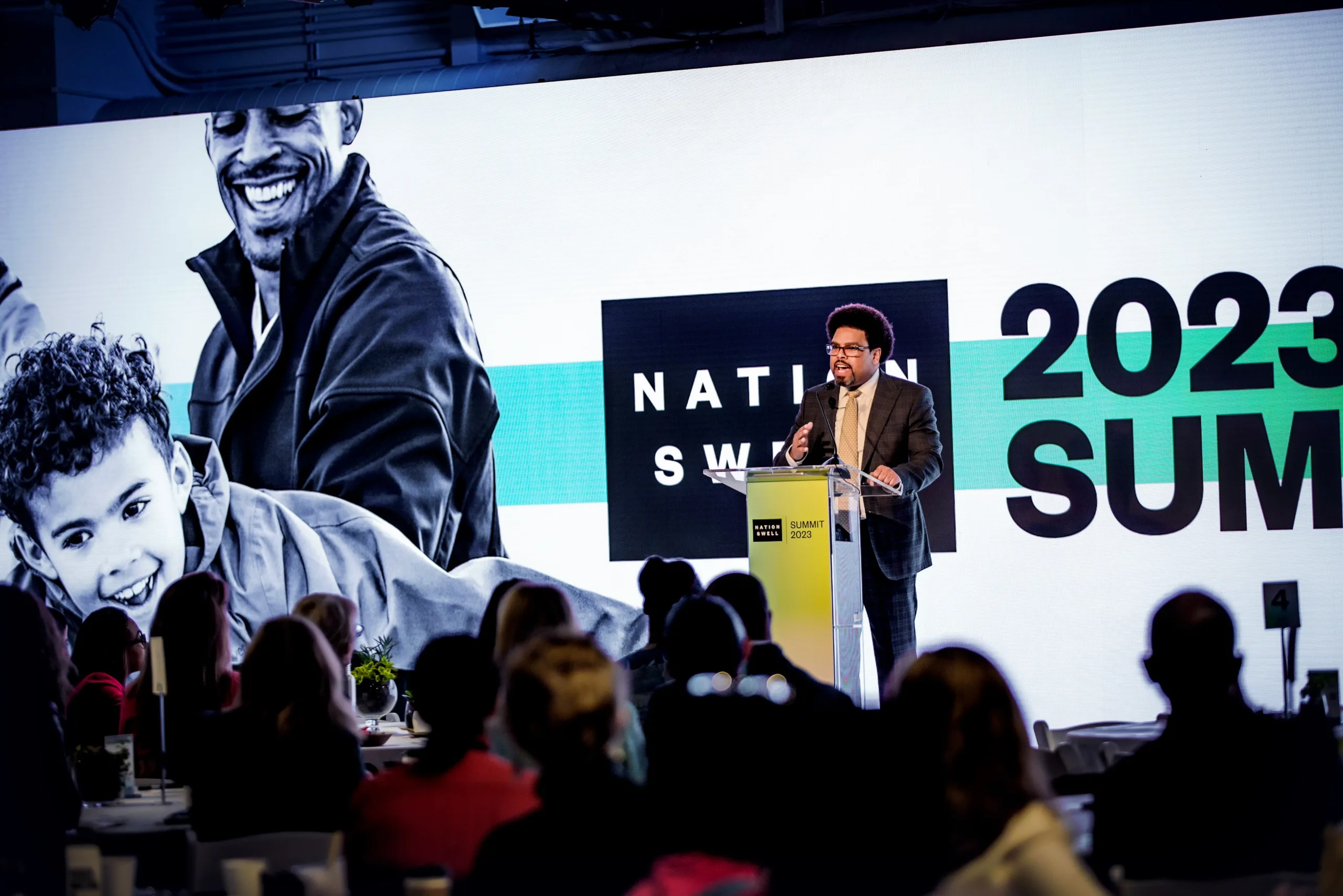
NationSwell Summit 2023: The Moments on Our Minds

Once a year, the most cutting-edge and committed leaders in ESG, social impact, philanthropy and other select fields gather at […]

The state of play: Corporate civic engagement

The state of play: Corporate civic engagement

The state of play: Corporate civic engagement

TREND REPORT
Posted on June 22, 2022May 26, 2026
Download

Corporate civic engagement describes how companies plan for, respond to, and participate in political, social, and cultural activities that are important to their employees, customers, communities, and other stakeholders. Unlike traditional government relations and public affairs efforts, which often relate narrowly to core business interests, corporate civic engagement often denotes a clear, public stance on broader social issues and values.

2020 sparked increased corporate civic engagement, with companies taking a more vocal stance on a larger portfolio of political and social issues than seen before. Today, those same companies are grappling with the reality of serving a broad spectrum of employees, consumers, and other stakeholders in a politically fraught environment. The current moment – and those on the horizon – will tell us a lot about the social role of the corporation moving forward. This trend report describes five key trends for corporate civic engagement in 2022:

The trends: 

  • Since 2020, more customers than ever want companies to take a stance on social and political issues, but they may not be aligned on what that stance should be.
  • Employees are increasingly willing to leave companies and mobilize their collective strength to force change, and they’re not letting CEOs get away with non-public action.
  • Politicians and companies are confronting one another in uncharted territory; the risk calculus for corporate leaders is getting scrambled as a result.
  • Media and third party watchdogs are bringing more transparency to the gap between commitments and actions; they’re revealing that companies still have a ways to go.
  • Partnerships and playbooks are gaining momentum to address political, consumer, and employee challenges; though there remains no one-size-fits-all strategy.

Share this report
Recommended Features
EOY

Insights for impact: 2022 edition

This year-end report synthesizes the key learnings from each of NationSwell’s 2022 research publications and highlights several Studio projects with widely-relevant research deliverables.
Insights Website Templates (2)

2022 Private sector social impact leadership survey

NationSwell launched a survey in August 2022 specifically for private sector social impact leaders. The resulting report explores nine major findings across three categories.
pexels sam lion

How consumers value social impact

This one-page primer compiles illustrative data about the ways consumers are driving up the value of corporate social impact.

The Wrap-Up: Building the Future of Work

Organizational leaders are at an unprecedented inflection point. Years of pandemic-related challenges have disrupted society’s most foundational systems – and […]

Posts navigation

Newer posts

Sign up for our monthly newsletter

Follow us
©2026 NationSwell
  • About
  • Careers
  • Contact
  • Institutional Membership
  • Studio
  • Insights
  • Privacy Policy