NationSwell Collaboratives are a vehicle for bringing together committed actors to push towards collective action on a specific issue. Anthony Smith, NationSwell V.P. of Editorial, spoke to Uyen Tieu, NationSwell President, Amy Lee, NationSwell Chief Strategy Officer, Allie Mahler, NationSwell Senior Strategy Director, and Austen Zoutewelle, NationSwell Associate Director of Strategy, about the Case for Childcare Collaborative, a cross-sector coalition working to solve our nation’s crisis of childcare and help 1.1 million women return to a better workplace than the one they left at the outset of the pandemic.
Anthony Smith, NationSwell V.P. of Editorial: Why should leaders make the case for childcare?
Uyen Tieu, NationSwell President: The moment for leaders to make the case for childcare has been such a long time coming. This isn’t a new conversation in America, but it’s one that till this point had been led largely by women, experts, and activists. It took the wide scale disruption of the pandemic to get us to where we are now, where it’s now as clear for men — especially fathers — as it has been for us. We have to take advantage of this moment.
NationSwell: How did the work begin?
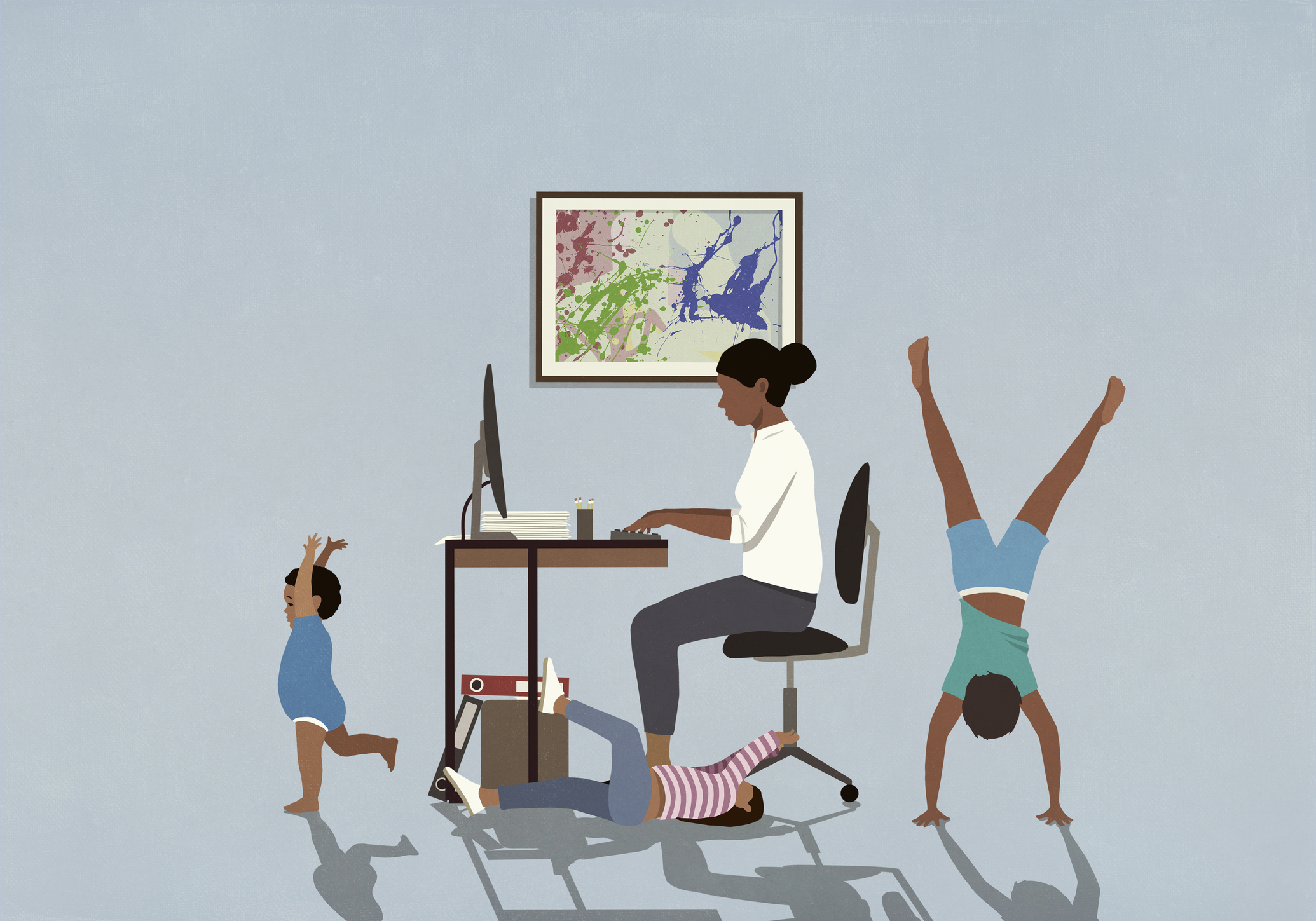
Amy Lee, NationSwell Chief Strategy Officer: Our first step was to recognize the mass exodus of women that left the workplace during the pandemic. At the beginning of the Covid era, 2 million women left the workforce; 1.1 million still have not returned. Their reasons aren’t just because of the tangible realities of school shutdowns and the lack of childcare — they’re about societal norms around which parent is chiefly responsible for caregiving.
One of our Studio partners told us, “We really want to work with you to tackle the problems that working womxn* and caregiving womxn are facing,” and that’s really how our Collaborative was born — out of the idea that we didn’t just want to help these women get back to work, we want to build the structures that allow women to actually thrive at work once they return.
Allie Mahler, NationSwell Senior Strategy Director: Collaboratives are all about building coalitions of committed actors for scaled, collective action. We have an incredible group of partners that have coalesced around this Collaborative initiative: American Family Insurance, Annie E. Casey Foundation, Caring Across Generations, National Domestic Workers Alliance, Working for Women, and others. It’s a powerhouse group who each bring unique expertise, funding, programming, organizing capabilities, and community to the table. I have no doubt this group will move mountains when it comes to helping businesses support low wage workers and the caregiving economy.
NationSwell: What are some of the challenges facing working caregivers in this country?
Austen Zoutewelle, NationSwell Associate Director, Strategy: Given what we know about economic disruption, it’s unsurprising that the women who are most affected by the lack of childcare in this country are women without a college degree, women of color, and small business owners.
But one big learning for us is that the care industry — not only for early childhood education, but also for eldercare — is predominantly run by women. So not only are working mothers being affected by this disruption, but working mothers within the industry of care are also affected — even as we expect them to be at the frontlines of this crisis. Not only does that lead to fewer workers, it leads to fewer options for daycare and childcare.
NationSwell: What advantages does the Collaborative model provide in tackling this challenge?
Lee: Philanthropy and corporate social responsibility functions are evolving at a rapid pace. Legacy models have been focused on a personal or organization-specific mission, but the new generation of leaders in this space have embraced the idea that these issues — whether it’s climate change or childcare — are too large to be solved by one person, or one family foundation, or one organization alone. We have to work together. And at the same time, we need to provide funders with a way to see what their peers are doing so that we don’t support redundant work.
Collaboratives allow us to do exactly that — we bring funders and committed actors together to deepen and broaden their impact. We allow them to look across the space and really identify where there are unmet needs. And it also allows them to work together with partners that may not organically be at the same table without our support.
Tieu: One of our partners said it the best: This time can be different because the table is different. NationSwell approaches this work with the nuanced understanding that the players need to work towards something that can last.
NationSwell: How is the case for childcare personal to you?
Tieu: I’m a mom, I’m a daughter, I’m a woman, and I’m a business leader. If we’re to compete without actually addressing the urgent need for childcare, there’s going to be a knock-on effect across every aspect of society. The problem is too urgent to rely only on federal policy change. If committed actors come together now to co-create the roadmap, we can turn the case for childcare into a reality.
Zoutewelle: I watched my mom balance raising three kids and working full-time when I was in high school. She still manages caring for my brother with Down syndrome while working full-time. I’ve seen first hand the urgency of this issue, the importance of flexible working arrangements, the necessity of public policy to support parents, and the need for collaborative, systemic strategies for making an impact. The urgency is even greater for women of color in low-wage industries. It’s important to me to elevate this work so that more women can participate in the economy and feel supported as a parent. It’s critical for our moms and the future generations.
Mahler: This work is incredibly personal to me. I just returned back to work at NationSwell as a mom of two young babies under two years old while also leading our Strategy team. I love what I get to do at work, and I love my daughters, but it is not only mentally and physically taxing on a daily basis but also financially taxing to coordinate care for my children. During my maternity leave, I thought daily about how fortunate I was to have the time to connect with my daughters, and how so many women and their families are taken too soon from their babies as they go back to work at 6 or 8 weeks post-delivery. That’s why this work inspires me and lights a fire for me.
Lee: I am a privileged white woman, but nonetheless the pandemic showed me how hard it is to be a working parent. My children were one and three years old when the pandemic started, and my husband and I were suddenly thrust into full-time childcare and a full-time job at a time of huge uncertainty and fear. We were only just able to make it work and that was with the benefit of being able to work remotely and having a flexible, empathetic employer. I can’t even imagine how hard it must have been for people working shifts, or people from single parent families.
For more information on Collaboratives, visit our site.
Editor’s Note: To exercise intersectionality and inclusion, one member of our collaborative uses the spelling “womxn” whereas other members use the traditional spelling, “women.” You can learn more about “womxn” and other forms of intentional, lexical inclusion at the Womxn’s Center for Success.