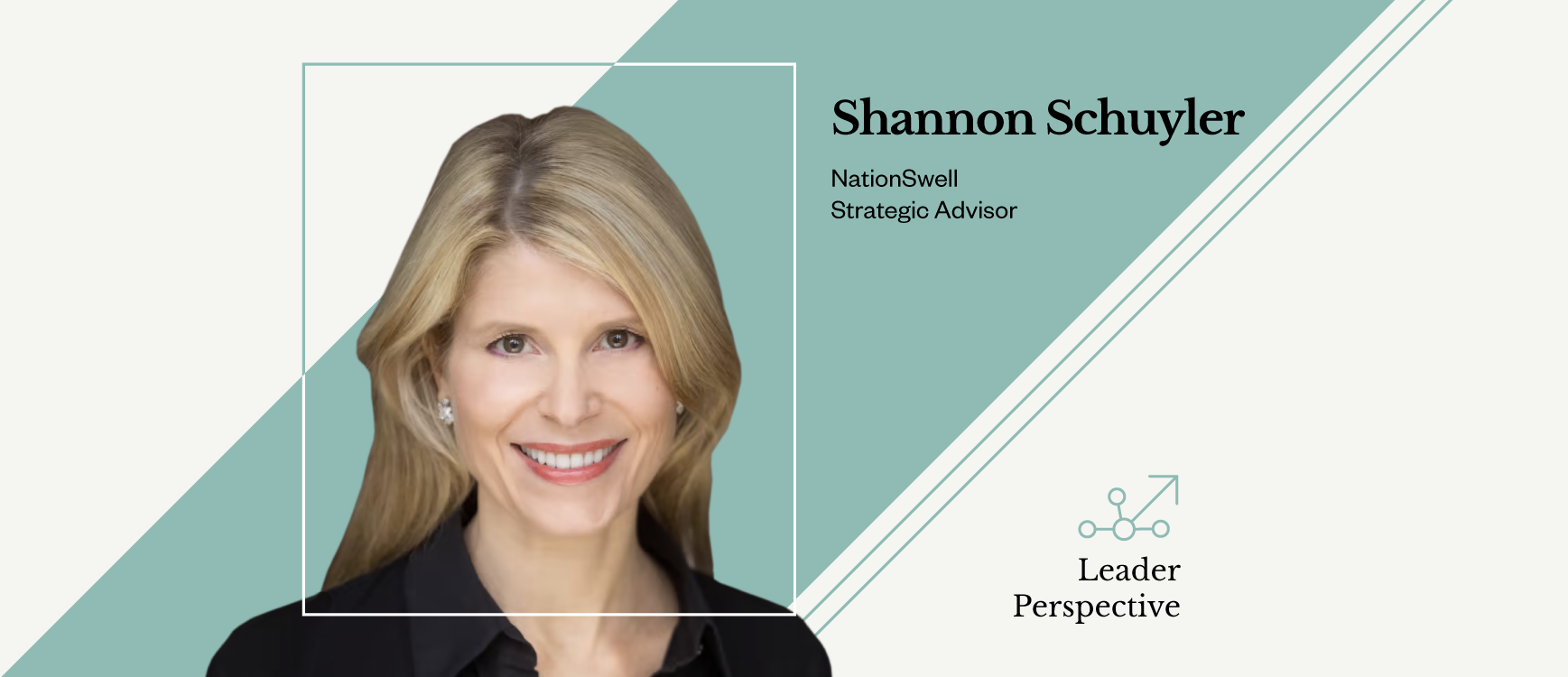
Influence at Work, Part 2: Becoming an Asset to the Business

Influence at Work is a 3-part series of articles exploring what it takes for impact executives to gain and use internal influence – that precious currency required to be successful in any organization. Part 1 below begins with the foundation: earning your license to operate.


In Part 1 of this mini-series I wrote about earning your license to operate as a corporate impact leader — developing the business fluency and relationships that establish your credibility inside your organization. For Part 2, I explore what to do with that license once you have it. 

When I talk to folks doing this work at a high level for a long time, they tell me that influential corporate impact executives operate in equal measure as leaders of an impact strategy and agents of the business’s core strategy. Quite simply, they demonstrate the same core operational capabilities and strategic instincts as their peers in other departments. 

Here’s what that looks like in practice:

Pursue impact solutions that solve business problems

Durable and effective impact programs often address a business need in addition to advancing a societal objective. In doing so, they rewire others’ perception of impact’s relevancy (less “cost center”; more “strategic resource” and “business driver”). We all know this as shared value.

Maybe your company has workforce pipeline challenges, or limited credibility in growth markets, or consumer trust deficits, or regulatory exposure – each of these can be a legitimate entry point for impact work that drives a blend of social and business outcomes.

Tactics to consider:

  • Revisit your current program portfolio through the lens of your “pressure map” from Part 1. For each program, ask: does this address a business priority? If not, it may warrant scrutiny.
  • When developing new initiatives or refreshing your impact strategy, start with the business. What are the 5-year goals the business cares most about? Then, crosswalk those priorities to the assets and levers available to your impact function. For exercise and tools to guide this kind of thinking, check out NationSwell’s Toolkit on Identifying Your Organizational Impact Superpowers or reach out to your NationSwell Impact Team to explore ways we can support.
  • Partner with a senior business leader or function (e.g. HR, marketing) who has accountability for the business priority you’re targeting. Shared ownership can increase your relevance, resourcing, and the likelihood that you land the plane. 
  • Consider if a pilot would benefit your shared value approach. Testing new solutions in targeted markets or functions could help to validate both social and business outcomes, and the results can be used to refine the model before committing with full force. 

Run your function like a business

Leading your programs, your budget, and your team with the same rigor and standards as other business leaders tells the rest of the organization that you’re one of them.

This requires managing your programs to high performance expectations, being ready to make hard calls, and treating your function’s resources with the same discipline you’d expect from any other part of the enterprise. It also requires proactivity about accountability. One corporate impact executive advised, “Be the first to admit when something is not working.”

Tactics to consider:

  • Establish a regular business review rhythm for your programs that mirrors how other functions report on performance. Specifically, consider:
    • Reporting on outcomes, cost per outcome, and contribution to business priorities;
    • Aligning cadence with existing forums (e.g. quarterly business reviews instead of standalone meetings);
    • Using the same formats as other business functions (e.g. dashboards, decks, etc.).
  • If resources permit, dedicate someone on your team to operate as an independent evaluator to apply a standardized measurement framework across all programs. By moving evaluation responsibilities away from the program team you decrease the risk of bias and increase the uniformity by which you understand what’s working and what’s not.
  • Make the hard calls. Define criteria for continuation, scaling, or exit at the outset – such as minimum impact (social and business) thresholds. Reassess on a fixed timeline that aligns with other business functions. If a program is misaligned, underperforming, or consuming resources without a clear return, have an exit strategy. 

Be judicious about your external partnerships

Partners chosen for legacy reasons, personal relationships, or anything other than strategic fit can subtly undermine leaders’ credibility over time, especially when resources start to get squeezed. Evaluate partners’ impact regularly and maintain a standard of mutual value creation — not unlike how another operator in your business might approach vendor relationships.


To be clear, trust is still the most crucial currency when working with partners. The leaders I’ve talked to value knowing what their partners excel at and letting them do their thing. At the same time, those leaders caution against becoming overcommitted to any given partner, to being a sole source of grant revenue to a program, or otherwise making an eventual exit too disruptive for either organization.

Tactics to consider:

  • Audit your current partner portfolio annually against your strategic priorities. Where is the fit strong? Where is it rooted in legacy? Where are you filling a gap a better-aligned partner could fill?
  • Assess partner reputation and ecosystem positioning. Evaluate how current and prospective partners may be perceived by key stakeholders, and how that perception reflects on the internal influence you are honing. Prioritize partners whose credibility, leadership, and approach reinforce your strategic narrative and brand, and establish clear criteria for reputational risk. Consider third-party validation and a clear track record of impact.
  • Select organizations that have opportunities for employees, leaders, or customers to engage — through volunteerism, pro bono work, etc. — so partnerships don’t operate in isolation from the business. 
  • Develop a point of view on what percentage of an organization or program budget you’re willing to be responsible for and apply that information to grantmaking decisions and partner evaluations.
  • Build a playbook for winding down grantee or partner relationships. Include considerations like what period of notice to give before discontinuing grants, whether to provide reduced funding for a temporary bridge period, and ways to help build your partners’ capacity to seek additional funding sources.

Build your team around business-relevant skills

Working in the impact profession draws in people who are intrinsically motivated by mission or purpose. But hiring for purpose — building a team around passion – isn’t sufficient in a business environment. Here’s another point where the NationSwell members and Strategic Advisors I’ve been talking with are quite clear: the most effective corporate impact teams put a premium on analytical, financial, program management, and communication capabilities. They hire people who understand — often come from — complex corporate environments. That doesn’t mean domain expertise, field work, and lived experience count less; just that they should be considered alongside business acumen.

Tactics to consider:

  • Create deliberate development pathways for your current team. Consider secondments or internal rotations into other functions, and offer training on business-relevant skills. Bring in cross-functional partners to present their work to your team.
  • When you have open roles, write job descriptions that center business competencies alongside the domain expertise you’d typically prioritize.
  • Work with your talent partners to source job candidates from within the business. Former finance, strategy, or operations professionals who’ve moved into impact roles can be quite successful at translating impact to the business and vice versa.

Explore sustainable and diversified funding models

There are a few reasons why it pays to think creatively about the financial architecture of your work. For starters, it’s rarely a bad idea to reduce dependencies on a single source of funding. Then there’s the possibility of being able to do more with more. And perhaps most relevant to this topic, there’s the opportunity to demonstrate a mutually beneficial orientation to the business’s financial interests.

What this looks like in practice can vary, and what’s right for one company might not work for another. Some companies make impact investments that regenerate capital while advancing strategically aligned goals. Some corporate foundations raise money from customers and external partners. And in the context of OBBBA, some impact leaders are collaborating with partners in finance, accounting, and elsewhere to maximize tax advantages for philanthropy while preserving its key role in advancing impact. 

Tactics to consider:

  • Review NationSwell’s recent case study on navigating OBBBA and then connect with your finance partners to explore creative ways to mitigate tax downsides while maintaining philanthropic momentum.
  • Check out NationSwell’s guide to corporate impact investing to see if there’s a potential role for this approach in your organization.
  • Investigate opportunities to co-fund programs with other business units or functions that have a direct stake in the outcome. For inspiration, take a look at NationSwell’s case study of Johnson & Johnson’s Business Match Fund.

If earning your license to operate is about closing the distance between how you think and how the business thinks, then becoming an asset is about closing the distance between what you do and what the business needs done. When that gap is narrow — when your strategy, your programs, your team, and your partnerships are all in service of business priorities as much as impact goals — your influence starts becoming hardwired. And that’s a good place to be.

In Part 3 of Influence at Work, we’ll turn to the matter of ROI: how to measure it and how to talk about it.

NationSwell op-ed: Predicting the Future of Work

We are currently living through one of the most profound shifts in the history of work. As AI, automation, and other emerging technologies redefine jobs, skills, and career pathways wholesale, leaders across sectors are being called to meet these industry-wide undulations head-on and help shape what comes next.

That imperative is at the heart of NationSwell’s new Workforce Innovation Collaborative — a cross-sector effort designed to help leaders explore emerging workforce trends and co-design scalable solutions for a more future-ready and inclusive economy. Through shared learning, strategic dialogue, and collective action, the Collaborative aims to create the kind of trusted space leaders need to navigate uncertainty and create a future-ready workforce where every person has the skills, opportunities, and support to succeed.

To mark the launch of that work, NationSwell invited leaders from the Collaborative to respond to a shared prompt:

Which emerging signals are giving you the most optimism about the future of work right now? And where do you currently see the greatest opportunity to build a system that is more responsive to where work is headed next?

Although their responses reflect different vantage points, they converge around the common belief that the future of work will be shaped by how well leaders connect learning to real opportunity, pair innovation with inclusion, and design workforce systems that can adapt as quickly as the world around them changes.


Prompt: Which emerging signals are giving you the most optimism about the future of work right now? Where do you currently see the greatest opportunity to build a workforce system that is more responsive to where work is headed next?

“We are at an inflection point in the future of work, and I believe the greatest source of optimism and opportunity is in mastering the art and science of building truly responsive workforce systems.

The science is the strategic leveraging of predictive labor market intelligence. By shifting away from reactive measures, we can now leverage data and insights to anticipate skill demands driven by global trends. Our data provides the scientific rigor needed to pinpoint future talent shortages, standardize risk indicators, and replace guesswork with reliable, real-time insights, allowing us to accelerate our workforce investments across the globe.

However, the true opportunity — the art — lies in translating those insights and data into hyper-local execution that allows us to co-create with the communities we work in. This essential human-centered approach ensures our work doesn’t just fill a business gap, but actively builds equitable, transparent systems that deliver a net-positive impact in local communities. We achieve this by cultivating bespoke, long-term partnerships with community leaders, educational institutions, and nonprofits. 

Linking our global data-driven approach to local trust and co-creation is the systemic approach necessary to ensure our interventions foster equity and accessibility, building the sustainable, resilient workforce the future demands.”

Courtney Williams, Global Workforce Development & Labor Market Intelligence, Google


Across the Design and Make industries, I’m seeing promising workforce solutions that connect access, applied skills, and real hiring pathways. It’s no longer enough to train people on tools in isolation — what’s emerging now are integrated models that build capability in real workflows, validate those skills through industry recognized credentials, and link learners directly to opportunity. That’s how we ensure both students and experienced professionals can adapt and thrive as technology reshapes the future of work.”

Kate Buchanan, Workforce Innovation & Investment Lead, Autodesk Foundation


“Right now, what gives me the most optimism about the future of work is the growing consensus that, as AI reshapes roles, human-centric skills — critical thinking, communication, and creativity — matter more, not less. It’s really important that optimism is matched with action in this moment, and through Barclays LifeSkills, our programs are helping people to develop these skills in order to differentiate themselves for current and future roles.

As we look at the workforce development sector, the greatest opportunity is to build a system that keeps pace with change by connecting learning to work earlier and more often, and by updating training as employer needs evolve faster. That means scaling employer-aligned earn-and-learn pathways — apprenticeships, fellowships, internships and project-based work — so learners graduate with an increased level of experience. It also means widening access to growth sectors, including AI-enabled roles and the skilled trades, where we continue to see strong demand. Through Barclays LifeSkills, we’re working across our partnerships to turn demand into clear routes to good jobs.”

Deborah Goldfarb, Global Head of Citizenship, Barclays


“What gives me optimism is how clearly manufacturing and industrial skills are being redefined as both high-tech and people-driven. Advances in automation, digital tools and connected systems are changing work on the factory floor and at job sites. Realizing the full value of those advances depends on sustained investment in our people through skills-building, learning and clear career pathways. I’m also encouraged by how employers are engaging more intentionally with collaborators beyond their organizations. We’re witnessing stronger coordination among educators, workforce systems and local communities to ensure training keeps pace with technological advancement. This alignment — of innovation, skills and purpose — is a compelling signal that manufacturing can provide meaningful, fulfilling careers in a dynamic industry.

One of the greatest opportunities lies in modernizing workforce systems to evolve alongside the technologies shaping manufacturing. High schools, community colleges and regional training providers are critical anchors in this system, and we need to align more closely and dynamically with them, given that roles and skill requirements are changing faster than traditional training cycles can keep pace.

That means co‑designing training pathways that blend hands‑on experience with digital and technology‑enabled learning. It also means creating opportunities for continuous upskilling throughout a career. When workforce systems are built to adapt — rather than react — they not only prepare people for today’s manufacturing roles, but also for the future. They also help ensure the industry can remain innovative, competitive, and resilient over the long term.”

Asha Varghese, Head of Corporate Social Responsibility, Caterpillar Inc. and President of the Caterpillar Foundation


“We are seeing a historic surge in systems readiness work at the local, state, and national levels. Stakeholders in the workforce ecosystem sometimes work in silos, but I’m seeing sustained interest in collaboration, especially across sectors. We are collectively examining what worked in the past to determine what must evolve for the future. 

There’s also growing consensus that career journeys of the future will be less linear. We know upskilling isn’t one-dimensional. It might mean deepening expertise to grow within an existing career trajectory, diversifying skills to transition into an adjacent role, or pivoting into an entirely new profession. A big opportunity right now is to reimagine our support systems to recognize this full spectrum of movement, ensuring that our infrastructure is as flexible as the workers it serves.”

Diana Fischer, Senior Director, Workday Foundation

Influence at Work, Part 1: Earning the License to Operate

Influence at Work is a 3-part series of articles exploring what it takes for impact executives to gain and use internal influence – that precious currency required to be successful in any organization. Part 1 below begins with the foundation: earning your license to operate.


The impact leader’s work of building influence begins with establishing one’s own credibility as a business leader. More accurately, it begins with conceiving of oneself as a business leader. I have been struck in my recent conversations with seasoned impact executives by how emphatic they are in this regard. They told me there is no escaping that sense of sisyphean effort required to make the case – to get to “yes” – if your own mental model is one that differs widely from that of the CFO, COO, or any other executive who sees themself as primarily an agent of the enterprise. 

Put simply, they told me you advance impact by working through the business, not alongside it. 

For some leaders, this invites a shift: impact leaders should be able to think like and channel the perspective, language, and outlook of the very people they seek to influence.

Here’s what that looks like in practice:

Study how the business makes money

If you can’t clearly explain how your company does what it does, you’re operating at a disadvantage. By really learning how the cash flows, how share price behaves, how the widgets get made, you not only understand what makes your own impact work possible, you understand how to decode the business’s strategy and the psychology behind its decision-making. You begin to frame impact and talk about it in language that will resonate most strongly and signal that your efforts are aligned to the business.

Tactics to consider:

  • Join company earnings calls and/or pull the transcript and pay particular attention to the CEO and CFO remarks in full. Note the exact language they use to describe priorities, risks, and performance. Start using that language in your own communications.
  • Ask your finance business partner for a 30-minute sync for you and your team to go deeper on what’s new and evolving with your business model, priorities, and financial underpinnings.

Build relationships with five essential collaborators and orient yourself to the problems they are trying to solve

Whether you’re remote or fully onsite, step outside of your vertical and “walk the halls” in your finance, product, strategy, marcomm, and talent orgs. Time spent building relationships – accruing social capital – with leaders in these departments is time spent as well as anywhere. 

Prioritize curiosity about their sources of pressure and business anxiety. What are they trying to build or solve? What keeps them up at night? What defines their own success or failure? If they understand you as invested in their success – sharing in their challenges – they’ll likely be much stronger partners to you. You’ll learn how they talk, how they think, and how they see the business, allowing you to adopt or mirror those characteristics in the future when you need their partnership.

Tactics to consider:

  • Schedule informal 1:1s with a peer-level leader in each of the five functions and come with questions like “What’s the problem you’re most focused on solving right now?” and “How do you think about success in your role over the next 12-18 months?”
  • Identify one recurring meeting in each of those functions you could observe or contribute to. Even occasional visibility builds familiarity.
  • Find a low-stakes way to add value to one of their priorities before you ever ask for something. A relevant article, an introduction, a data point they’d find useful.
  • Create a simple “pressure map” to track what each key internal partner is being measured on, what’s keeping them up at night, and where they’re under scrutiny. Update it after every substantive conversation.
  • When a new initiative or challenge surfaces in the business, ask yourself: is there an impact angle here that serves their need? before you ask whether it serves yours.

Adopt the same information diet as your execs 

To connect your work to that of your CEO and those around them, you’ve got to make sense of the world as they do. While you may not know exactly what your chief executive spends their time reading, it’s a decent assumption that they’re scanning general business coverage (WSJ, Bloomberg, Fortune, NYT) and industry / trade press on a daily basis. Personally, I find WSJ’s CEO Brief, Fortune’s CEO Daily, and NYT’s Dealbook to be excellent choices for daily news and commentary relevant to markets and business.

Tactics to consider:

  • Add two or three of the recommended newsletters to your morning routine and spend 10 minutes with them before you open Slack or email.
  • When you read something particularly relevant to your company or industry, get in the habit of forwarding it to a peer or senior leader with a one-line observation. It’s a light-touch way to demonstrate business awareness and stay top of mind.
  • Once a quarter, review your own content consumption and consider adding another business-focused content source into your content diet. 

Track your company relative to peers and competitors

Business leaders are keenly aware of their market position relative to competitors. With social impact, they tend not to want to be laggards. The more you can stay attuned to the pressures – direct or indirect – being placed on the business by its peers the more likely you are to be able to win attention when you identify a competitor gap or opportunity space for impact purposes.

Tactics to consider:

  • Set up Google Alerts for your top three to five competitors with keywords tied to relevant topics like social impact, community investment, and workforce. This takes ten minutes and surfaces competitive intelligence passively.
  • Before any major internal pitch or planning conversation, do a quick scan of what peer companies have announced or been recognized for recently. Knowing where your company sits — ahead, behind, or alongside — gives you a sharper edge in those conversations.
  • Ask your NationSwell Impact Team about doing a competitor or peer scan for you.

Increasingly, part of earning your license to operate as an impact leader is about closing the distance between how you think and how the business thinks. When that gap is wide, your influence is built on the basis of successful advocacy. When that gap is narrow, your influence is built on the basis of a strong business orientation and business discipline. More on that latter piece when I share Part 2 of Influence at Work: “Becoming an Asset to the Business.”

The NationSwell Council on Workforce Innovation for a Changing World

We’re living through one of the most profound shifts in the history of work. According to LinkedIn data, 70% of the skills used in most jobs will change by 2030, accelerated by Artificial Intelligence. AI and emerging technologies are transforming not only how we work, but how we design work – creating new roles, redefining old ones, and making evolving skills the currency of career growth in a more dynamic and rapidly shifting labor market.

Meeting this moment requires grappling with hard questions: What will the jobs of the future be? How are we teaching, training, and upskilling learners to ensure access to opportunity is inclusive — from early career to lifelong professionals? And perhaps most importantly, how can we harness this moment to drive workforce innovation that benefits all workers?

In the first quarter of 2026, the NationSwell Council kicked off a Salon series dedicated to exploring Workforce Innovation for a Changing World. The convenings that followed connected leaders across sectors on how we can prepare a workforce that thrives amid AI-driven uncertainty and where innovation expands access to opportunity.

We’re excited to present a curated collection of the insights and essential resources we’ve distilled from these conversations.


Key Insights:

  • Data is a major missing piece. The best existing data on in demand skills and jobs is still 12 months behind the market. A major challenge and opportunity exists in getting large employers to share and leverage their data to better inform the field.
  • Future-ready skills matter as much as technical ones. As AI reshapes entry-level work, adaptability, curiosity, empathy, and learning agility are becoming foundational.
  • We need broad AI fluency. From those in and looking to enter the workforce, to teachers, administrators and nonprofit professionals, broad AI fluency will be required to drive meaningful contributions from society on the path AI takes in the coming years.
  • Deep and broad partnership will be required moving forward. No single organization can keep up alone; collaboration across nonprofits, employers, funders, and government is critical to meeting this moment.
  • Hope is essential. Especially for young people and communities facing layered barriers, agency, belonging, and belief in possibility remain powerful drivers of economic mobility.
  • This moment in AI & workforce can’t be separated from the broader cultural context. As AI accelerates amid heightened attacks on our most vulnerable communities, there is an urgent risk of further embedding harm into systems at scale. From representation in the development of AI, to data, use cases and learning pathways, equity in AI design and deployment will be essential to building a future of broadly shared prosperity.
  • The Redesign of work is already here. We’re at a turning point. AI and automation are changing not just how we work, but what work looks like. Many entry-level jobs are disappearing, while new kinds of work are growing in the gig, creator, and hybrid economies. As the old idea of a “career ladder” fades, people are finding less traditional and more flexible ways to build their careers. This raises an important question: if early-career jobs are disappearing, how will people get their start? We believe we need to create new kinds of beginner roles and pathways that give people the same experience and mobility those entry-level jobs once did.
  • Learning and training must catch up to reality. We know that traditional workforce programs often assume linear journeys — start, train, promote — but today’s workers move fluidly between sectors, roles, and even employment forms. We discussed the need for real-time, responsive learning models that evolve as quickly as technology does. Ideas included reverse mentoring and volunteerism as a pathway for skill-building and cross-sector exposure. We also emphasized the importance of creating spaces where people can “fail forward” — building confidence and adaptability through experimentation rather than perfection.
  • Inclusion and belonging across generations. We recognized that demographic change is reshaping the workforce conversation. Workers over 40 are often excluded from AI and tech training, even as their roles shift most rapidly. To build a truly inclusive innovation economy, we must foster belonging and skill development across all generations. That means normalizing lifelong learning and supporting mid- and later-career professionals.
  • The opportunity for community-centered innovation. We talked about how communities can create their own “value loops” — local systems where entrepreneurship helps solve social problems and create lasting jobs. Instead of keeping nonprofits and businesses separate, we can build hybrid models that mix purpose with profit. We also emphasized the importance of skilled trades, which are still vital, less likely to be replaced by AI, and can help anchor stronger local economies.
  • Anticipating, not reacting, to workforce shifts. To get ahead of disruption, we need earlier, proactive interventions — particularly in regions already feeling economic shocks, such as the DC/DMV area. We discussed the need for early warning systems, scenario planning, and community-driven transition strategies that safeguard pathways before they collapse.
  • The promise — and responsibility — of AI. AI is ultimately amplified intention — it reflects and expands what we design it to do. It can help grow human potential, creativity, and equity, but only if guided with care and purpose. Without thoughtful guardrails, it could instead widen existing inequities. The real question is: who will invest in the work needed — the experimentation, retraining, and community innovation — to make sure the future of work benefits everyone?

Resources shared:

NationSwell’s Look Ahead at 2026

From shifting economic conditions to evolving expectations of leadership, 2026 will test how organizations adapt and lead. To ground these dynamics in real-world experience, we invited NationSwell members and Senior Advisors to offer their thoughts, predictions, and recommendations on the year ahead. Together, their insights surface some of the early signals and inflection points that will help impact leaders anticipate what’s coming and prepare accordingly.

Take a look at some of their predictions for 2026 below:

On the national and global shifts that will shape social impact work:

“With the collapse of international development budgets, we’ve shifted from a world with ‘more money than innovation’ to a world with “more innovation than money.” While multilateral agencies continue to grapple with existential funding crises, entrepreneurs on the ground have been solving problems faster, cheaper, more sustainably — and yes, at scale. The future of global development is already happening in the hands of entrepreneurs who didn’t wait for permission to build solutions. In 2026, we will double down investing in them.”

— Hala Hanna, Executive Director, MIT Solve

“The adjustments to the social safety net will reveal the start of new support and assistance mechanisms.”

— John Brothers, President and CEO, Charles and Margery Barancik Foundation; NationSwell Strategic Advisor

“Competitive health organizations will build new, real-world datasets—moving past secondary data to focus on primary data—to execute AI strategies. A major pillar is atomic care data between the caregiver and care recipient—the “last three feet of care.” Breakthroughs like this will begin to unlock a $6 trillion North American care economy, transforming health care, jobs, and the global economy.”

— Richard Lui, Director, Oscar-qualifying Caregiving Films; Principal, CAREGenome; Anchor, CNN & NBCU News


On the ethics and strategies needed to implement AI at scale:

“As one colleague put it, ‘other large economies are building infrastructure in AI for education, we’re building gardens.’ It’s time to get serious and focus on creating the policy to practice infrastructure when it comes to designing for a new era.

—Jean-Claude Brizard, President and CEO, Digital Promise Global

“AI is valuable to a point; but it lacks nuance. Scratch the surface and it starts to feel like the emperor’s new clothes. We’ve worshiped at that altar long enough, and now we’ll start to see a switch back (at least in media) where the premium value lies with the journalist herself. Facts are facts (if only we could agree on them) but analysis and commentary are hard. (As an example, I don’t need a journalist to tell me where the markets closed; but I do need a journalist to tell me why they closed where they did.) In the media, watch for an emphasis on the real—real dialog between real people, stories written by real journalists, art created by real artists, original photographs by actual photographers. The human touch (that seemingly still can’t be replicated by a bot), might just be the premium that makes us pay.

— Francesca Donner, founder & editor-in-chief, The Persistent


On the deep value in supporting and lifting up young people:

“In 2026, youth inclusion in the development of emerging technologies like AI, especially girls, nonbinary individuals, and historically underrepresented youth, will be critical to innovation in tech. Organizations that recognize this trend and move beyond superficial engagement to genuinely give young people a voice and opportunities in tech development, strategy, and design will be leaders. Collaborating with organizations such as Girls Who Code to involve the next generation as essential collaborators will help companies achieve real, equitable impact.”

— Tarika Barrett, Chief Executive Officer, Girls Who Code

“2026 will be a year for youth—for their voices and their leadership. As we look for new and different approaches to address the many issues we see across the country and around the world, the fresh perspectives of youth (long seen as naïve and idealistic) will emerge as both viable and essential, as young people assume more roles of leadership in business, government, and society. And we need to show up to support them.”

— George Tsiatis, CEO and Co-Founder, Resolution Project


On the continued importance of social connection and fidelity to community:

“In 2026, let’s stop dabbling and start scaling what actually works—then drop what doesn’t. Team up in bigger, braver ways with the people closest to the problems, not just the usual suspects. Pick a lane, put real money and energy behind it, and move now like this decade can’t wait.”

— Celeste Warren, Founder, Celeste Warren Consulting, LLC; NationSwell Strategic Advisor

“Opportunities that allow for community, collaboration and connection will be increasingly important. People want to co-create change and not just support it from the sidelines. This will lead to more collaborative funding models that use a mix of time, talent and money.”

— Beth Bengston, CEO and Founder, Working for Women

“As the world races toward the mass adoption of AI, people are increasingly turning to bots and machines for advice, counsel, and even companionship. But we have to ask ourselves, at what cost? This shift, while ‘efficient,’ risks eroding the very essence of human connection and the agency we have over the choices we make, the work we do, and the world we live in.”

— Kim Dabbs, Founder, To Belonging; NationSwell Strategic Advisor

“In 2026, the social impact field will be defined by how well we serve communities that continually transition and adapt, like military families. The organizations that succeed will invest in flexible, tech-enabled, community-led support that meets people where they are and scales belonging through trusted local networks.”

— Kathy Roth-Douquet, CEO and Board President, Blue Star Families


On the need to create balance and alignment amid tensions:

“As we look ahead, 2026 may be remembered as a year when situational stewardship quietly took shape across the social impact field. With many systems operating under assumptions that no longer fully hold, people are adjusting how they respond — prioritizing judgment, timing, and care. In that context, situational stewardship itself may be among the most generative conditions for meaningful impact, and offering grace in how we understand each other’s choices allows that work to be seen and sustained.”

— Dawn Karber, Executive Director, SkillsFWD at Rockefeller Philanthropy Advisors

“Social impact organizations must clearly tie mission outcomes to core business value to remain relevant, continue funding, and have influence. In other words, ‘good intentions’ will no longer be enough. The field is moving decisively toward value-creation first.”

— Maggie Carter, NationSwell Strategic Advisor

“2025 marked a year of great tension. We saw companies act more cautiously, despite impact leaders wanting to see companies be more courageous. In 2026, we expect to see a different tension arise. One where companies invest further in employee volunteering while nonprofits’ financial needs grow. This will demand that the two sides of the ecosystem come together to find paths to mutuality, especially as the UN marks 2026 as the International Year of the Volunteer.”

— Sona Khosla, Chief Impact Officer, Benevity

“During this year of corporate sustainability resets and uncertainty, focus on renewing your commercial relationships and business case. Use this ‘pause’ to make your plan to retake the offensive once this firefighting period is over.”

— Michael Kobori, NationSwell Strategic Advisor


And finally, the simple advice that will sustain us in difficult moments:

“Always hope. And move like you are not afraid.”

— Alesha Washington, President and CEO, Seattle Foundation

Investing in Rural Communities: Why the Delta Demands Bold Philanthropy

Rural America is often spoken of as if it were a single place: a stretch of heartland, a scattering of towns, a flat landscape dotted with fields and farmhouses. In reality, the picture is far more complex — and far richer. Nearly 20 percent of the U.S. population lives in rural areas, and almost a quarter are people of color. These communities are home to deep cultural traditions, close-knit civic life, and an abundance of untapped talent and creativity that fuel the nation’s food systems, industries, and arts. Yet among the youngest rural residents, one in five grows up in poverty — the highest rate across all age groups nationwide.

This gap between perception and reality often obscures the nuanced beauty of rural life, leaving entire regions undercounted, misunderstood, and underfunded. Despite the fact that nearly one in five Americans lives rurally, these regions receive just 7% of philanthropic capital — leaving schools, housing, and infrastructure chronically underfunded.

Nowhere is this tension clearer than in the Mississippi Arkansas Delta, a region that embodies both the challenges and the possibilities of rural America. Long celebrated as the birthplace of the blues and a wellspring of cultural creativity, the Delta is equally defined by the resilience and ingenuity of its people — communities that have sustained one another through generations of economic and social change. Yet the Delta is also home to some of the nation’s most persistently poor counties, where pathways to steady work and economic security remain too few and far between.

“What’s struck me most is how much creativity, expertise, and leadership already exist in rural communities,” says Robert Burns, director of the Walton Family Foundation’s Home Region program. “When you start by listening, you quickly see that the ideas and solutions we need are already there. Our role is often simply to help remove barriers and expand access to the opportunities residents are already working hard to create.”

Burns notes that the Delta’s greatest strength is its people — and that funders must match that strength with humility and long-term commitment. “The Delta is a place of deep history, culture, and possibility,” he says. “But it’s also a region facing persistent inequities, including a significant wealth gap. That’s exactly where bold, community-led investment can make a real difference.”

While Burns emphasizes the talent already present in rural communities, Kim Davis, president of the King Foundation, underscores what it requires of funders: humility, proximity, and a willingness to shift power.

“I’m proud that I’ve been able to keep community at the center of this work,” he says. “At Walton, we lifted up the Delta and brought visibility to a region too often overlooked. And at King, we’ve doubled down on proximity — on wearing the jersey of community instead of playing the superhero, and on fueling local leadership with the resources and trust they deserve.”

For philanthropy, the Delta represents both a stark challenge and an extraordinary opportunity: to invest not just in infrastructure or programs, but in its already-existing wells of creativity, leadership, and cultural capital — and to help scale them into lasting engines of resilience and shared prosperity.

The Realities of Rural Investment

Despite the enormous promise rural America holds for investment, attracting and sustaining that capital is rarely straightforward. Communities often face infrastructure gaps, fragmented leadership, and logistical barriers that make it hard to scale solutions across regions. Agriculture is also no longer the primary driver of rural employment, meaning that investments must now also reach sectors like manufacturing, health care, and small business.

The stakes of these challenges are deeply human: “When you look somebody in the eyes who’s thrown in the towel and thinks nobody cares about them, it breaks your heart,” says Colby Hall, Director of Regional Economic Development at Craft Philanthropy. “But when you remind them that they’re here for a reason — that they have unique gifts and a path forward — that’s transformational work.”

The Delta region mirrors many of these more broad-based rural challenges, including persistent poverty, housing shortages, and childcare gaps that keep parents, especially women, out of the workforce. Yet despite these barriers, the region also holds great promise; proximity to midsize metros like Memphis and Jackson creates natural economic ladders, while the rise of remote work expands job opportunities for residents.

Ultimately, solutions in the Delta must be built with — not for — local people, which means investing in the workforce, supporting affordable childcare, and helping residents access training that connects them to emerging industries or remote work opportunities. It also means strengthening civic infrastructure: ensuring that there are strong backbone organizations, convening spaces for collaboration, and opportunities for communities to share lessons with one another across county lines.

“Rural communities are deeply familiar with performative or extractive forms of support, so it’s critical that funding be rooted in authenticity and trust,” says Anna Beth Gorman, CEO of the Women’s Foundation of Arkansas. “When funders listen first and partner closely with community members, the solutions are not only more relevant, but also more sustainable.”

Rethinking Scale

For funders accustomed to measuring success by the size of their impact, scale in rural regions can look deceptively small. As Dreama Gentry, president and CEO of Partners for Rural Impact, notes, clarity about what level of place you aim to reach is key. 

“In rural areas, much of the work happens regionally — but ‘region’ can mean different things depending on whether you’re focused on health, education, or economic development,” she says. “What matters most is aligning your definition of community with the outcomes you hope to achieve.

Being realistic about the number of people you can reach, she adds, is equally important: “A regional strategy might engage thousands, while a neighborhood effort could reach hundreds — but that might still mean 80% of local youth are benefiting. In rural contexts, depth of reach often matters more than raw numbers.”

Sherra Bennett — Senior Program Officer at the Winthrop Rockefeller Foundation — builds on this point, encouraging prospective funders to remember that a grant that can seem modest in a metropolitan context can be transformative in a rural context.

“Sometimes funders focus on how many people are reached, but in rural places, it might be 50 or 75 instead of 5,000, and that smaller number can still create a ripple effect that transforms the region,” she says. “If you’re looking for scale in terms of volume of people, you can easily overlook the real amount of work and collaboration that’s happening in rural communities.”

Bennett notes that those scaling challenges extend to organizations themselves, which are often operating with very small staff and limited infrastructure. “They’re doing a lot with a little — stretching dollars, building networks, and leveraging informal systems to get things done,” she says. “What they need most is flexible, multi-year funding that builds capacity — not just programs,” she says.

What’s Already Working in the Delta

Despite the challenges it faces, there are also bright spots in rural regions that demonstrate what effective investment can look like. In the Delta region specifically, funders like the Walton Family Foundation are investing in education pipelines and place-based development; the Winthrop Rockefeller Foundation has prioritized investment in grantees like Communities Unlimited, which emphasizes economic mobility and equity; and the Women’s Foundation of Arkansas is advancing opportunities for women and families. Other regional and national partners are supporting workforce development programs, broadband expansion, and the strengthening of civic infrastructure

The lessons are clear: the most successful programs are community-led, equity-driven, and built to last. Together, these efforts show that progress is possible when investment is rooted in local priorities and designed for long-term impact.

“People assume rural means limited, but I’ve seen rural leaders accomplish things with fewer resources that some larger institutions struggle to achieve,” Davis says. “They collaborate across silos, stretch every dollar, and create solutions grounded in lived reality. That ingenuity — born out of necessity — isn’t just admirable, it’s instructive for all of us in philanthropy.”

“If we can figure out how to unlock economic opportunity for rural people — give them purpose, dignity, and a fair shot — I think that’s the greatest domestic challenge we face as a country,” Hall says. “The development that’s coming will happen in rural America, and it’s critical that those benefits reach the people who’ve been left out for decades.”

NationSwell’s Place-Based Collaborative has unearthed several field-tested strategies for championing rural investment:

  • Let communities define “place.” Avoid one-size-fits-all boundaries; listen to residents about where meaningful change can take root.
  • Go beyond bricks-and-mortar. Proximity to schools or clinics doesn’t always mean access. In Greenville, Mississippi, for example, residents live near critical services but still face life expectancy as low as 63 years and labor participation rates around 60. Effective investments must address underlying barriers — from healthcare access to workforce participation — not just physical infrastructure.
  • Use data-driven, asset-based mapping. Tools like the Urban Institute’s rural typology help funders tailor strategies to local strengths, whether rooted in natural resources, emerging industries, or cultural institutions.
  • Account for variation across rural places. No two communities are alike: some are near metros, others are energy hubs or farming towns. Treat this diversity as an opportunity to customize strategies, not as a hurdle.
  • Map leadership and empower local champions. Pastors, superintendents, and grassroots organizers are often the connective tissue that builds trust and convenes coalitions.
  • Align on shared outcomes. Clear, measurable goals — such as third-grade reading proficiency or high school graduation rates — can unite divided communities and build internal alignment for funders.
  • Support backbone organizations. Strengthening civic infrastructure ensures progress outlasts any one grant cycle.
  • Invest in local talent. Hiring and skilling up residents, supporting affordable childcare, investing in transportation, and expanding pathways to remote work all build durable local economies.
  • Bridge federal funding gaps. More than 400 federal programs target rural America, but recent cuts to funding stand to blunt the impact these programs have. Funders can play a catalytic role by underwriting grant-writing capacity, supporting local planning efforts, or co-investing alongside federal dollars.

Building Capacity, Building Momentum

Momentum grows when funders act as conveners — not only bringing resources to the table, but also helping rural communities connect, share solutions, and collaborate across regions. Over time, this creates a stronger ecosystem of leaders and institutions that can sustain progress well beyond any one grant cycle.

“Rural communities are beautifully complex,” Gorman says. “Even when resources are limited, people find innovative and adaptive ways to meet challenges, build opportunities, and support one another. That blend of determination and ingenuity is both inspiring and humbling to witness.”

The Delta’s challenges are generational, but they are not insurmountable. With patient capital, authentic partnership, and a commitment to long-term outcomes, funders can help transform the trajectory of entire communities. Even for those who cannot commit decades of investment, there are catalytic opportunities — like building job training pipelines or strengthening early childhood systems — that can shift local economies and empower residents for years to come.

For too long, rural communities like those in the Delta have been treated as an afterthought in philanthropy. By investing in the Delta, funders are not just addressing inequality — they are fueling the resilience, creativity, and prosperity of a region that has always been at the heart of America’s story.

In offering her advice to prospective funders, Bennett encourages a wholesale attitude shift — moving away from eyeing the region’s challenges and toward an embrace of all the potential and complexity it holds.

“Avoid a deficit mindset,” she says. “The challenges are real, but so are the tremendous assets — the cultural wealth, the deep social bonds, the vision of what already exists. Rural communities don’t need saving; they need investment, sustainability, and patience.”

Now is the moment to show up, listen deeply, and commit boldly. The Delta is ready for partners who believe in its future.

Welcoming New Advisors to NationSwell’s Strategic Advisory Team

Driven by our steadfast commitment to advancing bold, effective leadership across the impact sector, NationSwell continues to deepen the ways we serve our community, expanding the insights, expertise, and strategic guidance available to help members lead with clarity and drive meaningful change. That’s why we’re thrilled to welcome three exceptional leaders to our Strategic Advisory team: Kim Dabbs, Shannon Schuyler, and Celeste Warren (pictured left to right).

They join a distinguished group of NationSwell Strategic Advisors who bring real-world experience to the challenges and opportunities facing today’s impact leaders. Together, this group supports our members across some of the most strategic and exemplary work and needs in the sector, including building resilient organizational cultures, embedding impact into business strategy, the practice of impact leadership in organizations, architecting strategies that are differentiated and built to last, and leading on issues ranging from workforce innovation to diversity and inclusion to corporate responsibility.

Kim, Shannon, and Celeste bring deep expertise and a proven track record of leading transformational change across sectors. They will support our members in a variety of ways, including one-on-one consultations, roundtable conversations, and tailored guidance. Through these engagements, they will offer new opportunities to advance impact, strengthen strategy, navigate complexity, and accelerate our members’ most important work. Their involvement will help deepen the value of membership and expand what is possible for the leaders in our community.

We’re proud to welcome them into this remarkable community of changemakers and excited for the impact they’ll have in shaping the future of social good. Read on to learn more about their journeys and the expertise they bring to the NationSwell network.


Kim Dabbs

STRATEGIC ADVISOR
Areas of Expertise: Belonging and Purpose, Social Innovation, Organizational Culture, DEI, Identity and Purpose, Workplace Culture, Organizational Development

Kim Dabbs is the Global Vice President of Impact at Steelcase, where she drives social innovation and fosters inclusive environments. With a background as the Executive Director of the West Michigan Center for Arts and Technology and a residency at Stanford’s d.school, Kim brings deep expertise in creating equitable spaces.

 She is the best-selling author of You Belong Here: The Power of Being Seen, Heard, and Valued on Your Own Terms, which provides a framework for cultivating belonging. Kim is also the founder of To Belonging, a global community of changemakers exploring the intersection of identity and purpose. As a sought-after speaker, Kim has delivered keynotes at organizations like Google, Microsoft, MIT, and The Guggenheim, helping leaders create inclusive and impactful workplaces.


Shannon Schuyler

STRATEGIC ADVISOR
Areas of Expertise: Culture Activation; Aligning Purpose with Performance; Value Creation through Operational and Revenue Resilience; C-suite and Board engagement

Shannon Schuyler brings over three decades of experience transforming how organizations drive sustainable success through cultural innovation and purpose alignment. At PwC, she held multiple global leadership roles, including Chief Purpose Officer, Chief Sustainability Officer, Chief Diversity Officer, Climate Risk Leader, Corporate Responsibility Leader, co-Leader of CEO Action for Diversity & Inclusion, and President of the PwC Foundation. She has guided C-suite executives and boards across industries in embedding purpose, values, and sustainability into organizational strategy, culture, and stakeholder engagement. Shannon has also served on nonprofit boards, leading strategic planning, pro-bono funding initiatives, and executive succession.

Her insights on the link between culture and strategy have earned recognition from Fortune, Forbes, The Wall Street Journal, Insider, and Fast Company. Named one of the 100 People Transforming Business and a World Changing Woman in Conscious Business, Shannon is a sought-after speaker and advisor who helps organizations align purpose, culture, and strategy to achieve lasting business and societal impact.


Celeste Warren

STRATEGIC ADVISOR
Areas of Expertise: Diversity, Equity and Inclusion, Organizational Culture, Talent Development, STEM Education, Leadership Strategy, Change Management

Celeste Warren is the Founder of Celeste Warren Consulting, LLC, where she guides organizations in implementing impactful diversity, equity, and inclusion strategies. With over 28 years of experience, she previously served as the Vice President and Chief Diversity & Inclusion Officer at Merck, where she led global diversity, equity and inclusion initiatives and developed diverse talent pipelines.

Celeste is also the co-founder of Destination STEM, Inc., a nonprofit focused on supporting students of color and students in need pursuing degrees in STEM. Her work has earned her recognition as one of Black Enterprise’s “Top Executives in Global Diversity and Inclusion” and Diversity Global Magazine’s “Influential Women in Global Diversity.” She was also named Chief Diversity Officer of the Year by the National Minority Supplier Development Council in 2024.

A published author and frequent speaker, Celeste’s diversity, equity and inclusion insights have been shared globally across major platforms, publications and conferences.


To learn more about our membership community, visit nationswell.com/membership