New Leadership in a Changing and Uncertain World

As we continue adjusting to the new normal of our post-pandemic world, many organizations are exploring new leadership models. The shift away from the typical office experience has prompted a reexamination of traditional hierarchical systems and how we can reorganize in ways that produce more equitable outcomes. As leaders grapple with questions of how organizational values may have shifted, we ask how new forms of leadership can better reflect those values.

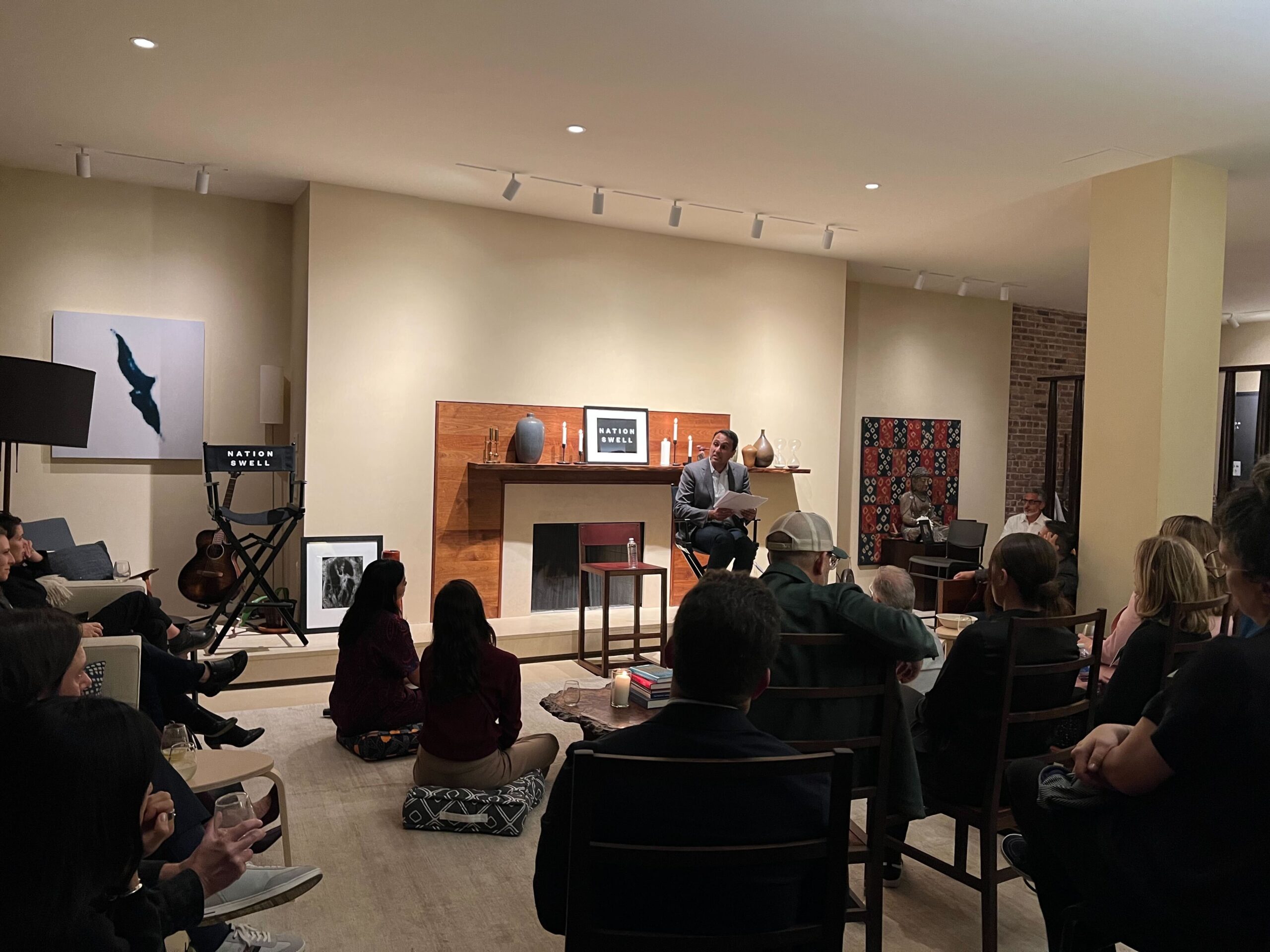
At a recent NationSwell event, members Beth BengtsonRadha RuparellJaTaune Bosby, and Reyna Montoya led a discussion on exploring alternate forms of leadership that challenge the norms of the typical workplace dynamic, diving deep into atypical leadership models such as shared leadership, adaptive leadership, and collective leadership, and others. 

Here are some of the insights from the event:

To fix systemic problems, we will need to activate the leadership of many.
In order to solve so many of the problems and challenges we face, we will need to move towards a model that brings in disparate leaders from across systems. The image of a single caped crusader swooping in to save the day is pervasive in our culture, but in reality we will need change at all levels, at all parts of the system, in order to create change. In education, for example, no one solution will be universally applicable in order to fix caste issues in India, class issues in the U.K. or racial equity issues in America — just as no one President, social entrepreneur, or leader of an organization will be able to come up with the solutions needed on their own.

Bias is a collective problem, and it will require collective solutions to disrupt it.
The roots of biases can’t be attributed to just one person, but rather many people bringing their perspectives together over time. It will require community leaders, policymakers, students, and teachers coming together in conversation with one another over time to address the roots and challenges of biases and address their own part in the problem.

Building diverse teams is key to cultivating a unique set of perspectives and experiences.
A good way to amass a wide range of perspectives, strengths, and approaches is to be intentional about building teams that activate the strengths of a diverse coalition of people. Being a compassionate listener is also an integral part of the process — learning and knowing when to cede the floor to the experts you’ve recruited and trust in their wisdoms and experiences.

Have a trauma-informed pedagogy.
When working with folks who have, by definition, been marginalized or excluded from having their basic needs met, part of the effort to amplify their voices must necessarily include working to understand their triggers and work to avoid re-traumatizing people during the course of creating transformational change. Creating that shared language can be a slow process up front, but it pays dividends in the long run.

Allow people to operate in their gifts.
Part of the work of creating a diversity of leadership is to be thoughtful about creating the right conditions to lift up people’s expertise and experience in the areas that allow them to shine. When working to ameliorate the effects of mass incarceration, for example, pausing to think about how to incorporate and center the voices of those who are currently incarcerated themselves could involve the creation of new fellowship opportunities — avenues to allow those with direct experience within the systems you’re trying to reform to speak out and lend their leadership. 

Release your expectations for an end result.
Part of the work of assembling a diverse group of leaders is to detach from your ideas about the best course of action to take. Empowering leaders must necessarily involve cultivating trust in their expertise — meaning that the path a group decides to take might end up deviating from what you thought it might look like when the work began. Trusting that the group you’ve assembled will use their expertise to select the best possible course of action is a necessary exercise in letting go and creating effective distributed models, but you’ll always have your core values to refer back to.


The NationSwell community brings together a diverse, curated community of bold individuals and organizations leading the way in social, economic, and environmental problem-solving. Learn more here.

Key takeaways: How to build responsible AI for the public good

In June 2022, Suresh Venkatasubramanian, Assistant Director at the White House Office of Science and Technology Policy, confirmed that the White House is developing an AI bill of rights that aims to establish guardrails, best practices, and expectations on the role of AI and data in a just society. In the context of this major step, it behooves other sectoral leaders – philanthropists, public sector decision makers, and private sector leaders alike – to consider their role in tackling the challenges and opportunities presented by AI’s prevalence in modern life. 

When ethically designed and deployed, AI makes it possible to address some of our most urgent challenges, from climate change to health inequities. It can strengthen communities, advance equity and justice, and foster unprecedented opportunities. When AI is created and implemented irresponsibly, though, even the most benevolently intentioned projects can backfire, creating new problems and eroding public trust.

To date, most high-profile artificial intelligence has been driven by major corporations; and, driven by capitalist ventures, businesses have largely built AI-driven products, services, and infrastructure that further the interests of their bottom line and their shareholders. We may expect companies to act as a proxy for public interest, but public sector guidance is needed; the public sector has a significant role to play in ensuring accessible and relevant guidance for what responsible AI looks like.  As we look to the future of this transformative technology, we need a new model of inclusive AI design that prioritizes equity, human potential, and social progress; and standards to ensure we use it to build a future we can all share in. 

In partnership with the Patrick J. McGovern Foundation, NationSwell convened fellow leaders and decision-makers embedded in AI development and community-centered innovation to explore, challenge, and advance what public trust in AI looks like: identifying challenges and surfacing solutions needed to demystify AI, empowering communities to participate in its development, and enabling its application it to solve urgent challenges and uplift communities.

Here are some key topics and insights from those convenings, which culminated in an event in Washington, DC in June:

How do we conceptualize public trust?

Clarity around decisionmakers is key. Who controls the building and deploying of AI is important in building trust. Much of the lack of trust in AI comes from a lack of diversity in the communities creating it. Without representation among technologists, AI cannot be truly inclusive, nor will it represent the best interests of communities at large. Building meaningful and accessible pathways to participation (e.g., through research, feedback, community-led design) are important first steps.

First impressions matter. The most publicized ways we hear about AI are often quite negative, and include examples of surveillance or harms from facial recognition. These persistent negative reports – while often true – affect people’s perspective of AI, and diminish the tool’s potential to be reconfigured and/or used for positive social purposes. In order for more people to understand the relevance and  importance of AI in their lives (and therefore be more willing to participate in its interrogation and creation), we must highlight the value AI can bring if used appropriately, as well as pathways to get there.

AI must hold relevancy. Many communities that have the most to lose from unethical uses of AI are focused elsewhere on their pressing human needs: access to food, housing, and education. To increase public engagement, we must build coalitions and create constant touch points with the public to discuss the ways that AI is impacting and influencing their communities and their daily lives, increasing their personal stake and agency in how these decisions are made. 

How do we engage communities?

Avoid jargon to build inclusion. People don’t want to sound uninformed, and often shy away from taking part in the development of AI that ultimately impacts them. We have to create an environment where people feel welcome to the group, and where attention is focused on the problems AI is seeking to solve. In short, people shouldn’t feel they need a PhD or tech degree to provide meaningful input into how AI affects their communities.

Reframe understanding of AI. If we think and talk about AI as a tool or infrastructure, we can encourage communities to recognize all of the factors (including AI) that are shaping their lived experience, which can lead to more planning and design fit for community needs.

The people closest to the problem are closest to the solution. Even before we decide to adopt AI or not to adopt, we have to think of the problem we are trying to solve. Allowing communities to identify the problem may give us different solutions that may or may not use AI and can shape the development of AI that addresses the issue. 

Mind what you’ve built. AI-powered tools are only as strong as their inputs, and once the technology is released, there are no take-backs. It’s critical to ensure the tool’s legitimacy in solving real problems — and not creating new ones.

How do we use AI to develop workforces?

AI education is key. If you aren’t familiar with AI, then it is not going to be a tool in your toolkit. Outside of the tech community, the power of AI is just starting to be understood, especially in nonprofits. We must build capacity and knowledge among people closest to the communities we seek to serve.

A drumbeat to ethics training. In organizations, it’s commonplace to undergo regular cybersecurity training to make sure that every worker is up to speed on threats to digital operations from external bad actors. In the same way, organizations should consider AI ethics training that are both comprehensive and regular occurrences. 

Specificity. For regulation in AI to take hold, we must dive into specific industries or applications — that means we need to build AI literacy among leaders in different industries, applied to the details of their specific worlds.

Explore certification. Certification models are helpful in building transparency and reassurance in different types of industries, such as apparel, SOC data management, B Corps, and LEED. An ethical AI certification model could be a helpful solution to build public trust, particularly from an individual perspective.

What do good policy and regulation look like for AI?

Regulation + augmentation. We need broad regulation to make change happen, similar to how ADA compliance was crucial for inclusivity of workers with disability, but we should also augment and accelerate progress by encouraging standards within industries and businesses.

The power of building a data privacy agency. Beyond the Federal Trade Commission, some in the public are unsure of who to turn to in government when we have a problem with AI, underscoring the need for an AI bill of rights to help Americans navigate a world that is more increasingly powered by artificial intelligence with each passing day. 

As we wait for the Biden Administration to unveil their AI bill of rights, the White House Office of Science and Technology Policy (OSTP) shared in October 2021 what one might look like. Until then, we’re not sitting back and waiting — we’re eager to follow and actively engage as this critical document takes form.


For more actionable insights and credible solutions from AI experts on transparency, ethics, implementation, education and more, read the takeaways from PJMF and NationSwell’s Summit on Building Public Trust in AI.

The Circular Economy and the Bipartisan Movement to Create a Legal #RightToRepair

the Federal Trade Commission began to explore the ways that manufacturers make it harder for consumers and independent repair shops to fix broken products. In May 2021, under the administration of President Joe Biden, the FTC released its findings to Congress. In its report, “Nixing the Fix,” the agency highlights the environmental and economic harm that has resulted from the ways that manufacturers discourage consumers from repairing broken products as a means of increasing revenue — calling on Congress to create federal regulations to prevent these manufacturers from doing so.

The FTC report comes amid a growing movement to that create a legal right to repair ensuring that manufacturers cannot interfere with — and, in fact, must facilitate — the ability for American consumers to pursue affordable repairs to the products they own, rather than discarding them and contributing to the 254 million tons of trash that the United States produces every year.

As part of our movement to surface solutions for a more Circular Economy, NationSwell spoke to Aaron Perzanowski, an intellectual property law professor at Case Western University. The author of a forthcoming book called The Right to Repair, Perzanowski is one of the nation’s leading legal expert on fair repair laws. Here’s what he had to say.


NationSwell: What is the right to repair, and why do consumers need that right?

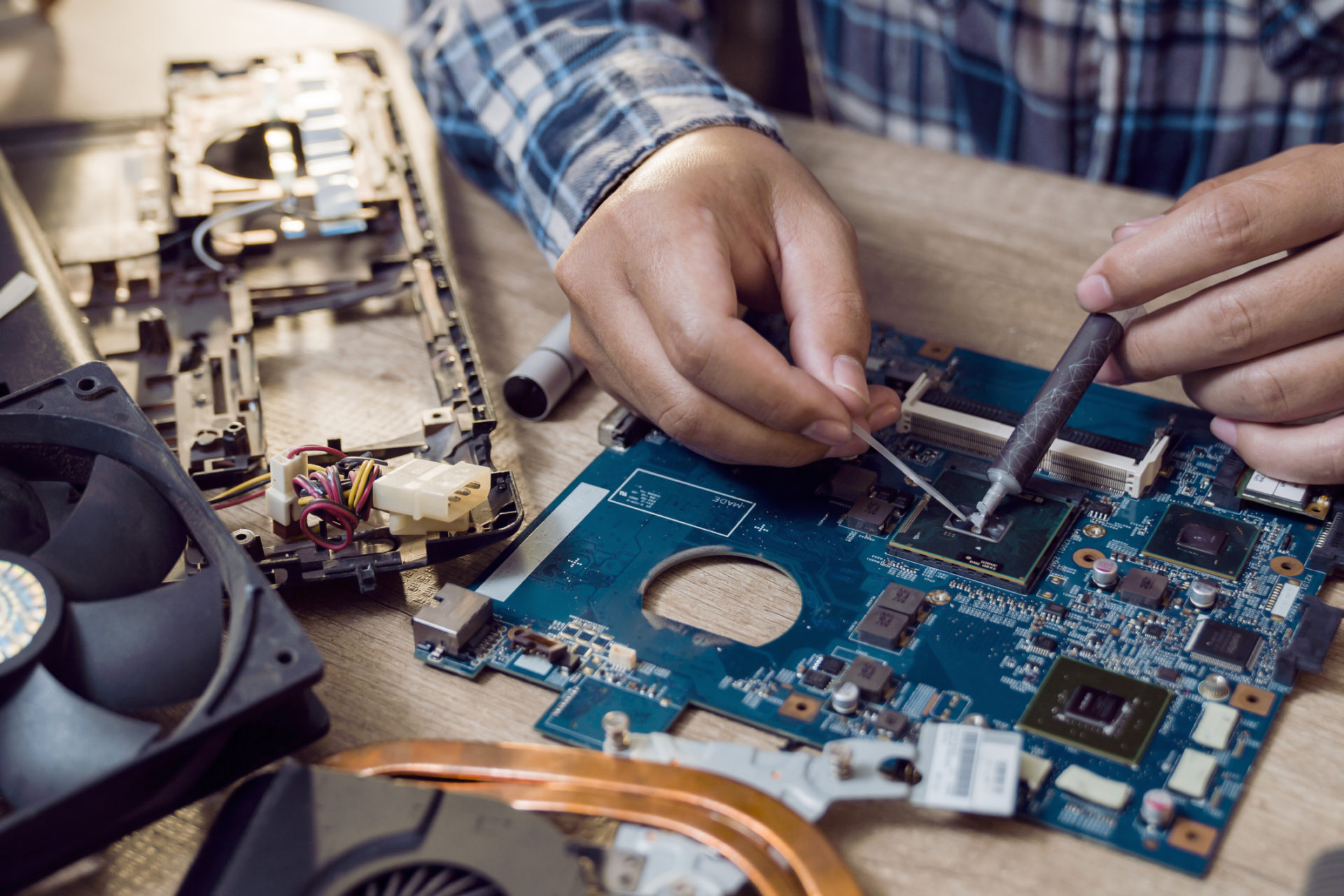
Aaron Perzanowski, Right to Repair legal expert: So sometimes, you run into a problem where you need a particular piece of software or information in order to repair a device. For instance, if you have a busted optical drive on your PlayStation, you can’t just go buy a new optical drive and swap it out because the optical drive is paired with the motherboard on that device; you need special software in order to install a new one. 

Right to repair laws would require manufacturers to provide repair shops, repair providers and consumers with all the parts, software, and information they need to actually fully repair the products that people own — in this instance, the special software you’d need to install a new one.

When people talk about the right to repair movement, they sometimes focus on these state legislative proposals that have been introduced in some 30 states across our country this legislative year. In some states, those legislative efforts are focused on consumer electronics, like video game consoles and smartphones; in other states they’re focused on agricultural equipment; in California, the bill is focused on medical equipment.

I think those are important laws; I support them. I’ve submitted testimony in various states to express support for those bills, but they’re just one piece of a much broader right to repair agenda. And that broader agenda is premised on the recognition that we as consumers, we as individuals, have an inherent legal and moral right to make use of the products that we buy — to exert control over the things that we own. And part of what it means to get the full use out of the products you buy is the ability to fix them if something goes wrong. 

And historically, that has been the case. What we’ve seen over the last 20-plus years, is a set of increasingly aggressive restrictions on repair. Those include the way a product is built, what components are used, how they’re put together, the physical design, and then you layer on top of that software restrictions that lock people out of certain aspects of their devices and make it difficult, if not impossible, to repair them. And then you’ve got a number of market strategies, where companies charge very high prices for repair as a way to discourage people from repairing and encourage them to buy something new. You see companies that refuse to sell parts to third parties. You see authorized repair programs to control how many competitors are out there in the repair market. And the broader right to repair movement is focused on reestablishing this basic right of consumers to control the things that they own.


NationSwell: You mentioned increasingly aggressive restrictions. Who or what is restricting repair?

Perzanowski: Restrictions come in a number of ways. Sometimes it’s as simple as the way a product is constructed. So, take Apple’s AirPods, their wireless headphones. They’re designed in a way that makes them nearly impossible to repair. They’re fairly simple devices: It’s a headphone, and it’s a battery. And the thing that goes bad is the battery. You spend hundreds of dollars on AirPods, and for some people, six months, 12 months later, they can only hold a charge for 15 or 20 minutes. And because of the way they’re built, that battery is not user replaceable. The battery isn’t even replaceable by Apple. If you take it in for repair two weeks after you buy it and say, “Hey, the battery is busted on this thing,” they don’t fix it. They just give you a new one. And then they pay some recycler to shred those devices and recover whatever raw materials they can.

But Apple actually has to subsidize the recycling of those air pods, because it’s not cost-effective to actually go through that process — unlike a laptop, where it actually has some scrap value. 

Software is also a big piece of this. So one of the biggest vendors here is John Deere. A John Deere tractor has dozens of computers in it. They’ve got all these electronic control units that control various aspects of this machinery. Let’s say you need a new turn signal for your John Deere tractor. You go out and buy a new turn signal assembly, and it’s authentic — it’s the real John Deere parts — and you replace it yourself, or you have your local mom and pop repair shop replace it. 

Even though it’s authentic, even though it’s installed properly, it won’t work until a John Deere technician comes out with a laptop and blesses, authorizes, initializes, whatever language they want to use, that part. They need someone to do this little software ceremony in order to get that machine working. And you’ve got to pay them to do that. 

So that puts John Deere dealers at a competitive advantage over the independent shops, because the independent shops can’t actually get your machine up and running, even though they’ve installed the part correctly.

Those are two obvious ways that this happens, but there’s a whole range of softer interventions, like the way that that companies price repair parts. Apple won’t sell repair parts essentially to anybody outside of their own authorized repair programs. And if you sign up to be an Apple authorized service provider, then you’re only allowed to do the repairs that Apple tells you you’re allowed to do. That means you can do things like replace batteries or screens on phones, but anything more complicated than that — and in fact, some things that aren’t terribly complicated, like replacing a broken camera in an iPhone — and Apple actually prohibits you from making those repairs. You’ve got to send those devices to Apple. 

By denying people access to parts or conditioning access to parts on them agreeing, basically, not to repair repairable devices, companies like Apple get to control the repair market.


NationSwell: I imagine that the time-gating of sending something as vital as a smartphone away for weeks to be repaired might also disincentivize consumers from seeking repair from manufacturers.

Perzanowski: Absolutely, and it’s really problematic. There are cases where time really is of the essence. Let’s say you’re a farmer and your tractor breaks down, and you’ve got a two week period to harvest your crops, and you live hundreds of miles away from the nearest John Deere dealer. You’re facing a serious time crunch.

John Deere is not trying to get you to replace your million dollar tractor every time something goes wrong, but they know that once you’ve dropped a million dollars on the tractor, they can charge you pretty much whatever they want for repairs and you’re going to pay them when your livelihood depends on it. So they see service as a profit center. They see a real incentive there to crack down on these repair markets. And that, of course, has some spillover effects on other kinds of interests in terms of not just consumer welfare, but also environmental concerns and competitive concerns.


NationSwell: What are the environmental implications of right to repair, especially with respect to building a circular economy? And what are the implications of right to repair for local businesses?

Perzanowski: Circularity is certainly a significant improvement over the linear models that we saw throughout the bulk of the 20th century. And look, we should give companies credit. They are making investments in a more circular direction. Apple’s got these fancy robots that can extract rare earth metals from the engines of cell phones. And I think companies recognize that at this point, there’s actually an economic advantage to sourcing raw materials from discarded devices rather than mining them from the earth. And there’s a market for that, given that some of them have to deal with the horrible PR around a lot of the mining practices for some of the inputs to these devices. 

What the right to repair does that I think makes the move towards a circular economy even more effective is that, in very simple terms, it lengthens the lifespan of these devices. Instead of keeping your phone for 18 months, and then the screen breaks and you ask yourself, “Hey, is it worth buying a new one, or is it worth repairing the old one?” the right to repair, by creating a more competitive market for repair services, by creating a more competitive market for replacement parts, changes people’s economic calculus in a way that makes them say, “You know what? I’m going to fix my phone and I’m going to keep it for another year or another two years.” 

So instead of keeping it for 18 months, maybe you end up keeping it for three years. So if we’re talking about a circle, we’re stretching the circle out here by enabling repair. And I think that has the potential to have a really significant impact. One, because for the individual consumer, it gives them this option that they don’t really have today. And I think over time it has the potential to change people’s attitudes and the kind of norms and expectations around what’s reasonable in terms of the lifespan of a device — and that normalizes the idea that actually things should last longer, and it’s not normal to toss your phone out every 18 months. So I hope that that would have some impact on behavior.

The right to repair does not necessarily translate into the choice to repair, but it is a kind of a necessary precursor. Right now there are people who want to repair, but can’t. And in the future, it’s not to say everybody’s going to repair all their devices all the time, but I do think that we would see a significant increase. And there’s some pretty good empirical research out there, some that I’ve done, some that the European Commission has done that really supports the idea that if people are given the option, if people are given the right information, that they will choose to repair their devices and choose to buy devices that are more repairable. 


NationSwell: Earlier in our conversation, you mentioned 30 states that have Fair Repair bills moving through their statehouses. I imagine that that number means that this isn’t just a blue state vs. red state issue, but that there is actually bipartisan movement around right to repair regulations. 

Perzanowski: Absolutely. If you look at who’s introducing these bills across the states, you see these bills introduced and supported by Democrats and Republicans. This is not in any meaningful sense a partisan issue. And it’s because I think the goals and principles underlying these bills speak to values on both sides of the political divide. So Democrats might look at this and see it as an important environmental regulation. They might see it as a way of protecting the interests of less wealthy citizens — poor people generally rely more on repair. And some Republicans look at this, especially libertarian leaning Republicans, look at this as a question of individual autonomy, of the sanctity of personal property rights. And both Republicans and Democrats will look at this as a way of, especially in the current climate, a way of pushing back on what are largely big tech companies. They’re not the only companies that are in this space — I don’t know that we normally mention John Deere in the same breath as Google and Facebook — but I do think that there is an opportunity to craft a bipartisan, trans-partisan coalition here around these issues.

 The problem so far though has been that the resources and lobbying efforts of trillion dollar companies have been pretty effective at scaring state legislators away from these bills. We’ve seen a bunch of these bills introduced this year, almost as many the year before, almost as many the year before that. And so far, none of them have been enacted, with the exception of an automotive bill in Massachusetts first in 2012, and then there was an update to it just last year to incorporate telematics information that cars are transmitting.

The hurdle here has been a real asymmetry of resources. Consumers don’t have paid lobbyists, so it’s hard to get your arguments in front of these state legislators. I got involved at the legislative level because part of what I was seeing was a lot of what I think are bogus and misleading worries about intellectual property rights that companies, and their lobbyists, and their trade associations were introducing at the state level — worries that state legislatures hear and think “Oh, this is going to be preempted by federal copyright law, or this is going to destroy trade secret protection.” 

They’re state legislators, most of them don’t know anything about federal IP law, and that sounds scary, and there’s no one there that they trust to correct that record. So I put together a group of a dozen or so IP professors from around the country who signed onto a letter that we submitted in over a dozen states just trying to make sure that the record was clear around those issues. 

They hear a lot of really scary stories about how it’s dangerous to replace the battery in your phone, and if you do it wrong, the phone’s going to blow up, and they’re concerned their constituents are going to be harmed as a result of right to repair laws, and then the company that made it is going to be sued for some massive tort liability. 


NationSwell: In 2019, under the Trump administration, the Federal Trade Commission started to look into right to repair laws. It’s 2021, and under the current Democratic administration, they published their report, “Nixing the Fix,” which at least one publication characterizes as “blasting manufacturers for restricting the right to repair.” The FTC issues the report to Congress, they make it available to the public as well, and they basically call for a right to repair to be established at the federal level. Do you find that encouraging?  

Perzanowski: I find it very encouraging. Less that this Congress will move to pass a bill immediately, and more that the FTC just issued direct and unequivocal support for the idea that these restrictions on repair are harming consumers, and it’s signaling its willingness to engage in some enforcement. The FTC is incredibly powerful when it wants to be. It can really shape the way the market works. It can really shape the behavior that companies engage in when they are clear that they’re willing to flex the muscles that they have. And up until this point, they haven’t really in the repair space. 

And while the FTC has the power to target unfair trade practices, but so does the attorney general of every single state. If the FCC says it’s a problem, then I hope that that helps get the issue on the radar of the state level enforcement agencies, too, especially as a quick thing they can reference to combat the fear-mongering that lobbying might be doing to prevent them from regulating that space.  One state is going to pass one of these bills legally giving consumers a right to repair. Eventually, there’s going to be a crack in this wall. And we’ll see what happens at that point.


To learn more about why we need more investment in creating a circular economy, read our introduction to this series.
Expert Insights and Resources for Caregivers in Honor of National Caregivers Day

balanced with our roles as intergenerational caregivers. Both these roles have become incredibly strained in the challenges of COVID and racial injustice. 
Caregiving is a complex web that brings together cultural beliefs about our roles at home, our views of our responsibility in families and our own balance and boundaries on how we can stay whole while managing work and life.
We also know that family caregiving is often silent, viewed as just part of what we do as family, with many of us not even identifying as “caregivers”.
That said, the data show us that many women, especially women of color, and millennials are now filling a gap in the care system while also struggling to stay at work. Without care at home, and services to help navigate the complexities of care, it would be impossible for work and life to come into balance.
As we work toward reimagining a future of work, while also reimagining our healthcare system, we know we can more equitably support caregivers and their families, and enable them to thrive.  But first, we need to acknowledge what we are seeing, what can be improved, and how we can get to resources quickly. 
In honor of National Caregivers Day, together with our NationSwell network, we have assembled valuable insights, quotes and matching resources to help dissect the many challenges and facets of caregiving
Insight #1: Better awareness is needed in the workplace so that we can all understand caregiving as a universal experience that we will likely all face as we get older.
“Caregiving– once one of the most personal and private matters in family life – is a growing public issue. The costs of caregiving impact individual workers, employers and society as a whole,” Jean C. Accius, Senior Vice President AARP Global Thought Leadership, said. “When it becomes stressful to juggle caregiving activities with work and other family responsibilities, or if work requirements come into conflict with caregiving tasks, some employed caregivers make changes in their work life, including leaving the labor force altogether, resulting in loss income at the individual level, loss productivity that impact the bottom line for employers and we all suffer due to the loss of opportunities for economic growth. As the nation faces unprecedented economic challenges due to the coronavirus pandemic, it is a critical time to consider support for working family caregivers as part of a larger strategy for economic recovery and growth.” 
Resources:

Insight #2: Whether you are a new caregiver or supporting a loved one through a later stage challenge, trusted tools can help caregivers navigate the system to get the support that they need.
“There are so many resources for different groups, people just don’t know where to access them or need a ‘coach’ to find the right resources,” Jenn Wolff, a community organizer, said. “That’s why I’m currently working on a new virtual space to share resources for people with disabilities and would like to have several others trained to be Community Health Workers so folks can talk with someone they relate to” 
Resources: 
Caregiver Action Network
AARP Caregiving Resource Center
Caring Across Generations
Cake
Daughters in the Workplace
Insight #3: Caregivers need to remember the importance of caring for themselves in addition to their loved ones, and they should recruit help in their ongoing effort.
“Self-care is not something to put off or see as a luxury, it is an essential part of survival.” Elissa Yancey, author and co-founder of A Picture’s Worth, said. “Believing, truly believing, that you are worth taking care of is, in itself, a revelation for many caregivers. Especially those of us who define ourselves, consciously or not, by our value to others. Without a grounding in self-worth, your caregiver duties can become an excuse for self-pity and resentment, neither of which are deserving of your precious time.”
Resources: 
Atul Gawande article Letting Go
Grab Happy: The Serendipitous and Surprising Sides of Caregiving
Insight #4: Caregiving and balancing work requires a support system for the family caregiver and the person in need. Employer benefits are key; but home health agencies and community-based organizations who bring care home are often missed as part of our system. We need them when caring for our loved ones. 
“Getting out of homes right now is tough for any of us, but it’s even harder for the folks that we care for,” Paurvi Bhatt, President of Medtronic Foundation and NationSwell Council member, said.
Resource: 
Home Instead 
Wellthy
Insight #5: Embrace hospice care.
“End of life is a part of life that we don’t talk enough about.. and it’s easy to forget about hospice care as a critical part of our healthcare system,” Adam Dole, Managing Director of Not Impossible Labs, said. “When my father-in-law recently passed away, I had a really positive experience with hospice — it was a night and day difference for me, in terms of what the end-of-life experience can mean when it’s done right, proactively with dignity and thoughtfulness, versus left to chance.” 
Resources: 
Hospice Foundation of America
Find Hospice Care Options Near Me
What Are Palliative Care and Hospice Care?
Insight #6: We need to have end-of-life conversations with our loved ones (and for ourselves) when they are theoretical, rather than pressing. 
“Planning ahead helps caregivers so much,” Dr. Lori Choi, a vascular surgeon and founder of I’ll Have What She’s Having it, said. “It relieves so much of the guilt and pressure, and lets us respect our loved ones’ wishes.”
Resource:
Starting the Conversation
Insight #7: Many people do not even know that they are caregivers. How do we define “caregiver” today, and how do we change the image of caregivers to be a more accurate representation?
“I do believe people need to know this work is so noble, so compassionate – perhaps the most important role we’ll ever have,” Zach Weismann, founder of MAG Impact Collective, said. 
Resources: 
End Well
Millennials: The Emerging Generation of Family Caregivers
Recalibrating for Caregivers: Recognizing the Public Health Challenge
Caregiving Doesn’t Care, But You Can


Paurvi Bhatt is President of Medtronic Foundation. Zach Weisman is co-founder and CEO of MAG Impact Collective. This article was written in cooperation with members of the NationSwell Council.

To Build It Back Better, Reimagine a Future Where All Young People Can Find a Meaningful Career

It was either as a data entry and filing clerk where my mother worked in insurance or a cashier at our local grocery store. Neither were all that fulfilling or memorable.

But I do remember experimenting with how quickly I could type in the numbers with each insurance claim to help pass the time. And what I remember from being a cashier was getting as many hours as possible to increase my wages, and the stress from ensuring my cash drawer lined up with the receipts. Anything outside of that is a blur. 

These two jobs would introduce me to the world of work, but it was not my life’s work.

In an ideal world, a first job is a chance to earn money and gain skills that are transferable to a second job, a third job, and onward to a fulfilling career. For educated and connected young people, navigating this path is fairly straightforward. For others, including myself, it is more involved, but it is still achievable with determination and support from caring adults.

But for those without a safety net, the path forward is uncertain, fraught with the risk of missteps along the way.

This was true before the COVID-19 crisis, and the pandemic has only further exacerbated the inequities and injustices at the root of our country’s decline in upward mobility.

As we seek to build it back better, it is critical to understand the educational and economic challenges young people face, so we can create a future where everyone is supported in their journey to cultivate and utilize their talents that lead to a rewarding career.

Though I did not know this when I was filling out my college applications, education is not a guarantee of a good job after college though those making the investment would like to believe it to be so. Each year, 1.2 million low-income and first-generation students go to college, and only one in four emerge with well-paying jobs with growth potential. Still, some form of postsecondary experience is better than none.

For young people with limited education, who often lack social capital and experience, securing a full-time job that offers good pay is even more challenging. According to a report released by Burning Glass Technologies, nearly half of young workers aged 16 to 24 not in school, without college degrees, and lacking work experience, were unsuccessful in progressing to better-paying jobs within five years.

This is troubling, obviously. But the promising news is that means that roughly half of young people are successful in progressing to better-paying jobs. What can we learn about their success that would allow us to create the context for more young people to succeed? How many successfully completed some form of postsecondary training? How did they begin to develop a social network that would help them build on that first job? Which employers invested in their success? Which employers evaluated their recruitment and hiring practices to give these young people a fair shake? 

There are more questions than answers, but to build it back better, these are the questions we should be asking, ones that are broader than which skills and education a young person needs to get the next job. Each of us has a role to play in helping our young people reach higher heights—both by giving them the tools they need to succeed but also by removing the systemic barriers that prevent them from being successful. 

We know this is possible, and we know no one of us can solve this alone. Together, working across sectors, we can reimagine and create a future where all young people can thrive.

Tyra A. Mariani is the president of the Schultz Family Foundation.


For #BuildItBackBetter, NationSwell asked some of our nation’s most celebrated purpose-driven leaders how they’d build a society that is more equitable and resilient than the one we had before COVID-19. We have compiled and lightly edited their answers.
Presented in partnership with the Schultz Family Foundation.

To Build It Back Better, Rethink Human Nature

For #BuildItBackBetter, NationSwell asked some of our nation’s most celebrated purpose-driven leaders how they’d build a society that is more equitable and resilient than the one we had before COVID-19. We have compiled and lightly edited their answers.
This article is part of the #BuildItBackBetter track “The Relational Era: Building a Culture of Connection, Bridging and Belonging” — presented in partnership with Einhorn Collaborative.

“Because people suck.”

That’s the campaign slogan of Oliver, a Massachusetts goldendoodle who is running a long-shot bid for the White House against two more well-known human opponents: President Donald Trump and former Vice President Joe Biden.

Anyone who has been following American politics for the past four years — really, anyone who has even glanced at cable news or their social media feed — might be inclined to agree with Oliver’s campaign. Racism, xenophobia, greed, and polarization all seem to be the norm, peppered with casual violence and hateful speech. It’s enough to make you downgrade your views of humanity and cast your lot with (if not your ballot for) a goldendoodle.

But that would be a serious mistake, especially for workplace and educational leaders. Because while it’s easy to feel discouraged these days, things will get even worse if we succumb to the notion that people suck and that our species — and our country — is beyond redemption.

That’s because our assumptions and expectations about human nature actually seem to dictate human behavior. For instance, a study from the University of Wisconsin-Madison published recently found that having a more optimistic view of human nature actually influences more positive behavior in real life. But the opposite seems to be true as well: When children believe that aggressive, antisocial behavior is the norm, they’re more likely to behave badly as they get older.

This means we need to guard against the assumption that people are born bad. It also means we can encourage better behavior by designing our institutions, from our schools to our workplaces, to spread more positive messages about humanity.

To build a culture that values honesty and cooperation over, say, back-biting and divisiveness — research offers a few important lessons and strategies.

1. Language matters. The words we use to describe our world actually influence how we behave in the world. When we convey that we expect people to cooperate and look out for each other, we increase the odds that they’ll actually do so.

In one study, for instance, Stanford University researchers had people play a game where they could either work together to achieve a common goal or compete with their partner. When people were told they were playing the “Community Game,” they were more than twice as likely to cooperate with their partner than when they were playing the “Wall Street Game”—even though it was actually the same game.

2. Images matter. In case you had any doubt about the power of images, consider this study: Toddlers were shown a series of pictures, then encountered an adult who needed help with a task. When they saw images that had dolls facing each other in the background of each image, the kids were three times more likely to help the adult than after seeing single dolls, or dolls facing away from each other, in the image backgrounds.

In other words, humans are so primed for connection that even just the mere hint of affiliation between people is enough to dramatically change our behavior for the better. The dynamics in an office or a classroom can be transformed, then, when we recognize this human drive for kindness and connection—and surround ourselves with images that evoke it.

3. Actions matter. We typically associate “copycat” behavior with crimes. But evidence suggests people, especially kids, emulate the good as well as the bad. A study in the Journal of Experimental Child Psychology, for example, found that kids as young as two years old are much more like to help people in need when they see other people do so first.

So don’t assume humans are inexorably immoral, and nothing you do matters. There’s no telling how your own good behavior might inspire others to follow suit. In fact, a study published in the Proceedings of the National Academy of Sciences found that when one person behaves generously, it inspires observers to behave generously later, toward different people. In fact, the researchers found that kindness could spread by three degrees across a social network. “As a result,” they write, “each person in a network can influence dozens or even hundreds of people, some of whom he or she does not know and has not met.”

None of this is to suggest that the violence and conflict we see around us is an illusion; but it does mean that it’s not inevitable. By changing the story we tell about human nature, and designing our institutions around the deep human potential for goodness, we can build a world that makes us proud.

Jason Marsh is the Executive Director of the Greater Good Science Center at UC Berkeley and the founding editor-in-chief of the center’s online magazine, Greater Good.

To Build It Back Better, Find the Jazz in Democracy

For #BuildItBackBetter, NationSwell asked some of our nation’s most celebrated purpose-driven leaders how they’d build a society that is more equitable and resilient than the one we had before COVID-19. We have compiled and lightly edited their answers.
This article is part of the #BuildItBackBetter track “The Relational Era: Building a Culture of Connection, Bridging and Belonging” — presented in partnership with Einhorn Collaborative.

Before I got involved in politics, my first passion in life was music.

Growing up as the son of Indian immigrants in Greater Milwaukee, I found music to be a powerful force to understand and bridge the stark divides of our community — the most racially segregated metro area in the United States. I played with a surprising combination of bands, each a motley crew spanning multiple lines of difference. At one point, I was in a jazz ensemble, a 70s-era funk cover band (think James Brown and Earth, Wind, and Fire), a hip-hop band (complete with turntables and breakdancer), alternative rock and punk rock bands (influenced by Radiohead and Green Day), an Eastern European folk band that specialized in Klezmer music (our full-page ad in the Milwaukee Jewish Chronicle was a big moment)… and more.

Each genre tapped into different subcultures within Milwaukee. When I witnessed the convergence of these spaces and their musical fusions, I saw expressions of American democracy in action.

It was this experience as a musician that propelled my interest in political change, and the vision for Millennial Action Project (MAP). Today, MAP is the largest nonpartisan organization of young elected leaders, focused on developing a generation of political bridge-builders to strengthen our democracy.

As I launched MAP, I couldn’t stop thinking about the mindset that came from jazz. This uniquely American art form taught me how to listen — and jazz musicians take listening to another level.

Thinking back to my first day of jazz camp, our instructor said, “Put away your instruments. We’re not going to play a single note. We’re going to sit here and listen.” So we listened to Coltrane, Monk and the jazz greats. We listened to our fellow musicians. We learned how to open our mind and be more present with people. Equipped with a big ear, an open mind, and a compassionate heart, we could improvise, experiment and evolve together to reach new musical dimensions. At its core, jazz is a “call-and-response” art form, thriving on interaction among bandmates and with audiences. I realized that these jazz modes can flourish outside of music too.

There are many individual actions and institutional reforms needed to reinvent our democracy in this turbulent time. Part of the solution that each of us can embrace? We must all become jazz artists. Let me elaborate.

I believe that three key jazz modes can help us build a healthier democracy—each mode is essential to bridging our fraught divides and creating transformative change:

  • Listening: listening with humility opens our minds and hearts to new or different perspectives. This practice activates our sense of empathy and allows us to build authentic relationships.
  • Improvisation and innovation: just as musicians riff on each other’s ideas, the jazz mindset in politics reframes an idea, breaking out of old partisan silos. Importantly, this process is done with your full sense of identity and originality, reinventing what you just heard into a new transcendent idea.
  • Call-and-response: this quintessential aspect of jazz captures the importance of live, fully-present conversations to learn, evolve, and form coalitions. While American political discourse has devolved into a “call-and-shutdown” culture, a more dynamic version of American democracy is a call-and-response political system.

President John F. Kennedy’s final speech was a tribute to poet Robert Frost, focusing on the role of arts in democracy. “When power corrupts, poetry cleanses,” he said. America’s troubled, yet revolutionary journey to pluralism has yielded uniquely American art forms like jazz. It makes sense, then, that those art forms contain the ingredients for democracy to function at its best. When we listen, we empathize with others; when we improvise and innovate, we transcend old divisions; when we call and respond, we work together. Now, when the heart of American democracy is severely weakened, jazz is a tonic for democratic renewal.

Steven Olikara is a political entrepreneur based in Milwaukee, WI. He is the founder and CEO of the Millennial Action Project and host of the Meeting in Middle America podcast.

NationSwell Celebrates 5 Years of Nicole Navratil

Thursday marks the five year work anniversary of Nicole Navratil, NationSwell’s Chief Operating Officer. Today, we celebrate her indelible, transformative impact on every aspect of the work we do here.

I asked my fellow members of the NationSwell team to share some of their favorite memories of Nicole, and what she means to NationSwell. This is what we had to say.
Greg Behrman, NationSwell CEO + Founder:  My favorite collective memory is something that I have seen time and time again over the past years from Nicole. It’s how — so often when no one is looking — she is thinking about how to help our team, or one of our team members. She cares so much about our culture, our mission and team members as human beings — and is constantly thinking about how to help us to flourish. She’s been the wind in our sails in so many ways – big and small.
Nicole has been a rock of guidance, care, and steadiness for NationSwell, and for me personally, for the past 5 years. She has been an incredible advisor, partner, friend — and companion on this great adventure!
Amy Lee, Managing Director, NationSwell Studio: My most fun memory of Nicole has to be her incredible array of textured and patterned sweaters and pants. She is the only person I know who is more of a magpie than me when it comes to clothes, and her leopard print velvet slacks are one of my all time sartorial highlights. If Nicole ever turns up to work in a quintessential New Yorker all black outfit I would fall over in shock.
Nicole is the backbone and the heart of NationSwell — basically we wouldn’t be standing up and living without her! She is the funkiest math nerd I ever met, with a capacity for both business rigor and human sensitivity that I have never seen in one human before.
Kate Dinota, Senior Director of Community + Impact: Nicole is our calm, confident, colorful leader. My favorite memory of her is when I met Marty for the first time at the Impact Hub, I learned that his first nap started at 8am and I’m pretty sure my jaw fell on the floor. Years later when I became a mom, Nicole and I definitely shared some laughs over our blissfully ignorant, well-rested, pre-children selves.
Jessica Lacombe, Director of Creative Content, NationSwell Studio: I appreciate that this is probs supposed to be funny stories, but I consistently find myself being grateful to Nicole for navigating the PPP hellscape in the wake of COVID.  Everything I know/have heard about that process is that it was a nightmare to navigate, and I’m sure I haven’t thanked her enough for it.
Nicole does not shy from a clothing pattern, and this is something I deeply, deeply respect. For me, and NationSwell.
Patricia Ureña, Community Manager: My favorite memory of Nicole was the huge hug she gave me in Denali on my first day at NationSwell. She made me feel very welcome.
Christina Montero, VP of Accounts @ NationSwell Studio: It was Halloween 2018 and it was an in-office day and given it is my favorite holiday, I was dressed to the nines in 80’s neon gear. When the elevator doors opened and I walked into the office, NO ONE was wearing a costume… except Nicole. I recall it was also 80’s ski and/or workout gear and she looked amazing. I even think she had a few outside clients/interviews that day, and she still rocked her gear.  #kindredspirits
Nicole is my mother hen. She has given me the right amount of guidance, support and encouragement over the years — as a colleague, a mother, and a friend.  This is especially true when she is donning one of her oversized cozy sweaters.
Elyssa Dole, Community Director: Nicole means strength, clarity, attention and attentiveness. My favorite memory of her is all the amazing prints she wore around the office that brightened my day.
Jeremy Hurewitz, Curation Director @ NationSwell Council: I appreciate Nicole’s rigor and attention to detail and her drive to always push NS to be better. I also love to practice my terrible Czech with her and talk about skiing!
Mikhail Relushchin, Operations Senior Associate: My favorite memory of Nicole is the burst of color that accompanied her entrance into the office every morning — what with the shawls, the leopard print, or just the lion’s mane hat-hair!
Nicole is someone who keeps her eyes on the prize, and keeps the team focused on the necessary things!
Taekia Blackwell, Director of Business Operations; Chief of Staff to the COO: Joining my first call on my first day to her in a unicorn birthday hat was pretty special. Secondly, I interviewed for this job remotely so I didn’t get a chance to meet Nicole IRL until about two weeks after I started. However, she made the whole interview process feel really comprehensive and like we were able to actually start to get to know each other— to the extent that my roommates started to joke that I already worked for NationSwell halfway through the interview process. I appreciate the time and care and effort it takes to make someone feel like part of the team even before they’ve joined.
In the short time I’ve been here, I’ve been incredibly impressed by Nicole’s ability to keep all of the plates spinning. She’s clearly foundational to the success of NationSwell and just a super smart, super caring, super efficient lady that I feel lucky to work with every day.
Allie Mahler, Strategy Director: Nicole is masterful at keeping the trains running on track and on time, always. She does so with grace, curiosity, and a sense of joy – all while holding the vision for where NationSwell is and where it can go.
Kelsey Overby, Senior Director + Head of Partnerships, NationSwell Studio: Nicole is the Queen of NationSwell, guiding all of us to excellence and brilliance.
Faustyna Hariasz, Member Partnerships Manager: I love her wild and colorful sweaters (and her jumpsuit game), and I think she is just effortlessly chic. I also love that she notices people’s haircuts and style game right back. It’s important to make people feel seen for the little, personal things and she does that so well.
On a more professional note, she is able to distill complicated, wandering ideas into very actionable and clear ways forward and we would be lost without her lighthouse/beacon ways.
Anthony Smith, VP for Published Content + Growth: I will never forget meeting Nicole at a crowded coffee shop in Chelsea. We were introduced by a mutual friend because he thought that we would get along. He was right! Talking to Nicole about journalism and audiences and what might be possible if storytelling galvanized — instead of just informed — I realized I wanted to keep talking to her and maybe even work with her. I made professional decisions accordingly, and it’s probably one of the best decisions I’ve ever made.
Nicole is the rising tide that lifts all boats, really and truly. The people that work here are always on her mind, and she is a fearless advocate for us. Lots of leaders talk about caring for their teams, but our lives are tangibly better because of the ways she cares about us. NationSwell is the place that it is because of her, and I’ve learned so much about leading and listening just from watching her.