Leadership and Lindy Hop: What dance can teach us about our management style

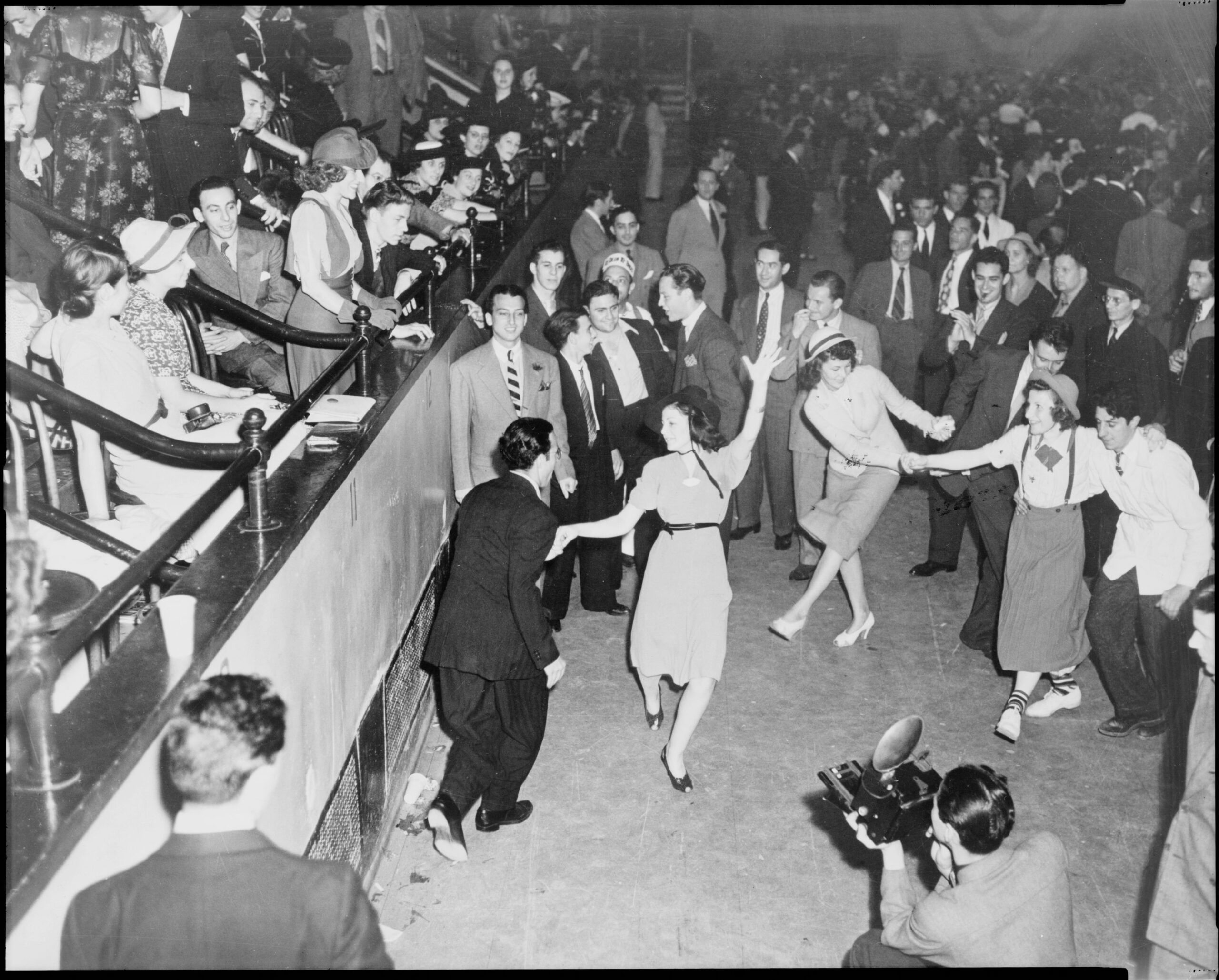
The makings of a great leader can be found in unexpected places and situations, often well outside the executive suite. To illustrate this point, NationSwell sat in on a conversation between Council members Roselinde Torres and Danny Richter to talk about the surprising ways that dance — Lindy Hop, to be specific — can sometimes be illustrative of an elegant and adept management style. 

Here are the top three takeaways from the conversation:

  1. Leadership, like dance, is more effective when you take time to learn the fundamentals — specifically, figuring out how to weave together expertise and connection.
  2. Stringing together six and eight-count dances is a bit like speaking a language that your partner intuitively understands — it won’t work unless you’re on the same page. Communication in a business setting functions in a similar way: Finding common ground and speaking the same “language” is integral to any fluid, successful work relationship.
  3. Just as every dancer has a distinctive style, every leader will leave a unique imprint on their teams, and understanding yours is crucial to your presentation. Having an intuitive spatial awareness helps you to move gracefully around the dance floor, and having an intimate self-awareness can help you carry that same grace forward in a leadership role.

Keep reading for the full interview.


Danny: I’m so excited to be having this conversation, and to be having it with Roselinde, because she has a lot more experience than I do in terms of leadership. 

Roselinde: I’ve been very interested over the past three years in finding non-traditional metaphors and analogies for leadership. Oftentimes when I work with leaders, it seems for some of them that great leadership is out of their reach — like it’s not something they have within themselves. What appealed to me about Danny’s instruction with the Lindy dance is that he’s coming from a place of demonstrating leadership in an everyday activity, to some extent. It’s a reinforcement that leadership is within all of us, within everyday people, we just have to see these examples. I hope people might use the Lindy hop analogy to look at their own leadership expression, to recognize that leadership is all around us.

Danny: I began swing dancing because it was fun, because I enjoyed it, so that was my entre into dance. As my career was progressing, I had more leadership expectations and started having reports — people who were reporting to me. As I was continuing to dance, it was almost by accident that I started to notice some of the parallels I’d observed since having learned how to swing that I could use in my evolving role as a leader. And the biggest thing that struck me was that Lindy Hop, and social dancing in general, was a good way to practice leadership that a lot of people think you can’t practice. I came to realize that it’s a real and fun way to practice, and I started being intentional about weaving in elements that expose me to different people and different styles. 

As you said, Roselinde, in my work I do talk with a lot of regular people — we have 200,000 people in our organization in every U.S. state, and I get up in front of them for long periods of time, 30 minutes at a time, and the spotlight is on me and I need to improvise answers to questions. That’s actually one parallel, is that mastery of fundamentals. The fundamentals of those dances — those six count, or those eight count steps — and then combining them in new and interesting ways that match with the person I’m dancing with. In my real job it comes from mastering the fundamentals of science, policy, and economics, and then really bringing them together to weave and connect to the person who’s asking the question and address what they’re asking.

The more people I talk with, the more people I dance with, the better I get at listening and figuring out more quickly where they’re coming from and what it is they’re looking for from me. So that’s where I start to see parallels between this really practical way of becoming better, not just as a Lindy Hop swing dancer, but also as a leader, as someone who’s expected to connect with people. 

Roselinde: Right off, the thing that I hear you describing is this notion of partnership — that you have a partner that you’re working with. Most leaders now have to build relationships with many different types of partners within the organization, and outside of the organization. And the question is, do you really have a sensibility for that partner? And also, how do you interact in a way that makes them want to keep dancing with you? 

Danny: I think one thing I come back to is that I think dance is a kind of language. I generally like and appreciate language, and the different perspective that the grammar of language forces upon you when you work in the way it enables me to get an insider’s perspective, I just find it fascinating. And it’s the same thing with Lindy Hop. When you think about it, those six and eight-count dances I mentioned earlier are like words or phrases that everybody knows, almost like a cliche. When you’re stringing those together, you’re talking, you’re creating sentences, and there’s the opportunity to tell jokes purely through dance. If they expect something and then you break with that expectation, there’s a surprise — I’ve had a silent dance, and then the follow I’m dancing with just breaks out in laughter because I told a “dance joke.” And I find that absolutely fascinating, that there’s this conversation, because there’s so much nuance about how people talk to each other. There are shades of meaning for different words, and there are shades of meaning for different dances, and for different moves. That will change depending on what song you’re dancing to, and there are certain songs that have different contexts because of the words. So if you break with what is expected in the context of that actual song, that can mean something different. 

There’s also this concept of musicality — that’s how well you’re listening to the song that you’re hearing, and how you respond. So if there’s a break in the song and you know that it’s coming and you actually break, it’s a lot more enjoyable. Not only are you two dancing together, you’re working well within the context in which you’re both operating. 

What I’ve come to learn is that it’s actually pretty rare to dance with a leader who can speak verbally while you’re having this dance dialogue. But that’s something I love to do, I love to be dancing and holding a conversation. And so that’s another way that I try to connect, really — how can I have fun while dancing with this person, and also get to know them? What are the topics I can cover, and can I get them to laugh, not just because of the fun of the dance, but also because of the conversation we’re having in 3-5 minutes. It really enables me to drill down into that emotion, and to connect quickly with people. In my line of work, people are so passionate about climate — how do I figure out what they care about so that I can make them feel heard?

Roselinde: I was thinking about the use of language in dance and how you convey that, and it reminded me of a time when I did a public domain leadership event where we had people come in from different functional disciplines, and I remember a conversation between a manufacturing engineer and a creative marketer who worked for a very edgy retailer. The two of them were talking about the notion of “process discipline”. And what was interesting was that even though it was the same phrase, it meant something completely different for each of them. And when they started describing what it meant for each of them, I still remember the face of the creative marketer who was horrified at these very precise steps and seemingly conforming structures being described by the manufacturing engineer as best practice.

So I think what that brings up, Danny, to reinforce what you’re saying, is that it really is important to think about the language, the meaning of the words, for that individual, or that team that you’re trying to connect with as a leader. You can’t presume that your language is their language. You can get it from listening, you can watch feedback to see what’s resonating or what isn’t, but I also think it’s about what you said about how sometimes it’s just a matter of asking — asking questions, asking if we’re on the same page with what we’re describing. I always suggest that if people are going to do homework, to include some homework when they’re going to interact with a constituency that they may not know. A lot of times, having worked across the corporate sector, nonprofit groups and government institutions, I’d see these groups interacting with each other for various purposes, and I would always say, you really want to do your homework to see, what is that language, what is that paradigm or mental model for the way they think about time and decision-making and what matters and their values? Doing that up front, rather than just winging it and then “stepping in it” upon your first interaction and making a negative first impression which is very hard to undo.

The other thing you made me think about was the notion of leadership energy. What is the energy exchange that you get? I think energy is more aura than it is charisma, or I think it’s more resonant than it is a rational thing to describe. I imagine when you’re dancing, you’re putting yourself out there for people who want to have an experience, but then they give you something back, and that’s what informs what you choose to do.

Danny: I think that’s where the accents come in. For example, in Washington, D.C., one of the most fundamental forms of Lindy Hop is the swing out, and people in DC dance a very round swing out. But I learned in San Diego, and I learned a very linear swing out, and honestly sometimes that accent is still something I struggle with. If you go up into Baltimore, a 45-minute drive away, it’s more linear, and so there can really be these interesting accents. What you were just saying about the aura, what you leave behind, that takes us back to our original conversation of challenging you to think about what your leadership imprint is. I know what my swing dancing imprint is: I’m an energetic dancer, I’m a very stomp-y dancer. But I think that’s also a great invitation to think about what you want people to come away with as a leader in a professional context. You can think about this with music in general: We listen to music because of the way it makes us feel. I’d be interested in hearing more about what other advice you give to people on what their leadership imprint, their stamp is?

Roselinde: The notion of the imprint came up for me because I would see a dissonance where I would have a conversation with a leader in their office and then we’d go out and interact with their team or the public or whomever and for some people there was a dissonance between who they were privately and who they were publicly. And sometimes I would ask them, what do you think their experience of you was there? And most of them were unaware, either because they were more focused on themselves or nervous or focused on getting to the content of what they were delivering. And then the other place we really spent a lot of time was on new leaders. I worked with a lot of new CEOs and Presidents of organizations, people who were going to take on a new role, and I would say, you can either just let it happen — just spontaneously, whatever comes out — or you can be more intentional. If you have certain things about yourself that you want other people to experience so you know that when they have a conversation with you, it’s not only what you lead them with, it’s also what they experience in the moment. 

So people would say, well I want them to feel me as being very collaborative and open-minded, and then you’d observe their conversation and it would be dissonant because they were doing all the talking. So I think the imprint idea is, what is the experience that you deliberately create, and can you actually have elements of your imprint reinforce that.

I’ve had the benefit of watching multiple generations of leaders, and those imprints actually stay with people. You can trace it all the way through different leaders and different configurations. Coming back to the dance analogy, I’m going to bet that if you’re dancing with someone and they experience something while dancing with you that delights them or awes them or makes them feel like, ‘wow, that’s really a cool move,’ that they’re probably going to share that with other people. They’re probably just going to put that into their repertoire and keep sharing it.

Danny: You were talking about the level of self-awareness you need to have, and there are lots of ways you can practice this. One of the things I do is dance with people who are below my skill level, and I always ask, ‘would it be alright if I try to teach you something?’ Because a lot of times, people don’t want to do that. So that self-awareness that people don’t want to learn, they’re just there to have fun, but also just where your body is. If they’re way more skilled than me, I try to move out of the way and give them breaks so that they can show off and be the star of our partnership. It comes back to this idea of listening being so important, in dancing and in leadership.

And that awareness needs to extend in a physical sense as well. One of the easiest ways to just totally make sure someone has a bad time is to send them into a wall or another person. You need to not just have awareness of where you are and where they are, but also what’s coming at you. You need to just have general awareness of what’s going on. 

Roselinde: I think from now on I’m going to quote this notion of “sending somebody into a wall,” because how many leaders have done that unintentionally? I think the other aspect of sending someone into a wall may be emotional sometimes. Maybe not physically pushing, but the same principles apply, right? What is going on around you, and are you paying attention? Sometimes you may have a conception of reality that’s very different from what another person’s is, so you’re going along and you’re doing whatever, but in their reality, they just hit a wall, a psychological wall, an emotional wall, whatever. So it’s obviously unintended, you don’t want to intentionally send someone there. 

Danny: I do want to pick up on one thing Roselinde just said, about sending people into an emotional wall. There are some things that I learned very early on in dance, including the fact that there are leads and there are follows. Generally speaking, men are leads, generally speaking, women are follows, but there are many women who have led and many men who have followed. One of the things I check up on is, how do I make sure that women who are choosing to dance as a follower are in power? One of the things that they emphasize is that you can just say no. There’s an important element of power in swing dance that should be really fundamental in any conversation, but in terms of throwing people into a wall, one thing I’ve seen many times is you get people in your class who have just learned the pretzel, or they’ve just learned how to do aerials, and they really want to try them out but they’re kind of dangerous. You almost never see aerials in social dancing, you’ll see them in competitions, but those are the things that you really need to ask for, that you can’t do without permission. So that’s another way you can avoid that emotional wall — if you’re consistently saying, let’s do this thing, let’s do this new thing I learned, I want to try it, but your partner says ‘nope,’ they can end the dance right there and just walk away. So there is this element of power that you can get at with dance as well, and there are parallels — not just for leadership, but also in life.

Roselinde: It’s interesting, I hadn’t even thought about the notion of gender roles in the traditional frame of dancing, but I do like this idea of aerials. Sometimes if you’re going to do something extraordinary that’s never been done before — and after all leadership is about guiding people to a place they probably have not been, or they want to go but don’t quite know how to get there — I do think leaders will be asking permission to do “aerials” from time to time. So I do think allowing teams to say no, they don’t want to do it, is important, and maybe there are other ways to build confidence.

I’ve used this term ‘confidence currency,’ which is the transfer of a currency of belief. That people believe they can do something, when you equip them with the skills, resources, capabilities, backups, constituencies, to do it. I do think aerials are fantastic, and it’s often a task of leadership to do something extraordinary by identifying and supporting those who can do the aerials.  If it was easy, or common, everyone would be doing them, right? 


NationSwell is an award-winning social impact company that assists changemakers, thought leaders and purpose-driven business executives as they drive social impact at scale. Through a robust membership community and the nation’s leading social impact studio, NationSwell supports these impact leaders on a range of our world’s most pressing issues. Learn more here.
NationSwell Fellows Program: Where Young Leaders Level Up

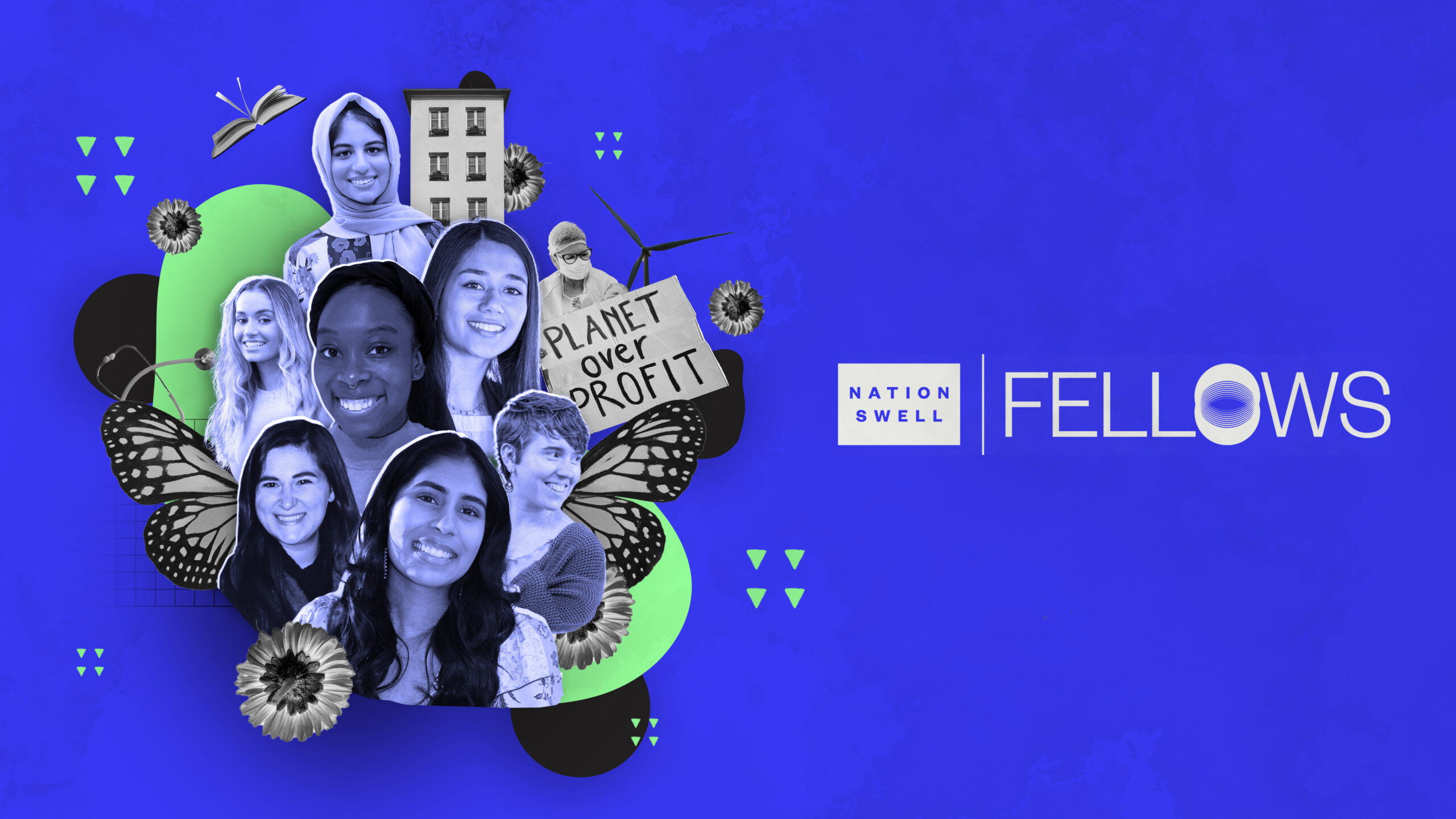
NationSwell is launching its first fellowship program, NS Fellows, sponsored by the American Family Insurance Institute for Corporate and Social Impact. The NS Fellows program aims to provide the network, support, and knowledge to help young leaders level up their environmental and social impact. Over the course of ten months, the Fellows will work to refine an individual social impact project, connect with established leaders in their field, build upon their expertise of environmental and social issues, and co-design the program in its inaugural year.  

We are proud to announce the seven young leaders who were chosen as Fellows in the first year of the NS Fellows program: Uma Agrawal, Thea Gay, Sophia Kianni, Saadhvi Mamidi, Sarah Miller, Sydney Claire Neel, & Safiyah Zaidi. These young leaders stood out with their immense passion for their environmental and social issue areas of focus, demonstration of leadership in the field, and focus on the importance of intersectionality. As social impact trailblazers, they work on a range of issue areas including climate justice, healthcare access, disability rights in the workplace, racial justice, & more. We can’t wait to see what these Fellows will achieve over the next ten months! Meet our inspiring Fellows:


Uma Agrawal

Health and Design Coordinator from California, working to create equitable healthcare pathways through innovative systemic change for underserved communities

She is driven to find ways to make healthcare equitable and accessible and is currently helping build a “digital front door” with physicians, technology partners, and business leaders, that takes into account the diverse needs of underrepresented communities. With her passion for finding systemic solutions, she will capitalize on the network and tools of the program to design healthcare systems interventions that work to connect with the communities they serve.

Thea Gay

Recent college graduate from Florida, bridging the gap between climate justice and diversity, equity, & inclusion

She is laying the foundation for the next generation of advocates and focuses on intersectionality and greater representation of marginalized communities in social impact efforts. She will use the Fellowship to find creative solutions that tackle the compounding effects of colonization, racism, the patriarchy, and other oppressive systems, particularly when it comes to how climate change disproportionately affects historically marginalized groups.

Sophia Kianni

College student from Washington D.C., making climate change education globally accessible

She is the founder of Climate Cardinals, a youth-led nonprofit, which has translated over 50,000 words of climate information into 100 languages and serves as aUnited Nations Climate Advisor. She will be utilizing the NS Fellows program as a platform for building upon her Climate Cardinals work, using technology to solve climate-related issues.

Saadhvi Mamidi

College student from North Carolina, championing disability advocacy in the workplace

She is a co-founder of Bringing Occupational Accessibility in Teams (BOAT), which provides workforce development tools and resources for people with disabilities. She recently launched a podcast where she discusses how to make the workplace more accessible with other disability advocates, employers, and workers with disabilities. She’s going to use the Fellowship as a way to develop a stronger intersectional lens for her disability advocacy work and grow her podcast.

Sarah Miller

Project Specialist at United Way from Indiana, building climate & community resilience

They are intent on creating a greener and more resilient future for the State of Indiana, and have previous experience in climate action, community mobilizing, and building engaged partnerships. They plan to use their time in the Fellowship to build connections and grow their expertise, in order to build coalitions that will have a real impact on tackling community challenges, like poverty alleviation and climate change adaptation, more holistically in Indiana.

Sydney Claire Neel

College student from Institute of American Indian Arts, using storytelling to uplift the Indigenous experience

She is a Cherokee Nation citizen with a mission to tell the stories of her community as a way to advocate for their research and policy needs. She works with the Research for the Front Lines and the Graphix Project on equitable research. With her time in the program, she aims to build a network and support system for Indigineous women, driven by Indigenous women.

Safiyah Zaidi

Federal consultant in Washington D.C., advocating for policy change in healthcare for women and girls

She is a business analyst and assists federal agencies, working to make public services more accessible. She is also passionate about the health and wellbeing of Muslim women. She recently published a policy brief on the role of Medicaid-funded doula care to improve maternal outcomes for mothers in the South.


Learn more about the NS Fellows program and how you can be involved next year by clicking here.

NS Fellows is sponsored by the American Family Insurance Institute for Corporate and Social Impact, a venture capital firm and partner of choice for exceptional entrepreneurs who are building scalable, sustainable businesses in a long-term effort to close equity gaps in America. It also recognizes that capacity building and supporting organizations and experts that have been working toward social causes are equally important in making a positive impact within our communities around the country.

Scaling for impact: community health as blueprint for a just future

The Beaufort-Jasper-Hampton Comprehensive Health Services in South Carolina is more than just a medical center — it’s an institution woven throughout the social fabric of the people it serves, connecting lives across racial, ethnic, socioeconomic, and generational lines. 

That’s due in large part to the vision of Dr. M. LaFrance Ferguson, the former Chief Medical Officer for BJH, who currently leads the hospital’s National Hypertension Control Initiative. Fifty years ago, she saw the opportunity to build something so much bigger than a medical center: a scalable blueprint for closing outcome gaps in health longevity and centering health equity. At the core of her approach to building equitable health longevity is a community-centered model that provides comprehensive, quality, and accessible health care for everyone — regardless of their ability to pay. 

Dr. Ferguson’s legacy isn’t just theoretical — it’s clear and measurable. Fifty years ago, when the center was built, Beaufort County had key health outcomes that were on par with some of the worst in the world. But ten years ago, Beaufort became the healthiest county in South Carolina — and has enjoyed that status for the last decade.

In partnership with AARP, NationSwell interviewed Dr. Ferguson about her work, her legacy, and what others who hope to advance health equity can learn from her. Here is what she had to say.


NationSwell: When did you know that you wanted to focus your life’s work on community health? Was there a moment in your childhood, professional journey, or any time at all?

I recall sitting in a room at our home, when I was eight years old, and having a conversation, but there was nobody else there. I said to myself, “What do you want to be when you grow up?” At first, I thought, “I want to be a nurse.” Then I said, “no, I want to be a doctor and I want to be in charge.” Then I wanted to have the best place in the city, the state — and then I said, no, the United States, then I said, no — in the world, and I wanted to work with the underserved. 

I just came to that realization, in the past couple of years because our new COO had us explain to the new hires why we do what we do. I remembered that conversation I had with myself. “What eight year old knows about the underserved?” she asked me. I thought about that myself.

I also wanted to come back home. I wanted to work with the underserved, and the National Health Service Corps was giving scholarships for underserved areas. I thought, “This is exactly what I want to do; my area is underserved.” So I got my education paid for, and that was that.


What makes Beaufort-Jasper-Hampton Comprehensive Health Services different from the average hospital?

The word comprehensive is key. They say it’s hard to be all things to all people, but when you serve a group of people and you know what they need, and you can make things accessible to them, you can do it. We’ve got a variety of services: family practice, adult care, pediatrics, OB, WIC services, and we have a pharmacy. We even have migrant care. We make it a one-stop shop for people. We provide patients with everything they could possibly need, making health care easier for them to access. That’s what makes a difference: being comprehensive.

We also have behavioral health services. Sometimes people in the community just need someone to talk to, or to air out their issues. Sometimes people may have behavioral changes, and these health services can make a difference, in young people’s lives and older people, especially for older people, who may be experiencing loneliness, or may not have anybody to talk to, when they experience losses. It’s important to have someone to help them, as well as social services. Many people don’t know how to navigate the healthcare system, so having someone to help them do it can make all the difference.

We even have school-based health because many children can’t get to the doctor after school. Parents leave home early and get back home late,so children can’t get seen for simple things. Since we’re at the school, we can see them. They don’t have to lose chair time. We provide dental services, nutrition, counseling — it’s a comprehensive thing.

We offer nutritional services because nutrition is a major part of keeping people healthy. We help people understand that what you eat and how much you eat, affects your overall health. Giving patients a breakdown of foods that are good for their health and substitutions for foods they enjoy that are not so good for their health, makes healthy eating more convenient and accessible.


What are the health needs of the communities you serve? How does it help to meet those needs, and bring the community together?

At the inception of the organization, we had two big problems: One was the infant mortality rate. We had an infant mortality rate on par with third world countries – over 20%. We’ve brought this percentage down to the single digits by making two major changes: 1) providing prenatal care and the same high quality of healthcare to all pregnant patients, regardless of whether they were insured or not, 2) offering nutritional counseling to address the large number of parasitic infections found in children. 

The health status in Beaufort county was very poor. It takes 40 years to change a generation. We’ve been here 50 years, and in the past 10 years, this county has been the healthiest county in South Carolina. We’ve made Beaufort the healthiest county in South Carolina by providing quality healthcare to those who are uninsured.


How does your work with BJHCHS support aging patients and their health needs?

In one of our centers, we’ve created a senior center which provides one of the most needed things for the elder community: a place where they can meet and socialize with other seniors.  It is connected to our St. Helena site, and the seniors there have access to our pharmacy, educational materials, and seminars providing much needed health education — and pre-COVID, we even provided some trips for them. They’re also provided transportation to the center since many no longer can drive themselves. They truly look forward to the gatherings — and as an added bonus, if they have a medical issue, the clinic is right next door.


What are one to three things that other leaders looking to advance health equity learn from BJHCHS, and your legacy as a whole?

To be a community health center, you have to really be engaged with the community. The community is made up of all people – you need to be able to reach the lowest person and raise them up. That’s my thing: translating the services we provide, so everyone can understand what’s available to them. The most effective tool has been the community health worker because they speak to the patient in a way that the patient understands. They also find out the little things that make it hard for patients to comply. We thought patients were non-compliant, but there are things we can do to help them to navigate the healthcare system and be successful with the treatments we prescribe. 

We found out our numbers went up quickly when the community health workers were involved. For me, the key to a good community health worker is their personality. They must have a desire to help, be accommodating enough to connect the dots for patients, and contain a certain level of compassion. As long as they possess these traits, we can train them in the medical terminology, then they can translate to the patient. 

Due to money, the community health workers were lost for some time. We got a grant to bring them back and it was like going back to the future — being able to make sure people don’t get left behind, just because they don’t fully understand the health system or their treatment. You can’t stop doing it once they get to a certain point because there’s always going to be someone who needs to be shepherded along. You don’t get to the point where you don’t have to do that anymore. You’re still going to have to do it because we will always have the poor we have among us, and we should always be willing to help them along.

That’s community health: it’s not somebody who went to medical school, not a nursing aid, but it’s somebody from the community that is willing to help, and we train them in some of the things medically to help the patient reach the goals that we set for them in the practice.

Affordability is another thing that makes us successful. If  you can’t afford care, how are you going to get it? Healthcare needs to be made affordable because some people have to buy groceries first, pay the light bill next, and then healthcare is further down the line.


NationSwell: As a lifelong health care professional, what has been your guiding philosophy, your principles, or your core values that you center in the work?

I want to make sure people know I care. No matter what you’re doing or who you’re helping, they will respond better and they’ll be more  willing to do what you ask them to do if they know you care. Sometimes they can’t do what you want them to do because they can’t afford it or they just don’t understand. Making sure that people know that you care for them — that is my guiding force and I try to treat everyone the same regardless of their ability to pay for it. That was another good thing about community health centers that drew me to it: they treat anybody regardless of their ability to pay.

Not just surviving, but thriving: An interview with CLLCTIVLY’s Jamye Wooten

As founder of CLLCTIVLY, NationSwell member Jamye Wooten mobilizes philanthropy, businesses, and community organizations to build a more equitable and just future for Black communities in Baltimore. NationSwell had the opportunity to talk to Wooten about his work, the importance of place-based social change, and what a grant from NationSwell member organization T. Rowe Price Foundation has been able to unlock for his work.

This is what he had to say.

NationSwell’s Anthony Smith: Can you tell us a little about your professional and personal journey — and how it led you to CLLCTIVLY?

CLLCTIVLY’s Jamye Wooten: I was cultivated  here in Baltimore within the Black church, and every Sunday, I saw our practice of mobilizing resources implemented through offering and giving. Later on, I went on to become the director of the Collective Banking Group, working with over 200 churches in faith-based economic development continuing the work of mobilizing resources, starting with the assets and gifts that we already have in hand.

After the murder of Freddie Grey here in Baltimore, I was one of the co-founders of Baltimore United for Change. And it was during that time that I created the skills bank — and the skills bank was an on-ramp for folks who weren’t necessarily on the ground, but wanted to plug in. Over 260 individuals and organizations joined our skills bank. And the goal with CLLCTIVLY when we launched in 2019 was to create a more forward facing platform, inviting all Black-led organizations serving throughout the city. 

We heard during the protests that a lot of foundations didn’t necessarily know who was on the ground in the community doing work. So we launched the first phase of CLLCTIVLY,  an asset map and directory where you can search over 200 organizations based on area of focus and neighborhood. We know that Black organizations only receive about 2% of the 60 billion in foundation funding. And so we want to mobilize resources, tell these stories, and close the gap.

NationSwell: What is CLLCTIVLY, and how is it different from other organizations?

Wooten: We launched in 2019 to be a resource for those that seek to find, fund, and partner with social change organizations in greater Baltimore. We are a place-based organization mobilizing resources to support these organizations. We offer grants, starting with our Black Futures grant where we’ve invested over $750,000 in no-strings attached grants to the community. First we draw from the traditions of our ancestors and the ways we have always mobilized resources to support the needs in community. We also center participatory and trust-based philanthropy models, where the community is at the table and is the decision maker. So I think that’s where we may be some somewhat different: We start with community; this is a community-led initiative that then partners with philanthropy as well as the business community.

NationSwell: Why is place-based change so important?

Wooten: It’s very important. I could have started CLLCTIVLY as a national platform, but I wanted to really be intentional about the stories and the expertise that exist within this local communities. This work is about trust-building and relationship building. So I always said we were going to spend our first two years deepening relationships. We’ve had hundreds of one-on-one conversations — and as we enter our third year, and we’re being intentional around what programming looks like, it was important to foster great trust and deepen relationships, and to support these organizations here in place-based spaces and to tell their stories. 

Major part of this work is narrative power. Often corporate media leads with the violence in the city and doesn’t tell the stories of the hundreds of organizations that are addressing disparities and serving our community that often go unnoticed and under-resourced.

Prior to COVID, I was trying to explain why Black-led social change was so important as a focus. But then you have COVID hit, and the murder of George Floyd, and now so many more people are starting to see the importance of supporting Black-led organizations operating in communities.

With us already having this asset-based directory, it was an opportunity for funders to see us as the place they could go to see what Black-led organizations are doing. We partnered with foundations to help them reach the people we were reaching. We’ve provided grants to community-based organizations that don’t necessarily have the resources to scale themselves. And so I think that our place-based approach in building relationships and trust helps us keep our feet to the ground and be able to offer funding to organizations that have never received a grant. 

NationSwell: What does the grant from T. Rowe Price Foundation unlock for your work?

Wooten: It’s amazing. Anytime you receive a no strings attached grant that allows you to be creative, to try out new things — like right now, we’re organizing We Give Black Fest. That’s not possible without funders that provide unrestricted dollars and support, and that we also have a network of advisors that we can tap into. [Foundation President] John Brothers is always great at providing additional resources. The relationships, the expanded network, and the financial resources have helped tremendously

NationSwell: Can you tell us a little bit more about We Give Black Festival?

Wooten: August is Black Philanthropy Month. We Give Black Fest is a three-day annual festival dedicated to social change, fundraising, and the amplification of Black-led organizations serving Greater Baltimore, and the celebration of culture as the foundation of community-driven wealth.

Ahead of the weekend of August 19 – 21, we launch a scavenger hunt — where our nonprofits would compete as they go to businesses, to historical landmarks, answer trivia, and receive up to $10,000 in prizes — that leads us into the CLLCTIVGIVE, which is 48 hours of giving of crowdfunding online. We have some local business partners who are coming alongside us as we begin to move into our festival, and there’ll be conversations around philanthropy, funding, and a celebration of local leaders who are serving in Baltimore.. 

NationSwell: Who or what is inspiring you right now?

Wooten: I didn’t think about this a lot when I started CLLCTIVLY, but I think about it now: it’s my dad and my sister. I lost my dad at 56 and my sister at 53. My dad dropped out of school here in Baltimore. He was the oldest, had to go to work. He dropped out of eighth grade, but went on to open five dry cleaners and several nightclubs in the city. My sister went on to George Washington Law School, came back, and opened two pizza delivery stores in the city. And so I think a lot about this culture of health in that even though they were applauded for their resilience and the innovation — bootstrapping and not having enough resources can also take you out. It really encourages me and inspires me to make sure our organizations and businesses have what they need — not just to survive, but to thrive.

New Leadership in a Changing and Uncertain World

As we continue adjusting to the new normal of our post-pandemic world, many organizations are exploring new leadership models. The shift away from the typical office experience has prompted a reexamination of traditional hierarchical systems and how we can reorganize in ways that produce more equitable outcomes. As leaders grapple with questions of how organizational values may have shifted, we ask how new forms of leadership can better reflect those values.

At a recent NationSwell event, members Beth BengtsonRadha RuparellJaTaune Bosby, and Reyna Montoya led a discussion on exploring alternate forms of leadership that challenge the norms of the typical workplace dynamic, diving deep into atypical leadership models such as shared leadership, adaptive leadership, and collective leadership, and others. 

Here are some of the insights from the event:

To fix systemic problems, we will need to activate the leadership of many.
In order to solve so many of the problems and challenges we face, we will need to move towards a model that brings in disparate leaders from across systems. The image of a single caped crusader swooping in to save the day is pervasive in our culture, but in reality we will need change at all levels, at all parts of the system, in order to create change. In education, for example, no one solution will be universally applicable in order to fix caste issues in India, class issues in the U.K. or racial equity issues in America — just as no one President, social entrepreneur, or leader of an organization will be able to come up with the solutions needed on their own.

Bias is a collective problem, and it will require collective solutions to disrupt it.
The roots of biases can’t be attributed to just one person, but rather many people bringing their perspectives together over time. It will require community leaders, policymakers, students, and teachers coming together in conversation with one another over time to address the roots and challenges of biases and address their own part in the problem.

Building diverse teams is key to cultivating a unique set of perspectives and experiences.
A good way to amass a wide range of perspectives, strengths, and approaches is to be intentional about building teams that activate the strengths of a diverse coalition of people. Being a compassionate listener is also an integral part of the process — learning and knowing when to cede the floor to the experts you’ve recruited and trust in their wisdoms and experiences.

Have a trauma-informed pedagogy.
When working with folks who have, by definition, been marginalized or excluded from having their basic needs met, part of the effort to amplify their voices must necessarily include working to understand their triggers and work to avoid re-traumatizing people during the course of creating transformational change. Creating that shared language can be a slow process up front, but it pays dividends in the long run.

Allow people to operate in their gifts.
Part of the work of creating a diversity of leadership is to be thoughtful about creating the right conditions to lift up people’s expertise and experience in the areas that allow them to shine. When working to ameliorate the effects of mass incarceration, for example, pausing to think about how to incorporate and center the voices of those who are currently incarcerated themselves could involve the creation of new fellowship opportunities — avenues to allow those with direct experience within the systems you’re trying to reform to speak out and lend their leadership. 

Release your expectations for an end result.
Part of the work of assembling a diverse group of leaders is to detach from your ideas about the best course of action to take. Empowering leaders must necessarily involve cultivating trust in their expertise — meaning that the path a group decides to take might end up deviating from what you thought it might look like when the work began. Trusting that the group you’ve assembled will use their expertise to select the best possible course of action is a necessary exercise in letting go and creating effective distributed models, but you’ll always have your core values to refer back to.


The NationSwell community brings together a diverse, curated community of bold individuals and organizations leading the way in social, economic, and environmental problem-solving. Learn more here.

Key takeaways: How to build responsible AI for the public good

In June 2022, Suresh Venkatasubramanian, Assistant Director at the White House Office of Science and Technology Policy, confirmed that the White House is developing an AI bill of rights that aims to establish guardrails, best practices, and expectations on the role of AI and data in a just society. In the context of this major step, it behooves other sectoral leaders – philanthropists, public sector decision makers, and private sector leaders alike – to consider their role in tackling the challenges and opportunities presented by AI’s prevalence in modern life. 

When ethically designed and deployed, AI makes it possible to address some of our most urgent challenges, from climate change to health inequities. It can strengthen communities, advance equity and justice, and foster unprecedented opportunities. When AI is created and implemented irresponsibly, though, even the most benevolently intentioned projects can backfire, creating new problems and eroding public trust.

To date, most high-profile artificial intelligence has been driven by major corporations; and, driven by capitalist ventures, businesses have largely built AI-driven products, services, and infrastructure that further the interests of their bottom line and their shareholders. We may expect companies to act as a proxy for public interest, but public sector guidance is needed; the public sector has a significant role to play in ensuring accessible and relevant guidance for what responsible AI looks like.  As we look to the future of this transformative technology, we need a new model of inclusive AI design that prioritizes equity, human potential, and social progress; and standards to ensure we use it to build a future we can all share in. 

In partnership with the Patrick J. McGovern Foundation, NationSwell convened fellow leaders and decision-makers embedded in AI development and community-centered innovation to explore, challenge, and advance what public trust in AI looks like: identifying challenges and surfacing solutions needed to demystify AI, empowering communities to participate in its development, and enabling its application it to solve urgent challenges and uplift communities.

Here are some key topics and insights from those convenings, which culminated in an event in Washington, DC in June:

How do we conceptualize public trust?

Clarity around decisionmakers is key. Who controls the building and deploying of AI is important in building trust. Much of the lack of trust in AI comes from a lack of diversity in the communities creating it. Without representation among technologists, AI cannot be truly inclusive, nor will it represent the best interests of communities at large. Building meaningful and accessible pathways to participation (e.g., through research, feedback, community-led design) are important first steps.

First impressions matter. The most publicized ways we hear about AI are often quite negative, and include examples of surveillance or harms from facial recognition. These persistent negative reports – while often true – affect people’s perspective of AI, and diminish the tool’s potential to be reconfigured and/or used for positive social purposes. In order for more people to understand the relevance and  importance of AI in their lives (and therefore be more willing to participate in its interrogation and creation), we must highlight the value AI can bring if used appropriately, as well as pathways to get there.

AI must hold relevancy. Many communities that have the most to lose from unethical uses of AI are focused elsewhere on their pressing human needs: access to food, housing, and education. To increase public engagement, we must build coalitions and create constant touch points with the public to discuss the ways that AI is impacting and influencing their communities and their daily lives, increasing their personal stake and agency in how these decisions are made. 

How do we engage communities?

Avoid jargon to build inclusion. People don’t want to sound uninformed, and often shy away from taking part in the development of AI that ultimately impacts them. We have to create an environment where people feel welcome to the group, and where attention is focused on the problems AI is seeking to solve. In short, people shouldn’t feel they need a PhD or tech degree to provide meaningful input into how AI affects their communities.

Reframe understanding of AI. If we think and talk about AI as a tool or infrastructure, we can encourage communities to recognize all of the factors (including AI) that are shaping their lived experience, which can lead to more planning and design fit for community needs.

The people closest to the problem are closest to the solution. Even before we decide to adopt AI or not to adopt, we have to think of the problem we are trying to solve. Allowing communities to identify the problem may give us different solutions that may or may not use AI and can shape the development of AI that addresses the issue. 

Mind what you’ve built. AI-powered tools are only as strong as their inputs, and once the technology is released, there are no take-backs. It’s critical to ensure the tool’s legitimacy in solving real problems — and not creating new ones.

How do we use AI to develop workforces?

AI education is key. If you aren’t familiar with AI, then it is not going to be a tool in your toolkit. Outside of the tech community, the power of AI is just starting to be understood, especially in nonprofits. We must build capacity and knowledge among people closest to the communities we seek to serve.

A drumbeat to ethics training. In organizations, it’s commonplace to undergo regular cybersecurity training to make sure that every worker is up to speed on threats to digital operations from external bad actors. In the same way, organizations should consider AI ethics training that are both comprehensive and regular occurrences. 

Specificity. For regulation in AI to take hold, we must dive into specific industries or applications — that means we need to build AI literacy among leaders in different industries, applied to the details of their specific worlds.

Explore certification. Certification models are helpful in building transparency and reassurance in different types of industries, such as apparel, SOC data management, B Corps, and LEED. An ethical AI certification model could be a helpful solution to build public trust, particularly from an individual perspective.

What do good policy and regulation look like for AI?

Regulation + augmentation. We need broad regulation to make change happen, similar to how ADA compliance was crucial for inclusivity of workers with disability, but we should also augment and accelerate progress by encouraging standards within industries and businesses.

The power of building a data privacy agency. Beyond the Federal Trade Commission, some in the public are unsure of who to turn to in government when we have a problem with AI, underscoring the need for an AI bill of rights to help Americans navigate a world that is more increasingly powered by artificial intelligence with each passing day. 

As we wait for the Biden Administration to unveil their AI bill of rights, the White House Office of Science and Technology Policy (OSTP) shared in October 2021 what one might look like. Until then, we’re not sitting back and waiting — we’re eager to follow and actively engage as this critical document takes form.


For more actionable insights and credible solutions from AI experts on transparency, ethics, implementation, education and more, read the takeaways from PJMF and NationSwell’s Summit on Building Public Trust in AI.