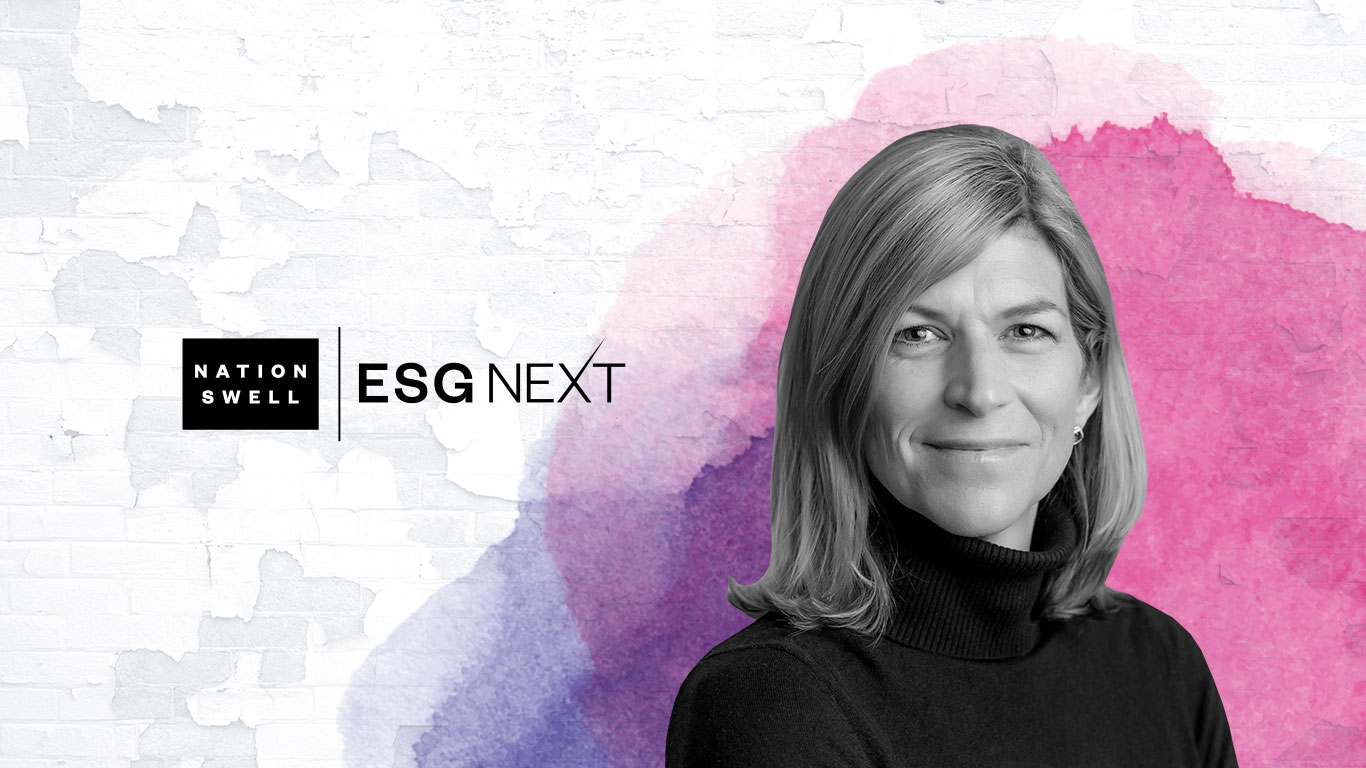
ESG Next: An Interview With George Serafeim, Harvard Business School Professor of Business Administration

At a moment of unprecedented attention, investment, and opportunity for the emerging field of ESG, leaders are asking: Who is best preparing their organization for the society of the future? Who is innovating today to meet decades-long environmental and social goals? Who is setting standards that catalyze their industry’s change for the better? Who is defining what bold and aspirational work looks like — and how best to advance that work in practice?

Enter NationSwell’s ESG Next, an exemplary group of social impact and sustainability leaders who are shaping business as a force for social and environmental progress, advancing — and even pioneering — the most forward-thinking and effective programs, initiatives, technologies, methodologies, practices, and approaches.

Greg Behrman, NationSwell CEO and founder, sat down with George Serafeim, Charles M. Williams Professor of Business Administration at the Harvard Business School and author of “Purpose and Profit: How Business Can Lift Up the World,” to discuss the current state of the field of ESG, why criticism of the field — even bad faith or partisan criticism — can be a good thing, and the integral ways that purpose and profit depend on one another. Here’s what he had to say.

Greg Behrman, CEO + Founder, NationSwell: Was there a moment in your life that drove you to purpose-driven work?

George Serafeim, Harvard Business School: Growing up in Athens, Greece, I witnessed the golden years of our country — years marked by a tremendous amount of growth. But at the same time, I witnessed that if you don’t have transparency in a system, then you don’t have accountability — and if you don’t have accountability, you actually don’t have meritocracy. I witnessed  all the bad outcomes that come from that lack: a 25% decline in gross domestic product, a lot of people losing their livelihoods and their quality of life, a lot of people going into unemployment, and, as a result, a tremendous amount of pain.

Witnessing that has shaped my belief that transparency is extremely important for building accountability — and therefore meritocracy — in society. I think historically, we in America have had very little transparency about the extent to which organizations are impacting the environment and society around them. For me, it was almost like connecting dots — it led to a lot of my work around creating measurement, and metrics, and increased levels of transparency because once you can measure stuff, then you can start building momentum and unleashing waves of innovation that can improve outcomes.

That has been the story of ESG in the last decade.

Behrman, NationSwell: As you think about this field of ESG, where are we now? How do you assess this current moment?

Serafeim: There was no field of ESG a few years ago — and that is very important to recognize because when you create a field, you’re also trying to educate people about the need for a field. And then you scramble to put a field together using the best available tools that you have, the best data that you have, the best frameworks, the best models, the best learnings, the best of everything. Much like product development, you have a minimum viable product (MVP) of a field.

In the beginning phase, there would be people at an organization responsible for ESG and sustainability, and they might not even be in the right places in terms of organizational structure. Think about a tech company where the tech people have no idea what’s happening on the sustainability side.

But now we’re a step or two past this MVP stage, and we actually understand what works and what doesn’t, and we have an understanding of what we need to do to improve it, and improve the infrastructure around it. ESG is more and more incorporated into what an organization does, its core products and services. We’re creating guardrails around what the field of ESG should be. Now it’s a matter of actually improving the field.

Behrman, NationSwell: Does it advance us past the MVP stage to incorporate ESG throughout the core of the organization, as opposed to as an ancillary appendage?

Serafeim: Absolutely. It requires a different mindset. It requires us to ask, “How can we make a profit by having a more positive impact on the world?” instead of treating profit and purpose as disparate entities wherein we’d be asking ourselves how we can distribute the profit that we’ve already created based on some ESG consideration.  

The evolution in thinking we need actually requires ESG to be integrated into the important functions of our organization — it is an entirely different mindset.

Behrman, NationSwell: What is the next big step we have to take as a field — and how do we unlock it?

Serafeim, HBS: The first step is a systemic level of impact measurement and evaluation. We need to get to a world where we actually have comparable, reliable, and relevant impact measurement and evaluation inside organizations. This is what we have been working on with impact-weighted accounts. We also need more collaboration across organizations. Many of the environmental and social challenges that we’re facing require collaboration across multiple companies, across value chains, so that needs to happen more. 

Behrman, NationSwell: Are impact-weighted accounts the answer to systematic evaluation and measurement — or does it need further development?

Serafeim, HBS: I think it still needs further development, for sure. So, as context, we created the idea of impact-weighted accounts about two and a half years ago. And now, it is an idea that has spread worldwide, from the United States to China. And we’re seeing the idea of impact-weighted accounts applied in companies, in investment firms, by policy makers in cities and municipalities, everywhere around the world. I don’t know if it will be the ultimate solution, but I do know that it is a step in the right direction, where we need to systematically measure the environmental and social outcomes that we’re creating, and the value of those outcomes. We need to understand the value that we’re achieving because allocating scarce resources is a very difficult task, and that understanding would help us to prioritize those resources. 

Behrman, NationSwell: What are some takeaways from “Purpose and Profit” that help advance the way that the field’s leaders think about ESG

Serafeim, HBS:  I wrote this book because when I reflect back on my experience, I think we went from a world where very few people that went into business were asking, “What is the purpose of business? What is the purpose of me, specifically, going into business?” 

I have witnessed a tremendous amount of change, and I’m fortunate to be sitting in a seat where I observe hundreds of young people going into business every year, and whose decisions about their careers are being guided by the central questions of, “How can I make a difference? What is the impact that I will have?”

So, I wanted to write the book around two questions. The first one is, “What has changed?” And the second one is, “What can I do about it as an individual?”  I think there are many people that are extremely competent at telling other people what to do, but the most important question to me as an individual, manager, entrepreneur, young person — whatever that might be — it’s always about what I can do within my own organization. And as a result, the book is focused on both trying to understand what has changed, and how I should think about those issues within the context of my own individual career. 

This is what brought me to profit and purpose. I put them together because purpose is extremely important: it motivates action, and it energizes people.  But at the same time, the pursuit of profit is also very, very important because in business, if you actually cannot be profitable, then you won’t be in business for a long time, and you will fail the people you’re serving, to whom you have promised to deliver impact. Profit allows you to scale up, hire more people, create jobs, and provide products. So, the question is: How do we take them both together,  balance them out, and ensure we have a great mix of the two?

The business environment has changed in pretty significant ways. Technology has been a fundamental driver of that change in the operating context. Let’s look at employees. If you go back 30 years ago and you were trying to find a job in a completely different state, that was quite challenging, right?  But now, because of advancements in technology like LinkedIn, you would be able to actually make a choice that was not available to you before.

The same is true for consumers: not only has choice changed, but voice has, too. Now, most of the competitiveness of organizations is actually driven by things like social capital, the trust that you have from society to the brand that you’re offering; intellectual capital, the collective ingenuity of all your employees; and of course, human capital and natural capital as well. As a result, because of all of those more intangible assets that businesses depend on, the voice of people — of consumers, employees, and stakeholders — has become a really important driver of strategic decision-making and value inside organizations.

My book also gives guidance to readers about actions they can take to align their convictions and values with their careers. As an example, if you are extremely passionate about addressing an environmental issue like climate change, or a social issue like diversity and inclusion, you have some choices. The first one is: you can choose to find employment in a place that maximizes the alignment of your purpose to begin with — like an environmentally conscious person choosing to work with a solar energy company. Individuals making choices like this value that level of alignment right from the beginning. 

Others might choose to join organizations where the level of alignment might be low in the beginning, but what they actually value is the rate of change. These people might join a traditional energy company and you try to make a difference by changing that company. We all make different choices and we need to be thinking about those parameters in a systematic way when we think about our own individual purpose and impact at the workplace.

Behrman, NationSwell: There’s political pushback against ESG, and there’s measures of skepticism towards ESG from various quarters of the investment community. Does this criticism impede progress, or is there a world in which all of this is helpful, that the pushback sharpens folks and helps them pressure test their ambitions?

Serafeim, HBS: It would be a shame if the field of ESG becomes a partisan political issue. I view it as a field of development, where it actually becomes part of our management and our governance, that people incorporate into their career pathways — that leads to organizations collectively seeing more positive outcomes.  To me, that is not a Democratic or a Republican issue, it’s a human aspiration issue.

Now, I know that many people view it as a political issue, and it would be a shame if we cannot actually shake it and say, “This is about human aspirations, and how we move forward, and how we actually improve real outcomes.”

When it comes to criticism, there’s lots of it that is quite helpful to advancing the field of ESG. I have written papers that could be construed as a criticism of ESG because I think we should improve things — if you don’t criticize it, how else can you improve?

That said, there are criticisms of ESG that are driven by incentives, personal agendas, and misconstructions of what a concept might be.  I would separate those out because I don’t think they’re helpful, and they serve very specific purposes. But taking a step back from those, the fact that there’s criticism is a good thing because it means interest in the field is peaking, that it’s making a difference, because if it’s not, nobody would care. So the fact that there’s pushback, helpful and unhelpful, means that after a long period of time ESG is finally really affecting things.

For anyone working in an administration position in an organization, it’s important to filter the criticism, keep the good ones that actually can be helpful in improving your organization, filter out the ones that are not helpful, and then feel good about the fact that there’s any criticism at all — because it means the field is actually making a difference. 

Behrman, NationSwell:  Who are some of the ESG practitioners whom you admire?

Serafeim, HBS: Social Finance, led by Tracy Palandjian, is an organization that for me is incredible, it’s amazing the amount of work that they have been doing there. We’re working with another organization, the Value Balancing Alliance out of Germany, they are an incredible organization as well.  

I have been impressed by many people, and one of my personal favorites is Sir Ronald Cohen. The fact that he has been able to be a serial social entrepreneur catalyzing the whole impact investing movement and going strong for 50 years with the conviction and the vision to drive forward things that — for many people — look unimaginable or impossible.

Ilham Kadri, the CEO of Solvay, is someone that has always deeply impressed me. Her vision around sustainability, advanced materials, and how we can actually use technology in science to move forward is something that I have admired a lot. 

Sarah Williamson at FCLT is a pragmatic, collaborative leader who has really made a difference when it comes to how large institutions everywhere around the world are thinking about the issues of long-term prosperity.

And I’d round that out with some scholars and academics: Harvard Business School’s previous and current deans, Nitin Nohria and Srikant Datar, who both demonstrate an enormous amount of intellectual rigor and capacity to implement and visualize the future with conviction for where a long established legacy organization like Harvard Business School needs to go. Lastly, Rebecca Henderson is one of the most important global scholars of our age. I’ve learned a lot from them.

There are so many great organizations and practitioners — I would say what they usually say, that it takes a village, is just so true when it comes to that. We’re talking about system change, and system change takes a lot of people.


To learn more about how our ESG Next honorees are shaping business as a force for social and environmental good, visit the series hub. To learn more about NationSwell’s community of our country’s leading social impact and sustainability practitioners, visit our site.

ESG Next: An Interview With Pete Stavros, KKR’s Co-Head of Global Private Equity

At a moment of unprecedented attention, investment, and opportunity for the emerging field of ESG, leaders are asking: Who is best preparing their organization for the society of the future? Who is innovating today to meet decades-long environmental and social goals? Who is setting standards that catalyze their industry’s change for the better? Who is defining what bold and aspirational work looks like — and how best to advance that work in practice?

Enter NationSwell’s ESG Next, an exemplary group of social impact and sustainability leaders who are shaping business as a force for social and environmental progress, advancing — and even pioneering — the most forward-thinking and effective programs, initiatives, technologies, methodologies, practices, and approaches.

For this installment, Greg Behrman, CEO + Founder of NationSwell, sat down with Pete Stavros, co-head of Global Private Equity at KKR , to talk about his journey to the field of ESG, the leaders and books that inspire him, and why the movement for broad worker ownership is good for just about everyone — even if its myriad of implementational challenges can be daunting.

Greg Behrman, CEO + Founder, NationSwell: Tell us about your personal and professional journey.

Peter Stavros, Co-Head of Global Private Equity, KKR: My dad operated a road grader for a small construction company in Chicago for about 45 years, and I saw firsthand what it was like to earn an hourly wage. My dad liked his job. If you were to talk with him, he’d never begrudge being a construction worker. But there are two things about it he didn’t like: First, the inability to build wealth on an hourly wage of 15 bucks an hour; and second, the lack of alignment of incentives. 

There were so many moments in my childhood that really centered on the hourly wage and the lack of incentive alignment, like a big fight my dad’s union had with the company over whether workers would get paid for the drive to and from the job site, whether they get paid for the lunch hour. And my dad would say, “Isn’t this crazy? It’s not about how much we get done, or the quality of what we do. It’s all about the hours.”

My dad always really dreamt of profit sharing, or worker ownership, or some way for his union to be aligned with the company. Neither of my folks went to college, so I didn’t have much of an embedded career path. I happened to find myself at an investment bank right after I graduated, and then I got recruited away to be an investor. The first thing they had me work on was an Employee Stock Ownership Plan (ESOP), a fascinating experiment from 1974 wherein Congress tried to provide tax incentives for broad worker ownership. 

It was almost like the universe was saying, “You should learn about employee ownership.” And so when I went to business school, every spare chance I worked ownership into the curriculum that I was studying.

Behrman, NationSwell: Can you tell us about Ownership Works, the nonprofit you founded?

Stavros, KKR: Ownership Works is a nonprofit organization that partners with companies and investors to provide all employees with the opportunity to build wealth at work. If worker ownership is done well, it’s good for all stakeholders. We’ve seen broad-based employee ownership create meaningful wealth-building opportunities for employees, uplift families, reinvigorate corporate cultures, and improve business performance. 

From everything I’ve seen in all the work I’ve done on this — and I’ve been working on this since I was in business school — if it’s done well, it’s good for all stakeholders. Now the challenge is that it’s hard to do: it takes a ton of time and effort. That’s really a lot of what Ownership Works is trying to unravel: How can we help companies do this more efficiently and more effectively?

So, to start, let’s say your goal is to extend ownership to Ingersoll Rand’s 16,000 workers in 80 countries — how do you actually do that? How do you administer a huge plan like that mechanically, structurally, and from a tax regulatory compliance legal perspective? And then, importantly, how do you get people to understand and value it across all these different jurisdictions, facilities, languages, time zones — and then how do you use it to build culture? 

You have to start from a place where you acknowledge that there’s low trust. Look at the data: 70% of Americans don’t like their jobs. 15% to 20%, depending on the company, actually hate their jobs. They’re literally throwing wrenches in the machines trying to hurt their employer. And then you look at the Treasury Department saying two-thirds of Americans are not financially competent. So this isn’t just a lower income person’s problem, it’s an epidemic in the country.

As we grapple with these challenges, we’re also trying to do enough storytelling that we build a broader movement around this to build trust and buy-in. Now that Ingersoll Rand’s 16,000 workers across 80 countries have all become owners, the hourly workers have earned well over a half a billion of wealth for themselves. This took nine and a half years, but the quit rate went from over 20% per year to about two and a half percent — so we went from one in five walking out the door to one in 50. And the engagement scores went from the 19th percentile to the 91st. 

When you see something like that, you have to ask yourself, “Who could that not be good for?” Workers aren’t quitting because they’re happier. Companies have a more stable workforce. The company doesn’t have to hire 3,000 new people every year, which means less recruiting costs, less training costs, and smaller losses in productivity and knowledge since every year, the thousands of people who would be walking out of the door are staying put.

From an investor perspective, that was one of the better deals we’ve done — it was a multi, multi-billion dollar gain for our investors. It’s been great in the public markets. The stock at one point had tripled, and it’s still more than doubled despite a bad market. 

We’ve been working on Ownership Works internally for about 12 years. We’re currently working with over 60 partners to expand shared ownership, including banks like Goldman Sachs, Morgan Stanley; investors like KKR, TPG, Warburg Pincus and Leonard Green; labor leaders like Wilma Liebman, President Obama’s head of the National Labor Relations Board; nonprofit leaders like Ford Foundation and Rockefeller Foundation; and some of the biggest pension funds in the country.

By the end of Q1 2023, I imagine we’ll have close to 100 organizations around the table trying to make a real step forward in how ownership and upside is shared and how that’s used to build stronger cultures. 

My estimate is the top 20 private equity firms, if they were all to do this, you’d be talking about 5 million people impacted. The potential for scale impact is massive. 

Behrman, NationSwell: How would you define this present moment in ESG? Where do we find ourselves, and where is the field going?

Stavros, KKR: It’s become politicized, and I’m concerned. But I try to approach some of the factors that I’m most passionate about as good business. If you take employee ownership, it’s hard to make an argument against it. It’s good for workers, good for corporate cultures, good for communities, and good for investors. But I think if you come at some of it from my perspective, where I frame it as good business, then it would be a shame if people aren’t also looking at this as a risk mitigation tool, a culture enhancer.

Behrman, NationSwell: Who are some leaders in the space whose work inspires you?

Stavros, KKR: I would mention Vicente Reynal at Ingersoll Rand, Kathy Bolhous of Charter Next Generation, Dave Bangert at C.H.I. Overhead Doors, and Bert Bean at Insight Global.

Behrman, NationSwell: Can you tell us about some books that have informed your approach to leadership?

Stavros, KKR: The End of Loyalty” by Rick Wartzman is a great book, and it basically chronicles what happened in the labor market: how we went from where we were 50 years ago — when workers had a defined benefit pension, gold-plated healthcare, and a myriad of worker benefits that basically amounted to lifetime employment — to where workers are now, where they’re on their own for retirement, health care, and job security. 

Alongside the Wartzman book, I’d also raise up “The Great Risk Shift” by Jacob S. Hacker, and “The Fissured Workplace” by David Weil as great, related books on what’s happened to the economy that’s made it so hard on working class folks.


To learn more about how our ESG Next honorees are shaping business as a force for social and environmental good, visit the series hub. KKR is a NationSwell Institutional Member. To learn more about membership in NationSwell’s community of leading social impact and sustainability practitioners, visit our site.
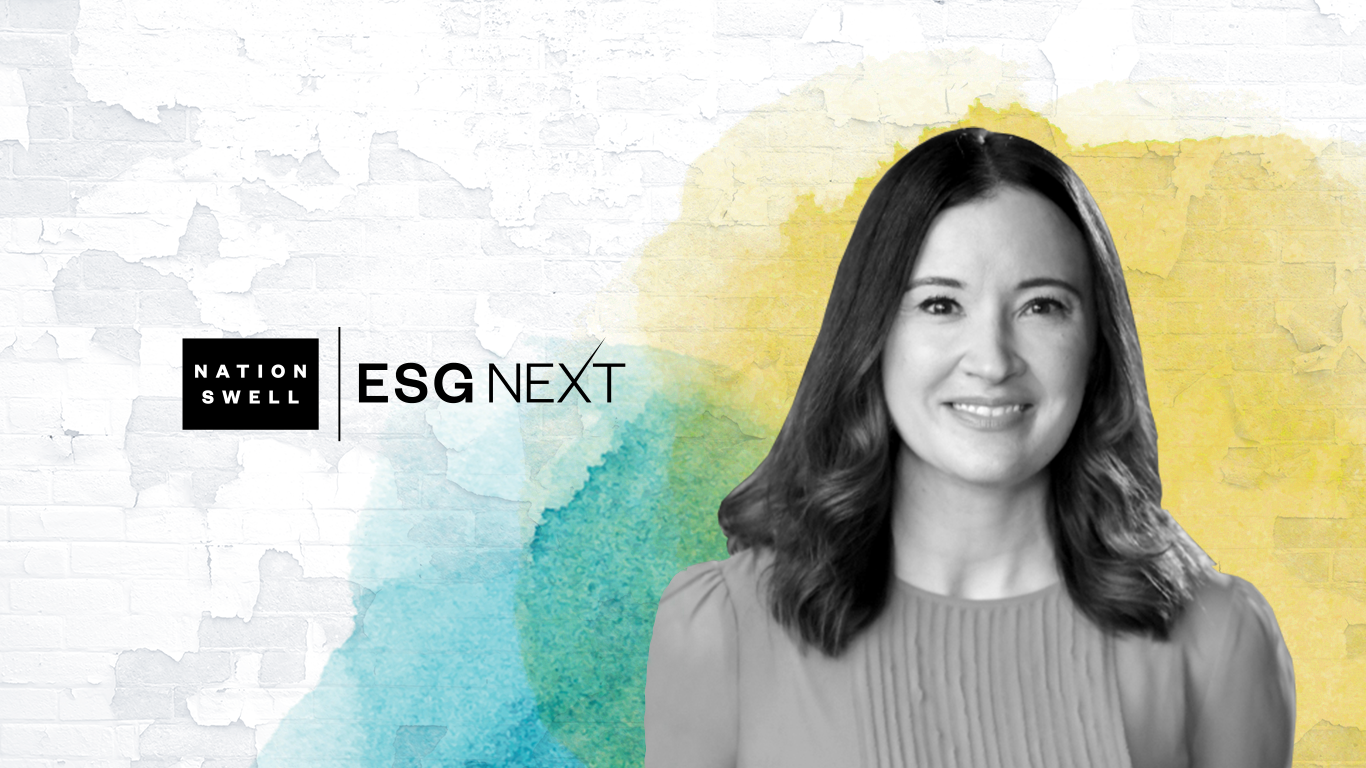
This story has been updated to reflect Pete Stavros’ recent promotion.

ESG Next: An Interview With Rose Stuckey Kirk, Verizon Chief Corporate Social Responsibility Officer

At a moment of unprecedented attention, investment, and opportunity for the emerging field of ESG, leaders are asking: Who is best preparing their organization for the society of the future? Who is innovating today to meet decades-long environmental and social goals? Who is setting standards that catalyze their industry’s change for the better? Who is defining what bold and aspirational work looks like — and how best to advance that work in practice?

Enter NationSwell’s ESG Next, an exemplary group of social impact and sustainability leaders who are shaping business as a force for social and environmental progress, advancing — and even pioneering — the most forward-thinking and effective programs, initiatives, technologies, methodologies, practices, and approaches.

To kick off the series, Greg Behrman, NationSwell’s CEO + founder, interviewed Rose Stuckey Kirk, Chief Corporate Social Responsibility Officer at Verizon, who talked to us about the importance of professionalizing the field of ESG, the false premise that leaders have to choose between business opportunity and social good, and the art of “walking the halls” of your company to achieve internal buy-in on your impact initiatives. 

Greg Behrman, CEO + Founder, NationSwell: Is there a defining life experience or circumstance that drew you to social impact and sustainability work?

Rose Stuckey Kirk, Chief of Corporate Social Responsibility, Verizon: I grew up in a small, somewhat rural community in Arkansas, about 60,000 people at the time. My neighborhood was comprised of people who looked out for each other. If I was on my front porch when I was a little girl, I could hear the neighbors next door on their front porch. And I could hear the adults having very interesting conversations as they discussed ways to solve the issues of the city. At the same time, they were also keeping an eye out for the kids playing outside. I remember many times when an adult would pause mid-sentence and yell at someone else’s kid to course-correct their behavior.

So I grew up with this sense of the porch as a place where interesting conversations happen, where people were looking not inward, but outward; and looking outward meant sharing big ideas about the community and the world.  

All of that shaped my approach to what I do, and how I think about the world at large and communities in particular.  At a basic level, I believe we all have a responsibility to each other and a responsibility to lift up our communities.

Despite this belief, when I was building my corporate career, I had my hard hat on. It was all about P&L, and taking on really big challenges, and driving revenue, and managing sales forces, and managing union employees.  

And so when I ended up with the opportunity to focus on corporate social responsibility, it wasn’t called ESG — it was more like your company had a philanthropic arm — I was asked to take that on and make it more central and core to the strategy of Verizon.

I came into it with an agreement that it was just going to be a two-year gig, and I could go do something else afterward. But I ended up really falling in love with it because I saw so much opportunity, and so much of a space where we could think through where the world is going, where society is going, and what has to undergird decisions that we make in the business space that drive revenue — decisions that we need to make to connect our societal arm to that same space.  I remember so many conversations with one of our former CEOs encouraging me to move back into the P&L function of the business, but I honestly had no interest. I had found my happy place. 

Behrman, NationSwell:  You’ve been a leader and practitioner of ESG for some time now, and you’ve seen interesting ebbs and flows in the field. What is your assessment of this moment? How do you make sense of where we are? What are the biggest opportunities? What are the biggest watch outs or challenges about the current moment?

Kirk, Verizon: I think for anyone who has been in this field for a while, it is probably the dream that we all wanted — for this space to be viewed as important and central to a company and its strategy. But how we professionalize this space at this moment is really important:  When we hire an attorney or a lawyer, we expect a level of education or schooling, and that they have been a practitioner; when we hire an accountant, we have the same expectation. I believe that the space needs that same level of qualifications, that we are clear about how we build these ESG strategies, and that all of it is aligned with our business strategy.

It means not putting people in these roles whose qualification is their passion for purpose-driven work, but putting people in who are really capable of building qualified, scalable, measurable, authentic work. 

The big watch out of the current moment is that we’re being held accountable. Regulators are asking, “What are these targets? What are you guys talking about? What is really real here?” The sustainability space is under attack and many companies are beginning to do green-hushing. The amount of shareholder proposals and challenges to the work is mounting at a fast rate. But from my vantage point, all that is saying is that companies need to see this work and category as a professional aspect of their business. 

Collectively, this space and this scrutiny is about holding companies accountable. Authenticity matters. And that means not touting how great you are for the planet if your business and operations aren’t aligned with that; don’t jump on the racial justice bandwagon if you’re not willing to hold your leadership accountable for execution throughout the organization. I love how disciplined Verizon is about these things. We’re not fans of moonshot targets. We’re all about doing what we say and holding ourselves accountable.  

I think I drive people crazy in my ecosystem by asking, “What’s the target? What are we solving for? Was this good? Was it not? Is this a good use of time and money?” Because you can’t say after the fact it was good. You have to have everybody aligned on what we’re achieving, and then demonstrate that it was good against that set of objectives. And I’m really disciplined around that approach.

Behrman, NationSwell: How is your work at Verizon helping to professionalize the field? 

Kirk, Verizon: The first thing is the staff that I have hired. My team is comprised of experts from the education, environmental, social innovation, marketing, and finance space. It’s really interesting watching them do their jobs. They approach the work from a real customer-centric, insight-driven space. Then, those insights are used to actually create programs that align with our overarching business strategy at Verizon. 

The second thing is the manner in which Verizon investigates our work and holds us accountable for understanding issues across the spectrum, aligning the work with the priorities of the business, driving real outcomes, and demonstrating the true impact of the work. There is a strong emphasis on auditing the work and the outcomes that we communicate. Our disciplined approach to managing cost-per-program, evaluating the outcomes from our partners, and moving partners along a delivery continuum is truly best-in-class. 

The third approach is the need to really understand how Verizon makes money and the role that our work plays in contributing to that.  The work that we do requires a level of discipline across our entire ecosystem. As a result, the partners who work with us are finding that they are leveling up as well. Take for example our work in education: If you are one of our partner schools, the level of technology integration we require to be incorporated into our schools — everything from 5G labs to new 5G applications — requires our partners to aggressively enhance their understanding of edtech and the school districts to enhance their IT and other technology departments. I think this latter point shows how you can extend and expand the professional development space because of your work. The majority of my education team comes from the sector. They have spent time in classrooms in vulnerable school districts. They understand the need, they get the pedagogy.

Behrman, NationSwell: How do you think about the relationship between business opportunity and social good? Do you start with one, and then think about the other?

Kirk, Verizon: I don’t know that you have to think about one before the other. You first should consider the company you work for, the assets you have, and how you can leverage them to drive societal good and potentially drive revenue. Honestly, this is easier to do when your offerings are tangible — think consumer goods. But, if you do the right level of insight work and partner well with the business, you’ll find your social innovation opportunities. 

I don’t want my team to ever be in a situation where they’re not valued. I don’t want them to be in a situation where they’re viewed as just fluff. I want really smart people that can inform the business, that are called into meetings because of their expertise, and that’s what I love. 

You must have a good strategy, the right staff, and then you’ve got to “walk the halls” to get buy-in to your strategy at the top of the house, and then be hyper-focused on outcomes. I work out of a big building with 3,000 people in it with really, really long hallways. And I used to tell my team, “I’ve got to go walk the halls, and I’ve got to get the CFO to buy into this, or, “I’ve got to get the marketing person to buy into it,” or, “I have to get IT to be willing to support it.”

When you build programs that have demonstrative measurable outcomes, you can show people the connective tissue.  Bear in mind that you might not be able to add the big, big value that you’re trying to add immediately, and it’s going to be a space where you need the business to buy into the time that it will take. But when you look at that, you’ve got to sit down and get inside of people’s heads with what they think about what you’re doing. 

I think often, people walk the hall and say, “Here’s my idea. Do you support it?” I tend to say,  “Here’s what I’m thinking of — tell me where there are holes and issues.” And I say that because one of the things I have found is that most people really like to build with you. They like to be collaborative if you give them the chance. In doing that, you get the watch outs.  When you do it up and down the value chain,  you are creating a space where people can engage and help you tie it more closely to the business.

If there’s an art to walking the halls; it’s making sure that you set a vision, you set a strategy, you know where you’re going, but you don’t sell it without getting the buy-in and without people being able to edit it. And what I love about doing that is by the time I get into the big room and the big meeting, everyone says, “Yeah. Yeah. I’m aligned. Yeah, Rose came and talked to me. She spent an hour with me on it. I’m aligned.” 

Behrman, NationSwell: What are some of the habits you practice that make you an effective leader?

Kirk, Verizon: I try to pay attention to the details. I know how this business makes money. I know where I can lean in and who I can go poke to get engaged. I’ve developed great relationships with the entire leadership table, and those are the direct reports of the CEO. I have a great relationship with the CEO. I know how to ask for help, and I know how to apply that help. And then I also know how to set a strategy, how to enable my team with the right tools, and then get the heck out of their way and let them be able to implement.

And I love it when they say, “Yeah, I hear you, but,” or, “You asked for this, but,” or, “Okay, you asked for this, but you couldn’t see these other 10 things, so I’m giving you something that’s even better than what you asked for.” And I love that. 

It’s about getting to a comfortable level in life where you can confidently get out of the way of your team, but not become disengaged, and not shrug off your responsibility so you’re still there to fight the good fight when it’s necessary. And so I think that that’s a little bit about the leadership style, and I’m so glad that it resonates across the business, and that people see that leadership, and that passion —  and my badassery when I have to be a badass.

I  also love challenging people to go places that make them feel uncomfortable and turn projects and initiatives upside down. Everyone grows as a result. 

Behrman, NationSwell: Who and what is inspiring your leadership right now?

Kirk, Verizon: I have stacks and stacks of books next to me, but I prefer to turn to my people for inspiration and insight. My team lets me know when my leadership style needs to be tweaked or fixed. It’s that learning and feedback I get from my peers: They will tell me when I need to hold back or rethink. And listening to my team and my peers, and watching the creativity that comes from them, to me is the best business lesson there is because it is real, and it is authentic, and it is helpful, and it is aligned with the world in which I live. 

And in terms of who I admire, when I first took over this role, I called Laysha Ward. Laysha is an executive vice president at Target.  I called Laysha because I had such respect for what Target was doing years ago. They set the standard for how to bring consumers into the work and to see value in it. Laysha did not know me. But, she took my call and was so generous with her time and advice. I’ll never forget that.  I have incredible respect for her and the legacy work that she did and that she continues to do. For me, your value is that you can leave a legacy; so much so that the next person who comes in behind you sees such an impact that they don’t drop your work and turn to something else, and others who once worked for you take your blueprint to other companies and duplicate your activity. That is real leadership. 


To learn more about how our ESG Next honorees are shaping business as a force for social and environmental good, visit the series hub. Verizon is a NationSwell Institutional Member. To learn more about membership in NationSwell’s community of leading social impact and sustainability practitioners, visit our site.