Strengthening Public Health with Community Health Workers

Strengthening Public Health with Community Health Workers

In virtually every community in our country, it is often the work of a Community Health Worker (CHW) that unlocks the potential for a child, a family, a senior, a farmworker, and millions of others, to access a healthy life. This study isn’t meant to be another generalized, awareness-raising gesture for CHWs. It’s meant to spotlight where CHWs are effectively integrated into their communities while being paid in sustainable ways so these models can continue to be funded and expanded.

Our teams at Sanofi, NationSwell, Atlas Clarity, and NACHW saw a gap, a story to tell. We embarked on a collaborative journey to seek these models of CHW partnership and integration, with our differing perspectives and burning questions.

We asked: What works in communities? What works for CHWs? How might funders, partners, and governments—each of us—better support CHWs while also honoring the self-determination of this unique workforce? And we curated our findings, with replicable examples and insights to build on.

In this report, we’ve laid out what we heard and what we believe are some of the best actions you can take for improved community health powered by CHWs who are sustainably paid for their work, and we’re looking forward to using this tool as a springboard for discussion across sectors. Appreciation to all CHW and non-CHW contributors for sharing their knowledge and stories.


Share this report

Five Minutes with… NationSwell Strategic Advisor Maggie Carter

NationSwell’s Strategic Advisor Network is a group of accomplished leaders who have steered global nonprofits, scaled purpose-driven companies, shaped policy, and catalyzed systems change. Together, they bring unparalleled experience and visionary leadership to strengthen our mission-driven community.

In our latest installment of Five Minutes With…, we sat down with one member of this network, Maggie Carter — a senior advisor and consultant specializing in strategic planning, impact measurement, program development, and partnerships who previously served as Director of Social Impact at Amazon Web Services (AWS) — to give our community a closer look at her leadership journey, what drives her work, and the impact she’s championing today.

Here’s what she had to say:


NationSwell: What is the “why” behind your impact work? What’s your personal north star?

Maggie Carter: My “why” stems from my childhood, growing up in a multi-generational household where my parents and grandmother taught me the importance of giving back. I saw them model this firsthand, spending Thanksgiving and Christmas packaging meals and clothes for the homeless in Washington, D.C. That instilled in me the value of using whatever resources you have to help others.

That foundation was cemented during my time at the NBA, when Hurricane Katrina struck. I saw firsthand how vulnerable populations are disproportionately impacted by catastrophic events. That experience stuck with me and fueled a passion for mobilizing resources for social good.

That’s where my time at AWS became so meaningful. We weren’t just about providing technology; we were about applying our scale and resources to solve problems in real-time. This was never clearer than when I co-led Project Sunflower, AWS’s global response to Ukraine. We mobilized over 350 employees and technologies to support more than 30 organizations, earning us the Ukraine Peace Prize. That experience showed me how powerful it is when a company’s core business value is intentionally used to create meaningful, lasting good.

At its core, my “why” is to help build and support organizations that genuinely live their values by using their unique strengths and resources to create lasting good in the world. My north star is to contribute to a future where values consistently drive decisions and actions, creating a virtuous cycle of innovation and impact.

NationSwell: What’s one insight or trend you think every impact leader should be paying more attention to right now?

Maggie Carter: Impact leaders must simultaneously embrace two critical aspects: technological curiosity and profound self-awareness. They need to regularly assess whether their leadership style and the organization’s current structure effectively meet present and future needs, especially in a rapidly evolving digital landscape.

NationSwell: What role do you see NationSwell playing in this moment; why did you choose to get involved?

Maggie Carter: The social sector is at a crossroads, with an urgent need to transition from performative to transformative action. I see NationSwell as a trusted convener, amplifier, and catalyst for this essential change. In a time when many leaders grapple with defining meaningful progress, NationSwell offers a vital space for courageous dialogue and nurtures a community committed to tangible action.

I joined NationSwell because I wanted to be part of a community that addresses challenges authentically and transparently. It’s an opportunity to sharpen my practice, deepen relationships, and actively contribute to a future where values truly drive decisions.

NationSwell: In your experience, what’s one underrated lever for advancing social or environmental progress from inside an organization?

Maggie Carter: In my experience, finance is one of the most underrated levers for advancing social and environmental progress within an organization. Finance teams uniquely understand the priorities of executive leadership and boards, and how investments are measured. They can push thinking beyond short-term ROI to include social ROI, long-term outcomes, and opportunity costs. When CFOs, controllers, and budget managers become true stewards of social impact, rather than just financial health, they can unlock significant scale, accountability, and systemic change.

NationSwell: What’s one book, podcast, ritual, or person that’s fueling you lately?

Maggie Carter: I’m currently reading “Non-Governmental Organizations, Management and Development” by David Lewis. This book is shaping my understanding of how the social sector develops strategies, architects organizational structures, and delivers impact. It’s also prompting me to consider how organizations should navigate crises and who is best equipped to lead through such changes: whether it’s the CEO, a donor, or the Board.

My recent daily ritual involves a morning walk through town. This simple act allows me to connect with nature, reflect on ideas, and find inspiration. I also have weekly walking meetings with peers, which I find incredibly invigorating and conducive to creative problem-solving outside traditional meeting settings.

Why Business Can’t Sit Out the Childcare Crisis: Reflections from Capitol Hill

Last month, I had the privilege of representing NationSwell at a first-of-its-kind gathering in Washington, D.C., where 50 business leaders came together alongside Moms First to advocate for one of the most urgent issues facing our workforce today: child care. 

Together, we met with lawmakers from both sides of the aisle to make the business case for childcare, sharing stories and solutions from across the country. We rallied behind two critical bipartisan bills—the Child Care Availability and Affordability Act, and the Child Care Workforce Act—and left with a clear takeaway: there’s more common ground on this issue than most people realize.

Here are a few reflections I’ve brought back with me.


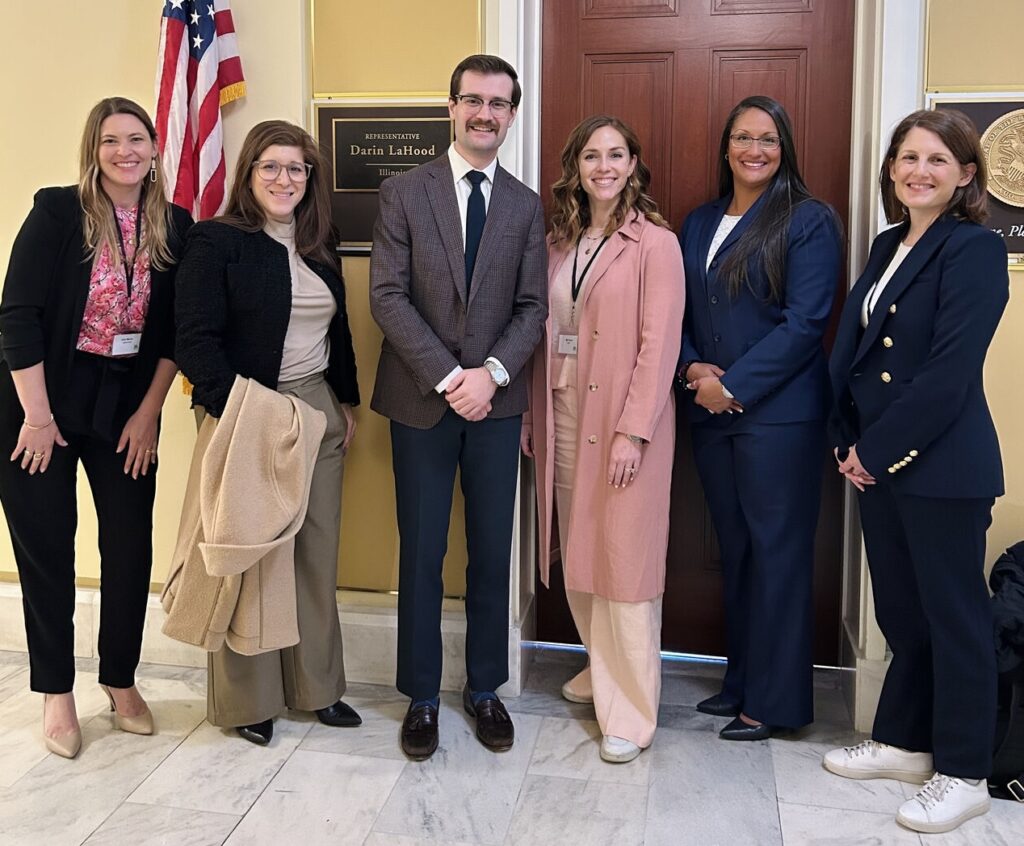
Allie Mahler with Illinois State Representative and other childcare advocates

Allie Mahler and fellow childcare advocates in the U.S. House of Representatives


Child care is essential infrastructure 

Child care isn’t merely a family issue – it’s essential economic infrastructure. Every year, the U.S. economy loses $122 billion due to child care breakdowns and disruptions from absenteeism, turnover, and productivity gaps. 

As Reshma Saujani, Founder & CEO of Moms First put it, “Childcare is the linchpin of economic security.” For families, the cost of child care now exceeds rent in all 50 states, with Americans spending an average of 24% of their annual income on child care expenses. And for employers, inaction means losing critical talent – and having to compensate for turnover and hiring. 

Companies that have stepped up are already seeing measurable returns. Toyota found that even a 1% improvement in workforce retention covered the cost of its child care program. At UPS, a pilot program across 7 sites saw a 70% reduction in turnover and an elimination of 1500 absences by offering back up childcare through Patch Caregiving. The business case isn’t just theoretical—it’s already working.


Employers can’t do this alone

While many companies are stepping up, they can’t solve the child care crisis on their own – nor should we expect them to. Public-private partnerships, smart federal investment, and coordinated local and regional policy efforts are all essential. The private sector has a role to play, but it must be part of a larger ecosystem of support.

Vermont’s Act 76, passed in 2023, represents one of the most significant child care efforts in the United States, bringing together policy makers from across the aisle in addition to businesses, employees, and child care providers. The story behind this legislation illustrates how business leaders and government can effectively partner to address the child care crisis. The groundbreaking legislation created a sustainable public funding mechanism for childcare through a 0.44% payroll tax, expanded eligibility for the Child Care Financial Assistance Program (CCFAP), and introduced the Readiness Payment Program. This collaboration created a governance model with business representation, demonstrating how employer engagement in policy development produces solutions benefiting the entire economic ecosystem. 

At the federal level, we are calling on employers to share stories with their legislators to underscore the importance of investing in child care policy, like The Child Care Availability and Affordability Act, which would broaden the the Child and Dependent Care Tax Credit (CDCTC) and Dependent Care Assistance Plans (DCAP) while increasing support for the Employer-Provided Child Care Tax Credit (often referenced as 45F).


There’s no one-size-fits-all solution 

The most effective care solutions are tailored to the needs of each workforce. Onsite care, flexible stipends, back-up care, partnerships with local providers—there are many models that work. The key is listening to your people to identify the underlying needs. Surveys are a starting point, but the most meaningful insights come from deeper conversations. For example, when UPS asked employees why they were missing shifts in a survey, they answered that it was due to illness. Deeper conversations revealed that these employees were staying home for child care challenges – a tangible issue that the company could help solve through a back-up care program. Leaders who take time to understand what employees really need build stronger programs and a more engaged workforce.

We’ve continued to see incredible solutions when it comes to taking care of employees and constituents from organizations like Mirza, Patch Caregiving, Upwards, Executives Partnering to Invest in Children (EPIC), TOOTRiS, Wellthy, Steamboat Resort, Park City’s Childcare Scholarship Program and so many more.

As Nando Cesarone, EVP & U.S. President at UPS says, “When you deliver for your people, they deliver for your customers.”


Awareness and access are key

Even in states with strong family leave policies, many employees don’t take advantage of these benefits simply because they’re unaware of what’s available or have difficulty navigating the process. Offering benefits isn’t enough—employers must take an active role in communicating clearly, simplifying the steps to access benefits, and fostering a culture where utilizing family benefits is normalized and supported. The ROI supports this investment – companies that invest in child care benefits can see an ROI from 90% up to 425% as evidenced by Moms First and BCG’s study The Employee Benefit That Pays for Itself. Implementing a ‘Care Concierge’ through an organization like Mirza or Wellthy, or an Employee Benefits Navigator through your HR team can make a big difference in supporting employees and ensuring they understand how to access and utilize existing benefits. 


Your voice matters

Throughout the day, one theme kept coming up: elected officials are listening. Whether you’re a business leader, parent, or advocate, your story can shape policy. Don’t underestimate the impact of a conversation, a phone call, or a personal note to your representative. Check out this resource page from Moms First and First Five Action from The First Five Years Fund to make your voice heard.


Building Blocks of Care

Child care is critical to how we build a thriving, inclusive economy. That’s why NationSwell created The Case for Childcare Collaborative in partnership with The Annie E. Casey Foundation and the American Family Insurance Dreams Foundation, among many more collaborators. This platform gives employers the insights, tools, and real-world strategies to lead on this issue and, just as importantly, to partner with others. Because meaningful change doesn’t happen in isolation. It happens when business leaders, caregivers, advocates, and policymakers come together around a shared vision. The care crisis is solvable. When we act with urgency, compassion, and collective resolve, we build the future working families deserve.


Allie Mahler is VP of Strategy & Studio Partnerships at NationSwell and leads the Case for Childcare Collaborative. Connect with her on LinkedIn or reach out to learn more about our work.

DEI at a Crossroads: Protecting Progress in a New Political Reality

Among the new administration’s first actions were a handful of executive orders intended to “terminate DEI” in the federal government and the private sector. While those executive orders don’t change existing federal law, they send a strong signal about the near-term political context for DEI programs. Organizations are reassessing their approaches in real time, with some publicly announcing rollbacks and others defending their efforts. The environment is marked by uncertainty and concern.

During a NationSwell virtual Leader Roundtable on February 5, leaders gathered to take stock of all the challenges and opportunities this new reality presents, and to discuss the strategies they’re implementing to protect and evolve their initiatives in a shifting landscape.

Here are some of the key takeaways from the event:


Avoid knee jerk reactions or uninterrogated changes; our current moment demands a clear-eyed approach. This moment of political chaos may be best met with a moment of pause — an opportunity to be thoughtful about the non-reactionary, tactical approaches we can take to safeguard our DEI work and even some of the ways DEI can be more intentionally incorporated into talent and culture conversations moving forward. Although the political swirl and media noise can make it tempting to make fast changes, there is long term value in staying steady in this moment.

Internal assuredness and transparency will have external ripples. Even as many leaders feel reluctant to make public-facing statements about DEI, having open internal conversations about why a diverse and engaged workforce is good for business can have a positive internal effect on team members that ends up alchemizing into an external signal about the direction you’re rowing in.

Explore new dimensions of DEI to create opportunities for shared value alignment. Linking DEI to employee wellness initiatives, for example, can help to ensure that your efforts are being felt by employees outside of ERGs or other traditional forums. Showing that you can create value across multiple areas of the business ultimately serves to make the case for the work and can have the effect of making it more durable in the long run.

We have an urgent challenge around devising language that is simultaneously precise, non-provocative, and inclusive. Nailing the language of DEI in a way that works to further our goals in a non-politicized way without diluting the work at all will be a huge component of the challenge we face in the coming months and years. How do we speak about the work that we do in ways that mitigates risk without signaling a retreat from our values?

Have the tough, honest conversations with partners and grantees wherever possible. The realities of the current political landscape will require honest, transparent , and difficult conversations with partners that work in spaces that have been heavily politicized and impacted by government funding cuts. As always, bringing your presence and humanity into tough conversations about how to avoid lightning rods for politically-motivated actors will be the best way to navigate through them. Creating intentional spaces for radical empathy and candid conversations with partners will help them to feel heard and respected, and will also help to most efficiently surface their needs for your support during moments of turmoil and hardship.

Thriving Economy for All: The Case for Childcare

The childcare crisis is no longer just a personal challenge, but an economic one. Without action, the U.S. risks losing $290 billion annually in GDP by 2030 due to missed workdays, reduced productivity, and workforce attrition linked to the lack of investment in childcare. Yet, as daunting as these statistics are, there is hope.

At NationSwell’s recent roundtable discussion, Thriving Economy for All: The Case for Childcare, business leaders and innovators joined panelists Morgan Bast of Steamboat Resort, Mel Faxon of Mirza, and Molly Moon Neitzel of Molly Moon’s Homemade Ice Cream, to explore proven strategies for tackling childcare challenges through employer-driven initiatives.

Here are some of the key takeaways from the event:


Breaking down the crisis

The financial burden of childcare on American families is worsening. With childcare now more expensive than housing in all 50 states, parents are spending an average of 24% of their income on care, and 40% are going into debt to cover costs. Beyond lost dollars, care breakdowns have wider implications for women and caregivers in the workforce as they can result in declined promotions, stalled careers, and inequitable earnings.

Employer-Led Innovation

Some businesses are turning this crisis into an opportunity to lead. “I started Molly Moon’s Ice Cream to see if I could create a profitable business while also baking in the progressive values that I thought either business or government should provide to every worker in the nation,” says Molly Moon Neitzel. Guided by this belief, Molly Moon’s Homemade Ice Cream implemented a life-changing childcare benefit to its employees: $1,000 monthly per child under 5 and $4,200 annually for school-age children.

Morgan Bast, Director of Marketing at Steamboat Resort, shared how her team addressed a childcare desert in their rural Colorado community by launching an employer-based childcare center. The center, which serves both employees and local families, has improved employee retention, engagement, and work-life balance. “We’ve had a baby boom because people are now able to have babies and actually have a place for them to go,” Bast said. 

Meanwhile, Mel Faxon, co-founder of Mirza, highlighted the importance of systemic approaches to solving the childcare crisis. Her team connects families with underutilized federal funding, noting that only 10-20% of eligible families access the roughly $21 billion of subsidies available to offset the cost of care. 

Building Inclusive Solutions

Systemic change requires collaboration across sectors and broad support systems. As one participant advocating for parents of neurodivergent children emphasized, “Raising a child with special needs requires more support, more resources, and more financing.” Her call to expand the scope of childcare solutions underscores the need for inclusive, scalable approaches that leave no family behind.

The Economic Impact

Beyond individual stories, the broader economic case for childcare is clear. Studies show that family-friendly policies like childcare subsidies and universal pre-K could boost U.S. GDP by nearly $1 trillion over the next decade through increased workforce participation. But realizing this economic potential requires coordinated action at both the federal and employer levels.

State-level innovations, such as Vermont’s employment tax (Act 76) for childcare assistance and Michigan’s tri-share program (now across other U.S. states), demonstrate successful public-private partnerships. As Mel Faxon notes, “We need continued pressure on federal policy. And a lot of that will come from employers.” Businesses have a unique opportunity to advocate for legislative measures to close critical childcare gaps.

From Hope to Action

NationSwell is proud to partner with organizations and leaders through the Case for Childcare Collaborative to address this critical issue together. As Molly Moon Neitzel emphasized during the discussion, “The Case for Childcare work gave me a ton of hope. It made me feel like we’re not operating in this tiny vacuum.” 

The childcare crisis is solvable, but demands urgent, collective action from employers, policymakers, and communities. The path forward is possible—and the time to act is now.


To learn more about the Case for Childcare, visit childcareforall.nationswell.com and caseforchildcare.nationswell.com

The Intersection of Caregiving and Business: NationSwell Summit Explores the Care Crisis

As we enter a new era of workplace dynamics, the critical issue of care support for workers has become increasingly urgent. According to a survey led by AARP and S&P Global, 67% of caregivers face difficulty in balancing their employment with caregiving duties with 27% of caregivers needing to switch to part-time work or reduced hours. Furthermore, 16% of caregivers have needed to decline promotions due to their care responsibilities and 13% have been forced to change employers to meet their care needs. Between April 2022 and March 2024, the U.S. Census collected data from 1.1 million parents who said child care has kept them from working, up from 939.7K between 2018-2020. Care directly impacts the economy and both private sector solutions and public policy are needed to support the sustainability of the workforce. 

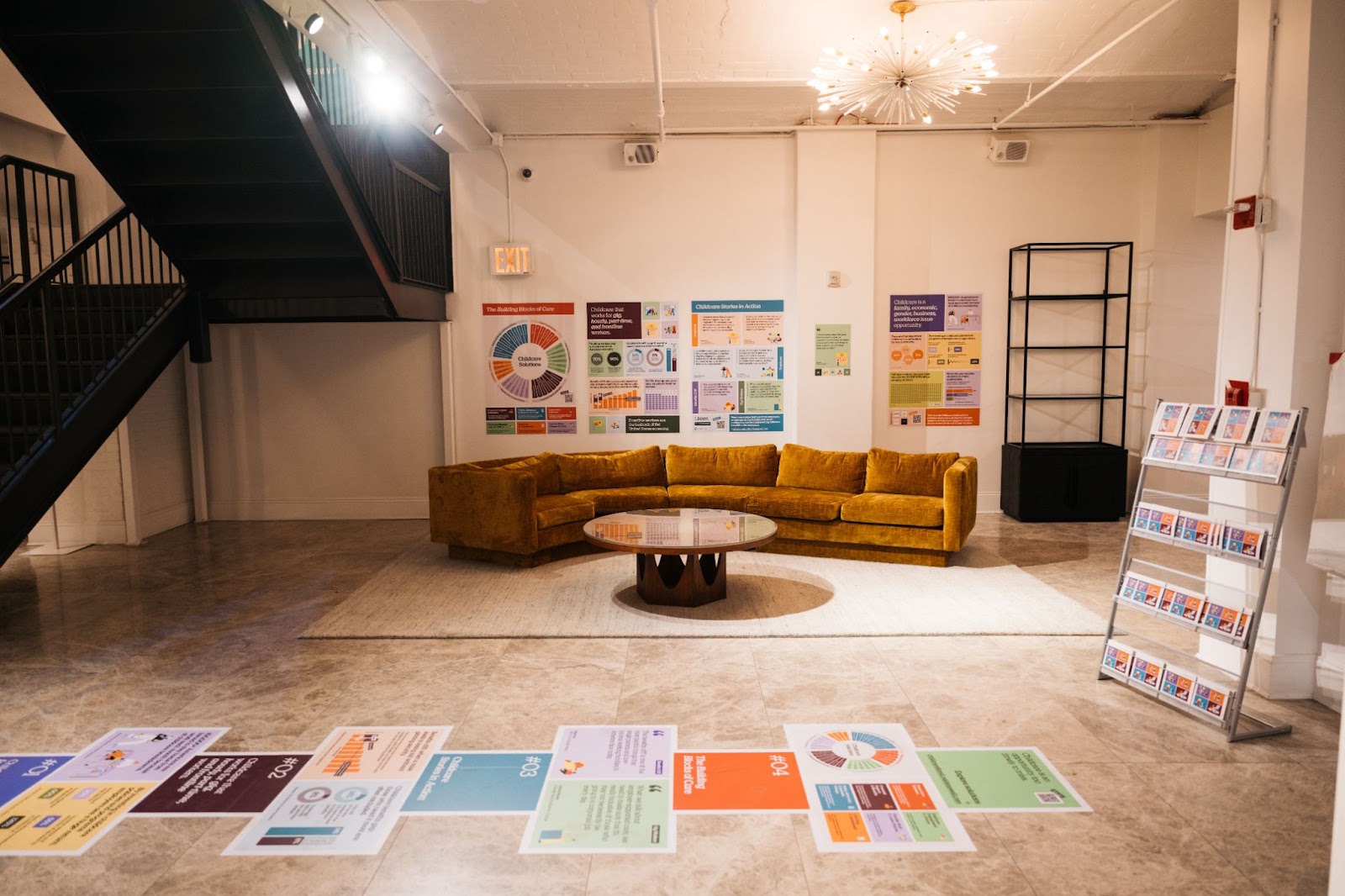
In response to this urgent need, Pivotal, the Annie E. Casey Foundation, and the American Family Insurance Dreams Foundation highlighted caregiving at the 2024 NationSwell Summit through an Impact Spotlight and a panel discussion, which was punctuated with an on-site immersive experience including a ‘Care Lounge’ that highlighted key stats, quotes and figures from  the expanded Childcare for All site created by the Case for Childcare Collaborative.

We’ve summarized key insights from this portion of the Summit below:


Public-private partnerships are key to sustainable, systemic change.

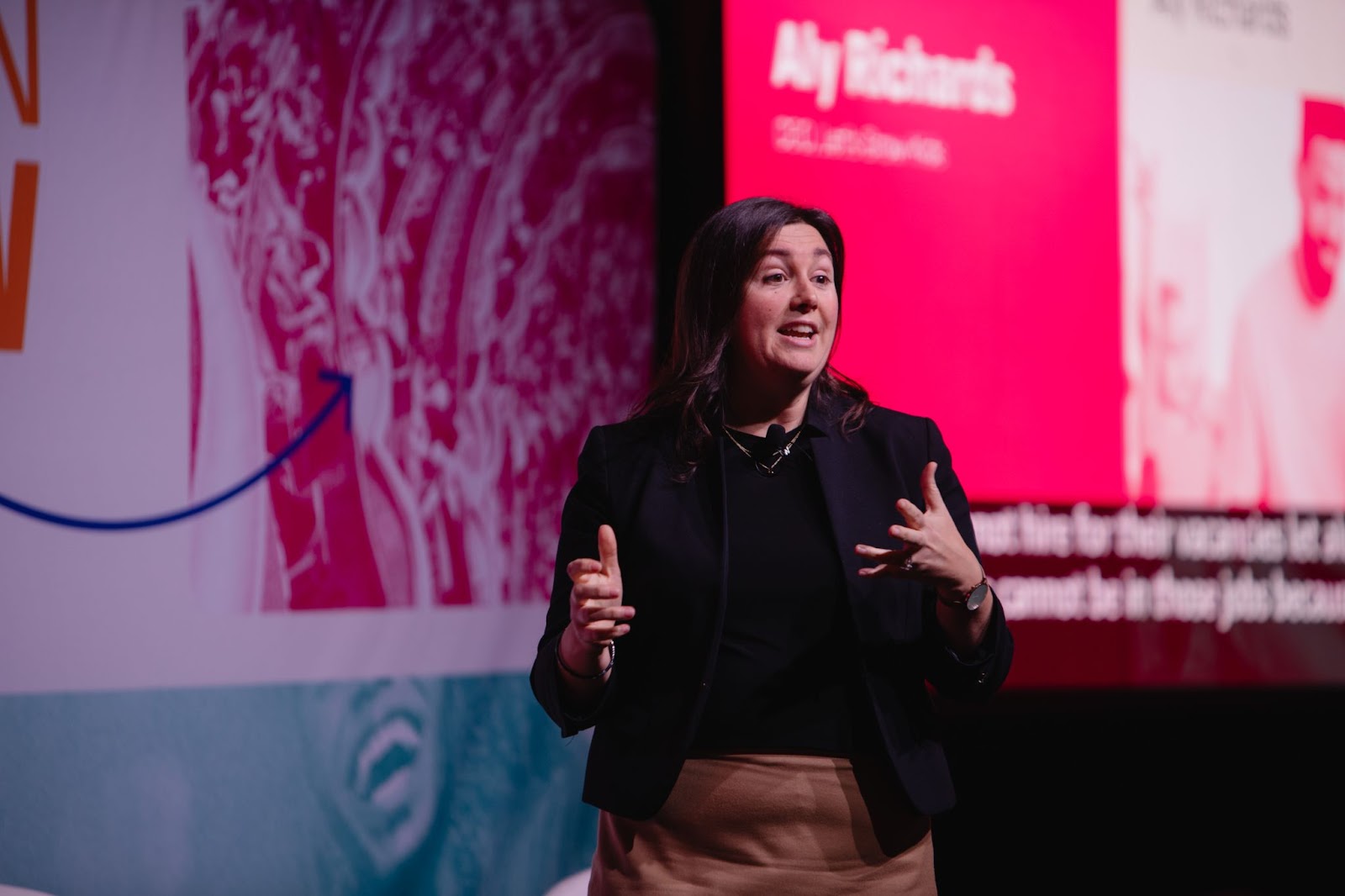
Aly Richards, CEO of Let’s Grow Kids, shared her inspiring story through an Impact Spotlight showcasing how the nonprofit revolutionized childcare in Vermont alongside the business community, ultimately passing Act 76, which committed $125 million to the childcare sector annually through a 0.44% payroll tax. During the spotlight, Richards emphasized the critical role of childcare in both economic and social development, calling the state’s care crisis a “market failure.” Through her passionate storytelling, Richards highlighted the urgency of early childhood education on workforce participation, stating, “90% of a child’s future is baked by age 5.”

As seen by Richards’ work in Vermont, public investments can fill care gaps. Through a grassroots campaign, Let’s Grow Kids mobilized 40,000 citizens and business leaders and secured bipartisan support for Act 76. Now, more families are eligible to receive financial assistance for child care than ever before, and the state is paying programs at higher weekly rates to provide that care. Since implementation, slots have surged, boosting access for many families and relieving employers of staff shortages with a more stable workforce.

Caregiving is an economic issue with investments yielding huge economic returns.

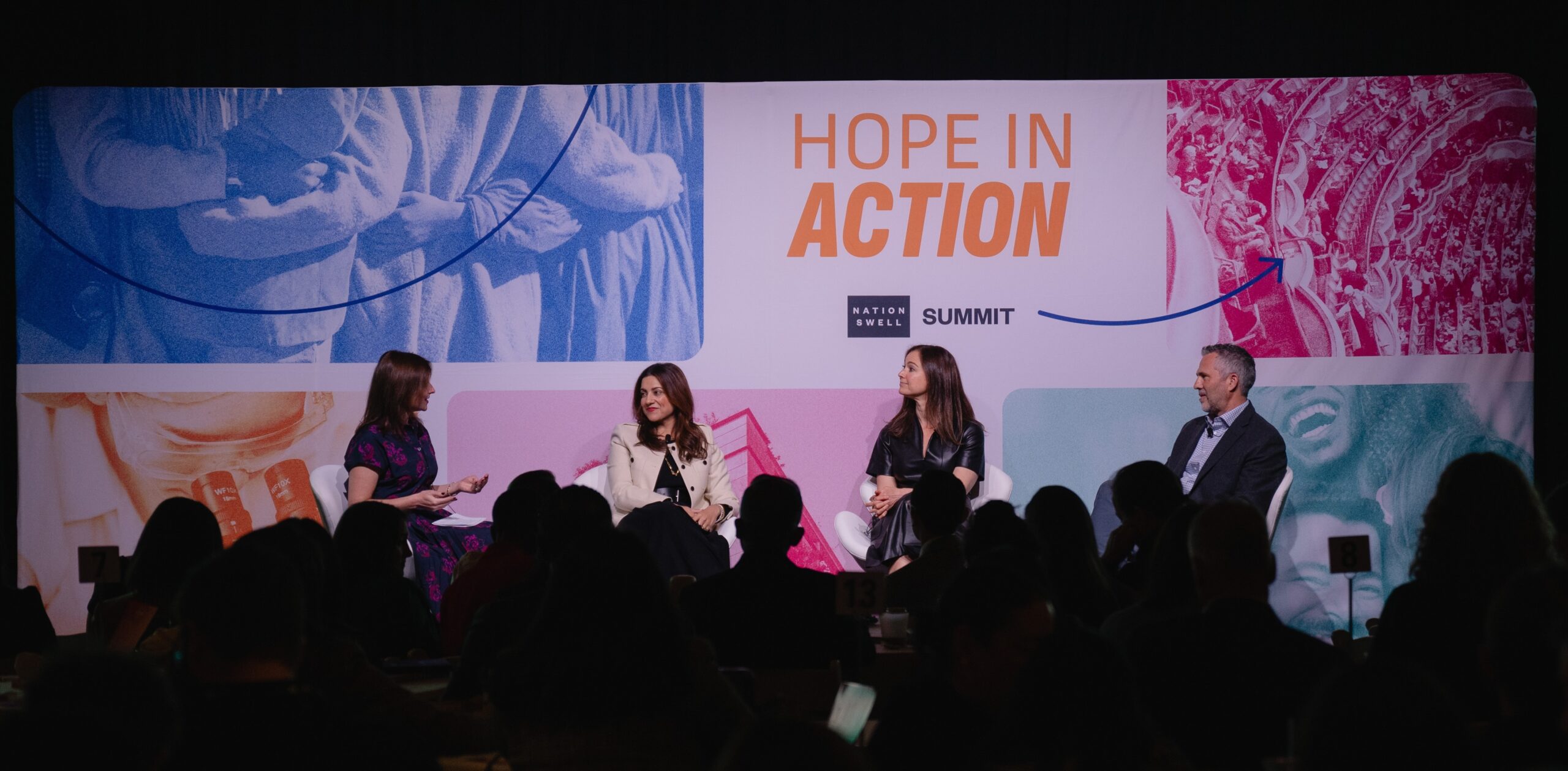
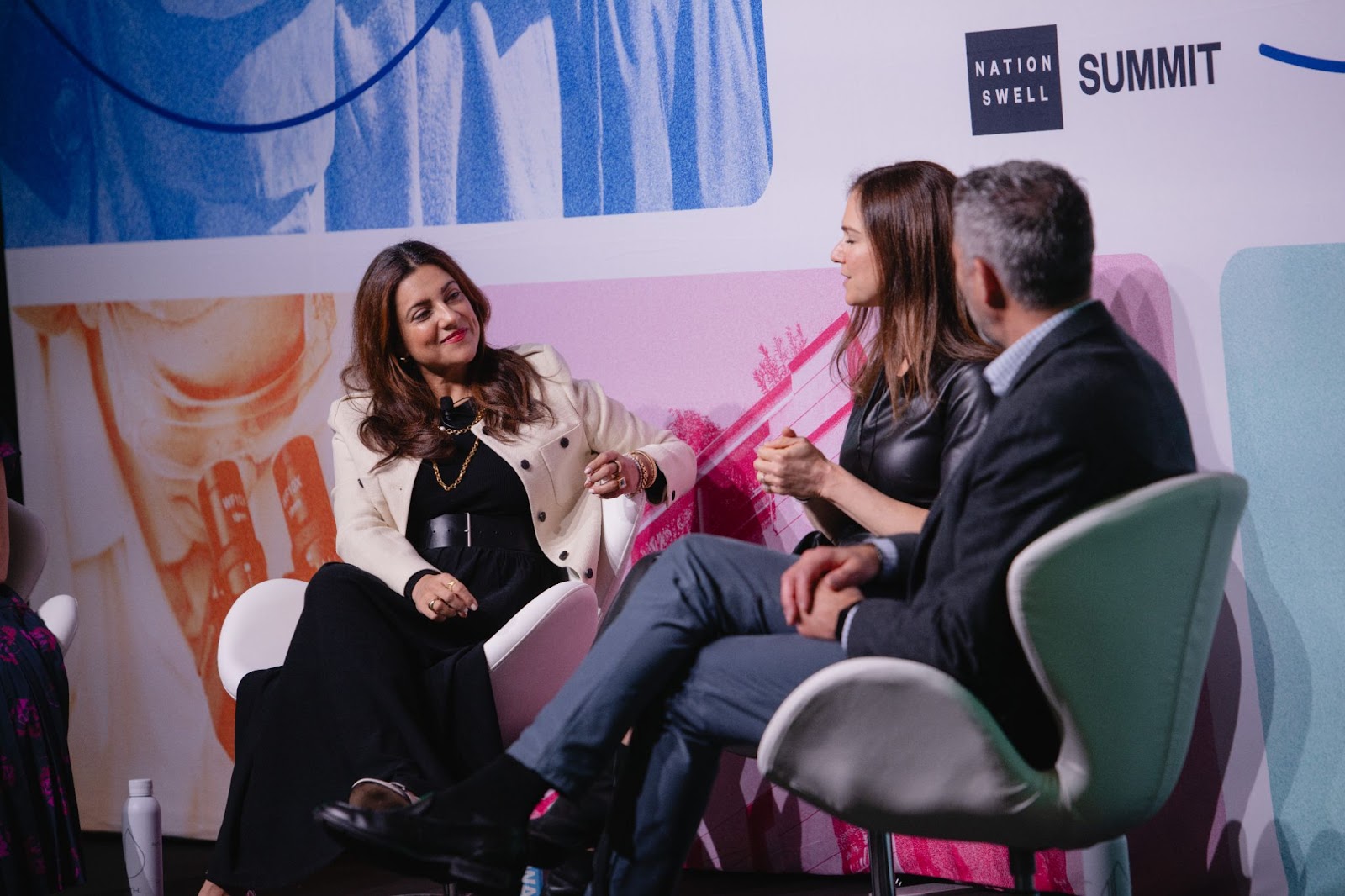
The NationSwell caregiving panel brought together visionary leaders to discuss the urgent challenges and groundbreaking solutions shaping the future of caregiving. Moderated by Jennifer Stybel of Pivotal, the panel featured Reshma Saujani, founder of Moms First; Lindsay Jurist-Rosner, CEO of Wellthy; and Stephan Dolling, Vice President at Merck, who each shared their personal and professional perspectives on the critical care issue.

Stybel set the stage by emphasizing caregiving as a universal challenge, stating, “None of us can do it alone. The solution lies here together.” Saujani underscored the transformative potential of prioritizing caregiving within policy and business frameworks. “We need to convince the nation that childcare is an economic issue,” she said. She credited the pandemic for shifting perspectives, noting, “We’ve slammed the door on whether childcare is a personal problem or an economic problem.”

Jurist-Rosner shared her personal caregiving journey and explained Wellthy’s mission to partner with families through personalized care coordinators, alleviating the complexities of a fragmented healthcare system. “Families need someone who can get things done,” she explained. Dolling highlighted Merck’s commitment to employee well-being and the ROI of caregiving benefits. “Providing caregiving support shows your people you truly care,” he said, sharing how Merck implemented Wellthy’s services during the pandemic resulting in overwhelming employee appreciation and support.

The conversation also spotlighted the significant economic case for caregiving. Saujani noted, “Investing in childcare offers a 425% return,” emphasizing that solutions must extend beyond privileged workforces to include hourly and shift workers.

The panelists concluded by exploring bold, actionable strategies for change: join national coalitions advocating for policy reform, foster open discussions about caregiving in workplaces, and leverage data to drive leadership buy-in. As Stybel aptly concluded, “Caregiving isn’t a niche issue; it’s a challenge that unites us all.”

Workers with the most to gain from employer-sponsored care support are traditionally excluded from care benefits.

Following the inspiring spotlight and panel, NationSwell announced the launch of the expanded Childcare for All site, which builds the case for gig, hourly, part-time and frontline workers to be included in employer benefits to support caregivers. Frontline workers represent about 70% of the workforce with 90% of companies relying on these workers. And yet, while only 14% of full-time workers have access to employer-sponsored childcare support, that number falls to 8% for part-time workers. This demonstrates a childcare benefits gap, revealing those with the most to gain from these benefits are traditionally excluded from qualifying. The detrimental effects of a broken childcare system are glaringly apparent, with parents forced to leave careers in order to take care of children, and businesses suffering huge workforce losses. 

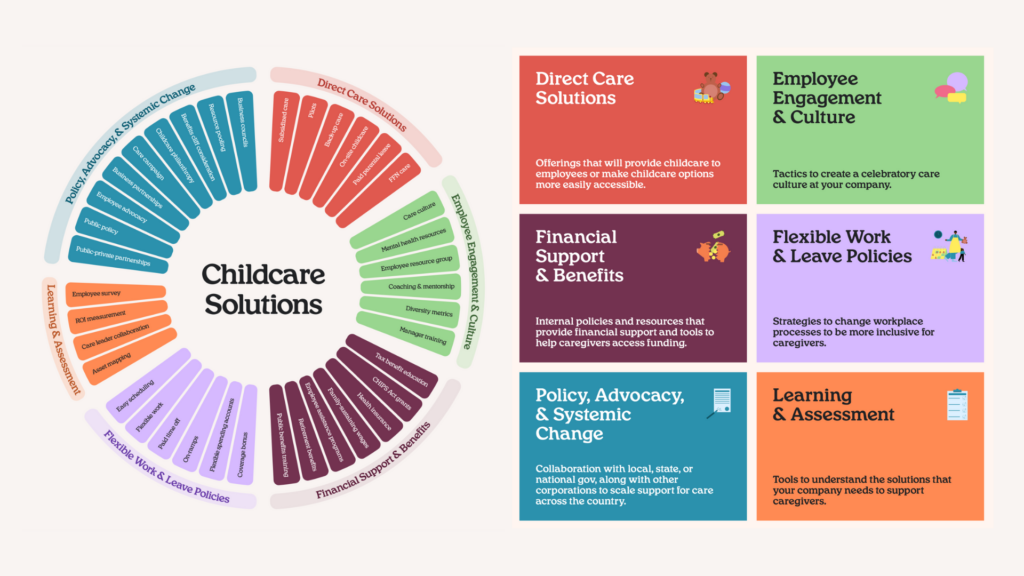
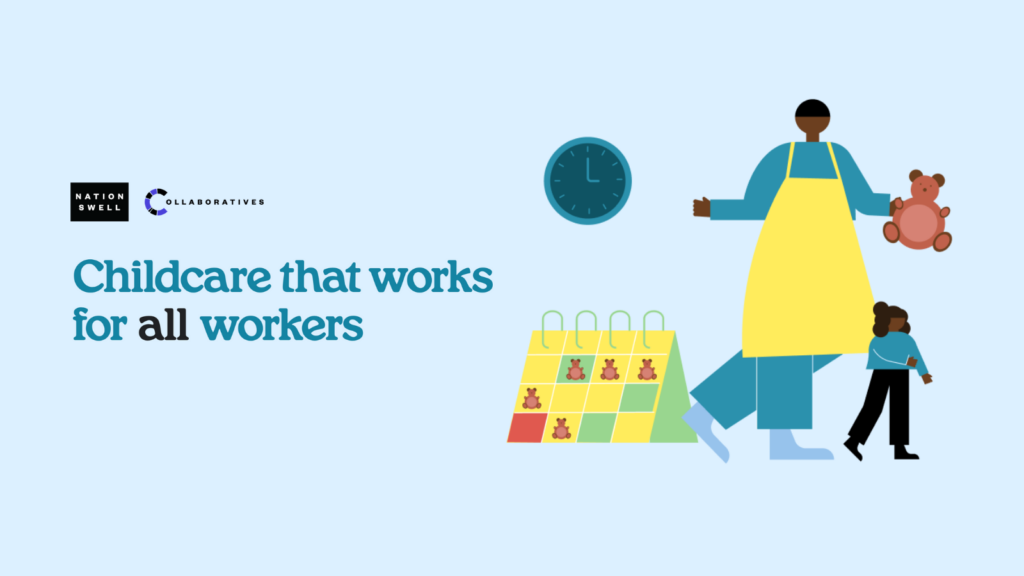
The site serves as a resource for employers to better support employees who are caregivers, highlighting 35+ actionable strategies through an interactive solutions visualization. Packed with resources, firsthand stories, insights, and examples, the site empowers businesses and individuals to advocate for and implement impactful caregiving solutions. This launch reinforces the call to action for systemic change and collective responsibility in addressing the childcare crisis. Visit the Case for Childcare Collaborative’s site to publicly commit to implementing solutions and find downloadable resources to share with your team and network. Help us forge a world where childcare is no longer a barrier for workers to remain and thrive in the workforce. 


To learn more about the Case for Childcare Collaborative, click here

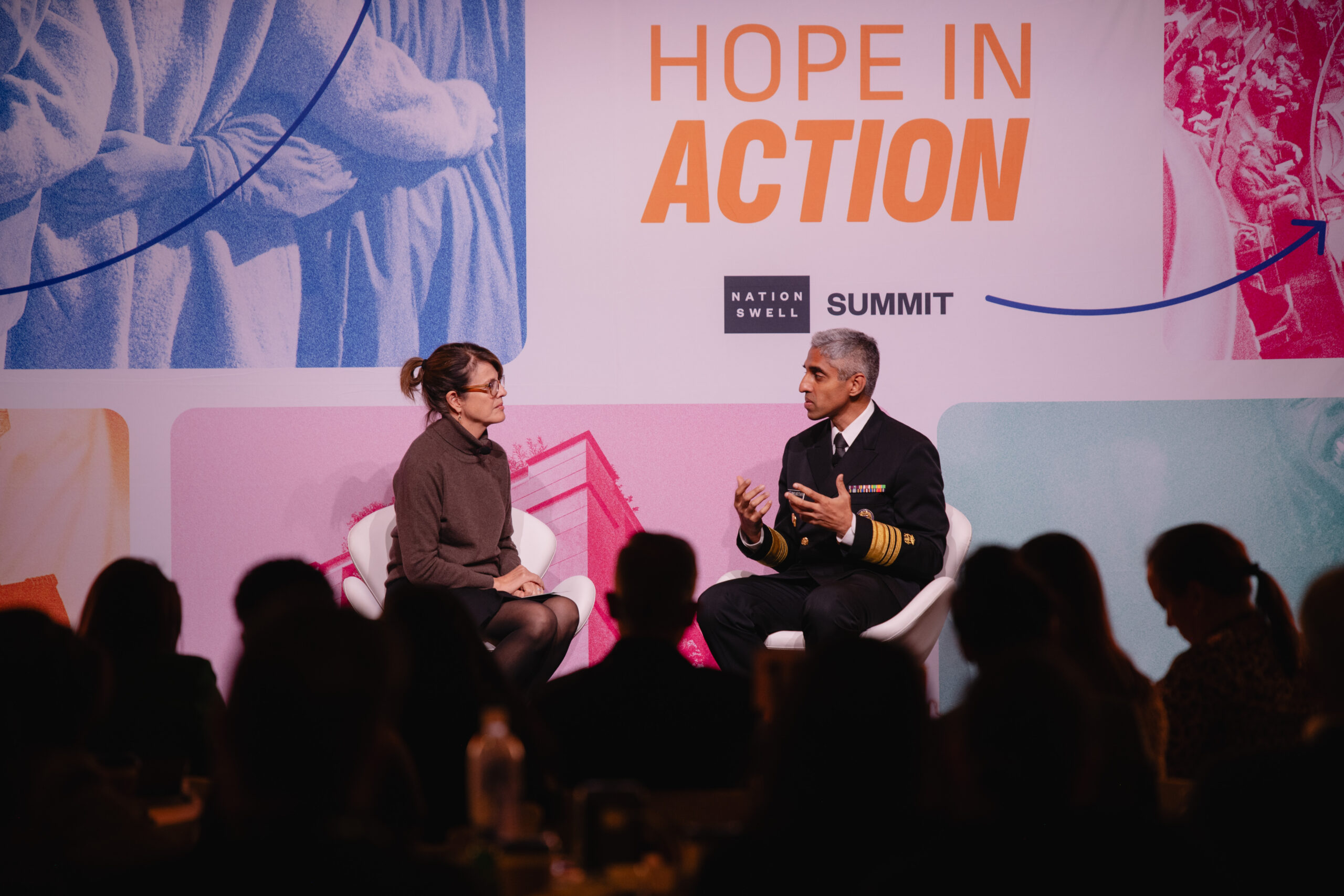
Strengthening Our Social Fabric: How Connection and Care Shape Public Health, a Fireside Chat with U.S. Surgeon General Dr. Vivek Murthy

NationSwell’s 2024 Summit concluded with a fireside chat with U.S. Surgeon General Dr. Vivek Murthy, and a sing-along. Bestselling author and television and podcast host Kelly Corrigan hosted an incredible conversation with Dr. Murthy that covered the urgent loneliness epidemic facing our country and solutions big and small that help us build community with each other. And don’t worry, we’ll explain the singing. 

Dr. Murthy started out by providing important context for the root causes and impact of the loneliness epidemic, which impacts half of all young people and a third of adults in the United States. The consequences of social isolation can be serious – people who are socially isolated face an increased risk of heart disease, dementia, and stroke. And while there is no single root cause, Dr. Murthy pointed to several societal, cultural, and technological shifts that have contributed.

Here are some of the critical insights Dr. Murthy provided into varying intervention strategies: 

Federal policy has not met the urgency of the moment. 

For Dr. Murthy, Congress has let the proliferation of these harms go on far too long. While Congress is sitting on some legislation, we have yet to see any major bills pass beyond the state level. 

Studies have shown that while social media can help young people make connections with each other across shared interests and identities, it can also encourage feelings of exclusion, as well as several other significant mental health challenges. By capturing our attention, and by creating and reinforcing virtual connections, social media can often take the place of in-person community, leading to further social isolation. 

“We can applaud the progress that’s been made but the truth is at the end of the day that if you’re a parent trying to manage social media for your child, if you’re a young person being mercilessly bullied over social media or being exposed to really harmful content or having your privacy completely eviscerated and then being blackmailed online, all that progress isn’t meaningful.” 

Dr. Murthy went on to add, “If there’s ever a time to take a stand, to do things differently, it would be on issues like this when our kids’ health and wellbeing is at stake.”

Communities are coming together to address the loneliness epidemic. 

When it comes to addressing loneliness at the community level, Dr. Murthy was much more hopeful. 

When asked if he saw a role for business in stemming the loneliness epidemic, he said that there’s a lot that corporations and nonprofit organizations can do. “Having spaces where people can gather is important. Not just spaces, but a structure that can help people to get to know each other and their stories.” Dr. Murthy shared a few examples from his own office, including an activity called Inside Scoop, where at each all-hands meeting, one person gets to share pictures from their life outside work. 

“If this sounds familiar, it was called Show & Tell,” Dr. Murthy said, to warm laughter. “There’s a lot of kindergarten wisdom that still applies now – nap time, show & tell, sharing.” 

It’s no surprise then, that while the loneliness epidemic is affecting young people the most, they are also coming up with some of the most innovative solutions. Dr. Murthy described “hope squads,” where kids are chosen by their peers to watch and respectfully and responsibly reach out to other kids who are struggling. This was only one of many programs Dr. Murthy identified where kids and adults are creating community and supporting one another.  

“People aren’t waiting for an act of Congress to solve the issue of loneliness in America. They are figuring out what they can do in their communities,” he said. 

Intentionality is the watchword of technology’s role in building community. 

Kelly Corrigan asked the question that is top of mind for everyone as we consider how technology can improve our lives: is there a role for AI? 

“With AI we have an opportunity to think about how we can bring accurate helpful information to people in a tailored way to help them with things like their health, to be a bridge to offline, in-person connection,” Dr. Murthy said. But he was also quick to point out that we need to approach AI with intentionality, rather than view it as an unqualified good. Much like social media it can quickly become damaging if we are not vigilant about identifying harms and benefits, and then designing to those benefits. 

He went on to emphasize that this can’t be left in the hands of individuals. Social media provides another prime example here. The best product developers in the world are using some of the most advanced neuroscience to try to keep us on our phones. To put individuals up against these platforms is an unfair fight. “We can work for [tech],” Dr. Murthy said. “Or it can work for us.” Pushing back against tech special interests, ensuring that our tech works for us, must be a community effort. 

And now, to explain the singing:  

To conclude, Dr. Murthy reminded us that we are called in this moment to figure out how to rebuild a culture that values relationships, purpose, and service – in our own lives, and in what we model for our children – by building workplaces and schools centered on these values, and applying them at the policy level. 

But community is not just about policy and social science. 

“The arts have a really powerful role to play in stitching back together the social fabric of our country,” Dr. Murthy added. “Music and the arts are the language of the soul, the glue that keeps people together.” 

So it stands to reason, then, that the only way to conclude the chat, and thus the Summit, was all of us joining together in song and a reminder that we are stronger together, and that the world we want to see is ours for the building. 


For more moments from NationSwell Summit 2024, click here.
NationSwell Launches the ‘Childcare for All’ Site from the Case for Childcare Collaborative

The Business Case for Childcare Benefits for Every Employee

Today NationSwell is proud to announce the launch of our expanded Case for Childcare Collaborative site advocating  for childcare for all workers. Employees—especially gig, hourly, part-time and frontline workers— across the country continue to face an uphill battle, punctuated by the ongoing childcare crisis in the United States. Frontline workers represent about 70% of the workforce with 90% of companies relying on these workers (BCG, Fortune). And yet, while only 14% of full-time workers have access to employer-sponsored childcare support, that number falls to 8% for part-time workers (U.S. Bureau of Labor Statistics). This demonstrates a childcare benefits gap, revealing those with the most to gain from these benefits are traditionally excluded from qualifying. The detrimental effects of a broken childcare system are glaringly apparent, with parents forced to leave careers in order to take care of children, and businesses suffering huge workforce losses. 

This was the instigation for NationSwell to launch the Case for Childcare site in February 2024, showcasing two years of research making the case for employer-supported childcare benefits, revealing the business opportunity of supporting employee childcare needs. 

Why focus on frontline workers?

But–a gap in our research remained—frontline workers have the most to gain from childcare support yet are traditionally excluded from benefits packages that are reserved for full-time, salaried employees. So we set our sights on an expansion of this site to build the case for employers to provide childcare benefits for all workers. Over the last year, we’ve focused our research on frontline workers, speaking with workers, advocates, and employers alike. This research highlighted the importance of these workers for businesses and the overall economy—leaving this demographic out of conversations around employer-based childcare support is a missed opportunity for companies to improve their retention, attraction, loyalty, and engagement of workers, ultimately boosting their bottom line. Today, we’re exposing the data that employers should support their worker’s childcare needs because it is both the right thing to do for people and the company.

Educate

With this launch, our Collaborative aims to put the spotlight on the research-backed value of supporting employer-sponsored childcare benefits for frontline workers so that more leaders can educate their colleagues and advocate for change.  If you need to make the case for childcare at your company, you can find easily downloadable materials that can serve as a pitch to leadership on why childcare benefits should be implemented or expanded for your workforce. Visit our site and request the synthesized research and solutions that you can use to pitch leaders and HR managers on the expansion of your childcare support for all workers.

Commit

You might be asking, “After I get buy-in, how can we get started? What can we offer as an employer to support caregivers?” The newly launched site includes a visualization of childcare solutions that range to fit any business, no matter where you’re starting from, whether it’s just starting to think about childcare support for the first time or adding cutting-edge policies to your already comprehensive benefits package. Explore each solution with resources and organizations to help you get started and examples of other companies who are implementing these kinds of support. Then commit to change, perhaps making a plan to reevaluate your care policies each quarter with executive leadership or starting to pilot one solution over the next six months. No matter where you start, start somewhere. Join others by committing publicly on our site—submit your story or commitment to be uploaded on our wall of examples. Together we can build a community of care. 

Share

Finally, we encourage you to share this site with your networks. Caregiving is undervalued in the United States and we’re on a mission to showcase the value of care for businesses and our economy. This site not only portrays the data on the clear business value in providing employer-supported care benefits for every employee, but it also features firsthand stories from business owners and workers who are parents. Listen to employers share how to accommodate childcare needs in the workplace for all workers—it’s not only possible, but practical. Hear from advocates on the unique barriers these workers face in regards to care. And listen to parents share their stories on the impact of employers who support the care movement. Post the site on your LinkedIn, text the link to a friend or family member, or reshare NationSwell’s social posts. Help us reframe the narrative to value care.

Conclusion

This site is a go-to hub for businesses and leaders to find information they need to not only build awareness of the business case for employer-supported childcare, but also, to provide tactical solutions that more employers can implement to grow the support for all workers to  have access to affordable, quality childcare that fits the needs of their family.

Visit the Case for Childcare Collaborative’s childcare for all expanded site to learn about the case for care for all workers, commit to implementing solutions, and share the information with your team and network. Help us forge a world where childcare is no longer a barrier for workers to remain and thrive in the workforce. Thank you to our partners at the Annie E. Casey Foundation, American Family Insurance Dreams Foundation and Pivotal Ventures for supporting this important work.


Read more about the Case for Childcare Collaborative

Making corporate DEIB more durable

Making corporate DEIB more durable

EXECUTIVE BRIEFING

Diversity, equity, inclusion, and belonging (DEIB) professionals are facing heightened political and legal opposition to their day-to-day work. At times, it’s challenging to truly know if and how companies, and DEIB leaders themselves, are shifting their commitments or approaches. 

The reality is that some businesses are pausing or re-evaluating their DEIB strategies. A number of companies are reducing investments in DEIB or choosing to proceed more quietly. But the pendulum is swinging in both directions. There is evidence that the material work of DEIB has endured and will continue to endure. 

Based on interviews with chief diversity officers and other DEIB executives, this report is intended to support leaders and organizations in confidently charting a path forward at a moment of heightened scrutiny.

The resource teaches the four components of a resilient approach to corporate DEIB and includes tactical guidance, real-world examples, and implementation tools.

The four components:

  • Leverage data as the backbone of your commitment
  • Cultivate and activate accountable champions at all levels of the organization
  • Center transparency, honor progress, and strive for continuous improvement
  • Get intentional about future-proofing DEIB

Share this report