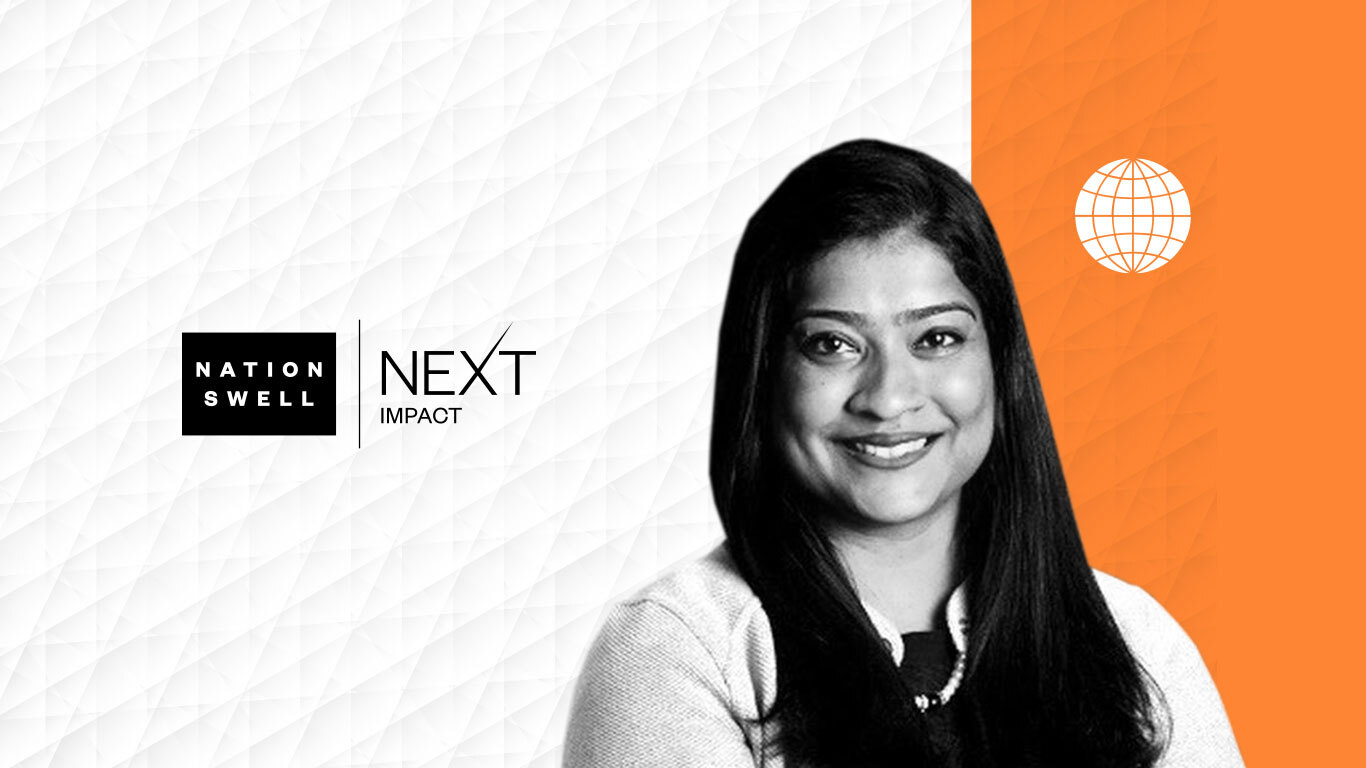

Impact Next: An interview with the International Youth Foundation’s Christina Sass

At a moment of inequality and division, who is advancing the vanguard of economic and social progress to bolster under-served communities? Whose work is fostering the inclusive growth that ensures every individual thrives? Who will set the ambitious standards that mobilize whole industries, challenging their peers to reach new altitudes of social impact? 

In 2026, Impact Next — an editorial flagship series from NationSwell — will spotlight the standard-bearing corporate social responsibility and impact leaders, entrepreneurs, experts, and philanthropists whose catalytic work has the potential to shape the landscape of progress amid urgent need for social and economic action.

For this installment, NationSwell interviewed Christina Sass, President & CEO of the International Youth Foundation.


Greg Behrman, founder and CEO, NationSwell: What brought you to the field that you’re in right now? Was there an early moment, a relationship, or an experience that galvanized your commitment to driving bold action?

Christina Sass, President & CEO, International Youth Foundation: The short version is that I’m obsessed with youth employment. I genuinely believe it’s one of the most sustainable ways to get and keep people out of poverty. That’s why I focus on jobs for young people — I don’t want them to need things they can’t afford for themselves. When we help young people build skills they can take anywhere, we create change that lasts across generations.

That’s why this is my issue area, and why I tell people all the time: if you have a dollar or an hour to give, give a young person a chance who wouldn’t otherwise get one. Yes, you can do that through a charity like IYF, but honestly, if you have a job to offer in your own organization, that may be the most powerful thing you can do.

The reason this is so deeply personal is that it tracks closely with my father’s story: He immigrated to the U.S. from Germany at 22 with a suitcase and a couple hundred dollars to join his older brother. He was born in 1942, so you can imagine that his childhood was characterized by World War II, a devastated society, a family separated for years. His father was a prisoner of war for the first six years of his life; their family was internally displaced. His brother, my uncle, found a path forward through the brick masons, then volunteered for the U.S. Army as a way to stay in the country. My dad got a chance to build his career by coming over to live with his older brother. They were both hungry for opportunities.

His first job in the U.S. was picking up trash in a park while he barely spoke English. His second was moving boxes in an IBM warehouse — back when IBM was probably building typewriters, long before computers. But my dad was a true lifelong learner. He noticed that the most expensive machine parts were going missing, and he spent all night practicing enough English to ask his boss a question: why not keep the most valuable parts in one place and require people to check them out? His boss said, “Why don’t you build it?” And he did.

My dad retired after 32 years at IBM. Along the way, he kept leaving to get more education, kept pushing for opportunities, and was also lucky enough to have people take a chance on him — on someone who barely spoke English. That changed everything for our family. My dad is the reason my brother and I had the life we had; somebody gave him a chance. He passed away when I was a sophomore in college, and it was devastating for all of us, but his story still looms large for me.

So yes, this work is deeply personal, and it also happens to align with something I genuinely love. I stay so focused on youth employment because I’ve seen what it can unlock: in my own family, in my brother’s life, and in so many other young people’s lives.

I’ve taken multiple swings at the same question: How do we get young people into jobs at scale? Because I think we’ve failed badly at this. Educators say young people are ready for work; employers say they need two to three years of experience. And for the most at-risk young people, that gap is rarely merit-based. We can do so much better at opening doors early — and giving young people the chance to realize their full potential.

Behrman, NationSwell: Tell us a little bit about your current role and how you came to it.

Sass, IYF: International Youth Foundation is currently in its 35th year of operation, and I am the fourth CEO. All of the CEOs are around and super supportive of the work, which is a really cool legacy to have. IYF was founded by Rick Little, who was really ahead of his time in recognizing that young people face a distinct set of challenges in the transition from school to work, especially when there isn’t a clear path into employment.

I came to IYF in 2024, after spending 10 years building Andela, a platform connecting global companies with developer talent, especially in Africa. Bill Reese, IYF’s longtime second CEO, had been a mentor of mine for years, so when he reached out and said, “This is your issue area, would you consider it?”, it was a pretty extraordinary invitation.

What drew me in was the chance to work at a different order of scale. At Andela, we were intentionally building outside the system. At IYF, we’re working inside it — which comes with more constraints, but also a much bigger opportunity to create lasting change.

At its core, IYF focuses on youth economic opportunity, especially through training and job placement. We think broadly about who we serve: young people, of course, but also employers, school system leaders, and the funders who make this work possible. Our programs are strong, our outcomes are strong, and the work now is about growing awareness, expanding our reach, and continuing to evolve to meet young people where they are in a very complicated moment.

Behrman, NationSwell: Is there a particular program, signature initiative, or some facet of the work that you would like to spotlight for us that is driving outcomes for the work?

Sass, IYF: One great example is a program we run with FedEx in Mexico and Colombia called Jóvenes con Entrega, which roughly translates to “youth who deliver,” both literally and in life.

The idea is simple: we look at where there are real hiring gaps, then work backward with employers to build training directly into the school day. In this case, FedEx had a huge need for entry-level logistics workers, especially as nearshoring accelerated across the region. So we worked directly with their HR and logistics teams to map the skills they needed, build a curriculum around those requirements, connect Fedex mentors to program participants, and integrate into technical high schools. We initially trained teachers ourselves, then transitioned that ownership to the school systems.

Since 2018, that program has served more than 50,000 young people, with job placement rates more than double what they would be otherwise. Nearly half of participants are young women, which is especially meaningful because many were initially being steered toward “safe” roles like secretarial work. We had to make the case that logistics was not only viable, but safe, respected, and far better paying, and once families saw the first graduates succeed, the momentum really took off.

Another example I love is our work with the banking sector in Mexico. For years, you needed a four-year economics degree to become an entry-level bank teller, which made no sense for the role and excluded a huge amount of talent. We worked with banks to rethink the job around skills instead of credentials, and helped create a pathway for technical high school graduates to move directly into those roles. We’re now on our third cohort, and it’s been transformative for the young people involved (and a much better talent match for the banks, too).

Behrman, NationSwell: What is unique or differentiated about the approach that you’re taking? Can you walk us through a couple different facets of the work you’re leading that are particularly exciting to you right now?

Sass, IYF: We work with about 50,000 young people a year in what I’d call a high-touch way, meaning they’re getting the full curriculum in a classroom setting, often through technical high schools or school systems. The number is actually higher if you include lighter-touch engagement, like online learning, but 50,000 is the number we use when we’re talking about deeper transformation.

In 2025, 90% of young people who started an IYF program completed it, and 75% went on to a better economic outcome, whether that was job placement, enrolling in higher education, advancing in their current path, or starting something entrepreneurial. Overall, about 87% are connected to work in some meaningful way: employed, in education that leads to employment, or in training that improves their economic prospects. We also have very high net promoter scores with young people, and our partners tend to stay with us for the long term — on average about seven years, with some partnerships lasting 14 years or more. That matters, because systems change is almost always a multi-year effort.

I think the reason young people rate our programs so highly is simple: we design them with young people, not just for them. That “nothing about us without us” mindset is core to how we work. Our life skills curriculum, Passport to Success, is a great example: it’s active, relevant, and grounded in the real pressures young people are navigating, from anger management to gender norms to workplace expectations. Then we build the technical training on top of that. So the real secret sauce is strong systems-level partnerships combined with program design that is genuinely responsive to young people and accountable to them.

Behrman, NationSwell: Of the socially motivated leaders you consider your peers, are there any whom you hold in particularly high esteem, and how has their approach shaped your own leadership?

Sass, IYF: I think my superpower as a leader is that I’m wired to empower other people. My instinct is not to hold power tightly, it’s to give it away. I’m pretty vulnerable as a leader, and I talk openly about what I’ve learned about myself and how I work. I want to build a true team of rivals: extraordinary people with different strengths, fully unlocked to do their best work.

At the center of my leadership is not power or control, but the opposite: If we’re going to scale, we have to align people around the mission, bring in incredible talent, and then trust them.

That mindset was also shaped by an extraordinary executive coach I’ve worked with since my second year at Andela, Jeff Hunter of Talentism. His core methodology is based on the idea that leaders, particularly founders and entrepreneurs, have to see themselves clearly and design around what they actually are best in class at, and that framework has had a huge impact on me. To use myself as an example, I am a great individual contributor, but I am not a good day-to-day clarity manager. That tells me that I need to hire those people, and they need to manage those facets of the work. So I relentlessly try to see myself clearly and design well around myself, and then I hire people with high mission-alignment in mind. I believe that the best teams out there have a lot of psychological safety, so I try to start with vulnerability, lead with vulnerability, and really mean it when I say that I’m handing the reins over.

Solution Spotlight: Rethinking homeownership models to build generational wealth

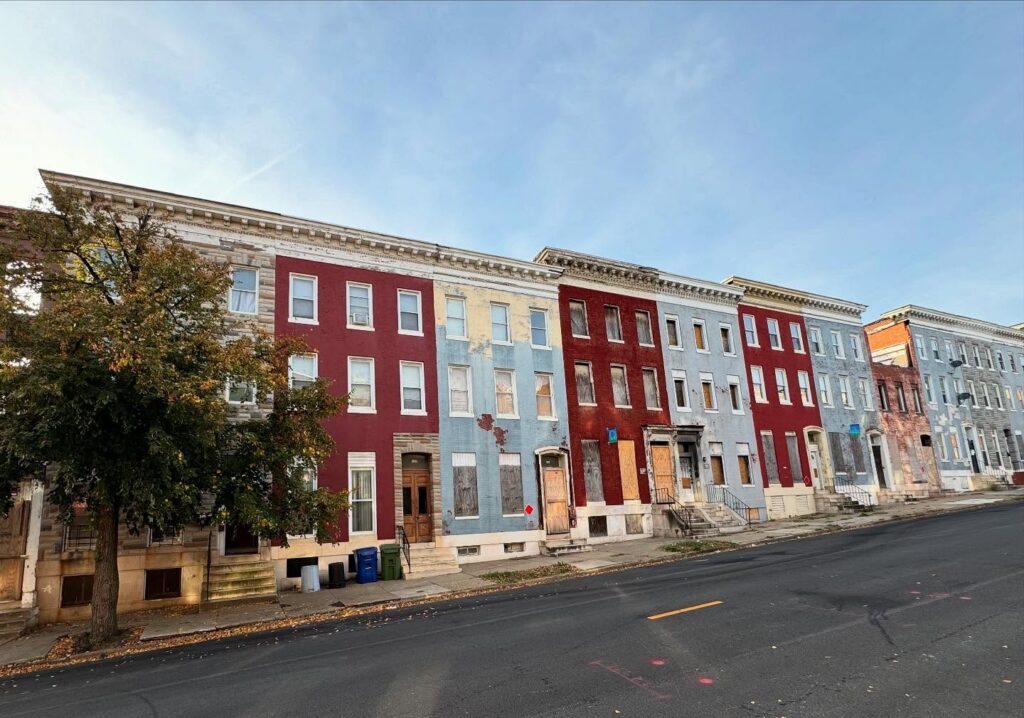
In many cities, the homeownership gap reflects not a shortage of aspiring buyers, but the long erosion of affordable homes for sale. In communities shaped by redlining, population loss, and decades of systemic neglect, the problem is often twofold: homeownership remains financially out of reach for many families, and the supply of high-quality, affordable homes has been hollowed out. In some neighborhoods, that dysfunction is compounded by hypervacancy, where abandoned or uninhabitable properties sit empty for years, dragging down surrounding values even as would-be buyers struggle to find homes they can realistically purchase.

NationSwell’s Solution Spotlight series is designed to surface the most innovative and promising (or proven!) initiatives and approaches that are creating results. Each installment offers a closer look at a unique, impact-driven model — how it works in practice, how it was brought to bear, and what it reveals about building durable change. Sourced from within the NationSwell community, the series aims to surface what’s working, why it matters, and how it can be adapted or scaled.

This feature spotlights two models that both show how reinvestment in overlooked areas can unlock exciting new opportunities for homeownership (and avoid the displacement of communities who have lived in those neighborhoods for decades.) 

Parity Homes — created and run by Bree Jones in West Baltimore — has stepped in to fill that gap by rebuilding not just individual homes, but also by rethinking the conditions that make ownership possible in the first place. 

And in Springfield, Massachusetts, the City of Homes Initiative — led by Way Finders and supported by MassMutual Foundation — is advancing a policy-driven pathway that transforms long-blighted properties into affordable homeownership opportunities for working families. 

More on both below…


Parity Homes: Rebuilding homes and markets in West Baltimore

“What we do in simple terms is we create both the supply and the demand to jumpstart housing activity in collapsed markets through social capital.— Bree Jones, Founder & CEO, Parity Homes

The Problem: Dysfunctional housing markets
In historically Black neighborhoods like those in West Baltimore, homeownership barriers aren’t driven by overheated demand, but by long-term market disinvestment. Thousands of homes sit vacant or uninhabitable due to decades of redlining, urban renewal, and predatory lending that displaced residents and restricted the flow of capital into Black neighborhoods. Legacy residents are often left with devalued homes and overdue maintenance, while new buyers have few affordable and livable options. Traditional housing markets — and financing systems — struggle to operate effectively in this context.

For individual buyers, the perceived risk of being “first” — moving onto a block without confidence that neighbors, services, or investment will follow — further suppresses demand, even where interest in homeownership exists.

The Solution: Community building for market revival
Founded in 2020, Parity is a development company and community-building model designed to address both sides of this problem at once. The organization acquires clusters of vacant properties, renovates them to a high standard, and pre-sells homes to cohorts of buyers — often friends, family members, or existing social networks — who move onto a block together.

By anchoring demand in trusted relationships rather than isolated individual buyers, Parity reduces the social and financial risk of moving into disinvested neighborhoods, helping buyers feel confident that they are not entering a block — or market — alone. Rather than treating homeownership as an individual leap of faith, Parity treats it as a coordinated act of collective entry which contributes to stronger community relations and richer social capital.

On the buyer side, Parity guides participants through a readiness program that prepares them financially, emotionally, and mentally for homeownership. On the community side, it supports legacy residents through key partnerships with organizations like the SOS Fund which connects residents with anti-displacement resources that help them address deferred maintenance and lock in property taxes as values rise.

Why it’s Different: Parity treats social capital as the primary catalyst for market revival. Rather than marketing homes to individual buyers in isolation, the organization intentionally assembles cohorts of prospective homeowners from existing social networks, guiding them through the buying process together. 

Parity recruits buyers through referrals, community outreach, and trusted relationships, then moves cohorts through a shared readiness process that builds financial preparedness alongside mutual commitment. And by pre-selling homes before construction and anchoring demand in groups that already trust one another, Parity reduces uncertainty for buyers, lenders, and the surrounding market. Parity’s core process of repurposing vacant houses also contributes to more sustainable construction, because it creates a much smaller ecological footprint than a new construction site would.

“We pre-sell all of our homes. The buyer goes through the entire construction process — they choose finishes, they’re invested. It’s not ‘build it and list it on Zillow.”

— Bree Jones, Founder & CEO, Parity Homes

Impact Highlights: In just a few years, Parity has moved from proof of concept to measurable, neighborhood-level impact, accelerating renovation timelines while demonstrating that coordinated reinvestment can revive disinvested blocks.

What began as a vision to cluster buyers and rebuild vacant homes has translated into measurable production and faster delivery, signaling that the model can scale:

  • 60+ properties acquired
  • 13 units completed on the first block; 20 more under development
  • Renovation timelines reduced from ~12 months to ~6 months

Key Enabler: Catalytic capital that de-risks early stage innovation

“Without JPMorgan Chase’s catalytic funding, I wouldn’t have been able to do any of this.”

— Bree Jones, Founder & CEO, Parity Homes

Parity launched with a $2M catalytic grant from JPMorgan Chase, enabling early proof of concept at a moment when traditional lenders were unlikely to back a market-revitalization model. That early capital helped to demonstrate viability, which in turn helped to attract additional partners.

The organization has since expanded through blended capital, including a $1M, 1% program-related investment (PRI) from the Nathan Cummings Foundation, and a $2M revolving construction loan from Baltimore Community Lending – increasingly leveraging debt to scale production.

Future Plans: Parity’s model is uniquely designed for housing markets experiencing hypervacancy like Detroit, Cleveland, St. Louis, East Cleveland, and Kansas City.  Parity has proven the ability to convert the most entrenched dilapidation and vacancy into ownership, rebuilding intergenerational wealth, and strengthening civic power at the block, neighborhood, and city level.

Lessons & applications for other leaders:

  • Design for community building, not just individual sales. Pre-selling homes to buyer cohorts before construction reduces risk for purchasers and lenders alike. By leveraging existing relationships to assemble and support buyers, Parity demonstrates that social capital can function as a form of investable capital when intentionally organized.
  • Build ownership pathways for a range of buyer profiles. Designing financing and readiness processes around actual lived circumstances expands access while strengthening long-term stability.
  • Fix underlying structural misalignment, not just the symptoms. Markets don’t fail accidentally — they fail when systems are misaligned. Pairing social driven demand with institutional lending, national philanthropy, policy, and construction innovation restores market function (rather than temporarily masking dysfunction).

“Our long-term theory of change is about building power—neighbors who know how to advocate for themselves and shape the systems that serve them.”

— Bree Jones, Founder & CEO, Parity Homes


City of Homes: Turning blight into pathways to ownership in Springfield

“We’re creating a new pathway for properties to go from being blighted to being assets for the community — and for families that didn’t have that opportunity before.”

— Keith Fairey, President & CEO, Way Finders

The Problem: Blight, disinvestment, and lost ownership opportunities
Springfield, Massachusetts is historically known as the “City of Homes,” but decades of disinvestment have left many single- and two-family properties abandoned or in severe disrepair. In turn, those properties depress surrounding home values, destabilize neighborhoods, and often cycle through the court-appointed receivership process where they are rehabilitated and often converted into rental units rather than preserved as ownership opportunities.

At the same time, hundreds of local residents complete first-time homebuyer education programs each year. Upon graduation, and with access to down payment assistance programs, they still struggle to uncover adequate, affordable inventory to purchase. This imbalance results in a glut of blighted homes creating liabilities for neighborhoods while scores of aspiring homeowners remain locked out.

The Solution: Connecting policy reform, redevelopment, and first-time buyers
Observing this disconnect, Way Finders created its “City of Homes” initiative (named for the city it serves), which relies on three coinciding solutions in order to create a new, equity-focused pathway for prospective homeowners: 

First, Way Finders works effectively within recent reforms to Massachusetts’ Affordable Homes Act — shaped by Way Finders’ own on-the-ground innovation in both process and partnerships — to appoint what are known as “special attorney receivers” to interrupt the automatic conversion of distressed properties into permanent rental stock. Traditionally, when properties entered into receivership proceedings, the assigned court-appointed receivers were private contractors or developers. But thanks to recent reforms, the law now allows for the appointment of “special attorney receivers,” who transfer the properties specifically to nonprofit developers like Way Finders for rehabilitation and resale as an affordable homeownership opportunity.

In addition to strengthening ownership pipelines, Way Finders simultaneously leverages its developmental capacity by working to acquire, rehabilitate, or rebuild the blighted homes themselves — often using local, BIPOC-owned contractors to do so. 

Finally, Way Finders taps into an extant first-time homebuyer education pipeline that it already uses to train 700–800 prospective buyers annually in order to connect that demand directly to newly restored inventory. Homes are then sold affordably to buyers earning roughly 80–100% of area median income, with mechanisms such as lotteries used when city-owned funding is involved.

Why it’s Different: By recognizing and slightly modifying how receivership works under Massachusetts state law, the model creates a durable pathway for blighted properties to return to community ownership rather than speculative rental properties. 

“This is such a slight tweak to an existing process that has such strong ripple effects… reminding us that innovation doesn’t always have to mean looking for a big flashy unicorn. It can be as simple as a shift in the way that we think about something that already exists.”
– Dennis Duquette, President & CEO, MassMutual Foundation

Impact Highlights: While still early in its implementation (the Massachusetts Affordable Homes Act was signed into law in August of 2024), properties are currently being rehabilitated in concentrated clusters, creating a multiplier stabilization effect within targeted neighborhoods. The special attorney receiver pathway is now codified statewide through Massachusetts’ Affordable Homes Act, expanding the model beyond Springfield, and early implementation demonstrates that long-blighted ownership properties can return to productive, affordable homeownership rather than converting to rental stock.

Keith Fairey, President & CEO, Way Finders, shared one recent anecdote from a blighted home’s former owner upon learning that it would be rehabilitated into a family home:

“We had a public event at a two-family home that had seen much better days… it was boarded up. The special attorney who helped convey that property brought the owner — someone who grew up in the home but couldn’t keep up with it.

I didn’t know how that would go… but he felt really bad that it was pulling down the neighborhood. He was glad to see that it was going to be somebody’s home again rather than sitting there in a very blighted and abandoned state.” 

— Keith Fairey, President & CEO, Way Finders

Key Enabler: Patient, flexible capital and systems-oriented philanthropy

“We don’t hold the solutions… we are a connector. We use our resources to bring folks together, to experiment, and advance ideas into action.”

– Dennis Duquette, President & CEO, MassMutual Foundation

MassMutual Foundation has played a catalytic role in bringing the City of Homes model to life. Over several years, the Foundation funded research by a retired housing court judge to prove viability, pressure-tested the concept with stakeholders across the city, and provided early, flexible capital to de-risk the pilot before other funders joined.

Beyond funding, MassMutual also convened stakeholder groups, supported statewide policy adoption, and aligned complimentary investments — including down payment assistance resources for Western Massachusetts — to strengthen existing ownership pipelines.

Future Plans: Scalable pathways for gateway cities
The legislative framework that underpins the City of Homes Initiative is now active statewide, with interest emerging from other “gateway cities” across Massachusetts — former industrial centers facing similar cycles of abandonment and disinvestment.

If scaled, the model offers:

  • A durable mechanism for transforming blight into ownership
  • Expanded pathways to household wealth-building
  • Stabilized neighborhoods where property value growth benefits working families rather than external investors

For MassMutual Foundation, the long-term goal aligns with its broader mission of strengthening financial resilience:

“Homeownership is such a key lever in building financial resilience and capability. It’s also foundational to establishing generational wealth over time.”

– Dennis Duquette, President & CEO, MassMutual Foundation

Lessons & applications for other leaders:

  • Slight policy shifts can unlock outsized impact. A targeted change to receivership rules created a new pathway without having to dismantle the entire system.
  • Pair systems change with tactical investment. Supporting first-time homebuyer programs and down payment assistance in tandem with reforms to structural barriers accelerates impact.
  • Patient capital matters. The City of Homes Initiative required years of dialogue, research, and early stage risk tolerance before it could be implemented.
  • Innovation doesn’t have to be “disruptive” to be transformative. Sometimes the most durable change comes from adjusting existing infrastructure rather than inventing something new.

Impact Kit: Collective Action

Impact Kit: Collective Action

NationSwell Impact Kits are designed to quickly immerse leaders in highly relevant, actionable, and curated supports for their work in evergreen practice areas. This Impact Kit is focused on collective action.

Collective action drives impact that no single organization can achieve alone. Organizations that invest in building partnerships, aligning incentives, and leveraging shared resources are better positioned to create lasting change with their communities. When done well, collective action enables leaders to:

  • Mobilize diverse stakeholders toward shared goals,
  • Amplify the reach and effectiveness of programs and initiatives,
  • Address systemic challenges with sustainable solutions,
  • Build trust, capacity, and resilience across communities, and
  • Translate collaboration into measurable impact that endures over time.

This resource is designed to equip leaders with timely insights and emerging practices from across the NationSwell community, key resources to support your work and share with colleagues and partners, and new ideas for how to engage further with NationSwell in support of your goals.


Share this report

The NationSwell Council on Workforce Innovation for a Changing World

We’re living through one of the most profound shifts in the history of work. According to LinkedIn data, 70% of the skills used in most jobs will change by 2030, accelerated by Artificial Intelligence. AI and emerging technologies are transforming not only how we work, but how we design work – creating new roles, redefining old ones, and making evolving skills the currency of career growth in a more dynamic and rapidly shifting labor market.

Meeting this moment requires grappling with hard questions: What will the jobs of the future be? How are we teaching, training, and upskilling learners to ensure access to opportunity is inclusive — from early career to lifelong professionals? And perhaps most importantly, how can we harness this moment to drive workforce innovation that benefits all workers?

In the first quarter of 2026, the NationSwell Council kicked off a Salon series dedicated to exploring Workforce Innovation for a Changing World. The convenings that followed connected leaders across sectors on how we can prepare a workforce that thrives amid AI-driven uncertainty and where innovation expands access to opportunity.

We’re excited to present a curated collection of the insights and essential resources we’ve distilled from these conversations.


Key Insights:

  • Data is a major missing piece. The best existing data on in demand skills and jobs is still 12 months behind the market. A major challenge and opportunity exists in getting large employers to share and leverage their data to better inform the field.
  • Future-ready skills matter as much as technical ones. As AI reshapes entry-level work, adaptability, curiosity, empathy, and learning agility are becoming foundational.
  • We need broad AI fluency. From those in and looking to enter the workforce, to teachers, administrators and nonprofit professionals, broad AI fluency will be required to drive meaningful contributions from society on the path AI takes in the coming years.
  • Deep and broad partnership will be required moving forward. No single organization can keep up alone; collaboration across nonprofits, employers, funders, and government is critical to meeting this moment.
  • Hope is essential. Especially for young people and communities facing layered barriers, agency, belonging, and belief in possibility remain powerful drivers of economic mobility.
  • This moment in AI & workforce can’t be separated from the broader cultural context. As AI accelerates amid heightened attacks on our most vulnerable communities, there is an urgent risk of further embedding harm into systems at scale. From representation in the development of AI, to data, use cases and learning pathways, equity in AI design and deployment will be essential to building a future of broadly shared prosperity.
  • The Redesign of work is already here. We’re at a turning point. AI and automation are changing not just how we work, but what work looks like. Many entry-level jobs are disappearing, while new kinds of work are growing in the gig, creator, and hybrid economies. As the old idea of a “career ladder” fades, people are finding less traditional and more flexible ways to build their careers. This raises an important question: if early-career jobs are disappearing, how will people get their start? We believe we need to create new kinds of beginner roles and pathways that give people the same experience and mobility those entry-level jobs once did.
  • Learning and training must catch up to reality. We know that traditional workforce programs often assume linear journeys — start, train, promote — but today’s workers move fluidly between sectors, roles, and even employment forms. We discussed the need for real-time, responsive learning models that evolve as quickly as technology does. Ideas included reverse mentoring and volunteerism as a pathway for skill-building and cross-sector exposure. We also emphasized the importance of creating spaces where people can “fail forward” — building confidence and adaptability through experimentation rather than perfection.
  • Inclusion and belonging across generations. We recognized that demographic change is reshaping the workforce conversation. Workers over 40 are often excluded from AI and tech training, even as their roles shift most rapidly. To build a truly inclusive innovation economy, we must foster belonging and skill development across all generations. That means normalizing lifelong learning and supporting mid- and later-career professionals.
  • The opportunity for community-centered innovation. We talked about how communities can create their own “value loops” — local systems where entrepreneurship helps solve social problems and create lasting jobs. Instead of keeping nonprofits and businesses separate, we can build hybrid models that mix purpose with profit. We also emphasized the importance of skilled trades, which are still vital, less likely to be replaced by AI, and can help anchor stronger local economies.
  • Anticipating, not reacting, to workforce shifts. To get ahead of disruption, we need earlier, proactive interventions — particularly in regions already feeling economic shocks, such as the DC/DMV area. We discussed the need for early warning systems, scenario planning, and community-driven transition strategies that safeguard pathways before they collapse.
  • The promise — and responsibility — of AI. AI is ultimately amplified intention — it reflects and expands what we design it to do. It can help grow human potential, creativity, and equity, but only if guided with care and purpose. Without thoughtful guardrails, it could instead widen existing inequities. The real question is: who will invest in the work needed — the experimentation, retraining, and community innovation — to make sure the future of work benefits everyone?

Resources shared:

Health in Action: Care Needs and Innovations in Rural Communities

Rural communities face some of the most persistent health challenges in the country—provider shortages, long travel distances for care, limited broadband, higher rates of chronic illness, and underfunded local health systems. Yet, across these same regions, practitioners, employers, health systems, nonprofits, and local leaders are piloting innovative approaches: mobile and telehealth models, community health workers, cross-sector care networks, and employer-backed wellness programs that meet people where they are.

During a March 24 virtual Leader Roundtable, leaders from the NationSwell community came together to discuss the real-world models working on the ground, the operational and financial barriers to scaling them, and the opportunities for multi-sector collaboration that can create more reliable, equitable access to care. Some of the most salient takeaways from that discussion appear below:


Key takeaways

Recognize Community Health Workers as the connective tissue. CHWs are most effective when embedded within communities and linked to broader care systems, bridging social services, clinical care, and local resources. Sustaining and expanding this impact requires flexible funding that meets CHWs where they are by unlocking early-stage innovation, reducing unnecessary restrictions, and resourcing the work already happening on the ground. 

Anchor care in community infrastructure to expand access at scale. Care is most effective when it flows through familiar structures, such as churches and local organizations that have long served as anchors in their communities, rather than relying solely on traditional clinical settings. From faith-based health navigation to in-home support for high-risk populations, training and deploying workers from within these networks strengthens engagement and increases the likelihood that care is sustained.

Leverage technology to unlock reimbursement and coordination. Purpose-built platforms, hub models, and shared infrastructure are enabling community-based organizations to track outcomes, meet compliance requirements, and access reimbursement. When paired with technical support, these tools reduce administrative burden and make it possible to scale impact while maintaining quality.

Use data to prove value and secure sustainable funding. Demonstrating outcomes like increased primary care engagement, reduced emergency utilization, and cost savings is critical to making the case for continued investment. Data not only validates the impact of community-based models but also translates that impact into language that funders and policymakers act on.

Invest in training that is locally relevant and role-specific. Expanding the workforce requires equipping CHWs with training that reflects the populations they serve, from maternal health to behavioral health to chronic disease. Tailored, community-informed curricula ensure that workers are prepared to meet the specific needs of their communities.

Close the gap by aligning systems, funding, and community needs. Persistent barriers like fragmented data systems, limited interoperability, and short-term funding continue to slow progress. Closing the rural health access gap requires deeper coordination, sustained investment in community-based infrastructure, and policies that reflect how care is actually delivered on the ground.

Resiliency and Innovation in Nonprofit Leadership

A year after federal funding cuts, the dismantling of USAID, and politicized targeting of organizations advancing equity and justice, many nonprofits have been forced to adapt—revisiting their models, rethinking partnerships, and finding new ways to sustain mission-critical work amid heightened uncertainty.

On March 10, NationSwell and fellow nonprofit leaders gathered virtually for an honest, forward-looking discussion on what resiliency and innovation look like now, exploring how organizations are evolving to protect their missions, secure new sources of support, and design fresh solutions to address the widening gaps in funding and services left in the wake of these shifts. Some of the most salient insights from that discussion appear below.


Key takeaways

Build resilience through financial contingencies and diversified resources. Leaders are strengthening their ability to navigate uncertainty by planning for multiple scenarios and expanding the range of resources that sustain their work. Diversified funding creates the flexibility organizations need to adapt while continuing to serve communities.

Utilize partnerships as investments in long-term capacity. Nonprofit leaders and funders emphasize the power of trust-based philanthropy and capacity-building investments. Partnerships rooted in flexibility, shared learning, and multi-year support enable organizations to strengthen their operations while responding more effectively to shifting contexts.

Anchor innovation in a clear value proposition. In a disruptive environment where resources are constrained and expectations continue to rise, organizations are sharpening their understanding of the value they deliver. Clarity around distinct roles, interventions, and offerings, enables the sector’s most impactful ideas to emerge through creative adaptation.

Listen closely to key constituents through ongoing discovery. Resilient organizations are deeply attuned to the needs of the people and partners who shape their work. By continuously engaging communities, participants, funders, and collaborators through conversation, feedback, and observation, organizations can ensure that programs remain aligned with evolving needs.

Leverage storytelling to connect mission with impact. Storytelling is a powerful tool for navigating complexity while keeping organizations grounded in the purpose of their work. By translating outcomes into compelling narratives, nonprofits clarify the role of their programs, strengthen their relevance, and communicate both the urgency of today’s challenges and the progress being made.

Create shared infrastructure that strengthens the ecosystem. Rather than working in isolation, organizations should explore ways to pool resources, knowledge, and operational capacity across partnerships. Shared infrastructure allows nonprofits to scale impact and reduce duplication across the sector.

Strengthen the ecosystem through collective resilience. In times of uncertainty, nonprofit leadership relies on networks of support that extend across organizations, funders, and communities to enable progress toward shared goals. The strength to navigate disruption grows from shared responsibility, trusted partnerships, and the belief that the work only moves forward together.

Five Minutes with… IBM’s Sara Link

As artificial intelligence reshapes how institutions operate, many nonprofits and public-sector leaders are grappling with a pressing question: How can AI be deployed responsibly and equitably in service of the public good? 

At IBM, that question isn’t theoretical — it’s central to how the company designs, governs, and advances its AI strategy across sectors. In a new resource developed in collaboration with NationSwell, Responsible Use of AI for Social Impact, IBM outlines a practical roadmap for responsible AI adoption that moves beyond high-level principles and into actionable guidance for organizations navigating capacity constraints, ethical considerations, and rapidly evolving technology. The report emphasizes AI literacy; governance as an enabler instead of a blocker; and a clear focus on augmenting, rather than replacing, human capability. 

For this installment of Five Minutes with…., NationSwell spoke with Sara Link — IBM’s Global Head of Employee Impact — about what it takes to operationalize trustworthy AI at scale and why government and social sector leaders must be equipped not just with tools, but with the systems and confidence to use them well.

We asked Sara how IBM is reframing responsible AI from a compliance exercise into a performance advantage, what meaningful AI literacy actually looks like inside an organization, and what wild success for ethical AI adoption could look like five years from now. 

Here’s what she had to say:


NationSwell: What do you see as most distinctive about IBM’s approach to responsible AI, particularly for nonprofits and social impact organizations that face capacity constraints?

Sara Link, Global Head of Impact at IBM: It’s encouraging to see so many responsible AI principles circulating right now; that level of focus and intentionality is important. At IBM, our approach centers on making AI practical, understandable, and genuinely useful in everyday work. Our belief is that AI should help people do their jobs better — not replace them, overwhelm them, or create confusion.

One of the key insights in the report is that responsible AI has to be realistic for organizations with limited time, staff, and capacity. Nonprofits don’t have extra resources or margin for error, and in many cases they don’t have deep technical expertise in-house. So responsible AI can’t just live in a policy document — it has to be built in a way that reflects those constraints. That means designing tools and governance structures that are usable, accessible, and practical from the start, so organizations can adopt them confidently and integrate them into their daily work.

NationSwell: Augmenting rather than replacing human capability is central to IBM’s view of AI. Can you share an example of what that looks like in practice, either at IBM or with partners?

Link, IBM: In practice, we think about AI as something that helps bring work to life — whether that’s surfacing information, spotting patterns, or saving time on repetitive tasks. But at the end of the day, people still make the final decisions, especially when judgment, fairness, or context matter.

At IBM, for example, internal tools like AskHR or AskCSR help employees find answers more quickly and efficiently. They streamline the process, but they don’t replace accountability. People are still responsible for what happens next. The goal is to enable better, more informed decisions — not to obscure or complicate them.

NationSwell: The report emphasizes foundational AI literacy. What does “good” AI literacy look like inside an organization, and how does that translate into better outcomes?

Link, IBM: Good AI literacy means people aren’t afraid of the tools, but they also don’t blindly trust them. It shows up when leaders and staff understand what AI can support and where human judgment still needs to step in.

You can hear it in the kinds of questions people feel comfortable asking: Does this actually make sense? Should we double-check this before acting on it? For example, in a nonprofit using AI to screen applications or triage services, literacy shows up when staff know how to review AI recommendations, recognize when something doesn’t feel right, and understand that the final decision rests with them.

That kind of literacy leads to better mission outcomes. It reduces errors, helps guard against bias, and builds trust with the communities being served rather than simply automating decisions without oversight.

NationSwell: How does the report reframe responsible AI governance as an enabler rather than a blocker? What is one practical first step an organization can take?

Link, IBM: When you lay out clear rules, it actually becomes easier to move forward. Clarity helps people understand what’s acceptable and what’s not. Without that clarity, uncertainty can cause hesitation or lead organizations to avoid using AI altogether. One of the strongest findings in the report is that governance doesn’t slow adoption; it accelerates it by removing ambiguity.

A practical first step is to build a simple pause point into an existing workflow — a moment where a human reviews and signs off before an AI-driven decision affects someone. It doesn’t have to be complicated. It can be as straightforward as asking: Does this outcome make sense? Would I be comfortable explaining this decision to the person it impacts?

Over time, those small, repeatable checks turn responsible AI from a written policy into a daily habit. And that’s what enables organizations to scale AI safely and confidently.

NationSwell: If you could change one thing about how funders currently approach AI in the social sector, what would it be?

Link, IBM: First, it’s critical for funders to recognize the importance of investing in organizational capacity; that’s the foundation. I would encourage funders to focus not just on funding AI tools, but on supporting people’s ability to use AI well over time.

Investing in technology alone doesn’t create impact if organizations aren’t prepared to work with it. Right now, many nonprofits are expected to figure this out on their own. They may receive funding to pilot AI, but not necessarily the support for training, governance, or long-term learning that makes those tools effective and safe.

Through IBM’s AI for Impact program, which we launched in late 2024, we’ve brought nonprofits together to share how they’re using AI, what questions they have, and where they see opportunity. A recurring theme has been the need for funding that supports both the right tools and the training required to use them responsibly. And research from the IBM Institute for Business Value shows that skills are evolving rapidly — 57% of executives surveyed expect today’s skills to become outdated by 2030. That pressure is even more acute in the social sector, where resources are already stretched.

The funders making the biggest difference are supporting AI readiness, not just adoption — investing in training, shared standards, and giving teams time to learn and adapt, not just deliver. I’d also encourage funders to make their grantees aware of programs like AI for Impact. Many of these resources are free and can help organizations and their leaders build the knowledge and confidence they need to prepare for what’s ahead.

NationSwell: If responsible AI adoption truly takes root, what might wild success look like for the sector five years from now?

Link, IBM: The vision of success, to me, is that AI makes work easier and fairer — not more stressful or confusing. If we can eliminate that sense of overwhelm and instead empower people to use their skills more fully, that would be a meaningful outcome.

In that future, people would understand the tools they’re using and feel confident explaining the decisions those tools inform. AI would help nonprofits do more good without eroding trust or weakening human connection. Most importantly, technology would support organizations in serving communities better — not get in the way.

That’s what wild success looks like: better outcomes for communities, more efficient pathways to get there, and trust and connection preserved throughout the process.

NationSwell: What have you personally learned or found inspiring as you’ve helped lead this work around AI? How has this journey informed your broader leadership in the corporate impact space?

Link, IBM: For a long time, I’ve focused on capacity building for nonprofits and on how the corporate sector and funders can partner more closely with them, providing the right level of support so they can better serve their communities.

What’s been most inspiring lately is the openness I’ve seen when nonprofits come together — the willingness to share ideas, build relationships, and solve challenges collaboratively. There’s a real energy in the room when leaders from across sectors are learning from one another and exploring what’s possible.

I saw that firsthand at a recent conference after speaking on this topic: A healthcare employee approached me and shared that she and her colleagues had been experimenting with AI tools to solve internal challenges, and they were eager to bring leadership into the conversation to explore the potential more formally. She ended up connecting with another healthcare system that was further along, helping to broker a conversation between them.

That kind of openness — being curious about what’s out there and willing to imagine what could be possible — is what excites me most. It’s that spirit of shared learning and forward momentum that will ultimately drive meaningful change.

NationSwell: Is there anything else from the report — or from your leadership perspective — that you’d like to share?

Link, IBM: As someone who doesn’t necessarily have an engineering or a technical background, what’s been especially inspiring to me is realizing that you don’t need deep technical expertise to ask the right questions or to begin this journey of continuous learning. You don’t have to be an engineer to engage meaningfully with AI.

Personally, this experience has shown me how much further we can take our work by building our skills, staying curious, and asking thoughtful questions. When we approach AI as a tool for strengthening connections and building stronger partnerships — rather than something intimidating or purely technical — it becomes incredibly energizing. That mindset has been one of the most exciting parts of this journey for me.

Five Minutes with… Goodstack’s Aylin Oncel

As corporate impact programs grow more ambitious, they’re also becoming more complex. Employee engagement, grants, foundations, and product-led giving often evolve in parallel — built by different teams, on different systems, at different moments in time. The intent is strong — but without shared infrastructure, friction sets in: fragmented data, inconsistent governance, duplicated nonprofit relationships, and rising operational costs.

Enter Goodstack, which was built to address that disconnect. As expectations around transparency, compliance, and measurable impact continue to rise, the need for connective infrastructure has become more important than ever. Rather than layering new initiatives onto old systems, Goodstack helps organizations unify nonprofit verification, donation rails, governance, and reporting into a cohesive impact operating system — allowing distinct programs to remain purposeful while connected in execution.

For this installment of Five Minutes with…, NationSwell spoke with Aylin Oncel — VP of Social Impact at Goodstack — about what breaks down when social impact efforts remain siloed, why infrastructure is emerging as the next frontier of corporate impact, and what becomes possible when programs evolve from ad hoc initiatives into a connected, compounding strategy.

Here’s what she had to say:


NationSwell: How would you describe the core problem Goodstack is trying to solve for in corporate social impact — what tends to break down inside companies when CSR programs, employee engagement, and product-led giving aren’t connected to each other?

Aylin Oncel, VP of Social Impact, Goodstack: In my role as VP of Social Impact at Goodstack, I spend a lot of time talking with companies that are deeply committed to doing good, but are navigating increasingly complex impact ecosystems. What I see consistently is not a lack of intent, but a lack of connective infrastructure.

Many impact efforts across an organization start off siloed. Employee engagement, grants, and product-led giving are usually built at different moments, by different teams, in response to different needs. That’s a realistic and often effective starting point. The challenge emerges as those programs scale.

As organizations grow, disconnected systems begin to create friction. Impact data fragments, experiences become inconsistent, and strategic alignment becomes harder to sustain, both internally and for the nonprofits on the receiving end. We often see the same nonprofit relationships managed across multiple tools, different verification standards applied across programs, and teams spending significant time reconciling data rather than learning from it. Operational costs increase, global rollouts slow down, and risk rises when governance and tracking are inconsistent.

Goodstack helps by providing shared infrastructure that allows these efforts to remain distinct in purpose, but connected in execution. By standardizing nonprofit verification, donation flows, governance, and reporting across programs, we help company impact evolve from standalone initiatives into a coherent, resilient impact operating system.

NationSwell: How do you define the role Goodstack is actually seeking to play for companies, and why does that distinction matter in the current CSR landscape?

Oncel, Goodstack: We think of Goodstack as infrastructure for corporate impact, and also as a strategic partner helping companies bring their impact efforts together in a way that’s sustainable over time.

Our role is to provide the core systems companies and nonprofits can rely on, including nonprofit verification, donation rails, governance frameworks, and shared visibility across employee programs, customer experiences, foundations, and grants. Our partnership shows up in helping teams see and operate those efforts as part of a single impact strategy, rather than as separate initiatives competing for attention or resources.

That distinction matters because impact work today is inherently cross-functional, while expectations around trust, compliance, and measurement continue to rise. Companies need flexibility in how they activate and scale giving, but they also need a partner who understands the full ecosystem and can help connect programs into a cohesive strategy. When that foundation is in place, teams spend less time rebuilding systems and more time focusing on outcomes, engagement, and long-term impact.

NationSwell: You’ve identified a gap between different internal CSR stakeholders — HR, foundations, product, sales — who often aren’t talking to each other. What’s lost when that fragmentation persists, and what becomes possible when those efforts are connected?

Oncel, Goodstack: When CSR efforts stay fragmented, the biggest thing that’s lost is momentum.

Each team may be doing meaningful work in isolation, but those efforts rarely reinforce one another. Employees don’t always see how their time or giving fits into a broader narrative. Impact data lives in disconnected spreadsheets. Leaders miss opportunities to understand what’s resonating, what’s scaling, and where real outcomes are being created.

When efforts are connected through shared infrastructure and standards, participation tends to increase because experiences are simpler and more transparent. Insights improve because impact is measured consistently. Companies move from one-off campaigns to an always-on strategy that scales across teams and geographies. Impact shifts from episodic to compounding.

NationSwell: Without getting into proprietary details, can you share an example of a moment when things really clicked — when a company started to see its impact efforts as one connected system, and changed how they worked or thought about CSR?

Oncel, Goodstack: One of the clearest “click” moments I’ve seen is when a company realizes it no longer needs separate systems for nonprofit programs, employee giving, and grants. Once the underlying infrastructure is standardized across nonprofit verification, donation flows, and shared reporting, impact stops feeling like a collection of disconnected initiatives and starts functioning as part of the company’s operating system.

Teams spend less time managing logistics and more time thinking strategically. Reporting cycles that once took weeks begin to happen in near real time, and moments like GivingTuesday shift from one-off obligations into genuine opportunities to accelerate engagement. Volunteer initiatives spark interest in giving, giving data surfaces the causes employees care about, and those insights inform grantmaking nominations and company-wide campaigns. Product-led programs reveal new opportunities to engage customers more meaningfully. Instead of running ad hoc initiatives, teams learn from patterns, adapt faster, and move forward with a shared sense of purpose.

NationSwell: How would you describe the next evolution of CSR, and what signals tell you whether or not we’re already moving in that direction?

Oncel, Goodstack: I see the next evolution of CSR unfolding across three dimensions.

First, expanding stakeholder engagement by embedding giving into products and everyday experiences. Thoughtful design makes participation intuitive and expands who gets to be part of impact.

Second, meet employees where they already are. Atlassian, a Goodstack partner, exemplifies this approach in its employee engagement program. As Atlassian employees volunteer and donate, they earn rewards for themselves and nonprofits they care about directly on the platform – with high-impact activities unlocking bigger rewards. It recognizes a wide range of giving behaviors and gives people a clear, flexible path to increasing their impact.

Third, connecting efforts across teams so impact isn’t experienced as a series of disconnected programs, but as a cohesive narrative that demonstrates compounding progress over time.

The signals are already here. More leaders are asking not just how much was given, but who it reached, what changed, and how programs influence behavior and outcomes. That shift in questioning reflects a maturing field.

NationSwell: Goodstack sits at a unique intersection of data, infrastructure, and ecosystem visibility. How do you think about using that vantage point to not just report on impact, but to help shape better decisions?

Oncel, Goodstack: We’re thoughtful about how we use data and AI, because visibility alone doesn’t drive better decisions. It has to be paired with strong infrastructure, clear standards, and human judgment.

Where AI becomes powerful for us is in reducing friction and surfacing patterns that are difficult to see across large, complex impact programs. That can include revealing where engagement drops off, where interest clusters around specific causes, or where programs unintentionally overlap. These insights help teams act with greater confidence and intention.

Importantly, AI isn’t replacing decision-making. It’s supporting it. By pairing intelligent systems with verified nonprofit data, consistent governance, and transparent reporting, we help leaders spend less time reconciling information and more time designing impact strategies that are intentional, equitable, and resilient over time.

NationSwell: For CSR leaders who feel stuck repeating the same campaigns year after year, what’s one question they should be asking themselves if they want to unlock a more integrated, strategic approach to impact?

I’d encourage leaders to step back and ask, what problem are we actually trying to solve?

It’s easy to default to familiar formats and moments on the calendar without reassessing whether they’re still aligned with today’s challenges. Instead of starting with what you’ve always done, it can be more powerful to focus on how you might unlock new impact in service of your goals and overall mission.

That might mean pulling different levers, such as engaging customers in giving, designing employee programs that drive meaningful behavior change, or increasing access to funding and visibility for nonprofits that are often overlooked. When infrastructure is stable, leaders have the freedom to think creatively, test new approaches thoughtfully, and learn from what works.

The shift isn’t about reinventing the wheel. It’s about being clearer on the outcomes you want and more strategic in how you get there.

PepsiCo | Feeding potential

PepsiCo | Feeding potential

How PepsiCo’s Food for Good is creating a blueprint for global food security

Food for Good — the PepsiCo Foundation initiative for advancing food security — launched in Dallas, Texas, as an exercise in deep listening. Through sustained conversations with trusted community volunteers and leaders, PepsiCo learned that the 19 million school-aged children in the U.S. who depend on free or reduced-price meals at school were facing critical gaps in access to nutritious food during the summer months, when school was not in session.

Beginning in the summer of 2009, PepsiCo leveraged its food production, logistics, and distribution expertise — as well as a partnership with Frito-Lay, the convenient foods business unit of PepsiCo, that allowed for borrowed access to trucks and warehouse space — to prototype a summer meal delivery model. The privately-funded program quickly expanded into new cities, eventually outgrowing its original facility but maintaining its original commitment to staying rooted in community feedback and mission to fight hunger through access and equity.

Food for Good combines large-scale meal distribution, job creation, targeted child nutrition, disaster relief, and impactful storytelling to distribute nutritious meals and address crisis-driven hunger at scale.


Back to main page


Share this report