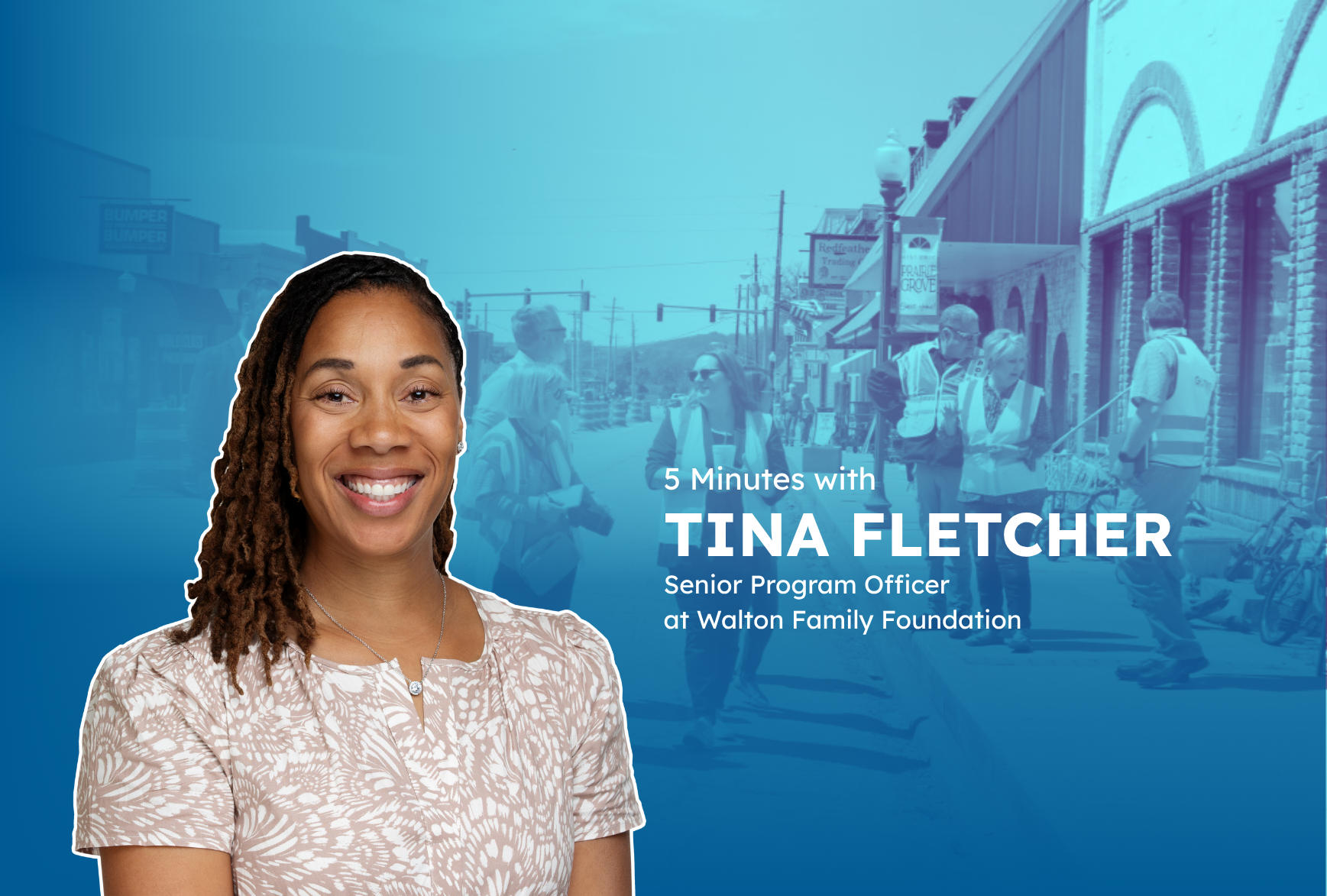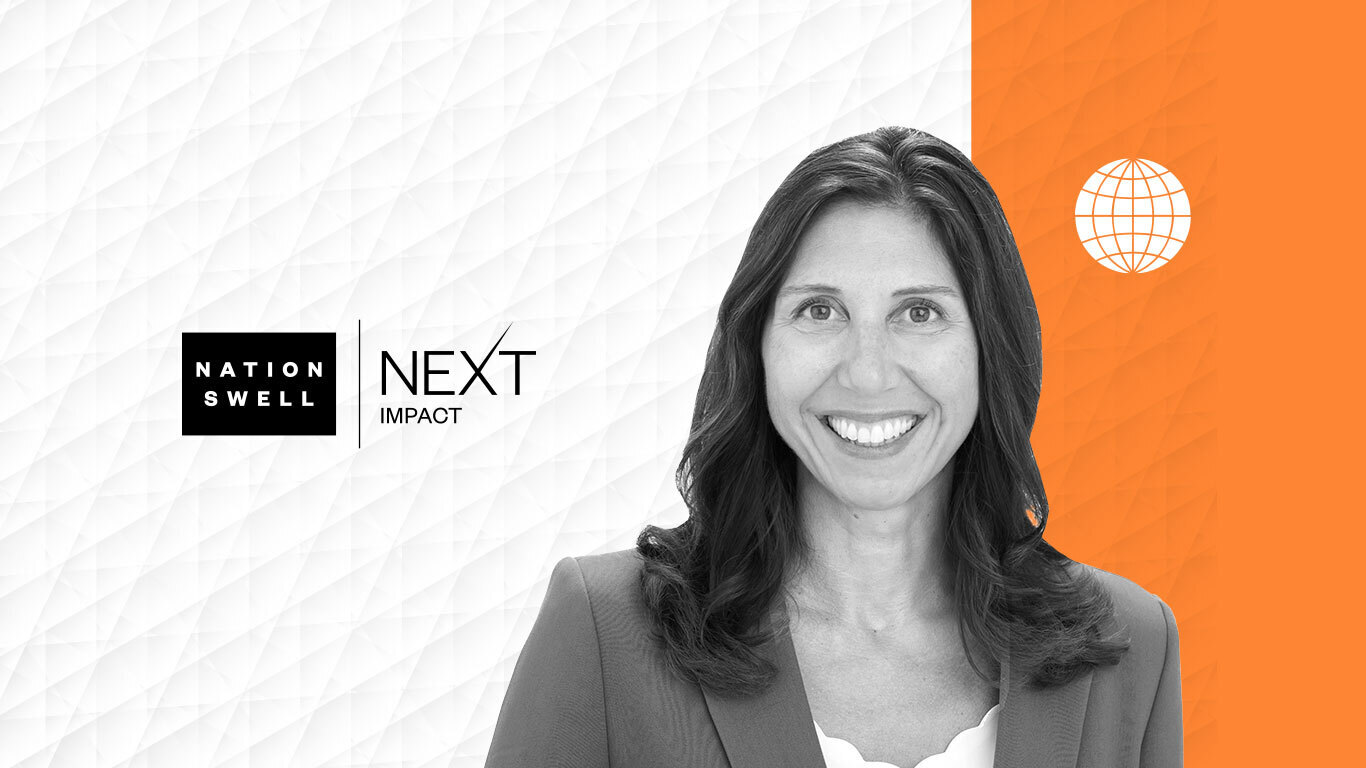
Five Minutes with… Walton Family Foundation’s Tina Fletcher

The Arkansas-Mississippi Delta is a case study in what community-rooted investment can make possible. Too often framed through deficit and disinvestment, the Delta is also a place of deep resilience, cultural richness, and local leadership; a region where people have been building and adapting solutions for generations, often without the level of sustained support they deserve. 

Tina Fletcher, who helps lead the Walton Family Foundation’s work in the Delta, is focused on helping shift that narrative by pairing long-term commitment with a community-centered approach to partnership. Across education, economic mobility, and leadership development, Fletcher’s work centers on strengthening what’s already working in the region and connecting the people and institutions best positioned to carry that momentum forward.

For this installment of Five Minutes With…, NationSwell spoke with Tina about what makes the Delta such a distinctive and inspiring place to work and why the greatest opportunity may be less about reinventing the Delta than investing in the talent and leadership that’s already there.

Here’s what she had to say:


NationSwell: For those less familiar, how would you describe the Delta — and what makes this region both unique and inspiring to you?

Tina Fletcher, Senior Program Officer, Walton Family Foundation: When it comes to the Delta, what stands out to me is just how much determination and resilience already exists. The Delta is a region rich in culture, community, and getting things done, with deep relationships and a strong sense of place that you can feel immediately. What makes it especially inspiring is that, despite being under-funded, the Delta has never lacked the capability to thrive. The Delta is full of people who have been leading and building for generations, people who aren’t waiting for solutions; they’re generating them in real time and in and meaningful ways. What’s needed now is investment that recognizes and accelerates that momentum because when you shift from “What’s wrong?” to “What’s working?”, the Delta looks entirely different.

NationSwell: How would you describe the Walton Family Foundation’s strategy on building trust and momentum in the Delta region over time?

Fletcher, WFF: At the Walton Family Foundation, our Delta Region strategy is simple, but not easy: show up, listen, be a good partner, and stay committed. Building trust in the Delta means investing in relationships just as much as we invest in results. In my role, I focus on strengthening what’s already working across education, economic mobility, and leadership, while finding creative ways to connect the individuals driving progress. I also bring a learning mindset to every table and conversation  I join, using data to inform the work without losing sight of community voice. That combination-commitment, consistency, humility, and rigor—is what turns trust into real momentum.

NationSwell: Can you share a moment or partnership in the Delta that changed how you think about community-centered philanthropy?

Fletcher, WFF: The biggest shift for me has been seeing what happens when communities aren’t just included—they’re in the lead. Across the Delta, I’ve seen young people, educators, and local leaders design solutions that are more relevant, effective, and sustainable than anything we could prescribe from the outside. I saw this firsthand in Jonestown, Mississippi, during a conversation with Mayor Columbus Russell, Jr., the youngest mayor in the state, and again in Helena-West Helena, Arkansas, led by Mayor Joseph Whitfield. Both are young, energetic leaders working in step with residents, partners, and funders to move their communities forward. Those moments reinforced that proximity matters. Community-centered philanthropy isn’t just about engagement, it’s about shared ownership. When communities lead together, the results aren’t just impactful, they’re sustainable. And that’s when the work doesn’t just land, it takes root.

NationSwell: For funders looking to invest in the Delta, what guidance would you offer to ensure their approach is both effective and community-centered? What are some common mistakes you’d recommend they avoid?

Fletcher, WFF: First, start by listening and plan to stay longer than you initially imagined. The Delta doesn’t need more one-off investments; it needs partners willing to build over time. Fund what’s already working, invest in capacity, and trust local leaders to guide the way. A common mistake is chasing quick wins without understanding the broader system or underestimating how long trust takes to build. In the Delta, philanthropy must focus on building trust and staying committed, because that’s what ultimately drives results. Opportunities for impact are real and plentiful, but they require patience, partnership, and a deep belief in the people closest to the work.

NationSwell: As a leader, how has working in the Delta shaped your personal leadership style, or clarified what kind of leadership this work requires?

Fletcher, WFF: This work has taught me that leadership isn’t about having all the answers, it’s about creating the conditions for the right answers to emerge. In the Delta, that means listening deeply, sharing power, and being intentional about whose voices shape your decision-making around the work. It’s also reinforced the importance of staying grounded in both data and humanity, balancing the desire for accountability and rigor with the realistic challenges Delta communities face. As a result, I am much more focused on connecting dots amongst stakeholders, leverage my organizations connections to benefit the communities we serve, funding what has proven to work, and making space for others to learn and lead. The kind of leadership this work requires is steady, collaborative, and deeply rooted in trust.

NationSwell: What gives you the most optimism about the future of the Delta, and where do you see the greatest opportunities for impact in the years ahead?

Fletcher, WFF: What gives me optimism is the talent and leadership already present, especially young leaders who are stepping up to shape what comes next, alongside seasoned leaders supporting them along the way. There’s a growing ecosystem of organizations doing powerful work, and the opportunity now is to connect and scale those efforts. I see real potential in more intentionally linking education to economic mobility, creating clear, local pathways from learning to earning and investing. The Delta doesn’t need to be reinvented; it needs to be invested in. And for funders willing to lean in, this is a moment with real momentum.

Five Minutes with… Katie Levey of TCS Digital Empowers

As technology continues to reshape every industry, too many workers and communities are at risk of being left behind. The Digital Opportunity Playbook, developed by the Tata Consultancy Services’ Digital Empowers team with partners across business, government, and the nonprofit sector, offers a practical roadmap for closing that gap. Drawing on insights gleaned from more than 70 leaders nationwide, the playbook outlines four “plays” that help communities and employers move from access to agency: expanding digital inclusion, strengthening K–12 STEM, building digital confidence, and reskilling adults for meaningful careers.

At a moment of rapidly shifting workforce needs, the Digital Opportunity Playbook is designed to help industry and community partners act together to align economic growth with equity by ensuring digital skills and pathways are accessible.

For this installment of Five Minutes With… NationSwell sat down with Katie Levey — Global Program Director of Digital Empowers — to learn about how the playbook came together, what it reveals about the future of work, and where the work is headed next.


NationSwell: Can you give us an overview of the playbook’s scope — how does it build upon TCS’s legacy of community investment?

Katherine Levey, Global Program Director, Digital Empowers: TCS has a long history of supporting underinvested communities’ entry into the digital economy through STEM, literacy, entrepreneurial and career readiness programs.

Digital Empowers builds on that legacy by bringing together stakeholders across sectors to collaborate on these issues. Sometimes that looks like research, insights, and webinars; other times, it looks more like collective action with partners who are working toward specific solutions in STEM, digital opportunity, or workforce readiness.

Before moving forward with the playbook, we spoke with 70 leaders from business, government, and nonprofits across the U.S. to help us understand where the need was greatest. From those conversations, we identified four key themes, or “plays,” that form the foundation of our work: expanding digital inclusion, strengthening K–12 STEM, building digital confidence, and reskilling adults for high-demand careers. 

NationSwell: What makes the playbook unique — how does it stand apart from other reports or initiatives in the space?

Levey, Digital Empowers: Unlike many white papers, the playbook draws on interviews with a wide cross-section of stakeholders to define problems as communities and industry see them together. The process took a lot of time, all of which proved to be a valuable investment. It  gave us a really strong pulse check on shifting needs and perspectives. The findings now serve as a foundation for collaboration through regional events and the new national Digital Opportunity Council.

The response from stakeholders has been consistent as we’ve shared elements of the playbook: Across companies and communities, there’s strong alignment around ideas related to workforce reskilling needs. These aren’t abstract “future of work” conversations anymore — the challenges are here and now. With limited funding and increasing constraints, collaboration is essential, and this initiative is designed to create the partnerships needed to address them.

NationSwell: During the course of those interviews, did you uncover any particularly surprising insights that might be surprising to readers?

Levey, Digital Empowers: Two points really stood out for us: First, in the workforce, there’s growing recognition that, while four-year degrees remain important, alternative pathways are  critical for the many people who can’t immediately access a bachelor’s degree. Companies are increasingly exploring credentialing, learn-to-work programs, and apprenticeships as viable routes to support opportunity.

Second, when we talk about STEM education, we’re not just talking about technical skills anymore. There’s a strong push to integrate social and emotional learning — soft skills like problem solving, leadership, communication, and the ability to collaborate and contextualize work. What surprised me is how often practitioners emphasized that this isn’t a “nice to have”; it’s essential. To ground AI and other technologies in the real world, people need both technical literacy and human skills. Teaching STEM proficiency alone isn’t enough. Without addressing barriers to areas like resilience and belonging, these technical skills can only go so far. The combination of STEM and social-emotional learning is what truly prepares people to thrive.

NationSwell: How does TCS define its role in shaping inclusive digital ecosystems, and what do you see as your responsibility beyond the private sector?

Levey, Digital Empowers: This work is really part of our DNA. TCS’ parent group, Tata Sons, was founded in 1868 with a vision to help India grow and develop. As the company grew into a global enterprise, Tata has invested in communities through skilling, literacy, and partnerships with diverse populations around the world, and that legacy of community investment continues to shape how we operate today.

With Digital Empowers, our focus is on building an inclusive ecosystem by working with communities rather than imposing solutions. While we run STEM-education, literacy and other programs nationwide, this initiative — and the playbook — has been more about listening: we’re gathering feedback, learning from different perspectives, engaging stakeholders closest to the issues, and bringing corporate partners into the fold. Through regional events and advisory councils, we’re ensuring collaboration is built in at every step.

NationSwell: What are the next steps for Digital Empowers after this report — and what are your call-ins for the NationSwell community?

Levey, Digital Empowers: Digital Empowers is launching a series of regional events, Collaborating for Connected Futures, in New York, Detroit, Chicago, and Dallas to take the playbook deeper at the community level. The first, held in New York during UN Week, will bring civic, industry, and nonprofit leaders together to explore digital inclusion, hear directly from community voices, and spark new partnerships that adapt the four “plays” locally.

In parallel, we’re also establishing the Digital Opportunity Council — a national forum of companies and select nonprofits committed to expanding digital opportunity and workforce development. Designed to be light on time but high on impact, the Council will focus on digital skills, workforce readiness, and community partnership, with members connecting regularly to co-define problem statements and co-design informed solutions. We are currently accepting partners interested in serving on the Council.

To learn more about opportunities to get involved, reach out here.

Cisco | Skills-to-jobs at scale

Cisco | Skills-to-jobs at scale

How Cisco Networking Academy is transforming the lives of learners

The idea for Cisco Networking Academy was born in 1997. Cisco employees returned to an under-resourced school where they had donated state-of-the-art networking equipment. They were excited to see how students and educators were being empowered by the technology. Instead, they found the equipment sitting unused. The lesson learned that day was that technology alone is not enough; without the knowledge and skills to use it, even the best equipment’s potential will go untapped. 

Cisco recognized that for networking technology to truly expand and thrive, there needed to be a workforce capable of installing, configuring, and maintaining those networks. There was a critical skills gap: educators and students lacked the training to leverage the new technology, and there was no established pathway to build that expertise at scale.

Beyond just technical skills, Cisco also saw an opportunity to transform lives by providing inclusive access to technology education. Cisco sought to use its own technology and vast networking expertise to create clear pathways for both new learners and those reskilling or upskilling, ensuring they become prepared for the jobs of today and tomorrow. Thus, Networking Academy was launched.


Share this report

New York Life | From classrooms to cubicles

New York Life | From classrooms to cubicles

How New York Life is scaling grief support through its agents and expertise

New York Life Foundation’s impact in the childhood bereavement space began more than a decade ago, sparked by a partnership with Comfort Zone Camp. What began as a pilot grant quickly evolved into a larger commitment, driven by the realization that this was a space where New York Life could lead. With a corporate mission to offer peace of mind and financial support, bereavement support is deeply aligned with New York Life’s purpose.

Motivated by the lack of reliable data and practical support tools, the Foundation launched a research partnership with Judi’s House to create the Children’s Bereavement Estimation Model (CBEM) to understand where childhood grief was most concentrated. The Foundation also conducted surveys with the American Federation of Teachers (AFT) to learn about grief in the classroom. Among its learnings from the initial 2012 survey: over 90% of U.S. educators say childhood grief is a serious problem that deserves more attention from schools, but only 3% had received training on supporting students through their school district. Asked how many students typically need their support due to the loss of a loved one each school year, 87% of educators said at least one, and 25% said six or more.

In 2018, the Foundation launched the Grief-Sensitive Schools Initiative (GSSI), enlisting New York Life’s  national agent network to deliver grief education and resources directly to schools. As momentum grew, agents began asking: Can we take this to nonprofits and other youth-serving organizations in addition to schools? The model was expanded to youth-serving nonprofits through GSSI+. 

In 2024, the Foundation expanded its bereavement support into workplaces. The Grief-Supportive Workplace Initiative was built around New York Life data that revealed a deep unmet need: although up to 20% of a given workforce might be grieving at one time, about 64% of employees report that their workplaces do not offer any bereavement support or training.


Back to main page


Share this report

Five Minutes with Alix Guerrier, CEO of DonorsChoose

For this installment of 5 Minutes With, NationSwell sat down with Alix Guerrier, CEO of DonorsChoose — a nonprofit donation platform that helps connect teachers with the resources and materials they need to create the inspiring classrooms and projects that ensure a great education.

Ahead of Teacher Appreciation Week (May 5 – 9, 2025), we asked Guerrier about how DonorsChoose is helping to address racial and socioeconomic inequities in school funding; the impact milestones he’s most excited about; and how the platform is helping to support teachers who come from HBCUs. 

Here’s what he had to say:


NationSwell: Tell us about your personal connection to education — is there anything about your background that gives you a unique perspective or emotional connection to this space?

Alix Guerrier, CEO of DonorsChoose: I became a math teacher after I did investment banking, and I found teaching to be by far the more challenging profession! It remains the toughest job I’ve had. But the thing that I loved most about teaching was witnessing students as they understood new concepts. I would feel so fortunate to be able to observe kids as they were starting to do things that, before, they were not able to do. It’s an incredible privilege to be part of a kid’s journey as they learn and develop new skills.

NationSwell: Where are the existing gaps in school funding models, and how is DonorsChoose helping to close those gaps?

Guerrier, DonorsChoose: Public schools aren’t created equal. Schools that serve mostly students of color receive $23 billion less in state and local funding each school year – a funding gap of $2,266 per student. This inequity is reflected in teacher out-of-pocket spending. Teachers working at schools in lower income communities and with more students of color reach into their own wallet more to buy classroom materials. Our DonorsChoose platform gives members of the public a transparent, accountable way to bridge that inequity.

Every time a teacher submits a project to DonorsChoose, we receive a collection of data points on that classroom: number of students, subject area, items requested, teacher demographics, and more. We integrate this national data into our platform to help donors and institutional partners target their support where it will make the biggest impact. By highlighting schools that have been historically underfunded due to racial and economic inequity, we’ve made it easy for anyone to help us move the needle towards equity — whether they have $5 or $5 million to give.

NationSwell: Are there any anecdotes or moments that stand out to you in terms of the tangible impact you’ve seen DonorsChoose create for teachers?

Guerrier, DonorsChoose: What immediately comes to mind is the preschool classroom of Dominique Foster at Friendship Blow Pierce in Washington, DC, where the majority of students are Black or Latino and qualify for free or reduced-price lunch. You won’t find a better equipped or more engaging preschool classroom, and that’s because of Dominique. In December 2024, she used DonorsChoose to fund costumes for her students to dress up as veterinarians, doctors and dentists, skeleton models, weighted stuffed animals to serve as the patients, toothbrushes, and Band-aids – among so many other resources. 

Since posting her first DonorsChoose project in 2019, Dominique has raised $120,000 for her classroom through our platform. Along the way, her colleagues, too, have discovered DonorsChoose. More than 300 projects, posted by 78 teachers, have been funded at Friendship-Blow Pierce – totaling more than $300,000 in resources. Through DonorsChoose, educators like those at Friendship-Blow Pierce are accessing materials that their students uniquely need for an enriching education.

NationSwell: What has your experience at DonorsChoose taught you about the role technology has to play in the education system — what is the potential that you’re seeing?

Guerrier, DonorsChoose: DonorsChoose has always embraced technology as a fuel for social good. In fact, crowdfunding wasn’t even a word when we launched 25 years ago. Teachers have similarly embraced tech advancements, and their resource requests over the years on DonorsChoose show that progress within education.

Right now, there are a lot of conversations about the potential benefits and harms of artificial intelligence (AI) for both education and technology overall. Wherever you stand, it’s clear that AI is a remarkably powerful tool that isn’t going away — teachers and students are already engaging with it on a daily basis. We need to listen to the educators on the frontlines of this progress and make sure they’re a part of our national conversation about AI so that we can create a just and equitable future for our children.

NationSwell: Are there any new initiatives in the works that you’re particularly excited about and would like to lift up?

Guerrier, DonorsChoose: DonorsChoose is gearing up for Teacher Appreciation Week (May 5-9, 2025), and we’re planning even more support for public school teachers across the U.S. Teachers should stay tuned that week for more opportunities to get funding for their classrooms.

A new initiative this school year that I’m very proud of is Quad to Classroom. Studies show that the graduation rate among Black students increases by 33% if they have at least one Black teacher between third and fifth grade. In 2021, DonorsChoose conducted the largest survey of male teachers of color, and the survey shows that Black male graduates of Historically Black Colleges and Universities (HBCUs) spend the most time engaging with students. The DonorsChoose Quad to Classroom program is inspired by these findings. The program helps to boost the pipeline of teachers who come from HBCUs and to provide them with funding on DonorsChoose.

NationSwell: Finally, what are some of the challenges you’re currently facing, and how can NationSwell’s community of changemakers help you with those challenges?

Guerrier, DonorsChoose: According to our annual DonorsChoose survey of our teacher community, teachers spend between $600 and $700 out of pocket on classroom supplies in a school year. We know that it’s often much higher than that. In fact, teachers on DonorsChoose told us that if it weren’t for our website, they’d be spending more than double out of pocket on classroom supplies. 

At the same time, teachers’ salaries have decreased as much as 15% between 2000 and 2017 and are decreasing much faster than those of comparable workers, yet they’re still reaching into their own pockets to get what their students need to learn. 

Anyone, from an individual to a corporation, can go to DonorsChoose to help a teacher avoid reaching into their own pockets again. DonorsChoose will not stop until every single student and teacher has the resources they need to thrive, and we’re doing everything we can to ensure that and to rally others to join us in empowering educators.