The year ahead will challenge social impact leaders to stay focused, adaptive, and bold. Political volatility, economic uncertainty, and accelerating technological change will continue to reshape the landscape for companies, philanthropies, and nonprofits alike. To lead effectively, it’s essential to cut through the noise and anchor in a shared understanding of the conditions we’re operating within – the challenges, the opportunities, and the questions we can’t yet answer.
On January 13, NationSwell hosted a candid, forward-looking virtual Leader Roundtable on what’s ahead for social impact in 2026. Some of the most salient takeaways from the conversation appear below:
Key takeaways:
Build for permanent volatility, not temporary disruption. The organizations best positioned for 2026 are strengthening internal infrastructure (governance, systems, and decision-making) so they can stabilize and operate effectively in uncertainty, rather than react to periodic crises.
Emphasize the importance of risk management. Impact work is no longer solely about polished storytelling or reputational lift. It must demonstrate how programs reduce risk, strengthen resilience, and protect long-term enterprise value in a rapidly shifting environment.
Replace anecdotes with granular, actionable data. Stories still matter, but leaders and boards now expect rigorous data to inform decision-making. The most effective teams lead with evidence, outcomes, and ROI, and use storytelling to reinforce, not substitute, the business case.
Design impact strategies that solve executive-level challenges. Disjointed CSR strategies are of the past. High-performing impact teams embed their work into core enterprise priorities. For example: solve for the CFO’s constraints, the CHRO’s workforce needs, the CMO’s agenda, and the CEO’s growth strategy.
Make every dollar work harder. Resource pressure is real. Leverage scalable, well-structured partnerships to share risk, expand reach, and deliver multi-dimensional value. Ensure each investment advances both social outcomes and business objectives.
Ensure key programs have “tentacles” into real-world dynamics. Effective initiatives connect directly to what’s happening in communities, markets, and technologies. Programs that stay close to lived experience and external shifts maintain relevance and legitimacy.
Grow trust through connection, relationship building, and reconciliation. Collaboration across differences requires more than convening. Leaders must invest in relationships, acknowledge past harm, and rebuild trust before durable partnerships and shared progress are possible.
In the third quarter of 2025, the NationSwell Council embarked on a journey across America for a Salon series dedicated to exploring The Power of Collaboration.
In an age of challenges too big for any one leader or sector to solve alone — including climate change, immigration, inequality, public health, democratic decline, and technologies advancing faster than our institutions can adapt — the way forward can only be found through deep connection and collaboration.
The Salon series served as a vehicle to connect us with some of the standout collaborations and unlikely partnerships that have become essential to unlocking new possibilities, outcomes, and solutions. Participating leaders shared with candor and courage, helping us to spark meaningful connections, fresh insights, and deeper relationships across the groups we met with.
In the following sections, we’re excited to present a curated collection of the insights and essential resources we’ve distilled from these conversations.
Key Insights:
Scale Boldly Through Cross-Sector Partnerships. Nonprofits must consider mergers, acquisitions, and coalitions designed for greater impact amid sector contraction and wealth inequality. Change is multi-racial, intergenerational, and cross-sectoral, and engagement should involve full leadership teams—not just select executives.
Share Power With Youth and Next-Gen Leaders. Movements are most relevant and sustainable when youth have true decision-making roles. Carefully defining “youth” shapes both funding and strategy. Mental health is a core priority, and initiatives like a Youth Mental Health Corps could expand both impact and workforce diversity.
Build Trust Through Proximity. As trust in institutions declines, leaders should create solutions with communities—not just for them. Practices like focus groups, co-design, and candid dialogue foster authenticity and trust, though they’re underused in many nonprofits.
Expand What Counts as Care. Solving the youth mental health crisis means recognizing care can be provided well beyond traditional therapy. Healing shows up through nature, group activities like GirlTrek, workplace programs, or caring mentors outside the family.Shift Mindsets and Culture
Lasting change grows from culture as much as strategy. That involves radical support, shared leadership, and welcoming discomfort as a catalyst for transformation. Philanthropy’s convention of “lifetime leadership” makes power transitions complex—but with widespread discomfort, now is the time to embrace new possibilities.
Effective collaborations grow from trust, where resources are shared in flexible, unrestricted ways rather than bound by rigid requirements.
Micro-philanthropy and community-driven giving demonstrate how modest yet rapid investments can fill urgent gaps and scale across contexts.
Cross-boundary partnerships—among nonprofits, employers, service providers, and connective platforms—generate more comprehensive impact by addressing both immediate needs and long-term opportunities.
Collective action helps tackle structural barriers no organization can overcome alone, such as inequitable access to financial and social capital.
Shifting from individual success metrics to collective ROI elevates community well-being alongside financial outcomes. This mindset enables creativity in partnership, aligning corporations, grassroots groups, and others around shared goals.
Innovation often emerges when “unlikely but powerful partners”—such as technology firms with nonprofits or philanthropy with grassroots coalitions—unite. These unconventional alliances unlock advantages rooted in diversity, shared purpose, and integrated action.
Building platforms for direct, transparent resource exchanges will strengthen collaboration by fostering trust.
Expanding community-driven giving models can create more resilient systems of support, whether in education, workforce, or beyond.
This resource is a practical guide for impact leaders to quickly understand the most prevalent and effective models of collective action. It distills each model into clear purposes, strengths, risks, and use cases—providing actionable insight into when and how to leverage these structures to advance your goals. The aim is to save leaders time, sharpen decision-making, and help you align the right model with the challenge or opportunity in front of you.
Generative AI is rapidly reshaping how work gets done, including social impact functions. Getting Started with Gen AI is a practical guide designed for purpose-driven professionals who want to harness AI’s potential without getting overwhelmed.
Inside, you’ll find suggested use cases, sample prompts, real-world examples, and other actionable guidance to help you boost efficiency, create capacity, improve communication, and more. Whether you’re synthesizing information for decision makers, summarizing grantee or partner reports, or tailoring messages for key audiences, this guide offers a grounded, accessible path to building confidence and capacity with AI in your day-to-day work.
As we take stock of the urgent needs on the ground in Los Angeles following the devastating wildfires earlier this month, a group of NationSwell members convened to discuss how to best allocate energy and resources in response to the near and long-term impacts of the disaster.
Below are some of the key takeaways that were surfaced:
Think in phases to align support with evolving needs during disaster recovery. As you build your response and recovery strategies, consider the distinct needs at different stages of recovery. Focus on immediate relief and first responder support in the near term, stabilizing communities with housing and essential services in the mid term, and rebuilding homes, mental health, and economic resilience in the long term. Phased grantmaking and collaborating with trusted community organizations during each phase ensures aid meets actual needs, preventing overwhelm or misallocation of resources.
Invest in disaster mitigation and prevention to improve preparedness. Proactive efforts in disaster prevention, including for wildfires, can significantly reduce the impact of future disasters. For example, initiatives like clearing fuel sources, creating defensible space around homes, and providing home protection training can help communities better withstand wildfires. Find opportunities to invest in mitigation strategies during blue-sky periods to enhance resilience and reduce the strain on recovery resources after disasters occur. Consider encouraging employees to take wildfire prevention training (e.g. home ignition zone training).
Work with credible partners to ensure product donations are targeted and effective. Collaborate with organizations that specialize in timely and efficient product distribution to increase the likelihood that in-kind donations reach the right people at the right time. Leveraging established relationships with grassroots organizations or well vetted partners can prevent product donations going to waste or the creation of logistical challenges for impacted communities.
Prioritize cash assistance to meet diverse and immediate needs. Direct cash assistance is one of the most effective ways to help individuals and small businesses address their unique needs following a disaster. Cash assistance is particularly critical for underbanked populations and undocumented workers, who often face barriers to accessing traditional financial support. Supporting communities at risk of being left behind, such as day laborers and micro-businesses, can lessen lost livelihood from the fires. Flexible cash-based approaches empower recipients to make decisions that best suit their circumstances, from securing housing to rebuilding businesses.
Leverage platforms and create opportunities for employee giving. Activating employees as contributors to disaster relief efforts can amplify an organization’s impact while increasing a sense of purpose and community within the workplace. Companies are using platforms for employees to donate directly to vetted organizations, matched by corporate contributions. Companies can also create point-of-sale donation opportunities, raising funding through QR codes and round-up campaigns and increasing public awareness about disasters.
Use informal networks and communication channels to improve collaboration during crises. Creating private and informal communication channels can be a valuable tool for leaders to coordinate and exchange ideas during times of crisis. For example, being part of a group of LA-based leaders or organizations for off-the-record exchanges of strategies and lessons learned can provide a safe space to troubleshoot challenges, share real-time updates, and identify opportunities for collaboration.
Invest in narrative work to sustain attention on disaster recovery. Shifting the public and media narrative toward systemic issues like inequality and generational wealth loss can promote better understanding of community needs. Getting innovative with your funding choices, such as investing in photography projects or local storytelling initiatives, can help highlight underrepresented voices in public forums and the full scope of post-disaster challenges.
As we enter a new era of workplace dynamics, the critical issue of care support for workers has become increasingly urgent. According to a survey led by AARP and S&P Global, 67% of caregivers face difficulty in balancing their employment with caregiving duties with 27% of caregivers needing to switch to part-time work or reduced hours. Furthermore, 16% of caregivers have needed to decline promotions due to their care responsibilities and 13% have been forced to change employers to meet their care needs. Between April 2022 and March 2024, the U.S. Census collected data from 1.1 million parents who said child care has kept them from working, up from 939.7K between 2018-2020. Care directly impacts the economyand both private sector solutions and public policy are needed to support the sustainability of the workforce.
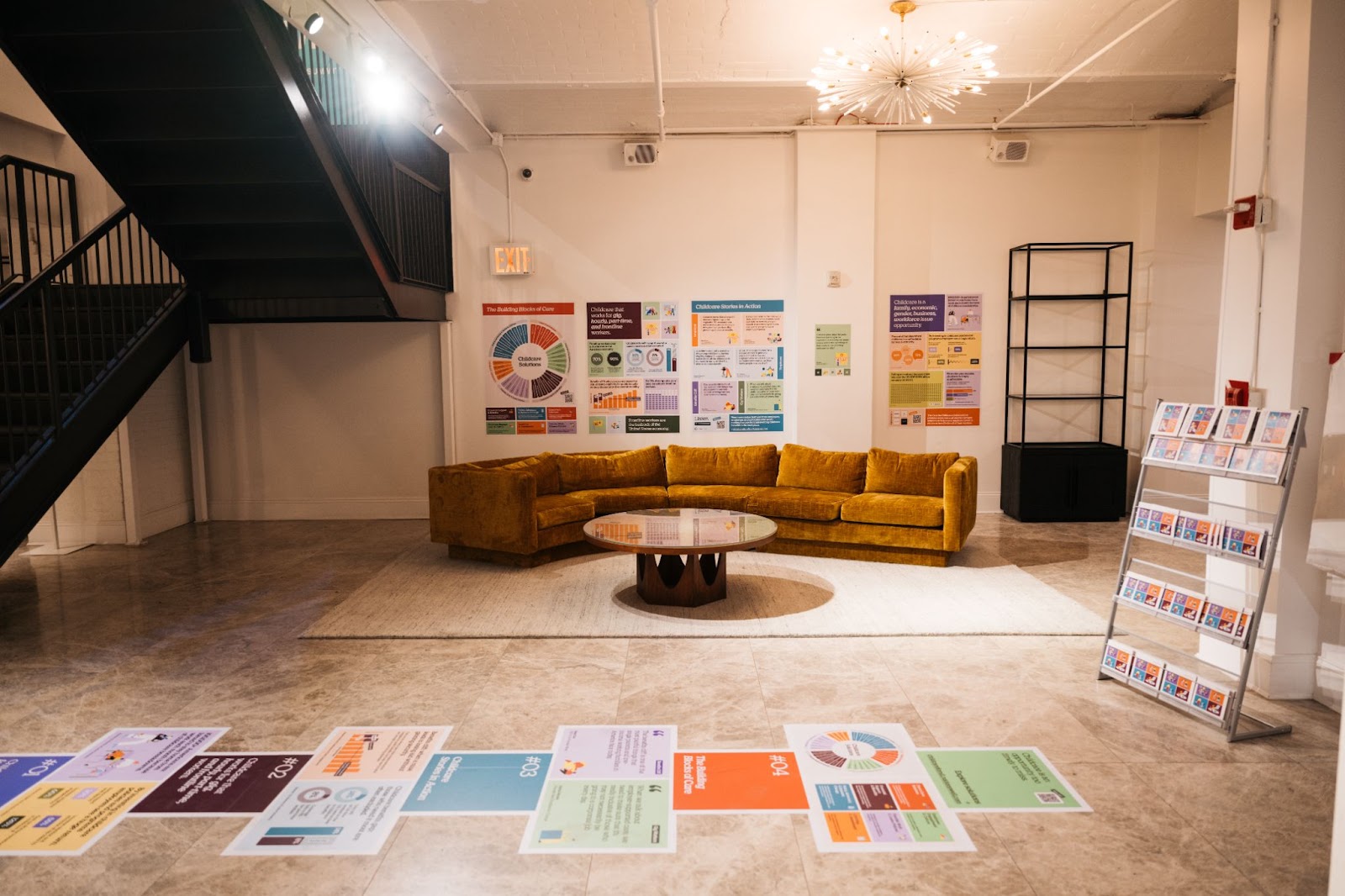
In response to this urgent need, Pivotal, the Annie E. Casey Foundation, and the American Family Insurance Dreams Foundation highlighted caregiving at the 2024 NationSwell Summit through an Impact Spotlight and a panel discussion, which was punctuated with an on-site immersive experience including a ‘Care Lounge’ that highlighted key stats, quotes and figures from the expanded Childcare for All site created by the Case for Childcare Collaborative.
We’ve summarized key insights from this portion of the Summit below:
Public-private partnerships are key to sustainable, systemic change.
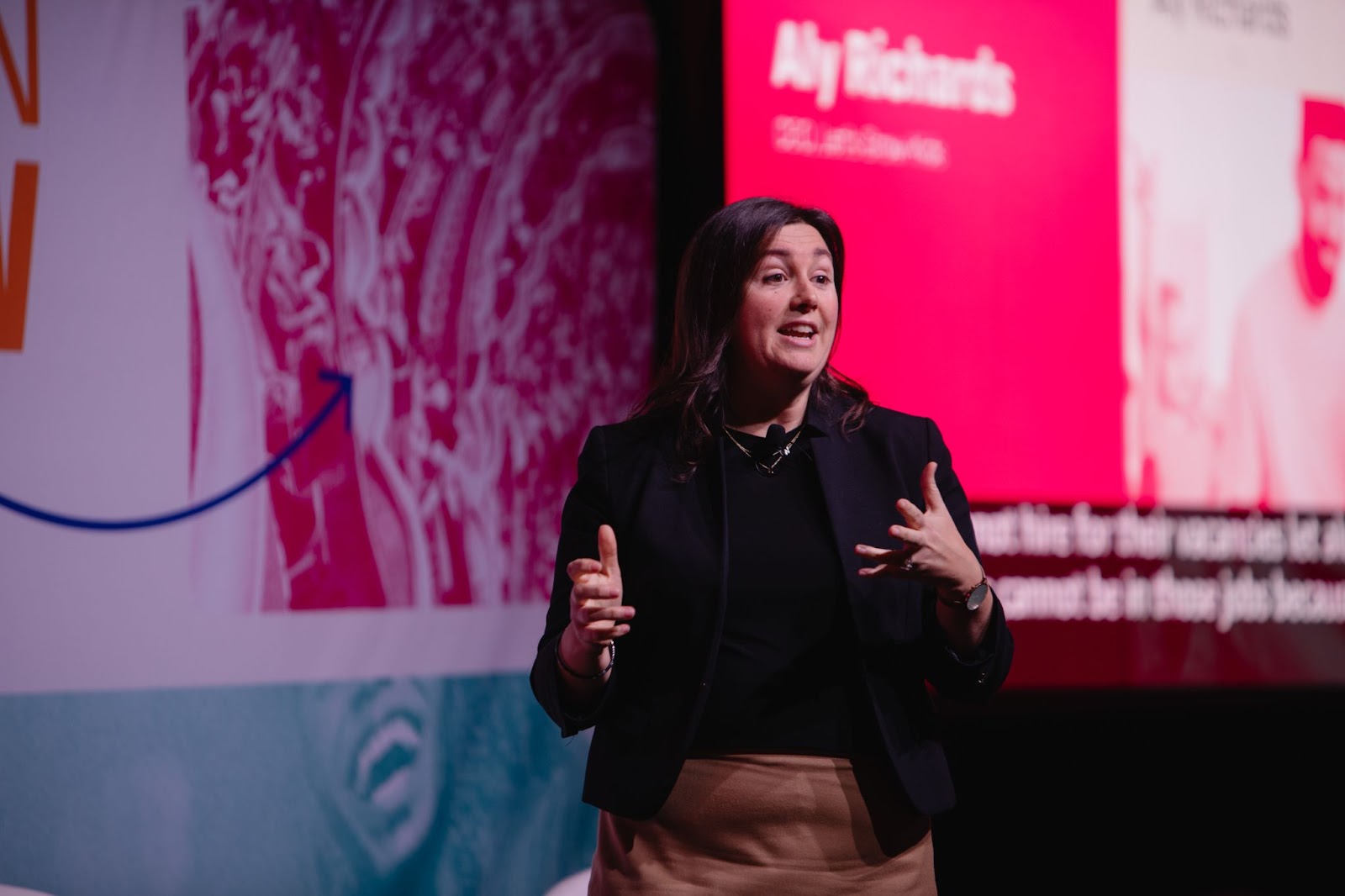
Aly Richards, CEO of Let’s Grow Kids, shared her inspiring story through an Impact Spotlight showcasing how the nonprofit revolutionized childcare in Vermont alongside the business community, ultimately passing Act 76, which committed $125 million to the childcare sector annually through a 0.44% payroll tax. During the spotlight, Richards emphasized the critical role of childcare in both economic and social development, calling the state’s care crisis a “market failure.” Through her passionate storytelling, Richards highlighted the urgency of early childhood education on workforce participation, stating, “90% of a child’s future is baked by age 5.”
As seen by Richards’ work in Vermont, public investments can fill care gaps. Through a grassroots campaign, Let’s Grow Kids mobilized 40,000 citizens and business leaders and secured bipartisan support for Act 76. Now, more families are eligible to receive financial assistance for child care than ever before, and the state is paying programs at higher weekly rates to provide that care. Since implementation, slots have surged, boosting access for many families and relieving employers of staff shortages with a more stable workforce.
Caregiving is an economic issue with investments yielding huge economic returns.
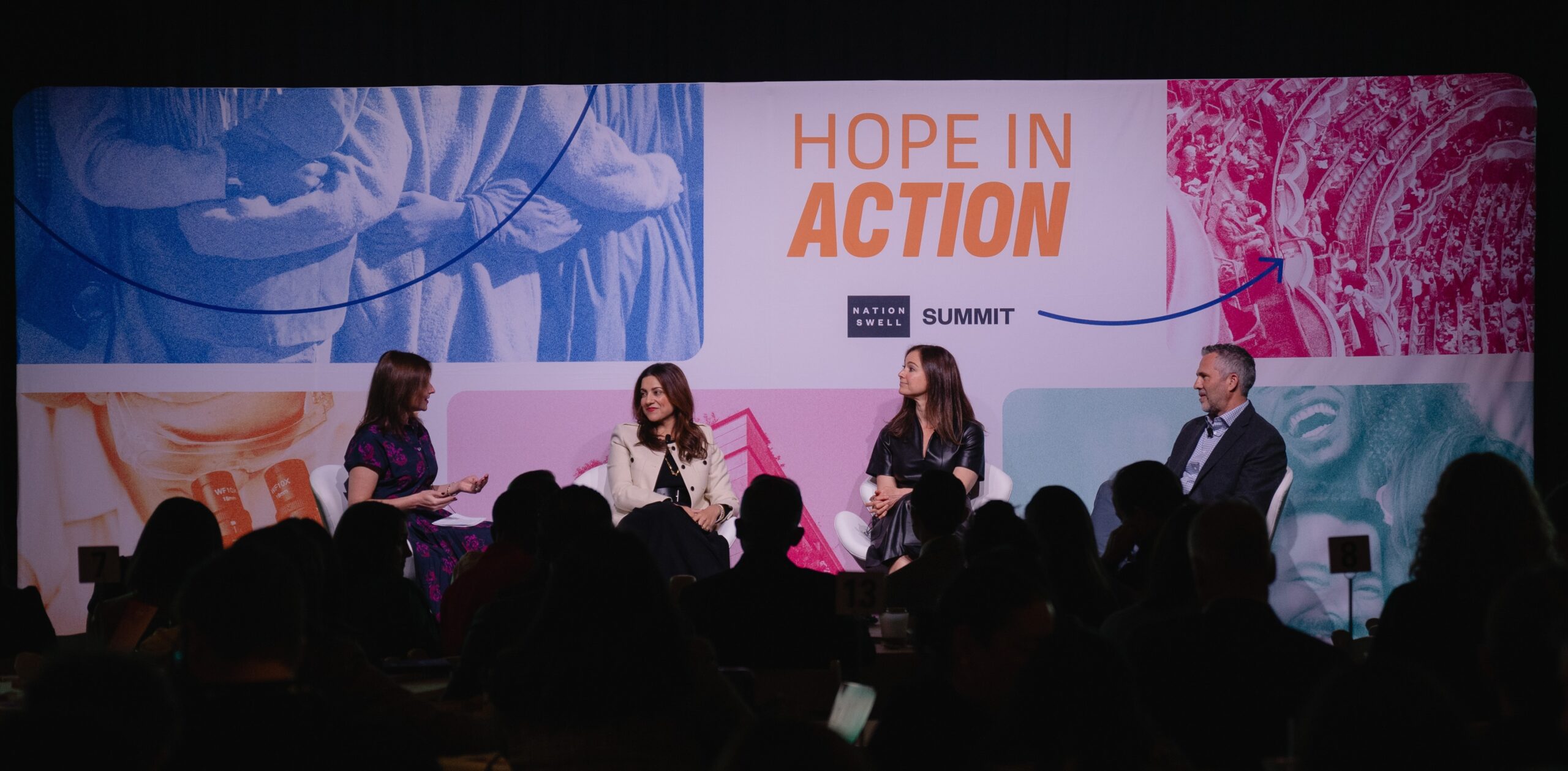
The NationSwell caregiving panel brought together visionary leaders to discuss the urgent challenges and groundbreaking solutions shaping the future of caregiving. Moderated by Jennifer Stybel of Pivotal, the panel featured Reshma Saujani, founder of Moms First; Lindsay Jurist-Rosner, CEO of Wellthy; and Stephan Dolling, Vice President at Merck, who each shared their personal and professional perspectives on the critical care issue.
Stybel set the stage by emphasizing caregiving as a universal challenge, stating, “None of us can do it alone. The solution lies here together.” Saujani underscored the transformative potential of prioritizing caregiving within policy and business frameworks. “We need to convince the nation that childcare is an economic issue,” she said. She credited the pandemic for shifting perspectives, noting, “We’ve slammed the door on whether childcare is a personal problem or an economic problem.”
Jurist-Rosner shared her personal caregiving journey and explained Wellthy’s mission to partner with families through personalized care coordinators, alleviating the complexities of a fragmented healthcare system. “Families need someone who can get things done,” she explained. Dolling highlighted Merck’s commitment to employee well-being and the ROI of caregiving benefits. “Providing caregiving support shows your people you truly care,” he said, sharing how Merck implemented Wellthy’s services during the pandemic resulting in overwhelming employee appreciation and support.
The conversation also spotlighted the significant economic case for caregiving. Saujani noted, “Investing in childcare offers a 425% return,” emphasizing that solutions must extend beyond privileged workforces to include hourly and shift workers.
The panelists concluded by exploring bold, actionable strategies for change: join national coalitions advocating for policy reform, foster open discussions about caregiving in workplaces, and leverage data to drive leadership buy-in. As Stybel aptly concluded, “Caregiving isn’t a niche issue; it’s a challenge that unites us all.”
Workers with the most to gain from employer-sponsored care support are traditionally excluded from care benefits.
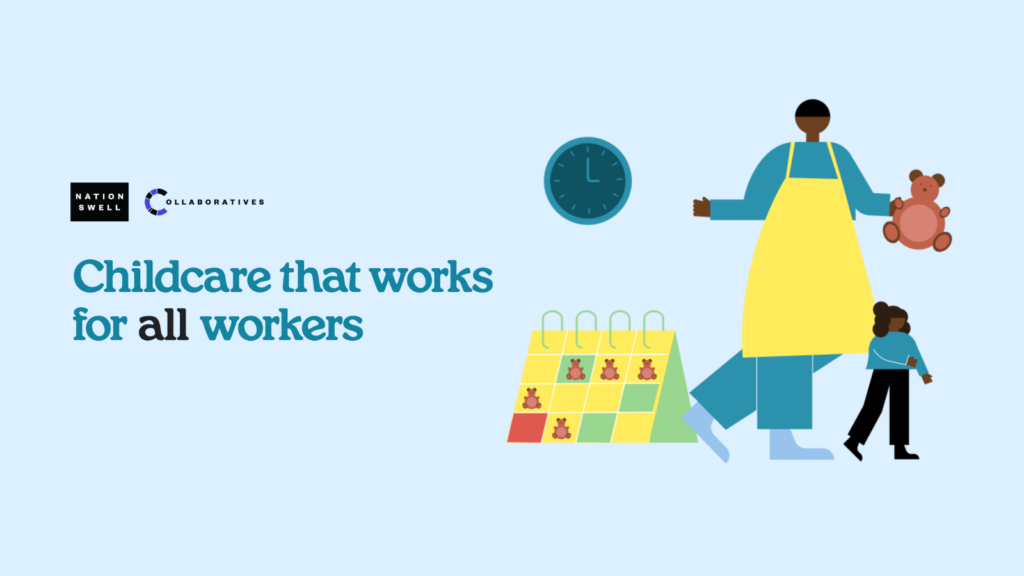
Following the inspiring spotlight and panel, NationSwell announced the launch of the expanded Childcare for All site, which builds the case for gig, hourly, part-time and frontline workers to be included in employer benefits to support caregivers. Frontline workers represent about 70% of the workforce with 90% of companies relying on these workers. And yet, while only 14% of full-time workers have access to employer-sponsored childcare support, that number falls to 8% for part-time workers. This demonstrates a childcare benefits gap, revealing those with the most to gain from these benefits are traditionally excluded from qualifying. The detrimental effects of a broken childcare system are glaringly apparent, with parents forced to leave careers in order to take care of children, and businesses suffering huge workforce losses.
The site serves as a resource for employers to better support employees who are caregivers, highlighting 35+ actionable strategies through an interactive solutions visualization. Packed with resources, firsthand stories, insights, and examples, the site empowers businesses and individuals to advocate for and implement impactful caregiving solutions. This launch reinforces the call to action for systemic change and collective responsibility in addressing the childcare crisis. Visit the Case for Childcare Collaborative’s site to publicly commit to implementing solutions and find downloadable resources to share with your team and network. Help us forge a world where childcare is no longer a barrier for workers to remain and thrive in the workforce.
To learn more about the Case for Childcare Collaborative, click here