
The Takeaway | Ethical Tech and the Future of Social Impact

Whether it’s a future of work powered by software that supports workers and businesses alike, technology infrastructure to manage sustainable supply chains, improving digital access and safeguards for our democratic process, or removing bias in data and AI platforms that impact marginalized communities, the actions we take in the present to invest in equitable digital platforms will determine whether our collective grasp will ever extend outwards to our collective reach.

During a NationSwell virtual roundtable on May 25th, a group of cross-sector leaders gathered to discuss the role of emergent technologies like generative AI have to play in advancing that impact and what leaders can do to implement ethical digital and technical solutions in order to scale solutions and provide equitable access.

Here are some of the key takeaways:

Organizations must stay disciplined when it comes to asking larger questions about who they’re using AI to serve and what they hope to accomplish. In order to bridge gaps between intent, strategy, and the actual digital products and services that end up being built, companies must establish clear mandates and decision matrices about how to best serve the populations they’re working for. One of the first steps to guaranteeing alignment should be to make sure that clear lines of transparency and clear moral imperatives are present throughout the entire organization. 

The adoption of an “ethical ombudsman” can help to ensure a shared ethical responsibility. Rather than adopting “shiny new tech” just for the sake of doing so and then allowing the ethical buck to get passed on to the tools themselves, companies and individuals should take a more active role in assuming the ethical burden by creating a new position designed specifically to oversee projects at the organizational level and evaluate the potential risks and harm that new technologies can pose to individuals and communities.

Train new systems with humanitarian concerns, not just technological ones. The tech we use broadly everyday (internet, social media, etc.) was created by a relatively small group of people, technologists who are good at making things, but not necessarily experts at holistically considering the ecosystems and people that will use that tech in everyday life. To solve for this gap, we’ll need to build better and more intentional methods to ensure that public interest is baked into design — potentially by hiring folks with humanitarian backgrounds to serve as model trainers and by ensuring more cross-sectionality in design phases.

Drawing distinctions between the types of potential harm that new technologies can cause will be critical to mitigating the damage. We need to think about potential technological harm as falling into two distinct categories: acute harms and institutional harms. The former includes harms done to the individual, while the latter includes harms to communities and populations. These different types of harm will require unique interventions, and getting clear on which is which will be the first step to any mitigation strategy. 

Pathways to widespread adoption of potentially transformative new technologies must be established in order for underserved populations to thrive. In addition to ensuring pathways to adoption, it’s also imperative to bring in the people who stand to be most affected by the digital divide during the design process and incorporate their feedback into the build. Bringing boots on the ground into the regulation process and having the right people around the table to help in the decision making can also be a way to reduce inherent bias.

The Takeaway | Building Culture and the Role of Leadership

For the past two years, organizations have been forced to navigate a series of social, financial, and political pressures that no one could have seen coming. As the dust begins to settle, it’s become increasingly obvious where organizations have made great strides towards achieving more equitable cultures and organizational outlooks — and where they still have room to grow.

As we continue to steer towards that more equitable and egalitarian future, join us for a conversation on what your fellow leaders are doing to build a culture of equity and belonging — one that prioritizes DEIB initiatives, mindful hiring practices, and workforce satisfaction and retention rates.

In a NationSwell virtual roundtable, leaders connected to discuss some of the challenges they’re still facing, while surfacing opportunities we’re eyeing to help us advance corporate cultures that pave the way towards progress, equality, and greater social impact overall. 

Here are some of the key takeaways:

Wrap arms around the ways that work has fundamentally changed in the pandemic era. Workers and leaders alike share a heightened awareness of organizational shortcomings; and while all leaders have blind spots, there is new urgency around stakeholders’ expectations that you will work to address them. But even as we work to address them, they way we all work is changing: hybrid work means new technology, and new technology means new opportunities alongside new challenges. As internal stakeholders may feel even further from the rooms where big decisions are made, building a culture rooted in transparency becomes paramount to organizational success.

To build an equitable and inclusive organizational culture, align around what you mean when you use the word “transparency.” Workers want leadership that is clear and consistent, but just as there is a danger in sharing too little information, there is a danger in sharing too much. This often necessitates being explicit about what you will share, and what you won’t — especially in difficult moments. As an example, share the criteria around why you might terminate an employment instead of sharing the specifics around why one person’s employment was terminated.

A thriving culture often aligns around norms and expectations for when to have a meeting. In a hybrid work environment, meeting bloat can feel like the enemy of productivity. At the same time, those meetings were often designed to enable productivity, efficiency, and innovation. It’s helpful to align around what meetings ought to be used for, and what the norms are for being in one another’s presence: think about friendly ways to reinforce that attendees shouldn’t be working on anything else, and that they should focus to the best of their ability on the information that is being shared.

Culture is communication. Build performance management systems that can evaluate based on outcomes but also behavior and collaboration.  Reward people who hit goals, but also support positive behaviors that improve culture (and hold those accountable who damage culture). Consider using a work style assessment tool, such as DISC, to help employees understand one another better. 

Key learnings on the theme of business for good

Key learnings on the theme of business for good


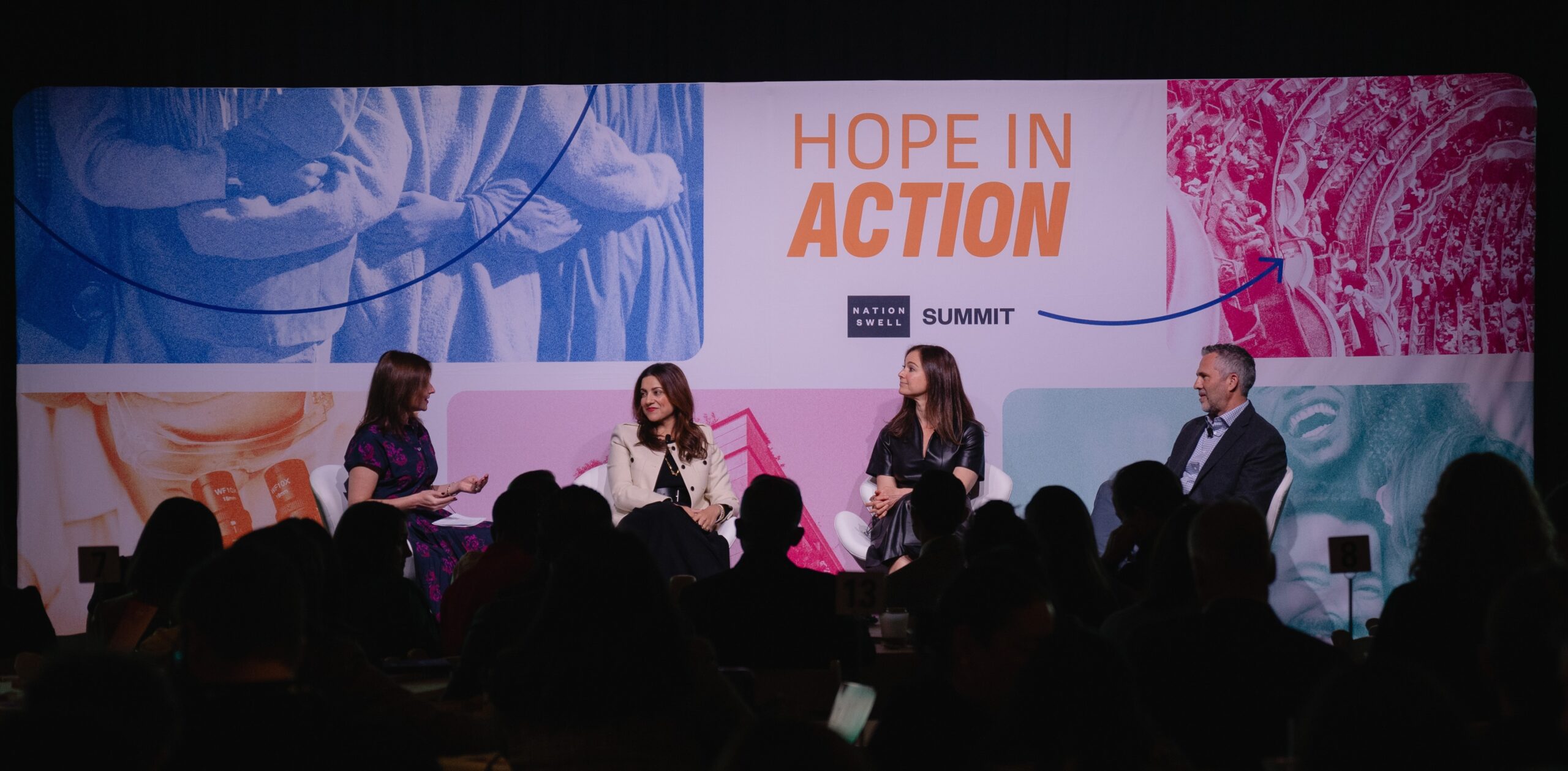
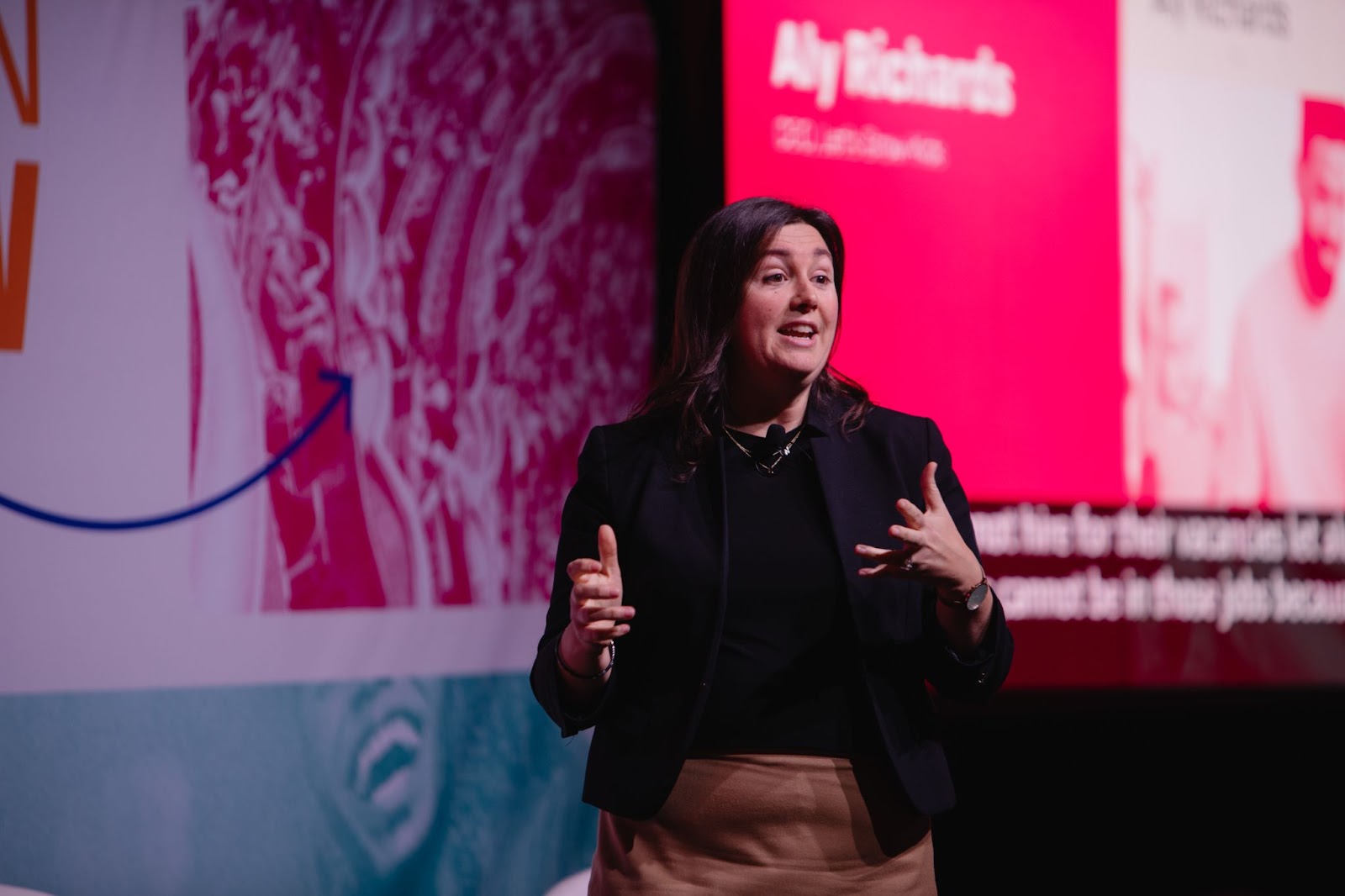
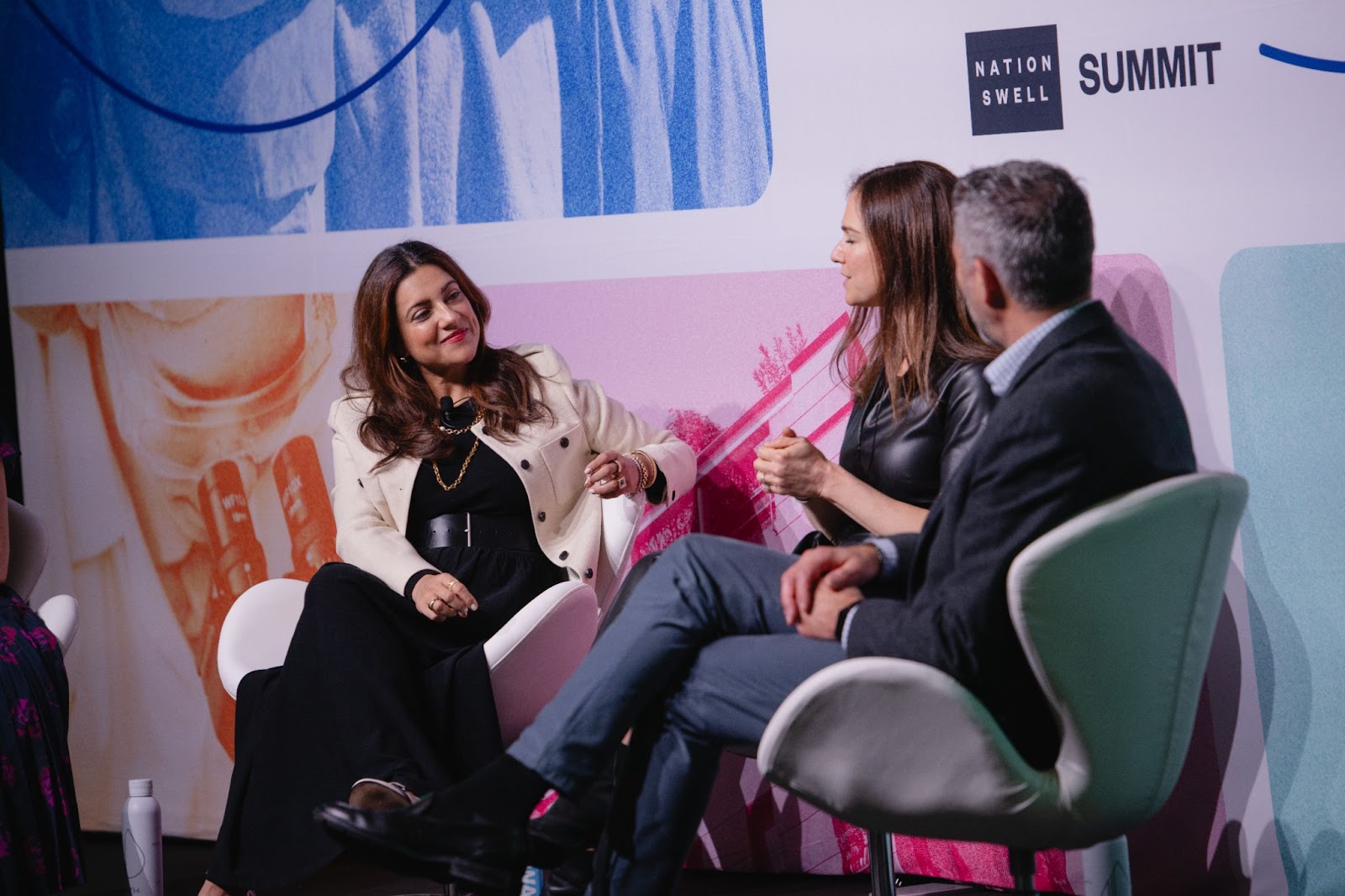
NationSwell’s 2023 Summit brought together the most cutting-edge and committed leaders in ESG, social impact, philanthropy, and other select fields. Across a full day of programming, participants elevated exciting and promising ideas and initiatives, reflected and revitalized, and gleaned actionable insights, practices, and collaboration opportunities to propel their leadership forward.

One of the main themes of the day was business for good, through which presenters and guests explored how to better center their values, prioritize human connection, and bring forward a “Better + Bolder” version of themselves.

Below are key learnings from the NationSwell Summit on the theme of business for good.

Note: Key learnings are also available on the Summit themes of purpose-driven leadership and economic mobility. A panel discussion on the fourth theme of sustainability was off the record.

Key Learnings

Individuals most affected by social issues are often those closest to solutions.

Identity is core to the impact that individuals and organizations drive, and often has an outsized impact on sociopolitical progress. Often, those most affected by societal inequalities are instrumental in deeply understanding and responding to pivotal issues. For example, as Thea Gay (NationSwell Fellow) noted, current efforts toward mitigating climate change are often driven by those who are most vulnerable to environmental injustice, such as youth and LGBTQ+ communities. Relatedly, as a Black woman, T. Morgan Dixon (Founder and CEO, GirlTrek) is closely aligned to her organizational mission of healing and transforming the lives of Black women through walking and self-care. Leaders must embrace the aspects of their own identity that prepare them to identify and adopt solutions to societal challenges, while also acknowledging when it is most appropriate to seek out and invest in others.

The intersection of business, leadership, and advocacy requires continual self-reflection.

Whether a business leader or social activist, it is vital to think deeply about who you are and how your identity shows up in the work you do. As your work evolves, your own self discovery will take new forms, and you may realize that working toward social impact for other communities is tied to advocacy for yourself. Bringing humility and self-reflection to your day-to-day work can create trust within your organization and create a narrative of meaning behind the work you do. During past inflection points, Hamdi Ulukaya (Founder and CEO, Chobani) has embodied self-reflection by asking for direct feedback from his entire staff on his leadership. He notes that success is a powerful influence and that course correction from your community is vital to staying true to your vision.

The social impact field is ripe for harnessing the collective power of technology and talent.

The potent social power of technological advancement, particularly around AI, is illustrated by the White House’s recent request that technology CEOs limit the risks of AI. But AI carries significant opportunities alongside its risks. As more talent enters the technology field, there are opportunities to mobilize platforms and employees for social good. For example, Sid Espinosa (Head of Social Impact, GitHub) notes that GitHub has created a huge network of passionate new developers that are eager to play a role in using technology for impact. Given the immense and growing power of technology and AI, organizations should anticipate headwinds and tailwinds relating to their own operations and consider how they can connect dots between their work, the evolution of the technology field, and social good. At GitHub, this perspective resulted in a partnership with the Norwegian Refugee Council, through which the company used its AI capabilities to deliver cash transfers to Ukrainians during conflict.


  1. Doing business for good often means seamlessly integrating – and responding to – information about the social and economic environment in which a company carries out its operations.

  2. Contributing financial resources toward advancing social impact is important, but can only go so far. To achieve organic and sustained impact, business leaders must assess the context in which they operate – often including characteristics outside of their control – and use that awareness to advance their goals. For example, in 2016, Hamdi Ulukaya (Founder and CEO, Chobani), identified refugee rights as a pivotal issue in the U.S. As such, there was a significant number of refugees in close proximity to Chobani’s manufacturing facility in upstate New York. Hamdi was able to increase their hiring of refugees to 30% of their total workforce, achieving a win-win for the company’s social impact agenda and the community within which it operates.
  1. Making a business case for investing in social impact is effective at generating buy-in, but doing it “meaningfully” creates sustainable change.

  2. According to Hamdi Ulukaya (Founder and CEO, Chobani), business is the most powerful platform for creating meaningful, sustainable change. Through the Tent Partnership for Refugees, he has found that CEOs often respond positively to understanding a clear business case for investing in an area of social good. For example, he cited that hiring refugees leads to high retention rates and demonstrable return on investment within two years. However, sustainable investment and long-term impact is escalated by business leaders who are dedicated to the meaning behind an issue. For some, this may be found through personal motivation, while others can look to their consumers and employees to lead the way.
More from Summit
Explore

Key learnings on the theme of economic mobility

Key learnings on the theme of economic mobility

NationSwell’s 2023 Summit brought together the most cutting-edge and committed leaders in ESG, social impact, philanthropy, and other select fields. Across a full day of programming, participants elevated exciting and promising ideas and initiatives, reflected and revitalized, and gleaned actionable insights, practices, and collaboration opportunities to propel their leadership forward.

One of the main themes of the day was economic mobility, through which presenters and guests explored how to better center their values, prioritize human connection, and bring forward a “Better + Bolder” version of themselves.

Below are key learnings from the NationSwell Summit on the theme of economic mobility.

Note: Key learnings are also available on the Summit themes of purpose-driven leadership and business for good. A panel discussion on the fourth theme of sustainability was off the record.

Key Learnings

We have a collective responsibility to overcome the fallacy that decision-making, rather than circumstance, is responsible for an individual’s poor financial health.

Professor Darrick Hamilton (Henry Cohen Professor of Economics and Urban Policy and founding director of the Institute on Race, Power and Political Economy, The New School), in his opening remarks at the NationSwell Summit, reminded us that the tendency to blame poor decision-making over environmental factors like weak systems and structures is a common cognitive bias called fundamental attribution error. To move past this error, Professor Hamilton urged us to dismantle the policies that deny people opportunities to make the right choices and redirect resources to communities in order to provide the enabling conditions for marginalized groups to become self-determining and overcome poverty. Professor Hamilton spoke of baby bonds as one particularly bold and promising solution, describing the appreciating asset as “economic birthright to capital” available to all regardless of circumstances at birth.

Through strategies like employee ownership, business has the capacity to de-stratify our society where other institutions have failed.

On a Practitioners’ Panel on Economic Mobility, Pete Stavros (Head of Global Private Equity, KKR) offered that solutions like employee ownership models are effective at improving financial outcomes for workers. Stavros emphasized that the average American does not have enough assets to invest, in turn limiting their opportunity to develop financial management skills. Through KKR and his nonprofit Ownership Works, Stavros advocates for and has implemented a model in which businesses issue stock as a free benefit to employees, pairing ownership with financial literacy programs, as a mechanism to create a true win-win for the company, its investors, and its workers. Results to date have shown that employee ownership can lead to better employee retention, increased productivity, a higher ROI for the business, and significant wealth creation for workers. But, Stavros emphasized, the work of employee ownership programs is not as elegant and simple as it may first appear, requiring significant commitment and hands-on involvement from company leadership.

Employers are determinative of economic mobility for their workers; it’s time for businesses to better understand their impact and to take charge of that responsibility.

In presenting the American Opportunity Index Corporate Scorecard, Rajiv Chandrasekaran (Head of Policy + Strategy, The Emes Project) presented evidence that a company’s practices are determinative in lower-income workers’ ability to escape poverty. Chandrasekaran highlighted three dimensions of a company’s opportunity to impact workers’ economic mobility, particularly for those without college degrees: (1) the access they offer to employment opportunity, (2) the pay they offer in low- and middle-skill roles, and (3) the level of mobility experienced by employees both within and beyond the firm. The American Opportunity Index Corporate Scorecard offers a first-of-its-kind look into the actual performance of the United States’ largest 250 companies on worker economic mobility and provides an evidentiary basis for employers to look inward at the practices and behaviors that do or do not facilitate that mobility.

  1. Good data is essential for improving economic mobility, but its efficacy is significantly constrained without the right narrative and storytelling.

  2. In a Practitioners’ Panel on Economic Mobility, Michael Tubbs (Special Adviser for Economic Mobility and Opportunity, Gov. Gavin Newsom) asserted that “data is interesting and important, but if data actually drove decision-making, our work would be the opposite of what it is today.” Tubbs’ point is that we already have compelling data to support work on climate action, economic mobility, and more, but the decisions of policy-makers and others in power often defy the conclusions of that data. Tubbs called upon leaders to focus on shifting the narrative and storytelling around how the economy works in order to provide cultural and social momentum behind solutions like baby bonds and universal basic income.
  1. Funders can advance racial equity by making large, unrestricted, multi-year grants to BIPOC-led organizations.

  2. Given that historical and intergenerational effects of systemic inequity are central to the complexities of solving for economic mobility, Terri Ludwig (President, Ballmer Group) highlighted the need for the trust-based philanthropy principles of long-term solutions, multi-year unrestricted funding, and shifting decision-making power to BIPOC leaders proximate to the problem. For its part, Ballmer Group makes 10 year investments in its grantees, and also funds organizations like New Profit and Echoing Green to ensure that capital makes it into the hands of leaders who have traditionally been starved of that access.
Explore

Key learnings on the theme of purpose-driven leadership

Key learnings on the theme of purpose-driven leadership


NationSwell’s 2023 Summit brought together the most cutting-edge and committed leaders in ESG, social impact, philanthropy, and other select fields. Across a full day of programming, participants elevated exciting and promising ideas and initiatives, reflected and revitalized, and gleaned actionable insights, practices, and collaboration opportunities to propel their leadership forward.

One of the main themes of the day was purpose-driven leadership, through which presenters and guests explored how to better center their values, prioritize human connection, and bring forward a “Better + Bolder” version of themselves.

Below are key learnings from the NationSwell Summit on the theme of purpose-driven leadership.

Note: Key learnings are also available on the Summit themes of economic mobility and business for good. A panel discussion on the fourth theme of sustainability was off the record.

Key Learnings

We must go beyond “allyship” and recognize our complicity and agency in addressing the societal challenges around us.

In a fireside chat with Graham Macmillan (President, Visa Foundation), Professor Ruha Benjamin (author, Viral Justice), reminded us that we are all affected by climate change, health inequity, and the myriad of other issues that we work to mitigate as social impact practitioners. And when we see ourselves in the issues, not simply adjacent to them, we understand that all our fates are linked. Recognizing the potential for any societal changes to benefit everyone in the long-term, not just one group, we are more compelled to center humanity in our leadership and decision-making.

“Be better and bolder by investing in the microscopic; people might not see it but they will feel it.”

Professor Ruha Benjamin ended her fireside chat with a succinct call to action: to change our everyday practices rather than solely focus on high profile actions that manage to break into the news cycle. Although actions like racial equity statements and large philanthropic investments are useful and valuable, it is also necessary to audit and participate in the small aspects that add up to a system so that we can change that system. Professor Benjamin recommended Beyond the Statement as one source that will allow organizations and their leaders to audit and transform their actions on racial equity, but the lessons can also be applied to other issues and objectives.

To center humanity in our work, we need to be softer and kinder. Doing so can build bridges of trust between those who do not see their inherent similarities.

In discussing human connection with Sheila Peluso (Chief HR Officer, Senior Legal Officer and Senior Managing Director, Cerberus Capital Management) and Scott Keoni Shigeoka (Fellow, Greater Good Science Center), Jenn Hoos Rothberg (Executive Director, Einhorn Collaborative) evoked the need for human connection and emotion in our work with a call to be “softer and kinder.” We can reach larger groups of people by focusing on the exhausted majority who are open to stronger ways to connect. In imbuing our actions with softness and kindness, we prime everyone, including ourselves, to be better and bolder.

  1. Solve the problem that makes your work necessary in the first place.

  2. T. Morgan Dixon (Founder, GirlTrek) highlighted GirlTrek’s mission to bring health and happiness to the lives of 700 million Black women. By inspiring behavioral change for its members and narrative change with its advocacy and campaign work, GirlTrek is a movement that is improving Black women’s health and creating new patterns that will last generations. 
  1. We must honor life’s and society’s transitions, allowing them to inform our practices and reinvigorate our purpose.

  2. As leaders, we must remember we do not need to accept things as inevitable, and that we are called upon not only to imagine better alternatives, but to build them. Purpose-driven leaders know what they want to build toward, but, as NationSwell Fellow Thea Gay reminded us in her Impact Spotlight: everything is constantly in flux, and we cannot plan without being open to change. When we know our abilities on a personal level, we can more readily go from “me to you to us” and build better systems together.

Entering each interaction – no matter the size – with humanity and clarity leads to a bigger, elevated culture of purpose.


In a fireside chat, Hamdi Ulukaya (Founder and CEO, Chobani) reflected on the inherent interconnectedness of leadership. In business, for example, there are endless touch points throughout daily operations, whether they are in the manufacturing plant, the office, or with consumers. For leaders, each of those touchpoints offer the chance to connect with grace and humility so that each person can feel recognition from leadership and see the power in replicating these mindful actions.

More fromSummit
Explore

The Takeaway | The Future of the Workforce

On January 25, members of the nationswell council gathered for an in-person salon in New York City to discuss the future of work — the solutions and programs being considered at all levels of learning to better prepare students for successful careers; what organizations can do to build untraditional pipelines to the middle class and beyond; how to navigate a new hybrid work landscape in a way that balances individual flexibility and seamless collaboration while simultaneously mitigating burnout; and much, much more.

The conversation was warm, inviting, and generative, and sparked a flurry of great ideas and new chances for collaboration. Below are just a few key highlights from the discussion:


  • The future of work starts with students — and with how we ensure that they’re being prepared not just for the careers of today, but also to make family-sustaining wages. By partnering with large companies, community colleges in particular have an opportunity to be more thoughtful about designing curriculums that equip students with the real-world skills and connections they’ll need to land in-demand jobs. Micro-credentialing, upskilling, and financial literacy conversations — happening not just with students, but with corporate executives as well — can also help to create a climate of preparedness that will give applicants a competitive advantage.
  • Building a more equitable workforce will require us to take a more realistic look at the current set of challenges facing marginalized applicants. Taking into account the realities of violence and trauma that disproportionately impact some communities, companies looking to increasingly onboard new hires from nontraditional backgrounds will increasingly need to reevaluate their cultural competency training and provide more mental health, wellness, and wraparound support systems for future employees. 
  • To get more economically diverse applicants in the door, we will first need to “tear the paper ceiling.” Far too often, internships, fellowships, and other entry level opportunities require levels of experience or credentials, like a four-year college degree, that exploit and exacerbate existing societal inequities. In order to combat this and level the playing field, leaders will need to put out a clarion call to executives and hiring managers challenging them to reimagine their selection systems and hiring practices.
  • For those struggling under unreasonable credential requirements and barriers to entry, credential stacking could be a helpful pathway towards success. One way around this is through the stacking of credentials: building transferable skills through extracurricular experiences that count as elective credits, which can be immediately added to a resume in real time.
  • The pandemic has permanently reshaped our understanding of what counts as a “good job.” While there will always be a premium on the ability to earn a living wage, millennial and Gen Z workers have expectations of their employers that differ significantly from their predecessors. Interest in policies like unlimited paid time off and an increasing demand for health policies that respond to concerns about Roe v. Wade signal that, more and more often, people are choosing jobs and employers that align with their values.
  • Anticipating the challenges of the next 25 years will be critical in training the next generation of leaders. The challenges that young people will inevitably be forced to reckon with in the coming years are nothing short of enormous — not just in the world of work, but also involving climate change, globalization, wars, and growing social stratification. The question of how to develop and train young people as leaders in a more holistic way will be critical to anyone working with the next generation, and a particular premium will need to be placed on the “3 Cs”: connectedness, creativity and curiosity.
  • The interconnectedness of all people will continue to emerge as an important theme in the near future. Acknowledging those global challenges that young people will undoubtedly be facing will also require us to develop the deeper mindset that ‘my fate is interconnected with yours’ — not just in the U.S., but globally. Preparing young people for work will, increasingly, require us to grapple with an even bigger set of global challenges.

The NationSwell Council community brings together a diverse, curated community of bold individuals and organizations leading the way in social, economic, and environmental problem-solving. Learn more about the Council here.

The Takeaway | Inclusive Leadership: How We Lead Online and Offline

The pandemic ushered in a wave of fresh challenges for companies and leaders, but it also served as a much-needed pause for leaders to reflect, retool, and reset. Now, nearly three years on, we’ve inherited a radically transformed workplace environment — and we’re tasked with implementing some of the carefully considered changes that will better serve our teams and help us to create the workplace of the future.

In a conversation hosted by the NationSwell Council community on Wednesday, we came together to parse exactly what leaders are doing to address DEIB goals, team attrition rates, competing needs amid a newly hybrid working world, and more.

Here are some of the key learnings from the event.


  1. We often think of how we create value for customers — now it’s time to start thinking about how we create value for our teams. New, remote work challenges have prompted a slew of new questions about how to keep teams engaged and how much “in-person” time is actually needed. Some leaders who are used to thinking about how to create value that makes customers want to show up are now flipping that question on its head, asking what they can do to incentivize team members to work from the office. Creating a hybrid schedule where employees are only expected to come into the office on certain days of the week — and then offering special perks, like free lunches and special affinity group meetings on those days — can be a helpful system for making team members feel like their time in the office is valuable and worth it.
  2. Building out effective listening engines will be critical to accurately assessing employees’ needs. With so much shared wisdom on how to respond to team members’ post-pandemic needs flying around, it can be tempting to impulsively deploy some of those solutions and policies, especially given that the underlying assumption is that they will make employees’ lives easier. But as one member pointed out, not every team member’s needs look the same — and it’s important to build out an infrastructure for feedback that ensures that you’re capturing your specific team’s needs as accurately as possible.
  3. Pay as much attention to why people are staying as you do to why they’re leaving. When it comes to high turnover rates, the intuitive response is to get to the bottom of why people are leaving and what can be done to mitigate the departures. But it’s equally important to figure out why people are staying — and which policies are actually working — so that you can be sure-footed in creating an environment that people genuinely want to be in, and not just one that they’re not ready to leave.
  4. If you value DEIB, put a premium on mental health. Team members’ mental health and well-being naturally dovetails with DEIB concerns: conversations about compensation, job security, hybrid work schedules, pipelines for advancement, and more are inherently stressful, and play a huge role in employees’ livelihoods and psychological safety both inside and outside the workplace. Investing in wraparound support structures can help to ensure team members’ happiness and well-being in the long run, and can set your organization up to more sustainably foster a workplace that is diverse, equitable, and inclusive.
  5. Work with team members to build hybrid schedules that suit their lives and needs. Rather than mandating that employees be in the office at certain times on certain days, create flexible mechanisms by which team members can choose to work from home when needed, as long as they let team members know well in advance. 

The NationSwell Council community brings together a diverse, curated community of bold individuals and organizations leading the way in social, economic, and environmental problem-solving. Learn more about the Council here.