 "
"
At a moment of inequality and division, who is advancing the vanguard of economic and social progress to bolster under-served communities? Whose work is fostering the inclusive growth that ensures every individual thrives? Who will set the ambitious standards that mobilize whole industries, challenging their peers to reach new altitudes of social impact?
In 2025, Impact Next — an editorial flagship series from NationSwell — is spotlighting the standard-bearing corporate social responsibility and impact leaders, entrepreneurs, experts, and philanthropists whose catalytic work has the potential to shape the landscape of progress amid urgent need for social and economic action.
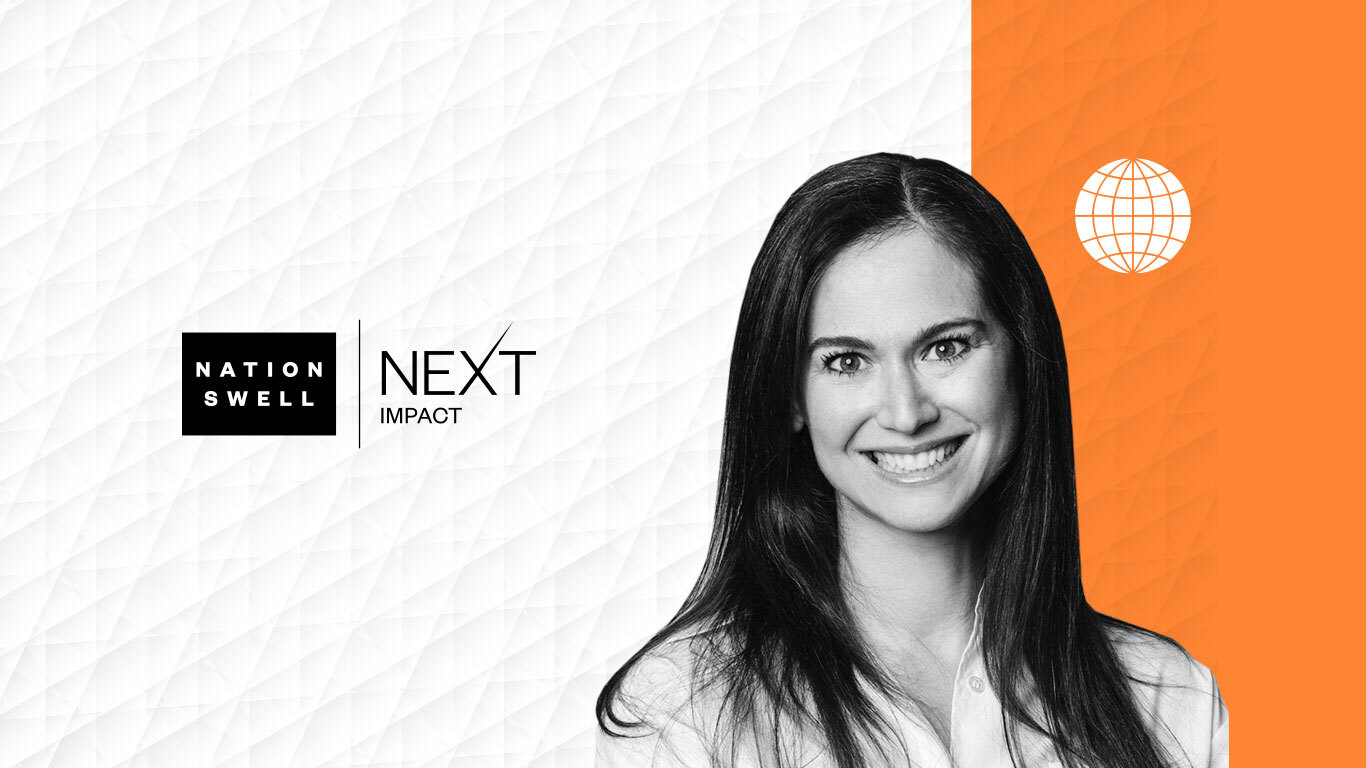
For this installment, NationSwell interviewed Lindsay Jurist-Rosner, CEO of Wellthy. Here’s what she had to say:
Virginia Tenpenny, Chief Social Impact Officer, NationSwell: Tell us a little bit about what brought you into Wellthy — what galvanized the bold action you’re driving through the company?
Lindsay Jurist-Rosner, CEO, Wellthy: Wellthy was founded in 2014, and the idea came directly from my own caregiving journey with my mom. She was diagnosed with multiple sclerosis when I was a kid — not the more common relapsing-remitting type, but the rarer, progressive form that causes a steady decline in mobility. Over the years, she gradually lost the ability to walk, then to use her arms, though she remained emotionally strong. She was my world, and caring for her shaped who I am.
After college, I moved home to take care of her while working full-time, which eventually led to burnout. When I finally moved out, I continued managing her care from afar, setting up systems, catching last-minute flights, handling the middle-of-the-night emergencies. In her final years, she was in hospice, and she passed away eight years ago.
That experience left me determined to make caregiving easier for other families. I kept thinking, if this was so hard for me — with every possible advantage — how do others do it? I started talking to families and realized how universal the struggle is. The healthcare system does a great job treating medical conditions but offers almost no support for the day-to-day realities of care. Families shoulder 90% of long-term care in this country, often at the expense of their own well-being.
Wellthy was born out of that realization — a desire to build the infrastructure and support I wish my family had. And honestly, that caregiving hasn’t stopped. After my mom passed, I helped care for my grandfather and mother-in-law — both of whom have since passed. I got married, had a child, and now navigate childcare in a blended family. Care is just part of my life from every direction, which keeps me close to our work at Wellthy. I’m not just leading the company — I’m also one of our customers. And living through these different chapters has shown me what so many families experience every day: care rarely fits into neat categories. It spans generations, moments of joy and loss, and every kind of need. That’s why Wellthy has evolved into a true birth-through-bereavement service, because families don’t live in siloes, and their care support shouldn’t either.
Tenpenny, NationSwell: In the 11 years you’ve been at Wellthy, what are some of the bright spots? What’s the moment that you find yourself in right now in terms of the progress that you’ve made and your ambition going forward?
Jurist-Rosner, Wellthy: I’m incredibly proud of what we’ve built — it’s been the most gratifying 11 years. We get to change people’s lives every day. Families tell us we “saved the day,” that their care coordinator was their angel; there’s nothing better than that.
Our original hypothesis was simple: if we could unburden families from the administrative and logistical chaos of caregiving, we could free them up to focus on what really matters: being present with their loved ones. That idea led us to pair every family with a dedicated care coordinator, much like a financial advisor, who helps them navigate complex care decisions. Most of our coordinators are social workers by training — an incredible, underutilized talent pool we’ve been able to elevate and empower.
We use technology to help those care teams work at the top of their degree and deliver a consistent, high-quality experience for families, now on a global scale. Wellthy partners with companies of all sizes that offer our services as an employee benefit, helping their teams balance work and care. We’ve also expanded into backup care and, most recently, acquired Patch — founded by two incredible women — whose team provides on-site and near-site childcare for frontline workforces.
At the end of the day, everything we do comes back to the same question: where are the gaps in care, and how can we step in to solve them?
Tenpenny, NationSwell: This is clearly an ongoing issue and gap in our society — how do you evolve Wellthy in order to make sure you’re meeting the needs on the ground?
Jurist-Rosner, Wellthy: We’re constantly evolving. One of our biggest pushes in the last two years has been building a better backup care program. Traditional providers like Bright Horizons and Care.com have been around for decades, but clients kept telling us they wanted something different. So we built our own from the ground up, including a full fintech system to process payments and an entirely new network of backup care providers offering drop-in care.
Global expansion has been another major focus. Many of our U.S. clients wanted to extend Wealthy’s services to their colleagues abroad, so we went market by market, country by country, studying healthcare, childcare, and eldercare systems to understand where we could add value. In late 2026, we launched with Cisco across 95 countries, building truly global caregiving support.
We’ve also been exploring the intersection of care and climate. When natural disasters strike — including wildfires, floods, hurricanes — we step in to support employees who can’t get to work or safely care for loved ones. After major storms in Houston, for example, we worked with Memorial Hermann Hospital to source generators and provide financial and logistical support for affected staff.
Our latest expansion is through our acquisition of Patch, an incredibly innovative company founded by two women who created on-site and near-site childcare for frontline and in-person workforces. They operate centers in places like UPS sorting facilities, hospital campuses, and manufacturing lines — high-intensity environments where flexible, affordable childcare can literally change lives. I met a worker at one of their sites who, because of a Patch room, was able to keep her job and care for her two-year-old after her husband was incarcerated.
Patch represents the future of childcare: nimble, accessible, and life-changing. Our next big focus is scaling that model: getting more Patch rooms in more places to support more families.
Tenpenny, NationSwell: As you think about the demands that you face as a CEO of this fast-growing company and all the demands outside of the job, how do you take care of yourself and also lead effectively?
Jurist-Rosner, Wellthy: I don’t know that there’s a silver bullet; every day looks different. I’m actually training for the New York City Marathon right now, which might qualify as either self-care or self-torture, depending on the day. But over time, I’ve found a rhythm that works.
The real key, though, is partnership. My husband and I both have demanding jobs — he’s the CEO of a public company — and we make it work through constant communication and trade-offs. We’re really respectful of each other’s ambitions and commitments. If I have to travel or go to an event, he’ll adjust, and vice versa. We make sure we both get time for self-care, time with our kids, and time to focus on our work.
As for the personal side, I’ve just gotten better about the basics — prioritizing workouts, eating well, drinking less — all the things we all try to do. There’s no magic formula, but I’m always working on doing a little better each day.
Tenpenny, NationSwell: What is the North Star for your leadership style that makes you most effective?
Jurist-Rosner, Wellthy: Honestly, I think I have it easier than a lot of leaders because we’re a mission-driven company. We naturally attract people who are deeply connected to what we do, so the culture and my leadership style evolve pretty organically. I imagine it’s harder in more traditional organizations, where you have to work harder to manufacture that sense of purpose.
Our focus is always on reminding the team of the impact they’re having. The work can be intense, but the outcomes are so real. We make that visible every day — sharing real-time member feedback in Slack, highlighting family testimonials during our monthly “All Hearts” meetings, and playing videos that bring our members’ voices directly to the team. It keeps everyone connected to why we do this work.
At the end of the day, that mission is the fuel. It makes the tough days easier and the culture stronger.
Tenpenny, NationSwell: What are the trends you’re seeing right now that are giving you hope?
Jurist-Rosner, Wellthy: I feel a lot of hope right now. In the early days of Wellthy, no one was really talking about caregiving — it just wasn’t on the radar. Now, it’s incredible to see how much that’s changed. Companies are thinking holistically about how to support their employees, not just through us but through broader policies, programs, and benefits. We work with dozens of large employers, and it’s inspiring to have a front-row seat to the way they’re building truly people-centered workplaces.
I’ve also been doing work in D.C. with the Bipartisan Policy Center, helping to make recommendations around the federal role in childcare. That’s been energizing, especially seeing recent progress in Congress, like the expansion of tax credits that will make a real difference for families.
It’s also the case that backup care needs a new era, and at Wellthy we see ourselves as part of that shift. So many organizations have had the same backup care benefit in place for years, sometimes decades, and now they’re taking a fresh look. We’re getting the chance to show them a program built for the modern and diverse realities of family life, one that tackles the pain points HR teams have wrestled with for so long. There’s real momentum right now — whether in companies putting their programs back out to bid or simply in the number of HR leaders who want to talk about what it looks like for backup care to truly work for both employees and employers.
And finally, I’m so inspired by what I see on business school campuses. Wellthy is now taught as a case study at Harvard Business School and Stanford GSB, and every time I visit, I’m struck by how aware and motivated these students are. A few years ago, no one even used the term “care economy.” Now, it’s part of the conversation — and students want to invest, build, and innovate in this space. The class at HBS that used to be a small seminar on social entrepreneurship and systems change now fills the largest lecture halls. That level of energy and purpose in the next generation gives me so much hope for what’s ahead.
Tenpenny, NationSwell: As you think about the socially motivated leaders that you consider your peers, are there two or three whose work has really inspired you and who you hold in high esteem?
Jurist-Rosner, Wellthy: I’m very inspired by my husband. His leadership style is completely different from mine — he’s patient, measured, deliberate, and thoughtful, while I tend to be more reactive. I love learning from him and observing how he leads; he’s an incredible leader and does an amazing job at his company.
Before starting Wellthy, my mentor was Dave Morgan, who led the marketing tech company where I worked. Watching his leadership was hugely motivational. But honestly, I find inspiration everywhere — there are so many people whose approach to leading, thinking, and showing up continues to push me to grow.
Tenpenny, NationSwell: Are there any books, podcasts, or other resources that you’d recommend? What’s been your source of inspiration or influence lately?
Jurist-Rosner, Wellthy: Right now, I’m listening to David Goggins’ book while training for the marathon — his story is incredible and definitely keeps me motivated during the long runs. I’m also a big fan of the Acquired and Science Vs podcasts; they’re great for learning how companies and leaders got their start and for diving into complex topics in a really engaging way.
Since I’m running so much, I’ve been consuming a lot of content lately. I’m reading Genesis by Henry Kissinger on AI, which has been fascinating, and recently revisited Ezra Klein’s book, Abundance. There’s no shortage of inspiration out there — I’m just trying to take it all in mile by mile.