
Five Minutes With Radha Ruparell, Head of Global Leadership Accelerator at Teach For All

The NationSwell Council is made up of social impact-oriented leaders and changemakers who are committed to pioneering solutions in order to better their communities — and the world around them. In NationSwell’s latest series, “Five Minutes With…,” we sit down with members of our community whose exemplary leadership deserves a deeper dive. Here’s what Radha Ruparell, Head of Global Leadership Accelerator at Teach For All, had to share with us:

NationSwell: What does an equitable, human-centered future of work look like?
Radha Ruparell: The future of work is rapidly changing. There is growing uncertainty and complexity, technology is quickly evolving, and we are facing constant shifts in how we live, work, and learn. The challenge is that education systems around the world are failing to equip young people for this new reality. This is a global challenge, magnified even further for those who come from disadvantaged backgrounds. An equitable, human-centered future of work is one where all young people have the opportunity to fulfill their potential.

NationSwell: How does the work you’re driving today help to build that future?
Radha Ruparell: To prepare for the future of work, we must invest intentionally in developing the leadership of young people to thrive, and lead, in a rapidly changing world. Across the Teach For All network, we have a growing force of locally-rooted, globally-informed leaders, including 13,000 teachers currently in classrooms, and 94,000 alumni reaching millions of students across 60 countries, who are united by a common purpose of growing students as leaders who can shape a better future for themselves and for all of us.

We recently engaged in a collective effort to explore this question of how we develop young people to be leaders of a better future, learning from 3,500 students, teachers, community members, CEOs, researchers, and policymakers from around the world. It brought to light the truth that our education systems today are too narrowly focused and are not preparing youth for the future of work, or for the array of other challenges they will inherit. The implication is that we need to rethink the purpose of education. Academic achievement is important, but this alone will not suffice. In our studies of transformational classrooms around the world, we see that the best teachers are oriented to growing their students’ leadership toward a more holistic set of outcomes, not just focusing on student mastery of skills & knowledge, but also on cultivating their wellbeing, connectedness, awareness & agency.

As one example, take the outcome of connectedness. So many of our education systems and workplaces are built on a foundation of individual achievement & competition. Yet, as we face new, complex challenges where no playbooks exist, we need workers who know how to collaborate effectively with one another to generate creative solutions. And we need to start now to cultivate these capacities, so that by the time they enter the workforce, our youth are practiced in how to seek out diverse perspectives, listen genuinely to those with different views, hold space for productive conflict, and work with others toward shared solutions.

NationSwell: What inspires or motivates you — personally and professionally — to do this work?
Radha Ruparell: What motivates me is that, if we can rethink the purpose of education, it’s not just about the future of work, it’s also about creating a humane, equitable world. It’s about fostering a generation of young people who are more conscious, who know how to work together to solve big problems, and who have the agency to lead this change. As I reflect on the big societal challenges we face, from rising polarization to climate change, it’s so clear to me that we won’t make progress unless we reimagine how we develop our young people.

NationSwell: What are some promising signs from the impact you’re driving?
Radha Ruparell: To prepare young people for the future of work, we need the collective leadership of many. We need to bring together students, educators, business leaders, and many other stakeholders to work jointly toward solutions. I’m excited to see more of these collective efforts emerging, whether it’s an intergenerational discussion bringing students and business leaders together to reflect on the future of work, or a global bank partnering with local communities in Cambodia to develop financial literacy and entrepreneurial skills among thousands of girls.

NationSwell: What are some of the challenges you’re facing? How can NationSwell’s social impact community of practice help you with those challenges?
Radha Ruparell: The challenges are particularly stark for those coming from disadvantaged backgrounds. They often have less access to high-quality education and career development opportunities. As we continue these conversations about the future of work, we must include these voices at the table. Otherwise, we risk further perpetuating the inequities that already exist.

NationSwell: What’s your call to action to anyone who reads this Q+A?
Radha Ruparell: Whether you are a parent, student, educator, activist, or business leader, I would invite you to pause and ask deeper questions about WHY we educate and what skills and mindsets we need to equip young people with, not only to help them succeed at work, but also to unleash their full creativity, agency and leadership in shaping a better world.


Radha Ruparell is the Head of the Global Leadership Accelerator at Teach For All. Teach For All is bringing together educators, students, business leaders, and key stakeholders around a Future of Work Initiative. If you’re interested in learning more, please get in touch.
Expanding access to quality higher education for the incarcerated: An interview with Mount Tamalpais College’s Jody Lewen

In January 2022, after an arduous 18-month application and review process, Mount Tamalpais College was granted Initial Accreditation by the Accrediting Commission for Junior and Community Colleges, making it the first accredited independent liberal arts college dedicated specifically to serving incarcerated students.

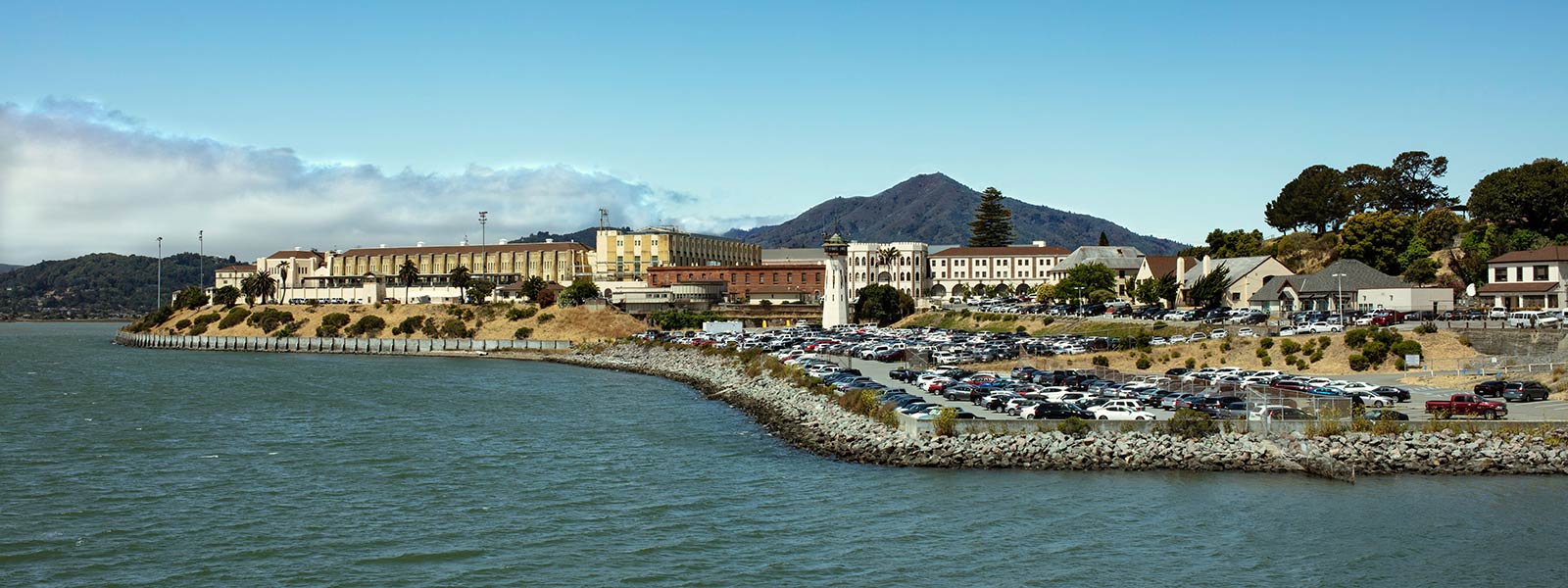
Operating out of San Quentin State Prison — the oldest operating correctional facility in California, tucked away on a peninsula just outside of San Francisco — the staff at Mount Tamalpais has long been dedicated to ensuring that students on the inside receive a high-quality education at least comparable to what they might receive at a quality educational institution on the outside. 

Along with providing “an intellectually rigorous, inclusive Associate of Arts degree program and College Preparatory Program, free of charge, to people at San Quentin State Prison,” Mount Tamalpais also seeks to “expand access to quality higher education for incarcerated people, and to foster the values of equity, civic engagement, independence of thought, and freedom of expression,” according to its website.

NationSwell Council member Jody Lewen, the founder and president of Mount Tamalpais College, recently sat down with us to talk about advocating for academic quality and inclusivity and the process of building Mount Tamalpais’s programs into what they are today — a process, she said, that “really strained my atheism.”

Read our full interview with Jody below:

NationSwell: Tell us a little bit about how you ended up working in prison education.

Jody Lewen, founder and president of Mount Tamalpais College: I grew up in Manhattan and went to Wesleyan in Middletown, Connecticut, for undergrad, and then a short time later moved to Berlin and ended up doing my Master’s in comparative literature and philosophy. I came to California in 1994 to do my doctorate at Berkeley, but while I was about halfway through working on my dissertation, I very coincidentally learned about this college program at San Quentin that was run entirely by volunteers and became very interested.

I knew nothing about prison, it was not a field I had read about or studied. I had done a lot of political work and read a lot of history and literature as an undergrad and was very aware, in a mostly abstract sense, of suffering in the world, but I really hadn’t found a way to integrate my political interests with my academic career path. But I thought the program sounded really interesting, so I ended up going into San Quentin in the spring of 1999 and teaching a public speaking class and really loving it.

NS: What were some of the early challenges or surprises you faced in doing this work?

Mount Tamalpais College’s Jody Lewen: It was a lot of my own demons about education — there were so many very humbling ironies. I had never interacted with adults who were as talented and intelligent whose basic skills in reading and writing were as poor, and it made me realize that I had a lot of ignorant assumptions about the correlation between basic skills and intellect.

When I got that first batch of papers back, I didn’t even know how to grade them, because there were so many problems. So I eventually went back and had a conversation with the students where I said look, guys, I’m realizing there’s all this stuff you haven’t been taught about college writing and I’m not sure how to handle this but I don’t really feel comfortable letting this stuff slide. They just overwhelmingly were like, ‘Please don’t patronize us, people have been underestimating us our entire lives.’ They didn’t want to be in a prison college program; they wanted to be in college, and they wanted to learn what they really needed to know to be successful in the outside academic and professional worlds. 

NationSwell: How did you go from working as a volunteer at San Quentin to becoming the founder and president of Mount Tamalpais?

Lewen: I had gotten very interested in the recruitment and training of faculty, because very early on I had become aware that they were not acquiring the basic skills they were going to need to be successful in a rigorous academic environment. It became a question of, should the standards we’re holding our students to on the inside be the same ones we’re holding our students to on the outside? And if not, why not?

I’m the most unreligious person to walk the face of the earth, and yet a series of things began happening that really strained my atheism. It was like an intervention: We started to realize that the problem was not just that they were so underprepared academically; the problem was us, it was that we didn’t have the resources or the time to build a program that really met their needs. And then the fellow who was running the program left, and the whole thing collapsed on me like a house. I began to tear out walls and floors and ceilings; our courses weren’t in compliance with the minimum number of contact hours, so I extended the semester from 10 weeks to 13 weeks, increased the class meetings to twice a week from once a week, and began to recruit teachers who knew how to teach developmental writing and math. And we basically overhauled the whole pre-college writing and math program.

NationSwell: What are some of the things you think about in trying to recruit new educators to meet these challenges?

Lewen: To be frank, most people assume that prison is a scary place to be, understandably. We’ve all been taught to imagine incarcerated people as ugly, predatory, not very bright. So getting people to overcome their physical fear of prison is huge. It helps a lot, as the program has grown, we have so many current and former faculty members who can’t stop talking about what it’s like to teach there, and they’re really our recruitment army. 

And then the other thing I’ve noticed is that the universe of people who are interested in prisons and serving the incarcerated are often relatively politically similar to each other. The Bay Area is obviously quite progressive, so cultivating intellectual diversity among the faculty can be quite challenging. I take really seriously the fact that our students are really diverse in every way — not just racially or ethnically but also culturally, ideologically, politically, they’re from all corners of the universe. So diversity is also an important value in our recruitment processes.

NationSwell: What can interested members do to help support the work that you do, or prison education more broadly?

Lewen: For the fall semester our instructors are mostly lined up already, but in general we’re always looking for volunteers. For the credit classes the lead instructor has to have at least a master’s degree in the field, but for the developmental education classes and also any tutoring roles, the requirements are a little bit more flexible. [Anyone interested in volunteering can get in touch through Mount Tamailpais’s website here.]

We’re  always looking to connect with individual and institutional funders who are excited about the idea of providing high quality educational opportunities to currently incarcerated people. Unlike traditional colleges, we charge no tuition and receive no state or federal funding. This is fantastic for preserving our autonomy and our capacity to innovate, but it’s also real work to raise $5 million a year. People can always reach out to us, or directly support our work at mttamcollege.org/donate. 

There are also other nonprofit organizations that support reentry and other ancillary fields that can always use volunteers.A number of excellent organizations in the Bay Area have been founded by our alumni, either while they were still inside or once they got out. Some of those organizations are:

  • Bonafide (bonafidelife.org), an amazing reentry organization that works with people from the moment they’re released and then stays with them throughout their lifetime helping them adjust and thrive. 
  • The San Quentin News, the prison newspaper that’s in a period of tremendous growth right now.
  • Mend Collaborative, a restorative justice organization that was recently co-founded by an alumnus of ours.
  • Veterans Healing Veterans, founded by a former student, which supports currently or formerly incarcerated veterans.
  • Ear Hustle, a podcast that was co-founded by a former MTC faculty member.