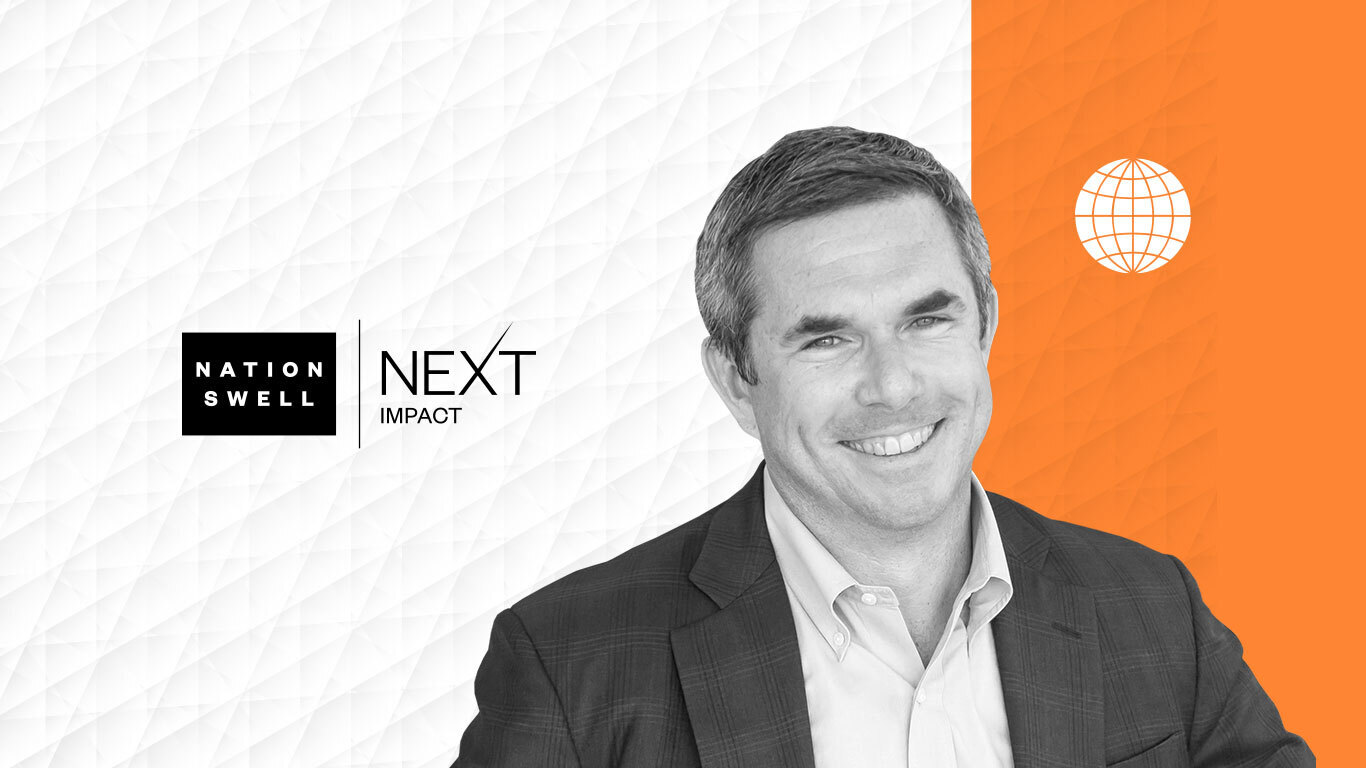
Five Minutes with Alix Guerrier, CEO of DonorsChoose

For this installment of 5 Minutes With, NationSwell sat down with Alix Guerrier, CEO of DonorsChoose — a nonprofit donation platform that helps connect teachers with the resources and materials they need to create the inspiring classrooms and projects that ensure a great education.

Ahead of Teacher Appreciation Week (May 5 – 9, 2025), we asked Guerrier about how DonorsChoose is helping to address racial and socioeconomic inequities in school funding; the impact milestones he’s most excited about; and how the platform is helping to support teachers who come from HBCUs. 

Here’s what he had to say:


NationSwell: Tell us about your personal connection to education — is there anything about your background that gives you a unique perspective or emotional connection to this space?

Alix Guerrier, CEO of DonorsChoose: I became a math teacher after I did investment banking, and I found teaching to be by far the more challenging profession! It remains the toughest job I’ve had. But the thing that I loved most about teaching was witnessing students as they understood new concepts. I would feel so fortunate to be able to observe kids as they were starting to do things that, before, they were not able to do. It’s an incredible privilege to be part of a kid’s journey as they learn and develop new skills.

NationSwell: Where are the existing gaps in school funding models, and how is DonorsChoose helping to close those gaps?

Guerrier, DonorsChoose: Public schools aren’t created equal. Schools that serve mostly students of color receive $23 billion less in state and local funding each school year – a funding gap of $2,266 per student. This inequity is reflected in teacher out-of-pocket spending. Teachers working at schools in lower income communities and with more students of color reach into their own wallet more to buy classroom materials. Our DonorsChoose platform gives members of the public a transparent, accountable way to bridge that inequity.

Every time a teacher submits a project to DonorsChoose, we receive a collection of data points on that classroom: number of students, subject area, items requested, teacher demographics, and more. We integrate this national data into our platform to help donors and institutional partners target their support where it will make the biggest impact. By highlighting schools that have been historically underfunded due to racial and economic inequity, we’ve made it easy for anyone to help us move the needle towards equity — whether they have $5 or $5 million to give.

NationSwell: Are there any anecdotes or moments that stand out to you in terms of the tangible impact you’ve seen DonorsChoose create for teachers?

Guerrier, DonorsChoose: What immediately comes to mind is the preschool classroom of Dominique Foster at Friendship Blow Pierce in Washington, DC, where the majority of students are Black or Latino and qualify for free or reduced-price lunch. You won’t find a better equipped or more engaging preschool classroom, and that’s because of Dominique. In December 2024, she used DonorsChoose to fund costumes for her students to dress up as veterinarians, doctors and dentists, skeleton models, weighted stuffed animals to serve as the patients, toothbrushes, and Band-aids – among so many other resources. 

Since posting her first DonorsChoose project in 2019, Dominique has raised $120,000 for her classroom through our platform. Along the way, her colleagues, too, have discovered DonorsChoose. More than 300 projects, posted by 78 teachers, have been funded at Friendship-Blow Pierce – totaling more than $300,000 in resources. Through DonorsChoose, educators like those at Friendship-Blow Pierce are accessing materials that their students uniquely need for an enriching education.

NationSwell: What has your experience at DonorsChoose taught you about the role technology has to play in the education system — what is the potential that you’re seeing?

Guerrier, DonorsChoose: DonorsChoose has always embraced technology as a fuel for social good. In fact, crowdfunding wasn’t even a word when we launched 25 years ago. Teachers have similarly embraced tech advancements, and their resource requests over the years on DonorsChoose show that progress within education.

Right now, there are a lot of conversations about the potential benefits and harms of artificial intelligence (AI) for both education and technology overall. Wherever you stand, it’s clear that AI is a remarkably powerful tool that isn’t going away — teachers and students are already engaging with it on a daily basis. We need to listen to the educators on the frontlines of this progress and make sure they’re a part of our national conversation about AI so that we can create a just and equitable future for our children.

NationSwell: Are there any new initiatives in the works that you’re particularly excited about and would like to lift up?

Guerrier, DonorsChoose: DonorsChoose is gearing up for Teacher Appreciation Week (May 5-9, 2025), and we’re planning even more support for public school teachers across the U.S. Teachers should stay tuned that week for more opportunities to get funding for their classrooms.

A new initiative this school year that I’m very proud of is Quad to Classroom. Studies show that the graduation rate among Black students increases by 33% if they have at least one Black teacher between third and fifth grade. In 2021, DonorsChoose conducted the largest survey of male teachers of color, and the survey shows that Black male graduates of Historically Black Colleges and Universities (HBCUs) spend the most time engaging with students. The DonorsChoose Quad to Classroom program is inspired by these findings. The program helps to boost the pipeline of teachers who come from HBCUs and to provide them with funding on DonorsChoose.

NationSwell: Finally, what are some of the challenges you’re currently facing, and how can NationSwell’s community of changemakers help you with those challenges?

Guerrier, DonorsChoose: According to our annual DonorsChoose survey of our teacher community, teachers spend between $600 and $700 out of pocket on classroom supplies in a school year. We know that it’s often much higher than that. In fact, teachers on DonorsChoose told us that if it weren’t for our website, they’d be spending more than double out of pocket on classroom supplies. 

At the same time, teachers’ salaries have decreased as much as 15% between 2000 and 2017 and are decreasing much faster than those of comparable workers, yet they’re still reaching into their own pockets to get what their students need to learn. 

Anyone, from an individual to a corporation, can go to DonorsChoose to help a teacher avoid reaching into their own pockets again. DonorsChoose will not stop until every single student and teacher has the resources they need to thrive, and we’re doing everything we can to ensure that and to rally others to join us in empowering educators.
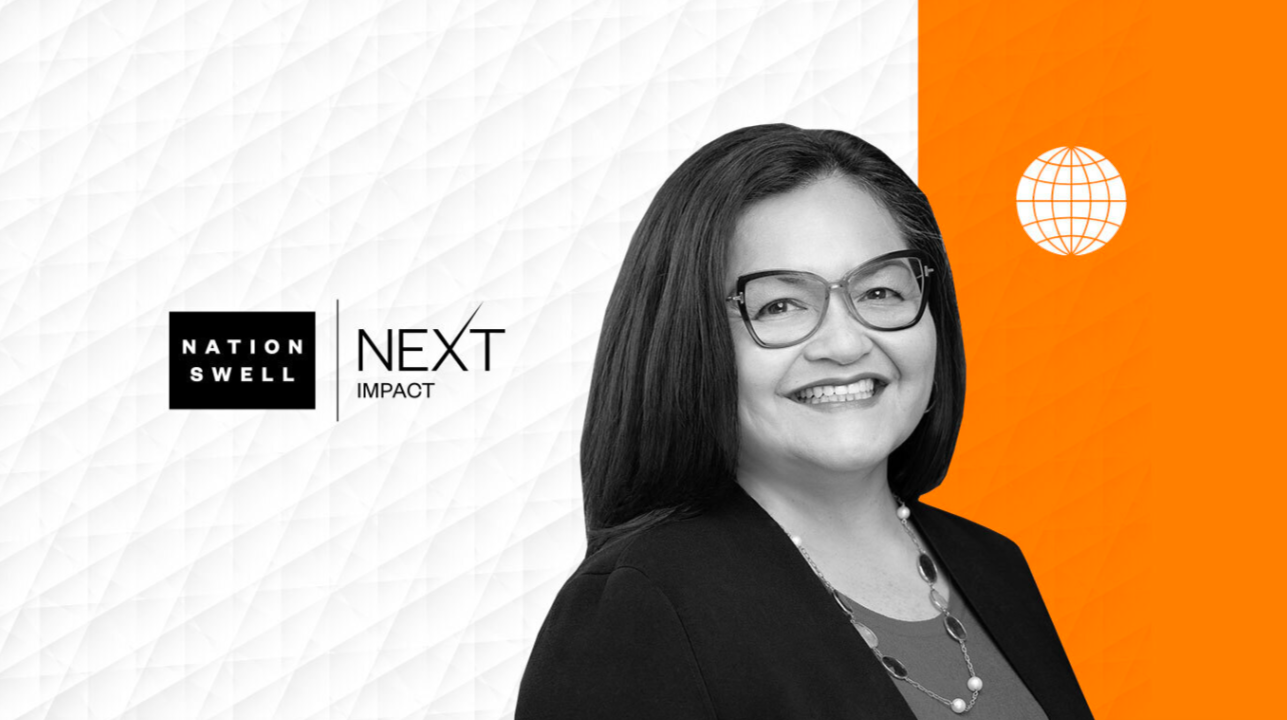
Five Minutes With Hala Hanna, Executive Director of MIT Solve

For this installment of 5 Minutes With, NationSwell sat down with Hala Hanna, Executive Director of MIT Solve — an initiative of the Massachusetts Institute of Technology that advances lasting solutions from tech entrepreneurs to address the world’s most pressing problems.

We asked Hala about how MIT Solve has built and maintained its vast network of thought leaders and industry innovators, the impact milestones she’s most excited about, and how the initiative is deploying AI to create lasting transformation. 

Here’s what she had to say:


NationSwell: Tell us about MIT Solve’s mission and vision—what makes this initiative so unique and impactful?

Hala Hanna, Executive Director of MIT Solve: MIT Solve is a marketplace for social impact innovation. We find and help scale the most promising solutions to the world’s most pressing challenges and forge lasting partnerships with our Solver teams, providing ongoing funding, strategic connections, and support long after their initial program ends.

Our secret weapon? A powerhouse community of thought leaders, industry pioneers, and MIT’s extensive ecosystem—all united by the belief that technology, in the right hands, can transform lives. We seek entrepreneurs from underrepresented regions and backgrounds whose lived experience is the expertise they bring to problem-solving. 

NationSwell: What does using technology for good look like? How are MIT Solve and its innovators envisioning a present and future where scalable tech can solve big problems?

Hanna, MIT Solve: Tech for good isn’t just aspirational—it’s our Solvers’ work today. AI powers 20% of our portfolio, demonstrating how emerging tech can be deployed as a powerful means of improving people’s lives and driving positive societal transformation—from bettering health and learning outcomes to mitigating the effects of climate change. 

In addition to the breadth of application, AI helps with scaling impact: solutions in Solve’s portfolio that are powered by AI reach twice as many lives as those not making use of the technology. 

While AI global venture capital investments exceeded $290 billion between 2019 and 2024, less than 1% of this funding went to initiatives aimed at social impact. This stark disparity reveals a profound misalignment between AI’s transformative potential and its current applications that we should all want to fix.

NationSwell: What is exciting to you about the funding that MIT Solve provides to innovators? Tell us about MIT Solve’s impact to date.

Hanna, MIT Solve: The $70 million we’ve mobilized has catalyzed extraordinary change, with our Solver teams now touching 280+ million lives globally. This translates to environmental and health monitoring for 97+ million people, internet access for 4.6+ million, educational content for 56+ million children, and vital health services for 26+ million patients. These aren’t just numbers—they represent real people experiencing better health outcomes, educational opportunities, and improved livelihoods. 

We are also proud that for Solver teams selected in the past five years, over 95% are operational—compared to 70% for similar programs. Moreover, our for-profit and hybrid teams have raised over $1 billion since their organizations’ inception—together, they are engines of economic growth for their communities.

NationSwell: Is there a grantee story that you’d like to lift up?

Hanna, MIT Solve: I cannot possibly pick just one! Instead, let me invite you to experience our award-winning docuseries, The Big Idea. It follows three Solver teams on their journey: an innovator stabilizing vaccine temperatures in remote regions, a creator of antiracist technology reducing Black maternal mortality, and a developer of robot-building kits empowering Indigenous youth. With hundreds of thousands of YouTube views, features at 17 global festivals, and awards including a Webby, these stories exemplify the ingenuity and impact of our community.

NationSwell: A year from now, what are you hoping to be celebrating? What milestones are you looking to cross?

Hanna, MIT Solve: Next year marks our 10th anniversary—a decade of catalyzing world-changing innovation! There’s a lot in store to celebrate this milestone, including at our flagship events, Solve at MIT in May and Solve Challenge Finals in September. We’re building a new model where social innovation isn’t seen as charity but as the highest-leverage investment possible. By our next decade, we aim to shift billions toward solutions that scale exponentially and reach communities where traditional systems have failed.

NationSwell: What are some of the challenges you’re facing? How can NationSwell’s social impact community help you with those challenges?

Hanna, MIT Solve: Funding for international development work faces unprecedented headwinds. Even before current events, we saw a stark disconnect: $238 billion sitting in Donor-Advised Funds while we face a $4 trillion gap in achieving the UN Sustainable Development Goals. Our mission is to bridge this divide by connecting innovators with funding opportunities, regardless of the political climate. NationSwell’s network is invaluable in helping us reach the communities that need innovation most. The most precious resource isn’t money—it’s the courage to back transformative ideas when they need it most. We invite the NationSwell community to come Solve with us!

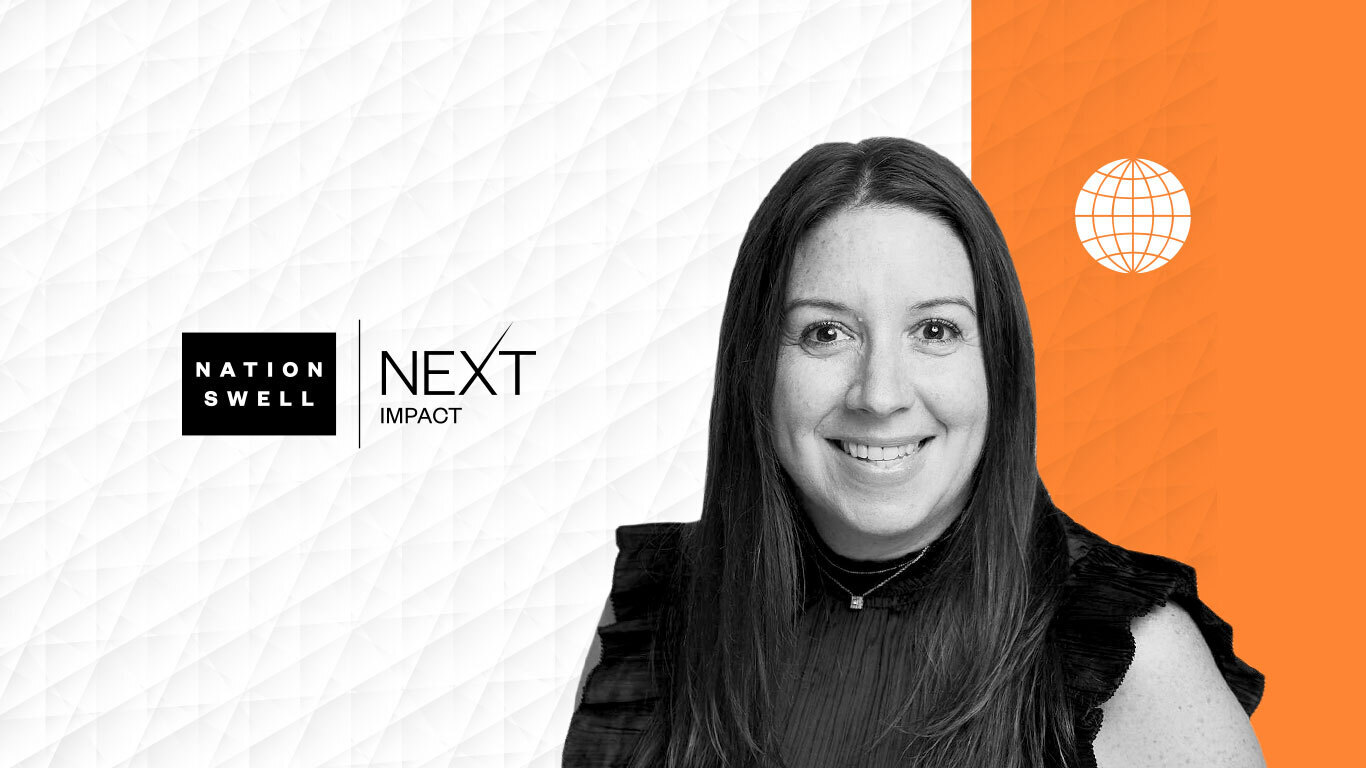
Five Minutes with Kiana Jackson, Director of Data and Research, New Disabled South

For this installment of 5 Minutes With, NationSwell sat down with Kiana Jackson, Director of Data and Research at New Disabled South, to discuss the launch of the new think tank, Black Disability Institute. Housed under New Disabled South’s Research and Data team, the Black Disability Institute aims to initiate original research and bolster existing advocacy efforts examining issues uniquely affecting Black people with disabilities.

Here’s what she had to say:

NationSwell: Tell us a little bit about your journey in advocacy work and research — what is your personal connection to the Black disabled community? What inspires or motivates you — personally and professionally — to do this work?

Kiana Jackson, Director of Data and Research at New Disabled South: My journey in advocacy started with community organizing in rural Georgia, where I saw firsthand the health disparities and systemic inequities Black communities face. Over time, I became more involved in research, trying to uncover why these inequities persist and how we can tackle them at the roots. My personal connection to this work comes from my own experience as a Black disabled woman from the rural South, where I ran into everything from limited accessibility in schools to scarce resources for complex disabilities. Seeing how these barriers affect not just me but so many in my community drives me to keep going. What truly keeps me motivated is the incredible resilience I see among Black disabled people. Even when the deck is stacked against us, our community finds ways to create joy, support, and innovation. I want to help shift the conversation around disability away from merely “fixing” people or adding accommodations onto flawed systems, and instead push for broader, structural changes that allow us to thrive.

NationSwell: What is unique about the experiences of Black disabled folks living in the American South? Why is research so critically needed at this time?

Jackson: Black disabled people in the South occupy a very particular space, facing racial discrimination, ableism, and the unique challenges that come with living in a region that is often under-resourced. Legacy issues—like entrenched racism in institutions, lack of healthcare infrastructure, and inaccessible public spaces—combine to create more hurdles than what you might see elsewhere in the country. At the same time, the South has a legacy of resilience and activism that runs deep, with strong community networks supporting one another. Despite that legacy, Black disabled Southerners are often overlooked in national policy and research, which makes it harder to bring about meaningful policy reforms. If we don’t have accurate data and storytelling that center these experiences, we can’t demand the changes needed in healthcare, housing, or education. Focused research is crucial right now because it pushes back against harmful narratives and ensures our communities’ realities become part of the broader conversation on disability justice and equity.

NationSwell: What are New Disabled South’s existing advocacy efforts like for the Black community, and where are you most excited about expanding that advocacy work?

Jackson: We’re committed to intersectional disability justice, and that means ensuring Black disabled voices directly shape our policy and research agenda. Through our Black Disability Institute (BDI), we will conduct original research and connect with Black communities, making sure people’s lived experiences inform our work. For example, in our broader research initiatives, we’re investigating racial disparities in Home and Community-Based Services (HCBS) waitlists—vital supports that Black disabled Georgians often wait years to receive, even though the state has the means to address the backlog. We’re also examining how policing intersects with disability and race in the South. Our data shows Black disabled voters frequently report discrimination in encounters with law enforcement. By pinpointing where these problems occur, we can push for better training, alternative crisis response teams, and more accountability. Looking to the future, I’m eager to see the Black Disability Institute grow and take on more community-centered research in healthcare, criminal justice, and the economy. Our broader vision is a South where Black disabled folks have the resources and autonomy we deserve—and where our lived experiences are front and center in every advocacy effort. We view research as both a tool and a call to action. The data we collect does more than reveal problems; it drives our advocacy strategies and helps us collaborate effectively with state officials, healthcare providers, and fellow advocates. Through all of this, our guiding principle remains clear: The fight for disability justice in the South must uplift Black experiences, voices, and leadership every step of the way.

NationSwell: What are the Institute’s primary goals, and what is its theory of change?

Jackson: Black Disability Institute (BDI) operates as a think tank under New Disabled South’s Research Department, aiming to reshape how we talk about Black disability and ensure that research benefits the community. We focus on bridging gaps between researchers and Black disabled communities, building trust where it’s often been broken, and spotlighting lived experiences through studies and community outreach. Ultimately, we want more funding and attention directed to the challenges that keep Black disabled people—especially in the South—from having economic independence and quality care. Our theory of change is that real progress comes when rigorous research, grassroots engagement, and institutional partnerships come together. By keeping Black disabled voices at the heart of what we do, we can confront the systems that leave us out and create lasting policy change. In our first three years, we’re zeroing in on Poverty & Care, working with healthcare leaders, policymakers, and local organizers to give Black disabled Southerners a comprehensive network of support—from accessible housing to decent-paying jobs. Our hope is that by driving both research and advocacy, BDI can help build a future where Black disabled people are fully recognized, respected, and resourced.

NationSwell: Finally, what are some of the challenges you’re currently facing, and how can NationSwell’s community of changemakers help you with those challenges?

Jackson: One of our biggest hurdles is the lack of detailed data and targeted funding for Black disabled communities in the South. Too often, policy and research discussions don’t address—or even acknowledge—the multiple layers of racism and ableism we encounter. Changing this requires significant effort and resources. Another challenge lies in shifting the broader narrative: disability is still widely seen through the lens of “accommodation” rather than justice, and Black disabled people can get lost in both racial justice and disability advocacy spaces. NationSwell’s community can help by sharing resources, forging strategic partnerships, and amplifying our research so the experiences of Black disabled Southerners reach decision-makers. We also welcome support in reshaping the narrative—through storytelling, media, and campaigns that show the realities and resilience of Black disabled people. By joining forces, we can push for systemic changes that move us past “inclusion” and toward genuine equity and justice.

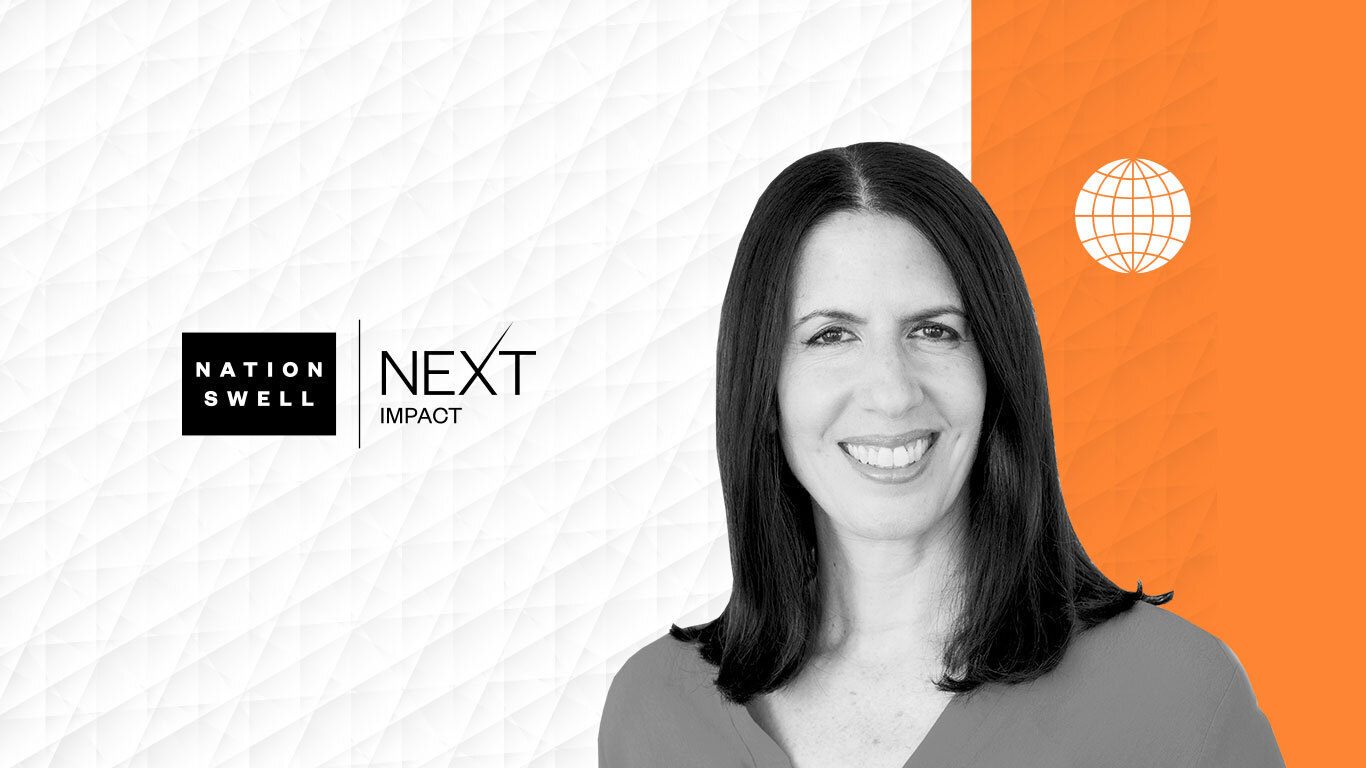
Impact Next: An interview with Visa Foundation’s Graham MacMillan

At a moment of inequality and division, who is advancing the vanguard of economic and social progress to bolster under-served communities? Whose work is fostering the inclusive growth that ensures every individual thrives? Who will set the ambitious standards that mobilize whole industries, challenging their peers to reach new altitudes of social impact? 

This year, Impact Next — an editorial flagship series from NationSwell — will spotlight the standard-bearing corporate social responsibility and impact leaders, entrepreneurs, experts, and philanthropists whose catalytic work has the potential to shape the landscape of progress amid urgent need for social and economic action.

For this installment, NationSwell interviewed Graham Macmillan , president of Visa Foundation.

Greg Behrman, CEO and founder, NationSwell: What brought you to this moment? Was there a formative relationship or experience that led to you becoming a leader in this field?

Graham  Macmillan, Visa Foundation: I knew in college that I wanted to be passionate about something and intellectually challenged, and thankfully, because of some great professors, I got inspired to think more about international development, which was a term way back in the 1990s to describe social impact. 

I was really interested in these organizations that were out there trying to solve big problems and challenges, and asking what they could do to support communities, and I started to realize this was the direction for a career that was both interesting to me and would allow me to go to sleep at night knowing that I was trying to make things a little bit better than they were before. 

You get tested over the course of your career, of course, but those moments also have the potential to be very affirming. If you’re lucky enough to have a passion, to be interested in the work that you do, to be surrounded by really fun, terrific people that share a common sense of purpose, you can make a career out of that without a problem. 

Behrman, NationSwell: What makes you an effective leader in your organization? Is there a particular philosophy of leadership or an approach that comes to mind?

Macmillan, Visa Foundation: I don’t know that it’s my place to call myself a leader — that’s for others to determine, in my view. What I try to do that may have characteristics that speak to leadership is having a sense of purpose, having a vision for what could be that is better than what it is now, taking some risk, and always ensuring that your role is in service of supporting the people that actually do the work.

I do nothing except cause trouble for my team. I get in the way. I slow things down. I ask too many questions sometimes. They’re the ones that actually do the good work. My job is to make sure that they are prepared, they have the resources, the support, the belief that they can get it done and solve any problems that might come up. So that’s what my job is and my belief in where I can add the most value. 

Behrman, NationSwell: What are two or three facets of the work that you’re leading that you think are special — what feels important to lift up?

Macmillan, Visa Foundation: The signature work that Visa and Visa Foundation have been focused on is the role that small and micro businesses can play in advancing economic growth. What we’ve managed to accomplish over this five-year period is to establish a strategy that would advance small and micro businesses in a meaningful way that aligns with both the values of our 30,000 employees and our stakeholders around the world — putting women and underrepresented founders at the center of that strategy. 

We know that there’s a tremendous gap between the resources that are allocated to women-led or underserved entrepreneurs, and we wanted to pry that open and demonstrate that they actually are not only viable, but there are actually tremendous, high-growth opportunities in doing so for a whole range of reasons. 

The distinguishing characteristic of our approach over the past five years has been not only grant making but actually investing to support these small and micro businesses. We have about a $500 million endowment, which makes us somewhat unusual for a U.S. Corporate foundation — we manage the assets, and we’ve worked with the board to establish that we manage the assets as if we were more like a perpetual foundation without an annual distribution of funds. 

Behrman, NationSwell: Anything else about your work that feels particularly differentiated in the field?

Macmillan, Visa Foundation: There are a ton of foundations that don’t invest at all. What we have constructed is essentially a toolbox of all the things that we could use, and it’s not a monolithic application — we look at every circumstance and we open ourselves up to what the partners actually need. We tell them what’s available to them and we’re not prescriptive, we don’t assume we know what they need better than they do.

I believe that corporate philanthropy is elevated when you’re harnessing the power and capability of the business — that is fundamentally differentiated from private philanthropy. It just is. When done well, change can occur at a pace that is just fundamentally different. We are on the precipice of seeing that happen, and we’re currently trying to set up conditions by which we can then be effective at that next phase. 

Behrman, NationSwell: Who are a few of the peer leaders whose work or leadership styles you most admire?

Macmillan, Visa Foundation: I would be remiss if I didn’t acknowledge my boss at Citi, Brandy McHale, who taught me more about corporate philanthropy and philanthropy in general than almost anyone I know. In many ways, everything that I do is modeled off what I learned from her, both in terms of culture and humility and good sense of humor. 

A colleague that I’ve long admired but have recently gotten to know more and more is Delilah Wilson-Scott. Delilah is incredible in my opinion: she’s navigated two very complex, large companies at the highest level, and she does it with grace, with humor, and she’s super smart. 

And then last but not least, of course, is my former colleague, Darren Walker, who I spent a few years working with at Ford. Darren is a fundamental believer in the power of the market as a force for good, he knows finance, he knows governance, and what he’s been able to build out of that knowledge is tremendous. 

Behrman, NationSwell: What are some of the resources that have really inspired you as a leader? 

Macmillan, Visa Foundation: I would honestly point to the NationSwell community: there’s substance, there’s thought, there’s content, there’s community, there’s gathering. The breaking of bread — that’s a resource unto itself. 

In terms of podcasts, I love “The Rest is History” — it’s fantastic. I’m a huge follower and fan of history, and the podcast is led by two British hosts, and there’s something about talking about history with a British accent that just feels right. It’s also really good if you want to fall asleep. There’s also another terrific one called “Empire” — I’m grateful to any resource that I can use to take my head out of this space but still be thoughtful and think of the patterns in history that become our future.

Impact Next: An interview with Gilead Sciences’ Carmen Villar

At a moment of inequality and division, who is advancing the vanguard of economic and social progress to bolster underserved communities? Whose work is fostering the inclusive growth that ensures every individual thrives? Who will set the ambitious standards that mobilize whole industries, challenging their peers to reach new altitudes of social impact? 

This year, Impact Next — an editorial flagship series from NationSwell — will spotlight the standard-bearing corporate social responsibility and impact leaders, entrepreneurs, experts, and philanthropists whose catalytic work has the potential to shape the landscape of progress amid urgent need for social and economic action.

For this installment, NationSwell interviewed Carmen Villar, Vice President for Corporate Citizenship and ESG at Gilead Sciences.


Greg Behrman, CEO and founder, NationSwell: What brought you to this moment? Was there a formative relationship or experience that led to you becoming a leader in this field?

Carmen Villar, Gilead Sciences: I come from a background where social good and social justice was really important in our family. My mother was a public school teacher and my father was a social worker and a community organizer, and service is kind of baked into the DNA of who I am as a person. 

Most of the early part of my career was in public service. I worked for the U.S. government, and I did a lot of work on the ground with health departments and ministries of health overseas. Toward the end of my time in the public sector, there were some crises that were complicated to manage.  We called on private sector partners to assist, as they had unique abilities.  We started to partner with them a bit, and we were able to get their support through a foundation associated with our agency. 

When I thought about what I was going to do next in my career journey, I started talking to people in the private sector and was basically told, “Carmen, you can do all of the great things you’ve been doing in the public sector for the greater good where you are or somewhere in the non-profit sector, or you can come here and you can do that same kind of work with the power and the weight and the resources of this big company.” And that was when it clicked in my head that I was at this pivotal moment in my career development. 

Behrman, NationSwell: What are two or three facets of the work you are leading that you think are particularly special or differentiated in the field — what feels important to lift up?

Villar, Gilead: In the first quarterly all hands I attended at Gilead, two things were highlighted as key to the company. Scientific innovation and health equity. I almost fell out of my seat when I heard that — I thought, oh wow, I’ve made it. It was super exciting to think that a publicly-traded company would use health equity to drive a lot of its work. 

What my team at Gilead has done really well over time is embrace community through grantmaking and philanthropy and build trust in those relationships so that we can hear more from communities about what is working and what is not working. People know us, and most of the time trust us and want to share their feedback with us, and that has been a huge accomplishment for a company like ours. My focus now is on how we continue that in a way that can address our three big pillars, which are around reducing stigma, improving access to care, and focusing on community-led or -driven interventions in health.

Behrman, NationSwell: What makes you an effective leader in your organization? Is there a particular philosophy of leadership or an approach that comes to mind?

Villar, Gilead: As I think about how Gilead grows the next generation of workers and what that means, again, where people come from and what their world views may be is very important to understand as a supervisor. I know I was very fortunate to have had the parents that I had. My dad sometimes says that he thinks he was too hard on me because, as a woman, he knew it was going to be more challenging for me to navigate the workplace, and even harder as a woman of color. I remember when I was 14, he made me change a tire — I couldn’t even drive yet. 

That resilience that my father seeded in me has made a huge difference in my confidence, in my ability to fail quickly, in my performance, and in accepting that there are things I do well, things I don’t necessarily do well, and that’s okay. I carry an attitude of, ‘I’m just gonna do what I can and be my best self,’ and it’s served me well so far. I try to impart the same sentiment on the rest of my team at Gilead and in all that I do, as a voluntary board member, mother, etc.

Behrman, NationSwell: You mentioned the need to be comfortable with failure and learn from mistakes or missteps. How do you think about cultivating that mindset in a way that allows you to be successful and creative?

Villar, Gilead: Perseverance — you have to persevere. If this work is at the heart and core of who you are, then you have to keep on keeping on. When I think about leadership, mentorship is a huge part of what I do because not only does it invigorate me and help me understand what other people are doing, it helps keep people going and keeps them motivated to do this work. I try hard to provide that mentorship, to provide development opportunities to people that I work with, but also to people who might reach out or I might meet somewhere who just say, I’m really trying to do this, how do you think I can do better?

If you’re not developing your people, it’s hard to check in and make sure you’re doing the right things in the right way. Failing quickly, brushing that off and moving on, that’s not always the easiest thing to do, but with some encouragement and mentorship, it gets a little bit easier.

Behrman, NationSwell: As a leader in this space, how are you sense-making when it comes to this moment, and how are you thinking about the unique opportunities and challenges inherent to it?

Villar, Gilead: We had a huge upswing of interest in 2020, and we were able to harness a lot of that attention and those resources and do good things. In business, the pendulum swings one way or the other, and yet the advances that we have made over time keep us a little bit ahead in terms of the progress level, so even when we feel like we’re going backward, we’ve really made it two or three steps forward. 

My fear is that now we’re taking that step backward, particularly when it comes to diversity and inclusion. Without those diverse voices, we are not able to ask and answer hard questions that make our people and our business stronger and constantly growing and improving. It’s critically important to continue to bring those voices forward, even though policies or laws or rules have been changed, because that informs us and reminds us of why we do this work every day. 

Gilead continues to be a responsible business in all aspects of our operations. We have a strong network of employee resource groups (ERGs) and are focused on the inclusion of the range of perspectives across the enterprise. The company is very much aligned with global responsibility frameworks like the SDGs. In fact, SDG 17 (partnerships) is a critical aspect of how we operate.  Our commitments in the partnership space far exceed that of many others, and we continue to rely on our partners to help us understand where the biggest pockets of healthcare needs exist.This leads naturally to our focus on SDG 3 (health) and our efforts to improve access to health and positive health outcomes.

Behrman, NationSwell: Who are some of your peers in this work that inspire you as a leader? 

Villar, Gilead: It’s hard to call out just a few, but I will try. Julie Gerberding, who was a former head of the CDC, hired me for a job at Merck, and she is great — talk about a total advocate for population health and for female leaders. 

I’d also name Ken Frazier, who was formerly the CEO of Merck. For people that don’t know him, Ken was an amazing CEO — he was very clear about where he stood on certain issues and on what was right and what was wrong, and he made that known in lots of different venues. That was groundbreaking for a CEO coming up when he did. I think Deb Telman, our EVP at Gilead, is very similar.  She is the person that really recruited me to come to Gilead last year.

Finally, I’d also shout out Alan Greenberg, who was one of the best mentors I ever had. He doesn’t work in this space, but he does run the Center for AIDS Research at George Washington University and is the Chair of Epidemiology in the Public Health School there. He was so critical in my development and was always sharing his pearls of wisdom around management and leadership and encouraging me to be who I was, even when things become difficult. With that kind of support, I was really able to test out my management style and figure out what worked for me.

Impact Next: An interview with Wells Fargo Foundation’s Darlene Goins

At a moment of inequality and division, who is advancing the vanguard of economic and social progress to bolster under-served communities? Whose work is fostering the inclusive growth that ensures every individual thrives? Who will set the ambitious standards that mobilize whole industries, challenging their peers to reach new altitudes of social impact? 

In 2024, Impact Next — a new editorial flagship series from NationSwell — will spotlight the standard-bearing corporate social responsibility and impact leaders, entrepreneurs, experts, and philanthropists whose catalytic work has the potential to shape the landscape of progress amid urgent need for social and economic action.

For this installment, NationSwell interviewed Darlene Goins, President of the Wells Fargo Foundation.


Greg Behrman, CEO and founder, NationSwell: What brought you to this field? Was there a moment in your life that galvanized your commitment to driving bold action in the impact space?

Darlene Goins, President, Wells Fargo Foundation: I grew up the daughter of a minister and seeing the service to others and community that my father provided instilled in me a need to provide service to others. As I entered my adult life and career, I became fascinated by the idea of decision analysis — making decisions through data. When I was in graduate school, and then later when I was at FICO, I realized there was a ton of consumer confusion around credit scores. I knew I wanted to help demystify credit scores for people and provide financial education with it — to help people improve their scores and chart the path forward — so I created a program that allowed financial institutions to share FICO scores for free. Seeing the impact that program had unlocked passion in me to do more, beyond the credit space. I came to Wells Fargo excited to scale relationships that can be used to further financial capability, and to create lasting community impact on the lives of underserved, underestimated families and businesses. 

Behrman, NationSwell: As a leader in the space, how are you sense-making when it comes to this moment, and how are you thinking about the unique opportunities and challenges inherent to it?

Goins, Wells Fargo Foundation: It’s clear that we’ve made meaningful progress, but we still have a long way to go. We are seeing that some of society’s toughest problems are still widely prevalent — the housing crisis, an unmanageable cost of living, the difficulties so many people face in getting ahead. But at the same time, I’m encouraged by the collective effort I’m seeing from so many organizations to drive change and move us in the right direction. That’s one of the reasons I feel so blessed to be in this role, to have the ability to leverage philanthropy as a catalyst and test new and innovative ideas at scale. 

Behrman, NationSwell: Are there any trends we’re seeing in the current moment that make you feel particularly optimistic?

Goins, Wells Fargo Foundation: From a philanthropy perspective, one of the changes I’ve seen over the course of the last nine years has been the general attitude shift I’ve seen around really integrating a community’s lived experience and wisdom into investment decisions. Historically speaking, the traditionally held attitude of philanthropy was that you could come into communities and you automatically knew what would work best. These days, I’m seeking more of an orientation toward community co-design — leveraging the experience of the people you’re trying to help. This trend around community-led design gives me real optimism for the future. 

Behrman, NationSwell: What are two or three facets of the work you are leading that you think are particularly special or differentiated in the field — what feels important to lift up?

Goins, Wells Fargo Foundation: One of the things I really like to think about is how we can leverage the full breadth of our resources. As a financial institution, Wells Fargo Foundation has four primary funding priorities: affordable housing, sustainability, small business growth, and financial health. Bringing the full resources of the bank to bear is critical to the work of strengthening marginalized communities, and that intentional approach allows us to go deeper on societal issues.

One example of this multi-pronged approach can be found in Minneapolis, where we invested in the development of a mixed-use, multi-income housing development in the commercial corridor that was destroyed in wake of George Floyd’s murder. After a period of intentional and highly engaged community outreach, the finished development will feature 100 new affordable housing units, a Wells Fargo branch, and a community meeting space — the combination of commercial and corporate properties that can create a lasting impact.

I’m also very proud of the work we’re doing in the small business growth space, particularly with the Open for Business Fund. When the pandemic hit, our CEO decided to take the gross processing fees the government issued for administering the PPP loans — equivalent to around $420 million — and put that back into a fund to deliver urgent capital and expertise to racially and ethnically diverse small business owners. Fast forward four years, and we’ve been able to serve 336,000 small businesses, which has helped to generate or preserve more than 461,000 jobs. 

Behrman, NationSwell: What are some of the resources that have really inspired you as a leader? 

Goins, Wells Fargo Foundation: One resource that’s really helped shape my thinking on how to position the work is an article that McKinsey published on the business case for financial inclusion, which looked at Black and white Americans and access to financial products and the racial wealth gap. It concluded that if Black Americans had the same access to financial services that white Americans have, companies could realize up to $60 billion in additional revenue each year. That is something I’ve really come back to over and over again, and it has helped me with positioning this work on numerous occasions.

As a leader, I also love the book More than Ready by Cecilia Muñoz. I have dealt with imposter syndrome in the past, and her book helped me to recognize that I am ready for the seat that I occupy. It’s also been helpful in providing strategies for dealing with microaggressions and unconscious bias, and just generally reminding me that I’m not alone in this work.

There’s a quote I come back to often: “Never accept criticism from someone from whom you wouldn’t seek advice.” I think that pretty much speaks for itself.

Impact Next: An interview with the Seattle Foundation’s Alesha Washington

At a moment of growing inequality and division, who is advancing the vanguard of economic and social progress to bolster our most vulnerable communities? Whose work is fostering the inclusive growth that ensures every individual thrives? Who will set the ambitious standards that mobilize whole industries, challenging their peers to reach new altitudes of social impact? 

In 2024, Impact Next — a new editorial flagship series from NationSwell — will spotlight the standard-bearing corporate social responsibility and impact leaders, entrepreneurs, experts, and philanthropists whose catalytic work has the potential to shape the landscape of progress amid urgent need for social and economic action.

For this installment, NationSwell interviewed Alesha Washington, President and CEO of Seattle Foundation.


Chloe Lew, Senior Vice President of Partnerships, NationSwell: How did you come to be the President and CEO of the Seattle Foundation? I’d love to hear about any key milestones, mentors, or experiences that brought you here.

Alesha Washington, President and CEO, Seattle Foundation: For me, it started with a general curiosity about nonprofit organizations because of my experiences with them growing up. I was a volunteer camp counselor at my neighborhood YMCA, and my first internship experience was with the ACLU. As I became more aware of nonprofits, I quickly learned that philanthropy played a role in funding all of these amazing experiences I was having as a kid, and I knew I wanted to do something to give back to this sector that was giving so much to me.

I also had a notable mentor in Dave Abbott, the former president of the George Gund Foundation in Ohio — he was the one who instilled in me the power of public policy and philanthropy. He taught me that if we make a grant to an organization, it will benefit a group of people, but if we change the law or the regulation that’s causing the need in the first place, we can help many more. He was always thinking about how to use philanthropy as a catalyst for public policy and systems change. I became a lobbyist because of his influence and used my position to create change in the civic sector. By the time Seattle Foundation became a possibility for me, I was impressed by how explicit the foundation was about racial equity and justice, and how clear it was about the role that a community foundation could play in systems-change work through grant making and advocacy. 

Lew, NationSwell: You have been at the Seattle Foundation for nearly three years. What has been guiding your leadership as you’ve taken the helm of the organization?

Washington, Seattle Foundation:  Three things come to mind. First, there were some operational challenges when I stepped into Seattle Foundation, and I came in eyes wide open — the opportunity I saw was: How do you unlock resources for a community while also building a stronger business, and how do you do that with purpose? Wrestling with this solidified the need for a very clear and accessible vision. When you go through big shifts as an organization, there are bound to be questions and pent-up energies — the ability to set that vision early on and give folks something to aspire to helps them know that even when it’s hard, it’s hard for a reason.

The second thing is that I genuinely believe organizations are only as strong as their people, and at the end of the day if the people aren’t well, the organization isn’t healthy either. Stepping into this role, I spent time early on with every single person who works at the Foundation so that I could hear their stories and understand their point of view. It starts to give you a real temperature check on the health of the organization as a whole when you hear how people are showing up to work every day.

Finally, the thing I hold at the very center of my work is joy. In a space where there is so much polarization and so many people coming from different lived experiences, joy is something that we all still seem to find some unity in. Holding space for joy doesn’t mean that things aren’t chaotic or difficult; it just means that we can recognize the beauty of that discord and move through it with meaning, strength, purpose, and hope.

Lew, NationSwell: How do you center joy within the Foundation — what does that look like in practice? 

Washington, Seattle Foundation: The reality is given the changing nature of community foundations – the shift towards sustainable business models that can drive real impact – we will be in a state of evolution constantly. Navigating change is hard, so a key focus for us is building trust in order to ensure that our people feel valued and heard. We put out a robust staff engagement survey in an attempt to create mechanisms for people to share thoughts and perspectives. We use our people manager meetings to offer training on change management, really focusing on how to manage through change joyfully so they feel equipped to support our team. 

We’re always thinking about how to create safe spaces for people to share thoughts, but then also how to respond to those concerns so folks have clarity and transparency around our thinking. Our team that works on learning literally put together a Jeopardy game to bring people deeper into the work and make it fun — you can make gaining knowledge and trust a really joyful experience.

At the end of the day, we’re trying to create a fun and joyful environment internally while also being intentional about transparency and trust mechanisms that help people step into more of their power in the work. My personal barometer for that is how many staff feel comfortable reaching out to me to say, “Can we grab coffee?” or “Can I talk to you?” I’m seeing an uptick in that in a way that lets me know we’re doing something to foster something good here, even if it’s hard. 

Lew, NationSwell: How are you thinking about the current moment in social impact, and the economic landscape more broadly?

Washington, Seattle Foundation: Nikole Hannah-Jones did a piece on the colorblindness trap that I think is essential reading. Especially now as I consider where we are post this election. She very skillfully and artfully tracks the impact and legacy of slavery to where we are in the present day, with a number of lawsuits and efforts to attack diversity, equity, inclusion, to turn the Civil Rights Act and the Voting Rights Act on their heads and systematically reverse a lot of the efforts to create more opportunities for Black people and other people of color.

So much has gotten lost in translation through this time that I’m not quite clear or sure how astute and clued in we all are as a society. If nothing else, it is illuminating how powerful and sometimes dangerous narrative can be. One thing I still hold onto from NationSwell’s immersive experience in Montgomery is when Bryan Stevenson shared with the group that the biggest sin of slavery wasn’t slavery itself, it was the way that we justified it — the narrative around it.

I think what it means in my work, and for philanthropy as a whole, is that we get prepared for sophisticated legal, financial, and reputational threats that are meant to make us back away from anything we are doing that would be seen as too controversial in this current environment. We need to stay focused and close to each other. We need to keep our values at the center of every move we make. And we need to keep funding narrative change, community organizing, and power building in the communities we serve. 

I want to know that we’re able to stand the test of this time, that we don’t shrink away and acquiesce to a moment and then find ourselves in a situation a decade from now where these things we fought so hard for around a more inclusive democracy, around opportunities for those that never had a fair shot to a get ahead, all of that is turned on its head.

Lew, NationSwell: What are some of the initiatives, ways of working, or projects that you feel represent the best or most differentiated work that the Seattle Foundation is doing? What would you lift up for other leaders in the field?

Washington, Seattle Foundation: We have a vision of a joyful region of shared prosperity, belonging, and justice. As a grantmaker, we’re always thinking about how we resource organizations — especially BIPOC-led and -serving organizations — in a way that helps make that vision a reality. 

We’ve always done that through this very tiny pot of money that represents our core discretionary dollars — around 5% of what we do as a whole — with the other 95% driven through our donor-advised funds. The foundation has had to get innovative to figure out how we shift from impact work happening through a tiny discretionary grantmaking pool to bringing all the resources under our control to drive toward our vision. We have to think about all of the tools in our impact toolkit and how they support traditional grantmaking, and so we’ve really started to deepen our work with impact investing.

One of our primary vehicles for this is the Evergreen Impact Housing Fund, which is our way of contributing to the production of affordable housing, something that iis sorely needed in a community like Seattle. Thinking about the creative ways that philanthropy can test, innovate, and de-risk projects around affordability, how we can come into a capital stack of a project to make it more solvable at the end — we really put a lot of energy into that, and it creates opportunities for donors to co-invest with us. We are planning to grow this impact fund over the next year and create opportunities for individual donors to co-invest with us. 

We have refreshed learning opportunities for our donors to help broaden their understanding of community issues and help them get engaged. We’re supporting peer-to-peer learning among our donor base, so while their entry point may be a conversation of interest for them with other philanthropists on environmental justice, we’re there to then help them see what we’re funding and where there are opportunities for them to invest. 

My hope is that by recognizing everybody’s humanity in this — and the fact that we are all linked together in what it takes to get to a joyful community — we’re seeing resources move in more ways that are aligned and connected to what Seattle needs to thrive.  

Lew, NationSwell: Which of your peers in the field most inspire you?

Washington, Seattle Foundation: I have a top three. Fred Blackwell with the San Francisco Foundation is the epitome of cool for me. He has a tremendous heart for social justice. Trisha Finnegan at the Oklahoma City Community Foundation — we have this shared experience of moving to communities that we are not from and stepping in as new leaders attempting to drive pretty significant change. She leads with a level of courage and strength that is beyond anything that I’ve seen, and it gives me a lot of energy and hope. 

I’m also inspired by a phenomenal community leader back home named Leah Hudnall, who runs the Legacy Perspective. Leah really understands narrative change work and is deeply committed to the success of the community that raised her. She’s been very intentional in capturing the stories and legacy of people that would otherwise not be named, and she has stayed true to that calling, even in the face of opposition to her leadership.

Lew, NationSwell: What are the resources that you’ve found have been transformational in terms of how you look at this work and at your own leadership?

Washington, Seattle Foundation: I’m reading a really great book right now called “Leading with Joy: Practices for Uncertain Times,” by Akaya Windwood and Rajasvini Bhansali. I’m big on leadership books for past time reading but it is probably the most insightful, meaningful body of work that I’ve read — it uses short vignettes and stories from both of the authors to reflect on the leadership experiences of women of color through a lens of joy.

Impact Next: An interview with Kyndryl’s Pam Hacker

At a moment of growing inequality and division, who is advancing the vanguard of economic and social progress to bolster our most vulnerable communities? Whose work is fostering the inclusive growth that ensures every individual thrives? Who will set the ambitious standards that mobilize whole industries, challenging their peers to reach new altitudes of social impact? 

In 2024, Impact Next — a new editorial flagship series from NationSwell — will spotlight the standard-bearing corporate social responsibility and impact leaders, entrepreneurs, experts, and philanthropists whose catalytic work has the potential to shape the landscape of progress amid urgent need for social and economic action.

For this installment, NationSwell interviewed Pam Hacker, Vice President of Social Impact at Kyndryl.


AiLun Ku, Senior Strategic Advisor, NationSwell: What brought you to this field? Was there a moment in your life that galvanized your commitment to driving bold action on social and economic progress?

Pam Hacker, Vice President of Social Impact at Kyndryl: I think I was born to do good in the world. I remember volunteering at the local hospital as a kid, and teaching theater to kids with special needs — I always had this passion for giving back. 

I was lucky enough to land in the PR department at Sesame Street’s nonprofit, Sesame Workshop, and I knew right away that I had found my people (and my Muppets). Slowly but surely, I found myself leading our outreach efforts — everything from creating resources for how to talk to kids about an incarcerated parent to eating healthy on a budget. Throughout it all, the essence of the work was about giving back to under-resourced communities. 

From there I was able to make a very organic transition to HBO, where I used my skills as a communicator and a storyteller to help build out their social impact work. I loved that era, and I loved creating resources and PSAs to help communities — everything from how to get access and talk about the vaccine, to Black Lives Matter, to Stop Asian Hate, and more.

Just as I was starting to ask myself what was next, a recruiter found me on LinkedIn and told me about Kyndryl. Over a year in, it has been the most incredible experience for me. I’m learning more about the space and how we can use tech for good, and how we can better allow our 80,000 employees to take time off to volunteer in the communities where we live and operate. 

Ku, NationSwell: How are you making sense of the current trends we’re seeing in social impact? What are you concerned about, what are you optimistic about, and what should we be paying more attention to?

Hacker, Kyndryl: Honestly, I’m a huge optimist — I always see hope in any scenario, in any community, in any issue we’re tackling, in any theme. If there’s one thing that still ails me, it’s the fact that diversity, equity, and inclusion is still something that we have to even have these conversations around, that there is still so much work to be done in terms of ensuring that all people have a seat at the table.

Ku, NationSwell: Looking back at the scope of your career, how have your thinking, your strategies, leadership style, or philosophies evolved? What are some attributes or approaches that make you an effective leader in this space?

Hacker, Kyndryl: I’m continuing to grow as a leader. At Kyndryl, being a global organization, this is the biggest team that I’ve led. But even when I’ve had small teams, I am a people centric leader.The work is as important, I should say, but I go back to the people. I care deeply about the next generation of humans and I care deeply about people having the opportunity to grow at a company and stay on their journey. Nothing makes me happier than mentoring people inside and outside of my team. I lead with my heart. 

Ku, NationSwell: Is there any particular initiative at Kyndryl you want to highlight that really kind of brings into focus your unique brand of leadership and what’s coming ahead in the work that you’re doing?

Hacker, Kyndryl: The beauty of a global company is that there’s so much happening on the ground that sometimes it’s hard to keep up. We are just in our first year of foundation grants, and we’ve given 11 of those grants out in seven different countries. We’re about to meet with our board and talk about the next round, so to be part of building something because the company is so young, that is something I’m grateful to be able to do.

I really see and feel the pride in working at Kyndryl: Employees wear our colors, they wear the logo — there’s a sense of pride, and it’s so exciting to have the platform to show that pride and to help build it. We’re building the culture, we’re transforming as we’re here, and you truly see them care about the people. 

Ku, NationSwell: It’s clear that you bring a very values-centered approach to leadership. How do some of those values show up — what’s the North Star of your leadership?

Hacker, Kyndryl:  Honestly, it’s people. When you have great people on your team, you end up doing great work together, and I got really lucky with the team I’ve gotten to work with. Kyndryl attracts really great people in general — smart, high performers, creative, strategic individuals. I don’t think I’ve ever worked harder in my life, and yet I simultaneously feel myself stretching and learning and growing almost every day because the work is so inspiring.

Ku, NationSwell: What does winning in social impact look like to you?

Hacker, Kyndryl: I think the more lives we could impact and change, that’s winning, right? And there’s small wins, right? For every student that walks into our office who’s never been in an office before, that’s a win for me. For being able to train almost 50,000 women in India around cybersecurity, that’s a win. And on a larger scale, being so young as a company, there’s so much opportunity to grow, to impact more. 

As the brand grows, we’re part of that brand growth. Social impact is embedded into the DNA of the company. It’s not something that is an afterthought. It’s really built from the ground up.

Ku, NationSwell: Could you recommend any insightful resources – maybe a book, report, podcast, or article that has significantly influenced your thinking?

Hacker, Kyndryl:  My relationships in the impact space are my best resources. Whether it’s other colleagues, friends, a mentor — impact leaders want each other to succeed. My peers in this space are my go-to, and it’s so comforting to know that I have experts or advisors that I could call about any issue throughout the years, no matter where I’ve been in my career.

Ku, NationSwell: Do you have any words of wisdom to share with those working in the social impact space?

Hacker, Kyndryl: For newcomers to the work, I say often that if you are at a company that you’re happy at, start a social impact team there. One of my old bosses at Sesame Street always used to say, “change is good,” and that’s been true for me — it was good for me to leave Sesame and go to HBO, and it was even better for me to leave HBO and come to Kyndryl. So I’d say the same to a more seasoned professional, or anyone experiencing a moment of uncertainty, that I would to anyone just starting out: Change is good.

Impact Next: An interview with Western Governors University’s Scott Pulsipher

At a moment of growing inequality and division, who is advancing the vanguard of economic and social progress to bolster our most vulnerable communities? Whose work is fostering the inclusive growth that ensures every individual thrives? Who will set the ambitious standards that mobilize whole industries, challenging their peers to reach new altitudes of social impact? 

In 2024, Impact Next — a new editorial flagship series from NationSwell — will spotlight the standard-bearing corporate social responsibility and impact leaders, entrepreneurs, experts, and philanthropists whose catalytic work has the potential to shape the landscape of progress amid urgent need for social and economic action.

For this installment, NationSwell interviewed Scott Pulsipher, president of Western Governors University — an online university that utilizes a competency-based learning model to provide advanced education for working professionals.


Greg Behrman, CEO and Founder, NationSwell: What brought you to this field? Was there a moment in your life that galvanized your commitment to driving bold action on social and economic progress?

Scott Pulsipher, President, Western Governors University: I was raised by wonderful parents, and there were many tender mercies in my early development that shaped my leadership. I understood early on that one of the keys to a meaningful life is your influence on those with whom you associate. 

That understanding came into greater clarity for me in a professional context when I served as head of product for a startup, when through the process of being acquired, my seven-person product and marketing team scaled quickly to 120+ individuals across the globe in less than 12 months. There was this wonderful woman, Gloria Humes, who became my assistant. Early on, she reinforced the idea that my real value-add would be in helping these individuals realize that they mattered — showing them that I saw them for all the things that they were doing not only at work, but in life in general. 

Each week, she would give me two or three names, and I would pen a personal note to them to let them know that they were seen. I started improving my ability to observe what individuals were experiencing and taking that mindful moment to handwrite a note to them, acknowledging them, recognizing them, thanking them for their contributions, and congratulating them on a milestone in life or for another notable thing.

At WGU, I am constantly asking myself how I can increase my capacity and scope of leadership to lead a whole organization of more than 9,000 people. It has connected a professional pursuit with a purposeful mission. I want to be part of making a difference in the lives of others, and WGU’s whole business is changing lives for the better by expanding access to high-quality education so that they can pursue their opportunities. 

Behrman, NationSwell: Staying on leadership, what is it about your leadership that helps you to be effective? Is there a philosophy or approach that has really helped you to be an effective leader in this space?

Pulsipher, WGU: Baked into WGU’s core principles is a very clear sense that there’s inherent worth in every individual and that, if given the opportunity, everyone has something big to contribute. I see it as my responsibility as a leader to ask, “Am I getting the best out of this individual? Am I providing the feedback they need so that they understand where there are gaps between what they’re doing and what they actually want to achieve?” 

I’m also striving to do that in larger contexts — I’m trying to figure out how to connect with the individual, even if I’m speaking in a town hall to all 9,000 of our people. I’m continually trying to discern whether I’m influencing others toward an aspiration, whether it’s advancing innovation in our curriculum or new ways to partner and engage at a local level. 

In the past, I had a tendency to quickly jump to problem solving, but now I’m increasingly finding that the best counsel or support I can give is to let people work through their challenges themselves — without those challenges, they won’t really develop in the way they need. At WGU, we’re in a unique position where that logic extends to the business we’re in. With our students, we’re trying to figure out how they can pass a particular course or demonstrate mastery in something, or persist through all of the challenges they face while they’re trying to complete their degree. We endeavor to provide the right level of instruction, mentoring, and support to help them learn and master things for themselves.

At WGU, we’re trying to change lives for the better by acting as a unifying force in the midst of a lot of diversity — we’re striving to create a place where everyone from different backgrounds and all walks of life can come here as the glorious individuals that they are and work toward the same shared goal. And, in the process, we expect that we will also change and become better than we were before. 

Behrman, NationSwell: What else about the impact strategies, initiatives, or partnership models WGU is championing feels particularly unique or differentiated? 

Pulsipher, WGU: It starts with our core principles. In general, we’re operating outside of the specific paradigm most people think of when you say the word college or university — you’ll hear people say, “These individuals are the top talent because we’ve seen them perform in a certain way.” At WGU, our philosophy is that everyone is top talent. Everyone, if given the opportunity, has something big to contribute. 

One thing we’ve deployed in this highly personalized model of education is the notion of competency versus credit hour. Competency-based education is really important, because it basically says that mastery matters more than how long it took you to master something. We focus on what it really means to demonstrate mastery. All of us are going to progress at different rates, and when you design for that, you change the variable of time in terms of how quickly individuals complete their degrees. 

The second big thing is the highly personalized student experience. This is where technology and AI become incredibly beneficial, as most learning is inherently self-directed. We’re already utilizing machine learning, and tapping into existing AI models could make it just as easy to support very specific, personalized recommendations–suggesting the optimal next steps for achieving your objectives, demonstrating mastery in a module, or determining the ideal sequence of future courses, etc.

The third thing I’d highlight that differentiates WGU is our low cost. We have a declining number of traditionally-aged students, and the working individuals whom we serve need a means to upskill and uplevel. That long-form model of education is not manageable with all of the associated costs of traditional higher ed (e.g., living, board, athletics, student life), so that’s where we leverage the internet to reach and teach individuals where they are. If you want to talk about solving the student loan crisis and making opportunity work for everyone — especially those who’ve been historically underserved or disadvantaged — streamlining costs in this way is critically important. If education is supposed to be a great equalizer, let’s prove it to be so rather than being an engine of privilege (and an example of privilege begetting privilege).

Behrman, NationSwell: Of your peers in the social impact space, who are a few whose leadership inspires you, and whom you hold in high esteem?

Pulsipher, WGU: I recently reconnected with Joe Fuller, whom I used to work for at Monitor Group. He’s thinking very deeply about the need to diversify the workforce and how we need to think about talent pipelines. I find his research and work to be very informative and effective in shaping the challenges and opportunities we’re undertaking at WGU.

Another person that I have also come to be associated with is Ted Mitchell, who was formerly the Undersecretary of the Department of Education under President Obama. He is the type of person who stimulates the innovative thinking that’s necessary at this moment because he sees where the puck is going. It’s also been a privilege and a pleasure to work more closely with Tracy Palandjian, the co-founder and CEO of Social Finance — I think they’re also doing great work. 

Behrman, NationSwell: Could you recommend any insightful resources – maybe a book, report, podcast, or article — that has significantly influenced your thinking or inspired your leadership?

Pulsipher, WGU: Team of Rivals by Doris Kearns Goodwin has to be one of the best biographies ever written about one of our best American leaders, Abraham Lincoln. The biggest lesson I’ve taken from it is that if you want really good, productively reasoned solutions to some of your most complex challenges, you’d better staff your leadership and your organization with those who do not think the same way you do. If you create echo chambers or look only for cultural fit in your leadership, you will handicap your best efforts to solve complex challenges. 

I’m also a big fan of Peter Thiel’s Zero to One book on innovation — it resonates with us at WGU as we are motivated by the idea that what we did in the past has to be shed in favor of what’s needed for the future. I appreciate its framework of thinking about true innovation as fundamentally disruptive.

Lastly, I really like Daniel Pink’s book, WHEN: The Scientific Secrets of Perfect Timing. The idea of timing as the one resource we can’t create more of resonates deeply — it makes you think carefully about how you’re allocating your time. This has been invaluable for me as I lead WGU; I have to be very careful about how I’m committing my time because life doesn’t stop. How will you invest your scarcest resource? It’s something I reflect on often.

Impact Next: An interview with New York Life Foundation’s Heather Nesle

At a moment of growing inequality and division, who is advancing the vanguard of economic and social progress to bolster our most vulnerable communities? Whose work is fostering the inclusive growth that ensures every individual thrives? Who will set the ambitious standards that mobilize whole industries, challenging their peers to reach new altitudes of social impact? 

In 2024, Impact Next — a new editorial flagship series from NationSwell — will spotlight the standard-bearing corporate social responsibility and impact leaders, entrepreneurs, experts, and philanthropists whose catalytic work has the potential to shape the landscape of progress amid urgent need for social and economic action.

For this installment, NationSwell interviewed Heather Nesle — President of New York Life Foundation.


Greg Behrman, CEO and Founder, NationSwell: What brought you to this field? Was there a moment in your life that galvanized your commitment to driving bold action on social and economic progress?

Heather Nesle, New York Life Foundation: There is one seminal moment for me: I took guitar lessons when I was in fourth or fifth grade, and my guitar teacher was playing at Carnegie Hall. My parents decided the whole family would go and get dressed up as a show of support, and on our way out, I noticed a homeless person sitting on the street right by the entrance. I remember having a conversation with my father about it, and asking why somebody would be sitting there, and that conversation stays with me as one of the first moments I can remember where I really started to understand privilege — the idea that not everybody has a place to live, or food to eat. It was a spark that likely inspired me to ultimately enter the field of social purpose.

Behrman, NationSwell: Looking back at the scope of your career, how have your thinking, your strategies, leadership style, or philosophies evolved? What are some attributes or approaches that make you an effective leader in this space?

Nesle, New York Life Foundation:  Being an effective leader transcends sectors, and I think there are a few core attributes that everybody has to have: good communication, proficiency at your job, the ability to pick strong people and develop them well. I’m also a big believer in curiosity — constantly reading, exploring, and meeting new people. I think it helps to cultivate new ideas. 

In terms of my personal style at work, I’ve always just believed in treating adults like adults, and on our best days, making sure that we’re having fun and bringing a sense of humor to the things that we do. I’ve been very lucky in that I love what I do and I love coming into work. If I had to nail down one core philosophy that I return to, I think it would be to just continue doing your best to add a little bit more into this world than you’ve taken away.

Behrman, NationSwell: What are a few things you’d like to shine a spotlight on around the work that you’re leading?

Nesle, New York Life Foundation: A lot of the work we do is around mental well-being, as it relates to childhood bereavement. I think we’re seeing a lot of suffering across the country, and really around the world — people are in this sort of gloomy place generally. From our perspective, the loss of a significant person is always going to affect your mental health, but the larger macro trends that we’re seeing around drug overdoses, suicide, etc., just really exacerbate that suffering for children and families, and so this acute sense of crisis that we’re in is making those disparities even more stark.

We also have another focus in the middle school education space, and it doesn’t take an expert to know that middle school is a fraught time in your life, but there are so many things that are just making it harder right now. We have the after-effects of the pandemic still playing out on learning and socialization, and social media, and some of the isolation that comes into play there. We also have several looming crises — climate change, social justice, you name it — that young people are deeply concerned about. Those are big issues that are affecting the areas where we focus. 

At the same time, I also feel optimistic about so much. I get to work on these issues with some of the smartest and most passionate people, and young people, in particular, continue to inspire me. One of our grantees in the bereavement space is the Scholastic Art and Writing Awards. When you read the writing and you see the different art created by these young people, it really does fill you with hope. You see that there are optimistic, passionate people coming up behind you, and it makes you feel like the future is bright.

Behrman, NationSwell: What else about the impact strategies, initiatives, or partnership models New York Life is championing feels particularly unique or differentiated? 

Nesle, New York Life Foundation: Generally, most children will have an adaptive response to grief with certain basic interventions, but as a society, we don’t really know who these children are — there isn’t any real way to identify them. Studies have shown that kids who have lost a parent are more than twice as likely than non-bereaved kids to have issues at school and at home, even many years later. They have an increased risk of mental health and psychosocial problems, and some research also suggests that children who lose a parent at an early age have lower levels of educational attainment. 

We’re doing a pilot in Utah, with our partner the Children’s Collaborative, right now to identify bereaved youth and connect them with key benefits, and we’re essentially doing three core things there. The first is we’re working with one of the largest school districts in Salt Lake to add a question to their intake forms when children register for school every year voluntarily asking guardians to let the school know if the child has lost a parent or guardian. The second thing we’re doing is working with their Department of Records and Department of Health to compare death records with birth records so that when somebody dies, they can actually determine if their name is on somebody’s birth certificate who’s under the age of 18. And then the third thing that we were able to do is convince Utah to become the first state in the nation to add a checkmark on their state death certificate indicating that a person who has died has left behind a dependent child. After these young people are identified in these different ways, the United Way is leading the effort to conduct outreach to their current guardian or remaining parent, and work with them through the various processes until they start to receive benefits they might be eligible for, including Social Security, SNAP, FEMA, as well as connections to emotional resources. 

We’re also partnering with other cities and states — including Dallas, Memphis, and the state of New Jersey, where they actually just passed legislation requiring bereavement education for students in grades 8-12. So there’s good stuff going on — we’re excited about moving that needle forward.

Behrman, NationSwell: How are you making sense of the field right now? What are the current social impact trends that are not getting enough attention, in your mind?

Nesle, New York Life Foundation: In my role, I also have a hand in our sustainability strategy and reporting, working with people from across the organization. It’s impossible to approach these topics without engaging the entire company, because the reporting and regulatory requirements are all-encompassing. It’s exciting — there are opportunities for CSR professionals to learn new skills and create new impacts in their companies. 

I also think there are headwinds and tailwinds affecting philanthropy in general. There has been a lot going on in the DEI space, and that’s affecting grantmakers. Some of these recent court cases and settlements are creating confusion about how to continue supporting underserved populations and avoid potential litigation. This challenge will continue as other cases wind their way through the legal system. On the other hand, what we see, at least in our company, and I hope it’s an example of a broader trend, is much higher engagement, people really wanting to volunteer, really wanting to have a purpose. And we’re lucky, we have a very mission-driven business at the heart of what we do. At New York Life, we have not only gotten back to pre-pandemic levels, we’re on track to exceed those levels, so that feels really exciting.

Behrman, NationSwell: Of the social or economic leaders who perform a similar function to yours at peer organizations, whose work inspires you, and whom you hold in high esteem?

Nesle, New York Life Foundation: I think working in a sector like this, we’re incredibly lucky — there’s a real kinship to this field and lots of folks to be inspired by. For the last 18 years, I have been meeting regularly with a group of women — it just happened to shake out that way — in the CSR field. We found each other organically, through groups like NationSwell, and decided to get together and exchange ideas and help each other work through challenges. It has been one of the most formative experiences of my career.

The “members” of this illustrious group include Liz Cribbs, who’s now in philanthropic advisory at UBS; Kelly Fisher, who’s in sustainability at HSBC; Natalie Abatemarco, who just recently retired from Citi’s Community Development Group (and is a staunch Mets fan, like me); Fran Laserson, who retired as the head of the Moody’s Foundation; and Louise Raymond, who was at McGraw Hill in their CSR department, but now runs her own sustainability consultancy. 

We support each other through the highs and lows of this work — and I encourage people starting in this profession to form their own peer groups.

Behrman, NationSwell: Could you recommend any insightful resources – maybe a book, report, podcast, or article that has significantly influenced your thinking?

Nesle, New York Life Foundation:  One book that I go back to quite a bit is Working by Studs Terkel. It’s a compilation of stories about people and their jobs, details about what they do day to day, how it makes them feel, and the purpose they find in those jobs. I think, especially in these times when we all feel so polarized, just getting down to the nuts and bolts of how people spend their days and what they think and worry about creates some much needed empathy. We all really do care about most of the same things, and want to derive purpose in how we spend our days. But it also gives you an appreciation for how the world works and how people doing many different jobs keep us safe, fed and happy. 

My father, when I was young, gave me a copy of Bartlett’s Familiar Quotations, and out of so many inspiring and thought-provoking quotes there’s one by Joyce Carol Oates that really resonates: “A daydreamer is prepared for most things.” I’d like to think so!