The Takeaway | The Future of the Workforce

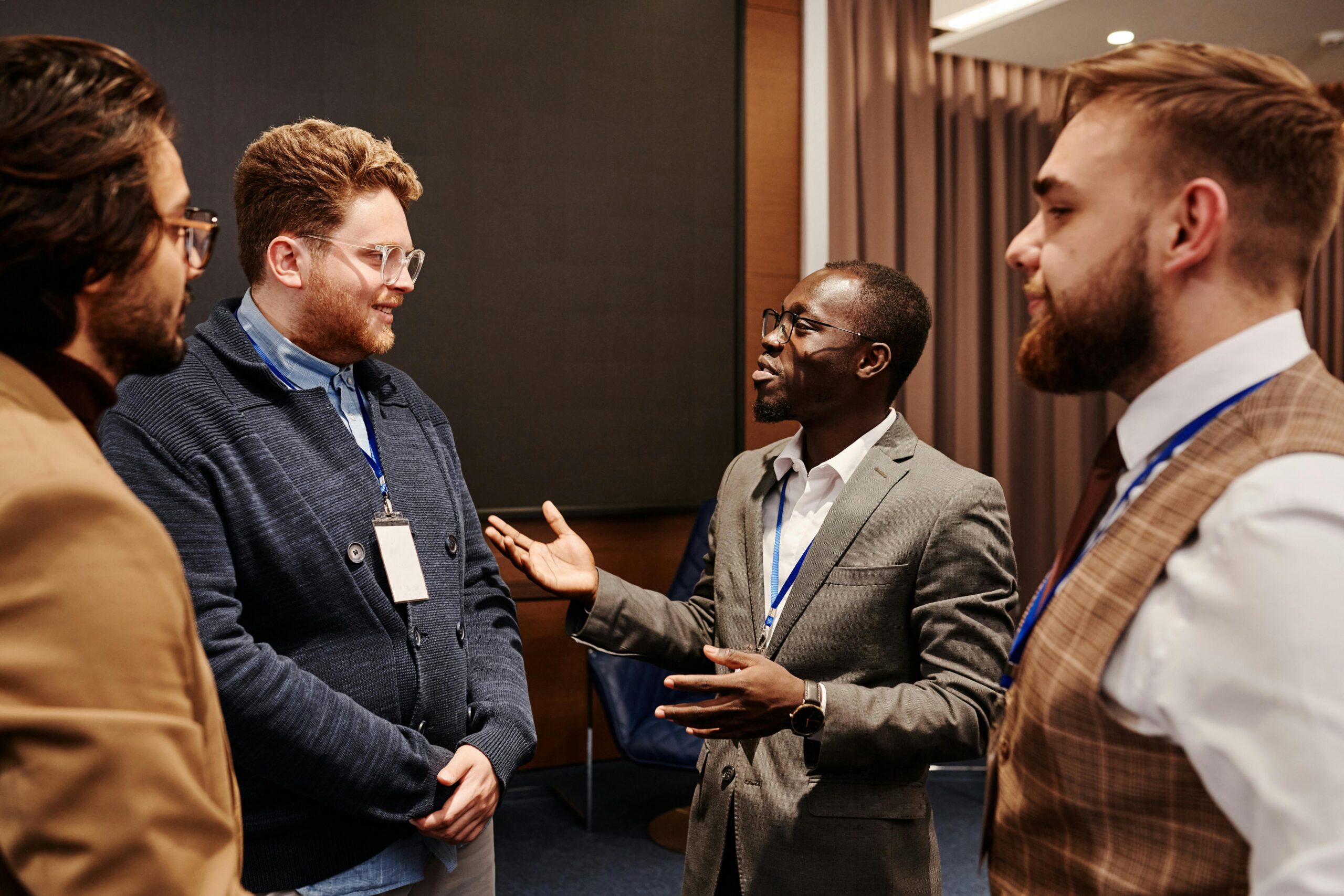
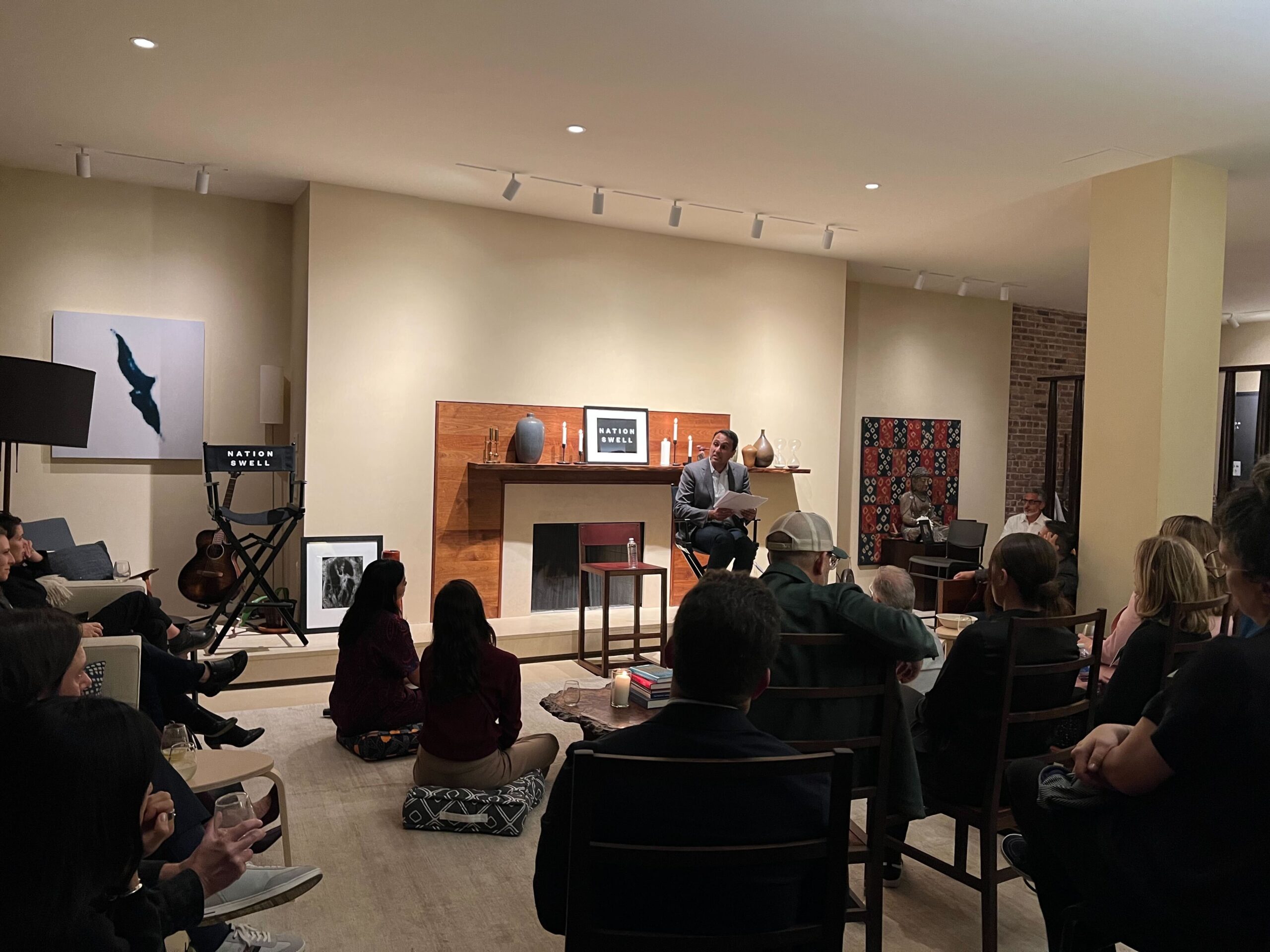
On January 25, members of the nationswell council gathered for an in-person salon in New York City to discuss the future of work — the solutions and programs being considered at all levels of learning to better prepare students for successful careers; what organizations can do to build untraditional pipelines to the middle class and beyond; how to navigate a new hybrid work landscape in a way that balances individual flexibility and seamless collaboration while simultaneously mitigating burnout; and much, much more.

The conversation was warm, inviting, and generative, and sparked a flurry of great ideas and new chances for collaboration. Below are just a few key highlights from the discussion:


  • The future of work starts with students — and with how we ensure that they’re being prepared not just for the careers of today, but also to make family-sustaining wages. By partnering with large companies, community colleges in particular have an opportunity to be more thoughtful about designing curriculums that equip students with the real-world skills and connections they’ll need to land in-demand jobs. Micro-credentialing, upskilling, and financial literacy conversations — happening not just with students, but with corporate executives as well — can also help to create a climate of preparedness that will give applicants a competitive advantage.
  • Building a more equitable workforce will require us to take a more realistic look at the current set of challenges facing marginalized applicants. Taking into account the realities of violence and trauma that disproportionately impact some communities, companies looking to increasingly onboard new hires from nontraditional backgrounds will increasingly need to reevaluate their cultural competency training and provide more mental health, wellness, and wraparound support systems for future employees. 
  • To get more economically diverse applicants in the door, we will first need to “tear the paper ceiling.” Far too often, internships, fellowships, and other entry level opportunities require levels of experience or credentials, like a four-year college degree, that exploit and exacerbate existing societal inequities. In order to combat this and level the playing field, leaders will need to put out a clarion call to executives and hiring managers challenging them to reimagine their selection systems and hiring practices.
  • For those struggling under unreasonable credential requirements and barriers to entry, credential stacking could be a helpful pathway towards success. One way around this is through the stacking of credentials: building transferable skills through extracurricular experiences that count as elective credits, which can be immediately added to a resume in real time.
  • The pandemic has permanently reshaped our understanding of what counts as a “good job.” While there will always be a premium on the ability to earn a living wage, millennial and Gen Z workers have expectations of their employers that differ significantly from their predecessors. Interest in policies like unlimited paid time off and an increasing demand for health policies that respond to concerns about Roe v. Wade signal that, more and more often, people are choosing jobs and employers that align with their values.
  • Anticipating the challenges of the next 25 years will be critical in training the next generation of leaders. The challenges that young people will inevitably be forced to reckon with in the coming years are nothing short of enormous — not just in the world of work, but also involving climate change, globalization, wars, and growing social stratification. The question of how to develop and train young people as leaders in a more holistic way will be critical to anyone working with the next generation, and a particular premium will need to be placed on the “3 Cs”: connectedness, creativity and curiosity.
  • The interconnectedness of all people will continue to emerge as an important theme in the near future. Acknowledging those global challenges that young people will undoubtedly be facing will also require us to develop the deeper mindset that ‘my fate is interconnected with yours’ — not just in the U.S., but globally. Preparing young people for work will, increasingly, require us to grapple with an even bigger set of global challenges.

The NationSwell Council community brings together a diverse, curated community of bold individuals and organizations leading the way in social, economic, and environmental problem-solving. Learn more about the Council here.

The Takeaway | Inclusive Leadership: How We Lead Online and Offline

The pandemic ushered in a wave of fresh challenges for companies and leaders, but it also served as a much-needed pause for leaders to reflect, retool, and reset. Now, nearly three years on, we’ve inherited a radically transformed workplace environment — and we’re tasked with implementing some of the carefully considered changes that will better serve our teams and help us to create the workplace of the future.

In a conversation hosted by the NationSwell Council community on Wednesday, we came together to parse exactly what leaders are doing to address DEIB goals, team attrition rates, competing needs amid a newly hybrid working world, and more.

Here are some of the key learnings from the event.


  1. We often think of how we create value for customers — now it’s time to start thinking about how we create value for our teams. New, remote work challenges have prompted a slew of new questions about how to keep teams engaged and how much “in-person” time is actually needed. Some leaders who are used to thinking about how to create value that makes customers want to show up are now flipping that question on its head, asking what they can do to incentivize team members to work from the office. Creating a hybrid schedule where employees are only expected to come into the office on certain days of the week — and then offering special perks, like free lunches and special affinity group meetings on those days — can be a helpful system for making team members feel like their time in the office is valuable and worth it.
  2. Building out effective listening engines will be critical to accurately assessing employees’ needs. With so much shared wisdom on how to respond to team members’ post-pandemic needs flying around, it can be tempting to impulsively deploy some of those solutions and policies, especially given that the underlying assumption is that they will make employees’ lives easier. But as one member pointed out, not every team member’s needs look the same — and it’s important to build out an infrastructure for feedback that ensures that you’re capturing your specific team’s needs as accurately as possible.
  3. Pay as much attention to why people are staying as you do to why they’re leaving. When it comes to high turnover rates, the intuitive response is to get to the bottom of why people are leaving and what can be done to mitigate the departures. But it’s equally important to figure out why people are staying — and which policies are actually working — so that you can be sure-footed in creating an environment that people genuinely want to be in, and not just one that they’re not ready to leave.
  4. If you value DEIB, put a premium on mental health. Team members’ mental health and well-being naturally dovetails with DEIB concerns: conversations about compensation, job security, hybrid work schedules, pipelines for advancement, and more are inherently stressful, and play a huge role in employees’ livelihoods and psychological safety both inside and outside the workplace. Investing in wraparound support structures can help to ensure team members’ happiness and well-being in the long run, and can set your organization up to more sustainably foster a workplace that is diverse, equitable, and inclusive.
  5. Work with team members to build hybrid schedules that suit their lives and needs. Rather than mandating that employees be in the office at certain times on certain days, create flexible mechanisms by which team members can choose to work from home when needed, as long as they let team members know well in advance. 

The NationSwell Council community brings together a diverse, curated community of bold individuals and organizations leading the way in social, economic, and environmental problem-solving. Learn more about the Council here.

Eboo Patel and Jonathan Greenblatt Share a Potluck Vision for America

Proponents of a pluralistic America often use the metaphor of a “melting pot” to talk about how diversity strengthens our nation. But what if we go beyond the melting pot and think of America at its inclusive best as… more of a potluck dinner?

Potlucks are civic spaces that both embody and celebrate pluralism. They rely on the contributions of a diverse community. If people don’t bring an offering, the potluck doesn’t exist. If everyone brings the same thing, the potluck is boring. They respect diverse identities by enthusiastically welcoming the gifts of the people who gather. They facilitate relationships between people by creating a space for eating and socializing and surprise connections. And they cultivate in people the importance of not just the individual parts and the connections between them, but the health of the whole as well.

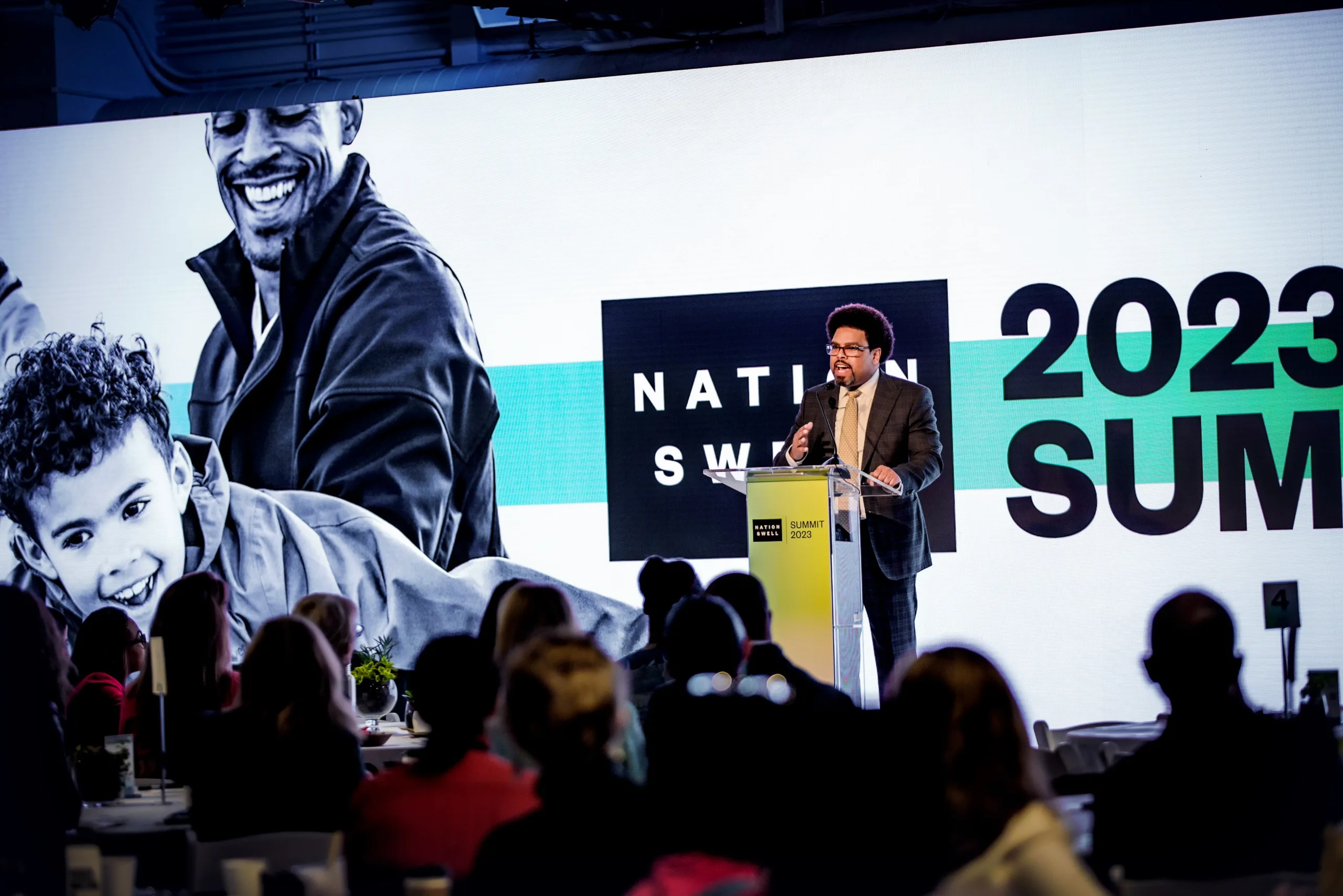
At an October NationSwell Mainstage, some of the nation’s most acclaimed social impact leaders gathered in New York City for an in-person, fireside discussion of what it takes to bring this vision of America from theory to practice. Anchored by NationSwell Council leader Eboo Patel and ADL President Jonathan Greenblatt, rooted in Eboo’s new book, “We Need to Build.” Together, NationSwell’s gathered guests explored the actionable, tangible steps leaders can take to move us from melting pot to potluck, learning how leaders can build and support diverse institutions for equitable social change. 

3 Key Numbers

A 76% majority of Americans says diversity is good for America.

A 47% plurality says diversity makes it harder to solve challenges.

An 82% majority says our nation is divided in key ways.

3 Key Trends

An overall satisfaction: According to research from Pew, an overwhelming majority of Americans are satisfied with the racial mix of their local communities, and would prefer if they continued to be “about as racially mixed” as they currently are — even when their communities rank as some of the least diverse in the country.

From the melting pot to the battlefield: In 1908, the “melting pot” model for diverse society, which asked immigrants to effectively dissolve their distinctiveness into the dominant culture, could be considered a big step forward. But Patel says we’ve moved past the melting pot, and we now find ourselves in the full swing of what he calls the “battlefield” approach to acknowledging the way diverse cultures exist side-by-side — and while it does ultimately acknowledge a heterogeneous national stage, it ultimately pushes us to think about pluralism through the lens of an endless conflict between dominant and oppressed cultures and people. 

Our deepest divides are growing: Studies show that Americans feels more divided now than we felt 40 years ago; and as Greenblatt pointed out, there isn’t just one thing that we feel separates us from our neighbor. The way we identify through our religion, politics, immigration status, race and ethnicity, class, age, and geography play critical roles in the pervasive feeling of fracturing.

What’s Working

Embrace the potluck vision for celebrating and centering American diversity. The potluck society celebrates what Patel calls “the delicious and multitudinous ways that we’re choosing to host a feast of gratitude.” When you tell people to come, you don’t tell them all the reasons you assume they probably can’t bring a dish. For those willing to play a key role in co-architecting the pluralistic society that reflects us at our most aspirational, the potluck dinner provides us a beautiful metaphor that begins with the profound belief that people are all contributors: that they all have a delicious dish to bring to the table. 

Acknowledge the ways that we already build bridges across political lines every day. “The only way to have a diverse democracy is to have a difference of opinion, to be able to disagree on some things and work together and work together on others,” Patel said. But the good news is: We already engage with people who think and vote differently from how we do, and we already work in deeply important ways with people with whom we deeply disagree. “Heart surgeons don’t ask each other how they voted,” he noted. “In a diverse democracy, people can disagree and still work together.” As an exercise, he invited guests to think about ten things we did today in which we’re unsure of the politics of the person who did them for you, or with whom you did them.

The Challenges That Remain

Acknowledge the very real roadblocks to unity. As one guest pointed out, there are groups of people in the country who might be more opposed to joining in on a vision for America that celebrates diversity, and whom she warned “might be bringing guns to the potluck.” Patel acknowledged the reality of those fears, but centered the conversation on the productive power of coming into each conversation with an open mind, an open heart, and the belief that all people are capable of making a positive impact on this shared vision if you invite them to do so.

What To Do

Our successes are temporary if we don’t ask ourselves one radical question. Eboo notes that, within the last two weeks, we likely had an experience where we were cheering for or helping somebody with whom, relatively recently in our ethnic heritage, there has been a blood conflict. He notes that these moments represent massive achievements, but the cautions that we should recognize that these moments could be fleeting if we don’t actively work towards creating more of them. “What does it look like to ask, in a society of 33 million people, what’s going right, and how do we do more of what’s going right?” Eboo asked. “If we can achieve that in our civic life, cooperation around certain identities, can we use that as  a paradigm by which we spread that ethos elsewhere?”

The power of understating your case. Patel advises those pushing to change our institutions for the better to remember that causing dislocation and suffering is not our intention. In fact, one of the best metrics of success in our project of creating a healthier democracy will be our ability to create more of the functioning institutions that we want to see more of. “If the goal is generating dissatisfaction, we get an A+,” Patel said. “But can you build alternatives that are better? Defeat the things you do not love by building the things you do. If society is largely made up by its governing structures and institutions — like schools, hospitals, YMCAs, companies, and networks of housing — then we need to build better institutions.”


NationSwell is an award-winning social impact company that assists changemakers, thought leaders and purpose-driven business executives as they drive social impact at scale. Through a robust membership community and the nation’s leading social impact studio, NationSwell supports these impact leaders on a range of our world’s most pressing issues. Learn more here.

Expanding access to quality higher education for the incarcerated: An interview with Mount Tamalpais College’s Jody Lewen

In January 2022, after an arduous 18-month application and review process, Mount Tamalpais College was granted Initial Accreditation by the Accrediting Commission for Junior and Community Colleges, making it the first accredited independent liberal arts college dedicated specifically to serving incarcerated students.

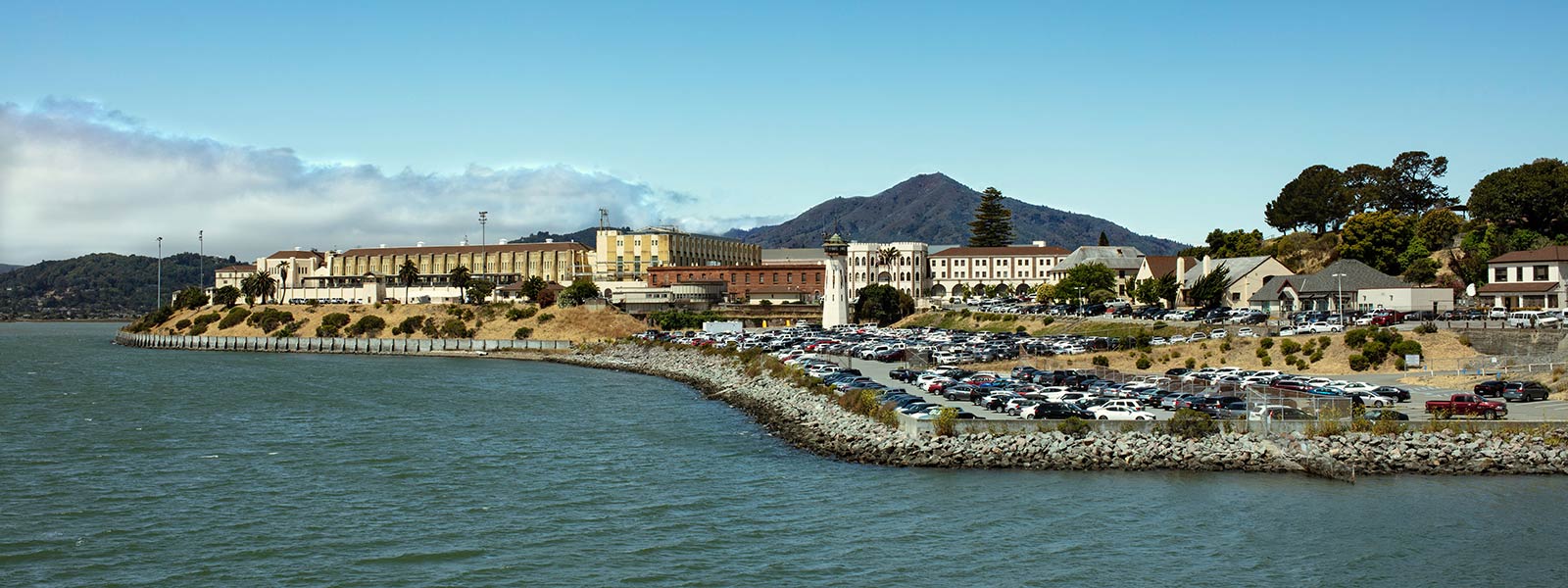
Operating out of San Quentin State Prison — the oldest operating correctional facility in California, tucked away on a peninsula just outside of San Francisco — the staff at Mount Tamalpais has long been dedicated to ensuring that students on the inside receive a high-quality education at least comparable to what they might receive at a quality educational institution on the outside. 

Along with providing “an intellectually rigorous, inclusive Associate of Arts degree program and College Preparatory Program, free of charge, to people at San Quentin State Prison,” Mount Tamalpais also seeks to “expand access to quality higher education for incarcerated people, and to foster the values of equity, civic engagement, independence of thought, and freedom of expression,” according to its website.

NationSwell Council member Jody Lewen, the founder and president of Mount Tamalpais College, recently sat down with us to talk about advocating for academic quality and inclusivity and the process of building Mount Tamalpais’s programs into what they are today — a process, she said, that “really strained my atheism.”

Read our full interview with Jody below:

NationSwell: Tell us a little bit about how you ended up working in prison education.

Jody Lewen, founder and president of Mount Tamalpais College: I grew up in Manhattan and went to Wesleyan in Middletown, Connecticut, for undergrad, and then a short time later moved to Berlin and ended up doing my Master’s in comparative literature and philosophy. I came to California in 1994 to do my doctorate at Berkeley, but while I was about halfway through working on my dissertation, I very coincidentally learned about this college program at San Quentin that was run entirely by volunteers and became very interested.

I knew nothing about prison, it was not a field I had read about or studied. I had done a lot of political work and read a lot of history and literature as an undergrad and was very aware, in a mostly abstract sense, of suffering in the world, but I really hadn’t found a way to integrate my political interests with my academic career path. But I thought the program sounded really interesting, so I ended up going into San Quentin in the spring of 1999 and teaching a public speaking class and really loving it.

NS: What were some of the early challenges or surprises you faced in doing this work?

Mount Tamalpais College’s Jody Lewen: It was a lot of my own demons about education — there were so many very humbling ironies. I had never interacted with adults who were as talented and intelligent whose basic skills in reading and writing were as poor, and it made me realize that I had a lot of ignorant assumptions about the correlation between basic skills and intellect.

When I got that first batch of papers back, I didn’t even know how to grade them, because there were so many problems. So I eventually went back and had a conversation with the students where I said look, guys, I’m realizing there’s all this stuff you haven’t been taught about college writing and I’m not sure how to handle this but I don’t really feel comfortable letting this stuff slide. They just overwhelmingly were like, ‘Please don’t patronize us, people have been underestimating us our entire lives.’ They didn’t want to be in a prison college program; they wanted to be in college, and they wanted to learn what they really needed to know to be successful in the outside academic and professional worlds. 

NationSwell: How did you go from working as a volunteer at San Quentin to becoming the founder and president of Mount Tamalpais?

Lewen: I had gotten very interested in the recruitment and training of faculty, because very early on I had become aware that they were not acquiring the basic skills they were going to need to be successful in a rigorous academic environment. It became a question of, should the standards we’re holding our students to on the inside be the same ones we’re holding our students to on the outside? And if not, why not?

I’m the most unreligious person to walk the face of the earth, and yet a series of things began happening that really strained my atheism. It was like an intervention: We started to realize that the problem was not just that they were so underprepared academically; the problem was us, it was that we didn’t have the resources or the time to build a program that really met their needs. And then the fellow who was running the program left, and the whole thing collapsed on me like a house. I began to tear out walls and floors and ceilings; our courses weren’t in compliance with the minimum number of contact hours, so I extended the semester from 10 weeks to 13 weeks, increased the class meetings to twice a week from once a week, and began to recruit teachers who knew how to teach developmental writing and math. And we basically overhauled the whole pre-college writing and math program.

NationSwell: What are some of the things you think about in trying to recruit new educators to meet these challenges?

Lewen: To be frank, most people assume that prison is a scary place to be, understandably. We’ve all been taught to imagine incarcerated people as ugly, predatory, not very bright. So getting people to overcome their physical fear of prison is huge. It helps a lot, as the program has grown, we have so many current and former faculty members who can’t stop talking about what it’s like to teach there, and they’re really our recruitment army. 

And then the other thing I’ve noticed is that the universe of people who are interested in prisons and serving the incarcerated are often relatively politically similar to each other. The Bay Area is obviously quite progressive, so cultivating intellectual diversity among the faculty can be quite challenging. I take really seriously the fact that our students are really diverse in every way — not just racially or ethnically but also culturally, ideologically, politically, they’re from all corners of the universe. So diversity is also an important value in our recruitment processes.

NationSwell: What can interested members do to help support the work that you do, or prison education more broadly?

Lewen: For the fall semester our instructors are mostly lined up already, but in general we’re always looking for volunteers. For the credit classes the lead instructor has to have at least a master’s degree in the field, but for the developmental education classes and also any tutoring roles, the requirements are a little bit more flexible. [Anyone interested in volunteering can get in touch through Mount Tamailpais’s website here.]

We’re  always looking to connect with individual and institutional funders who are excited about the idea of providing high quality educational opportunities to currently incarcerated people. Unlike traditional colleges, we charge no tuition and receive no state or federal funding. This is fantastic for preserving our autonomy and our capacity to innovate, but it’s also real work to raise $5 million a year. People can always reach out to us, or directly support our work at mttamcollege.org/donate

There are also other nonprofit organizations that support reentry and other ancillary fields that can always use volunteers.A number of excellent organizations in the Bay Area have been founded by our alumni, either while they were still inside or once they got out. Some of those organizations are:

  • Bonafide (bonafidelife.org), an amazing reentry organization that works with people from the moment they’re released and then stays with them throughout their lifetime helping them adjust and thrive. 
  • The San Quentin News, the prison newspaper that’s in a period of tremendous growth right now.
  • Mend Collaborative, a restorative justice organization that was recently co-founded by an alumnus of ours.
  • Veterans Healing Veterans, founded by a former student, which supports currently or formerly incarcerated veterans.
  • Ear Hustle, a podcast that was co-founded by a former MTC faculty member.