Place-based Impact Funders Guide

Place-based Impact Funders Guide

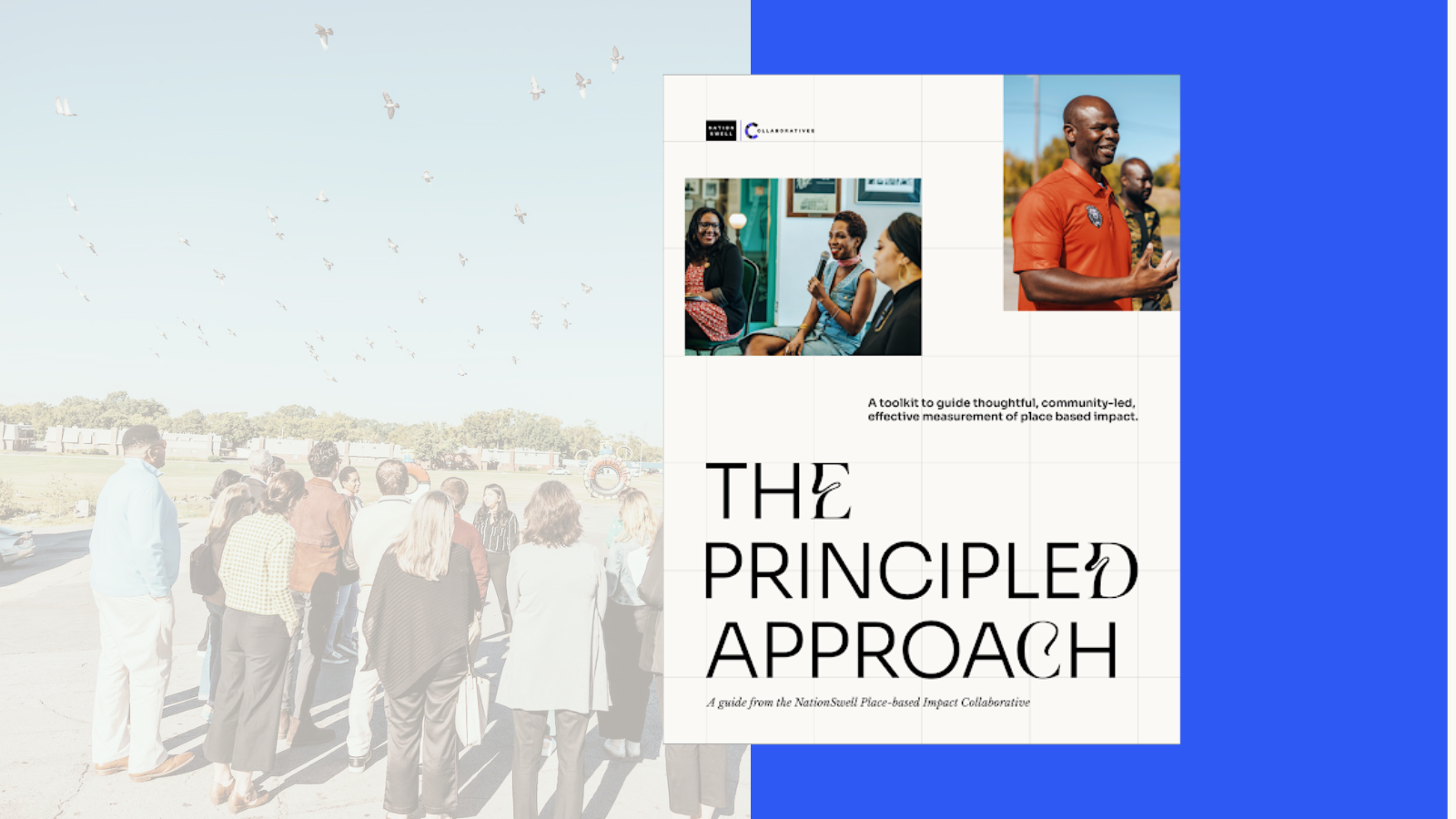
Place-Based Impact in Practice is an interactive guide designed to help funders and changemakers better understand, assess, and implement place-based strategies that create long-term community impact. Through practical frameworks, real-world case studies, interactive assessments, and a national action map, the platform explores how community-centered investment can help address challenges ranging from economic mobility to housing, workforce development, and climate resilience.

Built for philanthropy leaders, nonprofits, and cross-sector partners, the resource helps organizations move from theory to action by highlighting what effective place-based work looks like in practice and what it takes to build lasting, locally driven change


Share this report

2024 private sector social impact and sustainability leadership survey

2024 private sector social impact and sustainability leadership survey

SURVEY FINDINGS

NationSwell’s 3rd annual Private sector social impact and sustainability leadership survey coincided with a period of significant turmoil in the U.S. political arena, and occurred against a backdrop of ongoing backlash to corporate social impact, diversity, equity, inclusion, and belonging (DEIB), and environmental initiatives. 

The survey sought to better understand the sentiments, experiences, and priorities of senior leaders overseeing environment, social, and governance (ESG), corporate social impact, sustainability, DEIB, and related functions. Through those leaders, the survey also sought to better understand organizational priorities and behaviors.

The 2024 survey explored three themes in particular depth: perceptions of – and attitudes toward – the overall environment for corporate impact and sustainability initiatives, the amount of influence wielded by social impact and sustainability leaders within their own organizations, and the role of political and cultural forces on their work.

Summary of top findings

  • Leaders continue to face down a difficult environment for their work, but growing optimism is there if you squint
  • Despite ongoing backlash to ESG, impact and sustainability leaders are strengthening their positions within their organizations
  • U.S. politics loom large over corporate impact and sustainability programs, with most leaders expecting their organizations to remain on the sidelines during the 2024 election

Methodology and sample

NationSwell fielded this survey from early July through early August 2024. Participants included vice presidents (VPs) and above at public companies, private companies, and company-sponsored foundations. The survey garnered responses from 49 individuals, representing 47 unique institutions. 


Share this report

The Green Seat Guide, Chapter 3

The Green Seat Guide, Chapter 3


Share this report

The Green Seat Guide, Chapter 2

The Green Seat Guide, Chapter 2

As corporate sustainability challenges grow more complex, chief sustainability officers (CSOs) are being hired at record rates. They come from diverse professional backgrounds, underscoring the multidisciplinary nature of the role, and often find themselves navigating uncharted waters, tasked with steering an entire enterprise toward ambitious goals. This mandate demands more than just technical knowledge, it demands leadership, vision, and the ability to inspire change at all levels.

While technical guidance on sustainability is widely available through consultants, vendors, and the scientific community, there remains a significant gap in the transfer of practical wisdom. The Green Seat Guide bridges that gap with insights, strategies, and lessons learned from experienced sustainability executives. The aim of the guide is to accelerate the impact of sustainability leaders, new and experienced, by offering practical guidance and learned wisdom from those who have pioneered the role.

Each chapter focuses on an essential component of the sustainability journey and includes a selection of ready-to-use tools to support the adoption of key ideas and tactics.

Chapter 2 – Organizing your team

With a strategy in hand, creating and deploying a well-rounded sustainability team is the sustainability executive’s next most important task. Whether you’ve inherited a staff or need to build a team from scratch, you should be mindful of balancing your technical needs with your strategic needs. Your team will need to be rigorous, detail-oriented, and versatile, and you will need to build key cross-functional relationships beyond your direct reports. 

Chapter 2 of The Green Seat Guide provides guidance on building a successful sustainability team, drawing on the rich insights of those who have done so before.

It is comprised of four sections: 

  1. Working with consultants
  2. Designing your core team
  3. Sourcing and screening the right talent
  4. Leveraging existing internal capabilities

For insights on developing a sustainability strategy, don’t miss Chapter 1.


Share this report

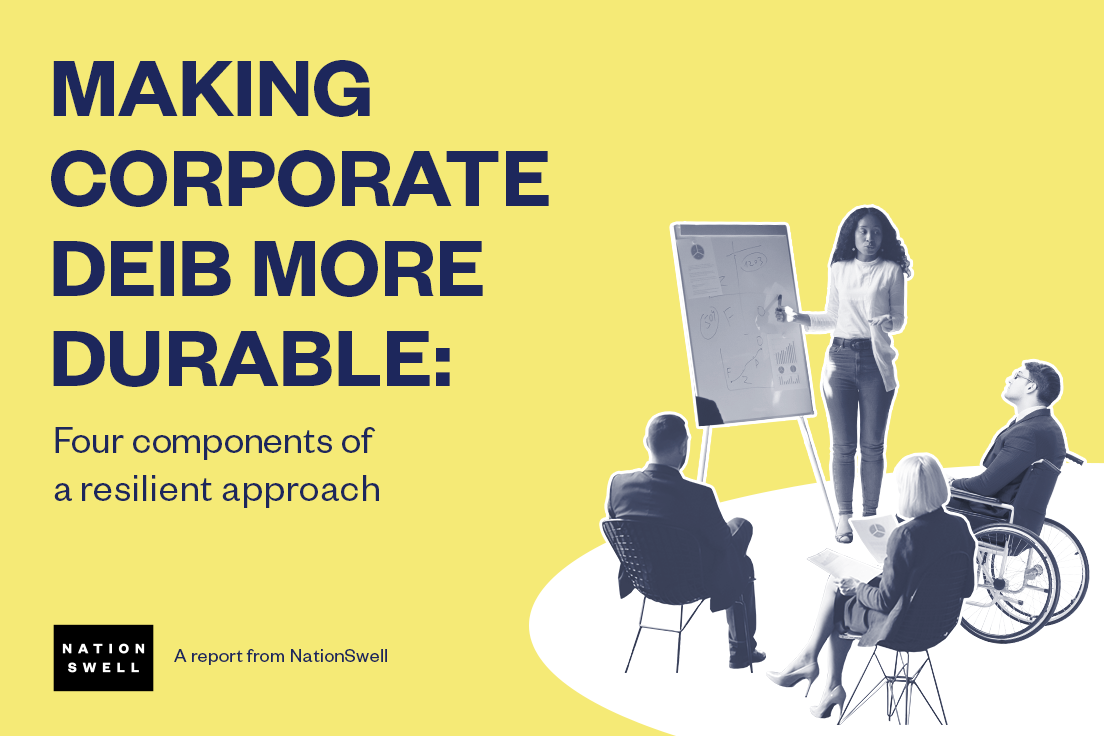
Making corporate DEIB more durable

Making corporate DEIB more durable

EXECUTIVE BRIEFING

Diversity, equity, inclusion, and belonging (DEIB) professionals are facing heightened political and legal opposition to their day-to-day work. At times, it’s challenging to truly know if and how companies, and DEIB leaders themselves, are shifting their commitments or approaches. 

The reality is that some businesses are pausing or re-evaluating their DEIB strategies. A number of companies are reducing investments in DEIB or choosing to proceed more quietly. But the pendulum is swinging in both directions. There is evidence that the material work of DEIB has endured and will continue to endure. 

Based on interviews with chief diversity officers and other DEIB executives, this report is intended to support leaders and organizations in confidently charting a path forward at a moment of heightened scrutiny.

The resource teaches the four components of a resilient approach to corporate DEIB and includes tactical guidance, real-world examples, and implementation tools.

The four components:

  • Leverage data as the backbone of your commitment
  • Cultivate and activate accountable champions at all levels of the organization
  • Center transparency, honor progress, and strive for continuous improvement
  • Get intentional about future-proofing DEIB

Share this report

The Green Seat Guide, Chapter 1

The Green Seat Guide, Chapter 1

As corporate sustainability challenges grow more complex, chief sustainability officers (CSOs) are being hired at record rates. They come from diverse professional backgrounds, underscoring the multidisciplinary nature of the role, and often find themselves navigating uncharted waters, tasked with steering an entire enterprise toward ambitious goals. This mandate demands more than just technical knowledge, it demands leadership, vision, and the ability to inspire change at all levels.

While technical guidance on sustainability is widely available through consultants, vendors, and the scientific community, there remains a significant gap in the transfer of practical wisdom. The Green Seat Guide bridges that gap with insights, strategies, and lessons learned from experienced sustainability executives. The aim of the guide is to accelerate the impact of sustainability leaders, new and experienced, by offering practical guidance and learned wisdom from those who have pioneered the role.

Each chapter focuses on an essential component of the sustainability journey and includes a selection of ready-to-use tools to support the adoption of key ideas and tactics.

Chapter 1 – Developing a sustainability strategy

Crafting a sustainability strategy is a foundational, if daunting, part of a sustainability leader’s mandate. Success requires rapid, comprehensive learning about a complex enterprise and a nuanced grasp of the forces that motivate your key stakeholders.

Chapter 1 of The Green Seat Guide explores the art of crafting a sustainability strategy, drawing on the rich insights of those who have navigated this process before.

It is comprised of seven sections: 

  1. Getting to know your business inside and out 
  2. Roughing out a draft strategy
  3. Conducting a materiality assessment
  4. Defining top strategic priorities
  5. Setting targets
  6. Roadmapping and resourcing your sustainability strategy
  7. Engaging with external coalitions, pledges, and third-party validation

The chapter also offers tools to support the adoption of key ideas and tactics, including: 

  • Tool A: Sustainability landscape assessment checklist
  • Tool B: Preferred consulting and technology solutions
  • Tool C: Sustainability accountability map components
  • Tool D: Overview of commonly used sustainability reporting frameworks
  • Tool E: Materiality assessment preparation checklist
  • Tool F: Essential elements of a sustainability roadmap
  • Tool G: Common product sustainability certifications

Share this report

2023 Private Sector Social Impact and Sustainability Leadership Survey

2023 Private Sector Social Impact and Sustainability Leadership Survey

SURVEY FINDINGS

2023 brought social impact and sustainability work further into the social, political, and organizational spotlight, and presented leaders with distinct, long-term considerations for their work. Leaders encountered large-scale, composite challenges: the escalation of the anti-ESG movement; the Supreme Court’s ruling against affirmative action and its subsequent implications for diversity, equity, inclusion, and belonging (DEIB); the effects of an increasingly restrictive macroeconomic environment on teams and priorities; and the intensification of regulatory requirements. At the same time, social impact work has matured and deepened, with leaders investing heavily in employee engagement, leaning in on sustainability strategies, cautiously adopting AI, and empowering communities through trust-based and place-based work.

Against this backdrop, NationSwell set out to investigate what forces were most significant in changing the way leaders approached their priorities and decision-making over the past year, and what leaders anticipate about the environment, their organizations, and their jobs in the year to come. Between July and August 2023 we surveyed 74 corporate social impact and sustainability leaders across NationSwell’s membership community and beyond. The resulting report explores the direct opinions and experiences of those leaders, in service to advancing collective knowledge about their essential roles.

Below is a summary of the key findings discussed in greater detail in the report:

Theme 1: Leaders’ confidence takes a hit among a difficult year for impact work

  • Leaders’ satisfaction with their organizations’ social impact is waning marginally amid an increasingly challenging environment.
  • With trepidation about the year ahead, leaders’ confidence in their own work is also dwindling.

Theme 2: Economic and regulatory activity assert their dominance above other forces 

  • Two of 2023’s trending issues – the politicization of ESG and the emergence of generative AI – have not transformed social impact and sustainability strategies. 
  • Instead, macroeconomic conditions had widespread and deep impacts highlighted by layoffs, budget cuts, and new barriers to collaboration.
  • Over the next year, leaders predict that economic conditions and regulatory/legislative activity will be key factors in their prioritization and decision-making.
  • In recognition of their growing need, and in spite of economic uncertainty, leaders will advocate for more funding for social impact and sustainability work in the year ahead.

Theme 3: Influence is leaders’ most sought-after and valued currency 

  • Leaders respond most to the influence of their executive team, and want to wield their own influence in return.
  • Leaders are intent on improving their strategies and capabilities to engage with internal stakeholders.

Share this report

Mapping the LER Ecosystem to Drive Equity

Mapping the LER Ecosystem to Drive Equity

CASE STUDIES

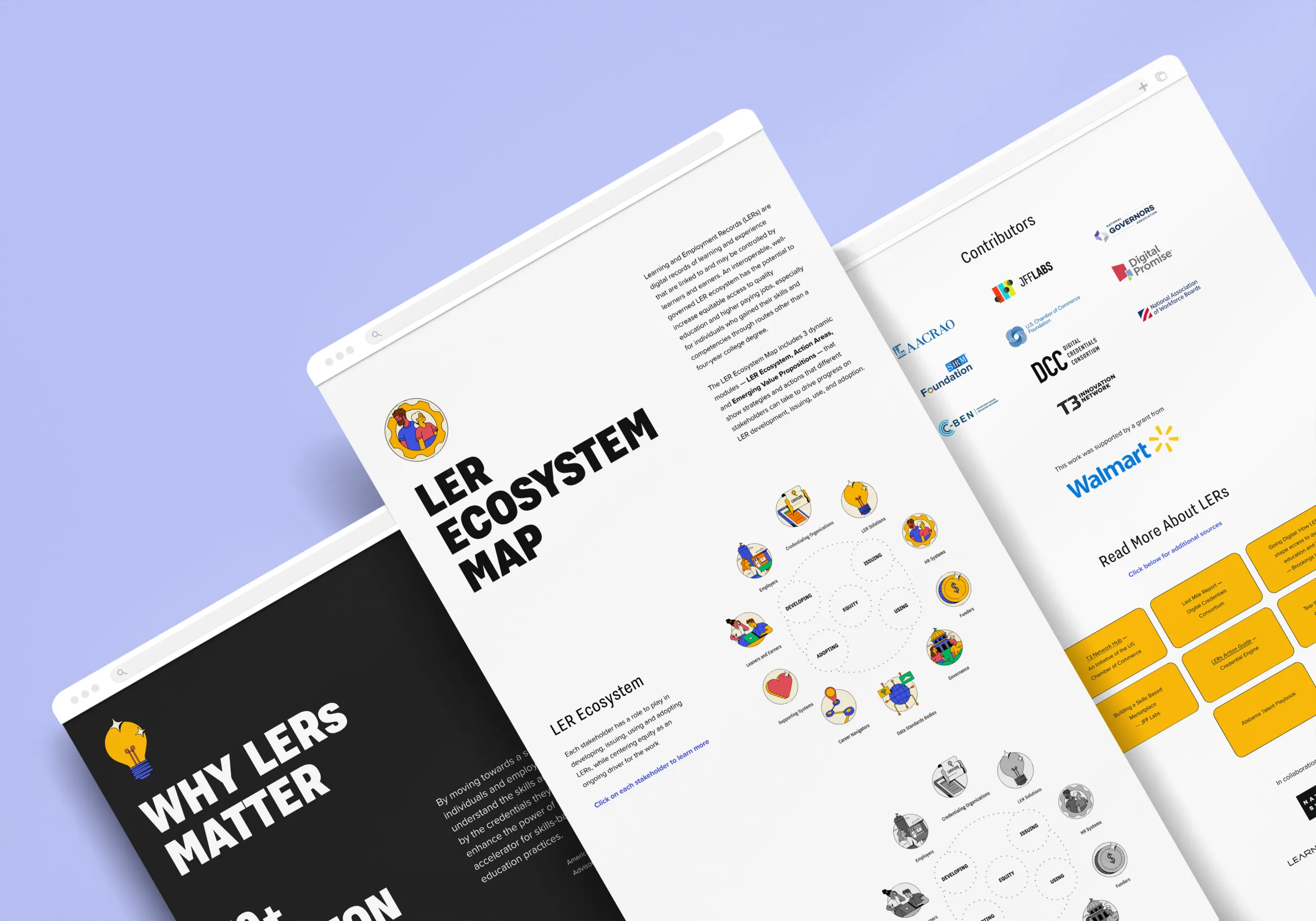
Learning and employment records (LERs) are a vital solution to accelerating the uptake of skills-based hiring while empowering learners and earners to be recognized for their full set of skills from work, education, credentialing, service and life experiences. However, widespread use of LERs is often hindered by a lack of clarity and collaboration amongst the many necessary stakeholders, including employers, credential providers, learners and earners, and policy makers.

Therefore, Walmart brought NationSwell on to work with a Steering Committee of experts in the education, credentialing, equity and hiring space, to create an LER Ecosystem Map that would help people connect the dots across the ecosystem and more easily see how they can take action to drive equity through LERs.

Organizations in the LER Ecosystem Map Steering Committee:

  • AACRAO
  • Competency-Based Education Network
  • Digital Credentials Consortium
  • Digital Promise
  • JFFLabs
  • National Association of Workforce Boards
  • National Governors Association
  • SHRM Foundation
  • T3 Innovation Network
  • U.S. Chamber of Commerce Foundation

NationSwell worked closely with the Steering Committee to undertake thorough research to establish the goals and needs for the LER Ecosystem Map.

Through desk research, in-depth interviews, a diverse focus group, workshops, and months of cross-team collaboration, content drafting, design work and data visualization, our teams engaged 50+ individuals to help develop an interactive digital experience, accessible to stakeholders across the ecosystem, that clearly demonstrates opportunities for engagement, collaboration and action.

Through our three workstreams — establishing a hypothesis, research and development — the team discovered learnings, opportunities to drive adoption, and insights gaps that informed how the LER Ecosystem Map should come to life. The map launched at a pivotal point in LER development, providing many large and small players in the space with vital clarity on how to take action.

Share this report

The state of play: Corporate sustainability

The state of play: Corporate sustainability

TREND REPORT

As climate change creates a growing risk to companies’ financial stability, sustainability programs offer a competitive advantage for businesses across size and sector. Those who are ahead of the curve are making bold commitments, deepening expertise, collaborating effectively, and greening their workforces. The most resolute business leaders will continue to push forward their strategies against political backlash. For them, it is a moment of opportunity not hesitancy. 

In this report, we help leaders get up to speed and check their progress against the latest macro trends, policy and regulatory developments (U.S. and E.U.), and pace-setting organizations.

The trends: 

  • Corporate climate commitments and leadership accountability are on the rise. But the rate of progress remains well behind what’s needed to achieve 2050 goals. 
  • Political and legislative activity are creating cross-pressures on sustainability work. But stakeholder activism remains a strong tailwind. 
  • New innovations and collaborations reflect a growing supply chain playbook. Companies know that Scope 3 impact cannot be ignored. 
  • Jobs–both existing and new–are becoming greener. Employers and workers are both driving the transition. 
  • Water and biodiversity are making big moves toward the center of corporate interest. Pending emissions disclosure rules remain top of mind.

Share this report