 "
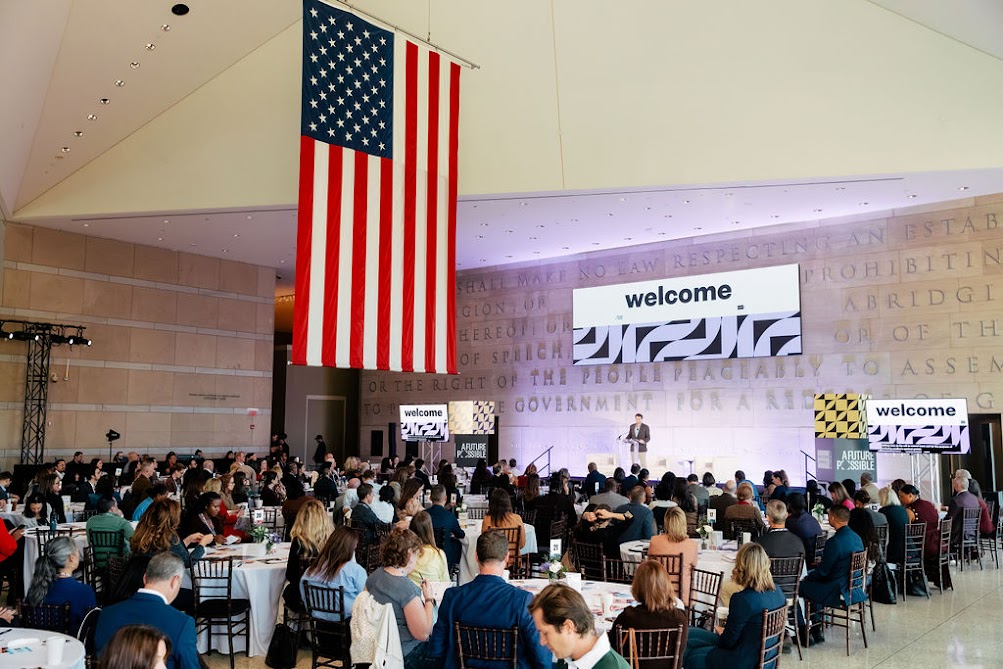
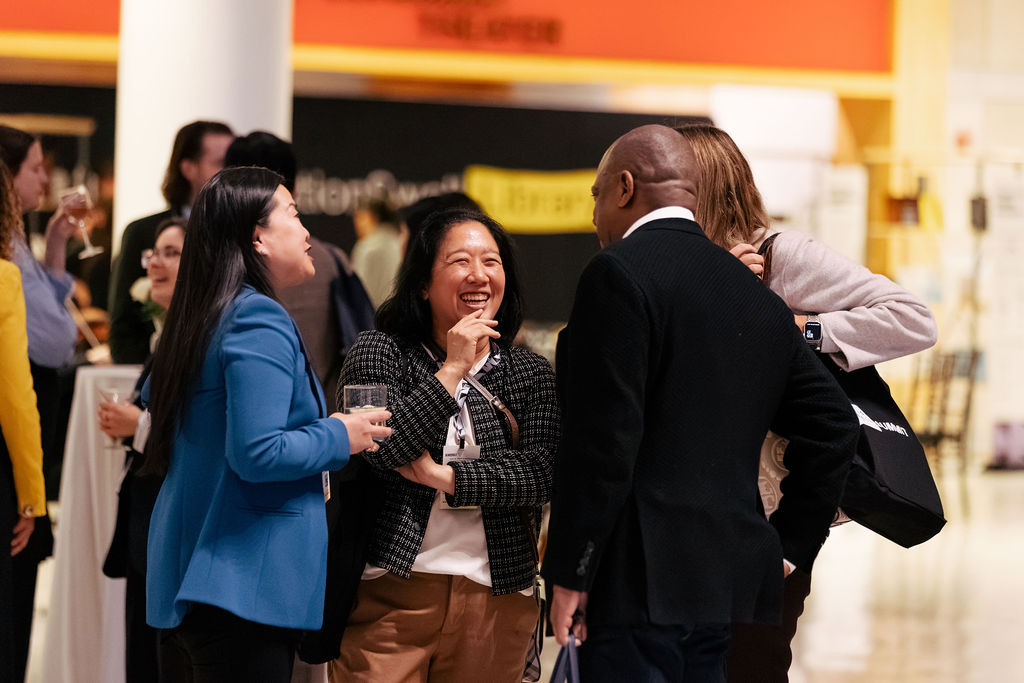
On October 27, 2026, more than 300 executives, innovators, and changemakers from across the NationSwell ecosystem gathered at Philadelphia’s National Constitution Center for our annual Summit.
As we invited participants to use this year’s theme, “A Future Possible,” to look ahead to what might be, it was fitting to host our programming adjacent to halls promoting the history and audacity of the American experiment. In the 250 years since the Declaration of Independence was signed, millions of Americans have fought to make its promises real. And at Summit 2026, participants were in close contact with the people doing that now in order to ensure that communities can lead lives of dignity and retain the decision rights needed to shape their own futures.
Onstage, speakers returned again and again to the people behind historic achievements — their doubts, their imperfections, and their decisions to act anyway. Together, those stories grounded our sense of possibility in the humanity and ordinary courage required to build the future we all deserve.
With support from our co-presenting sponsor, Comcast, the day brought together candid insights; performances by Grammy Award-winning singer and actress Phillipa Soo and the 7th National Youth Poet Laureate of the United States, Salome Agbaroji; and opportunities for attendees to exchange ideas through our Signature Conversations. A Movement Moment with CHJS, powered by Nike, invited participants to draw inspiration from the drive and determination of women athletes.
Below are some of the key takeaways from Summit 2026:
1. Looking Back to Move Forward
Moderated by: Alesha Washington, President and CEO, The Seattle Foundation
Featuring: Tonya Allen, President, McKnight Foundation; Jonathan Eig, Author, King: A Life
“If we’re waiting around for the next Dr. King, we’re going to wait a long time. We’re waiting around for the people next to us — look around.”
— Jonathan Eig, Author, King: A Life
- Turning leaders into saints can make everyone else less likely to act. Martin Luther King Jr’s struggles with guilt, depression, and doubts about his own leadership are precisely the things that make his accomplishments more instructive and human. Remembering his legacy only as the man sanitized by monuments and speeches erases the human difficulty of what he undertook, making courage seem like an exceptional person’s gift. A more complete, nuanced understanding of his life doesn’t just humanize him, it invites the average person to recognize their own capacity to lead — even while afraid, imperfect, or uncertain that they are qualified.
- Minnesota’s community response was built before the crisis arrived. Organizers began preparing almost a year in advance for an anticipated attack on the Twin Cities by law enforcement, training residents on constitutional rights, observation, and nonviolent response. They anticipated that federal violence could provoke a violent reaction, and organized to resist that outcome. What appeared to be a spontaneous outpouring of solidarity rested on substantial preparation, alongside neighbors’ initiative and care. For civic leaders, the lesson is concrete: organize early and invest in the capacity to respond before the urgency becomes visible to everyone else.
“How do we show up with so much conviction, so much courage that is anchored by love in a way that makes the world gasp and remember who we are as humans?”
— Tonya Allen, President, The McKnight Foundation
- Food deliveries, school pickups, and rent assistance are essential infrastructure for collective action. Supporting families who were afraid to leave home or unable to earn a paycheck helped communities withstand sustained pressure. Tenant-led networks turned apartment buildings into sites of mutual aid, including a pantry serving dozens of families. These examples reveal the practical conditions that make solidarity sustainable: people need food, shelter, safety, and trusted relationships to remain connected and engaged. Funding those everyday needs helps preserve a community’s ability to act.
- Patriotism can be both a claim to ownership and a demand for change. King grounded his criticism of America in its founding promises, making the case that demanding justice expressed a belief in what the country could become. Black Americans’ enduring investment in a nation that has repeatedly excluded them carries that argument forward. Asserting that the country belongs to one’s ancestors, neighbors, and children of immigrants establishes a basis for demanding accountability. Belonging gives people standing to challenge injustice and insist on a more inclusive future.
2. This Moment in America
Moderated by: Asha Varghese, President of the Caterpillar Foundation
Featuring: Arne Duncan, Managing Director, Emerson Collective; Julián Castro, Chief Executive Officer, Latino Community Foundation
“We have to get back to prioritizing the character of our elected officials. We can’t predict what leaders are going to face, but we need to believe in their ability to solve problems and take care of people and look out for the common good.”
— Arne Duncan, Managing Director, Emerson Collective
- Scaling violence prevention requires investing in people institutions may be afraid to trust. People caught in cycles of violence often have the relationships, credibility, and motivation needed to interrupt them; former program participants can become the staff and leaders who extend that work. One panelist described working alongside someone who had killed a childhood friend — a relationship that transformed from hatred into profound trust. Expansion depends on institutions’ willingness to recognize that talent, fund intensive relationship work, and support leadership from people whose pasts may make conventional funders uncomfortable.
- Trust grows when leaders give people a meaningful way to judge and reject their work. San Antonio’s publicly funded pre-K initiative incorporated independent evaluation and an explicit proposition to voters: renew the program if it delivers, improve or discontinue it if it does not. That makes accountability part of the public’s decision-making power. At the community level, the same principle requires repeatedly showing up, keeping promises, acknowledging failures, and developing solutions with residents. Trust accumulates when people can see both the results of a commitment and their own ability to influence what happens next.
- The government can deliver dramatic results when coordination becomes an operational commitment. The federal effort on veteran homelessness brought together dedicated resources, coordination across 19 federal departments, local implementation, and private and nonprofit participation, contributing to a nearly halved veteran homeless population between 2010 and 2016. The useful lesson lies in the machinery behind that collaboration: a defined population, a measurable goal, aligned funding, and coordinated policy and execution. Ambitious public commitments become more credible when institutions organize around a specific outcome and give communities the resources and support to pursue it.
- Shared identity does not guarantee political support; voters want credible answers to their problems. Latino communities that shifted toward the political right in the last presidential election often shared characteristics with other conservative constituencies, including rural geography, strong religious ties, and substantial military and law-enforcement connections. Expectations of economic success also mattered, as did a belief among some voters that deportations would target only serious criminals. Effective political engagement requires understanding those motivations rather than assuming demographic allegiance. Concrete proposals can resonate across ideological differences, while anger at an opponent can crowd out the solutions people most want to hear.
- Trust in elected officials should be grounded in character and a demonstrated commitment to the common good. Voters cannot anticipate every crisis a leader will face, making integrity, judgment, and concern for others essential criteria for conferring public trust. Beyond party affiliation or agreement on individual policies, people need confidence that their representatives will solve problems, care for communities, and exercise power responsibly when unforeseen challenges arise. Restoring faith in government requires making those qualities central to whom we elect, support, and hold accountable.
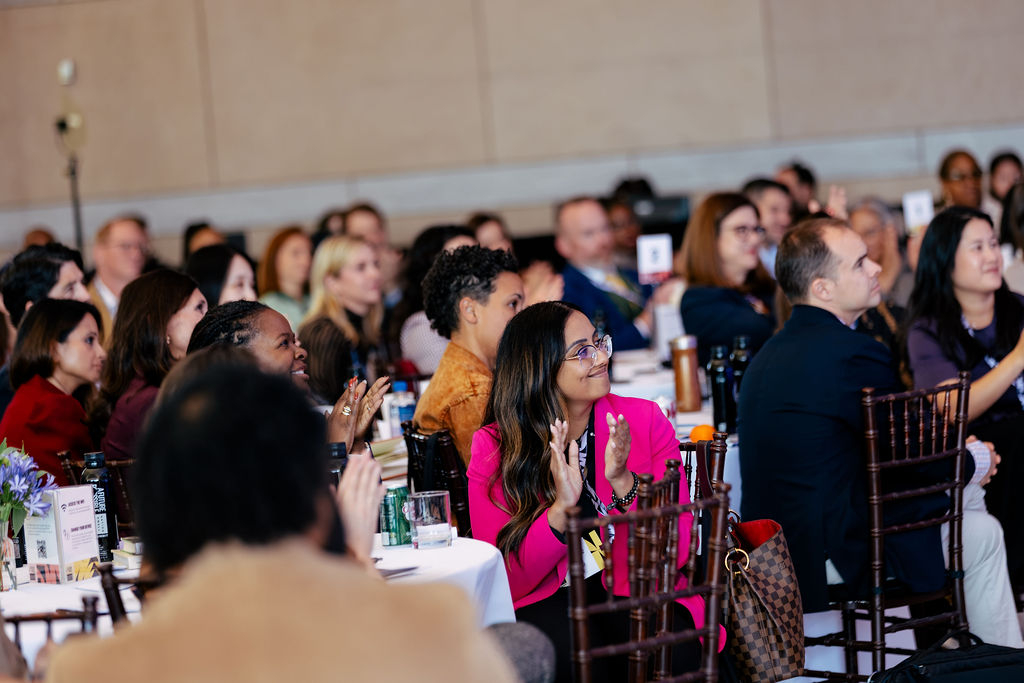
3. Impact Spotlight – A Community’s Relentless Response to a Reversible Environment and Respiratory Health Inequity
Featuring: Jessica Collins, Executive Director, Public Health Institute of Western MA
Ana Jaramillo, CHW, Community Engagement Outreach Specialist, Holyoke Health Center
With an introduction from Barb Short, Global Public Affairs Lead, Sustainable Health & PC – Corporate Social Responsibility, Sanofi
“Sometimes improving health doesn’t begin with providing prescriptions. It begins with trust, meaningful conversations and partnerships, and with someone like a CHW willing to listen and help families turn barriers into action”
— Ana Jaramillo, CHW, Community Engagement Outreach Specialist, Holyoke Health Center
- Asthma does not affect all communities equally. In Massachusetts, Black and Hispanic residents have asthma-related emergency room visits and hospitalizations at two to three times the rate of white residents. Presenters linked this to neglected housing, nearby highways and factories, and gaps in care. One presenter said funding home assessments and repairs is where money can be used the most.
- Community health workers bridge health care and families’ daily lives. They hear what may never come up in a medical appointment, like housing, job, and money stress, and connect families to the resources they need. The presenter called for national health policies that include them in care teams, with training, sustained funding, and a voice in program design.
- Local coalitions can win practical policy changes. A regional coalition of doctors, school nurses, scientists, public health staff, and families made several changes. School nurses can now treat asthma attacks, and vehicles waiting at schools face fines for idling. Residents get neighborhood-level air quality data through an app, and families who often use the emergency room receive home visits.
4. Building the Future of Work
Moderated by: Courtney Williams, Global Lead, Workforce Development & Community Insights, Google
Featuring: J.T. Jablonski, Sr. Manager, Lowe’s Foundation Programs, Lowe’s Foundation; Rajiv Chandrasekaran, Managing Director, Schultz Family Foundation; Jennifer Cho, Head of Citizenship/Community Relations, Barclays; Gov. Eric J. Holcomb, Co-Chair of RAISE US and Former Governor of Indiana
“It’s no coincidence that we, the people, are meeting in Philadelphia — the city that proved that we, the people, when we’re engaged and addressing the issues of the day, can flourish.”
— Gov. Eric J. Holcomb, Co-Chair of RAISE US and Former Governor of Indiana
- Getting a job is not enough; where someone works truly matters. People in equivalent jobs can be paid, promoted, and kept on very differently, yet most applicants have no idea where a job will take them. One panelist’s foundation built a tool showing pay, pay growth, chances of moving up, and AI’s impact on each occupation.
- AI is narrowing entry-level pathways. As AI takes on entry-level work, people struggle to get the experience jobs require. Programs that pair training with paid work help participants graduate “not just knowing something, but actually having done something.” Without someone to open the door, one panelist said, this is where employers can step in.
- Growing the skilled trades requires a shift in perception. Students no longer get hands-on classes like woodworking, and counselors are incentivized to steer everyone toward four-year degrees. One panelist said only two new tradespeople are coming in for every five who retire, and that workers and families need to be proud of these careers.
- Navigating the AI transition starts at a human level. Panelists called for business, government, and philanthropy to align and measure where programs lead people. Individuals can use their networks to help young adults and laid-off workers. Affected workers need to be part of the solution: if you’re not at the table, you’re probably on the menu.
5. Impact Spotlight with Dr. Michelle Carrera
Featuring: Dr. Michelle Carrera, Managing Director, Greater Philadelphia Opportunity Council
- Economic mobility requires changing the systems that keep families trapped in the same trade-offs. Carrera opened with the choice her parents faced between rent and groceries, noting that families still face similar calculations decades later. Greater Philadelphia Rising aims to connect 50,000 families to economic mobility. The ambition goes beyond helping individuals overcome hardship to changing the conditions that make economic security difficult to achieve. Progress means making opportunity less dependent on a family’s ability to navigate barriers that should not exist in the first place.
- Families should not have to navigate the fragmentation of the systems designed to support them. Carrera described families repeating their stories across agencies, completing separate applications, and losing time they could spend working or caring for their children. Greater Philadelphia Rising aims to help 40 organizations function as one coordinated system. That requires institutions to organize around families’ needs rather than their own boundaries. Coordination is not merely an operational improvement; it can determine whether support is accessible, timely, and effective.
- Lasting systems change requires funders to invest beyond the annual grant cycle. Carrera called for a decade of commitment rather than another year of funding, making the case for patience in a field often organized around short-term deliverables. Meaningful change depends on building relationships, infrastructure, and coordination across institutions, not simply sustaining individual programs. Funders must be willing to support that connective work and give communities time to learn and adapt. The question is not just whether a grant succeeds, but whether the investment helps build a system capable of producing lasting results.
- Collaboration must come with shared accountability for families’ progress. Bringing organizations together means little if each continues to pursue its own priorities. Greater Philadelphia Rising’s approach centers shared measures of success and a willingness to change course when families aren’t moving forward. Carrera also made collaboration a challenge for funders: support should encourage organizations to work toward common outcomes, not reward disconnected efforts. The ultimate measure is whether families experience meaningful progress, not whether institutions can report that they partnered.
6. Designing Brand Partnerships for Good
Moderated by: Gwyneth Gaul, Vice President Strategic Partnerships & Philanthropy, Comcast Corporation
Featuring: Jennifer Ahearn, SVP, Global Themed Entertainment, Strategic Partnerships, and Canadian business, Sesame Workshop; Stuart Brown, Executive Director, Inspire Brands Foundation
“Whether it’s my own children or the kid that we’re helping, try to be smarter, kinder, stronger. You’ve got to be optimistic and excited. There are so many endless possibilities.”
— Jennifer Ahearn, SVP, Global Themed Entertainment, Strategic Partnerships, and Canadian business, Sesame Workshop
- The strongest brand partnerships turn a shared purpose into value neither organization could create alone. Sesame Workshop’s relationship with Comcast Xfinity began with an advertising campaign featuring Cookie Monster and Caitlin Clark, then expanded into digital well-being resources and opportunities to support Sesame’s mission. The evolution shows how a creative activation can open the door to broader collaboration across marketing, philanthropy, and community engagement. Rather than treating a partnership as a single campaign or sponsorship, organizations can look for ways to connect business priorities, audience reach, and mission to create more enduring value.
- Mission alignment protects the trust that makes a partnership valuable in the first place. Sesame Workshop’s credibility with children and families shapes how it approaches corporate relationships, including its expectation that characters remain authentic and partnerships stay true to its mission. Those boundaries matter as organizations pursue commercial opportunities and new audiences. Visibility alone is not worth compromising the reputation that gives a nonprofit influence. Clear expectations and shared values allow partners to grow their reach without losing sight of whom they serve.
- Nonprofits build stronger corporate relationships when they lead with a vision, not just a need. Businesses have their own priorities and measures of success, and a compelling cause alone may not be enough to secure their engagement. Stuart Brown encouraged nonprofits to understand the business perspective, offer an accessible first step, and show what partners could accomplish together. A practical entry point makes engagement easier; a shared vision gives it purpose. This combination can turn a one-time transaction into a relationship that grows in commitment and impact.
- The best partnerships strengthen the organizations doing the work, not just their public visibility. The Spark Accelerator, developed through the relationship between Inspire Brands Foundation and Comcast, brings 45 nonprofits together to strengthen fundraising and operations. The model recognizes that sustainable impact requires more than funding; organizations also need the capabilities and relationships to grow. Brown emphasized whether participants gain practical value and build relationships that help their organizations advance, while Sesame Workshop measures success through impact for children and families. Strong partnerships should leave organizations better equipped to deliver on their missions long after a campaign or grant ends.
7. Impact Spotlight with Anita Whitehead
Featuring: Anita Whitehead, President and Chair of the KPMG US Foundation
““I have come to believe that resilience is a leadership capability. The most resilient organizations are the ones building capacity to adapt — with leaders who can make decisions under uncertainty, and a board that treats resilience as a strategic risk and ongoing responsibility.”
— Anita Whitehead, President and Chair of the KPMG US Foundation
- Resilience is a system, not just a financial question; leaders should use today’s environment as a structural reset rather than a temporary downturn. Research from KPMG and NationSwell, drawing on a survey of more than 500 nonprofit and funder leaders in 28 countries, found that 55% of nonprofits ended at least one of the past two years in a deficit or close to it. Whitehead argued that funding alone will not create resilience if organizations lack resources they can use adaptively, and that the less visible sources of resilience tend to receive the least investment.
- Resilience is a leadership capability that has to be built before a crisis. Rather than asking staff to do more with less, strong organizations are redesigning how they work, often using technology to take on routine tasks like matching, scheduling, and care coordination. The Whitman-Walker Foundation is reimagining its whole-person model of care, Braven is using AI to speed up matching students with professionals, and Fountain House is using AI to streamline care delivery. Revenue and program results matter, but they don’t show whether an organization has the reserves, leadership, people, and partnerships to handle changes and crises ahead.
- Planning, governance, and people practices are closely tied to resilience. The research points to four habits that are closely tied to resilience: scenario planning beyond the budget, boards stress-testing funding models, leadership development and succession planning, and regular staff wellness surveys paired with role redesign. Among nonprofits with four or more of these in place, 71% rate themselves resilient, compared with 30% of those with one or none. Only 40% of nonprofits say their board stress-tests the funding model.
- Funders’ practices have not caught up with what both sides say is needed. Nonprofits and funders alike want funding that is more flexible and lasts longer, but only 49% of funders make multi-year grants and 29% offer flexible support. Funders also say modern data and technology matter to grantees, but funding for them lags. Whitehead urged leaders to treat resilience as shared infrastructure. Nonprofit leaders should make it a standing board conversation, funders should invest in the systems and people behind programs, and everyone should continue sharing what’s working.
8. The Next Chapter in Corporate Impact
Moderated by: Amy Lee, Chief Strategy Officer & Managing Director, Studio, NationSwell
Featuring: Charu Adesnik, Executive Director, Cisco Foundation; Jenna Saucedo-Herrera, Head of Corporate Impact, USAA; Aldustus (A.J.) Jordan, Head of Community Stewardship & President, The Vanguard Group Foundation, Vanguard
- Lasting corporate impact depends on moving beyond philanthropy and tying the work to business value. Panelists discussed how impact teams must shift their work to draw on companies’ full capabilities – like procurement, investment, and employee engagement – and show a measurable contribution to business outcomes. Economic mobility and workforce efforts are strongest when they are integrated with corporate priorities rather than treated as separate from them. Leaders who can quantify that value are better positioned to keep the work funded in a difficult environment.
- Going deeper in fewer places can change systems more than spreading investment widely. Companies described shifting from broad reach toward long-term commitments in specific communities – pairing funding with expertise, shared standards, and policy engagement. The aim is to address the conditions behind a problem, not just tackle its symptoms. Panelists also pointed to funding shared tools and resources for the whole nonprofit sector, as a more efficient alternative than paying for the same thing across separate grants.
- Corporate funders are well positioned to take risks, apply technology for people, and bring different expertise together. Corporate funders can take risks and try new ideas early, and that impact grows when partners with financial, technology, and community expertise align around a shared place. Relevance is equally important, as work that fits both the company and the community lasts longer, and telling that story internally builds employee pride.
- Urgency and patience have to go together, and the people closest to problems should shape the solutions. Panelists reflected on the need to collaborate more with, and listen and respond to, those closest to the issues. Systemic change rarely moves at the pace of a business quarter, so leaders need to balance operating with urgency and practicing patience. Panelists urged leaders to stick with change for the long haul, and step back to redefine what’s possible.
9. Insights Spotlight
Presented by: Nick Cericola, SVP, Insights, NationSwell
- Corporate impact is becoming more rigorous and more tied to the business. Impact leaders are working under pressure from tight budgets, tough conversations with executives and boards, and stressed teams and grantees. In response, many are running their programs like a business function. This means doing the “unglamorous” work of reviewing where money goes, understanding tax rules, and measuring return, – which in turn gives leaders more room to pursue ambitious goals.
- Impact programs become more durable when they depend less on the annual budget and deliver more value to the business. Leaders can start by reviewing their programs and phasing out those that don’t serve both communities and the company, giving grantees notice when changes are coming. Looking closely at spending can also free up money, and reviewing how funds are invested and focusing giving on markets that matter to the business can further strengthen programs.
- Partnering across functions can protect impact dollars while moving the work closer to the core of the business. Finance can quantify what a change in tax rules will cost and treasury teams can find the most tax-efficient way to fund giving, like starting donor advised funds. HR and marketing teams can help demonstrate where giving already supports the business – like matching gifts as an employee benefit or community programs as part of the company’s brand. These partnerships protect funding and make impact a shared priority rather than a side project.
- Evidence that connects impact to outcomes leaders care about strengthens the case internally. One company analyzed several years of employee data and found that volunteering correlated with higher promotion rates, lower turnover, and higher engagement. A simple one-page summary gave business leaders a clear story to share with their own teams. Impact leaders who can show how their work supports talent, culture, and growth are better positioned to keep the support they need.
10. History Has Its Eyes On You: The Story of #EduHam
Moderated by: Greg Cunningham, Senior Executive Vice President, Chief Community Impact & Inclusion Officer, Chairman, U.S. Bank Foundation, U.S. Bancorp
Featuring: Phillipa Soo, Original Cast Member, Hamilton; Gena Oppenheim, Hamilton Education Program Senior Education Fellow, Gilder Lehrman Institute; Mikaylah Dunbar, Hamilton Education Program Alumna and Assistant District Attorney, Queens, NY
- The next generation must see itself in the stories that shape society. Civic identity is strengthened when young people recognize their own experiences, perspectives and potential in the stories that define the nation. The Hamilton Education Program (EduHam) demonstrates how culturally relevant, creative learning can deepen engagement and build confidence in young people’s place in American society. Alumni experiences illustrate how that confidence can extend beyond the classroom, shaping educational aspirations, career trajectories and civic participation.
- Design civic learning that is relevant, creative and participatory. Young people engage more deeply when they see themselves reflected in what they are learning and have opportunities to contribute their own perspectives. EduHam combines diverse casting, primary-source analysis and student-created performances to bring history to life and invite students to make it their own. The result is a model for civic learning that moves beyond passive instruction, making complex subject matter accessible, personally meaningful and relevant to students’ lives.
- Invest early in confidence, voice and agency. A young person’s belief in their ability to influence the world around them can shape how they engage with education, their community and civic institutions. EduHam alumna Michaela Dunbar traced the confidence she gained through the program to her subsequent experiences at Howard University and Fordham Law School, and ultimately to her current role as an Assistant District Attorney. Her experience illustrates how early opportunities to develop and exercise agency can have a lasting influence on an individual’s trajectory and capacity to contribute to society.
- Expand access to proven programs to deepen and broaden their impact. EduHam’s transition to online programming during the COVID-19 pandemic dramatically expanded its reach. The next opportunity is to build on that scale by reaching rural and underserved communities, where students may have fewer opportunities to engage with comparable educational and cultural experiences. Combining digital access with in-person programming can help ensure that geography does not determine who benefits from meaningful civic learning.
11. Stewardship, Legacy, and a Future of Possibility
Moderated by: Greg Behrman, CEO and Founder of NationSwell
Featuring: Ryan Gellert, CEO of Patagonia; Chuck Hoskin Jr., Principal Chief of Cherokee Nation
“We have to build a future on active participation in our democracy that ensures that every person in this country has access for themselves, for the community, clean water and clean soil.”
— Ryan Gellert, CEO of Patagonia
- Stewardship requires a longer time horizon than conventional leadership. The Cherokee Nation’s seven-generation perspective challenges leaders to evaluate success not solely by what they accomplish during their tenure, but by the conditions they create for those who follow. This approach prioritizes the preservation of resources, culture and opportunity, recognizing that today’s decisions shape the possibilities available to future generations. For cross-sector leaders, it offers a compelling framework for moving beyond immediate performance and toward enduring institutional and societal value.
- Environmental stewardship requires protecting both natural resources and the ability of future generations to thrive. The Cherokee Nation’s efforts to protect land, watersheds and culturally significant natural resources demonstrate how stewardship can be translated into tangible, long-term commitments. Patagonia’s leadership reinforced the importance of protecting access to clean water and soil, alongside the democratic participation necessary to safeguard them. Together, these perspectives underscore that environmental sustainability is not simply a matter of resource conservation; it is about preserving the conditions that enable communities to thrive over time.
“If you’re living a subsistence lifestyle, as our people once did, you’re achieving balance not because you have some sort of political aspiration to bend the environment to something that it should be, but because you want to live.”
— Chuck Hoskin Jr., Principal Chief of Cherokee Nation
- Companies can advance impact by building on their distinctive strengths. Ryan Gellert of Patagonia challenged the notion that meaningful corporate impact is reserved for exceptional companies. Instead, he emphasized the opportunity for every business to identify its fundamental purpose, distinctive capabilities and the needs it is best positioned to address. For corporate leaders, this offers a practical starting point for moving beyond broad commitments toward impact strategies that are credible, differentiated and grounded in the business itself.
- Economic transformation must be accompanied by greater equity and community voice. Chief Hoskin warned that AI, industrial development and growing demands on natural resources could deepen existing inequities, particularly for communities already vulnerable to economic disruption. He emphasized the need for greater community influence over economic decisions and a more equitable distribution of the benefits and costs of change. Leaders who prioritize these considerations now will help determine whether the next economy expands opportunity broadly or concentrates its benefits among a few.
- Purpose must be embedded in how an organization operates and is governed. Patagonia’s ownership restructuring demonstrates how an organization can translate its values into something durable. By establishing a structure designed to protect its purpose and direct surplus cash flow toward environmental work, the company sought to ensure that its mission would endure beyond the tenure of any individual leader. Its experience illustrates how governance, capital allocation and operating decisions can reinforce one another to make purpose an enduring institutional commitment rather than a discretionary aspiration.