Strengthening Nonprofit Sector Resilience

Nonprofit organizations today are facing a range of significant challenges related to federal funding cuts, adoption of and adaptation to emerging technologies, workforce strain, and more.

On July 8, NationSwell convened nonprofit leaders and funders for an open, solutions-oriented dialogue on how to strengthen organizational resilience across the sector and explore the most promising strategies for building nonprofit capacity, increasing organizational durability, supporting team members, and ensuring mission-driven organizations are able to thrive in 2025 and beyond.

Some of the most salient takeaways from the discussion appear below:

Key takeaways:

  1. Resilience in the nonprofit sector must evolve its orientation from survival to impact. Many organizations are operating reactively, focused on enduring budget cuts, staffing strains, and shifting demands. Building resilience should not just mean staying afloat, but developing the internal capacity and adaptive systems needed for long-term mission delivery.
  2. Nonprofits must embrace their role as businesses with a mission — not just tax-exempt entities. While driven by social outcomes, nonprofits function in dynamic, competitive markets and must adopt mindsets and practices that reflect this. Financial discipline, strategic agility, and resource efficiency are as vital here as in any other sector.
  3. Capacity-building is not a luxury, it’s the structural foundation of organizational health. Investments in leadership development, systems, infrastructure, and collaborative learning are essential to sustainable impact. Rather than being deprioritized in lean times, capacity building should be viewed as non-negotiable.
  4. Intermediary organizations must be better equipped to defend and represent the sector. As political headwinds intensify, many nonprofits are finding themselves underprotected at the federal level. There’s a growing need for advocacy networks to modernize their tactics, elevate member voices, and build political literacy across the sector.
  5. Strategic partnerships and nonprofit mergers are underutilized tools for sustainability and scale. Unlike in the private sector, where mergers signal strength, consolidation among nonprofits is rare and often stigmatized. Encouraging more open exploration of mergers, acquisitions, and shared services could improve outcomes and reduce inefficiencies.
  6. Continuous learning and intentional unlearning are prerequisites for innovation. To be truly innovative, organizations must embed learning practices into their culture — not just as a response to funder evaluation, but as a tool for reflection, iteration, and growth. This includes letting go of legacy practices that no longer serve mission or community.
  7. Building comfort with ambiguity is essential to adaptive leadership. Social impact work exists in complex, evolving ecosystems. Strengthening a team or organization’s capacity to navigate the unknown, rather than seek false certainty, can improve decision-making, creativity, and long-term resilience.

Driving Climate Resilience: How Impact Teams Prepare Communities for a Changing World

As climate risks intensify, social impact leaders play a critical role in  building resilience — leveraging business assets, philanthropic capital, and cross-sector partnerships to protect vulnerable communities.

On May 29, NationSwell convened leaders from business, philanthropy, and NGOs to surface actionable insights on what’s working, how to scale solutions, and the role of impact teams in helping communities adapt to the threats posed by a changing climate. Some of the insights they surfaced have been collected below:


Insights

Combine your geographic footprint with other variables to triangulate where you can have the greatest impact on disaster preparedness and response. One participant shared that using retail density is a useful criteria for where to concentrate resources and prioritize disaster preparedness. Cross-referencing these high-density areas with existing partnerships, active employee resource groups, strong leadership presence, and community vulnerability can provide strong cues for how and where to invest and deploy resources.

Invest in communities’ fundamental needs in order to improve their resilience. Resilience begins at the most basic level: Communities need food, water, and adequate housing, and other key assets to thrive. Commitments to provide these upstream components of security should come alongside any rapid response initiatives.

Empower local leaders and sites to make funding decisions that meet community needs. Passing the budget down to those working at the most local level possible ensures that the money has the greatest chance of getting exactly where it needs to be. Community-based work can help to mobilize employee engagement, build trust on the ground, and make an outsized impact in the localities you serve.

Leverage your existing assets to increase disaster preparedness. Focus on efforts and initiatives where your company can have the greatest impact, based on your unique assets and capabilities. Taking a more targeted approach also requires making tough decisions about which initiatives to pursue and which to sunset, ensuring resources are directed where the company is best positioned to succeed.

Don’t overlook the simple solutions; they can be quite impactful. While the urgency and frequency of natural disasters deserves our attention, so too do the factors contributing to climate change. While initiatives that involve recycling or planting trees might feel overly simple to some, research shows that they have the potential to create outsize impacts in communities in more ways than one.

Leverage balance sheet capital, corporate venture funds, and other pools of resources to invest in climate technology, new energy programs, and other climate solutions. There is an urgent need to fund innovation by founders with lived experience confronting climate challenges. Diversifying funding to ensure that underrepresented founders have a seat at the table helps to create a fairer and more effective climate tech ecosystem. Working with intermediary partners like LabStart and Village Capital can help you to source these founders.

Collaboration in Action: Supporting Communities Amid LA Wildfires

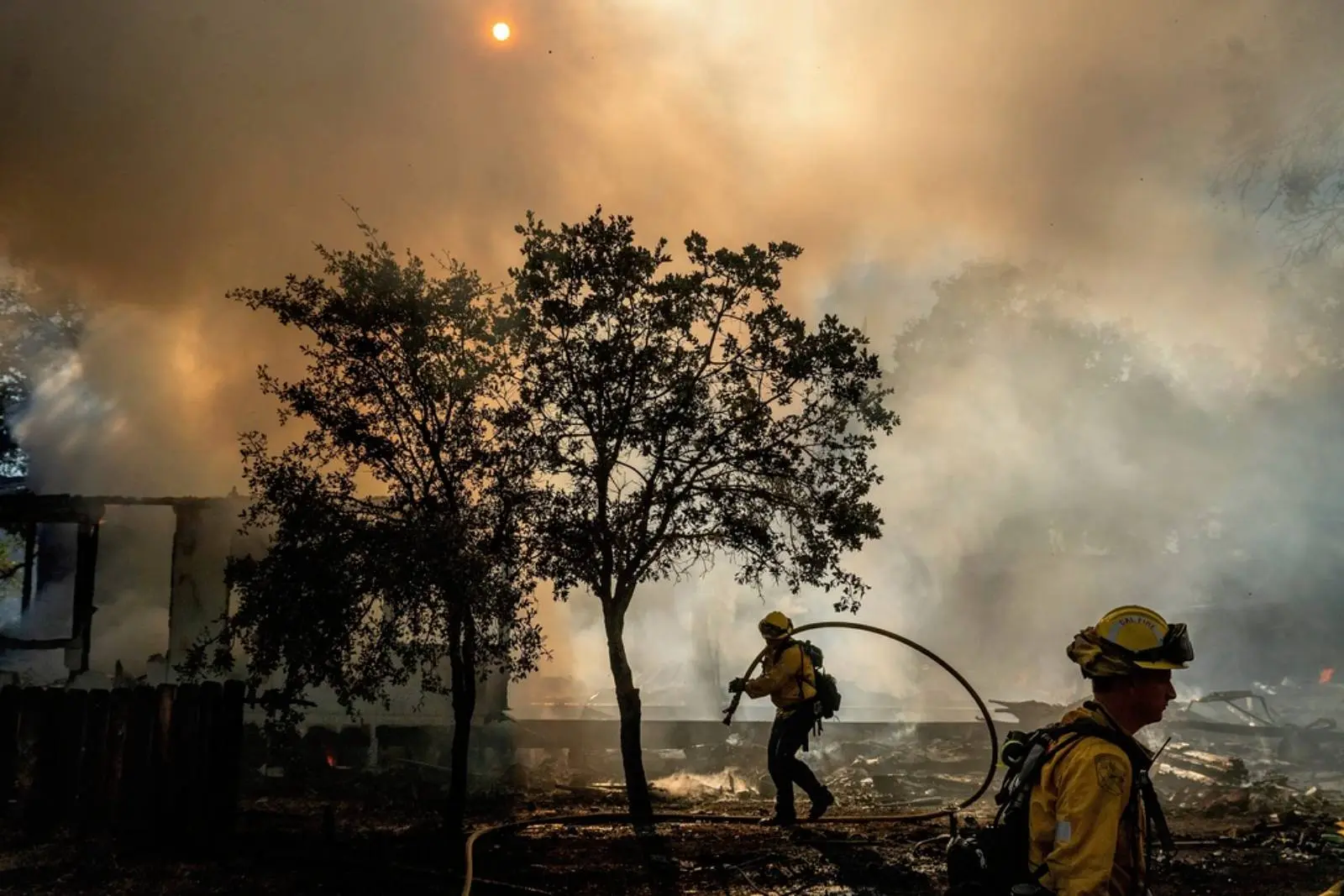
As we take stock of the urgent needs on the ground in Los Angeles following the devastating wildfires earlier this month, a group of NationSwell members convened to discuss how to best allocate energy and resources in response to the near and long-term impacts of the disaster.

Below are some of the key takeaways that were surfaced:

Think in phases to align support with evolving needs during disaster recovery. As you build your response and recovery strategies, consider the distinct needs at different stages of recovery. Focus on immediate relief and first responder support in the near term, stabilizing communities with housing and essential services in the mid term, and rebuilding homes, mental health, and economic resilience in the long term. Phased grantmaking and collaborating with trusted community organizations during each phase ensures aid meets actual needs, preventing overwhelm or misallocation of resources. 

Invest in disaster mitigation and prevention to improve preparedness. Proactive efforts in disaster prevention, including for wildfires, can significantly reduce the impact of future disasters. For example, initiatives like clearing fuel sources, creating defensible space around homes, and providing home protection training can help communities better withstand wildfires. Find opportunities to invest in mitigation strategies during blue-sky periods to enhance resilience and reduce the strain on recovery resources after disasters occur. Consider encouraging employees to take wildfire prevention training (e.g. home ignition zone training). 

Work with credible partners to ensure product donations are targeted and effective. Collaborate with organizations that specialize in timely and efficient product distribution to increase the likelihood that in-kind donations reach the right people at the right time. Leveraging established relationships with grassroots organizations or well vetted partners can prevent product donations going to waste or the creation of logistical challenges for impacted communities. 

Prioritize cash assistance to meet diverse and immediate needs. Direct cash assistance is one of the most effective ways to help individuals and small businesses address their unique needs following a disaster. Cash assistance is particularly critical for underbanked populations and undocumented workers, who often face barriers to accessing traditional financial support. Supporting communities at risk of being left behind, such as day laborers and micro-businesses, can lessen lost livelihood from the fires. Flexible cash-based approaches empower recipients to make decisions that best suit their circumstances, from securing housing to rebuilding businesses.

Leverage platforms and create opportunities for employee giving. Activating employees as contributors to disaster relief efforts can amplify an organization’s impact while increasing a sense of purpose and community within the workplace. Companies are using platforms for employees to donate directly to vetted organizations, matched by corporate contributions. Companies can also create point-of-sale donation opportunities, raising funding through QR codes and round-up campaigns and increasing public awareness about disasters. 

Use informal networks and communication channels to improve collaboration during crises. Creating private and informal communication channels can be a valuable tool for leaders to coordinate and exchange ideas during times of crisis. For example, being part of a group of LA-based leaders or organizations for off-the-record exchanges of strategies and lessons learned can provide a safe space to troubleshoot challenges, share real-time updates, and identify opportunities for collaboration. 

Invest in narrative work to sustain attention on disaster recovery. Shifting the public and media narrative toward systemic issues like inequality and generational wealth loss can promote better understanding of community needs. Getting innovative with your funding choices, such as investing in photography projects or local storytelling initiatives, can help highlight underrepresented voices in public forums and the full scope of post-disaster challenges.

Impact Next: An interview with Chobani’s Nishant Roy

At a moment of growing inequality and division, who is advancing the vanguard of economic and social progress to bolster our most vulnerable communities? Whose work is fostering the inclusive growth that ensures every individual thrives? Who will set the ambitious standards that mobilize whole industries, challenging their peers to reach new altitudes of social impact? 

In 2024, Impact Next — a new editorial flagship series from NationSwell — will spotlight the standard-bearing corporate social responsibility and impact leaders, entrepreneurs, experts, and philanthropists whose catalytic work has the potential to shape the landscape of progress amid urgent need for social and economic action.

For this installment, NationSwell interviewed Nishant Roy — Chief Impact Officer at Chobani.


Greg Behrman, CEO and Founder, NationSwell: Tell us a little bit about your leadership journey — was there a formative experience that helped you to arrive at this space and this position of leadership?

Roy, Chobani: I started my professional life in the United States Air Force, and had the privilege to deploy to both Afghanistan and Iraq. That experience got me thinking far more about overall civil society, economic empowerment, and the things that could have potentially prevented those conflicts from happening. I started to really think about the role the government and the private sector can play in addressing some of the systemic issues that are happening in countries and places all over the world. 

After leaving the military, I took a job working for former President Clinton at his foundation in New York, and he actually recommended that I go to law school or get an engineering degree. He said that I had more lived experience than most of my peers because of my time in the military, and he saw that what I needed was a framework with which to identify the root causes of problems and come up with creative and thoughtful solutions to solve them. 

In 2006, he ended up connecting me to a friend of his, Bob Harrison, who happened to be a former partner at Goldman Sachs, and he said that it was an easy decision — that I should go work at Goldman Sachs. He suggested that I go somewhere to deepen my understanding of what the private sector is all about, to understand how business operates and apply that into the public sector, and so that’s what eventually sparked the interest of marrying business and social impact together back in 2006.

Behrman, NationSwell: What makes your approach to your work at Chobani differentiated — are there any programs, initiatives, or partnerships that feel particularly exciting?

Roy, Chobani: To start macro, Chobani is trying to prove that businesses can be both purposeful and profitable at the same time. As Hamdi says, a cup of yogurt won’t change the world, but how we make it can — especially in terms of how we’re using the dollars we get in profits and investing them back into the community. If you look at the yogurt category in this country, it’s gone from 43 grams of sugar in a single serving on average to around 15 grams of sugar in a single serving. That’s truly disruptive in a category that’s been run by some of the biggest food companies in the entire country, and we’re doing that next with creamers, and with coffee. 

So impact and the work that we’re doing starts with the product, and then our people are the next pillar of how we’re making this food. At one point in time, 30% of our workforce was immigrants and refugees, and we’re focused on paying folks in the 75th percentile and getting folks equity in the business. We’re getting childcare, we’re getting elder care, we’re focused on upskilling — there are a lot of unique things that we’re doing to support our people. 

The third pillar of how we’re making our food is the sustainability side of things, and we’re always looking upstream to see how we can impact and empower our suppliers and find new ways in which we can use our purchasing power to influence better standards on farms.

The final pillar is how we’re spending our profits, and here we have this big ambition to get to zero hunger in the communities in which we operate, which is in central New York and in Twin Falls, Idaho. We’ve seen food insecurity rise in this country by more than 30 plus percent, and unfortunately 13 million children are food insecure. Our thesis is that we as Chobani can partner with a number of different retailers to help improve overall food accessibility, which also allows other NGOs to come and join us in our journey to start to look at the other social determinants of health, such as access to housing, access to transportation, access to healthcare. These are all things that are critical in order to truly address hunger, but it’s got to start with one of the social determinants that’s being solved for least, which is food accessibility.

Behrman, NationSwell: As you look at this moment for CSR and corporate philanthropy, how do you make sense of where we are, and where do you think we’re headed?

Roy, Chobani: The acronyms have changed so much, but the bottom line that I’m seeing behaviorally is that from a purchasing perspective, people want to see that the brands that they’re buying are actually doing something to really move the needle on issues.

There’s been this big focus from the citizens of this country to want to see that their government is delivering for them at the federal and state level, and in the absence of that, they’re deferring to businesses. 

I think the fascinating thing we’re learning is that you can be profitable and purposeful at the same time: If you are operating your plants with a high level of efficiency, you’re going to be using less electricity, less water, and you’re going to be spending less money on overtime because you have a pretty efficient operation, which leads to better profitability in the long run. That profitability, in turn, enables us to then invest in our employees and our community.

And at the end of the day, we also make a great product that people love — it’s not just operational efficiency alone that makes us profitable.

Behrman, NationSwell: What are some of the resources that you might showcase or lift up that have helped to inform your leadership? 

Roy, Chobani: Hamdi, of course, has been my biggest shepherd in all of this. As the founder and CEO of the business, he took a chance on me, and a hallmark of his leadership is the way he believes in everyone that works at Chobani; he sees something in everyone that we may not see in ourselves. He asked me to step in on projects and responsibilities not because I had experience in them, but because I did not have that experience and my perspectives would challenge conventional wisdom and the “regular/traditional” way of doing business. 

As of late I would also say Rajiv Shah — his book, Big Bets was pretty inspirational because as we’re in this work thinking about food insecurity, we want to make a big ambitious bet by getting to zero hunger, and it can seem a pretty lofty goal at times. To address the naysayers and the skeptics and bring people along with you is probably one of the biggest challenges, and I think the book does a great job of addressing how coalition-building is a superpower. 

The third person I would mention has been our COO, Kevin Burns. Kevin is a world class operator — he takes businesses when they’re at this level of efficiency and brings them up to another level that they probably never thought that they could ever achieve. As I talk to him about the work that we’re doing to address hunger, he’s constantly pushing me harder and harder about thinking even bigger. 

Behrman, NationSwell: Who are some of the peer leaders you really admire — folks more or less in your role at other companies or organizations who you think are really great leaders doing great work?

Roy, Chobani: Jake Wood comes to mind right away — not only did he found Team Rubicon, but he’s also involved with a new venture called Groundswell. He’s always thinking about disruptive ways to be innovative and deliver on what’s needed at the moment in time, and it’s always done in such a way where it democratizes people’s ability to go and contribute towards solving a problem. 

The other person that comes to mind is C.D. Glin over at PepsiCo. When I think about what he’s done with the PepsiCo Foundation, in terms of bringing in a level of focus, energy, and innovative programming, I just admire his work so much and his commitment to doing it in a way that feels long-term and sustainable.