Welcoming New Advisors to NationSwell’s Strategic Advisory Team

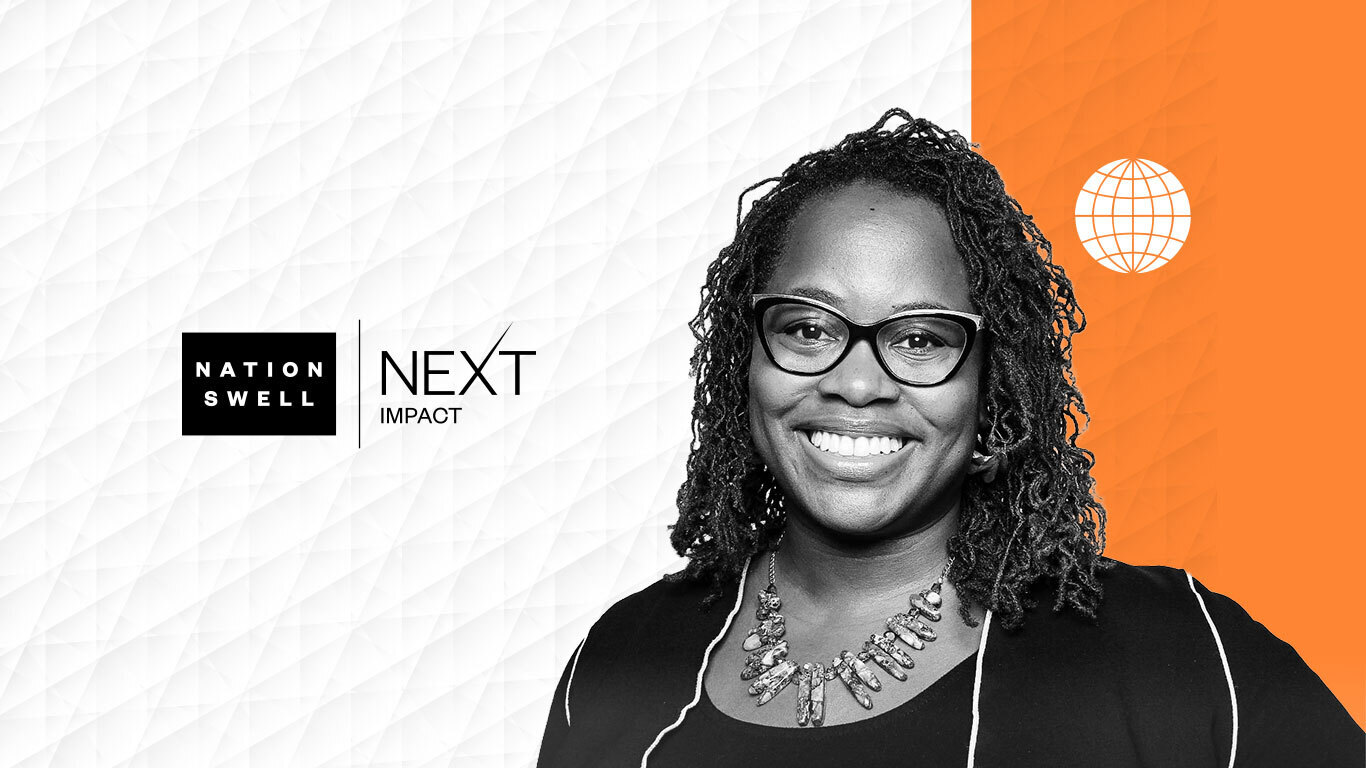
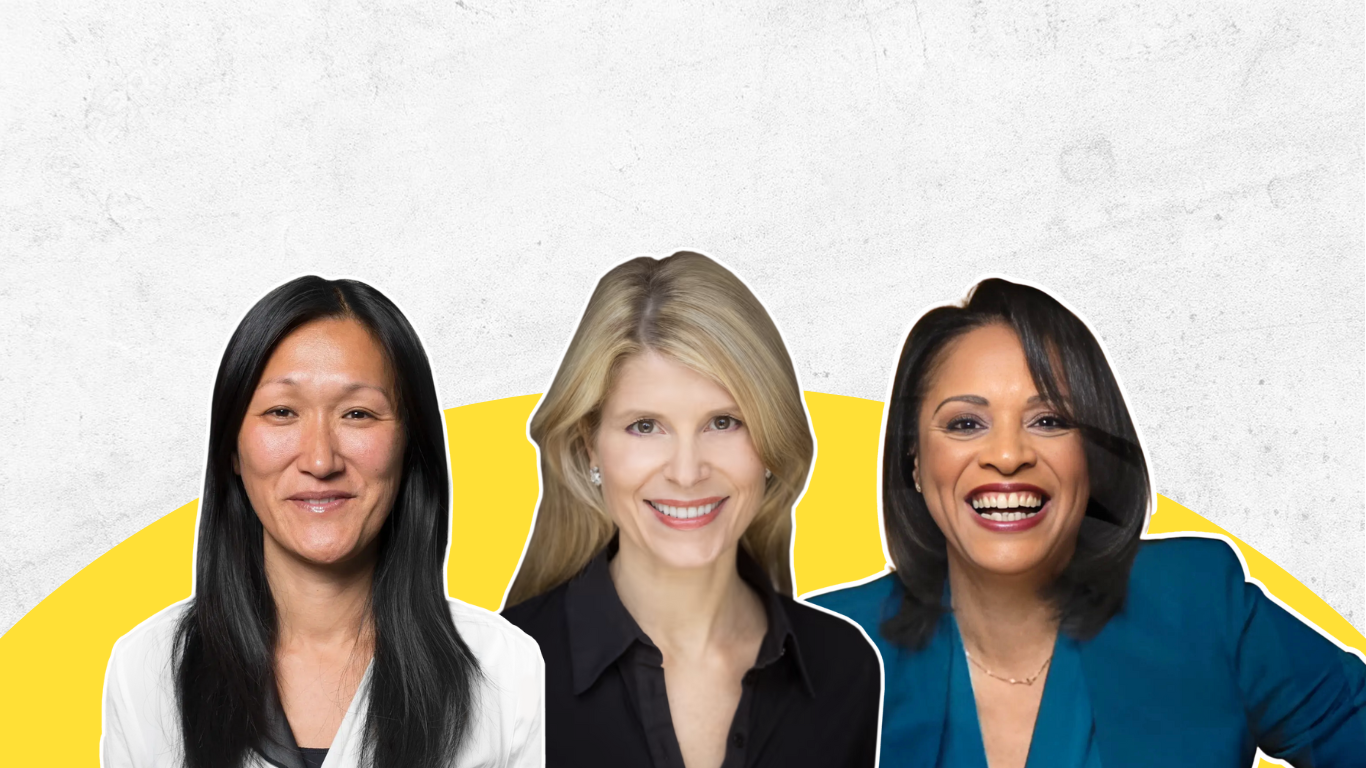
Driven by our steadfast commitment to advancing bold, effective leadership across the impact sector, NationSwell continues to deepen the ways we serve our community, expanding the insights, expertise, and strategic guidance available to help members lead with clarity and drive meaningful change. That’s why we’re thrilled to welcome three exceptional leaders to our Strategic Advisory team: Kim Dabbs, Shannon Schuyler, and Celeste Warren (pictured left to right).

They join a distinguished group of NationSwell Strategic Advisors who bring real-world experience to the challenges and opportunities facing today’s impact leaders. Together, this group supports our members across some of the most strategic and exemplary work and needs in the sector, including building resilient organizational cultures, embedding impact into business strategy, the practice of impact leadership in organizations, architecting strategies that are differentiated and built to last, and leading on issues ranging from workforce innovation to diversity and inclusion to corporate responsibility.

Kim, Shannon, and Celeste bring deep expertise and a proven track record of leading transformational change across sectors. They will support our members in a variety of ways, including one-on-one consultations, roundtable conversations, and tailored guidance. Through these engagements, they will offer new opportunities to advance impact, strengthen strategy, navigate complexity, and accelerate our members’ most important work. Their involvement will help deepen the value of membership and expand what is possible for the leaders in our community.

We’re proud to welcome them into this remarkable community of changemakers and excited for the impact they’ll have in shaping the future of social good. Read on to learn more about their journeys and the expertise they bring to the NationSwell network.


Kim Dabbs

STRATEGIC ADVISOR
Areas of Expertise: Belonging and Purpose, Social Innovation, Organizational Culture, DEI, Identity and Purpose, Workplace Culture, Organizational Development

Kim Dabbs is the Global Vice President of Impact at Steelcase, where she drives social innovation and fosters inclusive environments. With a background as the Executive Director of the West Michigan Center for Arts and Technology and a residency at Stanford’s d.school, Kim brings deep expertise in creating equitable spaces.

 She is the best-selling author of You Belong Here: The Power of Being Seen, Heard, and Valued on Your Own Terms, which provides a framework for cultivating belonging. Kim is also the founder of To Belonging, a global community of changemakers exploring the intersection of identity and purpose. As a sought-after speaker, Kim has delivered keynotes at organizations like Google, Microsoft, MIT, and The Guggenheim, helping leaders create inclusive and impactful workplaces.


Shannon Schuyler

STRATEGIC ADVISOR
Areas of Expertise: Culture Activation; Aligning Purpose with Performance; Value Creation through Operational and Revenue Resilience; C-suite and Board engagement

Shannon Schuyler brings over three decades of experience transforming how organizations drive sustainable success through cultural innovation and purpose alignment. At PwC, she held multiple global leadership roles, including Chief Purpose Officer, Chief Sustainability Officer, Chief Diversity Officer, Climate Risk Leader, Corporate Responsibility Leader, co-Leader of CEO Action for Diversity & Inclusion, and President of the PwC Foundation. She has guided C-suite executives and boards across industries in embedding purpose, values, and sustainability into organizational strategy, culture, and stakeholder engagement. Shannon has also served on nonprofit boards, leading strategic planning, pro-bono funding initiatives, and executive succession.

Her insights on the link between culture and strategy have earned recognition from Fortune, Forbes, The Wall Street Journal, Insider, and Fast Company. Named one of the 100 People Transforming Business and a World Changing Woman in Conscious Business, Shannon is a sought-after speaker and advisor who helps organizations align purpose, culture, and strategy to achieve lasting business and societal impact.


Celeste Warren

STRATEGIC ADVISOR
Areas of Expertise: Diversity, Equity and Inclusion, Organizational Culture, Talent Development, STEM Education, Leadership Strategy, Change Management

Celeste Warren is the Founder of Celeste Warren Consulting, LLC, where she guides organizations in implementing impactful diversity, equity, and inclusion strategies. With over 28 years of experience, she previously served as the Vice President and Chief Diversity & Inclusion Officer at Merck, where she led global diversity, equity and inclusion initiatives and developed diverse talent pipelines.

Celeste is also the co-founder of Destination STEM, Inc., a nonprofit focused on supporting students of color and students in need pursuing degrees in STEM. Her work has earned her recognition as one of Black Enterprise’s “Top Executives in Global Diversity and Inclusion” and Diversity Global Magazine’s “Influential Women in Global Diversity.” She was also named Chief Diversity Officer of the Year by the National Minority Supplier Development Council in 2024.

A published author and frequent speaker, Celeste’s diversity, equity and inclusion insights have been shared globally across major platforms, publications and conferences.


To learn more about our membership community, visit nationswell.com/membership

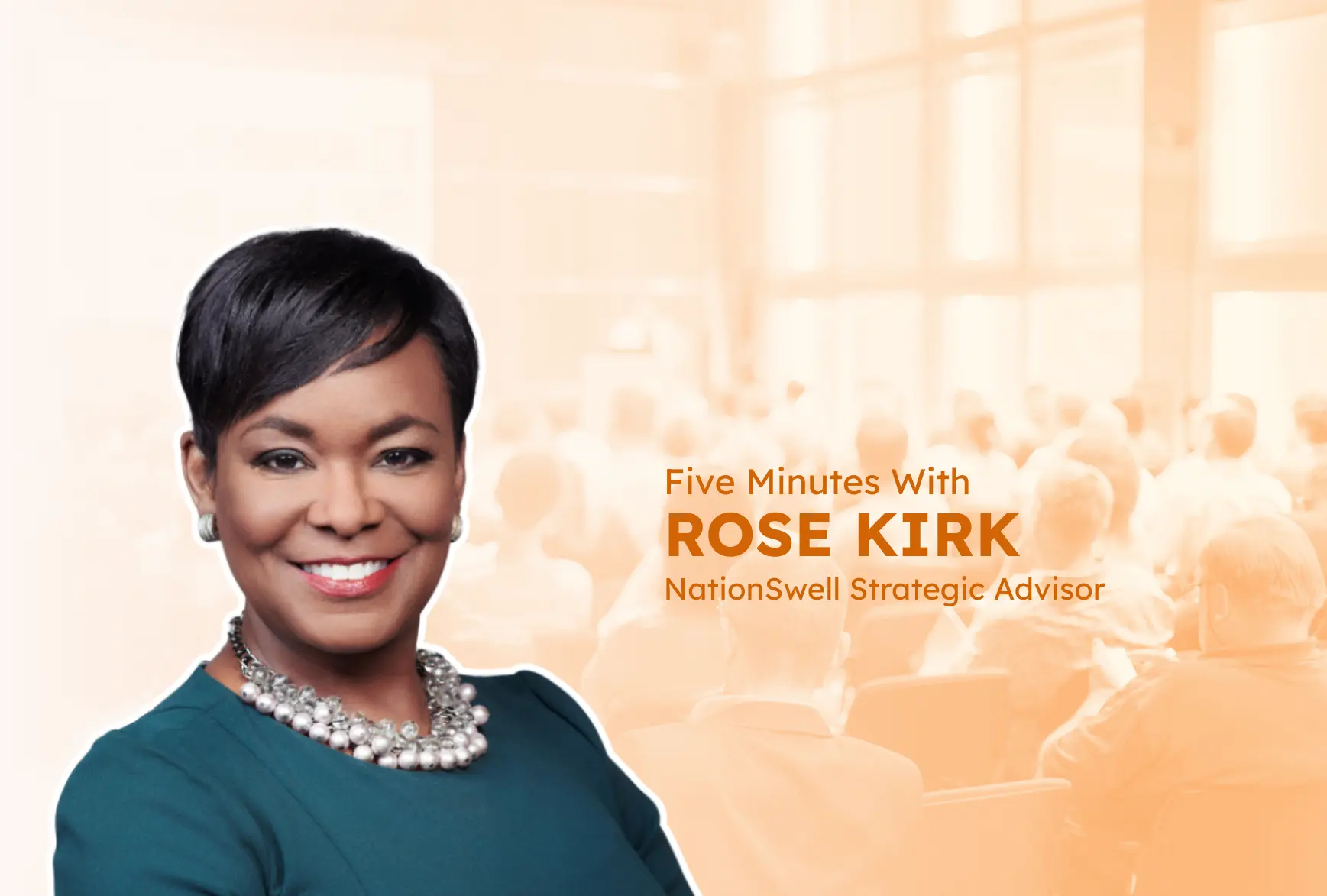
Five Minutes with… NationSwell Strategic Advisor Rose Kirk

NationSwell’s Strategic Advisor Network is a group of accomplished leaders who have steered global nonprofits, scaled purpose-driven companies, shaped policy, and catalyzed systems change. Together, they bring unparalleled experience and visionary leadership to strengthen our mission-driven community.

In our latest installment of Five Minutes With…, we sat down with one member of this network, Rose Kirk — a C-level executive in the telecommunications industry with more than 35 years experience leading sales, marketing, customer service, go-to-market strategies, and responsible innovation functions — to give our community a closer look at her leadership journey, what drives her work, and the impact she’s championing today.

Here’s what she had to say:


NationSwell: What is the “why” behind your impact work? What’s your personal north star?

Rose Kirk: The thing I come back to again and again is how best to develop and empower a team. People need leadership that is strategic and purposeful, that holds them accountable, and that expects them to deliver. My mission isn’t just to delegate, but to work alongside my team and give them the tools to meet their goals. The most successful leaders step up with excitement, embrace the challenge of finding new opportunities, move work forward in fresh ways, and measure real outcomes.

My path into ESG and corporate social responsibility was almost accidental. What began as a temporary assignment at Verizon became permanent when I realized the opportunity to use corporate assets to make a broader impact on society.

And really, who doesn’t want to go to work every day thinking about what a company owes its citizens, how it can leverage its assets, and how it can both drive revenue and deepen purpose? Looking back now, post-Verizon, at the legacy I left and the work still continuing, I feel affirmed that the vision was right, the execution strong, and the opportunities enduring.

NationSwell: What’s one insight or trend you think every impact leader should be paying more attention to right now?

Rose Kirk: I can speak to the trends we’re seeing both as someone who’s practiced this work day-to-day and now from the vantage point of a corporate board. Corporations, especially in the U.S. but also globally, are trying to navigate today’s systems and government engagement on a wide range of issues. One of the biggest opportunities I see is grounding this work directly in business strategy. That requires practitioners to truly understand how the company makes money, align with the broader strategy, and build relationships across P&L functions in ways they may not have before. They also need to help the CEO navigate the current environment. Those who succeed earn a seat at the table, where their perspectives are valued. That’s what will sustain this work and carry it through challenging times.

NationSwell: What role do you see NationSwell playing at this moment? Why did you choose to get involved?

Rose Kirk: What I love about NationSwell is that it’s not just about the network — it’s about the insights, perspectives, and willingness to tackle complex issues in ways that lead to real solutions. The thoughtfulness in how rooms are curated, and how members themselves are empowered to curate, creates a true give-and-take that sets NationSwell apart. Unlike other organizations where events feel one-directional, NationSwell is a genuine two-way street.

What also stands out is the culture of sincerity. When leadership asks, “How can I help?” it isn’t just talk — they take action. Too often organizations want more from their members than they’re willing to give back, but NationSwell operates differently. As a Strategic Advisor, I take that seriously and strive to represent the brand with the same spirit of generosity and authenticity that defines its leadership and community.

NationSwell: In your experience, what’s one underrated lever for advancing social or environmental progress from inside an organization?

Rose Kirk: One of the biggest levers many practitioners overlook is building relationships with the board of directors and the board’s committee chair for ESG.  Presenting to the board is valuable, but the real opportunity lies in connecting with those leaders directly. Board members are often senior executives at other corporations, serve on multiple boards, and bring a wealth of insight into where the company is headed and what it needs. Developing those relationships helps hard-code this work into the company in a more integrated way. Many ESG leaders don’t utilize this connection. 

At Verizon, I was fortunate to have the CEO’s support, the reputation, and the relationships that allowed me to engage meaningfully with the board and several of its members.

NationSwell: What’s one book, podcast, ritual, or person that’s fueling you lately?

Rose Kirk: I’m definitely a consumer of The Daily — I appreciate how they break down the news and give you a broader sense of the “why.” I also love Michelle Obama’s podcast, and how she shows up with such generosity — constantly sharing wisdom, being vulnerable, and giving back when she doesn’t have to. Her podcast with her brother is such a powerful example of sibling relationships and how to navigate grief. After losing their mom, the way they lean on each other — the only two people who shared that lifelong bond with her — is both moving and joyful. They manage to be insightful, vulnerable, and fun at the same time, which always makes me want to text my own siblings little love notes.

What I especially value is that it isn’t political — it’s just real conversations about life. And I think that matters: stepping away from politics to simply connect with the humanity and joy in someone else’s journey.

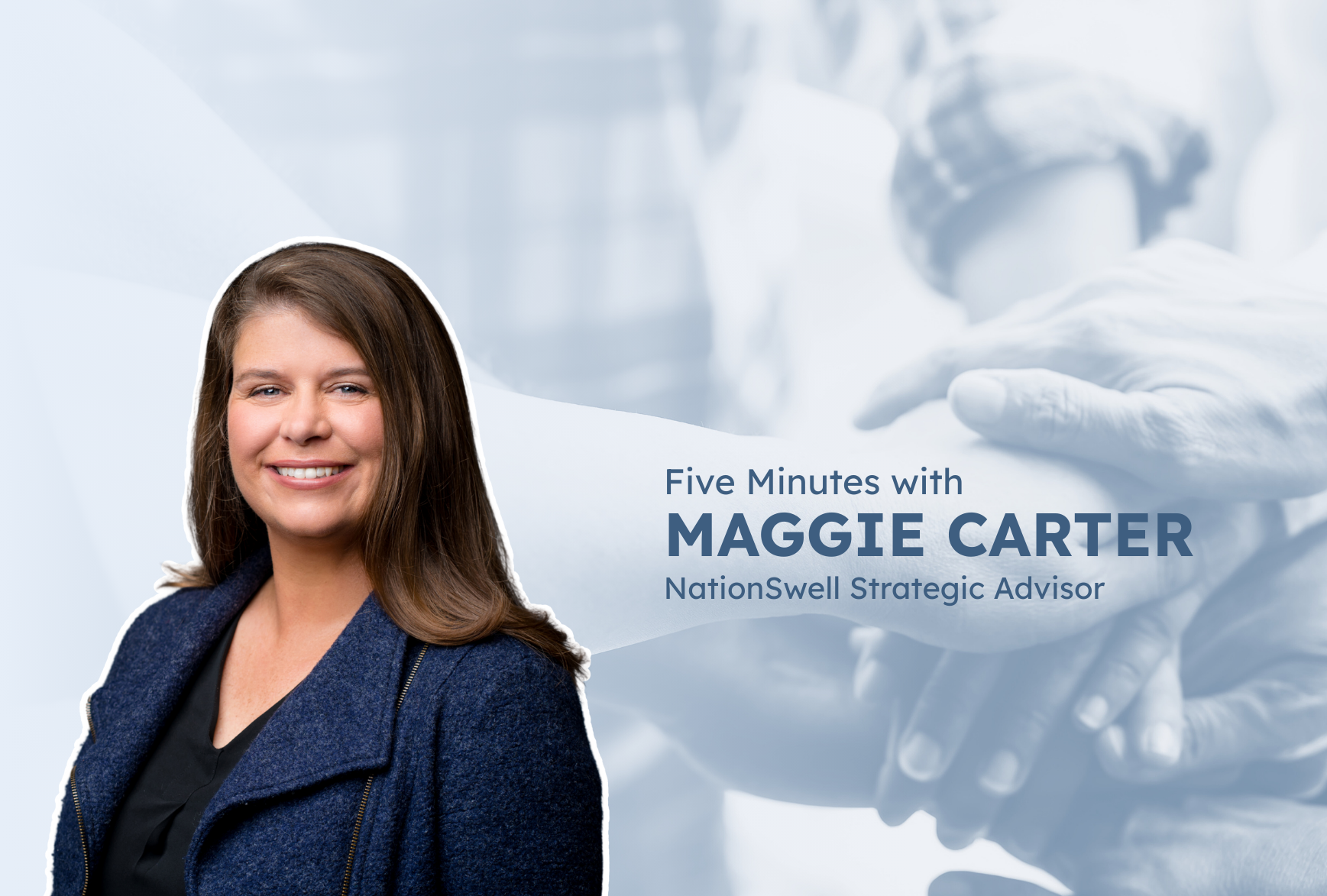
Five Minutes with… NationSwell Strategic Advisor Maggie Carter

NationSwell’s Strategic Advisor Network is a group of accomplished leaders who have steered global nonprofits, scaled purpose-driven companies, shaped policy, and catalyzed systems change. Together, they bring unparalleled experience and visionary leadership to strengthen our mission-driven community.

In our latest installment of Five Minutes With…, we sat down with one member of this network, Maggie Carter — a senior advisor and consultant specializing in strategic planning, impact measurement, program development, and partnerships who previously served as Director of Social Impact at Amazon Web Services (AWS) — to give our community a closer look at her leadership journey, what drives her work, and the impact she’s championing today.

Here’s what she had to say:


NationSwell: What is the “why” behind your impact work? What’s your personal north star?

Maggie Carter: My “why” stems from my childhood, growing up in a multi-generational household where my parents and grandmother taught me the importance of giving back. I saw them model this firsthand, spending Thanksgiving and Christmas packaging meals and clothes for the homeless in Washington, D.C. That instilled in me the value of using whatever resources you have to help others.

That foundation was cemented during my time at the NBA, when Hurricane Katrina struck. I saw firsthand how vulnerable populations are disproportionately impacted by catastrophic events. That experience stuck with me and fueled a passion for mobilizing resources for social good.

That’s where my time at AWS became so meaningful. We weren’t just about providing technology; we were about applying our scale and resources to solve problems in real-time. This was never clearer than when I co-led Project Sunflower, AWS’s global response to Ukraine. We mobilized over 350 employees and technologies to support more than 30 organizations, earning us the Ukraine Peace Prize. That experience showed me how powerful it is when a company’s core business value is intentionally used to create meaningful, lasting good.

At its core, my “why” is to help build and support organizations that genuinely live their values by using their unique strengths and resources to create lasting good in the world. My north star is to contribute to a future where values consistently drive decisions and actions, creating a virtuous cycle of innovation and impact.

NationSwell: What’s one insight or trend you think every impact leader should be paying more attention to right now?

Maggie Carter: Impact leaders must simultaneously embrace two critical aspects: technological curiosity and profound self-awareness. They need to regularly assess whether their leadership style and the organization’s current structure effectively meet present and future needs, especially in a rapidly evolving digital landscape.

NationSwell: What role do you see NationSwell playing in this moment; why did you choose to get involved?

Maggie Carter: The social sector is at a crossroads, with an urgent need to transition from performative to transformative action. I see NationSwell as a trusted convener, amplifier, and catalyst for this essential change. In a time when many leaders grapple with defining meaningful progress, NationSwell offers a vital space for courageous dialogue and nurtures a community committed to tangible action.

I joined NationSwell because I wanted to be part of a community that addresses challenges authentically and transparently. It’s an opportunity to sharpen my practice, deepen relationships, and actively contribute to a future where values truly drive decisions.

NationSwell: In your experience, what’s one underrated lever for advancing social or environmental progress from inside an organization?

Maggie Carter: In my experience, finance is one of the most underrated levers for advancing social and environmental progress within an organization. Finance teams uniquely understand the priorities of executive leadership and boards, and how investments are measured. They can push thinking beyond short-term ROI to include social ROI, long-term outcomes, and opportunity costs. When CFOs, controllers, and budget managers become true stewards of social impact, rather than just financial health, they can unlock significant scale, accountability, and systemic change.

NationSwell: What’s one book, podcast, ritual, or person that’s fueling you lately?

Maggie Carter: I’m currently reading “Non-Governmental Organizations, Management and Development” by David Lewis. This book is shaping my understanding of how the social sector develops strategies, architects organizational structures, and delivers impact. It’s also prompting me to consider how organizations should navigate crises and who is best equipped to lead through such changes: whether it’s the CEO, a donor, or the Board.

My recent daily ritual involves a morning walk through town. This simple act allows me to connect with nature, reflect on ideas, and find inspiration. I also have weekly walking meetings with peers, which I find incredibly invigorating and conducive to creative problem-solving outside traditional meeting settings.

Five Minutes with… Bonterra

Amidst stagnating rates of charitable giving and volunteering in the U.S., Bonterra — a software company focused on helping nonprofits, foundations, corporations, and beyond scale their impact — has a mission to boost giving and volunteerism to 3% of U.S. GDP by 2033. So, they took a fresh approach to Bonterra’s annual impact report. Developed in partnership with NationSwell, the 2025 Impact Report gives Bonterra’s customers actionable insights on how to empower the “Generosity Generation”: a cross-generational community empowered by technology to unlock time and dollars, in order to increase giving and drive the impact they want to see in the world.

For this installment of Five Minutes With, NationSwell spoke with three key Bonterra leaders to unpack the report’s insights: Ben Miller, SVP of data science and analytics; Kimberly O’Donnell, chief fundraising officer; and Sara Kleinsmith, principal strategist for thought leadership and corporate messaging.

“Collaborating with Bonterra to create their new Impact Report was an inspiring challenge,” said Amy Lee, Chief Strategy Officer at NationSwell. “We worked very closely with Ben, Sara and their team to push beyond standard insights. Bonterra has a wealth of smart insights from its products and relationships, and we wanted to make sure that whatever we included was data-driven, forward-looking and on target for the goal to catalyse a new Generosity Generation.”

We asked the Bonterra team how they blended proprietary data with powerful storytelling to create a tool that goes beyond standard, backward-looking reporting — serving instead as a strategic blueprint for how organizations can rethink, revamp, and re-energize their entire approach to impact with intentionality and inspiration at its core. 

Here’s what they had to say:


NationSwell: Tell us a little bit about what you set out to accomplish with this report. What were your initial goals, and how did they evolve?

Ben Miller, Bonterra: One thing we know about movements is that they aren’t a start and stop experience — they’re ongoing. So when we sat down to think about creating this report, we did it through the lens of building the “Generosity Generation” — a multi-age community of donors, volunteers, funders, and nonprofit leaders that gets activated with the help of technology to respond to crises faster; build lasting relationships; and overcome all of the barriers that have caused charitable giving and volunteering in the US to remain stuck at 2.5% of GDP for over 50 years.

In a way that mirrors what our technology is designed to do, we wanted to create a report that could deliver insights in a faster, more personalized way, and that was an important framework adjustment that served us well. We didn’t spend as much time as we had in the past focusing on the tallies and the totals (although they are still there in the report to substantiate our findings) — we wanted to dive right in. We also added an interactive tool that allows organizations to benchmark themselves against other organizations. 

NationSwell: How did Bonterra’s proprietary data play a role in shaping the report?

Ben Miller, Bonterra: One of our huge strengths is that we have a true data science team, not just data marketing folks. Logan, our chief marketing data analyst, constantly pushed back, saying “there’s nothing here” or “this isn’t strong enough,” and as a result we discarded a lot of findings. You might not see it at first glance, but the analysis was thorough. We only included insights that were statistically sound and actionable. A lot of reports don’t go that deep, but our team basically operates like scientists.

Existing data tells us that only 19.4% of donors give a second gift, but our finding was that once they do, they’re far more likely to stick around. That first 90 days is absolutely critical, but there are also folks who give way later — giving up entirely will likely not serve you in the long run. We also saw that about 10% of donors give after more than a year. So even if someone doesn’t respond in that first 90 days, it doesn’t mean they’re gone; you just have to treat them differently.

Sara Kleinsmith, Bonterra: That ties into another data point: 63% of nonprofits stop after one rejected grant application, but on average it takes 1.24 tries to get funded. So many organizations are missing the chance to go back, learn, refine, and try again. Fundraising is evolving, and there’s a real opportunity in persistence and learning from the first “no.”

Ben Miller, Bonterra: Data shows that only 53% of people trust nonprofits — the lowest that trust has ever been, which is a huge issue. But our research shows that you can use digital to help restore some of the trust and humanity that’s been lost over the years. We saw it in disaster response in particular: people were ready to engage, and digital tools helped nonprofits meet that urgency. So it’s not just about maximizing each channel, it’s about using those channels to build relationships. That’s the core insight: digital doesn’t have to mean disconnected — it can actually bring people closer, if we’re intentional.

NationSwell: What were the internal conversations like on how to strike the right balance between qualitative and quantitative storytelling?

Sara Kleinsmith, Bonterra: We’ve done a lot of customer stories and case studies, so we had strong qualitative storytelling to draw from — our customers at Bonterra have incredible missions and impact. The challenge was linking those stories to the data.

One way we did that was during a recent webinar, when we matched our customers to specific data points and asked them to speak to the proof we wanted to showcase. It became a kind of matching exercise — pairing the mission, the people, and their challenges, like burnout or federal funding cuts, with the insights from Ben’s team. From there, we asked: which customers can speak to this? How is Bonterra helping solve these problems?

Ben Miller, Bonterra: Instead of starting with who we knew and pulling from what was available, we started with the data: who’s doing X really well? Then we went out to those organizations and asked if they’d share their stories. That led to fantastic case studies.

Kimberly O’Donnell, Bonterra: Most impact reports rely on examples people already know are good. What we did was different — we had enough breadth to ask: who’s doing this best, why, and what’s the “secret sauce”? What makes a fundraising campaign or grant program truly transformational?

NationSwell: What were some of the lessons you learned in putting this report together — were there any unexpected obstacles or challenges? How did NationSwell help you to meet those challenges?

Ben Miller, Bonterra: One of the toughest parts was wanting the data to tell the story while also realizing that waiting on the data meant risking not having enough time. We had to pivot together as insights emerged. We’d spot something interesting, ask, “Is there more here?” and then look for supporting organizations.

It was also challenging because we were rigorous. We reviewed the data four or five times, and sometimes had to revise earlier numbers. That could’ve created confusion or mistrust, but instead it fostered transparency and a shared commitment to getting it right.

Internally, we all understood we were working toward something meaningful, and NationSwell played a huge role — the team didn’t push us down a rigid path, they were flexible and helped us shape the right story as the right data came in.

Sara Kleinsmith, Bonterra: We kept revisiting: what comes first, the data or the narrative? At one point, we were curious about generational giving — Gen Z, millennials, boomers, Gen X — who’s giving the most, who should we be reaching? But it was hard to chart that internally. Then Ben had this great idea: instead of age, what if we looked at impact maturity — where someone is on their giving journey? Are they a first-time donor or a lifelong giver?

That shift reframed everything. Rather than focusing on age, we began thinking in terms of giving readiness. It made the concept of the “Generosity Generation” more inclusive — a multi-generational group of givers and doers, each with different motivations and maturity levels.

It felt like a win — something that came out of a shared insight between us, NationSwell, and Ben’s framing. Generational labels can be reductive, but generosity spans all ages. This unlock helped us to better meet people where they are in their giving life.

NationSwell: Based on the report’s insights, what are your call-ins for our membership community when it comes to charitable giving? What feels most important for them to take away from this report?

Kimberly O’Donnell, Bonterra: Our call to action is to digest the data — there are six key takeaways, some relevant to nonprofits, others to funders and corporate partners. Think critically about how your practices compare, and how you might adopt or adapt based on what the findings show.

Sara Kleinsmith, Bonterra: And for anyone creating thought leadership or content — especially those reaching donors, partners, or investors — we’re at a critical point in how we work with AI. Writers, marketers, and creators need to be transparent: How are you using AI? How are you using human creativity alongside it? Customers, donors, and volunteers want to understand that balance. It’s evolving fast, and being clear and thoughtful about it positions you as a leader, no matter your sector.

Kimberly O’Donnell, Bonterra: That ties into how we delivered this impact report — it’s unique. If you’re advising others on their own reports, show how each takeaway connects directly to your audiences in digestible ways. It’s not just about showcasing big impact or good stories. What are the three to six insights you want readers to remember?

Ben Miller, Bonterra: Our big goal is 3% by 2033. We can’t get there alone — we’ll need everyone to contribute. If you’re part of the NationSwell community, join us. Even a 2% improvement across your network, your organization, your campaigns — it all adds up. That’s how we hit the goal: through collective action and shared best practices. That’s what the Generosity Generation is about.

Impact Next: An interview with Nike’s Vanessa Garcia-Brito

At a moment of inequality and division, who is advancing the vanguard of economic and social progress to bolster under-served communities? Whose work is fostering the inclusive growth that ensures every individual thrives? Who will set the ambitious standards that mobilize whole industries, challenging their peers to reach new altitudes of social impact? 

In 2025, Impact Next — an editorial flagship series from NationSwell — will spotlight the standard-bearing corporate social responsibility and impact leaders, entrepreneurs, experts, and philanthropists whose catalytic work has the potential to shape the landscape of progress amid urgent need for social and economic action.

For this installment, NationSwell interviewed Vanessa Garcia-Brito, Chief Impact Officer, Nike.


Greg Behrman, founder and CEO, NationSwell: What brought you to this moment? What was your leadership journey like?

Vanessa Garcia-Brito, Chief Impact Officer, Nike: I come from pretty humble beginnings — my mom always had three jobs at a minimum, and my grandmother did a good chunk of raising me in the early years of my life with such unconditional love. Growing up, there was a big theme around agency and choice and optimism. No matter how difficult life was, I was raised to believe we could do something about it. I initially thought that I would put that into practice as a human rights lawyer, and although I did go to law school, eventually through saying yes to a series of opportunities I ended up at Nike. Instead of holding tightly to any one job, I’ve always held tightly to the idea of combining impact with forward movement in a more literal sense. Nike represents the convergence of those values — it’s a place that values sport and movement, a place where my energy and passion for driving impact can really flourish. 

Behrman, NationSwell: What is your North Star of your leadership? What are some of the practices and approaches or styles that you’ve found to be really helpful for you, for your team, for others?

Garcia-Brito, Nike: I’m in love with humanity, and because of that, I really believe in leading from a place of love and being upfront and with that as a leadership style. 

I believe everyone deserves the chance to realize their greatness, and earlier in my career as a younger woman in leadership, that’s a unique choice to make. Ultimately, you have to decide if you’re all in. For me, it wasn’t even a question — I just led from a place of vulnerability, curiosity, and genuine interest in people and their impact. I’m not territorial, sometimes to a fault; even at Nike, everyone is invited into impact. I view my role as bringing people in and cultivating spaces for connection, helping people move forward together. This aligns perfectly with Nike’s focus on human potential and possibility, and it reflects how we see the power of sport to move the world forward.

Behrman, NationSwell: How has your leadership evolved in the course of your role or your time at Nike — is there a powerful moment that informs how you lead today?

Garcia-Brito, Nike: Working at Nike has really taught me to lead with who I am, and I’d like to think that, in turn, has created space for more people to lead authentically as well. I am very intentional about being a safe space for others, which encourages richer conversations and greater opportunities for people to lower their barriers. Leading this way means you can’t help but see the potential in others. I tend to see obstacles as opportunities — if there’s a tree in the way, I just look for a way around or over it. My experience running ultramarathons shapes this mindset: once committed, you keep moving forward, no matter what challenges arise. This approach has been rewarded in the sense that it’s created venues for different types of conversations — it lets people know exactly who I am.

Behrman, NationSwell: We find ourselves in an interesting moment in the impact space, with new opportunities, some pressures, some currents moving in different directions. How are you making sense of this moment?

Garcia-Brito, Nike: What really helps us navigate is knowing at our core that human potential and movement are at the heart of Nike. Through that lens, it’s exciting to see the definition of sport evolving, becoming more expansive and inclusive. Now, anyone can see themselves as an athlete, whether they’re commuting to work or competing professionally. Life is sport, and this broader perspective invites more people in, helping them rethink what’s possible and feel part of a larger community.

Moments like the Paralympics really stay with me — the power, beauty, and community support are incredible. The athleticism is inspiring, and those experiences remind me how important it is to find connection and empathy through sport. Even if I could never do what Paralympians do, I can share in their experience. I think seeking out those moments of shared humanity is how we move forward together.

Behrman, NationSwell: Is there a sport that kind of embodies the way in which you see the social impact world right now?

Garcia-Brito, Nike: For me, running and yoga are deeply connected- they both embody the mind, body, and spirit, and how we exist together in a world full of polarities. We’re more global than ever, yet people often feel isolated; we have private moments, but we’re always surrounded by others. Both running and yoga remind me that there’s no finish line, just the next step, always at your own pace. No one can do the running or yoga for you, but you can still share the experience.

The New York Marathon is a perfect example: everyone runs their own race, yet it’s a massive, collective event. I love those moments — cheering for strangers, being cheered on, feeling connected even when you’re not sure you’re still moving. That sense of accomplishment is powerful, and the same is true in yoga, where it’s just you, your breath, and your flow. The practice allows you to connect with yourself and that in turn strengthens our connection with others. 

Behrman, NationSwell: We’d love to invite you to share a little bit more about the amazing impact work that you and your colleagues are leading. Are there any programs, partnerships, or strategies  you’d particularly like to lift up?

Garcia-Brito, Nike: Our focus is creating the future of youth sport, truly uplifting work. Youth are not just our future leaders and next generation of athletes, they are already demonstrating their leadership and shaping how we play, move and pursue sport. Built on 35 years of research and pilots, we’ve learned that leading with girls is the key to lifting everyone up. While both boys and girls are dropping out of sport at high rates, girls tend to start later, drop out sooner, and are harder to bring back — about 85% of girls worldwide aren’t getting enough movement. We also focus on coaches and coaching because we know how important the relationship between a coach and an athlete can be. Coaches play a crucial role as caring adults who provide safe spaces and guidance, especially during pivotal moments in girls’ lives. For example, body confidence is a leading reason girls leave sport, and coaches are vital in addressing this.

Over the past year, we’ve ignited a coaching revolution through global summits — from our World Headquarters in Beaverton, Oregon, to Paris, Los Angeles, and Tokyo — bringing together experts, partners, researchers, and youth to accelerate better, more inclusive approaches. Despite cultural nuances, the barriers youth face in sport are strikingly consistent worldwide, with body confidence a common challenge for girls. Body Confident Sport, our research with partners like Dove, and world-renowned experts the Centre for Appearance Research and the Tucker Center for Research on Girls & Women in Sport, helps coaches understand these issues and create welcoming environments to retain girls in sport.

We also leverage Nike’s broader community, including Nike Community Ambassadors — Nike store employees who serve as coaches in their communities. They embody the spirit of lifting up their neighborhoods. We partner closely with elite athletes in their own community work, such as Play Academy with Naomi Osaka and also via innovative partnerships with other leading brands like our work with Lego emphasizing creativity, movement, and mental health, aiming to build lifelong love for activity. Ultimately, active kids are healthier, happier, and more successful in life. Giving kids an opportunity to play and enjoy sport can be so meaningful; it’s about hope, dreams, and creating a foundation to thrive.

Behrman, NationSwell: What is your call to action for other social impact leaders — what do you think other people need to hear right now?

Garcia-Brito, Nike: At Nike, we believe there’s a coach in everyone — even if you’re just coaching yourself, which is actually a great place to start. Whether you’re at work, at home, or in your community, you don’t have to wait to make a difference. Simply seeing yourself as a coach can transform your connections. There are plenty of free resources to help you start this journey, and often, it’s an easy way to change lives without even realizing it.

My call to action is to tap into that inner coach, starting with yourself and extending it to others, especially young people. In our impact space, it’s vital to create a vision and journey of hope — just as essential as food and shelter. Hope and dreams truly sustain people; when paired with opportunity and community – it is powerful. We need to connect the dots for others, showing how today’s choices lead to real progress and a better future. 

NationSwell: What are three resources that have inspired who inspired you as a leader? It could be a book, it could be a movie, it could be a quote, a song, anything. 

Garcia-Brito, Nike: There’s a cartoonist called Quino who created a character named Mafalda in the 1960s, and there is a wonderful edition of these comic strips “Todo Mafalda” with a preface by Gabriel Garcia Marquez that I keep near me. Mafalda is a wise and very funny six-year old who is not shy about reflecting some of the absurdities of adulthood. She is a champion for inclusion, joy and world peace – and she is very funny.  I’m inspired by the beauty of being able to see the world through the eyes of a six-year-old girl in this space, and how it reminds us that we know everything that we need to know when we’re young.

The other book I’d recommend is called 4,000 Weeks: Time Management for Mortals, by Oliver Burkeman. I live my life with urgency, so I’m kind of impatient when I think about creating change, but this book puts time in perspective — we have only so many weeks. It’s helped me make my minutes feel longer and my life more present, sharpening my priorities.

Peter Block’s book The Answer to How Is Yes influenced me early on. I’ve learned to say yes and drop the ‘how’ that stalls progress. When faced with challenges, I ask not ‘how,’ but ‘do we want to do it?’ If yes, then the ‘how’ will follow.

As for inspiration, it comes from the people we work with daily around the world. Despite the narratives of global division we hear, I see the opposite — countless selfless individuals dedicating their time to help their communities. This work so often happens outside typical hours, fueled by care and skill. I’m grateful for them and believe there are far more people uniting us than dividing us.
Impact Next: An interview with Siegel Family Endowment’s Katy Knight

At a moment of inequality and division, who is advancing the vanguard of economic and social progress to bolster under-served communities? Whose work is fostering the inclusive growth that ensures every individual thrives? Who will set the ambitious standards that mobilize whole industries, challenging their peers to reach new altitudes of social impact? 

In 2025, Impact Next — an editorial flagship series from NationSwell — will spotlight the standard-bearing corporate social responsibility and impact leaders, entrepreneurs, experts, and philanthropists whose catalytic work has the potential to shape the landscape of progress amid urgent need for social and economic action.

For this installment, NationSwell interviewed Katy Knight, Executive Director and President of Siegel Family Endowment.


Greg Behrman, Founder and CEO, NationSwell: What brought you to this moment? What has your journey to becoming a senior impact leader been like?

Katy Knight, Executive Director and President, Siegel Family Endowment: My first job at 14 was as a reading tutor, and later I interned at that same organization. That’s when I discovered the nonprofit world, which felt meaningful to me, even though my family had the usual “doctor or lawyer” expectations. At first, I wanted to start my own nonprofit, but quickly realized there were already plenty out there. When I learned about philanthropy, I was drawn to the idea of investing in social impact ideas, but found there weren’t many entry-level paths into the field. Soinstead I stayed in nonprofit, then moved to Google, which allowed me to work with nonprofits while also learning about how tech could be used for positive impact. Eventually, I left to lead corporate social responsibility at a company called Two Sigma, where I connected with one of the cofounders, David, who was starting a foundation. That opportunity brought together everything I had learned from nonprofits, CSR, and government affairs, which led me becoming the deputy director of the foundation.. 

It wasn’t a traditional path. Through various nonprofit roles, stints at Google, and even catering on the side to make ends meet. Honestly, I had almost given up on working on this side of the table before I finally landed here.

But I had incredible support, especially from my grandmother Angelina, who recently passed away. She always kept it real with me that there would be a lot to overcome in life as a woman of color who didn’t come from a family of money. When we buried her, my great aunt, her sister, grabbed my hand and said, “You know, your grandma thought you would be president of the United States — she believes you can do anything.” That unyielding support is really the kernel of  the seed that she and my mom really nurtured – this belief that, even though it’s going to be really hard, you can do anything you want to do.

Behrman, NationSwell: What would you describe as the North Star of your leadership? Are there any particular principles or philosophies that guide you?

Knight, Siegel Family Endowment: I see my role as helping others grow. Whether as strong individual contributors or future leaders. I believe deeply in giving people the autonomy to try new things, even if it means making mistakes along the way. 

My team jokes about it, but when someone comes to me with a new or unconventional idea, nine times out of ten I’ll say ‘sure, go for it — I don’t need to know any more, just try it and let me know how it works out.’ I’ve learned so much through my own mistakes, and I want people to have the opportunity to be scaffolded, to know what they’re doing, to succeed in their job, but also to try new random novel things and make mistakes on their own so that we can learn and grow together.  I try to walk alongside people across all levels of the organization and stay engaged with them as they evolve in their roles and grow in confidence.

Behrman, NationSwell: As an impact leader, how are you sense-making the current moment? How are you navigating where we are and where we’re going?

Knight, Siegel Family Endowment: We’re living in a moment where everything feels complex and divided, where clear answers are hard to find and shared facts are increasingly rare. When I zoom out, it’s clear this is a historically unique moment. What’s challenging, but important, is serving people across the country who may not share our politics or even understand why philanthropy or social impact matters. What keeps me grounded is our mission: to use technology to ensure everyone has a fair shot in an innovation-driven society. That mission cuts across political and ideological lines. We want to level the playing field for everyone, regardless of their views. Technologyhas played a role in deepening some of the divides we’re facing. But  t I believe we can also use it to help fix what’s broken. I’m trying to hold onto that hope as I make sense of what has happened and what we want to happen for things to be better.

Behrman, NationSwell: Is there anything about the impact strategies, initiatives, or partnership models you’re championing right now that feels particularly unique or differentiated in the field? 

Knight, Siegel Family Endowment: At Siegel, we have a strong focus on infrastructure. But we think of infrastructure broadly: not just bridges and roads, but also the physical, digital, and social systems needed for society to thrive and for everyone to have equal access to opportunity. That perspective shapes our grantmaking. We prioritize efforts that build capacity and durability, beyond just short-term pilots.. 

For example, last year we partnered with the Walton Family Foundation on the Learning Landscapes Challenge. Instead of asking for new education ideas, we asked what existing efforts could improve or scale with better infrastructure. We’re about raising awareness but also creating lasting impact, and it’s exciting to see this infrastructure approach gaining traction among peers.

We also think intentionally about our place-based strategy.. While we’re anational funder, we know that solutions must be tailored to local contexts. We’ve done deep work in New York, expanded our K-12 computer science efforts to Atlanta, partnered with the Center on Rural Innovation to understand diverse rural communities, and recently started exploring workforce and education initiatives in Birmingham, Alabama. Each community offers unique insights, and we’re excited to continue learning and connecting changemakers together.

Behrman, NationSwell: If there were two big problems you could solve for that would make your work easier and more effective, what would they be?

Knight, Siegel Family Endowment: The first is digital divide. It’s embarrassing that, in one of the wealthiest and most technologically advanced countries in the world, many people still lack access to reliable high-speed internet. . In many cases, this isn’t a massive infrastructure issue — I call it the “last 200 feet” problem, where getting the internet from the main road into the subdivision is the infrastructural challenge we need to solve for. Solving this would open up opportunities in education, employment and so much more.

The other problem I’d solve is a bit more ephemeral, but closely related which is capital concentration. This year, I asked my team to imagine a map of the U.S. where opportunity isn’t just confined to the  coasts. Right now, most venture capital and resources flow to a few select markets, but what if we could redirect that capital to create hubs all across the country? We could unlock new economic hubs, creating jobs supporting entrepreneurs and revitalizing communities that have been left behind.That’s the big-picture vision I’m aiming for.

Behrman, NationSwell: Of your peers in the social impact space, who are a few whose leadership inspires you, and whom you hold in high esteem?

Knight, Siegel Family Endowment: I’m fortunate to be surrounded by incredible women doing remarkable work. One is my friend and colleague Dr. Allison Scott at the Kapor Foundation — an amazing leader on computer science equity, tech, and the digital divide. She’s smart and funny, which is always important. We’re lucky to work together often with Michele Jawando at Omidyar Network, who is also incredible. Another is Lydia Logan from IBM, who’s done everything and been everywhere-I want to be her. I was just on a panel with her last week, and she’s insanely talented; the world is lucky to have her. Closer to the ground, my friend and colleague Nabiha Syed, now leading the Mozilla Foundation, is brilliant. She’s done incredible work as a lawyer, founder of The Markup, and is guiding Mozilla’s next phase, focusing on tech and society to build a better world. She’s contributed to major efforts like the Snowden files. I’m truly surrounded by greatness and just trying to keep up every day.

Behrman, NationSwell: Could you recommend any insightful resources – maybe a book, report, podcast, or article — that has significantly influenced your thinking or inspired your leadership?

Knight, Siegel Family Endowment: I’ll confess to being a bit of a nerd — I have a classic “Nevertheless, she persisted” Elizabeth Warren poster on my wall, and I look up at that on tough days. It’s become a rallying cry for women this decade. I also have a shelf full of books on philanthropy and social impact. One of the earliest I read was Carnegie’s classic The Gospel of Wealth, and now pair it with Darren Walker’s New Gospel of Wealth. When I think of these seminal, foundational texts, I’m reminded that philanthropy has a rich but imperfect legacy. Reconciling that history with the world we want to create guides how I think about the future of philanthropy and social impact.

Impact Next: An interview with New Profit’s Tulaine Montgomery

At a moment of inequality and division, who is advancing the vanguard of economic and social progress to bolster under-served communities? Whose work is fostering the inclusive growth that ensures every individual thrives? Who will set the ambitious standards that mobilize whole industries, challenging their peers to reach new altitudes of social impact? 

In 2025, Impact Next — an editorial flagship series from NationSwell — will spotlight the standard-bearing corporate social responsibility and impact leaders, entrepreneurs, experts, and philanthropists whose catalytic work has the potential to shape the landscape of progress amid urgent need for social and economic action.

For this installment, NationSwell interviewed Tulaine Montgomery, CEO of New Profit and and host of the Say More podcast.


Greg Behrman, Founder and CEO, NationSwell: What brought you to this moment? What has your leadership journey been like?

Tulaine Montgomery, CEO, New Profit: I can’t say there was ever a premeditated plan guiding me; I’m a creative at heart, so a linear plan has never really been my approach. What truly got me here is my family background. My parents and extended family were students of history and futurists, even if they didn’t use those terms. My dad was an ethnomusicologist and longtime Dartmouth professor, and throughout his life has basically willed himself into experiences and expertise — he doesn’t ever entertain that he’s not enough to do what he desires to do. He immersed himself in the study of the African diaspora, mastering percussion and exploring cultural connections in places like Mali, Haiti, Ghana, Cuba, Brazil, Kenya, and Japan. He was even named a master drummer in Ghana in his early twenties. Growing up, I absorbed these rhythms and lessons.

My mother is equally expansive in her worldview. For decades, she has convened Black leaders and educators from around the world, fostering a community focused on understanding our present, envisioning our future, and thriving together. This annual tradition has lasted over thirty years.

My parents have always dreamed of a better world and taught me what we can look back on in history to see what we can borrow from and what to avoid.

Behrman, NationSwell: What are the attributes, philosophies, or practices that help you to be an effective leader in this space?

Montgomery, New Profit: It took me a while as a human, as a professional, and ultimately as a social entrepreneur and leader to really own my multitudes. For years, I believed my interests in business strategy, playwriting, and music history couldn’t coexist, and I would compartmentalize myself depending on the environment. I would go into certain spaces and think, okay, only these parts of me actually make sense here. I didn’t come to that idea by myself — we’re entrenched in tons of systems that encourage such a perspective — but I certainly held it within me, and that’s where it actually matters most.

Today, my leadership is informed by a radical acceptance of all the pieces of myself, and I strive to create environments where others can do the same. I want everyone I work with and support to experience the power of embracing their whole selves, because effective systems change requires us to bring all our strengths to the table.

Another core aspect of my leadership is empathy and curiosity. I try to approach situations and people with openness rather than judgment. For example, when I feel resistance or misunderstanding, I ask people to “say more,” which helps me move from judgment to curiosity. This practice has allowed me to connect more deeply, resolve misunderstandings, and even turn skeptics into supporters. Curiosity isn’t just altruistic, it’s pragmatic — it helps me understand others and navigate complex challenges.

Behrman, NationSwell: Is there anything about the impact strategies, initiatives, or partnership models you’re championing right now that feels particularly unique or differentiated in the field? 

Montgomery, New Profit: There’s growing discussion around systems change, and at New Profit, we see what we refer to as “the MIC” — multiracial intergenerational, cross-sector coalitions for change — as a key engine of that work. Here in the U.S., it sometimes feels like we’re less poised for the MIC than ever because there’s so much division and fragmentation, but at New Profit we’ve been really excited to support and partner with entrepreneurs who understand the power and timeliness of this coalition and who are, in a local way, doing powerful work to advance it. That’s why New Profit supports entrepreneurs through a focus on three pillars: capital, capacity, and community. We provide unrestricted funding, capacity-building support (often in collaboration with organizations like Deloitte), and foster a sense of community among social impact leaders. We believe working as peers, rather than maintaining traditional power dynamics, is crucial for real change.

We also partner with groups like Shared America to highlight and grow examples of unity, collaboration, and local leadership across the country. Despite the noise and division in media and politics, there is abundant innovation and collective power already at work in communities. By shifting our focus to these solutions and investing in proximate leaders, we can drive meaningful progress. True systems change requires courage, collaboration, and a willingness to imagine — and build — a better future together.

Behrman, NationSwell: Of your peers in the social impact space, who are a few whose leadership inspires you, and whom you hold in high esteem?

Montgomery, New Profit: Cheryl Dorsey, president of Echoing Green, is someone who really owns her multitudes — she’s a medical doctor by training, a social entrepreneur, organizer, artist, a lover of Beyoncé. Her ability to bring her whole self to her work is a powerful antidote to the fragmentation many leaders face.

Angela Glover Blackwell, founder of PolicyLink, similarly integrates joy, intellectual rigor, and compassion in her leadership. She frames joy as part of resistance, a quality she’s embodied throughout her career, and understands that lasting change requires addressing policy, capital, and narrative — the power of stories to shape solutions.

Marc Freedman, founder of CoGenerate, has illuminated the importance of intergenerational collaboration in today’s diverse society. His work highlights how connecting across generations fosters both personal and societal growth.

And finally, Dr. Richard Davidson, a renowned neuroscientist, has advanced the science of empathy and well-being. He translates research into practical tools for cultivating well-being, making neuroscience accessible for social change. Like the others, he combines rigor with deep kindness — a quality I deeply admire.

Behrman, NationSwell: Could you recommend any insightful resources – maybe a book, report, podcast, or article — that has significantly influenced your thinking or inspired your leadership?

Montgomery, New Profit: I’m a student of bell hooks, who teaches that love is about action, accountability, listening, and change — not about accepting mistreatment. I appreciate how she, as a scholar and public intellectual, frames love’s role in social impact, emphasizing its importance in leadership. I often write love letters to the broader community to celebrate this.

Another resource I’d recommend is “Defectors” by Paola Ramos, a journalist whose book explores how Latino engagement with the far right challenges ideas of unity versus uniformity in America. She courageously immerses herself in these communities to understand and share their perspectives beyond stereotypes.

I’d also mention my podcast, Say More with Tulaine Montgomery, which highlights the abundant community of people committed to love and collective power in social change. It reminds us there are far more of us than the dominant narratives would suggest who are fostering dialogue and hope.

Meet NationSwell’s Strategic Advisors

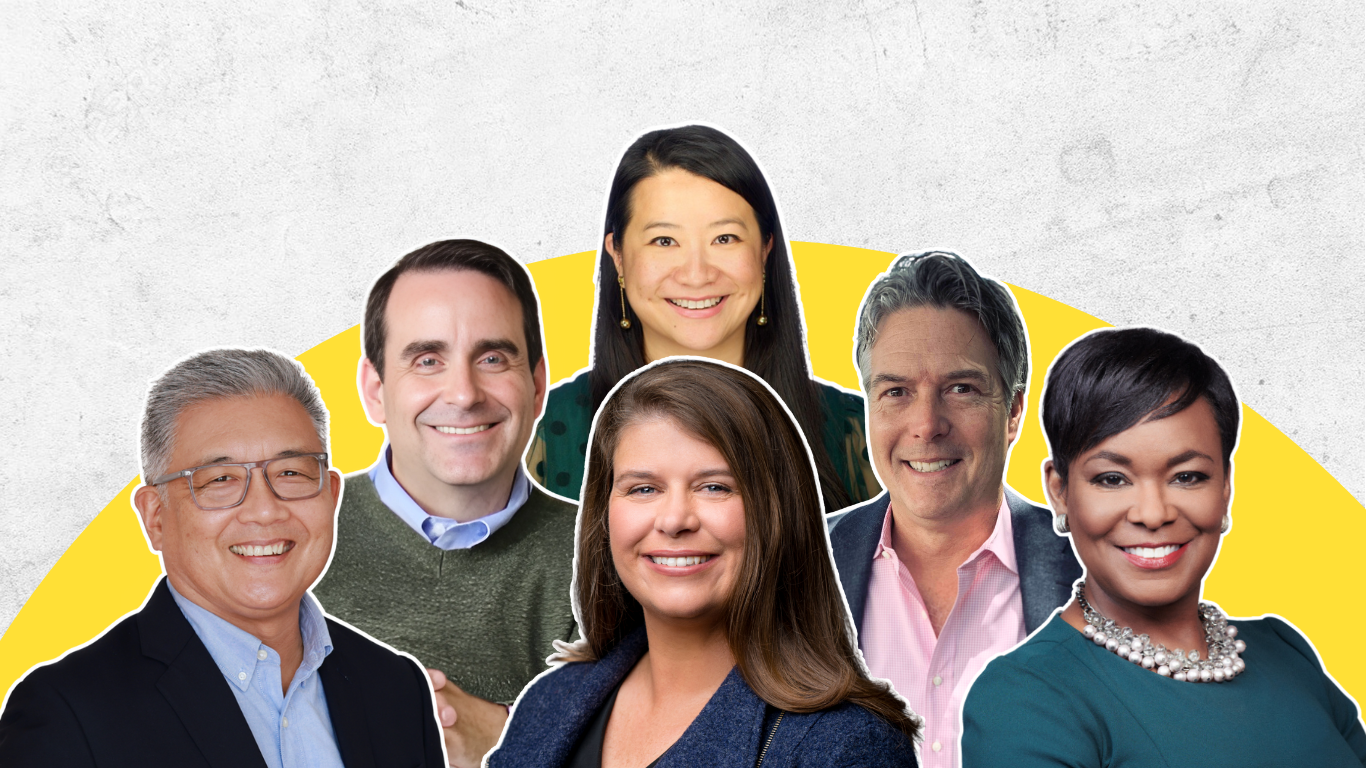
In today’s environment, impact leaders need trusted, experienced partners in their corner. To provide cut-through personalized support and deep value to the impact leaders we serve, NationSwell is thrilled to welcome six extraordinary leaders into our community as Strategic Advisors.

One of our aims at NationSwell is to fast-track our members to the most valuable and actionable insights, knowledge, best practices, relationships and thought-partnership that they need to accelerate their impact and lead at their best. These days, there is no time to waste. 

Our Strategic Advisors have been admired and effective practitioners. They have led the functions that our members lead, have sat in their seats and bring practical insights, perspective and approaches that will help our community members to navigate the current waters effectively, with principle and in service of impact work that is built to last. They will join NationSwell tables, provide 1:1 advisory sessions and contribute to the spirit of mutual support, connection and inspiration at the center of our community.

Most have been long-term members and dear friends. We are thrilled to welcome them now as Strategic Advisors. Get to know them below.


Dr. John Brothers

STRATEGIC ADVISOR
Areas of Expertise: Philanthropy, Nonprofit Leadership, Social Policy, Community Development

John Brothers most recently served as President of the T. Rowe Price Foundation and T. Rowe Price Charitable, overseeing $750M in assets. He founded and led Quidoo, an international consulting firm, for over a decade before merging it in 2015. At T. Rowe Price, he spearheaded initiatives like the Elevation Awards, DesignFest, and Baltimore Children and Youth Fund, establishing the firm as a leader in trust-based philanthropy and community partnerships.

Dr. Brothers has over 20 years of nonprofit leadership experience, with expertise in youth development, social services, and the arts. He has taught social policy and nonprofit management at NYU, Rutgers, and served as a Visiting Scholar at Harvard. He also holds honorary and visiting roles at Queens University Belfast and the China Global Philanthropy Institute.

A prolific writer and speaker, John has contributed to Stanford Social Innovation Review, Nonprofit Quarterly, and Huffington Post, and been featured in major media including The New York Times and Wall Street Journal. Inspired by his upbringing in poverty, he began his career as a community organizer and case manager, advancing to leadership roles that support vulnerable families across the U.S. and internationally.


Maggie Carter

STRATEGIC ADVISOR
Areas of Expertise: CSR, Health Equity, Impact Measurement, Tech for Good, Cause Marketing, Community Resilience

Maggie Carter is a senior advisor and consultant specializing in strategic planning, impact measurement, program development, and partnerships. She previously served as Director of Social Impact at Amazon Web Services (AWS), where she led initiatives in health equity, disaster response, environmental equity, and tech education. 

During her tenure, she co-directed Project Sunflower, earning the Ukraine Peace Prize. Before AWS, Maggie was Vice President of Corporate Partnerships at UNICEF USA, overseeing corporate engagement, philanthropic grants, and cause-related marketing. She also served on the Steering Committee for UNICEF Innovation. Previously, as Deputy Director of the Shot@Life campaign at the United Nations Foundation (2011–2014), she co-created the award-winning “Get a Shot. Give a Shot.” campaign with Walgreens. Maggie began her career in social responsibility and community relations with the National Basketball Association and the Atlanta Braves. She is pursuing a Master’s in Public Policy at George Mason University and holds a Bachelor’s in Health Sciences from James Madison University.


Tom Key

EXPERT IN RESIDENCE
Areas of Expertise: Career Advisory, Talent Networking

Tom has built his career in executive search and career advisory, pioneering talent networking programs for top management consulting firms, now industry standards. Starting at Egon Zehnder, he founded Bain & Co.’s executive talent network and later replicated it at BCG. In 2022, he joined World 50 Group to expand career advisory services for executives.

Having coached around 1,000 executives, Tom expertly navigates executive and board-level searches across public and private sectors. An avid networker, he connects leaders to accelerate career transitions.

Tom is an adjunct professor at Emory University’s Goizueta Business School, teaching courses on executive search and networking since 2004. In 2025, he began co-teaching entrepreneurship at Brandeis University and advises Emory’s Laney Graduate School on PhD career transitions. He has also spoken at HBS, Kellogg, and Wharton.

He holds a BA in Economics and Asian Studies from Denison University and an MBA from Emory. Tom lives in Atlanta with his wife, dogs, a retired horse, and their twin college-aged daughters.


Michael Kobori

STRATEGIC ADVISOR
Areas of Expertise: Sustainability Leadership, Human Rights, Sustainable Finance, ESG Regulations, Industry Collaboration.  

Michael Kobori is an independent Board Director at Bunge Global and recently retired as Chief Sustainability Officer at Starbucks, where he led environmental sustainability, social impact, and human rights. Previously, he was Vice President of Sustainability at Levi Strauss & Co., helping establish the company as a leader in sustainable apparel. He has nearly a decade of experience at The Asia Foundation supporting human rights and economic development in Asia. Michael serves on the President’s Leadership Council of The Asia Foundation, the U.S.-Japan Council, and is Executive Producer of Utopia Theatre Project, a social justice theater company. 

Michael has taught corporate sustainability at UC Berkeley’s Haas School of Business and served on numerous sustainability boards and advisory committees, including the Better Cotton Initiative and Sustainable Apparel Coalition. He holds a Master’s in Public Policy and undergraduate degrees in Asian Studies and Psychology from UC Berkeley and studied sustainable finance at Oxford University.


Rose Kirk

STRATEGIC ADVISOR
Areas of Expertise: Areas of Expertise: Go-to-market, Responsible Innovation, Impact Imperative, Career Development, Building Influence and Reputation

Rose Kirk is a C-level executive with more than 35 years of experience leading sales, marketing, customer service, go-to-market strategies, and responsible innovation. Beginning as an award-winning journalist, she rose to senior leadership at Verizon across Corporate Social Responsibility and Marketing, earning a reputation as an innovator and trailblazer.

She serves on the board of Casella Waste Systems, contributing to its Compensation and Nominating and ESG committees, and has held leadership roles in global nonprofits. Passionate about history’s role in shaping the future, Rose is on the National Archives Foundation board and supports the arts through Texas Women for the Arts.

Rose holds a BS from Arkansas State University and is completing a master’s thesis at Washington University. Featured in outlets like Good Morning America, Forbes, and BBC, she is also executive producer of the documentary Without A Net: The Digital Divide in America.


AiLun Ku

STRATEGIC ADVISOR
Areas of Expertise: Leadership Development, Educational and Workforce Access, Systems Change Strategy, Community Building, Organizational Growth and Management

AiLun Ku is the Vice President of Community and Capacity at the EGF Accelerator, where she redesigns and leads leadership development programs, community-building efforts, and strategic grantmaking to strengthen the nonprofit sector.

Previously, AiLun was the President and CEO of The Opportunity Network, where she scaled programs reaching over 50,000 students annually and secured the largest unrestricted gift in the organization’s history. There, she led all aspects of the organization, including programming, evaluation, finance, operations, and national growth. 

She is a certified LEGO® SERIOUS PLAY® Facilitator, a Pahara Fellow, a Heckscher Leadership Fellow, and a dedicated educator and advisor. AiLun is passionate about access, leadership, and cultivating inclusive, high-impact communities.

Before OppNet, AiLun worked at NYU Wagner, the Equal Justice Initiative, and other social impact organizations. She holds an MPA and BA from NYU and is a 2019 MIT Media Lab Director’s Fellow.


To learn more about our membership community, visit nationswell.com/membership

Five Minutes with Alix Guerrier, CEO of DonorsChoose

For this installment of 5 Minutes With, NationSwell sat down with Alix Guerrier, CEO of DonorsChoose — a nonprofit donation platform that helps connect teachers with the resources and materials they need to create the inspiring classrooms and projects that ensure a great education.

Ahead of Teacher Appreciation Week (May 5 – 9, 2025), we asked Guerrier about how DonorsChoose is helping to address racial and socioeconomic inequities in school funding; the impact milestones he’s most excited about; and how the platform is helping to support teachers who come from HBCUs. 

Here’s what he had to say:


NationSwell: Tell us about your personal connection to education — is there anything about your background that gives you a unique perspective or emotional connection to this space?

Alix Guerrier, CEO of DonorsChoose: I became a math teacher after I did investment banking, and I found teaching to be by far the more challenging profession! It remains the toughest job I’ve had. But the thing that I loved most about teaching was witnessing students as they understood new concepts. I would feel so fortunate to be able to observe kids as they were starting to do things that, before, they were not able to do. It’s an incredible privilege to be part of a kid’s journey as they learn and develop new skills.

NationSwell: Where are the existing gaps in school funding models, and how is DonorsChoose helping to close those gaps?

Guerrier, DonorsChoose: Public schools aren’t created equal. Schools that serve mostly students of color receive $23 billion less in state and local funding each school year – a funding gap of $2,266 per student. This inequity is reflected in teacher out-of-pocket spending. Teachers working at schools in lower income communities and with more students of color reach into their own wallet more to buy classroom materials. Our DonorsChoose platform gives members of the public a transparent, accountable way to bridge that inequity.

Every time a teacher submits a project to DonorsChoose, we receive a collection of data points on that classroom: number of students, subject area, items requested, teacher demographics, and more. We integrate this national data into our platform to help donors and institutional partners target their support where it will make the biggest impact. By highlighting schools that have been historically underfunded due to racial and economic inequity, we’ve made it easy for anyone to help us move the needle towards equity — whether they have $5 or $5 million to give.

NationSwell: Are there any anecdotes or moments that stand out to you in terms of the tangible impact you’ve seen DonorsChoose create for teachers?

Guerrier, DonorsChoose: What immediately comes to mind is the preschool classroom of Dominique Foster at Friendship Blow Pierce in Washington, DC, where the majority of students are Black or Latino and qualify for free or reduced-price lunch. You won’t find a better equipped or more engaging preschool classroom, and that’s because of Dominique. In December 2024, she used DonorsChoose to fund costumes for her students to dress up as veterinarians, doctors and dentists, skeleton models, weighted stuffed animals to serve as the patients, toothbrushes, and Band-aids – among so many other resources. 

Since posting her first DonorsChoose project in 2019, Dominique has raised $120,000 for her classroom through our platform. Along the way, her colleagues, too, have discovered DonorsChoose. More than 300 projects, posted by 78 teachers, have been funded at Friendship-Blow Pierce – totaling more than $300,000 in resources. Through DonorsChoose, educators like those at Friendship-Blow Pierce are accessing materials that their students uniquely need for an enriching education.

NationSwell: What has your experience at DonorsChoose taught you about the role technology has to play in the education system — what is the potential that you’re seeing?

Guerrier, DonorsChoose: DonorsChoose has always embraced technology as a fuel for social good. In fact, crowdfunding wasn’t even a word when we launched 25 years ago. Teachers have similarly embraced tech advancements, and their resource requests over the years on DonorsChoose show that progress within education.

Right now, there are a lot of conversations about the potential benefits and harms of artificial intelligence (AI) for both education and technology overall. Wherever you stand, it’s clear that AI is a remarkably powerful tool that isn’t going away — teachers and students are already engaging with it on a daily basis. We need to listen to the educators on the frontlines of this progress and make sure they’re a part of our national conversation about AI so that we can create a just and equitable future for our children.

NationSwell: Are there any new initiatives in the works that you’re particularly excited about and would like to lift up?

Guerrier, DonorsChoose: DonorsChoose is gearing up for Teacher Appreciation Week (May 5-9, 2025), and we’re planning even more support for public school teachers across the U.S. Teachers should stay tuned that week for more opportunities to get funding for their classrooms.

A new initiative this school year that I’m very proud of is Quad to Classroom. Studies show that the graduation rate among Black students increases by 33% if they have at least one Black teacher between third and fifth grade. In 2021, DonorsChoose conducted the largest survey of male teachers of color, and the survey shows that Black male graduates of Historically Black Colleges and Universities (HBCUs) spend the most time engaging with students. The DonorsChoose Quad to Classroom program is inspired by these findings. The program helps to boost the pipeline of teachers who come from HBCUs and to provide them with funding on DonorsChoose.

NationSwell: Finally, what are some of the challenges you’re currently facing, and how can NationSwell’s community of changemakers help you with those challenges?

Guerrier, DonorsChoose: According to our annual DonorsChoose survey of our teacher community, teachers spend between $600 and $700 out of pocket on classroom supplies in a school year. We know that it’s often much higher than that. In fact, teachers on DonorsChoose told us that if it weren’t for our website, they’d be spending more than double out of pocket on classroom supplies. 

At the same time, teachers’ salaries have decreased as much as 15% between 2000 and 2017 and are decreasing much faster than those of comparable workers, yet they’re still reaching into their own pockets to get what their students need to learn. 

Anyone, from an individual to a corporation, can go to DonorsChoose to help a teacher avoid reaching into their own pockets again. DonorsChoose will not stop until every single student and teacher has the resources they need to thrive, and we’re doing everything we can to ensure that and to rally others to join us in empowering educators.

Five Minutes With Hala Hanna, Executive Director of MIT Solve

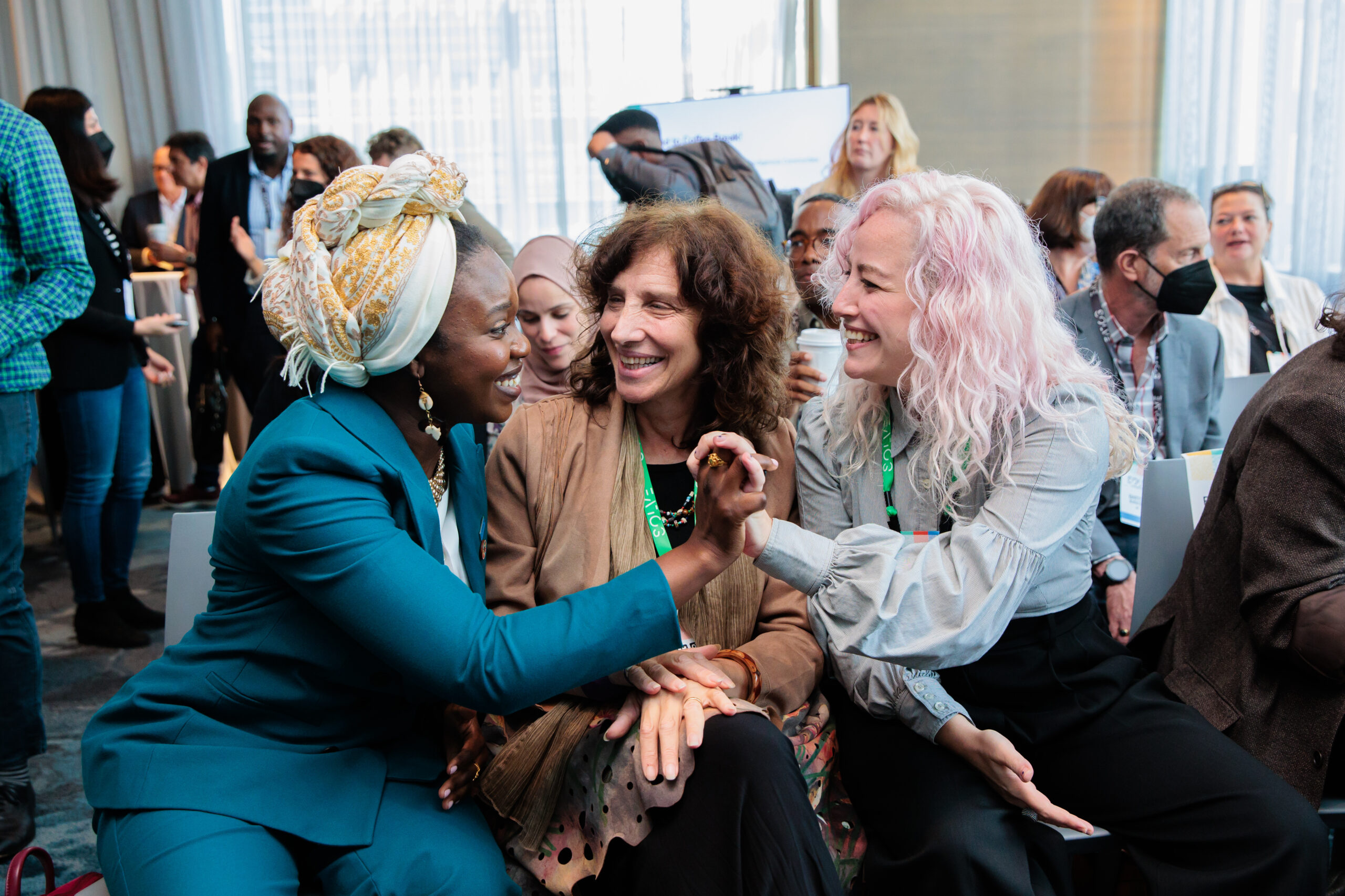
For this installment of 5 Minutes With, NationSwell sat down with Hala Hanna, Executive Director of MIT Solve — an initiative of the Massachusetts Institute of Technology that advances lasting solutions from tech entrepreneurs to address the world’s most pressing problems.

We asked Hala about how MIT Solve has built and maintained its vast network of thought leaders and industry innovators, the impact milestones she’s most excited about, and how the initiative is deploying AI to create lasting transformation. 

Here’s what she had to say:


NationSwell: Tell us about MIT Solve’s mission and vision—what makes this initiative so unique and impactful?

Hala Hanna, Executive Director of MIT Solve: MIT Solve is a marketplace for social impact innovation. We find and help scale the most promising solutions to the world’s most pressing challenges and forge lasting partnerships with our Solver teams, providing ongoing funding, strategic connections, and support long after their initial program ends.

Our secret weapon? A powerhouse community of thought leaders, industry pioneers, and MIT’s extensive ecosystem—all united by the belief that technology, in the right hands, can transform lives. We seek entrepreneurs from underrepresented regions and backgrounds whose lived experience is the expertise they bring to problem-solving. 

NationSwell: What does using technology for good look like? How are MIT Solve and its innovators envisioning a present and future where scalable tech can solve big problems?

Hanna, MIT Solve: Tech for good isn’t just aspirational—it’s our Solvers’ work today. AI powers 20% of our portfolio, demonstrating how emerging tech can be deployed as a powerful means of improving people’s lives and driving positive societal transformation—from bettering health and learning outcomes to mitigating the effects of climate change. 

In addition to the breadth of application, AI helps with scaling impact: solutions in Solve’s portfolio that are powered by AI reach twice as many lives as those not making use of the technology. 

While AI global venture capital investments exceeded $290 billion between 2019 and 2024, less than 1% of this funding went to initiatives aimed at social impact. This stark disparity reveals a profound misalignment between AI’s transformative potential and its current applications that we should all want to fix.

NationSwell: What is exciting to you about the funding that MIT Solve provides to innovators? Tell us about MIT Solve’s impact to date.

Hanna, MIT Solve: The $70 million we’ve mobilized has catalyzed extraordinary change, with our Solver teams now touching 280+ million lives globally. This translates to environmental and health monitoring for 97+ million people, internet access for 4.6+ million, educational content for 56+ million children, and vital health services for 26+ million patients. These aren’t just numbers—they represent real people experiencing better health outcomes, educational opportunities, and improved livelihoods. 

We are also proud that for Solver teams selected in the past five years, over 95% are operational—compared to 70% for similar programs. Moreover, our for-profit and hybrid teams have raised over $1 billion since their organizations’ inception—together, they are engines of economic growth for their communities.

NationSwell: Is there a grantee story that you’d like to lift up?

Hanna, MIT Solve: I cannot possibly pick just one! Instead, let me invite you to experience our award-winning docuseries, The Big Idea. It follows three Solver teams on their journey: an innovator stabilizing vaccine temperatures in remote regions, a creator of antiracist technology reducing Black maternal mortality, and a developer of robot-building kits empowering Indigenous youth. With hundreds of thousands of YouTube views, features at 17 global festivals, and awards including a Webby, these stories exemplify the ingenuity and impact of our community.

NationSwell: A year from now, what are you hoping to be celebrating? What milestones are you looking to cross?

Hanna, MIT Solve: Next year marks our 10th anniversary—a decade of catalyzing world-changing innovation! There’s a lot in store to celebrate this milestone, including at our flagship events, Solve at MIT in May and Solve Challenge Finals in September. We’re building a new model where social innovation isn’t seen as charity but as the highest-leverage investment possible. By our next decade, we aim to shift billions toward solutions that scale exponentially and reach communities where traditional systems have failed.

NationSwell: What are some of the challenges you’re facing? How can NationSwell’s social impact community help you with those challenges?

Hanna, MIT Solve: Funding for international development work faces unprecedented headwinds. Even before current events, we saw a stark disconnect: $238 billion sitting in Donor-Advised Funds while we face a $4 trillion gap in achieving the UN Sustainable Development Goals. Our mission is to bridge this divide by connecting innovators with funding opportunities, regardless of the political climate. NationSwell’s network is invaluable in helping us reach the communities that need innovation most. The most precious resource isn’t money—it’s the courage to back transformative ideas when they need it most. We invite the NationSwell community to come Solve with us!