 "
"

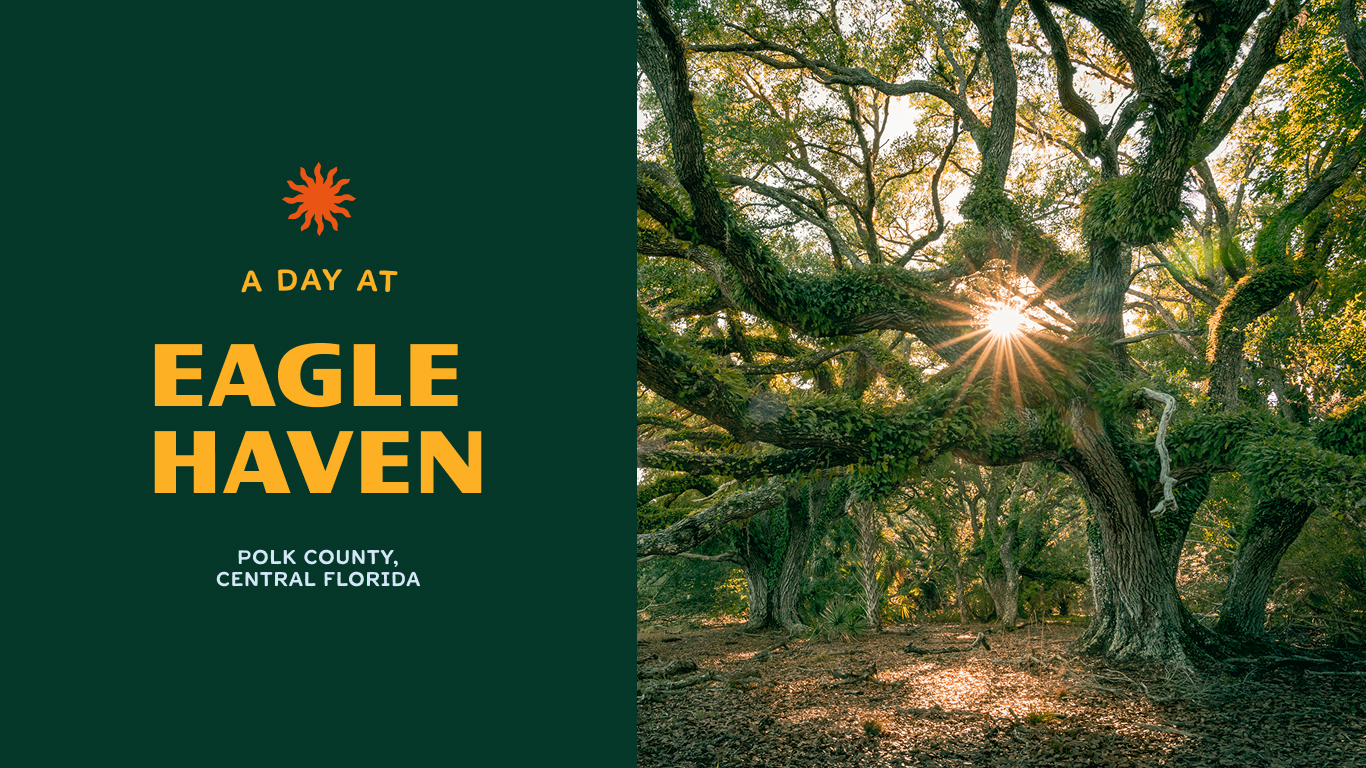
On a sunny, humid day in May, the NationSwell team visited Eagle Haven: a conservation oasis that stretches its scenic shores four miles along the Kissimmee River in Florida. Our guides were a small crew from the Live Wildly Foundation, who are dedicated to the long-term preservation of Florida’s nature and waters. We piled onto an open-air bus, immersing ourselves in the stunning vista and full effects of lovebug season: the gentle buzz of wings honeymooning on or around your face.
The Live Wildly crew were generous with their knowledge of the native wildlife and habitats, and their passion for protecting these lands. Each of them comes from a long line of Floridians. They shared memories from childhood of the lush, untouched landscape where they camped, hunted, and grew up.
Eagle Haven represents a brighter and more realistic future for conservation in Florida, and can serve as a model for environmentally focused initiatives across the United States — and how supporting the land can also nurture the local economy. The conservation efforts on the Eagle Haven ranch are hyper-specific to the environmental issues that the central Florida region faces; and offer lessons for how such place-based solutions can be applied far beyond the region.
During our short visit to Eagle Haven, we learned how conservation is not just an ecological matter but also an economic and a human one.
Ecological Connectivity Benefits Water
The towering oak trees that first catch your eye as you pass through the gates of Eagle Haven. Beyond that, the ripples of the Kissimmee River shimmer under the blazing Florida sun, like jewels adorning the ranch coastline. It’s not hard to understand why philanthropist Arnie Bellini, Founder of Live Wildly, made the decision to secure the land for preservation. The river is part of the Northern Everglades, which provides water to millions of Floridians. The marshes and swamps on the Eagle Haven property and surrounding protected areas act as water purifiers, ensuring clean water for communities downstream.
At Eagle Haven and throughout the Florida Wildlife Corridors where it sits, ecological connectivity is prioritized. Ecological connectivity refers to the ability of animals to move freely throughout a landscape, which is key to any species’ survival – allowing them to migrate as habitats naturally change to access essential resources like food and shelter. Designing and maintaining these areas with this connectivity, including the rivers, marshes, and wetland systems, meaning there are some benefits to the surface and groundwaters.
As we looked out at the marsh waters, Meredith Budd, Live Wildly Foundation’s Deputy Director, explained that most Floridians who live in the cities and their surrounding suburbs don’t fully understand how connected they are to rural areas like Eagle Haven. Protection of these lands and waters is not just essential for the rich plant and animal life that make up the diverse Everglades ecosystem; they also play a key role in access to clean drinking water for the majority of the state and neighboring states, Alabama, Georgia, and South Carolina, which all access drinking water from the Floridan Aquifer System.
Conserving the lands that make up the Florida Wildlife Corridor is an obvious priority. Keeping it in the hands of the families who have stewarded them for generations is the harder part. Conservation takes time, money, and expertise, and for many landowners the math simply doesn’t work. That is why Live Wildly advocates for a balance between ecology and economy, helping landowners navigate the conservation programs available to them so they can protect the land and wildlife in their care without sacrificing their livelihoods. Payment for Ecosystem Services is one such tool: landowners are compensated for keeping habitat in tact, recharge aquifers, and improving water quality, earning a return on public benefits their land is already providing.
People are as important to the land as the land is important to us. We have the power to decide the effect we want to have on the environment.
Plants as Medicine
About a quarter of modern pharmaceuticals trace back to plants, and a study on global medicinal plants throughout history showed that the strongest predictor of the abundance of these plants in a given locality was how long humans had been living in the area. The findings of this study show that regions where not only biodiversity, but also traditional understandings of the medical uses of native plants are lost, exhibit a decrease in the number of medicinal plants. Our curiosity and innovation in conservation is vital if we want to utilize and preserve medicinal plants.
The Saw Palmetto tree, for example, only grows about 6 – 10 feet in height, but it is a hero of the Eagle Haven ranch. It is a keystone species, providing cover for hundreds of plants and insects and serving as a main food source for a variety of birds and reptiles, as well as for black bears and panthers, which are considered endangered. This small but mighty fan-leaved tree is an important part of the region’s ecosystem and has also been shown to have health benefits for us. Research suggests a medical use for the fruits, specifically their anti-inflammatory effects, which can be beneficial for our reproductive systems, a traditional use of these palm berries in indigenous cultures.
The Balance of Ecology and Economy
While cowboys may be synonymous with states like Texas and Oklahoma, Florida is the first state to develop cattle ranching in the 1520’s, after explorer Ponce De Leon brought cattle and other livestock from Spain in the hopes of creating a new colony. Since then, wild cattle roamed the Florida lands, and the Seminole tribe has a rich history of cattle farming in the state.
The cattle, adapted from their Andalusian ancestors into the Florida “Cracker” cattle, can be spotted all around the Eagle Haven grounds, nestling together in the shade of the oak trees, being generally adorable, and, importantly, keeping the landscape in check by grazing. Thanks to the generosity of Mr. Bellini, Eagle Haven was able to secure a conservation easement, which allows perpetual protection of the land’s natural, scenic, and open spaces, including for agricultural purposes. For Eagle Haven, this means a majority of the 2,300 acres will remain a working cattle ranch. A partnership with the Air Force’s Avon Park Bombing Range – meaning a part of the funding for this easement came from the department of defense – exemplifies the balance between ecology and economy that Live Wildly champions. The cows and the open space provide an ideal site for training troops, and the Air Force is willing to work to preserve some of the wild landscape – a mutually beneficial relationship that will help protect portions of the crucial ecology and generate economic gains.
NationSwell is thrilled to be partnering with Live Wildly and Arnie Bellini to host an immersive 2-day experience at Eagle Haven this November, where attendees will learn about Payment for Ecosystem Services and other innovative conservation and environmental protection activities, and meet more than a few cows and the unique wildlife that call the ranch home.